Publish with Us

Follow Penguin

Follow Penguinsters

Follow Penguin Swadesh

Puzzled by Persia: A Tale of Mis-Adventures from ‘The Travel Gods Must Be Crazy’

Dreaming of glorious sunrises and architectural marvels in exotic places, energy economist Sudha Mahalingam often landed up in situations that were uproariously bizarre or downright dangerous.

Punctuating her droll stories with breathtaking descriptions and stunning photographs, in her book The Travel Gods Must Be Crazy, Sudha invites readers on an unexpected and altogether memorable tour around the world!

One such destination was Iran, where she was pleasantly surprised at the safety, hospitality and the culture despite travelling solo and since just this one book couldn’t cover all of the author’s escapades, here’s an all exclusive and unforgettable episode from the author’s visit to Iran!

***************************************

When I land in Tehran airport on a balmy day in November, I have a split-second decision to make—who to go with. For, there are two placards displaying my name, one held aloft by a burly man who also has two other placards with other names. The other, with my name scrawled in English by hand, is held by a demure young woman in a stylish manteau, kohl-rimmed eyes scanning the crowds pouring out of the airport. Instinctively, my legs lead me to the woman. Both of us exchange smiles as she leads me out of the airport. I am not sure who she is, although I guess she is not from the conference secretariat. The burly man must be.

As soon as we had boarded the Mahan Airlines plane, we had been shown a video of how women should cover their heads and behave modestly. When it was time for landing, we were all instructed to don our hijabs or chadors and headscarves. I had already bought a hideous yellow-green one from the by-lanes of Nizamuddin Basti in preparation for my first visit to this mysterious country reeling under the Islamic Revolution. When I pull he chador over my head, I realise I am the only woman in a non-black garment in the entire plane. In the next few hours, it becomes apparent to me, I am the only one in non-black chador in the entirety of vas Persian landscape as well.

Haleh, I find out, is the elegant wife of Professor Abdul Majid Eskandari of Tehran University, with whom I had corresponded about my travel plans in Iran. When I had received an invitation to speak in an energy conference in Tehran, my cupidity asserted itself and I had planned to explore at least Shiraz and gorgeous Esfahan on this precious trip to a country relatively unknown to the world in 2003. Little did I know that I would end up going to that country several times over the decade. I needed local help to arrange bookings in Iran and a JNU professor had put me in touch with Eskandari. Honestly, I did not expect Eskandari to send his wife to fetch me from the airport.

If she is taken aback by my outrageous colour choice, Haleh reveals nothing of her surprise. She speaks only a smattering of English. We communicate mostly through gestures. When did that deter me from carrying on a conversation? I mime and clown and she is indulgent. She hails a taxi cab and we both hop in. ‘Have oil, will drive’ seems to be the motto of Tehranians. With a litre of benzene costing less than a Rupee then, Tehran’s wide avenues are choked with traffic and benzene fumes. Paykan after battered paykan jostles for space alongside swanky Volvos and Mercs. The avenues are broad and tree-lined, but the vehicles are bumper-to-bumper.

I crane my neck past the traffic to spot Mt. Damavand clothed in snow. Like Mt. Rainier in Seattle, Damavand is a beacon that beckons aspiring climbers from around the world, those that can manage a visa. We drive for the next hour through heavily trafficked roads to a beautiful suburb. When we alight at the apartment gates, Haleh punches some numbers on the security lock and we enter. As soon as we step into her apartment and shut the door, she yanks her scarf out to reveal gorgeous flaming red tresses that fall to her shoulders. Off comes the manteau too, to reveal a chic and tight Dolce & Gabbana t-shirt over sequinned jeans. I wonder why dress so stylishly when nothing can be seen outside of homes. But Iranian women love their fashion and their make-up regardless.

Haleh switches on the TV while she goes to fetch some lunch for me—boiled broad beans and rice. (Eskandari had been informed of my dietary peculiarities.) A Persian soap is playing on the small screen. Even in indoor domestic scenes, women are fully chadored and demure.

Haleh has a hairdresser appointment that day. She asks me through sign language whether I’d like to go with her. Why not? I am ready in a jiffy, donning my matronly and ugly chador outmoded by a century at least and she, in another stylish manteau and bespoke scarf from Cartier’s or Yves St. Laurent or some such. We head to the local market heaped with assortment of goods—luscious fruits, ersatz labels of fashion designers piled high, and household goods and heaps and heaps of dried fruits.

But we head straight to the salon where she is whisked away behind a screen to be fussed over by a posse of female hair dressers. I survey my surroundings, wondering how much more the hairdressers can do for her already gorgeous hair. Two of the salon’s windows are plastered with hundreds of price stickers with glamorous hairdos of every description and hue—flowing, curled, bobbed, coiffured, crew-cut, in blonde, brunette, black and even streaked—all presumably western women. As I pore over this window, mouth agape, I realise why. You can’t show women’s hair in public in Iran, not under any circumstances. So the hairdressers had come up with the ingenious idea of not showing the face, but only the hairdo. Each face is plastered with a price tag—a few thousand Turmans. May be because they can’t display their hair, Iranian women seem to be obsessed with coiffuring it.

This strict rule that forbid women from showing their tresses comes to haunt me elsewhere, too, although mine is nothing glamorous—limpid and grey. Three days later, I was in the conference, on the dais with two other speakers and three Iranian dignitaries—ministers and the head of the institute which had invited me. That was because I was one of the speakers in the very first session of the conference, after the inaugural address. There is a battery of cameramen and women, training their lenses on the stage to capture the minister’s inaugural address. Flashes pop. Even as I was blinking in the bright light, I feel a tap on my shoulder. A conference factotum whispers in my ear, asking me to pull my scarf tight—the hair in front was showing. Contrite and confused, I try to tuck as much of my unruly wisps into my scarf in the full glare of cameras and flashes.

That evening, Eskandari drops me off at Mehrabad airport to put me on a plane to Shiraz. The flight was late by two hours, but he assures me it is okay. I have been booked into the guest house in Shiraz University. The plane lands around 11 pm. As I step out, a cab pulls up beside me and I hop in. Another passenger comes running, yanks open the front door and dives in, muttering an apology to me. That’s when I realise it is not unusual for total strangers to share a ride. The cab deposits me at the gate of Shiraz University where I would be staying three nights. There is a bell pull at the gate which the cab driver pulls and waits for the caretaker to come and open the gate.

An elderly caretaker emerges from the shadows. Obviously, he was expecting me. The cab leaves only after I am let in. The caretaker leads me wordlessly through the winding internal roads to the reception of the women’s guest house. He gestures me to sit on the sofa and disappears into an adjoining room to re-emerge with a thermos in hand. At that hour, close to midnight, he whips out a glass mug and pours the reddish black tea into it and proffers a bowl of sugar cubes. I pick one and plop into my tea and he looks at me disapprovingly. He pours himself a glass too, bites the sugar cube between his teeth and sucks the tea through the sugar cube. That’s the way Iranians drink their tea. Anybody who does otherwise is deemed uncivilised, I suppose.

Over the next few days, I wander around majestic Persepolis, the ancient capital of the mighty Darius and Xerxes, elegant and sophisticated Shiraz and seductive Esfahan. For those of us whose childhoods were enlivened by tales of Haji Baba, the very mention of Esfahan might conjure up visions of busy bazaars laden with a profusion of goods of the oriental variety, mullahs hurrying down the labyrinthine alleys, exquisite mosques, minars and sprawling gardens at every bend and corner. Indeed, Esfahan today is all this and more. It is a modern city with wide roads, frequent air, train and bus connections from major Iranian cities, and is the seat of an accomplished modern university. If you go looking for your beloved Haji Baba, you might even find one. But you will also find elegantly dressed men and women promenading the sidewalks and tucking into feludae served in polystyrene foam cups. Horse-drawn tourist carriages jostle for space alongside fast cars and motorbikes and touristy shops packed with every conceivable kitsch alongside genuine Persian handicrafts vie with one another for the attention of your wallet.

Over the next many visits, Iran holds out many surprises for me. One thing that came across clearly is that it is absolutely safe for women, especially foreign women to travel alone in this country. I visited Qom, the mullah factory, Yazd, the desert caravanserai, Tabriz of Persian carpet fame and of course, Persepolis and Shiraz and drop-dead gorgeous Esfahan, all alone. I even visited the secretive Natanz town infamous for its uranium enrichment plant, but no one shooed me off.

At the stunning Loftullah mosque in Esfahan, I am first issued an entry ticket meant for locals. As I count the wads of Rials and Turkmans in confusion—even an entry ticket in Iran would run into thousands of Rials putting the Japanese yen to shame—the counter official asks me something in Farsi. I nod my head. He grabs back the ticket and issues me a dollar-denominated one which cost ten times as much! Wearing the stylish manteau which Haleh had kindly lent me doesn’t help. My Indian headscarf is a dead giveaway!


Get a copy of The Travel Gods Must Be Crazy for more such breathtaking adventures!

5 things India should do to achieve greatness

What is it about the Indian psyche that makes us so incapable of fulfilling our promise as a nation? Why are we so averse to risk, resigned to mediocrity and mired in a collective lack of confidence? India has so much potential but seems forever stuck on the brink of actualization, unable to muster the political will and geo-economic force to clear the final bar. The stakes are higher than ever, and India’s moment is now.

Super Century by Raghav Bahl highlights the Indian psyche that makes us so incapable of fulfilling our promise as a nation and questions our constant aversion to risk, resignation to mediocrity and our collective lack of confidence.

The below points share what India must do in order to achieve the greatness that is it’s due:

Treat any friction in the India–US relationship as temporary and stay focused on the long-term prize: an unequivocal alliance.

~

India’s leaders should consult with experts, from private industry as well as the public sector, to figure out how best to deliver top-quality, state-of-the-art service in each sector, make them operate with maximum efficiency and provide an effective safety net for society’s neediest.

~

India’s leaders must be truly committed to liberating— rather than squelching, or redirecting—the ambitions of the Indian people. Only then will the nation fulfil the promise of all its potential both at home and in the world.

~

Instead of treating tourists with indifference or worse, we need to recognize their value to India. Not only do they bring in desperately needed revenue, but they also expose us to new perspectives and raise our global profile.

~

The ratio of allopathic doctors to citizens should double to 1 per 1000 by 2027, and India would also seek to increase the density of health workers— nurses and midwives, as well as doctors—to WHO’s ideal of twenty three per 10,000 people. There should be at least one medical college per district or 1.5 million people and a system for training community health workers.

Super Century offers a cogent and candid assessment of how we got where we are and a clear blueprint of what we need to do, both at home and in the world, to fulfil our promise going forward.

Living on the Street: Quotes from ‘The Bridge Home’ that will Leave you Teary-Eyed

Meet India’s 5 Most Notorious Serial Killers from ‘The Deadly Dozen’

A schoolteacher who killed multiple paramours with cyanide; a mother who trained her daughters to kill children; a thug from the 1800s who slaughtered more than 900 people, a manservant who killed girls and devoured their body parts.

If you thought serial killers was a Western phenomenon, think again!

These bone-chilling stories in The Deadly Dozen by Anirban Bhattacharya will take you into the hearts and heads of India’s most devious murderers and schemers, exploring what made them kill and why?

Here are the inner working of some of the minds of India’s most gruesome killers:

GOWRI SHANKAR A.K.A. AUTO SHANKAR

“Two things fuelled Shankar’s existence—rage and sex. Mixed together, it was a deadly cocktail that would take him down the road to hell. His carnal desires were always streaked with violence, which was symptomatic of his depraved mind.”

THUG BEHRAM- THE WORLD’S MOST DANGEROUS SERIAL KILLER

“Behram became an expert at ‘casting’ the rumaal quickly and accurately so it landed on the Adam’s apple and in a swift move, extinguished people’s lives. Today, the infamous rumaal can be seen online, preserved in the private museum of an unknown collector.”

STONEMAN- INDIA’S MOST ELUSIVE SERIAL KILLER

“The modus operandi was simple. The killer chose his victims from among the pavement-dwellers, especially those who slept alone, far away from a group. The killer would crush the victim’s head with a single boulder, weighing as much as 30 kg. In most cases, the victims did not have relatives or associates who could identify them.”

RAMAN RAGHAV A.K.A. INDIA’S JACK THE RIPPER

“Raghav was a hunter and a scavenger. He killed because he had to. He was always short of money. In such a circumstance, any other person would have resorted to petty theft or burglary. But Raghav had an abundance of sinister urges. As Shakespeare wrote in King Lear, ‘As flies to wanton boys are we to th’ gods. They kill us for their sport.’”

ANJANABAI, SEEMA GAVIT AND RENUKA SHINDE -CHILD KILLERS OF INDIA

“With no source of income, greed for money and a total disregard for the law, Anjana continued chain snatching and pickpocketing on temple premises. She roped in her daughters as well. Renuka was a natural and Seema was told it was a game. By her third time, Seema had begun to enjoy it. Their tiny hands could dip into pockets and open bags quite effortlessly, pulling out their contents. The trio often came under the scanner of the police. They were picked up several times. But the shrewd matriarch would grease the palms of the cops and they would be let off.”


Grab your copy of The Deadly Dozen today!

Five ways everyday fruits and vegetables come to your rescue!

There is no magic pill, diet, exercise programme or mantra that can help you lose weight or prevent or heal a disease. The magic pill is a lifestyle.

In The Magic Weight Loss Pill, the authors, Luke Coutinho and Anushka Shetty have tried to bring you the best lifestyle changes that have helped thousands of people across the globe to lose weight and keep it off and prevent and heal disease. Luke’s expertise in the field of lifestyle and integrative medicine and Anushka’s real-life experience of using lifestyle to lose weight and maintain the fitness levels required of an actor will be applied in this book to help people lose weight and gain health!

Here are some essential fruits and vegetables that you must include in your diet!


  • The great Indian diet naturally has enough food that is anti-inflammatory foods, such as turmeric,  cinnamon, garlic, onions and cooked tomatoes. So make sure you include all of these in your diet in sufficient quantities. All fruits and vegetables are also anti-inflammatory.

~

  • Raw foods are best absorbed on an empty stomach as they require digestive enzymes different from those for cooked food to be broken down into nutrients, sugar and fibre. Absorption is highest when fruits and raw vegetables are eaten on an empty stomach.

~

  • One of the main reasons people accumulate abdominal fat is because alcohol depletes choline, a fat blasting B vitamin that acts directly on the genes that cause fat storage in the abdomen. Bananas are rich in choline and help the body replace it.

~

  • Excess uric acid is not a good sign because it is biofeedback from your body that your kidneys aren’t working properly. Raw potato juice has the ability to break down and flush out uric acid from your body. So if you suffer from this condition, drink one glass of this juice in the morning and one at night.

~

  • Certain fruits like pineapple are rich in an enzyme called bromelain. Bromelain is an important enzyme when it comes to keeping your body alkaline and reducing inflammation even in the most chronic cases of rheumatoid osteoarthritis.

Get your copy of The Magic Weight Loss Pill today!

Four Moments that Show how the 70s was the Decade of Smugglers

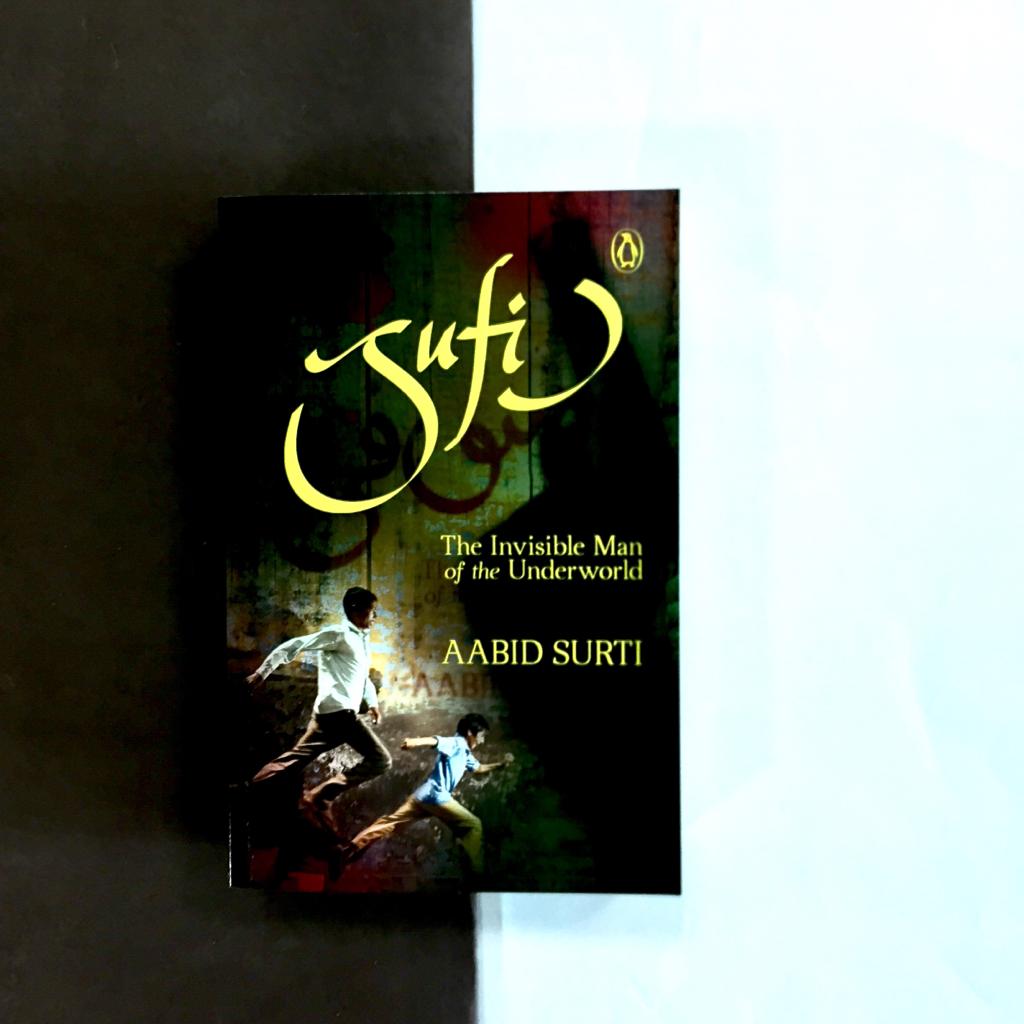
Sufi is the story of two boys who grew up in Dongri, Mumbai.


One of them, Iqbal Rupani, aided and abetted by a corrupt policeman, is drawn towards criminal activities in his teens. As he becomes powerful and influential as a racketeer and smuggler, he creates a puritan code of conduct for himself: no drinking, no smoking and no murders. He comes to be known as ‘Sufi’ because of his principles and philosophical manner of speaking. The other boy, Aabid Surti, grows up to become a famous author.

How did the lives of these two boys, which began on such a similar note, diverge so drastically? This book presents an astonishing real-life story, with the sweep and scale of Kane and Abel, told by one of India’s most beloved storytellers.

Here are some true-to-life examples from the book that bring to light the era of smuggling!


‘The boatmen lifted the crates from the steam launch and handed them over to men who passed them on to others standing in a row. The crates were loaded on to the truck, Lastly, an unconscious Iqbal was also hauled out in the same way as the crates’


‘The procession of three vehicles crossed the bridge to enter Panvel and turned towards Bombay – past a tea stall where a waiting customs official in mufti noted down the registration numbers of all three vehicles and, barely able to conceal his smile, headed for the nearest phone booth’


‘In this so-called legal trade, unlike the criminal world of smuggling, a person’s word did not carry any weight. This was a cut-throat business. Those whom he(Iqbal) had dismissed as uneducated, unsophisticated Marathas were in fact the prawn mafia.’


‘Those days, the government had imposed a 240 per cent customs duty on the import of stainless steel. Understandably, a rise in customs duty led to an increase in price. And when the price increases, it boosts smuggling.’


Read Sufi by Aabid Surti for a true-to-life story of Kane and Abel!

Fascinating Folk Tales from ‘Cities and Canopies’

Native and imported, sacred and ordinary, culinary and floral, favourites of various kings and commoners over the centuries, trees are the most visible signs of nature in cities, fundamentally shaping their identities. Trees are storehouses of the complex origins and histories of city growth, coming as they do from different parts of the world, brought in by various local and colonial rulers.

Drawing on extensive research, Cities and Canopies by Seema Mundoli and Harini Nagendra is a book on nature’s own museums.

Here are some interesting tree-related folk tales and myths from the book:


The silk cotton in folklore is termed as a ‘parrot’s despair’.

“Folk tales mention parrots eagerly pecking at the tasty looking seed pods and being disappointed to find they contain mostly inedible cotton.”

*

Trishanku, the ruler of Ayodhya is believed to be responsible for the creation of the coconut tree

“King Trishanku was seized by the desire to go to heaven alive…. But the gods, who would not accept this unusual route of approach, complained to Indra, who pushed him down. Pushed up by Vishwamitra and pushed down by Indra, the unfortunate Trishanku remained suspended for a while. Tired of holding him up with his magic powers, Vishwamitra propped him up with a long pole. The pole became the trunk of the coconut. Trishanku’s head is the fruit or the coconut.”

*

Can trees predict the future? Many believed they do

“Mythologies from Greek to English talk of oracle trees—trees that can predict the future. Alexander the Great was believed to have received a warning from a Wakwak tree of the end of his life and the destruction of his empire.”

*

The frangipani is abundant around temples and graves due to its immortality

” The tree symbolizes immortality owing to its ability to produce flowers and leaves even after being uprooted. Its flowers adorn graves throughout the year. Great power is accorded to the seed of the tree as a cure for bites from the venomous cobra. Folk beliefs claim that the tree has no pods, as the cobras destroy them out of fear.”

*

Many ancient human societies long believed that people can talk to trees.

“In ancient Persian, Chinese and Indian mythologies, there are frequent references to the Wakwak or Vagh Vagh tree, which bears fruits that look like human heads. When the fruits ripen, the trees begin to talk, say a number of beloved old fairy tales.”

*

There are a number of tales about the tamarind from different parts of India.

“One legend from Sambalpur says that there was a fight between Bhasmasura, the asura chief, and Mahadev (Shiva). Bhasmasura hid in the tamarind tree, but Mahadev opened his third eye. The magical power from his third eye shattered the leaves of the tamarind tree, making them small forever.”


Cities and Canopies is a book about both the specific and the general aspects of these gentle life-giving creatures. AVAILABLE NOW.

Why You Should Be Reading The King of Kings rather than Endlessly Discussing Game of Thrones

One of the great classics of Gujarati literature, the Patan trilogy by K. M. Munshi, is finally accessible to English readers owing to Rita and Abhijit Kothari’s brilliant translation.

K.M. Munshi is one of Gujarat’s most well-known literary writers and his historical novels have contributed profoundly to the sense of past that Gujarat lives with. His magnificent conclusion to his beloved Trilogy, Rajadhiraj or The King of Kings is a panoramic epic filled with adventure and intrigue, and a timeless classic with a nuanced insight into human nature and the complex links between statecraft and violence.

A mysterious emissary arrives in the port city of Bhrigukachchh. He has been sent by King Jaysinhdev of Patan with a secret message for Kaak, the valiant chieftain of the city. The king seeks to urgently enlist Kaak’s help in conquering the kingdom of Junagadh. However, Kaak has also received crucial summons from two others: Leeladevi, the firebrand princess whose marriage to Jaysinhdev Kaak himself facilitated; and Ranakdevi, the queen of Junagadh.

Caught in a web of conflicting loyalties, Kaak must navigate a treacherous terrain of political machinations where the slightest misstep could lead to grave consequences-where even he will not emerge unscathed.

Seven reasons why you should be reading The King of Kings


  1. For a glimpse of the rich, varied history of 12th century India that you probably completely skipped in school

The King of Kings takes the reader through a highly layered and complex web of Gujarat in the Chalukya era. As a result of his historical research, Munshi came to the conclusion that Gurjaradesha was a region that dates back to very ancient times. It could be said to have come into its own around 550 CE; its fall began from the conquest of Qutub-ud-din Aibak, and Alauddin Khilji’s raid in the fourteenth century spelt its end. Gurjaradesha was a rather large portion of northern India centred around modern-day Mount Abu and Bhinmal.


  1. For a saga as fascinating and complex Game of Thrones set in 12th century India.

Even though the trilogy is based around the rise of Siddharaj Jaysinh,, we are hooked on to the interplay of machinations and intrigues around him. From the sagacious kingmaker Munjal Mehta, to the intelligent and calculating Chief Queen of Patan—Leeladevi, everyone has their own agendas and will do anything to achieve them. After all, power, lust, and glory are universal and timeless motives.


  1. For its powerful portrayal and multifaceted portrayal of women.

Women are very, very present in The King of Kings, not just as idealized trophies but as decision makers every bit as calculating and as potent as the men. From the paragon of all virtues-the beautiful, brilliant pativrata—Manjari, to the equally stunning, shrewd and incisively cold warrior princess of Laat turned chief queen of Patan, Leelavati, to the austere ascetic Ranakdevi, and the intelligent dowager Minalba. Even the ordinary women who pop up –from the unabashedly sensual Premkunvar to the frivolous teenager Samrath, dispay the same attention to actually creating vibrant, realistic women.

‘No, you don’t,’ the princess struck back like an experienced warrior. ‘Tomorrow, I will wear my grandfather’s crown and go at the head of my army against yours for our last battle. I will die, but I will be immortalized. Tales of my valour will spread far and wide and I will be deified like a goddess.’ There was no tremor in her voice or glint in her eyes. There was only an indifferent calmness.


  1. For the astonishingly wide breadth of its romantic and sexual relationships which range from strikingly modern to classical love stories

There is the classical romance and idealized connubial bliss of Kaak and Manjari , the political alliance of Leeladevi and Siddhraj—Leeladevi wants to attract her husband deeply but is far to brilliant and incisive to play the calculating wife to soothe his ego. Meanwhile Jaysinhdev is obsessed with a woman who rejected him years ago who is now the ascetically devoted wife of his arch-rival.


  1. For a truly realistic look at the idea of the kingdom, beyond the confines of the court to those of its satellite villages.


The King of Kings explores tensions between the centrist and regional contestations of power, and the relationship between state formation and violence. One sees in this novel the contrasting views that Patan and its margins have towards each other. For instance, when Amrabhat arrives in Bhrigukachchh, he notices that the houses of Bhrigukachchh are small and its streets narrow. The temples are old and unimpressive, not like those of Patan or Modhera.

Was it possible that the unvanquished bhatraj of Laat and durgpal of Bhrigukachchh, dearest friend of Tribhuvanpal maharaj and the enemy of a person as influential as his father, lived in a place like this? He smiled derisively: Where the palatial mansions of his father in Patan, Khambhat and Karnavati, and where this humble hut!


  1. For the brilliant subversion of the idea of the ‘heroic ruler’ and the reminder that great kingdoms are often the result of brilliant secondary figures behind the scene.

The collective energies of the wise prime minister Munjal Mehta, the warrior and chieftain, Kaak and the poised Queen Mother, Minaldevi are mobilized in accomplishing the suzerainty of the ‘great king’ Jaysinhdev , and the novel ultimately celebrates his victories. However we are on many occasions shown Jaysinhdev in a poor light, both as a person and as a statesman. If perfect states are to be achieved with full knowledge of the imperfections of those who represent it, can they remain perfect? Or rather, is the idea of the state more powerful than the one who governs it?


  1. For its delightfully rich and detailed prose interspersed with delicate flashes of humour.

This is no dry reconstruction of historical events, Munshi brings the 12th century landscape and society of Gurjaradesh to life vividly, handling the foibles and weaknesses of both the court and small towns with a deft hand.


Amrabhat was restless. He had imagined himself to be

immersed in revelry and pleasures in Bhrigukachchh. Instead,

as soon as he set foot here, he lost his servant, bore insults and,

to top it all, an unknown woman stole his heart. Such a series of

calamities at this tender age!

K.M. Munshi’s magnificent conclusion to his beloved Trilogy, The King of Kings is a panoramic epic filled with adventure and intrigue, and a timeless classic with a nuanced insight into human nature and the complex links between statecraft and violence.

The Success of the Successor to Steve Jobs.

When it came to picking a successor to Jobs, there were rumors that the Apple board was likely to choose someone from outside the company, but this was never actually the case. The board was Jobs’s board, sometimes controversially so, and they were always going to accept whomever Jobs picked for the role. Jobs wanted an insider who “got” Apple’s culture, and he believed there was no one who fit the bill more perfectly than Tim Cook, the man he had trusted to run Apple in his absence on two previous occasions.

Tim Cook is now the CEO of Apple, and here is how Apple has been doing under his leadership.


Apple has become the world’s first trillion dollar company under his leadership

*

Apple is on its way to having a more diverse workforce. Progress is slow, but it’s encouraging to hear that in 2017, half of Apple’s new hires in the United States were from underrepresented groups in tech.

*

Apple’s products have received high praise from accessibility advocates. In 2017, the company won three major awards for innovations in accessibility. Being blind shouldn’t be a barrier to using the iPhone, and Apple is working hard to ensure that its products are for everyone.

*

Because of Cook’s values, Apple will likely never experience privacy scandals to the same extent that Facebook has.

*

Tim Cook has placed a clear emphasis on environmental efforts at Apple. Apple has made world- changing investments in renewable energy, responsible forestry, and sustainable manufacturing.  Apple’s operations now run on 100 percent renewable energy in twenty- fi ve countries, and it’s starting to bring the supply chain along. Apple’s supply chain— which accounts for 70 percent of its carbon footprint— will be 100 percent renewable in a decade or less.

*

Aside from big, world- dominating products, Apple under Cook has innovated in many other areas. Apple’s AirPods are a giant hit, and they are remapping the wireless headphone space.

*

Apple Pay is slowly taking off and is tipped to become the biggest contactless payment system in the United States; it’s projected to account for a third of all payments by 2022.

*

The first major new product category launched under Cook, the Watch was initially greeted with skepticism and even scorn. But three years later, the Apple Watch is the biggest smartwatch on the market and is bigger than the entire Swiss watch industry. Apple is estimated to have sold forty- six million to date. It is likely to develop significantly in coming years.

*

Since Cook took over the company, AAPL stock has tripled in value. Some experts attribute the trillion- dollar valuation to the success of the iPhone, the iPhone X especially.

*

Apple under Cook has launched a comprehensive set of initiatives, from elementary schools to colleges, to improve the numbers of women and underrepresented minorities going into tech.


Drawing on access with several Apple insiders, Leander Kahney tells the inspiring story of how one man attempted to replace someone irreplaceable, and–through strong, humane leadership, supply chain savvy, and a commitment to his values–succeeded more than anyone had thought possible. Get your copy here!

Can India Excel At Sports? Here Are 7 Challenges We Face

As we stand today, Indian sport is a fount of possibility— fast growing in opportunity, slow moving in delivering results, promising in its chaos. Sports management is a legitimate field of study that imparts knowledge on the business of all levels of sport, and is helping bright-eyed youngsters ‘follow their passion’ and channel it into specific directions of interest.

Go! India’s Sporting Transformation features never-before-seen collection of essays by leading athletes, sports writers and professionals, who together tell a compelling story of India’s ongoing sporting transformation.

Here are 7 challenges India faces that if addressed will help us reach new heights in sports:

————————————

Sport in India has been viewed as a form of leakage of capacity and intent. The time spent on sporting activity was time spent not doing something more meaningful. Devoting time and energy to sport was in effect drainage of potential; time and attention paid elsewhere would be deemed to pay richer dividends.

~


Sports as a career was a very high-risk choice, one in which being successful was no guarantee of being able to make a half-decent living.

~


The idea of engaging in sweaty physical activity was seen to be a lower-order pursuit. What was valorised were the preoccupations that involved the upper body. The mind and its exertions were exalted, and there was a strong class connotation attached to things physical.

~


The game of hockey had changed in character, and post the arrival of the astro-turf, the Indian lack of athleticism caught up with the team.

~


Sporting federations across different sports displayed the same craven need for power, combined with a callous disregard for the sportsperson. The people charged with the responsibility of promoting sports have traditionally been the single-most important reason for the state that sport has languished in.

~


We had a passive relationship with our bodies…..We increasingly think of our bodies as malleable and within our control. We can shape them, mould them as per our need, protect them, and use them to extract more life.

~


Apologies… do not come easily to sports federations in India. That would mean the admission of an error and accountability to someone other than themselves. That doesn’t happen enough—neither the governors of an Indian sport admitting errors, nor feeling the need to be accountable.

Go! India’s Sporting Transformation is available now!

error: Content is protected !!