Publish with Us

Follow Penguin

Follow Penguinsters

Follow Penguin Swadesh

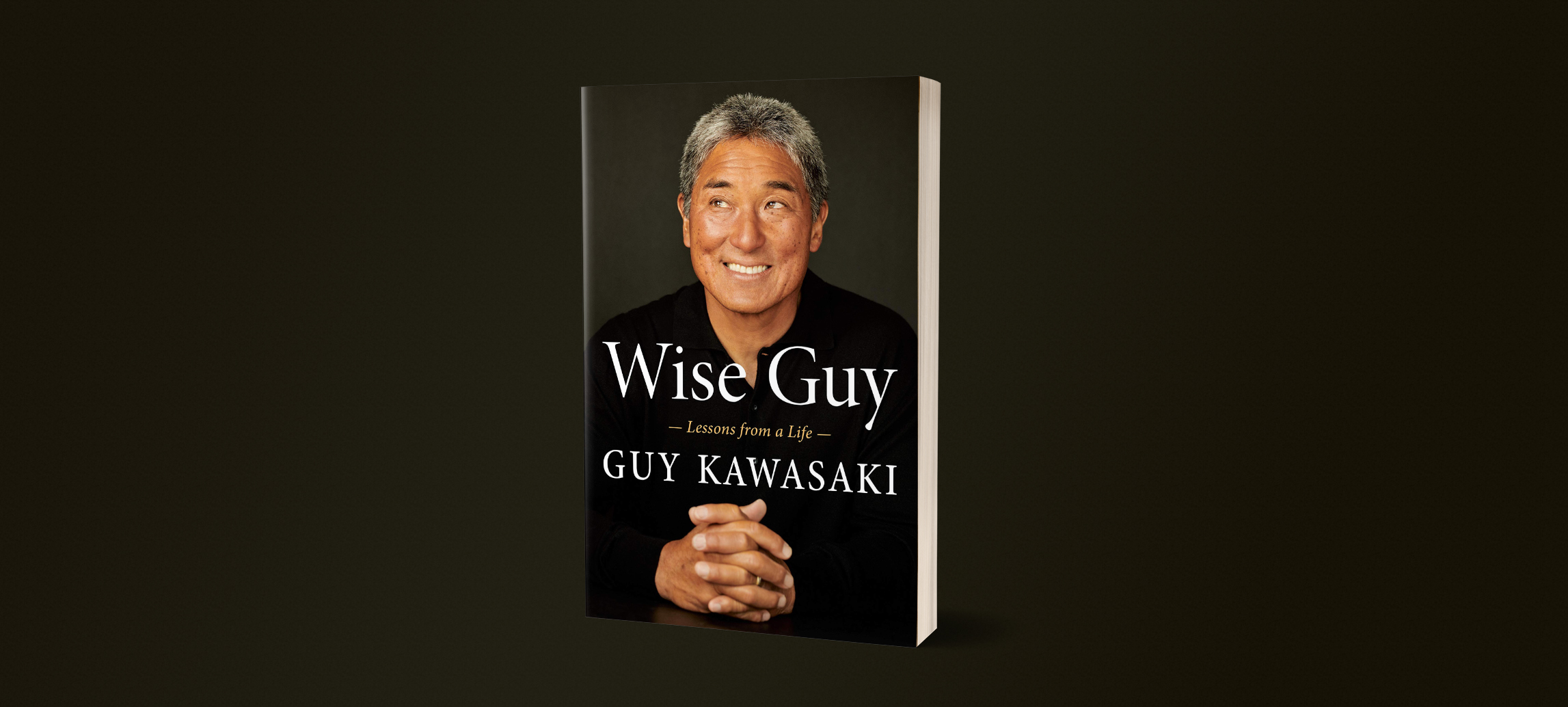
Want to be Successful? Guy Kawasaki Tells you How!

“My stories do not depict epic, tragic, or heroic occurrences, because that hasn’t been the trajectory of my life. They do not depict a rapid meteoric rise, either. One decision. One failure. Hard work. One success. My goal is to educate, not awe, you.”

Guy Kawasaki has been a fixture in the tech world since he was part of Apple’s original Macintosh team in the 1980s. He’s widely respected as a source of wisdom about entrepreneurship, venture capital, marketing and business evangelism, which he’s shared in bestselling books such as the art of the start and enchantment. But before all that, he was just a middle-class kid in Hawaii, a grandson of Japanese immigrants, who loved football and got a C+ in 9th grade English. Wise guy, his most personal book, is about his surprising journey.

Here are some lessons from his book!


You should never underestimate the difference one person can make to your life. They can change the entire course of your future.

“Akau’s advice changed the trajectory of my life. If she would have not convinced my parents to send me to ‘Iolani, I would not have gone to Stanford. If I had not gone to Stanford, I would not have met the guy who got me interested in computers and gave me a job at Apple.”

*

Your life is a sum of all your decisions. It is up to you to trust your own instincts and actions. A person’s happiness is in their own hands.

“You must believe that you control your own fate. No one else is responsible for your success or failure. Her insights had a profound effect on who I believed was responsible for my happiness – that is me.”

*

What matters is how you sell the commodities that you have. And the person who masters the art of selling wins the game.

“Working for Nova was one of the best decisions I ever made because of the CEO of the company, Marty Gruber, taught me one of the most valuable skills I ever learned : how to sell. Jewellery is made of commodities – expensive commodities, but commodities nonetheless. As such, the ability to sell is crucial to success in that line of work.”

*

Every great innovation does not require rocket science. Sometimes simple ideas turn out to be the greatest innovations.

“The truth probably is that Bill Gates wanted to get IBM’s business for the IBM PC, and he wasn’t looking beyond that. And Steve and Woz wanted to sell some Apple Is to the Homebrew Computer Club. The long-term plan was “until we run out of money and have to get a real job.”

*

Every word can cost a person their career

” In front of everyone, Jobs told Clow not to give me a copy. I don’t know what got into my brain, but I said “Why, Steve, don’t you trust me?” and Steve responded, “No, I don’t.”

And I countered, “That’s okay Steve, I don’t trust you either.” That response may have cost me tens of millions of dollars, because I clearly burned a bridge for working at Apple when jobs returned.”

*

Honesty is the best policy

“’What do you think of a company called Knoware?’

I told Jobs that the company’s products were mediocre and that the company was not strategic for us. After all, they didn’t take advantage of the Mac graphical user interface and other advanced features.

After my diatribe, Jobs said to me, “I want you to meet the CEO of Knoware, Archie McGill.” I shook his hand, and Steve said to him, ‘See? That’s what I told you.’”


Guy Kawasaki covers everything from moral values to business skills to parenting. As he writes, “I hope my stories help you live a more joyous, productive, and meaningful life. If Wise Guy succeeds at this, then that’s the best story of all.”

Heartfelt lines from ‘The Carpet Weaver’ that encapsulate the spirit of #Pride

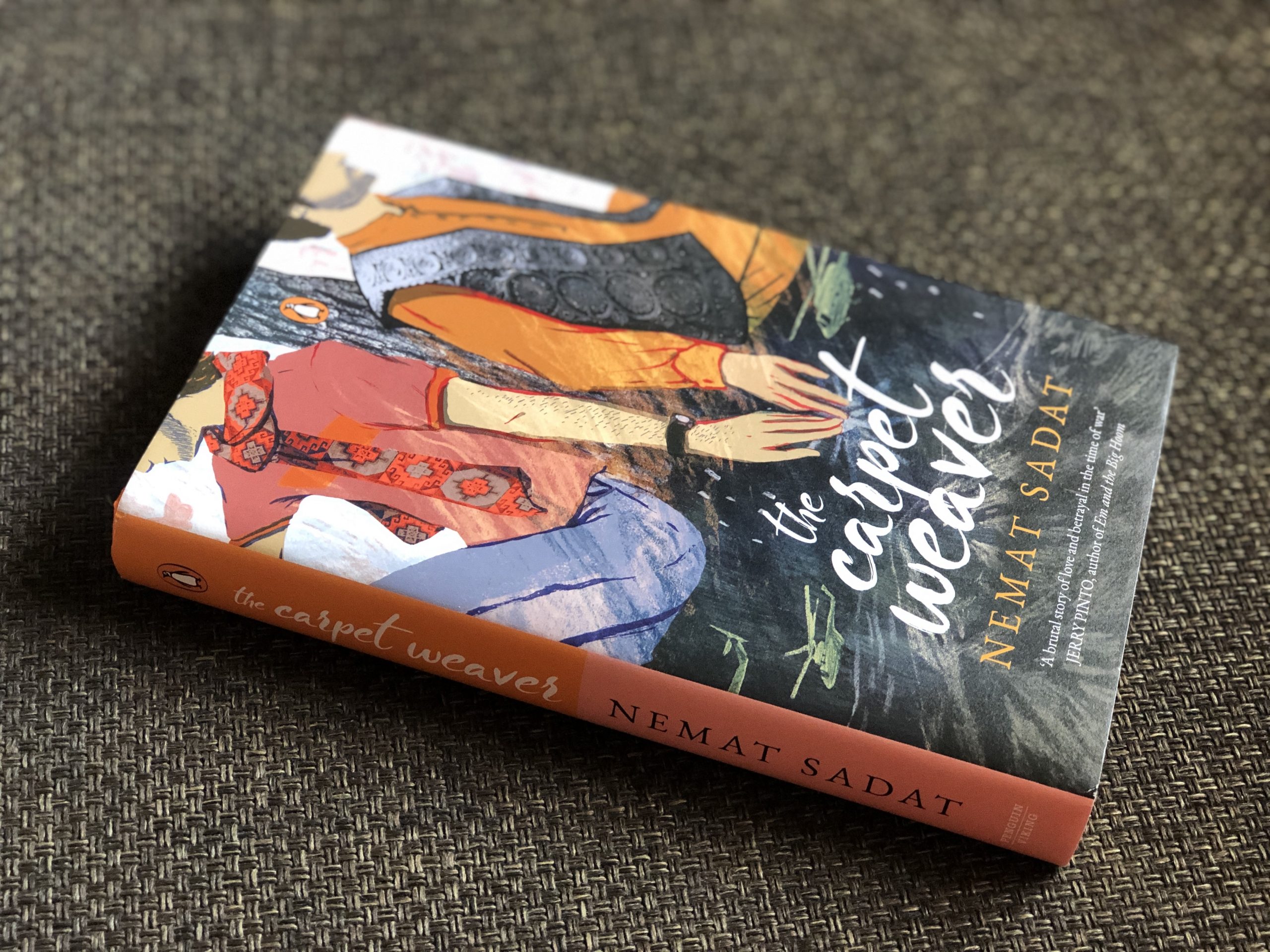
Afghanistan, 1977. Kanishka Nurzada, the son of a leading carpet seller, falls in love with his friend Maihan, with whom he shares his first kiss at the age of sixteen. Their romance must be kept secret in a nation where the death penalty is meted out to those deemed to be kuni, a derogatory term for gay men. And when war comes to Afghanistan, it brings even greater challenges-and danger-for the two lovers.

From the cultural melting pot of Kabul to the horrors of an internment camp in Pakistan, Kanishka’s arduous journey finally takes him to the USA in the desperate search for a place to call home-and the fervent hope of reuniting with his beloved Maihan. But destiny seems to have different plans in store for him.

Here are some soul-stirring lines from Nemat Sadat’s revolutionary new book, The Carpet Weaver!

“I took the bag from Faiz’s hand and pulled out a bra, rubbing the padding across my face and chest. ‘This is so nice. I love the way lace feels.’ Maihan draped the cup of the bra on my head. ‘Look how huge she was—like Marilyn Monroe!’”

“Maihan grabbed a fur throw from the armoire, wrapped it around his neck, and swung his hips while lip-syncing precisely to the Hindi lyrics. When the song was over, he asked, ‘How many stars do you give me?’ ‘Five stars!’ Theatrically, I blew him five kisses. ‘I love India,’ Maihan said, putting his hands over his heart. ‘When I grow up and get married, I want to celebrate my honeymoon there.’” 

“Maihan used a washcloth to buff Faiz’s lips and defined them with lipstick, then flecked his cheeks with rouge and rubbed it in. I opened a bottle and drizzled glitter on Faiz’s hair, put a gold dot on his forehead, and rubbed ambergris oil into his hands and neck. I snapped clip-on earrings onto Faiz’s ears, and when we were done, Maihan and I looked into the cheval mirror in front of us and saw Faiz transformed into a striking woman.”

“In the distance to the east, a flickering lazy sun climbed slowly over the arid mountains, dwarfing our existence. Like sunflowers, Maihan looked to it and so did I, our eyes flaring, as it painted our nascent love with approving warmth. Maihan had become mine, and I his.”

“I slipped my arms around him and hugged him tightly. Some of his drink spilled on my back. I was too intoxicated by his woodsy cologne to care. Maihan pulled away and gaped, and then smiled. I felt his warmth radiate into my soul. Since our voices capped over the unbearable decibel level, we funnelled our words directly into each other’s ears.”

“‘I’ve dreamt about you. Only about you.’ He held his gaze then and studied my face. ‘I think you have the most beautiful almond-shaped eyes in all of Asia.’”

The Carpet Weaver is a sweeping tale of a young gay man’s struggle to come of age and find love in the face of brutal persecution.

Meet Krishna: An Indian Feminist Icon of the Early 20th Century

Krishna Sobti is a magical being. From her experimental prose to her legendary parties to her unique sense of style to her male alter ego, the writer ‘Hashmat’, everything about her is deeply considered and infused with her special warmth.

Krishna Sobti tells stories in her writing, and in conversation, but she has an equal if not greater interest in language and style. Her preferred forms have been the novella and the essay, and this is perhaps because she has sought to boil sentences, phrases and entire narratives into the smallest number of words possible.

A Gujarat Here, A Gujarat There is a feminist partition novel. Rape and abduction play a huge role in most literary works about the Partition, and Krishna Sobti has not shied away from the topic either in this book or in her other writings. Writing as a young woman, in the more conventional style of her early years, Sobti is already experimenting with brevity and focusing on single words.

Read on to know why translator Daisy Rockwell considers Krishna Sobti as a feminist icon of her time, especially through her protagonist Krishna


Sobti does not like being considered a ‘woman author’, in the sense that adding in the word ‘woman’ somehow makes one a woman more and an author less. Indeed she regularly wrote essays from the perspective of Hashmat, her male alter-ego, as noted above—a method, perhaps, for shedding her lady-author identity.

~

Krishna, the protagonist, faces sexism and prejudice against refugees through what we would now call constant micro-aggressions. Yet these make her indignant. She never sees herself as weak, and it is that sense of strength and self-confidence, and not being a woman-hyphen-anything, which keeps her focused and protected throughout the narrative.

~

When the young protagonist becomes the governess of Tej Singh, the child Maharaja of Sirohi, she finds herself standing at the site of multiple fissures and contested territories. She is a migrant (from Delhi) and a refugee (from Lahore and Gujrat), newly arrived at a border in the process of being drawn (between Rajasthan and Gujarat), charged with the education of a maharaja whose legitimacy is being contested. Everything is in a state of flux, and no one knows quite where they stand. She is treated as an outsider because she is not from Sirohi, but also because she is a woman who has left home for employment, and additionally because she is viewed as a refugee. The Governess is made of stern stuff, however, and she stands her ground as long as she can, even as she copes with a sense of what has been lost with Partition.

~

The self-reliance of the protagonist mirrors that of the new nation. The flux of the historical moment, including the displacement of Partition, emboldens her to set out and find her own way. Though she is haunted by what has been lost, the sense of mourning gives way to a feeling of lightness—to a nimbleness and lack of encumbrance with ancestral baggage.

~

The protagonist Krishna goes through many trials and tribulations yet is not a victim of Partition; she has her own feminist self-image pretty much reflective of the author’s own identity as a strong feminist.


Part novel, part memoir, part feminist anthem, A Gujarat Here, A Gujarat There is not only a powerful tale of Partition loss and dislocation but also charts the odyssey of a spirited young woman determined to build a new identity for herself on her own terms.


An Honest Conversation about the Mindset that Divides Us, Please?

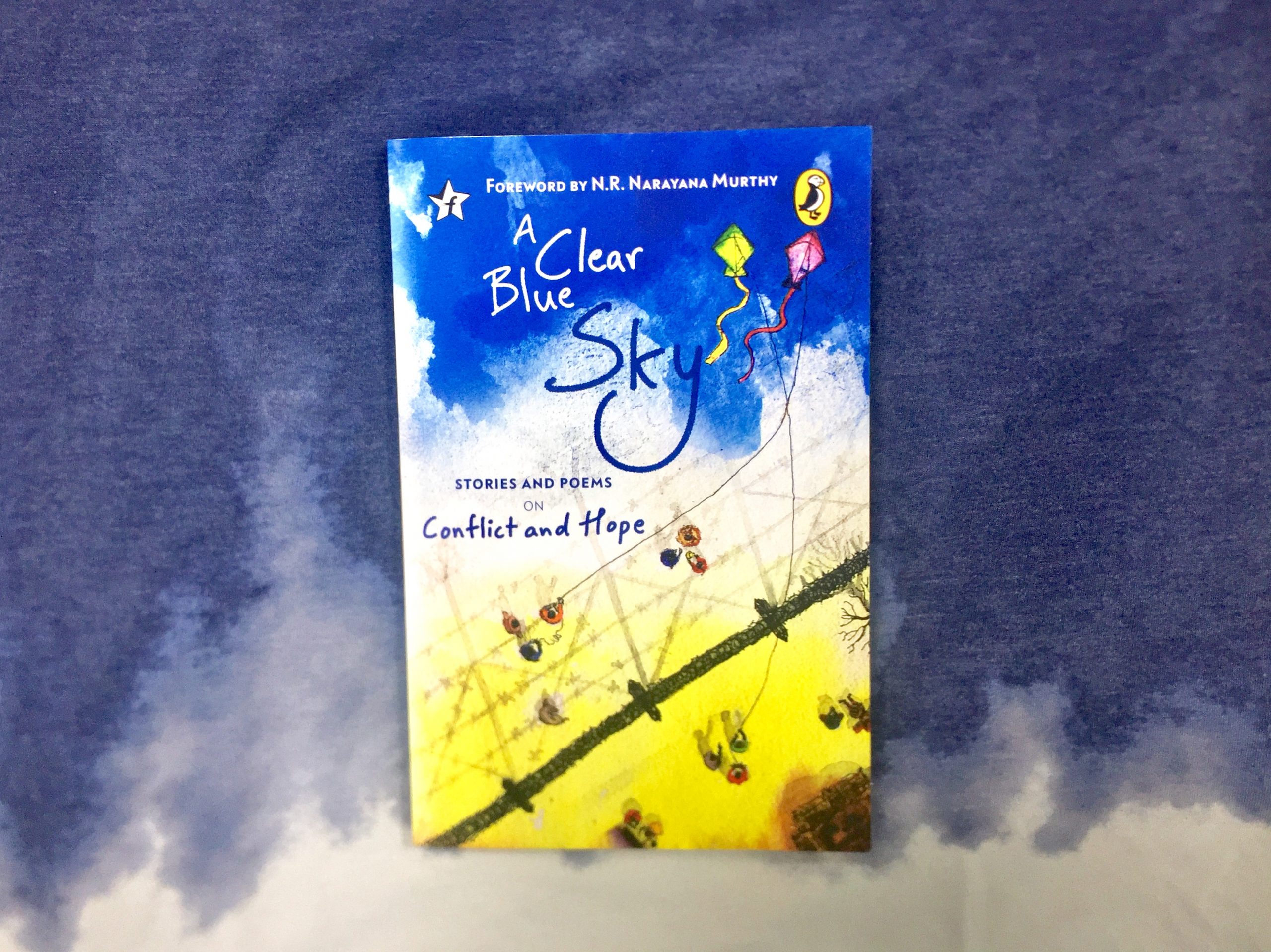
26/11, 9/11, 7//7 – these are the dates that have changed the way see ourselves and those around us. Dates that have changed the world, and not for the better. It’s about time we had an honest conversation about religion, race, caste and the mindset that divides us.

In this collection writers from India, Sri Lanka and Pakistan – Gulzar, Elmo, Jayawardena, Manjula Padmanabh, Poile Sengupta, Kamail Aijazuddin, Bulbul Sharna and others – write about various kinds of conflicts that plague are world today.

In exclusive partnership with Flipkart, we present you to quotes from A Clear Blue Sky.


“‘…There will be moments when we feel unsettled by someone who is different from us. We just need to remember that being different is not a bad thing. It’s not something that should frighten us.’”

*

“‘They are killing each other. Just yesterday we were all friends. Why this sudden madness?’”

*

“His world had split into two – into ‘them’ and ‘us’. ‘They’ were anyone who believed in the teachings of Mohammed. ‘Us’ was the rest of the world.”

*

“‘We cannot always know the wisdom of the Quran. It tells of jinns, of the Day of Judgement and also how to be a true Muslim. Allah will reveal all to those He wants…’”

*

“‘Once he is the deity in a temple only the high-caste priests, royalty and noblemen are allowed inside. Not a low caste like me.’”

*

“She taught me that I have a right to reject

What deep down in my heart I cannot accept

But first I must learn to practice the above

And to be heard by the world, I must say it with love.”

*

“Kartikeyan is forgotten and like him, very soon I will be forgotten too.”

*

“When he carves a goddess he can make the stone smile and when he creates the image of Nataraja, the dancing image of Lord Shiva, it is as if the stone begins to dance.”

*

“‘They are ready to kill,’ the sergeant shouted at them.

‘But we are willing to die if the need be.’”

*

“Life would have been different perhaps had I given him the answer he wanted. Instead I asked for time. I had wanted only a few days, to calm the seething emotions. But the gods granted me a lifetime.”


Get your copy here!

Feel the Nostalgia of Autumn in Pico Iyer’s Words

Returning to his long-time home in Japan after a sudden death, Pico Iyer picks up the steadying patterns of his everyday rites: going to the post office, watching the maples begin to blaze, engaging in furious games of ping-pong every evening. As he does so, he starts to unfold a meditation on changelessness that anyone can relate to: parents age, children scatter, and he and his wife turn to whatever can sustain them as everything falls away.

After his first year in Japan, almost thirty years ago, Iyer gave us a springtime romance for the ages, The Lady and the Monk; now, half a lifetime later, he shows us a more seasoned place-and observer-looking for what lasts in a life that feels ever more fragile.

Here are some lovely quotes from his new book, Autumn Light


Get a copy of Autumn Light for more!

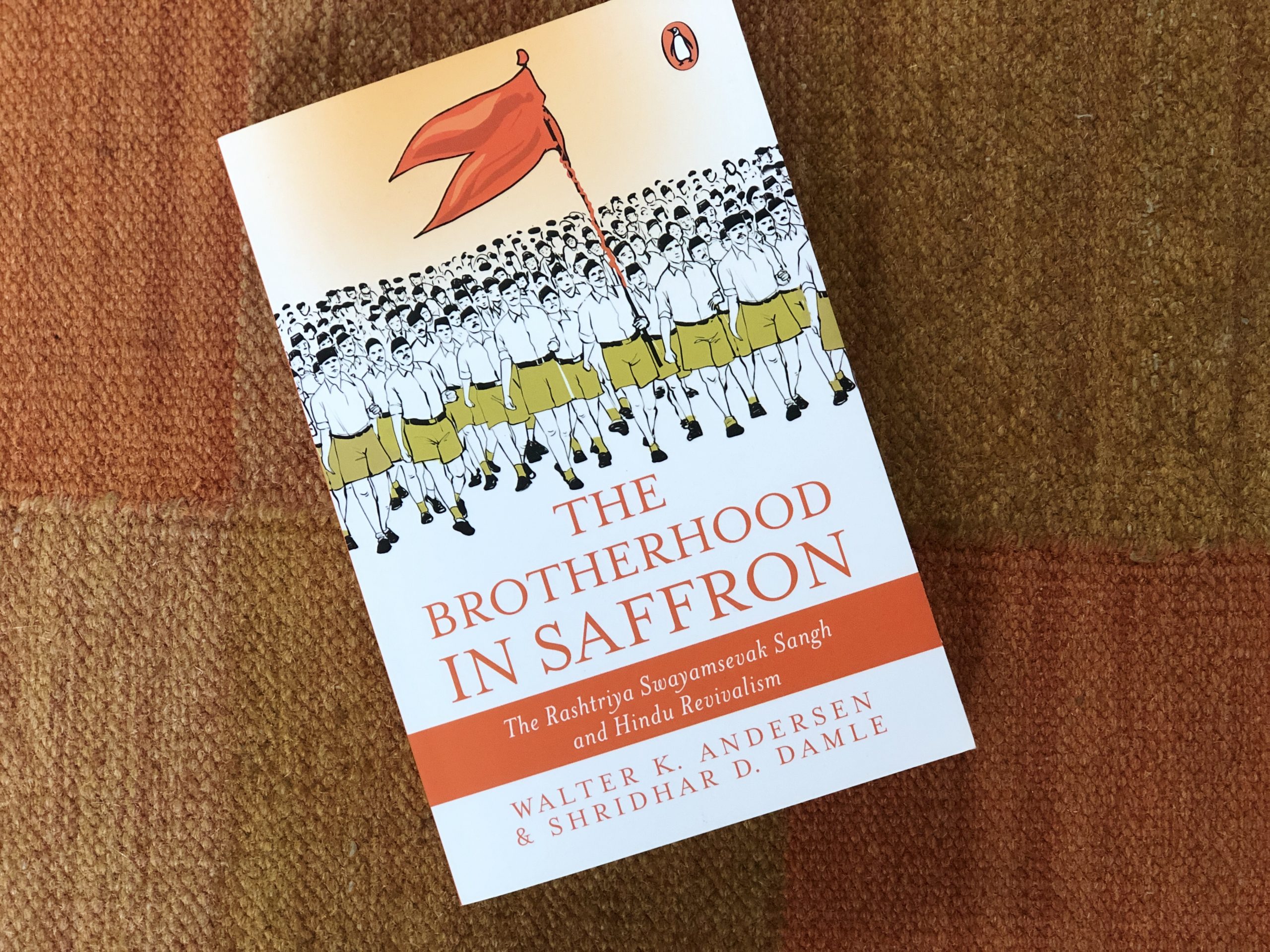
The Book to Read to know more about the RSS

Tracing the growth of the Rashtriya Swayamsevak Sangh (RSS) since its formation in the mid-1920s, Walter K. Anderson and Shridhar D. Damle examine its ideology and training system in their book, The Brotherhood in Saffron. 

Read on to know why you should get your hands on the copy of this book:

It gives insight into the humble origins of the RSS

“The RSS was established in 1925 as a kind of educational body whose objective was to train a group of Hindu men who, on the basis of their character-building experience in the RSS, would work to unite the Hindu community so that India could again become an independent country and a creative society”


It answers interesting questions like whether the British considered the RSS to be a threat 

“In an official report on RSS activity, prepared in 1943, the Home Department concluded, ‘. . . it would be difficult to argue that the RSS constitutes an immediate menace to law and order . . .’


The book is a prequel to the award-winning ‘RSS: A View to the Inside’

Thirty years before they wrote the award-winning ‘RSS: A View to the Inside’, Anderson and Damle published their first path-breaking book on the RSS. As the first significant book on the RSS, this prequel provides readers their first glimpse into the inner workings of the Sangh.


It clarifies what the RSS actually thinks about communal rioting

(Hint: They consider it a weakness!)

“Its(RSS) founder viewed the communal rioting as a symptom of the weakness and divisions within the Hindu community.”


 The book helps you learn more about RSS, a significant cultural organization

The RSS is one of the most significant cultural organizations in India, making this book a powerful and important read.

The Brotherhood in Saffron is AVAILABLE NOW.

What drove these ordinary women to become ‘Queens of Crime’?

Dysfunctional families, sexual abuse, sheer greed and sometimes just a skewed moral compass. These are some of the triggers that drove the women captured in these pages to become lawbreakers.

Queens of Crime co-written by Sushant Singh and Kulpreet Yadav demonstrates a haunting criminal power that most people do not associate women with. The acts of depravity described in this book will jolt you to the core, ensuring you have sleepless nights for months.

Based on painstaking research, these are raw, violent and seemingly unbelievable but true rendition of India’s women criminals.

Here are some hard-hitting facts about a few women criminals from the book!

————— 

Shantidevi – The Drug Queen of Mumbai

“Shantidevi started at the lowest rung. Her task was to peddle brown sugar and hashish. A daily target was set and her beat covered five-star hotels across the city. She learnt the ropes fast. There was a huge demand and she was quick to realize that the supply was barely enough to keep pace with it. Her customers trusted her more because she was a woman. She never cheated anyone, keeping the pricing as explained.”

Meeta- The Queen of the Dark

“She had earned Rs 25,000, the equivalent of five months’ salary, in just one night. Over the next three years, Meeta slept with many men. By the time she turned twenty, she had over fifty regular clients. She had paid off the debt and bought two cars: a Maruti Alto and a Wagon R.”

Resham aka Mummy- The Lady Don of Delhi

“ Mummy was sixty, a powerful don whom everybody dreaded. She had no fear: not of competitors, not of the police, not of the courts. Getting away with murder for so long had emboldened her.”

Preeti- The Tinder Murder

“Laxman tried to speak, but since his mouth was taped, he couldn’t. Preeti stepped forward and pulled off the tape. Before he could utter a word, she hissed into his ear, ‘If you shout, these men will kill you. They don’t know what they are doing. They are high on cocaine.’”

Sanjana- The Baby Killers

“Since she didn’t have a job and her daughters were too young to work, she decided to fall back on stealing. But this time, she trained her daughters as well. They became a gang of three, specializing in purse-snatching, chain-snatching, pickpocketing and shoplifting. The mother taught the girls all the tricks of the trade.”


Get your copy of Queens of Crime today!

Know the New Age Man!

Atul Jalan’s book Where Will Man Take Us? gives insights into the effects that technology has on the current world. Exploring the advances in nanotechnology, artificial intelligence, quantum computing and genetics, the book also gives an incredible outlook on the future while also mapping pertinent questions of changes brought about in us – as a society and as a species, as a consequence. It also gives an intriguing perspective on how the technology today is rapidly altering the dynamics of human love, morality and ethics and wonders what’s in store for humankind in the next generation.

Here we give you a snippet of the new age man, as thought by Atul Jalan in this book:


  1. With the advent of Artificial Intelligence making our lives easier for us, the day is not far when AI would be so sophisticated that it would be able to run its own varied functions.


“We will, at some point soon, come to a stage where AI will become capable of recursive self-improvement”


  1. In the wake of swift technological developments and an abundance of machines dominating our lives, there could be a possibility of humans passing from the current forms into a higher form, as noted by William Reade. Further explaining this, Reade calls this theory the second act, as our present time is understood to be only a transitional phase from a human to a post-human era, which would be controlled by machines.


“Cosmologists believe that this future, this second act, could extend into billions of years. Machines might not need this planet and its atmosphere to survive and might be able to explore space extensively, as humans never could”


  1. The book lists a series of possibilities that could occur once the ASI (Artificial Super Intelligence) period comes into being. One of the most interesting outcomes of it would be the creation of a particular kind of technology which would result in distilling our consciousness through neural engineering and passing it on to a computer, thereby reinventing the concept of life after death!


“We might also soon be able to clone our body and then live eternally by moving from clone to clone. Imagine your body is like a smartphone and your consciousness is on the cloud”


  1. Technology has come to have a strong influence on people in the modern world, just as religion has had for years. Atul Jalan explains that the indomitable search for knowledge and advancements in technology has come to express just how important these advancements will prove to be even in the future.


“Much as socialism took over by promising salvation through social justice and electricity, so, in the coming decades, new techno-religions will take over—promising salvation through algorithms and genetics”


  1. Nanotechnology has proved to be another important discovery in the recent years. Scientists are working on brain-computer interfaces which could be used to augment abilities in a human.


“The progress that is being made on brain-computer interfaces verges on science-fiction. This means that soon you will be able to operate the computer with thought, much the same way our thoughts control our speech, movements and feelings”


  1. One of the best break-through in the field of nanotechnology has been the invention of nanobots. When released in our blood streams, these can unclog our arteries, repair organ-damage, and scientists are even speculating that they might even be able to reverse the ageing process in human body!


“But what will really make you sit up is the fact that eventually, they could soon even restore our DNA to how it was when we were in our twenties. This can turn fragile senior citizens into healthy young individuals overnight. In short, the promise of eternal youth”


In this book, Atul Jalan tackles nanotechnology, artificial intelligence, quantum computing and genetics, seamlessly weaving the future of technology with the changing dynamics of human love, morality and ethics.

Fall In Love All Over Again with Rahul and Akriti from ‘The Secrets We Keep’

Rahul an intelligence officer on a secret mission is undercover at a major’s house. In the process, he falls in love with the major’s daughter, Akriti, unknowingly putting her in danger. To protect her, Rahul decides to hide her at his parent’s house. However, estranged from his family for years he must first make amends with them.

Just when he thinks he has found a haven for Akriti, she goes missing. That’s when a research wing officer is put on the job and Rahul realizes that she is someone who seems all too familiar. Or is she really?

As Rahul comes closer to the truth, he is faced with the biggest shock of his life.

Here we introduce the readers to the dynamic characters of Rahul and Akriti:

Rahul

What does it take to become an intelligence officer, to make a person stand out from the crowd? The hero of the book ‘The Secrets We Keep’ is a fine example to answer this question. As the book is a cross intersections of the past events and present day scenario, the readers witness the life of Rahul both as an adult and as an adolescent. Throughout his teens, Rahul was a rebellious child. He forged his mother’s signature on a complaint written by his school teacher and even stole money to buy his girlfriend a gift.

He was fighting a battle between the expectation of his parents and his own reality. Unlike his elder brother Karan, he was not excelling in academics, yet was exceptionally gifted in playing sports. Thus, following the traditional Indian mindset, his parents always criticized and demeaned him. This made him realize that his parents never truly saw him for who he was, which led him to leave home. Apart from that, he was also a romantic at heart. He fell in love with Akriti, yet when she was kidnapped he was the only one who could solve the case and save her.

As an adult, he was very calm and tactical. He was known to be a risk taker. Yet, it was the mistakes of his past that came to haunt him. His instincts and presence of mind is what made him decipher a web of lies. Overall, even though he is the hero of the book, he is a very realistic character. It was because of his carelessness that Akriti was kidnapped, yet it was due to his sharp mind that she was saved and a bigger threat was unveiled and neutralized. As a hero, he was charismatic and smart, and had the courage to accept the mistakes of his past.


Akriti


Akriti, as one of the leads characters of the book, is a woman who has good reflexes and instincts. When her house was attacked, she acted quickly and instead of rushing towards danger, she hid in her closet. She was a smart woman, who was in love with an intelligence officer, Rahul. Even though Rahul’s family did not approve of their relationship she never bowed down to their wishes and tried to adjust with them. She was a headstrong woman, who believed that moulding old traditions with newer ones was important to modernize with changing times. Overall, Akriti was an emotionally strong woman, who was not afraid of adversities. She faced obstacles and never ran away from them. She was courageous, believed in the power of love and was ready to fight for it.


To explore their passionate love story, read Sudeep Nagarkar’s The Secrets We Keep

Five Realistic Things to Keep in Mind before you Embark on a Trip!

A self-confessed travel junkie, Sudha Mahalingam’s passion for travel has only gotten worse over time. It continues to singe and sear and is now imbued with a sense of urgency. She believes that not only is there so much to see and do while she is not getting any younger, the hydra headed monster called tourism is literally carpet-bombing every square inch of our cowering planet—threatening to reduce her to being a tourist rather than a traveller.

In her book, she provides many travel precautions and tips for the uninitiated in her own humorous, tongue-in-cheek way. Here are a few!

 Not all new things you try out when travelling are fun. But what the heck!

“Back home, my family refuses to believe I actually skydived at age sixty-six. Thankfully, Alois remembered to send me the GoPro pics. I have even blown up one of these into a poster and stuck it prominently above the dining table to shut them up. But I know I will not skydive again.
It is just not thrilling enough.”


 The time when I regretted not paying much attention to my geography lessons in school.

“This being 2007, Schengen was still an evolving agreement. I hadn’t the foggiest idea as to which countries were part of the European Union, leave alone the subset Schengen. Does Slovakia qualify to be a member of this august agreement? Which countries count as Eastern Europe? Geography had never been my strength, what with all those indecipherable maps and rainfall patterns. I had a vague idea that some countries were already in, while others were waiting to be admitted—whoever paid any attention to these irrelevant bits of information on the international pages of newspapers anyway? Would the adjoining Schengen country be Austria? Or was it Poland?”


‘Exotic’ has other meanings; sometimes it means overpriced and unoccupied.

“When my friend R and I land in Seville late one evening, what we find is a dreary town with uninspiring concrete blocks. The romantic-sounding Guadalquivir is nothing but a foul ditch winding its way through the town’s congested streets. Our little boutique hotel downtown is neither boutique nor a hotel. It is a glorified homestay, grossly overpriced, over-ornate and under-occupied. No, make it unoccupied. We are the only guests here.”


Your journey is never complete without an episode of panic, courtesy the airport immigration and security officials.

“Immigration and security done, we are ambling to our boarding gate when I hear my son’s name mangled beyond recognition on the PA system. We hurry back to the assigned counter, where, without a word, Kapil, all of seventeen is whisked away beyond immigration back into Jordan while I am left standing on this side of the gate, in utter panic. Minutes tick away and there’s still no sign of him. I wring my hands in anxiety, but the woman behind the counter is inscrutable. The security guards look too fierce for me to make a dash back into Jordan.”

Plans always go wrong when travelling. If they do not; know that something is not right.

“Maximilian Alexandrovich—I would learn his name later—the grizzly Russian driver was obviously not expecting any passengers this evening. He stares at me blankly. From the fumes inside the cab, I presume he is in a vodka-induced daze. I wonder if ex-Soviet taxi drivers consider passengers an occasional interruption to their daily schedule of lazing around in their cabs. I also wonder whether it is wise to hire his taxi, but unfortunately, there is no other outside Bishkek airport tonight. I had not planned it this way. I was to arrive in Bishkek by noon, take a cab directly to Lake Issyk-Kul six hours away . . . But my plans went awry when the flight from Tashkent to Bishkek was delayed by six hours. Now I have no hotel bookings, speak no Russian and have to survive by my wits in this strange city.”


Apart from providing various pearls of wisdom, through The Travel Gods Must Be Crazy, Sudha invites readers on an unexpected and altogether memorable tour around the world!

error: Content is protected !!