Publish with Us

Follow Penguin

Follow Penguinsters

Follow Penguin Swadesh

The Begum-Rediscovering Shared History

A conversation between the Indian and Pakistani authors of The Begum, Deepa Agarwal and Tahmina Aziz Ayub


Deepa:

Dear Tahmina, writing this book has been an amazing process of discovery for me and I’m sure for you too. I had heard a lot about Ra’ana Liaquat Ali Khan while growing up in the small town of Almora in Kumaon. Her name was mentioned in awestruck tones—the fact that this local girl, Irene Pant, had married Liaquat Ali Khan, the first prime minister of Pakistan and after his death, served as ambassador to different countries and been the governor of a province was the stuff of legends. My father was close to her younger brother Norman Pant so there was a connection with her family, which created a personal interest in me. However, since she never visited her home town after marrying Liaquat Ali Khan in 1933 and left for Pakistan in 1947 my image of her was hazy and distant. When the idea of her biography came up, I felt it would be a fascinating to find out how she had travelled so far from her birthplace. The events of her life convinced me that she was a woman whose story needed to be told. What was the source of your interest in Ra’ana Liaquat Ali Khan, Tahmina, this woman who played an significant role in sub-continental history, but is unknown in India and almost forgotten in Pakistan today?


Tahmina:                                     

Deepa dear, first of all I must share with you my delight at the choice of the words for describing this joint blog of ours, “Rediscovering Shared History”. Yes, and this is precisely the reason for my spontaneous response in accepting this writing cum research project when it was offered to me by Namita Gokhale in August 2016 during our meeting in Thimpu at the Mountain Echoes, Bhutan’s Lit Fest.

We here in Pakistan had heard about the achievements of this great lady in so many fields and yet we knew so little about her roots and her early life in India.   So for the first time this biography would manage to bring to light so many of those facets of her life which helped to shape her personality and prepare her for the tests of time she was to face in her later years.

The other aspect that made me wake up to the need for this biography was the fact, as you rightly pointed out, that many people of the present generation had mostly forgotten about the unusual and amazing story of this great lady and more so the trials and tribulations she had to face and soon after their arrival here, especially when she was to lose her husband to an assassin’s bullet.


Deepa:

The freedom movement was a long drawn out struggle, which ended in the Partition of India and Pakistan. While researching the life of Begum Ra’ana I uncovered many facts that I had only been superficially acquainted with. For example, the history of the Muslim League and Liaquat Ali Khan and Ra’ana’s contribution to its revival and growth and their relationship with Muhammad Ali Jinnah. Also, the undercurrents among the political parties that led to the formation of separate countries and the role World War II played in bringing freedom from colonial rule. Your research must have led you through the growing pains of a new nation and the movement for women’s emancipation to which Ra’ana made a huge contribution. You also discovered the extraordinary personality of a woman who was determined to soldier on against all odds. What have you taken away from the experience of writing this book?


Tahmina:

Yes, my primary take away from this experience of charting her life’s journey that it was no easy task that she fulfilled all that she had decided to undertake. It was obvious that she was no ordinary woman but one who had always a goal ahead that she was to focus on which took her far beyond the confines of her own personal existence. She left no stone unturned and allowed nothing to stand in her way in order to fulfil the mission she had started, along with her husband right from the early years of her marriage to him. She was indeed a unique personality and stands tall even today among the pantheon of leaders of Pakistan’s history.


Deepa:

For me one of the most fascinating experiences in writing this book was that it led me through the journey of the development of education for women in India. Ra’ana’s life is an outstanding example of how education transformed the career course of one particular woman. She was the product of missionary institutions like Wellesley School in Nainital, Lal Bagh and Isabella Thoburn College in Lucknow. Her closest lifelong friend and companion, the British lady Kay Miles, was the principal of Karamat Husain College set up for the education of Muslim girls in the same city. Irene/Ra’ana later taught in Gokhale Memorial School in Kolkata and Indraprastha College, the first women’s college in Delhi. Sifting through my sources, it was a revelation to learn how difficult it was for the pioneers in this field to find qualified women for teaching jobs, as Leonora G’meiner, the Australian principal of Indraprastha College bemoans in her correspondence. Then the hostility from the patriarchal system which early educators had to counter—from Isabella Thoburn’s need to hire guards against irate opponents when Lal Bagh School began, to Ra’ana’s own experiences of harassment during the course of her MA in Economics at Lucknow University. Do you think these early battles honed Ra’ana’s fighting mettle and prepared her for the greater challenges that she had to face in Pakistan?


Tahmina:

The first part of her story which you so painstakingly researched and penned Deepa tells us about her steely determination to secure a firm educational base for herself and later a career too as lecturer in her chosen subject of Economics. In this respect she was far ahead of her times as this was a subject that did not interest females in general at the time.  Interestingly many years later my own M Phil thesis would be on the subject of Women’s Labour in Agriculture as was hers in her M.A. thesis. Her firm belief in the role of formal education in the substantive lives of women led her to adopting this as her primary mission for helping women adopt a meaningful role in the fledgling state of Pakistan. She was an instrumental figure in setting up many centers of learning both formal and non- formal all over the country for the benefit of women, in the very early years of the development of new state of Pakistan.


Begum Ra’ana Liaquat Ali Khan was the wife of Pakistan’s first prime minister. Three religions-Hinduism, Christianity and Islam-had an immense impact on her life, and she participated actively in all the major movements of her time-the freedom struggle, the Pakistani movement and the fight for women’s empowerment. She occasionally met with opposition, but she never gave up. It is this spirit that The Begum captures.

The Essential Mom Bookshelf for this Mother’s Day

This Mother’s Day, Penguin brings you a list of books to read and navigate through the different stages of motherhood.

As Michelle Obama says, “My most important title is still ‘mom-in-chief.'”

Take a look at this essential list specially curated for all the moms-in-chief!


All You Need To Know About Parenting

As parents, we all face fear and doubt about bringing up children. It helps to have a guide who can prepare and take us through every single aspect of the formative years. You can rely on All You Need to Know about Parenting to be your guide, best friend and window into this world, knowing you’re not the only one who’s on this incredibly difficult but also rewarding journey. From the day you step into the hospital and welcome your baby to the time they become toddlers, this book will help you develop your parenting instinct.

Own the Bump

Motherhood is a life-changing event in a woman’s life. Keeping in mind the fast-paced lives of nuclear families and sometimes unhealthy lifestyles, Bollywood’s most celebrated yoga expert, Payal Gidwani Tiwari, brings to fore the importance of preparing the body and soul for such a change. From pre-pregnancy to post-natal, Gidwani utilizes her age-old knowledge of yoga and provides essential advice to take care of oneself before, during and after the birth. Her workout sessions are especially designed for modern parents.

Birthing Naturally

Birthing Naturally is a comprehensive book on pregnancy wellness that aims to increase the chances of expecting mothers in giving a successful and less-stressful natural birth. This book will help you as a friend and as an antenatal caregiver so you can enjoy your pregnancy, and provide valuable tips for your postnatal period to complete your experience of motherhood.

Drama Teen:A Cool-Headed Guide for Parents and Teenagers

In Drama Teen, Lina Ashar explores concepts from both sides of the fence. Helicopter parenting, parent–teen conflicts and ways to resolve them, and the habits that lead to a successful life are among the topics discussed here. She also explores ways to minimize the pain and trauma the ‘drama-teen’ phase can cause both to the teens and their parents. Packed with practical advice, tips, what-not-to-dos and activities, Ashar expertly guides you to keep your cool through those complicated years. ”

Picky Eaters: and Other Meal-Time Battles

Does your child revolt at the mere thought of eating greens? Are you running out of nutritious lunch-box ideas?

In Picky Eaters, celebrity chef and culinary expert Rakhee Vaswani guides parents and kids on how they can make everyday food fun, exciting and yummy. From delicious, healthy recipes to party-planning and cooking together, this book will tell you how to get your child to eat right. So banish all those mind-boggling questions about what to feed your children—and start cooking!

#MomsNeedABreak-Books to gift this Mother’s Day

This Mother’s Day, Penguin presents a list of books to gift and help mothers escape their daily grind. After all, moms need a break too!

Take a look!

Sitayana

Countless retellings, translations, and reworkings of the Ramayana’s captivating story exist-but none are as vivid, ingenious and powerful as Amit Majmudar’s Sitayana. Majmudar tells the story of one of the world’s most popular epics through multiple perspectives, presented in rapid sequence-from Hanuman and Ravana, down to even the squirrel helping Rama’s army build the bridge.

I Owe You One

Fixie Farr can’t help herself. Straightening a crooked object, removing a barely-there stain, helping out a friend . . . she just has to put things right. So when a handsome stranger in a coffee shop asks her to watch his laptop for a moment, Fixie not only agrees, she ends up saving it from certain disaster. To thank her, the computer’s owner, Sebastian, scribbles her an IOU – but of course Fixie never intends to call in the favour. Soon the pair are caught up in a series of IOUs – from small favours to life-changing debts – and Fixie is torn between the past she’s used to and the future she deserves.


Kaifiyat: Verses on Love and Women

Kaifi Azmi’s literary legacy remains a bright star in the firmament of Urdu poetry. His poetic temperament-ranging from timeless lyrics in films like Kagaz Ke Phool to soaring revolutionary verses that denounced tyranny-seamlessly combined the radical and the progressive with the lyrical and the romantic. This beautifully curated volume brings together poems and lyrics that reflect Kaifi’s views on women and romance.

The Mister

The thrilling new romance from E L James, author of the bestselling Fifty Shades trilogy..

London, 2019. Life has been easy for Maxim Trevelyan. But all that changes when tragedy strikes and Maxim inherits his family’s noble title, wealth, and estates, and all the responsibility that entails. But his biggest challenge is fighting his desire for an unexpected, enigmatic young woman who’s recently arrived in England, possessing little more than a dangerous and troublesome past. The Mister is a roller-coaster ride of danger and desire that leaves the reader breathless to the very last page.

The Travel Gods Must be Crazy: Wacky Encounters in exotic lands

Dreaming of glorious sunrises and architectural marvels in exotic places, Sudha often landed up in situations that were uproariously bizarre or downright dangerous. Tongue firmly in cheek, she recounts her journeys through the raw wildernesses of Borneo and the African savannah, into the deserts of Iran and Uzbekistan, and up the Annapurna and the Pamirs, revealing the quirky side of solo travel to side-splitting effect. Punctuating her droll stories with breathtaking descriptions and stunning photographs, Sudha invites readers on an unexpected and altogether memorable tour around the world!

Autumn Light: Season of Fire and Farewells

Returning to his long-time home in Japan after a sudden death, Pico Iyer picks up the steadying patterns of his everyday rites: going to the post office, watching the maples begin to blaze, engaging in furious games of ping-pong every evening. As he does so, he starts to unfold a meditation on changelessness that anyone can relate to: parents age, children scatter, and he and his wife turn to whatever can sustain them as everything falls away.

The Begum: A Portrait of Ra’ana Liaquat Ali Khan, Pakistan’s Pioneering First Lady

Begum Ra’ana Liaquat Ali Khan was the wife of Pakistan’s first prime minister. Always intelligent, outgoing and independent, she was teaching economics in a Delhi college when she met the dashing Nawazada Liaquat Ali Khan, a rising politician in the Muslim League and an ardent champion of the cause for Pakistan. In August 1947 they left for Pakistan. Ra’ana threw herself into the work of nation building, but in 1951 Liaquat Ali Khan was assassinated, and the reasons for his murder are still shrouded in mystery.

Ra’ana continued to be active in public life-and her contribution to women’s empowerment in Pakistan is felt to this day. She occasionally met with opposition, but she never gave up. It is this spirit that The Begum captures.

Cities and Canopies: Trees in Indian Cities

 Trees are storehouses of the complex origins and histories of city growth, coming as they do from different parts of the world, brought in by various local and colonial rulers. From the tree planted by Sarojini Naidu at Dehradun’s clock tower to those planted by Sher Shah Suri and Jahangir on Grand Trunk Road, trees in India have served, above all, as memory keepers. They are our roots: their trunks our pillars, their bark our texture, and their branches our shade. Trees are nature’s own museums.
Drawing on extensive research, Cities and Canopies is a book about both the specific and the general aspects of these gentle life-giving creatures.

The Satapur Moonstone

India, 1922. A curse seems to have fallen upon the royal family of Satapur,  where both the maharaja and his teenage son have met with untimely deaths. The state is now ruled by an agent of the British Raj on behalf of Satapur’s two maharanis, the dowager queen and her daughter-in-law.

When a dispute arises between the royal ladies , a lawyer’s counsel is required to settle the matter. Since the maharanis live in purdah, the one person who can help is Perveen Mistry, Bombay’s only female lawyer. But Perveen arrives to find that the Satapur Palace is full of cold-blooded power play and ancient vendettas.

Too late she realizes she has walked into a trap. But whose?

Queens of Crime: True Stories of Women Criminals from India

Dysfunctional families, sexual abuse, sheer greed and sometimes just a skewed moral compass. These are some of the triggers that drove the women captured in these pages to become lawbreakers.
Queens of Crime demonstrates a haunting criminal power that most people do not associate women with. The acts of depravity described in this book will jolt you to the core, ensuring you have sleepless nights for months.
Based on painstaking research, these are raw, violent and seemingly unbelievable but true rendition of India’s women criminals.

The Empress: The Astonishing Reign of Nur Jahan

Acclaimed historian Ruby Lal uncovers the rich life and world of Nur Jahan, rescuing this dazzling figure from patriarchal and orientalist cliches of romance and intrigue, while giving a new insight into the lives of the women and the girls during the Mughal Empire, even where scholars claim there are no sources. Nur’s confident assertion of authority and talent is revelatory. In Empress, she finally receives her due in a deeply researched and evocative biography that awakens us to a fascinating history

 

Are Marriages Arranged in Heaven? ‘Ayesha at Last’ Clarifies!

Ayesha Shamsi has a lot going on. Her boisterous Muslim family, and numerous (interfering) aunties, are professional naggers. And her flighty young cousin, about to reject her one hundredth marriage proposal, is a constant reminder that Ayesha is still single.

Ayesha might be a little lonely, but the one thing she doesn’t want is an arranged marriage.

Ayesha at Last by Uzma Jalaluddin sheds some light on arranged marriage in the Muslim community. Read on to find out if Ayesha should give arranged marriage a chance…


Love is a part of the equation but not before marriage

“Love comes after marriage, not before. These Western ideas of romantic love are utter nonsense. Just look at the American divorce rate.”

~

The guest list requires a lot more thought than expected

 “The wedding will be in July. Everyone will want an invitation, but I will limit the guest list to six hundred people. Any more is showing off.”

~

Mothers can get a little carried away during the process

“Because while it is a truth universally acknowledged that a single Muslim man must be in want of a wife, there’s an even greater truth: To his Indian mother, his own inclinations are of secondary importance.”

~

Sometimes it is the only way some people can find a partner

He had been raised to believe that non-related men and women should never get too close- socially, emotionally and especially physically. “ When an unmarried man and woman are alone together, a third person is present: Satan,” Ammi often told him.”

~

Religion is not part of the process but is an integral part of the individual’s identity

“His white robes and beard were a comfortable security blanket, his way of communicating without saying a word. Even though he knew there were other, easier ways to be, Khalid had chosen the one that felt most authentic to him, and he had no plans to waver.”

~

First impressions are very important

“Well, I hope you aren’t comparing your situation to our little Hafsa’s many rishta proposals. Even if you are seven years older and only received a handful of offers. Only consider Sulaiman’s status in the community and Hafsa’s great beauty, her bubbly personality.”

~

Everyone who participates doesn’t believe in the ‘Happily Ever After’

“A woman should always have a backup plan, for when things fall apart. You must know how to support yourself when they leave.”


Ayesha at Last is a big-hearted, captivating, modern-day Muslim Pride and Prejudice, with hijabs instead of top hats and kurtas instead of corsets. .

What’s in a Name?

By Kuber Kaushik

It’s an idea I’ve come across time and again. In everything from mythological tales to Harry Potter, the idea is repeated. Names have power.

It makes sense. Names are more than what we call each other. They are nouns and basic words. They are the foundation of all human languages. They are how we make sense of the world.

But most importantly, a name is a story. Whenever I encounter or conjure up a name, I always try and think about the story behind it. Ultimately, that’s what makes it unique.

Sun Alice – the first protagonist of The Children of Destruction – is acutely aware of her name. Raised for most of her life in Hong Kong, the name sets her apart from her peers, and it colors her perception of herself. She’s even aware of the Alice in Wonderland comparisons as she plunges headlong into a similar (if less surreal) story. It goes deeper though. Even though she complains about her parents’ choosing the name, ‘Alice’ is also her late grandmother’s name, and it connects her to her family. It becomes a touchstone for her in turbulent times, even if she doesn’t realize it.

The other characters in the book have similar stories or influences that go with their names. For the second protagonist – Khadim – his name, ‘servant of god’, is something he avoids thinking about, with most calling him by his last name ‘Kharsan’.

A name can have many purposes though. Take the shape-shifting vixen of a Trickster who introduces Alice to the world of the weird. She goes by ‘Kit’, a simple abbreviation of Kitsune (Japanese fox-spirit). It’s an obviously false name, intended simply to keep others at arm’s length and to protect her secrets and stories (and after being alive for a few thousand years, she has more than her share of both).

Leaving the book behind for a moment, I have often given thought to my own name ‘Kuber’, and I have my own rocky history with it. It is an uncommon enough name that I am glad of it. However, as was kindly pointed out to me during my school years (by obviously well-meaning classmates), it is also the name chosen for a rather pervasive brand of chewing tobacco. The name does lose some of its shine after a few hundred times seeing it on discarded packets tossed on pavements as litter. On the balance of things, though, I remain content with it.

Names change in the voices of others though. To friends and acquaintances through the years I have also been Kato, Kay, Kubi, BearCub and, oddly enough, Cuba, and that’s not even including family nicknames and the like. They all have different tones of familiarity and bring with them a different meaning and a different story.

This brings me to my last point – the meaning of names.

Sooner or later, almost all of us look into where our names come from or are told stories about them. The name ‘Kuber’ has a few shades of meaning to it. Most would ascribe ‘god of wealth’ to it (something which I have found quite ironic when considering my personal finances over the years). A more accurate meaning may be ‘treasurer of the gods’ – a divine banker, if you will.

Perhaps more important than the meaning of a name, though, is the meaning that we take from it. I wondered what it is that a god might treasure. Surely it had to be something more than gold or wealth. Having little divine insight, I settled instead on what I would treasure – words, imagination, ideas… stories. A keeper of stories – that is the meaning that I chose.

Names are the basis of identity, and yet, in the end, just a word. They are given and they are taken. They are earned, borrowed, stolen, changed, and discarded. They are burdened with regrets and nostalgia, lightened by hopes and ambitions. They have power, yes, but only the power that we give them. They are beginning and the end of each of our stories.

So… what does your name mean to you?


Kuber Kaushik is the author of The Children of Destruction, where, between a blind and telekinetic mass murderer, a girl bound to a shadow-demon and a genetically engineered pseudo messiah, a whole generation of weird is ready to come of age. And when it does, the world will change….To know what happens, grab a copy!

9 Ways in which China has influenced the world that you didn’t Realise

For decades, the West has dismissed Maoism as an outdated historical and political phenomenon. In Maoism: A Global History, Julia Lovell re-evaluates Maoism as both a Chinese and an international force, linking its evolution in China with its global legacy.

Read on to find out 9 ways in which China and Maoism have influenced the world:


Mao inadvertently hastened the end of the Cold War
“Mao’s schemes for world revolution – built upon(often puzzlingly) ferocious rivalry with the Soviet Union- would hasten the end of the Cold War.”

~

China sowed the seeds for insurrection in Asia and Africa
“In presenting Mao – in glossy magazines,technicolour posters and documentaries- as the genius of world revolution, it would sow the seeds of insurrection across Africa, Asia and Latin America, and sink billions of dollars of Chinese aid into these regions.”

~

China shaped the course of the Vietnam War
“Without the Sino-Soviet Split and the competitive Chinese and Soviet aid packages, the intensification of the Vietnam War also becomes hard to imagine. This duel turned the Vietnam War into the hottest conflict of the global Cold War.”

~

China’s foreign policy experiments resulted in the 1965 Indonesian mass killings
“Indonesia was the test case in China’s post-Soviet foreign policy: a key strategic target for exploring the wisdom and superiority of the Maoist model. Leading Indonesian Communists were intoxicated by the militant rhetoric of Mao’s revolution in the early 1960s.It encouraged and inspired them to confront the Indonesian military; this decision in turn gave the army a pretext to trigger the horrors of 1965.”

~

China provided a lot of aid to Africa (at times putting their needs over their own citizens!)
“…Mao-era China spent a greater proportion of income on foreign aid-including in Africa- than did either the US (around 1.5 per cent of the federal budget in 1977) or the USSR (0.9 per cent of the GNP in 1976)”

~

Their outreach to Africa resulted in conspicuous failures
“The outcome of these experiments-famine in Tanzania; one party thuggery and economic calamity in Zimbabwe- contrasts the charismatic appeal of Mao’s ideas and models of rebellion and self-reliance, with their manifest failure to create stable, responsive institutions for governance.”

~

The Maoist insurgency in India was supported by China
“The Maoist insurgency in central eastern India today would not have been possible without…the eagerness of the Chinese Communist Party to support rhetorically (and in limited ways materially) an Indian revolution inspired by Maoist revolutionary strategies.”

~

China was a catalyst for change in many countries including the West
“The Cultural Revolution’s rhetoric of anti-authoritarian rebellion inspired revolts outside China that took aim at a broad range of political, cultural and social custom: at domestic and foreign policy; colonial rule; electoral representation; relations between the sexes; education, film and literature.”

~

China is gearing up to take the place of USA (thanks to Donald Trump)
“In the context of a global great power vacuum created by the inward turn of the United States under Donald Trump, China under Xi has an unprecedented opportunity and ambition to shape the contemporary world.Early evidence suggests that the CCP is deploying strategies…to increase its influence abroad, especially in Australia and New Zealand.”


Maoism: A Global History explores how the power and appeal of Maoism have extended far beyond China.


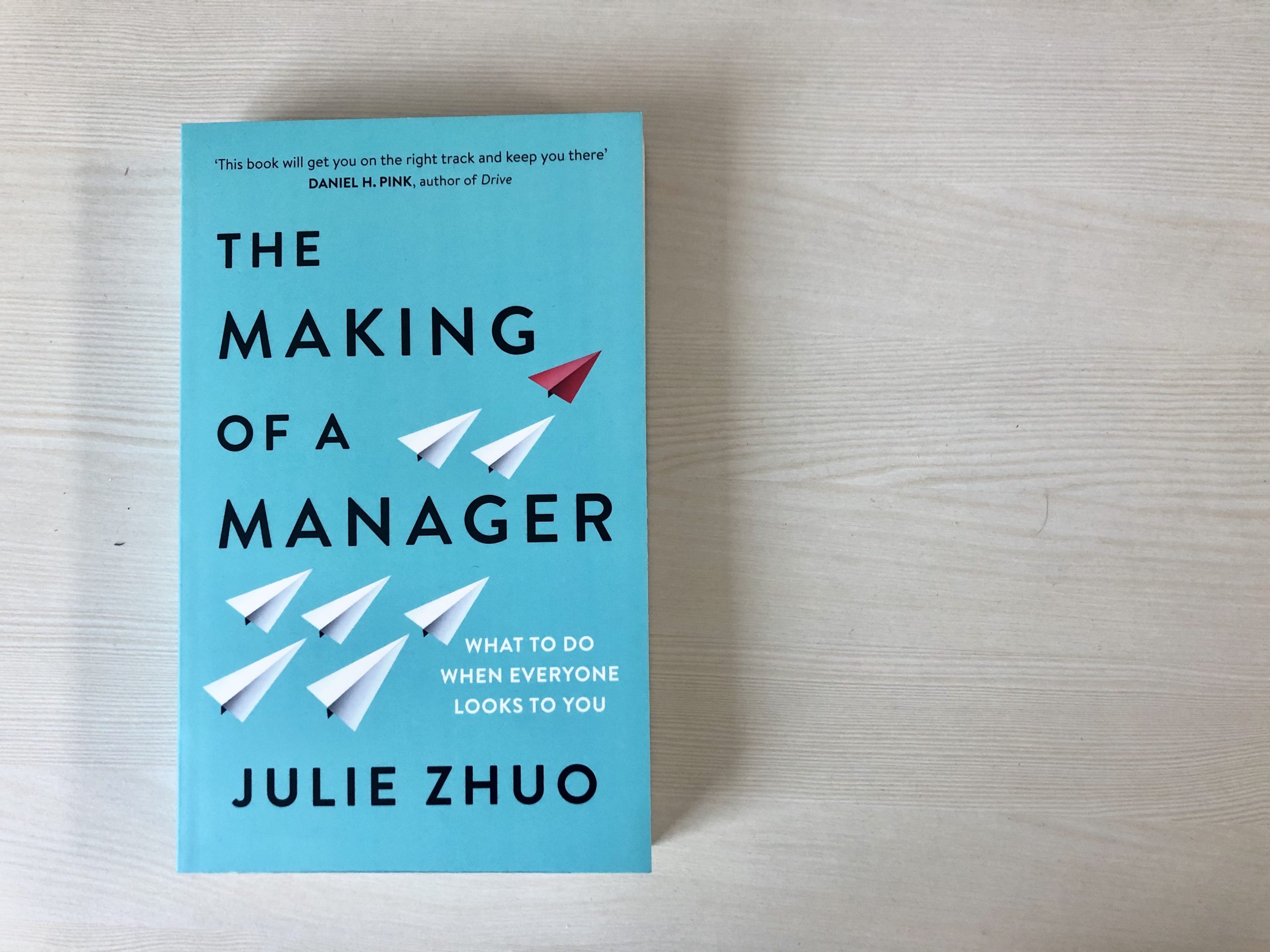
The Three Things Managers Think about All Day

 When I was first starting out, my mind would have gone straight to the everyday duties—preparing for that next meeting, removing a roadblock for a report, coming up with an execution plan for the next month.

J. Richard Hackman, the leading scholar of teams, spent forty years trying to answer this question. He studied the ways professionals work together in hospitals, in symphony orchestras, and inside the cockpits of commercial airliners. One of his conclusions is that making a team function well is harder than it looks. “Research consistently shows that teams underperform, despite all the extra resources they have,” he says. “That’s because problems with coordination and motivation typically chip away at the benefits of collaboration.”

Hackman’s research describes five conditions that increase a team’s odds of success: having a real team (one with clear boundaries and stable membership), a compelling direction, an enabling structure, a supportive organizational context, and expert coaching.

My own observations are similar, and I’ve come to think of the multitude of tasks that fill up a manager’s day as sorting neatly into three buckets: purpose, people, and process.

The purpose is the outcome your team is trying to accomplish, otherwise known as the why. Why do you wake up and choose to do this thing instead of the thousands of other things you could be doing? Why pour your time and energy into this particular goal with this particular group of people? What would be different about the world if your team were wildly successful? Everyone on the team should have a similar picture of why does our work matter? If this purpose is missing or unclear, then you may experience conflicts or mismatched expectations.

For example, let’s say your vision is to get a lemonade stand on every block, starting first in your city and then expanding throughout the country. However, your employee Henry is under the impression that your stand ought to be a popular hangout spot for the neighbors. He’ll start doing things that you think are unimportant or wasteful, like buying a bunch of lawn chairs or trying to serve pizza along with lemonade. To prevent these misalignments, you’ll need to get him and the other members of your team on board with what you truly care about.

At the same time, you can’t simply demand that everyone believe in your vision. If Henry thinks your grand plan of “a lemonade stand on every block” is stupid, he won’t be motivated to help you see it through. He might decide instead to join a venture he cares more about, like that pizza-and-pool parlor down the street.

The first big part of your job as a manager is to ensure that your team knows what success looks like and cares about achieving it. Getting everyone to understand and believe in your team’s purpose, whether it’s as specific as “make every customer who calls feel cared for” or as broad as “bring the world closer together,” requires understanding and believing in it yourself, and then sharing it at every opportunity—from writing emails to setting goals, from checking in with a single report to hosting large-scale meetings.

The next important bucket that managers think about is people, otherwise known as the who. Are the members of your team set up to succeed? Do they have the right skills? Are they motivated to do great work?

If you don’t have the right people for the job, or you don’t have an environment where they can thrive, then you’re going to have problems. For example, say Eliza doesn’t precisely measure the right amount of lemon juice, sugar, and water for your secret formula, or Henry can’t be bothered to greet customers politely, or you’re terrible at planning. Your lemonade stand will suffer. To manage people well, you must develop trusting relationships with them, understand their strengths and weaknesses (as well as your own), make good decisions about who should do what (including hiring and firing when necessary), and coach individuals to do their best.

Finally, the last bucket is process, which describes how your team works together. You might have a superbly talented team with a very clear understanding of what the end goal is, but if it’s not apparent how everyone’s supposed to work together or what the team’s values are, then even simple tasks can get enormously complicated. Who should do what by when? What principles should govern decision-making?

For example, say it’s Henry’s job to pick up lemonade ingredients from the store and it’s Eliza’s job to make the lemonade. How will Henry know when he needs to make a run? How will Eliza find the supplies? What should happen if lemons run out on a particularly hot day? If there isn’t a predictable plan, Henry and Eliza will waste time coordinating handoffs and dealing with the inevitable mistakes that arise.

Often, people have an allergic reaction to the word process. For me, it used to conjure up the feeling of glacial progress. I imagined myself flailing around in huge stacks of paperwork, my calendar filled with tedious meetings. In a processless world, I imagined myself free to do whatever was needed to make things happen quickly, with no red tape, no barriers, no overhead.

There’s some truth to this. We’ve already established that when you are working by yourself, you get to make all the decisions. You are limited only by how fast you can think and act.

In a team setting, it’s impossible for a group of people to coordinate what needs to get done without spending time on it. The larger the team, the more time is needed. As talented as we are, mind reading is not a core human competency. We need to establish common values within our team for how we make decisions and respond to problems. For managers, important processes to master include running effective meetings, future proofing against past mistakes, planning for tomorrow, and nurturing a healthy culture.

Purpose, people, process. The why, the who, and the how. A great manager constantly asks herself how she can influence these levers to improve her team’s outcomes. As the team grows in size, it matters less and less how good she is personally at doing the work herself. What matters more is how much of a multiplier effect she has on her team. So how does this work in practice?

Suppose I can personally sell twenty cups of lemonade per hour. Suppose Henry and Eliza can each sell fifteen cups of lemonade per hour.

Suppose we all worked four hours a day. Because I’m the best among us at selling lemonade, it might seem like a good use of my time to man the stand. I’d sell eighty cups a day, and Henry and
Eliza would each sell sixty cups. My contribution would be 40 percent of our total sales!

But what could I do instead with my time? Suppose I spent it teaching Henry and Eliza how to become better lemonade salespeople. (Tell lemon jokes! Portion out the ingredients ahead of time! Pour cups in bulk!) If all this training took me thirty hours, that’s the equivalent of six hundred cups of lemonade that I could have sold instead; that’s a lot to give up.

And yet, if that training helps Henry and Eliza sell sixteen cups per hour instead of fifteen, it would mean an extra eight cups a day sold between the two of them. It’s a small improvement, but in less than three months, they’ll have made up those six hundred cups I didn’t sell. If they end up working at the stand for a whole year, my thirty hours spent on training instead of personally selling lemonade will mean over two thousand extra cups sold!

Training isn’t the only thing I can do. What if I used those thirty hours to recruit my neighbor Toby? He’s so persuasive he could convince a leopard to buy spots. Suppose my “lemonade stand on every block” vision inspires him to join the team. He ends up selling thirty cups of lemonade an hour, putting all our skills to shame. In a year, that means our stand will see an additional 21,000-plus cups sold!

If I spend all my time personally selling lemonade, then I’m contributing an additive amount to my business, not a multiplicative one. My performance as a manager would be considered poor because I’m actually operating as an individual contributor.

When I decided to train Henry and Eliza, my efforts resulted in slightly more lemonade output, so I had a small multiplier effect. I’m on the right track, but it’s nothing to write home about. When I hired Toby, it resulted in a much bigger multiplier effect.

Of course, the example above is very simple. In real life, it’s not so easy to quantify what you might get out of doing one thing versus another, and we’ll talk more about best practices for prioritizing your time in later chapters. But no matter what you choose, the principles of success remain the same.

Your role as a manager is not to do the work yourself, even if you are the best at it, because that will only take you so far. Your role is to improve the purpose, people, and process of your team to get as high a multiplier effect on your collective outcome as you can.


Whether you’re new to the job, a veteran leader, or looking to be promoted, this is the Handbook you need to be the kind of manager you’ve always wanted. Get your copy here.
This article first appeared on Penguin UK website. Read it here.

What Makes Tim Cook the Coolest CEO?

Tim Cook accepted the role of CEO at Apple, acknowledging that he was going to work within the system that Steve Jobs had established. It couldn’t have been less like Jobs’s return in ­1997. Unlike Jobs, Cook wasn’t going to tear down what wasn’t working and rebuild; he had been a steady captain in his role as COO and planned to keep the ship on its existing trajectory. Unsurprisingly, he did not immediately announce any major changes that would cause investors or fans concern. He wanted to earn their trust first.

So what made Tim Cook the coolest CEO? Read on to find out!


What matters most at a mature company like Apple is not the products but rather the logistics— an efficient supply chain, distribution, finance, and marketing. And Cook has proven his talents for all of these. As a result he is the best CEO Apple has ever had.

~

In a memo to employees, he applauded Apple’s success and thanked staffers for their hard work. Though he said they should be proud of this accomplishment, he also made it clear that “it’s not the most important measure of our success. It’s clear from the memo that he deeply appreciates the contributions of all Apple employees, from entry- level to executive.

~

During his tenure as CEO, Cook has been proactive about increasing diversity at Apple. He has promoted and recruited women and minorities to Apple’s executive ranks.

~

Cook has been actively encouraging the employment of underrepresented minorities, like the disabled and veterans, and he believes that not enough leaders are speaking out about diversity. He quoted Dr. King’s “the appalling silence of the good people,” saying that part of the problem is that people with good intentions don’t speak up. It’s not a subject a lot of CEOs engage in.

~

He pointed to Jony Ive, Craig Federighi, Jeff Williams, Dan Riccio, and newly appointed retail chief Angela Ahrendts, and said, “It’s a privilege of a lifetime to work with them.” He noted how these executives, each with different talents, were complementing his own. “I believe in diversity with a capital D,” he said.

~

Privacy is another of Cook’s values that has remained high on Apple’s agenda since he took over as CEO. From the earliest mention of privacy issues in 2013 to the San Bernardino dilemma to the present day, he has taken the issue of user privacy very seriously. Protecting the privacy of Apple users has always been a key focus for Cook, who has stated he is a “very private person” who likes “being anonymous.”

~

Apple employees are proud of what their company has achieved so far. Cook encourages a competitive atmosphere not only surrounding Apple products but also environmental initiatives.

~

Apple is now considered one of the greenest companies in the technology industry, but it wasn’t until Cook was permanently installed as CEO that its environmental efforts became entirely genuine.

~

To consolidate his role as Apple’s new leader in 2013 and 2014, Cook explored opportunities in new markets, sought out interesting partnerships, and peddled ruthless innovation of the iPhone and development of the Apple Watch. By the end of November 2014, after its stock price hit a record high, Apple’s market capitalization surpassed a staggering $700 billion for the first time.


Drawing on access with several Apple insiders, Kahney tells the inspiring story of how one man attempted to replace someone irreplaceable, and–through strong, humane leadership, supply chain savvy, and a commitment to his values–succeeded more than anyone had thought possible. Get your copy here!

Do you really know Tim Cook as well as you THINK you do?

On Sunday, August ­­11, 2011­­, Tim Cook got a call that would change his life. When he picked up the phone, Steve Jobs was on the other end, asking him to come to his home in Palo Alto. When he arrived, Jobs told Cook that he wanted him to take over as CEO of Apple. The plan was for Jobs to step down as CEO, go into semiretirement, and become the chairman of Apple’s board.

As CEO, Tim Cook took Apple to the next lever. Here are a few interesting facts about him!


Cook was a shadowy figure. He’d never appeared in any product videos and had presented at Apple’s product launches on only a few occasions when Jobs was ill. He had given almost no interviews over his career and had been the subject of only a smattering of magazine articles (none of which he participated in). He was largely unknown.

~

Cook had stepped in when Jobs took two leaves of absence, in 2009 and 2011, after his initial pancreatic cancer diagnosis in 2003. While Jobs was away, Cook ran Apple as chief executive, overseeing the company’s day- to- day operations.

~

Cook wanted to create a sense of company camaraderie, which was lacking when Jobs was at the helm, so he took to sending more companywide emails, in which he addressed the Apple employees as “Team.” One of his earliest such messages as CEO, in August 2011­­, struck a reassuring tone.

~

Cook’s reputation initially worked against him— he was certainly a master of operations, but many thought him to be a colorless, unimaginative drone. He had none of the charisma and driving personality of his former boss, which was what people had grown to expect from Apple’s CEO.

~

Timothy Donald Cook was born on November ­1, 1960, in Mobile, Alabama, a port city on the Gulf coast and the state’s third- biggest city. He was the second of three sons born to Don and Geraldine Cook. Both of his parents were rural Alabama natives.

~

The Cook family was religious, leading Tim to become religious himself. He has made references to his Christian belief throughout his career.

~

Cook excelled at subjects like algebra, geometry, and trigonometry— anything with an analytical edge. In all six years of middle and high school, he was voted the “most studious,” and in 1978 he earned the second- highest grades of his year, becoming salutatorian of his graduating class.

~

The hatred and discrimination Cook witnessed during his childhood would stick with him throughout his life, influencing the way he acts in life and in business.

~

Cook’s support of marginalized minority groups was influenced too by his experience growing up gay in the South.

~

After graduating from high school in ­, Cook left Robertsdale to attend Auburn University, where he pursued a bachelor of science degree in industrial engineering, one of his long- term goals.


Drawing on access with several Apple insiders, Kahney tells the inspiring story of how one man attempted to replace someone irreplaceable, and–through strong, humane leadership, supply chain savvy, and a commitment to his values–succeeded more than anyone had thought possible. Get your copy here!

Rape: It’s a Man Thing

By Sohaila Abdulali


Here’s a conundrum: I’m a feminist down to the marrow of my bones; gender equity is my thing.  But I don’t want my new book about rape and rape culture to be confined to the “Feminist Studies” shelf.

Why? Because I wrote it for you too – you who might not look at that shelf (although you should). You who think rape is a women’s issue. You who think it’s an issue for the left, or for girls, or for anyone but you.

Rape is important to me because I was raped, because I care about the future of the teenage boys and girls I love, because I hate the waste and pain it unleashes in the world. But, while it took one person (me) to be raped, in my case it took four people (men) to do it.

Rapists cause rape. Most rapists are men. I’m not foolish enough to think that most men don’t know what they’re doing when they rape. Many are probably well aware. But many are not. A third of the people, men and women, surveyed by the End Violence Against Women Coalition said that it’s only rape if there is other physical violence involved. A third of men and 21% of the women said that if a woman flirts on a date, then anything that happens afterwards isn’t rape. Some people think husbands can’t rape wives. Some people think sex workers can’t be raped.

Like many of you, I was riveted by the Brett Kavanaugh hearings. I watched with awe as Christine Blasey Ford calmly and courageously told her tale. I watched with distaste as Brett Kavanaugh raved and shouted and threw his shrieky toddler tantrum. But I was most interested as I watched the comments from all over that illustrated the massive chasm that opens up between us in society when we try to talk about rape. I listened to smart people wondering why she didn’t report it right away, and other smart people wondering if she could have mistaken the man who was on top of her for someone else. And I realized that things that seem obvious to some of us (Of course she didn’t report it right away! Of course she knows who raped her!) aren’t at all obvious to others. This is not because most people are inherently evil or sexist. Maybe it’s because we just haven’t taken the time to explore the dynamics of sexual assault.

What would you do if a friend of yours – man, woman, trans – came and told you about being raped? Would you take a moment, express empathy, and listen, or would you freak out and change the subject as fast as possible? Would you find reasons to blame your friend, minimize the trauma, make a joke of it? Rape, like death, makes us instantly uncomfortable, and so we tend to blurt out the first spectacularly inappropriate thing that comes to mind. This wouldn’t happen nearly as much if we gave these things a little bit of thought before they blindsided us.

It’s important to understand rape in part because every victim is someone’s sister, daughter, mother, friend. Rape is like that proverbial pebble in a pond that causes ripples far and wide – except it is not a pebble but a boulder, a giant calamity that crashes explosively into someone’s life, and then flings shrapnel into her present, her future, her lovers, her children present and future, her job, her soul, her day, her night, her year, her life. It is never, as the Stanford rapist Brock Turner’s father said, just “20 minutes of action.” It is a trauma that requires everyone in her life to help her come through. That includes you.

But it’s equally important to understand rape because every rapist is someone’s brother, son, father, friend. (I know women rape, but it’s fair to assume that is relatively uncommon.) I also believe there are many men who would rather hurt themselves than deliberately hurt another human being. Men, like women, can be villains, heroes, and everything in between. But men, unlike women, have the ability to stop rape in its dirty little tracks.

In the words of many a five-year-old: It’s not fair! It’s not fair that women, especially those who have already been through the hell of surviving rape, too often have to explain to men what to do, how to think, how to keep from doing harm, and how to comfort. We all have the responsibility to respond in helpful ways when someone in our lives is assaulted or raped.

Rape is not a women’s issue. I’ll be proud to see my book on the Feminist Studies shelf. But I hope it also appears in Literary Non-Fiction, Psychology, Sociology, Current Affairs…. and what the hell, maybe even Mystery and Horror. But wherever it is, guys, it’s your book too.

This piece first appeared on The New Press Blog

Sohaila Abdulali is the author of WHAT WE TALK ABOUT WHEN WE TALK ABOUT RAPE

error: Content is protected !!