Publish with Us

Follow Penguin

Follow Penguinsters

Follow Penguin Swadesh

Matching The Bhagwaan To The Pakwaan : A Taste of ‘Bhagwaan Ke Pakwaan’

The rice beer bellies of a Christian village in Meghalaya; food fed to departed Zoroastrian souls; a Kolkata-based Jewish community in decline; Tibetan monks who first serve Preta, the hungry ghost; and fifty-six-course feasts of the Jagannath temple-these are the stories in Bhagwan Ke Pakwaan (or, food of the gods), a cookbook-cum-travelogue exploring the connection between food and faith through the communities of India.

Here are some soul-stirring delicacies from the book that explore diverse faiths and unite us with God:

Rongmesek, Meghalaya 

Rice beer is the one true food of the gods…To the Karbi people, rice beer is the fuel that refreshes you with the sweet buzz of life.

Udvada, Gujarat 

 Papra and Bakhra are two of the religious dishes that are made specifically for the Stum ceremony in the death rituals. For us still living, they make great snacks.

Spiti, Himachal Pradesh 

No trip to Kye Gompa would be complete without the breakfast combination of Butter Tea (also known as ‘gur gur chai’ due to the sound it makes when churned) and Puk. There also might not be a more divisive dish than Butter Tea if your idea of tea conflicts with one that is buttery and salty. Very buttery and salty.


There are legends and lore, angsty perspectives, tangential anecdotes, a couple of life lessons and a whole lot of food. Get your copy today!

Meet the Author of ‘The Beauty of the Moment’

Tanaz Bhathena’s The Beauty of the Moment is the story of Susan and Malcolm, and how despite being so different from one another they find themselves irrevocably in love with each other. Despite her parents’ impending divorce Susan is sincere and is driven towards making her parents proud. On the other hand, ever since his mother passed away Malcolm has had a reputation of being troublemaker and a bad boy. His adulterous father contributes further into making his life a mess.

Despite their respective burdens, Susan and Malcolm fall for each other. They confide their dreams and aspirations in each other. Read this book to know more about their unbreakable bond that shows the importance of being true to oneself.

Here we tell you a few interesting things about the author:


Even though Tanaz Bhathena was born in Mumbai, she spent her childhood in many different places like Riyadh, Jeddah and Toronto.

~

Tanaz Bhathena has also authored the young-adult novel A Girl Like That, which was nominated for the 2019 OLA White Pine award and was also name Best Book of 2018 by The Globe and Mail, CBC, Quill & Quire, Seventeen, PopSugar, and The Times of India. 

~

Tanaz Bhathena is fond of travelling, learning bits of foreign languages and taking photographs.

~

Many of Tanaz Bhathena’s short stories have been featured in various journals such as Blackbird, Witness and Room.

~

As a child, Tanaz Bhathena was an avid reader and began writing at the age of eight. By the the time she was thirteen-years-old, she had made up her mind to be a writer.

~

One of the reasons for Tanaz Bhathena to start writing was that she wanted more people like her – Bhathena belongs to the Parsi community – featured in literature, making the readers aware of the South Asian identity and the diaspora in world literature.

~

Tanaz Bhathena currently lives in the Toronto area with her family.


Love is messy and families are messier, but in spite of their burdens, Susan and Malcolm fall for each other. The ways they drift apart and come back together are the picture of being true to oneself. Grab your copy of The Beauty of the Moment now!

Eight Steps to Hacking your Corporation with Jugaad 3.0

Dr. Simone Ahuja – consultant, author, speaker and entrepreneur, is the CEO of Blood Orange where her mission is to empower innovators in large organizations and mobilize them with entrepreneurial tools for a single purpose: to transform the corporate culture from the inside out using design and lean principles. In Jugaad 3.0 Hacking the Corporation, she shifts the focus from ‘entrepreneurs’ to ‘intrapreneurs’, the incredible ‘corporate hackers’ who tap into and around the bureaucratic machinery surrounding them to advance their projects. Or we could call them ‘constructive disrupters’, since today’s intrapreneurs often seriously challenge existing business from product offering to business model, yet they do it actively from the inside and, by doing this, help keep the enterprise viable.

Based on hundreds of interviews, as well as the author’s consulting work within companies, Jugaad 3.0 Hacking the Corporation identifies the competencies these corporate hackers possess. It also offers a spectrum of carefully crafted archetypes to help people see themselves in this trend and allow organizations identify the innovators in their midst.

Read on to find out how to ‘hack’ your corporation from within itself with these eight essential principles

Keep It Frugal

Intrapreneurs actively solve problems and seek opportunities, relying on pre-existing elements and recombining resources for novel uses.

What organizations need now are the right tools and a ready mindset to innovate from within. The Jugaad 3.0 agenda items that follow directly support my main message: deep-six the deep pockets. Simple tools, small budgets and human ingenuity can deliver impressive results, including maximum agility with fewer ‘business as usual’ strings attached. Knowing that nothing innovative

is ever truly linear (or one size fits all), consider these to be á la carte strategies for keeping it frugal:

  1. Remain Asset-Based
  2. Keep It Simple
  3. Encourage Frugal Experiments
  4. Focus on Teams
  5. Rethink Incentives

~

Make It Permissionless

Lets leaders provide support without crushing the creativity and potential of upstart intrapreneurs. Companies need a culture of permissionless innovation a innovation isn’t something that you should be asking approval for.

Making intrapreneurship sustainable requires creating a permission-lite environment for intrapreneurs. It’s autonomy with guardrails. The goal is to establish a network of support rather than a system of tight control by leaders. This ‘support, don’t control’ mantra reinforces frugal funding and has two additional benefits. First, it is an easy fit for intrapreneurs, who want a safe space to pursue new ideas and side projects. Second, it doesn’t oblige large companies and their leaders to bend over backward to manage and measure early-stage projects. Here are the plays that put permissionless to work:

  1. Support, Don’t Control
  2. Say ‘Yes’ More Often
  3. Add Light Structure

 ~

Let Customers Lead

Even though being ‘customer-led’ might sound obvious, it isn’t put into practice by many would-be innovators. Rather than sitting in an ivory tower and thinking about what the customer needs, ask the customer what they want. Look at how the customer is using your product.

Organizations that allow intrapreneurs to take their cues from customers create an instant advantageand avoid many of the barriers that derail internal innovation. These are the plays that I have seen work best in industries and environments across the board:

  1. Create Leading-Edge Customer Focus
  2. Hack Better Access to Customers
  3. Turn Customers into Innovation Partners
  4. Make Intrapreneurship a Sales Priority

~

Keep It Fluid

Since fluid team formation does not happen naturally in most organizations, companies need light structures to enable new levels of information sharing, networking and mobility across their talent pools.

Fluidity delivers more control and autonomy to individual intrapreneurs and small groups, and less to the management layers above them. This tricky little paradigm switch packs a positive punch that promises to increase innovation if managed properly. The trouble is that the type of organizational structure that enables fluidity is less rigid than we are accustomed to today. Just as everything digital tears down existing walls, we need to eliminate artificial, outdated boundaries and allow intrapreneurs some latitude to selfdirect, self-manage and self-organize. Here’s a look at how

to make it work:

  1. Create a Team of Teams
  2. Make Management Fluid
  3. Support Agility Through Structure

 ~

Maximize Return on Intelligence

‘Return on intelligence’ is a reformulation of ROI that puts the short term emphasis on intellectual rather than financial gains.

Intrapreneurs rely on constant learning in an open, agile environment where the culture can balance structure with autonomy and metrics with flexibility as part of these J3.0 principles:

  1. When in Doubt, Test It Out
  2. Make Learning a Priority
  3. Measure Return on Intelligence
  4. Make Failure Feasible

 ~

Create the Commons

The corporation should create ‘the commons’, or a space where information is openly shared, for the whole development community,  involving many more types of people and thinking.


The idea that intrapreneurship should be open and inclusive should not surprise anyone. Still, we are left with the question of how to achieve that goal. My approach throughout this book has been to hold up principles to help you create your own J3.0 playbook. That approach reflects the realities that (a) best practices are forever changing, and (b) the ‘best’ answers will, in any case, never come down to cookie-cutter solutions but will be customized to particular settings. With that in mind, start your playbook with these field-tested, flexible ideas for inclusive intrapreneurship:

  1. Plan for Full Inclusion
  2. Make It Safe to Innovate
  3. Use Technology in Appropriate Measure
  4. Train Future Intrapreneurs
  5. Create Porous Networks

~

Engage Passion and Purpose

Passion is what motivates intrapreneurs to keep going when the work seems thankless or when seemingly insurmountable challenges arise.


Recognizing the passion and purpose parts of intrapreneurship allows companies to think more broadly about how to match their people with the problems they care most about. For employees, having the opportunity to work on passion projects creates greater engagement. For companies, it makes the most of creativity and ingenuity. Here’s how to put this win-win dynamic to work in a Jugaad 3.0 way:

  1. Make Purpose Programmatic
  2. Leverage Passion That Bubbles Up
  3. Push Passion Viral

~

Add Discipline to Disruption

There should be a full spectrum of innovation options for intrapreneurs in any organization, from eye-popping, potentially disruptive innovations to clever little hacks on existing solutions. They are all valid, and companies can create disciplined systems by thinking through three streams of innovation.

 The J3.0 approach requires structure and discipline in the right measure in order to extract the most value from each stream of innovation and install metrics that guide and measure success

without losing the learning or limiting the idea. The prescriptive plays look like this:

  1. Develop Multiple Streams of Innovation
  2. Create a Culture That Enables Hybridity
  3. Manage Disruption with Discipline

Jugaad 3.0: Hacking the Corporation will prove that every organization’s best chance, to survive and become better than ever, lies within itself.

6 Things You Didn’t Know About Krishna Sobti

A Gujarat Here, A Gujarat There by Krishna Sobti is a tale of young Krishna and her journey of making an identity for herself in the state of Delhi in 1947. Krishna applies for a position at a preschool in the princely state of Sirohi, which is beginning to transition into the republic of India. She boldly faces various challenges that come her way regarding her refugee status and sexist backlashes by the man in-charge of hiring at the school.

An opportunity to serve as a governess to the child maharaja Tej Singh gives her the perfect chance to make Sirohi her new home. However, it remains to be seen how long this ideal job opportunity lasts. Immerse yourself into this exceptional tale of Partition loss and dislocation to know more.

Here we give you 6 interesting facts about the author:


Krishna Sobti was born in Gujrat which is now in Pakistan’s Punjab province.

~

Krishna Sobti spent her childhood in Delhi and Shimla.

~

Krishna Sobti won the Sahitya Akademi award in the year 1980 for her renowned book Zindaginama.

~

In the year 1996, Krishna Sobti was awarded the highest award of the Akademi, the Sahitya Akademi Fellowship.

~

Krishna Sobti had also written a few of her works under the name Hashmat.

~

Krishna Sobti is considered to be the grande dame of Hindi Literature.


Part novel, part memoir, part feminist anthem, A Gujarat Here, A Gujarat There is not only a powerful tale of Partition loss and dislocation but also charts the odyssey of a spirited young woman determined to build a new identity for herself on her own terms.


Sophie Kinsella on her New Book, Writing, and More!

Fixie, the protagonist in Sophie Kinsella’s new standalone, I Owe You One, can’t help herself from fixing things…she just has to put things right. It’s how she got her nickname, after all. After saving a stranger’s laptop from certain disaster, he scribbles her an IOU, as a thank you. Soon the pair are caught up in a series of IOUs.

Here is an interview with Sophie, as we talk to her about her book, writing and more!


The Pigeon asks…

What research did you do for the book?

I got inspiration for Farr’s store from visiting a wonderful shop in Dorset called Harts of Stur. Of course it’s nothing like Farr’s as far as organisation goes – it’s an amazingly thriving shop. But because it’s family owned, it showed me the potential for a family shop as a setting.


How important is setting for your writing?

When I start to write a book, I know that whatever setting I choose is a world I will be spending a lot of time in – so it’s vital! For me, setting is often a way to enhance the plot. I love the irony in I Owe You One that the family shop is all about creating a harmonious, beautiful home – but the family running it is far from harmonious!


How much of your writing is built on personal experiences, be they yours or of those you know?

I often use ideas from real life but build on them. For example, when I was planning I Owe You One I was sitting in a coffee shop, thinking ‘How should my protagonists meet?’ when an American man asked me to mind his laptop and I thought ‘That’s how!’ But I couldn’t leave it there – I had to create a far more dramatic fictional scene. I like my characters to go through quite extreme journeys and those are all from my head!


Name the first book first that forever changed your outlook on life?

The Hitchhiker’s Guide to the Galaxy was the first book that made me really laugh out loud. I couldn’t believe that so much comedy could come out of one book and it was definitely inspirational.


Do you live where you write?

I write where I live. Though my desk is not in the main part of the house, because if it was I would never write a single word!


What is your favourite book of the year and where were you when you read it?

I loved The Overstory by Richard Powers. I read it at home, where I can see lots of trees, and I became mildly obsessed with the amazing qualities of trees.


What is your go-to comfort food?

Marmite on toast. Or a cocktail. Or both.


What is the best music to write to?

Loud energetic music. I have a mini playlist for each book as I’m writing it – often with the same song on a perpetual loop.


Describe your writing day.

I plan for ages. Weeks, or months. During that time, I walk, think, sit in coffee shops and scribble notes. Then, when I get on to the actual writing, I aim for 1,000 words a day. If you do that for enough days, you’ll end up with a book. At least, that’s the theory…


Name your Sunday afternoon film (just one).

The Sound of Music.


What is your aim as a writer? How does a book do that? 

I aim to entertain – to make people laugh and cry and whip over the pages. If the story is good, the plot works and the characters are relatable, I hope that will happen.


What is the worst job you’ve done? 

I’m not sure about the worst job – but I can think of some things I was really bad at. I worked as a journalist at Pensions World magazine and I was like my Shopaholic heroine Becky Bloomwood: I would sit at financial press conferences, nodding my head and scribbling notes but not really understanding a word.


How do you unwind? 

I like to exercise, play tennis, play the piano and dance.


What keeps you up at night? 

Box sets.


The irresistible new standalone from Sophie Kinsella is a story of love, empowerment and an IOU that changes everything . . .get your copy here!

Know All About The New Silk Road in ‘Belt And Road’

China’s Belt and Road strategy is acknowledged to be the most ambitious geopolitical initiative of the age. Covering almost seventy countries by land and sea, it will affect every element of global society from shipping to agriculture, digital economy to tourism and politics to culture. Most importantly, it symbolizes a new phase in China’s ambitions as a superpower: to remake the world economy and crown Beijing as the new centre of capitalism and globalization.

Bruno Macaes in his book, Belt and Road traces this extraordinary initiative’s history, highlighting its achievements to date and its staggering complexity.

Here are some unique facts about the Silk Road:


Bruno Macaes asks whether Belt and Road is about more than power projection and profit. Will it herald a new set of universal political values, to rival those of the West? Is it, in fact, the story of the century?


Eight Things you need to know about the Delusional Politics of Brexit and its Aftermath

Hardeep Singh  Puri’s forty years of professional life as a senior diplomat, India’s permanent representative to the UN and Union Minister of State for Housing and Urban Affairs in New Delhi has given him a unique vantage point to see the fault-lines in political narratives and the ‘delusional’ idiosyncrasies of politicians.

Many democratically elected leaders of the twenty-first century have displayed streaks of recklessness, megalomania, bizarre self-obsession and political views that are difficult to characterize.

Delusional Politics studies the actions of these contemporary political leaders with the example of one of the most momentous events our times-Brexit-exposing the self-serving, poorly calculated behavior at the heart of significant governing decisions.

It traces the rise of the right-wing anti-immigration paranioa in Britain, pitted against a Prime Minister who despite his intentions failed as a leader of the Remain campaign. Puri describes Brexit as three supreme examples of delusional thinking and politics. One, calling a referendum that was not required. Two, allowing the referendum’s outcome to be shaped by the uncertainties of democratic politics without due diligence, hard work and safeguards being put in place to ensure the nation’s future. And finally, calling an election when it was not due and when the government had a comfortable majority.

Read on to find out more about the delusional politics of Brexit

 A poorly calculated and casually reached decision to decide the future of a nation and its place in the world

As the story goes, Cameron had been eating pizza at O’Hare while waiting for a commercial flight home following a NATO summit. He was with his Foreign Secretary William Hague and Chief of Staff Ed Llewellyn. The conversation that ultimately led to the unravelling of the United Kingdom apparently went something like this: We have a lot of Euro-sceptics in the party. Let us smoke them out. Let us have a referendum.

 ~

Dissent within Cameron’s own party, the Conservatives, reflected poorly on the party’s leadership

Members of Cameron’s party had essentially backed the agenda of the UK Independence Party (UKIP). UKIP had, over time, reframed its identity to become the party of the ‘leftbehinds’ of the country’s economic development. Their rallying cry became the face of the growing anti-immigrant sentiment that would pull the United Kingdom out of the EU. The rebel Tories supported Brexit for economic reasons, whereas UKIP supported it, at least in its messaging, for cultural reasons, calling for the UK’s identity to be reclaimed.

 ~

 Parties on the right capitalized on the blue-collar angst and anti-immigrant sentiments.

Right-wing populists maintained their economic agenda behind the scenes, while prioritizing—publicly, at least—anti-immigration. The UK Independence Party (UKIP) spearheaded this movement, with its primarily less-educated, blue-collar, white male base at its tail. Founded in 1993 during a transformational point in the UK, UKIP called its base the ‘left-behinds’ of the country’s economic growth and pledged itself as the people’s voice against the establishment that coddled the immigrants. UKIP’s base expanded in waves, most notably in the mid- 2000s, when some Eastern European countries joined the EU, bringing with them another influx of immigrants.

  ~

David Cameron failed to galvanize his youth voter base the way the pro-Brexiters captured the imagination of their own

In the 2015 referendum, the votes of Cameron’s ‘new generation’ were pivotal. Although the young people who did turn up at the booths voted in Cameron’s favour—to remain in the EU—their overall turnout was insufficient. As the Liberal Democratic leader Tim Farron put it, ‘Young people voted to remain by a considerable margin, but were outvoted.’ UKIP and the pro-Brexiters had successfully secured the older, less educated, working class votes.

  ~

David Cameron’s incredibly privileged and well-connected background made it difficult for him to combat populist sentiments

But it is undeniable that Cameron’s privileged upbringing, his confines to the upper legions of society, and his rapid-fire ascension up the political ladder detached him from the people he so earnestly desired to serve. Regardless of his intentions, Cameron was a perfectly unfit contender to combat the populist insurgency of the right-wing Eurosceptics.

  ~

The peculiar politics and character of Nigel Farage

On the other side of the battle, the Brexit campaign was led by Nigel Farage, a self-professed ‘middle-class boy from Kent’ with an arsonist tongue characteristic of a populist leader. He correctly felt the mood in parts of the country and rode the anti-immigrant tide. He tethered the resurrection of the British identity—a past-time homogeneous white identity that so many of the Leave voters yearned to return to—to the referendum. Privileged though his background is,  Farage convincingly painted himself as one of the ‘left-behinds’ who his party fought for. He fostered a connection with his base that in many ways Cameron failed to do with his. Farage’s brazen and open discontent with the establishment resonated with far too many people.

  ~

In calling the general election in April 2017, Theresa May made a decision that would turn out to be superfluously tumultuous path as Cameron’s.

On 18 April 2017, in an attempt to gain more power for the Tories in preparation for the Brexit negotiations, May called for general election, which was not due until 2020.60 Polls at the time had been showing promising figures for the Conservative Party’s success, and May thought she could turn these numbers into parliamentary seats. The election, she argued, was ‘necessary to secure the strong and stable leadership the country needs to see (it) through “Brexit” and beyond’. The elections took place less than two months after May’s announcement, on 8 June 2017. The Conservatives lost their parliamentary majority, and Labour gained seats. After the embarrassing results, May then resorted to forming a new government with the Democratic Unionist Party in order to secure a governing majority.

 ~

 The emerging consequences of a referendum that was won on a ‘campaign of lies’

As Inter Press Service founder Roberto Savio succinctly put it, ‘Only now the British are realizing that they voted for Brexit, on the basis of a campaign of lies. But nobody has taken on Johnson or Farage publicly, the leaders of Brexit, after Great Britain accepted to pay, as one of the many costs of divorce, at least 45 billion Euro, instead of saving 20 billion Euro, as claimed by the “Brexiters”. And there are only a few analysis on why political behaviour is more and more a sheer calculation, without any concern for truth or the good of the country.’


Delusional Politics brings to light the fact that at the heart of delusional politics is perhaps the delusional politician.

Tips to Not Lose your Mind over your Weight

There is no such thing as going ‘on’ or ‘off’ your diet. Eating correctly has to be a lifelong commitment, and the diet should be a reflection of this. This automatically rules out any extreme diet or crash diets which require you to go ‘off’ them.

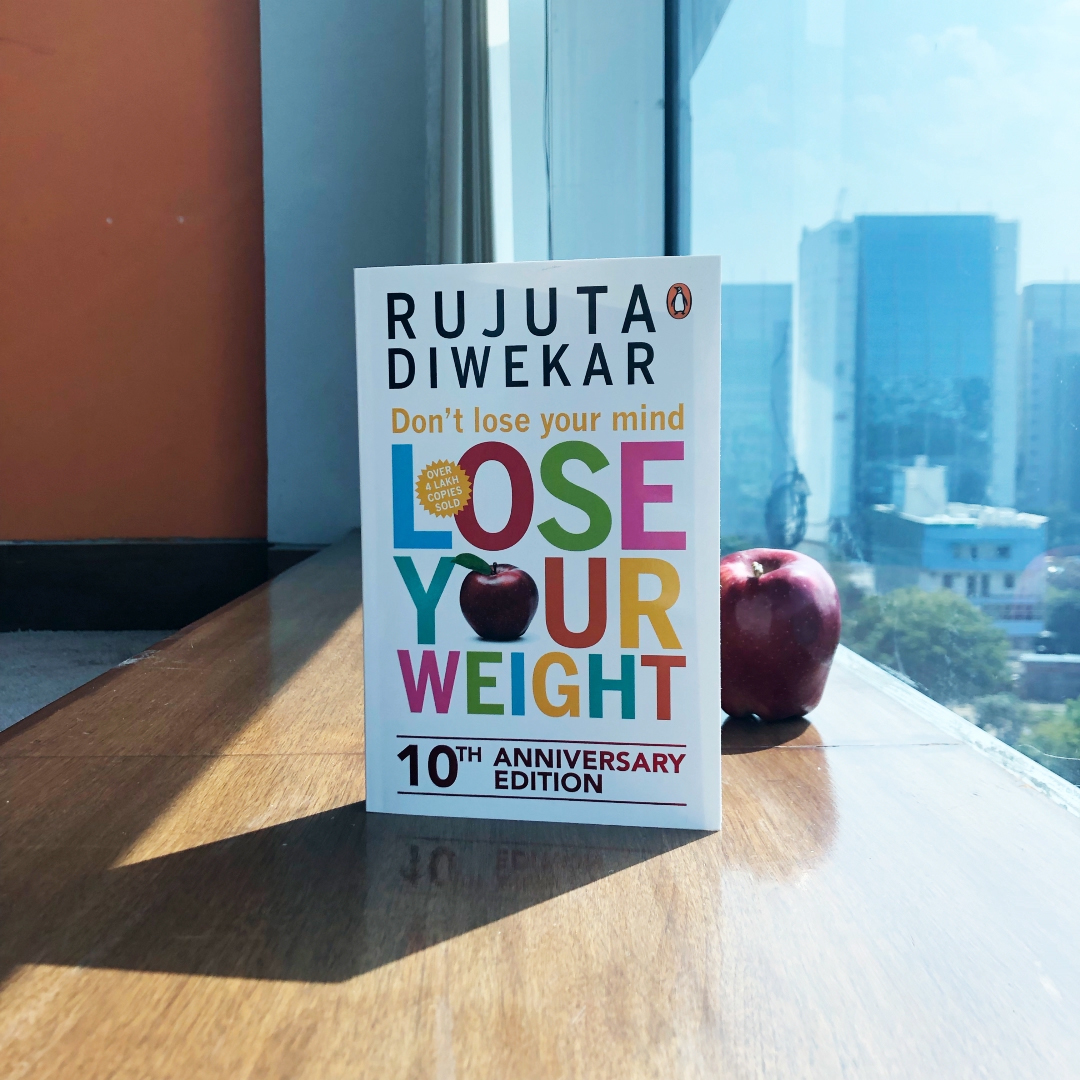
Don’t Lose Your Mind, Lose Your Weight has revolutionized the way Indians think about food and their eating habits. The author, Rujuta Diwekar is one of the country’s best nutritionists, with deep roots in yoga and Ayurveda.

Here are some things to remember from the book to not lose your mind over your weight

Extreme diets don’t work

Most diets are impossible to keep at because they always advocate something extreme. Besides being difficult to maintain, they’re harmful for you physically and mentally.

Any programme/plan which discourages you from exercising is worthless

Being on a diet might help you lose weight, but without exercise we lose our muscles and bone density. And loss of bone density and muscle is ageing. The human body is designed for continuous activity. The least we can do is give it 30 to 45 minutes of exercise for 3 days in a week to keep it in good shape and condition.

Low fat and sugar free options are not healthy

So should you not eat them at all? Of course you can eat them, but eat them knowing that they are just as harmful as the full fat, full sugar, fried items. Sometimes even more.

Having fruit as dessert isn’t the wisest idea

A few years ago, it was discovered that fructose (the sugar we get from fruits) gets converted to triglycerides (especially when eaten on a full stomach), a type of fat which circulates in our blood stream. High levels of triglycerides are responsible for heart disease, insulin insensitivity and of course lead to bigger fat cells.

Eat your fruit, but don’t think that it’s safer than eating a dessert. Its nutrients only work for us if we eat if as a meal by itself.

Be attentive while you eat

The key to staying within your threshold of how much your body can digest is to be attentive while you eat. Savour every bit of what you eat, slowly and mindfully, and you will naturally find your threshold. All you need to train yourself to do, is to be attentive to your stomach.


For more tips and lessons, grab your copy of Don’t Lose Your Mind, Lose Your Weight by Rujuta Diwekar


Behind the Scenes of Sarnath Banerjee’s ‘Doab Dil’

In his book, Doab Dil – employing a philosopher’s mind and an artist’s eye – Sarnath Banerjee takes us to still places in a moving world, the place where two rivers (do ab) meet and forests write themselves into history.

Here are some of the illustrations from the book – in their raw form!

From the chapter titled Library


Before
After

From the chapter titled Insomnia

Before
After

And a bonus illustration from Sarnath Banerjee!


Employing a philosopher’s mind and an artist’s eye, Sarnath Banerjee takes us to still places in a moving world, the place where two rivers (do ab) meet and forests write themselves into history.

Singlehood, intimacy and companionship

Forty-five and single, Akhila has never been allowed to live her own life – always the daughter, the sister, the aunt, the provider – until the day she gets herself a one-way train ticket to the seaside town of Kanyakumari. In the intimate atmosphere of the ladies coupé, she gets to know her five fellow travellers. Riveted by their personal stories, Akhila begins to seek answers to the question that has been haunting her all her life: can a woman stay single and be happy, or does she need a man to feel complete?

Here is an introduction by Anita Nair for Ladies Coupe!


Ladies Coupe || Anita Nair

The breeze blew as stiffly from the sea as it had all those years ago when I had come to Kanyakumari as a young girl. The horizon stretched as far as one could see and beyond. Age hadn’t limited the expanse or shrunk my gaze. Nothing disturbed the line of vision. After all this time I felt again the hope the horizon offered. Limitless possibilities. Of taking one’s life in hands and doing with it what one could. I sat on the embankment wall and thought of the last section of my book Ladies Coupe. Here is where Akhila decided to wrest control of her life again. The boundless horizon compelled you to feel that way no matter what the circumstances of your life or how old you were.

As a young woman, I climbed on to the top berth of a ladies compartment in a train from Bangalore to Madras¹ and discovered an unexpected world. Once the door was closed and the blue night lamp switched on, the middle-aged women who were my fellow passengers in the coupe began a conversation that riveted me to my sleeping berth. It was a no-holds-barred conversation on mothers-in-law, daughters-in-law, husbands, servants, forgotten dreams and cast aside ambitions; secret fears and unexplored possibilities. It was a combination of the confined space and assurance of anonymity as they were strangers to each other that turned the coupe into a confessional box. Their candour, their subversiveness, their subtle strength and courage inspired Ladies Coupe.

Ladies Coupe is not about feminism and nor am I a feminist writer. It is a book of stories about women and how a woman makes her own place in the society. It is a book about the human condition. I took the right to show the quality of strength in a woman and took the chance of writing a novel “about the right women have to be women”. However it was immediately labeled a feminist novel in many parts of the world; and one small part of me was, of course, gratified at the notion that I may have written what is being considered as an important feminist novel. But a greater part of me remains puzzled. For what this novel emphasizes on is what it is to be a contemporary Indian woman. And which is why I have felt again and again this need to clarify that I am not a feminist writer and nor was it my intention to uphold the feminist ideology. In fact, if someone wanted to tag me I would think that it would be best to label me as a writer of the human condition.

It is human nature to try and seek parallels. We are constantly trying to find answers for our lives from the experiences that other people undergo. Which is why world over a journey is such a strong part of self discovery. We see it in literature all the time. Whether it is the Indian epics like The Ramayana or Mahabharatha or in Homer’s Odyssey we constantly find life stories that change during the course of travel. Hence Akhila would to discover herself too have to start somewhere and who better than the women traveling with her?

It isn’t easy to be a contemporary Indian woman. One the one hand she is aware of her rights and the need for an identity. On the other hand tradition dictates that she submerge it in her role as mother and wife… She is someone who has been conditioned to be the custodian of a 2000 year old culture which expects her to put her desires on a back burner. She watches men moving ahead with giant strides while policing women’s progress and at times curbing it. And it is the traditional norms that keep a woman tied down and the fear that if she were to swerve from the accepted path, she will be ostracized. The fear of society is a great impediment to personal freedom whether it is for a man or a woman and in a country that has always considered women to be inferior beings, women are that much more hesitant to assert themselves or even claim their rights. And this made me determined to present Indian woman as she is rather than the doormat kind of person she is often projected to be as… someone who has a core of steel despite being wrapped in many layers of tradition.

I think women in India dream of the same things that women all over the world do. Freedom. Security. Dignity. Love. Laughter. Sex. Happiness. Nice clothes. Good Food. Jewelry. Vacations. Miracle cures for grey hair and cellulite. Muscle tone and unwrinkled skin….I’m not being facetious but in my travels I talk to people all the time. Strangers  and people I am introduced to and I discover that beneath our skins all of us dream about the same things . It’s perhaps the priority that’s different. But women everywhere relate to the women in Ladies Coupe because their stories could very well be the story of their lives.

Education, financial freedom, career prospects etc have improved the lot of the Indian woman. Sadly the women in villages still don’t have the exposure that have in many ways liberated the urban woman from the tyranny of the traditional culture. In Ladies Coupe, one can expect to meet six women who are from the vast majority of Indian women–the suburban and rural women–who still have little control over their lives. It is a book I wanted to write very much because it disturbed me.

In fact, it was very exhausting creating these characters because through each of them I relived a gamut of feelings. From rage and despair to love and tenderness to greed and hate……

The narrative form drew itself from the many stories I wanted to tell. But I also did want the structure of the book to resemble a journey itself. The stop and start of a train ride, in fact, and the haze of lives and landscapes as the train proceeded on its path. And how the many ways to reach a destination may vary but eventually what is crucial is we get there.

I have always believed that change is always possible, no matter how old one is or what conditions one lives in. In fact, I believe that change and hope are linked together. That if there is no hope, there is no change. In that sense, this book was a kind of alert that one has the right to change as one has the right to hope.

– Anita Nair

¹Madras is now known as Chennai.

error: Content is protected !!