Publish with Us

Follow Penguin

Follow Penguinsters

Follow Penguin Swadesh

Five ‘delusional leaders’ from Hardeep Singh Puri’s ‘Delusional Politics’

Hardeep S. Puri’s forty years of professional life as a senior diplomat, India’s permanent representative to the UN, and now Minister for Housing and Urban Affairs in New Delhi, give him a unique vantage point to see the fault-lines in political narratives and the ‘delusional’ idiosyncrasies of politicians.

Many democratically elected leaders of the twenty-first century have displayed streaks of recklessness, megalomania, bizarre self-obsession and political views that are difficult to characterize. Delusional Politics studies the actions of these contemporary political leaders and covers Brexit, the election of Donald Trump, the rise of the BJP under Prime Minister Narendra Modi and decision-making with respect to global governance, terrorism and trade. It brings to light the fact that at the centre of delusional politics is perhaps the delusional politician, who, in turn, is often encouraged and egged on by pseudo expertise, vested interests, and self-serving advice. Such leaders pursue delusional policies that yield catastrophic results.

Read on for five world leaders and the ‘delusional politics’ they have pursued.


Mahinda Rajapaksa

A lack of fiscally responsible spending, which has led to a growing dependence on China

“Many examples of delusional politics are available in South Asia, including in India itself. In Sri Lanka, an elected president decided to define his legacy by erecting huge white elephants in his home district Mattala, a port in Hambantota, and the Mattala Rajapaksa International Airport. What purpose do these mega infrastructure projects serve? They provide an ego boost to the leader. But what else? He succeeded in driving up his country’s debt. Sri Lanka now faces the prospect of more than 90 per cent of its GDP being earmarked for debt repayment. Since this is not sustainable and the Chinese are not into philanthropy or altruism, the debt has been converted into equity and parts of Sri Lanka have been sold to the Chinese.”


David Cameron

Casually deciding upon calling a referendum and allowing its outcome to be shaped by the uncertainties of democratic politics without due diligence, hard work and safeguards being put in place to ensure the nation’s future.

“As the story goes, Cameron had been eating pizza at O’Hare while waiting for a commercial flight home following a NATO summit. He was with his Foreign Secretary William Hague and Chief of Staff Ed Llewellyn. The conversation that ultimately led to the unravelling of the United Kingdom apparently went something like this: We have a lot of Euro-sceptics in the party. Let us smoke them out. Let us have a referendum. Cameron had been on the lookout for an opportunity to reclaim face and leadership, not only in Parliament but within his own party.”


Theresa May

Calling an election when it was not due and when the government had a comfortable majority.

“When campaigning for the prime minister’s job, Theresa May had pledged to continue in the footsteps of her predecessor. In calling the general election in April 2017, she had succeeded in venturing down the same superfluously tumultuous path as Cameron. The elections took place less than two months after May’s announcement, on 8 June 2017. The Conservatives lost their parliamentary majority, and Labour gained seats. After the embarrassing results, May then resorted to forming a new government with the Democratic Unionist Party in order to secure a governing majority.”


Donald Trump

A series of delusional decisions

“He formally recognized Jerusalem as the capital of Israel, breaking with seven decades of US foreign policy and stripping any prospects of a US-led mediation. He has announced that the US will withdraw from the Iran nuclear deal, breaking away from Western allies and possibly inciting a nuclear arms race in the Middle East. His attempts to earn a Nobel Peace Prize for denuclearizing the Korean peninsula have fallen embarrassingly short. He initially made negotiations with North Korea virtually impossible by threatening to ‘totally destroy’ the country of twenty-five million and by insulting Kim Jong-Un personally, calling him ‘Little Rocket Man’ and a ‘sick puppy.’ He then proceeded to meet with the North Korean leader at a summit in Singapore, where both of them agreed to ‘denuke’ the Korean Peninsular.”


The Congress Party and the Gandhi family

The interests of the grand old party that had facilitated India’s freedom were being subordinated to the interests of one family

“What went so horribly wrong for the Congress party? At a general level, several decisions, which can only be described as ‘delusional’, need to be mentioned. Three possible reasons suggest themselves, two of which are apparent: One, a mother’s abiding love for and persistence with the less than successful and reluctant leadership qualities of her son; two, a ‘dynasticization’ of politics, where one family is above the party, and for some Congresspersons, above the country. The third reason, which is not so apparent but more crucial than the first two, is the separation of power and accountability between 2004 and 2014. An interesting system of ‘diarchy’ was introduced in 2004 when the Congress won and this was widely regarded as an unexpected victory.”


Delusional Politics brings to light the fact that at the heart of delusional politics is perhaps the delusional politician.

Things you didn’t know about India’s Minister for Housing and Urban Affairs

In Delusional Politics, Hardeep S. Puri, studies contemporary political disruptions in three of the world’s largest democracies, namely United Kingdom, United States of America, and India; and how these events are mirrored in current conversations around global governance, terrorism and trade. Delusional Politics, the author’s second book, follows Perilous Interventions in its honesty, clarity, and incisiveness. Hardeep S. Puri, not known for mincing his words, delivers in his unique style a book that will come to be regarded as one of the finest analysis of democracy as a form of government; the role of democratically elected leaders and how their delusion decision-making can yield catastrophic results; and how these domestic upheavals reverberate in and impact the world order.

These interesting facts about the author and the current Minister for Housing and Urban Affairs will leave you ever more inspired to read his book!


Hardeep S. Puri has over forty years of experience in the world diplomacy, which began in 1974 when he joined the Indian Foreign Service.

~

He was India’s Ambassador and Permanent Representative to the United Nations, both in Geneva and New York. He has also held Ambassadorial level positions in London and Brasilia, and was also Secretary (Economic Relations) at the Ministry of External Affairs.

~

Puri chaired the United Nations Security Council and was also Chairman of its Counter-Terrorism Committee.

~

He has extensive experience with and specialization in trade-related matters and has also served on many Dispute Settlement Panels of the GATT and WTO.

~

Puri has served as Joint Secretary (Navy) at the Ministry of Defence.

~

As a young political officer stationed in Colombo, he met and negotiated with LTTE chief Prabhakaran on behalf of the Govt. of India.

~

Puri did his Bachelors and Masters in History from Hindu College, University of Delhi.

~

He briefly taught a St. Stephens College, University of Delhi

~

Hardeep S. Puri is married to Lakshmi Puri, a former Indian diplomat who served as India’s Ambassador to Hungary and accredited to Bosnia and Herzegovina. Until recently, she was the Assistant Secretary-General at the United Nations Entity for Gender Equality and the Empowerment of Women (UN Women).  


Delusional Politics brings to light the fact that at the heart of delusional politics is perhaps the delusional politician.

A Conversation with the Author of ‘Ganga’, Sudipta Sen

The Ganga enjoys a special place in the hearts of millions. In his new book, Ganga: The Many Pasts of a River, historian Sudipta Sen tells the fascinating story of the world’s third-largest river from prehistoric times to the present.

We had a conversation with him about the book. Take a look!


What is your history with the River Ganga? Why did you choose to write a book on the river?

I grew up in Calcutta. The section of the Ganga that runs by the city and meets the Bay of Bengal across the expansive muddy flats of the Diamond Harbor is called the Hugli and also the Bhagirathi. I traveled with my parents to the pilgrim towns of Haridwar and Rishikesh by the Ganga in the Garhwal Himalayas as a child in the early 1960s and had the great fortune of experiencing their contemplative quiet and their natural setting. These journeys left a deep impression on my mind for years to come.

Gori Ganga (also known locally as Bhagirathi) descending through the Garhwal himalayas. photograph by Debal Sen.

I revisited the history of the Ganga and its delta during the period of the expansion of British rule in India spearheaded by East India Company, when I was studying for my PhD at the University of Chicago. My revised doctoral thesis, published as Empire of Free Trade: The English East India Company and the Making of the Colonial Marketplace, was about the conflict over markets and marketplaces between the Company and indigenous regimes. Researching the history of bazaars and ganjs and various sites of worship and pilgrimages along the river in northern and eastern India, I delved into old travel accounts in Persian, Urdu, Hindi and Bengali that brought to life for me the antiquity, vibrancy and wonderful complexity of Indian economic and cultural practices of the greater Ganga Valley. When Yale University Press approached me for the first time, almost fourteen years ago, with a request to write a history of the Ganga, I could not turn down the offer.


What was the research process for the book? How long did it take to write?

When I agreed to write this book, I had not fully realized how daunting and difficult the undertaking was going to be. First of all I had to get back to my old Sanskrit grammars and dictionaries and start rereading the stories of the descent of the river across all the major Hindu Puranas. It also dawned on me very quickly that I had not seen many parts of the river that I was writing about, which is why I had to trek to places like Gaumukh and Tapovan in the Himalayas, or the low-lying mangrove-rich flats of the Sunderbans, and travel by land and boat in various places along the river between Allahabad (now Prayagraj) and Banaras, Patna and Bhagalpur, Rajmahal and Kolkata. It was my good fortune to have my friend and cousin, the eminent cardiologist and wildlife photographer Dr. Debal Sen with me on some of these journeys, and many of his wonderful photographs appear in my book.


The cave of Gaumukh. Photograph by author

I thought that I would be able to write this book in the space of five or six years. It has actually taken me more than twelve years! You can say that at times it felt like I was drowning (forgive the pun) in the Ganga project. Now that the book has seen the light of day, I hope that my wanderings, research and writing over these long years have led to something of value. I pray that I might be leaving something behind for my students and younger people, the next generation perhaps, who have not had the same joy and thrill of having seen the Ganga in her full and glorious majesty – before the advent of dams and barrages, or the contamination of cities and factories. The holy river could once be seen cascading down the mountains through places like Gangotri or Rishikesh, or meandering through northern Indian plains after a monsoon flecked with migratory swans and overgrown with tall prairie grass at the onset of autumn. It is for them to rediscover the rich and diverse history of this sacred body of water, the record of one of the most important riparian ecologies on this planet, and the wonderful mosaic of cultures that it has been able to sustain over the centuries.


Can you tell us about some of the things you are hoping to achieve from the publication of this book?

I want to remind my readers how the history and ecology of the river have at times been almost taken for granted over the last five decades since India’s independence, amounting to a historic neglect of the environment and ecology that has sustained and been sustained by this great river. I want our younger enthusiasts of Indian history and nature to find out, on their own terms, why and how the Ganga has remained such a sacred and venerated body of water, and how her historical memory is strewn across such a diverse array of faiths and traditions in the Indian subcontinent. One of the recent reviews of my book states that it is “an obituary” of the Ganga. I do not believe so. If there is a genuine groundswell of concern and outrage, I am convinced that we can at least stem the tide of contamination and overuse. The depletion of the Himalayan snowpack and siltation are more intractable problems, but here too, I believe the new generation can make a difference. I will consider myself blessed if this book can make even a small difference.


Are we to see another book by you soon? Have you thought of the subject for this?

I am always writing more than one book at a time. I have been working for almost two decades now on another book tentatively titled Law and the Imperial Order: Crime and Punishment in Early British India that shows how criminal law and punishment in India was reshaped during the rise of the East India Company’s rule, resulting in the proclamation of the Indian Penal Code in 1862. It is mostly focused on the late eighteenth and early nineteenth centuries, especially on the work of the first Supreme Court of Judicature in Calcutta. It looks at early methods of trial, sentencing and forms of penalty including incarceration, use of convict labour, deportation and executions. Much of this work is based on lesser known accounts of law and history in Persian, archival records in Calcutta and London, along with thousands of pages of a diary left by one of the earliest judges of the Calcutta Supreme Court, Justice John Hyde.

I am also preparing to write a shorter book of popular history on the meteoric rise and dramatic fall of Nawab Mir Qasim placed on the throne of Bengal as the second puppet by the British. Prior to this, after the Battle of Plassey in 1757, Robert Clive had installed his father-in-law Mir Jafar on the throne of Bengal. It is the story of how Qasim turned out to be much more ambitious and independent-minded than what the British had bargained for. Unlike other puppets he was a soldier of fortune who tried to adapt to the changing political times during this tumultuous period of European overseas expansion and the frantic duel for territorial supremacy between France and England in the wake of the Seven Years War.


What were some of the challenges that you faced while writing this book?

The sheer weight of the secondary scholarship and primary research required for a two-thousand-plus year history of the third-largest river in the world has occupied a significant portion of my life and labour for more than a decade. Some of the most demanding work went into deciphering and translating primary sources in various languages such as Sanskrit, Prakrit and Persian. Travel to high-altitude sites and pilgrimages such as Tapovan and Gaumukh was also a challenge for a first-time trekker such as me, as was learning the rudiments of handling a digital SLR camera for the first time. I am immensely grateful, nevertheless, for the fact that writing this book has taken me out of the archives and libraries, away from my desk and the classroom, on to the railroads, roadways and dusty trails along the Ganga, for some of the most memorable journeys through the mountains, plains and the last remaining wildernesses of northern India.


Seamlessly weaving together geography, ecology and religious history, this lavishly illustrated volume paints a remarkable portrait of India’s most sacred and beloved river.

5 Reasons to Read Haruki Murakami’s ‘Birthday Girl’

“One rainy Tokyo night, a waitress’s uneventful twentieth birthday takes a strange and fateful turn when she’s asked to deliver dinner to the restaurant’s reclusive owner.”

Haruki Murakami’s new book, Birthday Girl is published to celebrate Murakami’s 70th birthday and makes for an fascinating read.

Here are 5 reasons to read the book!

1. You get all of Murakami’s master storytelling in just 42 pages!

The story of the waitress on her twentieth birthday, whose life is about to change, is told with all of Murakami’s charm in only 42 pages!

2. The owner of the restaurant where the girl waits is an interesting character with some odd habits.

“Every night at eight, the manager had to bring dinner to the owner’s room…they’d load the dinner on to one of those carts that hotels use for room service, the manger would push it into the lift wearing a respectful look on his face, and fifteen minutes later he’d come back empty-handed. Then, an hour later, he’d go up again and bring down the card with empty plates and glasses. Every day, like clockwork. I thought it was really odd the first time I saw it happen. It was like some kind of religious ritual, you know? But after a while I got used to it, and never gave it another second thought.”

3. There is a change in routine when the manager suddenly falls sick – an unusual occurrence in itself.

“One of the waiters held the manager steady and climbed into the car with him to take him to a nearby hospital. Before ducking into the cab, the manager said to [the girl] hoarsely, ‘ I want you to take a dinner up to room 604 at eight o’clock. All you have to do is ring the bell, say, ‘Your dinner is here,” and leave it.’”

4. The anticipation of what may happen next, when the girl takes over from the manager to carry out this odd task and finds herself in the company of the owner…

“The old man slid the cork from the bottle and dribbled a little wine into his glass for her. Then he took an ordinary drinking glass from a glass-doored cabinet and poured some wine for himself.

‘Happy Birthday,’ he said. ‘May you live a rich and fruitful life, and may there be nothing to cast dark shadows on it.’

They clinked glasses.”

5. A wish is granted…

“The old man suddenly fixed his eyes on a spot in the air. The wrinkles of his forehead deepened: they might have been the wrinkles of his brain itself as it concentrated on his thoughts. He seemed to be staring at something – perhaps all-but-invisible bits of down – floating in the air. He opened his arms wide, lifted himself slightly from his chair, and whipped his palms together with a dry smack. Settling in the chair again, he slowly ran his fingertips along the wrinkles of his brow as if to soften them, and then turned to her with a gentle smile.

‘That did it,’ he said. ‘Your wish has been granted.’”


Birthday Girl is a beguiling, exquisitely satisfying taste of master storytelling, published to celebrate Murakami’s 70th birthday.

Do You Want To Be An RJ? Here Are Five Things To Note!

Let’s Talk On Air is the perfect book for you if you have always dreamed of becoming a radio jockey! Take a deep dive into the lives of fourteen eminent radio presenters to learn about the people behind the iconic voices that have entertained us via the airwaves-one of the oldest forms of communication. Get to know the challenges, ideals, inspirations, favourite songs and icons of the popular radio jockeys of our time, including the legend Ameen Sayani, and maybe this can be a career which inspires you too!

Here are some useful bits of wisdom imparted by these famous radio presenters!

RJ Ameen Sayani

“A radio host should be able to make their listener not only hear but also feel. The listener should be able to comprehend what you mean. What you say on-air must be factual. So always remember to do your homework! If you know your facts, you will naturally speak with confidence.”

RJ Anuraag Pandey, Radio Nasha 91.9 FM and Fever 104 FM

“Be original. And don’t become a radio jockey for instant fame. The key to longevity is to keep in touch with the pulse of the people you are catering to. Read about them, meet them. Only if you know common people can you connect with them like an old friend.”

RJ Prithvi Vishwanath, Fever 104 FM

“Radio to me is not about the voice as much as it is about the personality! Don’t hesitate to be you. Remember, you cannot always please everyone. Just work on your language, diction and communication.”

RJ Rohini Ramnathan, Radio Nasha 91.9 FM

“As a jockey, you analyse song lyrics and film dialogues. It is literature, poetry and philosophy. You have to understand rhythm, rhyme and verse. And if you read a lot, you can successfully have a better conversation with your guests, irrespective of which “field they belong to.”

RJ Yunus Khan, Vividh Bharati 102.8 FM

“One good quality to have is being interested in many different things, like music, literature or sports. You must have a fairly good knowledge of diverse matters that concern most people, and you must have a good vocabulary. You must love talking to people, particularly strangers. And you must really love music and songs.”


Do you want to be an RJ and entertain tons of listeners? Then this book is for you!


Meet the Author of ‘The 108 Upanishads’, Roshen Dalal

Giving an insight into the revered Hindu texts, Roshen Dalal in The 108 Upanishads presents a highly researched account of the 108 Upanishads. With the most paramount bits of information and wisdom, the author explains various concepts in each Upanishad distinctly. With Roshen Dalal’s scholarly readings into these Upanishads, this book makes for an important contribution to the study of these texts.

Here we tell you a few things about the author:


This book is a thoroughly researched primer on the 108 Upanishads, philosophical treatises that form a part of the Vedas, the revered Hindu texts.


Know A to Z About The Silk Road in Eight Points

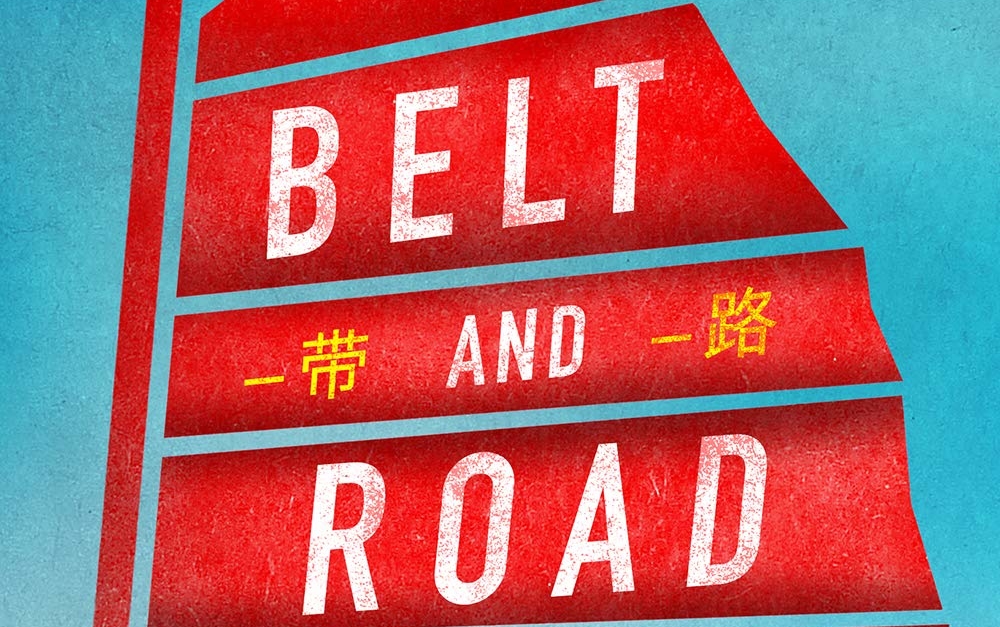
Talking about China’s one of the most talked-about trade strategy, the Belt and Road strategy, Bruno Macaes in his book Belt and Road shows a vivid story of the initiative’s history. Affecting almost every link of global society from shipping to agriculture, digital economy to tourism and politics to culture, this enterprise symbolizes a new phase in China’s bid to become a superpower: being the most powerful in the global economic race and making Beijing the hub of capitalism and globalization. Going full speed ahead with these ambitious goal, does this initiative have the power to change the universal political values rivaling those of the West?

Here are some facts to help you understand the new Silk Road of China!


The new Silk Road initiative taken by China consisted was fundamentally a plan to lay a number of railway routes which crossed and overlapped each other in a way of connecting Central Asia, China and Europe on a huge scale.

The scope of this project was too huge and it was understood that it would take thirty years to realize this project. The first phase of the project was supposed to be finished by 2021 and that the project would complete wholly by 2049.

China first announced its plans for the construction of the Belt and Road soon after its President Xi Jinping’s speeches in Astana and Jakarta – firstly at the forum on China’s diplomacy in October 2013, and the by the Third Plenum of the 18th Party Central Committee in November of the same year respectively.

The new Silk Road initiative was called “One Belt, One Road” in Beijing.

The idea behind the making the new Silk Road was to create an “economic corridor” through this interconnected system of transport. This would consequently give rise to industrial clusters and free trade zones making a large Eurasian common market.

However, the Belt and Road is now perceived as a possible threat to the economies of various nations.

Vice Premier Zhang Gaoli was chairing the One Belt, One Road Group. He was a member of the elite Politburo Standing Committee.

On 28th March 2015, the National Development and Reform Commission, the Ministry of Foreign Affairs and Ministry of Commerce released the Vision and Actions on Jointly Building Silk Road Economic Belt and 21st Century Maritime Silk Road. It set forth guiding principles, main routes and projects, and areas of cooperation for the Belt and Road.


Through Belt and Road: A Chinese World Order, Bruno Macaes traces this extraordinary initiative’s history, highlighting its achievements to date and its staggering complexity.


Shashank Shah On The Vision Behind ‘The Tata Group’

Shashank Shah is a thought leader in the fields of stakeholder-centric business strategy, corporate responsibility and sustainability. He has been a visiting scholar at Harvard Business School; and is currently the editor-in-chief of the Harvard University Postdoctoral Editors Association; and consulting editor with the Business India Group. His first book Win Win Corporations was published in 2016.

Read on to know more about his new book The Tata Group, as we catch up with him on a conversation.


According to you, how has Tata group maintained its leadership position over the years? What are the main factors of its successful performance?

How many companies in India can boast of celebrating 15 decades of existence? Very few. Moreover, how many of those have consistently ranked at the top of the charts for their financial and indeed all-round performance? Tatas have remained India’s numero uno corporate for 80+ years, ever since corporate rankings have been measured in India. Contextually, let us compare two among the tallest business leaders of the 19th century – Jamsetji Tata and Premchand Roychand (the former worked under the latter in his formative years) and their institutions a century later. While Premchand Roychand & Sons (under the fourth generation) recorded a turnover of ₹82.3 crores in March 2014, Tatas had a turnover of ₹650,000 crore. It can be said that the successors of Jamsetji Tata fulfilled their commitment to sustain and achieve the dream of India’s industrialisation, the seeds of which he had sown in his lifetime in substantial measure. Two key aspects contributed the most in ensuring that the Tata flame shines brighter by the day. These are the founder’s vision and the Tata model of business.

Firstly, let’s talk about their model of business. The Tata companies are commonly referred to as the Tata Group. There are approximately 100 Tata companies of which 29 are publicly listed and the remaining 71 are privately held by Tata Sons, which is the main holding company. Tata Sons ownership in Tata companies varies from 20 to 70%. The elected chairman of the Tata Sons board is recognized as the Tata Group chairman. In 2018, about 66% of the equity capital of Tata Sons was held by 15 philanthropic trusts endowed by various members of the Tata family over many generations. The Tata Trusts are legally mandated to annually spend 85% of their dividend earnings on social welfare projects. Thus, the Tata model of business is a virtuous cycle of wealth creation and not just profit making. The wealth thus created from the society, is ploughed back into the society, thereby completing a virtuous loop – a rarity in contemporary capitalist society.

Second is the vision of the founder who made the society the core stakeholder of the Tata businesses and not the Tata family or the shareholders. In my interactions with the senior-most executives of the Tata Group, I observed a conviction that the ultimate objective of the Group is to contribute to societal well-being through the Tata Trusts. If this wealth is generated by harming/negatively impacting any of the stakeholders during the process of wealth creation, and then distributed as charity, it defeats the vision of the founding father who said 120 years ago, ‘In a free enterprise, the community is not just another stakeholder in business, but is in fact the very purpose of its existence.’

Thus, the vision and its execution has been done with a far-greater passion for creating wealth through entrepreneurship. Albeit, the focus has not been on profit-making alone, but on investing in core sectors vital to nation building, venturing into businesses involving long gestation periods, taking risks to go global, focusing on customer affection and employee wellbeing, investing financial and human resources to change with a changing world and integrating business excellence and innovation into the core approaches of doing business. Lastly, despite these efforts, if a Tata company isn’t successful in retaining a slot among the top three in that industry category, exit the business and divert investment and energy in newer and more promising areas.

These, I believe have been the building blocks of the Tata success story.

What motivated you to author this monumental work?

You have used the right word – monumental. 180,000 words and 1,500 end-notes make my book an almost encyclopaedic work on the Tata Group, which is without a parallel. When you study a conglomerate like the Tata Group, you aren’t just studying a company; you are studying 100 companies from 20+ industries operating in three distinct time periods – the British Raj, the post-independence period and the post-liberalisation era. To add to that is also the business-bureaucracy angle from the years of Jawaharlal Nehru to Narendra Modi. So it is indeed a monumental task!

However, the world of Tatas has always fascinated the researcher in me. Not only do they serve every industry—from the seas to the skies (as depicted on the cover page of my book), but also, for fifteen decades, their leadership and management philosophy have balanced the commercial and social imperatives of business. They have distinguished themselves through priorities and processes by evolving and practising an approach that can be referred to as the ‘Tata way of business’, which effectively combines international best practices with Indian values, and blends the capitalist spirit with socialist primacies.

At a time when the world is undergoing serious problems—environmental, social, financial and emotional—corporations, which have been one of the most potent forms of collective effort towards the achievement of focused objectives, can play a major role in contributing to solutions through products, services, processes and practices. In contemporary times, corporations have the opportunity to transition from purely economic and profits-focused entities to those prioritizing value creation for several stakeholders. In the Tata story, I have found a strong resonance to the approach I subscribe to—where profits and social well-being can coexist; where profits are not at the expense of the society, but profits benefit society; where profits are not an end in themselves, but the means to a more noble end.

This book is the third in a series of my research work that explores stakeholder-centric corporate strategies in India Inc. There couldn’t have been a better conglomerate than the Tatas to study this. Moreover, the last major book on the Tata Group ‘Creation of Wealth’ was published by RM Lala in 1992. In the subsequent 25 years, the revenue of the Group has increased 25 times from ₹24,000 crores to ₹650,000 crores of which 67% now comes from outside India. This story had to be told. Hence, I embarked on this ‘monumental work’.

In the book, the reader will find out what makes the Taj one of Asia’s largest group of hotels; why did the Corus acquisition not meet expectation and yet how does Tata Steel rank among the top 10 ten steel-makers in the world; how did Tata Power envision and deliver clean energy a century before that term first become popular; how could Tata Chemicals become the world’s third-largest producer of soda ash; how did Tata Motors turnaround Jaguar Land Rover when even the Ford Motor Company failed to do so and also rank among the world’s top 10 ten commercial vehicle manufacturers; how did Tata Global Beverages beat global competition and emerge as the world’s second-largest tea company; and how come TCS, which was on the verge of being wound-up in 1978 went on to become not only India’s most valued company at $100-billion but also the second largest IT services company in the world. These are some of the most fascinating stories that have been narrated in an engaging manner such that even a lay reader can understand.  

Could you share with our readers a few iconic path breaking findings of the Tata Group that you discovered while working on this book?

I think the greatest path breaking finding has been their financial success story, which is rarely discussed. People believe that Tatas are a good company, but are doubtful of their wealth creation capabilities for their shareholders? Tatas spending ₹2,000 crores every year through their Trusts and CSR investments, and their contribution in the establishment of some of the finest educational, health and cultural institutions don’t impress hard-nosed capitalists. To explore whether Tatas have done well by being good or not, I embarked on a comparison of Tata Group with leading Indian business houses and global conglomerates on the benefits shareholders received by investing in Tata companies. The analysis revealed some eye-opening numbers.

A simple review of shareholder returns across Tata Group showed that over a 26-year horizon (1 April 1992 to 31 March 2018), the Group outperformed the market and other well-known conglomerates in India and abroad. This was particularly important given that the companies analysed had lasted various economic, business and political cycles while they continued to be leaders in their sectors. Given Tatas’ diversity, we identified 16 businesses that best represented the Group’s presence across most sectors and decided to equally divide an investment of ₹100,000 in these businesses. The 16 companies included: Tata Steel, Tata Motors, TCS, Indian Hotels, Tata Power, Tata Chemicals, Tata Communication, Tata Elxsi, Tata Metaliks, Tata Sponge Iron, Tata Investment Corporation, Tata Global Beverages, Titan Company, Trent, Voltas and Rallis. By 2018, the invested ₹100,000 would be worth roughly ₹40-lakhs, nearly quadrupling the same investment in benchmark indices. During the same period, a BSE Sensex investment would be worth ₹10.26 lakhs and the Nifty would be worth ₹10.73 lakhs.

While India witnessed several notable conglomerates over the years that have benefitted shareholders, the Tata Group stood ahead of comparable size companies post-liberalisation. An investment of ₹100,000 in January 2009 equally across the selected Tata companies would be worth ₹998,200 (10x the initial investment) in March 2018. The same would be worth almost 5x and 2.5x in the case of Aditya Birla Group and Reliance Group respectively. The Tata Group also outperformed developed market peers in Asia, America and Europe. Annualized total shareholder returns over a 26-year period from 1 April 1992 to 31 March 2018 for Mitsubishi (Japan) were 5.2%, GE  (USA) were 5.9%, Siemens (Germany) were 10%, Berkshire Hathaway were 14.2% and the Tata Group were 15.2%.

These findings have amazed even Tata insiders who haven’t attempted such a study. I haven’t come across such analyses in any other publication on the Tata Group. I believe this is one of the greatest contributions of my work.

Any interesting anecdotes that you came across while working on this book?

Let me share three – one from the post-liberalisation era, one during the License Raj and another during the British Raj. Through each of them, you will see a common thread of Tata-ness in decision making.When Tata Tea decided to exit from the plantation business in 2000s, and transition to the branded tea and retail business, it wasn’t willing to exit its plantations before a sustainable model of livelihood was chalked out for its plantation workers. For this, Tata Tea had three strategic options. One was an outright sale to another company. This was the option selected by its competitor—Hindustan Unilever (HUL). McLeod Russel India, the world’s largest tea producer, had picked up HUL’s seven tea estates in Assam. Given that Tata Tea’s plantation earnings were in red, the new company would most likely slash wages, shut down social welfare programmes and even relieve thousands of employees. So, Tata Tea decided against it. The second option was to close the plantations. This would again lead to loss of livelihoods for over 13,000 employees working on those plantations, some of whom were third-generation workers. The company ventured for the third option, which involved divesting control to its workforce. It was a first-of-its-kind experiment in the world, at least in the tea plantation business.

Given that plantation workers were no longer Tata employees, but its suppliers, a prudent decision would have been to absolve itself from investments in existing employee welfare programmes. Over the years, Tata Tea had invested substantial amounts in providing health and education facilities to its plantation employees. Logically, with the formation of a new company, the responsibility of managing these should have been transferred to the new management as the quantum of annual investment was nearly ₹20-crores – not a meagre sum. This included a 150-bed secondary care general hospital, a school for employees’ children, and four vocational institutes for workers’ children with disabilities. When this matter was discussed with the then vice chairman of the company, his answer was, ‘Continue, whatever it takes.’ And so Tata Tea continued to spend ₹20-crores every year on the social welfare projects of a company that was now its supplier!

In the late-1980s, Taj Hotels had suspended two employees on charges of theft. Post an enquiry process, the charges were upheld, and their services terminated. They made several appeals, one of which was to J.R.D. Tata, the Tata Group Chairman. On the morning of the day he completed 50 years as chairman of Taj, J.R.D. spent an hour reading the enquiry proceedings and questioning the main witness. He told the concerned Taj manager, ‘I am satisfied that you have been fair. Go ahead and terminate them, but please see if we can do something for their families, especially if they have school going children.’ The octogenarian J.R.D. did not want the kids to suffer because of their fathers’ follies.

In 1922, Tata Steel was on the verge of closure as its profits plummeted thanks to the British Raj’s antithetical reciprocation to Tatas’ magnanimity. The Tatas had supported the British Raj during World War I by fulfilling war-related product requirements instead of more profitable commercial products. However, in the post-war years, the Raj opened up the market leading to low-cost steel dumping from Europe and Asia severely affecting Tata Steel’s profitability. Some investors suggested that Tata Steel be sold off. ‘Over my dead body’, thundered R.D. Tata (father of J.R.D. and one of the four founders of Tata Sons). To salvage his father’s dream and the Tatas’ flagship company, Sir Dorabji Tata (Jamsetji’s son) pledged his personal wealth of ₹1 crore, including his wife’s jewellery and the Jubilee Diamond (twice the size of the Koh-i-noor), and raised a loan from the Imperial Bank of India (now State Bank of India) to pay salaries and remain afloat. This is contrasting to contemporary times when corporate leaders secure pay-rises for themselves when their companies are bailed out through governmental support and tax payers’ munificence – both in India and especially overseas (during the financial crisis of 2008). The likes of Nirav Modi and Vijay Mallya who enjoy luxurious lives while their employees pay a heavy price for their failed businesses have a lot to learn from the Tata way of business. It isn’t limited to the case of Tata Steel in 1922, Jamsetji did the same for the Swadeshi Mills in 1880s and Ratan Tata for Tata Finance in 1990s and Tata Teleservices in 2017.

How intense was the research process for this book?

I have always believed that business books – whether in the genre of trade books or research books, need to be grounded in reality and not just based on individual opinions. In recent times, a lot of opinionated books pass for books on business, management and leadership. I believe, the job of business authors is to provide the readers with several perspectives on the core issue of study, explore and share insights from the existing body of knowledge and finally complement them with the author’s observations. This rigour is rarely seen in contemporary writing. Probably, for that reason, we see authors churning out books almost every year.

I have followed the approach I have just recommended for this book, and even for my previous book, which was also published by Penguin – ‘Win-Win Corporations’. The research and writing process has been very intense. It started a decade ago, when I first started interviewing Tata leaders for my doctoral research in the area of Corporate Stakeholders Management. It continued as I pursued my postdoctoral research on Leadership. By then I had already interviewed nearly 50 Tata leaders across group companies. During my postdoctoral research, I discovered that an opportunity existed to capture the contemporary Tata story through a book. Over the next five years, I interacted with 50 senior leaders and in 2018 began the process of writing the book. I visited Tata factories and offices in Mumbai, Bangalore, Pune and Jamshedpur. I visited Tata Central Archives in Pune, which are a repository of rare and unpublished documents dating back nearly 100 years. The Tata Steel Archives in Jamshedpur were an equally useful treasure of unknown facts and material going back to early 1900s.

As a trained management researcher, I reviewed national and international publications – journals, magazines and newspapers from India and overseas, especially USA and UK, where the Tata Group has a substantial presence. Another interesting fact is that The Tata Group is the most studied conglomerate at global business schools. I referred to nearly 100 case studies on various Tata Group companies published by Harvard, Stanford, INSEAD, Darden, IIMs and several other leading business school publishing houses. For quantitative analysis, I accessed rare statistics and trends on the performance of Tata companies form the 1940s to the current times. You will find in the book analysis of the kind that isn’t available even with the Tata Group themselves. In my recent interactions, some of the Tata insiders confided that they will be using my analysis in many of their presentations! Such interest and appreciation makes my research a very fulfilling exercise.  

I believe the book has the rigour of another doctoral research project. It isn’t a hagiography. The Tatas have their share of mistakes, misjudgements and missed opportunities, which have been elaborated by me. The book has triangulated perspectives and presented successes, failures, learnings and implementable approaches on India’s largest conglomerate. And all this, in a very readable and simple story-like style. I believe the real success of writing a simple business book is when your homemaker mother or grandmother can enjoy reading it. That’s ‘The Tata Group’ book for you!


The Tata Group decodes the Tata way of business, making it an exceptional blend of a business biography and management classic.


Ten Things To Learn From ‘The 108 Upanishads’

Roshen Dalal in her book The 108 Upanishads presents a thoroughly researched analysis of the revered philosophical texts, the 108 Upanishads, that form a part of the Vedas. These texts contain the concentrated wisdom extracted from Hinduism over the centuries. Roshen Dalal’s explanations of the core concepts of each Upanishads and her scholarly insights regarding them, makes for one of the most informative reads.

Here we provide some words of wisdom taken from these Upanishads:


In the Katha Upanishad, Yama teaches Nachiketa the concept of the atman. In order to attain a tranquil state of life and transcend death one needs to realize the atman. Yama says that the atman is the master of the chariot which is the body. It is in all living beings and is eternal. Atman is devoid of sound, touch, taste or smell, and never decays. It is only when one realizes that that one can transcend death.

In the Katha Upanishad, Yama explains to Nachiketa the difference between the wise Soul and a fool, saying that a wise Soul would always choose the good, whereas the fool would choose what seems pleasant not thinking of the future. Hence the fool is far away from realizing the atman.

In the Isha Upanishad, verses 9-11 state that neither ignorance nor knowledge lead to the Truth. Avidya (ignorance) and vidya (worldly knowledge), both prove to be inadequate and it is only when one transcends both that one can attain immortality.

In the Isha Upanishad, verses 12-14 explain how both becoming and non-becoming are refutable. It is only when one succeeds in transcending both that the supreme is reachable.

Along with dealing with the unity of god and the world, the Isha Upanishad also talks about the unity of the paths of action and contemplation in one’s life.

In the Prashna Upanishad, a rishi named Pippalada preaches that meditating on even a single letter of Om has many benefits. Meditating on all four syllables of Om together would result in the highest reality.

The Mandukya Upanishad elaborates on the concept of Brahman or the Absolute and the sacred word Om, which also represents Brahman. It further goes on to say that everything is Brahman, including the atman or Self.

It is also stated in the Mandukya Upanishad that just like the objects in a dream are unreal, so are the objects in the waking state too. It is because the atma imagines these objects through its own maya. Thus, the highest truth is the total unreality of the world.

The Adhyatma Upanishad states that Brahman is beyond any conception of beginning and end, actions and all worldly forces. It further says that one should perpetually focus on Brahman and meditate on the true Self withinone’s self. Hence, one should not be attached to the world or identify with the body or the senses.

In the Annapurna Upanishad, Ribhu, a knower of Brahman tells Nidagha how to attain the knowledge of Reality. In order to attain this one should renounce life and make one’s mind detached. A person might or might not act in the worldbut the knower of true reality, can never be an agent or an experiencer of the world.


The 108 Upanishads is a thoroughly researched primer on the Upanishads, philosophical treatises that form a part of the Vedas, the revered Hindu texts.

Meet Upendranath Ashk, The Author of ‘In The City, A Mirror Wandering’

Unfolding over the course of a single day, Upendranath Ashk’s sweeping novel, In The City, A Mirror Wandering explores the inner struggles of Chetan, an aspiring young writer, as he roams the labyrinthine streets of 1930s’ Jalandhar, haunted by his thwarted ambitions but intent on fulfilling his dreams.

Here are a few things about the about the man behind this wondrous book:


Upendranath Ashk (1910-1996), was one of Hindi literature’s best known and most controversial authors.

Ashk was born in Jalandhar and spent the early part of his writing career as an Urdu author in Lahore.

Encouraged by Premchand, he switched to Hindi, and a few years before Partition, moved to Bombay, Delhi and finally Allahabad in 1948, where he spent the rest of his life.

 By the time of his death, Ashk’s phenomenally large oeuvre spanned over a hundred volumes of fiction, poetry, memoir, criticism and translation.

Ashk was extremely vocal about taking on his critics, and he had a tumultuous association with many of his fellow writers—most notably his friend and rival Saadat Hasan Manto, about whom he penned a wry and celebrated memoir Manto Mera Dushman (or ‘Manto, My Enemy).

Ashk is perhaps best known for his six-volume novel cycle, Girti Divarein, or Falling Walls—an intensely detailed chronicle of the travails of a young Punjabi man attempting to become a writer-which has earned the author comparisons to Marcel Proust.

Ashk was the recipient of numerous prizes and awards during his lifetime for his masterful portrayal, by turns humorous and remarkably profound, of the everyday lives of ordinary people.


Intensely poignant and vividly evocative, In the City a Mirror Wandering is the second novel in the Falling Walls series but stands on its own strength. It is a poignant exploration of not only a dynamic, bustling city but also the rich tapestry of human emotion that consumes us all.

error: Content is protected !!