Publish with Us

Follow Penguin

Follow Penguinsters

Follow Penguin Swadesh

Six Survival Mantras for Senior Managers From The Book ‘Crash’

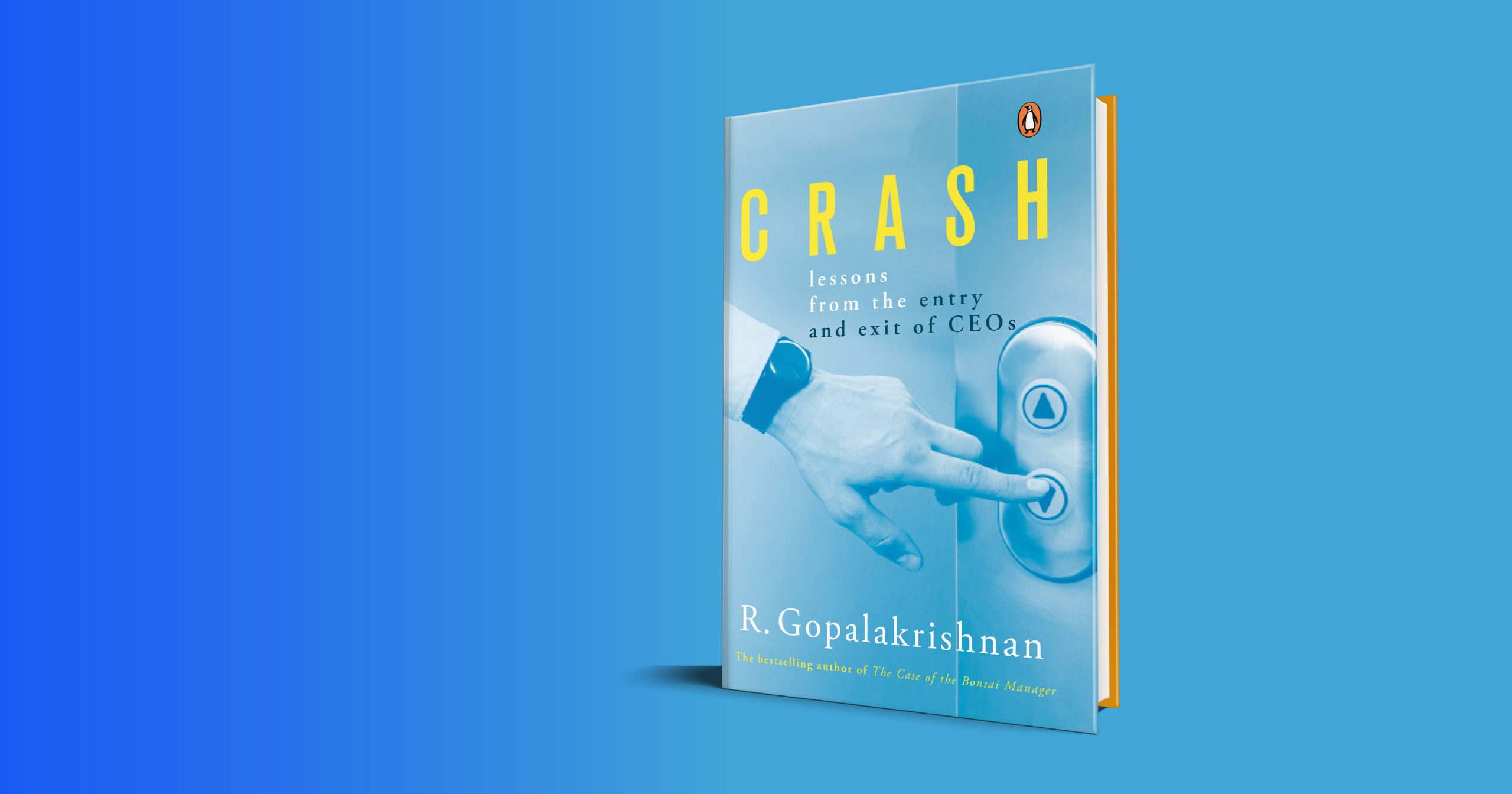
While many people talk about the path to the top of organizations, very few are honest about how difficult it is to stay at that position. R. Gopalakrishnan analyses the ‘software’ challenges, which leaders confront every day, and shares the insights he has gained developing, managing, investing in and supervising a variety of companies.

Here are a few tips for budding leaders on surviving in the B-game –


You are completely accountable

“ Leaders operate in an environment, and their actions and judgements cannot be separated from their environment. So the totality of the event and the leader’s role in the event might offer more valid lessons than anything else.”

Experiential learning is the best teacher

“The model of three worlds indicates that leaders learn and develop in their inner world, the world of people, and the world of getting things done.Managers learn lessons through their insights and experiences. By definition, insight is experiential and cannot be taught or preached.”

 ∼

Absorb the surrounding culture around you

“Each leader described has been a professional of considerable accomplishment and flair, each of them had built a career which was exemplary. Each of them rose in the world of business during my own times, each was noticed by me as part of my readings, and each of them exited his/her position of power in spite of being acclaimed as a ‘terrific find’. These leaders did not part on ethical grounds or corruption, but because of ‘cultural differences’. They were all top-quality leaders, rose very impressively and exited, in most cases, due to some perception of the lack of the cultural fit of the candidate.”

 ∼

Don’t be surprised if your friend circle shrinks

“It’s lonely at the top is a popular adage. However, a leader should not make such a big deal out of it that he or she becomes isolated. Deep suspicions about the motives of your colleagues, silence when you should be speaking up and keeping your ears tuned to whispers and murmurs—these are all symptoms of a derailing leader.”

Always seek advice on difficult matters

“Don’t hesitate to show that you need advice or that you are unsure about which option you should pursue while addressing a particular problem. CEOs should not feel that they have to present themselves as the great, all-knowing leader. After all, deep inside, they know that they do not match that description.”


Filled with anecdotes, analysis of various situations CEOs may find themselves in and unconventional advice to help them, Crash: Lessons from the Entry and Exit of CEOs is for veteran leaders as well as for those who aspire to start their own ventures.


Start 2019 Right with These Business Books

Nothing says a fresh start like the New Year. Whether your is business is booming, could do with a little push, or is yet to take off, we’ve got books that are sure to pique your interest.

Take a look at our business bookshelf for the month, and tell us which book you’re going to pick up first!

Get Better at Getting Better

To achieve extraordinary success, you need something other than core capabilities like analytical skills, people skills, conceptual and intuitive skills, hard work and hunger for success. Chandramouli Venkatesan identifies this as developing the capability to succeed and continuously improve that capability. He calls this the Get Better Model, or GBM-your model to continuously improve how good you are.


The Age of Awakening

The Age of Awakening tells India’s economic story since the country gained independence. It unfolds a tale of titanic figures, colossal failures, triumphant breakthroughs and great moral shortcomings. Weaving together vivid history and economic analysis, this book makes for a gripping narrative.


Game India

The book aims to unearth India’s strategic advantages; explore what has been done (or not done) to exploit them; what potential they hold out for people; and how they could redefine the game for this country.

Very well-researched, backed by personal anecdotes and industry lore which Bhaskar has been privy to for many years, Game India is essential reading for every Indian looking ahead.

Seven Examples From ‘Crash’ In Which Your Emotional Competence Affects Your Work Life

While many people talk about the path to the top of organizations, very few are honest about how difficult it is to stay at that position. Filled with anecdotes, analysis of various situations CEOs may find themselves in and unconventional advice to help them, Crash: Lessons from the Entry and Exit of CEOs is for veteran leaders as well as for those who aspire to start their own ventures.

Here are some crucial examples from the book that you should make note of –


“It is a common trap for us to overestimate our strengths and to underestimate our weaknesses. This is the root cause of indignation on being passed over for a promotion, and it also triggers the perception that the boss is giving you less attention when compared to a colleague. It is a universal bonsai trap. Associated with this basic trap are a number of other traps: arrogance, insensitivity, envy and many more. A deep sense of self-realization is required to appreciate your weaknesses. You learn about your behavioural bonsai traps (when a person ceases to grow mentally and experientially) all by yourself. Nobody tells you about them.”

“Unfortunately successful and ambitious business leaders feel convinced that they have no competent successor. Even if they don’t feel so, sycophants persuade them to believe it. Management academics point out that this is the result of that ambitious leader’s failure. To quote two academics, James Champy and Nitin Nohria, ‘To feel threatened by one’s successor is a futile but remarkably common reaction to inevitable departure.’”

“To be successful, a CEO requires cognitive intelligence as well as an intuitive emotional intelligence—which means he or she must have a responsive sense of empathy for the views of various stakeholders. In my experience, once a person gets into a leadership role, there are forces that cause his or her emotional intelligence or sense of empathy to shrink. This poses the real and hidden challenge.”

“Leaders tend to be self-assured, they need to be so if they have to lead their people, and the line that divides self-assuredness and overconfidence is a thin one. The leader’s confidence can be rooted in logic and data, or it can be rooted in feelings and emotions. If his/her confidence is based on the best-available data, then the leader comes across as authentic. It is a positive form of self-confidence. If the leader’s confidence is not data-based, the leader may seem impetuous or someone who is not rooted in reality.”

Differences will always come up in an organization. If the boss has consulted many and taken a different course of action than the one suggested by a person, he is likely to feel ignored. Ignoring some colleagues is unavoidable when the boss has to choose from differing viewpoints. Though this might lead to differences, leaders should not let them linger or persist. They should patch up so that the difference is an anecdote of history, much like tiffs between couples.”

“Any rising leader is prone to the dangers of hubris, ego and loss of emotional intelligence. This danger applies not only to CEOs, but also to chairmen and independent directors. These dangers are called derailers.Everybody has his or her set of derailers, distinctive and peculiarly individual. Our individual derailers are visible day in and day out to colleagues, observers and those close to the leader, but not to the leader. In fact, more often than not, the person might not be aware of the fact that the derailers exist in his or her personality and manifest in his or her behaviour; for example, egotism, excessive pride, arrogance, shifting the blame, poor communication skills and so on.”

“The ‘software of skills’ refers to the skills required to be effective. It’s just not the operating leader who undergoes brain damage but also the chairman and the board members, who too occupy important positions of power, who experience it. The fault may be with the candidate or the system in which he or she is operating. The cracks widen and develop a shape and size of their own. In many cases, the relationship between the newly appointed leader and the system in which he operates—directors, colleagues, shareholders—suffers irreparable tears, resulting in a parting of ways.”


In Crash: Lessons from the Entry and Exit of CEOs , the author shows that great leaders continue to excel not just because of their skills and intelligence but also by connecting with others using emotional competencies like empathy and self-awareness.


Wisdom from The Puranas

The word ‘purana’ means old, ancient. The Puranas are old texts, usually referred to in conjunction with Itihasa (the Ramayana and the Mahabharata).The  corpus of the Puranas is immense, in scope, as well as in length. Taken together, the eighteen Puranas are four times the size of the Mahabharata.

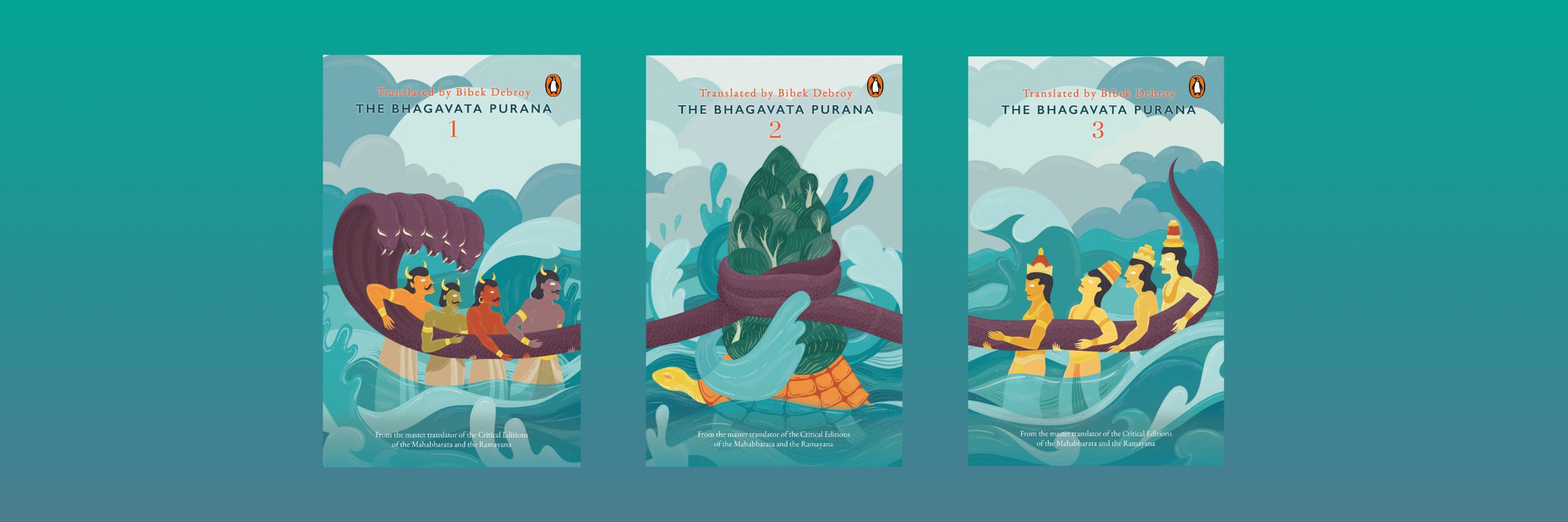
From Bibek Debroy’s translated volumes of the Bhagavata Purana, we extract the following quotes of wisdom.


A seamless blend of fable and philosophy, the Bhagavata Purana is perhaps the most revered text in the Vaishnava tradition.

New Year, New Books!

What better way to start the new year than with some new books? This year, let’s all aspire to read more and encourage others to, too! Penguin presents a list of new books for the month of January. Which one of these will you start your year with?


Democracy on the Road

On the eve of a landmark general election, Ruchir Sharma offers an unrivalled portrait of how India and its democracy work, drawn from his two decades on the road chasing election campaigns across every major state, travelling the equivalent of a lap around the earth.


Jallianwala Bagh: An Empire of Fear and the Making of the Amritsar Massacre

The Amritsar Massacre of 1919 was a seminal moment in the history of the Indo-British encounter, and it had a profound impact on the colonial relationship between the two countries. In this dramatic telling, which takes the perspectives of ordinary people into account, the event and its aftermath are strikingly detailed.


Ganga: The Many Pasts of a River

The Ganga enjoys a special place in the hearts of millions. In this unprecedented work, historian Sudipta Sen tells the fascinating story of the world’s third-largest river from prehistoric times to the present. Seamlessly weaving together geography, ecology and religious history, this lavishly illustrated volume paints a remarkable portrait of India’s most sacred and beloved river.


The Begum: A Portrait of Ra’ana Liaquat Ali Khan, Pakistan’s Pioneering First Lady

Begum Ra’ana Liaquat Ali Khan was the wife of Pakistan’s first prime minister. Three religions-Hinduism, Christianity and Islam-had an immense impact on her life, and she participated actively in all the major movements of her time-the freedom struggle, the Pakistani movement and the fight for women’s empowerment. She occasionally met with opposition, but she never gave up. It is this spirit that The Begum captures.


Kaifiyat: Verses on Women and Love

Kaifi Azmi’s literary legacy remains a bright star in the firmament of Urdu poetry. His poetic temperament-ranging from timeless lyrics in films like Kagaz Ke Phool to soaring revolutionary verses that denounced tyranny-seamlessly combined the radical and the progressive with the lyrical and the romantic.


Little book of Comfort

”So I went out into the night, walked up the hill, discovered new things about the night and myself, and came home refreshed. For just as the night has the moon and the stars, so the darkness of the soul can be lit up by small fireflies – such as these calm and comforting thoughts that I have jotted down for you…’ Ruskin Bond


Living Hell

All Nadeem Sayed Khatib, aka Nadeem Chipkali, wants to do is stay in his apartment all day, watch some TV and ignore his mounting worries. He is not in the best shape, cash-wise and otherwise, but let’s be honest: people seriously have it out for him. Sometimes, dangerous people. Set against the backdrop of a low-life Bombay that comes alive at night, Living Hell is a fast-paced noir murder mystery with dark humour and an accidental hero.


The Great March of Democracy: Seven Decades of India’s Elections

This book celebrates seven decades of India’s vibrant democracy and the Election Commission’s excellence and rigour, with a remarkable collection of essays written by those who have studied India’s unique experiment in electoral democracy, as well as analysts, politicians, social workers, activists, businesspersons and public servants.


Sitayana

Majmudar tells the story of one of the world’s most popular epics through multiple perspectives, presented in rapid sequence-from Hanuman and Ravana, down to even the squirrel helping Rama’s army build the bridge.
However, above all, Majmudar focuses on the fierce resistance of Sita, letting us hear her voice as we have never heard it before.


Get Better at Getting Better

To achieve extraordinary success, you need something other than core capabilities like analytical skills, people skills, conceptual and intuitive skills, hard work and hunger for success. Chandramouli Venkatesan identifies this as developing the capability to succeed and continuously improve that capability. He calls this the Get Better Model, or GBM-your model to continuously improve how good you are.


The 108 Upanishads: An Introduction

This book is a thoroughly researched primer on the 108 Upanishads, philosophical treatises that form a part of the Vedas, the revered Hindu texts. These Upanishads contain the most crystallized bits of wisdom gleaned from Hinduism. Professor Dalal explains the concepts at the core of each Upanishad clearly and lucidly.


The Age of Awakening

The Age of Awakening tells India’s economic story since the country gained independence. It unfolds a tale of titanic figures, colossal failures, triumphant breakthroughs and great moral shortcomings. Weaving together vivid history and economic analysis, this book makes for a gripping narrative.


Bhagwaan ke Pakwaan

The rice beer bellies of a Christian village in Meghalaya; food fed to departed Zoroastrian souls; a Kolkata-based Jewish community in decline; Tibetan monks who first serve Preta, the hungry ghost; and fifty-six-course feasts of the Jagannath temple-these are the stories in Bhagwan Ke Pakwaan (or, food of the gods), a cookbook-cum-travelogue exploring the connection between food and faith through the communities of India. There are legends and lore, angsty perspectives, tangential anecdotes, a couple of life lessons and a whole lot of food.

In the City a Mirror Wandering

Unfolding over the course of a single day, Ashk’s sweeping sequel to Falling Wallsexplores the inner struggles of Chetan, an aspiring young writer, as he roams the labyrinthine streets of 1930s’ Jalandhar, haunted by his thwarted ambitions but intent on fulfilling his dreams. Intensely poignant and vividly evocative, In the City a Mirror Wandering is an exploration of not only a dynamic, bustling city but also the rich tapestry of human emotion that consumes us all.


Sweet Shop

Arising from visits to sweet shops in the by-lanes of Calcutta, these poems brim with the excitement of what it means to discover, marvel at, and taste the universe. As the first line of the book states, ‘The whole universe is here’. Showcasing the edible, the intimate, and the singular, this collection, like the sweet-shop shelf, is characterized by ‘an unnoticed balance of gravity and play’.


Belt and Road: A Chinese World Order

China’s Belt and Road strategy is acknowledged to be the most ambitious geopolitical initiative of the age. Bruno Macaes traces this extraordinary initiative’s history, highlighting its achievements to date and its staggering complexity. He asks whether Belt and Road is about more than power projection and profit. Will it herald a new set of universal political values, to rival those of the West? Is it, in fact, the story of the century?


Doab Dil

Employing a philosopher’s mind and an artist’s eye, Banerjee takes us to still places in a moving world, the place where two rivers (do ab) meet and forests write themselves into history.

Everything You Need to Know About Conducting a Sting Operation : The Anatomy of a Sting

Bhupen Patel has conducted many undercover operations over the course of his career. He’s exposed all sorts of rackets, from asylums admitting patients without proper medical examinations to discovering an illegal network of agents that arrange ‘temporary’ wives for Arab men looking to have a short fling.

Here are a few helpful lessons from The Anatomy of a Sting to give you a better insight!


A Sting is a Thorough Investigation

“A sting operation is nothing less than a police investigation. The difference is that reporters learn on the job without any specific training. Also, we rarely have backup and definitely don’t have arms for self-defence.”

Importance of a Spy Camera

“One can buy spy cameras for Rs 1500–2000, hidden in buttons, spectacles, watches, ties, etc. The ‘Made in China’ cameras can easily pull off three or four assignments without any glitches.”

It’s Essential to Cross-Check Every Detail

“I decided to do some groundwork first and stepped out to check if the address provided in the classified ad was legitimate. Since I would be accompanied by a female colleague and it would just be the two of us, it was important to have an idea of the surroundings, the number of people there and the escape routes.”

Be Prepared for the Worst-case Scenario

“As a team, it was important for Ruhi and me to be on the same page. All our research was in place but we had to be prepared for the worst. It was important that we discussed the characters we were about to play—the names, backgrounds, families, experiences, qualifications, likes and dislikes, all of it.“

Form a Personal Equation

“On the final day of the operation, there was not much to do. By now, the guards and I were friendly enough to greet each other with a smile and even exchange a word or two. Their dialect clearly revealed that they belonged to the remote districts of Maharashtra. It is always easiest and most helpful to strike up a conversation if you show interest in their hometown.“


The Anatomy of A Sting recounts in detail some of Bhupen’s most dramatic and hard-hitting operations.


Emergency Chronicles: An Interview With The Author

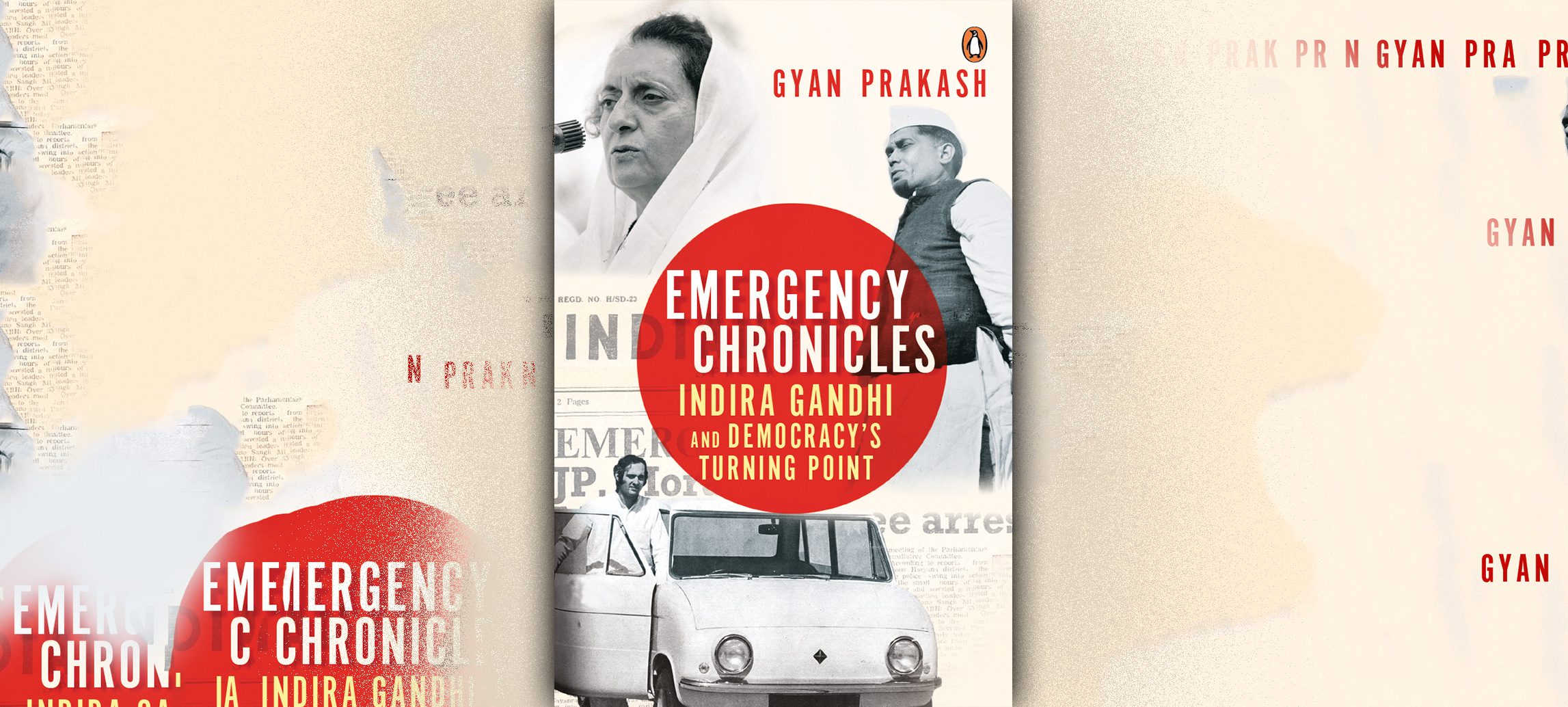
As the world once again confronts an eruption of authoritarianism, Gyan Prakash’s Emergency Chronicles takes us back to the moment of India’s independence to offer a comprehensive historical account of Indira Gandhi’s Emergency of 1975-77. Stripping away the myth that this was a sudden event brought on solely by the Prime Minister’s desire to cling to power, it argues that the Emergency was as much Indira’s doing as it was the product of Indian democracy’s troubled relationship with popular politics, and a turning point in its history.
In this interview, he talks to us about writing the book!


How long was the research process for this book?
I began research in 2012 and continued it right up writing the first draft of the manuscript, that is, until the end of 2017.

What are some of the archival sources you looked through for this book?
The core of my archival research was at the National Archives of India and Nehru Memorial Museum and Library. Much of the research at NAI consisted of the depositions before the Shah Commission. While the published report summarized the Commission¹s findings, the depositions proved to be a treasure trove in composing a picture of the daily functioning of the Emergency. The private papers at NMML were invaluable in fleshing out the thoughts and activities of the individual actors. In addition, I trawled through the records of Ford Foundation at the Rockefeller Archive Center in New York to uncover the stories of pre-Emergency family planning and urban slum clearing programs. I chanced upon an unexpectedly rich archival resource consisting of prison letters in the collection of the Center for Research Libraries, Chicago. In addition, I searched through motor car archives in the UK to get materials on the Ambassador since Hindustan Motors claimed that they had none.

In your view, what is the biggest misconception about the Emergency?
The biggest misconception about the Emergency is that it emerged out of nowhere, attributable solely to Indira Gandhi’s desire to cling to power, and that it disappeared without a trace after 1977.  This is a comfortable myth because it permits Indians to believe that there are no deeper problems with India’s experience with democracy, and thus no long-term effects. Since this appeared patently implausible to me as a historian, I set about placing these 21 months in a longer historical perspective, examining both its antecedents and its afterlife.

What is some of the criticism you’re expecting to get for this work?
I expect that those who think that Indira, along with her coterie, as the sole cause of the Emergency would think, wrongly, that the book excuses her. I do not minimize her role, or that of her son, Sanjay; instead, I suggest that Indira did not function in a vacuum. What she and her coterie did was to ratchet up by few notches policies and projects that were long in the making.

What are some of the differences our country would have today, if the Emergency hadn’t been declared?
I think that the political crisis of the early 1970s existed prior to, and independent of, the Emergency. What the suspension of rights did was to turn a political crisis into a constitutional crisis. This produced the belief that Indira was only problem for Indian democracy, and that all that was needed was to restore constitutional rights  This prevented a full reckoning with the underlying crisis of democracy and governance that she had tried to salvage  through the declaration of Emergency. Without it, perhaps India would have confronted more squarely its failure to realize the promise of democracy as a value.


In Emergency ChroniclesGyan Prakash explains how growing popular unrest disturbed Indira’s regime, prompting her to take recourse to the law to suspend lawful rights, wounding the political system further and opening the door for caste politics and Hindu nationalism.

100 years of Sai Baba: His Journey on Life, Death and Everything in Between

Rabda has attempted suicide and chances are that he is going to die. Sai Baba of Shirdi enters the hospital room and awakens the spirit body of Rabda. The two, Master and musician, begin to converse about life, death and everything in between.
Set in the present, Rabda by Ruzbeh N. Bharucha takes the reader to the past, to when the Sai lived in His physical body and the life and philosophy of Sai Baba of Shirdi are revealed.
Here are seven quotes from the book that will show you Sai Baba’s path:
 

“ Each moment, every single moment, we either create a dream or a nightmare, as each moment we either choose to live or we choose to kill the opportunity to live.”

“Either you believe that God does not exist, there is no Supreme Power running this grand show, or you believe in a just God.You cannot believe in a God who exists but is unjust.”

   “The more selfless your love,the greater the happiness all around.”

“You may pronounce the words immaculately but if the words aren’t coming from the very breath of your essence, the very sigh of your soul,then those prayers might as well be verbalized by an intelligent parrot.”

“One needs to be careful of desires as once you have your desires under control,you shall move into the region of the heart.”

“When your thoughts rule you, you are like a slave in your own house.”

“So the only wise and commonsensical way of going through life is calmly,giving your best, and leaving the rest to Him.”


A powerful spiritual read, Rabda is a journey you really do not want to miss.
 

Five Modern Homages to Jeeves!

PG Wodehouse’s memorable creation,  is a highly implausible pairing—not romantic, not quite friendship but something immeasurably greater—that of that incomparable lounger and shining light  of the Drones Club, Bertie Wooster and his valet, Jeeves.
‘Valet’  may be his official job designation, but he is so much more—father figure, nurse, guardian angel and all-round messiah to Bertie and his many bumbling friends, extricating them from multiple capers and bad decisions-money, thievery and marriage.
Jeeves and Wooster live on through modern literary tributes, TV shows and through the ‘bumbling master-supremely efficient staff’   trope still used in so much modern media.
 
Jeeves and the King of Clubs-Ben Schott
This is a magnificent new homage to Jeeves and Wooster, that leads them through an uproarious adventure of espionage through the secret corridors of Whitehall, the sunlit lawns of Brinkley Court, and the private clubs of St James’s.  As storm clouds loom over Europe and the very security of the nation is in peril-it seems that Jeeves has long been an agent of British Intelligence, but now His Majesty’s Government must turn to the one man who can help . . . Bertie Wooster. We encounter an unforgettable cast of characters – old and new – including outraged chefs and exasperated aunts, disreputable politicians and gambling bankers, slushy debs and Cockney cabbies, sphinx-like tailors, and sylph-like spies.
Jeeves & the King of Clubs is essential reading for aficionados of The Master, and a perfect introduction to the joys of Jeeves and Wooster for those who have never before dipped their toe.
(Read more about this story here)
 
The classic television adaptation-Jeeves and Wooster
This is the show that made Laurie and Fry one of the ultimate dream-teams, almost as perfect  as Jeeves and Wooster, Laurel and hardy or (as Wodehouse would have put it) eggs and b. The episodes keep the deliciously Jazz-Age nonchalance of the novels while the irresistible charm and chemistry of Stephen Fry and Hugh Laurie is the perfect recreation of the eternal chemistry of Jeeves and Wooster.
(Read more about this story here)
 
 
Wake-Up, Sir! by Jonathan Ames
From the creator of the HBO series Bored to Death, the story of a young alcoholic writer and his personal valet, a hilarious homage to the Bertie and Jeeves novels of P.G. Wodehouse.
Alan Blair, the hero of Wake Up, Sir!, is a young, loony writer with numerous problems of the mental, emotional, sexual, spiritual, and physical variety. He’s very good at problems. But luckily for Alan, he has a personal valet named Jeeves, who does his best to sort things out for his troubled master. And Alan does find trouble wherever he goes. He embarks on a perilous and bizarre road journey, his destination being an artists’ colony in Saratoga Springs. There Alan encounters a gorgeous femme fatale who is in possession of the most spectacular nose in the history of noses. Such a nose can only lead to a wild disaster for someone like Alan, and Jeeves tries to help him, but…well, read the book and find out!
(Read more about this story here)
 
Jeeves and the Wedding Bells-Sebastian Faulks
A gloriously witty novel from Sebastian Faulks using P.G. Wodehouse’s much-loved characters, Jeeves and Wooster, fully authorised by the Wodehouse estate.
Bertie Wooster is staying at the stately home of Sir Henry Hackwood in Dorset. He is more than familiar with the country-house set-up: he is a veteran of the cocktail hour and, thanks to Jeeves, his gentleman’s personal gentleman, is never less than immaculately dressed.
On this occasion, however, it is Jeeves who is to be seen in the drawing room while Bertie finds himself below stairs – which he doesn’t care for at all. His predicament is, of course, all in the name of love …
(Read more about this story here)
 
 
A film homage to the master-valet pairing-Arthur (1981)
Featuring Sir John Gielgud as Hobson- a Jeeves-esque  valet to Dudley Moores’s Arthur, the classic ‘happy drunk’ playboy-the movie takes one through a crazy ride of finding love amid wealth, prostitution and substance abuse in the hedonism and excess of 1980s America.
The film won writer Steve Gordon an Oscar nomination for Best Original Screenplay and the Writer’s Guild of America award for Best Comedy Written Directly for the Screen.
(Read more about this story here)


Home Remedies to Strengthen Your Lungs – Handy Tips from 'The Asthma Cure'

Given the levels of pollution in many metropolitan cities and states in India, most of us are able to identify the impact on our lungs. But did you know that many a times the medicines and bronchodilators prescribed to asthmatics to temporarily relieve the symptoms actually weaken the lungs over a period of time?
Using authentic remedies and principles from Ayurveda and macrobiotics, The Asthma Cure is a step-by-step practical guide with natural remedies, easy-to-follow wholesome recipes and daily food plans to help a person heal bronchial asthma, wheezing and other lung-related conditions naturally.
Listed below are a few quick home remedies and tips to strengthen your lungs:


Asthma is a curable disease. This is the primary reason Tarika Ahuja chose to write The Asthma Cure  and she hopes to work as an asthma revolutionary through workshops and awareness campaigns in order to break the myth that it is incurable.

error: Content is protected !!