Publish with Us

Follow Penguin

Follow Penguinsters

Follow Penguin Swadesh

5 Facts You Did Not Know About Paulo Coelho

Bestselling author Paulo Coelho has just released his long awaited semi-autobiographical work, Hippie, adding to the literary legend’s incomparable bestselling history. Coelho’s titles have been bringing people across the world solace and wisdom for decades, and his latest title is no different. This book is a rare glimpse into Coelho’s life itself, giving readers insight into what made Coelho the writer he is today. Along with the heartbreaks of his own life, we travel with Paulo through his formative years, and through revolutionary days of modern Western philosophy – the 70’s.
So what do you need to know about Hippie?


Paulo Coelho Loves India:
While never having visited India yet, Paulo believes that Indian culture has been a huge influence on both himself and western philosophy.
As quoted in this interview with the Hindustan Times, Coelho talks about how he has been critically influenced by Rabindranath Tagore. He quotes a few lines from the Gitanjali at the beginning of Hippie, saying “Poetry is another way of seeing the world. These days people don’t pay enough attention to poetry. By quoting Tagore at the beginning of the book, I wanted to bring back attention to his work.”
Coelho first wanted to title this book ‘And where the old tracks are lost’, from the same Tagore poem. He decided against it as he was unsure as to whether it would translate across languages, and settled instead for Hippie.

~

Paulo Coelho’s Parents Did Not Understand Him:
Paulo Coelho’s parents, worried that he wanted to become a writer and an artist, put their son in an insane asylum three times before the age of 20. He says, “My parents thought I was psychotic. That was the diagnosis. I used to read a lot, I was very shy and I didn’t socialise very easily. They were desperate. It wasn’t that they wanted to hurt me, but they didn’t know what to do.
“I have forgiven them. They did not do that to destroy me, they did that to save me. And it happens with love, all the time – when you have this love towards someone else, but you want this person to change, to be like you. And then love can be very destructive. It is up to you to say, ‘Stop, I love you but I’m going to do what is better for me and at the end of the day, you’re going to realise that I was right.”
After some therapy, he came to the conclusion that everyone must live out their madness a little bit. Now, he says, “If madness means being other than “normal” that is fine with me. If it is threatening for oneself and society, there is a problem. My motto is: A little bit of madness is quite healthful.”

~

Paulo Coelho Wrote Radical Songs That Sent Him To Jail:
After years of hedonism on the road, Paulo returned to Brazil to pursue a career writing songs. He built a strong and lucrative career doing this – in 1974, he was even arrested for ‘subversive’ activities by the ruling military government for writing revolutionary lyrics. He went through torture in jail at the time. He says, “I think I was more frightened when I was in jail than I have ever been, and afterwards I was frightened for seven years… it is a traumatic experience, but then after seven years, time heals everything and today I’m engaged in several projects of civil rights, Amnesty International included. Every time that I see there is something wrong, I think it is my responsibility to voice my opposition. It may not work, but at least I am not silent. I’m not a coward. I have my fears, but I am not a coward.”

~

Paulo Coelho Has a Fascinating Writing Ritual:
The theme of omens has influenced Coelho’s work from the Alchemist onward, and it is a facet of his writing influenced from his life. Coelho pays a great deal of attention to omens, and one in particular – he will start writing a new book only after finding a white feather.
“The white feather thing started before my first book, The Pilgrimage. I asked myself, shall I write that book? I was not sure and I said if I see a feather today, I’m going to write; if I don’t see it it’s not in my destiny. I found it so I said I have to write. And the next book, I followed the same ritual and then it became a tradition and now I cannot write unless I find a white feather.” This has since become more specialized, as white feathers grew increasingly easy to find. As of 2005, his challenge was to find a white feather in the January of an odd year.

~

Paulo Coelho’s Spiritual Journey began at Age 42:
For those with a taste for literary laughs, this might be the answer to life the universe and everything – when did Paulo Coelho gain enlightenment? At the age of 42.
In 1986, Coelho took a walk down Road of Santiago de Compostela, a 1000+ km walk of pilgrimage in Northern Spain. He would say, “I was very happy in the things I was doing. I was doing something that gave me food and water – to use the metaphor in The Alchemist, I was working, I had a person whom I loved, I had money, but I was not fulfilling my dream. My dream was, and still is, to be a writer.” He decided he had to do it and never looked back. Today, nearly thirty years later, he’s bringing us another exquisite walk through his life and soul, in Hippie.


In Hippie, his most autobiographical novel to date, Paulo Coelho takes us back in time to re-live the dream of a generation that longed for peace and dared to challenge the established social order-authoritarian politics, conservative modes of behavior, excessive consumerism, and an unbalanced concentration of wealth and power.
 

Seven Things You Didn't Know about A.R. Rahman

Who really is A.R. Rahman? We know his music. We know him as a nation’s pride, winner of multiple national film awards, Oscars and Grammys. But what about the man? In this intimate biography, Notes of a Dream, by Krishna Trilok, Rahman opens up about his life like never before.
Here are seven interesting facts you didn’t know about A.R. Rahman: the man behind the music,  and the music that made the man:
 
‘A.R. Rahman is obsessed with all things tech, and one look around his hall is enough for someone to get the idea. Even the creamy curtains covering the windows are automated. And there are numerous laptops, tablets and other devices, including at least one virtual reality headset and a drone, strewn across the room. As there are in all his studios.’
 
‘He’s a man interested in a million things. He’s very aware of what’s happening in the world, right from politics to warfare. He goes on to the Net and gets information all the time. He’s interested in visual media; cameras, drones and all that. He knows more about these than most directors even.’
 
‘He wants to produce films. To guide films. He has so many stories written. He is looking at media as a whole. He is extending his talent beyond music.’
 
‘His father, R.K. Shekhar, was also a very talented musical pioneer. Rajagopala Kulashekhara Shekhar was born on 7 November 1933. Shekhar’s own father, K. Rajagopal, was a school dropout who became an electrician and part-timed as a bhagavathar, composing and singing Hindu religious songs. Shekhar inherited the musical talent. He learnt to play the harmonium from a paternal uncle and eventually mastered the instrument. He went on to play at Carnatic concerts in the halls of Mylapore in Chennai, the stronghold of Carnatic music. Shekhar was eventually picked up by a famous drama troupe named R.S. Manohar. He was the first person to introduce electronic music instruments – which he brought in from abroad, Singapore mainly – to South Indian music.’
 
‘A.R. and his family did not convert from Hinduism to Islam until long after Shekhar’s death. Only towards the end of the 1980s, shortly before the advent of Roja, did AR and his mother and sisters turn to Islam as a source of hope, faith and guidance. Their relating to the religion, however, definitely began with Shekhar’s death and the hard days leading up to it.’
 
‘As a child, AR did receive some formal musical training. A man named Joseph used to teach him and his sister how to play the guitar. And AR also started learning Indian classical music from Nithyanandam and from Dakshinamoorthy, the man who “discovered” his father. He also learnt Western music from Dhanraj, who had taught some of the biggest names in Chennai’s film music scene, including Shekhar.’
 
‘Whenever he got some time to himself, AR would jam with other musicians he had met at recording sessions or came to be acquainted with socially: John Antony, Sivamani Anandan, (the late) Jojo and many others. They were the closest things he had to friends. With them, he could channel all his creative energy and actually make music. At recording sessions, he was just playing the notes someone else had conceived.’


From his early days as a composer of advertisement jingles to his first big break in feature films, Notes of a Dream captures Rahman’s extraordinary success story with all the rhythm and melody, the highs and lows, of a terrific soundtrack by the man himself.

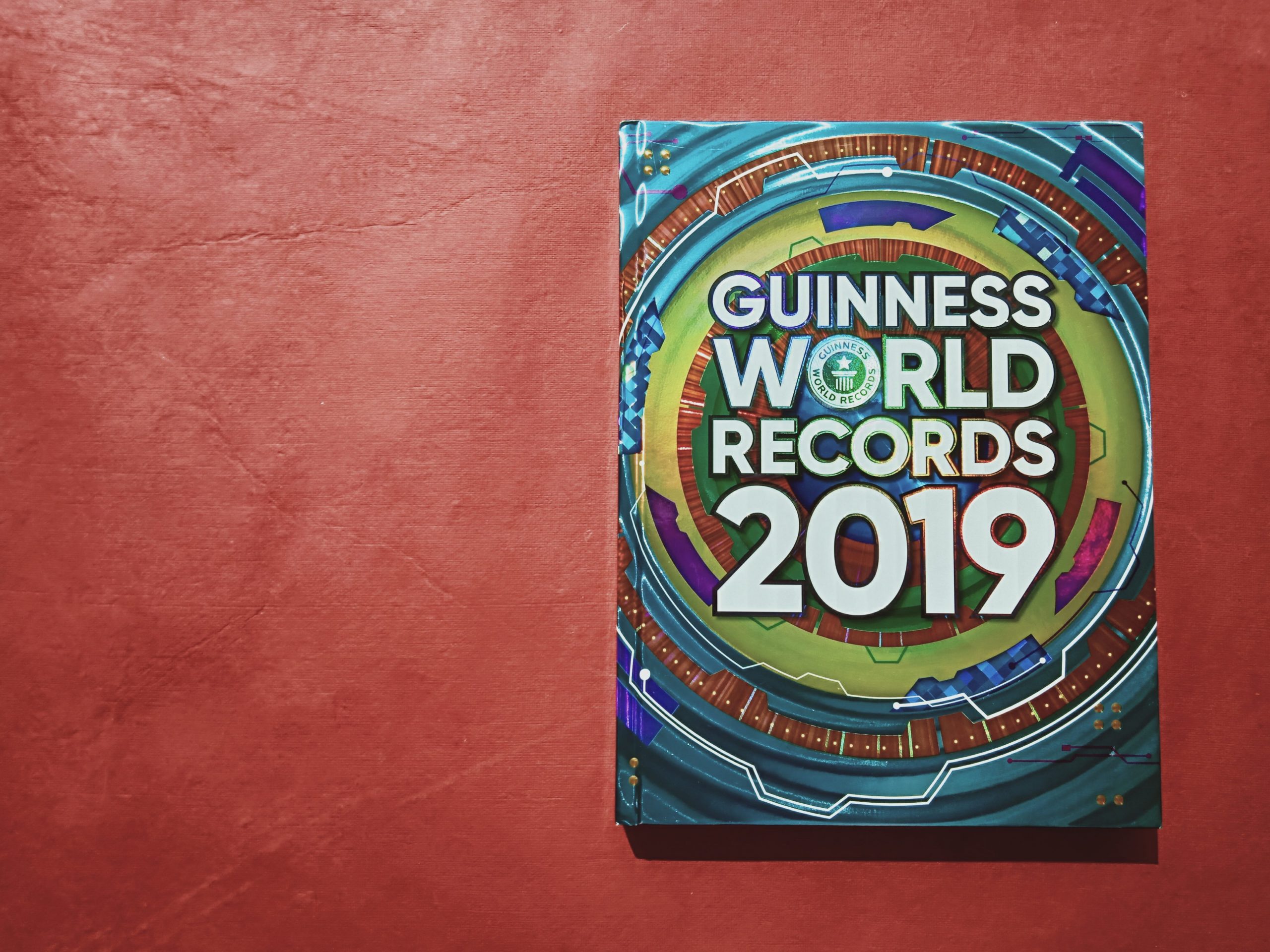
Guinness World Records 2019 : A Sneak-Peek at Record-Shattering Indians

The world’s most popular record book is back with thousands of new categories and newly broken records, covering everything from outer space to sporting greats via Instagram, fidget spinners and all manner of human marvels. Inside you’ll find hundreds of never-before-seen photographs and countless facts, figures, stats and trivia waiting for you on every action-packed page. Guinness World Records 2019 is the ultimate snapshot of our world today.


Here is a brief glance at some of the unbelievable records made by Indians this year!

Most runs scored in ODIs (female)

As of 4 Mar 2018, India captain Mithali Raj had scored 6,259 ODI runs in 189 matches (170 innings) since her debut in the format in 1999. Between 7 Feb and 24 Jun 2017, Raj hit the most consecutive fifties in One-Day Internationals (female) – seven. Together with England’s Charlotte Edwards she has the most fifties scored in an ODI career(female) -55
 

Fastest Twenty20 International Hundred(Male)

On 22 Dec 2017, Rohit Sharma(IND) made a century off just 35 balls-including eight sixes and 11 fours – against Sri Lanka in Indore,India. Sharma matched the feat of David Miller (ZAF), who made his own 35-ball century two months earlier on 29 Oct ,against Bangladesh in Potchefstroom, South Africa.
 

Largest bust sculpture

Isha Foundation(IND) erected a 34.24-m-tall(112-ft-4-in), 24.99-m-wide( 81-ft-11.8-in), 24.99-m-wide(81-ft-11.8-in),44.9-m-long(147-ft 3.7-in) sculpture in Tamil Nadu, India, as verified on 11 Mar 2017. The bust depicts Adiyogi Shiva-the name refers to the fact that,in yoga practice, the Hindu god Shiva is known as the first yogi.
 

Largest flute

On 25 Dec 2014, Bharat Sinh Parmar, Charunsudan Atri Jay Bhayani and Shri 5 Navtanpuri Dham temple(all IND) presented a 3.63-m-long( 11-ft 11-in), fully playable flute in Jamnagar, India. The instrument was then played in a public performance of the Indian national anthem.
 

Highest flight by hot-air balloon

Dr.  Vijaypat Singhania(IND) reached an altitude of 21,037 m( 68,986 ft) in a Cameron Z-1600 hot-air balloon over Mumbai, India, on 26 Nov 2005.
 

Largest pair of scissors

Memory expert Neerja Roy Chowdhury (IND) created a pair of scissors  measuring 2.31 m( 7 ft 7 in) from tip to handle. They were used to cut the ribbon wrapping on her memory-training comic book, launched at the Air Force Auditorium in New Delhi, India on 16 Aug 2009.
 

Longest time to spin a plate on the finger

On 18 Dec 2016, Himanshu Gupta (IND) kept a plate spinning on his finger for 1 hr 10 min 39 sec in Bangalore, India. Himanshu also used his revolutionary skills to achieve a new GWR title for the longest time to spin a Swiss ballon on one finger (using one hand) : 5 min 38 sec, in Bangalore , on 12 Sep 2016.
 

Longest duration playing the sitar

Renuka Punwani played sitar for an unbroken stretch of exactly 25 hr at the  Pancham Academy of Indian Music in Ahmedabad, Gujarat, India, from 26 to 27 Nov 2011. Renuka was a sprightly 76 years old at the time. She has also accompanied other members of the academy in marathon music-making attempts.
 

Drink a bottle of ketchup

On 7 Sep 2017, Dinesh Shivnath Upadhyaya(IND) downed a 500-g (17.6-oz) bottle of ketchup in 25.37 sec in Mumbai, India. The gastronomic guzzler beat the previous best by more than 4 sec
 

Longest moustache ever

India’s Ram Singh Chauhan had a moustache measuring 14 ft (4.26 m)- about the length of a London black cab- as verified on the set of Lo Show dei record in Rome, Italy, on 4 Mar 2010.


Get your copy of  Guinness World Records 2019 today and find out more about quirkiest talents across the world!

 

Long Distance Author Relationships: An Interview with the Authors of Changemakers

In their book, Changemakers, Gayatri Rangachari Shah and Mallika Kapur tell us the story of twenty incredible women, many with no prior connections in the Bollywood industry, who have carved successful careers despite significant challenges.
We talk to them about some of the challenges they encountered while writing this book, as well as how the entire process was, on the whole.


How did the idea for this book come to you? 
We were both working journalists in India, based in Mumbai and found we were constantly drawn to stories that revolved around the place of women in Indian society. What really bothered us was one set of data – that less than a third of India’s women work. But we found one industry bucking that trend. And that was Bollywood, which has always been known as an all boys club.
More women than ever worked in Hindi cinema, and certainly many more of them behind the scenes. We were intrigued – who were these women? What drew them to Bollywood? How did they break into such a male dominated space? We started researching their stories and were fascinated by them. We wanted to share them with a broader audience.

Why did you choose each other as the co-author?
Working with each other was a natural choice. Firstly, because we are old friends – twenty years ago we were classmates at Columbia University’s Graduate School of Journalism! Since we were trained in the same way, our ethics and sensibilities match very closely. We were moved by the same stories and driven by the same passion to tell them.

What is the timeline of the book? 
It took us almost two years. Penguin green lit the book in April 2017 and it hit the shelves in October 2018.
Of course, we had begun our research a few months prior to our proposal being picked up. We started thinking of the idea in January 2017.

How did you divide the research process/work load between the two of you?
We worked on the research together – we read anything and everything we could get our hands on regarding Bollywood and women in film. When we found something interesting we shared it with each other immediately.
We spent many hours brainstorming ideas on the phone since we are now based in two different countries – thank goodness for free WhatsApp calls!
When we began interviewing our subjects, each of us did the primary interviews with ten women. We split the supplementary interviews between us. Editing was a real collaboration and a cross-country effort! We worked off Google documents and we would be on the phone and also in the same document at the same time, moving paragraphs around and rewriting sentences to make them sharper. Technology was a real enabler and a boon.

Did the difference in time make it a problem to coordinate to discuss or review ideas?
We didn’t let that come in the way! Given we are both working parents, we snatched any and every free minute we could to discuss or review ideas. Sometimes that meant very late night calls or very early Skype sessions. We were pretty much glued to our phones and computers for a year and a half!
How would you describe your long-distance author relationship? Was it easy or hard?
Looking back, it wasn’t hard at all. We spent way too much time with gadgets – be it our phone, iPads or laptops – we were in constant touch and it’s amazing how easy communication has become despite time zone differences!

What were some of the challenges you faced while co-authoring a book? Do you think you would have faced the same challenges had you been in the same city?
Actually being in two different time zones and carrying on with our other jobs and assignments made it easier. When one of us was crashing against a deadline at work, the other picked up a heavier load. When one of us was away on a family vacation, the other held fort. We maintained this rhythm through the process of researching, writing and editing. Yes, we couldn’t sit in the same room and brainstorm like we could have if we were both in Mumbai but that probably made us use our time more efficiently. And given Mumbai traffic, we probably saved ourselves a lot of commuting time by using FaceTime and WhatsApp instead!


Changemakers tells the story of twenty incredible women, many with no prior connections in the industry, who have carved successful careers despite significant challenges.

Know More About The Maestro Neil MacGregor

Looking at the plethora of religions, faith, ideologies – which go beyond the life of an individual, Neil MacGregor in his book Living with the Gods offers central facts of human existence. The book is an exploration of the beliefs which makes up for the shared identities of people which defines them and also impacts the politics of the day. Talking about the stories which shape our lives, the position of different societies in the world and how these shared beliefs examine objects, places and human activities, public life of a community and also shaping the relationship between the individual and the state.
In studying these patterns, MacGregor says that in understanding how we live with our gods it decides how we live with each other too.
Here we give you a few interesting facts about the author of this riveting read:


Neil MacGregor’s new book, Living with the Gods traces how different societies have understood and articulated their place in the cosmic scheme.

Meet the Different Avatars of Goddess Devi

Uma, Durga, Parvati, Lakshmi and Saraswati-they are all avatars of the Devi.  There are probably more forms of Devi than any other deity, for temples are dedicated to the goddess in every Indian village. She is energy and power, the ultimate destroyer of evil.
From The Book of Avatars and Divinities, we quote some of these avatars of Devi. Take a look!

Durga

“She is worshipped as an embodiment of female energy. She is the formidable Devi and Mahadevi and has many other powerful independent female forms.”

Sati

“As Sati, a manifestation of Durga, the goddess is the beloved wife of Shiva. She is a gentle wife Uma, who cannot bear the humiliation of her husband, whom she worships as a god, and gives up her life.”

Lakshmi

“Shri or Lakshmi, as depicted in the sacred texts, is the goddess of wealth and fortune, royal power and beauty. She is invoked to bring fame and prosperity. She is bountiful and bestows upon her worshippers gold, cattle, horses and abundant food.”

Saraswati

“Saraswati, according to the Devi Bhagavata Purana, is one of the five dynamic female forces which emerged from the supreme spirit: ‘Durga, Lakshmi, Saraswati, Savitri and Radha, these five goddesses are the spirit of Prakriti and the entire universal force emerges from these five. Saraswati is considered the muse of poets, artists and musicians and she is invoked by them whenever artistic excellence is desired.”

Sita

“Sita is revered as a self-sacrificing, loyal wife who is steadfast in her love for her husband despite many hardships. Sita was not an ordinary mortal and even her birth was ayonija, or not from a womb. Since she is the consort of Rama, an avatar of Vishnu, Sita is considered an avatar of Lakshmi in the Ramayana.”

Radha

“Radha is a married woman and in some Puranic texts older than Krishna. Her illicit love for Krishna and its power as a religious metaphor fascinated many poets in the thirteenth and fourteenth centuries. Radha, unlike most goddesses, does not possess a gentle, placid nature.”

Ganga

“Her divine origin endows her waters with the powers of cleansing all sins from the past, present and the future.”

Kali

“Her nakedness, unbound hair, association with blood and gore, and unbridled sexuality challenge conventional ideas of divinity. As a ‘Goddess’, Kali embodies both spiritual and material realities, the totality of nature, as she creates, sustains and destroys the world.”


This book introduces us to the divinities and avatars of Hinduism, a great variety spread out all over the country but uniting to become a single mystical power for the triumph of good over evil.

Meet Some Hindu Deities and Get To Know Them Better

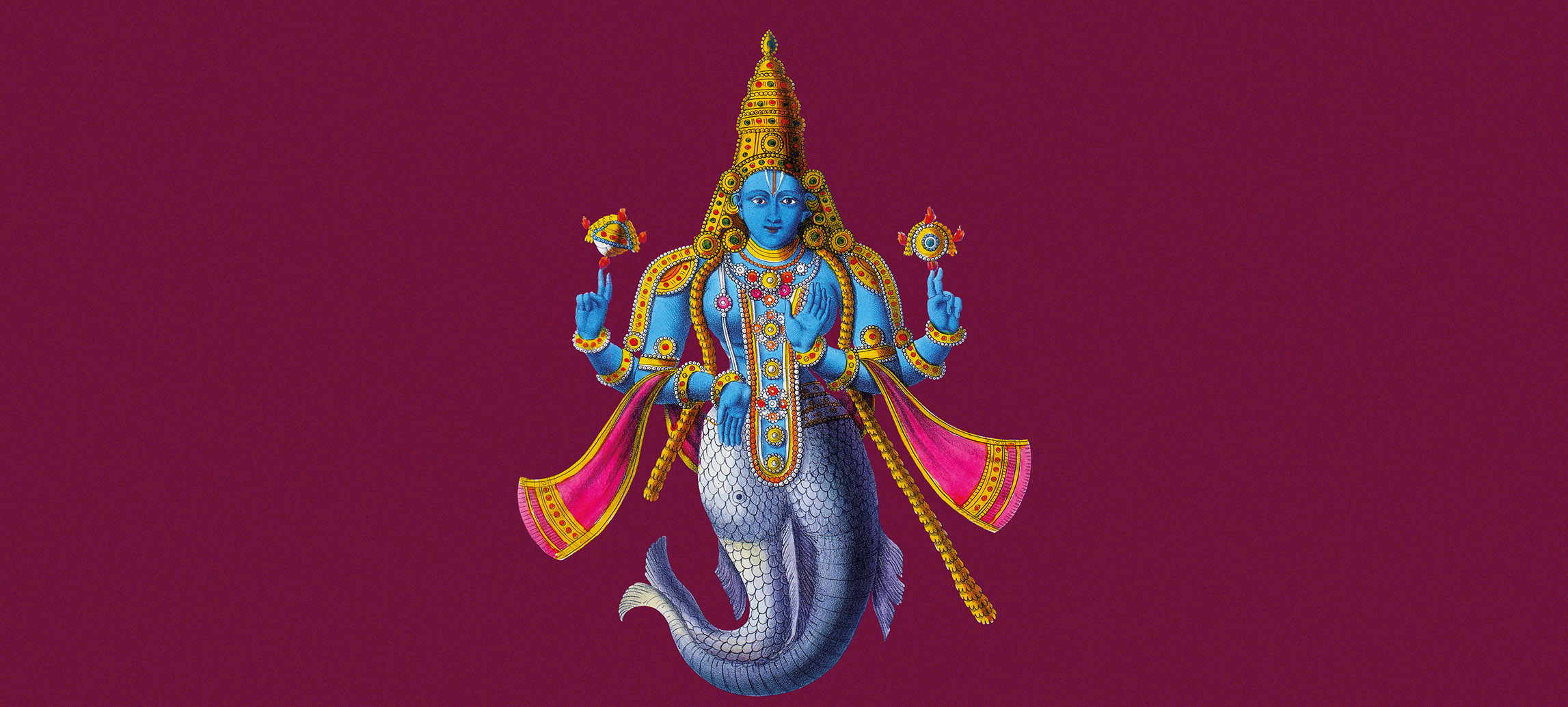
In the Hindu universe, gods and goddesses play freely among human beings to help them, nudge them towards the right action and mete out justice. They may appear to us as avatars in human form or manifest themselves as forces of nature. The many myths of Hinduism become colourful and entertaining when Shiva, Vishnu and Devi take different forms to enact their rivalries, destroy demons and teach devotees with superpowers a lesson in humility.
From The Book of Avatars and Divinities, we quote some of the different characteristics of some of these Hindu deities.


“Ganesha is one of the most widely worshipped deities in India, regarded by millions with love and adoration. Simple everyday routines, a new business, a journey, even an examination—all are preceded by a prayer to Ganesha, beseeching his benediction. Ganesha, more than any other deity, satisfies human aspirations for worldly success and fulfilment. Ganesha is also a most accommodating deity, easy to please.”


“Shiva is the god of life and death, of destruction and rebirth. The whole life process is imminent in him, but he transcends it and inhabits a mental, emotional and spiritual space which is difficult to understand through intellectual processes alone. To embrace Shiva, to comprehend his power, involves an intuitive leap into our deepest inner selves.”


“In popular Hinduism, Vishnu is the Preserver, the protector of the good and the guardian of Dharma, the law of righteousness and the moral order…The most important aspect of Vishnu is his ability to incarnate himself on earth whenever Dharma is in danger, to save good from evil.”


“There are probably more forms of Devi than any other deity, for temples are dedicated to the goddess in every Indian village. She is energy and power, the ultimate destroyer of evil. She may be Shakti, Durga, Lakshmi, Saraswati, or she may be a local village goddess with an unknown name, but all-powerful and commanding.”


“Hanuman is both an all-powerful god and the greatest devotee and there is no contradiction in this….Hanuman epitomizes piety, duty, discipline, strength, chastity, modesty, altruism, scholarship and simplicity.”


This book introduces us to the divinities and avatars of Hinduism, a great variety spread out all over the country but uniting to become a single mystical power for the triumph of good over evil.

Glorious Resistance: The similarity between African American and Dalit movements from The Radical in Ambedkar

This remarkable volume, edited and introduced by Anand Teltumbde and Suraj Yengde, seeks to unpack the radical in B.R. Ambedkar’s legacy by examining his life work from hitherto unexplored perspectives. Although revered by millions today primarily as a Dalit icon, Ambedkar was a serious scholar of India’s history, society and foreign policy.
The Radical in Ambedkar is an extraordinary collection of immense breadth and scholarship that challenges the popular understanding of Ambedkar, an essential reading for all those who wish to imagine a new future.
Read on to find out the similarity between African American and Dalit oppression and the co-operation in their resistance.

Jotiba Phule’s recognition (as early as 1873) of the similarities in oppression between the African Americans and the Sudras

“The similarity between the caste system in India and racism in the US had been noted by none other than Jotiba Phule, whom Ambedkar had acknowledged as one of his three gurus. In 1873, Phule had dedicated his book Gulamgiri (Slavery) to American abolitionists ‘in an earnest desire that my countrymen may take their example as their guide in the emancipation of their Sudra Brethren from the trammels of Brahmin thralldom’”

 ~

The correspondence between black intellectual and civil rights activist W.E.B Dubois and Ambedkar regarding the importance of a comparative study of African Americans and the Dalits in India

His correspondence with Du Bois in July 1946 consisted of an “enquiry about the National Negro Congress’s petition to the UN, which attempted to secure minority rights through the UN Council. Ambedkar explained that he had been a ‘student of the Negro problem’ and that ‘[t]here is so much similarity between the position of the Untouchables in India and of the position of the Negroes in America that the study of the latter is not only natural but necessary’. In a letter dated 31 July 1946, Du Bois responded by telling Ambedkar he was familiar with his name and that he had ‘every sympathy with the Untouchables of India’.”

  ~

 W.E.B. Du Bois and Ambedkar had similar ideas empowering their respective communities.

“On many counts, Du Bois’s approach comes close to Ambedkar’s. His Talented Tenth is what Ambedkar expected of select people reaching important positions in the government with higher education and becoming a protective umbrella for the interests of the Dalit masses. Right from the Mahad Conference, he spoke of this expectation and focused most of his struggle on this issue. It also informs his emphasis on higher education. Like Du Bois, he believed in Dalits struggling for civil rights.”

  ~

The role of skin colour as one of the most consistently applied traits in casteism and racism.

“The issue of colourism as a variant of racism manifested via skin colour remains controversial in conjunction with caste and race. Indian scholars contend that caste is a matter of birth. Internationally, others at the World Conference against Racism held in South Africa in 2001 contended that many discussions of racism should exclude caste. However, in both instances of race and caste, identity and/or inferiority cannot be established absent visual speculation. The most consistently applied trait in observations of race and caste is arguably that of skin colour.”

  ~

The circumscriptions placed upon access to public drinking water as a form of oppression on both the Indian Untouchables and African Americans.

“Access to water is an effective metaphor for characterizing the struggle of the Indian Untouchable and African American to escape oppression for freedom, justice and equality in the new millennium. Access to public drinking locations has been limited by the various forms of race discrimination in America and caste discrimination in India that the oppressed populations in both countries have suffered for generations.”

  ~

The similarity between Jim Crow ‘laws’ and the customs in India that functioned like the caste system.

“Denial of access to public and clean drinking water for African Americans became institutionalized by the quasi legislation historically referred to in America as the Jim Crow laws. The Jim Crow laws were not laws per se but de facto customs contingent upon race that operated similar to the Indian caste system. It reduced African-American citizens in good standing to the status of second-class citizens. This lasted officially from 1877 to 1964, although in fact its strains are unofficially felt even today.”

  ~

The rise of the Black Panthers and the Dalit Panthers in reaction to the systemic oppression that continued even after corrective laws were instituted.

“While laws were passed, Dalits as Untouchables in India and African Americans in the US continued to face oppression in their daily lives, as suggested by the modern-day events . . . This motivated some to seek a new direction in arming themselves in order to access their right to the dignity and respect denied to them by their oppressors. In America, African Americans organized the Black Panthers for a new direction. In India, there emerged the Dalit Panthers. Both fought for similar objectives, motivated by their goal to end blatant oppression.”

  ~

The persistence of oppression when upper-caste Indians and Euro-Americans refuse to recognize how they benefit from an oppressive system.

“As it pertains to colourism in the new millennium, caste abusers and racists may say they are against colourism when what they really mean is individual colourism. They refuse to recognize that upper-caste Indians and Euro-Americans benefit as a group from institutional and systemic colourism against all dark-skinned peoples of the world. Thus, all upper-caste Indians in India and Euro-Americans in the US are nepotistic beneficiaries of an oppressive system that bestows upon them inherited ‘rights’ and privileges absent skill, talent and hard work.”

 ~

The Dalit capitalism idea of Chandra Bhan Prasad that challenges centuries of economic exploitation.

“Another example of the awareness among Dalits of the struggle of African Americans is in the movement for ‘Dalit capitalism’. Some social activists in India, including Gail Omvedt, argue that liberalization and globalization can empower Dalits as they undermine the Brahminical control over the economy. Chandra Bhan Prasad, however, is widely credited with launching the idea of ‘Dalit capitalism’…Though not central to the religious notion of pollution, economic exploitation has been built into the caste system. One must understand that the historical position of Dalits in the Indian caste system forbade them from engaging in entrepreneurial activities. Thus, Prasad challenges this traditional notion. He has asserted that in order for Dalits to successfully overcome the dominance of the caste Hindu they need to create a middle class based on education/white-collar jobs/professions. He openly admits that Black capitalism in the US was his inspiration for Dalit capitalism.”

 ~

The support and co-operation between the Black Lives Matter movement and Dalit activists.

“Recently, Dalit activists have also reached out to the Black Lives Matter movement for both support and for strategies and policies they should pursue. This includes Dalit women activists who are organizing and protesting against sexual violence inflicted on them in India, which is often ignored by authorities.”


An extraordinary collection of immense breadth and scholarship that challenges the popular understanding of Ambedkar, The Radical in Ambedkar is essential reading for all those who wish to imagine a new future.

Fatima Bhutto on Her New Book, The Runaways!

Fatima Bhutto was born in Kabul. She is the author of a book of poetry, two works of non-fiction, including her bestselling memoir Songs of Blood and Sword, and the highly acclaimed novel The Shadow Of The Crescent Moon, which was longlisted in 2014 for the Bailey’s Women’s Prize for Fiction.
Read on to know more about her new book The Runaways, as we catch up with her on a conversation:


How did you decide the characteristics of the main three people in the book? Are they someone you know?
Sunny and Monty are the two characters that I knew right out of the gate. I had the idea of these two young men, alone, on a march who can barely stand each other. But then you start to wonder just why someone might loathe the idea of another person and you start to consider each man afresh. The characters always surprised me, I had ideas what I wanted from them but I didn’t always get my way. They’re not anyone I know in real life, but parts of them are composites of me and other parts are figments of completely made up universe.
Where did the idea for this book come from?
I wanted to write about what it means to be at war with the world around you – with your family, your community, your country, your history, everything. How much pain do you have to be in, how wounded do you have to feel, to begin a battle that large?
What were some of the challenges in writing The Runaways?
People are afraid of the topic. Fear or discomfort means that the idea that we have to understand radicalism and the consequences of political alienation rather than solely condemning it is an unusual one. What does it mean to speak of freedom but to be afraid of contrary political ideas? That has been the biggest challenge – everyone wants to talk about freedom, no one wants to test it.
What was your favourite part about writing this particular book?
Spending time with these people and going deeper and deeper into their lives. Writing is a lonely occupation, you spend hours and hours by yourself at a desk in silence but writing Sunny and Anita Rose I never felt lonely. I wrote The Runaways over four years and they were not easy years for me, my time writing this book helped me through a difficult time and it has my heart.
What is your book writing process?
I need a lot of space and time to work. I’m not someone who can work in coffee shops or public places. I need to be on my own, in quiet. I think books begin with a disturbance, something you can’t get out of your mind that haunts you and follows you until you surrender. The whole process of writing fiction is so otherworldly and mysterious, I don’t think one can describe it with any justice.
Do you have a message for aspiring authors/writers?
Read widely and deeply. Be generous to others. Accept that you don’t know anything, only then can you learn.
What is your work schedule like when you’re writing?
I keep saying writing is solitary work but the truth is, I’m a bit of a loner. I like to be by myself and to have unlimited space to think and read and wonder. When I’m working, I inhabit another place and resent any and all disruptions so I can’t say I’m a great joy to be around.
What is one important quality one must have in order to become an author?
Patience. You need to devote yourself fully to your work and that devotion may mean years of labour that no one will ever know about. If you don’t have the fire inside to see you through, you’ll rush, you’ll make mistakes and you won’t end up with anything deliberate or true.
What was the research process involved in writing The Runaways?
I watched a lot of videos on LiveLeak, which is a sort of alternate Youtube. They have all the stuff Youtube has like pandas sneezing and prank videos but they also have tabs on the war in Syria and Iraq. I read a lot of blogs and Tumblrs and Reddit threads – they hadn’t been taken down back when I started working on The Runaways – written by young people who had joined jihadist groups. I followed the news of the wars in Iraq and Syria very closely too but after a while, the research ran continually in the background and I began to work off imagination.
What is the one thing that authoring books has taught you?
That the work of learning and investigating what you think you know is never done.


The Runaways is an explosive new novel that asks difficult questions about modern identity in a world on fire.

Meet the Author of Vanara, Anand Neelakantan

Vanara by Anand Neelakantan is a classic tale of love, lust and betrayal. Baali and Sugreeva are orphaned brothers of the Vana Nara tribe who created a peaceful country for their people after having suffered the consequences of the continuous war between the Deva tribes in the north and the Asura tribes in the south.  But tragedy strikes as the beautiful Tara, the daughter of a tribal physician becomes the love interest of both the brothers.
A tale about love and the the struggles that come with it, Anand Neelkantan weaves a story about love with the tale of the greatest warrior in the Ramayana-Baali.
Here we give you a few facts about the author:


Shakespearean in its tragic depth and epic in its sweep, Vanara gives voice to the greatest warrior in the Ramayana-Baali.

error: Content is protected !!