Publish with Us

Follow Penguin

Follow Penguinsters

Follow Penguin Swadesh

The Playlist that Inspired Fatima Bhutto's 'The Runaways'

In Fatima Bhutto’s new book, The Runaways, three disparate lives cross paths in the middle of a desert, a place where life and death walk hand-in-hand, and where their closely guarded secrets will force them to make a terrible choice.
Here is a playlist piece on the songs that she listened to while writing the book, with notes on what they mean to her.
Ya Rayah – Rachid Taha

I have always loved Ya Rayah. To me, it is the most beautiful song about exile. It’s a song that’s followed me a lot in life and I felt it relate to all the characters in The Runaways.
Nour Baladi (solo drums) – Amir Sofi
https://www.youtube.com/watch?v=RNuFcegJImU
This is the sort of music that Aloush plays in the darkened Apollo basement, it’s what draws Sunny in that first night he’s walking by and becomes the music that passes between them night after night in the club.
Layla- Eric Clapton

This is Monty’s anthem for his beloved and anyone who listens to the lyrics will know that the beloved doesn’t exactly return the devotion of the singer. But Monty is too blinded to even notice the warning in the song Layla always asks him to sing to her.
Anjane – Strings
https://www.youtube.com/watch?v=58yEDh_s_b0
Strings is one of Layla’s favourite bands and this is the song she sings in the car with Monty when he takes her on their night time drives around Karachi.
Mogambo – Riz MC 

This song came out after I was done writing The Runaways, but the lyrics are so incredible, like a jolt to the body. “They put their boots in our ground, I put my roots in their ground” really spoke to Sunny’s experience. But, “why you bring a tweet to a gunfight” is pure Oz to me.
Eid al Ashaq – Kadim al Seher

This is Abu Khalid’s wife’s favourite singer and Sunny hears a ghostly refrain of one of his songs in the desert.
Billie Jean remix – Punjabi MC
https://www.youtube.com/watch?v=oipnXZOAYTY
Billie Jean is the best song of our century. I won’t hear any debate about that. I imagine Oz, in his pre-Syria days, would have had this remix blaring out of his beat up Skoda.
Ams Intahena – Fairuz
https://www.youtube.com/watch?v=8DKXyKUB06Q
Aloush isn’t a main character but his story and Sunny’s merge powerfully. He’s someone that has a profound impact on Sunny and I don’t want to give very much away but this is a song that belongs to them.
Hypnotise – Biggie Smalls

Monty would have listened to Biggie Smalls and been a devoted East Coast loyalist in the West Coast/East Coast divide. (Sunny meanwhile is West Coast till he dies, this difference between them tells any 90s hip hop fan a lot). Monty would have imagined himself possessing some of the rapper’s swagger and style – this to me was a song he would listened to with his friends at house parties and in the lounge at school.
Dam Mast Qalandar – Nusrat Fateh Ali Khan

The Sufi poetry and the emotional resonance this song has in Sindhi, syncretic culture, always made me think of Anita Rose as a young girl in the days when she climbed the steps to Osama’s home, seeking refuge with her dear comrade.


The Runaways is an explosive new novel that asks difficult questions about modern identity in a world on fire.

The Tenant

by Rachita Raj

The moon sat suspended low in the night sky, fat and bulging, like a luminescent orangey-grey egg yolk. I leaned back against the pillow and looked around the room. Dull walls of an indeterminate colour stared wanly back at me, a heap of flaky paint-plaster in a corner where the rainwater had seeped in, moths dancing dangerously around a naked bulb. I sighed, satisfied, lying easily in my favourite blanket, and allowed myself a brief smile.
It was the end of week one in the new flat. My last landlord’s wife had caught him in bed with the maid and thrown him out, bringing my tenancy to a swift and abrupt end. Broker John, real-estate agent extraordinaire, had come gallantly to my rescue and found me this gem: a little third-floor flat in a quiet backlane of a leafy old neighbourhood. ‘The landlords are an elderly couple and live on the ground floor. Bade non-interfering hain, aur flat ka separate entrance bhi hain. The rent is low.’
My antenna had tingled for an instant, heart beating with a twinge of hesitation: How did the house just happen to be empty? Who had moved away? Is the area secretly unsafe, prone to house robberies and murderous help? Why was the rent so low? Why doesn’t anyone live on the first two floors? Whatever, maybe the owners are nitpicky about whom they rent to. Good thing I am such a good girl.
Anyway I had convinced myself and moved in immediately with my meagre belongings: the frames on the wall (Nicholas Roerich Himalayan sweeps and inky-charcoal Gond art on parchment paper), a giant hotel-quality mattress (the only thing I had splurged on in this new city, my only piece of furniture, really), toiletries and sundry household items and, finally, Alexa, my brand-new Amazon speaker thingamajig. I don’t have much. I’m low-key like that. Music and rest for my bad back are all I need.
I just moved here to this bustling metroscape from sleepy Coonoor, eager to escape the well-meaning yet cloying arms of my protective parents (I am an only child and have rendered them empty-nestees). I am, in essence, a hermit, in my own head all the time, used to staring out the window at misty mountains, cocooned in Led Zeppelin and Middle Earth reveries. But I realized I had to get out in the real world, and to effectively assimilate (and not be scared by) this new physical space I had consciously thrust myself in to, I decided (very conveniently) I needed to temper my excursions out. I had convinced myself that nifty little Alexa was my buffer, till I was ready.
My new colleagues are nice but I demur their polite invitations for after-work drinks at the nearby bar, preferring, instead, my solitude. And Alexa. Music has been my refuge and harbour in the stormy seas of anxiety and social interaction. I have plowed through bulky Sony Discmans in my adolescence, iPods and cheaper MPplayers, all in a quest to drown out the voices in my head telling me I should go out more. Music is all I need, man. And now, with Alexa in the picture, it is easier than ever.
Alexa sings from day to night, blaring strains of this and that, transporting me aurally through small towns and cities and seas and prairies and moonland—Springsteen and Cohen and Joni and Björk  and Bowie. Themes of freedom and escaping small-town mind-numbness course through my brain.
I worry the neighbours will complain about the ceaseless walls of sound that stand guard for me and disrupt the night air. But then I remember I’m the only tenant. Everyone on the two floors below mysteriously moved out a month ago. The twinge in my heart again, heartbeat quickening. Why? White noise plugs my ears for a nanosecond but Björk’s eerie melody resounds: I’ve seen it all / I have seen the trees /  I have seen the willow leaves / Dancing in the breeze.
Jesus, I am getting the creeps. The hair on the back of my neck rising and gooseflesh appearing spontaneously on my arms. Cigarette peete hain, fuck this. I grab my smokes and light and swing the door open to the terrace, all mine.
I can see the tops of trees and other houses, their rain-mottled walls looking weird and veiny in the streetlamp-light, but it’s okay, it’s the monsoons—which have gone on forever now, fuck. I am grateful for this place, though, in spite of its singular dinginess. It’s close to work, autos are easily available and, most importantly, it was there when I needed it! Anyway life goes on. Work is hectic and I have that to deal with. I can hear Björk continue, a little muffled: I’ve seen a man killed / By his best friend / And lives that were over / Before they were spent.
Thank God, Alexa is working better now. Ever since I moved in I sensed her being a little off: voltage fluctuations, maybe? Do speakers even get affected by stuff like that? But this is a ratty little room on the top floor, probably faulty old wiring gluing the circuits together. See, this seemed to be an ancient house, falling apart at the seams, so I figured it had something to do with that. The bad-volatge juju must have fried the WiFi and thus Alexa? Because she even started switching off. At least I had to tell myself that to feel better.
I even checked with the old landlord couple, who said their electrical appliances were playing okay. But that aunty looked shifty. Maybe it’s the squint in her eye and sour smile. Anyway, but then the music started getting switched up. Randomly started playing different songs. Ghazals start playing. Shit I never hear otherwise. Aaj jaane ki zidd na karo. Farida Khanum’s voice, mellifluous but unwelcome, clashed like angry cymbals in my confused head the first time. And then, immediately after, there was this weird cackling . . . laugh? Was that that fear that made me gasp and flinch at the sound, as if a physical blow to my back? BS. I decided to pooh-pooh the feeling away. This bloody Alexa is just being a creeper. Come on, ya, Alexa, don’t be a bitch now, I had said aloud, feeling foolish at my initial fright. But I hadn’t slept a wink that night.
I had obviously turned to the Internet gods to quell my fears. Whew. Hundreds of people worldwide were facing this issue too—Reddit threads that extend for miles! Hallelujah! Amazon had issued an official advisory to the Alexa owners: Yes, there have been a few instances but we are acknowledging it as a bug in the AI, a technical glitch. A hard reset will fix everything. There is no cause for worry. I’m soothed by the answer, at least there’s an explanation for it.
At least I will rest well tonight. I’ve been sleeping fitfully ever since I moved in. I wake up exhausted and nervous from dreams too fuzzy to remember. It’s like I’ve been running marathons or brawling with invisible foes overnight, while asleep. I’ve pegged it to moving stress and no alcohol on account of being too busy. I will fix this tomorrow, it is Friyay. I’m done with my smoke now and flick the cigarette butt into the distance. The screendoor slams shut behind me as I walk into my humble digs. Alexa, glowing grey-white, occupies a pride of place on my still-unarranged mountain of books. I have unplugged her completely and will be leaving her off for the night. Let her rest a little. And me too.
Silvery moonbeams are seeping in from a giant window, the only feature of note in the room. I have not yet bought new curtains to fit its frame. Alexa glistens, almost rippling like water in the stillness. I shudder for no reason. Shaking my head, punctuating it with a nervous laugh, to make myself feel more brave, more brazen, I grab the garbage bag and head downstairs to keep it out for the kooda-wallah’s visit the next morning.
On my way back to the flat, I pass Tinku, the maid’s child, on the stairwell. A quiet little thing with bulging eyes. ‘Didi ko hello bolna,’ he says. Kaun didi? Woh didi jo yahaan aapke pehle rehti thi.’ Okay bye, ha, kal milte hain. I bolt up the stairs, running the rest of the way up. What a weird fucking child, dude. Damn.
I walk back in and secure the door behind me. Tinku’s words have unsettled me. My heart is quivering again. What did the landlords say when I casually asked them who lived here last, before me? They had stuttered and ummed and aahed and said there was a girl who left overnight. ‘We don’t know why.’ I had even sauntered over to Tinku and obliquely put questions to him: Who was she? When did she leave? ‘Didi ko puraane gaane bade pasand the.’ When questioned about said didi’s whereabouts, bug-eyed Tinku gets evasive and tells me, eyes darting around like a hunted animal, that he doesn’t know, that she left suddenly one day.
Why, though? I contemplate, looking again at the same fat moon, grey and morose.
I can see myself in the humongous glass window, dull bulb glowering faintly on, Alexa behind me, and my beloved mattress-bed too. There’s suddenly some movement, a reflection, a dash of wispy black cloud, I can’t really tell. My stomach plummets to my shoes and I dart around, heart beating in my ears. Nothing. There’s nothing. Hahaha. God, what a scare. I should go to bed sleep, bury myself in my blankets, emerge only in the safety of daylight. I grab my phone and start walking towards my phone charger, when music pierces the night quiet.
Aaj jaane ki zidd na karo.
Silence. Five long seconds. Nothing. And then the laughter again.
***
Brutal Suicide Shocks Residents
11/06/2018
According to police, a young woman living on the third floor of a residential complex in Anand Nagar allegedly committed suicide late last night. An out-of-towner who had only moved in a week ago, she jumped to her death through a large window in her room, pummelling through it like a bull. Investigations are continuing.

7 Important Mentions of the Show 'Tipu Sultan' in Sanjay Khan's Autobiography

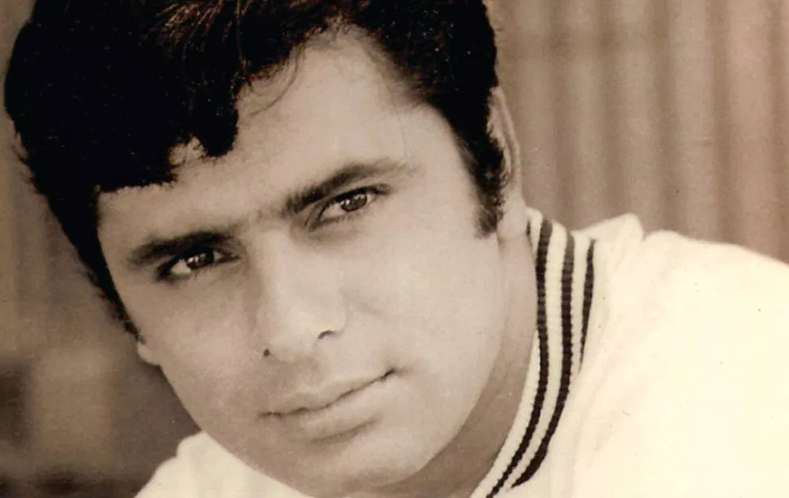
Once deemed the most handsome man in Bollywood, Sanjay Khan’s tryst with fame and stardom led him to many adventures across the world. He is best remembered for his performances in films like Ek Phool Do Mali and Abdullah as well as his portrayal of the great Tipu Sultan on television.
60 episodes of Tipu Sultan were aired from 1990 to 1991. Here are seven important mentions from the show, that are touched upon in his autobiography.

Bhagwan S. Gidwani, author of The Sword of Tipu Sultan

“The book was in its forty-fourth edition and had sold more than two million copies. Bhagwan had specialized in the technical, economic and legal fields of civil aviation, acted as the counsel for India in the International Court of Justice and had served India in many other responsible positions.”

 Lata Mangeshkar

“The nightingale of the Indian screen at the time was Lata Mangeshkar who sang for many of my films. I am very proud that her last song for television was for The Sword of Tipu Sultan.”

 Bob Christo as General Matthews

“He was an ex-Australian army commando, who had served in Vietnam, and had worked as Paul Getty’s bodyguard. Bob was an excellent singer and turned out to be a very good actor.”

 Mysore as Sultanat-e-Khudadad

“We decided to shoot the series in Mysore, because it was the centre of Tipu’s empire, which was called the Sultanat-e-Khudadad (The Kingdom of God).”

 Mysore cavalry horses and 19th century cannons

“The Mysore cavalry had provided 100 of its best horses and the chief of the Archaeological Survey of India, who was in charge of the palace and the historical artefacts in Mysore, had been persuaded to allow us to use the twelve nineteenth-century cannons in the palace. On location, we actually fired them with blanks—probably the first time in 100 years.”

 The Great Mysore Fire Tragedy

“We had a cast of hundreds, elaborate artwork, fabulously ornate and historically accurate costumes and sumptuous sets. But on that fateful day, either by an act of God or man, the set was consumed by an inferno. Fifty-two members of my crew lost their lives.”

Sanjay Khan: ‘A Phoenix from the Fire’

“I was producing, directing and acting in the historical serial The Sword of Tipu Sultan.” Critically injured in the fire, “I had suffered 65 per cent third-degree burns. For a man aged forty-nine to survive such severe burns was unimaginable. Surviving the trauma of sixty-five per cent third-degree burns combined with over seventy operations can only be described as a miracle.”


Literally forged in fire, out came a classic The Sword of Tipu Sultan. Read more about Sanjay Khan in his autobiography, The Best Mistakes of My Life.


The Editor on Why Sohaila Abdulali's Book on Rape is Important

By Manasi Subramaniam

What We Talk About When We Talk About Rape comes at a time when we have just begun to talk – actually talk – about rape. There is a great danger in referring to such a book as ‘timely’. Not only does that seem opportunistic, it also trivializes and oversimplifies sexual violence entirely. In fact, I’ll go so far as to say that this book could have been published at any point in time since the dawn of civilization (or at least since the invention of the printing press) and it would have been just as timely and relevant. If the #MeToo discourse has taught us anything, it is this: violence affects all of us, and we need to be able to talk about it.
And yet, if I’m being honest, I’ll admit that I am terrified of robbing the debate of nuance by anything that I myself say. If I have enjoyed any clarity of thought on any subject in the world, it has always been through my reading. And working in publishing has offered me the good fortune of devising and disseminating the wisdom of others in the medium I have the most respect for. All of which is really a rather roundabout way of saying that this is a book I published because it was a book I wanted to read.
And so it was that I asked Sohaila Abdulali to write this book. She is a survivor herself, and she is thoughtful and brave and wise. These were the things I knew she would transfer into her book. And of course she did. But she did one more thing – a thing that I never expected. She made this book funny. Given the difficult subject it deals with – not to mention some of the details it contains – Sohaila did something extraordinary by keeping the tone light (but never unserious) and open (but never apologetic). It is the truly unique strength of this book that one comes away from it feeling empowered rather than broken.
Which is not to say that she does not have rage. She does. But she coolly channels all of it in this book with absolute precision. And the thing about her openly expressed fury is its rawness and its power and its capacity to encompass aggression and compassion. Page after page, I marvelled all the things that this book was doing, all the ways in which it was helping me structure my incoherent anger and helplessness.
What We Talk About When We Talk About Rape is a book that injects sensitivity, empathy and candour into the conversation surrounding sexual violence. It is entirely my privilege to have been a part of its making.


Writing from the viewpoint of a survivor, writer, counsellor and activist, and drawing on three decades of grappling with the issue personally and professionally and her work with hundreds of survivors, Sohaila Abdulali, in her book What We Talk About When We Talk About Rape looks at what we-women, men, politicians, teachers, writers, sex workers, feminists, sages, mansplainers, victims and families-think about rape and what we say.

Why Ambedkar is the Best Advocate of Equality

The Radical in Ambedkar: Critical Reflections edited and introduced by Anand Teltumbde and Suraj Yengde, establishes B.R. Ambedkar as the most powerful advocate of equality and fraternity in modern India. This remarkable volume seeks to unpack the radical in Ambedkar’s legacy by examining his life work from hitherto unexplored perspectives.
Read on to learn why Ambedkar is one of the most significant advocates of equality.
His belief in moral and ethical behaviour of people, not only the state, to achieve liberty and equality
“Aside from rationality, Ambedkar felt that democracy required ethics, or what he called morality. One aspect of this is the importance of ‘constitutional morality’, that is, of abiding by the spirit of the Constitution and not just its legal provisions. Going beyond this, Ambedkar felt that morality, in the sense of social ethics, was indispensable for the realization of liberty and equality. In the absence of morality, he thought, there were only two alternatives: anarchy or the police.”

~

His emphasis on international solidarity in combating social inequality
“Ambedkar explained that he had been a ‘student of the Negro problem’ and that ‘[t]here is so much similarity between the position of the Untouchables in India and of the position of the Negroes in America that the study of the latter is not only natural but necessary’.”

~

His vision of democracy and a ‘good society’
“Ambedkar’s vision of democracy was closely related to his ideal of a ‘good society’. He was clear about this ideal: on many occasions, he stated that he envisaged a good society as one based on ‘liberty, equality and fraternity’ (today we might prefer to call this ‘liberty, equality and solidarity’). Democracy, as he saw it, was both the end and the means of this ideal.”

~

His struggle for basic human rights in civic law and practice
“Dr Ambedkar continued to build up a civic notion of rights to challenge both religious democratization and a colonial order rooted in custom and identity. This is clearly demonstrated in his leadership in the Chavadar Tank agitation in the late 1920s. In 1927, Dr Ambedkar led a satyagraha to gain access to water from the tank, exercising a right to the public resources maintained by the state, which was guaranteed by the Bombay legislature but not enforced due to social sanction. The satyagraha was met by violence, and upper-caste Hindus filed a court case arguing that the tank was private property.”

~

His path-breaking legal argument for the independent agency of sex workers
“The Bombay Prostitution Act of 1923 did not abolish prostitution but sought to end its organized version and criminalize those who brought women into prostitution. In this case, the accused owned a house where the prostitute in question had met clients for a few hours. Ambedkar attempted to argue that the prostitute was an independent agent as evidenced by her short stay at the brothel and that the accused merely kept a brothel and was not a procuress. While Ambedkar’s own views of sex work are complicated, in the court he did make an argument for the independent agency of sex workers.”

 ~

His efforts to include oppressed communities across the spectrum in the Dalit struggle for justice
“In the Bombay Presidency, the differences and inequalities among Dalits came frequently in the way of Ambedkar’s struggles. Ambedkar, being a visionary with a strong support base of Dalits across India, particularly the Mahars in Maharashtra, attempted to address the issue of intra-caste conflicts. He also tried to build a broader platform for all Dalits by attempting to include non-Mahar Dalit castes into his organizations, the All India Scheduled Caste Federation, the Independent Labour Party, etc.”

 ~

His delineation of the government’s role in eradicating inequalities and in safeguarding the fundamental rights of citizens
“True to the basic principles he had publicly upheld for over two decades, Ambedkar proposed that the Constituent Assembly proclaim a set of fundamental rights ensuring equal civic rights and the right to vote of all citizens, freedom of religion, and the legal prohibition of discrimination and forced labour or involuntary servitude. He also suggested that the new Supreme Court be given adequate powers to protect these fundamental rights of citizens.”


An extraordinary collection of immense breadth and scholarship that challenges the popular understanding of Ambedkar, The Radical in Ambedkar is essential reading for all those who wish to imagine a new future.
If You Love Jane Austen's Emma, You'll Love Polite Society!

Everybody’s favourite Regency comedy of manners-Emma is coming to South Delhi in Mahesh Rao’s Polite Society! While Jane Austen’s Emma poked gentle fun at the little foibles and economic exigencies of the exceedingly polite middle-class and county gentry in Regency England, Polite Society reimagines Emma in contemporary Delhi to portray a society whose polished surface often reveals more than is intended.
Both Emma and Polite Society explore social mores through the overconfident yet inexperienced eyes of young women coming of age in an ornate world. As twenty-one year old Emma Woodhouse ‘handsome, clever, and rich, with a comfortable home and happy disposition’ and Ania Khurana- the ‘young beautiful and rich’ resident of Prithviraj Road, attempt to amuse themselves by applying their exceptional industry to their pet projects, they realize that youth, wealth and beauty will take you far in polite society but cannot influence individuals to your liking.
Emma and Ania are both incredibly blessed by both nature and society and thus have the benefits and pitfalls of a plethora of choices.
“The real evils, indeed, of Emma’s situation were the power of having rather too much her own way, and a disposition to think a little too well of herself; these were the disadvantages which threatened alloy to her many enjoyments. The danger, however, was at present so unperceived, that they did not by any means rank as misfortunes with her.”
-Emma
“It was not unusual for Ania to contemplate drastic hypothetical choices in this way. The comforts of her own life meant that she was seldom called upon to discriminate or restrict: in the Khurana household, they usually ordered four of everything. As a result, this kind of grandiose conjecture had always come to her as something of an exertion but also a thrill.”
– Polite Society

~

Emma and Ania barely remember their respective mothers. The most significant (though very indulgent) maternal figures in their lives are a charming governess–Miss Taylor and a maiden aunt–Renu Bua respectively. Both get married and move away at the beginning of both books (largely thanks to Emma’s and Ania’s matchmaking.)
“Even before Miss Taylor had ceased to hold the nominal office of governess, the mildness of her temper had hardly allowed her to impose any restraint; and the shadow of authority being now long passed away, they had been living together as friend and friend very mutually attached, and Emma doing just what she liked; highly esteeming Miss Taylor’s judgment, but directed chiefly by her own.”
Emma
“While Ania loved her bua’s presence in the house, finding in her someone even more indulgent than her father, she was stricken by what she saw as the tragedy of Renu’s life.  A firm believer in the elemental nature of soulmates, Ania felt that it was never too late.”
-Polite Society

~

Mr Weston, formerly of the militia, cheerful, popular and well-liked, marries Miss Taylor and could be the Regency twin of the genial Colonel Suraj Singh Rathore who marries Renu Bua.
He quitted the militia and engaged in trade, having brothers already established in a good way in London, which afforded him a favourable opening…He had, by that time, realised an easy competence—enough to secure the purchase of a little estate adjoining Highbury, which he had always longed for—enough to marry a woman as portionless even as Miss Taylor, and to live according to the wishes of his own friendly and social disposition.”
-Emma
“Colonel Suraj Singh Rathore, formerly of the Garhwal Rifles Ania discovered over the course of the afternoon that he was widowed, with no children, and owned a few bungalows scattered around the Kullu and Kangra valleys of Himachal Pradesh.”
-Polite Society

~

Harriet Smith and Dimple are Emma’s and Ania’s friends//protégés. Harriet is the illegitimate daughter of a tradesman and a student at a nearby school. She is starry-eyed at being taken up by so great a personage as Emma Woodhouse. Dimple is a small-town girl working for a PR-start up in Delhi, Dimple can’t believe that she has actually made friends with Ania Khurana who seems to move in a rarefied and almost surreal atmosphere of wealth and elegance.

“She was not struck by any thing remarkably clever in Miss Smith’s conversation, but she found her altogether very engaging—not inconveniently shy, not unwilling to talk—and yet so far from pushing, shewing so proper and becoming a deference, seeming so pleasantly grateful for being admitted to Hartfield, and so artlessly impressed by the appearance of everything in so superior a style to what she had been used to, that she must have good sense.”
Emma
 “Dimple almost glowed with pleasure. She had only met Ania a few months ago at a PR event and was still unaccustomed to the idea that she could be privy to plans involving the Khurana family.”
-Polite Society

~

The patronizing benevolence that governs Emma and Ania’s friendships towards Harriet and Dimple respectively

“‘She would notice her; she would improve her; she would detach her from her bad acquaintance, and introduce her into good society; she would form her opinions and her manners’.”
-Emma
‘In some ways, Ania’s initial interest in Dimple’s affairs could be placed on the same spectrum of charitable instincts as the one that led her to the animal shelter…But over time she had become genuinely fond of Dimple and didn’t see why the girl shouldn’t reap the rewards of a superlative Delhi social life just because of her unfortunate beginnings.’
-Polite Society

~

Robert Martin, the kind local farmer, and Ankit–resident of Lajpat Nagar and owner of Tip-Top fashions are perfectly likable but highly unsuitable (in Emma’s and Ania’s opnion) suitors of Harriet and Dimple respectively.
“His appearance was very neat, and he looked like a sensible young man, but his person had no other advantage; and when he came to be contrasted with gentlemen, she thought he must lose all the ground he had gained in Harriet’s inclination.”
Emma
“Dimple would defend him, it was in her nature: he had a lovely face, but more than that, he was respectful and honest; she owed the family many kindnesses. Besides their business was doing so well; in fact, they were opening a second branch of Tip-Top Fashions soon. But poor Dimple, it would all be such a terrible waste.”
-Polite Society

The persons of dubious character that the equally naive Emma and Ania find suitable for their protégés: Emma attempts to bring Harriet to the notice of Mr Elton, the local vicar just as Ania tries to set up Fahim, a rising journalist with Dimple. However these are serious miscalculations as both men don’t seem to notice the match-making efforts going on, and think that that the heiresses are romantically interested in them.
“‘She found her subject cut up—her hand seized—her attention demanded, and Mr. Elton actually making violent love to her: availing himself of the precious opportunity, declaring sentiments which must be already well known, hoping—fearing—adoring—ready to die if she refused him; but flattering himself that his ardent attachment and unequalled love and unexampled passion could not fail of having some effect, and in short, very much resolved on being seriously accepted as soon as possible.  Without scruple—without apology—without much apparent diffidence, Mr. Elton, the lover of Harriet, was professing himself her lover.”
-Emma
Fahim meanwhile thinks “‘Ania’s pursuit had been relentless. When he thought about the public praise, the constant communication, and the welcome into her home, it seemed almost starry-eyed. He was surprised by the awkward use of Dimple as some sort of fig leaf. He had never imagined that a girl like Ania would need the presence of an inconsequential friend to maintain a sense of propriety.’”
-Polite Society

 ~

The insufferably perfect paragons of perfection that Emma and Ania compete with (although they would never admit it) are Jane Fairfax and Kamya Singh-Kaul

“Why she did not like Jane Fairfax might be a difficult question to answer; Mr. Knightley had once told her it was because she saw in her the really accomplished young woman, which she wanted to be thought herself; and though the accusation had been eagerly refuted at the time, there were moments of self-examination in which her conscience could not quite acquit her.”
-Emma
 “Also lying there, in plain sight, was a copy of Kamya Singh-Kaul’s book. Her own novel, which she had introduced into conversations with such confidence a few months ago, now felt like a burden that oozed reproach, a secret failure that precipitated a rush of anxiety and hopelessness every time she thought about it. She picked up Kamya’s book and felt an unpleasant contraction in her chest as she read the cavalcade of breathless quotes from distinguished authors. Her author photograph—dark lips, cheekbones, the glaze of a museum piece—was exactly what Ania would have expected.”
-Polite Society

 ~

And finally, the significant others-to-be! Mr George Knightley, a family friend and relative by marriage is as dependable, intelligent, and unconcerned about appearances as Dev Gahlot, family friend and relative of Ania. Although both Emma and Ania often trade barbs and spar with Mr Knightley and Dev respectively, they also value their opinions the most.

“Mr. Knightley, a sensible man about seven or eight-and-thirty, was not only a very old and intimate friend of the family, but particularly connected with it, as the elder brother of Isabella’s husband. He lived about a mile from Highbury, was a frequent visitor, and always welcome.”
-Emma
 “The same jacket day after day, the satchel with a broken zipper, the fraying above the shirt pocket, she was convinced it was all an affectation, a way of indicating to the world that their owner concerned himself only with matters of sublime worth and not mere flummeries. They had practically grown up in each others houses and she could almost predict his every gesture.”
-Polite Society

~

Both Mr Knightley and Dev are quite clear-headed and warn Emma and Ania respectively about the dangers of treating their friend’s like improvement projects.
“How can Emma imagine she has anything to learn herself, while Harriet is presenting such a delightful inferiority? And as for Harriet, I will venture to say that she cannot gain by the acquaintance. Hartfield will only put her out of conceit with all the other places she belongs to.. I am much mistaken if Emma’s doctrines give any strength of mind, or tend at all to make a girl adapt herself rationally to the varieties of her situation in life.”
-Emma
“‘I made her feel uncomfortable? It’s not me who’s using her for my own purposes, adopting her for some kind of mission civilisatrice.’”
–Polite Society


Keenly observed, sharply plotted and full of wit and brio, Polite Society reimagines Jane Austen’s Emma in contemporary Delhi to portray a society whose polished surface often reveals far more than is intended

Meet Krishna Trilok: the Author of 'Notes of a Dream'

Krishna Trilok’s Notes of a Dream records the life and music of one of the most celebrated musicians of India, A.R. Rahman. Based on interviews between the author and the musical maestro, this book brings forth the heartwarming story of a remarkable artist that makes for an inspirational read. Trilok’s achievement lies in his ability to draw out a reticent man like Rahman. Here are a few things to know about the about the man behind this wonderful biography:


Featuring intimate interviews with the soft-spoken virtuoso, as well as insights and anecdotes from key people in his life, this balanced, uplifting and affectionate book, Notes of a Dream is the definitive biography of A.R. Rahmanthe man behind the music and the music that made the man.
 

The Heart before the Twentieth Century: A Timeline of What We Knew

The spark of life, fount of emotions, house of the soul – the heart lies at the center of every facet of our existence. It’s so bound up in our deepest feelings that it can physically change shape when we experience emotional trauma.
For most of human history, the biological function of the heart was a mystery. Here is a timeline of the heart, quoted from Sandeep Jauhar’s new book titled Heart: A History.
Ten thousand years ago, Cro-Magnon hunters in Europe knew about the heart – they engraved curlicue pictures of it on the walls of caves – but they had no clue about what it did.

Seven millennia later, the ancient Egyptians devised surprisingly prescient theories about the heart’s purpose. They believed the heart was where the soul resided, of course, but a classic document, the Ebers Papyrus, also described the heart as the center of the blood supply, with vessels directed toward the major organs.

Three thousand years later, the ancient Greeks had a mostly symbolic understanding of the heart. They believed the heart’s central location in the body meant that it was the center of life and morality.

Drawing conclusions from surgeries on wounded gladiators, as well as vivisection on an array of animals, Galen – a Roman physician – proposed a scheme in which the liver converts food into blood that, like water in an irrigation ditch, travels one way into the body to be absorbed and disappear, never to be used again.

Galen’s theories were accepted as the final word on cardiovascular – indeed all human – anatomy in the West. Through the Middle Ages, his writings were scripture, immune to questioning.

Physician Ibn al-Nafis wrote Commentary on Anatomy in 1242. In it, he wrote that the ventricles receive nourishment from coronary vessels – not, as Galen had claimed, from blood deposited inside their chambers – and that the pulse is due to the force of cardiac contraction, not as Galen contended, because of innate arterial contractility.

Perhaps no thinker of the Renaissance period did more to advance knowledge of the heart that Leonardo da Vinci, who considered it “an admirable instrument invented by the Supreme Being.” Among many of Leonardo’s anatomical illustrations, a great many are devoted to the cardiovascular system. Like his predecessors, he used natural phenomena and analogies to elucidate the workings of the heart.

Before a century had passed, raucous crowds were gathering at the University of Padua for public dissection. It was here – the center of European anatomy, where the world’s first anatomical theatre housed galleries for spectators – that perhaps history’s greatest surgeon, Andreas Vesalius, worked.

In De humani corporis fabrica (The Fabric of the Human Body), published in 1543, Vesalius corrected many of Galen’s mistakes about the heart and also reinforced some of his erroneous conclusions.

It wasn’t until William Harvey, the brilliant English anatomist who studied at Padua in his early twenties, that Galen’s theory of circulation was fully upended. Although Harvey discovered the mechanism of circulation in 1615, he waited thirteen years before publishing the results. He feared for his safety; challenging Galenic dogma was considered sacrilegious.

On a summer day in 1893, Dr. Daniel Hale Williams, a surgeon at Provident Hospital in Chicago conducted, what is believed to be the first open-heart surgery.


Affecting, engaging, and beautifully written, Heart: A History takes the full measure of the only organ that can move itself.

Your Go-To Guide to Choosing the Right Make-up

Skin Rules by Dr. Jaishree Sharad is a revolutionary book which talks about the best beauty hacks, making your skin radiant in just six weeks!
In this book, Dr. Jaishree Sharad talks about the fundamentals of the road to a glowing skin. From identifying your skin type, paying attention to the fine print on labels of various cosmetic products, to the newest advancements in skincare treatments. While solving all your skin problems this book also provides you with some of the best tips in order to choose the right make-up for yourself, keeping in mind what suits your skin and would’ve have the best effect.
Here are a few tips in order to help you choose the right make-up:

Never use alcohol-based toners and make-up removers. Alcohol is known to take the moisture away from the skin, leaving it dry. Instead, using oil-based make-up removers, balms, micellar water or rose water is better.

~

When buying make-up supplies, look for Matte products and avoid thick or solid make-up products like stick or creamy compact foundations.

~

A serum can be used as an effective primer before make-up, as it feels light on the skin and doesn’t create a thick film on the face. Choose a serum that will cater to your specific skin type.

~

If you have a family history of pigmentation, then it is advised that you avoid foundations and concealers as they can make it worse.

~

If you suffer from dry skin and have crossed your twenties, then you should choose a mousse or a cream or oil based foundation, making your skin look smooth and even.

~

If you are in your teen or twenties, you should opt for a non-oily, lightweight liquid foundation minimizing your breakouts.

~

If you have a highly acne prone skin, you should opt for a non-comedogenic foundation with salicylic acid. Another option could be Matte-finish liquid foundations.

~

Using a liquid concealer, for oily and acne-prone skin is the best to hide the blemishes.

~

Do not use fragrance-based make-up if you have sensitive skin.

~

If you have chapped lips, do not use matte lip cosmetics or smudge-proof lipsticks. They lack oils and certain emollients that helps keep the lips hydrated. Using glossy lipsticks and choosing lighter colours is better, as darker shades have more chemicals and make the lips drier.
 
You’d be amazed at what a short, six-week routine can do for your skin. So what are you waiting for? Pick up your copy of Skin Rules now!

The Battle Within: Seven Verses of the Bhagavad-Gita in 'Godsong'

‘Let’s listen’ writes Amit Majmudar as he begins to masterfully play out each note of the Godsong. Stretched taut with layers of meaning, each artful stroke plays on the chords of our shared humanity and pulsates with vivid emotions of deeply lived relationships. This is a song of dichotomies, dualities and multiplicities that weave a web of dilemmas that all human beings must battle through to reach their truth and to achieve their higher self. As man struggles to find light in this darkness, there is Krishna playing his magical melody while Arjuna, the greatest warrior, learns to sing along. Together on the battlefield, God in his human form and man in his search for godly wisdom set the stage for a friendship that levels all hierarchy.
                                                                           Sanjaya said,
                                                              Having said this to Krishna,
                                                             Arjuna, the scorcher of foes,
                                                                  Said, “I will not fight,”
                                                                         And went silent
 
“Sanjaya, who has the power to witness events without being physically present for them, narrates the action. Arjuna tells Krishna how he feels and how he has a horror of fighting his own relatives. Arjuna throws aside his weapons and sits down.”
 
                                                       No one for an instant ever really
                                                            Stands there doing nothing.
                                                           Gunas, born of nature, make
                                                   Everyone do things, even if unwilling.
 
Krishna explains that everyone has to act in some way. You can do nothing, but you cannot not do. Even inaction is a kind of action and bears a karmic charge.”
 
                                                                Pierced by infinite pity,
                                                                     In despair, he said,
                                                  “Seeing this— my own people, Krishna—
                                              Drawing close because they’re dying to fight. . . .
 
“Arjuna’s despair arises from the conflict between his dharma as a family member and his dharma as a warrior. The Gita is occasioned by a moment of supreme tension between these two simultaneous definitions of dharma. An action which may seem personally adharmic (shooting your own cousins, in Arjuna’s case) can uphold the larger dharma.”
 
                                      While the unwise work from their attachment

                                                        To action, Arjuna, a sage

                                                  Should work without attachment,
                                                Longing to hold the world together.
 
“Just as Krishna sustains the universe, Arjuna must sustain a dharmic society. To do this, both of them must act. Yet these actions must be carried out with detachment, and with the focus on the task itself.”
 
                                                        For the unattached and free
                                                  Who fix their minds in knowledge,
                                                          Action, working toward
                                                        Sacrifice, dissolves entirely.
 
“Krishna describes the ideal man of action, with a focus on his detachment, and how he “accrues no guilt.” Such a yogi’s work in the world takes on the nature of sacrifice— an offering to the Gods. He goes on to praise yogic knowledge and how it dissolves karma.”
 
                                                       His happiness within, his ease
                                                    Within, and hence his light within,
                                                       This yogi goes up to extinction
                                                       In Brahman, becomes Brahman.
 
“Once the yogi attains extinction in Brahman, he sees all things and people as fundamentally equal because they are fundamentally the same. That is nirvana, a state of bliss and peace (…).”
 
                                                             Bound by your own karma,
                                                               Born to your own nature,
                                                  What you in your confusion do not want
                                                  To do, you will do. Even against your will.
 
“Krishna exhorts Arjuna to take refuge in him, insisting that Arjuna is going to fight this war anyway, even against his will.”


Does Arjuna awaken to his Dharma? Read Godsong to find out!

error: Content is protected !!