Publish with Us

Follow Penguin

Follow Penguinsters

Follow Penguin Swadesh

5 Britons from the Raj that you should know about

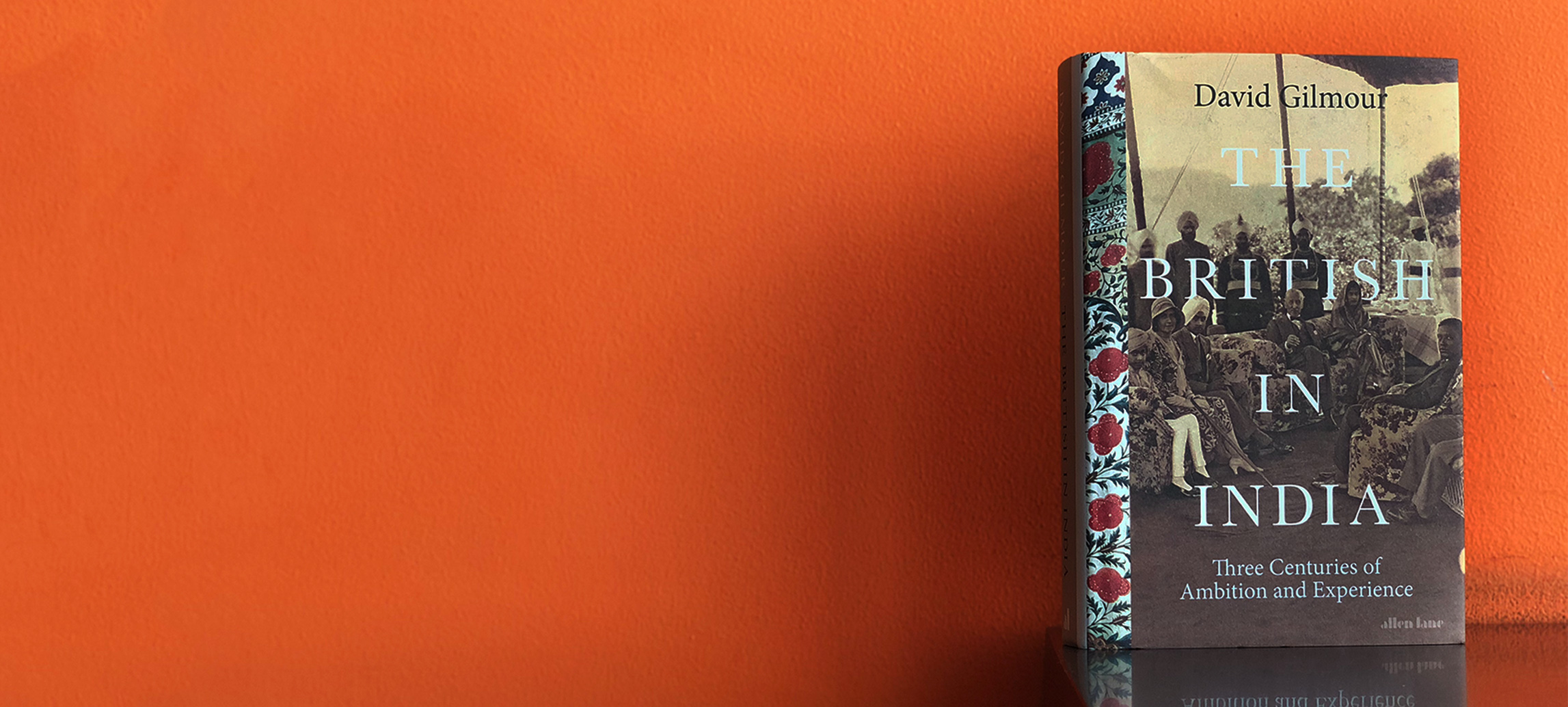
The British in India by David Gilmour records the life of various Britons that went to India – viceroys and officials, soldiers and missionaries, planters and foresters, merchants, engineers, teachers and doctors. The British had a stronghold in India and ruled the land right after the reign of Queen Elizabeth I till well into the time of Queen Elizabeth II. Recalling the span of three and a half centuries of their reign in India, this book brings to life the the work, leisure and the complexity of the relationships of the British to India. This exceptional work by David Gilmour gives a scholarly insight into the lives of people, about whom, nothing has been written before.
Here are 5 people you would not know about who lived in India during the British Raj:
Richard Wellesley
Rischard Wellesley was the second governor-general of India from 1798-1805, succeeding Lord Cornwallis. He amended and intensified the process of transformation for the British civil servants in India. He was of the opinion that “no greater blessing”, he said, could be “conferred on the native inhabitants of India than the extension of the British authority, influence and power”. Thus, there was an influx of young Englishmen who saw themselves as imperial rulers and administrators in India.
Kay Nixon
Kay Nixon, after the end of her first marriage decided to go to India for a new beginning in 1927. She was an artist and had made her career as an illustrator of Enid Blyton’s stories. Coming to India, she continued her career by drawing for the Times of India, making animal posters for Indian State Railways, and also painting pictures of the horses of various maharajas.
George Clerk
George Clerk was the two-time governor of Bombay from the years 1848 to 1850 and 1860 to 1862. He was of the view that the British rule in India could only be permanently maintained if it was administered “in a spirit of tolerant and reasonable respect for the usages and the religions of the different nations and tribes there”.
Cecil Earle Tyndale-Biscoe
Cecil Earle Tyndale-Biscoe went to Kashmir in 1890 and was principal of the Church Missionary Society’s boys’ school in Srinagar for almost half a century. He was of the view that Kashmir was morally a stagnant cesspool but was determined to reform the land and rid it of the its moral corruption. He had assembled a staff of Oxford and Cambridge graduates in order to help him in achieving this aim.
Hariot Dufferin
Lady Dufferin made the most valuable contribution amongst any vicereine when she successfully established the National Association for Supplying Female Medical Aid to the Women of India in the year 1885. Indian women, during the time needed female doctors and nurses as they were barred from the company of unrelated men. She came to be known as the pioneer of medical care for Indian women and her association had treated four million women by 1914.


This exceptional work of scholarly recovery portrays individuals with understanding and humour, and makes an original and engaging contribution to a long and important period of British and Indian history.

A Brief History Of Things: by Neelum Saran Gour

Neelum Saran Gour is the author of Grey Pigeon and Other StoriesSpeaking of ’62Winter Companions and Other StoriesVirtual RealitiesSikandar Chowk Park and Song without End and Other Stories. She is a professor of English at the University of Allahabad.
In this special piece by her, she talks about the summers in Allahabad.


There used to be such a neat outdoor-indoor balance about our Allahabad summers. Evenings and nights were spent in the open, in gardens, terraces and courtyards. Days were spent indoors with the sun blazing away like a furnace in the sky and  hot winds tearing about like maniacs on the loose, hissing against walls and roof tiles, heaving their weight against rattling doors. ‘The loo, the red-hot wind from the westward, was booming among the tinder-dry trees…’ – this is how Kipling describes Allahabad’s summer winds. People who had to be outdoors wrapped their heads securely against that skin-charring wind and carried small onions tied with handkerchiefs round their wrists, beneath their sleeves, or in their pockets, for onions are believed to prevent dehydration. The rogue-‘loo’, as we called these stormy summer winds, never did anybody any good. They dragged and hauled at the crackling dry leaves on the whipped branches, tossed and lashed  at the trees till they quivered all over. The loo clamored around noisily all afternoon, pitching into shrubs, leaving them wilting, papery and parched. Tall ‘ khas-tatties’ lined our verandas, screens made of densely packed dry grass that a servant called a ‘faraash’ kept permanently damp, with water splashed out of buckets filled constantly. The crazed wind found itself trapped in that dense wad of packed, wet grass and blew into our corridors and rooms sweetened to a tender monsoon breath. Like a rampaging shrew-woman transformed into a well-spoken maiden. Most memorable of all there was that strange filtered-afternoon indoor light, deliciously shaded to near-darkness. The deep sleep of summer afternoons had its own quality. One sank to the clayey bed of a cool river of sleep and rose slowly to the surface after an hour, washed awake. At sundown, as the furnace faded, the drenching plash of water in hot gardens or courtyards let loose another palette of fragrances. The porous earth, spongy with moisture, exhaled its soggy breath. When the steamy vapour had settled and the gardens fully soaked, when the grass was wet against the soles of our feet and the bathed leaves dazzling green again and the queen-of-the-night ready to release its own soft incense, then it was time for our cane chairs and charpais and table fans to be taken out. And time for the mango pana glasses to appear. And with them the water melons, the bel-sharbat, the falsa juice, the cut mangoes.  The white sheets on our daris and charpais felt breeze-lapped against the skin and the water from our surahis, sweet-chill, earth-scented, quenched not just the thirst of the throat but soaked into the pit of one’s stomach and sat there in a quiet pool of satiation. Some of that coolth can still be experienced in the early mornings of this changed city, before the breeze turns into the hot loo. And the koel call is still here and the bulbuls flitting about in my malati-lata.


Neelum Saran Gour’s book, Requiem in Raga Janki, is the beautifully rendered tale of one of India’s unknown gems.

Meet the Author of 'The Best Couple Ever', Novoneel Chakraborty

The Best Couple Ever by Novoneel Chakraborty, is a book which talks about the reality of social media in today’s world. Do you think the couples who wave their love for each other with pictures on various social media platforms are actually happy all the time? Moreover, do you think you are one of those couples amongst your friends who set major couple goals on these platforms for the world to relish and be jealous of? If yes, then beware because you might just be their next target.
In this book Novoneel Chakraborty portrays the various sides to the cyber culture that is on the rise that hides reality and gives a picture of things that people want to see. Here are a few things you should know about the author:


Do you flaunt your happy moments in the form of filtered photographs on Facebook, Instagram, etc.? If no, then chill. If yes, then congrats! You are their next target. Read Novoneel’s new book The Best Couple Ever.
 

Unique Friendship Lessons we Learn from The Rabbit and the Squirrel

The Squirrel’s greatest joy is dancing in the forest with the Rabbit – her beloved friend and equal of heart. While the duo is inseparable, fate has other ideas: the feisty Squirrel is forcibly married to a wealthy boar and the solitary Rabbit enlists in a monastery.
Years later, a brief, tragic reunion finds them both transformed by personal defeats. And yet, to each other, they are unchanged, and their private world-where sorrow registered as rapture and wit concealed loss-is just how they had left it.
From Siddharth Dhanvant Shanghvi’s new book, The Rabbit and the Squirrel we extract three unique lessons.


With a true friend, there is no pressure to perform; you can be yourself.

“They were both usually playing out lines, hamming it up over a drink, tap-dancing in taverns. But when they were together, alone, they felt no need for this.”

Spending time with friends has immense value

“The only real gift you might give, or receive, was presence. So she had hunted out the Rabbit—to go dancing with him one last time.”

You must live every moment you can and without regret

“But this is also what he learned from her: that one must inhabit the present moment without regret, and to embrace the ordinary as truly spectacular: everything, after all, was only life’s invitation to live.”


A story of thwarted love, and an ode to the enduring pleasures of friendship, The Rabbit and the Squirrel is a charmed fable for grown-ups, in which one life, against all odds, is fated for the other. For more posts like this one, follow Penguin India on Facebook!

Seven Personal Experiences of Sandeep Jauhar from Heart: A History

Sandeep Jauhar’s brilliant Heart: A History blends historical events with evocative glimpses into his own experiences as a cardiac surgeon. Befittingly, for an organ that has been considered the ‘driver of emotion and the seat of the soul’, the book pulses with emotion-from that of the path-breaking surgeons who dedicated their lives to making sure the hearts continued to beat, experimenting on themselves in the absence of facilities and the patients who willingly submitted to experimental and uncertain treatments; to his own emotions, uncertainties and fears that powered him through a gruelling medical career, Sandeep Jauhar puts his heart into the history of the organ considered most significant in our collective imaginations.
Read on for seven personal experiences of Sandeep Jauhar-straight from the heart
 
His deep-seated fear of the heart as the executioner of men in the prime of their lives

“‘It was a heart attack,’ the doctor said, dispelling the family’s belief that a snake had killed their elder. My grandfather had succumbed to the most common cause of death throughout the world, sudden cardiac death after a myocardial infarction, or heart attack, perhaps triggered in his case by fright over the snakebite.”
 

His first dissection of a frog. (He launched on a successful medical career despite the this rather traumatic experience!)

“The electrode tips were way too big, nearly the size of the heart itself. Nevertheless, in a panic, I directed them at the pea- sized organ, forgetting that they were still hooked up to the battery. When they made contact, an electrical spark crackled, singeing the chest. It smelled awful, even worse than the formaldehyde soaked specimens in Mr. Crandall’s storage locker. By the time my mother came outside, I was bawling. I had tortured the poor creature, and moreover had nothing to show for it.”

 
An emotional connect with the first cadaver he dissected

“Even from our first encounter, my cadaver confounded me. He was South Asian. In the culture I grew up in, people rarely donate their bodies to science; they belong to their loved ones. In his final decision— just before death—my cadaver likely defied the wishes of his family, his children, maybe even his wife. Why? I wondered. Of course, I would never know, but nonetheless I felt a sort of kinship to the body before me. The cadavers, our professor said, might remind us of a person we once knew— a close friend or relative who had passed away. Or perhaps a grandfather who lived only in stale stories.”

 
The painful loss of a patient despite the grueling hours and work a doctor puts into attempting to save their lives

“Shah never called me to tell me what happened, but the next day I heard from my parents that the patient never made it out of the OR. His blood pressure continued to drop, despite the balloon pump and intravenous medications, and around seven that morning, nearly seven hours after we’d arrived at the hospital, he died, another victim of endocarditis, Osler’s great killer. It was an important lesson for me at that early stage in my career. No matter the extraordinary progress that has been made in heart surgery over the past century, the heart remains a vulnerable organ. Despite our best efforts, cardiac patients still die.”

 
When fear is both teacher and inspiration

“What motivated the long hours was fear: fear of overlooking something that could hurt a patient, of course, but more immediately fear of rebuke, of being dressed down for mismanagement or an oversight. And so I came to think of my cardiology training as being on dual tracks: learning about the heart, obviously, but also what was in my heart— what I was made of—at the same time.”
 

The shock of the doctor being put in the same position as the patient

“After Dr. Trost reviewed the images, she called me into the reading room. The gray- and- white pictures were up on a large monitor. White specks, radiographic grit, were in all three of my coronary vessels. The main artery feeding my heart had a 30 to 50 percent obstruction near the opening and a 50 percent blockage in the midportion. There was minor plaque in the other
two arteries, too. Sitting numbly in that dark room, I felt as if I were getting a glimpse of how I was probably going to die.”
 

…..and moving past a difficult diagnosis

“As another summer winds down, my CT scan is a distant memory. It was supposed to change everything, but in the end it was a hiccup, a PVC, and my life has returned to its normal rhythm. Like when you plan a trip somewhere and you think the place will feel different, the way you see it in pictures, and then you get there and it’s the same as the place you came from: same sky, same air, same clouds. Of course, I’ve made changes. I exercise almost every day now, and I eat better, too. I spend more time with my children and with friends. I still enjoy working hard, but I am no longer so contemptuous of relaxation.”


Affecting, engaging, and beautifully written, Heart: A History takes the full measure of the only organ that can move itself.

Roots and Ruptures – 6 Problems you may Encounter in Foreign Lands

In his thought provoking exploration of the self, Ziauddin Sardar navigates the treacherously shadowy lines that define our identity. Ways of Being Desi delves deep into the fractured selves created by the counter pull of the different worlds we straddle. The physical self remains sensorial-ly connected to our place of origin and the psychological impact of separation creates palpable tension that simmers just beneath the surface even as we live our seemingly smooth dual lives.
Read on to learn more about 6 problems of Being Desi in a foreign land.
Perishable Documents Lost in Transit
The actuality of birth and blood relations may be rejected in the absence of documentary confirmation.

“I needed a birth certificate. I thought that I should explain that when I was born in Dipalpur, in a small village on the Pakistani side of the Indian-Pakistani border, things were not all that clear cut. The two countries were engaged in another round of their everlasting enmities and my parents decided to let things settle before registering my precocious arrival. As they were trying to adjust to their new place of residence, they got busy, and a few years passed by before they remembered the need to register my, by now prodigious, existence.”

Finally, the much delayed birth certificate was acquired only to be lost to the will of the elements. Without the birth certificate, “I am still waiting. I suspect my Pakistani origins are destined to remain ambiguous.”

~

 Overzealous Immigration Officers

“So now the very word ‘Pakistan’ comes wrapped in racialised sentiments. Immigration officers throughout the western world can instantly spot a person of Pakistani origins. The shalwar kameez are always an obvious giveaway, yet you can’t escape the wrath of immigration officers even if your name is Khan. In one specific instance, Shah Rukh Khan, from India, a world famous Bollywood super-star clad in an Armani suit, was stopped and questioned. Such are the ways of racial profiling.”

~

Ignorant Racists

“During the late 1960’s and early 1970’s, a wave of racist violence was directed against the Asian community in Britain. Gangs of skinheads, as they were called, would roam the streets and single out people to attack. The press dubbed it ‘Paki– Bashing’’. While the victims were predominantly Asians and Blacks, they are uniformly described as ‘Pakistani’, and are often reported in the press as though they themselves, the victims, were responsible for initiating the violence.”

~

 Shifting Centers and Un-anchored Selves

“Turned out from its natural ancestral home, Pakistan looks to Saudi Arabia for inspiration, yet-apart from an arid notion of religion-it has no affinity with the desert Kingdom.”
“The Pakistani self is distorted because it is divorced from the South Asian imagination, the kaleidoscope of ‘Hindustan’.”

~

The Tug at your Heartstrings
The sensorial connect with the place of origin is the thread that weaves itself into the fabric of our consciousness.

“But what really told me I was in Karachi was the unmistakable aroma- a heady mixture of exotic spices and exhaust fumes, human sweat and sweetmeats, dust and debris”. “Farid mammu’s Pakistan is an essential part of my mental landscape. I think, imagine and dream with it. Even the simplest of pleasures in this cerebral topography leave long, lingering recollections.”

~

The Dilemma of Duality

“Are my origins located in the place I was born or can they be traced back in history to the religion, culture or civilization I identify with?”.“ When I want nothing to do with Pakistan it clings on to me. When I want to get close to Pakistan it repels me; just as often I am repelled by it. So there is a perpetual tug of war constantly pulling in opposite directions.”


As a Pakistani born British national, does Ziauddin Sardar find a way out of this labyrinth of issues of identity? Read Ways of Being Desi to find out!


Did You Know This About Shane Warne?

From the start of his glittering career in 1992, to his official retirement from all formats of the game in 2013, Shane Warne has long desired to tell his incredible story without compromise. No Spin is that very story. It offers a compelling intimate voice, true insight and a pitch-side seat to one of cricket’s finest eras, making this one of the ultimate must-have sports autobiographies! So before you pick up his bestselling memoir, here are some refresher points that may help you get to know the famous cricketer better.
 

  • Warne played his first Test match in 1992, and took over 1000 international wickets.

  • A dangerous lower-order batsman, Warne also scored over 3000 Test runs.

  • He played Australian domestic cricket for his home state of Victoria, and country cricket in England for Hampshire, where he was captain from 2004 -2007.

  • Famously he captained the Rajasthan Royals to victory in the first IPL in 2008.

  • After retirement from all formats of the game he turned to the commentary box where his strong opinion and sharp wit is a feature and will be found for the first time on Fox Sports this coming Australian summer.

Shane is not only one of the greatest living cricket legends: he is as close as the game has had since Botham to a maverick genius on the field and a true rebel spirit off it, who always gives audiences what they want. Do pick up your copy today!

Michael Lewis on The Fifth Risk: 'The election happened … And then there was radio silence'

The morning after Trump was elected president, the people who ran the US Department of Energy – an agency that deals with some of the most powerful risks facing humanity – waited to welcome the incoming administration’s transition team. Nobody appeared. Across the US government, the same thing happened: nothing.
People don’t notice when stuff goes right. That is the stuff government does. In The Fifth Risk, Michael Lewis reveals the combustible cocktail of wilful ignorance and venality that is fuelling the destruction of a country’s fabric. All of this, he shows, exposes America and the world to the biggest risk of all. It is what you never learned that might have saved you.
“It surprised me in the first place that this supposedly grey, boring enterprise, called our Government, was actually filled with interest. It was filled with interesting people – people who deserved to be characters in a story. I almost made a point of trying to find and focus on the parts of the federal government that were fifth risk-like. They weren’t the things everyone was talking about (they weren’t the state department, they weren’t the justice department). I found that when you go to the Commerce Department or the Agriculture Department or the Energy Department you find mission critical things going on. Things that if you knew about, you’d be terrified at the thought they might be mismanaged.
Quotation

I was surprised by just how ignorant the society is of its own government and how little the government had done to address that ignorance.”

There’s a reason they exist. It is in the popular imagination that the government is this thing that is sort of created over time in a kind of senseless way because nobody is disciplining it or watching it etc. In fact, it’s something like the opposite. What’s in the government is usually there for a very good reason and if people have become indifferent to it, or even contemptuous of it, it’s because the government has been doing its job so well that you’re not worried about it … It became a game for me to airdrop into the place you couldn’t possibly think there was a story and let me show you there’s a story and how easy it was to do that.
The other thing is that the government is also absolutely horrible at explaining itself to the public (I’m sure this is true [in the UK]). It’s the opposite of Trump, it’s like it has no capacity to market itself. All of it [the US government] is misnamed. So the idea that this thing called the Commerce department in the United States is actually the department for weather and climate – no one knows that. Even to people who work in government you say “where do you think the 8 billion dollars the commerce department spend every year goes?” and they say trade or business in some way. No, it’s the accumulation of data about the society and the vast, most expensive part of it is the accumulation of weather data.
So I guess what I’m saying is, I was surprised by just how ignorant the society is of its own government and how little the government had done to address that ignorance.”

The Fifth Risk by Michael Lewis is available now.  

Check out the #FeministRani Moments of these Wonderful People

Feminist Rani is a collection of interviews with path-breaking and fascinating opinion leaders–Kalki Koechlin, Gurmehar Kaur, Sapna Bhavani, Gul Panag, Rana Ayyub, and many more.
These compelling conversations provide a perspective on the evolving concept of feminism in an age when women are taking charge and leading the way. 

Kalki Koechlin

Actor, Writer, Activist


Gurmehar Kaur

Author, Activist, Youth Leader


Sapna Bhavnani

Philanthropist, Hair Stylist, Rape Survivor


Gul Panag

Actor, Politician, Entrepreneur

Malishka Mendonsa

Radio Jockey


Rana Ayyub

Journalist


 Sohrab Pant

Comedian


Shree Gauri Sawant

Transgender Activist


Feminist Rani is a collection of interviews with path-breaking and fascinating opinion leaders.

Tips for the Solo Traveller

Don’t settle for an average life; travel the world, expand your horizons and make the sky your roof. That is something travellers across the world will always tell you. Travel excites and amazes all of us; it thrills our senses and we all long for it.
Solo travellers make the world their cocoon and breathe in the stars. They become Shooting Stars. This is what the author of our book; The Shooting Star did. At the age of 23, Shivya Nath gave up her home, sold most of her belongings and embarked on a nomadic journey that has taken her everywhere. She has travelled to over fifty countries and her new book is a goldmine full of travel tips, especially for solo female travellers.
Here is a list of five tips for your next solo adventure from her:
Always protect yourself from the sun. Carry appropriate clothing and also accessories.

 
Seek out the local flavour.

Discover the joy of slow travel.

Travel light.

If someone unknown is acting too friendly or too helpful, they probably are. Be aware!

With its vivid descriptions, cinematic landscapes, moving encounters and uplifting adventures, The Shooting Star is a travel memoir that maps not just the world but the human spirit. For more posts like this, follow Penguin India on Facebook!
 

error: Content is protected !!