




Lahore is one of the most breathtakingly beautiful cities in the world but you won’t find it in most travelers’ dream destinations list. But if you are brave enough to keep the negative press aside, fight for the hard-to-get visa and save up for an expensive flight, you will be rewarded with a city known for its unwavering hospitality, rich culture and delicious delights.
There is a famous Punjabi saying, ‘Jinney Lahore nahin vekhiya, O jamyai nai’ (The one who hasn’t been to Lahore, hasn’t taken birth) and anyone who has visited Lahore can validate the same. Keeping in mind all the greatness of this city, we have curated a list of 5 things that the world is forever grateful to Lahore for!
1. Fawad Khan
While India may have first laid eyes on the dashing Fawad Khan as Sonam Kapoor’s lover in the bollywood film, Khoobsurat, the actor has been Pakistan’s favorite man for decades now. It’s not only because of that flawless face, but also his charming personality that can unarguably win most hearts.

2. Badshahi Masjid
A breathtakingly beautiful mosque, built by Aurangzeb in 1673, this is Mughal architecture at its finest. The red sandstone shaped into vast arches and sky-piercing minarets, is delicately inlaid with marble and offset by intricate stone carvings.

3. Nihari
Even though Karachi and Faisalabad offer a great variety of foods, it’s Lahore that draws food lovers from all over the world; and no foreigner returns from Lahore without tasting its mouthwatering, rich and spicy food. One dish that holds a special spot in every Lahori’s heart is the majestic nihari! Nihari is a thick, brown, spicy gravy with tender pieces of meat.

4. The Lahore Zoo
The zoo houses a collection of 1380 animals and over 136 species. The children can enjoy the electronic rides while the adults can relax by indulging in a perfect alongside the picturesque waterfall.

5. Goodbye Freddie Mercury by Nadia Akbar
Nadia Akbar’s audacious debut novel, Goodbye Freddie Mercury gives readers a juicy slice of Lahore by effortlessly breaking the perceived stereotypes of life in urban Pakistan. This book takes us inside the mansions of Pakistan’s ruling elite where we are revealed a life rarely thought existed in Pakistan- think drugs, sex and political plots.


Category: Specials
Business Management Books That Will Help You Thrive

Answering some fundamental questions, from signing your first contract to the complex management of VC funding, these brilliant business books are a must read for every working professional.
In this carefully curated list of books by highly accomplished authors, you will learn about the successes and failures of the oldest, most powerful company in the world (East India Company) and the newest multi-million dollar startups (like Zomato).
—————–

Contract Terms Are Common Sense: IIMA Series by Professor Akhileshwar Pathak
It is crucial for managers to understand the terms of the contract that they work with. This exceedingly effective guide helps readers explore and master the many terms and conditions set up for conducting businesses. The book makes the subject readily accessible by employing easy-to-understand and discover-yourself techniques.

Business Law for Managers: IIMA Series Paperback by Anurag K. Agarwal
Even though most business managers have diverse academic qualifications-engineering being the most common, followed by chartered accountancy, economics, medicine, etc.-few come from a law background. However, it is crucial for a manager to understand the nitty-gritty of law. This hands-on guide to understanding business law is for anyone and everyone looking to run a legal-hurdle-free business.

A Business of State by Rupali Mishra
Around 1800, the English East India Company controlled half of the world’s trade and deployed a vast network of political influencers. Yet the story of its 17th-century beginnings has remained largely untold. Rupali Mishra’s account of the Company’s formative years sheds light on one of the most powerful corporations in the history of the world.

Master Growth Hacking: The Best-Kept Secret of New-Age Indian Start-ups by Apurva Chamaria and Gaurav Kakkar
Growth hacking is a combination of coding, data intelligence and marketing. It doesn’t take a lot of investment-just a whole lot of creativity, smart data analysis and agility. It has now emerged as the preferred term for growth used by start-ups and entrepreneurs in India and across the world-the new mantra they swear by, but don’t want you to learn about.
Full of riveting stories, Master Growth Hacking lets you learn from the pioneers of the field in India.

Chanakya and the Art of Getting Rich by Radhakrishnan Pillai
Chanakya’s Arthashastra is an unrivalled political treatise that has been used by scholars, academics and leaders across the world. In Chanakya and the Art of Getting Rich, Radhakrishnan Pillai brings out the inherent lessons from Arthashastra to present a strategic and practical way of wealth creation. This is a holistic study, written for anyone and everyone.
——————-

On translating Shekhar: A Life

Snehal Shingavi is associate professor of English at the University of Texas, Austin, where he specializes in teaching South Asian literatures in English, Hindi and Urdu. He is the author of The Mahatma Misunderstood, and has translated to wide acclaim the iconic short-story collection Angaaray as well as Bhisham Sahni’s memoir Today’s Pasts. Most recently, he has co-translated Agyeya’s Shekhar: A Life with Vasudha Dalmia.
In this special piece written by him, he talks to us about translating Shekhar: A Life. Let’s take a look!
————————————————————————
‘Agyeya’ (‘the unfathomable‘) is the pen name of Sacchidanand Hiranand Vatsyayan, perhaps one of the most important figures in Hindi literature in the 20th century. He wrote widely—novels, short stories, poetry, journalism, literary criticism—and left a distinct stamp on the character and quality of literary Hindi. As the story goes, he received his moniker from Premchand; Premchand received copies of Agyeya’s short stories from Jainendra Kumar. S.H. Vatsyayan was in prison at the time, and the stories had been smuggled out, so Premchand gave him the title ‘Agyeya.’ In a letter to Jainendra, Premchand wrote: ‘Agyeya’s story was superb . . . People say his stories and prose-poems are better than his poetry’ (as quoted in Nikhil Govind’s Between Love and Freedom).
This exchange between the greatest Hindi novelist of the 20th century and perhaps the greatest Hindi poet in the 20th century is important, as it marks a very clear passing of the torch from a generation about to be eclipsed to a generation that would have to contend with the new challenges of independent India. If Premchand is considered the pre-eminent realist writer of the 20th century, then Agyeya is clearly the most important modernist writer, not only because of his editorship of the various poetry collections called Saptaks that launched the prayogvadi (experimentalist) movement in Hindi poetry, but also because his most important novel, Shekhar: Ek Jeevani, announced the shift in Hindi prose in completely new directions. Incidentally, Premchand’s most important novel, Godan, is written around the same time as Shekhar; Premchand published his novel in 1936, while Agyeya composed his between 1930 and 1932, and then published it in two parts, the first in 1940 and the second in 1942.
While I was a graduate student at the University of California, Berkeley, I worked on and eventually published a translation of Premchand’s first Hindi novel, Sevasadan. The novel was originally written in Urdu and titled Bazaar-e-Husn and then translated into Hindi, in part because Premchand thought the novel would have a better chance of a wider readership in Hindi than in Urdu. The Urdu version of the novel came out soon afterwards. Once I was done with Sevasadan, I began work on translating Shekhar.
There are two things that I think are interesting about this relationship between Premchand and Agyeya. The first thing, at least anecdotally, is that when I talk about translating Premchand, Hindi speakers remember having read something by him at least in school. When I talk about having translated Agyeya, very few people outside of either the literary world of Hindi or the academic world seems to know of whom I am speaking. This has always seemed to me to be a shame, since the quality of Agyeya’s prose is really quite stunning. There is a reason for this difference, and I will come back to it shortly.
The second thing is that even though they are considered to be very different novelists with very different styles, Premchand begins a process of considering the interior life of his characters that is only completed once Agyeya writes a novel almost entirely in the first person. Premchand was always interested in characters that had been deemed unfit for novels (courtesans, peasants, Dalits), but there was a limit to how far he could enter into their imaginations. It takes the changing circumstances of the movement for independence, and even Agyeya’s more radical politics, before the novel can be established on a different footing. When it was published, Shekhar was considered to be an iconoclastic, even scandalous, novel. It took up a number of questions—sexuality, atheism, and perhaps most famously, incest—that novels up to that point had shied away from. The novel’s frank discussion of these questions spoke to a generation of people that were trying to deal with the limitations of social conservatism and religious restrictions as well as the possibilities contained in revolutionary politics.
The thing that has been less considered, however, is the relationship between this new interest in character psychology and development and the transformation of the novel more generally. This is all the more surprising since Agyeya’s novel explicitly talks about the relationship between the narrative of the development of the self (what in German is called the Bildungsroman) and the transformation of the novel in general. What does it feel like to document or to account for the transformation that an individual undergoes? Agyeya’s main character seems to ask the question: how do we account for ourselves? This is even more poignant since the novel is told as a sort of flashback while the main character is awaiting execution by the British for his involvement in revolutionary activism. In the opening pages of the novel, Shekhar wonders: ‘What kind of realization—to what end? What will my death realize—and what realization did my life produce?’ The question is not simply existential—it is the crux of the experience of modernity, when individuals no longer have recourse to religion as explanations for their choices.
In the middle of the second chapter of Agyeya’s Shekhar: A Life, the narrator (Shekhar) wonders about whether his life contains enough adequate material to form a novel. He ruminates about the issue:
But it seems to me that all the challenges that I could remember in my life were mine, were original, were complete stories in themselves, and my life was a brilliant novel. I may have been the only one who felt this way; fascination with one’s own life turns it into something unique. But at the same time I realize that it wasn’t so unique, so idiosyncratic that others couldn’t derive pleasure from it; my private experience contained enough of a germ of collective experience that the collectivity would be able to understand it and see a glimpse of itself in it. My life is a solution in which individuality and ‘type’ are mixed together, without which art is impossible, and without which the novel is impossible.
This description of the relationship between private experience and public understanding is in many ways the core of the novel’s interest: how do we reconcile our almost complete alienation from society, its almost total unwillingness to accept our tiny rebellions, and our deep desire to merge completely into it, to find in it some solace, some understanding of our own angst.
In Shekhar, Agyeya tries to merge the genres of autobiography and novel. He was constantly annoyed, as he describes in his introduction to the novel, that people confused him with the main character, even as he repeatedly drew on his own memories for material for the novel. But he wanted to maintain a separation between himself and Shekhar; the character, Agyeya maintained, had a life and a consciousness that developed according to literary plans rather than the ones he had followed. The novel was written under brutal conditions, while Agyeya was awaiting trial for his involvement in the revolutionary movement against British colonial rule (he had been a part of Bhagat Singh’s Hindustan Socialist Republican Association). Agyeya had been responsible (though the courts eventually dropped the charges) for helping the HSRA build the bombs that they used to try and blow up the train carrying Viceroy Lord Irwin.
Agyeya’s collaborator, Yashpal, described his time in the HSRA this way:
The story I tell is a personal one. It cannot be called history—no individual’s recollections can. But the relationship between the experiences of individuals and the history of society is the same as that of beads to a necklace but without them the necklace cannot be made. While these reminiscences cannot be called history, they do offer profound insights into the events of the revolutionary movement and the thinking which led to the events. (As translated by Corinne Friend in ‘Yashpal: Fighter for Freedom—Writer for Justice’)
Shekhar describes something similar:
The order of my memories has come undone, like when a necklace of pearls falls apart and the spilt pearls are rethreaded haphazardly. I see another scene at the same time that I see this one. It has the same characters, the setting is the same, but its essential theme is completely different. This scene has the same point of view as the other, but in the course of my life it seems as if this scene bears no relation to the other, and if there is a connection then it is that the two scenes are symbols of the simultaneous development of very different feelings . . .
It is this focus on memory—as incomplete, haphazard, chaotic, but still meaningful—as the foundation of narrative that makes Shekhar such a marvelous novel. These were questions that were being asked more generally as India sought to make itself into an independent nation. The novel is remarkable in that it takes independence to be a foregone conclusion. But it is the radical bent of the novel that draws us in. It makes the novel philosophical and introspective, and it also forces us to ask certain questions of ourselves: how authentic are we; what do we intend our lives to mean; when we tell stories about ourselves, how much of these are true; and can we find beauty in even the most insignificant of moments?

8 Things Every Maggi-Lover Should Know About Maggi's Journey to India

Maggi’s Journey to India: It Wasn’t so Easy!
The introduction of Maggi Noodles in India arose with the presentation of a simple argument: If Nestle Malaysia could sell tons of a product, what was holding back the Indians?
But to introduce such a product into Indian markets came with its own challenges. Maggi marked the beginning of snack foods in our country. It shifted the orbit. Noodles went from being alien to becoming an essential food to be stocked at home, taken on a trek, cooked by kids. They became almost a default option for satisfying the hunger pangs of both young and old.
Here are eight things you must know about your favorite Noodle’s journey to India:
1. The license raj was in operation, making India a relatively closed economy

2. Introducing Maggi in India meant creating a new food category that did not exist in India

3. One product; one country; multiple food habits and patterns

4. Where would Maggi fit in among the ‘serious’ and ‘traditional’ meals?

5. Target audience was children-but who would ‘buy’ the product? Children can’t cook!

6. The Answer? Maggi =a quick fix for a child’s hunger

7. Making the new concept appealing to children

8. Image on the packaging of the product: that showed vegetables in the Maggi


7 Things You Should Know About Nassim Nicholas Taleb
Nassim Nicholas Taleb spent twenty-one years as a risk taker before becoming a researcher in philosophical, mathematical, and (mostly) practical problems with probability. His books, part of a multi-volume collection called Incerto, have been published in thirty-six languages. Taleb has authored more than fifty scholarly papers as backup to Incerto, ranging from international affairs and risk management to statistical physics. Having been described as “a rare mix of courage and erudition,” he is widely recognised as the foremost thinker on probability and uncertainty.
In his most provocative and practical book yet, Skin in the Game, Taleb redefines what it means to understand the world, succeed in a profession, contribute to a fair and just society, detect nonsense, and influence others.


Know the Emergency in 10 Points
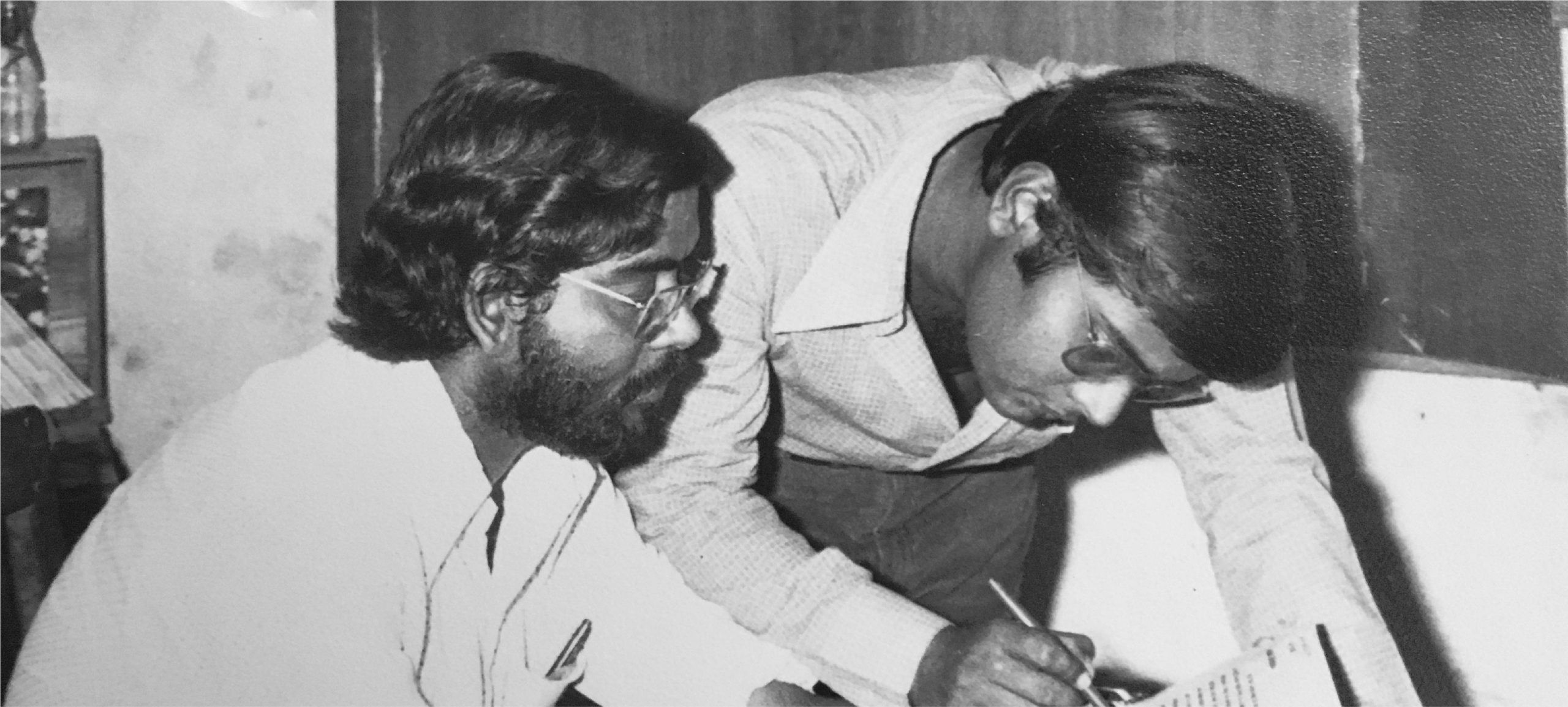
In 1977, two staff reporters – John Dayal and Ajoy Bose – at the Patriot, occupied highly advantageous positions during the nineteen months of the Emergency to observe the turmoil wrought in the capital city of Delhi. In their book, For Reasons of State, they have supplied first-hand evidence of the ruthlessness with which people’s homes were torn down and the impossible resettlement schemes introduced.
From For Reasons of State come ten of some the starkest scenes of the Emergency:
The ‘Young Prince’

An aphorism for injustice

The ruins of a civilization

Dog Days are Over

Family Planning

La Femme Fatale

The creation of an ‘Indian Scarlet Pimpernel

Rallying Rebellion

Trouble at Court

Is history repeating itself?


Get a Glimpse into the World of 5 Judges from Supreme Whispers

Abhinav Chandrachud’s latest book, Supreme Whispers, sheds light on a decade of politics, decision-making and legal culture in the Supreme Court of India. This book yields a fascinating glimpse into the secluded world of the judges of the Supreme Court in the 1980s and earlier.
Get to know some of them here:


Meet the Characters of The Lord and Master of Gujarat

The Lord and Master of is arguably, K.M. Munshi’s best-known novel. Here, the Kingdom of Patan is under attack from the army of Avanti. People are fleeing their villages to seek reguse in the city. The gates of the city are closed for the night. People have camped on the banks of the river Saraswati, waiting for morning to fall and the gates to reopen. In the eerie shadows of the bonfires, a rider arrives on a camel. This is Kaak, a young warrior from Laat.
From this moment on, the novel sweets the reader along in its fast-moving narrative. Events follow one another with dizzying speed – chivalrous deeds, conspiracies, abductions, suspense and, of course, love and passion.
Of the many interesting characters mentioned in the book, you can meet six of them now!
Munjal Mehta

The Prime Minister of the Kingdom of Patan and the most memorable character from The Glory of Patan, Munjal Mehta yet again occupies an important space in the narrative. Being a shrewd politician he is well aware of his strengths and deploys them in a manner that gives him a strategic advantage in all situations. He is also loyal to the kingdom of Patan, and wants to protect it from wily opportunists. But Munjal now finds himself confronting a personal crisis that has remained unresolved for a long while.
Siddhraj Jaysinh

The young crown prince from The Glory of Patan has a greater presence in this book, now that he is older and has come into his role as king. He is comparatively new to the matters of state and administration, and therefore he is keen on distinguishing himself as a worthy ruler in the eyes of all who look up to him. At times he is hasty in the decisions he makes and frequently needs the counsel of his mother, Minaldevi, and the Prime Minister Munjal Mehta. But with the impending attack on Patan by the army of Avanti, he knows that he must rise to the challenge of protecting his kingdom at all costs.
Kaak

Kaak in many ways is the protagonist in the book. He is a handsome and skilled warrior from Laat and has the ability to analyse situations in an astute manner. By immediately gaining the trust of the king of Patan, he proves to be an important asset to the kingdom. He further proves to be courageous, loyal and principled in his approach towards matters of state. His romance with Manjari reveals his vulnerable side, where he doubts whether he is worthy of her. Nevertheless, he is steadfast and strong, and braves many trials that come his way, emerging as the true hero of the narrative.
Manjari

Manjari is the daughter of the celebrated poet Rudradutt and is renowned for her beauty.
She is extremely proud of her ancestry and is extremely proud of her status of a Kashmiri Pandit. It is this pride which fuels her self-esteem and confidence. Consequently, she is one of the female figures who commands authority and power. As the story moves ahead, we see that her excessive pride brews troubles in her personal life. Despite this, she exhibits remarkable redeeming qualities which make her the perfect trope for a romantic female figure.
Kirtidev

Kirtidev is a warrior from Malwa who is held in high esteem by many characters in the book. He proves to be dependable in his quests with Kaak and presents an example of the perfect warrior. He is idealistic and is always striving to serve the kingdom in the best way possible. His staunch beliefs often lead him to disagree with others on several counts. But his honesty and integrity make him a force to be reckoned with.
Khengar

The prince of Junagarh, Khengar is a layered character with many facets. Being the youngest son of the Ra Navghan of Junagarh he is an enemy of the Kingdom of Patan. But rather than being a villain in the typical mould, he displays qualities and characteristics that redeem him greatly. Despite the conflicts of circumstance that assail him, he remains above all an obedient son, and an honest friend.

The Best Five People to Party with in Lahore: Meet the Outrageous Cast of Goodbye Freddie Mercury

Lahore is burning. General elections are right around the corner. The summer city rages with the drug-fueled parties of the oblivious, the rich and famous, while campaign posters and rally cries dominate the airwaves.
Nadia Akbar’s audacious debut novel, Goodbye Freddie Mercury shows a dark, rarely seen side of Lahore with intriguing, layered characters. Meet the main cast of this book below:
Bugsy:
Bugsy, a rock RJ and host of the nation’s top English radio show is young, charming and fabulous. Seeking more than wealth and fame, he is a true music-lover. However, he performs a dangerous favour for an old friend that plunges him into the dark recesses of desi politics.

Nida:
A young college student desperate to escape the oppressive atmosphere of her traditional family home and her conservative college, she throws herself recklessly into the drug-addled arms of Omer Ali. Still mourning the death of her brother, she enters a brand new world of decadence where the most important thing she will discover is herself.

Omer Ali:
Son of the prime minister’s right-hand man, labelling him as the boy who has it all would be an understatement. When you are a rich heir, life is a party and Omer lives up to that. With no career goals, it’s all about drugs, alcohol and girls for Lahore’s bad boy.

Aliya:
Bugsy’s girlfriend but not his love interest has all the makings of a rich diva: think manicured nails, blow dried hair, exquisite sarees, and unlimited cash. She thrives on gossip and isn’t always welcoming toward newcomers entering her clique of Lahore’s finest and the richest friends.

Faisal:
Bugsy’s best friend, Faisal is rich and has a heart of gold. Humble, modest and true to himself, he is ready to go a long way to create change, especially in Pakistani politics.


Storytelling as Life and Art – By Usha Alexander
Usha Alexander grew up in Pocatello, Idaho, as the second of three children. She has lived in four countries and continues to visit as many as she can. Her first novel, Only the Eyes are Mine, was selected as a Semi-Finalist in the Multicultural Fiction category for the 2006 Independent Publishers Book Awards.
She is the author of three books, the newest of which is The Legend o f Virinara. The book is set in ancient India and is a thrilling tale of adventure and political intrigue that stirs up timeless questions about war and peace.
In this piece written by Usha Alexander, she talks about how we each tell ourselves the story of our own life, whether in large ways or small.
‘It was only some twenty years ago that I finally returned here to my ancestral lands, called back by the need to remember, to gather up the fragments, to reconstruct the cracked vessel of my life and pour from it my own story. I don’t know if any good will come from this exercise, whether there’s any wisdom to be had from it, but I feel compelled to put down my tale. Who knows why one feels this human urge to preserve and perpetuate ourselves, our visions and desires? Who knows why this need for art, this brazen denial of death and emptiness?’ ~ Shanti, The Legend of Virinara, page 5
Like Shanti, the primary narrator of The Legend of Virinara, most of us have moments when we reflect upon our own lives. We reckon with our choices, good or bad, to understand how we became the person we are today. We look for a coherent thread of cause and effect, of consistency in our own personality, of personal growth running through the events in our memories like beads. Perhaps we need to understand our own drives or desires—or explain to others why we’ve done what we’ve done. We might wonder what it all means—the sum of our life, thus far—or whether we can draw any lessons from it to teach others, to do better ourselves, or to build our sense of connection with others.
So we each tell ourselves the story of our own life. We do it in large ways and small. It may be a boy marvelling that he survived a war in which his parents perished. Or a mother wondering at her decision to take a job that brought her overseas and made her children’s lives unrecognizable from her own. It may be a young graduate trying to understand why she didn’t get that job or promotion she was surely qualified for. But however great or small or even petty our questions loom, compelled by a need for connection, continuity and meaning within the vagaries of life, we may tell ourselves almost anything to create a story that suits our needs, up to and including the grandiloquent and absurd; we even invoke the supernatural.
Consider two famous historical examples: Joan d’Arc was a French girl who led an army into battle against the British in 1429. As a teenager, she presented herself to the king of France, saying she’d been in conversation with several Christian saints since childhood and now god instructed her to lead an army; the king believed her. But soon after her battles, Joan’s story became less convincing to others; she was burned at the stake for heresy. Later, her version of events was re-evaluated and deemed sensible, so she was labelled a martyr and a saint. Similarly, in 1881 a lawyer, Charles J. Guiteau, assassinated the American President James Garfield, a champion of equal rights for the former slaves. Guiteau said that god told him he must get rid of this President to change the course of national politics and so—he insisted at his trial—what he’d done wasn’t murder. But Guiteau was hanged for his crime. His version of events was discounted as a symptom of an undetermined illness.
However else we might characterize the accounts d’Arc and Guiteau gave of their own actions, we must also recognize that their self-narratives gave them courage, absolved them of guilt, and helped them sift through or bind together their understanding of themselves in the world. As such, they remain testaments to our common human need to impose story upon our individual experience. And while theirs may differ vastly from our own self-narratives in details and biases or maps of belief, perhaps they are less different in their richness and force, in their essential creative impulse to find meaning and purpose.
We are inventive with our personal narratives: We build chronology, connecting the dots of cause and effect, usually reasonably, but not always. We imbue actions and outcomes with meaning. We select which facts and feelings to include. Our fears and egos shape our perceptions. We embellish facts to make ourselves feel good. Or to make ourselves feel bad. We disregard information that doesn’t fit our biases. We forget or misremember what makes us uncomfortable. We bridge the unknown with presumption, deduction or imagination, even fabricating details or whole events, adjusting the story to our needs.
It is in this very shadowland between ‘truth’ and imagination, a realm of uncertain borders, where each of us actually lives, alone. It’s here, among the shadows and flickers of our incomplete understanding and our desires, that we fashion narratives of our lives and our world, hoping to communicate it to those around us. We come up with stories that are always part ‘fact’ and part ‘fiction’. So every one of us is actually a storyteller, a world-builder, whether or not we’re aware of our own powers or how we wield them. And this innate storytelling impulse, which we use to bind together our inner and outer lives, is a seed of general human creativity.
As a novelist, I try to excavate this, to understand how we use storytelling, how it works for us, how it works against us—for it provides a broad and ever-astonishing view into what it means to be human. The power of storytelling serves as a theme in The Legend of Virinara, which depicts, in part, how stories are used to create realities. But understanding the foundations of our self-narratives can also enrich the creation of intentional fiction. Some of the richest characters and most deeply moving novels seem to stick close to the writer’s own emotional life, applying the same perceptive and imaginative facility they’ve surely used to shape their own life stories in order to imagine the lives of others.
One example that jumps immediately to mind is V.S. Naipaul’s A House for Mr. Biswas, with its heartbreakingly wry pathos. Though the details of the story are altered, one feels acutely that Naipaul is writing a paean to his own father, his struggles and triumphs, through the lens of a loving but troubled son. Something similar is discernible in Harper Lee’s late-published first novel, Go Set a Watchman, which, despite all its flaws, reveals her tormented struggle to understand the corruption of those whom she dearly loved and admired as a child. At moments, the distinction between young Lee, the author, and Jean Louise, her character, seems to disappear.
As readers, too, we bring our own sense of story to make sense of a creative work. The novels we often enjoy the most are those we recognize as uncannily ‘true’ and familiar through the questions, metaphors or feelings they generate, perhaps mapping in some way onto our own shadowlands. Jane Austen confined her writing to the very small world of British landed gentry of the late eighteenth century; none of us readers have lived in her time and place, yet she was able to mine the dissatisfactions and pleasures of the heart in a way that’s almost universally relatable. Arundhati Roy pulled up something similarly universal about the vulnerabilities of childhood in her first novel, The God of Small Things.
As Chinua Achebe said, ‘Art is and was always in the service of man. Our ancestors created their myths and legends and told their stories for a human purpose.’ Storytelling is, above all, the art of social beings. A novelist’s greatest satisfaction comes from knowing that she has connected with a reader, touched another human heart or mind and illuminated a patch of their world, in resonance with her own.
