



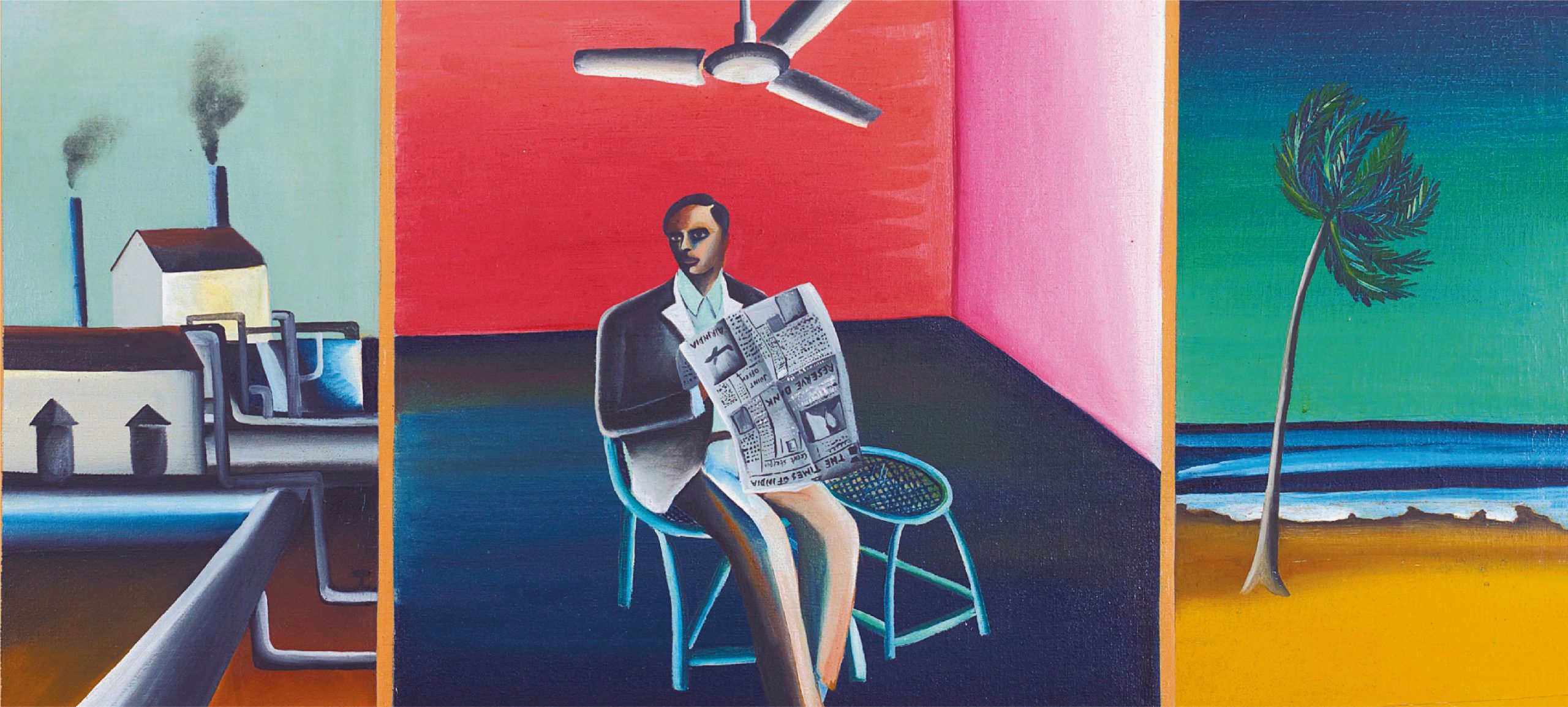
Anjum Hasan is the author of several books including Lunatic in My Head, The Cosmopolitans, Neti, Neti, Street on the Hill and Difficult Pleasures. Her latest book, A Day in the Life, is a collection of fourteen well-crafted stories that give us a sense of the daily life of a wide cast of characters.
Her books have been nominated for various awards including the Man Asian Literary Prize, the DSC Prize for South Asian Literature, the Hindu Best Fiction Award and the Crossword Fiction Award.
In this special feature written by her, Hasan tells us about her relationship to the form of the short story.
————————————————————————————————————————————————
Anjum Hasan
The first short story that haunted me was Anton Chekhov’s The Bet. Till then, I believed that narrative resolution meant happy endings. Rip van Winkle might find, when he wakes up, that twenty years have passed, or Sinbad will see that his only hope of survival after the shipwreck is to hang on for life to one leg of the giant roc, but these disruptions are only delicious means to redress. Whereas all the dark prefigurings of The Bet end in nothing – the hero simply vanishes on the last page.
The story is the case study of a philosophical question – is life imprisonment better or worse than the death penalty? The young lawyer who stakes fifteen years to prove his point does not emerge triumphant from the cell where he has been living out his self-imposed solitude. He decides – following on a decade and a half of the most voracious bibliomania, hundreds of books consumed and discarded – that human concerns don’t matter one whit, and then he slips out of the garden gate and disappears. To where? And why does he forgo all that money, two million roubles, that he is to get for winning the bet? As a ten or eleven-year-old, immune to irony, this tortured man’s strange renunciation and sudden disappearance, not to speak of that unclaimed cash, bothered me. Chekhov, master of enigmatic endings, provides no answer. I had to learn to live with my discomfort, accept the slippery nature of the modern short story, understand that its author might open a wide window on time and then leave it ajar for all eternity.
But the special pang that accompanies the reading of a good – that is essential yet elusive – story remained through the years of my coming of age as a reader. I experienced it with Tagore’s Kabuliwallah in which the unlikely friendship between a vagrant man and a radiant child can, once time has passed, never be recovered – no matter that the author, unlike Chekhov, does provide recompense in the form of a few banknotes to temper our sadness with. I felt it too with DH Lawrence’s The Rocking-Horse Winner where money itself is the object of lust and there can never be enough of it. Yet indulge too avidly in this passion and it can turn against you.
Over time I also realised that I wanted to do the same – not so much play with mutability as a literary device as snatch half a moment from the flow and give it life in writing. The short story is the ultimate temporal – and secular – form. There are no earlier incarnations and no hereafter. Now is the sum total of the aeons and this is all there is to the expanse. Anything can be a story and everything actually is. I’m always charmed by that anecdote about the demonically prolific Saadat Hasan Manto boasting that he could write a story on any subject. Someone knocked at the door of his office when he worked at AIR, Delhi, and asked “May I come in?” Manto was challenged to write a play by that name which he promptly turned out.
But this carpe diem spirit means that the older traditions of storytelling with their familiar tropes, their indeterminate locations, their shared myths, have to be put aside. For the short story is also the locus of a progressive imagination, one for which the people matter but the person matters more. In most Indian languages the break from the literature of the past resulted in the flowering not just of the short story but literary movements around it – ranging from the Nayi Kahani writers in Hindi and their championing of interior life to the hard-boiled urbanism of the Manikodi group in Tamil Nadu. Exploring the genesis of the form in his essay ‘The Indian Story’, Amitav Ghosh records its journey from the late 19th century to a good hundred years on. He writes that “the story was the chosen instrument of the subcontinent in the spring time of its nationhood.” But it is no more our weapon of choice, suggests his essay, which was published towards the close of the previous century. The short story has, perhaps, had its day.
This might explain our contemporary ambivalence about it. Modernism has passed some of us by and our paradigms for the short story are still Saki and O. Henry, rather than Manto and Carver. Then there is the growing occlusion of telling of a story with storytelling – not all writers of the short story are aiming to be campfire entertainers in this sense but the tag is hard to escape. One is either a great storyteller or a self-indulgent aesthete; nothing, it seems, can bridge literary pleasure with pleasure taken in literature. One is always tempted to quote Nirad C Chaudhuri to those who insist on the distinction between style and substance. “There is no such thing in literary works as good substance spoilt by a bad style, or poor substance undeservedly accompanied by a good style. To believe in such theories is to have the stupidity which is dead to matter and the vulgarity which is dead to form.” But Chaudhuri himself, precisely because of his English hauteur, the proud certainty of that tone, can seem hopelessly old-fashioned.
We are quick to dismiss values that seem out of date, always on guard against nostalgia in our reading of literature but curiously, because of our growing obsession with specifically Indian narratives and a singularly Indian identity, have taken to refurbishing antiquities in our fiction. We want to retell rather than tell, and our retellings are informed less by ideas about the past and more by the desire to just invoke it. The popularity of these invocations makes me ask if we really have lost our appetite for the here and now. Was it misplaced, this desire we once had to cleave to the short-lived, the fragmentary, the unresolved? Are we in search of the one story that will capture it all – the overarching explanation, rather than the numerous small ones? Is that a genuine need and if so can the short story address it?
I happened to find something of an answer in a marvellously metaphysical essay by John Berger on the nature of time and, thereby, the nature of stories. In older, more religiously inclined cultures, the timeless was a constant presence but this conception of a realm beyond human time has been edged out of today’s worldview, he argues in ‘Go Ask the Time’. And yet, despite this dominant, two-century-old, positivist European image of time, we can’t quite suppress our longing for that which goes beyond it. We’re made that way. “A need for what transcends time, or is mysteriously spared by time, is built into the very nature of the human mind and imagination.”
If we turn away from the European lens we will find a conviction underlying many traditions of storytelling – many discourses – that everything to happen has already happened before, says Berger. This is a realisation that the writer like me, trying to compose that one unique if microscopic narrative, that one telling that has not been told before, wants to stave off. But perhaps the most long-sighted of the storytellers have always known it. Talking about the prose of realist fiction and its gradual seeping into Indian writing, Ghosh in the essay I mentioned speaks of it as “a form of address that creates the illusion of objectivity by distancing itself from its subjects; it is a style of narrative in which the machinery of narration is a source of embarrassment that must always be concealed.” This struggle is still evident in Indian fiction, he says. So perhaps it is this – the embarrassment with the modern rather than the insight into the mythological – that makes us want to go back to a time before realism.
AK Ramanujan, that great theorist of Indian narratives, has described in his ‘Is there an Indian Way of Thinking?’ how till the 19th century no Indian text came without a framing narrative; every story was encased in a meta-story. Berger would have loved, for its effortless scrambling of linear time, one of Ramanujan’s examples. When the Pandava brothers are exiled in the forest, and Yudhishthira is despondent because he has lost wife and kingdom, a sage visits him and tells him the story of Nala. Nala too has had to forfeit wife and kingdom but then he fights his brother and gets everything back. “Yudhishthira, following the full curve of Nala’s adventures, sees that he is only halfway through his own, and sees his present in perspective, himself as a story yet to be finished.”
So it could be that Chekhov’s hero, when he runs away from his cell, is fleeing the paltriness of the short story itself, seeking a cosmic vista that no worldly thing, least of all money, can offer. Chekhov cannot follow him because that is not his business. His writ runs only in that arena where each tiny, ordinary, human detail is so mesmerising a story there appears to be no point asking for more. And that’s where I hope to remain too, in the grip of the strangeness and wonder of this present time.

Category: Specials
7 Quotes from Still Me that will Make you Fall in Love All Over Again.

Jojo Moyes- the author of bestsellers- Me Before You and After You brings the third Lou Clark novel- Still Me. The third book sees Lou arrive in New York to start a new life. She is quickly hurled into the world of the super-rich Gopniks: Leonard and his second wife, Agnes. Before she knows what’s happening, Lou is mixing in New York high society, where she meets Joshua Ryan, a man who brings with him a whisper of her past.
Here are 7 quotes from the book, Still Me that will make you fall in love all over again.


Kill time the cool way with these five must-reads

We believe you are always young at heart which means young adult books will always catch your attention no matter how old you are. This summer we have something for every type of reader- you like love stories, a little bit of magic, stories full of coincidences or mysteries about uncovering the truth? Don’t worry we have got you covered.
Here are 5 young adult books we can’t stop recommending enough this summer! Kill time the cool way by reading these must read books now!
The Sun is also a Star by Nicola Yoon

Natasha is a girl who believes in science and facts. Not fate. Not destiny. She is definitely not the kind of girl who meets a cute boy on a crowded New York City street and falls in love with him. Not when her family is twelve hours away from being deported to Jamaica.
Daniel has always been the good son, the good student, living up to his parents’ high expectations. Never the poet. Or the dreamer. But when he sees her, he forgets about all that. Something about Natasha makes him think that fate has something much more extraordinary in store―for the both of them.
Holding Up The Universe by Jennifer Niven

Everyone thinks they know Libby Strout, the girl once dubbed ‘America’s Fattest Teen’. But no one’s taken the time to look past her weight to get to see who she really is.
Everyone thinks they know Jack Maslin too. Yes, he’s got swagger, but he’s also mastered the art of fitting in. What no one knows is that Jack has a secret: he can’t recognize faces. Even his own brothers are strangers to him.
Until he meets Libby. When the two get tangled up in a cruel high school game which lands them in group counselling, Libby and Jack are both angry and then surprised. Because the more time they spend together, the less alone they feel. Because sometimes when you meet someone, it changes the world – theirs and yours.
Tradition by Brendan Kiely

The students at Fullbrook Academy are the elite of the elite, famous for their glamour and excess. Their traditions are sacred. But they can hide dark and dangerous secrets. Jules is in her senior year with one goal: to get out and start her life at college. Jamie is a sports star on a scholarship; Fullbrook is his chance to escape his past. After a school party ends in disaster, the two of them discover a terrible truth. Can the two of them stand together against Fulbrook’s most toxic traditions?
Hazel Wood by Melissa Albert

Seventeen-year-old Alice and her mother have spent most of Alice’s life on the road, always a step ahead of the strange bad luck biting at their heels.But when Alice’s grandmother, the reclusive author of a book of pitch-dark fairy tales, dies alone on her estate – the Hazel Wood – Alice learns how bad her luck can really get. Her mother is stolen, by a figure who claims to come from the cruel supernatural world from her grandmother’s stories. Alice’s only lead is the message her mother left behind: STAY AWAY FROM THE HAZEL WOOD.
The Truth and Lies of Ella Black by Emily Barr

Ella Black seems to live the life most other seventeen-year-olds would kill for. Until one day, telling her nothing, her parents whisk her off to Rio de Janeiro. Determined to find out why, Ella takes her chance and searches through their things. And realises her life has been a lie. Her mother and father aren’t hers at all. Unable to comprehend the truth, Ella runs away, to the one place they’ll never think to look – the favelas. But there she learns a terrible secret – the truth about her real parents and their past.

The Art of Revival: Get to know how the magic of Translation works
K.R. Meera is an award-winning writer and bestselling author in Malayalam literature, who has published more than a dozen books including short stories, novels, and essays, winning some of the most prestigious literary prizes.
Ministhy S. is an IAS officer who is also a writer and translator. Her translation of K.R. Meera’s The Poison of Love has been widely lauded as a masterpiece.
Here we have the esteemed author K.R Meera in conversation with Ministhy S. talking about what really goes into translating a great story from Malayalam into English without losing out on it’s original essence.
The Unseeing Idol of Light by K.R. Meera, is a haunting tale that explores love and loss, blindness and sight, obsession and suffering-and the poignant interconnections between them.
Meera: Mini, when I first wrote Netronmeelanam (now published in English as The Unseen Idol of Light), I never imagined in my wildest dreams that it would ever be translated into English. I was always aware that this was a difficult novel to translate—with its many idioms and phrases along with certain cultural elements very specific to Malayalam and Kerala. To add to that, there were so many complex sentences with layered meanings too. The words I had used in Malayalam were carefully chosen to denote gloom and darkness, many of which do not have equivalents in English.
Ministhy: ‘Jalapisachu’ is one such term that is not easy to translate. It evokes a fairy-creature associated with water, but this is not a benign angel. It is an evil infestation. Women who are caught in its tentacles succumb to an obsessive compulsive disorder: having to bathe again and again, ceaselessly cleaning themselves of an imagined impurity. Now we have got a June afternoon infected by this malevolent water spirit. How do we capture the essence?
Meera: You are right. And unless one has seen the kind of fierce monsoon that Kerala has in June, one might not be able to fully enjoy the imagery this evokes. Isn’t it the same with the imagery of the night wearing jasmine flowers in its tresses?
Ministhy : Absolutely! The monsoon in Kerala wails wildly as it falls! And jasmines in a girl’s hair and the night with its stars—the imagery of your words and metaphors are so full of the essence of Kerala. And the nuances in the way you express certain things—the way Prakash ‘sees’ although he cannot see. For example, he reads Chekhov totally from his memory! You intended that the reader remembers Borges in this context. I hope they do!
Meera: It’s true that I had Borges in mind when I wrote this. I had read that he used to see things in yellow—and that fascinated me.
Ministhy: Rajani was difficult to capture. Though her way of love is familiar to most of us women. We are possessive, are we not? Deepti often seems too good to be true. The quintessential perfect woman. A metaphor like ‘a finger knocking softly against a bronze pitcher’ is so much part of Kerala milieu, just like snacks such as Mambhazhapulissery and Chakkaerissery. My computer keeps autocorrecting these dishes to ‘emissary’!
Meera: On the contrary, Rajani is the real woman. Deepti is the woman that Prakash and the patriarchal world wants to see. Even Rajani thinks Deepti is the ideal woman and that is why she keeps on searching for her. The real woman always commits suicide to gift the unreal woman to the man she loves.
Ministhy: Shyam’s presence is recognised by his special smell of crushed Mazhithandu. That inconspicuous plant thrives in our homes and as kids we used that stem to rub our slates clean in school! Pepper elder is the technical name of our Mazhitandu. Crushed pepper elder plant emanates a mustard odour. One will have to have experienced that to know.
Meera: The plant is Peperomia Pellucida. It is also called silver bush, pepper weed, and so on, in the West. Shyam can have any other odour, as there is no other plant which can represent one’s childhood in Kerala. I think it is the plant of friendship too—one which helps to rub our slates clean with its own stem.
Ministhy: You have used so many local idioms related to sight, even lines from Jnanapana, to emphasise that main theme. ‘What you see in your mind, I can see on that tree’ is a very colloquial saying used by Shyam when he guesses Prakash’s thoughts. It is pretty well known to a Keralite but unknown elsewhere. But in the original novel, you use that phrase deliberately—because soon after comes the reference to the mango tree which plays a major role in Prakash’s life. So one cannot change the words just to capture the essence of guessing. One needs to be careful and judicious in the act of translation. ‘Prakash turned…wondering if what he saw in his mind could also be seen on the tree.’
Meera: That is true. I understand some of the paragraphs in the original were quite inflexible for translation. For example, chakshusravanagalasthamam darduram... Now chakshusravanan is a Sanskrit word. Its meaning is one who hears with his eyes—that is, a snake. And darduram is frog. The line is very layered, and expresses that human life is nothing but a frog which is crying for its own food while already trapped in the jaws of a snake. This imagery is important when it comes to the discourse in the novel regarding justice and gender. I am so sorry about all the untranslatable phrases and words. But at the same time, thank you for retaining most of the similes I have used connecting nature and sight and justice.
Ministhy: Bengali, Telugu, Sanskrit , Malayalam—so many languages play a part in this novel. All these nuances in the translated novel have to flow seamlessly, just like in the original. But then, the reader should be able to understand without needing to constantly flick over to the glossary page.
Meera: The reviews we get prove that readers are happy with the translation. Hope you have noticed that my obsession—with Kolkata , the media, the death sentence and the noose, although here it is to hang one self—has already commenced, about five years before writing Hangwoman?
Ministhy: That is clear to anyone who has loved your Hangwoman!
One critical sentence, appearing twice in the original, which threw me into a deep translator’s conundrum was this one: ‘ When some women leave, they also take with them the sight of those men who had loved them…’ In Malayalam, ‘ snehicha purushan’ can mean ‘the man who loved the woman’ as well as the ‘the man whom the woman loved’. You left it so mysteriously for the reader to interpret!
In the first instance we refer to Deepti, so the line is clearly hinting at Prakash as the man who loved her. In the second instance, at the end of the novel, it refers to Rajani whom Prakash had never loved till then—but she had loved him. Even the word ‘leaving’ had changed in its nuance by the time the second sentence appears at the very end of the novel. The reader now knows who is alive and who is truly gone! So one could not just repeat the first sentence in English. The second sentence had to be tweaked to match the context. ‘When some women depart, they take along with them the sight of the men whom they loved.’
Meera: I remember the discussion we had on this. And it was fun seeing your remarks in answer to the editor’s queries: ‘The author deliberately uses this, etc.,’ especially where there were repeated sentences.
Ministhy: The bats, the bats! They are everywhere: as symbols, as metaphors, as creatures which hang upside down in cosmic darkness. I hope that these intentional recurring images are understood as part of the writer’s craft and not as an oversight in translation.
Meera: When the novel was published in Malayalam, a reader from the central jail wrote to me: ‘I liked your “novavvaal.” ‘Vavval’ in Malayalam means bat. As you said, it was deliberate—the whole “novel” is about the repeating cycle of life.
Ministhy: Ah, the puns and the wordplay in our mother tongue! The scenes of extra-sensory perception read like poetry. It catches the eerie sense of Rajani’s experience: as she catches sight of not only the past but also the inevitable future. That was very hard to translate—maintaining the rhythm of the prose as well as that intense sense of sadness.
Meera: I wish the poetry in the prose were also translated.
Ministhy: There are ironic usages, and subtle humour in episodes involving Shyam. His adventures with his inner wear and the Bhubaneshwar Express had to be translated very carefully. The background was really dark: corpses and morgues in the former and the loss of his life’s balance in the latter. The dark humour of the original novel deserved a very nuanced treatment. By the time Shyam tied the knot in the Bhubaneshwar temple, and slept without his inner wear for the first time willingly, the reader has to come full circle and smile with understanding.
Meera: Just imagine, Shyam has been travelling all his life in search of another man’s wife!
Ministhy: I translated the novel when I was undergoing Netronmeelanam in my own way. My eyes, too, opened to many truths and falsehoods. If The Poison of Love made me cry as a translator, this novel made me pause often and forced me to reflect about my own blind spots. I enjoyed the different rounds of meticulous editing with Ambar and Shatarupa.
Meera: Ambar and Shatarupa are great to work with. And by the way, I wish we could have also translated the word Netronmeelanam and coined a word to make clear that it is the last of the five rituals by which a statue of a Hindu god becomes fit to worship—by opening its eyes. Netra means eyes and Unmeelanam means opening.
Ministhy: The title underwent many interesting discussions. From the literal translation ‘Opening the Eyes’ which was in the draft, to the evolution of the title ‘The Unseeing Idol of Light’ was a great journey, capturing sight, light, the refusal to see, the insight awaiting.
Meera: Yes, it was one of the greatest challenges regarding this translation.
Ministhy: How does one make Prakash’s ability to read, write and function normally seem plausible, when he is totally blind ? What seemed so easy to accept in the original had to be carefully structured in the translation. Could a blind man gaze? Or does he turn his head? He ‘sees’ . . . but how?
Meera: But then a reader is supposed to understand that sight is just one of the five senses!
Ministhy : ‘ Prakash continued to look at her, impassive. Baffled by his relentless gaze, Rajani felt consumed with envy and frustration. Perhaps he was not seeing her. Perhaps he was seeing someone else in her face. Perhaps he was seeing no one at all….’
Meera: Seeing in Malayalam means understanding too! And this man could see with his mind as sight was half light and half imagination.
Ministhy: I started translating one chapter at a time in December 2015. I used to send it to you and a few friends. By March, I had completed the first round. The real hard work was yet to begin. The draft underwent multiple revisions and many rounds of intense editing. I was so proud to see the gorgeous book which was created by the great team at Penguin and I was thankful on reading the Author’s Note.
Meera: Your speed is amazing, Mini. Be it translation or the original, I wish to work and rework till there is nothing more I can do. I like to invest all my time into the work I am doing. So I am always nervous about a published book.
Ministhy: There were so many incidents of serendipity which inspired me during the translation of this novel too. Many books with reference to ‘ insight’ and ‘blind heroes’ sort of leapt out of bookshelves and into my hands during the three-year period it took for the novel to be published! Prakasham Illanjappol ( When there is no light/Prakash) by Bengali writer Asha Poorna Debi in translation reached my hands in a wondrous way. It was the story of the blind Adinadh, for whom sight meant words! The blurb read that the novel captures the helplessness of people caught in the struggle between light and darkness. I recall WhatsApping you that book cover in awe!
Meera: Yes. While I was writing the original, I got the book Phantoms in the Brain by Dr V.S. Ramachandran. I got the information about ‘blind spot’ from it. I got the book very unexpectedly. One day the late Murali, one of the greatest actors that Malayalam Cinema has ever seen and a friend of my husband, visited us and asked me whether I had read the book. I said no and he said he would send it. He sent it to me and I opened it casually and happened to chance upon the page which was talking about the blind spot.
Ministhy: Quotations which left me stunned, smiled at me from odd places. For example, the mobile cover I got for my phone, had a message inscribed inside: ‘Beauty is in the eyes of the beholder. Open your mind and design yourself.’ I was gobsmacked! Then I knew that this translation effort was destined.
Meera: Maybe we are seeing what we want to see. After all, everything we have seen and will be seeing is nothing but half light and half imagination.

Who took to Yoga in the Shakespearean world? Find Out!
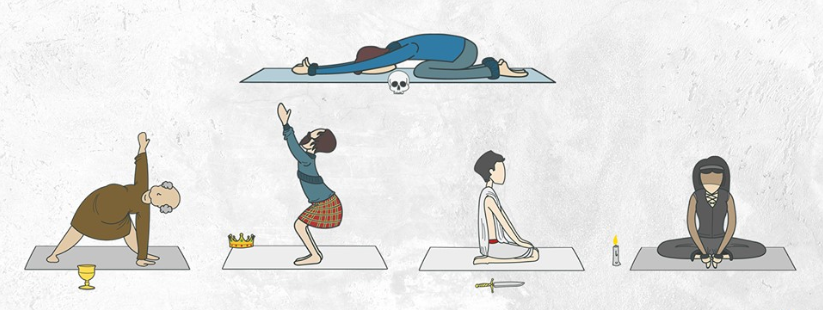
If our friends from the Shakespearean world were to celebrate International Yoga Day with us, this is a little of what it would look like. Here are some of the famous characters, who took to yoga. Let’s take a look!


This Yoga Day, Change Your Body The Healthy Way!

Here’s a question that has been bugging the best of us for quite some time now: Can you change the shape of your body and can it be done naturally? Well, the answer is yes, you can undertake this transforming journey with the help of Payal Gidwani Tiwari’s book, From XL to XS: A Fitness Guru’s Guide To Changing Your Body.
The book carries simple and easy to follow principles and exercise routines that will teach you how to lose (or gain) weight, stay fit, and transform your body structure.
Here are 5 reasons why you should take up yoga starting this yoga day:
Yoga works on your internal organs:
Yoga exercises massage the internal organs. For instance, when you do Paschimottanasana and bend forward, your hamstring is stretched, your hip area opens up completely, and your internal organs like the spleen, stomach, and intestines are kneaded, due to which there is an extra flow of blood to the nerves and muscles.

Yoga teaches you the right way to breathe and to control your breathing:
Proper breathing allows you to connect with basic and fundamental aspects of daily life. A well rounded yoga breathing practice that includes calming, balancing, and simulating practices, can promote the health of your respiratory system by improving the strength and flexibility or your chest muscles and fascia as well as improving the alignment of your ribs and spine.
 Yoga propels you on the path of self-realization:
At its foundation- yoga is the science of knowing yourself. With regular practice, you can understand your emotions, repressed feelings, your likes and dislikes better.
 Yoga can help you lose weight:
Yoga is one of the safest ways to lose weight and regular yoga is guaranteed to make you look and feel younger and more beautiful.
 Yoga can change the shape of your body:
With regular practice of yoga you can get the body you dream of and look at yourself in the mirror with confidence and pride. By working on your specific problem areas, you can change the structure of your body.


Meet the Unlikely Detectives of the Happy Home for the Aged
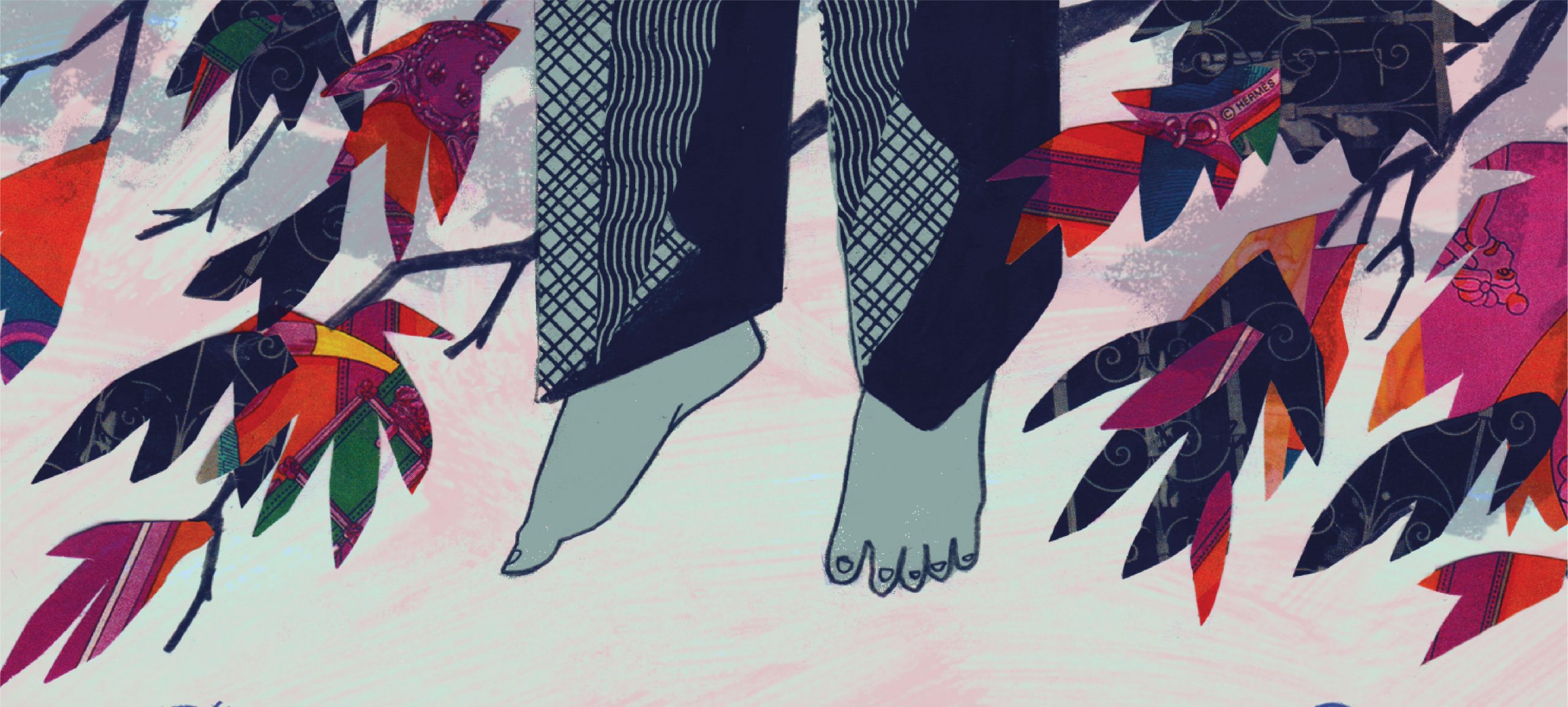
The tranquility of the Happy Home for the Aged is shattered when a body is found hanging in the garden. The inhabitants of the home are at first perplexed, and then decide to come together to solve the murder that has suddenly brought the violence of the world into their Goan arcadia. Each of them bring different skills to the task of unravelling the crime.
Patiently, and with flashes of inspiration, the unlikely detectives follow the clues and emerge from the isolated and separate worlds they had inhabited for so long.
Let us meet these characters from Bulbul Sharma’s mystery book, Murder at the Happy Home for the Aged.


4 Things You Should Know About Abhinav Chandrachud

Abhinav Chandrachud is an advocate at the Bombay High court. He has written extensively on subjects like the freedom of speech, the judiciary, the constitution of India and legal history.
Chandrachud’s latest book, Supreme Whispers: Conversations with Judges of the Supreme Court of India 1980-1989, sheds light on a decade of politics, decision-making and legal culture in the Supreme Court of India. This book yields a fascinating glimpse into the secluded world of the judges of the Supreme Court in the 1980s and earlier.
Here are 4 things you didn’t know about the author:


5 Beautiful Malayalam Words with Profound Meanings

Most linguists believe that every language has a few untranslatable words that make language in question, unique. Untranslatable words don’t mean that these words can’t be translated from one language to another but that part of the essence of the word is lost as it crosses from one language to another.This often is due to different social and cultural contexts that have shaped how the word is used.
K.R. Meera is one of the bestselling authors in Malayalam Literature and her latest book, The Unseeing Idol of Light, initially written in Malayalam has been translated into English.
Here are 5 Malayalam words that don’t directly translate to English but have profound meanings.


5 Things every Long-Distance Couple will relate to

Sudeep Nagarkar’s book, All Rights Reserved For You, is a heart-warming real-life story of a couple who is separated by distance. While reading this book, we came across five things that every long distance couple will absolutely relate to. Scroll below to check them out!


