




In A Murder on Malabar Hill, Sujata Massey tells us the story of Perveen, who has joined her father’s prestigious law firm as one of India’s first female lawyers. When their law firm is appointed to execute the will of Omar Farid, Perveen is suspicious of the particulars of the will that may leave Farid’s three widows vulnerable.
Perveen decides to investigate, but when tensions escalate to murder, it becomes clear that her own life is in mortal peril and she will need to use everything in her power to outwit a dangerous criminal.
Let us meet the characters from this fascinating mystery.
____________________________________________________________________


Category: Specials
Quotes from Nadeem Aslam that will Make you Fall in Love with his Work

Nadeem Aslam was born in Pakistan and now lives in England. His work has been longlisted for the Booker Prize, shortlisted for the IMPAC Prize and the DSC Prize for South Asian Literature, and won the Kiriyama and Windham Campbell prizes and the Lannan and Encore awards. He is a fellow of the Royal Society of Literature.
His works include Maps for Lost Lovers, Season of the Rainbirds, The Blind Man’s Garden, The Golden Legend and The Wasted Vigil.
From these, we found you eight quotes that are sure to make you fall in love with the power and emotions of his words, all over again.


Here, There and Everywhere: 5 Sudha Murty Stories you Must Read
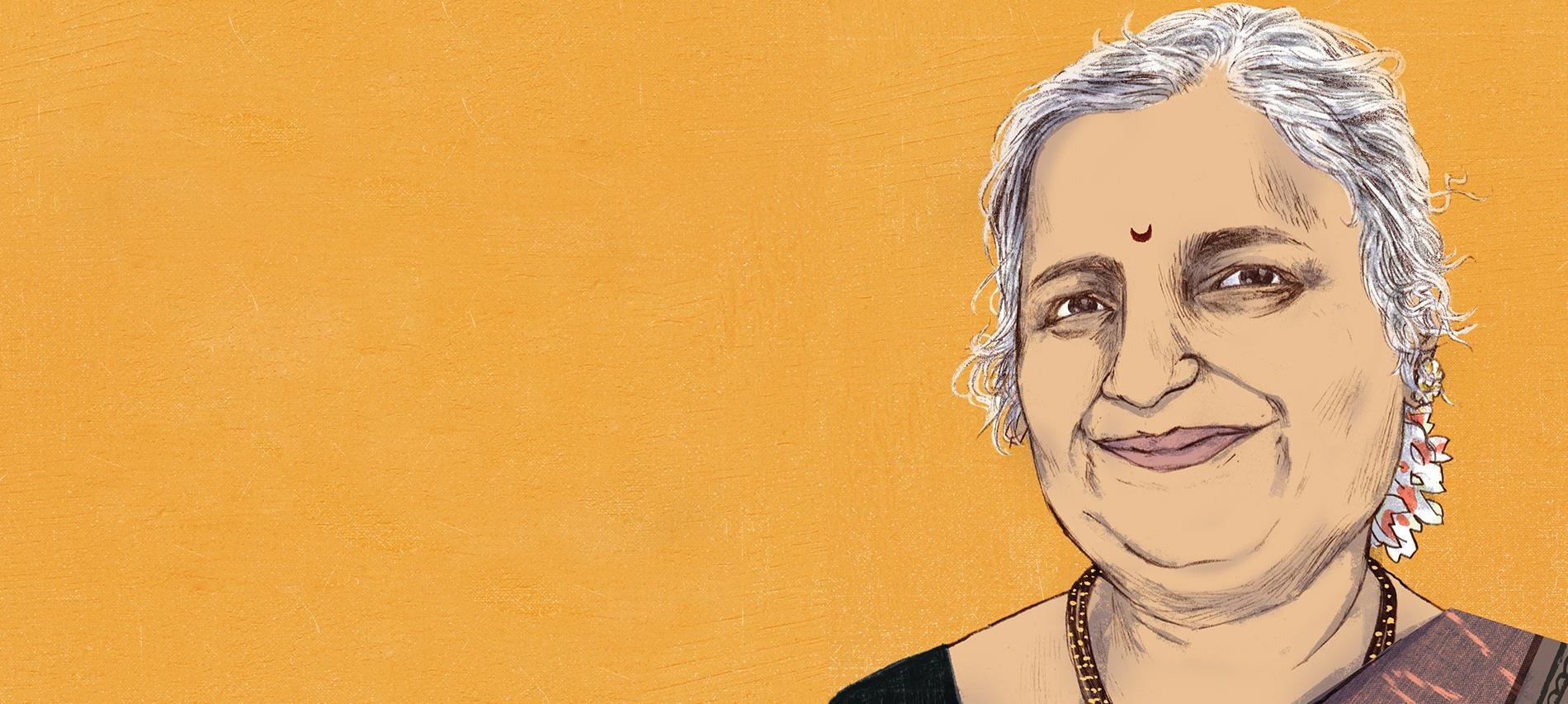
Wearer of many hats-philanthropist, entrepreneur, computer scientist, engineer, teacher-Sudha Murty has above all always been a storyteller extraordinaire.
Here, There and Everywhere is a celebration of her literary journey and is her 200th title across genres and languages. It brings together her best-loved stories from various collections.
Here are 5 stories by her that you must read, from this collection.

Sudha Murty talks about her journey as a writer in A Tale of Many Tales. She mentions how her mother would force her to sit down and write about the events of her day, and how this ultimately lead to ‘inadvertently improving her expression and adding clarity to her ideas’.

R.H. Kulkarni, a young medical doctor was posted to a small dispensary in a quiet village. One night, during a heavy rain, he heard a knock on his door. Four men wrapped in woolen rugs stood with sticks in their hand. They forced him out of his house and made him sit in a bullock cart. Where were they taking him? Read this gripping story to find out more.

A middle aged man brings an old man with no friends or family into the authors office, saying he met him on the bus stop and needed help in relocating him to an old-age home. A few months later, the old man is in hospital. When she goes to visit him, she sees the same middle-aged man there as well. Who is he and why is he there?

On an overcrowded train from Bombay to Bangalore, the author comes across a young girl in torn clothes without a ticket. She pays the ticket collector the fare for the girl but is unable to get her to talk. When she finally does, she finds out she’s a run away with nowhere to go. She helps her find place in a shelter in Bangalore not realizing then, the long way the girl will go from there, all thanks to a simple train ticket.

Sudha Murty tells us the story of being the only female in her engineering college. She shares her struggles-first in being allowed to actually attend the college, and then those she faced while being there. However, she was adamant to do complete her course and ended up doing better than most of the boys. She joined college as a scared teenager but left as a confident and bright young engineer.

8 Things worth knowing about Subhadra Sen Gupta
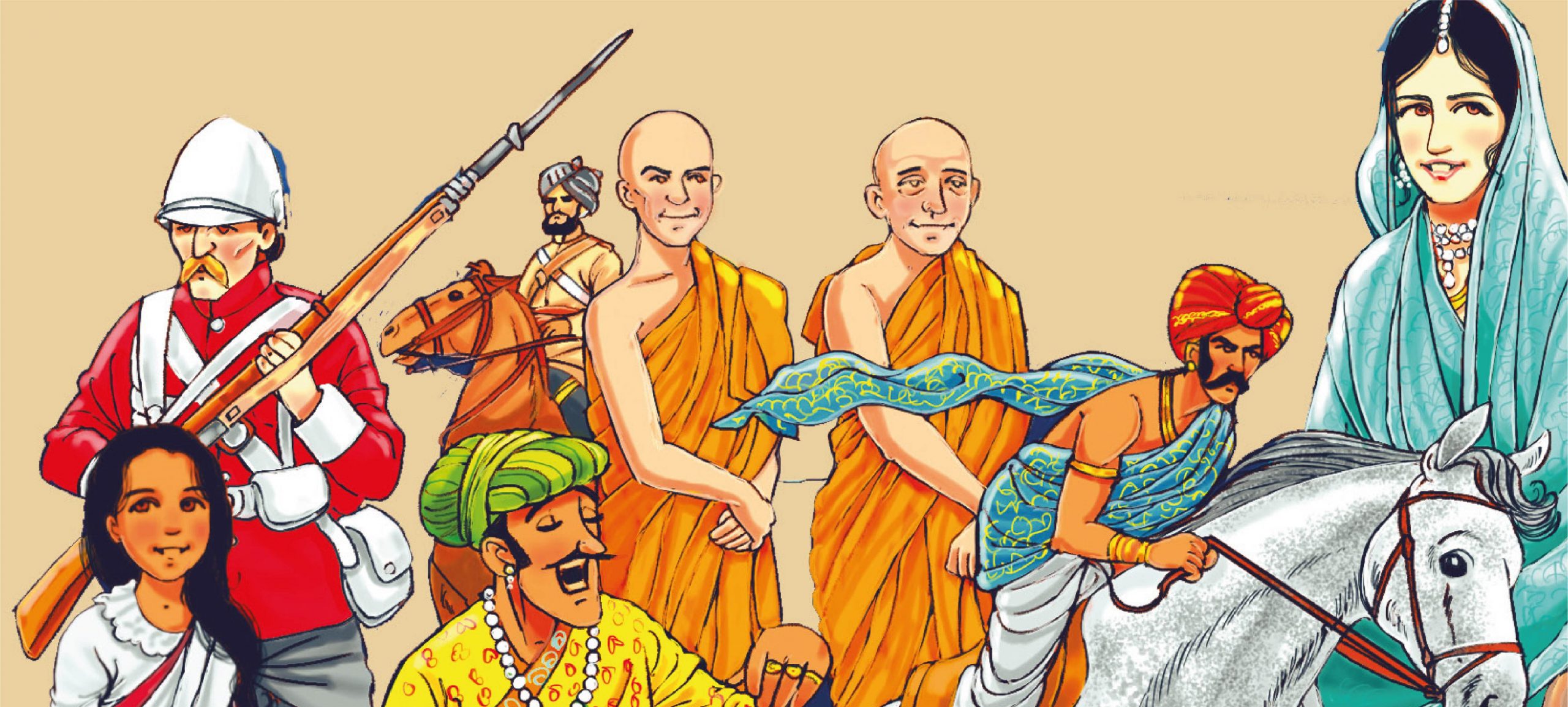
Peppered with stunning illustrations and unusual trivia, A Bagful of History is a fascinating read about how children lived in the times of King Ashoka, Emperor Akbar, Raja Raja Chola and during the Uprising of 1857. In these dozen stories you will travel back in time to the India of the past.
The fact that Subhadra Sen Gupta has written over thirty books for children including mysteries, historical adventures, ghost stories and comic books is well documented but we found some rather interesting things that very few people know about the author. Scroll below to know now!
Here are 8 things you didn’t know about the author who loves writing for children:


Meet Seven Women who Fought against Triple Talaq

The battle against instant talaq has garnered public attention for a long time now. In Till Talaq Do Us Part, Ziya Us Salam, an eminent social commentator and an associate editor at Frontline, presents a holistic view of how divorce works in Islam.
Banning triple talaq was no easy feat. It happened through the struggle and effort of many people. Ziya specifically talks about seven women who questioned established mores and practices common to all patriarchal societies beyond the boundaries of religion. Their fight is what took the case to the Supreme Court.
Let’s meet the women behind the ban on Triple Talaq.

It was experience that held Zakia in good stead as she piloted the movement for Muslim women’s rights.
Her first marriage had been a tale of subjugation and oppression in which she suffered emotionally, socially and physically. She suffered alone in the privacy of her home with her son as witness and co-abused. Her middleclass upbringing did not allow her to speak out against the injustice. She found happiness only in her second attempt at matrimony. This union, however, invited huge criticism from patriarchal quarters. The fact that her husband is a Hindu has been used to attack her campaign for Muslim women’s rights.

As she helped marginalized women fight everyday battles, Noorjehan began to appreciate the challenges that lay ahead. That, in turn, led to her founding the BMMA with Zakia Soman, who had also tapped into her reservoirs of inner strength after the 2002 Gujarat violence.
Also notable was Noorjehan’s attempt to train Muslim women to be qazis, to apprise them of what the Quran says, what the Sunna of the Prophet says. They set up Darul Uloom Niswaan, a centre for Islamic learning. The centre trains women qazis in the study of the Quran, the Hadith and the sharia. The women are trained to conduct nikah, fill up nikahnamas, etc. Then followed all-women sharia courts, which interpret religious injunctions in a manner deemed fair to women.

For years, Shayara Bano put up with her property dealer husband’s demand for dowry, a car and cash. For years, she underwent abortions. In the absence of any social support, she was reduced to being a helpless soul. A kidney ailment and the absence of medical care at her husband’s place in Allahabad forced Shayara Bano to go back to her parents’ in Uttarakhand for treatment. It was a small step for Shayara Bano that was to prove a giant leap for womankind.

As she explored her options to hold her husband accountable, she met the volunteers of the BMMA and approached the Supreme Court. The court clubbed her petition with the larger case against instant talaq or triple talaq.

The verdict may have pleased many, but it left Ishrat homeless and hopeless.
Instead, she decided to give a new direction to her life by joining politics. Towards the end of 2017, she joined the Bharatiya Janata Party and pledged to work for all women who have suffered.

With help from her brothers, she approached the Supreme Court after they got to know of the Shayara Bano case. In the highest court, her petition was clubbed with that of Shayara Bano.

In January 2017, she approached the Supreme Court to invalidate triple talaq as it violated the fundamental rights of a woman. Her petition was clubbed with that of Shayara Bano and others. The court set aside instant triple talaq, but there was no direct word on the status of her marriage. Atiya hopes that the verdict will end the agony of those women who have suffered for no fault of their own.

The Diary of a Domestic Diva – Introduction from Shilpa Shetty Kundra

Shilpa Shetty Kundra is a popular Bollywood actor, model, entrepreneur and health enthusiast. She is the author of two books, Diary of a Domestic Diva and The Great Indian Diet. The latter touches upon various food categories and not only tells you how to take care of your nutritional intake but also how to burn fat in the process.
In The Diary of a Domestic Diva, the actor and entrepreneur brings you fifty of her most special recipes-some of which feature in her popular Sunday Binge videos on Instagram. These favourites of the Shetty-Kundra household have been created to give you variety, taste and the occasional food coma.
Here is an excerpt from The Diary of a Domestic Diva
It’s just bhindi. A vegetable that’s probably as common as the potato in Indian homes. But at the mere mention of bhindi the first thing that pops in my mind is my sister. Shamita, for reasons she has sworn me to secrecy, abhors bhindi. No amount of masking it can get her to taste even a bite of the most delicious bhindi preparation. Her extreme reaction, and the fact that it is always discussed in my home, is why in every bhindi I see my beloved sister.
Food brings an onslaught of feelings, conjuring up some of our most powerful memories. In many cases, the taste or smell of a meal is capable of painting a picture more vibrant than any snapshot you may have on your phone. In other instances, it’s the people sitting around you as you tuck in who make it a wonderful memory. Food that is linked with memorable events is more likely to trigger a few reminiscences than something we eat regularly, which is why we probably remember birthdays more clearly than the average Sunday brunch. Personally, it takes nothing more than a mutton dish to take me back to my childhood.
I grew up with parents who held full-time jobs. I remember my mother buying about 5 kilograms of chicken and 5 kilograms of mutton every weekend, cooking it all at once and freezing it. On alternate days, she would thaw a little bit after she came home from work and served it for dinner. I know many people who still do that prepare the whole week’s meals in advance. This book is for women like my mother who want to serve fresh, nutritious food to their families every day without spending too much time in the kitchen.
People probably think that just because I’m a celebrity, I diet a lot and don’t eat what I want. But you know better than that from my previous book, The Great Indian Diet. I am a huge foodie and make and eat everything I like. The only difference is that I know when to stop. This book will show you how and what we -my husband, son and I – enjoy cooking at our home. I hope you like what we make.
Every dish you’ll find in the pages that follow has been cooked by me. My family and I love each of these dishes and I enjoy making them, mainly because I can prepare them quickly, which leaves me free to attend to other tasks. As silly as it sounds, the most important thing for me while cooking is making sure my hair doesn’t frizz. So the food I cook is usually very quick to make. And tasty, of course. I can’t bear to cook recipes that involve a lot of preparation. They really put me off. I’ve gone through books where the pre-cooking instructions and ingredients are sometimes over one page long. Unless you’re a professional cook, who has the energy to spend so much time getting so many ingredients ready? I certainly don’t, and neither do most working women.
I don’t claim that all the recipes here are original. Maybe you’ve already made some of them in your home. But each of them has a twist to it – something that makes it uniquely mine.
Before you begin reading this book, I want you to make a resolution: that you will enjoy every part of the meal – yes, that includes dessert too – without ever feeling guilty. The food we love and eat makes us so happy. Why would you feel guilty about feeling happy? My father loved, really loved, to eat good food. He was the kind of person who would attend the wedding of even a very distant relative of a relative (bless him!) because he wanted to sample the rich food served there. But it was also because he could never say no to an invitation. When he passed away recently, we wanted to celebrate him and his life. According to Mangalorean customs, the whole family comes home on the thirteenth day after the loved one has passed away for the Bojja ritual and eats vegetarian food. But my father was not fond of vegetarian food at all. For him, a meal was never complete unless it had a chicken or a mutton dish. Mutton was his most favourite meat and he relished every mutton dish that was ever served to him. He loved it so much that even if he was too busy to meet me, I could lure him home by saying I was cooking mutton! So for the evening of the thirteenth day, we prepared all of my father’s favourite dishes and ended up with around twenty-one nonvegetarian dishes, including mutton cooked in four different ways. But despite his indulgences, he was a very fit man till the day he passed away. I believe it was because he took so much joy in eating and balanced it with his walks and yoga.
Every woman is domesticated in one way or the other because we are conditioned to make sure that we look after everyone around us. But in doing so we often neglect ourselves or feel apologetic for the things we do for ourselves. Being a professional, a wife and a mom is a tough job, and given the fast pace of our lives, we have to learn to compartmentalize. The glam quotient from our lives goes away when we become so domesticated. It’s a beautiful coincidence that the Marathi word for lamp is ‘diva’.
Each one of us has a diva within us. I hope that through this book, I’m able to turn all of you into real-life divas and light the lamp inside you; I hope I can make your life simpler. Things like having an in-house menu can make figuring out what to prepare for lunch and dinner, pack for your husband and child and serve at parties easier. People may assume that I have it easy because I have plenty of help. On the contrary, being a homemaker comes first on my list and it’s the finer details that make me a domestic diva. If these ideas can make life easier for you, I’ll be so happy. And in that one hour that I’ll be able to save in your day, I hope you go for a massage or get a pedicure or work out – do something for yourself.
I hope this book makes your lives easier and with that also intend to bring focus to ‘label reading’. Visiting the supermarket or vegetable vendor to buy your groceries every week may get cumbersome but your own and your family’s health and what goes into your body must be of paramount importance. With readymade meals and pre-packaged quick fixes so easily available, I hope you don’t take your family’s lives for granted. Please read the label of the packet/box to know what has gone into it. Children should not be encouraged to eat sugary cereals and snacks on a regular basis; google it and you will know how harmful it can be. Reading the labels on packaged food products will also increase your knowledge and help you understand the difference between healthy and unhealthy food products. If you want to lead a healthy life, mindful eating is imperative.
With love, from my kitchen to yours.

Three Shades of Thrill Box Set: Quotes That Will Appeal to the Thriller Bug in You

Novoneel Chakraborty’s latest box set: Three Shades of Thrill includes three of his popular thriller novels – Black Suits You, EX: A Twisted Love Story and How About a Sin Tonight?
Black Suits You is a gripping, fast-paced and a clever psycho-sexual thriller that will keep you guessing till the end. In EX: A Twisted Love Story, story is full of plot twists and keeps readers turning pages with its abruptness and complicacies.
How About A Sin Tonight? is a beguiling tale of love, ambition, jealousy, and betrayal. It unveils the grime behind the glitz, the insecurities and compromises, in a world where aspirants come prepared to strike a Faustian bargain.
Here are three quotes from these three books that will appeal to the thriller bug in you.


What makes an Indian: People or Territory? By Miniya Chatterji
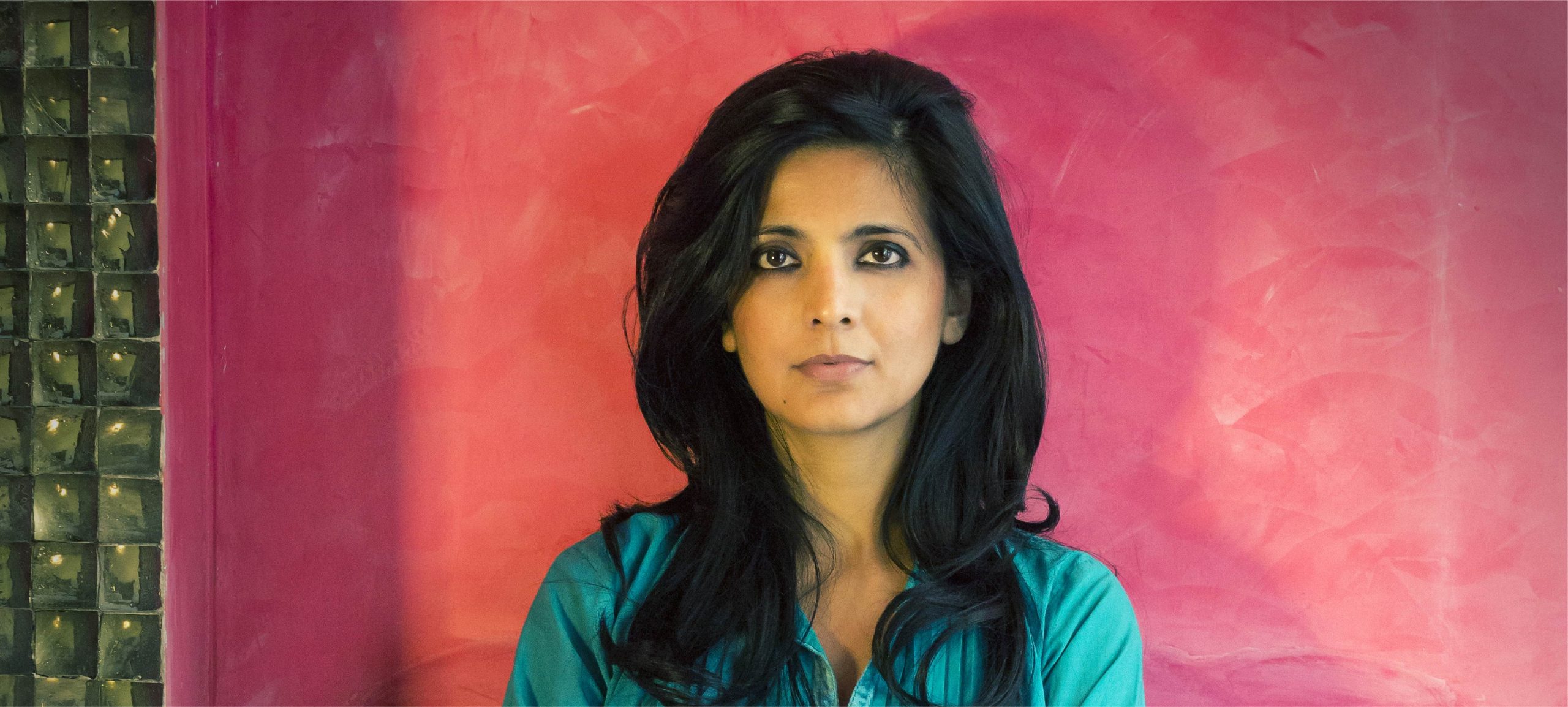
Miniya Chatterji is the author of Indian Instincts, a collection of fifteen powerful essays that argue for greater equality and opportunity in contemporary India and holds up a mirror to what we Indians have become.
She is a prominent intellectual and speaker, writer and businesswoman. The CEO of Sustain Labs Paris, she has also worked at the World Economic Forum in Geneva, Goldman Sachs in London and in the office of the President of France in Paris.
In her book, she goes from tracing the possible first arrival of man in India to writing about love, sex, money, parenting and values in Indian society and discussing nationalism, religion and democracy, presenting an accessible yet brilliant intellectual treatise about issues that affect Indians the most in her book.
So what makes an Indian? Here are her views.
————————————————————————————————————————————–
“It is odd, vain, irreverent, or naive to be reflecting upon the personal, when the subject of analysis is as weighty as the national economy or its politics.”
This perception is based on the belief that political economy and individual development are separate disciplines such that an enquiry in to the state of democracy, nationalism, or economic growth of a country must neither refer to it’s citizen’s personal experience as a child, adolescent, or parent, nor to his individual values, emotional health, romantic love, taste, and so forth. Must the study of economic growth exclude – as economist Amartya Sen points out – an assessment of the personal capabilities it endows us with?
If one believes that a person’s character is inherited – a favourite argument made by every enthusiastic xenophobic – then this perception would hold true. However, if an individual’s development is believed to be an active and reciprocal process influenced by the environment he lives in, then eliminating a citizen’s personal development from the analysis of a country’s political economy would be a gross oversight.
In this context, central to sociologist Pierre Bourdieu’s project was the notion of habitus that referred to the individual mental structures or lens through which people deal with the social world.[1] Bourdieu suggested that habitus is the physical embodiment of one’s cultural capital – the deeply ingrained tastes, habits, skills, mannerisms, and dispositions that one possess due to one’s life experiences. In this way Bourdieu emphasised that an individual’s development internalises his environment over the course of life. Habitus is one of Bourdieu’s most influential yet ambiguous concepts, and essentially establishes the link between social, political, and economic change in the environment to an individual’s personal development. For example, growing up in a rough, crime ridden neighborhood one could likely be influenced by skills to steer clear of violent confrontations and hustle to make a living despite the extremely low employment. Another individual living in that same environment could be affected adversely and be bullied easily. According to Bourdieu, the habitus is different for each individual living in the same environment.
In Glenn Elder’s brilliant study Children of the Great Depression[2], children of different ages experienced the great depression in Europe in very different ways, some gaining and some losing from the economic hardship. According to Elder, the differing outcomes were due to the ways in which the previously established context as well as the social, and personal resources of each child varyingly matched the changing social, political, and economic context of the great depression, and its related options and constraints.
Another example is Hofer, Kracke et al’s research[3] that found that after unification, families in West Germany were more stressed by the economic depression and suffered more in the quality of family interaction compared with families in the East. The families from both the German regions were subject to similar social, political, and economic consequences of the unification, but each family experienced the new situation in different socioeconomic contexts and on the basis of dissimilar life histories prior to the unification.
Indeed different individuals perceive, experience, and act upon stimuli in the environment in a unique manner. In my book Indian Instincts[4], I point out that instincts are a ‘spontaneous rationality’ (or irrationality) developed by our cognitive faculty, in response to the environment. I write that, there is in fact no pre-determined ‘Indian instinct’. I reveal how in India, our spontaneous behaviour is a rational (or irrational) choice under the overwhelming influence of politics, ambition, religious fervour, in the environment we live in.
Social contexts – as distal historical, cultural conditions, and as proximal conditions – affects an individual’s development. Also specific aspects of the environment has an impact on different individuals in different ways. And there are infinite different ways in which the individual and his environment can relate to each other and interact. An individual centric analysis of the political economy of any territory takes in to consideration these constraints and is, no doubt, difficult to execute.
Taking an individual centric approach to India’s political economy would consider both the historical and proximal environment surrounding an individual and how it influences and shapes him constantly. It will also take in to account how reciprocally, the socio-economic status of that individual would determine the nature of his experience of India. This means that every individual’s India is different. How then do we find India? This task at hand is all the more challenging given India’s supremely diverse population, its checkered history, and unequal socio-economic development across regions. To overcome this challenge in my book, I have presented India from several individual perspectives. These include tribals, sex workers, Devdasis, Muslims, Dalits, corporate honchos, entrepreneurs, and many more. Each of these people have been part of my life, which gave me the chance to see India through their eyes. I have written about how they negotiate with the context they live within in India, and how that affects them personally, and vice versa. Indian Instincts is about them – their India. By taking on this approach in my book, I arrived at conclusions on the state of equality and freedoms they enjoy (or not). I found that “freedom in India is subjective, dependent on where you live, which family and caste you were born into, your gender, religion, sexuality, source of livelihood. The guarantee of freedom for our marginalized communities—be it on the basis of religion, gender, sexual orientation or economic status—has always been the most fragile.”
Placing the individual in the centre of an analysis of India’s political economy is as yet unconventional. It has earned me the allegation of being “self-obsessed” by a certain befuddled book reviewer. This is because we are instead more comfortable to make the discussion on governance (politics) and livelihood (economy) specialised, highbrow, and impersonal.
However, the only reason why politics and the economy should matter to us is via an explanation of how they are affecting our individual and community life. In many societies such as in India, while political and economic institutions and the community have a clear linkage – heightened during times of policy interventions, elections, people’s uprisings etc – the linkage between these institutions and the individual is ignored. In his seminal work Mistaken Modernity[5] sociologist Dipankar Gupta has pointed out that the latter is sidelined in India as it is considered an inefficient approach towards attracting voter clout in our society that has a strong community identity such that group values and decisions over ride individual ones.
Ironically, we thus continue to revel in the complexity and the complex ways of explaining the complexity of the social, political, and economic institutions we had once created to make life easier for us, considering it naive to simply reflect upon how these serve our personal life.
————————————————————————————————————————————–
[1] Bourdieu, Pierre (1990). The Logic of Practice. Polity Press.
[2] Elder, G. H. (1974). Children of the Great Depression: Social change and life experience. Chicago: University of Chicago Press.
[3] Hofer, M.. Kracke. B., Noack, P., Klcin-Allermann, E, Kessel, W., Iahn, U., & Ettrich, U. (1995). Der Soziale Wandel aus Sicht ost- und westdeutscher Familien, psychisches Wohlbefinden und autoritiire Yorstellungen [Social change from the point of view of East- and West German families, psychological well-being and authoritarian beliefs]. In B. Nauck, N. Schneider, & A. TOlke (Eds.), Familie und Lebenslauf im gesellschaftlichen Umbruch (pp. 154-171). Stuttgart, Germany: Enke.
[4] Chatterji, Miniya (2018). Indian Instincts: Essays on Freedom and Equality in India. New Delhi: Penguin Random House.
[5] Gupta, Dipankar (2000). Mistaken Modernity: India Between Worlds. Noida: HarperCollins India.

Defining Love 'When Only Love Remains'

From one of the most famous writers of India comes another novel that will make the young adults of India fall in love all over again. The novel, ‘When Only Love Remains’ by Durjoy Datta is bound to make many readers reach out for tissues. The main characters of the novel are Avanti, who is a flight attendant and Devvrat who is a rising music sensation and when they do meet, they are pulled passionately towards each other. What follows is a ride of love and fate.
Here are 7 quotes from Datta’s book, When Only Love Remains, that shed a new light on how we define love.


The adventures of Arjun Arora by Ankush Saikia

For all of us who are fans of Ankush Saikia’s work are familiar with the famed private detective, Arjun Arora. Arjun Arora, appearing again in Saika’s new book More Bodies Will Fall has had an interesting journey to where he is today. The author and creator of Arjun Arora gives us a glimpse into his own life and the inspiration that gave birth and character to our very own; Arjun Arora. Let’s take a look!
———————————
I lived in Delhi for 14 years, from 1997 till 2011. I first reached Delhi by train—a two-day journey in sleeper class on the North East Express—and 14 years later departed by plane—by then air travel had been affordable for many years. 1997 was the year the first PVR cinema opened in Delhi (in Saket), and I still remember travelling by Blue line buses and waiting at the AIIMS crossing (long since replaced by a cloverleaf flyover, with strange steel installations at the bottom). Some of these details I was to later give Arjun Arora in his reminiscences.
I went from student to working professional in that time, from living with roommates to living on my own, and published a slim novel about a decade after landing in the capital. As I got to know the city better, roaming around it on my motorcycle (a second-hand Yamaha RX100 at first), I had this idea of writing something dark set in the city, something that captured the violence inherent in the city, that looked at its various layers of inhabitants: the businessmen, the fixers, the politicians, the bureaucrats, the call-centre employees, the migrant workers, the middle-class colonies. It was just recently, while reading Capital by Rana Dasgupta, that I saw the non-fictional equivalent, so to speak, of what I was trying to do.
But I couldn’t do anything while in Delhi. My desk job which tired me out, my lack of experience in writing my own books—I was blocked. I do remember an idea for a detective I had, an ex-army officer who loses a foot (or was it a hand?) in a grenade explosion in Kashmir, and who turns to investigating as a career after quitting the army. But that was all it remained as, an idea. It was only after returning to the North East, to Shillong, and having written a noir thriller set in this hill town (The Girl From Nongrim Hills, Penguin India 2013) that I felt ready to write that Delhi book.
I would have liked to do a book with a policeman in it. I had a little experience of police stations and policemen during my 14 years in the city, but not so much that I could start writing a book on them. I would have had to do research, but I was stuck in Shillong, where my wife had just had a baby boy. So, I made the protagonist a detective, with only the knowledge that there were detectives in Delhi, people who operated in their own ways, as there was no legislation covering them. The detective might have initially been Bunty Chawla, Arora’s college friend, and someone totally opposite to the brooding detective. But I soon realised I needed someone with a haunted past to make the darkness of Delhi work in the book.
As for that bit of Arora’s past as a mercenary in Iraq where he narrowly escapes being beheaded—I had before leaving Delhi written a somewhat fantastical thriller involving an American mercenary and two beautiful Indian–Pakistani twin sisters, a sort of a cross between James Hadley Chase and An Evening in Paris. The book was never published, but I took the American’s experiences in the opening chapter in Iraq and reworked them a bit for Arora. He also had, typically, a divorced wife, besides a teenage daughter, and a flat in Delhi’s Chittaranjan Park—where I had myself lived in a barsati room for about 5 years. The plotting didn’t come easily at first, but I soon got the hang of it.
As for the topics, in Dead Meat I made use of the real-life tandoor murder case, a corruption case involving a railways minister, and match-fixing in T20 cricket, along with the character of a psychopathic butcher. In the next, Remember Death, I visited the Mumbai film industry of the 1960s, especially the interesting back-stories of some of the actresses of that era, and threw a psychopathic god man into the mix. Arjun Arora narrowly escapes with his life in both books, and in the third book, More Bodies Will Fall, follows the trail of a girl’s murder to North East India.
I knew from the beginning that I wanted Arora to get back to the North East—where he had grown up, and later served in the army—to solve a crime: the murder of a girl from the North East in Delhi was in my mind right from the start. It took time to do the research. I visited Delhi twice after I had left the city, and the first time I was there I looked up a couple of girls from the North East working in the clothing stores in Hauz Khas Village (besides meeting a couple of actual detectives), and the second time talked to a SHO and an inspector in a Delhi police station. But there was more to be done—several trips to Nagaland and Manipur, where I did a couple of feature stories to help with my research.
And it was on a trip to the Mizoram–Myanmar border in Champhai district that the last remaining link of the story, the burgeoning drug trade across the open border, fell into place. More Bodies Will Fall took a while to write, and then edit with my publishers, but it’s been well received so far by readers and critics, and for me is hugely satisfying in that all the research paid off in the end. Where does Arora go from here? We’ll have to see.
I personally feel I need to take a break from the character. There were elements of me in the character of the detective, and as I wrote the three books over a period of 5 years, I sometimes felt that other elements from the character were being absorbed into me, altering my personality almost, somewhat like an actor living with a role for too long. So we’ll let Arora be for now: tomorrow is another day.
