




It was 4 a.m. on 13 March 1995 when the idea of laughter yoga came to Dr. Madan Kataria. He was excited and, three hours later, hurried to the public park where he went for a morning walk everyday. He tried to convince a few regular walkers about the importance of laughter and the idea to start a laughter club. Four out of four hundred people agreed.
Laughter yoga is a revolutionary idea: simple and profound. A practice involving prolonged voluntary laughter, it is based on scientific studies that have concluded that such laughter offers the same physiological and psychological benefits as spontaneous laughter.
Here are 5 things you didn’t know about the Laughter Yoga Club Movement.


Category: Specials
Guru Trouble: 5 Controversial Godmen India Has Witnessed
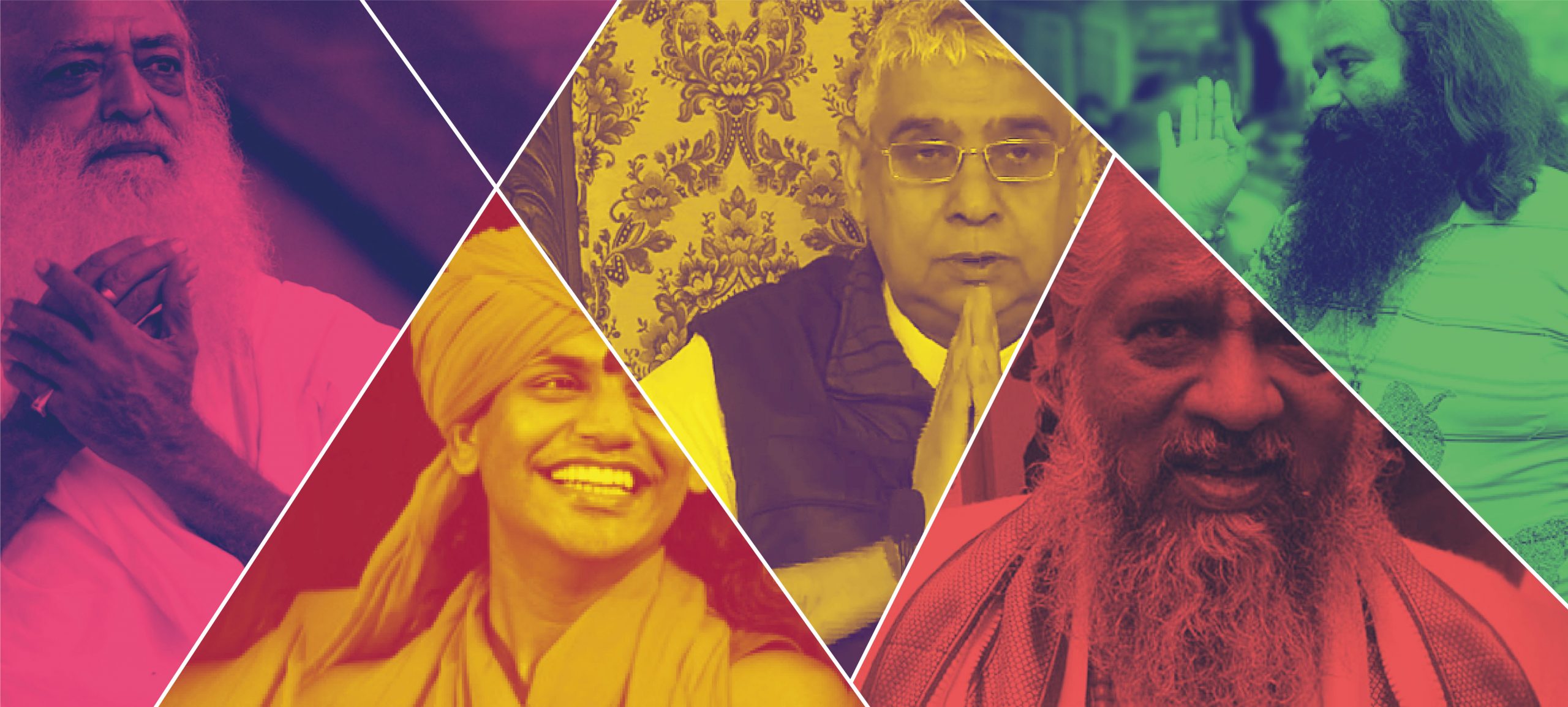
In August 2017, Gurmeet Ram Rahim the leader of Dera Sacha Sauda, was convicted to life imprisonment for raping two of his disciples. Just as Ram Rahim took over our timelines and imaginations- the pertinent question was: how did this man get millions of seemingly normal people to believe that spreading peace and equality involves rape, castration and violence?
Just like Ram Rahim, there are several self-styled godmen who are wrapped in controversies and have allegedly committed heinous crimes. These are a few infamous godmen who thought they were invincible until the law caught up with them.
Asaram Bapu
Asaram Bapu preached the existence of ‘One supreme conscious’ and had rape allegations levelled against him.

Swami Nithyananda
Swami Nithyananda is regarded as a spiritual leader and believed by his disciples to be a reincarnated deity.

He claimed that the video was morphed and denied being the man in the video. In 2012, he was accused of rape by an Indian born American citizen.
Sant Rampal
This so-called godman claims to be a successor of Sant Kabir. He came into the spotlight after being charged with sedition, murder, attempt to murder and forgery.

Chandraswami
Chandraswami is best known for being the spiritual adviser of a former Prime Minister. He claimed to be able to read minds and cast spells on any individual.

Gurmeet Ram Rahim
This self-proclaimed godman headed the Dera Sacha Sauda sect since September 23, 1990. He fancies himself as the ‘rockstar guru’ as he is also a singer and actor. Anurag Tripathi’s book, Dera Sacha Sauda and Gurmeet Ram Rahim: A Decade-long Investigation, reveals the atrocities perpetrated by him.


5 Quotes every Friend-Zoned lover will relate to

Sudeep Nagarkar is the author of nine bestselling novels. She Friend-Zoned My Love, his latest and tenth book is about Apurv, an ordinary boy who charms everyone in his company and Amyra- a beautiful and popular girl who leads a flawless life. A chance encounter with Amyra in the college canteen makes Apurv fall head over heels for her but it isn’t long before he realizes that she is not interested in him, at least not in the way he wants her to be. Can Apurv get Amyra to change her mind before it’s too late, or will he be friend-zoned forever?
Have you ever fallen in love with someone who never loved you back and just wanted to stay friends? If you just said yes to this question then here are 5 quotes from the book, She Friend-Zoned My Love, that are a must read for you!


Life for the Under-privileged During Pre-partition India; Quotes from Mulk Raj Anand
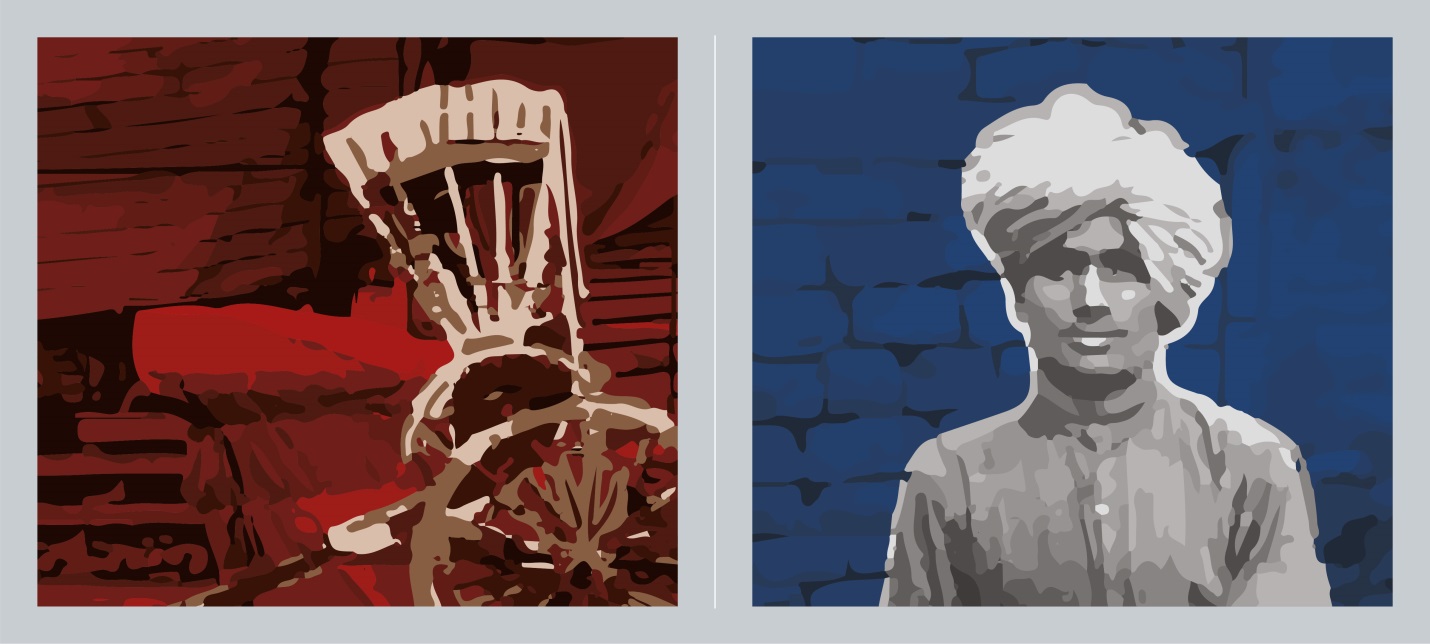
Mulk Raj Anand, one of the most highly regarded Indian novelists writing in English is best known for the impassioned social critique contained in his writings. His main concern has always been for “the creatures in the lower depths of Indian society who once were men and women: the rejected, who had no way to articulate their anguish against the oppressors.” His novels of humanism have been translated into several world languages.
Here we find 7 quotes from two of his popular works, Coolie and Untouchable that show the life for the underprivileged during pre-partition India.


Meet Private Detective; Arjun Arora

Ankush Saikia’s new read, More Bodies Will Fall is a tense and gripping thriller with an unforgettable detective –Arjun Arora – at its heart.
In the book, a girl from north-east India is murdered in Delhi. The main suspect is her ‘Indian’ boyfriend, but there isn’t enough evidence to prove his guilt. Amid a growing outcry about police neglect and racial injustice, detective Arjun Arora reluctantly takes on the case.
The search for answers embroils him in the dangerous new realities of the North-east – riven with strife and suffering – and also brings him face-to-face with an old enemy, culminating in an unexpected climax.
Let’s meet the detective, Arjun Arora:


6 Things we learned about Career Growth from Chandramouli Venkatesan's Catalyst

One of the most celebrated corporate leaders, Chandramouli Venkatesan has a commendable track record of over 25 years in the corporate business. A XLRI Jamshedpur alumnus, he began his career with Asian Paints in 1991 and worked in sales and marketing sectors , completing a successful decade. Following a brief stint in GE Capital, he joined Cadbury in 2005 where he worked until 2016, ensuring that the company becomes a household name in India. Currently, Venkatesan is the CEO for Pidilite Industries, responsible for creating and developing new business ventures for the company.
The corporate veteran penned down the book, Catalyst that identifies various kinds of stimuli that will enable you to win at your work place and everyday life.
Here are 6 things we learned about Career Growth from the Catalyst:
Your career will grow only as much as you are able to grow as an individual and professional.
 Time spent at work does not equate to experience
 Maximise learning cycles
 Improve personal productivity

The impact of your bosses
 A single poor decision on when to quit can have a very high impact on your long term success


The Beatles and their Time in India

“The Beatles arrived in Rishikesh in February 1968 and settled down in the Maharishi Mahesh Yogi Ashram to learn Transcendental Meditation.” Ajoy Bose, in his book, Across the Universe traces the path the Beatles took to India and the dramatic denouement of their sojourn at the Himalayan ashram. From the book, we extract quotes from the four Beatles and the author about the Beatles’ time meditating in Rishikesh.
The Maharishi (Mahesh Yogi) had effectively cocooned them from the hysteria and hype of their fans and the media. This was the first real opportunity the four had to escape their identity as the most famous rock band in the world. They grabbed the prospect of just enjoying themselves as ordinary folk in a remote, obscure location, far from the relentless daily rush and the fame and fortune that had overwhelmed them.
Of them all, George had the best time from his stay in India. Within a few days in the ashram, George said he was already feeling fabulous.

His great experience was linked to the breakthrough he had in his practice of transcendental meditation.

Paul, who was not all that enthusiastic about Transcendental Meditation when he came to India, was pleasantly surprised at what it could do with his mind. He recalled one particular session that he described as the best he had:

Even Ringo, who had faced a series of harrowing experiences after landing in India, from a pain in his arm to his driver losing his way and from having trouble with an officious doctor at the hospital to his car heating up on the road. To his credit, he did try to take them in his stride and, in the beginning, was actually starting to enjoy the laid-back atmosphere at the ashram.

He and his wife, Maureen however, had been the least enthusiastic about coming to Rishikesh leaving their two young children back in London. And despite him finding his “spiritual home” here, after nine days at the ashram, Ringo and his wife called it quits.
John’s experience was a breakthrough in terms of his song-writing without using drugs or other substances albeit only momentary. John would later recall with some amusement,

The songs did reflect the mess inside John’s mind at that time. They underlined the conflict between his lack of enthusiasm to continue as a Beatle and his fears of not knowing what to do if he wasn’t one.
His song ‘I’m So Tired’, for instance, is a lament over not being able to sleep for three weeks since he came to the ashram, tossing and turning in his bed, smoking like a chimney, as his inner demons tormented him. It revealed his tired mental frame and he would later praise it as one of his better songs from Rishikesh.

True, the boys may have snapped old personal bonds and sown the seeds of the unravelling of the and itself, yet Rishikesh only provided the breathing space for the Beatles to realize their own selves and move on from their past lives and identity as a band. With the Himalayas looming above and the Ganga flowing below, they had gained paradise and then lost it as the modern fairy tale of the four lads from Liverpool reached its closing stages.

7 Things To Know About K.R. Meera

K.R. Meera is a multi-award-winning writer and columnist who has published more than a dozen books including short stories, novels, and essays, winning some of the most prestigious literary prizes.
Her latest book, The Unseeing Idol of Light, is a haunting tale that explores love and loss, blindness and sight, obsession and suffering-and the poignant interconnections between them.
Here are 7 things you didn’t know about the esteemed author:


Eleven Different Ways to Love

People have been telling their love stories for thousands of years. It is the greatest common human experience. And yet, love stories coach us to believe that love is selective, somehow, that it can be boxed in and easily defined. Eleven Ways to Love, is a collection of eleven remarkable essays that widen the frame of reference: transgender romance; body image issues; race relations; disability; polyamory; class differences; queer love; long distance; caste; loneliness; the single life; the bad boy syndrome . . . and so much more.
Let’s have a look at 11 different ways to love from this book.
A Letter to My Lover(s) by Dhrubo Jyoti The Shade of You by Anushree Majumdar
 Size Matters by Sangeeta
 A Cross-Section of My Bad Boyfriends by Meenakshi Reddy Madhavan
 When New York Was Cold and I Was Lonely by Maroosha Muzaffar
 The One but Not the Only by D
 The Aristoprats by Shrayana Bhattacharya
 Where Are My Lesbians? by Sreshtha
 The Other Side of Loneliness by Preeti Vangani
 I Am Blind, so Is Love! by Nidhi Goyal
 The Smartphone Freed Me: Dating as a Trans Woman by Nadika Nadja

5 quotes from Unforgettable Poems in Gitanjali

Rabindranath Tagore received the Nobel Prize for Literature in 1913. He produced some sixty collections of verse, nearly a hundred short stories, several novels, plays, dance dramas, essays on religious, social and literary topics, and over 2500 songs, including the national anthems of India and Bangladesh.
Translated into English by William Radice , Gitanjali a collection of poems by Rabindranath Tagore known for their unmatched style of presentation, fresh poetic structure and spiritual musings.
Here are some of our favorite quotes from Gitanjali.


————————————————————————————————————————————————–
