




In Exile, Taslima Nasrin writes about the series of events leading to her ouster from India, her house arrest, and the anxious days she had to spend in the government safe house, beset by a scheming array of bureaucrats and ministers desperate to see her gone. Without a single political party, social organization or renowned personality by her side, she had been a lone, exiled, dissenting voice up against the entire state machinery with only her wits and determination at her disposal.
These seven quotes from the book give us a glimpse into her life in the seven month period in India.


Taslima Nasrin’s book Exile is a moving and shocking chronicle of her struggles in India over a period of five months, set against a rising tide of fundamentalism and intolerance that will resonate powerfully with the present socio-political scenario.

Category: Specials
The Tao of Life, Verse and Satire by Sanjeev Sanyal

Sanjeev Sanyal, bestselling history author of Land of the Seven Rivers, is currently the principal economic adviser to the Indian government. A Rhodes Scholar and an Eisenhower fellow, he has written extensively on economics, environmental conservation and urban issues.
His work takes him to many places and often leads to encounters with various colourful characters throughout India. You can meet them all in his latest book, Life Over Two Beers, slated to release this month marking his entry into the world of fiction and poetry.
————————————
By Sanjeev Sanyal
My latest book “Life over Two Beers” will hit the stores next week. Quite unlike my previous books, it is a collection of quirky short stories, some satirical, some with a twist in the end. And then there is the odd verse thrown in along the way. So, why this foray into the world of fiction and poetry?
It will come as some surprise to those who have read my non-fiction writings over the years that I began writing this book, in bits and pieces, a decade and a half ago. I was then a young economist working in financial markets, recently relocated to Singapore from Mumbai. My first child had just been born. Sitting in my study one hot and sunny Sunday afternoon, with the rock-band Era playing loudly in the background, I typed out my first short story on my company issue IBM Thinkpad. Nothing pre-meditated, it was just something that I wrote out just like that.
My profession as an economist requires routine writing of reports, articles and newspaper columns. However, over the next few years, I ended up typing a story here, a fragment of verse there. At some point, I had written out enough that I wondered if it could be published. So, when I first reached out to publishers circa 2005-6, it was to publish this book. The problem was that publishers were not too keen on it. As any editor or aspiring writer will tell you, it is very difficult to publish short fiction and almost impossible for poetry. The publishers persuaded me to write non-fiction. I am not complaining – it sent me on a happy journey and I will probably remain primarily a non-fiction writer. Nonetheless, the idea of publishing my short stories remained and I kept adding and updating the collection. Every time I changed laptops, I had to remember to transfer the file. Only four of my original set have found their way here but I am glad the book finally got published.
There are a several reasons that I wanted to publish this book. First, I have long felt that the art of short story writing needs to be revived. Till the middle of the 20th century, it was the dominant form of fiction writing and most well-known authors across the world practiced the art. However, by the 1970s, short fiction was replaced by the novel. Those who were once avid readers of short stories in magazines and other periodicals, I am told, moved on to television serials. As a result, the market dried up and short fiction became a poor cousin of the longer format.
I have never been convinced by this explanation. I like reading short fiction and I think others do too. People still read short stories by Tagore, Manto, Dahl, Hemingway, Doyle and Borges. Indeed, every era since the Panchatantra and the Arabian Nights has had its stories told simply and without the literary fuss of a full-fledged novel. Why not 21st century India?
The second motivation was to revive the art of satire. India has a long tradition of satire going back to ancient times. While it survives here and there in a few Indian languages (and in social media), it is sadly no longer a mainstream art form. Note that I distinguish here between first-order humor of comedy, which is alive and well, and the second-order humour of satire. Hindi and Bengali, till very recently, had a vibrant culture of satirical poetry. These seem to have somehow been replaced by the humor of comedy. Not quite the same thing.
I am a firm believer that no society can thrive unless it can occasionally mock itself. Hence, many of the stories in this collection, albeit not all, have an element of satire. I would like to clarify, nevertheless, that all the characters are fictional and any apparent similarity is merely due to the fact that satire, by its very nature, is based on a caricature of real world social mores.
The more avid readers will probably enjoy the many hidden layers and inside jokes in the collection. For instance, there are many direct and indirect allusions to my favourite authors. No prizes for guessing who inspired the cover but the reader will be amused to know that the artist Jit depicted himself in the cast of characters!
A more serious theme that run through the book is that of intellectual openness and social mobility in its many forms. India is currently experiencing unprecedented intellectual and social churn. Any depiction of early 21st century India needs to take this into account. Thus, many of the stories depict new entrants into social and intellectual spaces, and the responses of incumbents to this change. Rather than being unduly judgemental and moralistic, the stories sketch out the opportunism, self-doubt, snobbery, and need for validation that characterizes such a churning society.
I do no not wish to burden the general reader with all the above baggage. The book should be read purely for fun at the first instance. As for me, I am glad to have finally dragged it to the finishing line. After carrying around the manuscript for years, a full draft was done by end-2016. It should normally have been published in 2017 but the editing was delayed by a full year as I took up a challenging new job. So, now that it is finally in print, I feel oddly lighter and emptier at the same time.
—————–

Fierce Protagonists from a Fierce Voice

Rabindranath Tagore was a key figure of the Bengal Renaissance. He started writing at an early age and by the turn of the century had become a household name. In 1913 he was awarded the Nobel Prize for Literature and his verse collection, Gitanjali came to be known internationally. His works include novels; plays; essays on religious, social and literary topics; some sixty collections of verse; over a hundred short stories; and more than 2500 songs, including the national anthems of India and Bangladesh. Tagore’s eminence as India’s greatest modern poet remains unchallenged to this day.
Here are six quotes from his books, Chokher Bali and The Home and The World that show how brave and fierce Tagore’s protagonists were.
———————————–


 —————————–

5 Unbelievable Facts about the Tax Havens of the Rich and the Mighty

Paranjoy Guha Thakurta is a senior journalist. Till recently, he was the editor of the Economic and Political Weekly. Shinzani Jain is an independent researcher and law graduate from Indian Society Law College, Pune. This book, Thin Dividing Line: India, Mauritius and Global Illicit Financial Flows, looks at the India-Mauritius Double Taxation Avoidance Agreement in the global context of growing illicit financial flows.
Let’s look at 5 astounding facts about the tax havens.
——————————————————————–
In recent times, the governments of many developed and developing countries have been seeking to discourage the use of tax havens. One of the most talked-about such moves is the Base Erosion and Profit Shifting (BEPS) initiative of the Organization for Economic Cooperation and Development (OECD). The OECD is a grouping of some of the richest countries in the world. They also stated that there was ‘no economic justification’ for tax havens’ existence, as they diminished the power of governments to collect taxes.
 The Tax Free Tour, a documentary by Marije Meerman, that covers useful ground, begins by detailing the round-tripping of funds carried out by multinational companies such as Apple. The figures are startling: James S. Henry is interviewed in the film about the details of Apple’s evasion of taxes, and he claims that it sells 20 million iPads a year for about $500 each (which comes to about $10 billion) while paying Chinese labourers $800 million to make these products.
 It is also common knowledge that Mauritius hosts several distinguished lawyers and accountants from India itself who help set up shell companies and hide the trail of beneficial ownership through processes known as ‘layering’ and round-tripping, wherein illicit funds are transmitted through multiple tax havens and ultimately the black money thus gets ‘laundered’ white.
 On 2 October 2013, the Federal Bureau of Investigation (FBI) of the United States had arrested Ulbricht, who went by the moniker Dread Pirate Roberts. He was the elusive creator and proprietor of a huge illegal online market Silk Road. Ulbricht was a small part of a much larger network of a shadow economy. On the other hand, take the case of Jack Ma, said to be one of the richest men in the world and his brainchild, the Alibaba corporate empire. In May 2016, the net worth of the Alibaba group was $23.3 billion. His corporate conglomerate was able to become gigantic thanks to the ‘ease of doing business’ out of the Cayman Islands, a 264-sq. km British overseas territory comprising three islands located in the western Caribbean Sea south of Cuba.


Ramachandra Guha and some thoughts on Politics in India

Now based in Bangalore, Ramachandra Guha has previously taught at Yale, Stanford, Oslo, and the London School of Economics. His books include a collection of essays, Patriots and Partisans, Savaging the Civilized: Verrier Elwin, His Tribals, and India (1999) and Democrats and Dissenters. Guha’s awards include the Leopold-Hidy Prize of the American Society of Environmental History, the Sahitya Akademi Award, and the Padma Bhushan. His books and essays have been translated into more than twenty languages. In 2008, and again in 2013, Guha featured on Prospect Magazine’s list of the world’s most influential thinkers.
On his 60th birthday, we celebrate this iconic writer with his polemic quotes on Politics & India.
——————————


Writing We That Are Young by Preti Taneja

Preti Taneja was born and grew up in the UK. She teaches writing in prisons and universities, and has worked with youth charities and in conflict and post conflict zones on minority and cultural rights. She is the co-founder of ERA Films, and of Visual Verse, the anthology of art and words. We That Are Young is her debut novel. It has been longlisted for the Desmond Elliot Prize and the Jhalak Prize, and shortlisted for the Republic of Consciousness Prize.
————————————
I arrived in New Delhi in January 2012, carrying my battered copy of Shakespeare’s King Lear and 300 A4 pages of double spaced text: the first drafts of Jivan and Gargi, and half of the Radha sections of something called We That Are Young. The writing wasn’t wonderful, I remember feeling that. It was hard to capture the different voices of my characters from London. I worked a lot in my local library. I felt like a ‘writer’ there, or at least, one in training. But I wasn’t really convincing myself on the page. Shakespeare’s language and plot were a magnetic puzzle – I wanted to work with them but not give in to them. The book had to stand on its own terms.
We That Are Young was never going to be a realist novel if it was to cleave to an epic play that is set in a no-place, a no-time. I wanted the book to be a dark carnival, hyper-real, with a polyphonic structure and modernist sensibility in the lines. India as a setting can handle elements of the real and the mythological, the psychoanalytical tradition of the West and a circular sense of time in ways other settings can’t. Yes, I had high hopes – but working from books and memory in England, it read like the first draft it clearly was.
The stakes were high: I had lost my mother to cancer when I was 28. I cared for her, for almost eight years with my family, till she died. What should I do with the inheritance she left me? It included courage, an example of sacrifice and risk-taking, as well as the security she had worked all her life to leave me. Two years after, I had got a job I loved, reporting on minority rights abuses for an NGO. I had the chance to travel and met people who trusted me with their stories. All of us sharply aware of the gulf between those who have freedom of movement, freedom of speech and those who do not, and the responsibilities that brings. I had a regular sandwich and coffee order in a nearby café. I commuted against the tide of city bankers streaming out of Liverpool Street station. Then I turned 30, and I still wasn’t doing the thing I had said I wanted to do all my life. Write fiction. I knew something had to change.
I enrolled on a night-class on the far side of the city, reached via the stopping Circle Line, East to West. I got a portfolio of stories together, and applied for a part-time Master’s in Creative Writing, which I could study for around my job. Two years later, I got my degree. I knew I wanted to carry on teaching and writing. I handed in my notice at work. The next day the email came: I had won full funding for a PhD. To work on We That Are Young.
Four months in, and that same instinct to jump made me pack up my life. I found a place to rent in Delhi via endless online searches, and paid the deposit without actually seeing it first. Then I told my Delhi family and friends that I was coming to write a book based on Shakespeare, set in India and was going to live in a rental for as long as I could afford it. ‘Whatever,’ they said. ‘Just come.’
I rediscovered my second city, the place I’ve been coming to since I was a child, on new terms. There was a fermenting energy; there was creativity; there was so much rage. There were important books I could not get in the UK about Indian politics, men’s fashion, women’s rights. I kept notebooks – there ended up being 15 in total – and made daily cuttings from national newspapers and magazines. Journalistic training learned crossing borders and working in different parts of the world and (in an early, misguided incarnation) as a very junior financial reporter now got me into the back kitchens of hotels, expensive parties, the outskirts of the city. Everyone wanted to tell me about what was wrong with India. Corruption, inequality, misogyny, ‘tradition,’ pollution, caste, expansion, city planning, waste, child abuse, the building of the metro, politics, safety. There was also a forward momentum among certain classes and in the media: long held injustices were being highlighted; new possibilities for equality were being claimed. So many people I met were working, had been working for years for this.
I would write every day. The rest of Radha, all of Jeet and most of Sita was drafted as the heat became brighter. Against family advice I travelled to Goa in April. I got sick from the humidity and had to come back early. And then, finally I went to Srinagar. A person I will never be able to thank enough, took me, silent and wrapped in shawls, into parts of the city he said that even most Srinagar people don’t go to. He introduced me to artisans, traders, chefs who talked to me about their work, and their daily routines, their hopes for their children. I stopped writing and just listened. I celebrated my 35th birthday with my partner on a houseboat overlooking the Dal: the stay was a gift from my godmother, my mother’s dearest friend.
I don’t believe writers think about their own process – how, when, what with – until they are asked to. For me, there were some simple imperatives. I was 35. I had taken a pay cut and tried to make a career change. I had to finish the book, get it published, and from that, apply for teaching jobs, perhaps write the next thing – that was the plan. Finishing became a kind of obsession, driven by the PhD submission deadline, funding running out, the need to sell the novel and seek paid work. With the 15 notebooks, press cuttings and a stack of other people’s novels and non-fiction from across India and the diaspora, I returned to my childhood home in June 2012. One more house move, and I finished the first full draft of my manuscript by December. Then my agent sent it out and I submitted my PhD.
I got the PhD. But, We That Are Young found no favour with London or Delhi publishing. The editors said, ‘ambitious,’ ‘clever,’ ‘brilliant idea’ and ‘powerful.’ There was, ‘too close to the bone’ and variations on, ‘Shakespeare? Really?’ Everyone, I mean, everyone said, ‘no.’
I could still research and teach, I thought. I could try for an academic career, if fiction was not to be. I began to focus on that. But writing We That Are Young was like being possessed by five crazy characters: they would not leave me alone. I had to keep working on the book. I believed that the India I had seen, and the way people told me it was changing, the way the world was changing, had to be expressed in fiction, now, and I still wanted to try to do it. When I started the novel, there was no Trump, no Brexit. It was the dog days of Congress in India. It was before a brutal rape on a Delhi bus became world news. But anyone really looking could see what was coming. The rise of the right-wing in different parts of the world. Wave after wave of protests against corruption, war, and for social justice were taking place. There was Rhodes Must Fall, and calls for the decolonisation of public spaces and curricula. People were documenting it via film and non-fiction. Some fiction writers were also getting through.
When I finally sold the fourth complete draft of my manuscript to the UK independent publisher Galley Beggar Press, it was January 2016.
There’s a lot more to this story, including the people close to me, who wouldn’t let me give up on my endless editing. One round of which was done on a rainy holiday in Wales, where I sat in my Tshirt, with my laptop in the hotel bath, pulling an all-nighter while my long-suffering partner slept next door. That was the version before Galley Beggar said yes. Then there was even more editing, intricate line stuff – it was thrilling but exhausting for all of us, and it went to the wire – it was finished just 10 days before the book actually became a real object in a warehouse, waiting to go out.
Writing is hard, editing is hard. It all feels less like creation, more like excavation. I often read as I write – returning to find segments of non-fiction that feed my stories, or fragments of poetry and other peoples’ writing – the kind that makes me work even harder at my own. We That Are Young is now in the bookshops and online, on people’s shelves and TBR piles, maybe in their bathrooms or beach bags. In India, its beautiful Penguin Random House hand-painted cover suggests water, hair, mehndi, bloodlines. My five crazy characters are partying without me – I saw them in the airport bookshop in Kolkata, in Delhi, Jaipur, in Bangalore; people send me pictures of them in Glasgow, Oxford, Norwich and Mumbai. They are talked about on YouTube and in blogs, just as they are in the world of the book. It’s meta. As Radha might say.
We That Are Young ends with a beginning, placing whatever might come next in the reader’s hands. Since I finished it, real world events, some positive – the #metoo and #TimesUp campaigns, the steps towards decriminalising gay sex (again), ongoing protests against child rape; some horrific – including those headline cases of sexual violence, water running out in cities, toxic smog, the rise of the religious right and its fascist ideology, go on: ‘machinations, hollowness, treachery, and all ruinous disorders…’ as Gloucester puts it, in King Lear.
Meanwhile, I am meant to be working on the next thing. I don’t know much about that, but I know the process won’t change. It will start with reading. It always has.
—————-
Author Portrait: Rory O’Bryen
—————–

In Conversation with Kim Wagner – The Author of The Skull of Alum Bheg
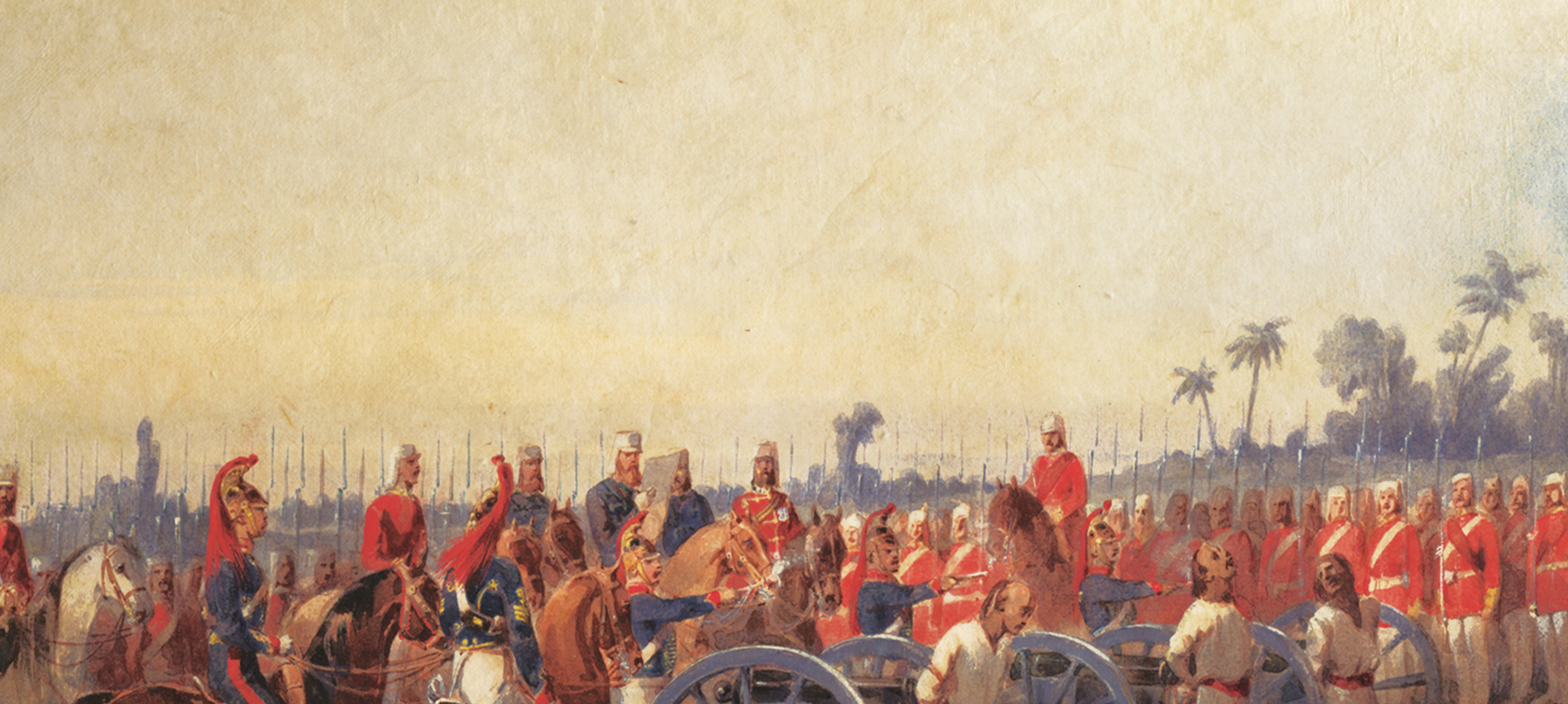
In his latest book, The Skull of Alum Bheg, author Kim Wagner explores the mutiny of 1857 and the shadows of colonial rule in India. Spurred by an intriguing find, Wagner’s elegant narrative uses the story of one man’s death and skull to excavate the underbelly of Britain’s nineteenth century empire.
Here’s an exclusive interview with Kim A. Wagner, where the author shares his opinion on British Imperialism and what inspired him to write the book – The Skull of Alum Bheg.
_______________________________________________________________________
1. What was your inspiration behind writing The Skull of Alum Bheg?
My starting point was obviously the story of the skull itself, as outlined in the brief note that had been found inside of it back in 1963. But in trying to write about the events of the Indian Uprising from the perspective of a single – and in many ways an insignificant – individual, I was very much inspired by the classics of micro-history and especially the work of the likes of Carlo Ginzburg and Natalie Zemon Davis. The challenge I was facing was the fact that while I had the remains of Alum Bheg, I never ‘found’ him in the historical records, and so I had to write the book by tracing an outline of this individual, trying to reconstruct the world he inhabited and the people who surrounded him. The subtitle is obviously a nod to Gautam Bhadra’s classic essay, ‘Four Rebels of 1857’, first published in Subaltern Studies IV in 1985.
2. Tell us something about your writing process.
For this book, I wrote what I thought of as different ‘layers’ or different ‘voices’, in sequence, and only at the end did I put them together into one complete text. So I wrote the narrative of the Scottish and American missionaries first, then that of Alum Bheg and the sepoys, and finally the background and analysis. It was a very different way of writing from what I am used to, and you only know whether the plan you have in your head actually works once you put it all together right at the end. I am also not very economic with words – for every 10.000 words that I write, I will have produced three times that in the form of notes and drafts of paragraphs in varying stages. It is a time-consuming and cumbersome process, which leaves my computer littered with orphan files, but it works for me.
3. What was the most intriguing facet of colonial India you came across while researching for your book?
When you take a micro-historical approach, the grand narratives come apart at the seams and you begin seeing new and intriguing details. It was interesting to look at the Indian Uprising in a place like Punjab, where the sepoys of the Bengal Army were invaders as much as the British were. When the outbreak eventually did happen at Sialkot, where Alum Bheg’s regiment was stationed, it was accordingly a very different type of mutiny, compared to, for instance, Meerut or Delhi, where most of the local population joined the sepoys. It was also fascinating to see how local dynamics shaped the violence, and personal grievances and relationships played a large role during the chaos of the outbreak. I’ve never been able to adequately explain why some Indian servants would lay down their lives for the sahibs and memsahibs, while others readily stabbed them in the back. Sometimes new insights also mean new questions to be answered.
4. Victorians’ had a fetish for collecting and exhibiting body parts. Are there some other such instances you can share with us?
I have previously worked on the collecting of skulls of so-called ‘Thugs’ by phrenologists in the 1830s, but that was just the beginning of a veritable obsession with skulls. In the final chapter of the book, I describe some of the later examples from the British Empire: Following the Battle of Omdurman in 1898, for instance, General Kitchener had the body of the Mahdi disinterred and the skull was kept, which later caused a scandal. The same happened in South Africa where the heads of tribal leaders, such as Luka Jantje or Bambhata, were cut off and either used for identification or kept as private souvenirs. It is often assumed that there was a clear-cut distinction between the ‘rational’ collection of scientific specimens and the ‘irrational’ taking of war-trophies – in practice, however, such distinctions are often unsustainable
5. Finally, if in a line you had to summarize British imperialism in India, how would you do that?
Despite the conventional narrative of cultural expertise and liberal governance, British rule in India was defined by a lack of comprehension concerning local grievances and anti-colonial sentiments, and as a result prone to panic and the use of exemplary violence.

Mother Earth, Sister Seed: 5 Facts De-mystifying the Old Ways
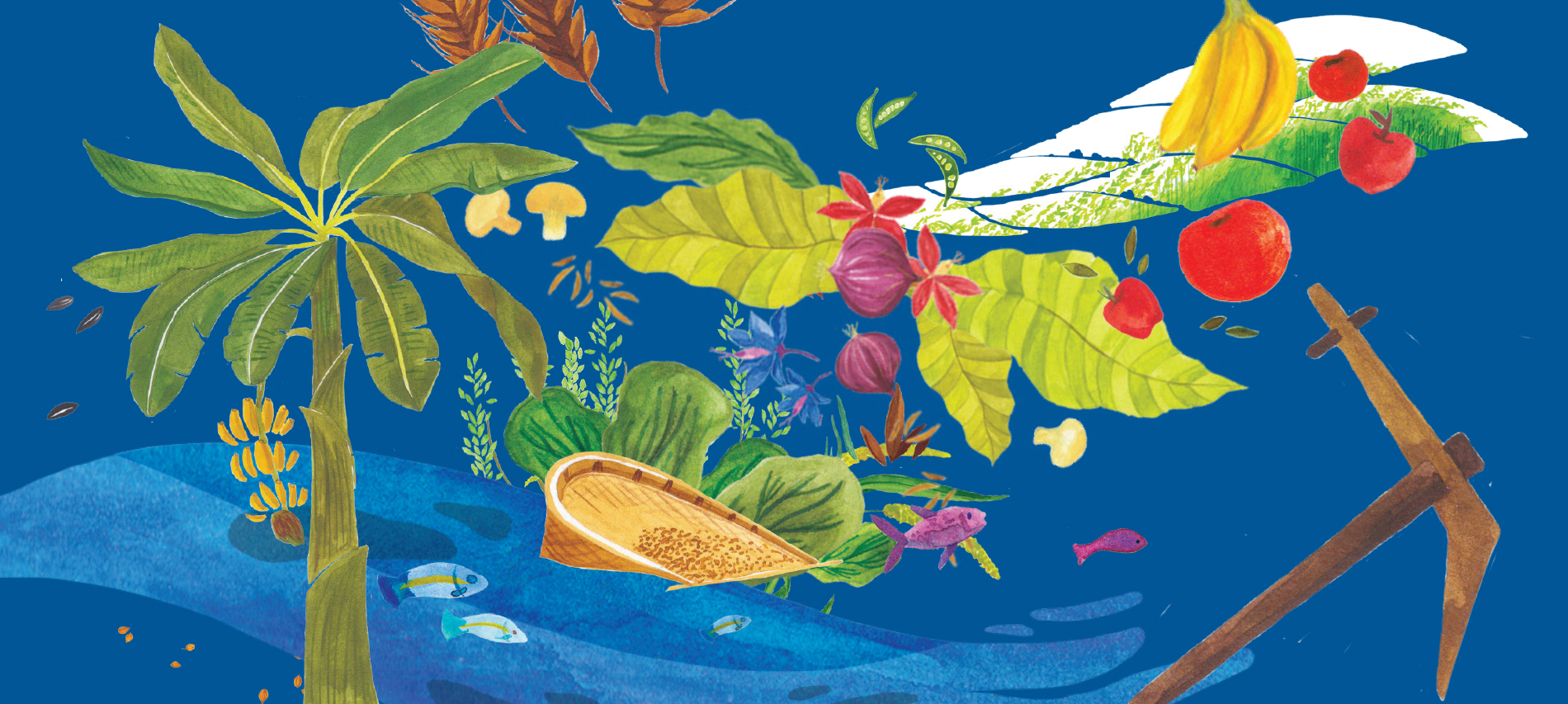
Lathika George is a writer, landscape designer, environmentalist and organic gardener. She has published articles on food, design, travel, gardening and the environment in InsideOutside, Architectural Digest, Food 52, Condé Nast Traveler, The Hindu’s BLink. In Mother Earth, Sister Seed, she looks at India’s traditional agricultural communities and the changes-some good, some not-that good, modernization and urbanization have wrought.
Here are a few facts from the book de-mystifying the old ways.
————————–


Author Nanditha Krishna on the close relationship between Hinduism and Nature

There is a close symbiotic relationship between Hinduism and Nature. The basis of Hindu culture is dharma or righteousness, incorporating duty, cosmic law and justice. Every person must act for the general welfare of the earth, humanity, all creation and all aspects of life. Dharma is meant for the well-being of all living creatures. The verses of the Vedas express a deep sense of communion of man with god. Nature is a friend, revered as a mother, obeyed as a father and nurtured as a beloved child. In Vedic literature, all of nature was, in some way, divine, part of an indivisible life force uniting the world of humans, animals and plants.
Five thousand years ago, the Vedic sages showed a clear appreciation of the natural world and its ecology. There is a hymn to the rivers (Nadistuti Sukta) in the Rig Veda and a hymn to the earth (Prithvi Sukta) in the Atharva Veda. Throughout the Vedas there is a deep respect for life which is an important manifestation and expression of the gods. The need to protect and conserve biological diversity is exemplified in the representation of Shiva, Parvati, their two sons Karttikeya and Ganesha and their vahanas or vehicles – bull, lion, peacock and mouse respectively – who live in close harmony.
There is a very strong and intimate relationship between the biophysical ecosystem and economic institutions which are held together by cultural relations. Hinduism has a definite code of environmental ethics and humans may not consider themselves above nature, nor can they claim to rule over other forms of life. Every aspect of nature is sacred for the Indic religions: forests and groves, gardens, rivers and other waterbodies, plants and seeds, animals, mountains and pilgrimage centres. The sacred is still visible in modern India. All creation is a manifestation of the divine with no dichotomy between humanity and divinity. Religious practices are influenced by local environmental and festivals coincide with a natural phenomenon.
I fell in love with sacred groves attached to Hindu temples, where not a twig may be broken and which are the remnants of ancient forests where sages lived in harmony with nature; with rivers that gush from the hills and meander through the land; with the sacred tanks attached to each temple, the sacred plants and the animals respected by my religion; with the awe-inspiring mountains which reach up to the skies and where the Gods live. Every festival reminds us of the importance of nature in our lives. As the author of Sacred Plants of India and Sacred Animals of India I explored the divine relationship between human beings, plants and animals, which are an essential part of every Hindu prayer.
“The Earth is my mother and I am her child,” says the hymn to the Earth in the Atharva Veda. The human ability to merge with nature was the measure of cultural evolution. Hinduism believes that the earth and all life forms – human, animal and plant – are a part of Divinity, each dependant on the other for sustenance and survival. All of nature must be treated with reverence and respect. If the forests, clean water and fresh air disappear, so will all life as we know it on earth.
——————————————————
A historian, environmentalist and writer based in Chennai, Nanditha Krishna has a PhD in Ancient Indian Culture from Bombay University. She has been a professor and research guide for the PhD programme of C.P.R. Institute of Indological Research, affiliated to the University of Madras. Her latest book, Hinduism and Nature delves into the religion’s deep respect for all life forms, the forests and trees, rivers and lakes, animals and mountains, which are all manifestations of divinity. 
Sujata Massey Like You Never Knew Her
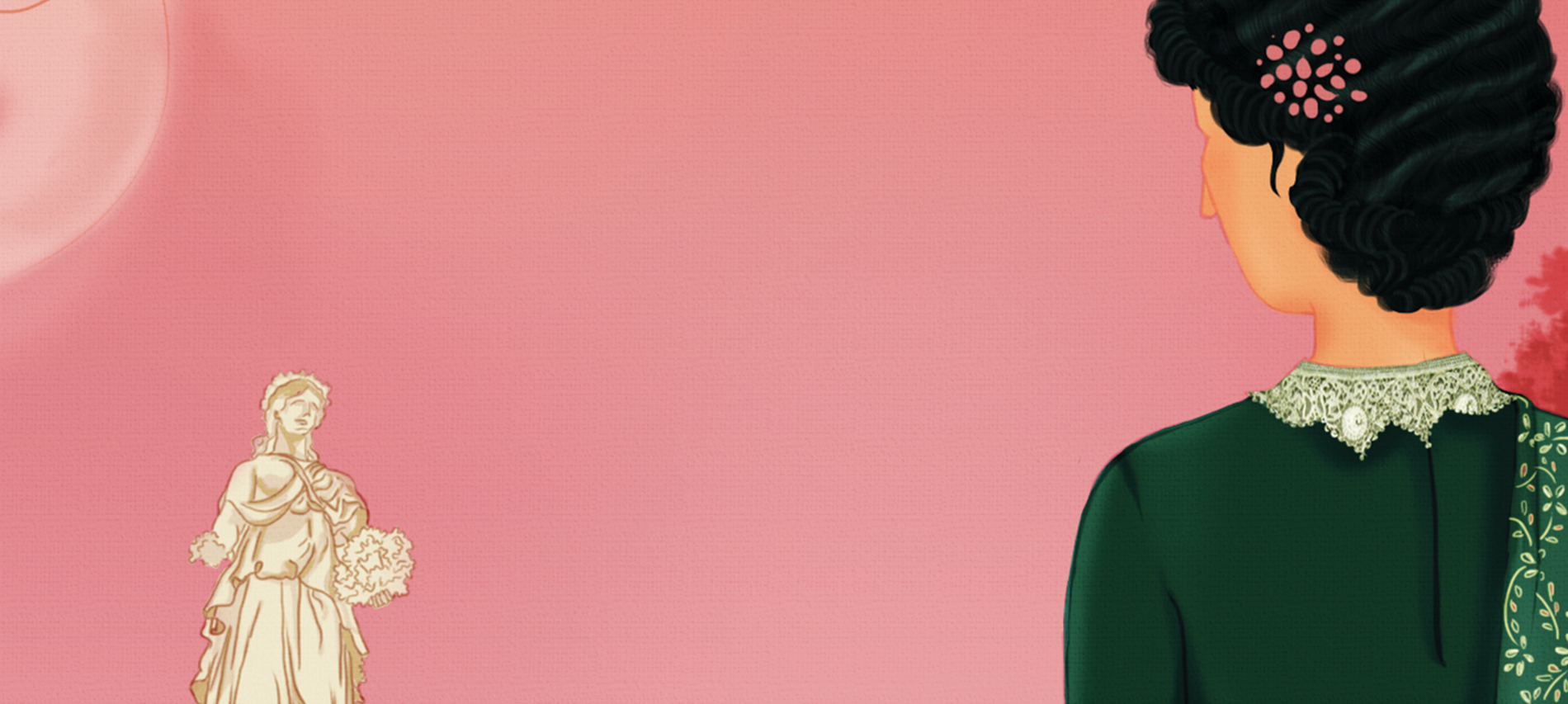
Mystery author Sujata Massey’s new book, A Murder on Malabar Hill, is based in 1921 Bombay. It is about a young, intrepid and intelligent girl with a tumultuous past, who joins her father’s prestigious law firm to become one of India’s first female lawyers.
The author holds a BA in Writing Seminars from John Hopkins University and started her working life as a features reporter for the Baltimore Evening Sun.
Here are six things you didn’t know about the author.


____
