




James Patterson is one of the best-known and biggest-selling writers of all time. His books have sold in excess of 365 million copies worldwide. In one of his most famous detective series (Alex Cross), we have the dark, brooding and handsome Alex Cross as the chief protagonist.
Let’s have a look at what makes Alex Cross such an expert sleuth.
1. A Troubled Past
2. Not the run-of-the-mill hero

3. Know the Enemy’s Mind

4. FBI’s favourite

5. Love=Loss

6. A Man of Sparse Taste

7. Keep your Friends close, Enemies closer

A born hawkshaw with the sharpest grey cells, Alex Cross can and will solve the murkiest crimes!
Category: Specials
5 Mantras To Keep Ideas Relevant

Gopalakrishnan has been a professional manager for forty-two years. He serves as an executive director of Tata Sons Ltd and as a director on the board of Tata Power, Tata Technologies, AkzoNobel India, Castrol India and ABP Pvt. Ltd. In this book, A Biography of Innovations: From Birth to Maturity, he explores how concepts turn into ideas, which then become prototypes, models and products.
Let’s look at 5 ways in which one can keep their ideas relevant.
———————-


 ——–
——–

How to Plot a Psychological Thriller; Juggi Bhasin spills the beans

Before one plots a novel, a story or in a macabre sense even a heist or a murder, one must think of the idea leading to the plot. The plot in a sense is the body but the idea is the life breath, the very soul of the thriller.
In a psychological thriller, the psychology or the innermost workings of the mind creates the idea and the ecosystem of the novel. The idea in a psychological novel is in that sense very different from horror, action or the romantic genre where a certain degree of physicality of action is required to flesh out the story.
I would even go to the extent and say that the psychological thriller is a kind of elite art form because the challenge here is to hold the reader’s attention by action that to a large extent takes place in the mind rather than the physical world. This is no easy task because we live in a day and age where there are hundreds of short and crisp distractions offered by television, cinema, the net and various other channels of entertainment and information.
The psychological thriller can only compete with these art forms if the writer is both a skilled practitioner of plot as well an astute observer of human behaviour. A psychological thriller in the hands of a skilled writer is like mining a vein full of inexhaustible precious material. The same novel in the hands of a writer who pretends to understand human behaviour is like jumping in the sea with lead weights.
So, the idea of the novel and a sharp analysis of human behaviour are good enough to get one started with the psychological thriller. The next step is to create a narrative that is sure but unusual, simple but impregnated with complex ideas and the love for thrill, probably at the end or the beginning of each chapter.
The trick in the narrative is to constantly intrigue the reader and force him to guess or speculate what will happen next.
This method is relatively simple in an action or adventure novel. But we are dealing with mind games in the psychological thriller and an abundance of action or violence or blood and gore takes the impact out of the psychological genre.
So then how to meet this challenge? There are three ways we can rise to the challenge.
We deploy in a chapter the right mix of conversation, description and imagery to build an atmosphere of intrigue, uncertainty and dread. We polish our craft to such a degree that we hold back more than what we reveal. This is the key to a great psychological thriller. We must resist excess. We have to be frugal with our analysis and hold back unnecessary display of emotion. We need to leave the reader asking for more after each chapter.
One way we achieve all this is by the usage of economy of words. Sometimes to depict complex emotion and thought processes of the mind we need not give lengthy explanations. We can simply describe mundane action. The trick is that this mundane action should be written in a way that it sets the reader on an edge.
To give an example a woman highly stressed by her husband’s behaviour goes to the kitchen and sets the kettle to boil to make some tea for herself. To convey her state of mind I would write about how she selects the tea leaves and immerses them in the boiling water. I would show a single lock of her hair carelessly clouding her face. I would depict her pinched and determined face as she moves in the kitchen soundlessly making the tea. And finally, I would show her fill a cup with tea, stir it a bit longer than necessary and then with great deliberation throw the tea in the sink and quietly walk out of the kitchen. I would not comment on the situation or speak of her state of mind. Her mundane actions in the kitchen would do the talking for me. They would convey her state of mind.
The craft of writing a psychological thriller in a sense mirrors many aspects of fine cinema. The chapter should be broken down into many scenes. Each scene should make the reader walk a tightrope. This can be achieved when the scene is shot with tension, mundane but sharp description and cutting-edge, crisp, short and pithy dialogues relevant to the scene.
Many people erroneously believe that psychological thriller writing should be in a sense arid, lifeless to convey the workings of the human mind. I disagree. I am a great believer in using imagery in narrative. Use of imagery need not be florid or over the top. It needs evoke a multiplicity of emotions. Again, to give an example we can show in a conventional image a dead body floating in the water which evokes a feeling of sadness or revulsion. But the better way would be to show a tattered shirt or a saree minus the body, floating across the water. Such an image creates doubt, horror, fear and so many different emotions.
The plotting of the psychological novel therefore incorporates myriad elements of dialogue, description and imagery but constantly our endeavour must be to hold back and keep the reader guessing.
A reviewer for my new book, Fear is the Key, commented (views available on Amazon) that long after she had read my book she kept thinking of various ‘scenes’ from the book which were almost like troubling images that refused to go away.
Without sounding immodest, I think that should be the endgame and end goal of the writer who attempts a psychological thriller. In a single word if we can get the reader somewhat disturbed and contemplative after reading the book then in a certain psychological sense we have touched some deep chords in the reader and we might have just succeeded in our endeavour of writing a book of the mind.
——————-
Juggi Bhasin was one of the first television journalists in India. He has worked with Doordarshan News and Lok Sabha Television as a reporter and anchor. Bhasin is the creator of the popular graphic novel Agent Rana, which appears in a major national daily.
His new book, Fear is the Key will continue to give you chills long after you have read it.

10 instances that define the evolution of Indian Cinema since 1947

India Since 1947: The Independent Years, takes us through the events, personalities and changes that have shaped the country in the seventy years since independence. Arranged chronologically, India since 1947 covers a wide range of topics, from agriculture, archaeology and the arts to science and technology, sports and wars, and everything else in between.
Let us read 10 interesting facts about the Indian Cinema since 1947.
——————————
1. 1949

2. 1959

3. 1969

4. 1971

5. 1986

6. 1988

7. 1995

8. 2000

9. 2003

10. 2004

—–

5 Times Leila Seth Struck A Perfect Balance Between the Home and the World
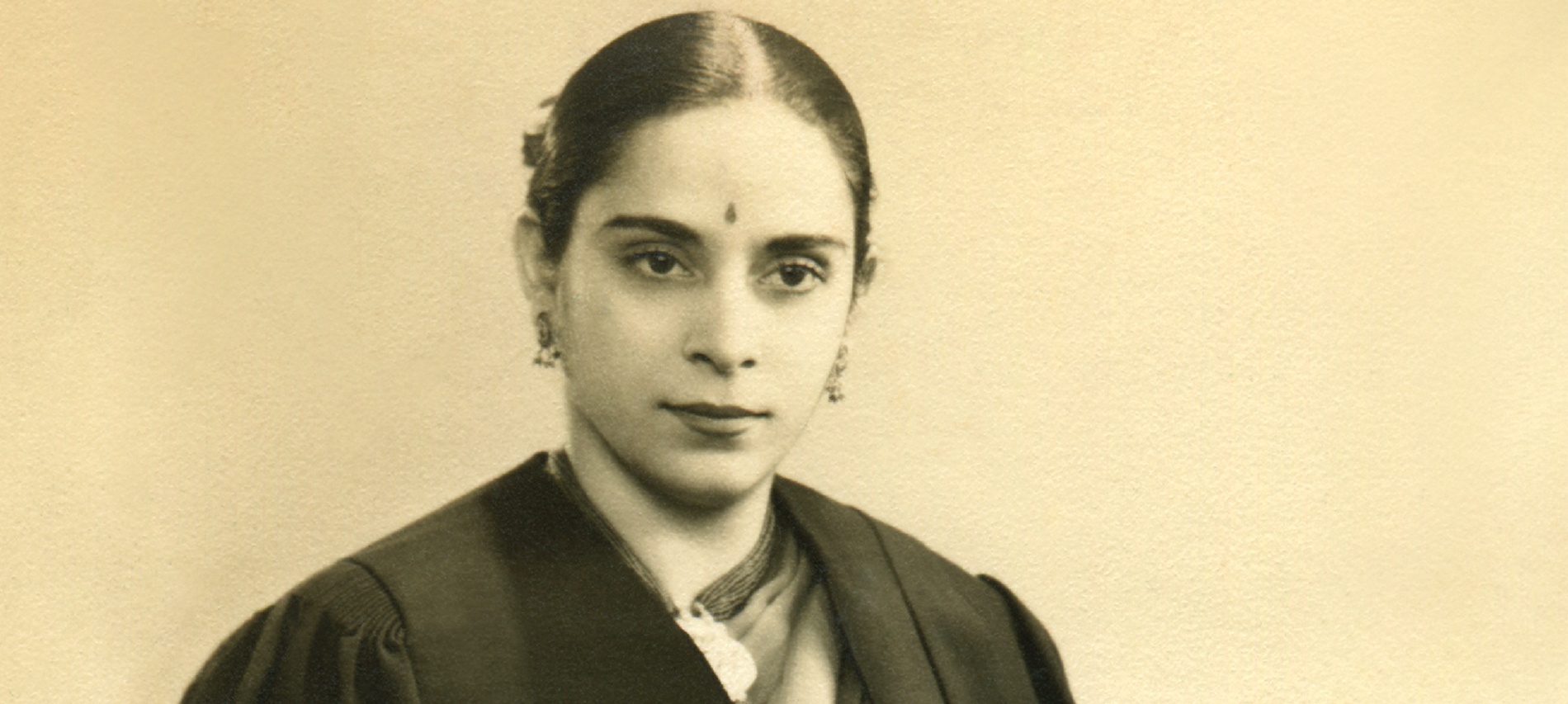
Leila Seth was the first woman judge of the Delhi High Court and the first woman to be a Chief Justice of a state in India. She was responsible for the report on Free and Compulsory Education of Children. In this autobiography, On Balance: An Autobiography, Leila talks about life’s joyous as well as its difficult moments.
Let’s look at 5 charming and often amusing vignettes from her life.
—————-


5 Ways in which The Skull of Alum Bheg made us rethink History
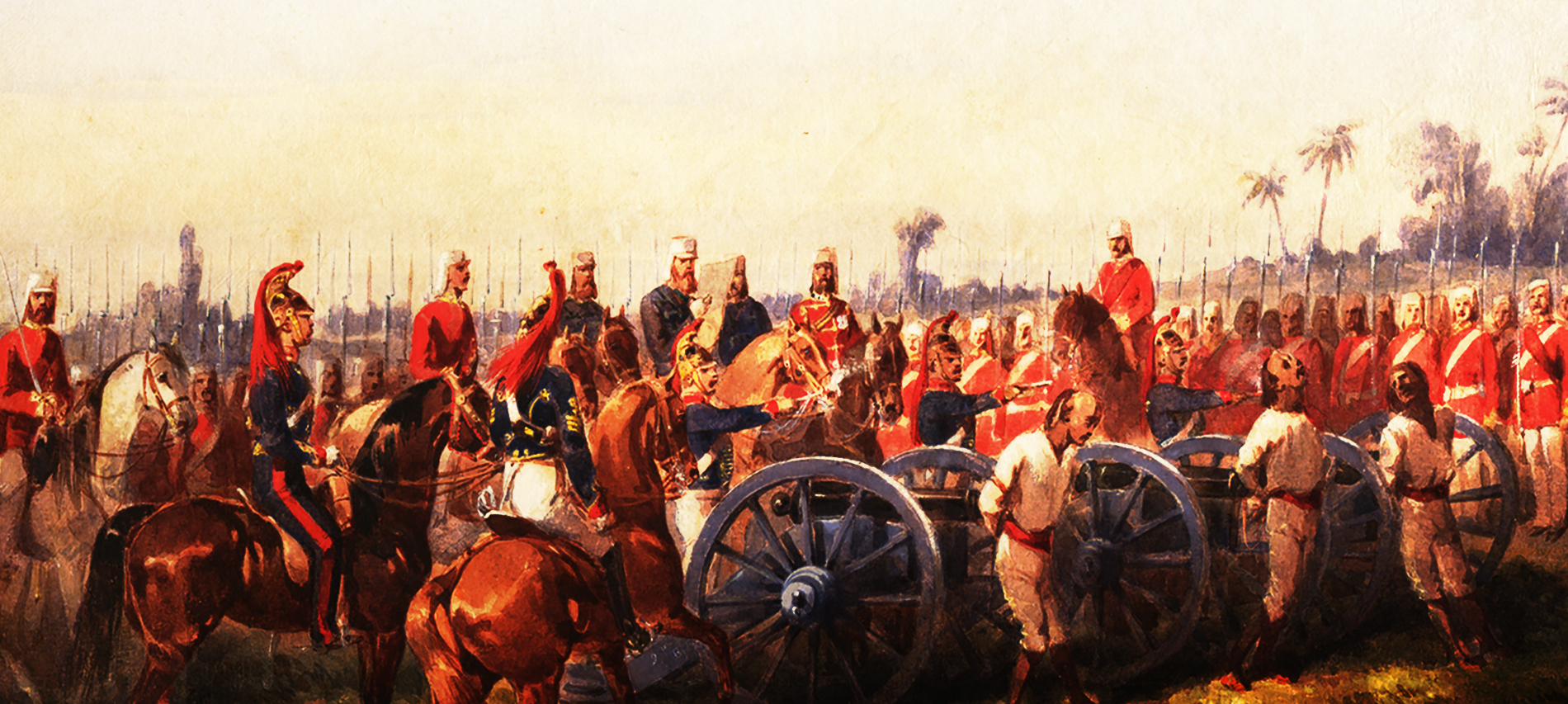
Kim A. Wagner is senior lecturer in British Imperial History, Queen Mary, University of London. He has written three previous books on Thuggees and on the 1857 Uprising. In his latest, The Skull of Alum Bheg: The Life and Death of a Rebel of 1857, he presents an intimate and vivid account of life and death in British India in the throes of the largest rebellion of the nineteenth century. Examining the colonial practice of collecting and exhibiting human remains, this book offers a critical assessment of British imperialism that speaks to contemporary debates about the legacies of Empire and the myth of the ‘Mutiny’.
Let’s go through these 5 facts about Alum Bheg that make us rethink history.


Demystifying the Spirited Queen of Chittor, Padmini

At the beginning of the fourteenth century, Ala-ud-Din Khilji became infatuated with the famed beauty of Rani Padmini. He arrives at her doorstep in Chittor and lays siege to her fort. Despite putting up a brave fight, when defeat came to her doorstep, she chose jauhar over dishonour.
Mridula Behari in ‘Padmini’ gives a voice to the famed queen and brings to life the atmosphere and intrigue of medieval Rajput courts.
Here are a few facts about the legendary queen.
 “Once an eminent astrologer had visited Tamragarh…Mother had invited the acharya to her chambers. On his arrival, she had asked him to carefully study the stars of the daughter of the Pratihar Pawar king and foretell her future. Upon hearing about the prophecy, little Padma had watched her mother beam as though her heart had turned into a heaven-kissing tower of joy and a vast ocean of love at the same time . . .”
 “There were already murmurs about her beauty, of the poetry that spun out of the lips of those who had seen her. There were those eager to see her and those who waited to scoff at the beauty they had only heard about. Yet, when the ghunghat was gently raised, it rendered everyone speechless.”
 “Veerbhan had thought that he could sweet talk Padmini into accepting the decision… What he saw of her was beyond his wildest imagination. Her eyes, her cheeks, her forehead turned red with indignation. Affronted by his brazen retort, she felt aggressive and resolute in her conviction.”
 “Her eyes were fixed on the tip of her nose. She stopped breathing. She appeared to be taking the agni samadhi, meditating in the lap of the leaping flames. More firewood was thrown in. With the ghee being poured in, the flames rose higher and higher, and her delicate, beautiful body became one with the fire.”
Aren’t these facts fascinating?

Know Lord Meghnad Desai
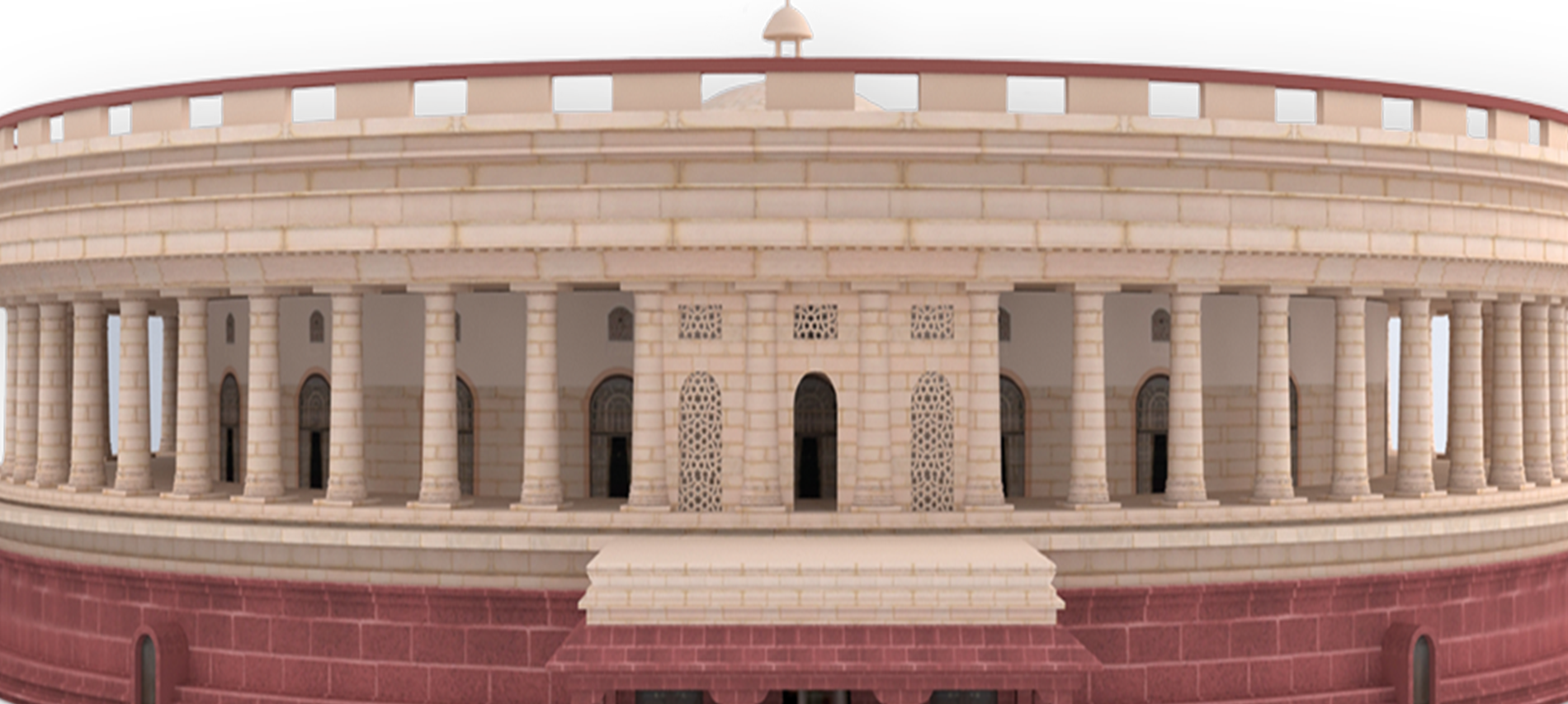
Meghnad Desai was born in Vadodara, Gujarat and is now an active member of the British Labour Party since 1971. He was made Lord Desai of St Clement Danes in 1991 and awarded the Bharatiya Pravasi Puraskar in 2004 and the Padma Bhushan in 2008.
His latest book, ‘The Raisina Model: Indian Democracy at 70’ reflects on Indian democracy as it completes seventy years of colourful, eventful and energetic parliamentary existence.


————–

5 lines from literature that go beyond ‘I love you’

Since time immemorial, the most famed couples of literature have used the three magical words, “I Love You” to express their deepest sentiments. However, there are some that have found a way beyond.
Here, we look at five such quotes which expresses love in an equally beautiful way.


 ——————–

Meet the characters from Fear is the Key

In Juggi Bhasin’s new title, Fear is the Key, Simone, fiancée-to-be to Rahul, founder of a digital infotainment site, goes missing. As all investigations come to naught, Rahul takes matters into his own hands and soon uncovers the twisted, bizarre and utterly unbelievable truth.
Let’s meet the three main characters of Juggi Bhasin’s gripping new thriller, Fear is the Key.
Rahul Abhyankar

Suhel Bagga

Simone

Atypical characters and a fast-paced, mind numbing plot; Fear is the Key has to be your must read thriller this month!
