




Novoneel Chakraborty is a master when it comes to romance thrillers. His books A Thing beyond Forever and That Kiss in the Rain have been appreciated by thousands all over the country. They have also appeared in numerous bestsellers’ lists at different points in time since their releases.
Novoneel is back with another beguiling tale of dark romance and thrill, Forever is a Lie.
Here are seven quotes from the book that will send a chill down your spine.


Intrigued? Get your copy of Novoneel Chakraborty’s Forever is a Lie right now!

Category: Specials
Ten Priorities India Should Focus On

Bimal Jalan had a close view of financial governance while he served as Union Finance Secretary and Governor of the Reserve Bank of India. Drawing on his vast experience he compares two distinct periods: 1980–2000 and 2000–15, and examines the transition India has made in the last four decades from a strictly regulated, slow-growth state enterprise to one of the fastest-growing economies in the world.
In his latest book, India: Priorities for the future he lists out few areas India needs to pay attention to.
Here is a list of ten of those priorities:
One of the foremost priorities regarding financial governance

Priority for the banking sector

Another reform in the financial sector that the India has to bring about

The RBI has to keep working with financial experts to develop procedure for the debt markets to grow

The outcomes of the present schemes in terms of actual benefits is pretty low

Performance reviews of a ministry will lead to better execution of policies

Red tapism needs to be done away with

Outsourcing to different agencies reduces petty corruption and delays

An urgent political reform is to speed up investigations of persons who are in political parties

An utmost priority lies in making the states accountable for policy execution than the Centre

Which priority according to you should be the India’s topmost priority? Tell us.

In Conversation with Osama Siddique
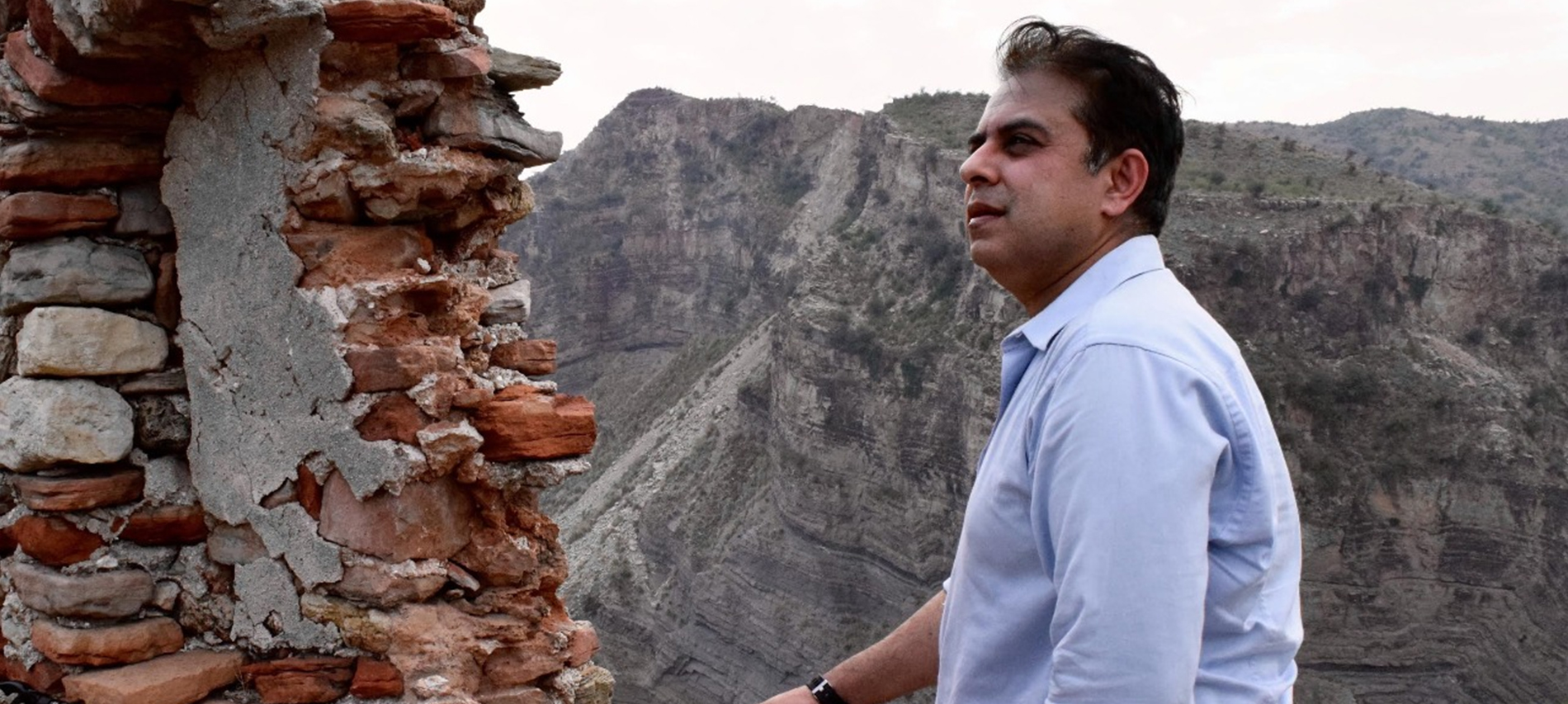
Osama Siddique has been a Rhodes scholar at Oxford, a lawyer in New York and Lahore, a policy instructor in various countries. He is also a legal scholar, university teacher and reform consultant in Pakistan, and a successful doctoral candidate and visiting professor at Harvard Law School. His most recent book is an acclaimed and multiple award-winning critical legal history of postcolonial justice systems. We spoke to him about his debut novel Snuffing Out the Moon.
Below are the questions we asked him.
You are and have been a very successful lawyer and legal scholar. Why did you decide to write a novel?
There are many kinds of legal discourses of course that allow much room for critical expression. Quite apart from more conventional work, as a lawyer and an academic I have always been particularly intrigued by how law can be and is manipulated by the powerful against the disempowered. Regardless of which era we speak about what goes by the name of law has always been a strong weapon for those who can use it – for better or for worse. Indeed I have explored this theme in my legal scholarship. There are, however, certain limits on expression imposed by extant conventions of style, structure and methodology. Fiction on the other hand is a very vast, rich and multifarious terrain that provides tremendous flexibility and license to explore this and various additional themes that I dwell on in my novel – themes that I had always wanted to write about. Themes ranging, for instance, from ancient political landscapes to omens of impending evil to lives of petty criminality to literature as a weapon of protest to social media as a medium for hate mongering to environmental apartheids of the near future. Only fiction allows engagement with all this in one book. Such is its largesse. Hence the novel.
Why did you situate the book in these particular six epochs of time?
In large part because having blessed access to their archaeological sites and cultural artifacts I have been greatly fascinated by them since childhood. I continue to fondly visit them, read about them, live amidst them. Mohenjodaro also because it continues to be such an enticing enigma and unsolved mystery. The Gandharan civilization because it has left such an exquisite artistic and architectural imprint on the Pakistani landscape. Lahore – my beloved city – appears in three contiguous eras, which are all reflected in its hybrid culture and built heritage. And the near future is of course the source of tremendous curiosity and indeed concern to all of us – given the highly troubling times and the various political, environmental and civilizational crises that we currently face as humankind.
Somewhere in the book you say something like: “all eras are driven by the same hopes and fears and passions and we continue to make the same mistakes.” — Could you elaborate on this and also your concept of “time.”?
While one can surely detect evolution in various spheres of human endeavor – political structures, organized religion, modes of technology – it does occur to me that across the ages our fundamental aspirations and imperatives remain very closely aligned, if not identical. It is fascinating to think, for instance, how hope, fear, love, hate, dissent and the resulting conflicts drive people to act in such similar ways, regardless of whether we speak of today’s milieu or one of four thousand years ago, from whatever we know of that distant era. Naturally, it causes one to wonder whether we are caught up in a constant cycle of repetition. Civilizations come, flourish, decline and ultimately vanish. Whether time is linear or cyclical. Whether we are headed somewhere or will the wheel of time continue to turn and turn till one day our kind will simply be no more. That we will simply vanish. Without even a whimper, let alone a bang. Without any explanation, let alone an apology.
What are your thoughts on the concept of “evil”?
Evil is such a vital and fascinating concept in every religious and cultural tradition as well as manifest, however you define it, in so many human catastrophes through the ages. One of the most compelling questions remains whether evil is just another name for our baser instincts, distinct external influences that corrupt and corrode us and compel us to do abhorrable things, or an actual physical embodiment – a virtual devil. What causes us to indulge in devilry and why has humankind failed in putting a stop to murders, pogroms, genocides, travesties and wars. These questions provide a vital undercurrent to my overall narrative and evil manifests itself mysteriously and multifariously in the lives of the different characters. Quite apart from the more analytical dimensions there is also something very emotive, something very sinister and forbidding about the concept that impacts our senses in a remarkable manner. The fear and foreboding evoked by the concept of evil has been depicted so powerfully in many great pieces of literature and it has always been something that I also wanted to write about.
Your protagonists are non-conformists who dissent and then pay a price for it. Can you tell us more about choosing protagonists who are dissenters and the importance of dissent in human history?
Arguably, as critically as ever before in out history we face the challenges of curtailment and censorship of free thought and speech. What is also obvious is a globe-wide shift to harder governments, to despots, officially sanctioned histories, blind dogma and also now, alternative facts. The present epoch is as Orwellian as it can get. Meaningful dissent, therefore, is a precious but also much maligned virtue and hence all the more worthy of preservation. Mine is just one modest endeavor to underline how vital dissent is for societal sustenance and integrity. Even otherwise, dissenters make much more compelling and effective protagonists than conformists. Dissent has contributed tremendously to history and brought about significant turning points and breakthroughs in human thought and achievement. And yet the dissenters have often paid a tremendous personal price, which makes their entire endeavor all the more heroic. There is thus no way that I would have been tempted to choose protagonists who are not dissenters. Having said that those who habitually conform and capitulate are also curious in their own way. Perhaps in my next book if there is one.

5 Things You may not have Known about the Landmark Case that Led to the 1975 Emergency in India
The history of independent India changed forever on the night of June 25, 1975, as then Prime Minister, Indira Gandhi, declared a state of Emergency to be imposed on the nation for a period of 21 months.
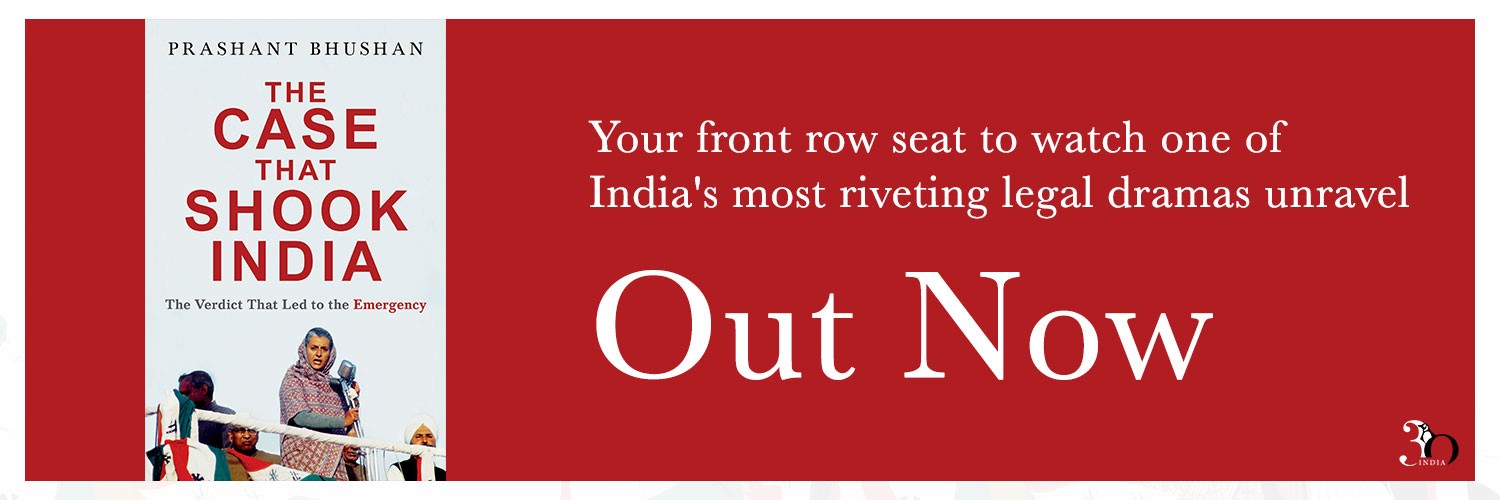
What acted as the catalyst to this infamous moment in Indian history was the watershed case of Indira Gandhi vs Raj Narain, which has been documented in detail by advocate Prashant Bhushan in his book The Case that Shook India.
Taking a peek into the book, here are five facts from The Case that Shook India that take us back in time to witness the most riveting courtroom drama in Indian history from front row seats.
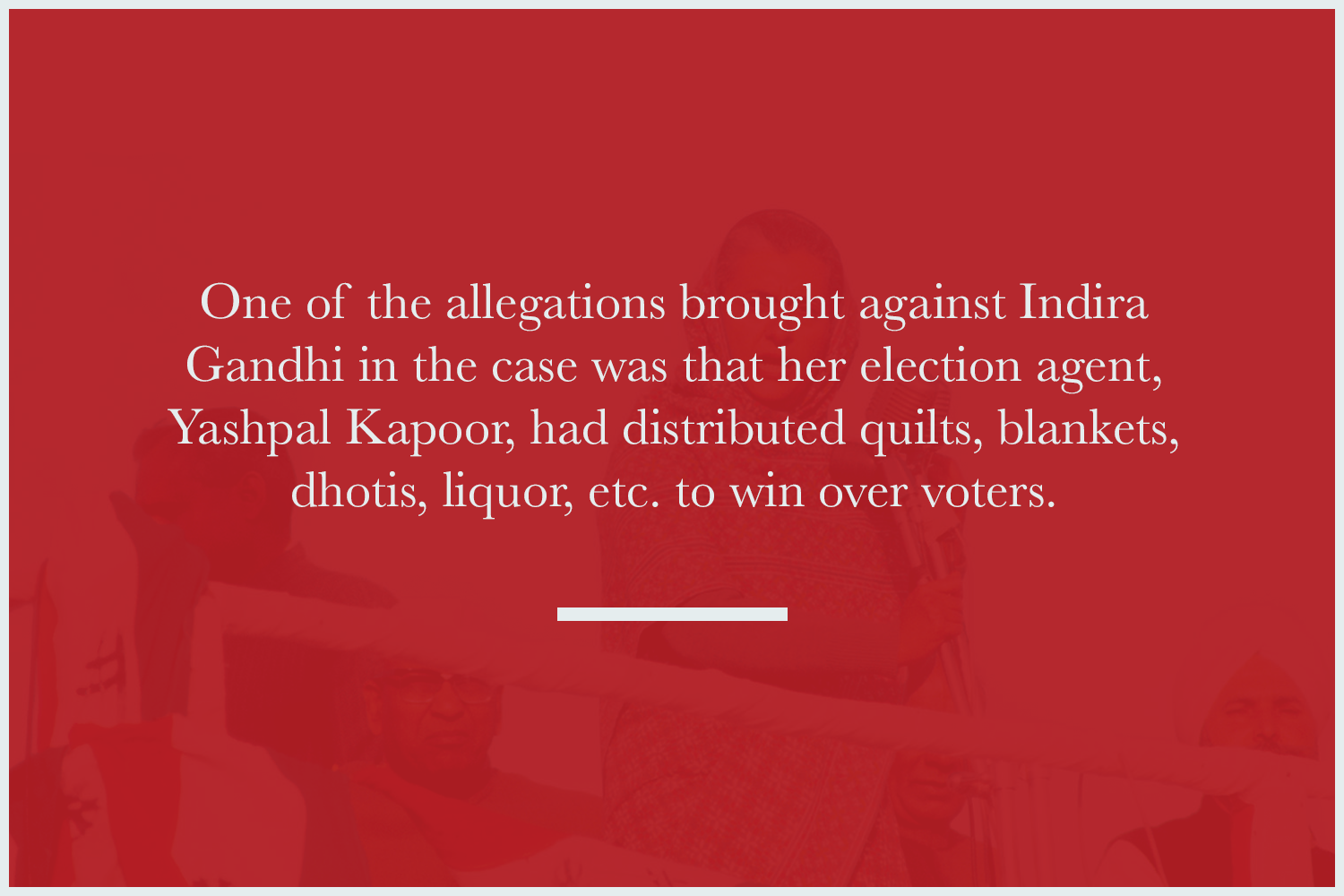
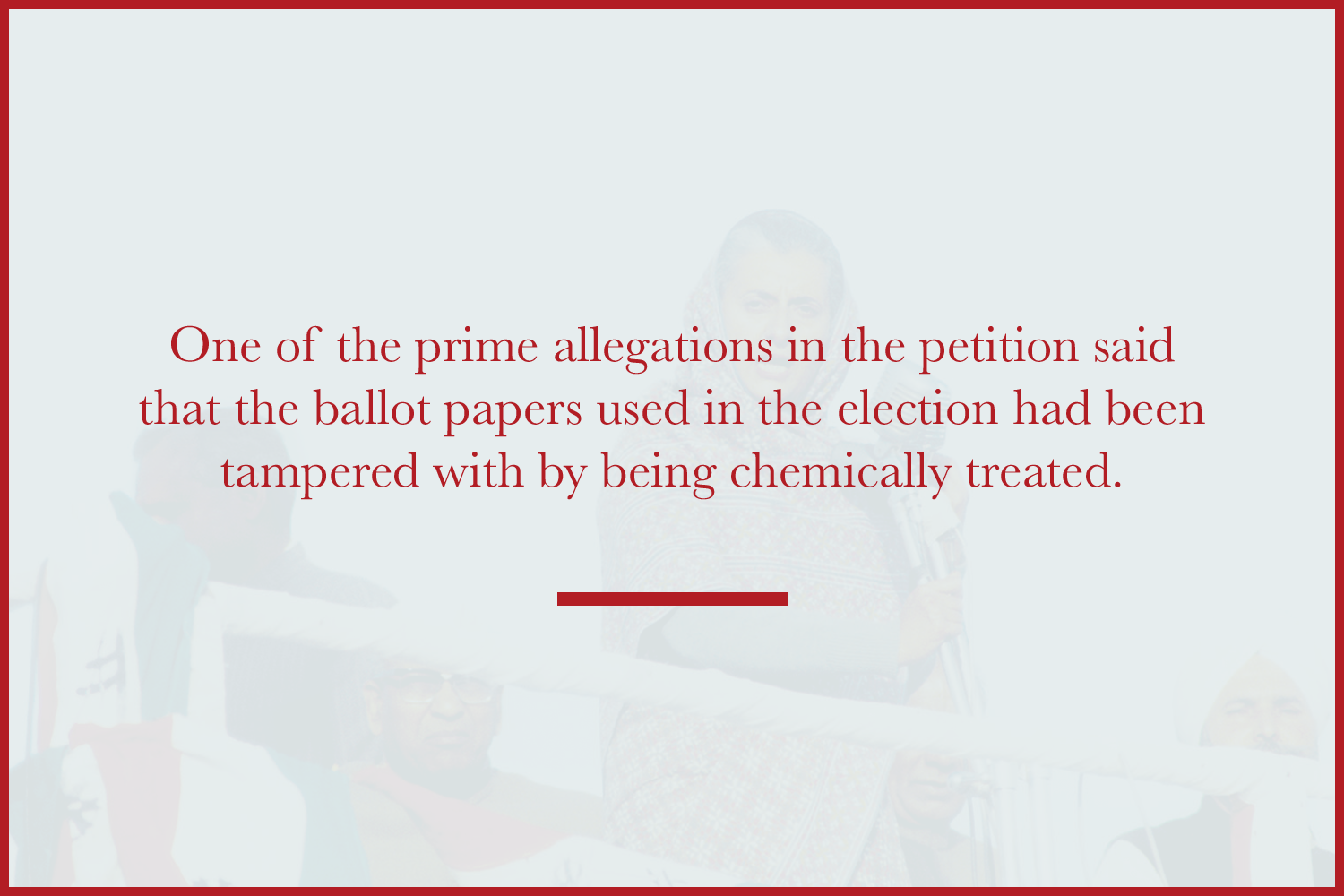
The Emergency finally concluded on March 21, 1977, thereby ending a period of not just political controversies, but heavy censorship, suspension of civil liberties and personal freedoms. Read more about it in Prashant Bhushan’s The Case that Shook India.
5 Things You Did Not Know About Lee Child

James D. “Jim” Grant, popularly known by his pseudonym Lee Child, is a British author widely known and admired for his thriller novels, especially his Jack Reacher novel series where his protagonist, an ex-military policeman travels the country with nothing but a toothbrush and has incredible encounters and unforgettable adventures.
Here are 5 things you didn’t know about the man behind the eminent novels:
From law to theatre to television to writing

Grant went to law school in 1974 at the Sheffield University in England. However, he had no intention of becoming a lawyer. He spent much of his time in the university theatre, so much that he failed quite a few exams and had to repeat the courses. After graduating, he joined a commercial TV channel, Granada television. He did not start writing until he was 40 and his 18 year old career at the television channel ended because of corporate restructuring.
He wrote his first novel with a pencil

At the age of 40 Jim Grant got fired from his job, bought six dollars worth of pencils and paper and started to write his first novel, Killing Floor. The book that he wrote as fast as he could was an instant hit and went on to win more awards than any of his other books. Killing Floor (1997) received the Anthony Award, the Barry Award and the Japan Adventure Fiction Association Prize. The pencil that Grant used is still a prized possession that he keeps in his New York home.
Jim Grant becomes Lee Child

Jim Grant writes under the pen name, Lee Child. The story behind this is a rather remarkable one. On hearing an American mispronounce Le Car as Lee car, calling anything ‘lee’ became a joke in Grant’s household. His daughter was ‘lee child’. Choosing ‘Lee Child’ as his pseudonym turned out to be an amazing marketing strategy for the author since it came earlier in the alphabet than Jim Grant , would fit on the bookshelves between Raymond Chandler and Agatha Christie, and many of the best-selling authors of his time had last names that began with “C”.
September 1st

Grant started writing his first book on September 1st without a plot in his mind, without any idea of what the story would be, without in fact a name for his protagonist. Ever since, he sits down to write his novel every year on the same day. It has become a ritual for him.
Jack Reacher

Just like Lee Child himself, Jack Reacher has to leave his job. The character hitchhikes across America and finds noble causes, and trouble. Interestingly, the first book was written without the main character having a name. The author’s wife once said to him that with his size, he could become a ‘reacher’ in a supermarket, to reach things on the top shelves, and that gave the author the idea for his protagonist’s name!
Get your share of suspense and thrills in Lee Child’s new book Blue Moon
6 Ways in Which You Can Achieve Your Dreams In 5 Years

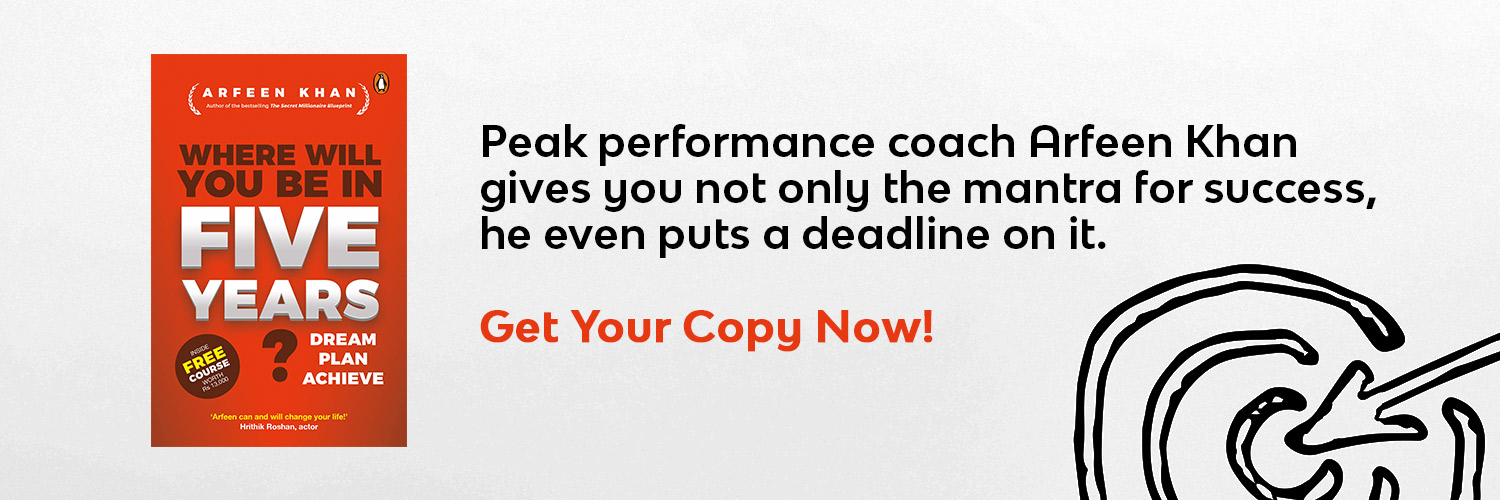
Peak performance coach Arfeen Khan, who has been long associated with Bollywood, gives you the mantra to turn your dreams into reality. He says 5 years’ time is all you need to make it happen. His approach is practical, effective and can be implemented from day one. He helps you make your own plan, overcome your personal problems and move on a path of growth and change.
Here are six tips to nail success on its head:
Self-belief is everything!
Value all aspects of life equally

Your choices frame your personality

Pressure can bring out the best in you
Passion will push to achieve greater things

Planning always helps!

So, are you ready to take on the world?
Toddy Pancakes: A Gem from the Suriani Kitchen

The state of Kerala serves as a pandora’s box for culinary and gastronomically exquisite dishes. Since time immemorial, the spices of Kerala have drawn seafarers and traders to this state and the tradition has remained unchanged till date.
Drawing on this rich culinary heritage, Lathika George’s The Suriani Kitchen brings us unique recipes straight from the cookbooks of Syrian Christians.
Here’s a delicious sneak-peek into the book.
Toddy Pancakes
Kallappams
As the name implies, these appams get their name from kallu, the toddy that is traditionally used to prepare the batter. Yeast is substituted here, with good results. Kallappams are cooked on a griddle like thick pancakes. Serve these pancakes hot or cold with curries and stews.
Ingredients

Grind the soaked rice with the 2 cups of water in a blender or food processor until it becomes a smooth batter. Add the coconut and cooked rice, and process for 2 more minutes.
Pour the batter into a deep bowl and add the sugar, salt, and yeast mixture. Set aside to rise in a warm place for an hour or longer. When ready, the mixture should be like a frothy cake batter.
Pour 3⁄4 cup of batter on a hot, lightly greased griddle, and cook the thick pancakes over medium heat for 1 minute on each side. Repeat until all the batter has been used, keeping the cooked pancakes warm.
Does your kitchen smell like heaven yet?

6 Times Sister Nivedita had to Struggle Between her Heart and Mind
Margaret Noble arrived at India’s shores in the late nineteenth century, took the vows of a brahmacharini and devoted the rest of her life to the cause of India. She was enchanted by Swami Vivekananda but their vows of celibacy kept her from expressing her feelings for him. Regardless, she went on to worship him, making her heart and mind work in tandem.
Here are six times Sister Nivedita faced a struggle between her heart and mind.
Nivedita was filled with an overwhelming sense of devotion and love for Swami Vivekananda

Nivedita’s love for her King, astonished many

For Sister Nivedita, Swami Vivekananda’s visit to London was a divine intervention

For Sister Nivedita, being close to her King was all that mattered

She felt guilty for ignoring her family but she couldn’t help it

Going against her impulsive nature, Sister Nivedita vowed to practice the wisdom of restraint as advised by her dear Guru

Tell us which aspect of Nivedita’s love for her King astonished you the most.

6 Quotes by Lee Child To Fill Your Hearts With A Sense Of Adventure
James D. Grant, popularly known by his pseudonym Lee Child, is a British author widely known and admired for his thriller novels, especially his Jack Reacher series. His books are power-packed, taking you on some epic adventures.
Here are six quotes by Lee Child that will make you feel adventurous:
Always!

Are you afraid of death?

Never!

The road of non-violence is paved with wisdom

Do you feel the same?

Do you also have a favourite Lee Child quote? Tell us.

Trump and Modi: Strangely Silent on the US-India Nuclear Deal
By Larry Pressler
Larry Pressler was the chairman of the US Senate’s Arms Control Subcommittee and advocated the now-famous Pressler Amendment. His book Neighbours In Arms provides a comprehensive account of how US foreign policy in the subcontinent was formed from 1974 till today and ends with recommendations of a new US-India alliance that could be a model for American allies in future.
Here’s a piece written by him on the US-India nuclear deal.
When I first visited India in 1965, I was enthralled by the people, the food, the heat and the colours. The plight of its poor moved me. As a graduate student in the Rhodes Scholar programme at Oxford University in England, I was looking for material to complete a doctorate in philosophy and made a brief visit to New Delhi. There, I spent three to four days during a term break in December.
On a low budget, I travelled by rail. The trains were crowded and the passengers were noisy and boisterous. It was such a contrast to the quiet and subdued cross-country train rides in the United States. I ate whatever my modest budget allowed, and remember enjoying my first taste of idli in southern India. Enveloped by the country’s spirit, I found the whole experience exhilarating.
But I also witnessed the long-term impact of foreign occupation and the devastating effects on its poverty-stricken people. I later saw the same negative impact of long-term foreign intervention in Vietnam. In India, there didn’t seem to be as strong a sense of national pride as I have witnessed in many other countries. At the time, I blamed it on colonialism. But, fifty years later, I also wonder if extreme poverty, corruption and the burden of the old caste system play a large role as well. Of course, the country’s lack of reliable electricity also keeps the population in a type of permanent Dark Ages—pun intended.
Consequently, I was highly encouraged when I learnt that, along with members of the US Congress, President George W. Bush and Prime Minister Manmohan Singh had agreed in July 2005 to a nuclear deal to bring electricity to the mass population. The US–India nuclear agreement would allow the United States to supply India with nuclear fuel for civilian power generators. In exchange, India agreed to institute international safeguards on its nuclear reactors to prevent them from being used for military purposes. The negotiations, surprisingly, had been conducted in almost total secrecy. Highly controversial, the agreement ended the United States’ three-decade ban on nuclear trade of any kind with India without requiring the country to join the Nuclear Non-Proliferation Treaty (NPT) or to dismantle its nuclear weapons programme.
An idealist, especially in the field of international development, might look at this deal as a great victory for the people of India, as the mass population would finally get reliable and clean electricity. In a country where 300 million of its citizens have no electricity and millions more have unreliable electricity, the US–India nuclear agreement—if implemented—could significantly improve the quality of life for more than a billion people.
To development specialists, the US–India nuclear agreement could be a godsend. Nearly 30 per cent of India’s population lives below the poverty line and 75 per cent earns less than 5000 rupees per month. The residents of the state of Bihar are among the most impoverished people in the world, with more than 70 per cent of its population suffering in extreme poverty. An ample and reliable supply of electricity will increase productivity in states like Bihar. More light in homes and in workplaces results in greater activity. This increased productivity will lift up those living in the most abject poverty in India. That is what proponents of the nuclear agreement must state as its main objective. It is a worthy humanitarian goal. But, thus far, the architects of this deal and its advocates have failed to reinforce it.
My love for India and its people is heartfelt. That is why I am so passionate about the transformative effects nuclear power can have on its citizens. If properly implemented, the US–India nuclear agreement could bring electricity, an improvement in the standard of living, and some level of dignity for many poor Indians. The poor are the ones who need the nuclear agreement the most, but so far this deal has just been a shuffling of millions of dollars between governments, arms dealers, consulting firms and lobbyists. Almost a decade after the deal was approved, not one nuclear power plant has even started construction.
Why hasn’t this happened? Importantly absent from the deal was a requirement forcing India to join the NPT and adhere to all its requirements. The Nuclear Non-Proliferation Treaty, enacted in 1970, extracted a bargain between nuclear weapons states and non-nuclear weapons states. Nuclear weapons states promised to use their nuclear capability only for peaceful purposes in exchange for a promise from non-nuclear weapons states not to pursue nuclear weapons in any form. The US–India nuclear agreement essentially gave India a waiver from the NPT, in an attempt to build a closer relationship with India and counter the rising threat of its powerful neighbour, China. This has antagonized many nuclear non-proliferation advocates, who see this move as a type of ‘nuclear double standard’. Many foreign policy experts claim that the special exemptions the US is giving India have done irreparable damage to global non-proliferation efforts. I tend to agree that we have executed an ‘about face’ on non-proliferation, but I believe it is necessary to get nuclear power for the Indian people.
It took nearly three years for both countries to approve the final agreement, which was signed by the then Indian external affairs minister, Pranab Mukherjee, and his counterpart, the then secretary of state, Condoleezza Rice, on 10 October 2008. Since it is not a treaty and merely an exchange of statements, we must accept the fact that it is not enforceable. Both sides are depending on the goodwill of the other for implementation. The publicly stated purpose of the agreement is to build nuclear plants in India to supply electricity to the country. In actuality, the United States’ primary goal with this deal was, selfishly, an economic one. The US–India nuclear agreement was primarily an arms trade deal. While it certainly was intended to allow nuclear suppliers entry into India, it also opened up vast new trade opportunities between the United States and India for many other industries. So far, the defence industry is the only industry that has enjoyed significant gains from the nuclear deal. This was not a quid pro quo, but the deal did open the doors wide for significantly more arms deals, notably C-130 and C-17 transport aircraft, and joint military exercises with India. This deal is simply a pathway to justify an escalation in arms sales between the two countries. Indeed, Stephen Cohen, a Senior Fellow from the Brookings Institute and an India expert, said that India will be ‘one of the largest markets for defense equipment in the coming two decades’.
President Obama continued the trend started by President Bush and further opened up arms trade between our two countries. In 2009, the Boeing Company won a contract for a $2-billion order for P-3 Orion maritime reconnaissance aircraft. Lockheed Martin secured a $1-billion contract for more C-130 transport aircraft. In 2010, President Obama pledged $5 billion of military equipment to India, making the US one of India’s top three military suppliers. Further efforts were made to loosen antiquated restrictions on technology transfer and to relieve onerous oversight controls. In 2013, the then secretary of defense, Ashton Carter, announced that India would be admitted into the coveted ‘Group of Eight’, the US allies that share the most sensitive technology details—without any export controls.
In 2014, analysts from the military trade publication Jane’s Defense said that India had become the largest foreign buyer of US weapons (only to be outbought by the Saudis in 2015). In 2015, President Obama and Prime Minister Modi announced new partnerships between our countries to jointly develop military jet engine technology and aircraft carrier design. President Obama said publicly that forging deeper ties between our two nations was a primary foreign policy objective for his administration. What he did not say is that these deep ties are mostly military ones. My nation’s new president, Donald Trump, seems poised to build on and reinforce this military relationship and take an even stronger stance against India’s rival, the rogue nation of Pakistan. Indeed, when Prime Minister Modi visited Washington in June of this year, the Trump Administration announced the approval of a $2 billion sale of unarmed drones to India, which raised the hairs on the necks of the Pakistani military and ISI. He also has appointed Lisa Curtis to be the Senior Director for South and Central Asia at the National Security Council. She is a veteran foreign policy expert who has recommended a much more punitive approach to Pakistan. And President Trump has made no apologies for his hard line against Muslim terrorists. Sadly, however, during Prime Minister Modi’s recent visit to Washington, there was no mention of the construction of any nuclear power plants. Their conversation (at least publicly) was strangely silent on this topic.
The US–India nuclear agreement was a good first step towards making India a key global ally. However, the deal has not even begun to achieve its full potential. I fear it never will.
