Anirudh Krishna in The Broken Ladder reveals the untapped talent, which if honed, can propel India in the league of developed nations. Additionally, Krishna also highlights instances where India has shown significant improvement.
Here are five examples that make one hopeful that the day isn’t far when India will become a global superpower:
Share of women entrants in business schools is substantially larger than what it used to be a generation earlier.

Glimmers of hope among the marginalized communities

An attempt to bridge the gap in terms of educational institutions

A commendable achievement for the nation since achieving independence

An improvement in the participation of people in decision-making process

Tell us the improvements you have seen in your part of the country in the last decade.
Category: Specials
6 Times Everything Everything Warmed Our Hearts

Do you remember your first teenage love? Nicola Yoon’s debut novel Everything Everything is here to remind you of your first love, when anything seems possible and no problem is insurmountable. A gripping tale of love, relationships and world as we know it, Everything Everything has everything to make you laugh, cry and feel everything in between.
Here are six times the book warmed our hearts.
Oh! The feeling when your crush calls!

When Maddy’s clay astronaut is at a dining centre but can’t eat!

When mom cooks something you hate!

The disease at least one teenage girl has every 30 seconds.

The “Out of the World” feeling!

The sickness we don’t mind!

Taking you to the world of young innocent love that knows no bounds, Everything Everything will leave you with a warm, fuzzy feeling in your heart, wanting for more!

5 Times Anne Frank Showed Us How to Not Take Life for Granted
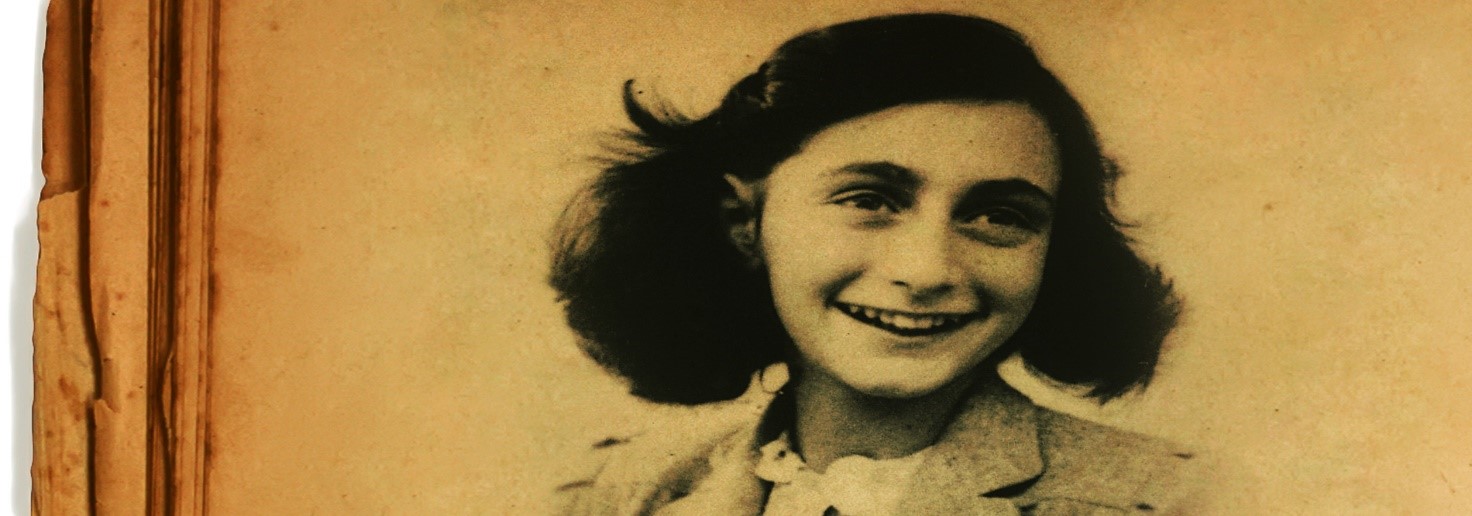
The Diary of a Young Girl by Anne Frank is one of the most translated and read books across the world, and with good reason. 13-year-old Anne Frank witnessed holocaust first hand cooped up behind a book-shelf hiding a bunker, and still found hopeful words and the spirit to tell the tale.
Here are five times Anne Frank exemplified why we should strive to see the silver lining in the dark clouds.
“I’ve come to the shocking conclusion that I have only one long-sleeved dress and three cardigans to wear in the winter. Father’s given me permission to knit a white wool sweater; the yarn isn’t very pretty, but it’ll be warm, and that’s what counts. Some of our clothing was left with friends, but unfortunately we won’t be able to get to it until after the war. Provided it’s still there, of course.”

“I long to ride a bike, dance, whistle, look at the world, feel young and know that I’m free, and yet I can’t let it show. Just imagine what would happen if all eight of us were to feel sorry for ourselves or walk around with the discontent clearly visible on our faces. Where would that get us?”

“Have you ever heard the term “hostages”? That’s the latest punishment for saboteurs. It’s the most horrible thing you can imagine. Leading citizens—innocent people—are taken prisoner to await their execution. If the Gestapo can’t find the saboteur, they simply grab five hostages and line them up against the wall. You read the announcements of their death in the paper, where they’re referred to as “fatal accidents.””

“Father, Mother and Margot still can’t get used to the chiming of the Westertoren clock, which tells us the time every quarter of an hour. Not me, I liked it from the start; it sounds so reassuring, especially at night. You no doubt want to hear what I think of being in hiding. Well, all I can say is that I don’t really know yet. I don’t think I’ll ever feel at home in this house, but that doesn’t mean I hate it. It’s more like being on vacation in some strange pension. Kind of an odd way to look at life in hiding, but that’s how things are.”

“After May 1940 the good times were few and far between: first there was the war, then the capitulation and then the arrival of the Germans, which is when the trouble started for the Jews. Our freedom was severely restricted by a series of anti-Jewish decrees: Jews were required to wear a yellow star; Jews were required to turn in their bicycles; Jews were forbidden to use street-cars; Jews were forbidden to ride in cars, even their own; Jews were required to do their shopping between 3 and 5 P.M.; Jews were required to frequent only Jewish-owned barbershops and beauty parlors; Jews were forbidden to be out on the streets between 8 P.M. and 6 A.M.; Jews were forbidden to attend theaters, movies or any other forms of entertainment; Jews were forbidden to use swimming pools, tennis courts, hockey fields or any other athletic fields; Jews were forbidden to go rowing; Jews were forbidden to take part in any athletic activity in public; Jews were forbidden to sit in their gardens or those of their friends after 8 P.M.; Jews were forbidden to visit Christians in their homes; Jews were required to attend Jewish schools, etc. “You couldn’t do this and you couldn’t do that, but life went on. Jacque always said to me, “I don’t dare do anything anymore, ‘cause I’m afraid it’s not allowed.””

These heartrending words taken from the diary of 13-year-old Anne Frank was first published in the year 1947 as The Diary of a Young Girl. The first entry made by Anne Frank was on 12 June 1942 and the last words were written on 1 August 1944, a period of two-years when the Franks were in hiding in Amsterdam.
Anne was determined to tell her story after a member of the Dutch government in exile announced in a radio broadcast from London that once the war ended, he would look for eye-witness accounts of the Dutch people’s horrifying plight in the Nazi regime. He specifically mentioned diary entries and letters as examples. Anne not only wrote her diary but also edited it simultaneously, tuning it to perfection for her readers.
So, here’s wishing the world’s most fearless 13-year-old a very happy birthday. May your words never rest in peace, Anne.

5 Reasons You Should Be Reading Jo Nesbo

Reading crime novels comes with the suspense of not knowing what comes next. If you’re one of those who love the feeling of suspense and still haven’t got your hands on the books by Jo Nesbo, you are missing out big time. Jo Nesbo, a Norwegian crime novelist with more than 15 thriller novels to his name is a must read for every book lover.
So here are five reasons on why should you be reading Jo Nesbo:
His Harry Hole Series

The series revolves around Detective Harry Hole, a classic anti-hero who has alcoholic tendencies and opposes any kind of authority. The novels in this series, like all Nesbo novels, are complex and ambitious constructions combined with high-voltage suspense.. With twelve books in the series, Harry Hole has risen to become a cult figure among the lovers of the thriller genre.
His Novels have been Adapted to films

His stand-alone novel Headhunters was adapted into a film in 2011. The film stars Nikolaj Coster-Waldau and was nominated for many awards, including the BAFTA Award for Best Foreign Language Film category. His other novels, The Son and The Snowman are also slated to be adapted into motion pictures.
He is an Award-Winning Author

Nesbo has many accolades to his name. His debut novel The Bat won the Riverton Prize for Best Norwegian Crime Novel of the Year and the Glass Key Award for Best Nordic Crime Novel of the Year. His other works such as The Redbreast, Nemesis, The Snowman and The Devil’s Star have also been awarded by many prestigious platforms.
He is Multi-talented

Nesbo is not just a crime novelist but also writes books for children. His Doctor Proctor series revolves around a eccentric professor who is waiting for the opportunity to make it big in the world. The series evokes the legacy of Roald Dahl’s books as it encourages the readers to believe in themselves. He also conceptualized the Norwegian political thriller TV series, Occupied.
His Latest Novel, Knife

In his new book , Knife, Harry Hole is about to face his darkest case yet. The first killer he put behind bars is out to get him. Harry is responsible for the many years Finne spent in prison but now he’s free and ready to pick up where he left off.
When Harry wakes up with blood on his hands, and no memory of what he did the night before, he knows everything is only going to get worse . . .
Ready to get your hands on Nesbo novels? Tell us which one you liked the most.
Taking the Hating Out of Dating
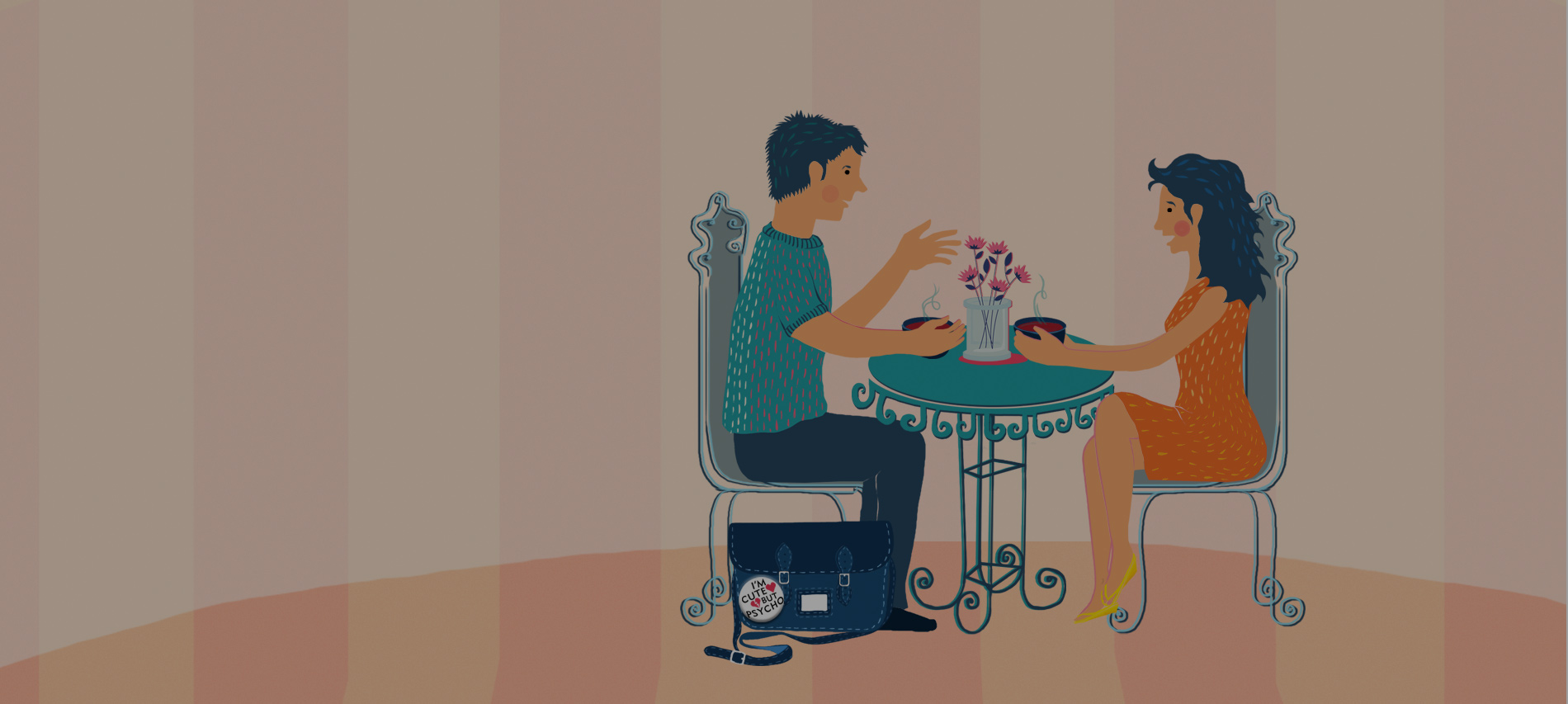
Some take to fishing. Some don’t. It’s as simple as that.
Likewise, with arranged-dating (modern dating expressly for the purpose of finding a spouse). Some thrive on the anticipation of a good catch, while for some (my personal guess is for many) the uncertainty, the awkwardness of a ‘catch and release’ and of course returning empty-handed (again), can be nothing short of a mild coronary.
While my friends and acquaintances invariably fell in the latter anxiety-stricken category they often spoke with wistful resentment of a creature I dubbed as the Overly Enthusiastic Dater [OED].
An effervescent giant ball of sunshine and an energy drink, OEDs apparently don’t exhibit the slightest tremor. In fact they are enthused at the prospect of sharing their hobbies, family composition, occupation, job history and of course the much contentious dietary habits (Veg? Non-veg? Egg? Fish? Wine? Whisky? Smoke?!?) with strangers… again and again and again.
Nerves of steel? Adrenalin junkies? Extreme Extroverts? How do OEDs survive this minefield, not only unscathed but also brimming with enthusiasm?
A few leisurely cuppas and they were spilling the beans. I’m not sure if these ‘skills’ were innate or evolved to protect their tickers, but they do explain the OED’s joie de vivre.
- Date Martyr
Competition is fierce when it comes to far-out dating stories and every girl wants her slice of sympathy as she narrates the cuckoo-capades to a bunch of wide-eyed happily-married couples. Which is why this OED no longer cringes and prays for Potter’s invisibility cloak but rubs her hands in glee (mentally of course) when she encounters a delusional dude.
Delusional Dude 1: “Hi there, Prepare to be amazed and astounded by me”
OED: Beams like a cat that got the cream
Delusional Dude 2: “I’m into crystal gazing which is why I know there are limited fate portals in the next few years. Yes, yes, we just met but we must marry before the portal shuts”
OED: Beams like a cat that got more cream
- Truffle Hunter
This OED won’t waste time researching her date. Instead she scours through a dozen food guides and reviews before she selects the date venue. Tried the Burmese café last time, what next? Isn’t there a new Caramelised Melon Cappuccino in town? How about an experiment in non-judgement at the new ‘dine-in–the-dark’ cafe? Don’t see chappie, don’t judge chappie. He’s not roasted and her taste buds are singing. It’s a win-win.
Dating in the dark doesn’t scare this OED, running out of new eateries does.
- Errand-dater
This OED is an efficiency machine. She lives by the phrase ‘Location, location, location’. She first browses through her pantry, then through her closet, then her medicine cabinet and finally through the now yellowed piece of paper that was once her to-do list. Flour will run out by Monday? Lycra tops have inexplicably shrunk? Great. Now she plans a weekend date at a café in the mall where she can shop for these.
Some say bumping into your date in the hosiery check-out line right before the date is embarrassing, but she says it’s a chance to practise your poker face and strengthen your peripheral vision (as you surreptitiously glance into his shopping basket).
- Date Mate:
The last and final OED (that I know of) is nothing but a social butterfly and a chatterbox at heart. Despite the obvious incompatibility she can’t resist buddying up with her fellow date.
“Maybe the problem is you are address women as ‘yo! hot mamma’. If you don’t mind my asking what’s your relationship with your mum like?”
“I must fix you up with Vina. She too adoooores Justin Bieber.”
“….and that’s why I decided to walk away. What’s your perspective as a guy?”
“Where did you buy this black lace shirt? Stitched? Really? What was the cost per metre?”
Having met OEDs in person was quite revealing. They weren’t super women or the other extreme – oddballs. They were simply women who saw beyond ‘Mission Groom’.
Every coffee date wasn’t a do or die situation, a sword hanging over their heads; in fact there was always an upside – be it a good meal, scratching errands off a list or finding a new buddy.


In Conversation with Faiqa Mansab
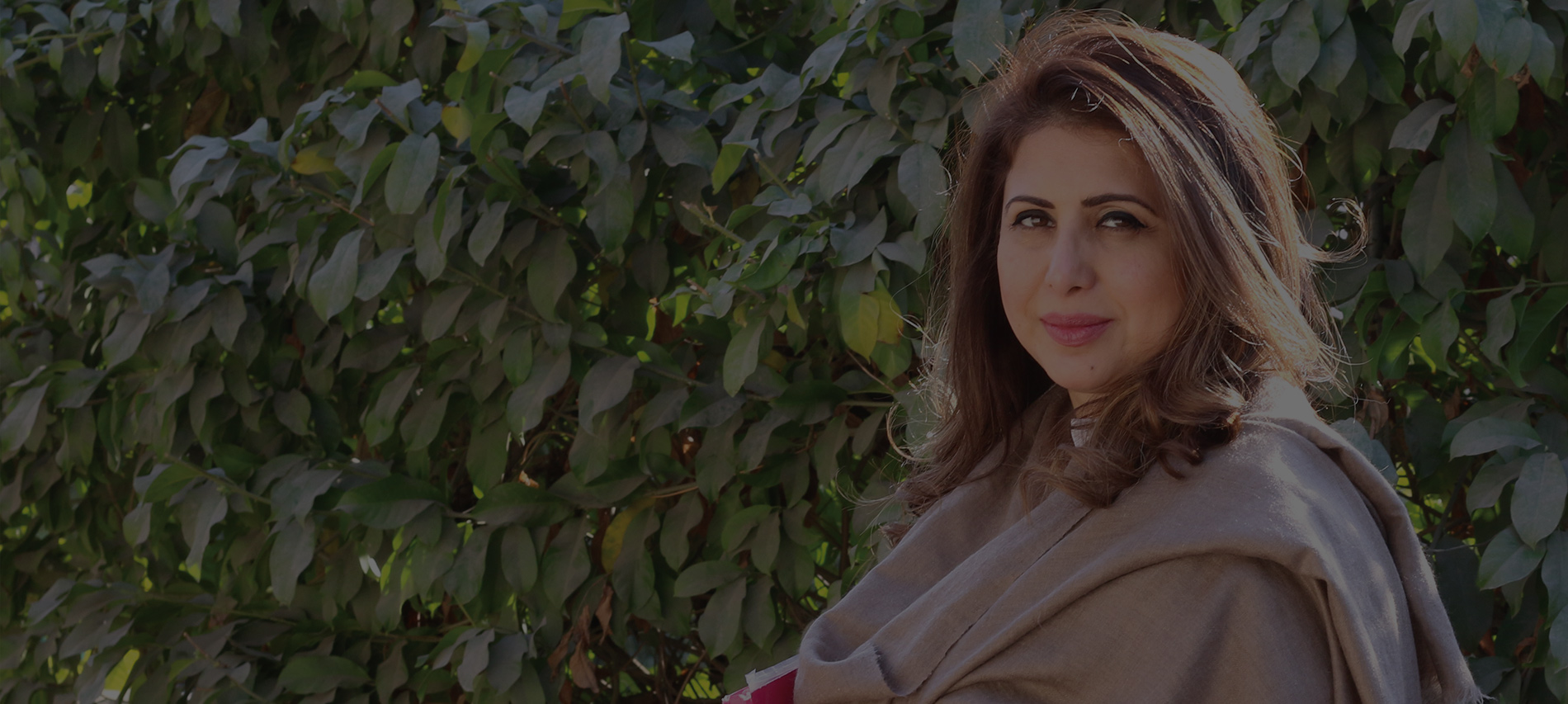
We recently spoke to the author of This House of Clay and Water, Faiqa Mansab. Her debut novel is set in Lahore and explores the themes of love, friendship and orthodoxy.
Below is our conversation with Faiqa, who is currently in Lahore:
Share your writing process behind The House of Clay & Water, how did you think of writing about the insidious power of orthodoxy in Pakistan?
I’ve come to believe that we write the stories that we are meant to; stories which only we can write. I come from a pluralistic and hybrid literary family tree. Punjabi Sufi poetry was always playing in the background at home. I grew up reading English literature, then graduated to American and European literatures, and all the while I was also reading Ghalib, Faiz, Mir, short story writers, novelists, women who wrote about the devastating Pakistan I lived in, yet I was so far removed away from it. Despite such a diverse education, I was never confused about my identity or my languages. I loved all three that were at my disposal and yearned for Persian and French.
I read whatever I could, except for comics. I’m afraid I’ve never appreciated comics. I read literary novels and also cross-genre novels like Du Maurier, Mary Stewart, Pat Conroy, Colleen McCollough and others who wrote beautifully but were still not considered ‘highbrow’. I wanted to write like all of them. I don’t think a writer makes a conscious decision to write about a topic or social issue.
This House of Clay and Water grew out of the first draft of another book that I had been writing prior to the MFA. It employed Magical Realism, sported a jinn, and a great deal of philosophy. After 60k words the story was still emerging and wasn’t very clear. It was called lyrical, beautiful and all that by my first readers, my class fellows, but I knew I had to let it go. I started the novel again, rooted in what is called ‘realism’ in literary terms. The female protagonist of the previous novel had stayed with me and moved premises into the new novel. She became stronger, her voice was so clear.
I’m very proud of my legacy, very rooted in this land, and my heritage. My writing stems from a place of deep love for this land, its customs and privileges, its tragedy and its sorrows. My memory goes back a long way; long before I was born, or my parents were born and this novel isn’t about orthodoxy waging wars on Pakistani turf, but orthodoxy waging war on spiritualism, on Sufism, on tolerance. It is hurtful. It is wrong. It isn’t us.
How did you come up with the different characters in your book, have you met such people in real life?
I never really know how to answer that question. If you mean, are they based on real people? Then no, they are not. If you mean that you will never see them in real life, then I’ve failed as a writer. They aren’t real but they had better be realistic. They are I think, or the biggest publishing house in the world wouldn’t have backed this book. (I love reminding everyone that Penguin has published my book).
Difference fascinates me. Peripheries and centers fascinate me. Power dynamics between genders and how social constructs mold people and their behaviors is frighteningly like living in a prison, like being conditioned and brain washed. When you really come down to it, we are all conditioned to behave in certain ways under given circumstances…like Pavlov’s dogs. There is very little agency in an average human life until and unless we actively go against the grain, at the risk of being ostracized, called mad or just hated.
I wanted to write about such people. Women who go against the grain are worse off than men even. They are intolerable. They are monsters that have to be killed to re-establish social order like in Sophoclean tragedy or Shakespearean tragedy, where the social sickness had to be rooted out, killed to purge the city state and bring peace. These aberrations are not tolerated.
Which brought me to those human beings the world considers aberrations, and ridicules, and humiliates: eunuchs, hermaphrodites, castrati’s. They were not treated this badly in the sub-continent until the British came along. The attitude of hate and humiliation towards hermaphrodites is a legacy of the British. In the traditional and historical culture of the sub-continent, hermaphrodites were treated with courtesy, even if they were not considered equal. But now we must do better for women and for transgenders.
Do you have any writing rituals?
Coffee. Nothing fancy, but hot, and at least two large mugs to start me off. I have a lovely little study, with a lilac ceiling, and a thick carpet of the same color and a small white mantle with my books on it. A writing table facing the wall which has my vision board from end to end, full of Van Gogh and Monet postcards, inspirational quotes and rules of writing from famous authors. I sit and I stare, drink my coffee and feel small and miserable. Then I drink another cup, and I feel better, less small, less insignificant, more ambitious. A few more sips, and I open my laptop. Its sleek and new, and has only my manuscripts. I begin by reading what I had written yesterday or day before. Sometimes I don’t see any mistakes and I’ll start typing happily. If I find mistakes, well, I start fixing them until I am tired. Then I get a new cup of coffee and start writing something new.
This happens only on good days. Sometimes coffee doesn’t work on feelings of smallness and insignificance. Those days I sit on my lilac armchair and read Proust. You know, one might as well go down in style.
How does the place affect your writing, in terms of setting as well as inspiration?
Place is important. Location is political. Location is the heart of the story. Sometimes it is the only story. For me that place is often Lahore. I will never understand this city. I’ve accepted that and that’s’ why I can write about it. It so complex and so Protean. I love writing about this city.
Any advice for aspiring writers?
Learn to edit your own work. Read it again and again till you’re sick of it and can see beyond your love for it and into the mechanics of sentences and paragraphs. Then get rid of everything extraneous.

Devdutt Pattanaik on Mothers
Mothers have been an important mainstay in epics, folk tales and mythologies for generations. Today, as we celebrate Mother’s Day, here is an exclusive excerpt on mothers from Devdutt’s Devlok 2.
A mother gives birth to a child. But did god give birth to the mother or did a mother give birth to god?
As interesting as the question is, the answer too is not simple. In a temple, the space where a god’s image is kept is known as garbha griha; that is, god is residing inside the garbha. Garbha means womb. Whose womb is this? A temple itself has been seen as a woman, a mother. Spiritually, Prakriti is everyone’s mother. Prakriti has given birth to sanskriti (culture). God’s mother is also Prakriti.
The Rigveda has this interesting sentence that Daksha gave birth to Aditi and Aditi gave birth to Daksha; that is, the father created the mother and the mother created the father. When you go way back in the past, the division between father and mother collapses. With god, this concept does not hold because god is swayambhu—he has given birth to himself; he is his own mother. Two words are used often in the Puranas – Yonija (born of the womb) and Swayambhu (who gives birth to self). God is always swayambhu, but his avatars are yonija; they experience birth and death. For instance, Ram is an avatar, so he is born and dies. He has a mother, Kaushalya. Krishna, likewise, has a mother, Devaki. Shiva is swayambhu.
In Tantra parampara, where goddesses are given a lot of importance, the stories and folk tales speak of how in the beginning of the world there was only a devi/Prakriti called Adi Maya Shakti. She gave birth to three eggs from which were born Brahma, Vishnu and Shiva. She is therefore called Triamba (one who gave birth to three children). This does not happen in puranic stories. In Shakt parampara, god does have a mother. In Vaishnav parampara, god gives birth to himself; and he creates the world and its creatures from himself. In Shaiva parampara, Shiva gives birth to himself; he is swayambhu, doesn’t have a mother, but gives birth to all mothers.
Devi is sometimes called a kumari (virgin) and sometimes mata (mother). How is that?
Christianity has a concept of the virgin mother who is Jesus’s mother. The word kumari, in India and in the world, does no necessarily mean virgin. It means a woman who is independent, who has no husband, and no man has a right over her. She has no ties and is completely liberated. So she is both mata and kumari, that is, an independent mother. Her hair is always depicted untied, to symbolize her freedom. No one can have dominance over Prakriti.
In Vaishnodevi or Kal Bhairav temples, the story is that of Bhairav wanting to have a relationship with the goddess; the goddess refused and cut off his head. ‘You cannot control me.’ Kal Bhairav then becomes her guard. In another story, when Brahma’s fifth head wanted a right over her, Bhairav cut off his head. Such are the violent stories associated with kumari.
The symbolic meaning could be that man’s ego prevents a devi from becoming a kumari, which is why he gets cursed or gets his head cut off. These are spiritual, metaphysical topics.
Shiva was swayambhu, but who was his son Karitkeya’s mother—Parvati or Ganga?
In Shiv Puran, the story is that after their marriage, Shiva says he has no need for a child. He says, ‘I am swayambhu, anadi, anant, without beginning or end; I will never die. So why do I need children?’ Devi says, ‘But I want children; I want to be a mother.’ An interesting conflict arises here. When Shiva is about to offer his seed, all gods and goddesses say that Shiva’s seed cannot be accommodated in just one womb; it should be placed in many wombs. The story goes that his seed is so hot that no one can touch it. First is is given to Vayu, wind, in the beliefe that he’ll be able to cool it down, but he fails. Vayu gives the seed to Agni, fire, who too cannot hold it. He passes it on to Ganga and her waters starts boiling. The reed forests (Sara-vana) near the river start burning. From the ash of those reeds, a child emerges. In some stories, it is six children who emerge. As the infants start crying, Krittika nakshatra, constellation of six stars, descend from the sky as the childrens’ mothers and feed them milk. Finally, Gauri, Shiva’s wife, joins the six children together. That child is Kartikeya, also called Shanmukha, or one with six heads.
The question arises, the father of the child is Shiva, but who is the mother? Vayu, Agni, Ganga, Sharavan, Krittika, Parvati all stake a claim. So, he has many mothers. Shiva’s seed has thus gone to many yonis; it shows that the child is so powerful, he cannot be born of just one womb. Kartik means son of Krittika. In the south, he is called Sharavanan, son of Sharavan. In images, he is sometimes shown along with six or seven matrika, mothers.
What is Ganesh’s story? Who is his mother?
In stories, although Shakti wants to become a mother, the gods don’t want her to give birth in the normal way. If the child is born from her yoni, it’ll be so powerful that it will defeat Indra, the king of the gods. So, Shiv-Shakti’s children are not born from Parvati’s yoni. Kartikeya is born of Shiva’s seed, from many yonis. Ganesh is born from the scrapings of Parvati’s body. Again, he is ayonija.
The story is that Parvati goes to Shiva, asking him to give her a child. He says he is not interested as he’s immortal. She tells him she’ll make it herself; she’s the goddess, after all. She first collects the scrapings (mull) of her skin, mixed with the applied chandan and haldi. Then she makes a doll of it and gives it life. In Vamana Purana, it is said the child’s name ‘Vinayak’ comes from ‘bina nayak’ (without a man); there are other stories about the word’s origin too. Shiva does not like the way Parvati has birthed her child, as he cannot recognize her image in it, so he cuts off its head. Parvati starts weeping, and insists he bring back the child to life. So Shiva gives him an elephant head and that’s how Ganesh is born. Again, it is ayonija.
In the Mahabharat, we see many ambitious mothers who want their sons to be king.
In the Puranas, the stories have more of a spiritual, intellectual concern, while in the Ramyan and Mahabharat, the focus is on wealth and property. For this reason, the men go to war, and the women want their sons to grow up and be victorious. This is presented in a fascinating way in the Mahabharata. When Shantanu wants to marry Satyavati, she first attaches a condition that her son inherit Shantanu’s kingdom. She claims she is securing her child’s future. Is that the real reason or does she want the high position of a rajmata (queen mother)?
There is also a competition between Gandhari, Kunti and Madri. When Gandhari is pregnant, she hears that Kunti has given birth to a son. Although Gandhari was pregnant from before, Kunti used her mantra to have Yudhisthir without the nine-month period. Gandhari gets so upset, she beats her belly with a stick. The mass that emerges from her belly is cold as iron. When Vyas creates 100 children from this mass, Gandhari is happy, because now she has more children than Kunti. Kunti begets two more children and uses up the power of her mantra. She gives the mantra to Madri who uses it once and calls Ashvin Kumar and gets the twins, Nakul and Sahdev. Pandu asks Kunti to let Madri use the mantra once more as she herself had used it thrice, but Kunti refuses. She fears that if Madri were to produce twins again, she’d have more children, and therefore more importance, than her. In the Mahabharat, this rivalry has been subtly depicted.
What about the mothers in the Ramayana?
Kaikeyi’s story is the most well known. When she had saved Dashrath’s life during a dev-asura battle, he had promised her two boons. The day before his eldest son, Ram’s, coronation, she throws a tantrum and demands her boons. She asks that Bharat be made king instead of his first-born Ram, and that he send Ram into vanvas (life in the forest) for 14 years. Ram’s mother, Kaushalya, is pained and asks Kaikeyi why she had to be so cruel to a son who’d treated her like his own mother.
An interesting aspect of this story is that when Dashrath marries Kaikeyi, he does not have any children. The astrologer says that Kaikeyi will definitely have a son. At that time, Dashrath promises her that her son would become king. So, in a way, Kaikeyi is only asking for what is rightfully her due. It’s like a court case, a settling of an agreement, where the lines are not clear. Whether Kaikeyi is ambitious or merely asking for her right is hard to say.
Krishna is called Devakinandan and Yashodanandan. Who was his mother?
There are some who believe that Krishna is not an avatar (of Vishnu’s) but himself an avatari—from whom avatars emerge. Others see him as an avatar. But he is born from Devaki’s womb, so he is yonija and experiences death. Mausala Parva in Mahabharat describes Krishna’s death. He is born from Devaki’s womb in Mathura, but is raised by Yashoda in Gokul. So he has two mothers – birth/blood mother and milk mother.
In folk songs, Krishna is asked who his real mother is—Devaki who has birthed him or Yashoda who has raised him? Krishna replies, do you think my heart is so small that it cannot contain more than one mother? I can handle both. But the question is who has the maternal right over him? Who is to answer that—it’s a complex world. The story suggests that relationships are not built by blood alone. Another aspect is that Devaki is a princess, while Yashoda is a milkmaid. So Krishna’s claim that both are his mothers shows that he has a relationship with the palace dwellers as well as cowherds, with the city as well as the village. He is large-hearted and this is why Krishna is associated with love.
In Puranas, is there a story of single mothers?
Bhagwat Puran has a story of Devahuti whose husband is Kardam rishi who says he doesn’t really want to have children, but has been told by his ancestors that he won’t achieve moksha (liberation from life and death) until he has children. But he doesn’t want any part in raising that child. Devahuti agrees to raise the child alone, and the child grows up to be Kapil muni who develops the Sankhya philosophy. It is also well known that Sita raises Luv and Kush on her own. Shakuntala too raises her son Bharat by herself in the forest, without the support of her husband.
Is there a story in our Puranas where a father plays the role of a mother?
When apsaras have children, they abandon them. Shakuntala’s mother Menaka had abandoned her in the jungle, and Shakuntala was raised by Kanva rishi who is like a single father. When Sita goes back to her mother, and disappears inside earth, she leaves her children behind with Ram who becomes a single father.
This is an excerpt from Devdutt Patnaik’s Devlok 2.

5 Badass Mothers in Literature

To call mothers a superhero will be an understatement (we are pretty sure they wear an invisible cape). Just like our real-life moms, mothers in literature also pull of some great tasks with breathtaking ease. Whether they are trying to protect the protagonists or just do a great job at raising them, we can’t help but look up to them.
So, here are five badass mothers:
Hester Prynne, The Scarlet Letter

Hester Prynne, in 17th century, did what other ladies in that era couldn’t even imagine doing i.e. live an independent life while raising a child on her own. Even though punished by her Puritan neighbours, she refuses to give out the names of her lover and their daughter. Deemed as an outcast then, she’d be considered a heroine today, like many of our moms.
Raksha, The Jungle Book

She is the fiercest mother we know. She cared for Mowgli as much as she did for her cubs. When Shere Khan threatened the pack to give up Mowgli, she proclaimed as his protector. Foster or not, a mother is a mother.
Mariam, A Flight of Pigeons

Mariam is an indomitable lady with a charm. Despite being at Javed Khan’s house in the times of turmoil, she refuses his proposition to marry her daughter Ruth. She does not give into the adversity of her circumstances but takes a chance with faith, saving her daughter’s life in the end.
Rosa Hubermann, The Book Thief

Rosa Hubermann is Liesel’s foster mother who has a “wardrobe build”, sharp tongue and a no-nonsense attitude. She does laundry for the wealthier households to help her family financially. She also never got fazed by anybody, not even Nazis during World War II. She is a mom who uses cuss words to show affection.
Marmee, Little Women

Runs the household by herself, raises four daughters, becomes their counsellor and role model, Marmee did it all. She also teaches them and nurtures them to become strong, inspirational women while keeping each of them true to their individuality. If Marmee isn’t a badass mother, we don’t know who is.
Do you know any more names that should be on this list? Tell us.
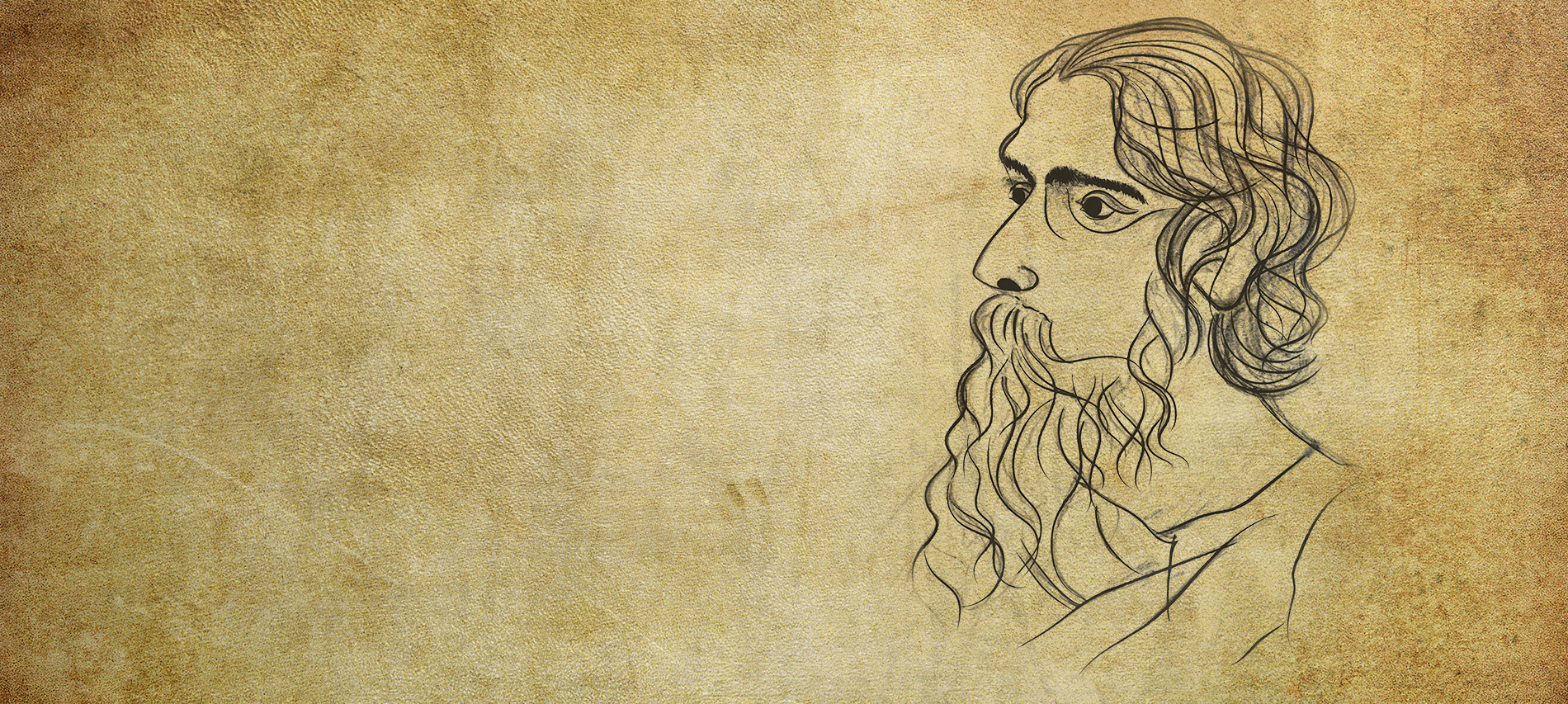
5 Rabindranath Tagore Poems that Make Him the Master of Our Hearts
Rabindranath Tagore was a poet-philosopher who inspired a whole generation through his writings. Rabindranath Tagore became a literary sensation and went on to win the Nobel Prize in Literature in 1913.
To celebrate Tagore’s birthday, we bring here sections of five of his most beloved poems!
On the Hypocrisy of Faith

On the Vulnerability at the Time of Death

On the Soul of Countries and People

On Missing a Dear One

On Longing

Do you, too, have a Rabindranath Tagore poem to share? What are your favourite lines of his? Tell us, we would love to know!