Publish with Us

Follow Penguin

Follow Penguinsters

Follow Penguin Swadesh

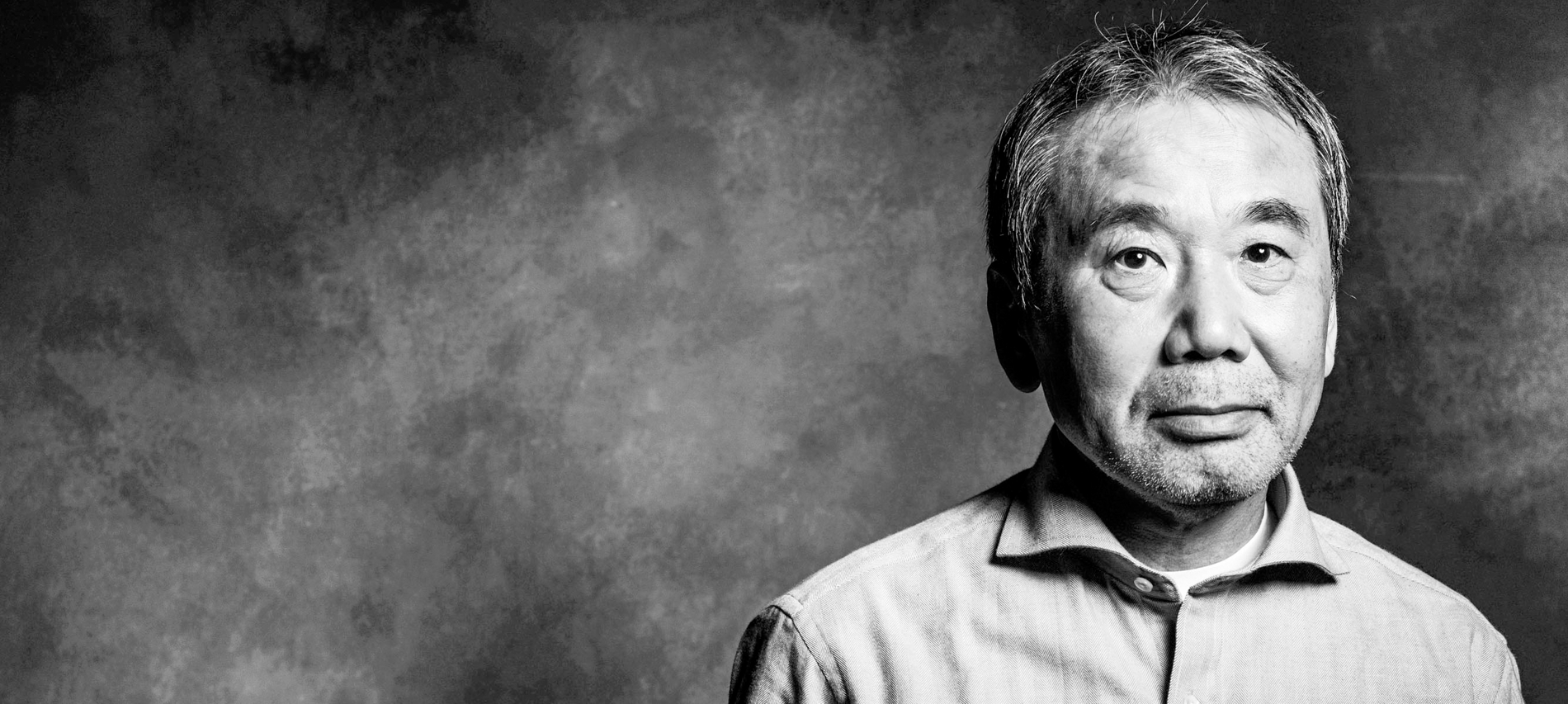
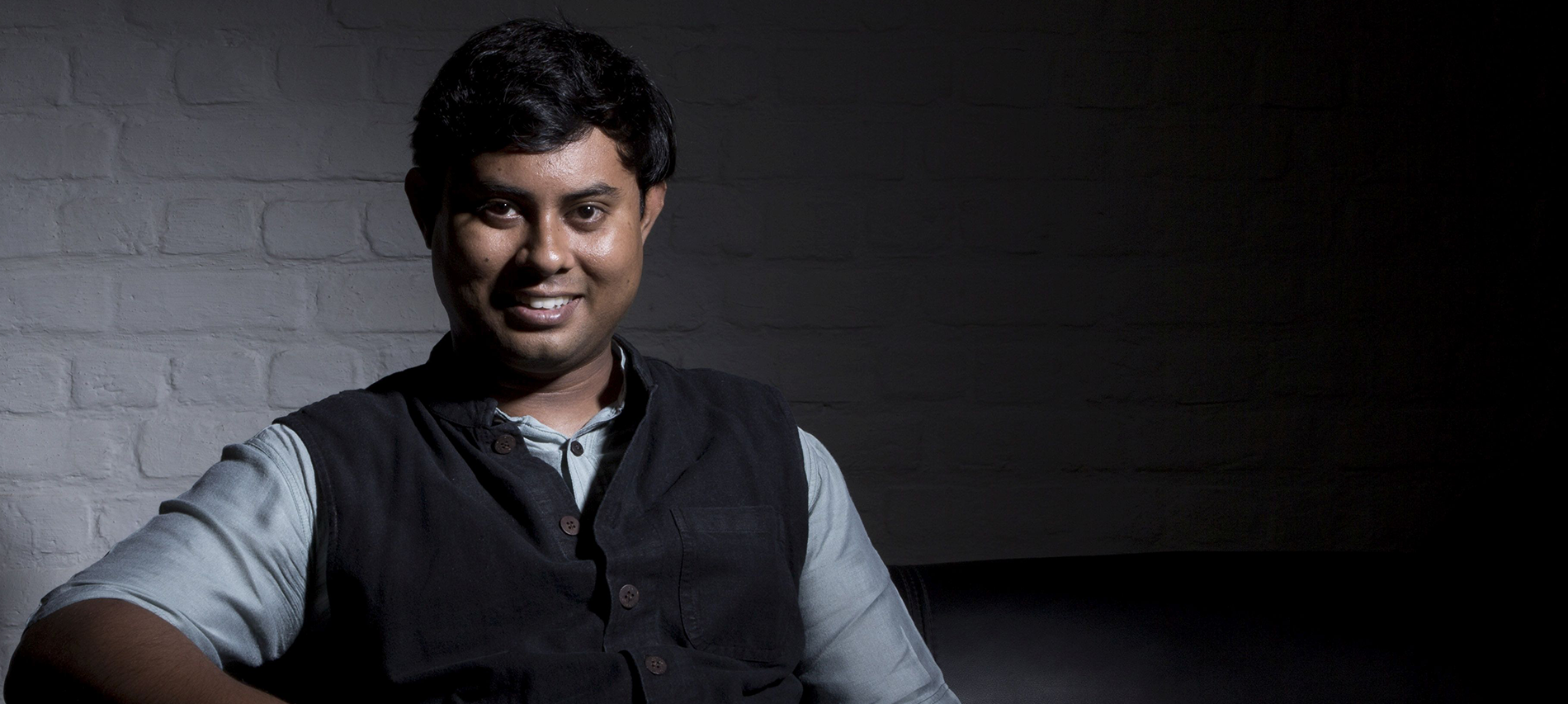
Penguin Random House India is thrilled to announce the acquisition of The Sacred Sword by Hindol Sengupta

About the book:
The book is a riveting, first of its kind historical fiction based on the life, teachings and battles of Guru Gobind Singh, the 10th and last living guru of the Sikh faith. A poet, philosopher, theologian and legendary warrior, Gobind Singh redefined the landscape of India and transformed its history. This book, the first ever historical fiction written on him, is being published on the 350th birth anniversary of Guru Gobind Singh. This is also the first fiction from best-selling non-fiction writer Hindol Sengupta.
“Guru Gobind Singh is one of the most captivating figures of Indian history. The Game of Thrones seems like a petulant skirmish once you start to unravel Sikh history. This book is the beginning of my exploration into this history and I am thrilled to start with Guru Gobind Singh – he is a hero’s hero, an ascetic warrior, a monk king.” – Hindol Sengupta
The Sacred Sword is an explosive and unputdownable historical fiction based on the king of kings, and the divinity of the enlightened teacher-Guru Gobind Singh.” – Priya Doraswamy, Lotus Lane Literary
“I am delighted to be publishing The Sacred Sword by Hindol Sengupta on the eve of Guru Gobind Singh’s 350th birth anniversary. Hindol is a prolific writer and this will be his first novel in which he will delve into Sikh history through the life of the legendary and brave warrior Guru Gobind Singh.” – Milee Ashwarya, Editor-in- Chief, Commercial and Business Books
About the author:
Hindol Sengupta is an award-winning writer, journalist, public speaker and social entrepreneur. He is the author of seven books. He is the youngest ever, and only Indian, to be nominated for the Hayek Prize given by the Manhattan Institute in memory of the Nobel laureate economist F. A. Hayek. He is the youngest winner of the PSF award for public service which has also been won, among others, by the late Indian President A. P. J. Abdul Kalam.
He is the founder of the not-for- profit Whypoll Trust. He was invited to present his research on Hinduism and technology at the XXI World Congress of the International Association for the History of Religion. An alumnus of the Australia-India Youth Dialogue (AIYD), he won the 2015 grant to write a people’s history of Indians in Australia and Australians in India. He was part of IdeaMensch’s 2012 list of 33 entrepreneurs who are making the world a better place to live in for his work on ideating India’s first women safety mobile app. He is Editor-at-Large for Fortune India where he writes on the political economy and entrepreneurship.

9 inspirational quotes from literature to start off the New Year

The start of the New Year is the best time to reflect on the year past and to make a new start, whether in your relationship, your career or even your health. That is why we bring to you nine quotes from literature, which we are sure, will motivate, challenge and inspire you in the new year.

design-23
design-24
nyq-creative-1
nyq-creative-2
nyq-creative-3
nyq-creative-4
nyq-creative-5
nyq-creative-6
nyq-creative-7


Team Penguin wishes you a happy and bookish new year!
—-

10 Tips for Smart Managers for Success in an Information Age

Steve Jobs, one of the most successful technology entrepreneurs and executives, did not have a degree or background in computer science or programming. Steve is not alone; this is also true of many other “digital immigrants” who have made significant contributions to IT. If people without a technology background can be technology pioneers, such success should encourage everyone to embrace digital intelligence and use technology intelligently in business and life.
Sunil Mithas’ book is intended for general managers and students who want to improve their digital IQ. The book espouses the belief that digital intelligence is an important competence that global leaders need to have in today’s economy.
Here are ten tips from the book that pave the way for managers in our Information Age:

Synchronise IT and Business Strategies

creative-1

Govern IT Effectively
creative-3creative-2creative-5creative-4
Manage IT with Discipline
creative-6creative-7creative-8
Grab your copy of Digital Intelligence here and get hold of the most basic competencies and skill sets for thinking about IT and IT-enabled changes that all managers should have.

*

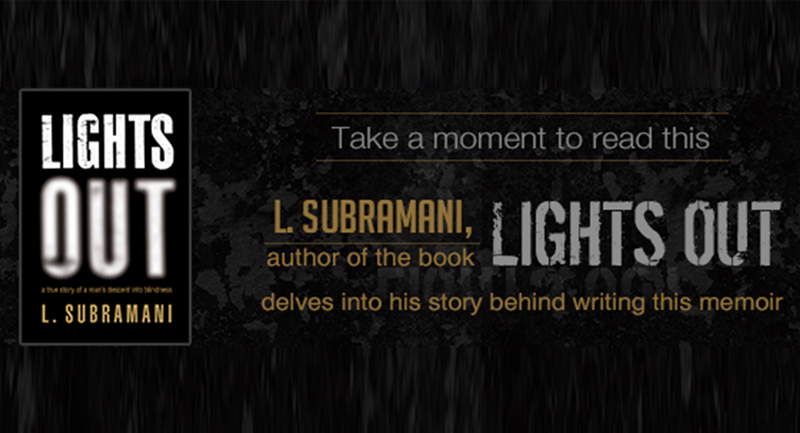
Take A Moment To Read This

Banner_116
How does it feel when a seemingly normal world around you was to go dark inch by inch? What would happen if someone who has not yet jumped out of his teens were to comprehend blindness that is closing in on him? How would you feel if suddenly you can’t walk normally or detect a stone or an open manhole in the middle of the street?
My book, “Lights Out”, published by Random House India which hit the book stores on Jan 10, deals with this rather difficult and challenging subject of my descent into blindness. Personally, the time of my life when I literally felt the world around me slip into darkness, was precious. Those are the only memories which represent vision or anything to do with seeing. If you tell me the colour of your shirt, I would go back in time and pull out the colour saved in my memory. If you describe the facial expression of a person, I would have to do the same: go back and think if what you describe resembles someone in my past. As a journalist, I try describing everything around me (obviously getting that described beforehand by someone who could see), and I am able to bring a touch of reality to it only because I was not blind years ago. In short, it is like the light at the entrance of a deep tunnel. Even though I am inside the darkness of the tunnel the beacon of light reminds me of a different world, a different time, and a different environment where I felt equal, respected and valued.
That might not sound right to you but it is true. Yes, thanks to the social attitude towards blindness, we don’t immediately feel a sense of belonging in most places, especially the ones which reminds us constantly of our inability to see. People regard and treat us differently which I sometimes find hurtful. On the other hand I also pity those who don’t have any experience of being with a blind person. I would like them to understand how strikingly chilling life could turn even for a normal individual. In fact, one need not be blind by birth to experience blindness, especially if he or she is afflicted with a progressive vision loss condition like Retinitis Pigmentosa.
Recollecting each tiny detail of that life was harrowing enough, but I wanted to live through those days because I realised there are thousands of such people in India alone who are silently going through a similar ordeal. I speak to them on the phone as a volunteer and a mentor. The realization that they are as helpless as I was twenty years ago and are incapable of leading a normal life saddens me.
How do I tell the world that these people need and deserve help? The only way I knew was by writing about it. Not an article or a report this time but a book. The book also shows the difficulties faced by the families of persons who lose their eyesight.
As for social attitude, I’m sure all of you know how much a blind person struggles to express his feelings to the normal world around him. In the course of my interaction with a fellow R.P and progressive vision loss patients, I realise many were not as lucky as I am in terms of finding an environment that allows them to lead a good life. So when you read my book, I would like you to think about the several unfortunate souls out there, living a traumatic life. Please spare a moment for such people and help them lead a normal life in whatever way you can.
If my books can elicit such a response from you it would fulfil my purpose of writing this book.
It is my sincere wish that R.P. becomes a subject of public discussion. We have been neglected and left to suffer in isolation for a long time now. The government, which pours thousands of crores of rupees into preventive eye care, does not spare a penny for people afflicted with conditions like RP. Sometimes they don’t even understand what is happening to them without proper medical attention. Without a system to rehabilitate themselves, they are potentially in a situation where they find it hard to make meaningful contribution to the country’s economic growth. Even if they are talented and skilled they will end up feeling useless and unworthy.
We cannot allow this situation to continue.  It is time we put an end to the isolation or neglect of such people.  I hope my book triggers similar thoughts in the readers.
——————
About the book
Imagine the world around you slowly blinking out, your familiar world disappearing into darkness till you begin to doubt not only the world’s existence but your own as well. In this terrifying blindness can you find the light?
This is L. Subramani’s inspiring story of triumph.
He suffers from Retinis Pigmentosa, a condition causing gradual and incurable blindness, which affects one in three hundred Indians. Lights Out shows with painful clarity the debilitating process of going blind and the agonisingly bewildering effect it had on him. In this unfamiliar and disconcerting situation he battles his disability to strive for normalcy, till he transforms his most crippling weakness into his greatest source of strength.
You could buy the book here: http://bit.ly/1lVtnM1
About the Author
L. Subramani is currently Senior Subeditor with Deccan Herald (The Printers Mysore Ltd) in Bangalore. He was affected with Retinitis Pigmentosa aged 18 and had to experience gradual loss of vision in two years, though the drastic vision reduction happened in a six month period, leaving him totally blind in the end. He is currently involved in setting up a support system for patients having rare disease or who experience progressive or sudden vision loss. He is doing this with the help of fellow RP patients and other social workers. He has pledged a portion of the proceeds of this book to his new initiative.
——————–

Meet The Random House Authors At JLF 2014

800x200_2

We’re extremely thrilled as this Jaipur Literature Festival is going to see many authors of Random House! Here is a brief author introduction for you to know more about the Random House authors who will be gracing the event:
Jhumpa Lahiri – A British Indian novelist, she is the recipient of Guggenheim Fellowship. This Pulitzer Winner confesses to writing her recent book, ‘The Lowland’ in a brownstone in Brooklyn. She was also nominated for the Man Booker and the US National Book Award.

Jhumpa Lahiri

Jack Turner – Apart from being the author of the book, ‘Spice: The History of a Temptation’, Jack Turner is also the host of a television documentary show!

Jack Turner

Jim Al-Khalili – Jim Al-Khalili is a professor of Physics at the University of Surrey and president of the British Humanist Association. He is also the author of ‘Paradox: The Nine Greatest Enigmas in Physics’.

Jim Al-Khalili

K. Anis Ahmed – Apart from being an internationally renowned writer, Anis Ahmed is also the co-founder of ‘Bengal Lights’, Bangladesh’s most prominent new online English Literature journal.

K. Anis Ahmed

Maaza MengisteAn American-Ethiopian, Maaza Mengiste’s debut novel was selected by the Guardian as one of the 10 best contemporary African books. Most of the novel, ‘Beneath the Lion’s Gaze’ is based on the author’s own memories of the wartime in Ethiopia.

Maaza Mengiste

Nicholas Shakespeare – A British journalist and biographer, Nicholas Shakespeare has been the recipient of many awards. His recent novel, ‘Secrets of the Sea’, was a best-seller in Germany. He is a fellow of the Royal Society of Literature.

Nicholas Shakespeare

Otto de Kat – Otto de Kat is the pseudonym of Dutch journalist, poet, translator, editor and novelist, Jan Geurt Gaarland. His debut novel, Man in de verte (The Figure in the Distance) was published in 1998, followed in 2004 by De inscheper (Man on the Move) and in 2008 by Julia.

Otto De Kat

Raj Kundra – The businessman turned author’s journey to Nepal was a life changing experience for him as he discovered Pashmina Shawls there, which he imported to London! His excellent entrepreneurship skills led him to write the book, ‘How Not to Make Money’!

raj kundra

Ray Monk – A professor of Philosophy at the University of Southampton, Ray Monk writes biographies. He is the recipient of the John Llewellyn Rhys Prize and for ‘Ludwig Wittgenstein: The Duty of Genius’. His most recent work is based on Robert Oppenhiemer’s life.

Ray Monk

Reza Aslan – An Iranian-American writer and scholar of religions, Dr. Reza Aslan is an Associate Professor of Creative Writing at the University of California, Riverside. He also put the argument about Jesus being White to rest by making a very interesting distinction between ‘Jesus’ and ‘Christ’.

Reza Aslan

Shereen El Feki – Shereen El Feki is a British journalist and author, who believes in studying society through sex, because what happens in intimate life is shaped by forces on a bigger stage…” She is the author of ‘Sex and the Citadel: Intimate Life in a Changing Arab World’.

Shereen El feki

Vali Reza Nasr – Author of ‘The Dispensable Nation: American Foreign Policy in Retreat’, Vali Nasr is the Dean of the Johns Hopkins School of Advanced International Studies in Washington. He is an American academic and an author specializing in the Middle East and the Islamic world.

Vali Nasr

Xiaolu Guo – A Chinese British writer, Xiaolu Guo is also a film maker. In 2013 she was named as one of Granta’s Best of Young British Novelists.

Xiaolu Guo

A.N. Wilson – An English writer and newspaper columnist, A.N. Wilson’s books have won many awards. His book on Leo Tolstoy won the Whitbread Award for best biography of 1988.

A.N. Wilson

Ananda Devi – Brought up in Mauritius, Ananda Devi has become one of the most prominent French writers of Mauritius and the Indian Ocean. She was made a ‘Chevalier des Arts et des Lettres’ by the French Government in 2010.

Ananda Devi

Carsten Jensen – This Danish author and political columnist’s most recent work is ‘We, the Drowned’. He is also the recipient of the Olof Palme Prize, among other prestigious awards.

Carsten Jensen

David Cannadine – Sir David Nicholas Cannadine is a British Historian, who is best known for his book, ‘The Decline and Fall of the British Aristocracy’. He has been knighted to honour his contribution to education.

David Cannadine

Geoff Dyer – An English writer and Journalist, Geoff Dyer, has published several award winning novels. His book, ‘But Beautiful: A Book About Jazz’ brought him fame and won him the 1992 Somerset Maugham Prize.

Geoff Dyer

Nadeem Aslam – At 13, Nadeem Aslam published his first short story in Urdu in a Pakistani newspaper. His debut novel, Season of the Rainbirds (1993), set in rural Pakistan, won the Betty Trask and the Author’s Club First Novel Award. He has also been shortlisted for the DSC Lit Award which will be announced on January 18 at the JLF.

Nadeem Aslam

———————–

This Literature festival will appeal to everyone’s palette! Writers from different walks of life and different genres are coming together in this magical literature festival to share their knowledge, to make something more of the world and for the world. So, do not miss out this exciting opportunity to meet your favourite authors and to get inspired!
Go random at JLF!

 

Four things Random House India brings for you at JLF 2014

800x200

Imagine the crowd roaring as the world’s eminent authors are ushered in. Imagine the hurried hush that would overtake the audience as their favourite authors step on the stage. This is what Jaipur Literature Festival is all about.
We are attending this literature festival with much enthusiasm. Here are four things we will be bringing to you from the Jaipur Literature Festival:
1.     Meet Jhumpa Lahiri – Yes, she is coming to JLF for the very first time and we are extremely excited to hear her speak. After wooing us with her words in ‘The Lowland’ last year, she’s here to give an amazing start to 2014!

Jhumpa

Image Source: classracegender.files.wordpress.com

2.     Live tweets – We’re all geared up to tweet live from various sessions to keep the twitterati updated with the ongoings at JLF. So, even if you’re unable to join us at JLF, you can still catch the action live on Twitter at #randomJLF

#Randomjlf3.     Daily round-up blogs: Not just tweets, we’re also summarising the sessions as blog posts for our readers. So please, don’t sleep without reading our write-ups as we’d be sharing them every evening.

blog-3

Image Source: communities.bmc.com

4.     Photos– We will bring you pictures of your favourite authors from the event! You won’t have to google their pictures anymore. We would click numerous photographs of the present literati and share them with you on our Facebook page and twitter.
authors
Image Sources: vanoorschot.nl, livemint.com, jaipurliteraturefestival.org, respectively
Attending the Jaipur Literature Festival is not only every reader’s dream come true, but it is also the most appropriate way for a book lover to start this New Year!
If you’re an avid reader, you’d simply love the aura that surrounds Jaipur for these 5 days and if you’re an aspiring writer, JLF may even inspire you to write your very first book. Last year, Nadeem Aslam became a source of inspiration for many aspiring authors when he narrated his story of getting published. Read here: http://penguinindiablog.wordpress.com/2013/01/27/the-blind-mans-garden-nadeem-aslam/

Nadeem Aslam

This year, you might just have your eureka moment at the JLF too. So book your tickets and go Random at Jaipur Literature Festival 2014!

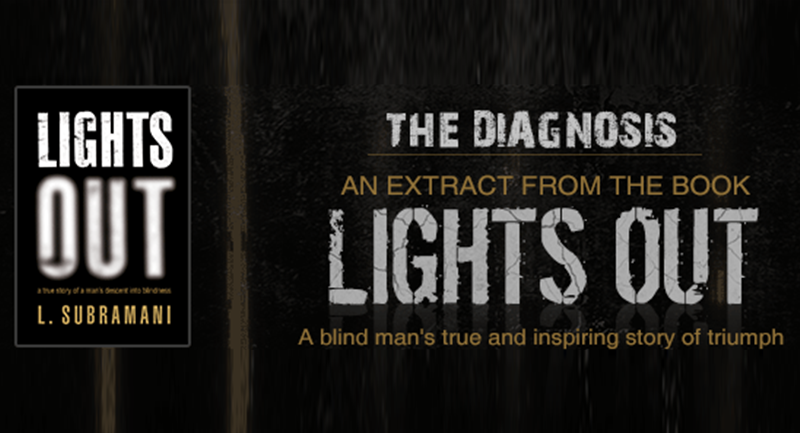
The Diagnosis: An Extract from ‘Lights Out’ by L. Subramani

Banner_113
The doctor stares down at me with a bright instrument strapped to his forehead. He asks me to keep my eyes open, but the beam of light hitting my eyes hurt and pierces my pupils with the force of a bullet. I gasp. The examination is an unending torture that makes dilation seem like a pin-prick. The pain is continuous, unrelenting, and it almost pushes me to the threshold of tolerance. Just as my head starts to shake in pain and tremendous discomfort, a sharp snap of a switch puts out the source of my agony. A minute of blissful darkness follows, and I take a series of deep breaths to relax my stiff muscles and joints. I find it difficult to get up for a few more minutes, lying on the couch, unable to shrug off the paralysing effect of the examination.
Dr. Rakesh usually smiles when he speaks to me. He asks questions about a thousand trivial things just to divert my mind from the impending pain or the intensity of the test. Why didn’t he try any of these today, I wonder? Even now, as he is looking down at me, there’s no trace of a smile on his face.
‘Do you mind stepping outside for a while?’ I’ve never heard him sound so plain and cold.
‘You mean…outside this room?’
‘Yes. I’d like to have a word with your mother alone.’
The initial confusion gives way to shock and anger. What does this doctor think of me anyway? I’m 15, sport a moustache, and I am perfectly capable of being present in the room to listen to my own diagnosis. I have to blink many times before I can see the door to the waiting hall and pull its handle. The blast of light from the well-lit waiting room is enough to drive back the pain. Eyes firmly shut, I breathe deeply once again to relax my stiffening joints and trembling hands. Thankfully, I don’t spend too much time in finding the nearest chair.
It is almost five in the evening. The perfectly square waiting hall appears smaller, as a stream of patients walk in through the portico and mill around the reception desk to announce their arrival for an appointment. Before my thoughts drift in the direction of the eye problems that has brought so many patients to the clinic, I feel Dr Rakesh’s hand pressing on my shoulder. I tilt my head up to listen to what he has to say. ‘Just the usual tests my boy’, or ‘Nothing to worry about, or ‘Here’s your prescription, now go and get your new glasses,’ might have been nicer to hear.
But instead he asks me, ‘So, ready for school from tomorrow?’
There must be something more than that… I watch his face expectantly.
But the doctor merely pats my shoulder, mumbles a weak ‘good luck’, and walks back into his consultation room. I turn towards mother thinking that she has got a prescription for new glasses. It’s already past five and we must hurry to the optical stores to buy my favourite frame and place the order today. However, one look at her face, and I freeze in cold terror.
She’s crying. Tears stream down her cheeks. She’s crying in the full view of strangers, I realize with shock, something I have never seen her do before. ‘God, Ma! What happened? What did he tell you?’ I ask, unable to control my horror.
I shake her shoulders, ignoring the several heads that have already turned in our direction. ‘What’s happened? What did he say?’
‘He says… Oh god, what will I do?’
‘Ma… Please. Tell me what happened!’
‘He says you’re going blind.’
‘Blind? How? I can see now!’
‘He says you have a condition that will gradually make you go blind,’ she tells in a wheezy whisper, the shiny tears still rolling down her cheeks.
‘What!’
She wipes her eyes with a handkerchief, draws a deep breath, and says, ‘It’s a condition called Retinitis Pigmentosa. It’ll eventually make you blind.’
It is my turn to take a deep breath. ‘Okay Ma, okay. Let’s find out if there’s a cure for this condition. We can still do something about it,’ I say in a weak, unconvincing voice, and immediately receive the second blow.
‘Cure? No… He says there’s none.’
—————
About the book
Imagine the world around you slowly blinking out, your familiar world disappearing into darkness till you begin to doubt not only the world’s existence but your own as well. In this terrifying blindness can you find the light?
This is L. Subramani’s inspiring story of triumph.
He suffers from Retinis Pigmentosa, a condition causing gradual and incurable blindness, which affects one in three hundred Indians. Lights Out shows with painful clarity the debilitating process of going blind and the agonisingly bewildering effect it had on him. In this unfamiliar and disconcerting situation he battles his disability to strive for normalcy, till he transforms his most crippling weakness into his greatest source of strength.
You could buy the book here: http://bit.ly/1lVtnM1
About the Author
L. Subramani is currently Senior Subeditor with Deccan Herald (The Printers Mysore Ltd) in Bangalore. He was affected with Retinitis Pigmentosa aged 18 and had to experience gradual loss of vision in two years, though the drastic vision reduction happened in a six month period, leaving him totally blind in the end. He is currently involved in setting up a support system for patients having rare disease or who experience progressive or sudden vision loss. He is doing this with the help of fellow RP patients and other social workers. He has pledged a portion of the proceeds of this book to his new initiative.

What Books Have Taught Me

1

When I received this assignment, I immediately texted my friends asking them about their experience of reading; what have books taught them? I learnt that one of the common feature in each of their experiences was the ability of books to cure the ailment of loneliness. My friends are weird and quirky and it is not easy to be so in a world predominated by normalcy. Reading books written by unconventional authors with even more unconventional characters, one stops feeling outlandish.
Being a socially awkward child I formed an immediate relationship with books.. I remember my mother giving me books- Enid Blyton’s Secret Seven, Malory Towers, St. Claires, The Faraway Tree Series, The Five-Find outers. I remember gobbling up each book and asking my mother for more.
There is only so much that someone or something can teach you. The best thing about books is that they don’t coerce you into believing something. They work their way through suggestion.
Books weren’t my best friends back then because they never listened. They spoke to me and I listened. I think I preferred it that way. Listening means calming the hurricanes inside your mind and that is exactly how books helped me. Books also taught me how to speak. They equipped me with the power of words. I learnt how to use big phony words to satisfy my teachers in school. Like teachers, books taught me that it is futile to have a colossal lexicon at your disposal when you are going to utilize it to speak the same insipid insignificant rubbish everyone else speaks. Use words that are at your disposal wisely. Do not abuse them. Do not overuse them.
Junot Diaz brought me up close and personal with language. I learnt not to shun the colloquial for the fancy because the colloquial is real. There is too much artificiality in this world. To drag language through the same rut would be wrong. Steig Larsson taught me to be unbiased and not to conform to the norms of society.
Reading is sometimes reduced to a very boring exercise of reaching the last page. Some literature-elitists want you to have read certain books or you’re out of the clique – whatever clique you were or weren’t part of! The point is every book has something different to teach every person. The most picked-on book like, ‘The Twilight’ might have helped someone in ways we couldn’t have. In the exercise of defining the canon and deciding which books are passé and which ones are in vogue, we are missing out on one important thing: reading.
So, Stop judging. Start reading. Start learning.
—————–
Credits: Sindhoora Pemmaraju
About Sindhoora
An unabashed bibliophile, Sindhoora is Majoring in English Literature.  She loves literature and music.
—————–

You Are What You Read

1
Every person who loves books has a special space in their home where they build a shrine for all the books they have ever bought. This shrine, in colloquial terms, is known as ‘library’ and commands great respect and devotion from acolytes. One of the universal truths is that you are what you read.
Sometimes when we read books, and in the process, fall in love with them and the people we meet in them, we become one of them. I remember when I first started reading Harry Potter, I couldn’t stop faking a British accent whenever I spoke to my friends in English. I would also frequently use words like ‘blimey’, ‘wicked’, ‘Expecto Patronum’, ‘dementor’, etc when in conversation with ‘muggles’.
a

source: tumblr.com

 When we read, we start constructing the character we like in our mind, we often tweak them further to suit our palette. At each step of construction, we try to emulate them and become more like them. So deep in the world of books are we that we scarcely care that we are becoming someone else. It is a fun experience to discover traces of our favourite characters within us. But it is also dangerous when inspired by crime novels; some members of our cult go a wee bit crazy. Books like The Collector and The Psychotic have inspired shameful crimes.
People who aren’t really taken with books, undermine their power and their ability to be transformed into dangerous tools. For isn’t that the whole reason why some books are banned? Because they are dangerous and can reveal more than what some people deem it to be acceptable.
Catcher in the Rye was a revelation. It was banned because the government was worried that it would influence teenagers to engage in questionable activities. But Salinger was just capturing what was already happening in the country. He was speaking the truth and he was censored for it. In fact, anybody who has read 1984 would also tell you how powerful literature can be and how its censorship proves it. In fact, in ancient Greece, there was a law which prohibited the utterance of certain select words. If that doesn’t prove how powerful words can be and the obsession of those in power to regulate it, I don’t know what will.
b

source:4.bp.blogspot.com

 Books hold more sway over minds than swords or bullets do. And it is for this reason why reading must be exercised with caution and the reader has to learn to be sceptical of the narratorial voice, learn where the narratorial voice ends and the author’s voice seeps in.
Books say a lot about you. The books I have read find their way into me like weeds; I don’t mind them growing on me. I have a little of Junot Diaz’s Lola’s sass in me, Oscar’s otaku-ness; Rowling’s Hermione’s curiosity and Ron’s appetite; Fitzgerald’s Amory’s silliness and so on. Point is, books make you. And you make them what you want them to be.
————————
Credits: Sindhoora Pemmaraju
Sindhoora_Harry Potter 
An unabashed bibliophile, Sindhoora is Majoring in English Literature.  She loves literature and music.

New Year’s special: A reader’s resolutions

The New Year is almost upon us and research tells us that people who make resolutions on New Years’ as opposed to resolutions taken up throughout the year, succeed in keeping them. So let’s get this New Year started with some interesting choice of resolutions for bibliophiles:


1. The Books that Defined the Eras – Books that are legendary don’t only define people, they also revolutionize the time period and the thinking. The Beats in the USA and the Hungryalists in India defined literature and revolutionized it. They lived the words they wrote. My New Year resolution is to plunge myself into these literary movements and read all their work, the whys, the whats and the hows.

1
source: online-literature.com


2. Cosplay – Cosplay is really cool in general. But in places like India, where cosplay doesn’t happen everywhere across the country and frequently, it would be so much fun to dress up as your favourite fictional character and be them for a day. It would certainly startle some people out, but it would also be so much fun! Imagine dressing up as Hermione Granger or Cho Chang from Harry Potter and screaming Expelliarmus with your wand!

2

source: gamingcentral.in


3. The Forbidden – The forbidden is also the most tempting.  This year could be the year for you to read all the banned books, books by exiled authors and controversial books.  There is plenty of fish in the sea, for you to pick and choose the one you want to hook and read.

3

source: literarysluts.com


4. Popular Fiction – Lewis Carroll, in his book, ‘An Experiment in Criticism’, also muses about the blasphemy or the dark aura that literature-elitists have created around the books that constitute the genre of popular fiction. There is always ONE (or more than one) book that EVERY book-lover wants to read but is hesitant to, because the Literature Gods have declared them as blasphemy. But this New Year can be letting go of all the inhibitions and reading what we like and trying to understand the animosity displayed against popular fiction.

998164_4676797812125_1936754148_n

 source: facebook.com/sudeep.nagarkar


5. Audio books – This New Year could be about downloading the ‘discography’ of as many authors and poets as possible. To be able to listen to the works of artists in their voice is a completely different and new experience, everyone must be acquainted with. The way the tenor of the voice drops, picks up, trembles at different places, and completely changes one’s understanding of literary experience. So do not hesitate to listen to audiobooks by writers!

4

source: cdn.images.express.co.uk


6. Clean the Clutter- Every book-lover has a messy book shelf, they always bookmark for cleaning later. But start this New Year by cleaning the clutter, arrange your books according to colour, or title or author. Or arrange them according to priority and need; place the books you don’t need in your life right now far behind, or in the corner, and keep the ones that cheer you up right in the middle where you can see them.

       5

source: memecreator.org


7. Collect Bookmarks – We might not have any friend writing to us and sending us postcards from exotic places, but books are our exotic places and bookmarks, our postcards. So, collect bookmarks like post cards to boast about the places you’ve been to in books.

8

source: etsy.com


8. Read a Book A Week – Reading a book a day is not only ambitious but also the whole exercise of reading is rendered futile because we’re hardly learning anything as we are more worried about sticking to our timeline. Reading a book a week is much more productive and relaxing – pick up any book of your choice and start reading it. Don’t stick to one genre. Explore more. Read stuff that you’ve avoided all these years, the books that make you cringe and the books that make you judge others. Read everything, read a book a week, read leisurely.

8

source: img1.etsystatic.com


9. Join a Book Club – Join a book club! For what? Well, I don’t know. And that is exactly what we have to find out. What really happens in book clubs? Do people just sit around and discuss books? Just imagine coming up with insane new theories about books you’ve read, with people pitching in. Imagine arranging for cosplay events, poetry and other fun literary events, with these people.  Book clubs can be your own literary haven, away from the overrated normal non-readers’ world.

9

source: 31.media.tumblr.com


10. Write – Almost every obsessive reader writes. Promise yourself this New Year, to write something new or old every day. Put up sticky notes everywhere to remind yourself, write everyday about everything; the bug bites and the cold. Accompany your writing with a lot of reading and before you know it, you might even end up compiling a book!

10

source: ondolady.com

—————–

Happy 2020, readers! 🙂

error: Content is protected !!