Publish with Us

Follow Penguin

Follow Penguinsters

Follow Penguin Swadesh

Vegan Pork Burgers? Yes, they’re real – find out how to make them here!

Preparing a meal for someone is an act of love, says Charmaine D’Souza, a nutritionist and a writer of many kitchen exploits. In her latest book, The Good Health Always Cookbook, D’Souza, along with her two daughters, Charlyene and Savlyene, offers the reader a peep into her childhood memories and her comfort food. Read on for a delicious vegan recipe from her book.


VEGAN JACKFRUIT ‘PULLED PORK’ BURGERS


( Chefs the world over are using raw jackfruit in vegan cookery because the unripe flesh has a pork-like texture. The shredded fruit is a popular alternative to pulled pork and is now being used as a vegetarian pizza topping and a filling for tacos. It has a hard bite and absorbs the spices and flavours of a dish just like meat. Try this recipe for our burgers. You will soon become a jackfruit convert. -Savlyene)

 Preparation time 30 minutes

Cooking time 20 minutes

Serves 4


INGREDIENTS

  1. 4 whole wheat garlic buns
  2. For The Jackfruit Filling
  3. 400 gms green jackfruit ( Save the seeds for a curry or hummus)
  4. 2 tablespoons jaggery sugar or brown sugar
  5. 1 tablespoon finely minced garlic
  6. 2 teaspoons smoked paprika powder (or you can use red chilli powder)
  7. 1/2 teaspoon pepper powder
  8. ½ teaspoon star anise powder
  9. Salt to taste
  10. 2 tablespoons vegetable oil
  11. 1 cup BBQ sauce (preferably vegan. To be used for the filling as well as for serving)
  12. For the Mixed Vegetable Slaw
  13. 1 cup finely sliced mixed vegetables (onions, cabbage with the outer leaves and inner core, carrots with the peel and red, green and yellow bell peppers with the inner pith and seeds)
  14. 1 tablespoon jaggery or brown sugar
  15. 2 tablespoons lime juice
  16. 1 teaspoon pepper powder
  17. Salt to taste


METHOD

  1. In a large bowl mix the ingredients for the Mixed Vegetable Slaw thoroughly to ensure that the veggies marinade in the seasonings. You may need to add a tablespoon or two of water.
  2. Refrigerate.
  3. Mix the  jackfruit with the rest of the filling ingredients ( with the exception of the oil and BBQ sauce) and toss them well to coat each bit.
  4. Keep this aside for 5 minutes.
  5. Heat a pan and add the oil.
  6. Add the marinated jackfruit and cook for 5 minutes.
  7. Add ½ cup BBQ sauce and 1 cup water and cook for about 15 to 20 minutes.
  8. Using 2 forks shred the jackfruit as it cooks in the sauce.
  9. Once the shredded jackfruit has properly cooked, turn up heat and cook for 2 more minutes. Then remove from the stove top.


Good Health Always
The Good Health Always Cookbook || Charmaine D’Souza, Charlyene D’Souza and Savlyene D’Souza

TO ASSEMBLE

  1. Cut the whole wheat garlic buns in half and put 2 heaped tablespoons of  the mixed vegetable slaw on the bottom buns.
  2. Top with a generous serving of the shredded jackfruit filling and cover with the other half of the bun.
  3. Alternatively you can omit the slaw and just use thinly sliced onions and tomatoes.
  4. Serve with the remaining BBQ sauce.


NUTRITIVE VALUE per serving

  • Energy-206.33 kcal
  • CHO-30.09 gms
  • Protein-3.29 gms
  • Fat-8.09 gms
  • Sodium-366.53 mg
  • Potassium-525.94 mg
  • Calcium-90.88 mg
  • Iron-1.51 mg
  • Vitamin A-3.83 mcg
  • Vitamin C-30.61 mg


FEEDBACK Having seen Savios post on FB about how Charmaine had fooled him by replacing a pulled pork burger with a pulled jackfruit burger I asked her for the recipe. My husband is a staunch non-vegetarian and I am elated to say that he too got fooled. The burger was hot, juicy and wonderful. Best of all no fear of cholesterol and fat. No more pork for us! Thanks to team GHA. – Cheryl Lopes, Mumbai.

Who was Hamid Ansari?

When Hamid Ansari returned to India in 2018, it was a matter of great public interest. He disappeared in November 2012, and wasn’t heard of until Pakistani authorities accused him of espionage. The then External Affairs Minister Sushma Swaraj also took an interest in his case and helped in his restitution.

Hamid Ansari’s mother Fauzia Ansari is the vice-principal of a Mumbai college, and his father Nehal Ansari is a marketing manager in Bank of India. Hamid had completed a degree in engineering and had gone to Dubai for an MBA internship. He did a lot of voluntary social service work with the Rotaract Club, often teaching at regional-language schools, helping students from weaker sections of society, cleaning the streets, etc. Through this club, he became friends with exchange students from Japan, Hong Kong, Afghanistan and other countries. That was how he met Hamdan Khan, from Afghanistan, who offered him a place to say should he ever visit the country.

In November 2012, the then 27-year-old techie told his parents he was going to Afghanistan to interview with an airline company. But a few days after landing in Kabul, Ansari went missing.

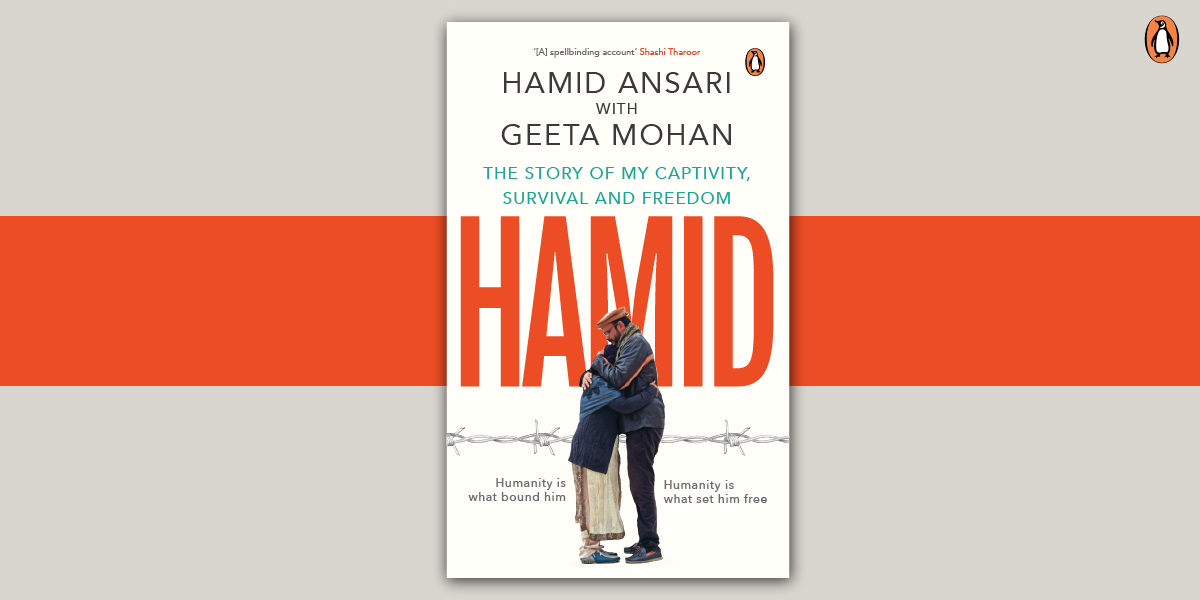
front cover Hamid
Hamid||Hamid Ansari, Geeta Mohan

Ansari went to Pakistan on what he strongly believed was a humanitarian mission. Fiza, the woman he wanted to save, lived in a part of Pakistan well-known for honour killings. Hamid met Fiza on an online chatroom. They became friendly soon, but Fiza’s family was already bent and insistent upon Fiza getting married. Given the beliefs Fiza’s family held, it was a near impossibility that anything would come of their relationship.

But one day, Fiza’s brother shot and killed a boy in their neighbourhood, and shot at his own father. Her father took the blame, but as retribution, the jirga (local tribal council) decided that under the wani custom, Fiza was to be married off to an elder son of the aggrieved family as compensation. There was no space for negotiation in the matter. The word of the jirga was binding.

This turned Hamid’s world upside down in many ways. Jatin Desai, an activist spearheading the mission to get Hamid released, had said that the first time he met Hamid was around six months before he disappeared. Hamid had met with Desai asking for help in acquiring a visa to Pakistan. Hamid had been told by his friends later that he could find an easier passage into Pakistan through Afghanistan. His appeal to the Pakistani High Commission through the Rotaract Club had been rejected after great delay. Having received no communication from Fiza herself, he decided to try entering Pakistan through Afghanistan.

Meanwhile November 14, 2012 onwards, Fauzia stopped receiving any news from Hamid. She checked airline passenger lists and went to the consulate but to no avail. Hamid seemed to have well and truly disappeared.

He was arrested in Kohat, the city where Fiza lived. In all probability he was set up by the people he had trusted, who had taken him to the hotel where he was staying, and promised to take him to Fiza. He had been suspicious of sudden last-minute changes in their plan, but he was also and illegal entrant in a foreign country with dubiously made fake identity cards, he didn’t speak the local language, and he looked conspicuously out of place. He was completely at the mercy of the people he had initially trusted, people who would later make him deeply regret his decision.

Indians and Pakistanis alike worked tirelessly for his release. The story of Hamid Ansari is also the story of individuals caught in the faceless vortex of state power. It showcases individuals as human beings first, and nationally divided citizens after. Activists rallied for him on both sides of the border, Fauzia worked day and night, and Zeenat Shazbadi, the Pakistani journalist who worked his case throughout was also later detained for her links to Ansari and was subjected to ‘enforced disappearance’. Everyone put their lives at stake to fight through this situation. Above all, Hamid is a story of strength and resilience through the most hostile circumstances possible. It gives us activists, lawyers, parents – ordinary people – who are actually heroes in the real world, and it narrates the life of a man who survived impossible conditions dauntlessly, because he believed in the innocence of his cause.


Ten quotes by His Holiness The Dalai Lama that will nourish your soul

The past year has been indelible in terms of the challenges it presented to humankind. With the unprecedented COVID-19 virus slowly clutching every part of world in its grip, people have increasingly found themselves feeling lost and hopeless. In times of crisis, however, the right words emerging from the right source can prove to be life-changing.


Today, we are presenting to you 10 such unforgettable quotes by His Holiness The Dalai Lama that will act as a salve for you during these difficult times, filling you with optimism and cheer. These thoughts can be found in The Little Book of Encouragement, a specially curated companion volume in which His Holiness shares words of encouragement to deal with new realities in a pandemic stricken world.

**

1. It’s not enough to pray for one’s peace of mind; one must examine what disturbs their mind and eliminate it.


2. Each religion has certain unique ideas or techniques and learning about them can only enrich one’s faith.


3. When this blue planet is viewed from space, there are no national boundaries to be seen. To solely concern oneself with a nation is outdated.


4. I am just one of the seven billion human beings alive today, and as such, I try to promote human compassion based on the sense that all human beings are one.


5. To the young people who are protesting and are desirous of change; to those who are struggling against systems that they see as oppressive, remember—the world is always changing.


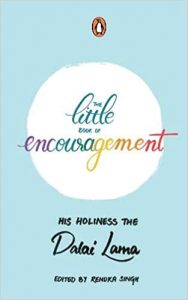
front cover of The Little Book of Encouragement
The Little Book of Encouragement || His Holiness The Dalai Lama


6. The planet does not need more successful people; the planet desperately needs more peacemakers, healers, storytellers, and lovers of all kinds.


7. Learn through listening and reading, come to an understanding through reflection, and turn that into experience through meditation.


8. We must ethically re-examine what we have inherited, what we are responsible for, and what we will pass on to the coming generations.


9. We must recognize that we are not individuals who are alone. We depend on our community and are a part of it. No matter how rich your family is, without the community you cannot survive.


10. Our life depends so much on others that at the root of our existence lies a fundamental need for love.

**

We are all complicit in the climate crisis

It is deeply unfortunate that it took a pandemic and its damage to make us realise what we should have known from the very beginning – we owe our environment sustainable and responsible use. No man is an island, and certainly not when it comes to the natural world. Deanne Panday, in her book Balance, takes a deep dive into the climate crisis and the depth of human complicity in the destruction of our natural world.

The climate of the world has seen a drastic global change merely over the past few decades. We have arrived at a point in the Anthropocene where the damaging impact of human footprint has become irreversible. The increased emission of carbon dioxide has increased health risks and long-term respiratory damage. One living in a metropolitan city is no stranger to this – checking the AQI levels of our cities and towns fills us with dread, and yet this dread remains insufficient in motivating us to radically change our lifestyle.

The increase of greenhouse gases such as carbon dioxide and methane has resulted in heat waves, where days are getting hotter. Extreme heat can lead to more droughts and hot, dry conditions can, in turn, spark off wildfires. We have recently seen devastating fires in Australia and California. Heat waves lead to drought, which would translate into food scarcity and eventually famines especially in countries reliant largely on agriculture.

Front cover Balance
Balance||Deanne Panday

The ozone layer has not been an exception in the damage done to the natural environment of the planet. While in the stratosphere it absorbs ultraviolet rays from the sun, the story changes closer to ground. Ground-level ozone is emitted from industrial facilities and electric utilities, motor-vehicle exhaust, petrol vapours and chemical solvents. Breathing ozone can result in chest pain, throat irritation, coughing and congestion. More ozone is formed in summer because there is more ultraviolent radiation from the sun then. It has been estimated that ozone mortality will be more pronounced in India and China, eastern United States, most of Europe and southern Africa.

Covid-19 is not the only that will plague our lives. Other climate sensitive diseases like cholera, malaria, the West Nile virus etc are expected to magnify. According to the Intergovernmental Panel on Climate Change, the rise in temperatures, along with an increase in population, could put many more people at risk of being infected by it. The reproductive, survival and biting rates of the Aedes aegypti mosquito species, which carries dengue, are strongly influenced by temperature, precipitation and humidity. Mosquitoes are cold-blooded creatures and seek out warmer environments to regulate their body temperatures.

Greenhouse gases also have an impact on the spread of infectious diseases, since they affect rainfall and temperatures. Higher greenhouse gas emissions also impact nutrients in food – A higher carbon dioxide concentration reduces nutrients such as proteins, vitamin A and folate, which are already in short supply for lakhs of people around the world.

Fertilizers are also responsible for several health disorders. Algal and cyanobacterial blooms produce toxins that are harmful to wildlife and humans. Warmer ocean temperatures and precipitation promote their growth, and their main ingredient is nitrogen. The heavy use of nitro-based fertilizers to grow our food causes a range of illnesses in human beings, such as headaches, vomiting, diarrhoea, numbness and tingling.

The planet we inhabit now is vastly different from the one that existed even thirty years ago. The deterioration has been incredibly rapid. At this point, where restoration might be an option anymore, it is high time we at least begin the process of mitigation instead of myopically pursuing personal comforts.


Moni Mohsin on Ruby, politics, and choices

Moni Mohsin sat with us for an absolutely delightful chat, and we just can’t get enough of her (and her book The Impeccable Integrity of Ruby R of course!)


South Asian literature has historically been seen as heavy and weighted, so do you feel a little more liberated working with a freer style like satire?

MM: It’s not that satire is lighter per se because you can go to really dark places with satire too. I choose to write social commentary that allows me to portray my society as accurately and as truthfully as I can while also exploring its more comedic side.


If you had to pick five desert island reads, they would be:

MM: Ah! This is a difficult one not least because my essential reading keeps changing, but if I have to give you top five today they would be:

George Eliot’s Middlemarch because it is so wise, profound and capacious.

Digging to America by Anne Tyler for its wryness, humour and subtlety.

The Complete Works of Shakespeare because God knows when I’ll be rescued.

Some David Sedaris to lift my spirits.

Nuskha-e-Wafa by Faiz Ahmed Faiz so I can keep myself busy by learning all of his greatest  ghazals and nazams by heart and stunning everyone with my brilliance when I finally get rescued.


How have you been spending your days indoors?

MM: Editing, writing, recording my podcast ‘Browned Off’ and watching tons of Netflix. And eating chocolate!


If you didn’t pick satire, what would be another narrative style that you might consider?

MM: I’d write funny romances and whodunnits.


Do you think social media can have a positive impact in a field like politics, or is that too positivist? In theory of course yes, it is possible, like anything else, but do you think the system and political structures create politicians and workers on ground level who could actually wield it as a constructive tool?

MM: Of course social media can have a positive impact. Many activists use it for just such a purpose: they speak truth to power and set the record straight. As with everything else, in using social media too there is a choice involved.


What would Ruby do if she were embroiled in today’s South Asian politics? Do you think she would play the system like a fiddle or is the current situation maybe a bit too much even for her?

MM: She would do exactly what she does in the novel: she’d start off believing she is doing good. But very soon, in order to prove her loyalty to her party, she’d find herself peddling misinformation and abusing anyone who disagreed with the party line. And she’d still believe she was doing good.


There is a general despondency that seems to have settled in amongst people, with the pandemic and the general world-politics vortex where something goes wrong every day. We find ourselves once again in an age of anxiety. Do you think satire has the potential to push society towards introspection at such a time? Or is it consumed more like page 3 entertainment because people are too tired?

front cover The Impeccable Integrity of Ruby R
The Impeccable Integrity of Ruby R||Moni Mohsin

MM: I don’t really know. I think for satire to act as a catalyst for reform, there has to be some consensus on morality – on what we deem to be right and what we believe to be wrong. But in today’s deeply divided world I’m not sure we have that agreement any longer, if we ever did. My own ambitions as a writer are more modest. I am pleased if I can make someone smile when they read my work or recognize something I’ve written as being truthful.


Power and age very easily sway younger, more impressionable people. It happens with Ruby as well, who listens to one speech by Saif Haq and completely discards her reservations about a figure like him. Was the affair between Saif and Ruby a conscious narrative choice from the very beginning, considering it echoes the #metoo movement very closely, or was it something that born later out of the sequence of narrative events?

MM:  It is not just the young who fall prey to the false promises of the powerful and the privileged. The affair between Ruby and Saif, while it is an actual thing in the book, is also meant to function as a metaphor for how we the public, who should know better, allow ourselves to be seduced by celebrity and by the intoxicating but divisive rhetoric of populist leaders.


Saif is said to have been modelled on Imran Khan, although he is an echo of several public figures we have seen. Did you have any specific figure in mind when you wrote him or is he more of an amalgamation?

MM: In creating Saif Khan I channelled the arrogance, entitlement and charisma of several populist leaders who are prominent in the world today.


The heightened focus on integrity in a field that obviously seems to have none is a very striking anomaly through the novel. In India for example politics seems to have given up on pretences and external polish. Do you think perhaps that morally bankrupt politicians are more effective when they work with the façade of integrity, parading the importance of being earnest? Or is the scene changing in that regard?

MM: I don’t think that Indian leaders have dispensed with their soaring rhetoric about purifying their country and returning to some mythical golden age while simultaneously stepping into a glittering future. Populist leaders never tell their adoring public the truth: that they have no quick fixes and that meaningful change comes only through hard work and sacrifice. The best they can do when their hypocrisy or incompetence comes to light is to either blame others (the opposition, or minorities, or bad neighbours or hostile super powers or the ‘lying’ media or whatever) or else, conveniently ignoring the truth.

~

The Impeccable Integrity of Ruby R is an exciting satire on the life and times of our current politics.


Inspiration for your next Illustrative and Writing Project

Still Life, by Anoushka Khan is an experiment with visual storytelling, using pictures and words to create a world that is both unsettling and extraordinary. Part road trip, part existential thriller ,it seeks new ways to look at love, isolation, memory and loss, asking what connects us to each other and to the natural world, and how we are governed by impulse we barely understand.

Today we have a chat with the Anoushka to understand how she worked on this masterpiece, and her inputs!

Front Cover Still Life
Still Life || Anoushka Khan

When did the idea for this book first come to you?

I was doing the washing up a few years ago and I suddenly thought, I’ll do a novel with paintings! I’d seen that paintings with words scrawled on had the power to move me, as did children’s picture books, and I wanted to recreate that simplicity and intensity.

What is your writer-(and illustrative) routine? 

I’m lucky enough to have a home office; I shut the door, look at the artwork I’ve already made as a run-up, and then dive in. I only really get snatched hours here and there.

Was there a different element or zone you had to bring yourself to whenever you’d get down to work on this book?

The only way I can work is with my headphones on playing music—it shines a mental spotlight on the work and makes everything else disappear. I feel like music made this book, it’s far and away the biggest influence on my work.

What was the most challenging, and was the most rewarding experience of this project?

The most challenging aspect was probably my relative ineptitude with technology; I don’t know how many hours I spent trying to figure out how to lasso images in Photoshop or compress PDFs or whatnot. The most rewarding? A couple of people I know nearly cried when they read the book. I was so happy that it made a mark.  

What is one thing you would, and one thing you wouldn’t recommend to anyone wanting to work on a book?

Enjoy getting lost in the process, rather than looking to the horizon. Try not to compare your work to others.

How difficult was it to illustrate such dark and complex emotions?

It’s really useful to be able to deploy words as well as images to convey mood or tone, and in some ways you can use one to balance out the other. And you can make it cinematic: focus on the character’s feet or a bowl of fruit while a particularly disturbing train of thought or difficult conversation is taking place. There is a darkness that permeates the book, but it’s from melancholy and mystery rather than bleakness—I think that would be much more difficult to sustain.


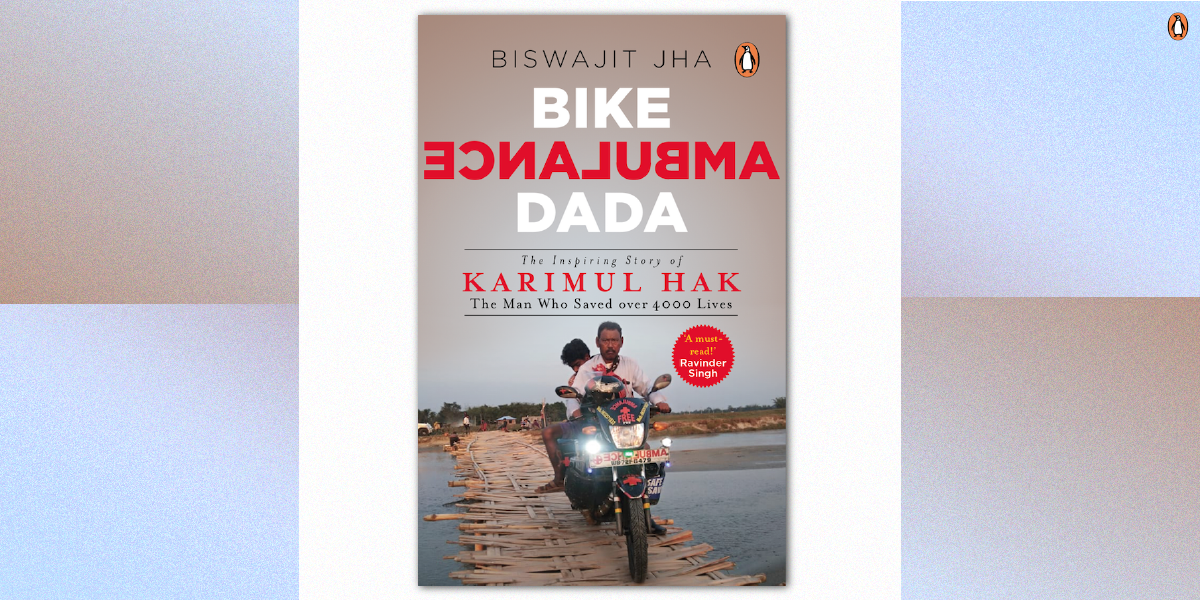
Writing the story of the man who saved 4000 lives

Bike Ambulance Dada, the authorised biography of Padma Shri awardee Karimul Hak, is the most inspiring and heart-warming biography you will read this year. Written by Biswajit Jha, it documents the extraordinary journey of a tea-garden worker who saved thousands of lives by starting a free bike-ambulance service from his village to the nearest hospital. The book is a must-read today as it will inspire us to do and be better in our lives.

In this interview, we talk to the author to understand his personal journey with the book and it’s story.


  • Where did you come across Karimul Hak’s story?

After I quit my job and came back from Delhi in 2013 to work for the people of my area in the northern parts of West Bengal. I first read about Karimul Hak in a local newspaper and came to know the amazing story of this tea garden worker who carried critically ill patients to the hospital on his motorbike – free of cost.


  • What inspired you to share this story with the world?

In 2015 when a friend of mine told me that she personally knew Karimul Hak, I felt an urge to meet this person. One day, I, along with my friend, went to meet Karimul Hak in his village much before he received the Padma Shri and much before he became a well-known figure. But I, at once, got hooked to this simple man who does such great work for the people. What amazed me is that despite being a tea garden labourer, he does such incredible work to help his fellow villagers without thinking much about his own family.

After that I started working with him to serve the poor. I made him the brand ambassador of my school which I started in 2017.

I felt people all over the world should know the story of Karimul Hak, who is living proof that you don’t have to be an extraordinary person to do extraordinary work. You can be ordinary and still do outstanding work for people. His life is an inspiration for all of us. When a tea garden labourer with a meagre monthly salary can undertake such a path-breaking journey, we all are capable of doing wonders.


  • Your own father was very particular about helping others. Can you share some incidents that stuck with you?

My father, from whom I got my first lesson to serve others unconditionally, was a primary school teacher and has always led a simple and honest life. From my childhood I saw my father helping others despite the fact that he was not a rich person.

front cover Bike Ambulance Dada
Bike Ambulance Dada||Biswajit Jha

So, the lesson about doing things for others and sacrificing your own comfort for someone less fortunate than you, I got from my father who, despite being not very well-off, did everything he could in his entire life for the betterment of society. He took on a frontal role in establishing three charitable schools in our village and also worked tirelessly to improve education in and around our village. It is due to his tireless effort that we got the first English medium school in our area. I did not have to go outside my own home to find inspiration to help others.

One incident that stuck with me the most, which I also shared in the book, is a story of a sanyasi. It was a sultry summer noon in the early nineties. Hungry and exhausted, an old sanyasi came to our doorstep. My father ushered him into the puja room. After my mother fed him, the sanyasi expressed his wish to rest inside the puja room. But the room did not have a ceiling fan as we couldn’t afford one in every room. Realizing the old man might not feel comfortable without a fan, my father got the ceiling fan uninstalled from his own room and fixed it inside the puja room so that the sanyasi could sleep well.

The second incident which I remember vividly is that every year there used to take place a fair in our village. Though thousands of people would come to the fair, in those days there was no facility for drinking water in and around the fair. People would suffer due to this. Seeing the sufferings of the people, my father started to carry water in big jars from our home to the fair and started distributing drinking water along with jaggery to the people for free. I was very small at that time but my brother and I also used to go with my father and distribute water to the people. After that he made it a routine of conducting this ‘water camp’ every year. This is another lesson I learnt from my father that whenever you see people suffering, you should come up with some sort of solutions in your capacity.


  • What was the book-writing experience for you? Particularly knowing you’ve always wanted to write?

I always wanted to write a book. But I did not know when that would actually happen. As I am a social entrepreneur and not a full-time author, writing a book was very challenging. Taking out time from my busy schedule was a challenge. After quitting journalism, I stopped writing for almost two years. That actually helped me. My urge for writing increased manifold during these two years.

When I had started working with Karimul Hak, I felt an urge to take this story to the people all over the world and inspire them. When you have such a mission to accomplish, no job in world seems a challenging. Rather, I enjoyed writing this story. I enjoyed knowing Karimul Hak more closely while researching for this book, talking to him and interacting with people of his close quarters. I was so engrossed with the struggles of his life that I cried several times while writing his story.


  • What was the biggest challenge in this project?

There were many challenges I faced while writing this book. The biggest challenge was to make Karimul sit and talk. Since he can’t sit for more than 10/15 minutes in a single place, listening to the stories of his life from him was a challenging task. Apart from that he does not remember many incidents of his life. He would keep on telling me only 5/6 stories of his life which were not enough to write a book. Getting information about Karimul’s childhood days was also a challenge. Apart from that I had to write within certain parameters while writing a biography or a real life story. But I wanted this book to be interesting to the readers also so that it does not become monotonous. So, writing a non-fiction in a fictional way was a challenge but I tried to keep that ‘tension’ alive throughout the book.


  • What made you switch professions, from a journalist to a social entrepreneur?

Like Karimul, I was also born and brought up in a humble family of a small village in Jalpaiguri district of West Bengal. I struggled my way into becoming a national level journalist. I hardly got any support while I grew up. But I wanted that no one should face the same ordeal which I faced in my childhood.

With this thought in mind, me and my wife both quit our jobs and well-settled life in Delhi and came back to my roots in the northern parts of West Bengal which is considered to be the backward area of the state. After that we started serving the poor and helpless people. I basically wanted to be a part of the difficult but successful stories of many struggling men like Karimul.

Apart from many other social activities I am involved in right now, writing this book on this unsung hero is one of my ways of giving back to the society.


  • How satisfying has the change been and what changes have you experienced in yourself after this switch?

Initially, it was very challenging. To start everything all over again was very tough. I had many sleepless nights. But I kept on doing good for the others in my tough days. That, I think, helped me overcome my personal troubles. When I found that there were thousands of people who did not have basic things like food, clothes and shelter, my problems seemed much lesser compared to theirs.

While working for the others, I became a much better person. I found my true meaning of life. I felt happy within. And when you start to feel happy within, everything around you becomes beautiful. That’s why in my second book, which is a fiction and will be published after my debut book Bike Ambulance Dada, I wrote that the only way to get happiness is to serve others unconditionally.


Gautam Chouby on the first Bhojpuri-English translated novel

The first ever translation of a Bhojpuri novel into English, Phoolsunghi transports readers to a forgotten world filled with mujras and mehfils, court cases and counterfeit currency, and the crashing waves of the River Saryu. Today we have a chat with the translator, Gautam Chouby to get his take on working on the book, what this means for the community, the challenges he faced and more!


**


1. This is the first Bhojpuri to English translation—what does this mean for the community?

There are about 200 million Bhojpuri speakers in the world and the history of Bhojpuri literature in print in nearly 150 years old. The oral songs and the tradition of folk theatre are older still, dating, in a few instances, to the early 15th century. Yet, Bhojpuri literature has suffered neglect and anonymity. And Bhojpuri culture has been subjected to gross misinterpretation. This book—as is evident from the overwhelming response from readers, scholars and reviewers—has opened up the possibility of a fair reappraisal, connecting the language and its literature with readers everywhere. Since it cannot be adequately emphasised, I will simply say this: Bhojpuri people are thrilled.


2. What inspired you to work on this book?

Phoolsunghi is a sweet story of love, music, friendship and forgiveness that makes the finest traditions of Bhojpuri literature visible, in ways perhaps few other book could. It brings two of the best known Bhojpuri figure together: one is the subject of the novel, the other is its author. Besides Phoolsunghi also contests flawed discourses about the Bhojpuri world—notions which, at times, even people from within the region are reluctant to confront and address. At its very core, it is not a culture that glorifies violence and sexual misdemeanours; it is humane, sophisticated world with its own codes of honour and chivalry. It is a sweet world of melody, music and hard-working individuals.The novel brings these aspects to the fore. For example, it celebrates the miraculous rise of a courtesan in a culture that is often considered doggedly patriarchal.

Even though it was written during the days of Emergency and it depicts a colonial world in turmoil—that moves between Banaras to the west and Calcutta to the east—it celebrates gestures of reconciliation, forgiveness and assimilation. Its social alchemy allows the unlikeliest of camaraderies to flourish, in ways that might seem impossible today even in the most cosmopolitan of spaces, let alone Bihar. It is a world where courtesans, musicians, thugs, robbers, zamindars and British sahibs interact uninhibitedly, sharing life values and moral imperatives. 

front cover of Phoolsunghi
Phoolsunghi || Pandey Kapil


3. What were some of the challenges you faced on your journey?

I grew up speaking Bhojpuri with my mother and till a few years ago, believed that I knew the language pretty well. However, when I started reading its literature, I realised that Bhojpuri in print is somewhat different from the spoken form, as is perhaps the case with all other languages. To begin with, the visual impression of Bhojpuri words, although written in the script that I was all too familiar with, was a little disorienting; for me Devanagari and Hindi were interchangeable, and I could not fathom the script being mobilised by another language. Further, since there is no ‘standardised’ Bhojpuri, there are multiple registers within the language, causing words to have different meanings across different spaces and regions. The proverbial wisdom about language variation in India—‘kos kos pe badle pani, char kos pe bani’ (water tastes different every mile, language sounds different, every four) is true of this case, too. This pushed me to connect with Bhojpuri scholars, writers and people in my village. In a sense, a larger community of Bhojpuri enthusiasts came together for this book.


4. What was your first interaction with Bhojpuri?

I grew up in a Bhojpuri-speaking literary family: my maternal grandfather, Chandradhar Pandey, was a well-known Bhojpuri writer. Understandably, I was somewhat familiar with figures like Mahendra Misir, Bhikhari Thakur, Rameshawar Singh Kashyap, and to some extent, even Pandey Kapil. Besides, the fascinating story of Mahendra Misir and Dhelabai—filled with mujra, music, dacoity, sahibs, zamindars, crime, compassion, court-cases and a Devdas-like central character—is a local legend and a much-harvested theme, explored across three other novels. However, it was only in late 2017, having completed my Ph.D. from the English Department at Delhi University that I turned to Bhojpuri. That too at the behest of a senior colleague. A year later, when I finally Phoolsunghi, I was quite smitten by the story and moved by the sentiments it invokes, in ways I hadn’t experienced earlier; I came to realise the emotive force of feelings expressed in one’s mother tongue. After this chance discovery of a literary gem, and based on my family’s very personal relationship with Bhojpuri literature, I felt duty-bound to share it with the world at large.


5. What do you most look forward to with this book and it’s publication?

What excites me the most is the hope that with the success of this first translation, other scholars and translators would undertake similar projects, making many more literary specimens available to the larger reading public. Equally encouraging—thanks to Penguin Random House India’s unflinching support for Phoolsunghi and the extensive media coverage the book has garnered—is the possibility that other publishers, too, hereafter, are likely to show interest in Bhojpuri books.  We are, in a nutshell, looking at quite an upbeat prospect for Bhojpuri literature. That, to me, is a wholesome objective, comprehensively set and partially achieved, through this book.


 **


Man on a mission: Sonu Sood and his relentless rescue efforts during the lockdown

‘Ask not what your country can do for you; ask what you can do for your country.’ says Sonu Sood, quoting John F. Kennedy, as he explains what propelled him to undertake the colossal challenge of helping thousands of migrants get safely to their homes as India reeled with COVID-19.


From taking to the streets and reaching out to the stranded, to setting up a dedicated team and making arrangements for national and international transport, Sonu managed to help thousands of helpless and needy workers. Chartered flights, buses and trains were sanitized and paid for. Distress calls from all over the world were answered.


Here are a few instances from Sonu’s memoir, I am No Messiah that remind us of the beauty of compassion, humanity and the power of one man’s determination to give succour to those in need.


The time when 167 women stranded in Ernakulam, Kerala, were rescued and sent to Odisha –

The women worked in an embroidery workshop. ‘The factory had closed soon after the lockdown was imposed in Kerala, leaving these Odia workers high and dry. The women had no shelter and hardly any food in Kerala. They also barely knew Malayalam, the state’s language. In short, they were cash-strapped and helpless.’

Explaining the logistics involved, Sonu Sood writes, ‘… I first reached out to some authorities at Air Asia. Once they were convinced about the immediacy and the integrity of my request, they agreed to send an aircraft from Bengaluru to Kochi to airlift the girls and take them to Bhubaneswar. In Kerala, we had to arrange for a minimum of seven large buses to fetch the 167 women from Ernakulam and drop them off at the Kochi airport in time to catch the flight.’


The setting up of the Ilaaj India app –

Ilaaj India is a mobile based application to connect people seeking medical help with those equipped to provide it to them.

‘Ilaaj India aims to get the patient the best possible help in the shortest possible time and at the closest possible venue. We strive to get the surgeries or procedures done at hospitals easily accessible to patients. But we can also make arrangements to get them treated in bigger metros like Mumbai or Delhi, depending on the immediacy and the kind of time the patient has.’

front cover of I am No Messiah
I am No Messiah || Sonu Sood


‘For me, Ilaaj India was born when I learnt of the magnitude of the health-care problem that afflicts thousands of Indians. The figures shook me: an unbelievable number of children died due to inadequate medical attention in 2019.’

The quote that best describes Sonu’s effort to better the healthcare facilities in the country is from the book itself where he cites Mahatma Gandhi – ‘The best way to find oneself is to lose oneself in the service of others.’


The ‘Ghar Bhejo’ operation turns international

‘In July 2020, when parents of over a hundred kids beseeched me to airlift their children from Moscow and ferry them to Chennai, I was caught off balance. Chennai was under complete lockdown, there were no flights going in or flying out. It was an insurmountable difficulty because when a state is under lockdown, you can’t procure landing permissions. But the parents were desperate.’

‘On 5 August, they did land in Chennai, all the way from Moscow. I had managed to get last-minute permissions from the authorities in Moscow and Chennai to facilitate this journey of the medical students.’


The beginning of a long journey ahead

Reflecting on his incessant efforts to help those in need, Sood notes ‘It is no longer just about Ghar Bhejo, for getting a migrant home doesn’t mean the end of the journey; it is the beginning of a whole new set of problems. And service to mankind doesn’t begin and end with migrant workers; there are scores of other people too who need help. When you spread your arms to embrace people, you realize that a sea of humanity awaits.’

On a concluding note, we would like to recall these words by Sood that form the core of his life’s philosophy – ‘There isn’t a moment when something doesn’t touch your heart, confirming that by stepping forward to help, you’re doing something right. As I said earlier, one lifetime isn’t enough for what I want to do. But I do know that this lifetime has been earmarked for a dream.’

**


Prototyping in design thinking: the what, why and how explained

What is prototyping

Prototyping is about engaging with customers in advance and reaching out to them with a very low-resolution solution to get an early feedback. Such an approach of iterative rapid-cycle prototyping helps in securing funding, organizational commitment and customer trust, and in building the team’s morale and making them believe they are headed in roughly the right direction.


The need for prototyping

A good and early prototype serves three core functions:


1. It takes ideas from the abstract to the concrete, giving them the much-needed body and soul

2. A prototype helps get the buy-in from your team members, senior managers and customers, as at least one of the possible outcomes.

3. Prototyping makes it possible to seek feedback and avenues of improvement more objectively and readily.


One of the masters of the prototyping mindset was Thomas Edison, who famously quipped, ‘None of my inventions came by accident. I see a worthwhile need to be met and I make trial after trial until it comes. What it boils down to is one percent inspiration and ninety-nine percent perspiration.’


What to prototype and what all to prototype?

While anything can be prototyped, not everything needs to be. As David Kelley says, you only need to prototype the most unbelievable part of the solution, the leap of faith, and not the entire solution.

To ensure that you are not overdoing the prototype, spending too much time and resources on it, and checking the obvious, it is advisable to perform the last experiment first. If the most critical final frontier does not work, there is no point in reaching there and later wondering why.


When it comes to prototyping, speed matters

The faster your ideas are made tangible, the sooner you can evaluate and refine them and reach the best solution. The failure must be contained in a manner that many experiments could be packed within a given budget and time frame. These must be quick and dirty prototypes, or, as IDEO likes to call them, paper-thin prototypes.

The greater the investment in an idea, the more committed one becomes to it. The goal of prototyping is not to create a working model; it is to give form to an idea to learn about its strengths and weaknesses, and to identify new directions for the next generation of more detailed, more refined prototypes. Don’t let your inner perfectionist slow you down.


Rely on storyboard and scenarios for prototyping services

Services have far fewer tangible components, and there is a lot more involvement of the dimension of time, so you must think in terms of sequence of activities, emotional engagements and ‘moments of truth’.

Scenarios allow you to visualize how your solution interacts with users over time. One could test out multiple future scenarios to tease out customer reactions and validate ideas. Scenarios can also help in anticipating unforeseen challenges and thinking up remedial measures, and these are best done with the customer by the side. Meaningful scenarios keep the audience focused on the core of the idea, without getting lost in its mechanics or aesthetics.

front cover of Design Your Thinking
Design Your Thinking || Pavan Soni


Remain open to feedback

One of the key principles of design thinking is to seek timely and honest feedback from the people who matter. A delayed or skewed feedback does not help the progress of your problem-solving or innovation sprint and, resultantly, the mistakes become far too costly to correct.

When demonstrating your prototype, bear in mind that the intent is to solicit honest feedback and not sell the concept. This is a very tricky balance to achieve, especially if you are working under a tight schedule without easy access to your intended customers.


Create an inventory of your failed prototypes

Display it (your failed prototype) for others to draw inspiration from and for you to resort to it when you stumble on your next problem.


**

These insights about prototyping are from Pavan Soni’s Design Your Thinking, a practitioner’s perspective on how the tenets, methods and discipline of design thinking can be applied across a range of domains, including to everyday problems, and help us become expert problem-solvers through the use of the appropriate toolsets, skill sets and mindsets.


error: Content is protected !!