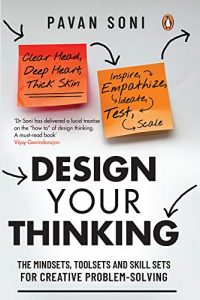
Publish with Us

Follow Penguin

Follow Penguinsters

Follow Penguin Swadesh

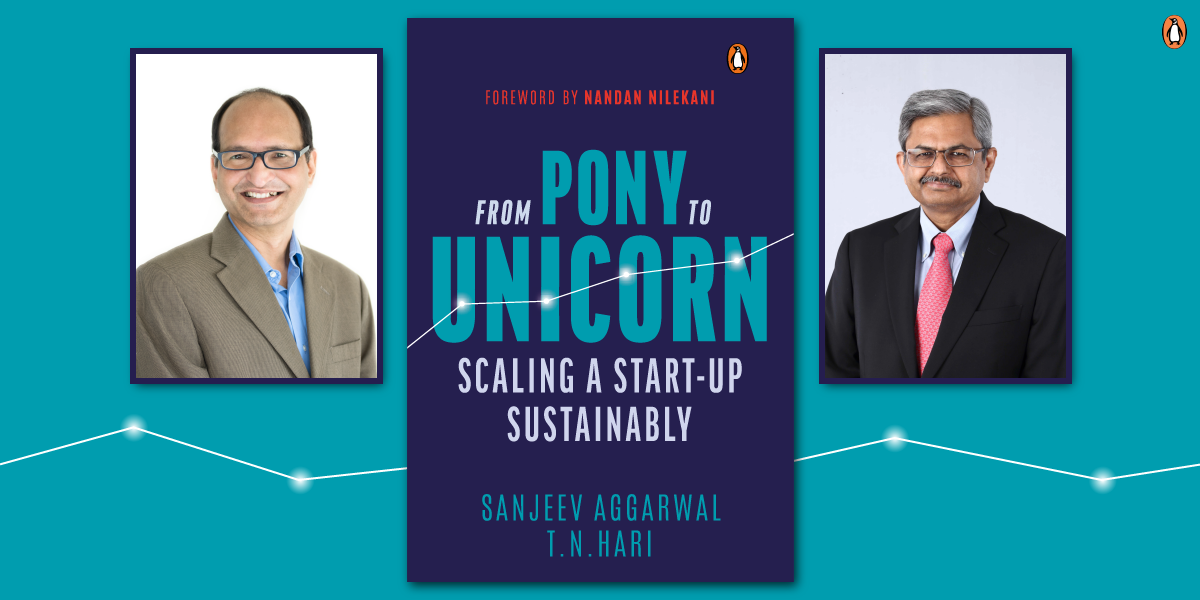
All things start-up: A conversation with Sanjeev Aggarwal and T.N. Hari

The journey of a business-from a small start-up to a large company ready for an initial public offering (IPO)-is fraught with pitfalls and landmines. To scale a company, one needs to do more than just expand distribution and ramp up revenue. From Pony to Unicorn lucidly describes the X-to-10X journey that every start-up aspiring to become a unicorn has to go through. The book effortlessly narrates the fundamental principles behind scaling.

Today, we are in conversation with the authors of the book, Sanjeev Aggarwal and T.N. Hari, who are both veterans in the start-up spectrum and have years of experience in guiding emerging businesses to reach their maximum potential.


Questions for Sanjeev Aggarwal:


1.     How was your experience of writing From Pony to Unicorn

Educational, as I was able to reflect on my learnings.


2.     In what ways would you say that the start-up ecosystem in India has changed in the past ten years? 

The level of founder ambition has reached a new high.


3.     Which factor, according to you, works most efficiently in helping a start-up scale sustainably?

Navigating inflection points with thought.


4.     Which sector in the start-up domain remains the least explored? Why do you think that’s the case? 

Agri-tech! The market is large and highly intermediated. 


5.     As book publishers, we cannot help but ask you about your favourite books that you’d like to recommend to our readers? 

How Will You Measure Your Life by Clayton Christensen


Questions for T.N. Hari


1. What propelled you to pen From Pony to Unicorn?

front cover of From Pony to Unicorn
From Pony to Unicorn || Sanjeev Aggarwal, T.N. Hari

Sanjeev and I have been through the scale journey multiple times and have seen several small startups go on to become large companies from very close quarters. The urge to share our learning and insights with the next generation of entrepreneurs who are trying to build sustainable businesses was what motivated us to write this book.


2. Which is your most favourite section of the book? 

‘The Human Capital’ section is my personal favourite for the simple reason that this is a topic close to my heart.


3. What kind of books do you enjoy reading? Are there any that you’d like to recommend to our readers?

I don’t particularly read too many management books. Six best books I read in 2020 are as follows:

  • Where will Man Take Us? by Atul Jalan (Atul writes better than Harari and Kurzweil put together)
  • Indica – A deep natural history of the Indian subcontinent by Pranay Lal
  • The Liberation of Sita by Volga
  • The Palace of Illusions by Chitra Banerjee Divakaruni
  • Fermat’s Last Theorem by Simon Singh)
  • Shackleton’s Way by Margot Morrell and Stephanie Capparell


4. If you could describe the current start-up ecosystem in India in one word, what would it be and why?

Vibrant


5. According to you, which is the one skill that an HR professional must necessarily possess?

A deep understanding of human psychology.

On writing and politcs: A chat with author Vinay Sitapti

How long was the research process for the book?

This took me three years. But I was also teaching during this period.


Why this subject in particular?

I am a child of the 1990s, and the two biggest political trends of that decade was liberalisation and the rise of the BJP. My first book, on P.V. Narasimha Rao, was a response to this first political trend. This book was motivated by the second trend — the political rise of Hindu nationalism — that I remember from my childhood.


What has been the most rewarding experience about writing this book?

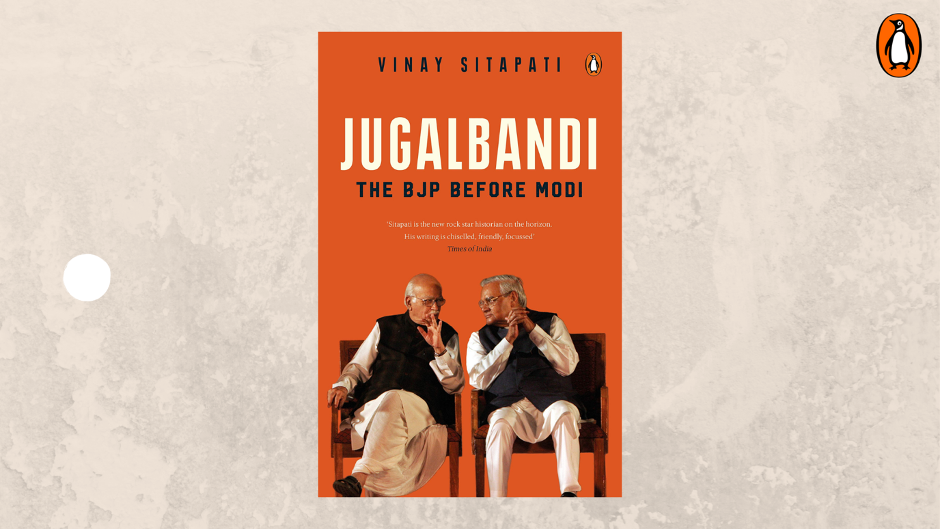
Front cover of Jugalbandi
Jugalbandi || Vinay Sitapati

While writing the book, I immersed myself in the world of Hindu nationalism — talking to people, reading books and articles, going through archives — over its 100 year period. Then suddenly I began to see patterns and trends, for instance their 100 year focus on organisational unity. It was almost as if my vision had suddenly changed from blurred to focussed.


Any criticism experienced? How about any encouraging instances/incidents?

The most encouraging feeling is that even though the topic is so polarising, the book has not been slotted as ‘left’ or ‘right’. The book has not provoked anger, rather I think it has spurred understanding. That’s a lovely feeling. It means that scholarship, if done right, can bring people together. There have of course been criticisms — that I have been unduly harsh on Vajpayee for instance. I only request that the reader looks at my evidence and asks whether my conclusions flow from it.


What should we look forward from you, next?

I haven’t yet decided on what next. But I enjoyed not just the popular reception to Jugalbandi, but also the process of writing it. So whatever else I work on next must not just be interesting to the reader, it should be interesting to me.

**

The Pokhran tests: An under-recognised success story under Vajpayee’s leadership

Former Prime Minister of India and member of the Bharatiya Janata Party (BJP), Atal Bihari Vajpayee was an understated politician of the kind not often seen in contemporary times. His patriotism was uncompromising, forged out of the paradoxes in his life: a sensitive poet who summoned nerves of steel to conduct the Pokhran-II nuclear tests. In Vajpayee, an intimate memoir of the consummate leader, we get a detailed look into the behind-the-scenes of the Pokhran tests, a glorious albeit controversial turning point in the history of India.

**

Vajpayee’s rationale for conducting nuclear tests in 1998:

‘Hiroshima and Nagasaki had deeply affected him. He wrote a poem, ‘Hiroshima Ki Peeda’, where he talked of waking up in the middle of the night and wondering how the scientists who had made those powerful atomic weapons slept after hearing about the destruction caused by their creations. Did they not for a moment regret what they had done? If they had a sense of remorse, then time would not judge them. But if they did not, then history would never forgive them. Vajpayee’s poem and his decision to go ahead with the test are not contradictory. He came to the conclusion that if India had to live in peace in its neighbourhood, credible nuclear deterrence was essential. Nuclear weapons prevent wars, was his constant refrain.’


‘The second, seemingly contradictory, line of thinking behind the tests was his deeply held view that India was destined to be a great power. Possession of nuclear weapons, in the world we inhabited, was the minimum entry criterion for that club. Japan and Germany, whose recent economic successes did not guarantee them the status of a great power, underscored this idea. Vajpayee’s belief in India was immeasurable, and while he did not say it, his body language that day seemed to indicate that he was happy to be an important instrument in that quest. An insecure nation could not be a great power—this was the powerful motivation that drove this decision to test.’


The volatile international reaction that followed:

‘The initial American reactions seemed too understated, but not for long. Clinton reacted angrily in public. He said that India’s action ‘not only threatens the stability of the region, it directly challenges the firm international consensus to stop proliferation of weapons of mass destruction’.’


‘The Japanese reaction was expected, as it was the only country to have been at the receiving end of nuclear weapons. It froze all aid, which, unlike in the case of the US, was a substantial amount, in excess of US$1 billion.’


‘The Germans also announced a moratorium on aid, which, at US$300 million, was far above American levels. China’s initial reaction was subdued, probably because they were aware of Indian ire at the Sino–Pak cooperation. In fact, to our surprise, Russia’s language was stronger; Boris Yeltsin said that he was disappointed and felt let down.’


Vajpayee addresses the Parliament about the controversial decision and its significance for India:

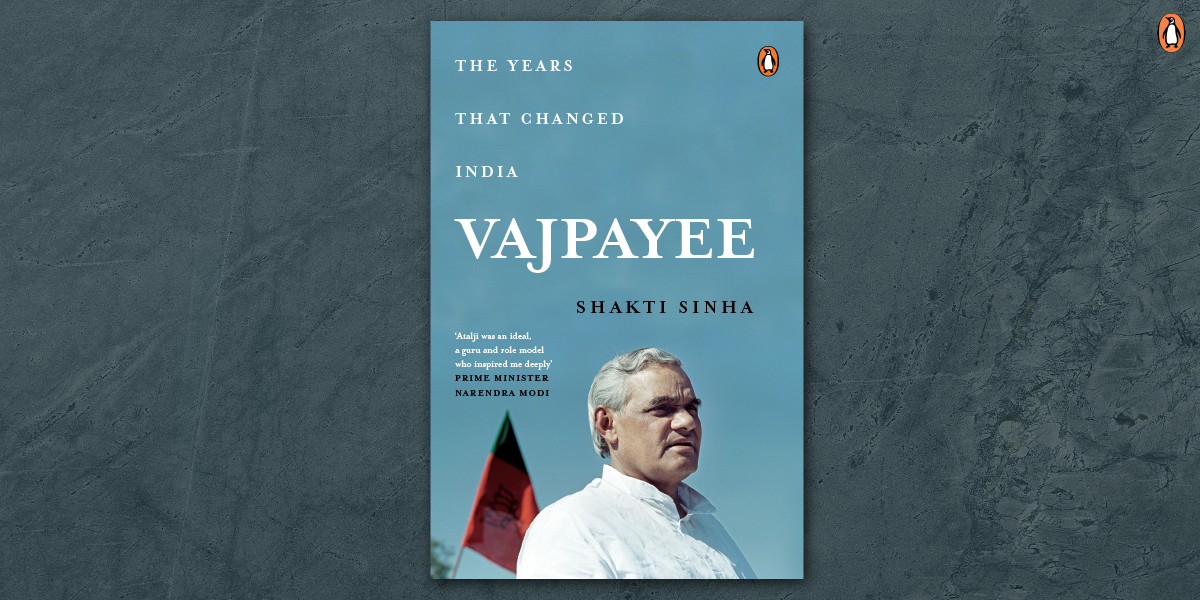
front cover of Vajpayee
Vajpayee || Shakti Sinha

‘India had demonstrated its nuclear capability in 1974, and Vajpayee reminded the members of Parliament that Indira Gandhi, speaking on the nuclear issue, had told Parliament in 1968 that ‘we shall be guided entirely by self-enlightenment and considerations of our national security’. He complimented all governments since 1974 for safeguarding India’s nuclear option by not signing the CTBT, despite the mounting international pressure.’


‘He situated his decision to test in the context of the India’s deteriorating security environment due to missile and nuclear proliferation in its neighbourhood. The increase in the number of nuclear weapons and the deployment of sophisticated delivery systems could not be ignored. Worse, India faced terrorism, militancy and clandestine war. In the absence of any movement towards disarmament, and keeping in mind the needs of national security, the difficult decision to test had to be taken.’


‘Taking his argument further, Vajpayee made it clear that India did not seek the status of a Nuclear Weapons State from anybody because it was already one. This was a reality, and with this added strength came added responsibilities. India’s nuclear weapons were not to be used for aggression or for mounting threats to other countries. Rather, Vajpayee explained, they were weapons of self-defence, which would prevent India from being subject to nuclear threats or coercion in the future. India did not intend to engage in an arms race.’


** 


Five crucial and unforgettable lessons from Sri M

In an interview with The Daily Guardian, Sri M said ‘Fiction is not meant to preach lessons but since there is no fiction without a factual core, readers are sure to be influenced.’

He wasn’t wrong. The stories from his book The Homecoming gave us several valuable lessons to take away, even if that might not have been the intention.


  1. Death of a builder

While the story resounds with deep irony, it is also a call to awareness of how intricately human lives and nature are entangled. Now more than ever we have started to live our lives as though nothing outside of our immediate need and greed exists, but in 2020 should have taught us anything, it is that we cannot continue to live in isolation if we want the planet to survive. The story is a beautiful take on a silkworm on its way to metamorphose into a moth before its untimely destruction by harvesters to make silk for the clothes of deities and people who have no time for the actual producer of this silk, or any care for its life.


  1. The Porter
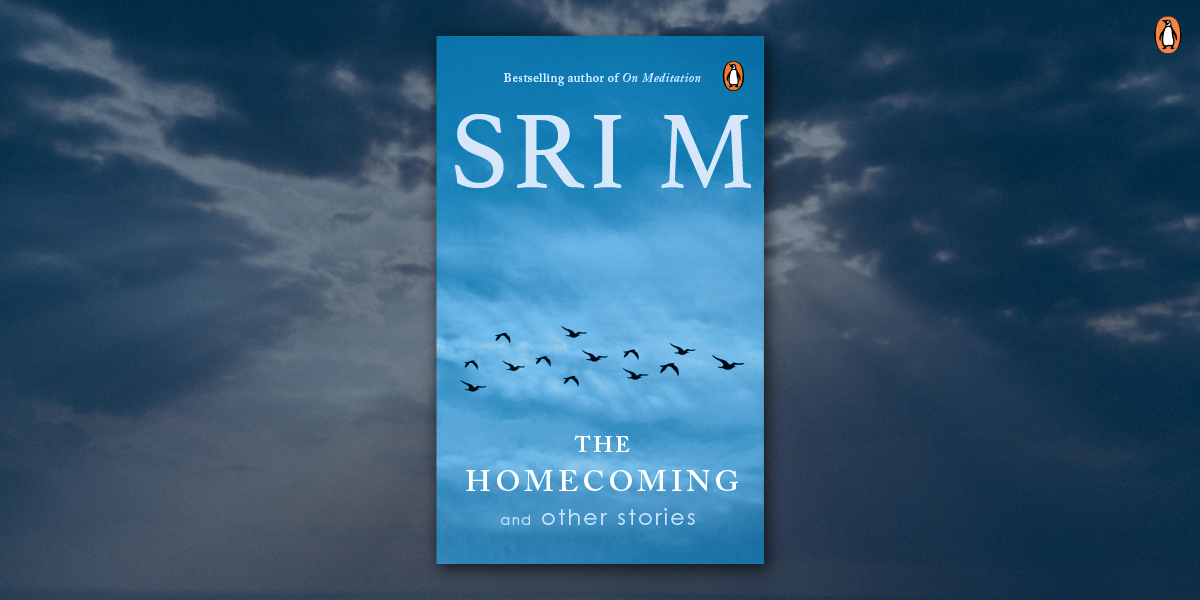
Front cover The Homecoming
The Homecoming||Sri M

Krishna is a porter who doesn’t covet other people’s wealth, but circumstances drive him to make an exception. But the story is brutal. He asks for God’s forgiveness in case he doesn’t something wrong, but that forgiveness is not granted, and any wealth Krishna was hoping to gain comes at an enormous price. Perhaps the lesson is that there should be no exceptions to one’s integrity. After all, we can never know the true nature of the exception we are making.


  1. The Thief

Sambu, the thief, has the strangest encounter with an old woman, and his life is changed forever. Driven to thieving by dire circumstances and the urgent compulsion to feed his family, Sambu is given a new chance at life. We have the transformative capacity of changing other people’s lives for the better; those who need help can in fact be given a new chance at life if we’re willing to share our privileges with them.


  1. The Dimwitted Genius

While Kitcchu does not do well in school, and does not seem to have the aptitude the rest of his classmates do, there is something special about him. He soars in Mathematics and music, and none of his teachers can explain why. In a narrative about a higher secret mission, Sri M once again raises a more direct and urgent flag about the environmental impact humans have on the planet. In some ways, his story has a bleaker underline – the human footprint on the planet is so irreparably destructive, that perhaps only a long-winded miracle can save us now.


  1. The Homecoming

When Shivanna mysteriously disappears, his parents’ lives are thrown in a tailspin. But it is soon discovered that Shivanna has left of his own accord, searching for the spiritual Truth that he has read about in the scriptures. He travels from Madikeri to Haridwar, but ends up finding his truth much closer to home than expected. Introspection helps us stay rooted in our pursuits. While journeys across lands may seem necessary, we most often end up chasing after empty illusions. More often than not, what we seek lies closer to home, waiting to be found.

Escaping the present to start a new reality far, far away

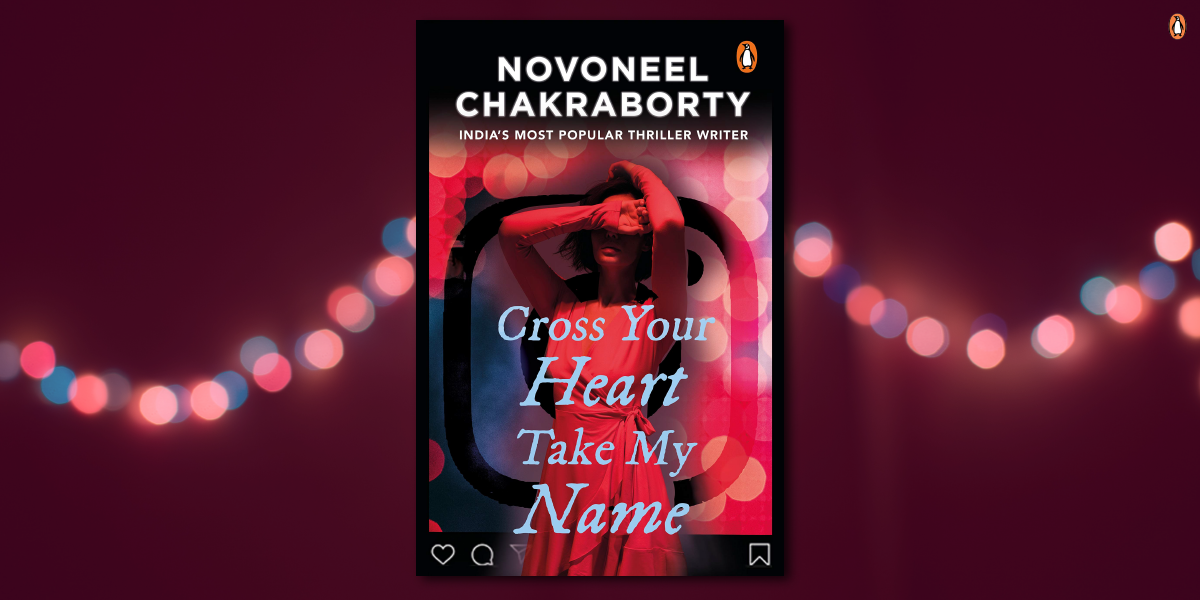
Garv Roy Gill and Yahvi Kothari are consumed by the proverbial once-in-a-lifetime kind of love. Bored with their mundane daily routine, their adventurous streak makes them decide, one day, to escape the present and begin a new reality somewhere far, far away.

The day arrives and we experience it through Garv’s perspective. Things, however, don’t seem to go to plan.

We picked the most enticing quotes to give you a glimpse into what the present looks like for him though Novoneel Chakraborty’s thrilling writing from the prologue of his book, Cross Your Heart Take My Name.


Garv lights a cigarette early morning, unlike his everyday habit of smoking with his coffee at office.


‘…But today was different. Or perhaps today was mundane but I was different.’


We get a glimpse into his emotional side this morning, knowing he is soon to leave everything behind.


‘Leaving something behind always troubled me. But for the first time, I was seeking adventure in that “trouble”’


‘Nobody knew I was going to disappear. It was unfair to my employees and the company. But the essence of this plan was to not think about others. It was about being selfish and living for yourself.’


He reminisces his relationship with Yahvi.


‘I realized it was not about the number of meetings or the amount of time that you spent with a person, it was about how intense your feelings were for each other, how strong the bond was.’


What did we have between us? This question had given me sleepless nights. I wanted to ask her so many questions.’


Unfortunately, things don’t go as plan. Yahvi shows up at the meeting point late, only to say they must delay their plans. He drives to office.


‘Though I wasn’t supposed to go to work, the change in plan made me decide otherwise. I kept checking my phone for messages from her but there were none.’


Finally, before sleeping, he gets a message from her.


I’m sorry I couldn’t meet you today. Will meet you soon and discuss our plan. I have cancelled my ticket. Hope you have done it too.

I read the message again and again but still didn’t understand what she was talking about. I replied: We did meet. What happened? All okay?


What’s happening? Why did the plan get cancelled and why did Yahvi act like they hadn’t met at all. There’s more thrill to come, get your copy of Novoneel Chakraborty’s new book to join the journey!


Time for some tough questions with Deepak Ramola

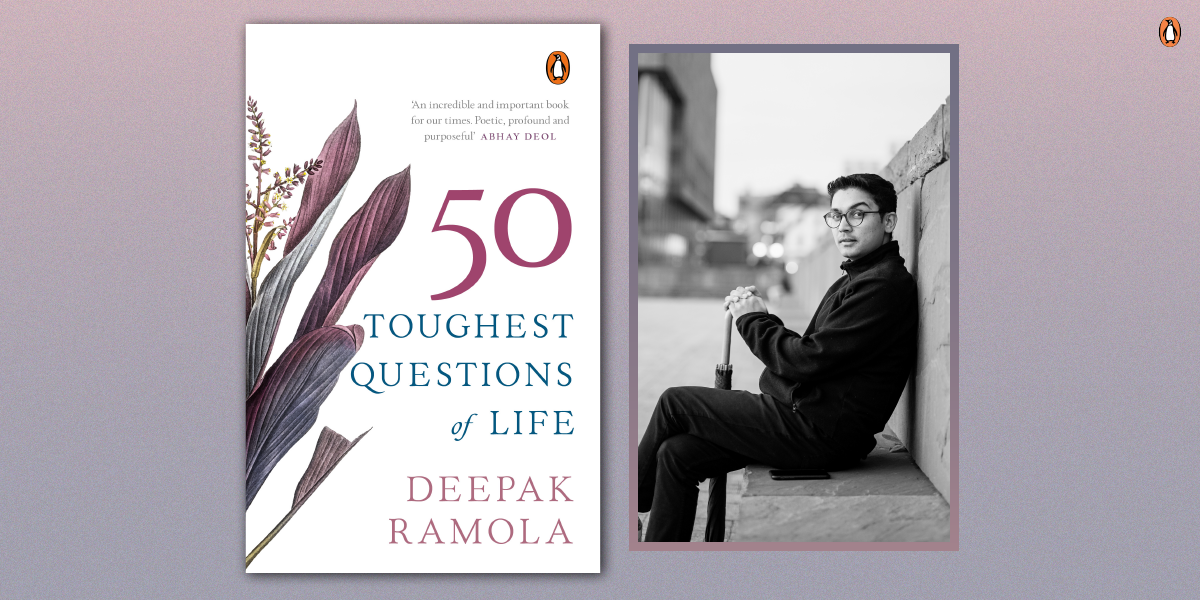
50 Toughest Questions of Life invites people to have a conversation about themselves with themselves. Author Deepak Ramola’s quest began after he was inspired by the life lesson of a young girl who said, ‘Life is not about giving easy answers, but answering tough questions.’

Today we ask him some questions, to understand him and his journey a little bit better.

At what point did you decide to write a book with your experiences?

Last year, in February, while standing at the self-help section of a bookstore, I had an epiphany that most books were full of answers. I was curious to find out how people would respond to a book of questions. I had so many of them documented over the years, I started to give them shape and context for the book. I started writing in school for debates competitions and school magazine, I guess the seeds were sown there.

What is your favorite part about this book, and what was the most challenging question for you?

Front Cover 50 Toughest Questions of Life
50 Toughest Questions of Life || Deepak Ramola

Favorite part:

The stories that follow each question, encouraging people to put themselves at the centre of their life without guilt has been my goal with the book. I really love the story about the visually impaired girl who talks about the advantage of being blind along with the Mexican stories about the two trees of harm and healing.

Challenging part:

To keep it simple and honest. I was cautious to never over-impose my answers on to the readers but nudge them just enough to come up with their own. I had to go through a personal emotional roller-coaster with each of the 50 questions. Particularly reflecting on my toughest goodbye, how can someone make me feel loved was hard.

You started with around 500 questions, how did you come down to 50?

I followed my instinct on what seemed difficult to me and then, how people over the years responded to certain questions. I shuffled the list quite a bit with each draft. There are so many questions that I am yet to answer for myself, so I pulled them out in hope for a sequel to this book. Lastly, these 50 questions I feel are the ones we all need to answer collectively as the human race to be more kind and empathetic.

Who were the people that inspired these questions?

My mother never went to school but treated life as her classroom was a big inspiration for me growing up. Many questions emerged from our conversations. She taught me that literacy and education were two separate things and if we ask the right questions, we can educate ourselves beyond the infrastructure of curriculums. Apart from that Oprah Winfrey. Maya Angelou. Vishnu Kaushal. My team at Project FUEL. Interactions with Syrian refugees. My sister Deepika. And people I have learnt from and taught over the last 11 years. David Cooperrider once said, “We live in the world our questions create.”

What was the first question you ever wrote? And what is your next question going to be?

First question:

How would you introduce yourself with love?

Next question:

Have you ever given up on something beautiful and why?

The understudied feminist who played an important role in the creation of Pakistan

‘In terms of courage of conviction and strength of character, Mrs Jinnah remains a role model for every man and woman who cherishes freedom.’ 


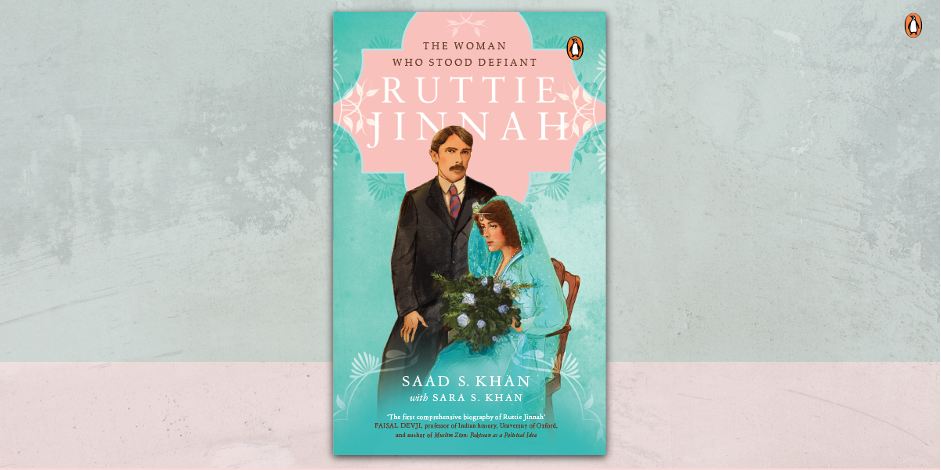
If Joan of Arc and the Rani of Jhansi are known for their rebel spirit, physical beauty, love of freedom, hatred for the British and deaths at a young age, Mrs Jinnah fits seamlessly into their ilk. Ruttie Jinnah, Mohammad Ali Jinnah’s wife was a fierce nationalist in her own right, and a proactive political companion to her husband. 


From Saad S. Khan’s biography, Ruttie Jinnah we extract quotes that show her feminist side. 


‘Among the top Indian leadership from the turn of the century to around the time of the First World War—including Gopal Krishna Gokhale, Bal Gangadhar Tilak, Motilal Nehru and Jinnah, for instance—Mrs Jinnah was the only politically active and publicly visible wife of any leader.’


‘At South Court, Sheela Reddy argues, Mrs Jinnah was the ‘passionate participant of political discussions, the organizer of all dinners at the home to facilitate these plans, a cheerleader for Jinnah and his acolyte, all rolled into one’. In fact, it was not only about Jinnah’s political meetings with other leaders that Mrs Jinnah was party to—he loved to discuss his political ideas with her first.’


Mrs Jinnah would support her husband through the hustings during the elections to the Central Legislative Assembly; she would accompany him to Delhi and Simla during legislative sessions; and, most unusually for those conservative times, she would sit in most, 

if not all, of the public meetings on the stage beside her husband, as well as attend closed-door political meetings at home.’


‘…All these facts lead us to a better appreciation of her indirect political role in charting Indian history, through her influence on her husband during these years of camaraderie—one that would outlive her own life or, for that matter, Jinnah’s. But for this influence that she wielded over Jinnah, Mahatma Gandhi, who is not otherwise known for corresponding with any spouse of a political leader of the time, would never have written to her to win her support for his ideas.’


‘…it was not just Jinnah who was the leader of the Muslims, but Mr and Mrs Jinnah together who led the community—as its first couple.’


‘First and foremost, Mrs Jinnah was the political lieutenant and adviser of her husband, joining him in his engagements with the British government, at interactions with the Congress and the Khilafatists, and, of course, in his political activities as head of the All India Muslim League.’


‘Ruttie’s decision to marry Jinnah owed a lot to his politics, which is what had mesmerized her in the first place. Hence, her participation in Jinnah’s political activities began from Lucknow, well before their marriage. Despite her father’s opposition, the young Ruttie attended the joint annual sessions of the Congress and the Muslim League, held in the city in December 1916.’ 

‘Mrs Jinnah had the nerve to not stand up to greet the viceroy at functions. ‘He is a man, after all!’ she would say, implying a lady was not required to pay respect by standing up for men.’ 


‘She ordered a British police officer on Hornby Road who had kicked an old woman—a street vendor—to put back all her strewn fruit into the latter’s basket. From the policeman, who was the smallest instrument in the colonial administration’s coercive authority, right up to the viceroy himself, Mrs Jinnah refused to be intimidated by anyone.’ 


‘Mrs Jinnah’s dress sense was so marvellous that she became a trendsetter in India. The ‘Indian blouse’, her signature combination with the sari, became a fashion statement in the country, and continues to be even today. She was also the first notable Muslim lady to be seen out of purdah, and this boldness of appearance influenced other Muslim women decades down the road to come out of the veil and take active part in the Muslim separatist struggle. This does not mean that her dresses were in any way explicit. By any contemporary sartorial standards, her dressing was more demure than daring.’ 


Read Ruttie Jinnah to get an incisive look into Ruttie’s life and legacy – and get a novel and fresh understanding of Jinnah and the freedom movement.

India and the COVID-19 vaccine

The COVID-19 vaccine: a favourite topic in the present day. When will it arrive? Why are they taking so long? And most importantly, do we really need them, or is herd immunity enough in a country like ours?

In this article we try and answer these questions, from Dr Chandrakant Lahariya, Dr Gagandeep Kang and Dr Randeep Guleria.

India is the largest producer (by volume or number of doses) of vaccines in the world, and provides vaccines to UNICEF which then distributes them in Africa, South America and Asia. For UNICEF to buy the vaccines, the vaccines have to be pre-qualified or approved for purchase by the WHO. The WHO’s approval process relies on the fact that the country which makes the vaccines has a national regulatory authority that meets the standards laid down by the WHO. India’s CDSCO has met these criteria and ensures that the vaccines made in India are of high quality and safe. Indian vaccine manufacturers, which have grown in number and capacity since they were established decades ago, have good and long experience with manufacturing in high volumes. However, they have only recently begun modest investments in research towards new vaccines. With a population of 138 crore, India needs local and indigenous production of the COVID-19 vaccine to ensure widespread availability.

front cover till we win
Till We Win||Dr Randeep Guleria, Dr Gagandeep Kang, Dr Chandrakant Lahariya

The development and availability of the vaccine in India has been part of some of the early discussions on the country’s response to the COVID-19 pandemic. A national task force for vaccine research and development was set up in April 2020. The progress on the vaccines, both globally and in India, has been reviewed by high-level committees, and planning for delivery of the vaccines is ongoing. In early October 2020, the health minister announced a proposal to vaccinate 20 to 25 crore Indians by July 2021. In parallel with many such efforts around the world, discussions are on about the prioritization of target populations for initial vaccination.


When can we expect the first vaccine against COVID-19?

Till October 2020, six vaccines had been given limited licence in China and Russia. While a definite timeline is difficult to predict, there is a possibility that some vaccines may be available by early 2021. However, vaccination will be an ongoing process and it will be two to three years before sufficient vaccines are available to vaccinate all those in need.


There are a number of vaccines in the last stage of clinical trials, why is it taking so much time?

It is true that there are COVID-19 vaccines in phase III of clinical trials across the world, with trials starting in India. However, there are no guaranteed successes, and we need to wait for the results to know what works and what does not. If successful, the data need to be submitted to the regulatory authorities for approval. This is followed by production by one or more vaccine companies and then supply, resulting finally in availability. All these steps are expected to take some time.


What is herd immunity? Do we really need COVID-19 vaccines or is herd immunity enough?

Herd immunity is also called herd effect, community immunity, population immunity or social immunity. It is a form of indirect protection from infectious disease which happens when a defined proportion of the population has been infected and has become immune to an infection. As an increasing number of people are infected or vaccinated, the number of people who can be infected (‘susceptibles’) decreases and transmission or spread also decreases. When herd immunity is reached, it is important to note that this is a feature that works at the population level—a decrease in spread within a defined group; it is not perfect protection of all uninfected people. At the individual level, the status of immunity depends on that person’s exposure or vaccination status. This means that if a susceptible individual is no longer within the ‘herd’, then they are likely to be infected on exposure, and are not ‘immune’.

When the level of infection or vaccination that is required is calculated, then the basic reproductive rate of the virus has to be known. The higher the reproductive rate, the greater the proportion of the herd that needs to be infected or vaccinated to prevent the spread. For measles, which is very infectious, we would like to reach 95 per cent vaccination to prevent outbreaks. At this time, data from sero-surveys in India shows 7 per cent seropositivity in a national survey at the end of August but pockets of high positivity in urban areas (56 per cent in some localities in Mumbai and 51 per cent in areas of Pune and 29 per cent in Delhi). This indicates that herd immunity is still far for most of the country, and we should be looking to a vaccine for more predictable development of immunity.

Offering insights on how India continues to fight the pandemic, their book Till We Win is a must-read for everyone. It is a book for the people, for political leaders, policymakers and physicians, with the promise and potential to transform public health in India.

Poetry in the times of things falling apart

Perhaps one of the most cited lines from Theodore Adorno’s Cultural Criticism and Society is “to write poetry after Auschwitz is barbaric”. Often decontextualized, it is misunderstood as a call to silence poets and artists after the events of the Holocaust. In actuality, Adorno’s reference was in fact to the very opposite – that to write poetry after the Holocaust without addressing the event, without trying to grapple with the unthinkable, was barbaric. His contestation was that art should be able (and arguably has a responsibility) to respond to its times. Poetry, before and after Auschwitz, has continued to change and save lives. Whether through the works of poets like W.H. Auden and Paul Celan who created unsettling and indelible imagery of the horrors of Nazi Germany, or Amiri Baraka and Langston Hughes’s rousing work about black identity and culture, poetry has often addressed the very impossibility of addressing some experiences. Poets have, time and again, through joys and disasters, immortalised events and the subjective experience of being alive in times of unprecedented grief or disaster.


Poetry has the tremendous capacity to shed light on the ineffable experiences to the reader. The collection Singing in The Dark is one such vehicle of experience, a composite body that speaks to and about a time that perhaps nobody anticipated. The pandemic crept upon us, unexpected, and it has altered irreversibly the dynamics of human interaction, and the relationships we share with each other, and most importantly, with nature. Over the past few years, we have seen various environmental and engineered crises, from the protests over the Dakota Access Pipeline and the Amazon fire to the cyclone Amphan and the Australian bushfires among several others. The planet seems to have become a battle zone between indigenous people who seek to preserve the lands they live on and corporations who believe anything can be bought on the clout of money.

Front cover singing in the dark
Singing in the Dark||K. Satchidanandan, Nishi Chawla


Editors Nishi Chawla and K. Satchidanandan write, ‘The anthology will well serve the purpose of capturing the anguish and the trauma, the anger and the befuddlement, as well as the hope for returning to the certainty of the world order that the pandemic has destroyed or the movement towards a more just and egalitarian world.’ As an array of poets from across the world find their works together in this anthology, perhaps the only common thread is the experience of living through a global disaster. Tragedy unites, and the pandemic has been tragic in an unimaginable number of ways. The impact of the coronavirus has been different for the privileged and non-privileged, and it has denuded the fault lines of our social fabric more starkly than ever. It remains up to us of course, to acknowledge the fact that there needs to be a radical change in the structures of the world, and that systems needs to be cleaned from the inside. Any fight for an egalitarian world will remain only theoretical unless the mantle of responsibility is picked up, and things are unstitched and restitched.


Singing in The Dark is an amalgamation of vulnerability and hope, of the dream of a world that can be better, and people who can do better, despite overwhelming evidence of the contrary. There is anger and befuddlement, and anguish and trauma. These will remain for some time, possibly even indefinitely. But poetry and art give us the opportunity to reflect on these, and on our own location within the grander scheme of the world. It pushes us to reconsider the experiential boundaries of our lives, and to reorient our understanding of how the world treats different lives differently. The pandemic forced us to confront the fact that human lives are entangled, that one person’s actions affect others in incomputable ways. Singing in The Dark too, is evidence that despite differences, human beings are not separated from each other, and cannot live insulated and isolated lives. In our experiences, in our fears, hopes, vulnerabilities, frailties and anger, there is an unbreachable commonality; maybe the idea of community is much more far-reaching than commonly believed, surpassing geopolitical boundaries, going into the heart of the very fact of being human and being alive at a time when everything seems to be falling apart.

Seven tips on raising funds like a seasoned entrepreneur

The world is definitely buzzing with intrepid entrepreneurship and most of us are starting-up and striking out!

Amidst this thrilling zeitgeist though, the problem of funding remains, especially in the post-COVID-19 world, where money is scarce.

Dhruv Nath and Sushanto Mitra come to the rescue with Funding Your Startup And Other Nightmares It taking you through stories of early-stage start-ups, and their hits and misses in the journey to raise funding.

Funding Your Startup And Other Nightmares || Dhruv Nath, Sushanto Mitra

The authors also interview some of the most accomplished founders in the world of business, such as Deep Kalra of MakeMyTrip, Yashish Dahiya of PolicyBazaar, Dinesh Agarwal of IndiaMART and Sairee Chahal of SHEROES. Their stories all come together in a useful ‘PERSISTENT’ framework, which helps make a start-up investment-ready.


Read on for seven invaluable tips about the basics of funding that will help you launch straight onto entrepreneurial superstardom.


  1. Treat your customers with the same awe you do investors, because it’s their money that is crucial for a business in the long run

Always remember, the customer’s money is much better than the investor’s money—as long as it is

coming in regularly, and is higher than your costs. Because you then have a viable business. This is especially important in the post COVID-19 world. And if you are getting the customer’s money,

you will almost certainly get the investor’s money.


  1. While entrepreneurs are understandably concerned about giving too much of their stake away, you need to focus on what’s best for growing your business.

Well, first of all, if you need funding to grow rapidly, you need it. Do not worry too much about the valuation and the stake you are letting go. Obviously you must try and get the best deal you can, but get the funding. It’ll help you grow rapidly, and your next round can then be at a significantly higher valuation. So while you may have parted with a significant stake in the first round, you can actually get far more for a proportionately lower stake in the next round


  1. Crises can turn investors risk-averse and more likely to insist on a lower valuation. Here is a great option to handle this

There is another interesting option. Raise the money right now, without fixing the valuation at the moment. Instead, link it to the subsequent round of funding. How does this work? Well, let’s call

this Funding Round 1. And at some stage you will be raising Funding Round 2. You could then set the valuation in Round 1 at a 20 per cent discount (or any percentage that both sides can agree to) to the

valuation arrived at in Round 2.


  1. To create maximum impact in the least time, brevity is the name of the game! WYKM (what’s your key message- and deliver it!


One simple, key idea. Which is easy to understand, absorb and, therefore, remember. Nothing huge, not hundreds of words, or tens of ideas. One simple message—that’s it. And therefore, ladies and gentlemen, the recipient gets the message and remembers it!


  1. Multi-tranche or staggered investments, released as you continue to  meet milestones are great for start-ups looking to prove traction.

In other words, we’ll give you the money in two tranches. Based on the first tranche, let’s set a milestone. Once you meet that, we’ll release the second tranche. By the way, the second tranche could even be at a higher valuation.’ Incidentally, this is not an informal arrangement. It actually becomes part of the term sheet and ultimately the shareholder agreement.


  1. While you’re on tenterhooks waiting for your investors to choose you, make sure you choose your investors wisely and well

More than just the money, it’s important to get it from the right investor. Someone whose thinking is aligned with yours and who is ideally passionate about the business as well. Someone who can add

value and not keep breathing down your neck asking for a quick exit.


  1. Angel networks, gathering investments from a large number of investors are one of the best bets for start-ups and much more accessible than venture capitalists at first.

Who provides this support? Very simply, the angel network. So the network evaluates each start-up and then shortlists the ones that seem the most promising. The founders are then asked to make a presentation or pitch. After the pitch session, start-ups that investors are interested in are evaluated in further detail (unfortunately, the others go home with coffee and cookies). Finally, those that are ripe for investment are given a term sheet. Which is rather like an MoU.

error: Content is protected !!