Publish with Us

Follow Penguin

Follow Penguinsters

Follow Penguin Swadesh

Festive reads for you and your family

It’s the most wonderful time of the year and we bet you’re looking forward to the festivities! Spread the joy with some of our handpicked selection of books to choose from. Here is a list of books from Penguin and Puffin, perfect for your little one, yourself, or as a gift for friends and family!

The Thursday Murder Club

front cover of The Thursday Murder Club
The Thursday Murder Club || Richard Osman

In a peaceful retirement village, four unlikely friends meet up once a week to investigate unsolved murders. But when a brutal killing takes place on their very doorstep, the Thursday Murder Club find themselves in the middle of their first live case.

Can our unorthodox but brilliant gang catch the killer before it’s too late?

The Boy, The Mole, The Fox and The Horse

Front cover
The Boy, the Mole, the Fox and the Horse || Charlie Mackesy

Enter the world of Charlie’s four unlikely friends, discover their story and their most important life lessons. The conversations of the boy, the mole, the fox and the horse have been shared thousands of times online, recreated in school art classes, hung on hospital walls and turned into tattoos.

Uparwali Chai: The Indian Art of High Tea

front cover of Uparwali Chai
Uparwali Chai || Pamela Timms

From Saffron and Chocolate Macarons to Apricot and Jaggery Upside Down Cake to a Rooh Afza Layer Cake, Uparwali Chai is an original mix of classic and contemporary desserts and savouries, reinvented and infused throughout with an utterly Indian flavour. A beautifully curated set of recipes full of nostalgic flavours and stories, this is a book every home cook will be referring to for generations to come.

An Extreme Love of Coffee

front cover
Extreme Love of Coffee || Harish Bhat

When they drink a cup of ‘magic’ coffee, Rahul and Neha are entrusted with a quest that promises to lead to great treasure. As they race from the plantations of Coorg to Japanese graveyards, they are trailed by the Yamamoto brothers-bearing grudges and carrying swords.
But will they manage to evade their Japanese assailants and find the treasure they first set out for?

Wish I Could Tell You

Front cover
Wish I could Tell You || Durjoy Datta

A disillusioned and heartbroken Anusha finds herself in the small world of WeDonate.com. Struggling to cope with her feelings and the job of raising money for charity, she reluctantly searches for a worthwhile cause to support. For Ananth, who has been on the opposite side, no life is less worthy, no cause too small to support.

They can’t escape each other. In this world of complicated relationships, should love be such a difficult ride?

Diary of a Wimpy Kid: The Deep End

Front cover
Diary of a Wimpy Kid || Jeff Kinney

Greg Heffley and his family hit the road for a cross-country camping trip, ready for the adventure of a lifetime. But things take an unexpected turn, and they find themselves stranded at a campsite that’s not exactly a summertime paradise. When the skies open up and the water starts to rise, the Heffleys wonder if they can save their vacation – or if they’re already in too deep.

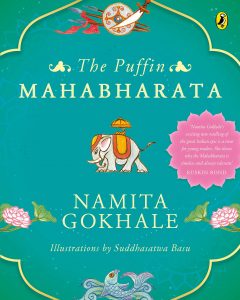
The Puffin Mahabharata

Front cover of The Puffin Mahabharata
The Puffin Mahabharata || Namita Gokhale

 Like a modern-day suta or storyteller, Namita Gokhale brings alive India’s richest literary treasure with disarming ease and simplicity. She retells this timeless tale of mortals and immortals and stories within stories, of valour, deceit, glory, and despair, for today’s young reader in a clear, contemporary style.

A brilliant series of evocative and thoughtful illustrations by painter and animator Suddhasattwa Basu brings the epic to life in a vibrant visual feast.

A Girl Like That

Front cover of a girl like that
A Girl Like That || Tanaz Bhathena

 Sixteen-year-old Zarin Wadia is the kind of girl that parents warn their kids to stay away from. You don’t want to get involved with a girl like that, they say. After a tragic encounter her story is pieced together, told through multiple perspectives, and it becomes clear that she was far more than just a girl like that. This beautifully written debut novel from Tanaz Bhathena reveals a rich and wonderful new world to readers; tackles complicated issues of race, identity, class and religion; and paints a portrait of teenage ambition, angst and alienation that feels both inventive and universal.

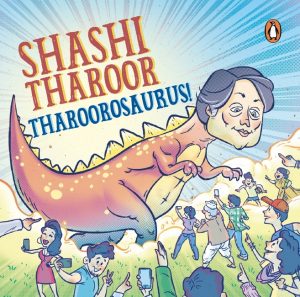
Tharoorosaurus

Front cover
Tharoorosaurus || Shashi Tharoor

Shashi Tharoor is the wizard of words. In Tharoorosaurus, he shares fifty-three examples from his vocabulary: unusual words from every letter of the alphabet. You don’t have to be a linguaphile to enjoy the fun facts and interesting anecdotes behind the words! Be ready to impress-and say goodbye to your hippopotomonstrosesquipedaliophobia!

Get moving into a healthy life

‘Movement is the cure’

– Shwetambari Shetty


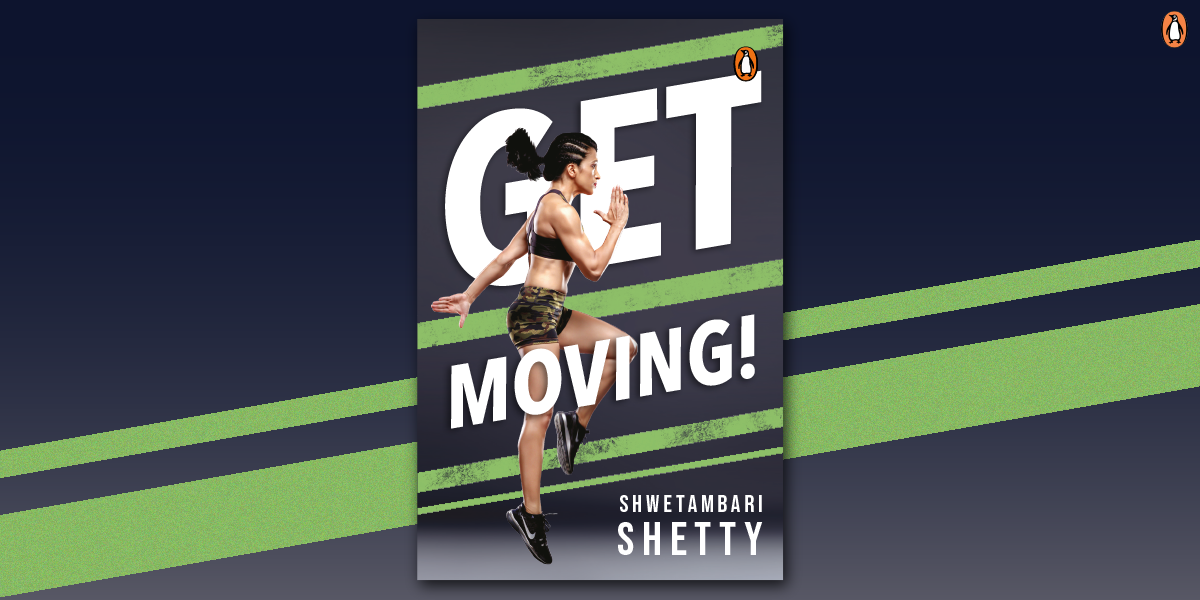
‘I’ve trained with many people who completely turned around their circumstances once they started incorporating exercise they enjoyed in their fitness regime’, writes Shwetambari Shetty. Her book, Get Moving!, is, among other things, a curation of the ways of fitness. The focus of her exercises, and the broader driving philosophy is that the human body is made for movement; it is in its natural habitat when moving. In her book, Shetty also details how exercise, diet and fitness routines have helped people with lifestyle diseases, and she explains the impact of physical movement on some of these medical conditions:


  1. Diabetes

Regular exercise keeps blood glucose levels low, and Shetty says that a brisk 45-minute walk for 5–6 days a week is a great start. If yoga or weight training is added to the routine, it enhances the benefits. Weight gain in diabetes is most likely due to inactivity, and a well-planned diet with reduced sugar intake can help reduce excess fat. Taking the stairs instead of the lift, watering the plants instead of assigning it to someone else, doing the dishes instead of using a dishwasher or walking to the grocery store instead of taking your car are small changes that can have a big positive impact on our health.


  1. Thyroid

A modified diet should be accompanied by training 4 to 6 times a week. Patients with hypothyroidism can boost their metabolism through exercise, but intense activities can cause fatigue. The key here is to choose medium- to low-intensity workouts. Combining cardio and light weight training is a constructive change, in addition to functional training and circuit training without heavy lifting. If this not possible, brisk walking once or twice a day can clock in 10,000 to 12,000 steps daily, and is a good substitute.

front cover Get Moving
Get Moving!||Shwetambari Shetty


  1. PCOS/D

Working out regularly stabilizes the hormone levels in the body, and helps manage PCOS/D more easily. Walking, running, dancing, rowing, boxing and exercising on the cross trainer or treadmill are all great. Another good option is cycling, which works the abs and burns a lot of calories. Swimming also works as great strength and cardio training. Combining it with a bit of light weight training protects the muscle mass and make fat burn more effective.


  1. Arthritis

People with arthritis should avoid processed food (especially sugar) as it causes inflammation and bloating. Bone broths, on the other hand, are extremely beneficial. In addition to diet, the focus in terms of exercise should be on strengthening the muscles around the joints. Stronger muscles help mitigate the pain and increase the range of motion, delaying stiffness, allowing you to keep exercising and managing the condition better. Water-based activities such as water walking (if you can’t swim) are much safer and less painful. They build resistance, help gain strength and burn calories in the process. Aerobics, dance, weightlifting and squats too can be done more easily in water.


A lot of the conditions described are amplified by a sedentary lifestyle, and therefore, consistent activity throughout the day is a good way to keep the symptoms at bay. Lifestyle diseases do not preclude people from working out; it only means that the workouts need to be tailored in such a way that they address the specific problems at hand. Movement, as a rule of thumb, is the best way to avoid these conditions from getting out of control, allowing us more manageable and healthy lifestyles, where nothing is an impediment.


Up close with Krishna Udayasankar

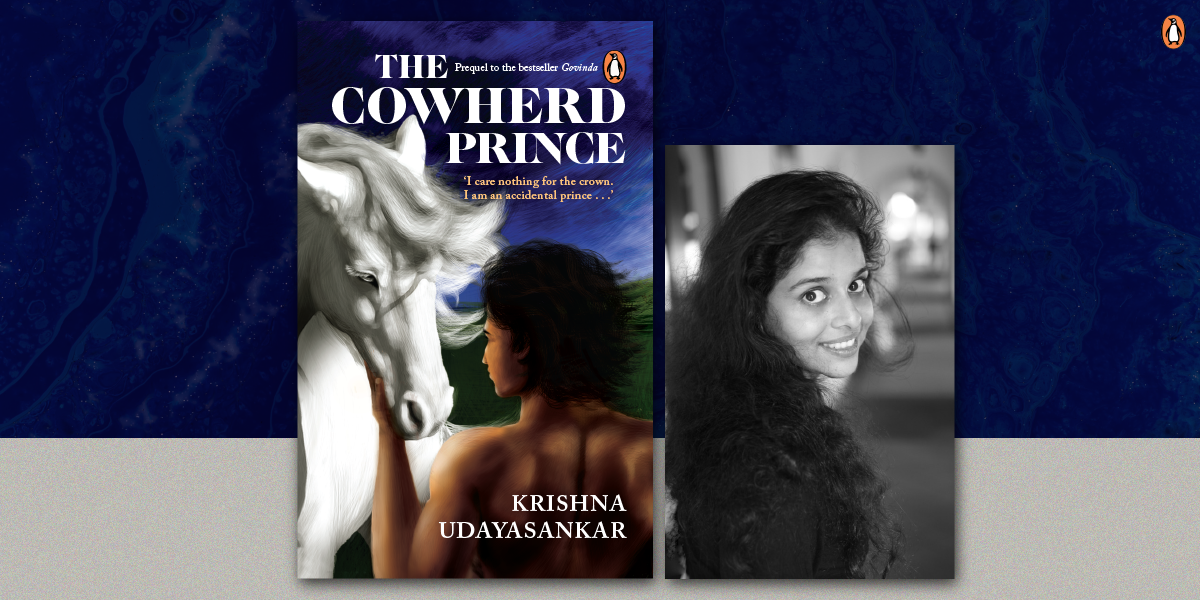
If you just cannot get enough of The Cowherd Prince, you are not alone. Krishna Udayasankar’s prequel to the bestselling novel Govinda is a thrilling insight into the world of Govinda before he became the master strategist of The Mahabharata. We had a chat with the author and it was an absolute delight!


~


We hear you’re a science fiction buff. Who are your favourite writers in the genre?

KU: I was a huge fan of Isaac Asimov as a child and teenager. I mean, I still am, but it’s difficult to say that now without asking myself questions about separating the art from the artist – after the allegations of harassment against Asimov. But I can’t stop liking what I’ve liked all these years, I can’t change the fact that I love the books and have been influenced greatly by them. So yes…


You characterise your protagonist Govinda very carefully. You have also said that consent is one of the most important things to learn from Govinda. What would you say is the importance of looking at mythological characters from a more contemporary lens?

KU: Fiction is a device by which we look at the world around us, all the more so for genres that deal with alternate worlds, like myth and history or fantasy. In fact, I’d go so far as to say that good fiction is always a commentary on the way the world is. When it comes to mythology, I believe that becomes even more important because it is a two-way thing – the way we understand our past, the way we believe things happened, are fundamental parts of how society functions in the present. And if we want to question our present or examine it, then we also need to examine our understanding of myth or the pre-historic past – all the more so because for a large part of our society, myth is the bedrock of defining good and bad, right and wrong.

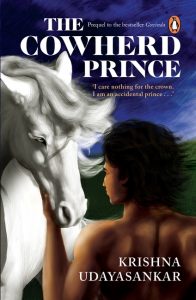
front cover the cowherd prince
The Cowherd Prince||Krishna Udayasankar


We also hear that you hate spinach. If abandoned on a deserted island with only spinach to eat, which three books would you take with you?

KU: Haha! Since I would not eat a book or tear it up even if I were starving, I assume the question is which books can make the spinach go down easier? Traditionally, it would be Amar Chitra Kathas – since those were the spinach-y books of my childhood. But now my list would be: My entire Calvin and Hobbes collection, Kalki’s Ponniyin Selvan and Asimov’s Foundation series. And maybe I’d try to sneak in Lord of the Rings too? And The Jungle Book. And … wait a minute, three books? I can survive on spinach but I can’t survive on only three books.


What are you reading now? What book are you excited to read next?

KU: I am re-reading Martha Well’s Murderbot novellas in anticipation of reading her latest – a full Murderbot novel next.


What is your favourite thing about being a writer?

KU: Hanging out with some amazing (imaginary) people. Living in other worlds. Travelling to places I have never been, vicariously doing things I can’t dream of doing otherwise in this lifetime (whether it’s flying a fighter jet or whipping up a six-course meal!) And of course, one of the best parts of being a writer is getting to share these experiences with readers – who often become friends.


How do you battle writer’s block?

KU: I don’t battle it, not anymore! All I do is show up every day, even if that means I’m doing nothing other than stare at a blank page. But that is when I am writing. I often go for months without writing, particularly between books. I’ve learnt that imagining new worlds, new stories is one of the best parts of writing (other than playing with words). I tell myself now, that its ok to do that, and the story will come to me when it has to.


What is your writing process like? Are you a planner, or do you wing it, or is there a third customized method that works for you?

KU: I’m a mix of planned, chaotic and downright clueless. I think I try different methods at different points on time in a book – usually winging it when I begin, then stepping back to plan a little bit, then just being instinctive about it again. I also work on multiple books, sometimes, so I could be following different processes at once. Like I said, clueless and chaotic!


~


Krishna Udayasankar’s The Cowherd Prince is captivating and will keep you reading well into the early hours of the morning.

5 innovative insights to get started with your start-up!

Startups have changed the world. In the United States, many startups, such as Tesla, Apple, and Amazon, have become household names. The economic value of startups has doubled since 1992 and is projected to double again in the next fifteen years.

As venture capitalist Alexandre Lazarow shows in this insightful and instructive book, this Silicon Valley ‘gospel’ is due for a refresh–and it comes from what he calls the ‘frontier,’ the growing constellation of startup ecosystems, outside of the Valley and other major economic centers, that now stretches across the globe. The frontier is a truly different world where startups often must cope with political or economic instability and lack of infrastructure, and where there might be little or no access to angel investors, venture capitalists, or experienced employee pools.

Here’s a glimpse into some of these insights for all you future entrepreneurs!


Learn from the microfinance industry

‘In [the industry’s] early days, a key insight was that the poor were creditworthy borrowers. By placing borrowers into groups with a sense of strong social accountability and shared responsibility on the loans’ repayment, microfi nance lenders found that repayment rates were high.

But this insight was also the biggest challenge: the in-person nature of putting people in groups, making regular visits to collect money, and maintaining deep customer engagement is expensive. Companies like Tala, Branch International, and Safaricom’s own M-Shwari now offer consumer loans, relying entirely on the mobile money platform.’

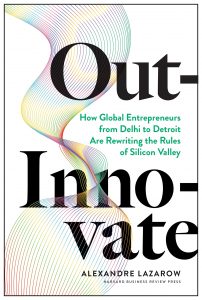
Front cover of Out-Innovate
Out-Innovate || Alexandre Lazarow


Create rather than disrupt

‘Timbo Drayson founded OkHi, a technology-driven startup that creates addresses where there are none. OkHi’s mission statement is “Be Included.”

Creators do three fundamental things simultaneously. First, they offer a product or service that solves an unserved, acute pain point in the formal economy. Second, Creators offer a solution for the mass market. Finally, Creators are focused on game-changing innovations that fundamentally rethink a market and a sector.’


Raise a camel, not a unicorn

‘The growth-at-all-cost model simply does not translate to the realities of the Frontier. Instead of the unicorn, then, I propose the camel as the more appropriate mascot. Camels live in and adapt to multiple climates. They can survive without food or water for months. Their humps, primarily composed of fat, protect them from the desert’s scorching heat. When they do find water, they can rehydrate faster than any other animal.15 Camels are not imaginary creatures living in fictitious lands. They are resilient and can survive in the harshest places on earth.

Signing up for Silicon Valley’s unicorn-hunting strategy is a bit like mortgaging your home to buy three new homes. If things go well and the market moves in the right direction, then the rewards are massive. Facebook’s eye-watering returns for investors are a case in point. Yet this approach also increases the likelihood of losing everything.’


Build A-teams, don’t hire just A-players

‘…in Silicon Valley, companies and employees see their relationships as short-term affairs. Retention rates are among the lowest in the United States. More than 13 percent of staff turn over every year, and in certain job categories like user design, the rate is well above 20 percent, which translates to short employee tenure.

Frontier Innovators […] use fi ve key strategies to build and scale top teams. They test candidates for behavior and capabilities, develop a proprietary talent pipeline, leverage global distributed options, take a growth mindset to retention and training, and think critically about compensation and perks.’


Cross-pollinate

‘Frontier Innovators […] cross-pollinate. They leverage diverse lived experiences, often across multiple geographies, industries, and sectors, to build their businesses. They tap global networks for capital and resources.

At the Frontier, a typical innovator’s lived experience is longer and spans geographies, sectors, and industries. This diversity in experience explains the issues they choose to tackle and the unique approaches they employ.’

*-*

With rich and wide-ranging stories of frontier innovators from around the world, Out-Innovate is the new playbook for innovation–wherever it has the potential to happen.

Decoding Amartya Sen – the man, the economist, the visionary

Nobel Laureate Amartya Sen is one of the world’s best-known voices for the poor and the downtrodden, and an inspiration for the proponents of justice across the globe. He has contributed almost without peer to the study of economics, philosophy and politics, transforming social choice theory, development economics, ethics, political philosophy and Indian political economy, to list but a few. In How to Read Amartya Sen, Lawrence Hamilton provides an excellent, accessible guide to the full range of Sen’s writings, contextualizing his ideas and summarizing the associated debates. In elegant prose, Hamilton reconstructs Sen’s critiques of the major philosophies of his time, assesses his now-famous concern for capabilities as an alternative for thinking about poverty, inequality, gender discrimination, development, democracy and justice, and unearths some overlooked gems.

Today, we are sharing with you some interesting insights from the book on Amartya Sen that would strengthen your understanding of him as not just as an economist, but also as a deeply sensitive man and a visionary par excellence.


1) The man

‘For many years, Sanskrit was Sen’s second language, after Bengali, and he could read classical, Vedic and epic Sanskrit. This fascination with the language and literature of Sanskrit also balanced and complemented his acumen in mathematics. Both of these important skills have been readily apparent ever since in his academic work, often side by side in the same volume.’


‘Sen is also a child of the Bengal famine and Indian Partition. He experienced at first-hand as a nine-year old boy the horrors of the Bengal famine of 1943, as he did a little later the horrors of communal violence of Partition. In a number of places in his academic and non-academic work, he tells the story of how, during the sectarian tensions and violence that accompanied Partition, a Muslim man, a poor day-labourer, was attacked by a gang in his mainly Hindu area. The man was still alive as he stumbled into Sen’s childhood home; the now slightly older boy helped organize to have him sent to hospital. Unfortunately, he did not survive. Not only does Sen use this story to illustrate his oft-repeated and convincing point about the dangers of sectarianism and dogmatic community and identity-based thinking, but also that, despite his wife imploring him not to go into Hindu areas in this period fearing for her husband’s life, this poor man felt impelled to do so as he was the breadwinner for his family and could get work nowhere else.’


2) The economist

‘First, despite his training in the mainstream of strait-laced post-Second World War economics, in exemplary fashion he grasped the opportunities provided to him and schooled himself in the main currents of contemporary philosophy. This gave him a much broader and more capacious view of the assumptions of the ‘dismal science’ of economics, the main shibboleths of which would be his targets for years to come…. in line with two of his greatest forebears and two of the political economists upon whom he draws most, Adam Smith and Karl Marx, he has done all he can to understand the main problems and issues in economics from the perspective of a broader ethical concern: improving the quality of life of all.’


‘Second, especially in his work on famines, but also right across his many contributions in other areas, such as development, freedom, justice and democracy, Sen has always immersed his reader in his deep and broad knowledge of theory, while never tiring of supporting his claims and arguments with relevant empirical facts.’


‘Sen’s theoretical and practical proposals based on his version of capability value the agency of individuals in and of itself as constitutive of a life worth living and because they tend to produce better overall effects in development projects.’

front cover of How to Read Amartya Sen
How to Read Amartya Sen || Lawrence Hamilton


3) The Visionary

‘While…Sen is first and foremost a man of letters (and numbers), he has also been involved in a number of practical projects that have changed the way the world thinks about and carries out a number of important and pressing matters, particularly as regards development. In fact, it is his work for and criticisms of large international bodies such as the United Nations (UN) and the World Bank (the Bank), and many others besides, that has broadened his appeal and fame, along with his associated practical contributions to, for example, global attempts to eradicate poverty and reduce inequality.’


‘Sen has provided new ways of conceiving of development, as well as new tools for measuring it and its component parts: famine, poverty, inequality, growth, freedom and so on.’


‘Sen’s view of freedom is much richer than is the norm in a great deal of economic, development, philosophical and political theoretical literature: it encompasses both the requisites for individuals to make their own individual choices and the social, economic and political means for individuals to exert the necessary democratic power within and beyond their own societies.’

**


Six steps you need to follow to make your life a celebration

The universe has bestowed limitless powers and infinite siddhis on the human consciousness. Along with being effective and successful in the personal and professional spheres, the purpose of human life is also to ensure the complete blossoming of the individual consciousness. In Celebrating Life, Rishi Nityapragya shares the secrets that can help you explore your infinite potential. He offers an in-depth understanding of how to identify and be free from negative emotions and harmful tendencies, and how to learn to invoke life’s beautiful flavours-like enthusiasm, love, compassion and truth-whenever and wherever you want.

Here are the only six steps that you need to follow and inculcate in your life to become a master of your circumstances and lead a more meaningful and fulfilled life.


1) Play of universal consciousness

 ‘As science translates its findings into practical use, to make life more comfortable and convenient, spirituality is about beautifying the human consciousness and making it blossom.’

 ‘As there are laws governing the physical universe, there are specific laws according to which the human consciousness functions.’


2) Extraordinary Powers, Siddhis, of Your Individual Consciousness

‘Nature has bestowed limitless powers upon the human consciousness. The more you understand the technicalities, the scientific aspects of your consciousness, the more you realize that you already have all the abilities necessary to create the quality of life that you want.’

‘In the domain of consciousness, like attracts like.’

‘The way people relate to you is largely a reflection of your own mind.’


3) Meticulous Refinement of Your Own Consciousness

‘Through optimum utilization of the instruments given to you by the nature of body-breath-mind-intellect-memory and ego; through your Committed Skilful Efforts you have the opportunity of tremendously accelerating the process of evolution of your own consciousness.’

Inherently, you already have all the powers necessary to create the life that you want. You are not designed to be a slave of circumstances; you are designed to be the master of situations.


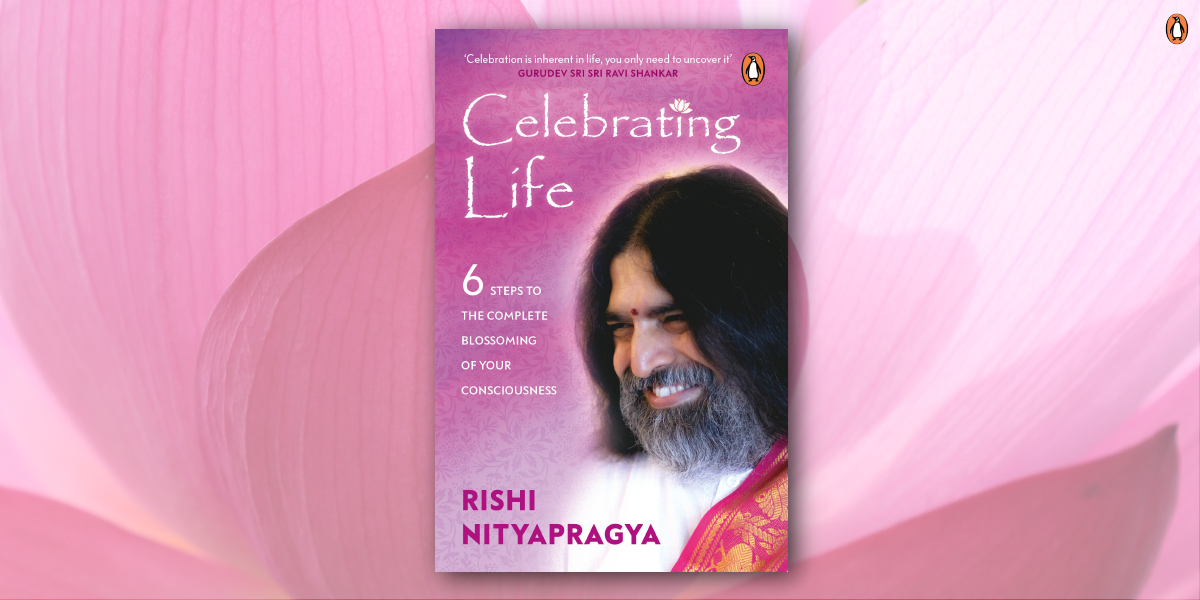
front cover of Celebrating Life
Celebrating Life || Rishi Nityapragya


4) Being Free from All Bondages, Negativities and Harmful Tendencies

 ‘The incoming breath energizes the body, provides vital force and supports the soul so that it continues to live in the physical form; the outgoing breath removes impurities from the body and empties your individual consciousness. The secret is, the more empty, the more free the mind is, the more happy it is and more available it is to do anything that you want to do with it.’


5) Optimizing the Golden Opportunity of Being in the Human Body

 Every individual soul is giving these three precious instruments—of time-energy-mind—to the activities of their own lives. …though time and energy are extremely precious instruments of your life, it is the mind that plays the whole game. It is the mind that gives direction to your time and energy as well.’

Neither is Maya designed to give you higher insights, nor is it meant to enhance your energies or offer you any happiness. On the contrary, it is guaranteed to waste your precious time, drain your most valuable energy and is destined to contaminate your pleasant, happy mind.’


6) Designing Your Life

 ‘Your emotions, your choices, your actions, your decisions, your happiness, your Dharma, the blossoming of your consciousness, all of it is your own responsibility.’

‘The more you become an instrument in the process of someone’s learning, the more you teach, the more you learn.’

**


Emotion, energy exploration and a little love

A new normal has replaced the established order. Distant relationships, virtual work, blurred futures and measuring our way back to this reality occupy us every day. Negotiating these changes,  Sanil Sachar’s And… Perhaps Love will work as your companion. It is a silent observer for when you want to read it, and a patient listener when you wish to communicate with it. Capturing the ideas of love, darkness and the attempt to find balance in life, this is a book for now and forever.

Today, we have with us Sanil Sachar, the author of this poetic expedition into the realms of love, sharing with us how the book came into being.


By Sanil Sachar


Love is often romanticised and put on a pedestal

When we think of love, stereotypically, we think of songs with background dancers, serenaded surrounding, flowers blooming, and what not! Why not think of love in ways that don’t put such immense pressure on it? How about love as the reason to feel dismay? Love as the tool to success and failure? Love is more than just a feeling, it is a way of life.


 Love is associated almost a hundred percent with people

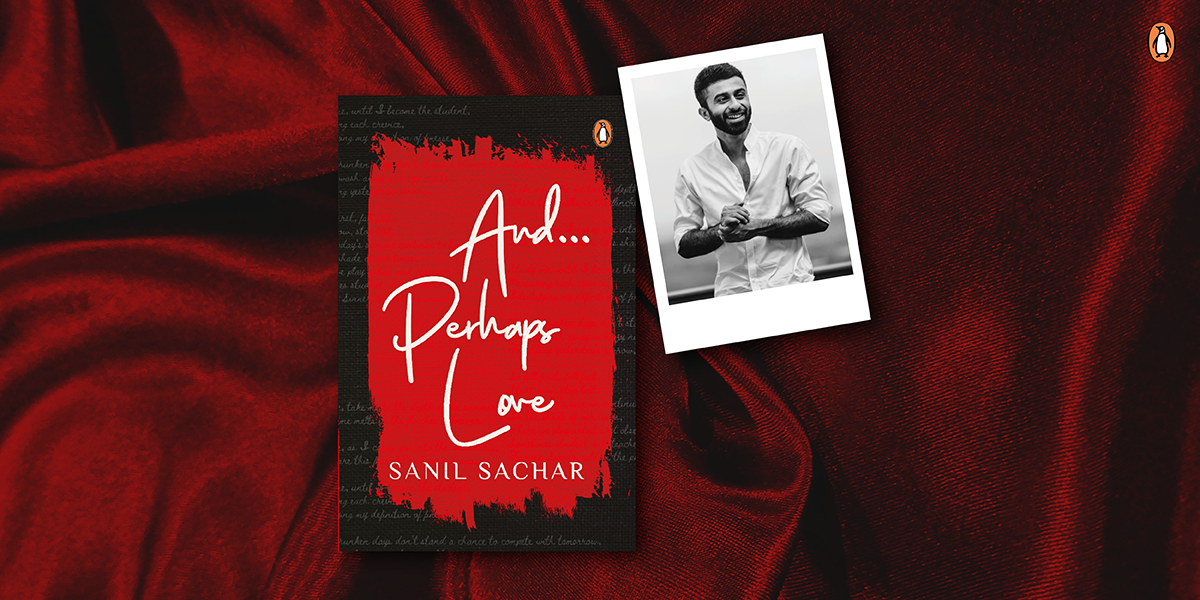
front cover of And...Perhaps Love
And…Perhaps Love || Sanil Sachar

When we think of love, we subconsciously associate people with it. When we think of passion, we think of an endeavour. When we think of places, we think of escape. Now, the passion to do something and the feeling of calmness and escape are, in truth, enhanced by the same parts of our body that fuel the feeling of love. So, the next time when someone says love, weigh your options because they all might hold the same weight. In fact, if one diminishes, it directly impacts the other, so hold on to love, in all forms.


Love is given too much responsibility

What is love? Energy. What does energy do? It gets passed on. Who passes on this energy? We, the humans, do. What happens when energy isn’t passed on correctly? Well, love is not passed on. So, who is to blame? Love or us, the people? You see, we make love responsible for much more than it is capable of on its own. It is given too much responsibility, just so we can pass ours onto it. In truth, we aren’t let down by love, we let love down.

To prevent this from happening, we need to acknowledge love in all its avatars.


Books can speak too and they have a lot to share

 When we read, we are inspired to speak, write and communicate. To make this experience come to life, it was critical to write in a manner that is uncommon. A book with spaces, in order to make it seem less naked, needed words that were left undone, unless it inspired the reader to fill the remaining spaces with their experiences. Utilising all forms of literature, with a sequencing leading to several endings to the book, helped establish that books can speak too. They have a lot to share and the best bit about them is, we can say anything we want to them and they don’t tell anyone.


Researched the hardest subject on earth, love

 I believe And… Perhaps Love when read in the correct permutation by each reader is biographical in nature, simply because hundreds of minds led to what is penned within. Over the course of my writing, I have researched subjects through facts, figures and here, the research is inspired by feelings and facts of lives that I met over a conversation shared between strangers, or those that are now strangers.


Nature, wildlife and adventure: Chat with Deepak Dalal

What drove you to write children’s fiction in particular?  


I have always believed that stories are a great tool for disseminating ideas. When you read a good book, the story grips you and you sponge in the concepts the writer weaves in. Children are receptive, they are open to ideas. Adults are hardened versions of children and stories – as a means for influencing the reader – grow less effective. This is why I find writing for children far more rewarding. 

Apart from this I empathise with children and I enjoy spending time with them. By no means can I call myself youngyet I like to believe that there are a lot of childlike qualities in me. 

Front cover of Ladakh Adventure
Ladakh Adventure || Deepak Dalal


Your books may fall under the broad genre of ‘children’s fiction’, but the themes you highlight deserve urgent attention. What attracted you to these fragile ecosystems?  


The threat to the well-being of our planet is very real. Across land, freshwater and the oceans, human activities are forcing species populations and natural systems to the edge. There have been 5 mass extinction events in the 4.5 billion years that the earth has existed. Each of them due to natural causes. It is the current belief that we are in the midst of the sixth mass extinction and this one is entirely due to humans and our activities.   

Most children live in cities today, entirely disconnected from the natural world. Through stories set in wilderness destinations I try to connect children with wildlife, forests and the great beauty of our planet. My hope is that if at a young age they can be drawn to the natural world, they will help in saving what remains of it. 

Front cover of Ranthambore Adventure
Ranthambore Adventure || Deepak Dalal


How would you describe the wildlife conservation efforts in India at the moment?  


We have some of the best wildlife scientists and conservationists in the world. Several species have been brought back from the brink through their efforts. These include animals like the tiger, the snow leopard, the rhinoceros, and birds like vultures and the amur falcon. But it isn’t all hunky dory. In spite of our best efforts, we are about to lose the Indian bustard and with the shrinking of wildlife habitats many more creatures will disappear. The loss of forests and wildlife isn’t for lack of effort on the part of conservationists. Rather it is the absence of political will and the apathy of our public – for most of whom wildlife is inconsequential – that is at the root of the problem. 


You describe the moments of encounters between human beings and animals with great detail and intimacy. Are these based on your own experiences with animals?  


I spend a lot of time researching my books. I travel to the destination where the story is set and hook up with wildlife conservationists who are studying animals there. This could be people who are studying tigers, or snow leopards, or marine scientists researching oceanic creatures. These researchers take me into wilderness areas where others can’t visit and it is my experiences with them that provide the backbone to my stories and help me describe animals and landscapes with clarity and detail. 


In this moment, do you think it is possible for human beings and animals to really live in harmony without impinging on each other’s spaces?  


One can’t do away with human-animal conflict. It will always exist. But we can significantly reduce the conflict. Today wildlife exists in isolated forests, most of them small and inadequate for species like elephants that roam in search of food. Wildlife scientists are campaigning for building corridors (stretches of jungle) that will connect the forests and allow animals to move unhindered from one forest to another. These corridors are vital for reducing tragic encounters between animals and humans. 

A curated playlist of Ravi Shankar’s music

We often think of the serious artist as one who is difficult or contrary, who struggles in anonymity. Ravi Shankar does not fit this description: he was a charismatic extrovert who earned and loved the limelight, a polished performer who brought a new professionalism to Indian music. There was something irresistible about him, as millions of fans (and dozens of lovers) would attest.

– Oliver Craske 


Oliver Craske’s captivating biography Indian Sun: The Life and Music of Ravi Shankar is a labour of love. Born out of over 130 new interviews and unparalleled research and access into the legendary musician’s life and works, this is the first biography of Pt. Ravi Shankar. It immortalises an already unforgettable man by transposing his mesmerizing body of work and the rhythms of his life into the written word. Going a step further, Craske has also curated a playlist of Pt. Ravi Shankar’s work, a combination of short and long pieces that enhance our insight into the maestro through the medium of his genius – music. Here are Craske’s notes on some of these tracks, explaining in his own words why he chose these particular pieces:  


An Introduction to Indian Music [from Sounds of India (1957)] 

A short spoken introduction, with demonstrations on sitar, tanpura and tabla. Recorded on Ravi’s first US album. Gives us a sense of how earnestly and engagingly he played the role of pioneer, educating his new audiences but trusting them to listen with open minds. (4:08) 

~

Dhun Kafi [from In London (1962)] 

Kafi is a springtime raga, associated with the Holi festival and the romance between the gods Krishna and Radha, a favourite theme of Ravi’s. Here he plays it in the light classical thumri style, with tabla accompaniment by Kanai LalThis recording, one of Ravi’s own favourites, is the likely inspiration for George Harrison’s Beatles song Love You To (on Revolver), which was based on the same raga and recorded shortly before the two met in 1966. Both tracks open with an arpeggio on the sitar’s sympathetic strings, and the melodic resemblance is closest between 2:30 and 3:05 here. (12:38) 

~

Tabla Dhwani [from Portrait of Genius (1965)] 

This album Portrait of Genius is a fine example of how Ravi raised the profile of percussionists, previously the poor relations of Indian classical music. Under Ravi’s directionTabla-Dhwani features three tabla players, the masterful Alla Rakha taking the lead and improvising freely, with flute accompaniment by Paul Horn. Absorbing in its deceptive simplicity. (4:53) 

~

Raga Kedara [from The Living Room Sessions, Part 1 (2012)] 

Aged 91, he recorded his last two albums at home, fooling around on sitar along with Tanmoy Bose, latterly his regular touring tabla accompanist. The result was an intimate, close-miked snapshot of his late-period inventiveness, the fruits of a lifetime. His fingers may not have moved quite as adroitly as in his heyday, but this playful rendition of Raga Kedara, from the Grammy-winning first volume, shows how fertile his mind was to the last. (4:47) 

~

Dhun [from Ravi Shankar at the Monterey International Pop Festival (1967)] 

Playing Monterey Pop in 1967 marked the arrival of Indian music into the Western mainstream. Ravi’s three-hour set, accompanied on tabla by Alla Rakha, closed with this dhun in one of his own ragas, Pancham Se Gara. It has an emotional crescendo and such an ecstatic climax that when D. A. Pennebaker cut his famous documentary of the festival, he realised that the only place to put this sequence was at the end of the film. Nothing could follow it. (19:41) 


Front cover of Indian Sun
Indian Sun || Oliver Craske


What Ravi Shankar has left behind is inimitable and irreplaceableThrough his magnificent literary homage, Oliver Craske ensures that the genius lives on through the pages of history.  

The full playlist is available here.

Devika Rangachari: On research, favourite books and potatoes

It is not for nothing that Devika Rangachari’s new book is called Queen of Earth; we have been conquered completely by this wonderful historical narrative. Rangachari’s research is urgent and important, and has given us a book that is poignant and inspiring in equal parts. We had a chat with the author and it was delightful.


Since you are a historian by training, was there something specific that led you to choose Prithvimahadevi as the protagonist for Queen of Earth?


Prithvimahadevi and her rule over the Bhaumakara dynasty in the ninth century CE formed part of my post-doctoral research on gender in early medieval Odisha. It was an extension of my doctoral research whose underlying essence was the manner in which women have been made practically invisible in the historical record due to an existing gender bias. The silences pertaining to Prithvimahadevi in the annals of the Bhaumakaras were intriguing given that the records of her family, the Somavamshis, indicate that she held her own over this rival dynasty for a period of time. The content of the inscriptions that she issued also contains clues to her political sagacity and shrewdness.

Most historians, on the other hand, in keeping with the ubiquitous gender bias that governs the writing of history, tend to ignore Prithvimahadevi’s rule or dismiss it in a few grudging sentences, implying that her rule precipitated the downfall of the Bhaumakaras. Her story and the manner in which she has been viewed in later ages formed an immediate and striking parallel with Didda, the protagonist of my earlier work, Queen of Ice, who has been similarly vilified for being a strong and ambitious woman. It was for these reasons that I chose Prithvimahadevi as the protagonist of Queen of Earth. The story of this remarkable woman deserves to be more widely-known.


Gender-sensitivity is such an important qualifier for a genre like historical fiction for instance. What drove you to write these books for children?


The manner in which history is taught in schools only serves to deepen the gender bias that exists in the writing of past narratives. Textbooks continually underline the apparent irrelevance of women to the historical record by only focusing on what clothes or jewellery they wore and being arbitrary in their selection of names to include in the historical sequence. As a result, the overwhelming impression conveyed is of the men always being at the centre-stage of the polity, society and economy in the past, driving all the action and doing the things that mattered, while the women stayed indoors obsessing over what to wear.

This, as a gender historian like me knows, flies in the face of actual evidence. Original sources, such as texts, inscriptions and coins, reveal the palpable—and often powerful— presence that women had in all stages of history and it is very important to acknowledge this if we are to understand the past at all. Gender-sensitive historical fiction would go a long way in correcting this lopsided historical record—and this is the reason I wrote Queen of Ice and Queen of Earth, featuring strong women characters who left a mark on history but who have been virtually erased from it, legitimate parts of their collective past that children would probably never get to know about.

front cover of Queen of Earth
Queen of Earth || Devika Rangachari
Who were your favourite writers growing up?


That is a rather tough question to answer! I read voraciously—anything and everything I could lay my hands on—so I had a very long list of favourite writers when I was growing up. To add to that, my school librarian realised that I was an advanced reader at a very early stage and challenged me with books that were way beyond my age range, so I discovered some wonderful writers through her, too. I loved Enid Blyton, of course, but not her most popular stories, such as her Famous Five series. Instead, I preferred her standalone books, such as The Six Bad Boys, The Family at Red-roofs and The Put-em-rights. I also loved Elinor M. Brent-Dyer’s riveting Chalet School series about a school that started in the Austrian Tyrol and then moved to Guernsey and, subsequently, Switzerland. As I grew older, I added P.G. Wodehouse, Agatha Christie, Georgette Heyer, Mary Stewart and A.J. Cronin to my list of favourites.


What are your 3 desert island reads?


Touch Not the Cat by Mary Stewart, Up the Down Staircase by Bel Kaufman and The Code of the Woosters by P.G. Wodehouse. And a million others that I want to mention!


Do any of your characters resemble people you know in real life?


My early school stories regularly featured characters based on me and my friends. However, as my focus is on historical fiction now, my acquaintance with my characters is only through research. It must be noted, though, that Didda and Prithvimahadevi, the protagonists of my latest books, are very relatable people whose dreams, motives and actions have familiar resonances.


We hear you’re a potato fan. What is your favourite way to eat potatoes– fried, mashed, roasted, something completely different?


Fried, mashed, roasted, boiled, baked—all forms of the potato are delicious—and eminently welcome. Wondering about potato ice-cream but not sure it’s a good idea!


Picture of Devika Rangachari
Devika Rangachari


We also hear you’re fond of libraries. Do you have a favourite one, or is there a library you haven’t yet visited and want to?


The British Council Library in Delhi and the Dr. B.C. Roy Memorial Children’s Reading Room and Library, also in Delhi, are my favourites. The place I most want to visit, though, isn’t a library but a museum and visitor centre dedicated to children’s literature—Seven Stories, the National Centre for Children’s Books in Newcastle upon Tyne, England. Not only does it curate its own exhibitions of the best children’s books, including original manuscripts and illustrations, but it also hosts workshops, seminars and author and illustrator visits throughout the year. I think I could live there perfectly well!

Do you have a writing routine? Is there a specific time of the day for example when you are most productive or get the most writing done? Or is your work pattern more flexible?


I am more a reader than a writer, so I could spend the entire day quite happily between the pages of a book. However, deadlines have an unnerving habit of looming, so that is when I write and then usually in the morning for a couple of hours. I do it fairly fast with very few drafts, so the entire process doesn’t take too long. Mine is a rather flexible work pattern!


If you could meet one author, dead or alive, who would you meet and why?


I can’t really choose! I would probably keep an entire day for meeting my favourite authors, scheduling different time slots for them and being in a joyous trance all through. There is so much I want to know from them—their motives for writing particular stories, the manner in which they honed their craft, their favourite writers and so on. If I had to choose, though, I would like to meet P.G. Wodehouse for his masterful blending of humour and language, and Hilary Mantel for her exquisite retellings of history.

~ We agree with you 100% Devika. Especially about the potatoes. ~

error: Content is protected !!