Publish with Us

Follow Penguin

Follow Penguinsters

Follow Penguin Swadesh

Examining the Muslim Demographic through ‘Siyasi Muslims’ – Excerpt

How do we make sense of the Muslims of India?

Do they form a political community?

Does the imagined conflict between Islam and modernity affect the Muslims’ political behaviour in this country?

Are Muslim religious institutions-mosques and madrasas-directly involved in politics?

Do they instruct the community to vote strategically in all elections?

What are ‘Muslim issues’?

Is it only about triple talaq?

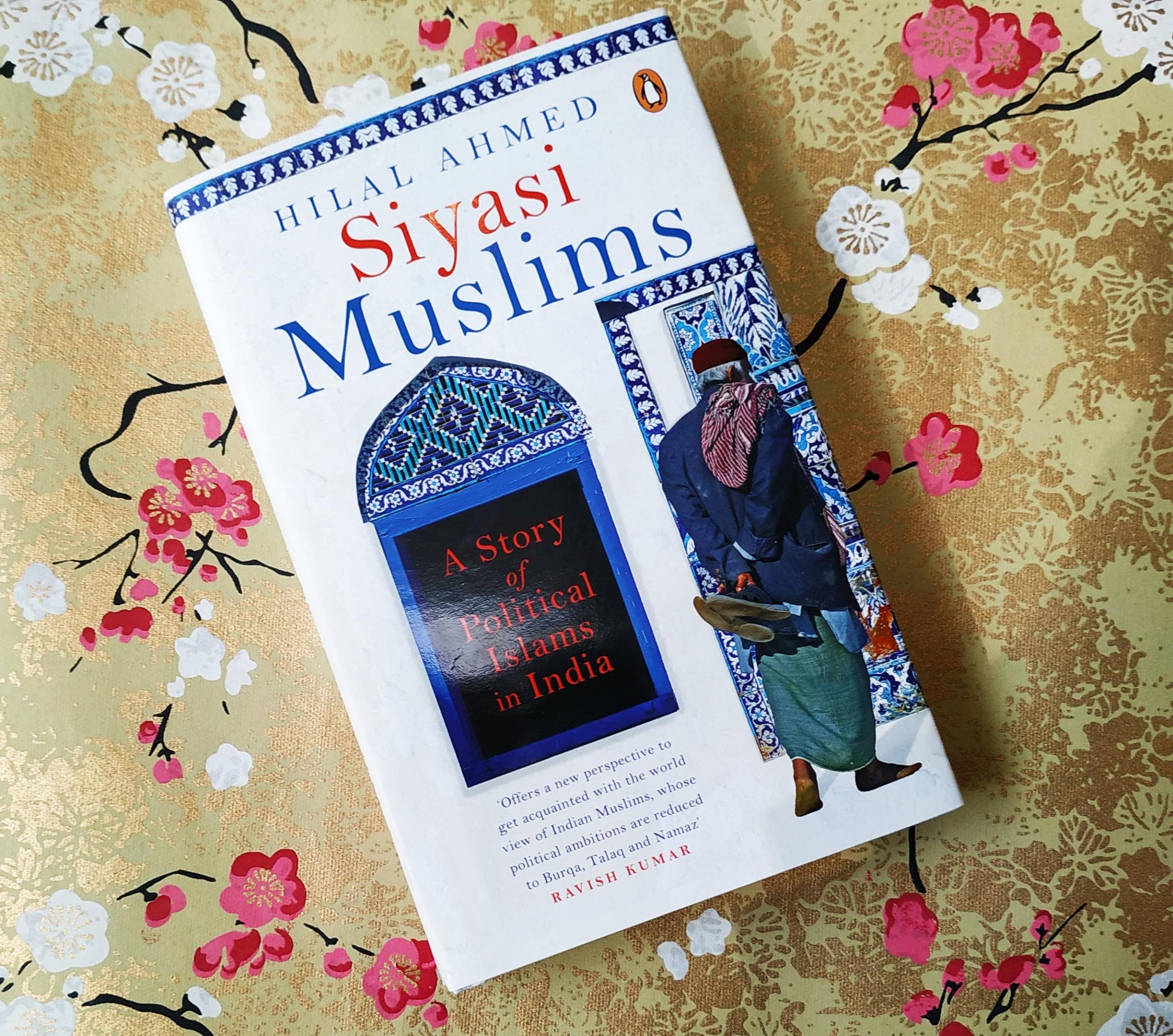
While these questions intrigue us, we seldom debate to find pragmatic answers to these queries. Examining the everydayness of Muslims in contemporary India, Hilal Ahmed’s Siyasi Muslims: A Story of Political Islams in India offers an evocative story of politics and Islam in India, which goes beyond the given narratives of Muslim victimhood and Islamic separation.

Here is an excerpt from Siyasi Muslims Triple Talaq as an MCQ:

————————————————————————–

The question of ‘triple talaq’ is posed as an objective-type MCQ (multiple choice question)! We are given two options—support it (say yes) or oppose it (say no). The meaning of yes and no are also premeditated in this schema: Yes refers to closed Islamism, while No stands for gender equality and progress.

This dominant (and somewhat stereotypical) representation of the triple talaq issue is based on a  few strong assumptions about Muslims in general and Muslim men in particular:

  • The Muslims of India constitute a single, closed, homogeneous community, which is inevitably male-dominated.
  • This male-dominated community is governed by a few established Islamic norms which are highly anti-women in nature. Islamic religiosity as well as Islamic practices, hence, are intrinsically patriarchal.
  • The Islamic clergy functions as the true representative of the community. It has an ultimate right to interpret religious texts and, at the same time, speak on behalf of all Muslims.

These convictions, interestingly, are often presented to us as hard facts—not merely by the government, political parties and the ulema class but also by those who prefer to be identified as ‘liberals’. As a result, a media-centric discourse of political correctness emerges, which virtually freezes any possibility of a nuanced and meaningful discussion on the nature and functions of patriarchy among Muslims.

The recent debate on triple talaq is an example of such stereotypical public imagination. No one bothered to look at the arguments and positions of various Muslim women’s groups on the status of Muslim women in India, the internal debates among them on the question of Muslim patriarchy, their varied interpretations of the Quran and Hadith, their critical responses to the much-debated idea of the Uniform Civil Code and, above all, their critique of Muslim personal law and the role of the ulema in nurturing the anti-Muslim attitude of Hindutva politics.

The triple talaq debate, surprisingly, is seen as a battle between the conservative ulema represented by the All Indian Muslim Personal Law Board (AIMPLB) and the committed BJPled NDA government. The discussion in the Parliament on the triple talaq bill and, later, on the triple talaq ordinance seems to ignore the nuanced arguments made by Muslim women’s groups, especially the Bharatiya Muslim Mahila Andolan (BMMA). The purpose, therefore, of this chapter is to clarify and contextualize the public debate so as to make sense of the various aspects of the controversy. In addition, an attempt is made to analyse the politics of triple talaq in the wake of emerging Hindutva.

Let us begin with a few frequently used terms:

  • ‘Triple talaq’ refers to a practice which empowers a man to divorce his wife by saying ‘talaq, talaq, talaq’ in one go.
  • ‘Mehr’ is a sum of money or other property to be delivered to the bride by the bridegroom at the time of the nikah as a prerequisite for the solemnization of their marriage, as specified in the nikahnama.
  • ‘Iddat’ is the period of time (approximately three to four months) during which a divorced woman/widow cannot remarry another man.
  • Nikah’ is a contract of marriage between a man and a woman. The nikahnama is a document which specifies the terms and conditions of this agreement.
  • ‘Sharia’ or ‘shariat’ is a collection of rules and norms that have been codified following the Quran and Hadith (laying out the sayings and acts of Prophet Muhammad). Since this codification is subject to various interpretations, there are various shariats among Sunnis and Shias.
  • Nikah halala’ is also a frequently used term. Once a woman has been divorced, her husband is not permitted take her back as his wife unless the woman undergoes nikah halala, which involves her marriage with another man who subsequently divorces her so that her previous husband can remarry her.

The practice of triple talaq, we must note, is legitimate among Sunni Muslims of the Hanafi shariat. Although we do not have adequate statistical information about the sect-wise population of Muslims in India, it is believed that Sunni Hanafis are in the majority, at least in the northern states. But there are four other schools of Sunni shariat—Hanbali, Shafi, Maliki and Ahle- Hadith. These schools have their own interpretations of rituals and customs and specific norms for divorce.

The AIMPLB itself recognizes this Islamic religious plurality in India. In fact, one of the stated objectives of the AIMPLB is:

To promote goodwill, fraternity and the feeling of mutual cooperation among all sects and schools of  thought     among Muslims, and to generate the spirit of unity and coordination among them for the common  goal of safeguarding the Muslim Personal Law.1

There are two questions are important here: Does the AIMPLB determine the everyday conduct of the religiously diversified Muslim communities? If so, do Muslims, particularly the followers of the Hanafi shariat, practise triple talaq precisely because of their religious adherence to Islam?


Know more in Hilal Ahmed’s Siyasi Muslims: A Story of Political Islams in India
You might have misunderstood Muhammad Bin Tughlaq all your life. Read why in these 6 points!

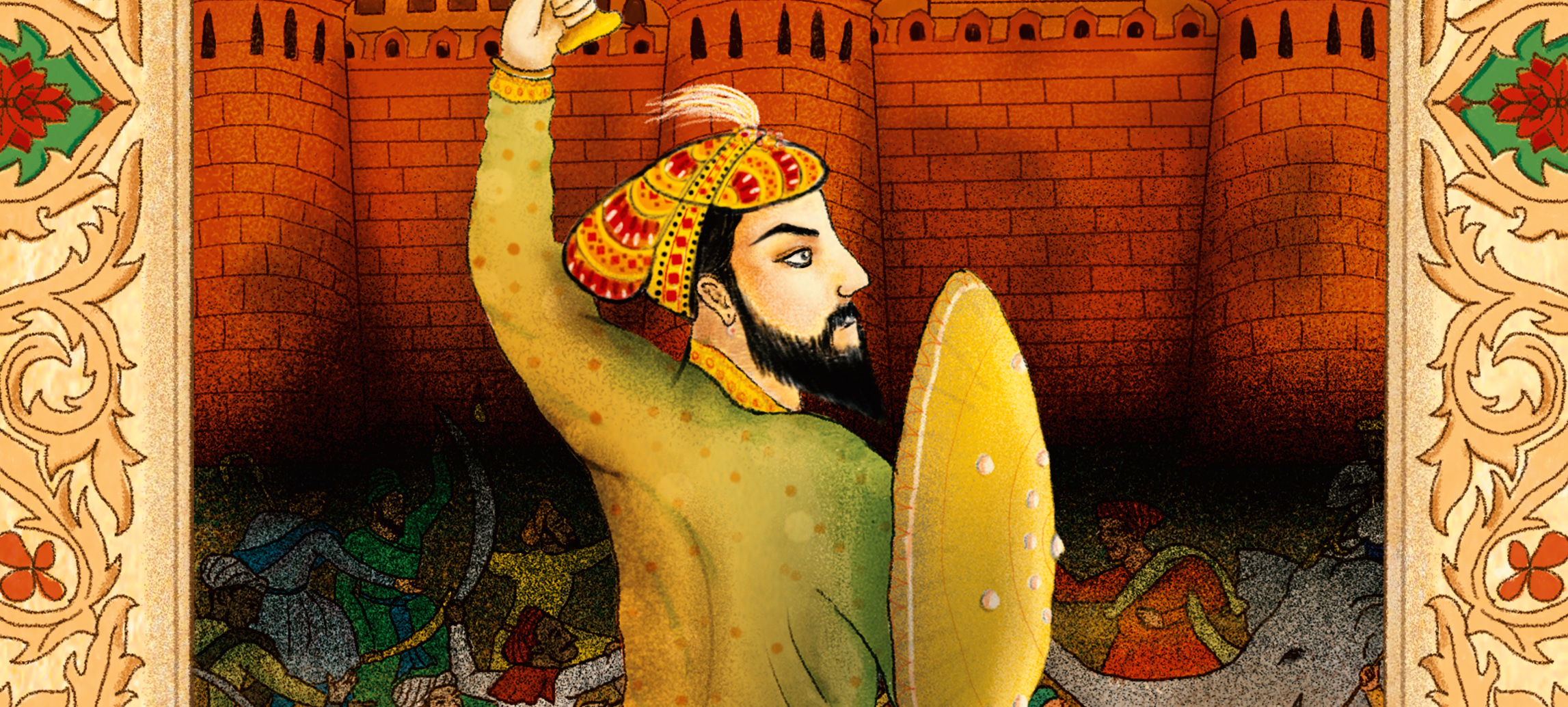
Muhammad bin Tughlaq – Tale of a Tyrant by Anuja Chandramouli is an attempt to recreate the life and times of Muhammad bin Tughlaq and clamber into the chaotic headspace of one who was considered to be a “mad monarch”.

Modern historians concur that he has been terribly misunderstood, and so-called scholarly accounts from the likes of Ibn Battuta, Barani and Isami reek of bias. He was exceedingly unpopular among the followers of his own faith for daring to be tolerant to his subjects who belonged to other religions, failing to zealously guard the principles of Islam from idolatry and heresy, and raising non-believers to high posts instead of dealing with them using the savagery he was infamous for.

This listicle attempts to demystify Muhammad bin Tughlaq:


The challenges of ruling an unwieldy empire where Tughlaq’s subjects in the various provinces had their own language and customs, and all of whom were uniformly proud and prickly about their roots, proved too much for him.


In this fictional retelling, Anuja Chandramouli, one of India’s best mythology writers, reimagines Muhammad bin Tughlaq‘s life and times in incredible detail to bring to life the man behind the monarch.

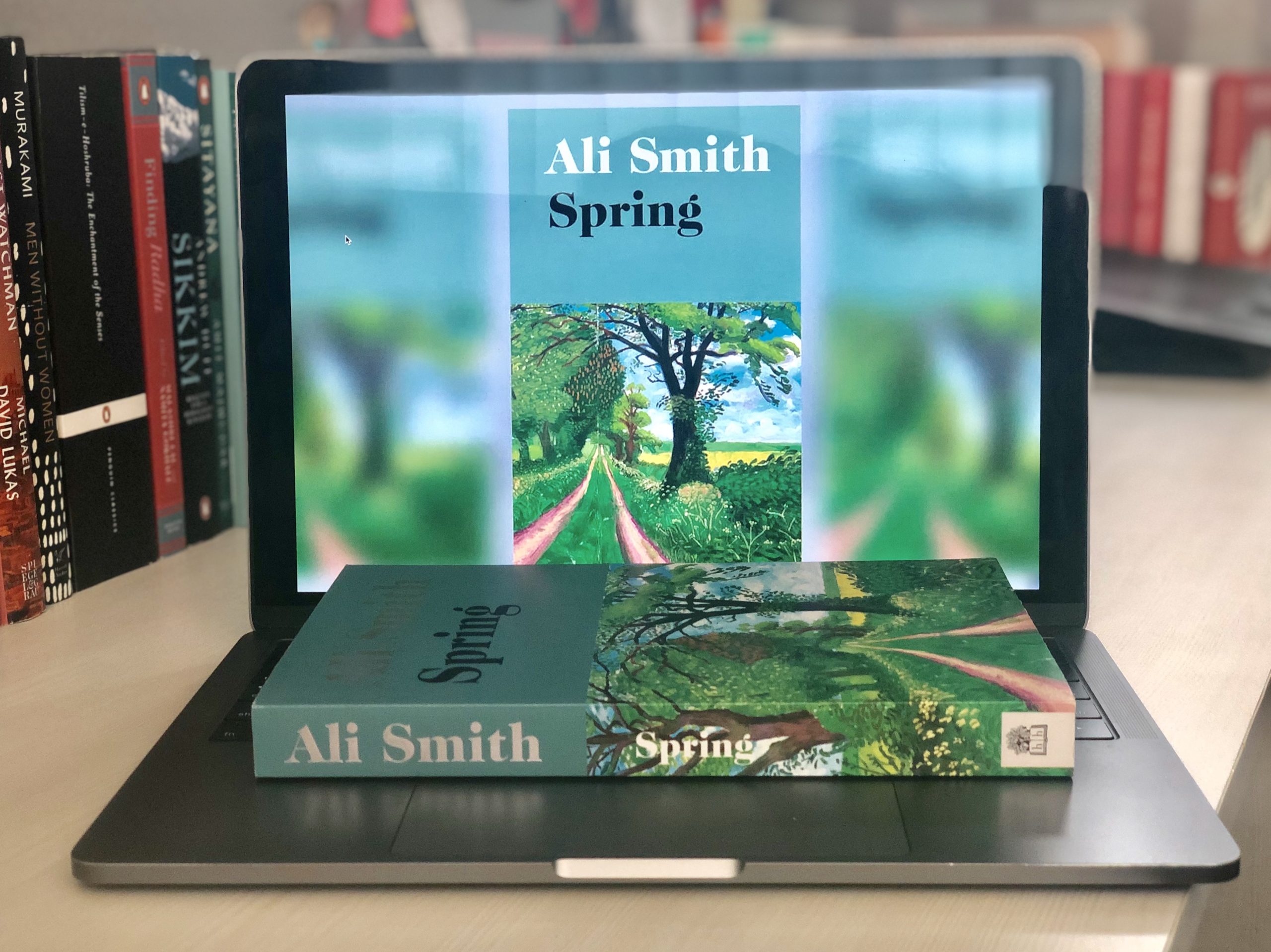
Getting off at a Place not Printed on the Ticket – an excerpt from Ali Smith’s ‘Spring’

Spring will come. The leaves on its trees will open after blossom. Before it arrives, a hundred years of empire-making. The dawn breaks cold and still but, deep in the Earth, things are growing. 


Yesterday morning, a month to the day since the memorial service (they’d had her privately cremated some time before the memorial, he doesn’t even know when, close family only), he is walking along the Euston Road and as he passes the British Library he sees a woman sitting against its wall, thirties, as young as twenties, maybe, blankets, square of cardboard ribbed off a box on which there are words asking for money.

No, not money. The words on it are please and help and me.

He’s passed countless homeless people even just this morning coming through the city. Homeless people are the word countless again these days; any old lefty like him knows that this what happens. Tories back in, people back on the streets.

But for some reason he sees her. The blankets are filthy. The feet are bare on the pavement. He hears her too. She is singing a song to nobody – no, not to nobody, to herself – in a voice of some notable sweetness, at a quarter to eight in the morning.

It goes:

a thousand thousand people

are running in the stre-eet

oh nothing nothing nothing

oh nothing nothing nothing

oh nothing

Richard keeps going. When he stops keeping going he is just past the front of King’s Cross station. He turns and goes in, as if that’s what he meant to do all along.

There is a stall in the middle of the concourse beneath the giant Remembrance poppy. The stall is selling chocolate in the shapes of domestic utensils and tools: hammers, screwdrivers, pliers, cutlery, cups and so on; you can buy a chocolate cup, a chocolate saucer, a chocolate teaspoon and even a chocolate stovetop espresso-machine (the stovetop machine is costly). The chocolate things are extraordinarily lifelike and the stall is thronged with people.  A man in a suit is buying what looks like a real kitchen tap, made of silver-sprayed chocolate; the woman selling it to him places it delicately into a box she first lines with straw.

Richard puts his card into one of the ticket machines. He inserts the name of the place that’s the furthest a train from here can go.

He gets on to a train.

He sits on it for half a day.

An hour or so before the train reaches this final destination he’ll see some mountains against some sky through the window and he’ll decide to get off the train at this place instead. What’s to stop him doing what he likes, getting off at a place not printed on the ticket?

Oh nothing nothing nothing.

King Gussie, to rhyme with fussy, is how he’d always thought it was said, like the robot announcer pronounces it over the speakers in London King’s Cross above his head before he boards the train.

Kin-yousee is how it’s said by the guest house people whose door he knocks on when he gets there. They will be suspicious. What kind of person doesn’t book ahead on his phone? What kind of person doesn’t have a phone?

He will sit on the edge of the strange bed in the guest house. He will sit on the floor and brace himself between the bed and the wall.

By tomorrow his clothes will have taken to the air-freshener smell of the room he’ll spend the night in.


Get a copy of Ali Smith’s Spring here!

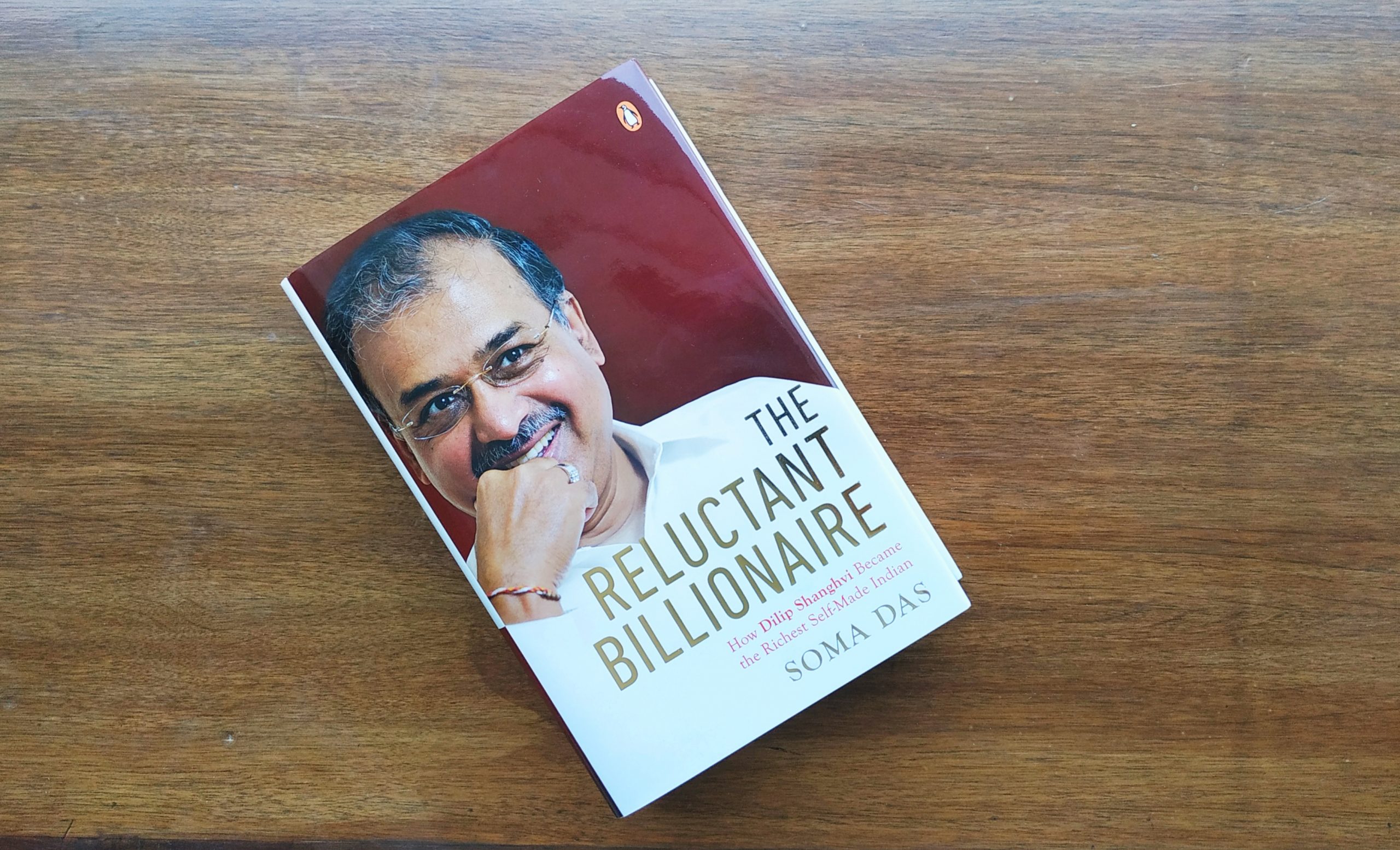
The Reluctant Billionaire – An Excerpt

Dilip Shanghvi is one of the most interesting and least understood business minds whose journey has been shrouded in mystery because of his reticence.

The Reluctant Billionaire reveals the riveting story of the fiercely intense personality that lies beneath his calm demeanour. Based on interviews with over 150 friends, family members, rivals, former aides and Shanghvi himself, it traces his transformation from a quiet, curious child working in his father’s small shop to an astute strategist, who built India’s largest pharma company, Sun Pharma, despite being untrained in science.

Here’s a gripping excerpt from the book that talks about the acquisition of Taro and Ranbaxy.


Should a story be told when the subject is unwilling? Maybe ‘not’ if it’s an ordinary story of a private person, or maybe ‘yes’ if it’s in the guise of fiction where it is easy to speak the truth. But what if the story happens to be of a man who arose from the anonymity of a small wholesaler to become the richest man in a country of a billion-plus people and as many dreams? And he did so, not by creating a conglomerate, which depends on cronyish connections and government concessions, but by building a global firm focused only on making medicines. Isn’t his story more than just his, a story that belongs to a generation, a nation?

And when he became the richest man of the country in 2015 and was asked how he felt, he replied, ‘Uncomfortable, very uncomfortable.’ Despite living what could be argued as one of the most remarkable life of his generations, his mind feels like a black box. Dilip Shanghvi is one of the most interesting and least understood business minds of India today. For someone, unschooled in degrees of sciences and management, who worked his way up from a tiny shop in the bylanes of Dawa Bazaar in Calcutta of the 1970s to create one of the country’s most valuable enterprises, he is also one of the least documented and least studied capitalists. One reason behind this is his own unwillingness to share his story.

He doesn’t care about being celebrated, and stubbornly disapproves, even casts off attempts to document him. Another part is because with no drama, no modulation in pitch, few words and fewer expressions, he neither fits the bill of a conventional inspiring pin-up business leader nor does he make for a great colourful flamboyant story. It is easy to miss the intensity of someone who is more presence than personality. What compounds this conspicuous absence from mainstream is a past yet unsearched but which, on the surface, doesn’t show up juicy controversies to merit an investigation, and a lifestyle that could appear normal enough to be boring. No wonder the media was ready to spare him the limelight he so avoided.

From time to time, when the need arose, he was profiled with a few recycled facts thrown in—that he borrowed 10,000 rupees from his father to start his firm Sun Pharma with two medicines for psychiatry and that in his sixties now, he is a fan of Harry Potter books. What happened in the interim was left to the imagination.

This un-deliberate arrangement of mutual disinterest worked fine till one day—the maths of life changed it all. That day in March 2015 his net worth crossed that of Mukesh Ambani and he was pronounced India’s richest man. The country was curious to know who this guy was, how he had done it.

If the search and discovery had been so easy, answers to these questions wouldn’t have remained so elusive. Shanghvi, known to shun press conferences, interviews and parties expressed his unwillingness for this book when approached initially. ‘You will probably put my face on the cover and I would be recognized by many more people on the streets and that’s always a problem. It takes away from my freedom.’


The Reluctant Billionaire is a tale for everyone who has once had a secret dream, an insanely bold one.

Meet the boy who will Change the Destiny of the World, and the others from ‘Astra: The Quest for Starsong’

“The world should burn . . . burn like a star!”

The balance of the world is askew.The winds speak of a terror from the south. Ravana, the Lord of Lanka, is on the march. Seers whisper that he has awakened Starsong, a mythical astra of the gods. And that he thirsts for this weapon that will make him invincible. But there is one thing that he hasn’t considered. Up high in the glistening tower of the city of Ulka is a boy, held captive.

Today is the day Varkan, the young prince of Ashmaka, will taste freedom. Today is the day he will lay claim to his destiny as the wielder of Starsong. And along the way, perhaps he will change the destiny of the world itself.

Meet the characters from Aditya Mukherjee  and Arnav Mukherjee’s new book, Astra: The Quest for Starsong 


Varkan’s father passed away mysteriously, taken by a ‘madness’. Then his mother seemed to succumb to the same madness and was imprisoned as his  uncle took over the kingdom. He was kept locked up in one of the towers in the palace. However, he never gives up. He plots again and again to escape, and finally does. When he finds the responsibility of the Astra on him, he embraces it since it is a mission given to him by his mother, and he feels the secret of his father’s demise lies with the Astra


Tara can’t help provoke people to get a reaction from them. She’s also very intelligent and deeply cares about nature, animals and her grandfather, even though she troubles him. Though she and her grandfather travel as gypsies, they are secretly the Regent and Princess of Gandhara, Ashmaka’s old ally.


All Princes of Ashmaka get an elephant, and Varkan got gifted Daboo when they were both children. However, as Daboo grew up he didn’t grow much physically, and he’s the smallest elephant in Ashmaka. That doesn’t stop him from being very brave, very loyal and always up for an adventure. (If anything he tends to overcompensate…)


Read Astra: The Quest for Starsong to find out what happens!

The Story Behind my New Book

by Tanaz Bhathena

The Beauty of the Moment began as a short story, one that I didn’t think I would write, because I’m usually uncomfortable writing about anything that’s too close to my own life.

The story, titled Last Days, First Days, was structured as a series of flashbacks and flash forwards, the flashbacks set in an Indian secondary school in Saudi Arabia, the flash forwards in a public high school in Canada. There was a girl named Susan, a boy who was not named Malcolm, and the story wasn’t about love, but about culture shock.

I grew up in the city of Mississauga, one of the most diverse cities in the greater Toronto area, with a large population of South Asians and Arabs, but the books that I read and the movies I saw catered primarily to a Caucasian demographic.

As a sixteen year old I realized quickly that wearing any Indian clothing made me stand out—and not in a good way. After a racist incident, where a girl tried to run me over with her bicycle, I eschewed my salwar-kurtas and stuck to Western wear for the longest time.

Now, over eighteen years after that incident, things have changed along with the demography. Indian culture has gained popularity in North America—largely thanks to the powers of Bollywood and globalization. Wearing Indian clothing doesn’t make you stand out any more than wearing Western clothing.

In publishing, things were changing, too. Writers in the YA community in America were the ones driving the change, forming an organization called We Need Diverse Books in 2015. In Canada, the Festival of Literary Diversity began in Brampton. Both organizations advocated for more inclusivity in the stories that were being produced and in the writers who were telling the stories. #OwnVoices, coined on Twitter by Corinne Duyvis, was turning into a revolution. More and more readers were demanding diverse stories—and that too by authors who had lived their characters’ experiences.

My first book, which you all know as A GIRL LIKE THAT, would likely still be languishing in a slush pile at a publishing house if not for these movements.

When the time came for me to write another book, I went back to Last Days, First Days and wondered: What if this were a novel?

I’d read a few books starring Indian American teen protagonists such as Tanuja Desai Hidier’s brilliant Born Confused. Yet, there were few if any books about first- or second-generation Indian Canadian teens. And there were no books that I came across that were actually set in Mississauga.

Back when I was a teenager—or even eight years ago (when I wasn’t), I wouldn’t have thought it possible to write a story about these things. I didn’t see myself on the page in North American fiction and I had grown used to my own exclusion.

So I went back to the story I had written, tore it apart and started rewriting a story that had my heart all over it.

I wanted to write a book that broke the monolithic view that North Americans can have of Indians, not realizing how diverse people from my birth country really are. I also wanted to show the world what life is like for Indians in the diaspora—with a focus on the griefs and the joys of displacement.

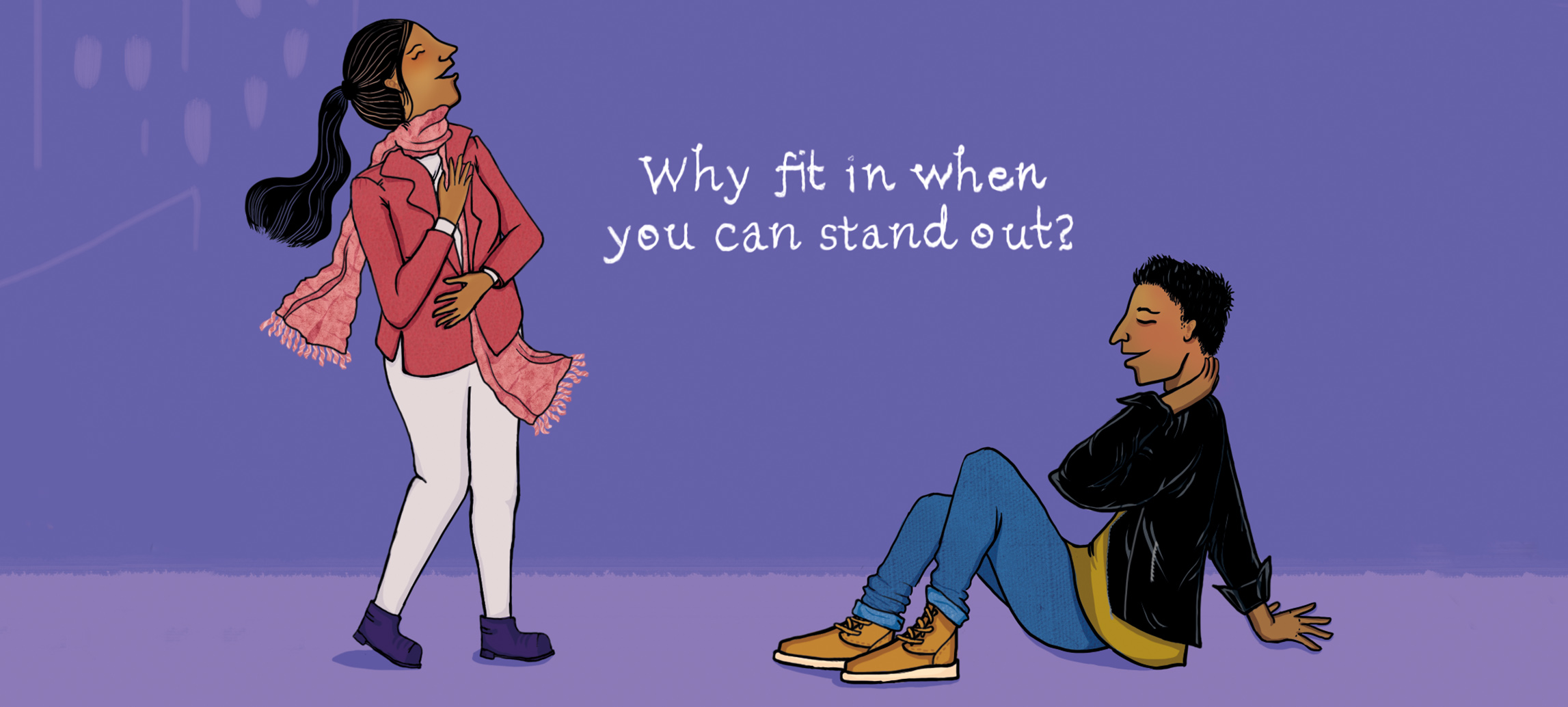
This book combines all three of my identities: Canadian, Saudi and Indian. Like Susan, I do not fit into a neat little compartment or category. But writing this book allowed me to realize that it is okay to stand out at times. To even step outside our comfort zones.

For me, writing a romance definitely was out of my comfort zone. So was allowing my characters to be teenagers and make the mistakes I made when I was that age.

The Beauty of the Moment is not perfect. It certainly isn’t the single best representation of Indian Canadian teens—and I don’t want anyone to see it that way. But I do hope that there will be teen readers who will be able to see themselves in the story and that there will be even more teens who will use the book as a window to cultures and experience different from their own.

Furthermore, I hope other writers—teens and adult—will be inspired add their tales to the repertoire of #ownvoices stories.

If the story you want to read hasn’t been told yet, the you must write it.

The world is waiting for you.


Tanaz Bhathena’s new book, The Beauty of the Moment tells the story of

9 Thankfully Fictional Fathers Who Will Make You Appreciate Your Own Dad a Little More!

This Father’s Day, while you celebrate your father and his contribution to your existence, let us take a moment to look at some of the not-so-great fathers ever written, in some of the greatest books ever written and sympathize with their unfortunate offspring. These fictional fathers, from ragingly violent to downright deranged, will hopefully make you appreciate your own so much more!

Go through our hall of paternal shame and decide if your own father deserves a few extra presents as a mark of your gratitude! After all, ‘to quote one of our Dubious Dads, ‘How sharper than a serpent’s tooth it is to have a thankless child!’


Laius in King ‘Oedipus’-Sophocles

The legends surrounding the royal house of Thebes inspired Sophocles (496–406 BC) to create a powerful trilogy of mankind’s struggle against fate. King Oedipus tells of a man who brings pestilence to Thebes for crimes he does not realise he has committed and then inflicts a brutal punishment upon himself. With profound insights into the human condition, it is a devastating portrayal of a ruler brought down by his own oath

Terrible dad 101- Having been told by an oracle that his newborn son is destined to kill him. Laius binds the infant’s feet together with a pin and orders his wife to kill him.


Walter Morel in ‘Sons and Lovers’ – D.H. Lawrence

Taking its autobiographical inspiration from D.H. Lawrence’s experience of growing up in a coal-mining town, Sons and Lovers is a vivid account of the conflict between class, family and personal desires.

The marriage of Gertrude and Walter Morel has become a battleground. Repelled by her uneducated and violent husband, delicate Gertrude devotes her life to her children, especially to her sons, William and Paul – determined they will not follow their father into working down the coal mines. But conflict is evitable when Paul seeks to escape his mother’s suffocating grasp through relationships with women his own age. Set in Lawrence’s native Nottinghamshire, Sons and Lovers is a highly autobiographical and compelling portrayal of childhood, adolescence and the clash of generations.

Terrible dad 101-Alcoholic, violent and weak and insecure of his own position in his family


King Lear in ‘King Lear’ – Willliam Shakespeare

In William Shakespeare’s moving tragedy of political intrigue and family strife, the ageing King Lear, tired of office, decides to split his kingdom between his three daughters, Goneril, Regan and Cordelia; but the decision to allot their share based on the love they express for him proves to be a terrible mistake. When Cordelia refuses to take part in her father’s charade, she is banished, leaving the king dependent on her manipulative and untrustworthy sisters.

Terrible Dad 101- He distributes his wealth on the basis of flattery and fulsome declarations of love, while completely disregarding his youngest, devoted offspring in favour of his two older daughters.


Pap Finn in ‘The Adventures of Huckleberry Finn’-Mark Twain

Mark Twain’s witty, satirical tale of childhood rebellion against hypocritical adult authority, the Penguin Classics edition of The Adventures of Huckleberry Finn is edited with a critical introduction by Peter Coveney. Mark Twain’s story of a boy’s journey down the Mississippi on a raft conveyed the voice and experience of the American frontier as no other work had done before. When Huck escapes from his drunken, abusive ‘Pap’ and the ‘civilizing’ Widow Douglas with runaway slave Jim, he embarks on a series of adventures that draw him to feuding families and the trickery of the unscrupulous ‘Duke’ and ‘Dauphin’.

Terrible dad 101-One of the most terrifyingly vicious fathers ever written, he is an alcoholic, racist, repellent individual who beats his son to extract whiskey money and almost murders him with a hunting knife.


Harry Wormwood in ‘Matilda’- Roald Dahl

A splendiferous new hardback of Matilda, part of a collection of truly delumptious classic Roald Dahl titles with stylish jackets over surprise printed colour cases, and exquisite endpaper designs. Matilda Wormwood’s father thinks she’s a little scab. Matilda’s mother spends all afternoon playing bingo. And Matilda’s headmistress Miss Trunchbull? Well, she’s the worst of all. She is a big bully, who thinks all her pupils are rotten and locks them in the dreaded Chokey. As for Matilda, she’s an extraordinary little girl with a magical mind – and now she’s had enough. So all these grown-ups had better watch out because Matilda is going to teach them a lesson they’ll never forget.

Terrible dad 101-Pompous with a streak of venom jealousy, he really hates the fact that his daughter is a genius. He is somewhat verbally abusive and destroys her library books, before abandoning her without any noticeable qualms.


Adam Penhallow in ‘Penhallow’- Georgette Heyer

The death of Adam Penhallow on the eve of his birthday seems, at first, to be by natural causes. He was elderly after all. But Penhallow wasn’t well liked. He had ruled over his estate with an iron will and a sharp tongue. He had played one relative off against another. He was so bad-tempered and mean that both his servants and his family hated him. It soon transpires that far from being a peaceful death, Penhallow was, in fact, murdered. Poisoned. With his family gathered to celebrate his birthday, and servants that both feared and despised him, there are more than a dozen prime suspects. But which one of them turned hatred into murder?

Terrible dad 101-Vicious, domineering and gets his thrills from humiliating and controlling his family especially his sons.


Jack Torrance in ‘The Shining’ – Stephen King

Jack Torrance’s new job at the Overlook Hotel is the perfect chance for a fresh start. As the off-season caretaker at the atmospheric old hotel, he’ll have plenty of time to spend reconnecting with his family and working on his writing. But as the harsh winter weather sets in, the idyllic location feels ever more remote . . . and more sinister. And the only one to notice the strange and terrible forces gathering around the Overlook is Danny Torrance, a uniquely gifted five-year-old.

Terrible dad 101-Deranged dad who lets his personal and external demons send him on gleeful spree to murder his wife and son.

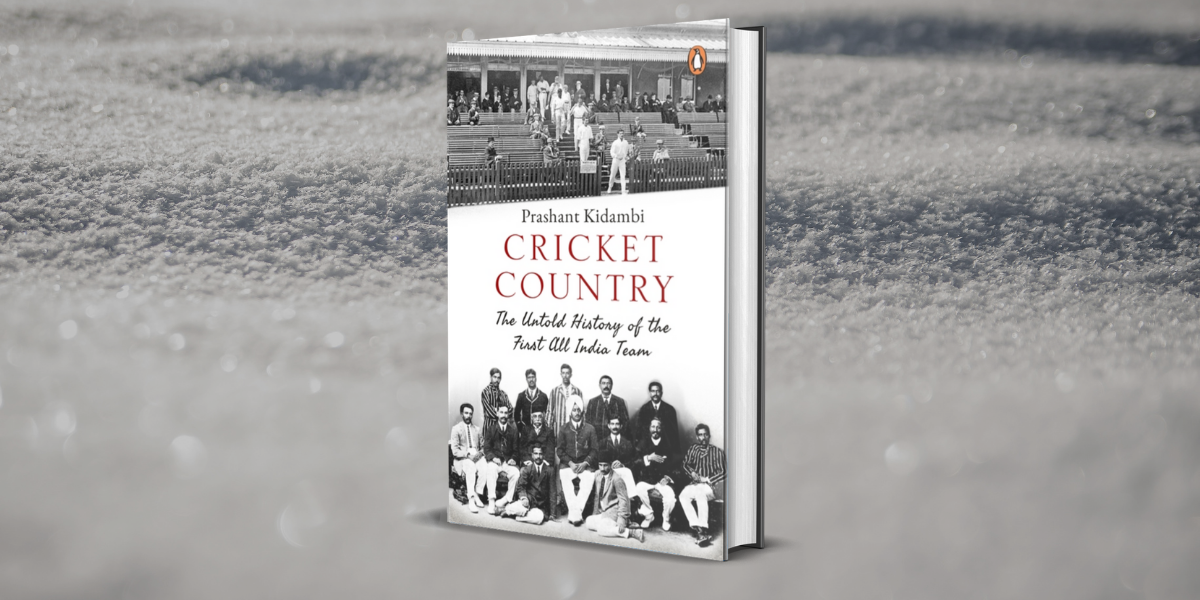
Know the untold history of the first all-India team

On the morning of 6 May 1911, a large crowd gathered at Bombay’s Ballard Pier. They were there to bid farewell to a motley group of sixteen Indian men who were about to undertake a historic voyage to London. The persons whom the crowd cheered that sultry Saturday morning were members of the first All-India cricket team.

Conceived by an unlikely coalition of imperial and Indian elites, it took twelve years and three failed attempts before an ‘Indian’ cricket team made its debut on the playing fields of imperial Britain in the blazing coronation summer of 1911.

Prashant Kidambi, an associate professor of colonial history at the University of Leicester, introduces us to the first ever cricket team of India, in his book, Cricket Country.

Get to meet the team!


Maharaja Bhupinder Singh of Patiala :The First Captain of the Indian Cricket Team

Maharaja Bhupinder Singh was not the organizers’ initial choice to lead the first Indian Cricket Team. In fact, Framjee Patel wanted H.H. Jam Saheb to become the skipper of the team. The Maharaja was known to use cricket to serve his own political interests. In 1931, he shared strained relations with the Viceroy Willingdon and used cricket to regain influence on imperial affairs.


Major K.M. Mistry

“Said to be in a ‘class by himself’, Mistry had first made his mark as a bowler for the long- established John Bright CC in Bombay… But it was while playing for the famous Patiala team in the late 1890s that Mistry developed into a truly great batsman. This left-handed Parsi was adept at playing strokes all around the wicket, ’attaining the maximum of power with the minimum of power.’


Maneck Chand

“The Bombay Gazzete described the Punjabi as a ‘fast right hand bowler’ who could prove   ‘very deadly’ if the conditions were favourable. Some even considered him the quickest bowler in the entire country.”


Dr. H.D. Kanga

“..Homi was said to possess ‘nerves of steel’ and play ‘a scientific game’…. ‘He is one of those    brilliant cricketers who can bat against all kinds of bowling as calmly as possible and make runs freely.’ wrote one contemporary on the eve of the Parsis’ encounter with the Presidency in September 1905.”


P. Baloo

Palwankar Baloo belonged to the class of ‘untouchables’, “However, it was precisely his tireless toil on the cricket pitch in the face of deep-seated caste prejudice that defined Baloo’s long cricket career.”  In fact, Baloo was considered to be one of the finest bowlers of the twentieth century and gave stellar performances in matches.


J.S. Warden

“The Bombay- born Warden, described by his captain Pavri as ‘a magnificent fellow’ was a relatively new find for the Parsis. This talented twenty-six-year old slow bowler – reputedly ‘one of the best in India’- was said to send down ‘balls which would beat the most wary of batsmen’.” He was a left handed bowler.

M.D. Pai

Mukund Damodar Pai was born in Bombay on 29th July 1883. His early cricket career was marked by consecutive success in playing cricket at schools and clubs. “The Bombay Gazette described Pai as a ‘fast run-getting bat, though. . . not quite of the hurricane type’; besides, he was said to be ‘a brilliant fielder’.”


H.F. Mulla

“Born in Bombay on 4 May 188, Mulla had first burst onto the cricketing scene as an undergraduate at Elphinstone College…. Even half a century later, one observer nostalgically recalled the ‘fabulous Homi Mulla. . . whose very turn to go in was the signal for us small boys to rush out of the tent or shamiana so as to be able to follow the ball as it became a tiny speck in the very clouds’.” He was considered to be a fine wicket keeper too.


K. Seshachari

Seshachari was one of the finest stumpers India has ever had.  He was trained by Charles Studd, one of the most well- known cricket players of his time. In 1906, the Cricket noted that Seshachari’s “… wicket-keeping is quite first-class and brilliant enough for any country…”


Salamuddin Khan

Born as a Pathan, in the Basti Sheikh Darwesh  district of Jullender, Salamuddin Khan was an all-rounder cricketer .It is said that he“ ‘ favourably impressed the Committee with his batting and bowling during the Bombay tour of the Aligarh team’.”


Shafqat Hussain

According the Bombay Gazette, Hussain had “ ‘been a revelation to local cricketers’ and commended his ability to bowl at varying speeds and lengths. ‘He scarcely bowls two balls alike in an over and we have seen no fast bowler in India who more admirable works with his head,’ the paper added.”


Syed Hasan

Syed Hasan was born in Moradabad and belonged to the North Indian Service Gentry. He was considered to be a reliable batsman- wicket keeper. Due to his cricketing abilities, he had also been a part of the Aligarh elite.

M.D. Bulsara

Maniksha Dadabhai bulsara was born in Daman on 2 September 1877. He was considered to be “‘a fast round- arm bowler of exceptional merit’, he was said to be ‘the only man in India who can make the ball “swerve” ‘“. It was said that he “could deliver a vicious leg break ‘that would beat the most wary of batsmen’. ”


R.P. Meherhomji

Meherhomji was a right handed batsman who,  “possessed the ability to time his strokes ‘to a nicety’, and therefore make them look effortless.” In 1905, Framjee Patel wrote that, “ ‘One finds it difficult whether to award the palm to him or Mistry as the most graceful batsman of the present time,’”


B. Jayaram

Jayaram had to face many obstacles in order to learn how to play cricket. However, when he scored his first century against the Yorkshire Regiment, he attracted ‘ widespread attention’  throughout the country. Cricketer Edward Sewel, even commented ,“… cutting is his forte and he is always dashing a bat, never scoring slowly.”

front cover of Cricket Country
Cricket Country | Prashant Kidambi


Noor Elahi

Noor Elahi was considered to be a ” ….fine batsman and a useful bowler”. I t was when he was playing in Kashmir, that he was invited to take part in the Indian Cricket Team tour of Britain. However, in the end Noor Elahi along with Maneck Chand withdrew from the tour. It is assumed that their employer, the Maharaja of Kashmir withdrew his decision of letting them travel abroad with the Indian Cricket team.


Drawing on an unparalleled range of original archival sources, Cricket Country is the untold story of how the idea of India was fashioned on the cricket pitch in the high noon of empire.

Which Guy from ‘Once Upon A Curfew’ Will You Fall For, Rajat or Rana?

Once Upon a Curfew takes us through the journey of Indu and Rajat; their love which blossomed during pre-Emergency India. With the socio-political situation of the time as a subtle backdrop, the book gives us a peek into love and romance in India in the 1980s.

The book introduces us to Rajat and Rana, two strong male protagonists, vying for Indu’s affection – each with a different demeanour and outlook towards life.

Who do you think you would have chosen? Take this quiz and find out.


To get a true glimpse of love in the decade of ’70s, read Once Upon A Curfew  by Srishti Chaudhary.

Ruskin Bond on friendship and farewells

‘It was 1947, and life was about to change quite dramatically for most of us’

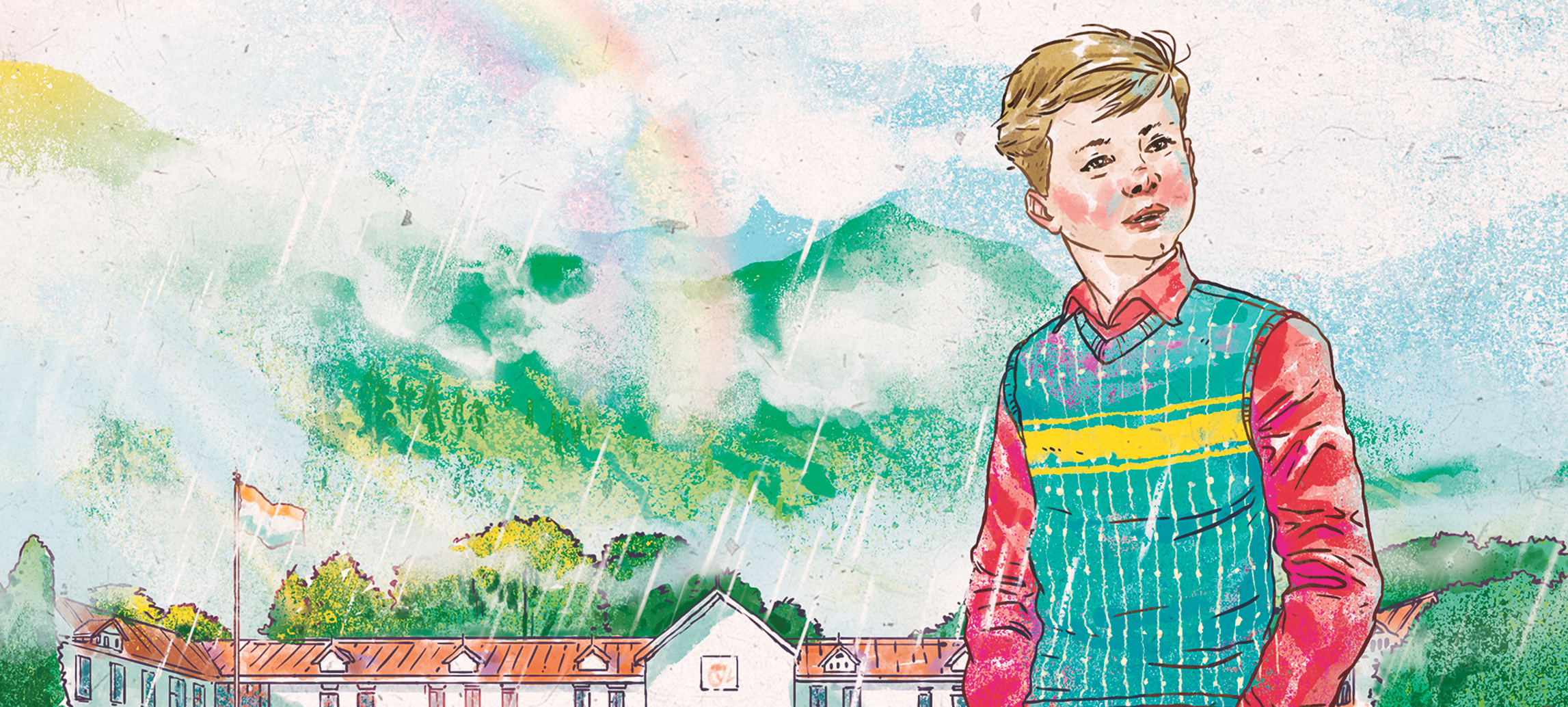
In the third part of his memoir, thirteen-year-old Ruskin Bond is back at school, doing what he loves – reading, goal-keeping, spending time with his friends and eating lots of jalebis. But things seem to be rapidly changing all around him. Whispers of a partition haunt the corridors of his school. Does the formation of a new, independent India mean saying goodbye to old friends-and, with it, the shenanigans they got up to?

In Ruskin Bond’s inimitable style, Coming Round The Mountain gives us some wonderfully wistful and poignant snapshots of friendship and the farewells brought on by the relentless change at the end of an era. Here are some of them:

~

The fearsome-sounding cliques one forms in childhood

‘I was turning thirteen in May that year. My best friends were Azhar Khan, who was my age; Brian Adams, who was a year younger; and Cyrus Satralkar, who was the youngest. We called ourselves the ‘Fearsome Four’, although there was nothing very fierce about us.’

*

The best friends are those who extend a hand when we need it most, whether or not we know precisely that we need them

‘I’d been going through a different period, adjusting to my stepfather’s home in Dehra and learning to cope with the world at large. Although a shy boy, I needed friends, and I was quick to respond to those who offered me friendship.’

 *

The irrelevance of cultural barriers in schoolboy comradeship

‘We were not in the least interested in each other’s religions or regional backgrounds. Adults seemed to think it important; but at thirteen, friendship and loyalty seemed to matter more.’

*

When adversity (or at least a compatibility of vices) brings you together

‘The catalyst for our bonding was that early -morning rouser for PT. For some reason— or different reasons—the four of us overslept one morning and failed to turn up on the first flat for our exercises. Our absence was duly reported by a senior prefect, and we were summoned to the headmaster’s study for the usual punishment. At least three strokes of the cane were to be expected.’

*

A friend who feeds is a friend indeed

‘World War II had been over for more than a year, but some food items—butter, cheese, chocolates—were still hard to come by. Brian divided his Kraft cheese into four portions, and each of us had his share. Now, there was a friend!’

*

The difficult feelings of older people who have to see enormous upheaval in all they have held dear

‘Dunda Hawkes had been deeply affected by the division of India. He was a simple man who, like my father, had been to army school and spent most of his life in barracks or on the march. He had become a boxing champion and was responsible for making sportsmen and athletes out of most of us.’

 *

The poignant uncertainty of goodbyes in that year of changes

‘Azhar was beside me, his arm around my shoulders. ‘Time to say goodbye,’ he said. ‘I’ll write to you. We’ll meet again—some day, somewhere.’ Surely we would meet again. The world hadn’t come to an end. But the light was going out in a lot of lives, and it would be some time before it came on again.’

*

 When the absence of a friend seems like a removal of an aspect of one’s own being
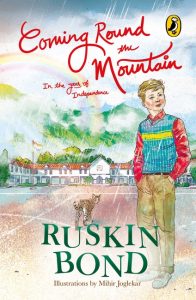
Front cover of Coming Round the Mountain
Coming Round the Mountain || Ruskin Bond

‘Sometimes we don’t really value our friends till we have lost them. Azhar’s departure left quite a gap in my life. He had been someone to whom I could talk freely, someone to whom I could confide and share my dreams.’

 *

The love of a friend does not need to be put in words for one to know that is there 

‘Send me lots of beautiful postcards,’ I said. We shook hands. In those days we were not given to hugs and demonstrations of affection. But I loved my friends, and they knew it and loved me too.’

error: Content is protected !!