Publish with Us

Follow Penguin

Follow Penguinsters

Follow Penguin Swadesh

Know All About The New Silk Road in ‘Belt And Road’

China’s Belt and Road strategy is acknowledged to be the most ambitious geopolitical initiative of the age. Covering almost seventy countries by land and sea, it will affect every element of global society from shipping to agriculture, digital economy to tourism and politics to culture. Most importantly, it symbolizes a new phase in China’s ambitions as a superpower: to remake the world economy and crown Beijing as the new centre of capitalism and globalization.

Bruno Macaes in his book, Belt and Road traces this extraordinary initiative’s history, highlighting its achievements to date and its staggering complexity.

Here are some unique facts about the Silk Road:


Bruno Macaes asks whether Belt and Road is about more than power projection and profit. Will it herald a new set of universal political values, to rival those of the West? Is it, in fact, the story of the century?


Eight Things you need to know about the Delusional Politics of Brexit and its Aftermath

Hardeep Singh  Puri’s forty years of professional life as a senior diplomat, India’s permanent representative to the UN and Union Minister of State for Housing and Urban Affairs in New Delhi has given him a unique vantage point to see the fault-lines in political narratives and the ‘delusional’ idiosyncrasies of politicians.

Many democratically elected leaders of the twenty-first century have displayed streaks of recklessness, megalomania, bizarre self-obsession and political views that are difficult to characterize.

Delusional Politics studies the actions of these contemporary political leaders with the example of one of the most momentous events our times-Brexit-exposing the self-serving, poorly calculated behavior at the heart of significant governing decisions.

It traces the rise of the right-wing anti-immigration paranioa in Britain, pitted against a Prime Minister who despite his intentions failed as a leader of the Remain campaign. Puri describes Brexit as three supreme examples of delusional thinking and politics. One, calling a referendum that was not required. Two, allowing the referendum’s outcome to be shaped by the uncertainties of democratic politics without due diligence, hard work and safeguards being put in place to ensure the nation’s future. And finally, calling an election when it was not due and when the government had a comfortable majority.

Read on to find out more about the delusional politics of Brexit

 A poorly calculated and casually reached decision to decide the future of a nation and its place in the world

As the story goes, Cameron had been eating pizza at O’Hare while waiting for a commercial flight home following a NATO summit. He was with his Foreign Secretary William Hague and Chief of Staff Ed Llewellyn. The conversation that ultimately led to the unravelling of the United Kingdom apparently went something like this: We have a lot of Euro-sceptics in the party. Let us smoke them out. Let us have a referendum.

 ~

Dissent within Cameron’s own party, the Conservatives, reflected poorly on the party’s leadership

Members of Cameron’s party had essentially backed the agenda of the UK Independence Party (UKIP). UKIP had, over time, reframed its identity to become the party of the ‘leftbehinds’ of the country’s economic development. Their rallying cry became the face of the growing anti-immigrant sentiment that would pull the United Kingdom out of the EU. The rebel Tories supported Brexit for economic reasons, whereas UKIP supported it, at least in its messaging, for cultural reasons, calling for the UK’s identity to be reclaimed.

 ~

 Parties on the right capitalized on the blue-collar angst and anti-immigrant sentiments.

Right-wing populists maintained their economic agenda behind the scenes, while prioritizing—publicly, at least—anti-immigration. The UK Independence Party (UKIP) spearheaded this movement, with its primarily less-educated, blue-collar, white male base at its tail. Founded in 1993 during a transformational point in the UK, UKIP called its base the ‘left-behinds’ of the country’s economic growth and pledged itself as the people’s voice against the establishment that coddled the immigrants. UKIP’s base expanded in waves, most notably in the mid- 2000s, when some Eastern European countries joined the EU, bringing with them another influx of immigrants.

  ~

David Cameron failed to galvanize his youth voter base the way the pro-Brexiters captured the imagination of their own

In the 2015 referendum, the votes of Cameron’s ‘new generation’ were pivotal. Although the young people who did turn up at the booths voted in Cameron’s favour—to remain in the EU—their overall turnout was insufficient. As the Liberal Democratic leader Tim Farron put it, ‘Young people voted to remain by a considerable margin, but were outvoted.’ UKIP and the pro-Brexiters had successfully secured the older, less educated, working class votes.

  ~

David Cameron’s incredibly privileged and well-connected background made it difficult for him to combat populist sentiments

But it is undeniable that Cameron’s privileged upbringing, his confines to the upper legions of society, and his rapid-fire ascension up the political ladder detached him from the people he so earnestly desired to serve. Regardless of his intentions, Cameron was a perfectly unfit contender to combat the populist insurgency of the right-wing Eurosceptics.

  ~

The peculiar politics and character of Nigel Farage

On the other side of the battle, the Brexit campaign was led by Nigel Farage, a self-professed ‘middle-class boy from Kent’ with an arsonist tongue characteristic of a populist leader. He correctly felt the mood in parts of the country and rode the anti-immigrant tide. He tethered the resurrection of the British identity—a past-time homogeneous white identity that so many of the Leave voters yearned to return to—to the referendum. Privileged though his background is,  Farage convincingly painted himself as one of the ‘left-behinds’ who his party fought for. He fostered a connection with his base that in many ways Cameron failed to do with his. Farage’s brazen and open discontent with the establishment resonated with far too many people.

  ~

In calling the general election in April 2017, Theresa May made a decision that would turn out to be superfluously tumultuous path as Cameron’s.

On 18 April 2017, in an attempt to gain more power for the Tories in preparation for the Brexit negotiations, May called for general election, which was not due until 2020.60 Polls at the time had been showing promising figures for the Conservative Party’s success, and May thought she could turn these numbers into parliamentary seats. The election, she argued, was ‘necessary to secure the strong and stable leadership the country needs to see (it) through “Brexit” and beyond’. The elections took place less than two months after May’s announcement, on 8 June 2017. The Conservatives lost their parliamentary majority, and Labour gained seats. After the embarrassing results, May then resorted to forming a new government with the Democratic Unionist Party in order to secure a governing majority.

 ~

 The emerging consequences of a referendum that was won on a ‘campaign of lies’

As Inter Press Service founder Roberto Savio succinctly put it, ‘Only now the British are realizing that they voted for Brexit, on the basis of a campaign of lies. But nobody has taken on Johnson or Farage publicly, the leaders of Brexit, after Great Britain accepted to pay, as one of the many costs of divorce, at least 45 billion Euro, instead of saving 20 billion Euro, as claimed by the “Brexiters”. And there are only a few analysis on why political behaviour is more and more a sheer calculation, without any concern for truth or the good of the country.’


Delusional Politics brings to light the fact that at the heart of delusional politics is perhaps the delusional politician.

Tips to Not Lose your Mind over your Weight

There is no such thing as going ‘on’ or ‘off’ your diet. Eating correctly has to be a lifelong commitment, and the diet should be a reflection of this. This automatically rules out any extreme diet or crash diets which require you to go ‘off’ them.

Don’t Lose Your Mind, Lose Your Weight has revolutionized the way Indians think about food and their eating habits. The author, Rujuta Diwekar is one of the country’s best nutritionists, with deep roots in yoga and Ayurveda.

Here are some things to remember from the book to not lose your mind over your weight

Extreme diets don’t work

Most diets are impossible to keep at because they always advocate something extreme. Besides being difficult to maintain, they’re harmful for you physically and mentally.

Any programme/plan which discourages you from exercising is worthless

Being on a diet might help you lose weight, but without exercise we lose our muscles and bone density. And loss of bone density and muscle is ageing. The human body is designed for continuous activity. The least we can do is give it 30 to 45 minutes of exercise for 3 days in a week to keep it in good shape and condition.

Low fat and sugar free options are not healthy

So should you not eat them at all? Of course you can eat them, but eat them knowing that they are just as harmful as the full fat, full sugar, fried items. Sometimes even more.

Having fruit as dessert isn’t the wisest idea

A few years ago, it was discovered that fructose (the sugar we get from fruits) gets converted to triglycerides (especially when eaten on a full stomach), a type of fat which circulates in our blood stream. High levels of triglycerides are responsible for heart disease, insulin insensitivity and of course lead to bigger fat cells.

Eat your fruit, but don’t think that it’s safer than eating a dessert. Its nutrients only work for us if we eat if as a meal by itself.

Be attentive while you eat

The key to staying within your threshold of how much your body can digest is to be attentive while you eat. Savour every bit of what you eat, slowly and mindfully, and you will naturally find your threshold. All you need to train yourself to do, is to be attentive to your stomach.


For more tips and lessons, grab your copy of Don’t Lose Your Mind, Lose Your Weight by Rujuta Diwekar


Behind the Scenes of Sarnath Banerjee’s ‘Doab Dil’

In his book, Doab Dil – employing a philosopher’s mind and an artist’s eye – Sarnath Banerjee takes us to still places in a moving world, the place where two rivers (do ab) meet and forests write themselves into history.

Here are some of the illustrations from the book – in their raw form!

From the chapter titled Library


Before
After

From the chapter titled Insomnia

Before
After

And a bonus illustration from Sarnath Banerjee!


Employing a philosopher’s mind and an artist’s eye, Sarnath Banerjee takes us to still places in a moving world, the place where two rivers (do ab) meet and forests write themselves into history.

She Walks She Leads: Meet the Women Who Inspire India

She Walks, She Leads by Gunjan Jain profiles twenty-four iconic women in modern India. These leaders tell their stories, up-close and personal. Their relentless ambition to shatter the glass ceiling, their pursuit for excellence and the challenges that came their way – all of this is captured vividly in this exclusive anthology.

Here are some quotes about some of the women from this book. Each chapter is available as an eShort on Penguin Petit!


Read about each woman on Penguin Petit, available on Amazon for as less as INR 15!

Singlehood, intimacy and companionship

Forty-five and single, Akhila has never been allowed to live her own life – always the daughter, the sister, the aunt, the provider – until the day she gets herself a one-way train ticket to the seaside town of Kanyakumari. In the intimate atmosphere of the ladies coupé, she gets to know her five fellow travellers. Riveted by their personal stories, Akhila begins to seek answers to the question that has been haunting her all her life: can a woman stay single and be happy, or does she need a man to feel complete?

Here is an introduction by Anita Nair for Ladies Coupe!


Ladies Coupe || Anita Nair

The breeze blew as stiffly from the sea as it had all those years ago when I had come to Kanyakumari as a young girl. The horizon stretched as far as one could see and beyond. Age hadn’t limited the expanse or shrunk my gaze. Nothing disturbed the line of vision. After all this time I felt again the hope the horizon offered. Limitless possibilities. Of taking one’s life in hands and doing with it what one could. I sat on the embankment wall and thought of the last section of my book Ladies Coupe. Here is where Akhila decided to wrest control of her life again. The boundless horizon compelled you to feel that way no matter what the circumstances of your life or how old you were.

As a young woman, I climbed on to the top berth of a ladies compartment in a train from Bangalore to Madras¹ and discovered an unexpected world. Once the door was closed and the blue night lamp switched on, the middle-aged women who were my fellow passengers in the coupe began a conversation that riveted me to my sleeping berth. It was a no-holds-barred conversation on mothers-in-law, daughters-in-law, husbands, servants, forgotten dreams and cast aside ambitions; secret fears and unexplored possibilities. It was a combination of the confined space and assurance of anonymity as they were strangers to each other that turned the coupe into a confessional box. Their candour, their subversiveness, their subtle strength and courage inspired Ladies Coupe.

Ladies Coupe is not about feminism and nor am I a feminist writer. It is a book of stories about women and how a woman makes her own place in the society. It is a book about the human condition. I took the right to show the quality of strength in a woman and took the chance of writing a novel “about the right women have to be women”. However it was immediately labeled a feminist novel in many parts of the world; and one small part of me was, of course, gratified at the notion that I may have written what is being considered as an important feminist novel. But a greater part of me remains puzzled. For what this novel emphasizes on is what it is to be a contemporary Indian woman. And which is why I have felt again and again this need to clarify that I am not a feminist writer and nor was it my intention to uphold the feminist ideology. In fact, if someone wanted to tag me I would think that it would be best to label me as a writer of the human condition.

It is human nature to try and seek parallels. We are constantly trying to find answers for our lives from the experiences that other people undergo. Which is why world over a journey is such a strong part of self discovery. We see it in literature all the time. Whether it is the Indian epics like The Ramayana or Mahabharatha or in Homer’s Odyssey we constantly find life stories that change during the course of travel. Hence Akhila would to discover herself too have to start somewhere and who better than the women traveling with her?

It isn’t easy to be a contemporary Indian woman. One the one hand she is aware of her rights and the need for an identity. On the other hand tradition dictates that she submerge it in her role as mother and wife… She is someone who has been conditioned to be the custodian of a 2000 year old culture which expects her to put her desires on a back burner. She watches men moving ahead with giant strides while policing women’s progress and at times curbing it. And it is the traditional norms that keep a woman tied down and the fear that if she were to swerve from the accepted path, she will be ostracized. The fear of society is a great impediment to personal freedom whether it is for a man or a woman and in a country that has always considered women to be inferior beings, women are that much more hesitant to assert themselves or even claim their rights. And this made me determined to present Indian woman as she is rather than the doormat kind of person she is often projected to be as… someone who has a core of steel despite being wrapped in many layers of tradition.

I think women in India dream of the same things that women all over the world do. Freedom. Security. Dignity. Love. Laughter. Sex. Happiness. Nice clothes. Good Food. Jewelry. Vacations. Miracle cures for grey hair and cellulite. Muscle tone and unwrinkled skin….I’m not being facetious but in my travels I talk to people all the time. Strangers  and people I am introduced to and I discover that beneath our skins all of us dream about the same things . It’s perhaps the priority that’s different. But women everywhere relate to the women in Ladies Coupe because their stories could very well be the story of their lives.

Education, financial freedom, career prospects etc have improved the lot of the Indian woman. Sadly the women in villages still don’t have the exposure that have in many ways liberated the urban woman from the tyranny of the traditional culture. In Ladies Coupe, one can expect to meet six women who are from the vast majority of Indian women–the suburban and rural women–who still have little control over their lives. It is a book I wanted to write very much because it disturbed me.

In fact, it was very exhausting creating these characters because through each of them I relived a gamut of feelings. From rage and despair to love and tenderness to greed and hate……

The narrative form drew itself from the many stories I wanted to tell. But I also did want the structure of the book to resemble a journey itself. The stop and start of a train ride, in fact, and the haze of lives and landscapes as the train proceeded on its path. And how the many ways to reach a destination may vary but eventually what is crucial is we get there.

I have always believed that change is always possible, no matter how old one is or what conditions one lives in. In fact, I believe that change and hope are linked together. That if there is no hope, there is no change. In that sense, this book was a kind of alert that one has the right to change as one has the right to hope.

– Anita Nair

¹Madras is now known as Chennai.

Women Who Inspire: Books to Read this Women’s Day

“If you want something said, ask a man; if you want something done, ask a woman.”

Margaret Thatcher

This Women’s Day, get inspired by the women who make it happen. Penguin presents a list of books by women, about women who inspire for men, women and children of all ages. Take a look!


The Women’s Courtyard by Khadija Mastoor

Set in the 1940s, with Partition looming on the horizon, The Women’s Courtyard cleverly brings into focus the claustrophobic lives of women whose entire existence was circumscribed by the four walls of their homes, and for whom the outside world remained an inaccessible dream. Daisy Rockwell’s elegant and nuanced translation captures the poignance and power of Khadija Mastur’s inimitable voice.


Priya by Namita Gokhale

In this wickedly funny, occasionally tender, book, Namita Gokhale resurrects some unforgettable characters from her 1984 cult bestseller Paro, and plunges them neck-deep into Delhi’s toxic waste of power, money and greed.


A Girl like That by Tanaz Bhathena

This beautifully written debut novel from Tanaz Bhathena reveals a rich and wonderful new world to readers; tackles complicated issues of race, identity, class and religion; and paints a portrait of teenage ambition, angst and alienation that feels both inventive and universal.


That Long Silence by Shashi Deshpande

Shashi Deshpande gives us an exceptionally accomplished portrayal of a woman trying to erase a ‘long silence’ begun in childhood and rooted in herself and in the constraints of her life.


This Wide Night by Sarvat Hasin

In the quietly seething world of This Wide Night, Virgin Suicides meets Little Women in Pakistan. Moving from Karachi to London and finally to the rain-drenched island of Manora, here is a compelling new novel from the subcontinent—and a powerful debut to watch.


Empress: The Astonishing Reign of Nur Jahan by Ruby Lal

Acclaimed historian Ruby Lal uncovers the rich life and world of Nur Jahan, rescuing this dazzling figure from patriarchal and orientalist cliches of romance and intrigue, while giving a new insight into the lives of the women and the girls during the Mughal Empire, even where scholars claim there are no sources. Nur’s confident assertion of authority and talent is revelatory. In Empress, she finally receives her due in a deeply researched and evocative biography that awakens us to a fascinating history.


A Gujarat Here, A Gujarat There by Krishna Sobti

Part novel, part memoir, part feminist anthem, A Gujarat Here, A Gujarat There is not only a powerful tale of Partition loss and dislocation but also charts the odyssey of a spirited young woman determined to build a new identity for herself on her own terms.


A Murder on Malabar Hill by Sujata Massey

Bombay, 1921. Intrepid and intelligent, young Perveen Mistry joins her father’s prestigious law firm to become one of India’s first female lawyers. Her tumultuous past also makes her especially devoted to championing and protecting women’s rights.


Aftertaste by Namita Devidayal

Diwali, 1984. Mummyji, the matriarch of a mithai business family, lies comatose in a hospital in Bombay. Surrounding her are her four children: the weak, ineffectual Rajan Papa who is desperately in need of cash; Samir, the dynamic head of the business with an ugly marriage and a demanding mistress; Suman, the spoilt beauty of the family who is determined to get her hands on her mother’s best jewels; and Saroj, the unlucky sister, who has always lived in her shadow. Each of them wants Mummyji to die . . .


Requiem in Raga Janki by Neelam Saran Gour

Based on the real-life story of Hindustani singer Janki Bai Ilahabadi (1880-1934), Requiem in Raga Janki is the beautifully rendered tale of one of India’s unknown gems. Moving from Hindustani classical music’s earliest times to the age of the gramophone, from Tansen’s mysticism to Hassu Khan’s stringent opposition of recordings, this is a novel that brings to life a golden era of music through the eyes of a gifted performer.


The Runaways by Fatima Bhutto

Anita Rose lives in a concrete block in one of Karachi’s biggest slums, languishing in poverty with her mother and older brother. On the other side of Karachi lives Monty, whose father owns half the city. And far away in Portsmouth, Sunny fits in nowhere. These three disparate lives will cross paths in the middle of a desert, a place where life and death walk hand-in-hand, and where their closely guarded secrets will force them to make a terrible choice.


The Pakistani Bride by Bapsi Sidhwa

Zaitoon, an orphan, is adopted by Qasim, who has left the isolated hill town where he was born and made a home for the two of them in the glittering, decadent city of Lahore. This is a The Pakistani Bride novel on women, tribals and contemporary politics.


Seeing like a Feminist by Nivedita Menon

For Nivedita Menon, feminism is not about a moment of final triumph over patriarchy but about the gradual transformation of the social field so decisively that old markers shift forever. From sexual harassment charges against international figures to the challenge that caste politics poses to feminism, from feminist dilemmas regarding commercial surrogacy to the Shah Bano case, from queer politics to domestic servant’s unions to the Pink Chaddi campaign, from the ban on the veil in France to the attempt to impose skirts on international women badminton players, Menon insists that feminism complicates the field irrevocably.


What We Talk About When We Talk About Rape By Sohaila Abdulali

Writing from the viewpoint of a survivor, writer, counsellor and activist, and drawing on three decades of grappling with the issue personally and professionally and her work with hundreds of survivors, Sohaila Abdulali looks at what we-women, men, politicians, teachers, writers, sex workers, feminists, sages, mansplainers, victims and families-think about rape and what we say.


The Shooting Star by Shivya Nath

Shivya Nath quit her corporate job at age twenty-three to travel the world. With its vivid descriptions, cinematic landscapes, moving encounters and uplifting adventures, The Shooting Star is a travel memoir that maps not just the world but the human spirit.


Red Lipstick by Laxmi

The world keeps taunting him as girlish but the fact is that, biologically, he is a boy. And, he is always attracted to guys. Is Laxmi both a man and a woman? Or, perhaps, neither a man nor a woman? In this fascinating narrative Laxmi unravels her heart to tell the stories of the men-creators, preservers, lovers, benefactors, and abusers-in her life. Racy, unapologetic, dark and exceptionally honest, these stories open a window to a brave new world.


Small Acts of Freedom by Gurmehar Kaur

This is the story of three generations of strong, passionate single women in one family, women who have faced the world on their own terms. With an unusual narrative structure that crisscrosses elegantly between the past and the present, spanning seventy years from 1947 to 2017, Small Acts of Freedom is about courage. It’s about resilience, strength and love.


Cyber Sexy by Richa Kaul Padte

In this intrepid, empathetic and nuanced account of the sexual shopping cart that is the internet today, Richa Kaul Padte takes readers on an intimate tour of online sex cultures. From camgirls to fanfiction writers, homemade videos to consent violations, Cyber Sexy investigates what it means to seek out pleasure online.


Three Thousand Stitches by Sudha Murthy

So often, it’s the simplest acts of courage that touch the lives of others. Sudha Murty-through the exceptional work of the Infosys Foundation as well as through her own youth, family life and travels-encounters many such stories . . . and she tells them here in her characteristically clear-eyed, warm-hearted way.


Mrs Funnybones by Twinkle Khanna

Full of wit and delicious observations, Mrs Funnybones captures the life of the modern Indian woman—a woman who organizes dinner each evening, even as she goes to work all day, who runs her own life but has to listen to her Mummyji, who worries about her weight and the state of the country.


Twenty Nine Going on Thirty by Andaleeb Wajid

Free-spirited Farida, shy Namrata, feisty Mini and Priya are brought together by family drama, boy trouble, and the fast-approaching birthdays. As they navigate love and friendships, they realize there’s a difference between growing up and growing old . . .


The Perils of Being Moderately Famous by Soha Ali Khan

The Perils of Being Moderately Famous takes us through some of the most poignant moments of Soha’s life-from growing up as a modern-day princess and her days at Balliol College to life as a celebrity in the times of social media culture and finding love in the most unlikely of places-all with refreshing candour and wit.


Feminist Rani by Shaili Chopra and Meghna Pant

Feminist Rani is a collection of interviews with path-breaking and fascinating opinion leaders. These are women and men who have advocated gender equality and women’s rights through their work. These compelling conversations provide a perspective on the evolving concept of feminism in an age when women are taking charge and leading the way.


Don’t Lose Your Mind, Lose Your Weight by Rujuta Diwekar

Don’t Lose Your Mind, Lose Your Weight has revolutionized the way Indians think about food and their eating habits. Funny, easy to read and full of great advice, it argues that we should return to our traditional eating roots (yes, ghee is good for you), nutrients are more important than calories (cheese over biscuits) and, most importantly, the only way to lose weight is to keep eating.


Changemakers by Gayatri Rangachari Shah and Mallika Kapur

This book tells the story of twenty incredible women, many with no prior connections in the industry, who have carved successful careers despite significant challenges. They often work away from the public gaze-as studio heads, producers, directors, make-up artists, stylists, script writers, lyricists,editors, choreographers, stunt artists, set designers, and in the many other jobs that support the making of a movie. These women deserve to be applauded and their journeys acknowledged, as they transform Bollywood and in the process, create a new India.


Daughters of Legacy by Rinku Paul and Puja Singhal

Chosen from a wide cross section in terms of scale of business, roles and hierarchy these women have not only kept the legacies alive but have also gone on to carve a niche for themselves as individuals beyond their famous last names. Clearly for all of them legacy is far more than mere inheritance.


The Two Minute Revolution by Sangeeta Talwar

Insightful and packed with fascinating examples-from creating and launching Maggi Noodles to spearheading the highly effective Jaago Re campaign for Tata Tea-this book suggests tried and trusted strategies for building extraordinary brands.


Healed by Manisha Koirala

Healed is the powerful, moving and deeply personal story of actor Manisha Koirala’s battle against ovarian cancer. From her treatment in the US and the wonderful care provided by the oncologists there to how she rebuilt her life once she returned home, the book takes us on an emotional roller-coaster ride through her many fears and struggles and shows how she eventually came out triumphant.


I Owe You One by Sophie Kinsella

Fixie, the protagonist in Sophie Kinsella’s new standalone, I Owe You One, can’t help herself from fixing things…she just has to put things right. It’s how she got her nickname, after all.

After saving a stranger’s laptop from certain disaster, he scribbles her an IOU, as a thank you. Fixie never intends to call in the favour. That is, until her teenage crush comes back into her life and needs her help. She turns to the stranger, Sebastian, and soon the pair are caught up in a series of IOUs.


Becoming by Michelle Obama

In a life filled with meaning and accomplishment, Michelle Obama has emerged as one of the most iconic and compelling women of our era. With unerring honesty and lively wit, she describes her triumphs and her disappointments, both public and private, telling her full story as she has lived it – in her own words and on her own terms. Warm, wise, and revelatory, Becoming is the deeply personal reckoning of a woman of soul and substance who has steadily defied expectations – and whose story inspires us to do the same.


The Handmaid’s Tale by Margaret Atwood

Offred is a Handmaid in The Republic of Gilead, a religious totalitarian state in what was formerly known as the United States. She is placed in the household of The Commander, Fred Waterford – her assigned name, Offred, means ‘of Fred’. She has only one function: to breed. If Offred refuses to enter into sexual servitude to repopulate a devastated world, she will be hanged. Yet even a repressive state cannot eradicate hope and desire.


Lean In by Sheryl Sandberg

Many intelligent women tend to leave their professional careers and become homemakers for various reasons. One of the vital reasons is that women find it impossible to balance the growing career pressure and meeting increasing family demands. Sheryl Sandberg, in this book ‘Lean In: Women, Work and the Will to Lead’ provides solution to this issue and guides women on how to find the perfect balance in life.


Normal People by Sally Rooney

This is an exquisite love story about how a person can change another person’s life – a simple yet profound realisation that unfolds beautifully over the course of the novel. It tells us how difficult it is to talk about how we feel and it tells us – blazingly – about cycles of domination, legitimacy and privilege. Alternating menace with overwhelming tenderness, Sally Rooney’s second novel breathes fiction with new life.


Good Night Stories For Rebel Girls

Illustrated by sixty female artists from every corner of the globe, Good Night Stories for Rebel Girls introduces us to one hundred remarkable women and their extraordinary lives, from Ada Lovelace to Malala, Amelia Earhart to Michelle Obama. Empowering, moving and inspirational, these are true fairy tales for heroines who definitely don’t need rescuing.


Milkman by Anna Burns

In this unnamed city, to be interesting is dangerous. Middle sister, our protagonist, is busy attempting to keep her mother from discovering her maybe-boyfriend and to keep everyone in the dark about her encounter with Milkman. Milkman is a tale of gossip and hearsay, silence and deliberate deafness. It is the story of inaction with enormous consequences.


The Girl Who Went to the Stars by Ishita Jain and Naomi Kundu

The Girl Who Went to the Stars and Other Extraordinary Lives is a collection of incredible stories that teach passion and courage. These Indian women followed their dreams, however difficult they seemed, and showed us that we can be anything we want to be.


Business Books To Rev Up Your Entrepreneurial Spirit!

Whether you’re thinking of kick-starting own business – and need some sound advice – or whether you need to grow your existing business, we’ve got a set of books for you.

This March, we have put together a list of books that will tell you how to take your business to new heights and avoid common mistakes through tips, facts and true stories by seasoned entrepreneurs. Take a look!


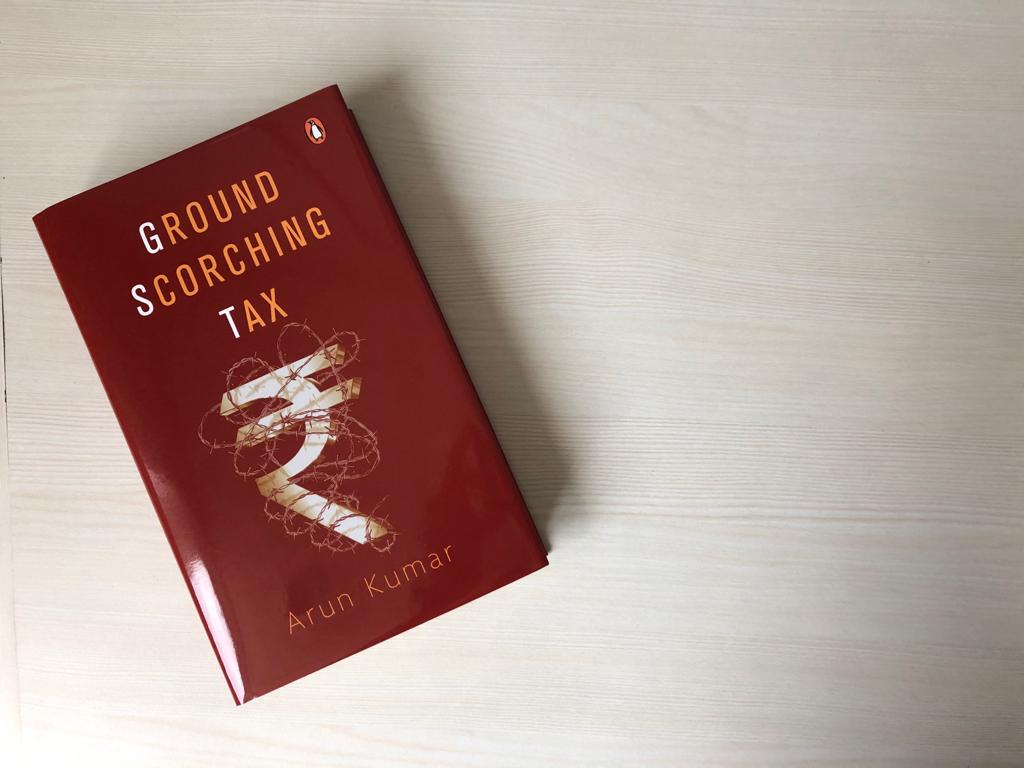
Ground Scorching Tax

Ground Scorching Tax

In this book, well-known economist Arun Kumar explains the reality behind GST. Known for not pulling any punches, the author explains why GST is a double-edged sword for the common man, why it will increase inequality across sectors and regions, why it will hurt small businesses-everything the government does not want you to know.


 Jugaad 3.0: Hacking the Corporation to make it fast, fluid and frugal

Jugaad 3.0

Based on hundreds of interviews, as well as the author’s consulting work within companies, Jugaad 3.0 Hacking the Corporation identifies the competencies these corporate hackers possess. It also offers a spectrum of carefully crafted archetypes to help people see themselves in this trend and allow organizations identify the innovators in their midst.

The Great Disappointment

The Great Disappointment

This book is a critical assessment of five years of the brand of economics Prime Minister Narendra Modi has championed, often referred to as ‘Modinomics’.With the biggest political mandate in almost three decades, did the NDA government succeed in transforming India’s economic trajectory for the better? Or, has its economic performance been a ‘great disappointment’? The book conjectures it is the latter, and analyses why this is so.

Leader’s Block

Leader’s Block

Have you ever felt bored and uninterested at work? Do you feel that you are working hard and not seeing results? Does your day end with frustration and disillusionment? But what happened? After all, you loved this job. It could be ‘leader’s block’, a phase where leaders feel demotivated and unengaged. These are the same leaders who at one point found their work stimulating and exciting. Over several candid interviews, senior professionals reveal why they felt this way and the circumstances that caused it. Ritu G. Mehrish uncovers the reasons behind this feeling and the antidote to this malady. Identify when you are getting into the ‘leader’s block’ and learn how to break out of it!


Five Things That Prove Shivaji Was The Bravest

In the land of the Marathas, there was once a fearless young ruler called Shivaji. He was known for his bravery and effective war strategies. This young man went on to become Chhatrapati Shivaji Maharaj-one of India’s greatest kings and a thorn in the side of the mighty Mughal Empire. The Maratha Empire that he established changed the course of India’s history, becoming a major military power.

Here are a few facts about Shivaji that are responsible for his legacy as one of the mightiest rulers of India:


Fifth in a series of illustrated books created for young readers to get to know our world heroes betters, Junior Lives: Shivaji Maharaj peppered with little-known facts, takes the reader through the awe-inspiring journey of Shivaji, built on his determination and valour as well as his exemplary victories.

Six Harrowing Accounts of Injustice from Partitions of the Heart: Unmaking the Idea of India

There was one partition of the land in 1947. Harsh Mander believes that another partition is underway in our hearts and minds. How much of this culpability lies with ordinary people? What are the responsibilities of a secular government, of a civil society, and of a progressive majority? In Partitions of the Heart: Unmaking the Idea of India, human rights and peace worker Harsh Mander takes stock of whether the republic has upheld the values it set out to achieve and offers painful, unsparing insight into the contours of hate violence. Through vivid stories from his own work, Mander shows that hate speech, communal propaganda and vigilante violence are mounting a fearsome climate of dread, that targeted crime aided by silent official collusion or by political apathy is systematically fracturing our community. Hate can indeed be fought, but only with solidarity, reconciliation and love, and when all of these are founded on fairness.

The painful stories in this meticulously researched social critique are a rallying cry for public compassion and conscience, essential human decency and a call for a re-evaluation of an overtly fundamentalist national identity.

The infamous Gujarat Riots where families living in a peaceful residential society, along with an influential former MP, were gruesomely slaughtered by a virulent mob.

“In 2002, however, Gulberg Society was burnt down, and its residents slaughtered. Muslim community, were slaughtered. The killings were exceptional for their soul-numbing brutality and the extensive ruthless targeting of women and children. Mass rape, public sexual humiliation of women, and the battering and burning alive of girls, boys, women and men, marked those dismal days. Even as the city of Ahmedabad once again was engulfed in flames of hatred, the residents of Gulberg Apartments were certain that Ehsan Jafri would be able to save their lives and homes once again. But that was not to be. On 28 February, Jafri was gruesomely murdered by a feverish mob. Slaughtered along with him were around seventy women, children and men who had taken shelter with the man whom they had believed was influential enough to save their lives from a colossal armed mob baying for blood.”


The brutal, unprovoked knife attack on three brothers on a local train in Delhi.

“After their Eid shopping at Jama Masjid that day, on 24 June 2017, the three brothers—Shakir, Hashim and Junaid—took a local train from the Sadar Bazar station and found seats. Crowds entered at Okhla, and Junaid gave up his seat to an old man. A group of fifteen men asked the others roughly to vacate their seats. When they refused, they slapped and beat them, threw off their skullcaps, pulled the beards of the older boys, abused them for their faith, and called them Pakistanis, beef-eaters and a vulgar slang for the circumcised

In the nine minutes from Ballabhgarh to the next station, Asaoti, the men took out knives and stabbed the three brothers several times, even as they screamed for help. Not one person came to their rescue. A few took videos and pictures on their phones instead, as the compartment filled with blood. Several egged on the lynch mob. These included the old man to whom Junaid had given his seat.”


The arbitrary targeting of Muslims in Assam as being illegal immigrants from Bangladesh and their placement in ‘foreigner’ detention camps.

“The BJP election victory in Assam—the first in the state—was followed by massive official coercive action that targeted and uprooted tens of thousands of Muslims in Assam, charging them to be forest or riverine encroachers or foreigners. ‘There is an openly and distinct anti-Muslim bias in all of these actions,’ human rights lawyer Aman Wadud tells me. People are barely given a few hours’ notice before they are displaced, their homes destroyed, without any chance to show their documents. It is not unusual for some blood relations from the same family to be deemed foreigners and others legitimate citizens. Life in foreigner detention camps, says Abdul Kalam Azad, a postgraduate researcher from Tata Institute of Social Sciences (TISS), Guwahati, is worse than life in jail, and families sometimes have to spend years there to prove that they are legitimate Indian citizens.”


The brutal lynching of an aged and indigent dairy farmer, Pehlu Khan and his sons who despite having receipts to show that they had just bought milch cows, were attacked for being cattle smugglers

“As we sat with a large group of men under the makeshift canopy outside the house of Pehlu Khan, the talk would return over and over again to their anguish about the new climate of hate and suspicion against Muslims that they found surrounded them. ‘It has never been like this before,’ they said. Hindus and Muslims have always lived together like brothers and sisters. Just in the last two or three years everything has changed. ‘We are watanparasth, true nationalists. Our ancestors made so many sacrifices for our country. They fought against Babur’s army on the side of Rana Sangha.’ I wanted to stop them—please, please, you don’t have to say this—why must you feel you must prove your love for your country? But the words got stuck in my throat, as they went on insistently. And they would also ask—who loves the cow more than us Meo Muslims? Go to any Meo village home, and see how much they love their cows, like a member of the family. Any evening, see how lovingly they bathe their cows. And yet we are being called cow murderers.”


The harrowing, almost Kafkaesque story of Mohammad Aamir Khan who was imprisoned for fourteen years after being tortured—the victim of unspeakable injustice that stole the best years of his youth from him.

“But his story is, at the same time, one of exceptional endurance, love and hope. In the three years I have known him, I found him a remarkably gentle person, free of bitterness and anger, and convinced about justice, democracy and secular values. In a deeply affecting book he has written with Nandita Haksar, he describes how when he was twenty, one late winter evening in February 1998 in a by-lane of Old Delhi close to his small home, he was picked up by policemen in plain clothes, and driven to a torture chamber. He recounts his days and nights of torture—stripped naked, his legs stretched to extremes, boxed, kicked, and subjected to electric shocks, anti-Muslim abuse, and threats to frame his parents. He finally succumbs, and agrees to sign numerous blank sheets and diaries. As a result, he was charged in nineteen cases of terror crimes, and accused of planting bombs in Delhi, Rohtak, Sonipat and Ghaziabad. From here began a nightmare that lasted nearly fourteen years.”


The Hashimpura massacre of forty-two young civilian Muslim men on the night of 22 May 1987 by PAC members is a horrifying blend of police collusion with systemic violence with even supposedly secular parties refusing to even take in survivors or conduct the bare minimum of investigation

“These youths were rounded up from their homes in Hashimpura in Meerut on that humid midsummer night, allegedly picked from a larger crowd by security personnel, driven to a canal bank, shot in pitch darkness at close range, and their bullet-ridden bodies were thrown into the Hindon canal. The men were guilty of no crime, and were chosen for slaughter allegedly by paramilitary soldiers only because of the god they worshipped, and their youth. Not a single person has been punished for this crime despite heroic and dogged battles for justice for three decades by the indigent survivors of the slain men. Twenty eight years after the crime, all sixteen persons accused of the massacre, all junior paramilitary personnel, were acquitted giving them the ‘benefit of the doubt’ as there was ‘insufficient evidence’.”


In Partitions of the Heart: Unmaking the Idea of India, human rights and peace worker Harsh Mander takes stock of whether the republic has upheld the values it set out to achieve and offers painful, unsparing insight into the contours of hate violence.

error: Content is protected !!