Publish with Us

Follow Penguin

Follow Penguinsters

Follow Penguin Swadesh

Eight Things You Didn’t Know About The Indian Constitution

India became independent at the stroke of midnight on August 15, 1947. Three years later the Constituent Assembly, whose members were nominated by elected provincial legislatures, promulgated a new constitution declaring the state to be a “sovereign democratic republic. ”

It has long been contended that the Indian Constitution of 1950, a document in English created by elite consensus, has had little influence on India’s greater population. Drawing upon the previously unexplored records of the Supreme Court of India, A People’s Constitution upends this narrative and shows how the Constitution actually transformed the daily lives of citizens in profound and lasting ways.

Know some interesting facts about the Indian Constitution in Rohit De’s book:

The Indian Constitution is the longest surviving constitution in the postcolonial world.

The Indian Constitution has been amended ninety-seven times to date. It was amended seventeen times in its first fourteen years, the period this book examines. At least half of these amendments curtailed judicial review or amended fundamental rights in order to reverse the impact of a Supreme Court judgement.

The original draft brought to the Constituent Assembly by B. R. Ambedkar did not have a provision for Prohibition. The amendment first arose during a debate on the final draft of the Constitution, which some members alleged was alien to the Indian ethos and the goals of the freedom movement.

The Indian Constitution was written over a period of four years by the Constituent Assembly.

Indians wrote the Indian Constitution, unlike the people of most former British colonies, like Kenya, Malaysia, Ghana, and Sri Lanka, whose constitutions were written by British officials at Whitehall.

Indian leaders were also able to agree upon a constitution, unlike Israeli and Pakistani leaders, both of whom elected constituent assemblies at a similar time but were unable to reach agreement on a document.

The Indian Constitution dominates, structures, frames, and constraints everyday life in India.

The Constitution of India in 1950 almost identically reproduced two-thirds of the text of the Government of India Act of 1935.


The objective of A People’s Constitution is to study “constitutional consciousness” as it exists in people’s minds. The book charts the dialectic between the Indian Constitution as “politics of state desire” and the Constitution as “articulating insurgent orders of expectations from the state.” Exploring how the Indian Constitution of 1950 enfranchised the largest population in the world, A People’s Constitution considers the ways that ordinary citizens produced, through litigation, alternative ethical models of citizenship.


South Asia’s History through Water- Interesting Facts You Must Know

Asia is home to more than half the world’s population, but it contains less freshwater than any continent except Antarctica. A fifth of humanity lives in China, a sixth in India; but China has only 7 percent, and India 4 percent, of the world’s freshwater—and within both countries that water is distributed unevenly. The quality as well as the quantity of water is under strain from a multiplicity of new demands and uses. Asia’s rivers are choked by pollutants and impounded by large dams.

Unruly Waters takes us through the journey of Asia’s rivers and water bodies and tries to bring us face to face with the immediate consequences and effects of global warming and population.


From mountain peaks of the Himalayas flow ten great rivers that serve a fifth of humanity—the Tarim, the Amu Darya, the Indus, the Irrawaddy, the Salween, the Mekong, the Yangzi, the Yellow River, the Ganges and the Brahmaputra.

~

The Himalayan rivers run through sixteen countries, nourished by countless tributaries. They traverse the regions we carve up as South, Southeast, East, and Central Asia; they empty out into the Bay of Bengal, the Arabian Sea, the South and East China Seas, and the Aral Sea.

~

New ports and thermal power plants line the coastal arc that runs from India, through Southeast Asia, to China. India and China have embarked on schemes to divert rivers to bring water to their driest lands: costing tens or hundreds of billions of dollars, they are the largest and most expensive construction projects the world has ever seen. At stake in how these plans unfold is the welfare of a significant portion of humanity. At stake is the future shape of Asia, the relations among its nations.

~

Asia’s waters have long been a gauge for rulers’ ambition, a yardstick of technological prowess—and a dump for the waste products of civilization. We can trace many of Asia’s political transitions through the effects they had on water: from the global reach of the British empire in the nineteenth century, to the projects of national reconstruction that the Indian and Chinese states carried out in the twentieth.

~

Memories of the nineteenth century lie beneath the fervor with which India built 3,500 large dams, and China 22,000, in the decades after independence. The memory of subordination by European empires continues to shape Indian and Chinese foreign policy: it orients their approach to agriculture; it even underpins their responses to climate change.

~

More than 70 percent of total rainfall in South Asia occurs during just three months each year, between June and September. Even within that period, rainfall is not consistent: it is compressed into a total of just one hundred hours of torrential rain across the summer months. Despite a vast expansion in irrigation since 1947, 60 percent of Indian agriculture remains rain-fed, and agriculture employs 60 percent of India’s population.

~

Throughout history, water has both connected and divided Asia. The rivers and oceans have been thoroughfares of trade as well as zones of imperial domination.

~

One study predicts that by 2070, nine out of the ten cities with the most people at risk from extreme weather will be in Asia—Miami is the only non-Asian inclusion. The list includes Kolkata and Mumbai in India, Dhaka in Bangladesh, Guangzhou and Shanghai in China, Ho Chi Minh City and Hai Phong in Vietnam, Bangkok in Thailand, and Yangon in Myanmar.


Unruly Waters tells the story of how the schemes of empire builders, the visions of freedom fighters, the designs of engineers— and the cumulative, dispersed actions of hundreds of millions of people across generations—have transformed Asia’s waters over the past two hundred years.

The Reluctant Family Man – an excerpt

He’s the destroyer of evil, the pervasive one in whom all things lie. He is brilliant, terrifying, wild and beneficent. He is both an ascetic and a householder, both a yogi and a guru. He encompasses the masculine and the feminine, the powerful and the graceful, the Tandava and the Laasya, the darkness and the light, the divine and the human.

In her book, The Reluctant Family Man, Nilima Chitgopekar uses the life and personality of Shiva-his self-awareness, his marriage, his balance, his detachment, his contentment-to derive lessons that readers can practically apply to their own lives.

Here is an excerpt from the introduction of the book!


Many a tumultuous event in the life of Shiva is recounted in the various Puranas. Shiva led a life of contradictions, unmitigated wonder and beauty. When faced with difficulties, he had to tread gently, take a deep look into himself, sometimes go against his inherent nature, and change, when need be. In the earliest and rather scant appearances, Shiva seems to have been a marginalized deity among the pantheon of gods, and yet he has become one of the most ubiquitous. Shiva, as Rudra, started off as being a silent, brooding sort of deity, but over the centuries, a spouse and two children were grafted on to his personality. The mythographers realized that they had to retain some of Shiva’s earliest features, for the sake of authenticity, but there was also a need to expand his range. New myths were added, providing Shiva with additional traits, enhancing his repertoire and ensuring his survival in an ever-expanding celestial world. Sometimes, these traits clashed with his older image and gave rise to interesting scuffles, tussles and uneasy truces, that may or may not flare up, to provide new teachings as the millennia roll by. I have endeavoured to distil from the whole mass of Shaiva mythology a fine essence. In spite of this individual effort, as so many before, I am often stumped, for Shiva has the aura of an enigma, constantly baffling, constantly satisfying and constantly fulfilling the needs of followers through the centuries.

A group—to the uninitiated, a bizarre group—is depicted in artistic renderings, under trees amid rolling hills, with partly snow-capped mountains in the background against a golden evening sky. The scene is one of calm comfort and general contentment. Shiva and Parvati are seated on leopard skin, absorbed, preparing an intoxicating drink. Parvati is richly dressed while Shiva is resplendent in all the accoutrements of an ascetic. He has a detached yet comely look on his face, covered head to toe in white ash as snakes slither around his neck. A smaller figure on the side is that of Skanda with six heads, and yet another is of Ganesha, who has an elephant’s head and the torso of a prepubescent boy. This is the most well-known celestial family, referred to as Shivaparivara—Shiva with his wife and two sons. The moment you think of a god with a family, you think of Shiva, with each eminent member of his family, holding a place in the hearts of devotees in and around the subcontinent and beyond. Shiva, the father of Ganesha and Skanda. Shiva, the husband of Parvati. Shiva, the son-in-law of Daksha. He truly has an actual family. Then there are the hordes of ganas who are inseparable from him, a family of followers whom he adores, and whose misshapen physical bodies are simultaneously a cause for mirth and deep philosophical understanding.

However, when we look at Shiva, in a clear visual sense, he seems to be verily clothed in the traits of an ascetic. Not just any old ascetic but a pronouncedly antinomian ascetic. He is a renouncer who is not supposed to have any interest in the family hearth and in everything that ties down a male member of Hindu society. His attributes of asceticism are unique and outlandish, to say the least, denoting a disregard for personal physical appearance, and a defiance and rejection of all socially sanctioned, literally man-made conventions and rules of conformity. It also represents a forsaking of all worldly activities and social participation while functioning as a dramatic marker of ‘outsiderhood’. So, Shiva is the only major god known to be an ascetic. Therefore, he is not just a yogi but a Mahayogi. He has opted out; no mores apply to him as he leads the solitary and contemplative life.


To know more about The Reluctant Family Man, click here!

Our Favourite Love-Movie Quotes!

There’s something absolutely lovely about love stories, whether it’s their heart-warming storylines, their ability to entertain us, or their relatable characters.  They almost always give us a new standard of love for ourselves and we can’t but help share and re-share the best quotes from them.

With this spirit, we’ve partnered with Romedy Now to bring to you, some of our favourite movie quotes. Which are your favourites?


“Look Elliot, I’m gonna let you in on a little secret. The whole good and evil thing, you know, Him and me, it really comes down to you. You don’t have to look very hard for Heaven and Hell. They’re right here on Earth.”

Bedazzled

~

“Sometimes in life there really are bonds formed that can never be broken. Sometimes you really can find that one person who will stand by you no matter what. Maybe you’ll find it in a spouse and celebrate it with your dream wedding.”

Bride Wars

~

“You play to your strengths, pal. That’s all any of us can do.”

Crazy, Stupid, Love

~

“You meet thousands of people and none of them really touch you. And then you meet one person and your life is changed… forever.”

Love and Other Drugs

~

“You’re not leaving, you’re running. What I can’t figure out is, are you running towards something you want, or are you running away from something you’re afraid to want?”

Maid in Manhattan

~

“You define every law of nature I’ve ever known.”

Sweet November

~

“Being in love means being yourself.”

What’s Your Number?

~

“Let me just say there was a man sitting in the elevator with me who knew exactly what he wanted, and I found myself wishing I were as lucky as he.”

You’ve Got Mail

~

“Most people know that their first love won’t be their only love. But for me, you’re both.”

Every Day

~

“Love, it never dies. It never goes away, it never fades, so long as you hang on to it. Love can make you immortal”

If I Stay

~

“I vow to help you love life, to always hold you with tenderness, to have the patience that love demands, to speak when words are needed, and to share the silence when they are not, to agree to disagree about red velvet cake, to live within the warmth of your heart, and always call it home.”

The Vow

~

“Every day was exactly the same, until Olly.”

Everthing, Everything

~

 “Suddenly, I knew what I had to do. Love isn’t about ridiculous little words. Love is about grand gestures. Love is about airplanes pulling banners over stadiums, proposals on jumbo-trons, giant words in sky writing. Love is about going that extra mile even if it hurts, letting it all hang out there. Love is about finding courage inside of you that you didn’t even know was there.”

Little Manhattan 


Photo by Brigitte Tohm on Unsplash

Books To Read this March!

March is here and along with it come some titles that promise to be informative, enlightening and also, fun! Take a look at what we have in store for you, this March!

The Great Disappointment

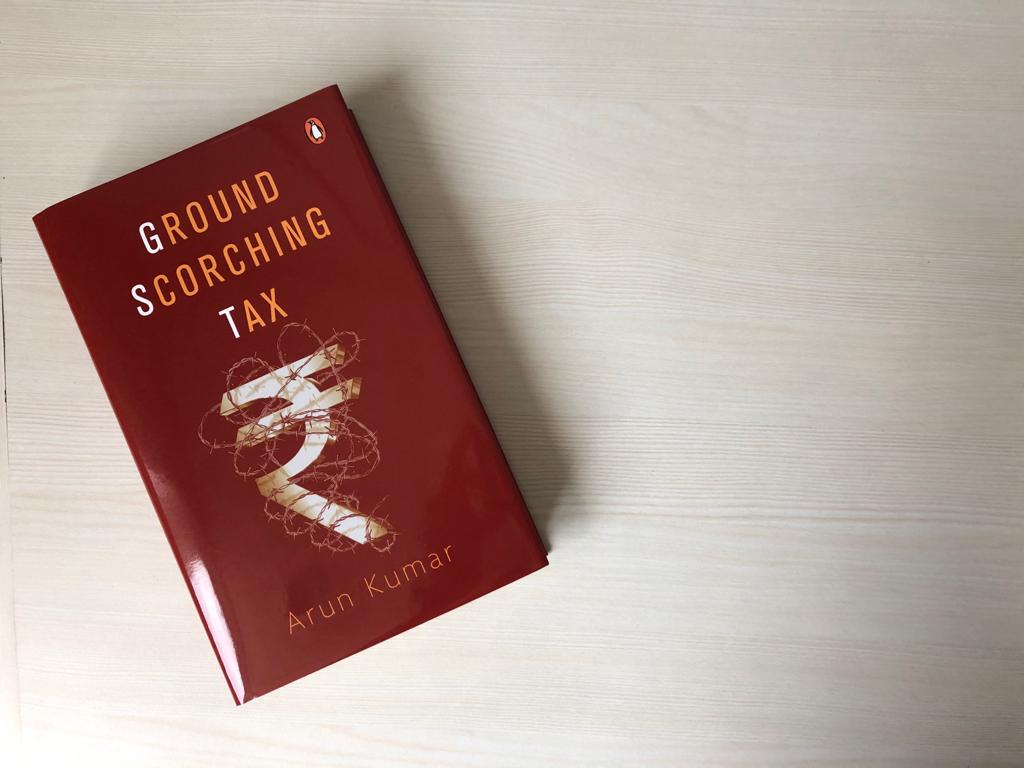
With the biggest political mandate in almost three decades, did the NDA government succeed in transforming India’s economic trajectory for the better? Or, has its economic performance been a ‘great disappointment’? The book conjectures it is the latter, and analyses why this is so.


Beast

Aditi and Prithvi race through the dark underbelly of Mumbai-from quiet suburbs to gritty brothels, from forgotten colonial tunnels to the lights and glamour of the inner city-in search of a dangerous truth.

In search of a monster.


Leader’s Block

‘Leader’s block’ is a phase where leaders feel demotivated and unengaged. These are the same leaders who at one point found their work stimulating and exciting. Over several candid interviews, senior professionals reveal why they felt this way and the circumstances that caused it. Ritu G. Mehrish uncovers the reasons behind this feeling and the antidote to this malady.

Identify when you are getting into the ‘leader’s block’ and learn how to break out of it!


The Reluctant Family Man: Shiva in Everyday Life

In The Reluctant Family Man, Nilima Chitgopekar uses the life and personality of Shiva-his self-awareness, his marriage, his balance, his detachment, his contentment-to derive lessons that readers can practically apply to their own lives.With chapters broken down into distinct frames of analysis, she defines concepts of Shaivism and interprets their application in everyday life.


A Tale of Wonder: Kathakautukam

A biblical story travels across regions and time-ultimately reaching medieval India where it is transformed by Shaivite overtones. The result is an exquisite epic love poem of love which also attests to the rich diversity of India’s cultural past.

Magnificent in its simple elegance, A Tale of Wonder is a timeless story that challenges the insidious notion that India has always been dominated by one faith only and insular to other cultural and religious influences.


Besharam

Besharam is a book on young Indian women and how to be one, written from the author’s personal experience in several countries. It dissects the many things that were never explained to us and the immense expectations placed on us. It breaks down the taboos around sex and love and dating in a world that’s changing with extraordinary rapidity.


The Children of Destruction

For Alice, life as a teenager is hard enough without turning into a supernatural herald of destruction. And you would think that after causing minor hurricanes with a major sneeze, being visited by a talking fox and ending up on a journey with death around every corner, things can’t get much worse.

Wrong.

They can.


Four Sectors that India Should Be Looking At to Become a Game Changer at a Global Stage

India may widely be acknowledged as one of the fastest-growing major economies in the world, but how can this vast, diverse and heavily populated nation sustain growth prospects? Game India offers a decisive answer.

Through chapters, at once ambitious and engaging, it outlines seven key unrealized opportunities India can pursue to remain a leading player on the world economic superhighway.

Here are some crucial highlights from the book:

Dairy Sector:

Milk production in India is increasing at a compounded annual growth rate (CAGR) of 5 per cent compared to 1 per cent for the world. Many global research companies have said that the growth of milk production in India is only 4.5 per cent and that demand is outstripping supply. But the truth is quite the opposite. It would appear that many of these stories are aimed at creating a scare among India’s policymakers so that they allow milk imports, even without canalizing it through the NDDB. Fortunately, thanks to the efforts of India’s large milk players, and some savvy policymakers, such stories have been discounted.

Small and Medium Enterprise (SME) Sector:

 All the data collected so far confirm that in India it is the small units that generate more profit and even account for a bulk of employment (see chart on results of census of micro, small and medium enterprises). As the numbers indicate, almost 95.7 per cent of the units in India are from the unregistered sector. These units account for almost 88 per cent of the jobs in the country. What is also impressive is that these units often borrow from informal sources—often at interest rates ranging from 24 per cent to 36 per cent per annum—and still generate profits. These units are often referred to as the micro, small and medium sector enterprises (MSME).

Manpower Export:

It is quite possible that manpower exports will become one of the strategies India will pursue in its quest for global leadership. This is because there is a great likelihood of India, China and Russia becoming the most important players in the world. Should they care to work together, the global axis itself will veer towards these three countries. The numbers suggest that such an alignment may not be totally irrational.

Water and coastlines:

 India has a tremendous advantage because of its 7500-km long coastline. This benefit alone could push up India’s GDP by 1 to 2 per cent year after year, improve its coastal security and create employment for countless millions.


Game India is essential reading for every Indian looking ahead.

Stranger Things: Suspicious Minds – An Excerpt

A mysterious lab. A sinister scientist. A secret history. If you think you know the truth behind Eleven’s mother, prepare to have your mind turned Upside Down in this thrilling prequel to the hit show Stranger Things.

It’s the summer of 1969, and the shock of conflict reverberates through the youth of America, both at home and abroad. As a student at a quiet college campus in the heartland of Indiana, Terry Ives couldn’t be farther from the front lines of Vietnam or the incendiary protests in Washington.

But the world is changing, and Terry isn’t content to watch from the sidelines.

Here is an exclusive excerpt from the book:


Dr. Martin Brenner wished he could see inside the minds of the subjects. No messy conversation to extract what they might or might not have seen, how effective the hypnotic tech­niques had been. No unreliable witnesses of their own experi­ence.

No lies unless he told them.

The young woman in front of him, Theresa Ives, had piqued his curiosity. Rare enough these days, especially in adult sub­jects. The way she’d sensed an opportunity and shown up sug­gested potential – hers would not be an easy mind to crack. The challenge would make their findings more meaningful. She didn’t seem afraid of him. He approved of that quality… at least when it wasn’t in a young charge who didn’t know how to take no for an answer.

“Better?” he asked as she sipped the water his aide had pro­vided.

She nodded and handed the glass back, smoothing soaked hair away from a cheek shiny with moisture. Tears and sweat both. Extremely susceptible to the drug cocktail, by all appearances.

“On a scale of one to ten, how strongly do you feel you’re still experiencing the effects of the medicine?”

Her eyes were clear for the answer she gave. “Eight.”

“Can you tell me what you saw?” he asked, keeping his voice kind.

A hesitation. But a brief one. “My parents’ funeral. In the church before it.”

“Yes, good. Do you remember anything else significant? How do you feel emotionally?”

She adjusted the hospital gown to more fully cover her legs. “I feel…” she hesitated. “Lighter somehow. Does that make sense?”

Brenner nodded. He’d taken a great pain from her, locked it away. She’d feel much lighter. The first stage to creating a mind susceptible to greater manipulations. And he’d have a tool to use for leverage in the future if he needed it. The key was to make sure she wasn’t aware of the change until then.

“And you don’t know why?”

“No.” She eyed him nervously. “Can I ask you something?”

He nodded again. “Of course.”

“What’s the purpose of this? Is it as important as I think? What do you want me to say?”

Before he could formulate a response to her three questions, she surprised him by shaking her head and giving a dry husk of a laugh. “Never mind, I’m sure that would violate the experiment rules. Like us talking on the way over here.”

“What do you mean?”

“He told us not to talk about the experiment.”

He looked at his aide, who studied the floor. That hadn’t been any direction of his. As long as the man took careful note of what was said, the participants could say anything and everything that popped into their minds.

“You should talk about whatever you want on the drive,” he said.

The aide nodded acknowledgment but didn’t look at him.

“Did you experience anything else of note in your trance state?” Dr. Brenner asked.

Terry heaved a breath. “All kinds of crazy shit. I’m so tired. I’ve never done that before.”

Ah, that explains some of the strong response.

“But when you answered your questionnaire…?” He waited.

This time, she had the grace to look guilty. “I said I had dropped acid several times. I thought you might want that.”

Potential. She was bursting with it.


Get your copy of Strangers Things: Suspicious Minds today!


5 things you need to know about the Jallianwala Bagh Incident

Credited as the event that galvanised the first major anti-colonial nationalist movement, and inexorably set Indian nationalists, including Gandhi, on the path towards independence.

The story of Jallianwala Bagh is accordingly also the story of a particular colonial mindset haunted by the spectre of the ‘Mutiny’. Kim A Wagner’s book seeks to show the interplay between a colonial mentality rooted in the nineteenth century and the contingenciesof the unrest in 1919 – an awareness of, and attention to, the varying themes at play within a single event.

The book introduces us to interesting facts we never knew about one of the most historical locations in the story of India’s Independence.


The pillars of the portico at the entrance of Jallianwala Bagh supposedly symbolise Dyer’s soldiers.

~

The real hero of the Jallianwala Bagh memorial,is the figure of Udham Singh, who, along with Bhagat Singh, is Punjab’s most celebrated freedom fighter. Following the assassination of O’Dwyer, Udham Singh was executed by the British, and was instantaneously accorded the status of a true patriotic martyr. It is said that Udham Singh had himself been present at Jallianwala Bagh and was wounded in the arm, although there is little evidence for this.

~

When the new Viceroy, Lord Reading, took the remarkable step of visiting Jallianwala Bagh on the anniversary of the massacre in 1921, the first British official to do so, he was met with complaints about the disparity of compensation awarded to Indians and Europeans. Reading promised to look into the matter, but nothing ever came of this.

~

Within a year of the massacre, and long before its real consequences were known, Jallianwala Bagh was purchased after a public subscription and turned into a memorial park. There was originally some opposition to the idea, and it was suggested that a memorial at Amritsar would – like the British ‘Mutiny’ memorial at Cawnpore – simply ‘perpetuate bitterness and ill will’.

~

The Amritsar Massacre was accordingly both retributive and pre-emptive: Dyer took revenge for the attacks on Europeans, including Miss Sherwood, during the riots three days earlier, but he also acted to prevent a much bigger outbreak that he believed to be imminent.


Situating the massacre within the ‘deep’ context of British colonial mentality and the local dynamics of Indian nationalism, Wagner provides a genuinely nuanced approach to the bloody history of the British Empire in Jallianwala Bagh.

10 Reasons Why Ruchir Sharma’s New Book is what you Need to Understand the Biggest Elections in the History of this Country

Taking us through a 25-year long journey of Indian politics Ruchir Sharma’s Democracy on the Road builds up the platform and sets the stage for the 2019 elections; the ballot which will offer a choice of two different political visions, one celebrating the reality of the many Indias, the other aspiring to build one India.

Read on to find out why this book is a must-read before you press that ballot button in 2019:


  1. The book explores the time of the late 70s and early 80s; when in the face of Indira Gandhi’s Emergency, India started finding its ground as a real democracy.


  1. It tells the story of the rise of Mayawati in UP.


  1. The book delves into the details of the Congress’s journey in the general elections from 1998-2004


  1. It travels into the major states of India while exploring the pre-election campaigns in each of them alternately focusing on general and state elections.


  1. Democracy on the Road highlights how the Bharatiya Janata Party grew from strength to strength under the leadership of Atal Bihari Vajpayee.


  1. It takes us through the intricacies and complexities of the Indian political system and the election system.


  1. The book takes us briefly into the political sojourns and offices of some of India’s biggest names in politics from Indira Gandhi to Narendra Modi and everyone in between.


  1. It explores and tries to understand the perspective and the mentality of the different voters spread across different states in India.


  1. It takes us into Narendra Modi’s political journey and his fight to the top against spanning the years from 2014-2018.


  1. Democracy on the Road offers to provide the reader with a very objective overview of the election scenario leading up to the elections that are set to write a new chapter in India’s democratic and socialist history.


Democracy on the Road takes readers on a rollicking ride with Ruchir and his merry band of fellow writers as they talk to farmers, shopkeepers and CEOs from Rajasthan to Tamil Nadu, and interview leaders from Narendra Modi to Rahul Gandhi.

A People’s Constitution – An Excerpt

It has long been contended that the Indian Constitution of 1950, a document in English created by elite consensus, has had little influence on India’s greater population. Drawing upon the previously unexplored records of the Supreme Court of India, A People’s Constitution upends this narrative and shows how the Constitution actually transformed the daily lives of citizens in profound and lasting ways.

Rohit De examines four important cases that set legal precedents: a Parsi journalist’s contestation of new alcohol prohibition laws, Marwari petty traders’ challenge to the system of commodity control, Muslim butchers’ petition against cow protection laws and sex workers’ battle to protect their right to practice prostitution

Here is an exclusive excerpt from the introduction of the book!


In December 1950 Mohammed Yasin, a young Muslim vegetable vendor in the small town of Jalalabad in north India, was in distress. He had received notification that the town government was implementing a new set of bylaws licensing the sale of various commodities and was providing only one license for the sale of vegetables in the town area. This license had been issued to a Hindu merchant, granting him a virtual monopoly over the vegetable trade in Jalalabad, which forced Yasin and other vegetable vendors to sell their goods after paying the license holder a certain fee. Yasin petitioned the Supreme Court to issue a writ of mandamus directing the town committee not to prohibit the petitioner from carrying on his trade.

A writ of mandamus is an order issued by a superior court to compel a lower authority or government officer to perform mandatory or administrative duties correctly. Yasin’s lawyer argued that not only was the new regulation ultra vires (i.e., beyond the powers of the municipality), it also violated Yasin’s rights to a trade and an occupation, conferred by the Constitution of India.

As a vegetable vendor from a minor town, Yasin appears to be a nondescript bystander as the grand narratives of Indian history—independence, partition, elections, the integration of princely states—play out around him. Why should he be interesting to us today? Yasin is one of the first Indians to present himself before the new Indian Supreme Court as a rights-bearing citizen.

His problem and its solution both emerge from India’s new constitutional republican order and represent a phenomenon that is the subject of this book. Yasin’s constitutional adventure highlights three features, this book argues, that form the basis for Indian constitutionalism. First, the Constitution mattered as a limit to or a structure for daily living. Second, this constitutional engagement included large numbers of ordinary Indians, often from minorities or subaltern groups. Third, a significant number of these constitutional encounters were produced through the new Indian state’s attempt to regulate market relations.

India became independent at the stroke of midnight on August 15, 1947. Three years later the Constituent Assembly, whose members were nominated by elected provincial legislatures, promulgated a new constitution declaring the state to be a “sovereign democratic republic. ” This was a remarkable achievement for that time. The Indian Constitution was written over a period of four years by the Constituent Assembly. Dominated by the Congress Party, India’s leading nationalist political organization, the assembly sought to include a wide range of political opinions and represented diversity by sex, religion, caste, and tribe. This achievement is striking compared to other states that were decolonized. Indians wrote the Indian Constitution, unlike the people of most former British colonies, like Kenya, Malaysia, Ghana, and Sri Lanka, whose constitutions were written by British officials at Whitehall. Indian leaders were also able
to agree upon a constitution, unlike Israeli and Pakistani leaders, both of whom elected constituent assemblies at a similar time but were unable to reach agreement on a document.

The Indian Constitution is the longest surviving constitution in the postcolonial world, and it continues to dominate public life in India. Despite this, its endurance has received little attention from scholars. Although there are a handful of accounts of constitution-making and constitutional design, the processes through which a society comes to adopt a constitution still remain underexplored.


Exploring how the Indian Constitution of 1950 enfranchised the largest population in the world, A People’s Constitution considers the ways that ordinary citizens produced, through litigation, alternative ethical models of citizenship.

error: Content is protected !!