Publish with Us

Follow Penguin

Follow Penguinsters

Follow Penguin Swadesh

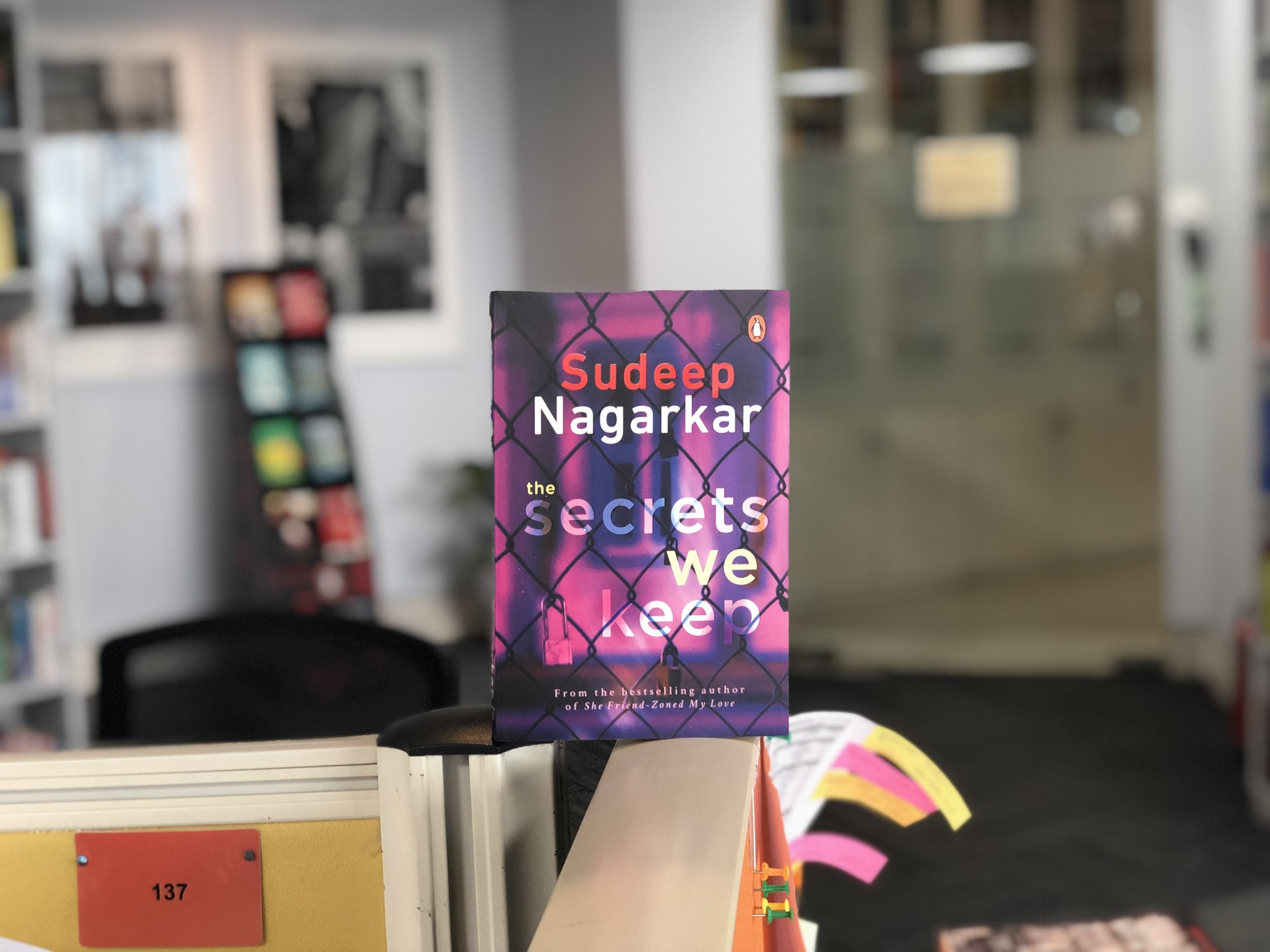
The Secrets We Keep – An Excerpt

Rahul, an intelligence officer on a secret mission, is undercover at a major’s house. In the process, he falls in love with the major’s daughter, Akriti, unknowingly putting her in danger. To protect her, Rahul decides to hide her at his parents’ house. However, estranged from his family for years, he must first make amends with them.

Just when he thinks he has found a haven for Akriti, she goes missing…

Here’s an exclusive excerpt from Sudeep Nagarkar’s much-awaited The Secrets We Keep:

—————————————-

If you could forget a relationship that fleetingly existed in the past, would you? If your past could be erased,
would you erase it?

Sadly, you have no choice in this matter because I—your past—am invincible.

Mysterious and unseen, I am the master of the dark and light and everything in between.

I am a force of nature, an unstoppable wave that’ll tame you by taking away every last bit of your strength until you regret ever standing in my path. A king of manipulation at its finest, I will see into the soul of the characters in this story long before they catch a glimpse, and change the way they think. I am the only God and the only devil, and I am here to destroy you because without destruction there’s no creation.

If you think you can escape me, you’re already doomed.


Grab your copy today!

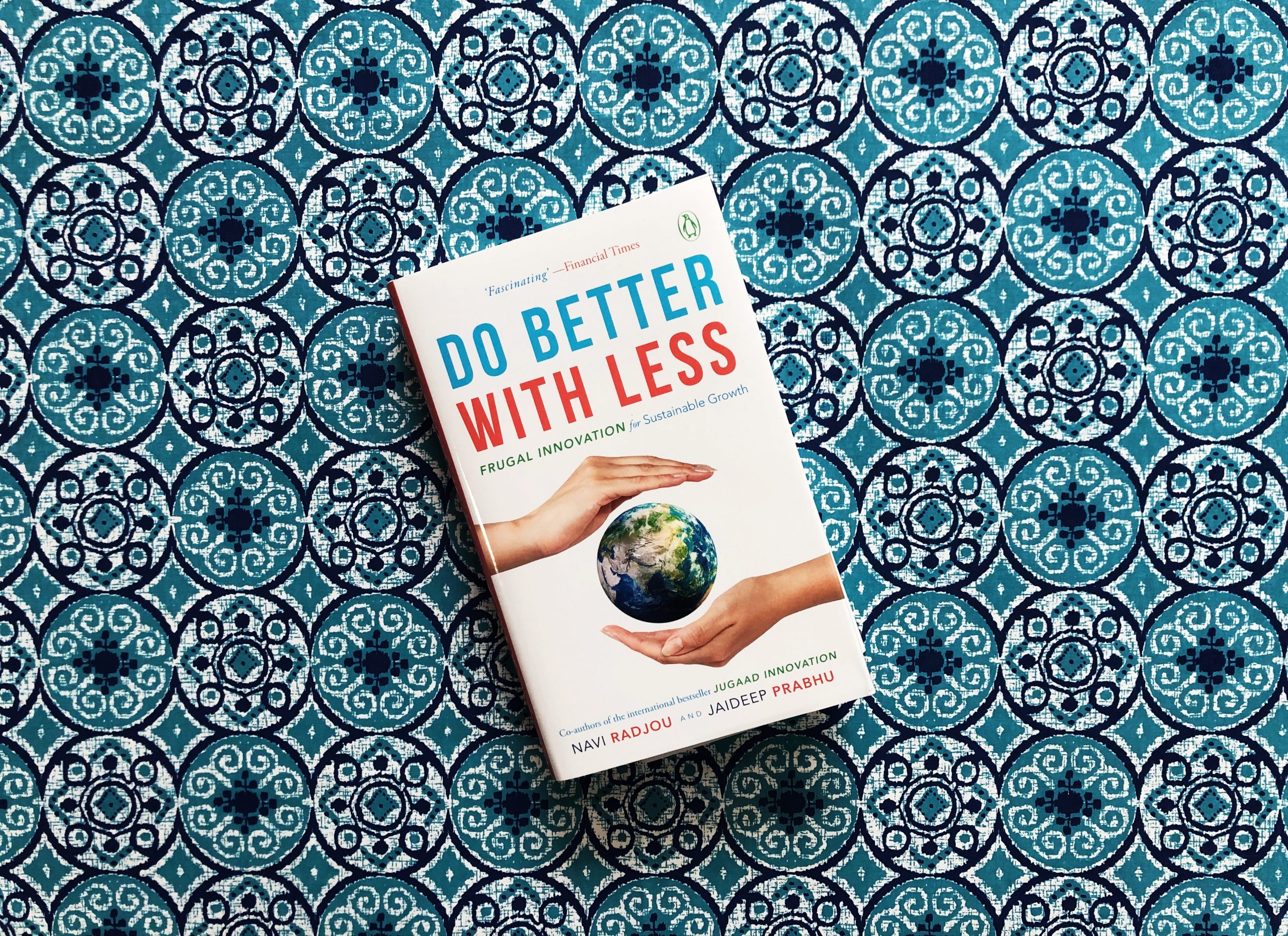
Do Better with Less – An Excerpt

The world faces a stark challenge: meeting the needs of over 7 billion people without bankrupting the planet. India, with its large population and limited resources, is at the very epicentre of this challenge.

Packed with over fifty case studies, Do Better with Less: Frugal Innovation for Sustainable Growth by the bestselling authors of Jugaad Innovation offers six proven principles that Indian entrepreneurs and businesses can use to co-create frugal solutions in education, energy, healthcare, food and finance that are highly relevant to India and the world.

Here is an excerpt from the first chapter:


In 1999, Jean-Marie Hurtiger, a senior manager at Renault, a French carmaker, was given what seemed like an almost impossible task. His boss, Louis Schweitzer, then Renault’s CEO, wanted him to create a modern, reliable and comfortable car that would retail at $6,000.

Two years earlier, Schweitzer had visited Russia where, to his dismay, he had discovered that the Lada—a locally made car priced at $6,000—was selling fast, while Renault’s fancier cars—twice as expensive as the Lada—had few buyers. As Schweitzer recalls: ‘Seeing those antiquated cars, I found it unacceptable that technical progress should stop you from making a good car for $6,000. I drew up a list of specifications in three words—modern, reliable and affordable—and added that everything else was negotiable.’

Schweitzer instructed Hurtiger, an engineer by training, with international management experience, to build a $6,000 car that matched these specifications.

Technically, Hurtiger could engineer a stripped-down version of a car for that price. But, like the Lada, this car would be clunky and uncomfortable, and customers would question its safety. Renault had a reputation for elegance and quality to protect; launching a shoddy product would be a form of brand suicide. Hurtiger therefore realized that what his boss was asking him to do was not just create a cheaper car,
but one that married high quality and affordability.

This ‘more for less’ proposition was at odds with Hurtiger’s long experience. R&D engineers in the West are taught to push the frontiers of automobile technology by adding features to existing products. Indeed, Western car companies invest billions in R&D to create increasingly more sophisticated products in order to differentiate their brands from do better with less competitors’ and charge customers more for the privilege. Schweitzer’s ‘more for less’ proposition seemed to flout the conventional ‘more for more’ business model that had proven so lucrative in consumption driven Western economies over the previous five decades.

Both Hurtiger and Schweitzer recognized that they would first have to change the way Renault employees think. Creating a $6,000 car required not just a new business model, but a new mental model. This would amount to an immense cultural shift in a company that was over 100 years old and for decades had designed high-quality cars—some for the premium market—primarily for Western middle-class consumers. All Renault’s French engineers had grown up in a resource-rich and relatively stable economy with a ‘bigger is better’ R&D philosophy. Schweitzer and Hurtiger needed a new breed of engineers, with a different outlook, who could innovate under severe constraints and turn adversity into opportunity.


Do Better with Less is India’s guide to claiming global leadership in frugal innovation.

Evocative Lines from ‘Mouth Full Of Blood’ that Reshape our Worldview

Spanning four decades, the essays, speeches and meditations in Mouth Full Of Blood interrogate the world around us. They are concerned with race, gender and globalisation. The sweep of American history and the current state of politics. The duty of the press and the role of the artist. Throughout Mouth Full of Blood our search for truth, moral integrity and expertise is met by Toni Morrison with controlled anger, elegance and literary excellence.

The collection is structured in three parts and these are heart-stoppingly introduced by a prayer for the dead of 9/11, a meditation on Martin Luther King and a eulogy for James Baldwin.

Here are some powerful lines from Toni Morrison’s book that will leave an imprint on you!

“Certain kinds of trauma visited on peoples are so deep, so cruel that unlike money, unlike vengeance, even unlike justice or rights or the goodwill of others, only writers can translate such trauma and turn sorrow into meaning, sharpening the moral imagination.”

“The fall of communism created a bouquet of new or reinvented nations who measured their statehood by ‘cleansing’ communities. Whether the targets were of different religions, races, cultures – whatever – reasons were found first to demonize then to expel or murder them.”

“If education is about anything other than being able to earn more money( and it may not be about any other thing), that other thing is intelligent problem-solving and humans relating to one another in mutually constructive ways.”

“For if education requires tuition but no meaning, if it is to be about nothing other than careers, if it is to be about nothing other than defining and husbanding beauty or isolating goods and making sure enrichment is the privilege of the few, then it can be stopped in the sixth grade or the sixth century when it had been mastered.

“Biology and bigotry are the historical enemies – the ones women have long understood as the target is sexism is to be uprooted.

“Complicity in the subjugation of race and class accounts for much of the self-sabotage women are prey to, for it is straight out of that subjugation that certain female- destroying myths have come.”

“I am alarmed by the violence that women do to one another: professional violence, competitive violence, emotional violence. I am alarmed by the willingness of women to enslave other women. I am alarmed by the growing absence of decency on the killing floor of professional women’s worlds.”

“I have never lived, nor have any of you, in a world in which race did not matter. Such a world, a world free of racial hierarchy, is frequently imagined or described as a dreamscape, Edenesque, utopian so remote are the possibilities of its achievement.”

“The defenders of Western hegemony sense the encroachment and have already described, defined and named the possibility of imagining race without dominance, without hierarchy, as ‘barbarism’; as destroying the four-gated city; as the end of history – all of which can be read as garbage, rubbish, an already damaged experience, a valueless future.”


Mouth Full of Blood is a powerful, erudite and essential gathering of ideas that speaks to us all.


Bite-sized wisdom from Sadhguru

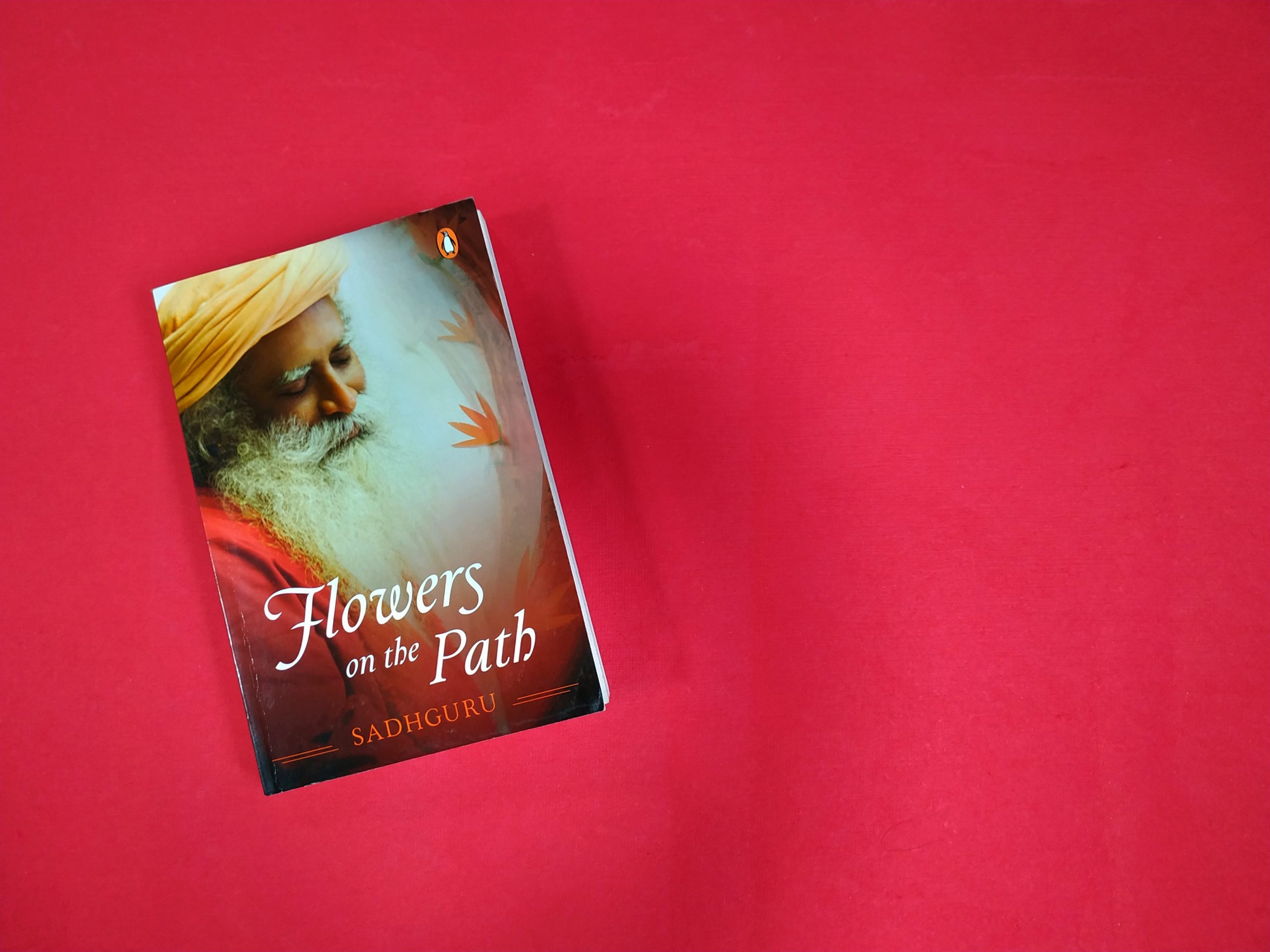
A motley bouquet, the articles that comprise Flowers on the Path offer insights from Sadhguru that spark you with their incisive clarity, delight you with humour, or even render you in profound stillness within.

Whether the subject covers social issues and worldly affairs, individual challenges, or dimensions of the beyond, Sadhguru’s ability to delve to the root and look at life in all its totality is evident.


Health Is Wholeness


Life Afresh With Children


 Rising Beyond Religion


Mind: The Dumping Ground


Dynamic Stillness, Static Stagnation


The Snakes and Ladders of Comfort


Spiritual Allergy


Choosing Your Destiny


What We Are Not


Front cover of Flowers on the Path
Flowers on the Path || Sadhguru

As a flower can confound you with its brilliance and beauty, so too does each article in Flowers On The Path  hold the possibility to confuse you out of your conclusions, and pave the way towards true knowing.


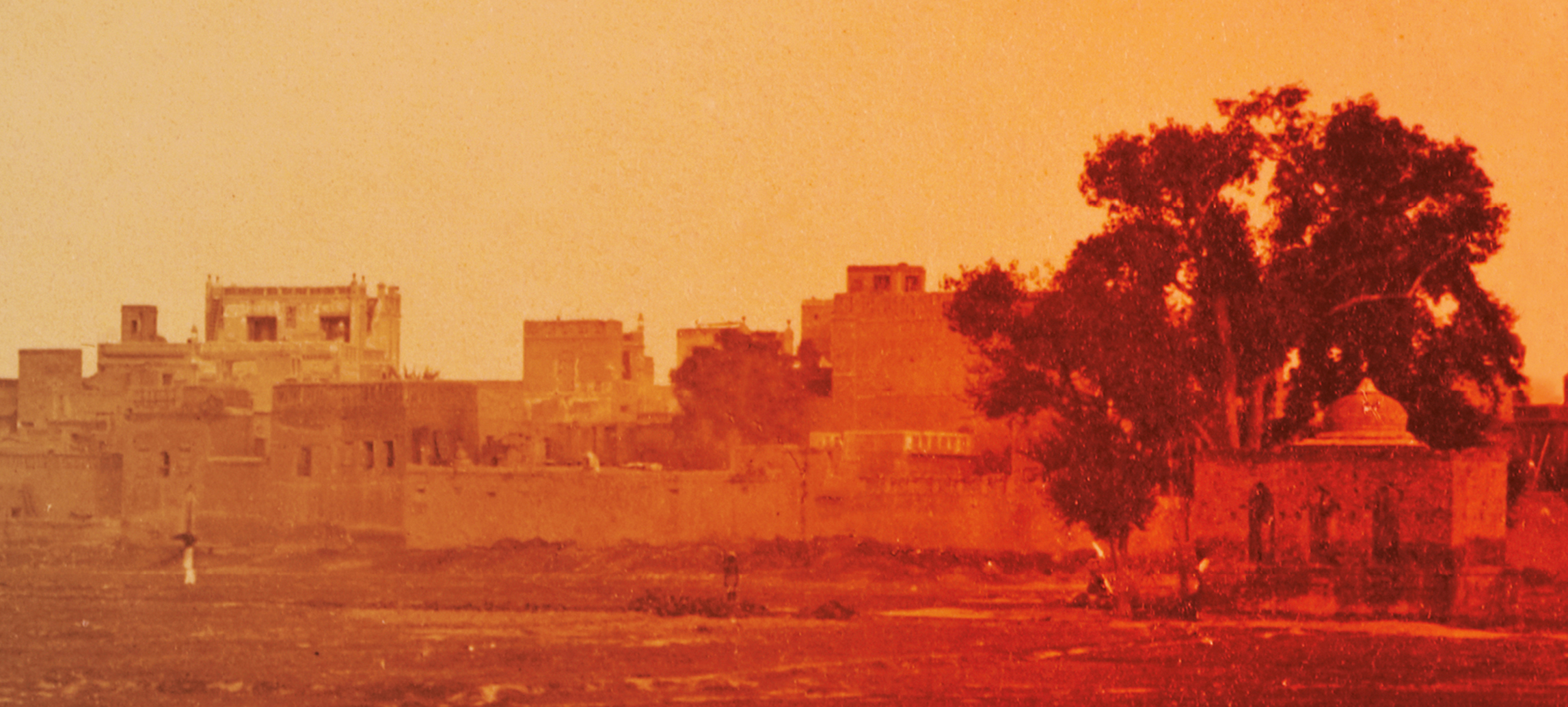
Kim Wagner on New Discoveries while Writing ‘Jallianwala Bagh’

The Amritsar Massacre of 1919 was a seminal moment in the history of the Indo-British encounter, and it had a profound impact on the colonial relationship between the two countries.

In Kim Wagner’s Jallianwala Bagh, which takes the perspectives of ordinary people into account, the event and its aftermath are strikingly detailed. Wagner argues that General Dyer’s order to open fire at Jallianwala Bagh was an act of fear and its consequences for the Indian freedom struggle were profound. Situating the massacre within the ‘deep’ context of British colonial mentality and the local dynamics of Indian nationalism, Wagner provides a genuinely nuanced approach to the bloody history of the British Empire.

In this piece by the author, he talks about his learnings while writing and researching for the book.


As I was writing the book about the Jallianwala Bagh massacre, one of the things that struck me was the abiding belief in the benevolence of the British Raj on the part of the local residents of Amritsar. Above the entrance to the memorial there is today a sign that says: ‘A Landmark in Our struggle for Freedom’, and the events of April 1919 are often referred to as a key moment in the independence movement that came to its fruition in 1947. In this narrative, the hundreds of civilians who were massacred by General Dyer, were martyrs to the cause of an independent India and it is as such that they are today commemorated. The interesting thing is that no-one in Punjab in 1919 even thought of independence.

Indian nationalists at the time, such as Drs Kitchlew and Satyapal, were thinking exclusively in terms of dominion-status within the British Empire – similarly to Australia or Canada. Despite the socio-economic dislocation and hardship caused by the First World War, the global flu pandemic, high food-prices and failed crops, the disappointment of the Montagu-Chelmsford reforms and the anger caused by the Rowlatt Act, the population of Amritsar never lost their faith in the Sarkar, or British Government.

As locals sought to petition the authorities for the release of their two leaders who had been deported on 10 April, they did so using the terms Ma Bap – the traditional supplication entailed by the line ‘You, My Lord, are my mother and father!’ After the confrontation turned violent and stones were thrown at the military pickets, who responded with indiscriminate shooting, people were shocked that the British would open fire on ‘innocent’ people. That is also why crowds twice sought to cross the railway bridges leading from the old city of Amritsar and into the Civil Lines, and twice were fired at.

As late as 13 April, local residents maintained their faith in the British Government whom they believed would ultimately act in a benevolent and righteous manner. Shortly before Dyer arrived at Jallianwala Bagh with his strike-force, a British airplane flew over the city and when people in the crowd became restless, the Satyagraha activists, who had organised the meeting, reassured them: ‘We need not fear anything. The Sarkar is our father and mother: why should Government kills its own children.’ While Dyer mistakenly believed that he was facing an armed crowd of rebels, and therefore opened fire to prevent a second ‘Mutiny’, people in the crowd did not see themselves as engaging in anything unlawful. The ban on public meetings had not been widely disseminated in the city and there was widespread confusion as to the actual nature of the meeting at Jallianwala Bagh, which furthermore coincided with the festival of Baisakhi.

The massacre, and its aftermath, brutally disabused Indians as to the true nature of British oppression and it was from April onwards, as a result of what had occurred, that people more generally began to think of independence. Before any details of what had occurred in Amritsar reached beyond Punjab, the poet and writer Rabindranath Tagore famously returned his knighthood at the end of May 1919, stating that: ‘The enormity of the measures taken by the Government in the Punjab for quelling some local disturbances has, with a rude shock, revealed to our minds the helplessness of our position as British subjects in India.’ It was not, however, till the following year that Gandhi initiated the non-cooperation movement and finally took up the cause of independence.

The Amritsar Massacre has since been recognised as a crucial watershed in the history of British India, and the in the freedom struggle, yet it is important to remember that this was far from evident to the people involved at the time. It was not till 1947 that the events of 1919 could be seen as the beginning of the end of British rule in India.

*

When it comes to British contemporary perceptions of the ma

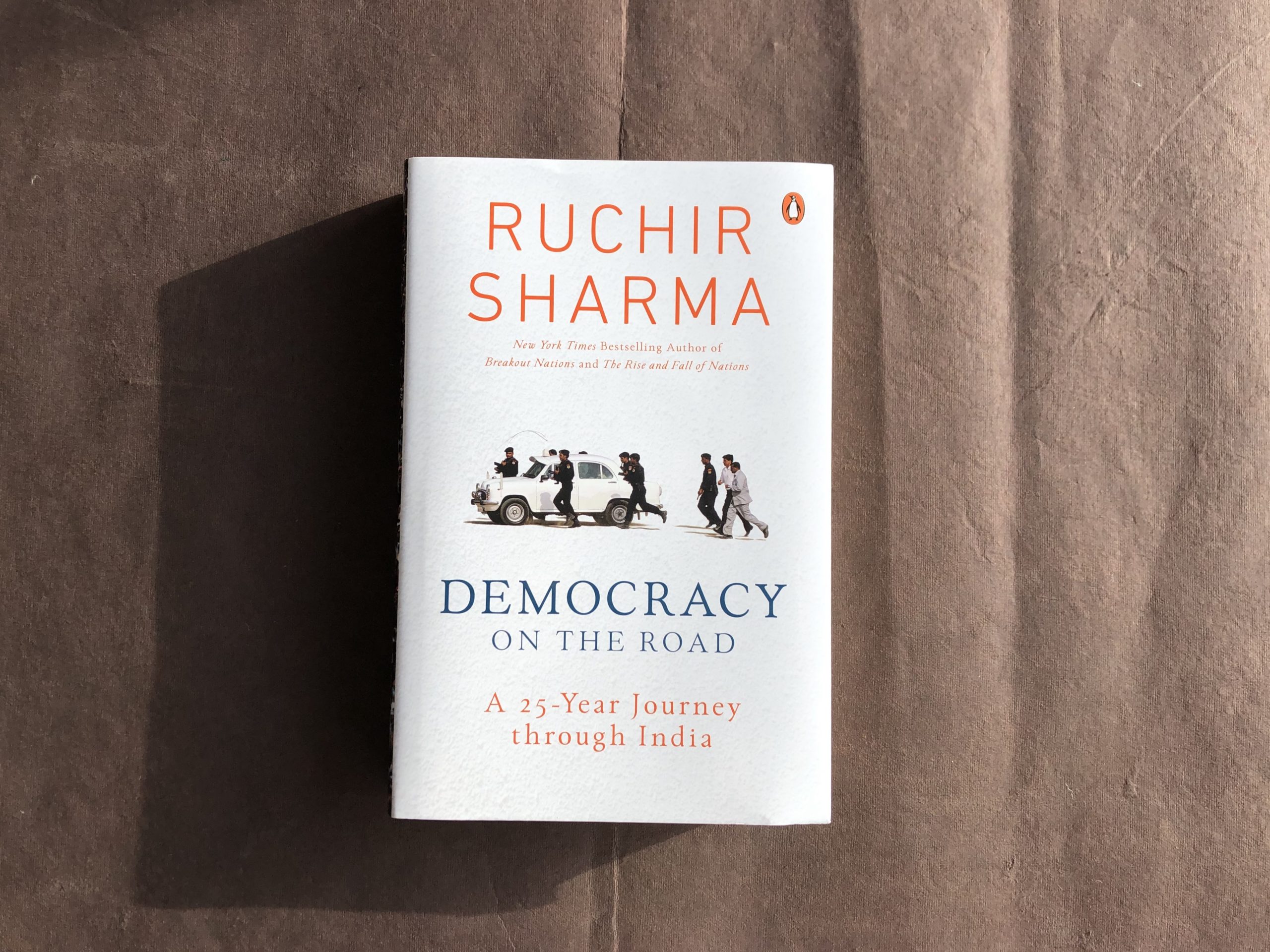
Of Marxists and Mamata – an excerpt from Ruchir Sharma’s ‘Democracy on the Road’

On the eve of a landmark general election, Ruchir Sharma offers an unrivalled portrait of how India and its democracy work, drawn from his two decades on the road chasing election campaigns across every major state, travelling the equivalent of a lap around the earth.

Here is an excerpt from Ruchir Sharma’s book, Democracy on the Road that talks about the power packed campaign led by Mamata Banerjee in May 2011.


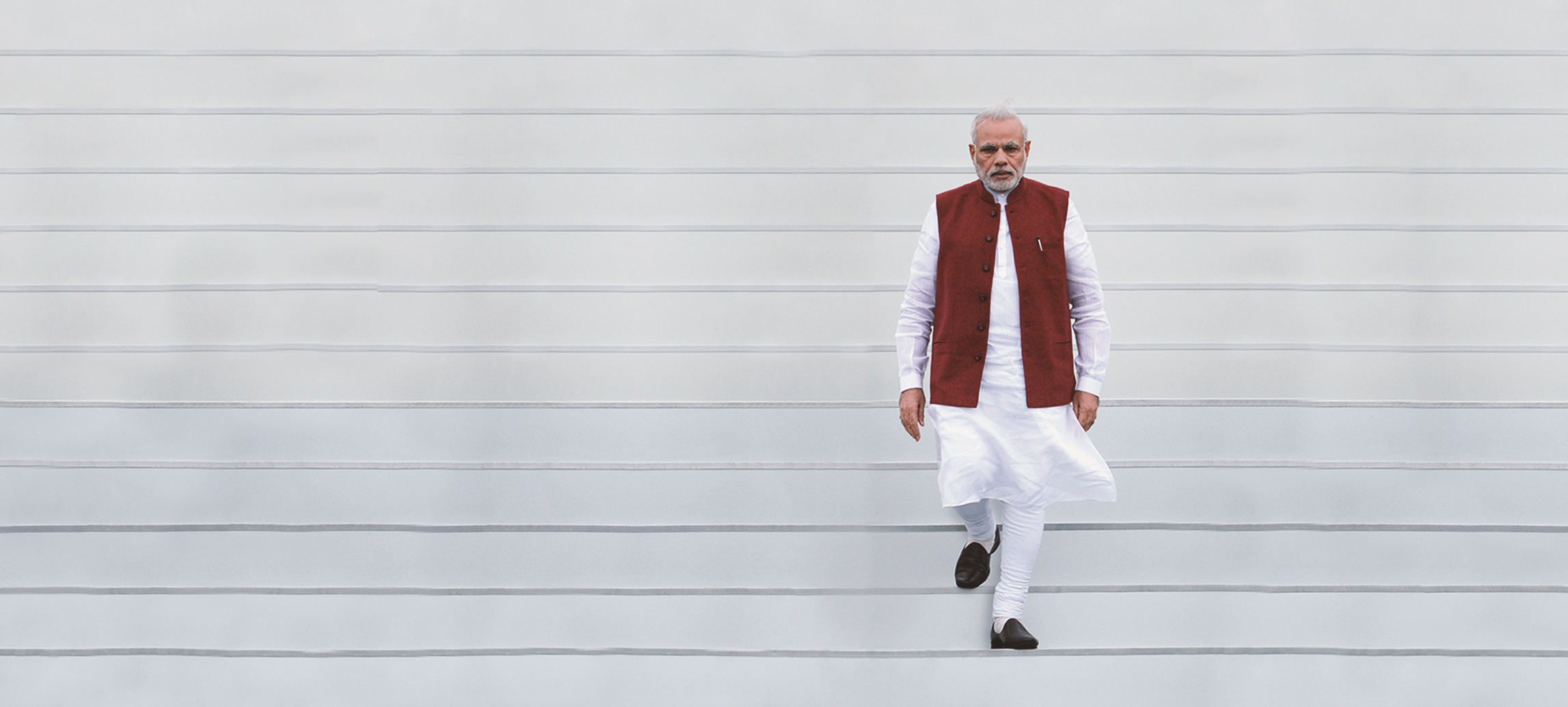
Leading the opposition charge was Mamata Banerjee, a Bengali Brahmin who split from the Congress to form her own party in 1998 and had been railing against Marxist ‘tyranny’ for years, mostly to no avail. The Tata conflict, and a second deadly government attempt to acquire agricultural land in and around Nandigram in the district of Purba Medinipur, had given Mamata’s campaign against Marxist rule new momentum and credibility.

We saw Mamata for the first time at a rally in Kolkata, where she sprang out of the helicopter and race-walked past party supporters, a big boss in a diminutive frame, dressed austerely in a white sari with a blue border. Her bearing broadcast immediately that she had no time for the usual campaign greetings; she was a one-woman dynamo running a lifelong crusade, eager to topple communism yesterday.

A poet herself, Mamata promised not only to restore English instruction but also to bring back the poetry of Bengal greats such as Rabindranath Tagore and Kazi Nazrul Islam, and the stories of Bengal heroes like ‘Binoy, Badal and Dinesh’, which the Marxists had expunged as too bourgeois, and replaced with party-approved literature. While English is an aspirational language all over India, perhaps only in Bengal could a politician campaign on promises to restore local poetry to the school curriculum.

She promised that under her All India Trinamool Congress (TMC)—the ‘party of the marginalized’—things would be different. Bengal would have modern schools, colleges and health clinics, with no proof of party loyalty required for access. Non-party members would no longer have to travel out of state for medical treatment. Her campaign slogan promised ‘poriborton’, the Bengali spin on ‘parivartan’ or change. As interesting as what Mamata said was what she didn’t say. Neither the Congress nor the BJP had cracked 7 per cent of the vote in recent Bengal elections, and they hardly bore mention in Mamata’s speech. The caste and religious undercurrents that drive much of Indian politics barely surfaced either, since Bengal was divided mainly between Marxist party members and everyone else. Tapping popular frustration with thirty-four years of Marxist rule, Mamata’s party won in resounding fashion, taking 184 of the 294 state assembly seats, and she became the new chief minister. The Marxists finished a distant second….

Economic growth had picked up at least moderately since the communists departed. Infant mortality was falling. Construction was booming all over the capital, spilling into the outskirts. Amit Mitra, state finance minister under Mamata, told us investment was flowing into cement and fertilizer plants, small- and medium-size companies were growing rapidly and that Tata had begun to expand again in the state.

When Mamata came to power in 2011, she had fired police officials who did not toe her party line, and harassed critics who posted mocking cartoons of her on social media. She was seen as erratic, volatile, an autocrat who brooked no challenge within her own party. Mamata’s writ still ran large, but she was settling down and opening up, as the Marxists fell into disarray. During the last campaign, Mamata had refused to meet us because some of our companions had ties to leading Marxists in Delhi, but this time she called them up to the stage before a Kolkata rally and greeted them warmly.

As Mamata went on the offensive there were flashes of the old paranoia, and over the course of the campaign she would attack everyone from Modi and the media to the Election Commission and the security apparatus for conspiring against her. Her crowds lapped it up. As soon as her Kolkata rally ended and Mamata made it past her security cordon, she was mobbed by supporters, young and old, who wanted to kiss her hand, touch her feet, or receive her blessings.

Over this five-week campaign, Mamata would claim to walk 1000 kilometres in the sweltering heat of April and May to address more than 160 meetings, and while the numbers were implausible, her energy and her centrality to the TMC were not in question. The joke in Kolkata was that ‘there is only one post in the TMC and Mamata holds it. Everyone else is a lamppost.’ She was running a highly centralized government in which her word was the only one that really mattered, yet she was delivering enough to ordinary people to win them over. Many said Mamata had executed on her promises to improve roads and electricity. She had offered subsidies to bring down the price of wheat, vegetables and rice, which were selling for a few rupees per kilo. She had also given free bicycles to girls as an incentive and means to get to school, and offered wedding subsidies to young women.

In the end the TMC won easily. After five straight terms under Marxist party leaders, Bengal may simply not have been ready to throw out Mamata after one. Her personal charisma prevailed over the imploding Marxists and their opportunistic alliance with the Congress. She had mellowed, growing open enough to industry to win business support, remaining generous enough with the public purse to win votes from the poor.

Mamata was also riding the growing wave of voter support for single leaders, whose unmarried status seemed to confirm their claims of all-in devotion to public service. Among India’s twenty one most populous states, there were no unmarried chief ministers in 1988, but by 2016 there were seven, including Mamata, seemingly lifted by growing voter distaste for nepotism inside political parties, and the corruption that flows naturally from running parties as a family business. Mamata had in fact remained far more ascetic in her personal tastes than many other supremos. Even as chief minister she lived in her small ancestral home in the Kolkata neighbourhood of Kalighat. Passing by the home we were stunned to see it in a state of decay with a dilapidated grey tiled roof and rotting bamboo shafts—a stark contrast to the sandstone palaces Mayawati had built for herself in UP. Mamata’s image as a single leader with no taste for diamonds had made her largely impervious to the corruption charges that so often topple Indian governments, and helped her secure this second term.


Democracy on the Road takes readers on a rollicking ride with Ruchir and his merry band of fellow writers as they talk to farmers, shopkeepers and CEOs from Rajasthan to Tamil Nadu, and interview leaders from Narendra Modi to Rahul Gandhi.

The Great Disappointment of the ‘Modifesto’: Ten Facts Proving that ‘Achche Din’ Remain a Distant Dream

As the National Democratic Alliance (NDA) government completes its current term ahead of the General Elections 2019, it is time to evaluate its performance, specifically in terms of its management of the economy.

Salman Anees Soz—international development expert, economic and political commentator and consultant at the World Bank, conducts a critical assessment of five years of the brand of economics Prime Minister Narendra Modi has championed, often referred to as ‘Modinomics’. The Great Disappointment takes a look at the rhetoric of the 2014 ‘Modifesto’ that actively denied the achievements of previous governments and announced that a government led by Narendra Modi would match their cumulative performance within its first term.

Brought into power with the biggest political mandate in almost three decades, did the NDA government succeed in gainfully transforming India’s economic trajectory or did it squander a once-in-a-generation opportunity?

A realistic look at GDP growth under Modinomics is not very promising

The 2016–17 survey notes that ‘GDP growth slipped from 7.7 per cent in the first half of 2016–17 to 6.5 per cent in the second half. Quarterly real GDP growth also shows a deceleration in the third and fourth quarters relative to the first two quarters. The slowdown in these indicators predated demonetization but intensified in the post-demonetization period.’ What that survey could not have predicted is that in the following quarter, economic activity slowed and the growth rate slumped to 5.7 per cent, the slowest pace in three years.

The much-touted tax reform failed to hold up structurally

Early on, the GST’s technology infrastructure could not keep up with the volume of transactions, and the government once again seemed unprepared for the scale of reform. It was demonetization redux and gave another major opportunity to the government’s critics to paint it as incompetent. Yashwant Sinha said that the GST ‘would make a fine Harvard University case study of everything that was wrong with the rollout of a tax reform’.

The agricultural crisis worsened in the last five years

Agricultural exports declined from US$42 billion in 2013– 14 to US$38 billion in 2017–18. They were lower in the intervening period. Agricultural imports went up by about 50 per cent during this time Interestingly, investment in agriculture (measured by gross capital formation as a share of agricultural GDP) fell from 17.7 per cent in 2013–14 to 15.5 per cent in 2016–17.

While the decline in global crude oil prices caused a reduction in fiscal deficit, oil prices for consumers in India are higher than ever

An analysis by the Mint newspaper showed that ‘almost the entire reduction of about 0.6% of the gross domestic product (GDP) in India’s fiscal deficit between FY14 and FY16 could be attributed to the sharp fall in crude prices’.  The current account balance improved. The government liberalized diesel prices sooner than anticipated on account of this sharp decline. However, instead of passing on the benefits of lower crude prices to consumers, the government retained much of the gain through progressively higher excise duties on petroleum products.

In many cases, the Modi government allegedly simply renamed its predecessor’s schemes

According to an analysis by the Quint, an online news site, the Modi government renamed nineteen out of twenty three schemes started by its predecessor, the UPA government. For example, the famous Jan Dhan Yojana is the new name of an existing scheme Basic Savings Bank Deposit Account (BSBDA). Swachh Bharat Abhiyan was originally Nirmal Bharat Abhiyan while the RGGVY (rural electrification) became DDUGJY.

One of the most touted ‘benefits’ of demonetization has evidently not materialized

There is no concrete evidence to indicate that demonetization led to a significant decline in terrorism. In fact, Prasenjit Bose, an economist, found that ‘total fatalities in terrorism-related violence in India have hardly seen any significant decline in 2017 (data till August 2017) compared to the two previous years, with violence in Jammu and Kashmir actually witnessing an escalation’.

Demonetisation has not shown a drastic increase in either direct tax collection or in the number of taxpayers

 Wilson quotes CBDT (Central Board of Direct Taxes) data to show that ‘there was an 11.6% growth in the number of income taxpayers in 2013–14, without any demonetisation. It then fell to 8.3% and 7.5% in next two years but increased to 12.7% in 2016–17 but again fell to 6.9% in 2017–18. So, the trend shows that there was no dramatic increase in the number of taxpayers.’ Wilson also notes that growth in direct taxes was much higher during the UPA’s ten years (average 20.2 per cent) as opposed to the Modi government’s four-year average growth of only 12 per cent.

Modi’s pitch to India’s youth was clear—if they voted for him, he would get them a job. Unfortunately, ground realities present a depressing picture

Total employment fell from 48.04 crores in 2013–14 to 46.76 crore in 2015–16. The failure to create jobs is becoming the biggest political challenge for the Modi government. There are constant reports in the media about the challenging jobs situation in India. The government’s response has been to latch on to questionable data on job creation to argue that India does not have an employment problem.

 The Pradhan Mantri Kaushal Vikas Yojana (PMKVY) scheme, the centrepiece of Skill India, has had negative reviews

The Sharada Prasad Committee, set up by the skill development ministry to review the performance of various sector skill councils, came out with negative reviews of the PMKVY. The committee noted that ‘no evaluation was conducted of PMKVY 2015 to find out the outcomes of the scheme and whether it was serving the twin purpose of providing employment to youth and meeting the skill needs of the industry before launching such an ambitious scheme’. In various stakeholder consultations, the committee reported that ‘all of them said in one voice that the targets allocated to them were very high and without regard to any sectoral requirement. Everybody was chasing numbers without providing employment to the youth or meeting sectoral industry needs.’

 The figures used to tout India’s GDP growth have come under the scanner after a suspicious change in methodology

India’s GDP data has been under the scanner ever since the CSO changed the methodology for calculating economic output in 2014–15. Most analysts were surprised after the publication of the new GDP series. Even the government’s chief economic adviser, Arvind Subramanian, and the then Governor of the RBI, Raghuram Rajan, cast doubt on the new CSO data. According to the Economist, investors  ‘roundly disbelieve India’s growth figures’.


Grab your copy of The Great Disappointment today!


Quotes from Marlon James’ ‘Black Leopard, Red Wolf’

Tracker is a hunter, known throughout the thirteen kingdoms as one who has a nose – and he always works alone. But he breaks his own rule when, hired to find a lost child, he finds himself part of a group of hunters all searching for the same boy.

Drawing from African history and mythology and his own rich imagination, Marlon James weaves a tapestry of breathtaking adventure though a world at once ancient and startlingly modern.

From his book are these seven quotes to give you an essence of the book.


Bi oju ri enu a pamo.

Not everything the eye sees should be spoken by the mouth.”

~

“Life is love and I have no love left. Love has drained itself from me, and run to a river like this one.”

~

“You ever see a man who doesn’t know he’s unhappy, Leopard? Look for it in the scars on his woman’s face. Or in the excellence of his woodcraft and iron making, or in the masks he makes to wear himself because he forbids the world to see his own face. I am not happy, Leopard. But I am not unhappy that I know.”

~

“A man will suffer misery to get to the bottom of truth, but he will not suffer boredom.”

~

“Truth is truth and nothing you can do about it even if you hide it, or kill it, or even tell it. It was truth before you open your mouth and say, That there is a true thing.”

~

“When kings fall they fall on top of us.”

~

“I am content with much. This world never gives me anything, and yet I have everything I want.”


Against the exhilarating backdrop of magic and violence, Marlon James explores the fundamentals of truth, the limits of power, and excesses of ambition, and our need to understand them all. Get a copy of Black Leopard, Red Wolf here!

Spring has Sprung! Books to read this April

Spring, a lovely reminder of how beautiful change can be! So try a new book, a new author: something out of the ordinary. As nature changes around you, bring a change within yourself by giving your mind and soul a new type of narrative to look forward to.

Penguin presents a new list of books this April. Take a look!

Journeys: Pages from My Diaries

Edited by Krishna Ramanujan and Guillermo Rodríguez, Journeys offers access to Ramanujan’s personal diaries and journals, providing a window into his creative process. It will include literary entries from his travels, his thoughts on writing, poetry drafts, and dreams. His diaries and journals served as fertile ground where he planted the seeds for much of his published work.


Rajneeti: A Biography of Rajnath Singh

A two-term President, Singh saw the elevation of Narendra Modi as the partys PM candidate and delivered BJPs biggest elections victory in 2014. Since then, as Indias Home Minister, he has ushered in a new phase in the countrys security where both internal and external threats have been minimised. Drawing from a vast amount of research and in-depth interviews, Gautam Chintamanis engaging narrative reveals for the first-time a politician who never shied away from doing the right thing.


The City and the Sea

Called the novelist of the newsroom, Raj Kamal Jha cleaves open India’s tragedy of violence against women with a powerful story about our complicity in the culture that supports it. This is a book about masculinity – damaging and toxic and yet enduring and entrenched – that begs the question: What kind of men are our boys growing up to be?


Re-forming India: The Nation Today

India’s social and political landscape has, in recent times, witnessed many significant transformations. This book offers a wide-ranging review of how India has, over the last few years, fared on the most critical dimensions of our collective life-politics, economy, governance, development, culture and society.


Ib’s Endless Search for Satisfaction

In this journey of sadness and self-reflection, Ib tranforms into an ordinary man from an ordinary boy and along the way, tries to figure out life and understand himself. In this audacious debut that is insightful, original and deeply disturbing, Roshan Ali’s play of language is nothing less than masterful.


Autumn Light: Season of Fire and Farewells

After his first year in Japan, almost thirty years ago, Iyer gave us a springtime romance for the ages, The Lady and the Monk; now, half a lifetime later, he shows us a more seasoned place-and observer-looking for what lasts in a life that feels ever more fragile.


Carpenters and Kings

Carpenters and Kings is a tale of Christianity, and equally, a glimpse of the India which has always existed: a multicultural land where every faith has found a home through the centuries.


Siyasi Muslims: A story of political Islams in India

We seldom debate to find pragmatic answers to these queries. Examining the everydayness of Muslims in contemporary India, Hilal Ahmed offers an evocative story of politics and Islam in India, which goes beyond the given narratives of Muslim victimhood and Islamic separation.


The Travel Gods Must be Crazy: Wacky Encounters in exotic lands

Punctuating her droll stories with breathtaking descriptions and stunning photographs, Sudha invites readers on an unexpected and altogether memorable tour around the world!


The Tiger and the Ruby: A Journey to the Other Side of British India

In 1841, Nigel Halleck left Britain as a clerk in the East India Company. He served in the colonial administration for eight years before leaving his post, eventually disappearing in the mountain kingdom of Nepal, never to be heard from again.
A century-and-a-half later, Kief Hillsbery, Nigel’s nephew many times removed, sets out to unravel the mystery.


The Doctor and the Saint: Caste, Race and Annihilation of Caste, the Debate between B.R. Ambedkar and M.K. Gandhi

In The Doctor and the Saint, Roy exposes some uncomfortable, controversial, and even surprising truths about the political thought and career of India’s most famous and most revered figure. In doing so she makes the case for why Ambedkar’s revolutionary intellectual achievements must be resurrected, not only in India but throughout the world.


The Lost Decade (2008-2018): How the India Growth Story Devolved into Growth Without a Story

India is not the star it was in 2008 and in effect, the ‘India growth story’ has devolved into ‘growth without a story’. The Lost Decade tells the story of the slide and examines the political context in which the Indian economy failed to recover lost momentum.


Once Upon a Curfew

It is 1974. Indu has inherited a flat from her grandmother and wants to turn it into a library for women. Her parents think this will keep her suitably occupied till she marries her fiancé, Rajat, who’s away studying in London.
When the Emergency is declared, Indu’s life turns upside down. Rana finds himself in trouble, while Rajat decides it’s time to visit India and settle down. As the Emergency pervades their lives, Indu must decide not only who but what kind of life she will choose.


Dare Eat That

From using sign language to haggle over ant eggs in Bangkok to being hungry enough to eat a horse in Luxembourg, from finding out the perfect eel to barbecue to discovering the best place to source emu eggs in India, Dare Eat That explores their journey to eat every species on earth, at least once!


House of Stars

Kabir follows the most beautiful girl he has ever seen into a mall. But there are gunshots and screams as terrorists storm inside after fleeing an operation gone wrong. Kabir and Diya find themselves trapped, along with other hostages. The terrorists make their demands and announce that until they are met, one person will die every hour. The situation begins to spiral out of control.  Held hostage by fate, looking death in the face, it could be Kabir and Diya’s last chance at love.


The Secrets We Keep

Rahul, an intelligence officer on a secret mission, is undercover at a major’s house. In the process, he falls in love with the major’s daughter, Akriti, unknowingly putting her in danger. To protect her, Rahul decides to hide her at his parents’ house. However, estranged from his family for years, he must first make amends with them.


Mahadev

A little girl asks who Shiva is and it is the beginning of a family journey through stories and incidents across the expanse of Shivbhumi-all the way from the mystical Mount Kailash to the fabled Ocean of Milk and the netherworld. Writing in the Harikatha style of traditional storytelling, Renuka Narayanan builds a unique narrative to draw the reader into the loving, giving world of Mahadev.


Where Will Man Take Us?: The bold story of the human technology is creating

This is a new world we are walking into. And the man who began this journey won’t be the man who ends this journey. Where Will Man Take Us? explores the changes technology is bringing about in us-as a society and as a species. What will the next generation turn into, what will it be like, how will the new Adam and Eve live and love?


Do Better with Less: Frugal Innovation for Sustainable Growth

Packed with over fifty case studies, Do Better with Less offers six proven principles that Indian entrepreneurs and businesses can use to co-create frugal solutions in education, energy, healthcare, food and finance that are highly relevant to India and the world.
This book is India’s guide to claiming global leadership in frugal innovation.


Dawood’s Mentor

In Dawood’s Mentor, Dawood meets Khalid and they eventually forge an unlikely friendship. Together they defeat, crush and neutralize every mafia gang in Mumbai. Khalid lays the foundation for the D-Gang as Dawood goes on to establish a crime syndicate like no other and becomes India’s most wanted criminal.

Aspects of Shiva that we can use in our Daily Life

Shiva led a life of contradictions, unmitigated wonder and beauty. When faced with difficulties, he had to tread gently, take a deep look into himself, sometimes go against his inherent nature, and change, when need be.

In the earliest and rather scant appearances, Shiva seems to have been a marginalized deity among the pantheon of gods, and yet he has become one of the most ubiquitous.

The Reluctant Family Man is a study of reflection, introspection and the necessity for taking responsibility through the life of Shiva.

Here are some aspects of Shiva’s life that we can use in our daily life.


Sati is Shiva’s first spouse, and with both his spouses, he has memorable exchanges and dialogue, illustrating the caring, sharing, quarrelling and forgiveness evident in these associations.

~

The salubrious nature of marital squabbling is shown constantly in Shaivic myths. The fights are remarkable,where both parties threaten, browbeat and try to convince each other so that they can, eventually, come to a rapprochement.

~

Shiva challenges conventionally prescribed gender norms and the patriarchal notion of a man having to always appear strong and resolute. Instead, he weeps copiously, wretchedly mourning his dead wife without caring what the world might think. His vulnerability and pathos are on full display.

~

What is pleasantly surprising is the fact that Shiva can handle such a strong, almost insouciant wife (Parvati). In fact, Shiva is the only god who has an outspoken wife and perhaps the only deity who does not try to be dominant. Only a self-confident male can coexist with such a female.

~

Loving spouses can repeatedly challenge each other if the marital relationship is to serve the function of promoting the mental growth of partners. Shiva and Parvati certainly don’t believe in the silent treatment that many couples have been guilty of from times immemorial. If something troubles them, they address it right away.

~

Through Shiva’s attitude towards his wives, we can see him managing his ego. He is the great yogi, the great knower, and although he knows how to play supreme lord and master to an adoring Parvati, he also knows how to give in when she is his spouse and submit totally to her in her form as Devi.

~

Do not put all your eggs in one basket. Have your own independent relationships other than the one you share with your partner. Shiva is known to go off with his cronies and partake of a relaxing hallucinogen, and indulge in ‘alone time’ and meditation. Parvati has her friends, Jaya and Vijaya, who help her in her ablutions and other aspects of life. They both also have their own ‘portfolios’ in the celestial world and keep very busy, away from each other. They give each other, as they say in today’s times, ‘space’.

~

In a rather unique manner, Shiva epitomizes balance in his life choices, because not only is he Mahayogi, an ascetic, he is also Shankara, the beneficent married one. He balances two opposites.


In The Reluctant Family Man, Nilima Chitgopekar uses the life and personality of Shiva-his self-awareness, his marriage, his balance, his detachment, his contentment-to derive lessons that readers can practically apply to their own lives.

error: Content is protected !!