Publish with Us

Follow Penguin

Follow Penguinsters

Follow Penguin Swadesh

Shashank Shah On The Vision Behind ‘The Tata Group’

Shashank Shah is a thought leader in the fields of stakeholder-centric business strategy, corporate responsibility and sustainability. He has been a visiting scholar at Harvard Business School; and is currently the editor-in-chief of the Harvard University Postdoctoral Editors Association; and consulting editor with the Business India Group. His first book Win Win Corporations was published in 2016.

Read on to know more about his new book The Tata Group, as we catch up with him on a conversation.


According to you, how has Tata group maintained its leadership position over the years? What are the main factors of its successful performance?

How many companies in India can boast of celebrating 15 decades of existence? Very few. Moreover, how many of those have consistently ranked at the top of the charts for their financial and indeed all-round performance? Tatas have remained India’s numero uno corporate for 80+ years, ever since corporate rankings have been measured in India. Contextually, let us compare two among the tallest business leaders of the 19th century – Jamsetji Tata and Premchand Roychand (the former worked under the latter in his formative years) and their institutions a century later. While Premchand Roychand & Sons (under the fourth generation) recorded a turnover of ₹82.3 crores in March 2014, Tatas had a turnover of ₹650,000 crore. It can be said that the successors of Jamsetji Tata fulfilled their commitment to sustain and achieve the dream of India’s industrialisation, the seeds of which he had sown in his lifetime in substantial measure. Two key aspects contributed the most in ensuring that the Tata flame shines brighter by the day. These are the founder’s vision and the Tata model of business.

Firstly, let’s talk about their model of business. The Tata companies are commonly referred to as the Tata Group. There are approximately 100 Tata companies of which 29 are publicly listed and the remaining 71 are privately held by Tata Sons, which is the main holding company. Tata Sons ownership in Tata companies varies from 20 to 70%. The elected chairman of the Tata Sons board is recognized as the Tata Group chairman. In 2018, about 66% of the equity capital of Tata Sons was held by 15 philanthropic trusts endowed by various members of the Tata family over many generations. The Tata Trusts are legally mandated to annually spend 85% of their dividend earnings on social welfare projects. Thus, the Tata model of business is a virtuous cycle of wealth creation and not just profit making. The wealth thus created from the society, is ploughed back into the society, thereby completing a virtuous loop – a rarity in contemporary capitalist society.

Second is the vision of the founder who made the society the core stakeholder of the Tata businesses and not the Tata family or the shareholders. In my interactions with the senior-most executives of the Tata Group, I observed a conviction that the ultimate objective of the Group is to contribute to societal well-being through the Tata Trusts. If this wealth is generated by harming/negatively impacting any of the stakeholders during the process of wealth creation, and then distributed as charity, it defeats the vision of the founding father who said 120 years ago, ‘In a free enterprise, the community is not just another stakeholder in business, but is in fact the very purpose of its existence.’

Thus, the vision and its execution has been done with a far-greater passion for creating wealth through entrepreneurship. Albeit, the focus has not been on profit-making alone, but on investing in core sectors vital to nation building, venturing into businesses involving long gestation periods, taking risks to go global, focusing on customer affection and employee wellbeing, investing financial and human resources to change with a changing world and integrating business excellence and innovation into the core approaches of doing business. Lastly, despite these efforts, if a Tata company isn’t successful in retaining a slot among the top three in that industry category, exit the business and divert investment and energy in newer and more promising areas.

These, I believe have been the building blocks of the Tata success story.

What motivated you to author this monumental work?

You have used the right word – monumental. 180,000 words and 1,500 end-notes make my book an almost encyclopaedic work on the Tata Group, which is without a parallel. When you study a conglomerate like the Tata Group, you aren’t just studying a company; you are studying 100 companies from 20+ industries operating in three distinct time periods – the British Raj, the post-independence period and the post-liberalisation era. To add to that is also the business-bureaucracy angle from the years of Jawaharlal Nehru to Narendra Modi. So it is indeed a monumental task!

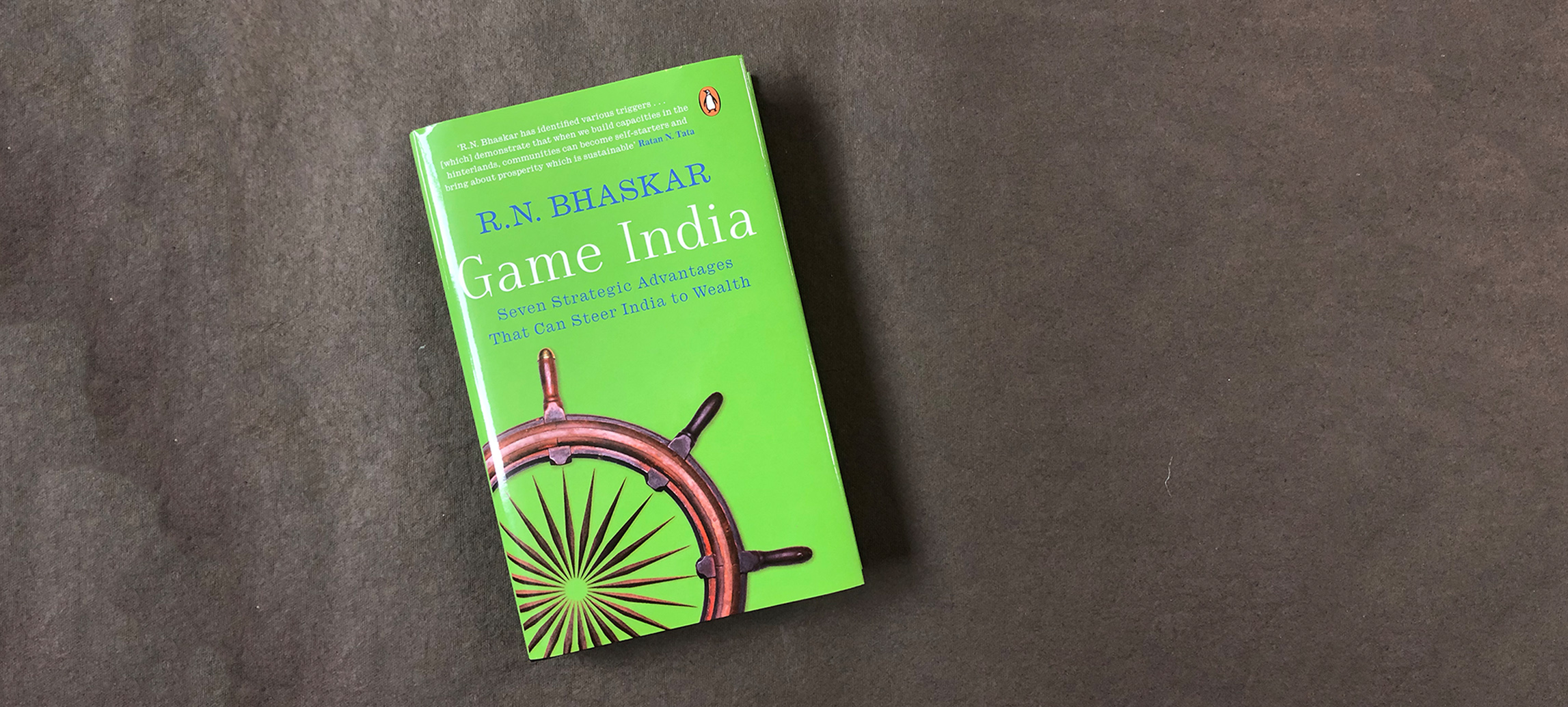
However, the world of Tatas has always fascinated the researcher in me. Not only do they serve every industry—from the seas to the skies (as depicted on the cover page of my book), but also, for fifteen decades, their leadership and management philosophy have balanced the commercial and social imperatives of business. They have distinguished themselves through priorities and processes by evolving and practising an approach that can be referred to as the ‘Tata way of business’, which effectively combines international best practices with Indian values, and blends the capitalist spirit with socialist primacies.

At a time when the world is undergoing serious problems—environmental, social, financial and emotional—corporations, which have been one of the most potent forms of collective effort towards the achievement of focused objectives, can play a major role in contributing to solutions through products, services, processes and practices. In contemporary times, corporations have the opportunity to transition from purely economic and profits-focused entities to those prioritizing value creation for several stakeholders. In the Tata story, I have found a strong resonance to the approach I subscribe to—where profits and social well-being can coexist; where profits are not at the expense of the society, but profits benefit society; where profits are not an end in themselves, but the means to a more noble end.

This book is the third in a series of my research work that explores stakeholder-centric corporate strategies in India Inc. There couldn’t have been a better conglomerate than the Tatas to study this. Moreover, the last major book on the Tata Group ‘Creation of Wealth’ was published by RM Lala in 1992. In the subsequent 25 years, the revenue of the Group has increased 25 times from ₹24,000 crores to ₹650,000 crores of which 67% now comes from outside India. This story had to be told. Hence, I embarked on this ‘monumental work’.

In the book, the reader will find out what makes the Taj one of Asia’s largest group of hotels; why did the Corus acquisition not meet expectation and yet how does Tata Steel rank among the top 10 ten steel-makers in the world; how did Tata Power envision and deliver clean energy a century before that term first become popular; how could Tata Chemicals become the world’s third-largest producer of soda ash; how did Tata Motors turnaround Jaguar Land Rover when even the Ford Motor Company failed to do so and also rank among the world’s top 10 ten commercial vehicle manufacturers; how did Tata Global Beverages beat global competition and emerge as the world’s second-largest tea company; and how come TCS, which was on the verge of being wound-up in 1978 went on to become not only India’s most valued company at $100-billion but also the second largest IT services company in the world. These are some of the most fascinating stories that have been narrated in an engaging manner such that even a lay reader can understand.  

Could you share with our readers a few iconic path breaking findings of the Tata Group that you discovered while working on this book?

I think the greatest path breaking finding has been their financial success story, which is rarely discussed. People believe that Tatas are a good company, but are doubtful of their wealth creation capabilities for their shareholders? Tatas spending ₹2,000 crores every year through their Trusts and CSR investments, and their contribution in the establishment of some of the finest educational, health and cultural institutions don’t impress hard-nosed capitalists. To explore whether Tatas have done well by being good or not, I embarked on a comparison of Tata Group with leading Indian business houses and global conglomerates on the benefits shareholders received by investing in Tata companies. The analysis revealed some eye-opening numbers.

A simple review of shareholder returns across Tata Group showed that over a 26-year horizon (1 April 1992 to 31 March 2018), the Group outperformed the market and other well-known conglomerates in India and abroad. This was particularly important given that the companies analysed had lasted various economic, business and political cycles while they continued to be leaders in their sectors. Given Tatas’ diversity, we identified 16 businesses that best represented the Group’s presence across most sectors and decided to equally divide an investment of ₹100,000 in these businesses. The 16 companies included: Tata Steel, Tata Motors, TCS, Indian Hotels, Tata Power, Tata Chemicals, Tata Communication, Tata Elxsi, Tata Metaliks, Tata Sponge Iron, Tata Investment Corporation, Tata Global Beverages, Titan Company, Trent, Voltas and Rallis. By 2018, the invested ₹100,000 would be worth roughly ₹40-lakhs, nearly quadrupling the same investment in benchmark indices. During the same period, a BSE Sensex investment would be worth ₹10.26 lakhs and the Nifty would be worth ₹10.73 lakhs.

While India witnessed several notable conglomerates over the years that have benefitted shareholders, the Tata Group stood ahead of comparable size companies post-liberalisation. An investment of ₹100,000 in January 2009 equally across the selected Tata companies would be worth ₹998,200 (10x the initial investment) in March 2018. The same would be worth almost 5x and 2.5x in the case of Aditya Birla Group and Reliance Group respectively. The Tata Group also outperformed developed market peers in Asia, America and Europe. Annualized total shareholder returns over a 26-year period from 1 April 1992 to 31 March 2018 for Mitsubishi (Japan) were 5.2%, GE  (USA) were 5.9%, Siemens (Germany) were 10%, Berkshire Hathaway were 14.2% and the Tata Group were 15.2%.

These findings have amazed even Tata insiders who haven’t attempted such a study. I haven’t come across such analyses in any other publication on the Tata Group. I believe this is one of the greatest contributions of my work.

Any interesting anecdotes that you came across while working on this book?

Let me share three – one from the post-liberalisation era, one during the License Raj and another during the British Raj. Through each of them, you will see a common thread of Tata-ness in decision making.When Tata Tea decided to exit from the plantation business in 2000s, and transition to the branded tea and retail business, it wasn’t willing to exit its plantations before a sustainable model of livelihood was chalked out for its plantation workers. For this, Tata Tea had three strategic options. One was an outright sale to another company. This was the option selected by its competitor—Hindustan Unilever (HUL). McLeod Russel India, the world’s largest tea producer, had picked up HUL’s seven tea estates in Assam. Given that Tata Tea’s plantation earnings were in red, the new company would most likely slash wages, shut down social welfare programmes and even relieve thousands of employees. So, Tata Tea decided against it. The second option was to close the plantations. This would again lead to loss of livelihoods for over 13,000 employees working on those plantations, some of whom were third-generation workers. The company ventured for the third option, which involved divesting control to its workforce. It was a first-of-its-kind experiment in the world, at least in the tea plantation business.

Given that plantation workers were no longer Tata employees, but its suppliers, a prudent decision would have been to absolve itself from investments in existing employee welfare programmes. Over the years, Tata Tea had invested substantial amounts in providing health and education facilities to its plantation employees. Logically, with the formation of a new company, the responsibility of managing these should have been transferred to the new management as the quantum of annual investment was nearly ₹20-crores – not a meagre sum. This included a 150-bed secondary care general hospital, a school for employees’ children, and four vocational institutes for workers’ children with disabilities. When this matter was discussed with the then vice chairman of the company, his answer was, ‘Continue, whatever it takes.’ And so Tata Tea continued to spend ₹20-crores every year on the social welfare projects of a company that was now its supplier!

In the late-1980s, Taj Hotels had suspended two employees on charges of theft. Post an enquiry process, the charges were upheld, and their services terminated. They made several appeals, one of which was to J.R.D. Tata, the Tata Group Chairman. On the morning of the day he completed 50 years as chairman of Taj, J.R.D. spent an hour reading the enquiry proceedings and questioning the main witness. He told the concerned Taj manager, ‘I am satisfied that you have been fair. Go ahead and terminate them, but please see if we can do something for their families, especially if they have school going children.’ The octogenarian J.R.D. did not want the kids to suffer because of their fathers’ follies.

In 1922, Tata Steel was on the verge of closure as its profits plummeted thanks to the British Raj’s antithetical reciprocation to Tatas’ magnanimity. The Tatas had supported the British Raj during World War I by fulfilling war-related product requirements instead of more profitable commercial products. However, in the post-war years, the Raj opened up the market leading to low-cost steel dumping from Europe and Asia severely affecting Tata Steel’s profitability. Some investors suggested that Tata Steel be sold off. ‘Over my dead body’, thundered R.D. Tata (father of J.R.D. and one of the four founders of Tata Sons). To salvage his father’s dream and the Tatas’ flagship company, Sir Dorabji Tata (Jamsetji’s son) pledged his personal wealth of ₹1 crore, including his wife’s jewellery and the Jubilee Diamond (twice the size of the Koh-i-noor), and raised a loan from the Imperial Bank of India (now State Bank of India) to pay salaries and remain afloat. This is contrasting to contemporary times when corporate leaders secure pay-rises for themselves when their companies are bailed out through governmental support and tax payers’ munificence – both in India and especially overseas (during the financial crisis of 2008). The likes of Nirav Modi and Vijay Mallya who enjoy luxurious lives while their employees pay a heavy price for their failed businesses have a lot to learn from the Tata way of business. It isn’t limited to the case of Tata Steel in 1922, Jamsetji did the same for the Swadeshi Mills in 1880s and Ratan Tata for Tata Finance in 1990s and Tata Teleservices in 2017.

How intense was the research process for this book?

I have always believed that business books – whether in the genre of trade books or research books, need to be grounded in reality and not just based on individual opinions. In recent times, a lot of opinionated books pass for books on business, management and leadership. I believe, the job of business authors is to provide the readers with several perspectives on the core issue of study, explore and share insights from the existing body of knowledge and finally complement them with the author’s observations. This rigour is rarely seen in contemporary writing. Probably, for that reason, we see authors churning out books almost every year.

I have followed the approach I have just recommended for this book, and even for my previous book, which was also published by Penguin – ‘Win-Win Corporations’. The research and writing process has been very intense. It started a decade ago, when I first started interviewing Tata leaders for my doctoral research in the area of Corporate Stakeholders Management. It continued as I pursued my postdoctoral research on Leadership. By then I had already interviewed nearly 50 Tata leaders across group companies. During my postdoctoral research, I discovered that an opportunity existed to capture the contemporary Tata story through a book. Over the next five years, I interacted with 50 senior leaders and in 2018 began the process of writing the book. I visited Tata factories and offices in Mumbai, Bangalore, Pune and Jamshedpur. I visited Tata Central Archives in Pune, which are a repository of rare and unpublished documents dating back nearly 100 years. The Tata Steel Archives in Jamshedpur were an equally useful treasure of unknown facts and material going back to early 1900s.

As a trained management researcher, I reviewed national and international publications – journals, magazines and newspapers from India and overseas, especially USA and UK, where the Tata Group has a substantial presence. Another interesting fact is that The Tata Group is the most studied conglomerate at global business schools. I referred to nearly 100 case studies on various Tata Group companies published by Harvard, Stanford, INSEAD, Darden, IIMs and several other leading business school publishing houses. For quantitative analysis, I accessed rare statistics and trends on the performance of Tata companies form the 1940s to the current times. You will find in the book analysis of the kind that isn’t available even with the Tata Group themselves. In my recent interactions, some of the Tata insiders confided that they will be using my analysis in many of their presentations! Such interest and appreciation makes my research a very fulfilling exercise.  

I believe the book has the rigour of another doctoral research project. It isn’t a hagiography. The Tatas have their share of mistakes, misjudgements and missed opportunities, which have been elaborated by me. The book has triangulated perspectives and presented successes, failures, learnings and implementable approaches on India’s largest conglomerate. And all this, in a very readable and simple story-like style. I believe the real success of writing a simple business book is when your homemaker mother or grandmother can enjoy reading it. That’s ‘The Tata Group’ book for you!


The Tata Group decodes the Tata way of business, making it an exceptional blend of a business biography and management classic.


Martyrdom

Gandhi lived one of the great 20th-century lives. He inspired and enraged, challenged and delighted millions of men and women around the world. He lived almost entirely in the shadow of the British Raj, which for much of his life seemed a permanent fact, but which he did more than anyone else to bring down.

In a world defined by violence and warfare and by fascist and communist dictatorships, he was armed with nothing more than his arguments and example. While fighting for national freedom, he also attacked caste and gender hierarchies, and fought (and died) for inter-religious harmony.

Here is an excerpt from the chapter title Martyrdom from Ramachandra Guha’s book, Gandhi: The Years that Changed the World 1914-48.


When he broke his fast on 18 January, Gandhi told those who had signed the pledge presented to him that while it bound them to keep the peace in Delhi, this did not mean that ‘whatever happens outside Delhi will be no concern of yours’. The atmosphere that prevailed in the capital must prevail in the nation too.

That same evening, Jawaharlal Nehru addressed a large public meeting at Subzi Mandi, where he remarked that ‘there is only one frail old man in our country who has all along stuck to the right path. We had all, some time or the other, strayed away from his path. In order to make us realize our mistakes he undertook this great ordeal.’ Congratulating the people of Delhi for taking the pledge to restore communal harmony, Nehru said the next step was to ensure peace ‘not merely in Delhi but in the whole of India’.

Later that evening, a group of Muslims returned to Subzi Mandi, where they ‘were given a hearty welcome in the vegetable market where they [had] felt somewhat insecure’.

Monday the 19th was a day of silence for Gandhi. He spent it attending to his correspondence and writing articles for Harijan. In their daily report, the doctors attending on him said: ‘There is considerable weakness still. There are signs of improvement in his kidneys. The diet is being slowly worked up. He is still on liquids.’

Also on the 19th, the general secretary of the Hindu Mahasabha issued a statement saying that while they were relieved that Gandhi was out of danger, the Mahasabha had not signed the peace pledge, since ‘the response to his fast has been wholly one-sided, the Pakistan Government still persisting in its attitude of truculence . . . The net result of the fast has been the weakening of the Hindu front and strengthening of the Pakistan Government.’ The statement went on: ‘What we oppose is the basic policy of Mahatma Gandhi and the followers of his way of thinking that whatever might be done to the Hindus of Pakistan, Muslim minorities in India must be treated equally with other minorities. This is a policy that the Hindu Mahasabha can never accept . . .’

At his prayer meeting on the 20th, Gandhi said he hoped to go to Pakistan, but only if the government there had no objection to his coming, and only when he had regained his strength. As he was speaking, there was a loud explosion. This scared Manu Gandhi, sitting next to him, as well as members of the audience. Gandhi, however, was unruffled. After the noise died down, he continued his speech.

The explosion was the sound of a bomb going off behind the servants quarters of Birla House, some 200 feet from the prayer meeting. Inquiries revealed that a group of men had come earlier in the evening in a green car and ‘moved around in a suspicious manner’. After the explosion, watchmen arrived on the scene, and apprehended a young man who had a hand grenade. His accomplices had meanwhile fled. The man, named Madan Lal Pahwa—who was ‘well dressed, of fair complexion and of medium height’—said he was opposed to Gandhi’s peace campaign since he ‘had lost everything he had in West Punjab’. A refugee from Montgomery district, he was living in a mosque in Paharganj from where he had just been evicted (as it had been restored to the Muslims).

On hearing of the incident, Nehru came to Birla House, met Gandhi and also discussed the matter with the police.


This magnificent book, now available as an e-book, tells the story of Gandhi’s life from his departure from South Africa to his dramatic assassination in 1948.

For Abba with Love – from Shabana Azmi

Kaifi Azmi’s literary legacy remains a bright star in the firmament of Urdu poetry. His poetic temperament-ranging from timeless lyrics in films like Kagaz Ke Phool to soaring revolutionary verses that denounced tyranny-seamlessly combined the radical and the progressive with the lyrical and the romantic.

Kaifiyat, a scintillating new translation of his poems and lyrics that reflect Kaifi’s views on women and romance is accompanied by an illuminating introduction by Rakhshanda Jalil on Kaifi Azmi’s life and legacy, as well as a moving foreword by his daughter Shabana Azmi.

Here is an excerpt from the foreword.


Early 1990s

He was always different, a fact that didn’t sit too easily on my young shoulders. He didn’t go to ‘office’ or wear the normal trousers and shirt like other ‘respectable’ fathers but chose to wear a white cotton kurta-pyjama twenty-four hours of the day. He did not speak English and, worse still, I didn’t call him ‘Daddy’ like other children, but some strange-sounding ‘Abba’! I learned very quickly to avoid referring to him in front of my classmates and lied that he did some vague ‘business’! Imagine letting my school friends know that he was a poet. What on earth did that mean—a euphemism for someone who did no work?

Being my parent’s child was, for me, unconventional in every way. My school required that both parents speak English. Since neither Abba nor Mummy did, I faked my entry into school. Sultana Jafri, Sardar Jafri’s wife, pretended to be my mother and Munish Narayan Saxena, a friend of Abba’s, pretended to be my father. Once in the tenth standard, the vice principal called me and said that she’d heard my father at a recent mushaira and he looked quite different from the gentleman who had come in the morning for Parents’ Day! Understandably, I went completely blue in the face and said: ‘Oh he’s been suffering from typhoid and has lost a lot of weight, you know’ . . . and made up some sort of story to save my skin!

It was no longer possible to keep Abba in the closet. He had started writing lyrics for films and one day a friend of mine said that her father had read my father’s name in the newspaper. That did it! I owned him up at once! Of all the forty children in my class, only my father’s name had appeared in the newspaper! I perceived his being ‘different’ as a virtue for the first time. I need no longer feel apologetic about his wearing a kurta-pyjama! In fact, I even brought out the black doll he had bought me. I didn’t want it when he first gave it to me. I wanted a blonde doll with blue eyes, like all the others had in my class. But he explained, in that quiet gentle way of his, that black was beautiful too and I must learn to be proud of my doll. It didn’t make sense to my seven-year-old mind but I had accepted him as ‘weird’ in any case and so I quietly hid the doll. Three years later, I pulled it out as proof that I was a ‘different’ daughter of a ‘different’ father! In fact, I now displayed it with such newfound confidence that instead of being sniggered at by my classmates, I became an object of envy. That was the first lesson he taught me, of turning what is perceived as a disadvantage into a scoring point.

When I opened my eyes to the world, the first colour I saw was red. Till I was nine years old we lived at Red Flag Hall, a commune-like flat of the Communist Party of India (CPI). A huge red flag used to greet visitors at the entrance. It was only later that I realized red was the colour of the worker, of revolution. Each comrade’s family had just one room; the bathroom and lavatory was common. Being party members had redefined the husband–wife relationship of the whole group. Most wives were working and it became the responsibility of whichever parent was at home to look after the child. My mother was touring quite a lot with Prithvi Theatre and in her absence Abba would feed, bathe and look after both my brother Baba and me, as a matter of course.

In the beginning, Mummy had to take up a job because all the money Abba earned was handed over to the party. He was allowed to keep only Rs 40 per month which was hardly enough for a family of four. But later when we were monetarily better off and had moved to Janki Kutir, Mummy continued to work in the theatre because she loved being an actor. Once, she was to participate in the Maharashtra State Competition in the title role of Pagli. She was completely consumed by the part and would suddenly, without warning, launch into her lines in front of the dhobi, cook, etc. I was convinced she’d gone mad and started weeping with fright. Abba dropped his work and took me for a long walk on the beach. He explained that Mummy had very little time to rehearse her part and that as family it was our duty to make it possible for her to rehearse her lines as many times as she needed to or else she wouldn’t win the competition—all this to a nine-year-old child. It made me feel very adult and very included. To this day, whenever my mother is acting in a new play or new film, my father sits up with her and rehearses her cues.

She participates in his life equally; at a price of course! She fell in love with him because he was a poet. However, she learned soon enough that a poet is essentially a man of the people and she would have to share him with his countless admirers (a large number of them female!) and friends. When I was about nine years old, I remember an evening at a big industrialist’s home. His wife, a typical socialite, announced in a rather flirtatious manner, ‘Kaifi Saheb, my usual farmaish, the “Do Nigahon Ka” something something . . . You know, folks, Kaifi Saheb has written this nazm in praise of me.’ And Abba, without batting an eyelid, started reciting this poem which was in fact written for my mother. I was outraged and started screaming that the poem was written for my mother and not for this stupid woman. A deathly silence prevailed and my mother said, ‘Hush, child, hush,’ but I am sure unke dil mein laddoo phoot rahe thay! Mummy took me into a corner and said that I wasn’t to take such things to heart—after all, ‘Abba’ was a poet and such were his ways—he didn’t seriously mean that the poem was written for this lady, etc. I would hear nothing of it. Needless to say, that was a poem Kaifi Azmi could never use again and that woman still hates me!

Amongst his female friends Begum Akhtar was my favourite. She would sometimes stay with us as a houseguest. In fact, Josh Malihabadi, Firaq Gorakhpuri and Faiz Ahmed Faiz would stay with us too despite there being no separate guestroom, not even an attached bathroom. Luxury was never the central concern of these artists; they preferred the warmth of our tiny home to the five-star comforts available to them. I was fascinated by the mehfils at home. I would sit up in rapt attention, not even half understanding what they recited, but excited nevertheless. Their beautiful words fell like music on my young ears. I found the atmosphere fascinating—the steady flow of conversation, the tinkering of glasses, the smoke-filled room. I was never rushed off to bed; in fact I was encouraged to hang around, provided I took the responsibility for getting up in time for school the next day. It made me feel very grown-up and included.


This beautifully curated volume brings together poems and lyrics that reflect Kaifi’s views on women and romance

Ten Things To Learn From ‘The 108 Upanishads’

Roshen Dalal in her book The 108 Upanishads presents a thoroughly researched analysis of the revered philosophical texts, the 108 Upanishads, that form a part of the Vedas. These texts contain the concentrated wisdom extracted from Hinduism over the centuries. Roshen Dalal’s explanations of the core concepts of each Upanishads and her scholarly insights regarding them, makes for one of the most informative reads.

Here we provide some words of wisdom taken from these Upanishads:


In the Katha Upanishad, Yama teaches Nachiketa the concept of the atman. In order to attain a tranquil state of life and transcend death one needs to realize the atman. Yama says that the atman is the master of the chariot which is the body. It is in all living beings and is eternal. Atman is devoid of sound, touch, taste or smell, and never decays. It is only when one realizes that that one can transcend death.

In the Katha Upanishad, Yama explains to Nachiketa the difference between the wise Soul and a fool, saying that a wise Soul would always choose the good, whereas the fool would choose what seems pleasant not thinking of the future. Hence the fool is far away from realizing the atman.

In the Isha Upanishad, verses 9-11 state that neither ignorance nor knowledge lead to the Truth. Avidya (ignorance) and vidya (worldly knowledge), both prove to be inadequate and it is only when one transcends both that one can attain immortality.

In the Isha Upanishad, verses 12-14 explain how both becoming and non-becoming are refutable. It is only when one succeeds in transcending both that the supreme is reachable.

Along with dealing with the unity of god and the world, the Isha Upanishad also talks about the unity of the paths of action and contemplation in one’s life.

In the Prashna Upanishad, a rishi named Pippalada preaches that meditating on even a single letter of Om has many benefits. Meditating on all four syllables of Om together would result in the highest reality.

The Mandukya Upanishad elaborates on the concept of Brahman or the Absolute and the sacred word Om, which also represents Brahman. It further goes on to say that everything is Brahman, including the atman or Self.

It is also stated in the Mandukya Upanishad that just like the objects in a dream are unreal, so are the objects in the waking state too. It is because the atma imagines these objects through its own maya. Thus, the highest truth is the total unreality of the world.

The Adhyatma Upanishad states that Brahman is beyond any conception of beginning and end, actions and all worldly forces. It further says that one should perpetually focus on Brahman and meditate on the true Self withinone’s self. Hence, one should not be attached to the world or identify with the body or the senses.

In the Annapurna Upanishad, Ribhu, a knower of Brahman tells Nidagha how to attain the knowledge of Reality. In order to attain this one should renounce life and make one’s mind detached. A person might or might not act in the worldbut the knower of true reality, can never be an agent or an experiencer of the world.


The 108 Upanishads is a thoroughly researched primer on the Upanishads, philosophical treatises that form a part of the Vedas, the revered Hindu texts.

Meet Upendranath Ashk, The Author of ‘In The City, A Mirror Wandering’

Unfolding over the course of a single day, Upendranath Ashk’s sweeping novel, In The City, A Mirror Wandering explores the inner struggles of Chetan, an aspiring young writer, as he roams the labyrinthine streets of 1930s’ Jalandhar, haunted by his thwarted ambitions but intent on fulfilling his dreams.

Here are a few things about the about the man behind this wondrous book:


Upendranath Ashk (1910-1996), was one of Hindi literature’s best known and most controversial authors.

Ashk was born in Jalandhar and spent the early part of his writing career as an Urdu author in Lahore.

Encouraged by Premchand, he switched to Hindi, and a few years before Partition, moved to Bombay, Delhi and finally Allahabad in 1948, where he spent the rest of his life.

 By the time of his death, Ashk’s phenomenally large oeuvre spanned over a hundred volumes of fiction, poetry, memoir, criticism and translation.

Ashk was extremely vocal about taking on his critics, and he had a tumultuous association with many of his fellow writers—most notably his friend and rival Saadat Hasan Manto, about whom he penned a wry and celebrated memoir Manto Mera Dushman (or ‘Manto, My Enemy).

Ashk is perhaps best known for his six-volume novel cycle, Girti Divarein, or Falling Walls—an intensely detailed chronicle of the travails of a young Punjabi man attempting to become a writer-which has earned the author comparisons to Marcel Proust.

Ashk was the recipient of numerous prizes and awards during his lifetime for his masterful portrayal, by turns humorous and remarkably profound, of the everyday lives of ordinary people.


Intensely poignant and vividly evocative, In the City a Mirror Wandering is the second novel in the Falling Walls series but stands on its own strength. It is a poignant exploration of not only a dynamic, bustling city but also the rich tapestry of human emotion that consumes us all.

Emergency Chronicles – an excerpt

As the world once again confronts an eruption of authoritarianism, Gyan Prakash’s Emergency Chronicles takes us back to the moment of India’s independence to offer a comprehensive historical account of Indira Gandhi’s Emergency of 1975-77. Stripping away the myth that this was a sudden event brought on solely by the Prime Minister’s desire to cling to power, it argues that the Emergency was as much Indira’s doing as it was the product of Indian democracy’s troubled relationship with popular politics, and a turning point in its history.

Here is an excerpt from the prologue of his book.


On the recommendation of Prime Minister Indira Gandhi, the president of India declared a state of Emergency just before midnight on June 25, 1975, claiming the existence of a threat to the internal security of the nation. The declaration suspended the constitutional rights of free speech and assembly, imposed censorship on the press, limited the power of the judiciary to review the executive’s actions, and ordered the arrest of opposition leaders. Before dawn broke, the police swooped down on the government’s opponents. Among those arrested was seventy- two- year- old Gandhian socialist Jayaprakash Narayan. Popularly known as JP, Narayan was widely respected as a freedom fighter against British rule and had once been a close associate of Indira’s father, Jawaharlal Nehru. In 1973, JP had come out of political retirement to lead a student and youth upsurge against Indira’s rule. Although most opposition political parties supported and joined his effort to unseat Indira, JP denied that his goal was narrowly political. He claimed his fight was for a fundamental social and political transformation to extend democracy, for what he called Total Revolution. JP addressed mass rallies of hundreds of thousands in the months preceding the imposition of the Emergency, charging Indira’s Congress party government with corruption and corroding democratic governance.

was reminded of the JP- led popular upsurge in August 2011, when I saw a crowd of tens of thousands brave the searing Delhi heat to gather in the Ramlila Maidan, a large ground customarily used for holding religious events and political rallies. Young and old, but mostly young, they came from all over the city and beyond in response to a call by the anti- corruption movement led by another Gandhian activist, seventy- four- yearold Anna Hazare. The atmosphere in the Maidan was festive, the air charged with raw energy and expectations of change. The trigger for the anti- corruption movement was the scandal that broke in 2010 alleging that ministers and officials of the ruling Congress party government had granted favors to telecom business interests, costing the exchequer billions of dollars. Widely reported in newspapers, on television, and on social media, the alleged scam rocked the country. It struck a chord with the experiences of ordinary Indians whose interactions with officialdom forced them to pay bribes for such routine matters as obtaining a driving license, receiving entitled welfare subsidies, or even just getting birth and death certificates. Venality at the top appeared to encapsulate the rot in the system that forced the common people to practice dishonesty and deceit in their daily lives. Into this prevailing atmosphere of disgust with the political system stepped Anna Hazare. Previously known for his activism in local struggles, he shot into the national limelight as an anti- corruption apostle when he went on a hunger strike in April 2011 to demand the appointment of a constitutionally protected ombudsman who would prosecute corrupt politicians. His fast sparked nationwide protests, giving birth to the anti- corruption movement. An unnerved Congress government capitulated, but the weak legislation it proposed did not satisfy Hazare, who announced another fast in protest. The hundreds of thousands who gathered in August 2011 had come to show their support for his call to cleanse democracy. When the diminutive Hazare appeared on the raised platform, a roar of approval rent the air.

Meanwhile, as the newspapers and television channels reported, the ruling Congress leaders fretted nervously in their offices and bungalows, uncertain how to respond to something without a clear political script. In a reprise of 1975, it was again a Gandhian who was shaking the government to its core with his powerful anti- corruption movement, arguing that the formal protocols of liberal democracy had to bend to the people’s will. And like his Gandhian predecessor Jayaprakash Narayan, Hazare enjoyed great moral prestige as a social worker without political ambitions. Similar to the 2010 Arab Spring and the Occupy movements, there was something organic about the 2011 popular upsurge in India. The enthusiastic participants demanding to be heard were mostly young and without affiliation to organized political parties. The Tahrir Square uprising ended the Mubarak regime; the Occupy movement introduced the language of the 99 versus 1 percent in political discourse; and the Congress government in India never recovered from the stigma of corruption foisted on it by the Anna Hazare movement, leading to its defeat in the 2014 parliamentary elections.

Since then, the populist politics of ressentiment has convulsed the world. In India, the Narendra Modi– led Bharatiya Janata Party (BJP) devised a clever electoral campaign that used the “development” slogan while stoking Hindu majoritarian resentments against minorities to ride to power in 2014.1 We have witnessed anti- immigrant and Islamophobic sentiments whipped up in the successful Brexit campaign and Donald Trump’s victory in the 2016 U.S. presidential election. Across Europe, a roiling backlash against refugees has reshaped the political landscape. The role of conventional political parties as gatekeepers of liberal democracy in Germany, France, Italy, and several other countries is in crisis under the pressure of majoritarian sentiments. Strongmen like Victor Orbán in Hungary, Recep Erdoğan in Turkey, and Rodrigo Dutarte in the Philippines have mobilized populist anger as a strategy of rule. They incite pent- up anger and a sense of humiliation to fuel rightwing nationalist insurgencies against groups depicted as enemies of “the people” to shore up their authoritarian power and suppress dissent.


In Emergency Chronicles, Gyan Prakash delves into the chronicles of the preceding years to reveal how the fine balance between state power and civil rights was upset by the unfulfilled promise of democratic transformation.

A Translator’s Perspective Of ‘In The City, A Mirror Wandering’: Ashk and I

Unfolding over the course of a single day, Ashk’s sweeping sequel to Falling Walls, In The City a Mirror Wandering explores the inner struggles of Chetan, an aspiring young writer, as he roams the labyrinthine streets of 1930s’ Jalandhar, haunted by his thwarted ambitions but intent on fulfilling his dreams.

Here is an evocative understanding of the author from the eyes of the translator, Daisy Rockwell:


“Part of the richness of In the City a Mirror Wandering lies in the sheer number of poems, folk sayings and songs quoted throughout the text. Some of these quotations are from famous texts and will be readily recognized even by readers of the English version, and some are not.

Among the famous quotations, several contain errors. Where I and other readers have identified these, I’ve added translator’s footnotes, giving the correct version of the text, especially if it was from another language (Sanskrit) or from a famous line of Urdu poetry that we retained in the translation.But why did Ashk include so many errors in his text? Was it because he had no internet, or relied on faulty recollections of famous poems?

Was he sloppy and did he not check his work? Having researched his files years ago, I am inclined towards a different explanation. What I found then was that Ashk was a compulsive editor. If an article was written about him in a newspaper or journal, he’d clip it out and mark it up, as though he were the author himself. This was not so much to make something appear more favourable or flattering, but rather to correct what he perceived as flaws in style or grammar. He would then have these documents retyped and placed in the file alongside the originals, drawing upon them for the purpose of blurbs or further quotation in writing about critical responses to his own work.”


Intensely poignant and vividly evocative, In the City a Mirror Wandering is an exploration of not only a dynamic, bustling city but also the rich tapestry of human emotion that consumes us all.


What if the Characters in the Ramayana could tell you their own Stories?

Countless retellings, translations, and reworkings of the Ramayana’s captivating story exist-but none are as vivid, ingenious and powerful as Amit Majmudar’s Sitayana. Majmudar tells the story of one of the world’s most popular epics through multiple perspectives, presented in rapid sequence-from Hanuman and Ravana, down to even the squirrel helping Rama’s army build the bridge, and the medicinal herb Sanjeevani.

Read on to hear from six unusual voices in the Sitayana

 Sita

The daughter of Janaka, the girl who played horsey with Shiva’s own Bow. Daughter of the Earth, found in a furrow. Her fear response never developed properly. That Indian princess-in-exile. Resilient.

“‘You know what the poets call Agni, don’t you? They always refer to it by epithets: “Purifier” and “Bearer Away”. It’s really the same epithet. What the fire “bears away” are impurities. That’s why goldsmiths use fire to test gold. When Agni encounters you, Sita, what can he get a hold of? What can he carry off? He can’t purify what’s purer than he is. You don’t burn, my love, because the Fire finds nothing to burn away”


Hanuman

Vanara. Half wind on his father’s side. No one size or strength by nature. A most metaphysical monkey.


Vibhishana

God’s spy in Ravana’s court. Saboteur in waiting. Brahmin-Rakshasa hybrid. Least monster and most priest. Has an ‘unnatural proclivity for poetry.’

“It was never this way when I was a boy and my stepbrother Kubera was king. He used that aerial chariot to survey the streets for litter each morning, and come nightfall, he patrolled personally for window vandals. Lanka was a much smaller city then, and its epithet ‘golden’ came from the purity of its coinage, not its building materials. Today, our dominant trait is cruelty.”


Indrajit

Firstborn son of Ravana and Queen Mandodari. Formerly known as Meghnad. Warrior who defeated Indra. Next in line for the throne of Lanka.

“Imagine if I’d been one of only four or five sons, coddled and praised and known by name—what an underachiever I would be today! Instead of someone who defeated Indra, chief of the Gods, in one on-one combat. I would still be ‘Meghnad’, which was my birth name, instead of Indrajit. My father gave me that name after I got home from the battle, my head bandaged, my armour so dented it looked like foil crumpled and flattened back out.”


Ravana

Half demon-half Rakshasa hybrid. The ten-headed one—the long-nosed philosopher, the one-eyed soldier, the wavy-maned lover, the square-jawed alpha, the messy-haired poet, the shifty-eyed gambler, the moustached actor, and the thin-lipped sociopath.

“If you think my ten heads are evil, wait till you see what’s coming—the thousand-headed bureaucracies of murder and the murderous million-armed street mobs. What are you trying to accomplish, with all your milquetoast goodness? The age of pious sons and faithful husbands is over. The future is one long dark age until the dancing Ascetic stomps it all flat in his sphere of fire.”


Mandodari

First Queen of Lanka. Ageing wife. Mother of Indrajit and Akshaye. Has pride of place in the household, but is humiliated in her absence by mistress after mistress.

“He will show me his true form again and love me with it. He will be once again what he always was. Temporarily eternally mine.”


Sanjeevani

Green medicinal herb, seven fronds—small pods. All green. Was as common as grass a yuga ago. Now only found on Mount Rishab.

“‘I’m sorry,’ said Vishnu to us plants, ‘but all those several eloquent tongues of yours, always gossiping and poetizing, are going to go still and limp. They’ll be called petals and leaves from now on, and that is that. If the world is getting nastier for the human beings and the animals they’re going to start eating soon, it’s only fair I inflict something on you, too.’”


Countless retellings, translations, and reworkings of the Ramayana’s captivating story exist-but none are as vivid, ingenious and powerful as Amit Majmudar’s Sitayana.

Ustad Ghulam Mustafa Khan’s 10 Favourite Songs

Ustad Ghulam Mustafa Khan is a traditional Hindustani classical vocalist belonging to the illustrious Rampur Sahaswan Gharana, which owes allegiance to the seniya tradition.

Performing since he was eight years old, his career spans over a period of seventy-five years. He has always believed in giving back to the society, be it by identifying and nurturing some of the best musicians in India or mesmerizing the nation through music.

Here is a list of his favourite songs.

Aj hun aaye baalma saawan beeta jaaye by Mohammad Rafi

~

Saathi re bhool na jaana mera pyar by Ravindra Jain Asha Bhosle

~

Yaad piya ki aaye  by Bade Ghulam Ali Khan

~

Piya Haji Ali by A. R. Rahman

~

Jhula Kinne daala re by Shahida Khan

~

Abhi mujh mein kahin by Sonu Nigam

~

Tu hi re by Hariharan and Kavita Krishnamurthy

~

Behti Hawa sa tha woh by  Shaan, Shantanu Moitra

~

Ka karu sajni aaye na baalam by K. J. Yesudas


A Dream I Lived Alone is a heart-warming story of love, riyaz, dedication and the maestro of music, Ustad Ghulam Mustafa Khan.

error: Content is protected !!