Publish with Us

Follow Penguin

Follow Penguinsters

Follow Penguin Swadesh

Our Favourite Love-Movie Quotes!

There’s something absolutely lovely about love stories, whether it’s their heart-warming storylines, their ability to entertain us, or their relatable characters.  They almost always give us a new standard of love for ourselves and we can’t but help share and re-share the best quotes from them.

With this spirit, we’ve partnered with Romedy Now to bring to you, some of our favourite movie quotes. Which are your favourites?


“Look Elliot, I’m gonna let you in on a little secret. The whole good and evil thing, you know, Him and me, it really comes down to you. You don’t have to look very hard for Heaven and Hell. They’re right here on Earth.”

Bedazzled

~

“Sometimes in life there really are bonds formed that can never be broken. Sometimes you really can find that one person who will stand by you no matter what. Maybe you’ll find it in a spouse and celebrate it with your dream wedding.”

Bride Wars

~

“You play to your strengths, pal. That’s all any of us can do.”

Crazy, Stupid, Love

~

“You meet thousands of people and none of them really touch you. And then you meet one person and your life is changed… forever.”

Love and Other Drugs

~

“You’re not leaving, you’re running. What I can’t figure out is, are you running towards something you want, or are you running away from something you’re afraid to want?”

Maid in Manhattan

~

“You define every law of nature I’ve ever known.”

Sweet November

~

“Being in love means being yourself.”

What’s Your Number?

~

“Let me just say there was a man sitting in the elevator with me who knew exactly what he wanted, and I found myself wishing I were as lucky as he.”

You’ve Got Mail

~

“Most people know that their first love won’t be their only love. But for me, you’re both.”

Every Day

~

“Love, it never dies. It never goes away, it never fades, so long as you hang on to it. Love can make you immortal”

If I Stay

~

“I vow to help you love life, to always hold you with tenderness, to have the patience that love demands, to speak when words are needed, and to share the silence when they are not, to agree to disagree about red velvet cake, to live within the warmth of your heart, and always call it home.”

The Vow

~

“Every day was exactly the same, until Olly.”

Everthing, Everything

~

 “Suddenly, I knew what I had to do. Love isn’t about ridiculous little words. Love is about grand gestures. Love is about airplanes pulling banners over stadiums, proposals on jumbo-trons, giant words in sky writing. Love is about going that extra mile even if it hurts, letting it all hang out there. Love is about finding courage inside of you that you didn’t even know was there.”

Little Manhattan 


Photo by Brigitte Tohm on Unsplash

Books To Read this March!

March is here and along with it come some titles that promise to be informative, enlightening and also, fun! Take a look at what we have in store for you, this March!

The Great Disappointment

With the biggest political mandate in almost three decades, did the NDA government succeed in transforming India’s economic trajectory for the better? Or, has its economic performance been a ‘great disappointment’? The book conjectures it is the latter, and analyses why this is so.


Beast

Aditi and Prithvi race through the dark underbelly of Mumbai-from quiet suburbs to gritty brothels, from forgotten colonial tunnels to the lights and glamour of the inner city-in search of a dangerous truth.

In search of a monster.


Leader’s Block

‘Leader’s block’ is a phase where leaders feel demotivated and unengaged. These are the same leaders who at one point found their work stimulating and exciting. Over several candid interviews, senior professionals reveal why they felt this way and the circumstances that caused it. Ritu G. Mehrish uncovers the reasons behind this feeling and the antidote to this malady.

Identify when you are getting into the ‘leader’s block’ and learn how to break out of it!


The Reluctant Family Man: Shiva in Everyday Life

In The Reluctant Family Man, Nilima Chitgopekar uses the life and personality of Shiva-his self-awareness, his marriage, his balance, his detachment, his contentment-to derive lessons that readers can practically apply to their own lives.With chapters broken down into distinct frames of analysis, she defines concepts of Shaivism and interprets their application in everyday life.


A Tale of Wonder: Kathakautukam

A biblical story travels across regions and time-ultimately reaching medieval India where it is transformed by Shaivite overtones. The result is an exquisite epic love poem of love which also attests to the rich diversity of India’s cultural past.

Magnificent in its simple elegance, A Tale of Wonder is a timeless story that challenges the insidious notion that India has always been dominated by one faith only and insular to other cultural and religious influences.


Besharam

Besharam is a book on young Indian women and how to be one, written from the author’s personal experience in several countries. It dissects the many things that were never explained to us and the immense expectations placed on us. It breaks down the taboos around sex and love and dating in a world that’s changing with extraordinary rapidity.


The Children of Destruction

For Alice, life as a teenager is hard enough without turning into a supernatural herald of destruction. And you would think that after causing minor hurricanes with a major sneeze, being visited by a talking fox and ending up on a journey with death around every corner, things can’t get much worse.

Wrong.

They can.


Four Sectors that India Should Be Looking At to Become a Game Changer at a Global Stage

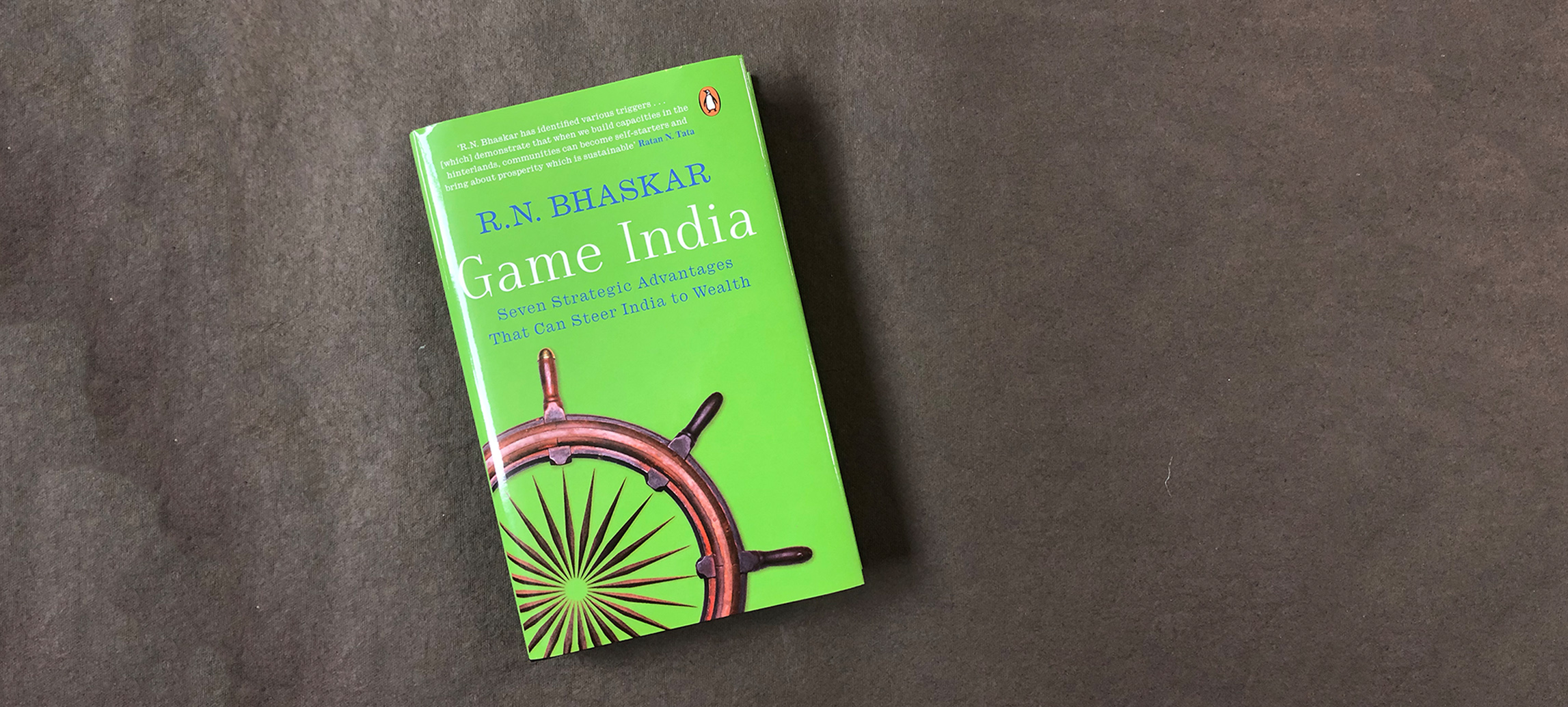
India may widely be acknowledged as one of the fastest-growing major economies in the world, but how can this vast, diverse and heavily populated nation sustain growth prospects? Game India offers a decisive answer.

Through chapters, at once ambitious and engaging, it outlines seven key unrealized opportunities India can pursue to remain a leading player on the world economic superhighway.

Here are some crucial highlights from the book:

Dairy Sector:

Milk production in India is increasing at a compounded annual growth rate (CAGR) of 5 per cent compared to 1 per cent for the world. Many global research companies have said that the growth of milk production in India is only 4.5 per cent and that demand is outstripping supply. But the truth is quite the opposite. It would appear that many of these stories are aimed at creating a scare among India’s policymakers so that they allow milk imports, even without canalizing it through the NDDB. Fortunately, thanks to the efforts of India’s large milk players, and some savvy policymakers, such stories have been discounted.

Small and Medium Enterprise (SME) Sector:

 All the data collected so far confirm that in India it is the small units that generate more profit and even account for a bulk of employment (see chart on results of census of micro, small and medium enterprises). As the numbers indicate, almost 95.7 per cent of the units in India are from the unregistered sector. These units account for almost 88 per cent of the jobs in the country. What is also impressive is that these units often borrow from informal sources—often at interest rates ranging from 24 per cent to 36 per cent per annum—and still generate profits. These units are often referred to as the micro, small and medium sector enterprises (MSME).

Manpower Export:

It is quite possible that manpower exports will become one of the strategies India will pursue in its quest for global leadership. This is because there is a great likelihood of India, China and Russia becoming the most important players in the world. Should they care to work together, the global axis itself will veer towards these three countries. The numbers suggest that such an alignment may not be totally irrational.

Water and coastlines:

 India has a tremendous advantage because of its 7500-km long coastline. This benefit alone could push up India’s GDP by 1 to 2 per cent year after year, improve its coastal security and create employment for countless millions.


Game India is essential reading for every Indian looking ahead.

Stranger Things: Suspicious Minds – An Excerpt

A mysterious lab. A sinister scientist. A secret history. If you think you know the truth behind Eleven’s mother, prepare to have your mind turned Upside Down in this thrilling prequel to the hit show Stranger Things.

It’s the summer of 1969, and the shock of conflict reverberates through the youth of America, both at home and abroad. As a student at a quiet college campus in the heartland of Indiana, Terry Ives couldn’t be farther from the front lines of Vietnam or the incendiary protests in Washington.

But the world is changing, and Terry isn’t content to watch from the sidelines.

Here is an exclusive excerpt from the book:


Dr. Martin Brenner wished he could see inside the minds of the subjects. No messy conversation to extract what they might or might not have seen, how effective the hypnotic tech­niques had been. No unreliable witnesses of their own experi­ence.

No lies unless he told them.

The young woman in front of him, Theresa Ives, had piqued his curiosity. Rare enough these days, especially in adult sub­jects. The way she’d sensed an opportunity and shown up sug­gested potential – hers would not be an easy mind to crack. The challenge would make their findings more meaningful. She didn’t seem afraid of him. He approved of that quality… at least when it wasn’t in a young charge who didn’t know how to take no for an answer.

“Better?” he asked as she sipped the water his aide had pro­vided.

She nodded and handed the glass back, smoothing soaked hair away from a cheek shiny with moisture. Tears and sweat both. Extremely susceptible to the drug cocktail, by all appearances.

“On a scale of one to ten, how strongly do you feel you’re still experiencing the effects of the medicine?”

Her eyes were clear for the answer she gave. “Eight.”

“Can you tell me what you saw?” he asked, keeping his voice kind.

A hesitation. But a brief one. “My parents’ funeral. In the church before it.”

“Yes, good. Do you remember anything else significant? How do you feel emotionally?”

She adjusted the hospital gown to more fully cover her legs. “I feel…” she hesitated. “Lighter somehow. Does that make sense?”

Brenner nodded. He’d taken a great pain from her, locked it away. She’d feel much lighter. The first stage to creating a mind susceptible to greater manipulations. And he’d have a tool to use for leverage in the future if he needed it. The key was to make sure she wasn’t aware of the change until then.

“And you don’t know why?”

“No.” She eyed him nervously. “Can I ask you something?”

He nodded again. “Of course.”

“What’s the purpose of this? Is it as important as I think? What do you want me to say?”

Before he could formulate a response to her three questions, she surprised him by shaking her head and giving a dry husk of a laugh. “Never mind, I’m sure that would violate the experiment rules. Like us talking on the way over here.”

“What do you mean?”

“He told us not to talk about the experiment.”

He looked at his aide, who studied the floor. That hadn’t been any direction of his. As long as the man took careful note of what was said, the participants could say anything and everything that popped into their minds.

“You should talk about whatever you want on the drive,” he said.

The aide nodded acknowledgment but didn’t look at him.

“Did you experience anything else of note in your trance state?” Dr. Brenner asked.

Terry heaved a breath. “All kinds of crazy shit. I’m so tired. I’ve never done that before.”

Ah, that explains some of the strong response.

“But when you answered your questionnaire…?” He waited.

This time, she had the grace to look guilty. “I said I had dropped acid several times. I thought you might want that.”

Potential. She was bursting with it.


Get your copy of Strangers Things: Suspicious Minds today!


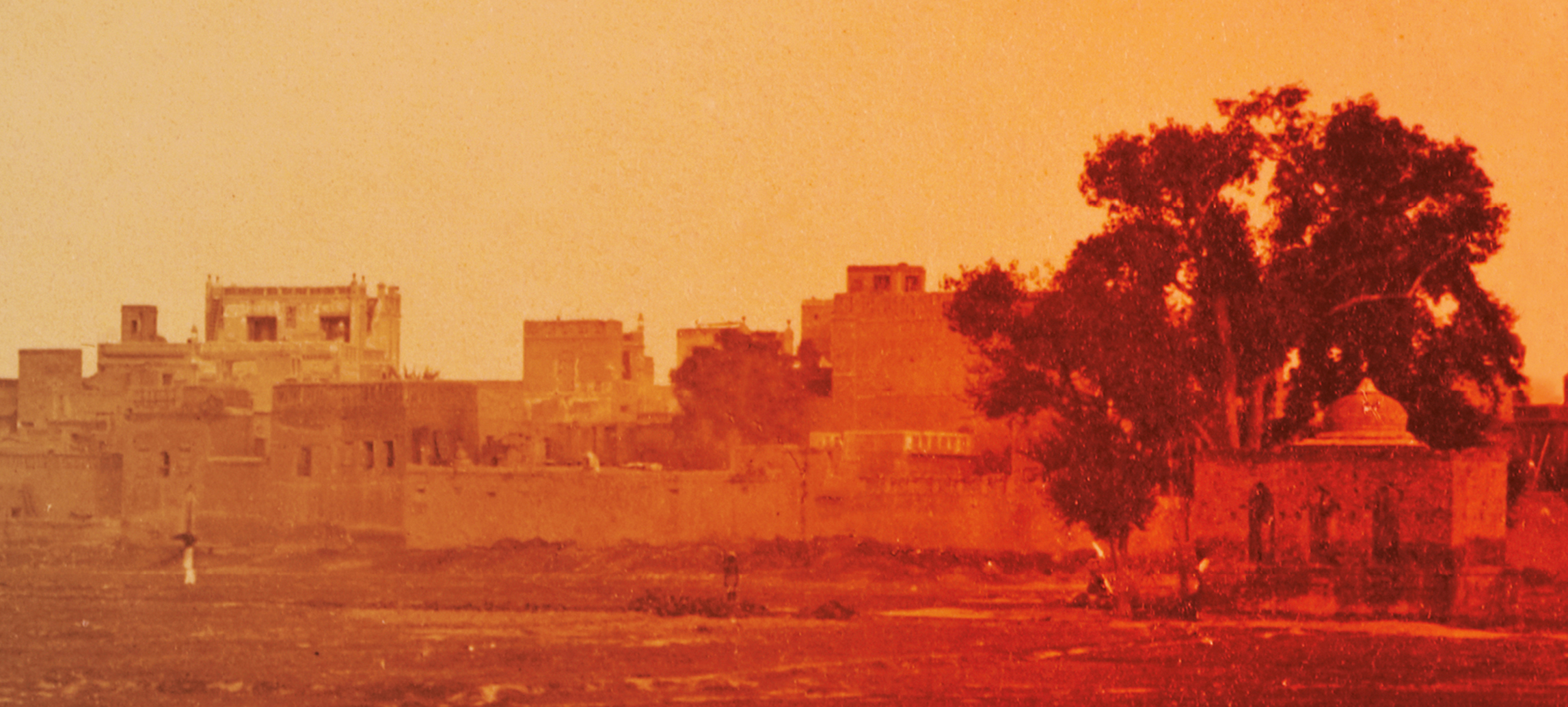
5 things you need to know about the Jallianwala Bagh Incident

Credited as the event that galvanised the first major anti-colonial nationalist movement, and inexorably set Indian nationalists, including Gandhi, on the path towards independence.

The story of Jallianwala Bagh is accordingly also the story of a particular colonial mindset haunted by the spectre of the ‘Mutiny’. Kim A Wagner’s book seeks to show the interplay between a colonial mentality rooted in the nineteenth century and the contingenciesof the unrest in 1919 – an awareness of, and attention to, the varying themes at play within a single event.

The book introduces us to interesting facts we never knew about one of the most historical locations in the story of India’s Independence.


The pillars of the portico at the entrance of Jallianwala Bagh supposedly symbolise Dyer’s soldiers.

~

The real hero of the Jallianwala Bagh memorial,is the figure of Udham Singh, who, along with Bhagat Singh, is Punjab’s most celebrated freedom fighter. Following the assassination of O’Dwyer, Udham Singh was executed by the British, and was instantaneously accorded the status of a true patriotic martyr. It is said that Udham Singh had himself been present at Jallianwala Bagh and was wounded in the arm, although there is little evidence for this.

~

When the new Viceroy, Lord Reading, took the remarkable step of visiting Jallianwala Bagh on the anniversary of the massacre in 1921, the first British official to do so, he was met with complaints about the disparity of compensation awarded to Indians and Europeans. Reading promised to look into the matter, but nothing ever came of this.

~

Within a year of the massacre, and long before its real consequences were known, Jallianwala Bagh was purchased after a public subscription and turned into a memorial park. There was originally some opposition to the idea, and it was suggested that a memorial at Amritsar would – like the British ‘Mutiny’ memorial at Cawnpore – simply ‘perpetuate bitterness and ill will’.

~

The Amritsar Massacre was accordingly both retributive and pre-emptive: Dyer took revenge for the attacks on Europeans, including Miss Sherwood, during the riots three days earlier, but he also acted to prevent a much bigger outbreak that he believed to be imminent.


Situating the massacre within the ‘deep’ context of British colonial mentality and the local dynamics of Indian nationalism, Wagner provides a genuinely nuanced approach to the bloody history of the British Empire in Jallianwala Bagh.

10 Reasons Why Ruchir Sharma’s New Book is what you Need to Understand the Biggest Elections in the History of this Country

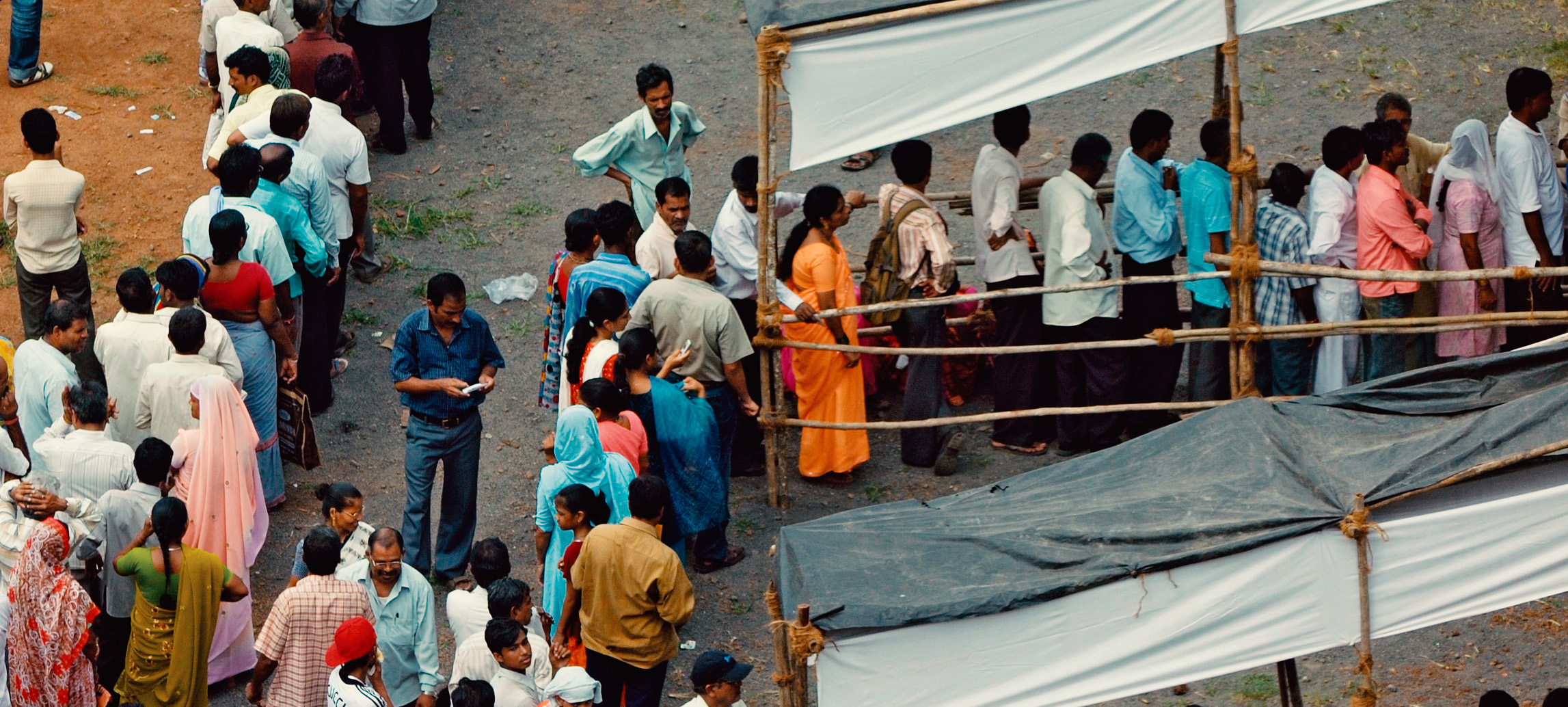
Taking us through a 25-year long journey of Indian politics Ruchir Sharma’s Democracy on the Road builds up the platform and sets the stage for the 2019 elections; the ballot which will offer a choice of two different political visions, one celebrating the reality of the many Indias, the other aspiring to build one India.

Read on to find out why this book is a must-read before you press that ballot button in 2019:


  1. The book explores the time of the late 70s and early 80s; when in the face of Indira Gandhi’s Emergency, India started finding its ground as a real democracy.


  1. It tells the story of the rise of Mayawati in UP.


  1. The book delves into the details of the Congress’s journey in the general elections from 1998-2004


  1. It travels into the major states of India while exploring the pre-election campaigns in each of them alternately focusing on general and state elections.


  1. Democracy on the Road highlights how the Bharatiya Janata Party grew from strength to strength under the leadership of Atal Bihari Vajpayee.


  1. It takes us through the intricacies and complexities of the Indian political system and the election system.


  1. The book takes us briefly into the political sojourns and offices of some of India’s biggest names in politics from Indira Gandhi to Narendra Modi and everyone in between.


  1. It explores and tries to understand the perspective and the mentality of the different voters spread across different states in India.


  1. It takes us into Narendra Modi’s political journey and his fight to the top against spanning the years from 2014-2018.


  1. Democracy on the Road offers to provide the reader with a very objective overview of the election scenario leading up to the elections that are set to write a new chapter in India’s democratic and socialist history.


Democracy on the Road takes readers on a rollicking ride with Ruchir and his merry band of fellow writers as they talk to farmers, shopkeepers and CEOs from Rajasthan to Tamil Nadu, and interview leaders from Narendra Modi to Rahul Gandhi.

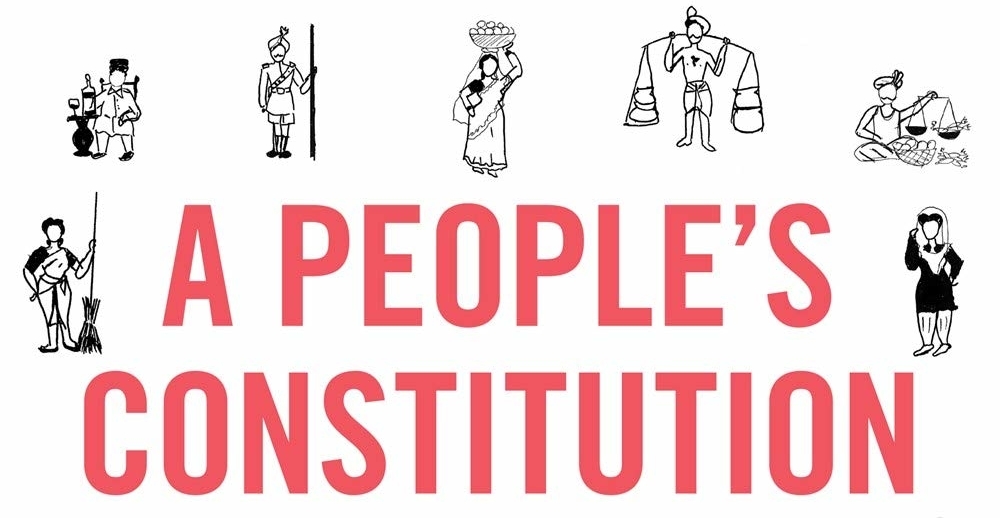
A People’s Constitution – An Excerpt

It has long been contended that the Indian Constitution of 1950, a document in English created by elite consensus, has had little influence on India’s greater population. Drawing upon the previously unexplored records of the Supreme Court of India, A People’s Constitution upends this narrative and shows how the Constitution actually transformed the daily lives of citizens in profound and lasting ways.

Rohit De examines four important cases that set legal precedents: a Parsi journalist’s contestation of new alcohol prohibition laws, Marwari petty traders’ challenge to the system of commodity control, Muslim butchers’ petition against cow protection laws and sex workers’ battle to protect their right to practice prostitution

Here is an exclusive excerpt from the introduction of the book!


In December 1950 Mohammed Yasin, a young Muslim vegetable vendor in the small town of Jalalabad in north India, was in distress. He had received notification that the town government was implementing a new set of bylaws licensing the sale of various commodities and was providing only one license for the sale of vegetables in the town area. This license had been issued to a Hindu merchant, granting him a virtual monopoly over the vegetable trade in Jalalabad, which forced Yasin and other vegetable vendors to sell their goods after paying the license holder a certain fee. Yasin petitioned the Supreme Court to issue a writ of mandamus directing the town committee not to prohibit the petitioner from carrying on his trade.

A writ of mandamus is an order issued by a superior court to compel a lower authority or government officer to perform mandatory or administrative duties correctly. Yasin’s lawyer argued that not only was the new regulation ultra vires (i.e., beyond the powers of the municipality), it also violated Yasin’s rights to a trade and an occupation, conferred by the Constitution of India.

As a vegetable vendor from a minor town, Yasin appears to be a nondescript bystander as the grand narratives of Indian history—independence, partition, elections, the integration of princely states—play out around him. Why should he be interesting to us today? Yasin is one of the first Indians to present himself before the new Indian Supreme Court as a rights-bearing citizen.

His problem and its solution both emerge from India’s new constitutional republican order and represent a phenomenon that is the subject of this book. Yasin’s constitutional adventure highlights three features, this book argues, that form the basis for Indian constitutionalism. First, the Constitution mattered as a limit to or a structure for daily living. Second, this constitutional engagement included large numbers of ordinary Indians, often from minorities or subaltern groups. Third, a significant number of these constitutional encounters were produced through the new Indian state’s attempt to regulate market relations.

India became independent at the stroke of midnight on August 15, 1947. Three years later the Constituent Assembly, whose members were nominated by elected provincial legislatures, promulgated a new constitution declaring the state to be a “sovereign democratic republic. ” This was a remarkable achievement for that time. The Indian Constitution was written over a period of four years by the Constituent Assembly. Dominated by the Congress Party, India’s leading nationalist political organization, the assembly sought to include a wide range of political opinions and represented diversity by sex, religion, caste, and tribe. This achievement is striking compared to other states that were decolonized. Indians wrote the Indian Constitution, unlike the people of most former British colonies, like Kenya, Malaysia, Ghana, and Sri Lanka, whose constitutions were written by British officials at Whitehall. Indian leaders were also able
to agree upon a constitution, unlike Israeli and Pakistani leaders, both of whom elected constituent assemblies at a similar time but were unable to reach agreement on a document.

The Indian Constitution is the longest surviving constitution in the postcolonial world, and it continues to dominate public life in India. Despite this, its endurance has received little attention from scholars. Although there are a handful of accounts of constitution-making and constitutional design, the processes through which a society comes to adopt a constitution still remain underexplored.


Exploring how the Indian Constitution of 1950 enfranchised the largest population in the world, A People’s Constitution considers the ways that ordinary citizens produced, through litigation, alternative ethical models of citizenship.

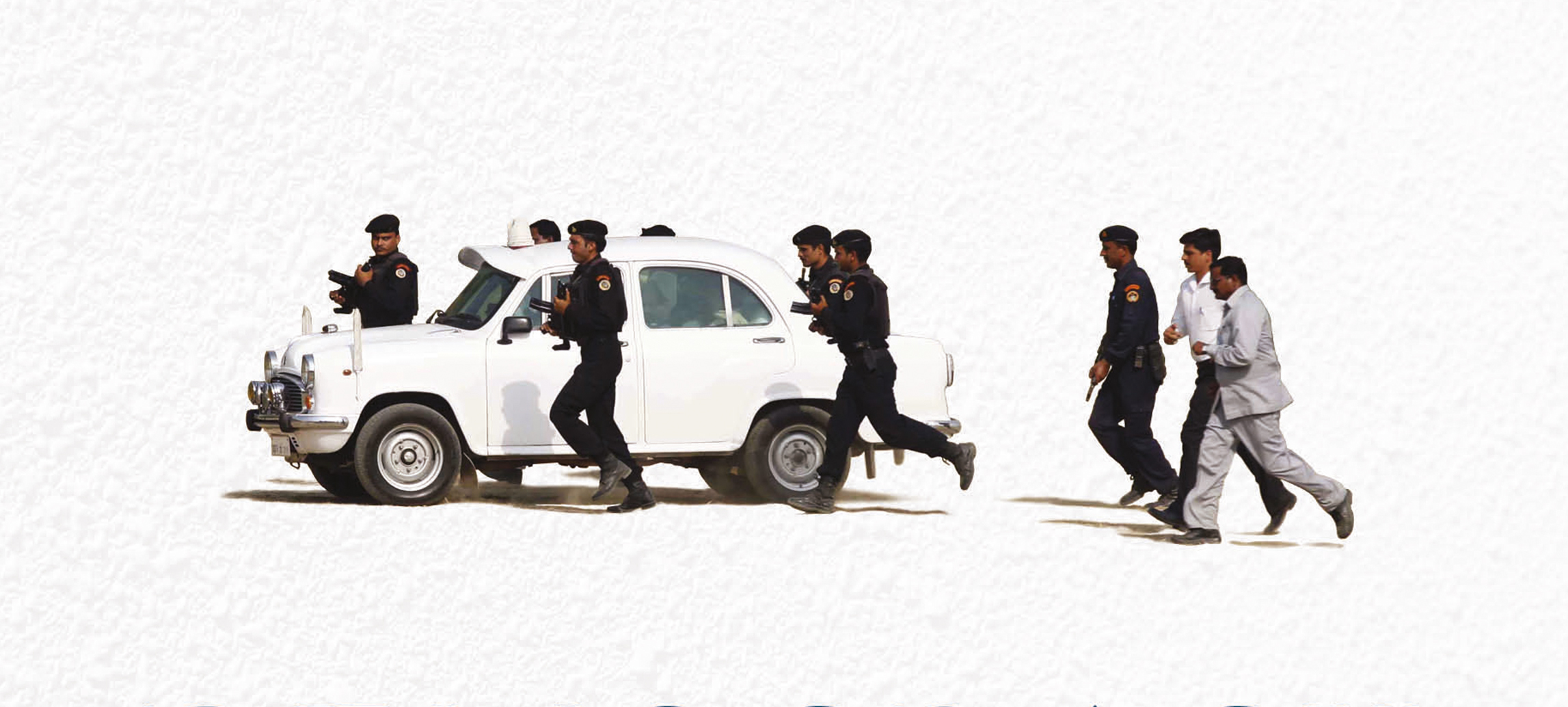
Seven Things You Didn’t Know About the 10th Chief Election Commissioner of India, T.N. Seshan

The essays in the book, The Great March of Democracy cover a range of subjects, from the evolution of the Election Commission, the exciting story of the first electoral roll, election laws, the deepening of democratic institutions over the decades to the participation revolution ushered in by the Election Commission’s untiring and targeted efforts at voter education.

Here is a glance at T.N. Seshan, the 10th Chief Election Commissioner of India, taken from the essay –T.N. Seshan and the Election Commission by Christophe Jaffrelot:

  1. As the criminalization of Indian politics was affecting elections as never before in the late 1980s and the early 1990s, the Supreme Court initiated a new form of ‘judicial activism’. But the Election Commission contributed in its way to boosting the rule of law. The shift came with the appointment of T.N. Seshan at its helm in December 1990, where he would serve for six years.

  2. Often, Seshan would stagger voting to deploy additional forces and thus reduce the risks of booth capturing and violence near polling booths, which aimed at dissuading so-called hostile voters (e.g. Dalits who, it was feared, would not vote for their upper-caste candidates) from turning up.

  3. It is true that the 1991 elections were held in a particularly tense background—Hindu–Muslim clashes on the one hand, and caste conflicts on the other dominated the campaign. However, there was still a ‘Seshan effect’, as the press termed it. Seshan’s policy partly explains the higher voter turnout (+10 points in Uttar Pradesh): the security provided around polling stations encouraged a greater number of voters to cast their ballot, especially the Dalits, whom gangs were no longer in a position to intimidate.

  4. Seshan also waged war against the tendency of politicians to flout the model code of conduct, which they were supposed to abide by. Polling was suspended in a Madhya Pradesh constituency as a serving governor campaigned for his son, ultimately leading to his resignation.

  5. Seshan harried politicians by constraining them to limit their election expenditure. This policy was executed vigorously from April 1996, when the Supreme Court accordingly mandated the Election Commission, which then ordered political parties to submit accounts of their expenditure after the elections.

  6. T. N. Seshan’s popularity, especially in urban areas, stemmed from his efforts to bring an increasingly decried political class to heel. In 1994, a survey of 2240 people (1620 dwellers of the six largest Indian cities and 620 villagers) revealed that Seshan’s name was familiar among two-thirds of the citizens interviewed (30 per cent of the rural population), who felt that he was motivated to root out corruption rather than put himself in the limelight.

  7. The trajectory of the Election Commission under T.N. Seshan shows that the effectiveness of institutions is highly dependent upon the personalities at their helm.


The Great March Of Democracy celebrates seven decades of India’s vibrant democracy and the Election Commission’s excellence and rigour.

Meet The Author of ‘Twice upon a Time’, Payal Kapadia

Payal grew up being any sort of girl she wanted to be, reading everything she could get her hands on and following her imagination wherever it took her. Her latest children’s book, Twice Upon A Time, is a riotously fresh retake on the tired old princess story.  Keya just happens to be a princess. Nyla just happens to be a tomboy. Both, as it turns out, just want to be themselves. When Princess Keya says, ‘I quit!’ and Nyla shows up to replace her, two worlds collide. Together, the girls ruffle dresses and feathers; break vases and traditions; fight dragons and boredom; grow roses and revolutions.

Here are a few things you should know about the vivacious author:


Boisterous, over the top and wickedly funny, this is the perfect princess book for girls who have outgrown princesses. Get your copy now!

Eight Things you need to know about Donald Trump’s Unconventional Presidency from Delusional Politics: Back to the Future

Hardeep S. Puri’s forty years of professional life as a senior diplomat, India’s permanent representative to the UN, and now Minister for Housing and Urban Affairs in New Delhi, give him a unique vantage point to see the fault-lines in political narratives and the ‘delusional’ idiosyncrasies of politicians.

Many democratically elected leaders of the twenty-first century have displayed streaks of recklessness, megalomania, bizarre self-obsession and political views that are difficult to characterize. Delusional Politics studies the actions of these contemporary political leaders and covers Brexit, the election of Donald Trump, the rise of the BJP under Prime Minister Narendra Modi and decision-making with respect to global governance, terrorism and trade. It brings to light the fact that at the centre of delusional politics is perhaps the delusional politician itself.


Hardeep Puri explores in particular one of the more ‘unconventional presidencies’ of contemporary times-that of Donald Trump from his early career, to his presidential campaign and to the personal and political concerns that govern his somewhat unusual attitudes to America and its place in the world order.

Read on for eight things you need to about Donald Trump’s unconventional presidency.

The presidential aspirations that grew from a jibe

“It is far-fetched to assert that Trump’s pursuit of the US Presidency originated from a single night in the Washington Hilton hotel in 2011 over some one-liners. In an interview with the Washington Post during his presidential campaign, Trump stated, ‘There are many reasons I’m running, but that’s not one of them.’ But as Trump’s public persona slowly evolved into a treasure trove for entertainment and jest, his self-alleged thick skin grew lean. Stack upon stack of jeers and taunts ushered Trump towards his eventual realization: ‘Unless I actually ran, I wouldn’t be taken seriously.’”


His self-described ‘truthful hyperbole’

“In his book Trump: The Art of the Deal, Trump terms boisterous bragging of this sort ‘truthful hyperbole’. Trump dragged this into the Oval Office to serve no political or policy related purpose. Of course, the President’s own popularity is sought to be enhanced. Such efforts do not appear to effectively factor in the negative impact of botched attempts. Misleading the public is not entirely new to the presidency. Post-truth politics has been in play for quite some time.”


The slew of exaggerations and ‘alternative facts’ on both sides

“It is perhaps fitting that the first documented accounts of President Trump’s first 100 days in office are based on delusion and exaggeration. The President is known to have made exaggerated claims, whether pertaining to his business dealings or his personality, and the media too has published exaggerated stories of both his past and present. It would seem neither party is ready to shed the delusion and pull back on the hyperbole just yet.”


His reneging on the Obama-era Iran deal with no alternative in sight

“When viewed from this perspective, the withdrawal from the Iran deal was a corrective measure he took in the interest of the average American—a delusion he himself believed and fed his support base. He was correcting, he believed, a wrong committed by the ‘establishment’ and saving America from yet another international misadventure, similar to the interventions in Iraq, Libya, Syria, and Yemen. Moreover, the withdrawal was meant to pander to the strong Israeli lobby in the United States, which was steadfastly against the Iran deal but got little attention from President Obama. The delusional act of bringing domestic partisanship and one-upmanship to international negotiations, that too to an issue as grave as nuclear security, has had serious consequences.”


The strange competition with Kim Jong-un regarding ‘button sizes’!

“‘The following tweet from the personal account of the forty-fifth President of the United States is just one example of the flailing governance of nuclear security in the world: North Korean Leader Kim Jong Un just stated that the ‘Nuclear Button is on his desk at all times.’ Will someone from his depleted and food-starved regime please inform him that I too have a Nuclear Button, but it is a much bigger & more powerful one than his, and my Button works!’”


His complete dismissal of climate diplomacy or environmental considerations

“On 2 June 2017, Trump withdrew US support to the Paris Accord, claiming he was elected President of the citizens of Pittsburgh and not Paris. He made his contempt for climate action, global governance and multilateral diplomacy clear in one go. To win the presidential election, Trump had promised to bring back the jobs the coal miners had lost due to environmental regulations imposed by Obama. The pull-out from the Paris deal along with a host of domestic measures was therefore Trump’s way of delivering on his campaign promise. The fact, however, remains that these efforts have little to no impact and the jobs Trump tried to recreate are nowhere in sight. Like many of his decisions, this renunciation of the Paris Accord too is steeped in delusional thinking.”


His  dream team, filled with the most hawkish and anti-international individuals

“Each of these individuals had a common reputation that preceded them—Pompeo was a former member of the Tea Party, and known to have a hawkish worldview. He famously defended the CIA against the senate report that claimed that torture tactics were deployed during the Bush presidency. Gina Haspel, who replaced Pompeo as the head of the CIA, was herself accused of torturing suspects and destroying evidence. Neither of them, however, comes close to the hawkishness of John Bolton, who till day remains one of the few individuals who defends the American invasion of Iraq, and the intervention in Libya.”


His complete cognitive dissonance handling nuclear deals in Iran and North Korea

“Moreover, this ambiguity has set the precedent for future negotiations. Both Iran and North Korea will see the other as a benchmark. For Iran, a much watered-down (and vague) agreement with the United States sends the signal that to get Trump back on the table, it too needs to expand its nuclear capability, and in return, get a better deal than the one it signed with Obama. For North Korea, if Trump can renege on the Obama-era Iran deal, which was much more comprehensive than the bullet points they have agreed to, there is little value in taking the initiative forward, and in fact, their best play is to continue to retain a nuclear arsenal capable of reaching the United States. When viewed from this prism, the discontinuation of military exercises with South Korea is a win-win solution for Kim Jong-Un. He has demonstrated that he can build intercontinental ballistic missiles, buy time from the US (due to the vagueness of the bullet points) on the future course of action, and have South Korea and Japan on the back foot.”


Delusional Politics brings to light the fact that at the heart of delusional politics is perhaps the delusional politician.

error: Content is protected !!