Publish with Us

Follow Penguin

Follow Penguinsters

Follow Penguin Swadesh

Get Smarter This Month With These New Titles

There is a lot to learn this November. This month, we have a number of titles that will teach you about important people who shape the India we know today, as well as some on interesting mythology topics. Lots of real life incidents are brought to you and – to keep things fun – we’ve thrown a love story into the mix!
Here is a list of books for you from our November bookshelf!

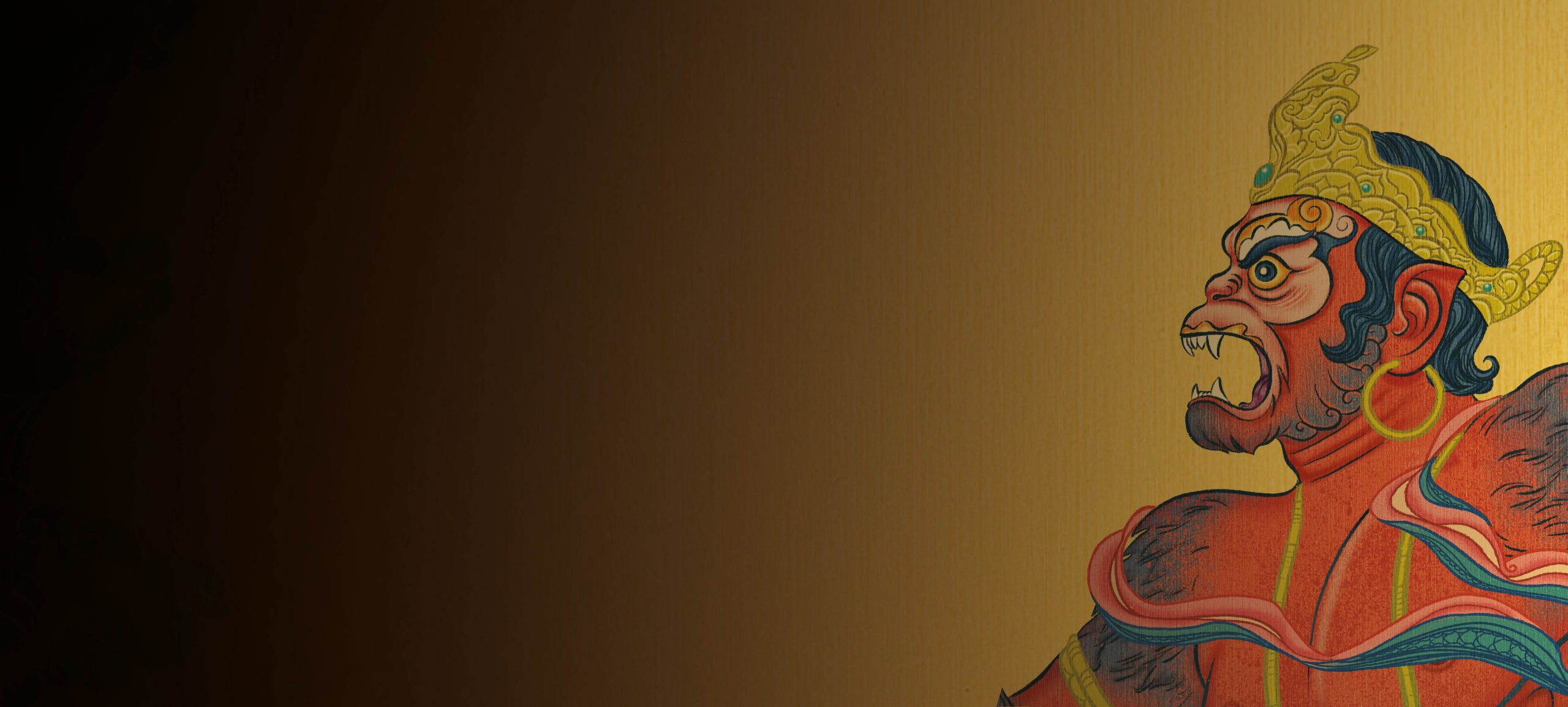
Vanara: The Tale of the Beast Slain for Love 


The love triangle between Baali, Tara and Sugreeva is arguably the world’s first. Written by Anand Neelakantan who gave a voice to Ravana in Asura, Duryodhana in the Ajaya series and Sivagami in the Baahubali series, Vanara is a classic tale of love, lust and betrayal. Shakespearean in its tragic depth and epic in its sweep, Vanara gives voice to the greatest warrior in the Ramayana-Baali.

All of My Heart


When Rehaan moves to London, he is hopeful to meet his childhood love, Zynah, whom he hasn’t been able to forget even after all these years. It turns out that Zynah is just as he remembers her-fun-loving, adventurous and beautiful. However, she is getting married. What will Rehaan do-risk ruining their friendship and tell her he loves her or let her marry the man she has chosen?

Didi: The Untold Story of Mamata Banerjee


Mamata Banerjee, with her unique style of politics, was able to defeat the formidable three-decade-old Left Front Government in 2011. Exploring her struggles and achievements, Didi opens a window to the life and times of one of the most dynamic politicians of our country.
 

26/11: Stories of Strength Book 1


In 26/11 Stories of Strength, The Indian Express dips into ten years of reportage on Mumbai’s terror survivors to find that single mothers have attended night school to get an education, children who lost a parent have dared to dream big, those who lost sons have learnt to find new purpose in living.
 

The Asthma Cure


Asthma Cure is a step-by-step practical guide with natural remedies, easy-to-follow wholesome recipes and daily food plans to help a person heal bronchial asthma, wheezing and other lung-related conditions naturally.
From outlining the relationship between food and inflammation to the role digestion plays in healing asthma, and the foods that strengthen and heal the lungs, this is the most comprehensive and solution-oriented book on the subject yet.

Duryodhanization: Are Villains Born, Made, or Made Up?


‘Duryodhanization’ refers to the birth and processes of development of a villainous character-whether in works of history or mythology. In this book, Uppal ekes out the dark side of management and leadership by studying fascinating characters from the Mahabharata. He probes into what it really means to be a villain, and if villainous traits are inherent or cultivated.

Nehru: Invention of India


The author of India: From Midnight to the Millennium provides a close-up portrait of Jawaharlal Nehru, India’s first prime minister, the influential politician who led his newly independent nation from colonialism into the modern world, and his lasting legacy in terms of India’s history and world.

Emergency Chronicles: Indira Gandhi and Democracy’s Turning Point


As the world once again confronts an eruption of authoritarianism, Gyan Prakash’s Emergency Chronicles takes us back to the moment of India’s independence to offer a comprehensive historical account of Indira Gandhi’s Emergency of 1975-77. Stripping away the myth that this was a sudden event brought on solely by the Prime Minister’s desire to cling to power, it argues that the Emergency was as much Indira’s doing as it was the product of Indian democracy’s troubled relationship with popular politics, and a turning point in its history.
 

The Tata Saga: Timeless Stories from India’s Most Iconic Group


The Tata Saga is a collection of handpicked stories published on India’s most iconic business group. The anthology features snippets from the lives of various business leaders of the company: Ratan Tata, J.R.D. Tata, Jamsetji Tata, Xerxes Desai, Sumant Moolgaokar, F.C. Kohli, among others. There are tales of outstanding successes, crushing failures and extraordinary challenges that faced the Tata Group.
Why I Am a Liberal: A Manifesto for Indians Who Believe in Individual Freedom

The stamping out of difference, the quelling of diversity and the burial of argument is, in fact, most un-Indian. Anyone who seeks to end that dialogue process is ignoring Indianness and patriotism.The liberal Indian argues for the rights of the marginalized in the tradition of Gandhi for trust, mutual understanding and bridge-building. Real patriotism lies in old-fashioned ideas of accommodation, friendship and generosity; not in force, muscle flexing and dominance. Why I Am a Liberal is Sagarika Ghose’s impassioned meditation on why India needs to be liberal.
The Book of Avatars and Divinities

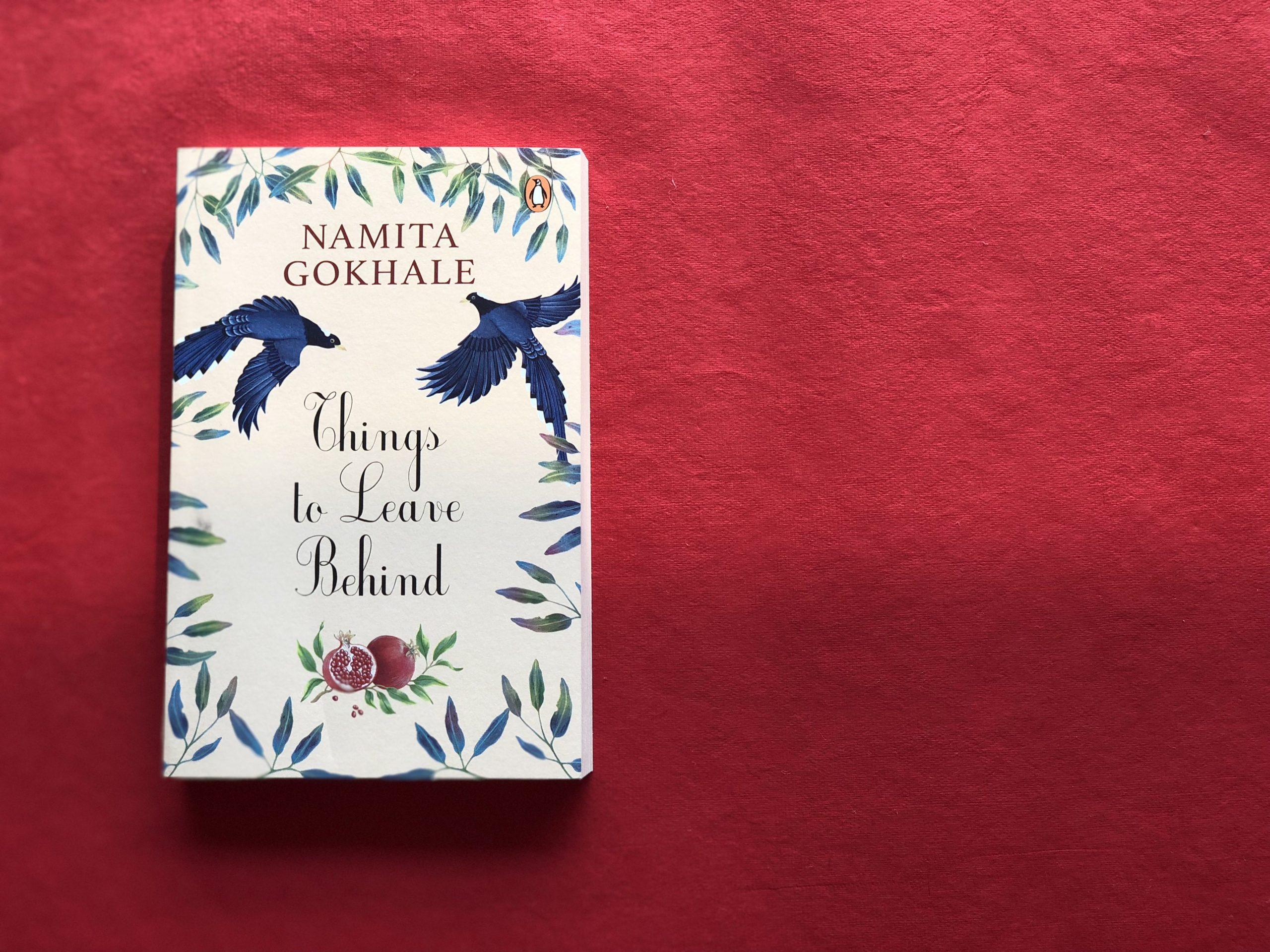
This first-of-its-kind book brings together the major deities of the Hindu pantheon, describing the different manifestations by which they are recognized, celebrated and worshipped-from Durga to Sita to Kali, and from Narasimha to Parashurama to Krishna. The contributions by Bulbul Sharma, Namita Gokhale, Nanditha Krishna, Parvez Dewan, Royina Grewal and Seema Mohanty offer enchanting stories about our favourite divinities.

Vanara – an Excerpt

Baali and Sugreeva of the Vana Nara tribe were orphan brothers who were born in abject poverty and grew up as slaves like most of their fellow tribesmen. But Baali was determined not to die a slave. Aided by his beloved brother, Sugreeva, Baali built a country for his people. For a brief period in history, it seemed as if mankind had found its ideal hero in Baali. But then fate intervened through the beautiful Tara, the daughter of a tribal physician. Loved by Baali and lusted after by Sugreeva, Tara became the cause of a fraternal war that would change history for ever.
The love triangle between Baali, Tara and Sugreeva is arguably the world’s first. Written by Anand Neelakantan who gave a voice to Ravana in Asura, Duryodhana in the Ajaya series and Sivagami in the Baahubali series, Vanara is a classic tale of love, lust and betrayal.
Here is an exclusive excerpt from the book about Baali’s legendary duel with Ravana:


‘What are the rules of duels? I can’t be standing here the entire day watching my opponent dry in the sun,’ Ravana said to Nala.
Nala explained to him that there are four fountains at the four corners of arena. Whoever flips the opponent to all the four fountains will be the winner. Ravana remarked that that made his task easy. Baali was already sunk half in the western fountain. Many found the remarks witty. The Asuras tittered.
Ravana tried to lift Baali by his armpit. Baali didn’t budge. The entire episode was turning into a farce and the king of Asuras was enjoying it. Tara sat with her cheeks burning in shame. She could feel the sense of defeat among her people. A sudden gasp caught her attention. The crowd had gone silent.  Baali had caught Ravana’s head in his armpit. Ravana was still laughing, treating it as fun before he finishes off his opponent. Baali sat without moving. Only his bulging biceps betrayed his struggle. Ravana tried to free himself. His laugh had turned to a grunt. He started pummelling Baali’s back with his free hand but Baali was choking him. The pummelling soon became weak. Baali stood up with a roar. Ravana was still at the crook of his arm. He jumped into the fountain, dragging his opponent. He dunked into water, taking Ravana with him. The crowd watched with trepidation. Baali sprang up, dripping wet but Ravana’s head was still in his grip. He threw Ravana into water and walked out of the fountain. Behind him Ravana was struggling to get up. Baali stood at the edge of the water, beat his chest, threw back his head and roared.
The crowd erupted in a loud cheer. The Parai drums that were silent for so far, rolled in a frenzy. Many Vanaras were crying, hugging each other and Vanara women were ululating. Tara couldn’t control her tears or her smile. Baali walked to the centre of the arena. The Asura crowd was dangerously silent. Baali stood with his clenched fists pressing his waist. Tara wanted to cry, Baali, watch out, for she saw Ravana had recovered and was rushing towards Baali. Ravana kicked Baali, sending him sprawling on the mud. The Asuras roared with cheer, but it was short-lived. Baali rasped Ravana from behind, his arms locking the Asura king’s neck in a death grip. He dragged Ravana and threw him into the fountain on the east side of the arena. Baali let out his monkey roar again. Tara saw a few Asuras stand up. Their swords had come out of the sheath. Some were stringing their bows. The Vanara warriors on the other hand were busy cheering their chief. The moment Ravana was on his feet, Baali jumped into the fountain and caught Ravana by his long hair. He dragged the Asura king to the Southern fountain. The wild roar accompanied the pummelling of his chest. By now the Parai drummers had jumped to the arena and had started dancing. The drum rolls were deafening and the Vanaras were cheering in ecstasy. When Baali dunked Ravana in the Northern Fountain, the entire Vanara crowd rushed to the arena, erupting in joy. A monkey man had vanquished the mighty Asura emperor. The Asura crowd rose in anger, clanging their swords on their shield. They couldn’t believe their king, the greatest of all warriors who had conquered the entire Jambudweepa, under whose armies the mighty armies of Devas crumbled, was defeated by a black-skinned, thick-lipped, monkey man. The great scholar of Vedas, musician, scholar, statesman, warrior and dashingly handsome Mahabrahmana Ravana was squirming under the feet of a crude, low-caste, untouchable, illiterate, ugly monkey. The Asuras couldn’t digest the insult.
Tara screamed at her people to be alert. The Asuras were attacking against all rules of a duel. The Vanaras were busy celebrating their leader’s victory. Even the three council members were cheering. The freedom and honour of Vanaras had been protected by Baali. The Asura army descended on the arena like a storm. They smashed everything on the way. A section of the arena caught fire, perhaps deliberately set. The terrified Vanaras were scattered. Some ran to Baali, while others pushed and shoved to get away from the chaos. Tara struggled her way to reach Baali. Sugreeva was brandishing his mace at the attacking crowd, shielding Baali. Chemba was snarling at anyone who dared to come near his master. Unmindful of the din, Baali was giving his victory roar. Tara broke through the crowd and ran to Baali. His gaze fell on her and he stopped his roar midway. The Asuras had circled him. If they kill him, she would die with him, she decided.
‘Enough,’ Tara heard Ravana speak. The Asura king stood up, dripping wet. There were gashes around his neck where Baali had gripped him. He steadied himself, holding Baali’s shoulders.
‘Back off,’ Ravana commanded. The Asura army became still, but they were glaring at Baali and their arrows, spears, swords and lances pointed at her husband.
‘We fought face to face, as any man of honour would do.’ Ravana’s voice was even. ‘He won fair. I have no shame in admitting my defeat. That is the only honourable thing to do. And I am ready to die in his hands as per the rule of the duel. No Asura will raise even a whimper. If I have been a good leader, honour me at my time of death.’
The arena turned silent. Ravana knelt before Baali. He whispered, ‘You won monkey. Now kill me. I assure you that no Asura would object to my death. That is my word. Don’t be sacred. Do the honourable thing.’
‘Why should I kill you?’ Baali asked.
‘The reward of defeat in a duel is death. Don’t insult my honour, monkey. Make it fast.’ For the first time in the day, Tara heard Ravana’s voice shiver. The impending death was making him sound like an ordinary man. Tara wished her husband would finish the Asura king before Ravana lost his courage and nobility. The Asura army was fuming with the shame of a dishonourable defeat at the hands of those they considered barbarians.
‘We are Vanaras, Ravana. The rules of humans don’t apply to us. We fight only for food, territory or mate. The beast that gets defeated is spared unless the victor wants to eat the vanquished in our world. You are free to go. Never enter our territory again,’ Baali said and walked away. Asuras parted to make way for the Vanara chief. The wolf trotted behind him.


Shakespearean in its tragic depth and epic in its sweep, Vanara gives voice to the greatest warrior in the Ramayana-Baali.

The Heart before the Twentieth Century: A Timeline of What We Knew

The spark of life, fount of emotions, house of the soul – the heart lies at the center of every facet of our existence. It’s so bound up in our deepest feelings that it can physically change shape when we experience emotional trauma.
For most of human history, the biological function of the heart was a mystery. Here is a timeline of the heart, quoted from Sandeep Jauhar’s new book titled Heart: A History.
Ten thousand years ago, Cro-Magnon hunters in Europe knew about the heart – they engraved curlicue pictures of it on the walls of caves – but they had no clue about what it did.

Seven millennia later, the ancient Egyptians devised surprisingly prescient theories about the heart’s purpose. They believed the heart was where the soul resided, of course, but a classic document, the Ebers Papyrus, also described the heart as the center of the blood supply, with vessels directed toward the major organs.

Three thousand years later, the ancient Greeks had a mostly symbolic understanding of the heart. They believed the heart’s central location in the body meant that it was the center of life and morality.

Drawing conclusions from surgeries on wounded gladiators, as well as vivisection on an array of animals, Galen – a Roman physician – proposed a scheme in which the liver converts food into blood that, like water in an irrigation ditch, travels one way into the body to be absorbed and disappear, never to be used again.

Galen’s theories were accepted as the final word on cardiovascular – indeed all human – anatomy in the West. Through the Middle Ages, his writings were scripture, immune to questioning.

Physician Ibn al-Nafis wrote Commentary on Anatomy in 1242. In it, he wrote that the ventricles receive nourishment from coronary vessels – not, as Galen had claimed, from blood deposited inside their chambers – and that the pulse is due to the force of cardiac contraction, not as Galen contended, because of innate arterial contractility.

Perhaps no thinker of the Renaissance period did more to advance knowledge of the heart that Leonardo da Vinci, who considered it “an admirable instrument invented by the Supreme Being.” Among many of Leonardo’s anatomical illustrations, a great many are devoted to the cardiovascular system. Like his predecessors, he used natural phenomena and analogies to elucidate the workings of the heart.

Before a century had passed, raucous crowds were gathering at the University of Padua for public dissection. It was here – the center of European anatomy, where the world’s first anatomical theatre housed galleries for spectators – that perhaps history’s greatest surgeon, Andreas Vesalius, worked.

In De humani corporis fabrica (The Fabric of the Human Body), published in 1543, Vesalius corrected many of Galen’s mistakes about the heart and also reinforced some of his erroneous conclusions.

It wasn’t until William Harvey, the brilliant English anatomist who studied at Padua in his early twenties, that Galen’s theory of circulation was fully upended. Although Harvey discovered the mechanism of circulation in 1615, he waited thirteen years before publishing the results. He feared for his safety; challenging Galenic dogma was considered sacrilegious.

On a summer day in 1893, Dr. Daniel Hale Williams, a surgeon at Provident Hospital in Chicago conducted, what is believed to be the first open-heart surgery.


Affecting, engaging, and beautifully written, Heart: A History takes the full measure of the only organ that can move itself.

Your Go-To Guide to Choosing the Right Make-up

Skin Rules by Dr. Jaishree Sharad is a revolutionary book which talks about the best beauty hacks, making your skin radiant in just six weeks!
In this book, Dr. Jaishree Sharad talks about the fundamentals of the road to a glowing skin. From identifying your skin type, paying attention to the fine print on labels of various cosmetic products, to the newest advancements in skincare treatments. While solving all your skin problems this book also provides you with some of the best tips in order to choose the right make-up for yourself, keeping in mind what suits your skin and would’ve have the best effect.
Here are a few tips in order to help you choose the right make-up:

Never use alcohol-based toners and make-up removers. Alcohol is known to take the moisture away from the skin, leaving it dry. Instead, using oil-based make-up removers, balms, micellar water or rose water is better.

~

When buying make-up supplies, look for Matte products and avoid thick or solid make-up products like stick or creamy compact foundations.

~

A serum can be used as an effective primer before make-up, as it feels light on the skin and doesn’t create a thick film on the face. Choose a serum that will cater to your specific skin type.

~

If you have a family history of pigmentation, then it is advised that you avoid foundations and concealers as they can make it worse.

~

If you suffer from dry skin and have crossed your twenties, then you should choose a mousse or a cream or oil based foundation, making your skin look smooth and even.

~

If you are in your teen or twenties, you should opt for a non-oily, lightweight liquid foundation minimizing your breakouts.

~

If you have a highly acne prone skin, you should opt for a non-comedogenic foundation with salicylic acid. Another option could be Matte-finish liquid foundations.

~

Using a liquid concealer, for oily and acne-prone skin is the best to hide the blemishes.

~

Do not use fragrance-based make-up if you have sensitive skin.

~

If you have chapped lips, do not use matte lip cosmetics or smudge-proof lipsticks. They lack oils and certain emollients that helps keep the lips hydrated. Using glossy lipsticks and choosing lighter colours is better, as darker shades have more chemicals and make the lips drier.
 
You’d be amazed at what a short, six-week routine can do for your skin. So what are you waiting for? Pick up your copy of Skin Rules now!

Meet Anita from Fatima Bhutto’s ‘The Runaways’

Anita Rose lives in a concrete block in one of Karachi’s biggest slums, languishing in poverty with her mother and older brother. Determined to escape her stifling circumstances, she struggles to educate herself, scribbling down English words-gleaned from watching TV or taught by her elderly neighbour-in her most prized possession: a glossy red notebook. All the while she is aware that a larger destiny awaits her.
Here is an excerpt from Fatima Bhutto’s new book, The Runaways, that will introduce us to Anita Rose.


The moon hangs low in the night.
Anita Rose Joseph closes her eyes. She opens them.
The stars are drowned by Karachi’s endless curls of dirt and smog, the glow of the terminal, and the floodlights mounted to blind the road leading towards Jinnah International Airport.
Anita Rose keeps her gaze down, away from the towering billboards advertising Gulf Airlines and skin- lightening creams. ‘Max Fairness for Max Confidence,’ a purple- and-black advertisement promises over the smiling face of a
famously fair cricketer. She walks alongside the queued- up Pajeros and Toyotas, impatiently and pointlessly honking, climbing the long slope to the departure terminal.
Under the cover of darkness, before the floodlights bleed into dawn, a mynah bird, with its yellow banditbeak and orange eyes cut through its coarse black plumage, sings.
Anita lifts her eyes for a moment, looking for the lonely bird. But in the early hours of the morning she can see nothing in the dark, empty sky, not even the dacoit dressed up as a mynah bird. The moon carries only the heaviness of the city, suspended in the charcoal sky.
Anita pulls her dupatta tighter around her face. She closes her eyes, irritated by the blinding floodlights, and opens them, breathing slowly, reminding herself of what she must do.
She holds her passport and red notebook tight against her chest and exhales deeply. Aside from a small bag with a necessary change of clothing and some make- up, she has no other luggage.
Ahead, a Pajero inches forward; it brakes at the checkpoint manned by armed commandos. A Ranger with a submachine gun strapped to his chest walks towards the Pajero, but no one gets out of the car. The front window rolls down, letting out a blast of English pop music as a driver relays the name of a VIP. Anita moves slowly, not wanting to draw attention to herself. She stops just before she reaches the jeep and waits for it to pass.
Even with the loud music, the rumble of the running engine and the sound of the commandos circling the car, lifting the bonnet, opening the back, searching it for explosives, Anita Rose can still hear the mynah bird.
On Netty Jetty, overlooking the mangroves that crawl thin just before the Arabian Sea, kites swarm the sky like a thick cover of clouds, waiting for lovers to throw chunks of meat to them – or if the lovers cannot afford the bloody parcels sold on the bridge, then small doughy balls of bread. In the chaos of Karachi’s congested traffic, surrounded by barefoot boys promising in their high- pitched voices that your dreams will come true if you feed the hungry, Anita always felt protected by the soar of kites. And though she is almost certain that the mynah she hears so late at night is all alone, she is also almost certain that it has come to walk her safely through the airport, with its yellow feet and bandit- beak, and out of this city forever.
The Pajero’s engine is still running and the fumes from its exhaust choke the air around Anita. Coughing into her
palm, she doesn’t hear the VIP’s name, but she can see the silhouette of a young woman, voluminous hair held back by sunglasses, perched on the crown of her head. The VIP presses a button and her window begins to open. No one lowers the music; it plays at full volume, percussion and thumping bass. As the VIP moves, a piece of jewellery reflects everywhere, a thousand rays of iridescent light.
The Ranger with the Heckler & Koch cranes his neck to see through the narrow slit. As salam alaikum, he salutes the VIP briskly.
Anita looks behind her, there’s no one there. No one has followed her here.
As the Pajero raises its windows, muffling the music, and begins its climb towards the terminal, and before airport security can see her, Anita traces the shadow of a cross along the hollow of her clavicle. No one has noticed she has gone. No one except the birds.
Anita Rose lifts the thumb that drew the sign of the holy cross to her lips and closes her eyes for a kiss.

This city will take your heart, Osama had told her. You don’t know what Karachi does to people like us. Take your heart, do you hear?
Anita had not understood the rage in his voice then. She had not understood that he was angry for her, long before anyone had hurt her. Anita didn’t like it when she didn’t understand Osama. No matter her age, those moments made her feel just as puny and small as she had been the first time she knocked on his gunmetal door, all those years ago.
It was late at night and Anita had snuck out of her mother’s suffocating home to be with him, with Osama comrade sahib. Her only ally. Her one true friend. The evening was perfumed by champa flowers that bloomed amongst the garbage in Machar Colony and that summer, just before the monsoons, the scent of the white flowers was so strong Anita could no longer smell the sea.
‘How do I protect myself?’ she had asked him. Osama ran his hand through his dishevelled silver hair. He lifted his spirit and drank the medicinal liquid slowly, before placing the glass smudged with his fingerprints on his knee and leaning forward, so close that Anita could count the fine grooves of his iris, the lines that cut and coloured the warm brown of his eyes.
‘You take their heart,’ he whispered, even though no one could hear them on the roof – not the trees that wilted in the summer heat, not the constellation of yellowand-white flowers that bloomed in the rain. ‘Anita Rose,’ Osama caught himself on her name, ‘promise me: you take theirs first.’


The Runaways is an explosive new novel that asks difficult questions about modern identity in a world on fire.

Meet Monty from Fatima Bhutto’s ‘The Runaways’

On one side of Karachi lives Monty, whose father owns half the city. But Monty wants more than fast cars and easy girls. When the rebellious Layla joins his school, he knows his life will never be the same again…
Here is an excerpt from Fatima Bhutto’s The Runaways that will introduce you to Monty!


During the summer, Papa spent about two weeks with the family in their Sloane Street flat, before work called and
he had to return to Pakistan or China or Saudi Arabia for meetings. Even though he spent his evenings having drinks with business associates or else on conference calls, pacing through the park with his earphones connected to his phone, disturbing the birds, it was the most time Monty and his father spent together in any given year.
When Monty was ten, Papa had taken him to Windsor Park and driven through the animals with the radio on Kiss FM, humming along to all the summer hits while Monty cowered in the back seat as lions and baboons circled the car. ‘Sit up, Monty,’ his father ordered, ‘look at the beasts! It’s like being on safari in Africa!’
Monty could see them just fine from where he sat, glued against the door of their rented car so that the animals couldn’t see his head in the window, but he would attempt a straightening- up, first making sure that his seatbelt was secure.
‘Can you see the lions? Can you see them from there?’
Yes, Monty would assure Papa, yes – you could see them a mile away, you could smell their muddy, earthy, dirty- skin scent even with the windows closed.
‘Be brave, beta,’ his father eventually snapped, ruining their father– son day without stopping to consider that Monty was being brave. He had been using his reserve tank of brave to get through the safari park where animal roamed free all day.
The next summer they didn’t go back to Windsor, but to Centre Court at Wimbledon. Monty watched Roger Federer play. He had nurtured a feverish crush on Anna Kournikova, with her short white skirts and tanned, endless legs, but she no longer played, not at Wimbledon at least. The sun – rare for London – had given Monty a migraine and he spent the day trying to hide it from his parents, who drank Pimm’s – even Mummy, because Papa told her there was no alcohol in it – and ate strawberries and cream like real English people.
Everything Monty knew about culture he had learned in London. Watching plays in the West End, eating fine food in Mayfair, watching his father buy tailored suits on Savile Row and feeling not pride, but confidence, when he saw his father step out of a dressing room in expensive cloth cut to his precise measurements. Akbar Ahmed stood with his arms spread akimbo, like the Rio Jesus, while a whitehaired English tailor adjusted his cuffs, stepping back admiringly, before bending to his knees to attend to the fall of the elegant charcoal- black silk trousers.
When he was eighteen, Papa said, he would bring Monty to Anderson & Sheppard for his first bespoke suit. Until then, Monty had to study and work hard and make his father proud. The rewards would follow – nothing could be denied to a man who faced his responsibilities head- on. Nothing could be denied to a man who upheld the honour of his family’s name.
This summer, the summer Monty turned seventeen, Akbar Ahmed couldn’t find the time to spend with his son. There was no boating in Regent’s Park, no steaks at The Wolseley, no strawberries and no Pimm’s. I’m busy, was all Papa said, can’t make it. Tomorrow, day after, at the weekend.
But Monty had walked by Ladurée, behind Harrods, and seen Papa sitting outside under a pale- green umbrella, sipping an espresso by himself, just watching the world go by. He hadn’t looked very busy then. Monty paused, standing on Brompton Road, and wondered whether he should approach his father, whether he should walk across the street and join him, sitting down for a coffee, but Papa looked so happy, so content, sitting at his table alone that Monty bowed his head so his father wouldn’t see him and walked back home without saying anything.


The Runaways is an explosive new novel that asks difficult questions about modern identity in a world on fire.

Meet Sunny from Fatima Bhutto’s ‘The Runaways’

Far away in Portsmouth, Sunny fits in nowhere. It is only when he meets his charismatic, suntanned cousin Oz-whose smile makes Sunny feel found-that that he realizes his true purpose.
Here is an excerpt from Fatima Bhutto’s The Runaways that will introduce you to Monty!


Cricket had been the early love of Sunny’s life. It was a gentleman’s game, a slow, elegant sport that cultivated not only stamina in a player, but also subtle perception. But when his modest athletic scholarship to the University of Portsmouth came in, it was on the strength of his boxing, not his fast bowling, that Sunny had been selected.
Whatever his own personal failures, Sulaiman Jamil had always cheered his son’s successes. Sunny’s victories couldn’t come fast enough. First, a Bachelor’s degree from a marvellous university, next a beautiful job in a booming industry, then an office in the city, a Jaguar, a warm and loving wife, some children. Mixed- race, Hindu, Muslim, Sulaiman Jamil didn’t mind.
That was all Sunny ever heard at home.
Be someone else. Do something else. Be better. Fit in more, try more, work hard. Don’t get stuck in a dead- end job, don’t marry the first lady who comes your way, don’t be a slave all your life. Pa repeated his mantras, smoothing down his soft brown hair, its colour fading with age, absenting himself from his life’s own failures, transmuting his personal traumas into general advice.
I only want you to be happy, he told his son repeatedly. What father can rest until he sees his boy settled?
It made Sunny laugh, coming home from running in the park to see his pa sitting at the kitchen table, the acceptance letter with the second- class stamp propped up before him. The first time that he’d done right by him, it felt like. He would major in business studies for Pa too; he would have preferred Islamic history or even sports therapy, but there was no money in that, no future, Pa said. And a future was all a man really ever had.
‘My boy,’ his widowed pa, Sulaiman Jamil, sang softly when he held the thin acceptance letter in his hands. Sunny had left the envelope with the second- class stamp on the kitchen counter for his father to see. It was one of the few times he had sought his approval. ‘What a thing you’ve done . . . what a marvellous thing you’ve done . . .’ As though Pa knew all about the place, as if he’d got in himself. He hadn’t gone to university, only a polytechnic back in the old country, but his parents couldn’t afford it and, after a year, Pa was forced to drop out. It was a story he told Sunny over and over, embellishing the drama of his life with extra details in every telling.
It had been the first of his life’s tragedies.

‘Look at you now,’ Sulaiman Jamil smiled at his young son. This was the moral of the story: Sulaiman Jamil had fought the karma of his life to build something new, something better for his precious child, his only boy. ‘We did all right, didn’t we?’
Sunny nodded at his pa.
‘You and me, the two of us? We did good, didn’t we?’ Standing at the kitchen counter, Sunny watched his
father’s eyes fill with tears. He bowed his head and nodded once more.
‘You have a home, you have a city, a country even – a place in the world.’ Sulaiman Jamil’s voice broke with emotion. ‘You have a father who loves you. What more could your poor papa have given you?’
Just a moment ago, holding his University of Portsmouth John Doe acceptance letter, they were happy. Sunny was happy. He felt it. But it was gone now. Happiness didn’t hold. Nothing lasted very long for Sunny Jamil.
‘Nothing,’ Sunny mumbled, reaching out his arm to squeeze his old pa’s shoulder, massaging him for a moment, before leaning forward to embrace him. His pa. His protector, his defender. ‘I’ve got everything I need.’


The Runaways is an explosive new novel that asks difficult questions about modern identity in a world on fire.

The Battle Within: Seven Verses of the Bhagavad-Gita in 'Godsong'

‘Let’s listen’ writes Amit Majmudar as he begins to masterfully play out each note of the Godsong. Stretched taut with layers of meaning, each artful stroke plays on the chords of our shared humanity and pulsates with vivid emotions of deeply lived relationships. This is a song of dichotomies, dualities and multiplicities that weave a web of dilemmas that all human beings must battle through to reach their truth and to achieve their higher self. As man struggles to find light in this darkness, there is Krishna playing his magical melody while Arjuna, the greatest warrior, learns to sing along. Together on the battlefield, God in his human form and man in his search for godly wisdom set the stage for a friendship that levels all hierarchy.
                                                                           Sanjaya said,
                                                              Having said this to Krishna,
                                                             Arjuna, the scorcher of foes,
                                                                  Said, “I will not fight,”
                                                                         And went silent
 
“Sanjaya, who has the power to witness events without being physically present for them, narrates the action. Arjuna tells Krishna how he feels and how he has a horror of fighting his own relatives. Arjuna throws aside his weapons and sits down.”
 
                                                       No one for an instant ever really
                                                            Stands there doing nothing.
                                                           Gunas, born of nature, make
                                                   Everyone do things, even if unwilling.
 
Krishna explains that everyone has to act in some way. You can do nothing, but you cannot not do. Even inaction is a kind of action and bears a karmic charge.”
 
                                                                Pierced by infinite pity,
                                                                     In despair, he said,
                                                  “Seeing this— my own people, Krishna—
                                              Drawing close because they’re dying to fight. . . .
 
“Arjuna’s despair arises from the conflict between his dharma as a family member and his dharma as a warrior. The Gita is occasioned by a moment of supreme tension between these two simultaneous definitions of dharma. An action which may seem personally adharmic (shooting your own cousins, in Arjuna’s case) can uphold the larger dharma.”
 
                                      While the unwise work from their attachment

                                                        To action, Arjuna, a sage

                                                  Should work without attachment,
                                                Longing to hold the world together.
 
“Just as Krishna sustains the universe, Arjuna must sustain a dharmic society. To do this, both of them must act. Yet these actions must be carried out with detachment, and with the focus on the task itself.”
 
                                                        For the unattached and free
                                                  Who fix their minds in knowledge,
                                                          Action, working toward
                                                        Sacrifice, dissolves entirely.
 
“Krishna describes the ideal man of action, with a focus on his detachment, and how he “accrues no guilt.” Such a yogi’s work in the world takes on the nature of sacrifice— an offering to the Gods. He goes on to praise yogic knowledge and how it dissolves karma.”
 
                                                       His happiness within, his ease
                                                    Within, and hence his light within,
                                                       This yogi goes up to extinction
                                                       In Brahman, becomes Brahman.
 
“Once the yogi attains extinction in Brahman, he sees all things and people as fundamentally equal because they are fundamentally the same. That is nirvana, a state of bliss and peace (…).”
 
                                                             Bound by your own karma,
                                                               Born to your own nature,
                                                  What you in your confusion do not want
                                                  To do, you will do. Even against your will.
 
“Krishna exhorts Arjuna to take refuge in him, insisting that Arjuna is going to fight this war anyway, even against his will.”


Does Arjuna awaken to his Dharma? Read Godsong to find out!

5 Britons from the Raj that you should know about

The British in India by David Gilmour records the life of various Britons that went to India – viceroys and officials, soldiers and missionaries, planters and foresters, merchants, engineers, teachers and doctors. The British had a stronghold in India and ruled the land right after the reign of Queen Elizabeth I till well into the time of Queen Elizabeth II. Recalling the span of three and a half centuries of their reign in India, this book brings to life the the work, leisure and the complexity of the relationships of the British to India. This exceptional work by David Gilmour gives a scholarly insight into the lives of people, about whom, nothing has been written before.
Here are 5 people you would not know about who lived in India during the British Raj:
Richard Wellesley
Rischard Wellesley was the second governor-general of India from 1798-1805, succeeding Lord Cornwallis. He amended and intensified the process of transformation for the British civil servants in India. He was of the opinion that “no greater blessing”, he said, could be “conferred on the native inhabitants of India than the extension of the British authority, influence and power”. Thus, there was an influx of young Englishmen who saw themselves as imperial rulers and administrators in India.
Kay Nixon
Kay Nixon, after the end of her first marriage decided to go to India for a new beginning in 1927. She was an artist and had made her career as an illustrator of Enid Blyton’s stories. Coming to India, she continued her career by drawing for the Times of India, making animal posters for Indian State Railways, and also painting pictures of the horses of various maharajas.
George Clerk
George Clerk was the two-time governor of Bombay from the years 1848 to 1850 and 1860 to 1862. He was of the view that the British rule in India could only be permanently maintained if it was administered “in a spirit of tolerant and reasonable respect for the usages and the religions of the different nations and tribes there”.
Cecil Earle Tyndale-Biscoe
Cecil Earle Tyndale-Biscoe went to Kashmir in 1890 and was principal of the Church Missionary Society’s boys’ school in Srinagar for almost half a century. He was of the view that Kashmir was morally a stagnant cesspool but was determined to reform the land and rid it of the its moral corruption. He had assembled a staff of Oxford and Cambridge graduates in order to help him in achieving this aim.
Hariot Dufferin
Lady Dufferin made the most valuable contribution amongst any vicereine when she successfully established the National Association for Supplying Female Medical Aid to the Women of India in the year 1885. Indian women, during the time needed female doctors and nurses as they were barred from the company of unrelated men. She came to be known as the pioneer of medical care for Indian women and her association had treated four million women by 1914.


This exceptional work of scholarly recovery portrays individuals with understanding and humour, and makes an original and engaging contribution to a long and important period of British and Indian history.

error: Content is protected !!