



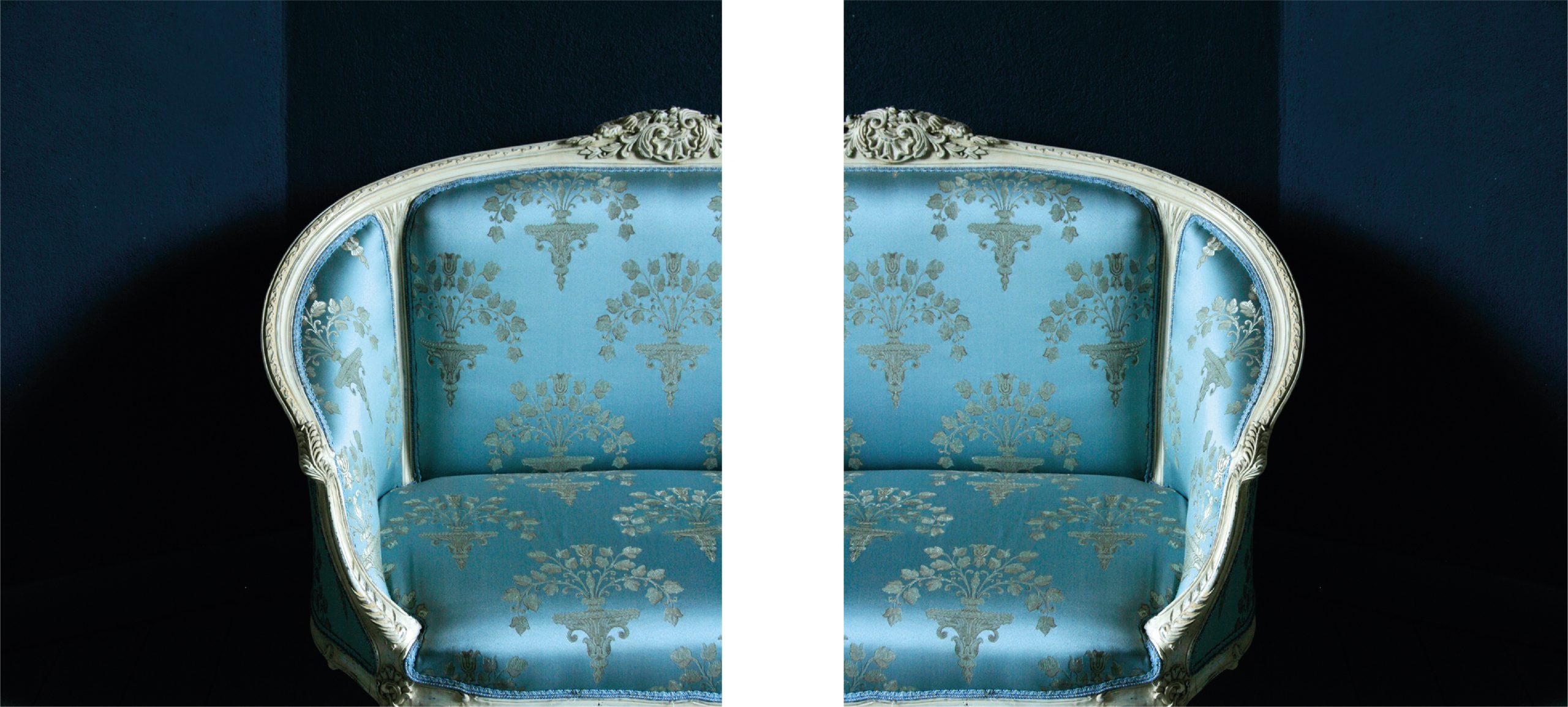
Keenly observed, sharply plotted and full of wit and brio, Mahesh Rao’s Polite Society reimagines Jane Austen’s Emma in contemporary Delhi to portray a society whose polished surface often reveals far more than is intended.
We humbler mortals would think that an actual house anywhere in the vicinity of the NCR and money without any visible employment, would mean a permanent state of bliss. But as it turns out, the rich have their own problems to deal with.
Read on to feel a sharp stab of sympathy for these six truly awful Rich People Problems!
The sheer futility of art fairs when by even a faintly glamorous foreign celebrity is nowhere in sight
“Excitement rippled across the front lawns as it emerged that there had finally been a sighting of Diana Ross. Determined to make up for other disappointments a group of jewelry designers from New Friends Colony elbowed their way through the main pavilion, gesturing at the tall figure being guided around some hanging steel pots. But the thrill dissipated soon enough-when it was discovered that the lady in question was in fact the wife of the Rwandan ambassador to India.”
The sordid places the best people have to descend to, to remain the best people.
“Nina would not go so far as to call it a humiliation but it was certainly depressing. The best people were being invited to flashy restaurants that overlooked the flyover. The venue for a book launch might be at the end of a corridor of sports shops in a shopping mall.”
Being aesthetically disappointed by your pet philanthropic projects
“Anyway, one night we were walking through the Marais and I was astonished to see a restaurant that served their cuisine. It seemed like fate so of course we went in. Such a disappointment, I can’t tell you. Everything tasted of some dreadful sour fermented liquid, and horrid bits of pork fat. I mean, it’s too awful of me, but after that meal I couldn’t help but feel far less sympathetic towards them as a people.”
The suffering experienced on private yachts
“He hated yachts, where he ran the danger of being confined for long periods of time with objectionable characters. He was also convinced that they were breeding grounds for virulent bacteria, which would only result in a boatful of passengers vomiting in the wood-paneled aisles.”
The stress induced by the precise science of invitation- dispensing
“There were questions of future utility to be balanced with the danger of current solecism. Favours sometimes had to be returned but in the correct measure and on the appropriate occasion.”
And that most indescribable of all horrors-the pain of watching a truly insufferable \ social climber ascend to wealth and prominence
“Year after year, Nina had watched Silky inhabit her role as Mrs Chhabra, settling into its splendid nooks as though she had been born to it. She had traded in her social insecurities for a jangly new personality, in whose service bad manners masqueraded as benevolent plain speaking.”
Category: Features
articles features main category
The British in India – an Excerpt
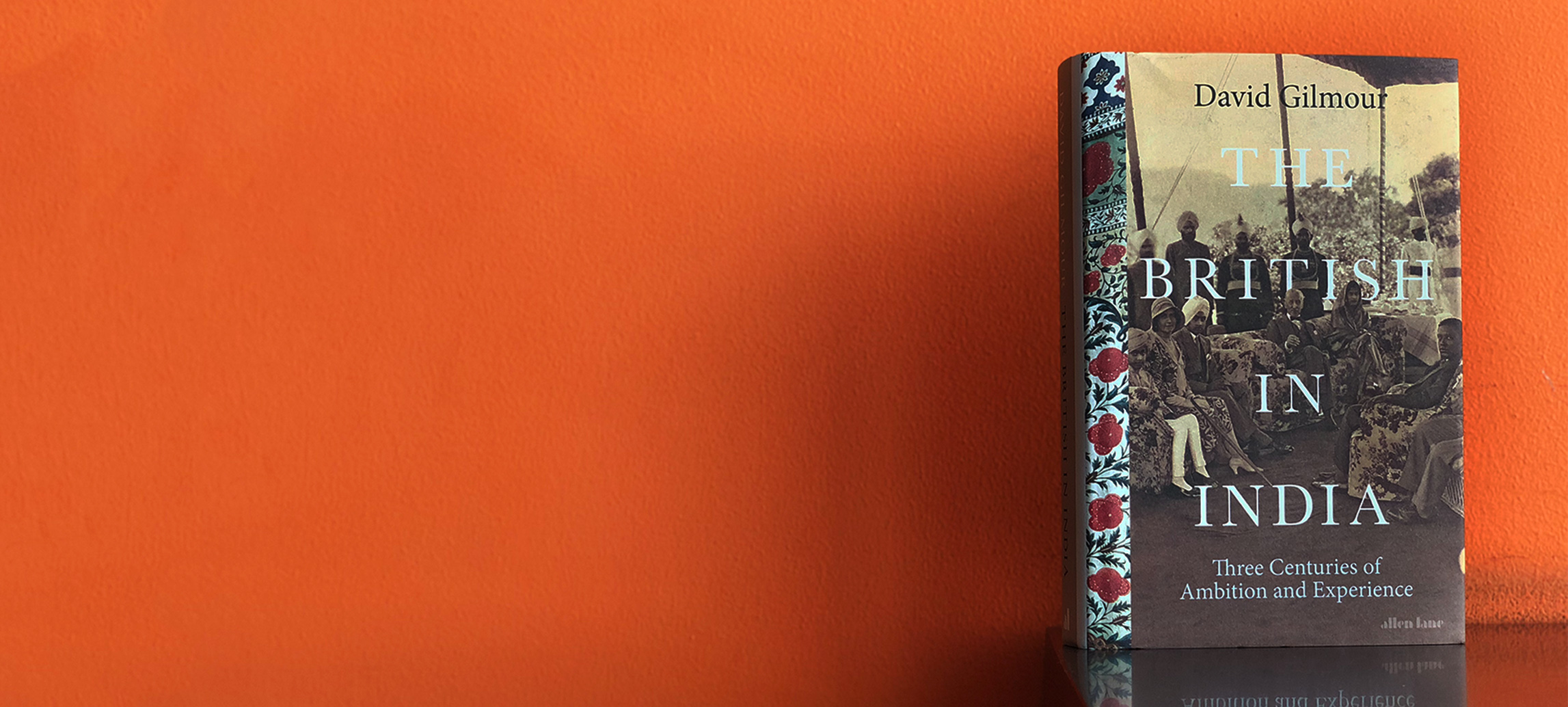
This book explores the lives of the many different sorts of Briton who went to India: viceroys and offcials, soldiers and missionaries, planters and foresters, merchants, engineers, teachers and doctors. It evokes the three and a half centuries of their ambitions and experiences, together with the lives of their families, recording the diversity of their work and their leisure, and the complexity of their relationships with the peoples of India. It also describes the lives of many who did not fit in with the usual image of the Raj: the tramps and rascals, the men who ‘went native’, the women who scorned the role of the traditional memsahib. Below is an excerpt from the book. Read on!
Salvation for Doyle came three years later with his marriage, after which his army report rated him as ‘regular, good and temperate’. The agent of this remarkable transformation was his wife, Margaret, the daughter of John O’Brien, another Irish soldier in India, a private in the Madras Fusiliers whose regiment had been sent north to help counter the Rebellion of 1857.* O’Brien was part of the relief force that arrived too late to save the British in Kanpur (Cawnpore) although it did manage to reach the besieged city of Lucknow. Badly wounded in the shoulder during the conflict, O’Brien decided to retire on his pension to Bangalore. Although the subsequent Doyle-O’Brien marriage might have seemed a purely Irish union taking place in a tropical ambience, this was not in fact the case. As the registry records demonstrate, John’s wife, Matilda, was an Indian girl who at the age of thirteen converted to Christianity a month before her marriage. Billy Connolly’s reaction to the news that he thus had Indian forebears and probably – given that Matilda had several siblings – a large number of Indian cousins, was both charming and bemused. Although the comedian still felt he was a ‘Glaswegian, Scottish person’ – large, white and hairy – he was ‘very proud and happy to be part Indian’ as well.
As Connolly’s story suggests, much of Britain’s relationship with
India, especially at a personal and popular level, has very quickly been forgotten. One cannot help wondering why his maternal grandmother, to whom he was very close, never told him that her own grandparents had lived in India and that her mother had been born in Bangalore; if she had been ashamed to admit her Indian ancestry, she could have left that bit out. The story also indicates how much of the British-Indian relationship, again at a personal level, was accidental. Most British people did not go to India to conquer it, govern it or amass a large fortune there. When Daniel Doyle enlisted in the 3rd Battalion of the 60th Rifles, he did not know that he would be sent to India and spend half his active life there as a soldier who would never be called upon to fight a battle. Like private soldiers, many British women and children lived in India by accident, without having chosen to do so; chance or unexpected circumstances had brought them there. If we look merely at Connolly’s own profession, the theatrical, we find a good number of future actors living fortuitously on the Subcontinent: a list of those who were born in India, or went to school or spent parts of their youth there, would include Vivien Leigh, Merle Oberon, Norman Wisdom, Lindsay Anderson, Spike Milligan, Tom Stoppard, Felicity Kendal and Joanna Lumley, many of whom will appear later in this book. If we examine an even smaller profession, that of writers, we find that Thackeray, Kipling, Saki, Orwell (and Orwell’s second wife, Sonya) were all born in India.
The British in this book lived in India from shortly after the death of Queen Elizabeth I until well into the reign of Queen Elizabeth II, a span of some three hundred and fifty years. Life for them was very different – and was led very differently – in diverse ages, just as it was in Britain. For nearly three-quarters of that time British settlements – and later possessions – were administered by the East India Company (EIC); for the last ninety years of the Indian Empire (1858–1947) they were under the direct rule of the British government. All divisions by ‘period’ are artificial and prone to generalization, but perhaps one can divide Britain’s time in India roughly into thirds. The first (and largest) had its share of war and violence, especially on the west coast, but was mainly a matter of small enclaves concentrating on trade. The second, stretching from the 1740s to the 1850s, was a period of conquest and expansion during which the East India Company, one of several rival European entities, emerged to become the paramount power in India. The third (and shortest), ending in 1947, was an era of consolidation and subsequent withdrawal. Yet even these divisions would need to be divided into contrasting subdivisions. As at home, the behaviour of the British in India was very different in the Regency period from what it was in the more earnest years of the early Victorians.
The British in India makes a highly original and engaging contribution to a long an important period of British and Indian history.
Stories at Work – an Excerpt

Is there a way to influence people without pushing data and analysis on them? Is there an effective way to drive change in an organization? Yes, through stories. Stories at Work will teach you how to wrap your stories in context and deliver them in a way that grabs your audience’s attention. Read an excerpt from the book to know more!
This book is designed to take you from being a believer of the power of stories to a seasoned user of stories in business, first by introducing you to the various elements of story work and then sharing with you the process you can use to unlock this enormous potential.
However, to do that I must first shift a belief most people have about stories. Imagine that you are one among ten people sitting in a conference room waiting for a very important meeting to start and someone in the room says ‘let me tell you a story’. Pause and think about what would be the first thing that would go through your mind. Take a minute.
If you are like 95 per cent of the 1500-plus senior leaders that I have run into during my workshops, your first thought would be along the line—‘why is he wasting our time’, ‘it’s time to be serious’, ‘what an idiot’, ‘has he not prepared for this’, ‘how long will this take’ or ‘why do I have to listen to it’. Very few of you, the 5 per cent, would say ‘I want to know what he has to say’ or ‘I hope it is interesting.’ That is the barrier stories face in business.
Most of you who have been in sales, and many of you who have not, would have at some point in time in the past been told by your boss ‘Kahaani mat batao!’ (Don’t tell me a story), when you were genuinely trying to explain the real reasons behind why something didn’t happen. Most people label stories as being made up, something to be used for entertainment or something usually for children.
While this myth will surely be shattered as we journey through the book, it would be useful to introduce you to my definition of business storytelling. Story is a fact. What we will do is wrap it in context and deliver it with emotion.
You might ask, ‘Can’t stories be created or made up?’
Of course they can, but not in this book and definitely not in the world of business. ‘Can’t I borrow from mythology?’ Of course you can if you have a huge memory bank for mythological stories and know how to connect them to business. But not in this book. In this book, and in the work I do, we will stick to stories being facts. After all, the currency of business is fact.
Stories at Work will teach you how to wrap your stories in context and deliver them in a way that grabs your audience’s attention.
How Desi Are You?

Take this quiz to find out!
Ways of Being Desi is a brilliant, provocative and deeply honest exploration of the ingredients that make us who we are.
Did You Know This About Shane Warne?

From the start of his glittering career in 1992, to his official retirement from all formats of the game in 2013, Shane Warne has long desired to tell his incredible story without compromise. No Spin is that very story. It offers a compelling intimate voice, true insight and a pitch-side seat to one of cricket’s finest eras, making this one of the ultimate must-have sports autobiographies! So before you pick up his bestselling memoir, here are some refresher points that may help you get to know the famous cricketer better.
Warne played his first Test match in 1992, and took over 1000 international wickets.
A dangerous lower-order batsman, Warne also scored over 3000 Test runs.
He played Australian domestic cricket for his home state of Victoria, and country cricket in England for Hampshire, where he was captain from 2004 -2007.
Famously he captained the Rajasthan Royals to victory in the first IPL in 2008.
After retirement from all formats of the game he turned to the commentary box where his strong opinion and sharp wit is a feature and will be found for the first time on Fox Sports this coming Australian summer.
Shane is not only one of the greatest living cricket legends: he is as close as the game has had since Botham to a maverick genius on the field and a true rebel spirit off it, who always gives audiences what they want. Do pick up your copy today!
Take The Gender Bias Out Of Your Work Ads
What Works: Gender Equality by Design discusses how organizations can leverage findings from behavioral science research to fight gender bias in the workplace—starting with job listings. Read an excerpt from the book below.
Attracting the right people instead of managing the wrong ones is one of the most important tasks any organization confronts. This is the mantra Google lives by—or, as Laszlo Bock writes: “Only hire people who are better than you.” In an interview on the company’s hiring and corporate culture, Eric Schmidt, the executive chairman, explained that in addition to judging the technical qualifications of potential hires, a key focus at Google was to determine whether they were passionate and committed to innovation.
Surely, allowing all Google engineers to spend 20 percent of their time developing their own ideas serves as a sorting device. It attracts creative, independent minds who invent Google News, Orkut, or a social networking site. The time is not written in stone nor necessarily utilized, but it matters as an idea: “No one gets a ‘20 percent time’ packet at orientation, or is pushed into distracting themselves with a side project. Twenty percent time has always operated on a somewhat ad hoc basis, providing an outlet for the company’s brightest, most restless, and most persistent employees—for people determined to see an idea through to completion, come hell or high water.”
Not many of those “seeing an idea through to completion, come hell or high water” are women. In the spring of 2015, a gender discrimination trial brought by a former junior partner at a venture capital firm in Silicon Valley drew renewed attention to the low fraction of women in technology. While in the end a jury found against the plaintiff, the low numbers were undeniable: fewer than 20 percent in most tech companies and even fewer in Silicon Valley’s venture capital firms.
Some argue that the “tech bros” mentality of Silicon Valley keeps women out and even discourages female students from focusing on computer science. Perhaps. Surely, the male-dominated environment does not help tech firms attract women. As we know, deviating from behavior that is expected of a social category, either by others or by oneself, can be costly. A woman who acts against the norms by definition doesn’t “belong”; not surprisingly, the fear of not belonging is influential.
Indeed, research by Boris Groysberg, Ashish Nanda, and Nitin Nohria (now dean of Harvard Business School) suggests establishing belonging turns out to be a major concern of female job seekers. They report that women consider more factors than men when screening jobs; in particular, cultural fit, values, and managerial style. There is a surprising silver lining to this research, however: it carries hidden benefits for women and their employers. In follow-up work, Groysberg identifies this scrutiny as one of the key variables explaining why women transition more successfully to new companies than men. Women know better what they are getting themselves into.
The researchers analyzed the performance of more than a thousand “star” analysts working for almost eighty different in- vestment banks over a nine-year period. Analysts were labeled “stars” if they were ranked as one of the best in the industry by Institutional Investor magazine. The team was interested in better understanding whether the analysts’ skills were portable when they switched companies. It turns out most analysts lost their stardom when they changed employers unless they moved to a better firm or brought their whole team along—with the exception of female analysts. Not only had the women studied a potential new employer more carefully before joining, they had also built their expertise differently than their male colleagues.
The top-performing female analysts had “built their franchises on portable, external relationships with clients and the companies they covered, rather than on relationships within their firms.” Or as one female star analyst put it: “For a woman in any business, it’s easier to focus outward, where you can define and deliver the services required to succeed, than to navigate the internal affiliations and power structure within a male-dominant firm.”
People choose organizations based on their preferences and their beliefs about whether or not they could thrive in a given organization. Messages shape those beliefs. Consider the messages sent when Lieutenant General David Morrison stated in a video posted on the Australian army’s official YouTube channel that he was committed to inclusion. “If that does not suit you, then get out,” Morrison flatly declared. “There is no place for you amongst this band of brothers and sisters.”
Acting in response to a 2013 investigation into sexual abuse, Morrison sent a strong message. In 2014, Morrison joined the Australian delegation to the Global Summit to End Sexual Violence in Conflict in London. Speaking again with admirable bluntness, he said that armies that assign more value to men than to women and tolerate sexual violence “do nothing to distinguish the soldier from the brute.”
Will these messages attract and retain soldiers valuing equality and inclusion? Time will tell. And while actions have followed his words, we all know that talk can be cheap. When and how messages affect behavior is a large field of inquiry in itself, but experimental evidence is rare. One example, however, is encouraging.
Robert Jensen and Emily Oster took advantage of the fact that cable television became available at different times in different parts of India, allowing them to trace whether attitudes and behaviors went along with exposure to the new information cable programming provided.
They found that the introduction of cable television was associated with improvements in women’s status in rural areas, including female school enrollment, decreases in fertility, as well as reported increases in autonomy and decreases in the acceptability of beating women and son preference. The information conveyed via cable television, often through somewhat surprising means, such as soap operas, exposed rural viewers to gender attitudes and ways of life, including within the household, more prevalent in urban areas. And it changed behavior.
Sorting mechanisms are powerful and often overlooked. Those charged with attracting the largest, most talented pool of applicants should make sure they scrutinize the messages, overt and biased, conveyed in their advertisements, websites, or other communications.
Michael Lewis on The Fifth Risk: 'The election happened … And then there was radio silence'

Michael Lewis explores why government bureaucracy is the surprising threat that we’ve all been ignoring.
The morning after Trump was elected president, the people who ran the US Department of Energy – an agency that deals with some of the most powerful risks facing humanity – waited to welcome the incoming administration’s transition team. Nobody appeared. Across the US government, the same thing happened: nothing.
People don’t notice when stuff goes right. That is the stuff government does. In The Fifth Risk, Michael Lewis reveals the combustible cocktail of wilful ignorance and venality that is fuelling the destruction of a country’s fabric. All of this, he shows, exposes America and the world to the biggest risk of all. It is what you never learned that might have saved you.
People don’t notice when stuff goes right. That is the stuff government does. In The Fifth Risk, Michael Lewis reveals the combustible cocktail of wilful ignorance and venality that is fuelling the destruction of a country’s fabric. All of this, he shows, exposes America and the world to the biggest risk of all. It is what you never learned that might have saved you.
“It surprised me in the first place that this supposedly grey, boring enterprise, called our Government, was actually filled with interest. It was filled with interesting people – people who deserved to be characters in a story. I almost made a point of trying to find and focus on the parts of the federal government that were fifth risk-like. They weren’t the things everyone was talking about (they weren’t the state department, they weren’t the justice department). I found that when you go to the Commerce Department or the Agriculture Department or the Energy Department you find mission critical things going on. Things that if you knew about, you’d be terrified at the thought they might be mismanaged.

I was surprised by just how ignorant the society is of its own government and how little the government had done to address that ignorance.”
There’s a reason they exist. It is in the popular imagination that the government is this thing that is sort of created over time in a kind of senseless way because nobody is disciplining it or watching it etc. In fact, it’s something like the opposite. What’s in the government is usually there for a very good reason and if people have become indifferent to it, or even contemptuous of it, it’s because the government has been doing its job so well that you’re not worried about it … It became a game for me to airdrop into the place you couldn’t possibly think there was a story and let me show you there’s a story and how easy it was to do that.
The other thing is that the government is also absolutely horrible at explaining itself to the public (I’m sure this is true [in the UK]). It’s the opposite of Trump, it’s like it has no capacity to market itself. All of it [the US government] is misnamed. So the idea that this thing called the Commerce department in the United States is actually the department for weather and climate – no one knows that. Even to people who work in government you say “where do you think the 8 billion dollars the commerce department spend every year goes?” and they say trade or business in some way. No, it’s the accumulation of data about the society and the vast, most expensive part of it is the accumulation of weather data.
So I guess what I’m saying is, I was surprised by just how ignorant the society is of its own government and how little the government had done to address that ignorance.”

The Fifth Risk by Michael Lewis is available now.
The other thing is that the government is also absolutely horrible at explaining itself to the public (I’m sure this is true [in the UK]). It’s the opposite of Trump, it’s like it has no capacity to market itself. All of it [the US government] is misnamed. So the idea that this thing called the Commerce department in the United States is actually the department for weather and climate – no one knows that. Even to people who work in government you say “where do you think the 8 billion dollars the commerce department spend every year goes?” and they say trade or business in some way. No, it’s the accumulation of data about the society and the vast, most expensive part of it is the accumulation of weather data.
So I guess what I’m saying is, I was surprised by just how ignorant the society is of its own government and how little the government had done to address that ignorance.”

The Fifth Risk by Michael Lewis is available now.
Check out the #FeministRani Moments of these Wonderful People
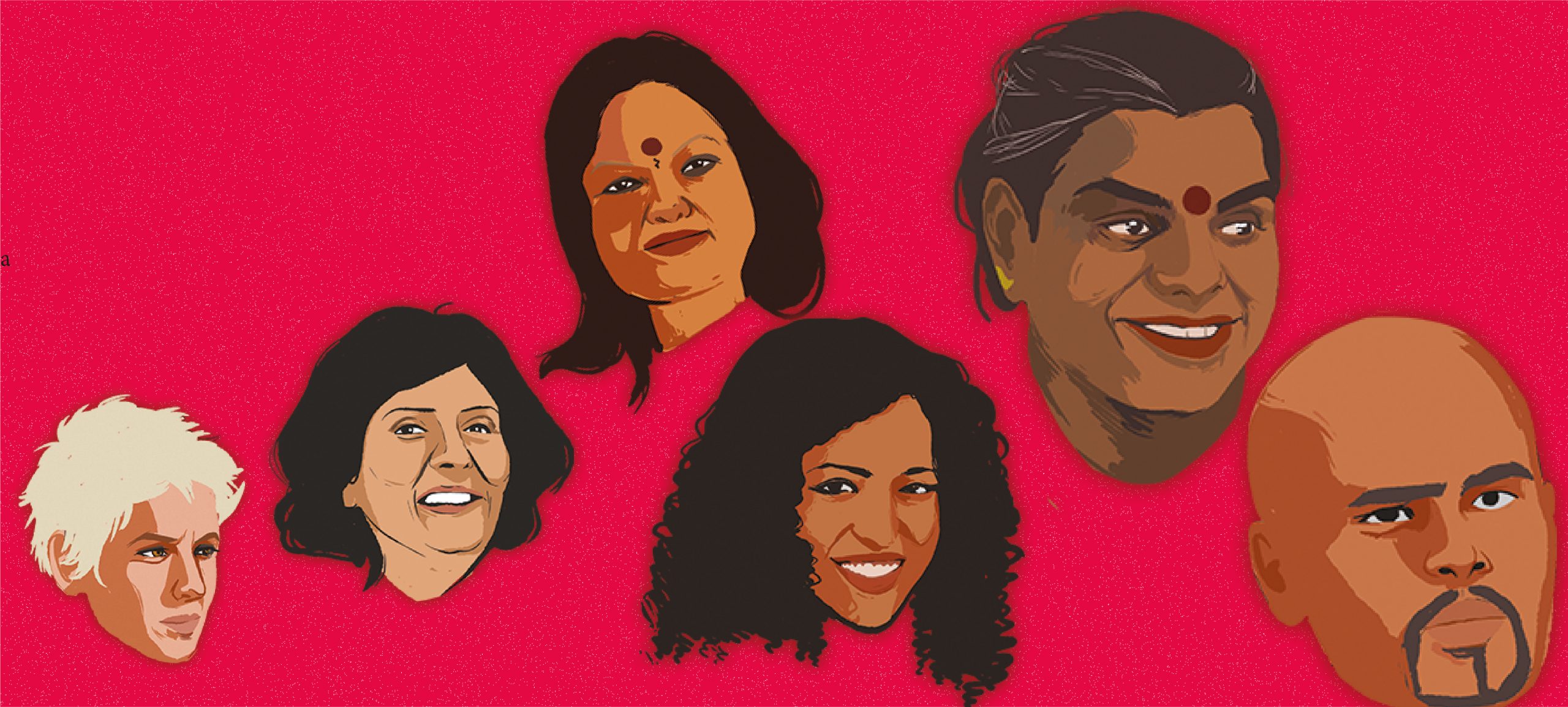
Feminist Rani is a collection of interviews with path-breaking and fascinating opinion leaders–Kalki Koechlin, Gurmehar Kaur, Sapna Bhavani, Gul Panag, Rana Ayyub, and many more.
These compelling conversations provide a perspective on the evolving concept of feminism in an age when women are taking charge and leading the way.
Kalki Koechlin
Actor, Writer, Activist

Gurmehar Kaur
Author, Activist, Youth Leader

Sapna Bhavnani
Philanthropist, Hair Stylist, Rape Survivor

Gul Panag
Actor, Politician, Entrepreneur

Malishka Mendonsa
Radio Jockey

Rana Ayyub
Journalist

Sohrab Pant
Comedian

Shree Gauri Sawant
Transgender Activist

Feminist Rani is a collection of interviews with path-breaking and fascinating opinion leaders.
No Spin – an Excerpt from Shane Warne's Autobiography

In No Spin, Shane offers a compelling insight into how a boy from Black Rock changed the face of cricket forever. An excerpt from the book below!
I said, ‘Simone’s a wonderful girl, mate – let’s get it done.’
It felt great on the surface but deep down I’d begun to feel I shouldn’t be doing this. Or maybe I should. Or shouldn’t? Perhaps it’s the way everyone feels in the days before they get married, I thought. Who knows? It was nothing to do with Simone. She looked so beautiful on the day, and in the year and a bit since we’d got engaged she’d easily become my best friend. We were good together, she understood me and me her. But I could feel my life changing at frightening speed and I just wasn’t sure it was the right time.
Shaun Graf, my Victorian mentor and team-mate, was MC in the marquee. We had 200 people and Simone did a great job, decking it out magnificently and making sure the detail was spot on. Everyone got plastered. We stayed at the Como Hotel – a fantastic place. My brother was best man, with the groomsmen being Merv Hughes and a good mate from my Academy days, Stephen Cottrell. Simone had her sister, Lisa, and best friend, Sharon, and her cousin Tanya.
A guy called Tuffy, who used to play guitar in a Hawaiian shirt at a place called City Rowers in Brisbane, did the entertainment – he was better than brilliant, playing all the great covers, many of them with Steve Waugh and Mark Taylor on stage. ‘Tugga’ loved ‘Khe Sanh’ and Tubby loved ‘Bow River’, the two Cold Chisel classics. We all had such a happy night. I remember thinking it had been the best day of my life. What was all the worry about?!
On a slightly different subject, I can hear the question, ‘Steve Waugh was at your wedding?’ Well, he was. I was close with Tugga back then. We toured Zimbabwe together in 1991 and he asked me to come and play club cricket with him at Bankstown – he even spoke to the club about getting me a job behind the bar. We hung out a lot in those days and I did consider going to play in Sydney to try to get into the New South Wales team but, as I’ve mentioned, Simon O’Donnell set me straight on that one! Tugga wasn’t in the Test side when we got to know each other well; he’d been left out for a while but came back against West Indies in 1992/93, batting at number three. Then he settled into the middle order, which suited him best.
He became a completely different person when he took over as captain. All that worship of the baggy green – some of the guys went with it, like Lang, Haydos and Gilly, but it wasn’t for me. I think he turned into a more selfish player when he had his second run in the Test team, which changed him. My philosophies on the game were more aligned with Tubby than with Steve; though, in fairness, Steve was a successful cricketer – if in a very different way to AB and Tubs, whose style and direction I much preferred. It’s no secret that Tugga and I don’t see eye to eye these days.
Simone
Simone and I have three amazing children. We spent 13 great years together, created a beautiful home in Middle Crescent, and even though we went through a few dramas, we look back now and can have a laugh.
My relationship with her is fantastic. We have brought up Brooke, Jackson and Summer together. We think differently about parenthood – I’m a lot stricter in many ways – which has been a good thing for them as they’ve seen different points of view. She understands me, I understand her and we get along fine and are friends.
There’s a perception out there that every relationship is driven by the same rules – society’s white picket fence, if you like. Mum, Dad, wife and kids, good job, solid home – and above all loyalty to your partner. But reality isn’t like that. Simone and I made our marriage work. The intimate details of how are not for the public domain. Do people really think we’d still be such good friends if it was all as bad as people make out?
As I’ve said, my life was going nuts. I think maybe we were more sister and brother – we loved going to the movies, playing pool, seeing concerts, hanging out at the pub, but perhaps we didn’t have that emotional lock-in. My respect for her remains to this day.
In the early years together we were really happy, enjoyed creating homes and sharing day-to-day life with friends and family – all the normal stuff that young couples do as they grow together. The trouble with cricket is that it invades your space, occupying everything from conversation to consistency in a relationship.
Honest, thoughtful, fearless and loved by millions, Shane is always his own man and this book is a testament to his brilliant career.
Tips for the Solo Traveller

Don’t settle for an average life; travel the world, expand your horizons and make the sky your roof. That is something travellers across the world will always tell you. Travel excites and amazes all of us; it thrills our senses and we all long for it.
Solo travellers make the world their cocoon and breathe in the stars. They become Shooting Stars. This is what the author of our book; The Shooting Star did. At the age of 23, Shivya Nath gave up her home, sold most of her belongings and embarked on a nomadic journey that has taken her everywhere. She has travelled to over fifty countries and her new book is a goldmine full of travel tips, especially for solo female travellers.
Here is a list of five tips for your next solo adventure from her:
Always protect yourself from the sun. Carry appropriate clothing and also accessories.

Seek out the local flavour.

Discover the joy of slow travel.

Travel light.

If someone unknown is acting too friendly or too helpful, they probably are. Be aware!

With its vivid descriptions, cinematic landscapes, moving encounters and uplifting adventures, The Shooting Star is a travel memoir that maps not just the world but the human spirit. For more posts like this, follow Penguin India on Facebook!