Publish with Us

Follow Penguin

Follow Penguinsters

Follow Penguin Swadesh

Your Go-To Guide to Choosing the Right Make-up

Skin Rules by Dr. Jaishree Sharad is a revolutionary book which talks about the best beauty hacks, making your skin radiant in just six weeks!
In this book, Dr. Jaishree Sharad talks about the fundamentals of the road to a glowing skin. From identifying your skin type, paying attention to the fine print on labels of various cosmetic products, to the newest advancements in skincare treatments. While solving all your skin problems this book also provides you with some of the best tips in order to choose the right make-up for yourself, keeping in mind what suits your skin and would’ve have the best effect.
Here are a few tips in order to help you choose the right make-up:

Never use alcohol-based toners and make-up removers. Alcohol is known to take the moisture away from the skin, leaving it dry. Instead, using oil-based make-up removers, balms, micellar water or rose water is better.

~

When buying make-up supplies, look for Matte products and avoid thick or solid make-up products like stick or creamy compact foundations.

~

A serum can be used as an effective primer before make-up, as it feels light on the skin and doesn’t create a thick film on the face. Choose a serum that will cater to your specific skin type.

~

If you have a family history of pigmentation, then it is advised that you avoid foundations and concealers as they can make it worse.

~

If you suffer from dry skin and have crossed your twenties, then you should choose a mousse or a cream or oil based foundation, making your skin look smooth and even.

~

If you are in your teen or twenties, you should opt for a non-oily, lightweight liquid foundation minimizing your breakouts.

~

If you have a highly acne prone skin, you should opt for a non-comedogenic foundation with salicylic acid. Another option could be Matte-finish liquid foundations.

~

Using a liquid concealer, for oily and acne-prone skin is the best to hide the blemishes.

~

Do not use fragrance-based make-up if you have sensitive skin.

~

If you have chapped lips, do not use matte lip cosmetics or smudge-proof lipsticks. They lack oils and certain emollients that helps keep the lips hydrated. Using glossy lipsticks and choosing lighter colours is better, as darker shades have more chemicals and make the lips drier.
 
You’d be amazed at what a short, six-week routine can do for your skin. So what are you waiting for? Pick up your copy of Skin Rules now!

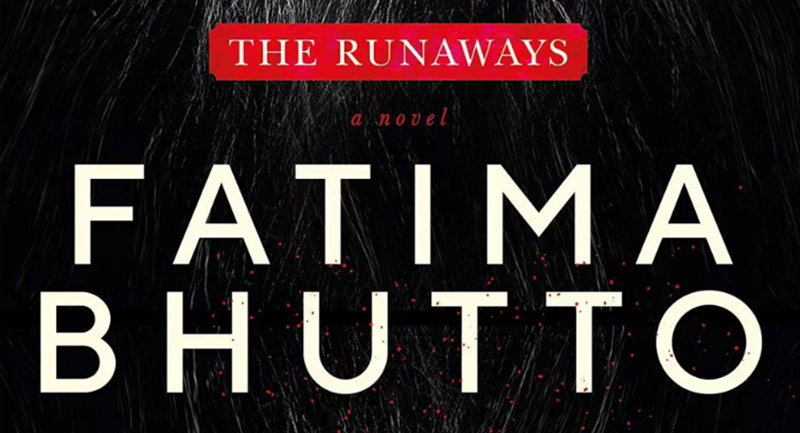
Meet Anita from Fatima Bhutto’s ‘The Runaways’

Anita Rose lives in a concrete block in one of Karachi’s biggest slums, languishing in poverty with her mother and older brother. Determined to escape her stifling circumstances, she struggles to educate herself, scribbling down English words-gleaned from watching TV or taught by her elderly neighbour-in her most prized possession: a glossy red notebook. All the while she is aware that a larger destiny awaits her.
Here is an excerpt from Fatima Bhutto’s new book, The Runaways, that will introduce us to Anita Rose.


The moon hangs low in the night.
Anita Rose Joseph closes her eyes. She opens them.
The stars are drowned by Karachi’s endless curls of dirt and smog, the glow of the terminal, and the floodlights mounted to blind the road leading towards Jinnah International Airport.
Anita Rose keeps her gaze down, away from the towering billboards advertising Gulf Airlines and skin- lightening creams. ‘Max Fairness for Max Confidence,’ a purple- and-black advertisement promises over the smiling face of a
famously fair cricketer. She walks alongside the queued- up Pajeros and Toyotas, impatiently and pointlessly honking, climbing the long slope to the departure terminal.
Under the cover of darkness, before the floodlights bleed into dawn, a mynah bird, with its yellow banditbeak and orange eyes cut through its coarse black plumage, sings.
Anita lifts her eyes for a moment, looking for the lonely bird. But in the early hours of the morning she can see nothing in the dark, empty sky, not even the dacoit dressed up as a mynah bird. The moon carries only the heaviness of the city, suspended in the charcoal sky.
Anita pulls her dupatta tighter around her face. She closes her eyes, irritated by the blinding floodlights, and opens them, breathing slowly, reminding herself of what she must do.
She holds her passport and red notebook tight against her chest and exhales deeply. Aside from a small bag with a necessary change of clothing and some make- up, she has no other luggage.
Ahead, a Pajero inches forward; it brakes at the checkpoint manned by armed commandos. A Ranger with a submachine gun strapped to his chest walks towards the Pajero, but no one gets out of the car. The front window rolls down, letting out a blast of English pop music as a driver relays the name of a VIP. Anita moves slowly, not wanting to draw attention to herself. She stops just before she reaches the jeep and waits for it to pass.
Even with the loud music, the rumble of the running engine and the sound of the commandos circling the car, lifting the bonnet, opening the back, searching it for explosives, Anita Rose can still hear the mynah bird.
On Netty Jetty, overlooking the mangroves that crawl thin just before the Arabian Sea, kites swarm the sky like a thick cover of clouds, waiting for lovers to throw chunks of meat to them – or if the lovers cannot afford the bloody parcels sold on the bridge, then small doughy balls of bread. In the chaos of Karachi’s congested traffic, surrounded by barefoot boys promising in their high- pitched voices that your dreams will come true if you feed the hungry, Anita always felt protected by the soar of kites. And though she is almost certain that the mynah she hears so late at night is all alone, she is also almost certain that it has come to walk her safely through the airport, with its yellow feet and bandit- beak, and out of this city forever.
The Pajero’s engine is still running and the fumes from its exhaust choke the air around Anita. Coughing into her
palm, she doesn’t hear the VIP’s name, but she can see the silhouette of a young woman, voluminous hair held back by sunglasses, perched on the crown of her head. The VIP presses a button and her window begins to open. No one lowers the music; it plays at full volume, percussion and thumping bass. As the VIP moves, a piece of jewellery reflects everywhere, a thousand rays of iridescent light.
The Ranger with the Heckler & Koch cranes his neck to see through the narrow slit. As salam alaikum, he salutes the VIP briskly.
Anita looks behind her, there’s no one there. No one has followed her here.
As the Pajero raises its windows, muffling the music, and begins its climb towards the terminal, and before airport security can see her, Anita traces the shadow of a cross along the hollow of her clavicle. No one has noticed she has gone. No one except the birds.
Anita Rose lifts the thumb that drew the sign of the holy cross to her lips and closes her eyes for a kiss.

This city will take your heart, Osama had told her. You don’t know what Karachi does to people like us. Take your heart, do you hear?
Anita had not understood the rage in his voice then. She had not understood that he was angry for her, long before anyone had hurt her. Anita didn’t like it when she didn’t understand Osama. No matter her age, those moments made her feel just as puny and small as she had been the first time she knocked on his gunmetal door, all those years ago.
It was late at night and Anita had snuck out of her mother’s suffocating home to be with him, with Osama comrade sahib. Her only ally. Her one true friend. The evening was perfumed by champa flowers that bloomed amongst the garbage in Machar Colony and that summer, just before the monsoons, the scent of the white flowers was so strong Anita could no longer smell the sea.
‘How do I protect myself?’ she had asked him. Osama ran his hand through his dishevelled silver hair. He lifted his spirit and drank the medicinal liquid slowly, before placing the glass smudged with his fingerprints on his knee and leaning forward, so close that Anita could count the fine grooves of his iris, the lines that cut and coloured the warm brown of his eyes.
‘You take their heart,’ he whispered, even though no one could hear them on the roof – not the trees that wilted in the summer heat, not the constellation of yellowand-white flowers that bloomed in the rain. ‘Anita Rose,’ Osama caught himself on her name, ‘promise me: you take theirs first.’


The Runaways is an explosive new novel that asks difficult questions about modern identity in a world on fire.

Meet Monty from Fatima Bhutto’s ‘The Runaways’

On one side of Karachi lives Monty, whose father owns half the city. But Monty wants more than fast cars and easy girls. When the rebellious Layla joins his school, he knows his life will never be the same again…
Here is an excerpt from Fatima Bhutto’s The Runaways that will introduce you to Monty!


During the summer, Papa spent about two weeks with the family in their Sloane Street flat, before work called and
he had to return to Pakistan or China or Saudi Arabia for meetings. Even though he spent his evenings having drinks with business associates or else on conference calls, pacing through the park with his earphones connected to his phone, disturbing the birds, it was the most time Monty and his father spent together in any given year.
When Monty was ten, Papa had taken him to Windsor Park and driven through the animals with the radio on Kiss FM, humming along to all the summer hits while Monty cowered in the back seat as lions and baboons circled the car. ‘Sit up, Monty,’ his father ordered, ‘look at the beasts! It’s like being on safari in Africa!’
Monty could see them just fine from where he sat, glued against the door of their rented car so that the animals couldn’t see his head in the window, but he would attempt a straightening- up, first making sure that his seatbelt was secure.
‘Can you see the lions? Can you see them from there?’
Yes, Monty would assure Papa, yes – you could see them a mile away, you could smell their muddy, earthy, dirty- skin scent even with the windows closed.
‘Be brave, beta,’ his father eventually snapped, ruining their father– son day without stopping to consider that Monty was being brave. He had been using his reserve tank of brave to get through the safari park where animal roamed free all day.
The next summer they didn’t go back to Windsor, but to Centre Court at Wimbledon. Monty watched Roger Federer play. He had nurtured a feverish crush on Anna Kournikova, with her short white skirts and tanned, endless legs, but she no longer played, not at Wimbledon at least. The sun – rare for London – had given Monty a migraine and he spent the day trying to hide it from his parents, who drank Pimm’s – even Mummy, because Papa told her there was no alcohol in it – and ate strawberries and cream like real English people.
Everything Monty knew about culture he had learned in London. Watching plays in the West End, eating fine food in Mayfair, watching his father buy tailored suits on Savile Row and feeling not pride, but confidence, when he saw his father step out of a dressing room in expensive cloth cut to his precise measurements. Akbar Ahmed stood with his arms spread akimbo, like the Rio Jesus, while a whitehaired English tailor adjusted his cuffs, stepping back admiringly, before bending to his knees to attend to the fall of the elegant charcoal- black silk trousers.
When he was eighteen, Papa said, he would bring Monty to Anderson & Sheppard for his first bespoke suit. Until then, Monty had to study and work hard and make his father proud. The rewards would follow – nothing could be denied to a man who faced his responsibilities head- on. Nothing could be denied to a man who upheld the honour of his family’s name.
This summer, the summer Monty turned seventeen, Akbar Ahmed couldn’t find the time to spend with his son. There was no boating in Regent’s Park, no steaks at The Wolseley, no strawberries and no Pimm’s. I’m busy, was all Papa said, can’t make it. Tomorrow, day after, at the weekend.
But Monty had walked by Ladurée, behind Harrods, and seen Papa sitting outside under a pale- green umbrella, sipping an espresso by himself, just watching the world go by. He hadn’t looked very busy then. Monty paused, standing on Brompton Road, and wondered whether he should approach his father, whether he should walk across the street and join him, sitting down for a coffee, but Papa looked so happy, so content, sitting at his table alone that Monty bowed his head so his father wouldn’t see him and walked back home without saying anything.


The Runaways is an explosive new novel that asks difficult questions about modern identity in a world on fire.

Meet Sunny from Fatima Bhutto’s ‘The Runaways’

Far away in Portsmouth, Sunny fits in nowhere. It is only when he meets his charismatic, suntanned cousin Oz-whose smile makes Sunny feel found-that that he realizes his true purpose.
Here is an excerpt from Fatima Bhutto’s The Runaways that will introduce you to Monty!


Cricket had been the early love of Sunny’s life. It was a gentleman’s game, a slow, elegant sport that cultivated not only stamina in a player, but also subtle perception. But when his modest athletic scholarship to the University of Portsmouth came in, it was on the strength of his boxing, not his fast bowling, that Sunny had been selected.
Whatever his own personal failures, Sulaiman Jamil had always cheered his son’s successes. Sunny’s victories couldn’t come fast enough. First, a Bachelor’s degree from a marvellous university, next a beautiful job in a booming industry, then an office in the city, a Jaguar, a warm and loving wife, some children. Mixed- race, Hindu, Muslim, Sulaiman Jamil didn’t mind.
That was all Sunny ever heard at home.
Be someone else. Do something else. Be better. Fit in more, try more, work hard. Don’t get stuck in a dead- end job, don’t marry the first lady who comes your way, don’t be a slave all your life. Pa repeated his mantras, smoothing down his soft brown hair, its colour fading with age, absenting himself from his life’s own failures, transmuting his personal traumas into general advice.
I only want you to be happy, he told his son repeatedly. What father can rest until he sees his boy settled?
It made Sunny laugh, coming home from running in the park to see his pa sitting at the kitchen table, the acceptance letter with the second- class stamp propped up before him. The first time that he’d done right by him, it felt like. He would major in business studies for Pa too; he would have preferred Islamic history or even sports therapy, but there was no money in that, no future, Pa said. And a future was all a man really ever had.
‘My boy,’ his widowed pa, Sulaiman Jamil, sang softly when he held the thin acceptance letter in his hands. Sunny had left the envelope with the second- class stamp on the kitchen counter for his father to see. It was one of the few times he had sought his approval. ‘What a thing you’ve done . . . what a marvellous thing you’ve done . . .’ As though Pa knew all about the place, as if he’d got in himself. He hadn’t gone to university, only a polytechnic back in the old country, but his parents couldn’t afford it and, after a year, Pa was forced to drop out. It was a story he told Sunny over and over, embellishing the drama of his life with extra details in every telling.
It had been the first of his life’s tragedies.

‘Look at you now,’ Sulaiman Jamil smiled at his young son. This was the moral of the story: Sulaiman Jamil had fought the karma of his life to build something new, something better for his precious child, his only boy. ‘We did all right, didn’t we?’
Sunny nodded at his pa.
‘You and me, the two of us? We did good, didn’t we?’ Standing at the kitchen counter, Sunny watched his
father’s eyes fill with tears. He bowed his head and nodded once more.
‘You have a home, you have a city, a country even – a place in the world.’ Sulaiman Jamil’s voice broke with emotion. ‘You have a father who loves you. What more could your poor papa have given you?’
Just a moment ago, holding his University of Portsmouth John Doe acceptance letter, they were happy. Sunny was happy. He felt it. But it was gone now. Happiness didn’t hold. Nothing lasted very long for Sunny Jamil.
‘Nothing,’ Sunny mumbled, reaching out his arm to squeeze his old pa’s shoulder, massaging him for a moment, before leaning forward to embrace him. His pa. His protector, his defender. ‘I’ve got everything I need.’


The Runaways is an explosive new novel that asks difficult questions about modern identity in a world on fire.

The Battle Within: Seven Verses of the Bhagavad-Gita in 'Godsong'

‘Let’s listen’ writes Amit Majmudar as he begins to masterfully play out each note of the Godsong. Stretched taut with layers of meaning, each artful stroke plays on the chords of our shared humanity and pulsates with vivid emotions of deeply lived relationships. This is a song of dichotomies, dualities and multiplicities that weave a web of dilemmas that all human beings must battle through to reach their truth and to achieve their higher self. As man struggles to find light in this darkness, there is Krishna playing his magical melody while Arjuna, the greatest warrior, learns to sing along. Together on the battlefield, God in his human form and man in his search for godly wisdom set the stage for a friendship that levels all hierarchy.
                                                                           Sanjaya said,
                                                              Having said this to Krishna,
                                                             Arjuna, the scorcher of foes,
                                                                  Said, “I will not fight,”
                                                                         And went silent
 
“Sanjaya, who has the power to witness events without being physically present for them, narrates the action. Arjuna tells Krishna how he feels and how he has a horror of fighting his own relatives. Arjuna throws aside his weapons and sits down.”
 
                                                       No one for an instant ever really
                                                            Stands there doing nothing.
                                                           Gunas, born of nature, make
                                                   Everyone do things, even if unwilling.
 
Krishna explains that everyone has to act in some way. You can do nothing, but you cannot not do. Even inaction is a kind of action and bears a karmic charge.”
 
                                                                Pierced by infinite pity,
                                                                     In despair, he said,
                                                  “Seeing this— my own people, Krishna—
                                              Drawing close because they’re dying to fight. . . .
 
“Arjuna’s despair arises from the conflict between his dharma as a family member and his dharma as a warrior. The Gita is occasioned by a moment of supreme tension between these two simultaneous definitions of dharma. An action which may seem personally adharmic (shooting your own cousins, in Arjuna’s case) can uphold the larger dharma.”
 
                                      While the unwise work from their attachment

                                                        To action, Arjuna, a sage

                                                  Should work without attachment,
                                                Longing to hold the world together.
 
“Just as Krishna sustains the universe, Arjuna must sustain a dharmic society. To do this, both of them must act. Yet these actions must be carried out with detachment, and with the focus on the task itself.”
 
                                                        For the unattached and free
                                                  Who fix their minds in knowledge,
                                                          Action, working toward
                                                        Sacrifice, dissolves entirely.
 
“Krishna describes the ideal man of action, with a focus on his detachment, and how he “accrues no guilt.” Such a yogi’s work in the world takes on the nature of sacrifice— an offering to the Gods. He goes on to praise yogic knowledge and how it dissolves karma.”
 
                                                       His happiness within, his ease
                                                    Within, and hence his light within,
                                                       This yogi goes up to extinction
                                                       In Brahman, becomes Brahman.
 
“Once the yogi attains extinction in Brahman, he sees all things and people as fundamentally equal because they are fundamentally the same. That is nirvana, a state of bliss and peace (…).”
 
                                                             Bound by your own karma,
                                                               Born to your own nature,
                                                  What you in your confusion do not want
                                                  To do, you will do. Even against your will.
 
“Krishna exhorts Arjuna to take refuge in him, insisting that Arjuna is going to fight this war anyway, even against his will.”


Does Arjuna awaken to his Dharma? Read Godsong to find out!

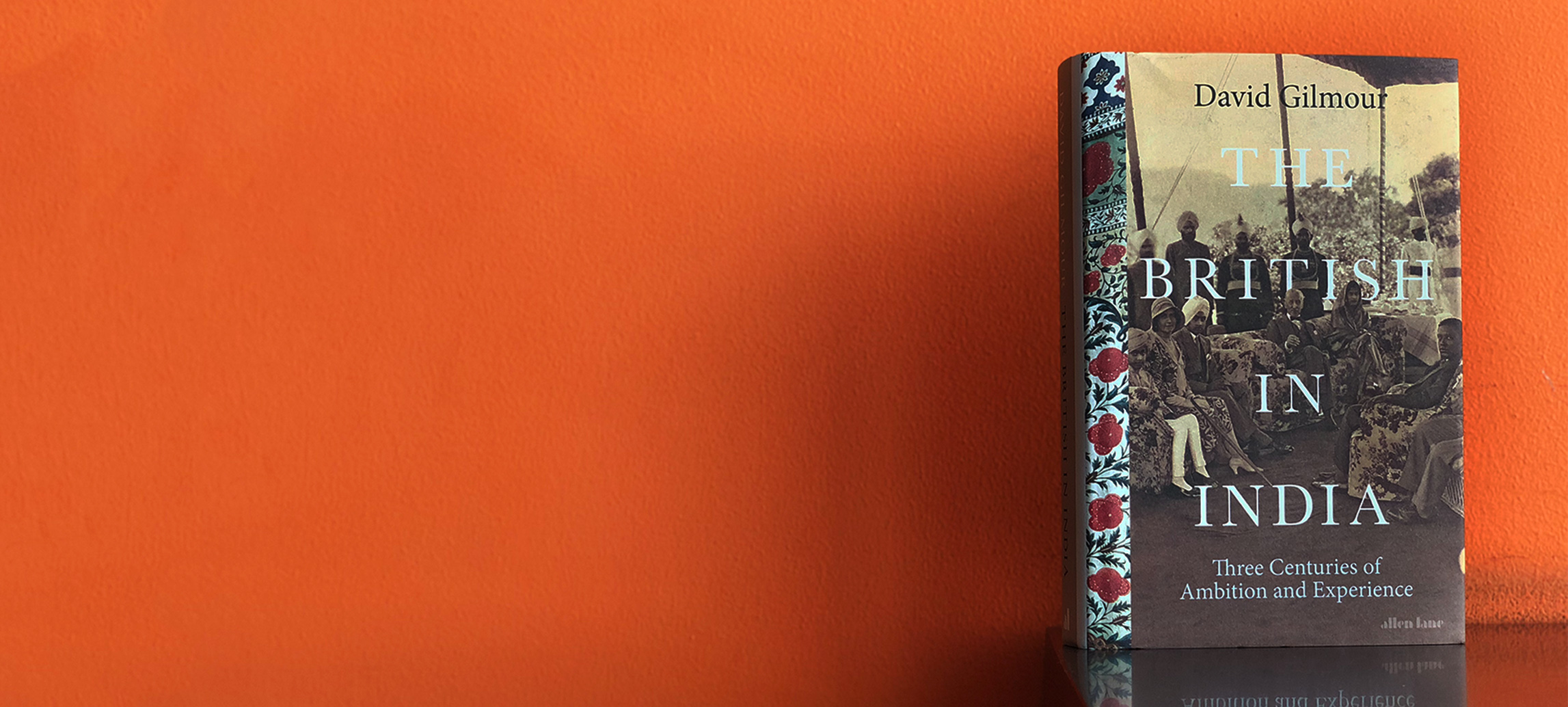
5 Britons from the Raj that you should know about

The British in India by David Gilmour records the life of various Britons that went to India – viceroys and officials, soldiers and missionaries, planters and foresters, merchants, engineers, teachers and doctors. The British had a stronghold in India and ruled the land right after the reign of Queen Elizabeth I till well into the time of Queen Elizabeth II. Recalling the span of three and a half centuries of their reign in India, this book brings to life the the work, leisure and the complexity of the relationships of the British to India. This exceptional work by David Gilmour gives a scholarly insight into the lives of people, about whom, nothing has been written before.
Here are 5 people you would not know about who lived in India during the British Raj:
Richard Wellesley
Rischard Wellesley was the second governor-general of India from 1798-1805, succeeding Lord Cornwallis. He amended and intensified the process of transformation for the British civil servants in India. He was of the opinion that “no greater blessing”, he said, could be “conferred on the native inhabitants of India than the extension of the British authority, influence and power”. Thus, there was an influx of young Englishmen who saw themselves as imperial rulers and administrators in India.
Kay Nixon
Kay Nixon, after the end of her first marriage decided to go to India for a new beginning in 1927. She was an artist and had made her career as an illustrator of Enid Blyton’s stories. Coming to India, she continued her career by drawing for the Times of India, making animal posters for Indian State Railways, and also painting pictures of the horses of various maharajas.
George Clerk
George Clerk was the two-time governor of Bombay from the years 1848 to 1850 and 1860 to 1862. He was of the view that the British rule in India could only be permanently maintained if it was administered “in a spirit of tolerant and reasonable respect for the usages and the religions of the different nations and tribes there”.
Cecil Earle Tyndale-Biscoe
Cecil Earle Tyndale-Biscoe went to Kashmir in 1890 and was principal of the Church Missionary Society’s boys’ school in Srinagar for almost half a century. He was of the view that Kashmir was morally a stagnant cesspool but was determined to reform the land and rid it of the its moral corruption. He had assembled a staff of Oxford and Cambridge graduates in order to help him in achieving this aim.
Hariot Dufferin
Lady Dufferin made the most valuable contribution amongst any vicereine when she successfully established the National Association for Supplying Female Medical Aid to the Women of India in the year 1885. Indian women, during the time needed female doctors and nurses as they were barred from the company of unrelated men. She came to be known as the pioneer of medical care for Indian women and her association had treated four million women by 1914.


This exceptional work of scholarly recovery portrays individuals with understanding and humour, and makes an original and engaging contribution to a long and important period of British and Indian history.

A Brief History Of Things: by Neelum Saran Gour

Neelum Saran Gour is the author of Grey Pigeon and Other StoriesSpeaking of ’62Winter Companions and Other StoriesVirtual RealitiesSikandar Chowk Park and Song without End and Other Stories. She is a professor of English at the University of Allahabad.
In this special piece by her, she talks about the summers in Allahabad.


There used to be such a neat outdoor-indoor balance about our Allahabad summers. Evenings and nights were spent in the open, in gardens, terraces and courtyards. Days were spent indoors with the sun blazing away like a furnace in the sky and  hot winds tearing about like maniacs on the loose, hissing against walls and roof tiles, heaving their weight against rattling doors. ‘The loo, the red-hot wind from the westward, was booming among the tinder-dry trees…’ – this is how Kipling describes Allahabad’s summer winds. People who had to be outdoors wrapped their heads securely against that skin-charring wind and carried small onions tied with handkerchiefs round their wrists, beneath their sleeves, or in their pockets, for onions are believed to prevent dehydration. The rogue-‘loo’, as we called these stormy summer winds, never did anybody any good. They dragged and hauled at the crackling dry leaves on the whipped branches, tossed and lashed  at the trees till they quivered all over. The loo clamored around noisily all afternoon, pitching into shrubs, leaving them wilting, papery and parched. Tall ‘ khas-tatties’ lined our verandas, screens made of densely packed dry grass that a servant called a ‘faraash’ kept permanently damp, with water splashed out of buckets filled constantly. The crazed wind found itself trapped in that dense wad of packed, wet grass and blew into our corridors and rooms sweetened to a tender monsoon breath. Like a rampaging shrew-woman transformed into a well-spoken maiden. Most memorable of all there was that strange filtered-afternoon indoor light, deliciously shaded to near-darkness. The deep sleep of summer afternoons had its own quality. One sank to the clayey bed of a cool river of sleep and rose slowly to the surface after an hour, washed awake. At sundown, as the furnace faded, the drenching plash of water in hot gardens or courtyards let loose another palette of fragrances. The porous earth, spongy with moisture, exhaled its soggy breath. When the steamy vapour had settled and the gardens fully soaked, when the grass was wet against the soles of our feet and the bathed leaves dazzling green again and the queen-of-the-night ready to release its own soft incense, then it was time for our cane chairs and charpais and table fans to be taken out. And time for the mango pana glasses to appear. And with them the water melons, the bel-sharbat, the falsa juice, the cut mangoes.  The white sheets on our daris and charpais felt breeze-lapped against the skin and the water from our surahis, sweet-chill, earth-scented, quenched not just the thirst of the throat but soaked into the pit of one’s stomach and sat there in a quiet pool of satiation. Some of that coolth can still be experienced in the early mornings of this changed city, before the breeze turns into the hot loo. And the koel call is still here and the bulbuls flitting about in my malati-lata.


Neelum Saran Gour’s book, Requiem in Raga Janki, is the beautifully rendered tale of one of India’s unknown gems.

Meet the Author of 'The Best Couple Ever', Novoneel Chakraborty

The Best Couple Ever by Novoneel Chakraborty, is a book which talks about the reality of social media in today’s world. Do you think the couples who wave their love for each other with pictures on various social media platforms are actually happy all the time? Moreover, do you think you are one of those couples amongst your friends who set major couple goals on these platforms for the world to relish and be jealous of? If yes, then beware because you might just be their next target.
In this book Novoneel Chakraborty portrays the various sides to the cyber culture that is on the rise that hides reality and gives a picture of things that people want to see. Here are a few things you should know about the author:


Do you flaunt your happy moments in the form of filtered photographs on Facebook, Instagram, etc.? If no, then chill. If yes, then congrats! You are their next target. Read Novoneel’s new book The Best Couple Ever.
 

Meet Michael and John from 'The Last Englishmen'

‘So, with map and compass, rock hammer and theodolite, Michael Spender and John Auden undertook explorations of the world, one they regarded with a naked eye from a distance and close up in a viewfinder or microscope. Similarly, Wystan Auden, Christopher Isherwood and Stephen Spender made up the three points of the literary triangle through which events in Germany and elsewhere would be sited and mapped, in poetry and prose, in the coming decade. They, too, considered the times and the world in front of them, albeit from different angles and with different implements.’
There are few things more exciting than discovering the connections between writers and artists you love. It is like being part of a secret brotherhood. Deborah Baker gives you access to not one but several such fascinating fraternities. There is the louche Bohemian art crowd around the Slade, the ‘Set’ of the wealthy bhadralok of Calcutta and the Oxford poets—Stephen Spender, W.H. Auden and Louis MacNeice (who, Evelyn Waugh once said, had ‘ganged up and captured the decade’ of the 1930s). The threads of love, idealism and of course, mountaineering, weave in and out of the narrative, drawing these disparate groups together.
To the average reader, the Oxford poets Wystan Hugh Auden and Stephen Spender would be a world removed from the freedom struggle of India. Deborah Baker delves into their family trees to draw out their less glamorous, but no less fascinating siblings, the titular ‘last Englishmen’ – John Bicknell Auden, geologist with the Geological Survey of India (GSI) and brother of W.H. Auden; and Michael Spender, surveyor and brother of Stephen Spender – who navigated the tumultuous society of India on the brink of freedom, their sympathies tempered by a practical detachment from the harsh realities of the freedom struggle.
Read on to learn more about the two men who never quite saw the similarities in each other but were alike in so many ways:

Bound by their brothers

Both John Bicknell Auden and Michael Spender were the lesser-known older brothers of two very flamboyant Oxford poets (and good friends) W.H. Auden and Stephen Spender, though their relationships with their respective siblings were quite different.
‘Where Michael and his brother Stephen would become perfect foils, apt to exaggerate their differences or use the existence of the other to define their own, Wystan and John, though nearly three years apart in age, had more in common.’

 Their dedication to science

Both John Auden and Michael Spender were involved in scientific fields—ones closely associated with the establishment of the Empire. John was a geologist with the GSI and Michael was a surveyor.

The Everest expeditions

Auden and Spencer were part of the 1937 survey of the “blank on the map” region around the Karakoram mountain known as K2, the second highest mountain in the world, organized by the Royal Geographic Society in an era when the Himalayan expeditions were seen as a proxy for the jockeying for power over Europe.

Critics of the British Empire in India

Despite their involvement in such expeditions, both John Auden and Michael Spender developed a critical view of the British Empire. John began to question British rule quite late, more so as his ‘sardonic humour and dry sense of the absurd’ caused him to recognize the hypocrisies of the Empire. Michael Spender had grown up among ardent believers in the Empire. However, with his growing respect for his Balti and Sherpa porters and an awareness of the devastating impact of large expeditions had on the Tibetan villages he passed through en route to Everest, came an increasing shame at his own privilege. He recognized the grandiose views British explorers had of themselves as a ‘romantic delusion.

 Their lasting contributions in their respective fields

‘It was an Indian geologist who noticed that though John Auden had focused his conclusions on a single district, he was the first to suggest that the dislocation he mapped and described in his beloved Garhwal arced from west to east down the entire 1,500- mile length of the Himalayan chain. As indeed it did. This fault is now known as the Main Central Thrust.’
John’s notes on geology, including his ideas on how the Himalayas came to be, are used in the GSI even today. Michael’s surveying skills and photographic memory came in handy during his stint in RAF intelligence work during the Second World War. ‘Michael’s insight became known as “comparative cover” and would define the field of photographic interpretation, or PI.

The eternal feminine

Besides family, work and political inclination, the two men remained bound by artist Nancy Sharp Coldstream, whose mystique enthralled both of them. Nancy met Auden first, but a chance introduction (by Auden himself) to Michael Spender entwined all three romantic destinies. She married Michael Spender and had a son with him but after his death during the war resumed her affair with John Auden.


The Last Englishmen is an engrossing and masterful story that traces the end of empire and the stirring of a new world order.

error: Content is protected !!