Publish with Us

Follow Penguin

Follow Penguinsters

Follow Penguin Swadesh

Six Untold Stories that Give Us a Glimpse into Ruskin Bond's Life

There is no doubt that Ruskin Bond is one of India’s most beloved writers. At least three generations have grown up reveling in the exquisite simplicity of his writing and aspiring to the carefree childhood among the hills, to the tales that he weaves with all the soft, natural magic of the mountains themselves.
All his stories, fiction and non-fiction, have such tantalizing hints of autobiography that many of us have often wondered as to the sources of his characters-those ordinary people with the very slight idiosyncrasies that he has elevated beyond the mundane to a magical place in his readers memories. And just like reading a Ruskin Bond book takes his readers go back to a place in their mind unique to their own reminiscence, The Beauty of All My Days is no ordinary chronological autobiography but a piecing together, a remembrance of things past, an aggregation of the incidents, friends, books and movies that have shaped him to become the person he is.
Read on for six untold stories that give us a glimpse into Ruskin Bond’s life


When his first moment of literary glory funded a party for a crew that sounds like the gang from A Room on the Roof

“And then I sold a story to The Illustrated Weekly of India, the country’s premier English magazine, editedby C.R. Mandy. It was a trifle, a school story or skit called ‘My Calling’, but it brought me fifty rupees, a princely fee in those far-off days (August 1951). I gave a party for my friends—Somi, Chottu, Haripal, Kishen, Ranbir and Co.—and declared myself to be a fully established writer, although it would be several months before I sold another story!”

The elusive woman who features in different forms in so many of his stories

“Maplewood. I take Sushila and her cousin down to the stream. We’ll picnic near running water, I tell them. Down comes the rain! It comes rushing down the hill—running water everywhere! We run for it, run for home. Get home drenched. Sushila, beautiful with her hair dripping and her blouse clinging to her slender figure.”

The first venue for his literary output seems a combination of Virginia Woolf’s A Room of One’s Own and Gerald Durrell’s My Family And other Animals!

“My first real writing room was that tiny room on the roof, a barsati on top of a rambling old building in Dehradun, which had once been the Gresham Hotel and later the Station Canteen and was now occupied by various tenants, among them my mother and stepfather and my three small brothers and sister, not forgetting an Alsatian and a dachshund.”

The hotel from hell that he inhabited as a broke teenager en route to London

“Ah! Lamington Road . . . Sometimes I see you again in my dreams, or rather my nightmares, for youand your seedy little hotel were indeed a nightmare for a pimply seventeen-year-old without friends ormoney. They gave me a small bare room with a rickety chair and table and a bed made of wooden slatscovered with a lumpy mattress. There was no window, not even a skylight. The toilet served several rooms. This wouldn’t have mattered, but within an hour of taking up residence I was making frequent trips to the lavatory.”

The great escape from school that is referenced in the evocative story The Playing Fields of Shimla’

“‘I think it was Brian, searching for a cricket ball, who discovered the tunnel…The great escape! It hadn’t taken us anywhere, really, but to be outside the school instead of inside, made a lot of difference to us from a psychological viewpoint. That feeling of being hemmed in was no longer there. We returned to our dormitories the conventional way—through the open school gate—but we had broken bounds, and that made us feel special.’”

A steady diet of MGM musicals

“I was paid about £12, a useful amount, and I had planned to spend it on clothes, but just then a number of big musical shows were running in London’s theatres, and all my spare money went on seeing them. Paint Your Wagon, Guys and Dolls, Pal Joey and others. And having grown up on a rich fare of Hollywood musicals, I couldn’t resist going to see these stage performances; but they did eat into my income.”

There, but for the grace of God, go I, his fear at almost having become one of the ‘lost boys’

“There were many Fishers and Spreads ‘left behind’ across the country, left to fend for themselves, forthere was no godfather or fairy godmother on hand to support them. And they come to mind while I am writing this memoir because they remind me of how close I came to being one of them. I was luckyin that I had a small talent, a talent with words.”


Each chapter of this memoir is a remembrance of times past, an attempt to resurrect a person or a period or an episode, a reflection on the unpredictability of life. For more posts like this, follow Penguin India on Facebook!

Premchand on Screen: Movies Based on His Books

Munshi Premchand, widely lauded as the greatest Hindi fiction writer of the twentieth century, wrote close to 300 short stories over the course of a prolific career spanning three decades. His range and diversity were limitless as he tackled themes of romance and satire, gender politics and social inequality, with unmatched skill and compassion.
Premchand wrote widely about life in the city, life of the Indian peasant and his cattle, the countryside and stories shedding light on the plight of women. This carefully curated collection brings to readers some of his best short stories that have helped shape the genre of short stories in India.
Many of his stories have been converted into movies, and here we see some of the most popular ones.


Not Just Grades- An Excerpt

In the race to admit more and more children in privately run, English-medium schools and orient them to a world of cut-throat competition and grades-based performance, the quality of education is suffering.
Not Just Grades by Professor Rajeev Sharma, is about schools that have proved that it is possible to yield positive personal development together with academic excellence. This book aims to show how these schools achieve overall development of their student as well as establish a healthy learning environment with creative and innovative ideas.
Here is an excerpt from the book:


Education is a lifelong process and schooling provides the foundation for it. One needs to articulate the objectives of education that can be achieved through schooling. Our difficulty begins here. There is a diversity of views regarding the goal of education and how schools should teach children. This may be part of the reason why schools differ so widely from one another. Additionally, there may also be a variance between the stated purposes of schools and what they actually attempt to deliver or are able to deliver.
SOME VIEWS ABOUT EDUCATION

  1. Education has large, consistent returns in terms of income; it counters inequality. For individuals, it promotes employment, earnings, health, and helps in reducing poverty. For societies, it drives long-term economic growth, spurs innovation, strengthens institutions and fosters social cohesion. (World Bank, 2017)
  2. Every individual has a unique potential, regardless of their physical or psychological inequality. The goal of education is to aid every individual to achieve their unique potential so that they may make their unique contribution to society. (Dewey, as cited in Garrison and Neiman, 2003, 27)
  3. Education is ‘the practice of freedom’, the means by which men and women deal critically and creatively with reality and discover how to participate in the ‘transformation of the world’. (Freire, 1977, 13)
  4. The function of education is ‘to bring about a mind that will not only act in the immediate but go beyond . . . a mind that is extraordinarily alive, not with knowledge, not with experience, but alive’. (Krishnamurthy, 2003)
  5. Education should be the stepping stone to knowledge and wisdom that ultimately helps the seeker on the spiritual path. It should not be seen as a narrow means of making careers and achieving social status, but for seeking a larger role for self and society. (Mahatma Gandhi on education, Gandhi Research Foundation, accessed 2016)

The points of view shared above represent a diverse and wide spectrum of goals: from removing inequality in society through skill building to seeking knowledge and wisdom for pursuing a spiritual path to developing capacity to help people participate in transforming the world. There is yet another view that education should help individuals in discovering their true potential and contribute to society. Some others emphasize that education should aim at building moral values; develop a thinking mind and soul. The goals of acquiring skills to make a living, of developing the full potential of an individual or to transform society are all positive and worth pursuing, but they are very different from each other. If the goals of education are so different, will their pursuit require a different curriculum and process of teaching, learning and evaluation? Will it make schools different from one another? Probably, it will. That is one of the reasons why a school aiming to provide ‘necessary skill to children so they can earn a living and also help remove poverty’ (World Bank, 2017) will be very different from a school that aims to educate ‘not only for making careers, but equipping the individual for a larger role for self and society’ (Gandhi). These could be some of the reasons why schools differ with respect to what they teach and how they teach. However, there are many historical, political and economic reasons that have shaped schools and their practices in current times. Some of these are reviewed briefly in the following section.
Centrality of Schooling
Schooling covers a substantial period of an individual’s life, from the formative years till adolescence or early adulthood. During this period, a whole range of physiological, psychological and sociological changes take place in children that may cause the overall experience of schooling to be both exciting and turbulent at the same time. Once past, this cannot be undone; it is not plausible to go back to school. If time, resources and circumstances permit, one can go for new or additional courses/studies to acquire additional competencies or gain knowledge, but this is for a much shorter duration as compared with the time spent in school.
With schooling, the time which is gone cannot come back. The experiences one has had cannot be relived. The impact that schooling might have on a growing child is long-lasting. The experience at school can be extremely positive and remain an inspiration throughout life or it could be a traumatic one and leave a lasting scar on an individual’s life. Or it can just be ordinary and unexciting. Whatever the case may be, the fact remains that schooling is an important part of one’s life and the experience stays with us for a long time afterwards.


Not Just Grades is about schools that have proved that it is impossible to weave positive personal development together with academic excellence.
AVAILABLE NOW!

The Last Englishmen: Finding the Story

Deborah Baker’s new book is titled The Last Englishmen: Love, War and the End of Empire. In this special piece by the author, she tells us how she came across this story.


My intention always was to write a book set in India during WWII. I wanted to find a story that would contrast the Indian experience of the war with that of the one the West is more familiar with. I wanted to complicate the picture of a beleaguered little England fighting all by itself on behalf of democracy and freedom. To tell the whole story I needed to begin with the Non-cooperation movement in the 1920s and carry it up to Indian Independence in 1947.
My last book had two settings, Lahore and New York, and three obscure “characters.”  As I reached the end of that book I imagined undertaking something more expansive for my next book. I wanted more room, with more settings, more characters, and perhaps a love story. That was the Dr. Zhivago fantasy.  I also wanted to weave well known historical figures together with unknowns.
But as I am not a novelist, I couldn’t make up a story. I had to find one.  I spent more than a year reading books about India and the war.  I also read a great deal about the Indian struggle for Independence (often treated as a separate subject from the war, rather than in tandem).  I paid particular attention to the way the debate over India’s role in the war and its aspirations for independence played out in America. I didn’t find my story, but I learned lots from Indian scholarship. Several important books on the subject were published in the course of my research. Then an archivist suggested I read the correspondence between the great English poet W H Auden and his brother John.
I’ve often written about poets.  Some poets seem to have their fingers on the pulse of history. I’ve always admired Auden’s poetry and I knew that his decision to remain in America while England went to war and suffered through the Blitz was a painful one.  He was called a rat and a traitor by fellow writers. Stephen Spender, a friend, publicly criticized him. Questions were raised about him in Parliament. I was curious to figure out, too, what this generation of 1930s writers, one of the most politically aware when it came to unfolding events in Europe, felt about their Empire, about India. As far as I knew, no one had asked this question of them. To some extent W H Auden’s poetry provided me a view finder. So that was in my head when I sat down to read the correspondence between Wystan Auden and his elder brother.
John Auden was a Himalayan explorer.  He lived in Calcutta from 1926 to 1953, working out of the Geological Survey of India as a geologist. John’s archive led me to Michael Spender (Stephen’s older brother and – coincidentally — another explorer of the Himalaya) and to Nancy Sharp, a London painter they both fell in love with in 1938.  John also led me to Sudhindranath Datta and his circle of poets and intellectuals in Calcutta and to an English ICS officer and a vicar working for the Indian Communist underground. So the story I found involved a motley circle of artists, poets, explorers, officials and intellectuals in both Calcutta and London and the ways in which their lives were intertwined.
With John, Michael, and Nancy’s cris crossing storylines I was able to weave the story of the quest for Everest’s summit, the golden age of Himalayan exploration, with both the proxy wars for supremacy taking place in Europe, and with the Indian struggle for freedom in the lead up to the war. At a certain point the narrative would turn on who Nancy chose. This choice helped define where their loyalty lay, to England and its unraveling Empire or to India and its Independence.
Forster famously said, “If I had to choose between betraying my country and betraying my friend, I hope I should have the guts to betray my country.” (Both Forster and Orwell have cameos in the book). Throughout the 1930s the question of loyalty and betrayal was ever present.  After the senseless massacres and false propaganda of WWI, notions of loyalty and duty to King and country became more fraught.  If not for one’s country, for what ideals or causes would one sacrifice one’s life? Indians, alienated from those who ruled their country, asked themselves similar questions.
Did their loyalty lie with the Empire or with the Comintern, with the poor landless peasant of Bengal or with Gandhi? With the western democracies or with the fascist authoritarian states?  With white people or brown people? Working class or ruling class? Finally, which came first, the person they loved or their nation?
All my subjects came up with different answers.


The Last Englishmen is an engrossing and masterful story that traces the end of empire and the stirring of a new world order. For more posts like this, follow Penguin India on Facebook!

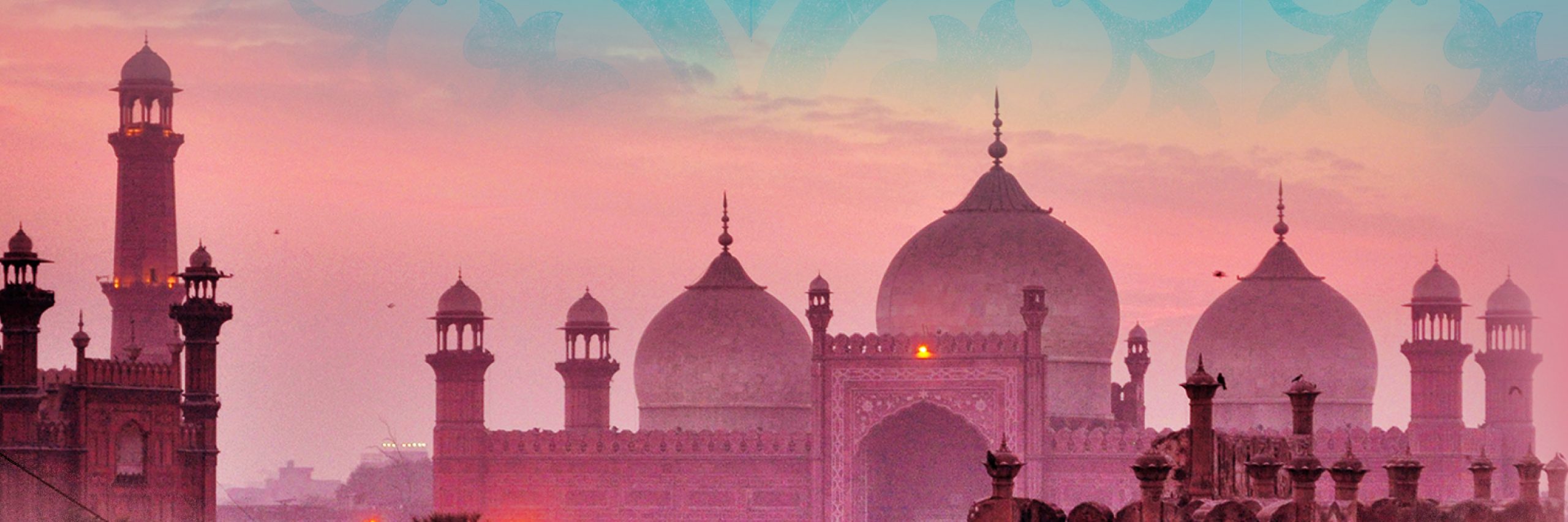
A Photo-Journey of Lahore

Imagining Lahore by Haroon Khalid is an anecdotal travelogue that talks about the city of Lahore and its origin. From its emergence under Mahmud Ghaznavi to recasting it as the capital of Maharaja Ranjit Singh’s Khalsa empire, Lahore has influenced the subcontinent’s political, social and social atmosphere time and again. The city continues to cast its influence on the country of Pakistan.
The city has lived many lives and its monuments depict its many stories. Here are some of the precious landmarks:
 
1. The smadh of Ganga Ram.

The small roads leading up to the smadh of Ganga Ram in Lahore holds great importance. The modern Lahore owes its current state to Ganga Ram. He changed the city’s physical landscape to the glory of the modern colonial state that it reflects today.
 
2. The smadh of Ranjit Singh

Maharaja Ranjit Singh reigned on the historic land of Lahore in the nineteenth century. When the city was under attack from between three Sikh warlords, it was Maharaja Ranjit Singh who rid the city of this unrest.
 
3. The mausoleum of Mian Mir
 

Holding great historical importance, the mausoleum of Mian Mir, consists of Mian Mir’s grave at the centre of the shrine. He was a sixteenth-century Sufi saint and had risen to prominence after the Mughal crown prince, Dara Shikoh became his follower.
 
4. The grave of Shah Hussain 

The dervish poet of Lahore, Shah Hussain belonged to a particular Sufi sect that challenged conventional normative societal practices. His songs have been immortalized in his verses as folk singers and other dervishes sang them from one generation to another.
 
5. The grave of Dulla Bhatti 

Dulla Bhatti was a landlord from Pindi Bhattian, a town 150 kilometers from Lahore. He rebelled against the political organization of the increasingly centralized Mughal Kingdom and the religious hegemony. He was thus, hanged outside the Delhi Darwaza of Lahore by the Mughal Emperor Akbar in 1599. One of Dulla Bhatti’s strongest supporters was Shah Hussain.
 
6. The mausoleum of Qutb al-Din Aibak

Qutb al-Din Aibak, the founder of the Slave Dynasty, only managed to rule for four years, from 1206 to 1210 CE. His reign marked the Muslim rule over north India in the twelfth century. It was in his reign that Qubbat-ul Islam, the oldest mosque in north India, was constructed.
 
7. The tomb of Malik Ayaz 

Deep within the Shahalami Bazaar in Lahore is the mausoleum of Malik Ayaz. He was the governor of Lahore during the Ghaznavid Empire. Historical sources suggest that he was a trusted supporter and loyal slave of Mahmud Ghazni.
 
An anecdotal travelogue about Lahore – which begins in the present and travels through time to the mythological origins of the city.
AVAILABLE NOW

The Best Growth Hacking Brands

Master Growth Hacking by Apurva Chamaria notes the secrets of success and the role of creativity, smart data analysis, and agility that is required for growth hacking. Emerging as the preferred mode of growth for start-ups and entrepreneurs in India, growth hacking is a blend of coding, data intelligence, and marketing. The book includes interviews from the founders of Zomato, Hotmail, ShopClues, UrbanClap, Paisabazaar, WittyFeed, UpGrad and many more brands.
Here is a sneak-peek of a few of the best growth hacking brands as listed in the book:
 
1. Hotmail
The founder of Hotmail, Sabeer Bhatia, incorporated a simple strategy of including a tag line in at the end of each users’ outgoing mail – ‘PS: I love you. Get your free email a Hotmail’, clicking on which would direct the users to a user-acquisition landing page where they could set up their Hotmail account.

 
2. WhatsApp
The founder of WhatsApp Jan Koum adopted a plan which was different from what most similar applications would use. Instead of bombarding the users with targeted advertisements, he charged each user a dollar for downloading the application and relied on established telecom infrastructure with internet access, making it the most popular messaging application.

 
3. Zomato
The co-founders Deepinder Goyal and Pankaj Chaddah, focused extensively on below the line (BTL) marketing, thereby making stickers and tent cards in restaurants, strengthening their online communities, as well as building organic social media. This also resulted in their being able to scale rapidly due to their zero customer acquisition cost.

 
4. UrbanClap
The web -and app-based platform launched for hiring home and local services, follows the principle of making a personality for itself which represents virality. By creating digital ad films which touched the popular topics of women empowerment and social awareness, they were successful in reaching a larger demographic.

 
5. WittyFeed
Vinay Singhal, the co-founder and CEO of WittyFeed recounts one of the very first instances of growth hacking. When they were faced with the trouble of generating traffic for their website, they came up with Viral9 to manage that traffic and avoid complacency.

 
Full of riveting stories, Master Growth Hacking lets you learn from the pioneers of the field in India.
AVAILABLE NOW

A Love, Take Two Bonus: Dhal Gaya Din

Love, Take Two by Saranya Rai sees Vicky Behl and Kritika Vadukut meeting on the sets of the period drama Ranjha Ranjha, where everyone agrees they have serious chemistry–and not just on screen. As they dance to romantic numbers and spend time between takes on the glamorous sets of Sudarshana Samarth’s film, they find it hard not to give in to their attraction to each other.
But will the pressure and scrutiny of Bollywood allow them a happy ending or will there be a twist in the tale? We won’t tell you that, but we will tell you this: Don’t be disappointed when you get to the end…Saranya has a bonus chapter waiting for you.
One we’d love to share with you!


The little feathered shuttle whizzed by, less than an inch out of her reach, while her opponent whooped victoriously. Kriti feigned an air of mild disappointment and fatigue, as she picked it up. If only the critics who called her “consistently wooden” and “ethereal but ineffective” could have seen her pretend to lose this woefully easy game of badminton by the skin of her teeth. Thank goodness it was nearly at an end. Another point and Vicky would win this round, and thereby, the match.
“Yeesh Kriti, you’re so rusty.”
“I’m not rusty! I’m just…having a bad day,” Kriti protested with as much indignation as she could muster, under the circumstances.
She expertly maneuvered the shuttle to land within easy reach of Vicky’s racquet and watched in disbelief as he missed, bringing their score to an even 20-20.
Vicky, of course, reacted like he’d missed winning the All England Open, scrunching his face in displeasure and slapping his forehead. Kriti snorted. There was no question she was being compensated for losing this match in pure entertainment.
And also…eye-candy.
As Vicky retrieved the shuttle, she gave him a discreet once-over. The harsh fluorescent lights of the indoor court were not flattering on anyone, but Vicky’s sun-browned skin glowed with good health and exertion. His hot pink shorts showed off an impressive set of quads and a very shapely pair of glutes. Not that anyone had asked, but Kriti appreciated men who didn’t cheat on leg day. Buff arms and chicken legs were a dreadful combination.
“Oye! What are you dreaming about?”
Wouldn’t you like to know? Kriti smothered a smile and caught the shuttle for her serve. She had to somehow ensure he scored another two points without giving her one and thereby prolonging this already tedious match. She deserved a National Award for this match alone. And possibly an Arjuna Award too. It took skill to lose to someone as enthusiastic but terrible at badminton as Vicky.
The next point was a relatively easy play. She hit the shuttle with force, knowing it would sail far above her opponent’s head and land outside his court. Not that Vicky didn’t still try to hit it, flailing wildly with his racquet. It was a miracle he hadn’t injured himself that morning.
Kriti made a great show of hanging her head back and sighing heavily. It was Vicky’s turn to serve and unless he flubbed it, she could ensure he won in the next few minutes. She couldn’t pretend to miss right away, of course. It would be too many errors in too short a time and he might become suspicious.
However, luck smiled at her and she found an opening quickly. As the rally picked up speed ever so slightly, she put on an increasingly frazzled air and hit her final volley straight into the net. Crying out in faux-disappointment, Kriti grimaced and dropped her racquet.
Vicky was a graceful winner. He only punched the air once and gravely held out his hand for her to shake, as though they’d played a high stakes professional match. Kriti took it, hyper-aware of the strength latent in his grip and the warmth of his skin. His hand lingered in hers for just a moment too long.
No longer faking her fluster, Kriti bent at the waist, breathing loudly, and stretching her sore calf muscles. She unclipped her topknot, shaking her hair out gracefully.
“This was beyond embarrassing and I am so glad my old coach wasn’t here to witness this.”
Vicky lowered the bottle he’d been drinking from and studied her, the tiniest smile playing at the edge of his mouth.
“Yeah, I can’t imagine what he’d say to Kritika Vadukut intentionally throwing a match like that.”
Aghast, Kriti stopped mid-stride and turned to face him.
“How could you possibly tell? I was so careful.”
“You did almost fool me. But the thing is, I’ve seen you run half a marathon without dropping a beat, on a treadmill in this very hotel’s gym. You overdid the exhausted-panting. Anyway, I’m starving and need my dinner. Shall we?”
He held the frosted glass door of the indoor badminton court open for Kriti, eyebrows raised in faint challenge and an irrepressible twinkle in his eye.
Gathering her things, Kriti followed him to the elevator, all her award-hopes crushed.
“You go on, I want to shower first.”
Vicky nodded, uncharacteristically quiet. The elevator dinged open and Kriti walked in, regretting the whole ploy. She didn’t even know why she’d decided to let him win. She was viciously competitive otherwise!
Luckily, Vicky continued with his contemplative silence until the elevator descended to her floor. Relieved, Kriti marched out, towards her room, when his voice stopped her.
She turned. He was holding the doors open, a wicked grin on his face.
“I told you how I knew you’d let me win, but you didn’t tell me why you did it, Kritika?”
Clearing her throat, Kriti gathered the tattered pieces of her dignity. “It was to save your precious male ego, of course. What if you threw a tantrum after losing and it affected our equation on set? It was for the greater good.”
Vicky’s grin widened. “Riiiiiiight. You’re so thoughtful, ya. Ek aur game toh banta hai. On the next evening off. And this time, I promise not to be a sore loser—if you let me lose, that is.”
Kriti sternly quelled the quivering corners of her mouth before replying. “I’ll think about it.”
With a wink, he let the doors close and Kriti’s stomach executed a clumsy but exuberant flip-flop.


Love, Take Two is now available! For more fun articles like this one, follow the Penguin India Facebook page!

It's Time for a Solo Trip: Here is the Inspiration You Need

Shivya Nath quit her corporate job at age twenty-three to travel the world. She gave up her home and the need for a permanent address, sold most of her possessions and embarked on a nomadic journey that has taken her everywhere from remote Himalayan villages to the Amazon rainforests of Ecuador.
Her adventures are now recorded in her new book, The Shooting Star: A Girl, Her Backpack and the World. From it, we extracted these quotes that are bound to inspire you to go on your first (or second or third) solo trip!


With its vivid descriptions, cinematic landscapes, moving encounters and uplifting adventures, The Shooting Star is a travel memoir that maps not just the world but the human spirit. For more posts like this one, follow Penguin India on Facebook!

The Life of Munshi Premchand

Munshi Premchand is regarded as one of the most important writers of Hindi-Urdu canon. His prolific style of writing widely contributed towards the shaping of the genre of short stories in India. Writing these short stories, Premchand used this opportunity to critique social issues such as moral bankruptcy, the plight of women, caste injustices, blind faith, patriarchy and many more.
Read on to know more details about the life of Munshi Premchand!
—————–
Premchand was born of Kayastha parents in a village called Lamahi, on the outskirts of Benaras. His mother passed away when he was eight years old and his father, a postal clerk, remarried soon after. He first went to school in Gorakhpur where his father was posted. Born Dhanpat Rai Shrivastav, Premchand was fondly called Nawab and published his early writings under the name ‘Nawab Rai’.
After passing his class 10 examinations in 1898, Premchand began a long career as a teacher and school administrator, during which he passed as a non-formal candidate in the class 12 examination. This was in 1916. Three years later, he did a BA with English literature, Persian and history as his subjects.
He published his first collection of five short stories in 1908 in a book called Soz-e Watan. The stories were all patriotic and the British government interpreted these as seditious. He had to appear before the district magistrate who told him to burn all copies and never write anything like it again. This incident gave birth to the new pen name Premchand. It was only the first of Premchand’s many brushes with authority though and he was required to deposit a security of Rs 1000 many times in the 1930’s.
Indian history and mythology, Indo-Muslim cultural history, contemporary society and his own wide readings of literature from across the world influenced Premchand’s work. He was the first Hindi and Urdu to writer to write in depth of the lives of the deprived sections of society. As a rule, he wrote on contemporary themes of immediate social and political relevance, after experimenting with a few short stories set in the historical past. His work became a vehicle for his socially engaged agenda of social reform.
In 1918, Gandhi had declared Hindi to be the national language and Premchand had, between 1915 and 1924 begun to write in Hindi instead of Urdu.
In 1921 he resigned government service at the call of Gandhi during the Non-Cooperation Movement. He bought a press in 1923 and started the publishing house Saraswati Press. Due to low income, he also worked as the editor of the Hindi journal Madhuri in Lucknow in 1924-25 and again from 1927-32. In 1930 he started a journal called Hans and two years later, took over another journal called Jagaran.
Premchand died on 8 October 1936, at the age of fifty-six. He had returned to Benares four years before, and lived in Lamahi in a bigger pukka house that he had built, which still stands. He had written what are now reckoned to be close to 300 short stories and published thirteen novels, including one left unfinished. At least four of his novels, Sevasadan, Rangbhumi, Karmabhumi, and Godaan are considered among the greatest written in Hindi.
——————

The Beauty of All Ruskin's Days: 5 of Our Favourite Things about the Author

Ruskin Bond is a favorite across generations. He has authored over 500 short stories, essays and novels, more than 50 books for children and two volumes of autobiographies.
As he himself says, The Beauty of All My Days is “a memoir in which each chapter is a remembrance of times past, an attempt to resurrect a person or a period or an episode, a reflection on the unpredictability of life.”
From it, we extract 5 of our favourite things about him to help you get to know him better!
Ruskin Bond meets his ‘fans’ at Mussoorie’s Cambridge Book Depot on Saturday afternoons.

He believes the qualities  of intellect and sensuality he inherited from his parents are what shaped him into a writer.

Coming home from boarding school when he was ten, Ruskin demanded (and eventually got) a tiny room of his own. Under his bed, he kept his school trunk, which accommodated the following:

His first ‘novel’ was confiscated by his Housemaster (of the boarding school that he attended) in 1946.

Ruskin Bond discovered London by walking all over the city. He did the same in Delhi and other places back in India.


Each chapter of this memoir is a remembrance of times past, an attempt to resurrect a person or a period or an episode, a reflection on the unpredictability of life. For more posts like this, follow Penguin India on Facebook!

error: Content is protected !!