Publish with Us

Follow Penguin

Follow Penguinsters

Follow Penguin Swadesh

Did You Know This About Shane Warne?

From the start of his glittering career in 1992, to his official retirement from all formats of the game in 2013, Shane Warne has long desired to tell his incredible story without compromise. No Spin is that very story. It offers a compelling intimate voice, true insight and a pitch-side seat to one of cricket’s finest eras, making this one of the ultimate must-have sports autobiographies! So before you pick up his bestselling memoir, here are some refresher points that may help you get to know the famous cricketer better.
 

  • Warne played his first Test match in 1992, and took over 1000 international wickets.

  • A dangerous lower-order batsman, Warne also scored over 3000 Test runs.

  • He played Australian domestic cricket for his home state of Victoria, and country cricket in England for Hampshire, where he was captain from 2004 -2007.

  • Famously he captained the Rajasthan Royals to victory in the first IPL in 2008.

  • After retirement from all formats of the game he turned to the commentary box where his strong opinion and sharp wit is a feature and will be found for the first time on Fox Sports this coming Australian summer.

Shane is not only one of the greatest living cricket legends: he is as close as the game has had since Botham to a maverick genius on the field and a true rebel spirit off it, who always gives audiences what they want. Do pick up your copy today!

Take The Gender Bias Out Of Your Work Ads

What Works: Gender Equality by Design discusses how organizations can leverage findings from behavioral science research to fight gender bias in the workplace—starting with job listings. Read an excerpt from the book below.


Attracting the right people instead of managing the wrong ones is one of the most important tasks any organization confronts. This is the mantra Google lives by—or, as Laszlo Bock writes: “Only hire people who are better than you.” In an interview on the company’s hiring and corporate culture, Eric Schmidt, the executive chairman, explained that in addition to judging the technical qualifications of potential hires, a key focus at Google was to determine whether they were passionate and committed to innovation.
Surely, allowing all Google engineers to spend 20 percent of their time developing their own ideas serves as a sorting device. It attracts creative, independent minds who invent Google News, Orkut, or a social networking site. The time is not written in stone nor necessarily utilized, but it matters as an idea: “No one gets a ‘20 percent time’ packet at orientation, or is pushed into distracting themselves with a side project. Twenty percent time has always operated on a somewhat ad hoc basis, providing an outlet for the company’s brightest, most restless, and most persistent employees—for people determined to see an idea through to completion, come hell or high water.”
Not many of those “seeing an idea through to completion, come hell or high water” are women. In the spring of 2015, a gender discrimination trial brought by a former junior partner at a venture capital firm in Silicon Valley drew renewed attention to the low fraction of women in technology. While in the end a jury found against the plaintiff, the low numbers were undeniable: fewer than 20 percent in most tech companies and even fewer in Silicon Valley’s venture capital firms.
Some argue that the “tech bros” mentality of Silicon Valley keeps women out and even discourages female students from focusing on computer science. Perhaps. Surely, the male-dominated environment does not help tech firms attract women. As we know, deviating from behavior that is expected of a social category, either by others or by oneself, can be costly. A woman who acts against the norms by definition doesn’t “belong”; not surprisingly, the fear of not belonging is influential.
Indeed, research by Boris Groysberg, Ashish Nanda, and Nitin Nohria (now dean of Harvard Business School) suggests establishing belonging turns out to be a major concern of female job seekers. They report that women consider more factors than men when screening jobs; in particular, cultural fit, values, and managerial style. There is a surprising silver lining to this research, however: it carries hidden benefits for women and their employers. In follow-up work, Groysberg identifies this scrutiny as one of the key variables explaining why women transition more successfully to new companies than men. Women know better what they are getting themselves into.
The researchers analyzed the performance of more than a thousand “star” analysts working for almost eighty different in- vestment banks over a nine-year period. Analysts were labeled “stars” if they were ranked as one of the best in the industry by Institutional Investor magazine. The team was interested in better understanding whether the analysts’ skills were portable when they switched companies. It turns out most analysts lost their stardom when they changed employers unless they moved to a better firm or brought their whole team along—with the exception of female analysts. Not only had the women studied a potential new employer more carefully before joining, they had also built their expertise differently than their male colleagues.
The top-performing female analysts had “built their franchises on portable, external relationships with clients and the companies they covered, rather than on relationships within their firms.” Or as one female star analyst put it: “For a woman in any business, it’s easier to focus outward, where you can define and deliver the services required to succeed, than to navigate the internal affiliations and power structure within a male-dominant firm.”
People choose organizations based on their preferences and their beliefs about whether or not they could thrive in a given organization. Messages shape those beliefs. Consider the messages sent when Lieutenant General David Morrison stated in a video posted on the Australian army’s official YouTube channel that he was committed to inclusion. “If that does not suit you, then get out,” Morrison flatly declared. “There is no place for you amongst this band of brothers and sisters.”
Acting in response to a 2013 investigation into sexual abuse, Morrison sent a strong message. In 2014, Morrison joined the Australian delegation to the Global Summit to End Sexual Violence in Conflict in London. Speaking again with admirable bluntness, he said that armies that assign more value to men than to women and tolerate sexual violence “do nothing to distinguish the soldier from the brute.”
Will these messages attract and retain soldiers valuing equality and inclusion? Time will tell. And while actions have followed his words, we all know that talk can be cheap. When and how messages affect behavior is a large field of inquiry in itself, but experimental evidence is rare. One example, however, is encouraging.
Robert Jensen and Emily Oster took advantage of the fact that cable television became available at different times in different parts of India, allowing them to trace whether attitudes and behaviors went along with exposure to the new information cable programming provided.
They found that the introduction of cable television was associated with improvements in women’s status in rural areas, including female school enrollment, decreases in fertility, as well as reported increases in autonomy and decreases in the acceptability of beating women and son preference. The information conveyed via cable television, often through somewhat surprising means, such as soap operas, exposed rural viewers to gender attitudes and ways of life, including within the household, more prevalent in urban areas. And it changed behavior.
Sorting mechanisms are powerful and often overlooked. Those charged with attracting the largest, most talented pool of applicants should make sure they scrutinize the messages, overt and biased, conveyed in their advertisements, websites, or other communications.

Michael Lewis on The Fifth Risk: 'The election happened … And then there was radio silence'

The morning after Trump was elected president, the people who ran the US Department of Energy – an agency that deals with some of the most powerful risks facing humanity – waited to welcome the incoming administration’s transition team. Nobody appeared. Across the US government, the same thing happened: nothing.
People don’t notice when stuff goes right. That is the stuff government does. In The Fifth Risk, Michael Lewis reveals the combustible cocktail of wilful ignorance and venality that is fuelling the destruction of a country’s fabric. All of this, he shows, exposes America and the world to the biggest risk of all. It is what you never learned that might have saved you.
“It surprised me in the first place that this supposedly grey, boring enterprise, called our Government, was actually filled with interest. It was filled with interesting people – people who deserved to be characters in a story. I almost made a point of trying to find and focus on the parts of the federal government that were fifth risk-like. They weren’t the things everyone was talking about (they weren’t the state department, they weren’t the justice department). I found that when you go to the Commerce Department or the Agriculture Department or the Energy Department you find mission critical things going on. Things that if you knew about, you’d be terrified at the thought they might be mismanaged.
Quotation

I was surprised by just how ignorant the society is of its own government and how little the government had done to address that ignorance.”

There’s a reason they exist. It is in the popular imagination that the government is this thing that is sort of created over time in a kind of senseless way because nobody is disciplining it or watching it etc. In fact, it’s something like the opposite. What’s in the government is usually there for a very good reason and if people have become indifferent to it, or even contemptuous of it, it’s because the government has been doing its job so well that you’re not worried about it … It became a game for me to airdrop into the place you couldn’t possibly think there was a story and let me show you there’s a story and how easy it was to do that.
The other thing is that the government is also absolutely horrible at explaining itself to the public (I’m sure this is true [in the UK]). It’s the opposite of Trump, it’s like it has no capacity to market itself. All of it [the US government] is misnamed. So the idea that this thing called the Commerce department in the United States is actually the department for weather and climate – no one knows that. Even to people who work in government you say “where do you think the 8 billion dollars the commerce department spend every year goes?” and they say trade or business in some way. No, it’s the accumulation of data about the society and the vast, most expensive part of it is the accumulation of weather data.
So I guess what I’m saying is, I was surprised by just how ignorant the society is of its own government and how little the government had done to address that ignorance.”

The Fifth Risk by Michael Lewis is available now.  

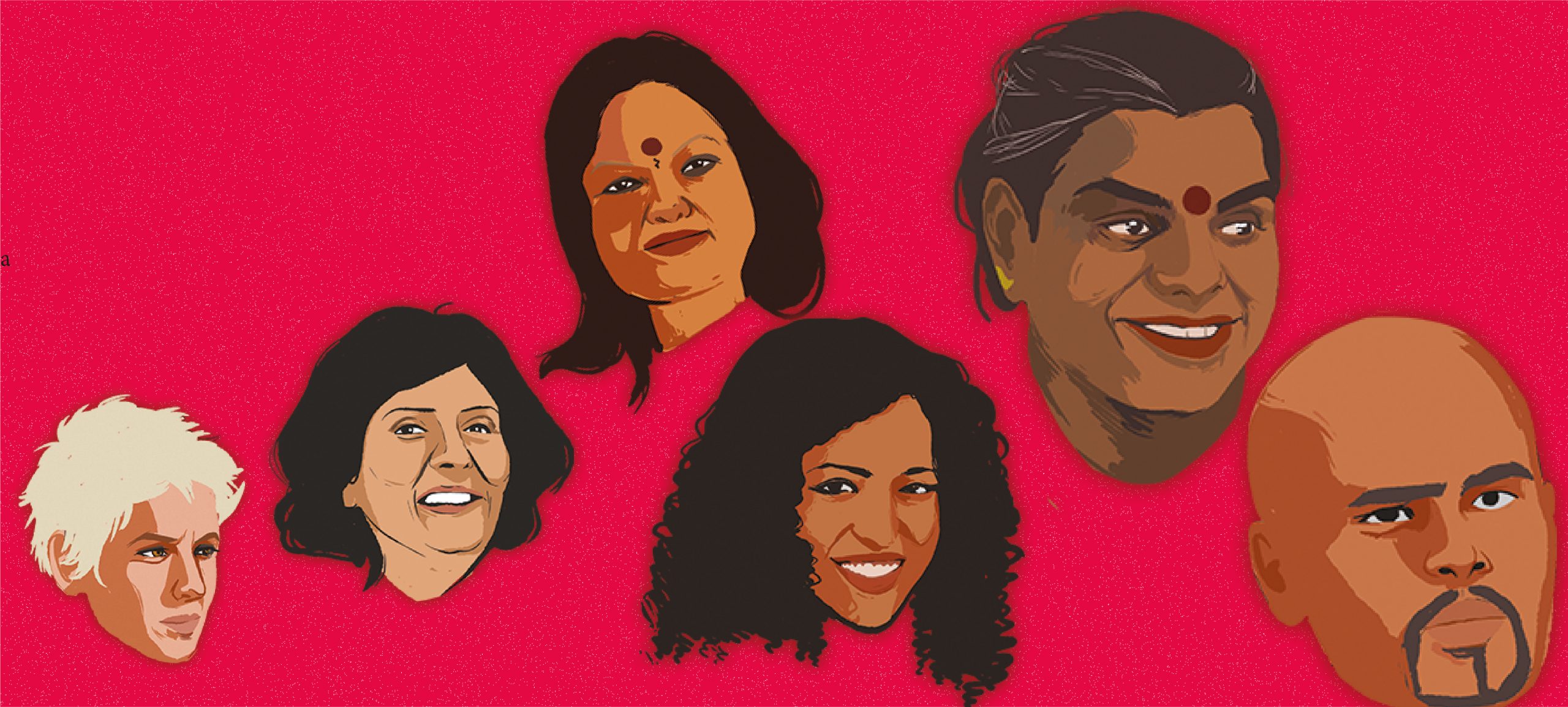
Check out the #FeministRani Moments of these Wonderful People

Feminist Rani is a collection of interviews with path-breaking and fascinating opinion leaders–Kalki Koechlin, Gurmehar Kaur, Sapna Bhavani, Gul Panag, Rana Ayyub, and many more.
These compelling conversations provide a perspective on the evolving concept of feminism in an age when women are taking charge and leading the way. 

Kalki Koechlin

Actor, Writer, Activist


Gurmehar Kaur

Author, Activist, Youth Leader


Sapna Bhavnani

Philanthropist, Hair Stylist, Rape Survivor


Gul Panag

Actor, Politician, Entrepreneur

Malishka Mendonsa

Radio Jockey


Rana Ayyub

Journalist


 Sohrab Pant

Comedian


Shree Gauri Sawant

Transgender Activist


Feminist Rani is a collection of interviews with path-breaking and fascinating opinion leaders.

No Spin – an Excerpt from Shane Warne's Autobiography

In No Spin, Shane offers a compelling insight into how a boy from Black Rock changed the face of cricket forever. An excerpt from the book below!

I said, ‘Simone’s a wonderful girl, mate – let’s get it done.’
It felt great on the surface but deep down I’d begun to feel I shouldn’t be doing this. Or maybe I should. Or shouldn’t? Perhaps it’s the way everyone feels in the days before they get married, I thought. Who knows? It was nothing to do with Simone. She looked so beautiful on the day, and in the year and a bit since we’d got engaged she’d easily become my best friend. We were good together, she understood me and me her. But I could feel my life changing at frightening speed and I just wasn’t sure it was the right time.
Shaun Graf, my Victorian mentor and team-mate, was MC in the marquee. We had 200 people and Simone did a great job, decking it out magnificently and making sure the detail was spot on. Everyone got plastered. We stayed at the Como Hotel – a fantastic place. My brother was best man, with the groomsmen being Merv Hughes and a good mate from my Academy days, Stephen Cottrell. Simone had her sister, Lisa, and best friend, Sharon, and her cousin Tanya.
A guy called Tuffy, who used to play guitar in a Hawaiian shirt at a place called City Rowers in Brisbane, did the entertainment – he was better than brilliant, playing all the great covers, many of them with Steve Waugh and Mark Taylor on stage. ‘Tugga’ loved ‘Khe Sanh’ and Tubby loved ‘Bow River’, the two Cold Chisel classics. We all had such a happy night. I remember thinking it had been the best day of my life. What was all the worry about?!
On a slightly different subject, I can hear the question, ‘Steve Waugh was at your wedding?’ Well, he was. I was close with Tugga back then. We toured Zimbabwe together in 1991 and he asked me to come and play club cricket with him at Bankstown – he even spoke to the club about getting me a job behind the bar. We hung out a lot in those days and I did consider going to play in Sydney to try to get into the New South Wales team but, as I’ve mentioned, Simon O’Donnell set me straight on that one! Tugga wasn’t in the Test side when we got to know each other well; he’d been left out for a while but came back against West Indies in 1992/93, batting at number three. Then he settled into the middle order, which suited him best.
He became a completely different person when he took over as captain. All that worship of the baggy green – some of the guys went with it, like Lang, Haydos and Gilly, but it wasn’t for me. I think he turned into a more selfish player when he had his second run in the Test team, which changed him. My philosophies on the game were more aligned with Tubby than with Steve; though, in fairness, Steve was a successful cricketer – if in a very different way to AB and Tubs, whose style and direction I much preferred. It’s no secret that Tugga and I don’t see eye to eye these days.
Simone
Simone and I have three amazing children. We spent 13 great years together, created a beautiful home in Middle Crescent, and even though we went through a few dramas, we look back now and can have a laugh.
My relationship with her is fantastic. We have brought up Brooke, Jackson and Summer together. We think differently about parenthood – I’m a lot stricter in many ways – which has been a good thing for them as they’ve seen different points of view. She understands me, I understand her and we get along fine and are friends.
There’s a perception out there that every relationship is driven by the same rules – society’s white picket fence, if you like. Mum, Dad, wife and kids, good job, solid home – and above all loyalty to your partner. But reality isn’t like that. Simone and I made our marriage work. The intimate details of how are not for the public domain. Do people really think we’d still be such good friends if it was all as bad as people make out?
As I’ve said, my life was going nuts. I think maybe we were more sister and brother – we loved going to the movies, playing pool, seeing concerts, hanging out at the pub, but perhaps we didn’t have that emotional lock-in. My respect for her remains to this day.
In the early years together we were really happy, enjoyed creating homes and sharing day-to-day life with friends and family – all the normal stuff that young couples do as they grow together. The trouble with cricket is that it invades your space, occupying everything from conversation to consistency in a relationship.


Honest, thoughtful, fearless and loved by millions, Shane is always his own man and this book is a testament to his brilliant career.

Tips for the Solo Traveller

Don’t settle for an average life; travel the world, expand your horizons and make the sky your roof. That is something travellers across the world will always tell you. Travel excites and amazes all of us; it thrills our senses and we all long for it.
Solo travellers make the world their cocoon and breathe in the stars. They become Shooting Stars. This is what the author of our book; The Shooting Star did. At the age of 23, Shivya Nath gave up her home, sold most of her belongings and embarked on a nomadic journey that has taken her everywhere. She has travelled to over fifty countries and her new book is a goldmine full of travel tips, especially for solo female travellers.
Here is a list of five tips for your next solo adventure from her:
Always protect yourself from the sun. Carry appropriate clothing and also accessories.

 
Seek out the local flavour.

Discover the joy of slow travel.

Travel light.

If someone unknown is acting too friendly or too helpful, they probably are. Be aware!

With its vivid descriptions, cinematic landscapes, moving encounters and uplifting adventures, The Shooting Star is a travel memoir that maps not just the world but the human spirit. For more posts like this, follow Penguin India on Facebook!
 

Things You Should Know about the Author of 'Ways of Being Desi': Ziauddin Sardar

Ziauddin Sardar is a person of Pakistani origins, and proud of it. But he boldly says that his identities draw on antecedents from all parts of the subcontinent. His latest book, Ways of Being Desi asks some important questions around this; such as ‘How do we define being Desi?’ and ‘What are the actual sights, scents, sounds and tastes-the myriad elements from the South Asian imagination that come together in various combinations to conjure ‘self’ for all of us?’
Before you read his book, get to know the author a little better!


Ways of Being Desi is a brilliant, provocative and deeply honest exploration of the ingredients that make us who we are. For more posts like this one, follow Penguin India on Facebook!

Our Long Winter by Sharmila Sen

Sharmila Sen is the author of Not Quite, Not White, which is a first-generation American’s searing appraisal of race and assimilation in the US. In this special piece by her, she talks about what defines belongingness.


One of my all-time favorite novels is The Long Winter, the sixth book in Laura Ingalls Wilder’s popular Little House series. It was published in the United States in 1940 and narrates events from almost sixty years earlier, about a particularly devastating snowstorm that took place when the author was a young teenager. I read The Long Winter and the rest of the Little House books, considered controversial by some these days, during another snowy winter– the winter of 2002-2003. At the time, I was pregnant with our second child, a son. He was born in the middle of a snowy February in 2003. In Boston, we expect our Februarys to be snowy. A couple of years later, when our third child, another son, was born, we faced another snowstorm. This one was unexpected because it was early April and blizzards are a rarity at that time of the year. Since two of my three children were born during similar meteorological conditions, I associate snowstorms with happy events.
I first discovered the joy of snowstorms when I was a young girl, about eleven or twelve, newly-arrived in Boston from Calcutta. In India, we had school holidays during exceptionally rainy days during the monsoon season when the streets of Calcutta would be flooded. In Boston, when the snow piles up so high that the roads are deemed unsafe, school is cancelled. All children eagerly await the news of school closings in the morning after a particularly heavy blizzard. In the early 1980s, as soon as the school department announced the holiday on television, the phone would immediately start ringing in our apartment. My classmates and I would call each other to make plans for spending the day exploring snowbanks, having snowball fights, and sometimes even shoveling our neighbours’ yards for a little extra pocket money.
My love of The Long Winter is not tied to my girlhood memories of snow days though. I read the entire Little House series during the winter of 2002 –2003 in anticipation of what our children would read one day. I had begun this process of exploring American children’s literature a year earlier when we adopted our first child, a daughter, from India. Our baby girl’s arrival into our life meant I was suddenly inundated with gifts of baby books from friends and colleagues. I discovered Margaret Wise Brown’s haunting prose and Richard Scarry’s incandescent illustration style at that time. Suddenly, our study, which had been converted into a nursery for our daughter, not only housed my husband’s drafting table and my collection of books by authors ranging from Maryse Condé to Geoffrey Chaucer, from Tayeb Salih to Philip Sidney, but also numerous beautiful board books. Goodnight Moon, The Big Red Barn, The Runaway Bunny, Little Fur Family, Corduroy, The Rooster Struts, The Little Engine that Could, Guess How Much I Love You. Every adventure of Curious George and the man in the yellow hat, of Madeline and her classmates, and of Babar and his royal pachyderm clan could be found in the nursery which once served as a work space for a professor of English and an architect.
My husband and I have lived in the United States since we were children. He arrived from the UK in 1977 and I from India in 1982. We are both of Indian origin. By the time we became the parents of three young children we had been shaped by American culture, for better or for worse, in the most profound of ways. Yet, we were missing one key component. We had not read American baby books and neither had our parents. Our children introduced us to this heretofore hidden aspect of the culture in which we had been living. I was not satisfied reading only the baby books and wanted a head start on the classic YA books. So, I bought the entire Little House series (as well as the Anne of Green Gables series, even though it is set in Canada) and settled down each evening, after teaching English literature to Harvard students, with Laura, Mary, Carrie, Ma, and Pa. My unborn son kicked and moved, and the snow fell silently outside my window, while I imagined surviving a deadly blizzard in the Dakota Territory in 1880.
Whether native-born or an immigrant, becoming a parent makes one understand a society in a whole new way. I read children’s books I never read before for my daughter and sons, delved deep into the American world of parenting magazines and child-rearing debates. I indulged in all sorts of retail therapy for kids’ clothes and toys. I also learned about parental leave policies and the politics of maternity that parenthood inevitably discloses to us.
When you bring a child into your world, you see that world anew. When you raise children in a country where you were not born, you learn things about the place– the hopes and fears of your neighbours and colleagues, the little hidden nooks and crannies of a society, in all its ugliness and splendour, that remains hidden to adults normally. Learning about the country of your child’s birth is an age-old ritual. The original European colonists in the Americas experienced it. As did the enslaved Africans who gave birth to first-generation Creole babies in American plantations. The indentured Indian laborer in Africa, Fiji, and the Caribbean experienced it. As did the British in India.
When my children were in pre-school, a dear friend’s younger brother passed away after a long illness. His mother– a Scottish woman who had moved to Italy to marry her husband and then followed him to Boston – said to me that she never quite accepted America as her home. But now America will always be a sort of home because her son died here. She sat on our deck, one warm summer evening in 2007, and told me this. With a shiver running down my spine, I thought, maybe that is the secret umbilical cord of belonging. We belong not where we were born but where we lost someone we loved.
Do we belong to a place where our ancestors were born? To a place where we were born? To a place where our children were born? Or to the place where they died? Ask this of mothers of soldiers killed in foreign wars, of mothers of migrants drowned in the Mediterranean.


Part memoir, part manifesto, Not Quite Not Whiteis a witty and poignant story of discovering that non-whiteness can be the very thing that makes one American. For more posts like this, follow Penguin India on Facebook!

Rebuilding Lost Trust – An Excerpt from ‘Trust’

To succeed, entrepreneurs in developing countries need to build trust within the existing structures. Those who assume that they will have the same legal, governmental, and institutional protections as their counterparts in the west, will fail. And Tarun Khanna’s new book Trust shows how it is done.
Here is an excerpt from his book, that talks about rebuilding lost trust.


In 2008, anxious parents in Gansu Province, deep in the Chinese mainland, began visiting hospitals with their ailing infants. Tests found that several domestic brands of dairy-based infant formula powders they were consuming contained melamine, an industrial chemical used in plastics and fertilizers that can cause kidney failure in small children. Ultimately six babies died and approximately 300,000 were affected during what became known as “the
Chinese milk scandal.”
Somewhere along the supply chain, intermediaries had been diluting raw milk with water and then adding melamine to fool quality tests (melamine is high in nitrogen, and most tests only look at nitrogen levels as a proxy for protein levels). In some cases, dairy farmers themselves engaged in this practice, with the tacit approval of big dairy companies like Sanlu, to squeeze out some extra profits in an industry with very low margins.
Despite government efforts to restrict negative media coverage during that summer’s Beijing Olympics, the scandal caused international outrage. Protests and lawsuits followed. The government eventually tried the chairwoman of Sanlu and sentenced her to life in prison. Two wholesalers were convicted of overseeing the dilution and contamination and then selling the contaminated products with full knowledge of the health risks—and they were actually executed in November 2009. These were unusual moves, since the government rarely cracks down so hard on bad actors in the food industry.
Indeed, this milk crisis was hardly the first instance in which food contamination threatened the health of the Chinese. There was the episode a few years back when farmers’ use of chemicals to accelerate growth resulted in a rash of watermelon explosions. Earlier in 2015, authorities found so-called “zombie beef ” in the supply chain. Certain vendors had somehow gotten access to forty-year-old beef that had been thawed and refrozen many times over and were selling it across China.
And then there was the discovery in March 2013 of more than 16,000 dead pigs floating in a tributary of the Huangpu River, a significant source of Shanghai’s drinking water. China Central Television reported that pig farmers in Zhejiang Province were selling pigs that had died of disease or natural causes to black market dealers, who then butchered them and illegally sold the pork. After a few of these malfeasants were sentenced to life in prison, the lucrative illegal trade in dead pigs plummeted, and farmers started dumping them in rivers in droves, instead of paying to discard them in pits. The images of masked and suited sanitation workers hauling the bloated carcasses out of the river with poles and nets repulsed the residents of Shanghai.
Even so, the tainted milk crisis was different. It struck a deeper chord. Why?
That crisis affected mostly young children and infants. Due to China’s long-standing one-child policy, there is an entire generation of parents who have invested all their hopes and energy into their single child. They are thus willing to go to greater lengths and expense to protect him or her: After the news broke, many parents undertook shelf-clearing expeditions to buy and bring back expensive foreign-brand infant formula from New Zealand, Singapore, and Hong Kong. Years later, this pattern continues.
This response neatly captures the net result of the scandal: Many Chinese simply don’t trust their domestic private food sector anymore. A trust vacuum exists.
This trust vacuum creates a vicious cycle, one that’s difficult to break. The problem stems from all sides in the dairy industry. For example, the price-sensitivity of consumers who are mostly not wealthy drives down prices for companies trying to win the market. This dynamic means that dairy farmers get low prices for their raw milk. If they are to make any profit at all, they have to lower their costs. For a small farmer wrapped up in the myriad daily challenges of running a dairy operation, the most expedient thing to do is to cut corners. Even if a farmer tries to take the high road—by investing in higher-quality feed for his cows, for example— and to recoup his costs by selling milk at a higher premium, it won’t pay off easily. Most consumers wouldn’t place any faith in his efforts, at least not for a while. This lack of trust persists because the level of trust in all dairy producers has become so vanishingly small.
In reality, many different players and methods can be involved with rebuilding trust. But rather than waiting for others to solve the problem, the entrepreneur can be the change agent herself. Her solution may be a tech solution. Or it might harness the community. Or both. She will almost certainly have to reimagine the role of talent, to attract it to an industry now perceived as staid and boring.


Trust by Tarun Khanna is now available. For most posts like this, follow Penguin India on Facebook!

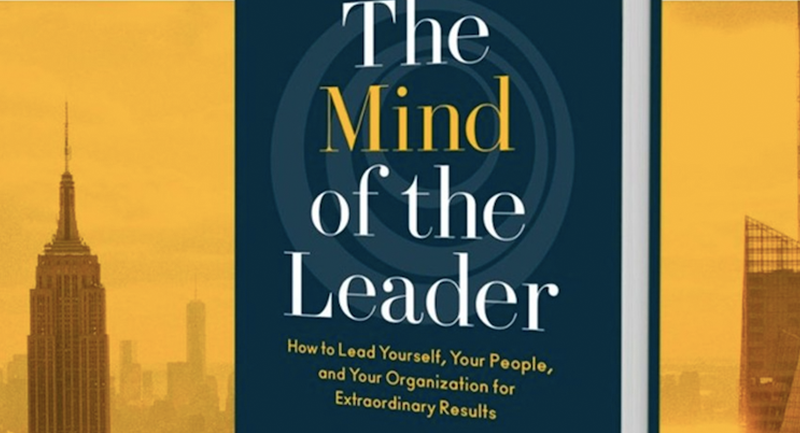
The Anatomy of Selflessness – an Excerpt from The Mind of a Leader

“The Mind of the Leader” offers a radical, yet practical, solution. To solve the leadership crisis, organizations need to put people at the center of their strategy. They need to develop managers and executives who lead with three core mental qualities: mindfulness, selflessness, and compassion. Using real-world inspirational examples from Marriott, Accenture, McKinsey & Company, LinkedIn, and many more, “The Mind of the Leader” shows how this new kind of leadership turns conventional leadership thinking upside down. It represents a radical redefinition of what it takes to be an effective leader–and a practical, hard-nosed solution to every organization’s engagement and execution problems. Here is an excerpt from the book.


Selflessness is the wisdom of getting out of your own way, the way of your people, and the way of your organization to unleash the natural flow of energy that people bring to work. Selflessness combines strong self-confidence with a humble intention to be of service. With selflessness, trust increases because we have no secret agendas and followership strengthens because our selflessness sets free our people to be their best selves. Selflessness in leadership manifests itself as humility and service.
In Good to Great , Jim Collins showed that humility combined with strong will is a key trait of successful leaders. Humility, his research found, is when leaders are able to keep their egos in check and always put the organization’s goals before their own.  Humility is a trait of selflessness where we’re not attached to an inflated, important sense of self: we have a very real view on how little we actually matter. In the bigger scheme of things, even the best CEO is only one out of hundreds or thousands of individuals contributing to a company’s success. In addition, the company’s success is heavily determined by market trends and large- scale global forces. Any company is merely the result of an interconnected, global field of events, actions, and intentions. There’s no one person who can create this singlehandedly— not even the greatest leader. Understanding this awakens a healthy sense of humility.
Humility allows leaders to understand the value of providing service—a legacy, if you will— to the organization. That is what creates a healthy culture and what creates an organization that can continue from generation to generation. Arne Sorenson, CEO of the hotel chain Marriott, described his role as being a function of service to the company’s 400,000 employees. The driving business philosophy of Marriott is to take care of their employees, so that their employees take care of their guests. That way, business takes care of itself. Arne’s role is not one of power but one of service.
But what about the ego? What’s the role of the ego in selfless leadership? It’s small. We all have an ego that longs for attention and recognition. But great leaders are the ones who’ve tamed their ego so that it doesn’t hinder the larger interests of the people and the company they lead.
Indeed, corporate history is full of great examples of the danger of self-centeredness. Consider Nokia’s fall from industry leadership in cell phones. Nokia was the global market leader in cell phones when Apple introduced the iPhone, a much more sophisticated, yet simple and compelling product. However, the then- CEO of Nokia announced to his entire organization that the iPhone would never be anything but a niche product, and that Nokia would keep producing the phones with which they had gained their success. A few years later, Nokia had fallen into market insignificance, and Apple was the leader.
It wasn’t because Nokia engineers and developers didn’t have good ideas or recognize the shifts in consumer demands. The problem came down to leadership and, specifically, the former CEO’s emotional and ego attachment to what had made him and the company successful. He and his leadership team had fallen in love with Nokia’s past success and created a self- image of success based on that. Because they were not able to let go of this image, they lost major market share almost overnight.
Many of the leaders we’ve talked to worry that selflessness will make them pushovers. But it’s not that simple. A leader’s selflessness has to be combined with self-confidence. If you have selflessness without self-confidence, you will indeed be a pushover. Therefore, selflessness cannot stand on its own. It must be paired with self-confidence.

error: Content is protected !!