




Vikram Chandra’s masterwork and now a leading series on Netflix, Sacred Games is an epic of exceptional richness and power. Drawing readers deep into the lives of Inspector Sartaj Singh and the infamous criminal Ganesh Gaitonde, Chandra’s years of first-hand research on the streets of Mumbai, Sacred Games reads like a potboiling page-turner but resonates with the intelligence and emotional depth of the best of literature.
Meet the main characters from the book:
1. Sartaj Singh

2. Ganesh Gaitonde

3. Parulkar

4. Anjali Mathur

5. Bunty


Category: Features
articles features main category
Which Bollywood Couple Are You?


Your September Wish List

Do you know it’s possible to want something, without realizing you want it? Take books, for example. There may be a great book out there, waiting to be read by you—waiting to change your life. How will you know unless you try?
Here is your September wish list. A list you may not have known you even had! Take a pick from this wide range of topics and authors…who knows, you may discover a new favorite author!
Stories at Work

Storytelling in business is different from telling stories to friends in a bar. It needs to be based on facts. Stories at Work will teach you how to wrap your stories in context and deliver them in a way that grabs your audience’s attention.
Gandhi: The Years that Changed the World

This magnificent book tells the story of Gandhi’s life from his departure from South Africa to his dramatic assassination in 1948. It has a Tolstoyan sweep, showing us Gandhi as he was understood by his contemporaries, with new readings of his arguments with (among others) Ambedkar, Jinnah, and Churchill, and new insights on our freedom movement and its many strands.
Hippie

In Hippie, his most autobiographical novel to date, Paulo Coelho takes us back in time to re-live the dream of a generation that longed for peace and dared to challenge the established social order-authoritarian politics, conservative modes of behavior, excessive consumerism, and an unbalanced concentration of wealth and power.
Heart: A History

For centuries, the human heart seemed beyond our understanding: an inscrutable shuddering mass that was somehow the driver of emotion and the seat of the soul. As the cardiologist and bestselling author Sandeep Jauhar shows in Heart: A History, it was only recently that we demolished age-old taboos and devised the transformative procedures that have changed the way we live.
The Non Violent Struggle for Freedom 1905-1919

In recent years, there has been a surge of writing on the technique and practice of non-violent forms of resistance. Much of this has focused on movements that occurred after the end of the Second World War, many of which have been extremely successful. Although the fact that such a method of resistance was developed in its modern form by India is acknowledged, there has not until now been an authoritative history available to show exactly how this occurred.
This book provides such a study.
The Women’s Courtyard

Set in the 1940s, with Partition looming on the horizon, The Women’s Courtyard cleverly brings into focus the claustrophobic lives of women whose entire existence was circumscribed by the four walls of their homes, and for whom the outside world remained an inaccessible dream. Daisy Rockwell’s elegant and nuanced translation captures the poignance and power of Khadija Mastur’s inimitable voice.
The Shooting Star: A Girl, Her Backpack and the World

Shivya Nath quit her corporate job at age twenty-three to travel the world. With its vivid descriptions, cinematic landscapes, moving encounters and uplifting adventures, The Shooting Star is a travel memoir that maps not just the world but the human spirit.
Life’s Amazing Secrets: How to Find Balance and Purpose in Your Life

Das is one of the most popular and sought-after monks and life coaches in the world, having shared his wisdom with millions. His debut book, Life’s Amazing Secrets, distils his experiences and lessons about life into an accessible book that will help you align yourself with the life you want to live.
Through Two Doors at Once

With his extraordinarily gifted eloquence, Anil Ananthaswamy travels around the world and through history, down to the smallest scales of physical reality we have yet fathomed. Through Two Doors at Once is the most fantastic voyage you can take.
The Man Who Wasn’t There

Understanding “the self” has long been thought to be neuroscience’s greatest challenge, a mystery perhaps that never can be solved.
We are who we are, but mystics, Buddhists and even scientists have told us the self is an illusion. We know who we are but then no matter how successful and healthy you are, sometimes we wonder, who is that inside our heads? Who am I really? Are you sure you know?
The Rabbit and the Squirrel

Illustrated by Stina Wirsén, this poignant and moving fable for all ages was originally conceived by the author as a private gift of love for a beloved friend. Featuring a bisexual bunny and an heiress squirrel, by turns witty and absurd, endearing and brave, this little book harbours a fine ache that lends it a timeless quality.
The Sage’s Secret

In the year 2025, twenty-year-old Anirudh starts dreaming of Krishna. But these visions that keep flashing through his mind are far from an ordinary fantasy-they are vivid episodes from the god’s life. Through these scenes, as Krishna’s mystifying schemes are revealed, Anirudh slowly comes to terms with his real identity . . .
If you want to read more articles on books by us, follow us on Facebook!
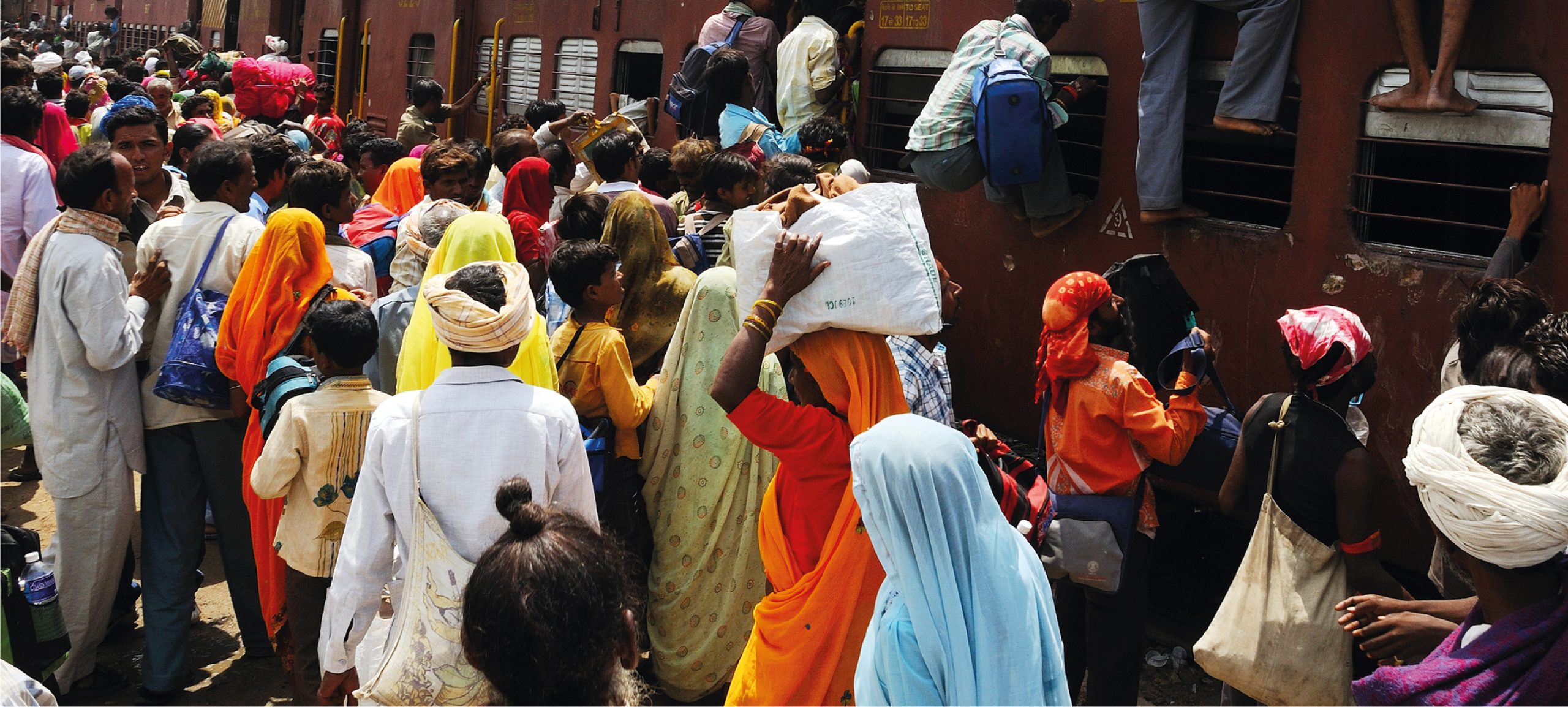
What Happens When India Moves – The Long Term Impacts of Migration in 6 Points
Chinmay Tumbe is an alumnus of the London School of Economics and Political Science; the Indian Institute of Management Bangalore; Ruia College, Mumbai; and Rishi Valley School Mandapalle. He is passionate about migration, cities and history. He is currently a faculty member at the Indian Institute of Management Ahmedabad. He has published widely on migration for a decade and has served on policymaking groups. India Moving is his first book.
Here are the impacts of migration as listed in the book:
1. The influence of mobility and globalization on migration

2. Rural – urban divergence in natural growth rates ( difference between birth rate and death rate)

3. Migration helped in reducing social inequalities.

4. The story of brain drain.

5. Link between migration and gender.

6. The impact of the partition of India and Pakistan.


Sangeetha Sreenivasan on Exploring the World of Acid

Acid by Sangeetha Sreenivasan is a gripping and powerful story about two women and their journeys of discovering their lives and the struggles that come with it. Kamala and Shaly, pose as two distinctive women living in an unusual household. Kamala’s twins, from her former marriage, take care of each other and are a part of the same household. The characters in the book make for a dynamic storyline as the plot is driven by their spirited characters.
Here, Sangeetha Sreenivasan, talks about the psychological and behavioral anatomy of her characters and her road to a final realization of the mould of her characters in the book. Dwelling in the deep crevices of the psyche of women, sexuality, and a unique understanding of relationships, Sreenivasan also explains as to what drove her to write this book, which highlights a quintessential meaning of womanhood and places it in the current state of the world.
—————————-
Imaginary as they are, I first came into contact with my characters in the year 2007. Extending in curves and turns, instantly I was allowed to participate in their private lives—their kinesics, their voices and tacit manners, their odors, and their screaming meemies. “A dark and private weather settled down on everything,” to borrow a line from Mark Strand. In a certain sense they started interfering with the course of my regular life. I found myself in a world that really has been turned on its head.
Before they started blurring my mind there was a sort of emptiness within me which I wanted to flush out. I started writing the story of Kamala. But the emptiness I mentioned was not separable from the idleness which was stronger and kept reminding me of the banality of the improbable relationships I wanted to work on. I quit writing at this stage even though I had an offer from a publisher. Years later when I wanted to write a second novel in Malayalam the book in the slush pile came to my mind. There was no literature or no music in it but there was this skeleton I knew would help me work. For me, writing Acid was a nerve-racking business of tampering my inner self with the everydayness I rarely got along with on a daily basis. What I wanted for writing was absolute silence and an exaggerated mindscape where I could find myself emotionally unsettled and strangely lost, where it was easy to toy with certain uncertain situations. I spent three or four intensive months on writing this piece. In the end I sobbed, but like a small wonder that happens once in a while, the emptiness didn’t return.
I am a listener (not always) and definitely not a judge. I don’t believe in judging people, particularly the fictitious ones. Everything is connected here in the inextricably complex and intricate meshes of the Universe. Everything emerges out of chaos and individual existence is fragile like a bubble on the surface of water. Who are we to judge or decide? I don’t care about people’s sexual preferences as long as they do not hurt or harm another living being. It was not my aim to shock the readers by writing a story on homosexuality. I think it is time we forget the divisions. We do not call Manon Lescaut a heterosexual novel though it is one of the most enigmatic and challenging love stories that happened between a man and an amoral courtesan. We call Call Me by Your Name a gay story even though the intention of André Aciman was to depict the intimate bond between two individuals. It is time we accept sexuality in its multiplicity and stop attributing titles and divisions, it is time we stop seeing the strangeness of relationships in the name of sex. I don’t care if a woman loves a man or a woman or a man loves many as in the monogatari of the ‘Shining Prince’.
I remember the story ‘The End of the Party’ by Graham Greene and the way I got carried away after reading it. I couldn’t find a way out of the intense inner worlds of the identical twins and maybe that is the reason why the twins stayed in my mind longer than what the characters in a short story demanded of its reader forcing me to unravel the psycho-behavioral patterns of the twins and pondering over creating fictitious twins of my own. As a reader I always have this kind of troublesome connections with the books I love dearly. My writing is just an extension of what I had read so far, twice or thrice removed from the original text, a faint recreation or an imitation in its weakest form. I was never a detached reader; I applied emotions and shunned my intelligence and ended up an imbecile ready to get carried away at a mere beckoning. The issue of copyright and plagiarism is a different story. I think the books I have read and loved are mine, my books, my words, my worlds—this totally private joy; reading becomes an extended conversation. As Yiyun Li says “To read is to be with people who, unlike those around one, do not notice one’s existence.”
The woman in my story is also an amalgamation of all the women I have loved so far. I believe the strength of a woman lies in her delicate curves and powerful sexuality. I always cherish the images of beautiful women/nymphs from the epics and wanted to create a woman as tender and sexually enticing as one of those magnificent creatures we come across in literature. But when the sexuality of such a powerful being remains unanswered everything turns upside down demanding total devastation. I named her Kamala; the lotus flower, graceful yet susceptible. I gave her twins; I made her marry her brother; I made her long for the same sex; I gave her burdens of every kind; I even placed her in a society that has still not come to terms with accepting or appreciating the power of sexuality. I wanted her to scale the ill-fated mountain.
My associations with the lovely self-taught women from North Eastern regions of India enabled me to experience the cultural differences helping me to develop the character of Shaly. The graveyard I had described in the book is a place I had visited more than a couple of times and its premises are far more beautiful than described in the book. All these were ingredients or separate entities designed to float on the surface of a lotus leaf, the disoriented heroine of my book. The leaf of the lotus absorbs nothing, invites nothing into its inner sanctum. Those who move on the surface may sometimes fall down losing grip. This was the idea around which I started working initially. I wanted to see the beautiful leaf torn and shattered and I worked for the accomplishment of the most probable devastation possible.
Acid is not so much of a story on homosexuality and I don’t consider myself presumptuous in writing on same-sex relationships or psychedelic ups and downs as my book was not meant to shock the reader. But it pains me to think that the society has not come to terms with homosexuality even today. This is indeed a lamentable situation.
—————————-
Acid unravels the secrets that lurk beneath the surface of our lives, and marks the entry of a searing new voice in the Indian literary landscape.
AVAILABLE NOW
Timeline on the Life of the Enigma: Mahendra Singh Dhoni

With his phenomenal gumption as wicketkeeper, batsman and captain, Mahi has captivated the hearts of billions of Indians. He dealt with his career, both on and off field, with common sense, a lot of practical ingenuity and some unmatched foresight.
Here are some key milestones in Dhoni’s journey in life, that made him the maestro he is today:
2004: The year of ‘smashing’ new beginnings
India meets the new star of Indian cricket and witnesses his unique repertoire of breathtaking strokes.
“It was late 2004. There had been talk of an exciting twenty-four-year-old from Ranchi who had been making waves in domestic cricket with his big-hitting, but there was little evidence of his prowess, especially when he made a quiet entry in his first few international games.”
There wasn’t much scope left for debate when Dhoni smashed 148 in the next game he played.

‘The India A tour to Kenya in 2004 is correctly identified as the tipping point for Dhoni’s graduation to international cricket. This was one of the first A series to be shown live on TV back home.’
2005: India’s new wicketkeeper
Dhoni makes his international debut and his all-rounder traits come to life through his expert wicketkeeping and explosive batting skills.
‘They’re in the city for the 2004-05 edition of the Challenger Trophy. Dhoni, who made his international debut only two months earlier, is part of the India Seniors team led by Sourav Ganguly.’
‘Dhoni had crossed single figures only once in his first three ODI innings. So, when India met Pakistan in the second ODI in Vizag on 5 April 2005, India’s new wicketkeeper had a lot to prove. Dhoni had batted at No. 7 in all those previous innings.

It’s an area of the ground where he rarely scores. But it was a shot that had both oomph and a bit of arrogance.
‘I saw that boundary and thought, today he’ll score a century. His career hasn’t looked back since that boundary,’ recalls Chhotu about the 123-ball 148 that set the Dhoni career off with a bang.
2006: To chop off or not to chop off?
Dhoni sports his mane with confidence and gets Pakistan’s nod on it.
In other news, he becomes a record holder of the highest ODI score by any wicketkeeper.

The mane was there to stay. Even dictator Pervez Musharraf agreed. He, in fact, ordered Dhoni to not even think about chopping his locks off. By then, Dhoni had also smashed two blitzkrieg centuries, including the highest one day international (ODI) score by any wicketkeeper, established himself among the most destructive batsmen in world cricket and was just a year away from taking over as India’s T20 captain and winning the inaugural World T20, and chopping off his hair.
2007: Shows exemplary captaincy through his unexpected decisions
Thanks to Dhoni’s trailblazing leadership and shrewd judgement, India becomes the first-ever world champions in T-20 cricket.
‘The Joginder Sharma example, of course, stands out, when on that famous night in Johannesburg in 2007, Dhoni handed the inexperienced medium-pacer the final over in the grand finale against Pakistan, a move that shocked the world and also eventually made India the first-ever world champions in T20 cricket.’
2008: Becomes a ‘Super King’
It’s time for IPL players auction and the most popular cricketer in the country is in high demand, so much so that his predictive market rate was going up by USD 100,000 almost every fifteen minutes.
‘The first-ever IPL players’ auction took place on 20 February 2008 at a plush hotel in Mumbai.
Then the CSK management had to take a call on how much they would be willing to pay for Dhoni.
When Mumbai took it up to USD 1.4 million, Chandrasekhar hesitated for so long that he recalls that the Ambani-led auction table almost began to celebrate, and that’s when he pulled the trigger again and took the price up to 1.5 million. That was it. Mumbai backed out.

2014: The legend calls it quits
India is flabbergasted. Conspiracies start floating around, no one understands the reason behind his decision to quit test cricket in the middle of a series.
‘Dhoni quit test cricket in the middle of the series against Australia in 2014-15. I had no inkling – nobody did – that this thought was even churning in his mind. When he announced his retirement, everybody was stupefied.’
————
Bharat S Sundaresan’s The Dhoni Touch focuses on breaking into the life of a cricketer extraordinaire, who has remained a mystery wrapped in a million dollar bubble. This is not the story of where M.S. Dhoni has come from or where he’s reached. It’s about how he got there.
4 stark differences between the ideologies of Aurangzeb and Shivaji

Aurangzeb was the last of great Mughal emperors and ruled India from 1658 to 1707. He was a staunch Muslim and his policies abandoned religious tolerance.
On the other hand, Shivaji, the Maratha King, was expected to follow the footsteps of his forefathers and become a jagirdar. But he spurned the life he was born into. He picked up his sword and chose to fight for the freedom of his people, for a free Maratha nation.
During the Maratha war of independence, Shivaji and Aurangzeb were at daggers drawn with each other and so were their philosophies on religion, war and humanity:
1. Religion
Though Aurangzeb was the ruler of a mixed Hindu-Muslim kingdom, he was an orthodox Muslim who was compelled to embrace the philosophies of his perception of Islam.

Shivaji was inclusive and respected all communities and religions. Being a pluralist helped him gain respect in all communities.

2. Governance
Rajaji Shivaji was a brilliant and courageous general who wanted Swaraj – self-governance.

Relentless and rebellious, Aurangzeb was a monarch who wanted to oppress everyone and wanted them under ‘sunni’ – the rule of the Mughal empire.

3. War strategies
Aurangzeb fought his wars with brute force irrespective of what the consequences would be.

On the contrary, Shivaji tried to avoid wars with excessive blood shed, and instead deployed his masterful strategies. He used Guerrilla tactics very shrewdly.

4. Humanity
Shivaji followed principles of humanity. He had an unshakeable faith in the inherent decency of humankind; it was a thread that ran through his life and connected his disparate actions.

While Aurangzeb was ruthless in his actions and was hungry for power and victory, even if it meant killing his own blood.

————

Meet the two enthralling protagonists from The House Swap

Married with a young son, Caroline and Francis want to take a break from their humdrum lives and rekindle their relationship. They swap houses with strangers, for a week – going from their city flat to a townhouse in upscale London. Little do they know of the series of strange events that are yet to unravel.
Here’s a look inside the lives of these two self-destructive characters.
Meet Caroline
With her marriage in shambles, Caroline longs for a do-over in life. She often feels a sense of claustrophobia around her husband.

This makes her go down the dark memory lane of her past, one she’s been trying hard to leave behind.
—–
Meet Francis

His addiction to prescription pills worsens his behaviour towards his wife and son, thereby exacerbating the problems in his marriage.
He’s enthusiastic about the idea of a house swap and appreciates his wife for taking an initiative to work on their marriage, not anticipating how things could take a dark turn.
——

5 Things you Need to Know about the Author of Rich Dad, Poor Dad

Robert T. Kiyosaki is best known as the author of Rich Dad Poor Dad and Why the Rich Are Getting Richer. In Rich Dad Poor Dad, he has challenged and changed the way tens of millions of people around the world think about money. The book talks about Kiyosaki’s background, his business ventures and investments and variation between possessions and liabilities and what importance they both have in terms of starting and owning a business. It also sheds light on the teachings given by rich to their kids, which is usually missed by poor as well as the middle class parents and why it is important to have financial literacy over and above all.
Here are 4 more things you need to know about the author.


5 Things to know about 21 Lessons for the 21st Century

21 Lessons for the 21st Century by Yuval Noah Harari calls to attention some of the most relevant predicaments of today. It asks about what we should teach the younger generation today in order to prepare them for the world of tomorrow. Spanning from nuclear war and environmental crisis to the disruptions caused by the swiftly developing technology in today’s time, this book gives a sweeping look at the future.
Here are five things you need to know about Harari’s upcoming book:


