




When the previous 007 dies in the waters of the French Riviera, it’s time for a new agent to step up and take charge. Enter James Bond, still learning the ropes of the spy world.
This is the story of the birth of a legend, in the brutal underworld of the French Riviera.
With its elaborate action sequences and a plot that will keep you interested from the opening chapters and never let go, Forever and A Day will leave you wanting more…of Bond, of course.
Five dialogues that will leave you wanting more….of Bond, of course:


Category: Features
articles features main category
A Chat with the Author of Goodbye Freddie Mercury – Nadia Akbar

What is the story behind the title of your book?
Originally, Goodbye Freddie Mercury was a short story idea about a girl from a village in Pakistan writing a fan letter to Freddie Mercury, her connection to this star byond place, time, and culture. But once I started writing Bugsy and Nida, I realized that the title was really meant for them. It just made sense. Bugsy understood Freddie Mercury, he understood all that Freddie means and stands for as a celebrity and as a desi.
Name your all-time favorite song by Freddie Mercury.
Oh that’s difficult, there are so many amazing Queen songs. I think the one that I love best, though, the one that transcends, is You Don’t Fool Me. I made sure to incorporate it into the novel. It’s in the chapter where Bugsy drives Nida in his car. It’s a great metaphor for the politics of Pakistan. It’s a later song, constructed when he was sick, but it has all the classic elements and some new ones. It is a promise of what could have been.
Who is your favorite character from your book?
All of them are my favourites for their own reasons, it’s impossible to choose. I created them based on people that interest me—even Omer, if you can believe it. So I think I don’t have a favorite, but rather characters with diverse personalities who offer different things at different times.
If we have 2 hours to spend in Lahore- what is the ONE thing we have to do?
Lahore Fort in the Old City. It’s incredible. Along with that you’ll see the Badshahi Mosque, and eat the best food in the world.
Name the one person you would want as your neighbor?
Freddie Mercury (isn’t it obvious). I think he’d be tons of fun. And I could cuss at him in Urdu and he’d understand. I also love his vulnerability and his heart. I think he would have been a doll. In a lot of ways the novel is for him. Thanks Freddie.
What was the last gift you gave someone?
An eyeshadow palette. Urban Decay’s Naked2.
Coffee or tea? And how do you like to take it?
I like coffee in my ice cream and Bubbles in my tea.
Words you live by…
“If there’s a book that you want to read, but it hasn’t been written yet, then you must write it.” –Toni Morrison
The one destination you are currently crushing about?
China
Describe your book, Goodbye Freddie Mercury in one word.
Supercalifragilisticexpialidocious

Ravinder Singh on Road Safety

Ravinder Singh is a bestselling author. In his books I Too Had Love Story and Will You Still Love Me? he passionately advocates the need for road safety. In our new release, Your Happiness was Hacked authors Vivek Wadhwa and Alex Salkever talk about the importance of detaching from technology in order to lead more enriching lives and one of the issues that they deal with is the use of electronic devices while driving, which have led to increasing cases of accidents
Writing in a similar vein, Ravinder Singh addresses the dangers of using smart phones and how we can use smart devices under checked measures:
———————-
Research says that an average smartphone user checks his phone every six and a half minutes. Pretty consistent, isn’t it? But is this consistency something that we should be proud of?
Let us look at the bigger picture for a moment. Smartphones are the product of technology, something that was meant to save our time, make us efficient, and simplify our lives; but we know anything in excess is way more harmful than not having it in the first place. Nothing demonstrates this better than the perils of technology. In fact there is evidence that excessive use of technology can begin to actually rewire our brains to make us less adept at dealing with real human connections.
Linda Stone, who worked on emerging technologies at both Apple and Microsoft, coined the term “continuous partial attention”. This is the state of always being partly tuned into everything, and never being completely tuned into anything. In simple and millennial language: FOMO (Fear of missing out).
And this FOMO is exactly the reason why an average smartphone user checks his phone every six and a half minutes! Of course, there is science behind technology rewiring our mind in way that FOMO becomes our constant state of being, but that’s a different discussion altogether.
In 2016, using mobile phones while driving led to 2100 deaths in India. And these are just the reported figures, released by Ministry of Transport.
It’s not that we are not aware of the fatal risks involved in using mobile phones while driving, but we are so anxious about missing out on calls or social media updates, that we completely ignore the fact that this could cost us our life! By using mobile phones while driving, we not only put our lives in danger, but also the lives of others on the road.
This is not the not the first article that talks about the importance of using technology consciously to ensure road safety. It won’t be the last either. Enough has been said about the dangers, the accident figures, and risks involved. Let us discuss what each one of us can do, to ensure that we don’t fall victim to “distracted driving”, a concise term for falling prey to FOMO while driving:
On the surface:
- Find a safe spot:
Should it be urgent to attend to that call/text, find a safe spot, stop the car/bike, and then attend to it. Period. No alternate option here.
And this is not just for the time when you are driving, but also for the moments when someone else is driving the car, and they receive a phone call. Agreed, not every person would take that nudge positively, but how about leveraging the power of reverse psychology here? For instance, when my cab driver receives a call while driving, I don’t question or snap at him, instead, I very patiently tell him – I understand your call is important, but please stop the car on the side, and then attend to it. And voila! In most cases, the driver then chooses to not attend to the call at that moment. This simple nudge, in a positive way, triggers an awareness in the driver’s mind, which leads to him feeling not-so-good about wanting to attend an unnecessary call while driving, and he is then able to better prioritize the importance of attending or not attending to that call, in that instance.
- Judicious use of time at the traffic signal:
Agreed, more often than not, traffic signals can be boring and long, and a quick call or response to a text can be accommodated. But again, a ‘quick’ call or ‘a’ text. Getting into a long conversation, while waiting at the traffic signal and not disconnecting the call when the signal turns green, brings you back to square one.
- Connect with yourself:
In her widely acclaimed book Thrive, Arianna Huffington says, “Technology allows us to be so hyperconnected to the outside world that we can lose connection to our inner world”. With corporates and societal pressure pushing people to be connected and available all the time, this couldn’t be more true.
And what does this result in? An anxious mind, a stressed body, and a robotic lost soul, functioning on auto-pilot! How about using your driving time to connect with yourself? How about utilizing this driving time, as your “me” time? Isn’t that something we all need, but just can’t seem to have time for?
So, start by turning your phone on silent, no vibration, and not synced with the car audio system. And then, choose what you want to do with your “me” time. It could be anything: listening to the music you love, practising mindfulness (ways to do this while driving are widely available) or just enjoying the journey!
- Use Post-its!
Sounds cliched, but extremely effective! Nobody gets up every morning and says to themselves, “Today I am going on have an adventure by talking on phone while driving, because although fatally risky, it gives me the thrill!”. We do what we do, out of habits of convenience that we formed over the years.
Naturally, when you try to change them now, your mind will resist the change. You might turn your phone on silent one day, and then forget from the next. Isn’t this what that happens every time we try to change a habit? The mind loves to be rigid and can trick you into giving up.
A simple reminder, put on your dashboard in a visible spot, can centre you back, remind you the purpose of what you are doing, and hence help you sustain the activity, till it becomes a habit.
Remember, your life is precious. You are precious, for this world, for the people around you, and the people waiting for you back home!
Your Happiness was Hacked turns personal observation into a handy guide to adapting to our new reality of omnipresent technology.
AVAILABLE NOW!
Things to know before reading 21 Lessons for the 21st Century

Sapiens questioned the past and Homo Deus imagined the future. Yuval Noah Harari gives a thrilling account of the history of the humankind and its future with a blend of science, history, philosophy and every discipline in between in these two books. Occupying the space between these books is Harari’s latest work 21 Lessons for the 21st Century which talks about the present scenario of the world with its deep-rooted problems regarding technology and ecological cataclysms.
Addressing the issues that are staring humankind in the face, Harari’s 21 Lessons for the 21st Century is a marvellous follow-up to his earlier works.
Here are some things you should know about his previous books before reading the latest one:
The history of humankind and its progression.

In his book Sapiens, Yuval Noah Harari spans the entire human history, from the earliest humans to walk the earth to the recent breakthroughs of the Cognitive, Agricultural, and Scientific Revolutions. Deducing on conceptions from biology, anthropology, palaeontology, and economics, he studies how the trends in history has shaped the human societies, animals, and plants around us.
The consequence of coupling the old myths with new-age technologies, such as artificial intelligence and genetic engineering.

In Homo Deus, Yuval Noah Harari maps the new destinies that are in store us. Looking at the future Harari traverses how global power might shift, pertaining to the principal force of evolution – intelligent design replacing natural selection.
Footer:
In 21 Lessons for the 21st Century, Yuval Noah Harari explores the present and confronts some of the most urgent questions facing every human being.
Click here to know more!
Nine Facts About Author Sangeetha Sreenivasan That Will Intrigue You

Sangeetha Sreenivasan’s descriptive book Acid, set in the rapidly evolving city of Bangalore, deals with the convoluted lives of two fascinating women and marks the entry of a fierce and bold new voice in the Indian literary landscape.
Here are nine facts about her that you should know:


Shivaji and his Idea of Swaraj
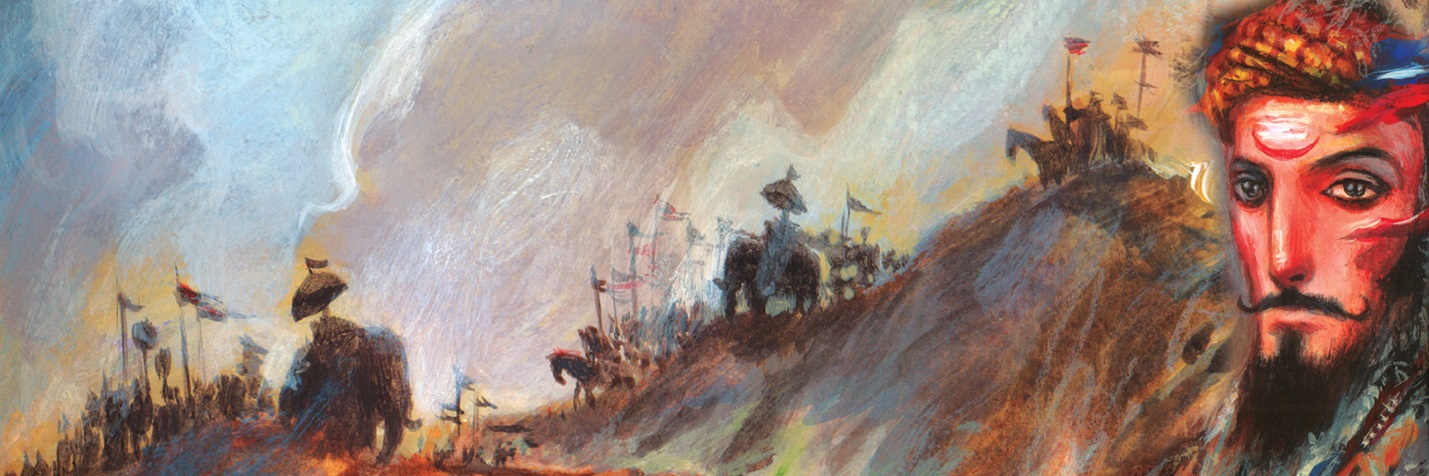
After Aurangzeb ascended the throne in the North, he moved ahead with the aim to conquer the Deccan kingdoms. He is ruthless in his quest and would leave no stones unturned.
Raja Shivaji, a jagirdar from the hills of western Deccan, wants Swaraj in its truest sense. He cherishes his freedom and has raised his sword against those who stand between him and his goal to gain Swaraj. With his unrivalled courage and a drive to liberate all the Deccan kingdoms from the oppressive rule of Aurangzeb, Shivaji and Aurangzeb’s power struggle makes for an epic saga.
Frontiers, a historical saga by Medha Deshmukh Bhaskaran, brings to life the complex and ever-shifting dynamics between these two arch nemeses.
Let’s take a look at few ideas of swaraj as understood by Shivaji:
Shivaji’s idea of Swaraj
According to Shivaji, Swaraj is the birthright of every human. He longed for a world which was no longer entangled in the clutches of biases, cruelty, religious conflicts and discrimination of any kind. Thus, he fought for the freedom of the Marathas from the oppressive rule of the Mughal emperor Aurangzeb. He wanted to establish a Hindavi Swaraj.
Take a look at few ideas of swaraj as understood by Shivaji:


A Timeline of the American Presence in India Through the Years

For two centuries, the United States has been involved India. Ranging from the Great Indian revolt in 1857 to solving the Indo Pak war of 1947.
Here are a few significant instances of the American involvement in India, from Srinath Raghavan’s book, The Most Dangerous Place which presents a gripping account of America’s political and strategic, economic and cultural presence in the region. By illuminating the patterns of the past, this sweeping history also throws light on the challenges of the future.
Let’s take a look!


Medha Deshmukh Bhaskaran on Writing Frontiers
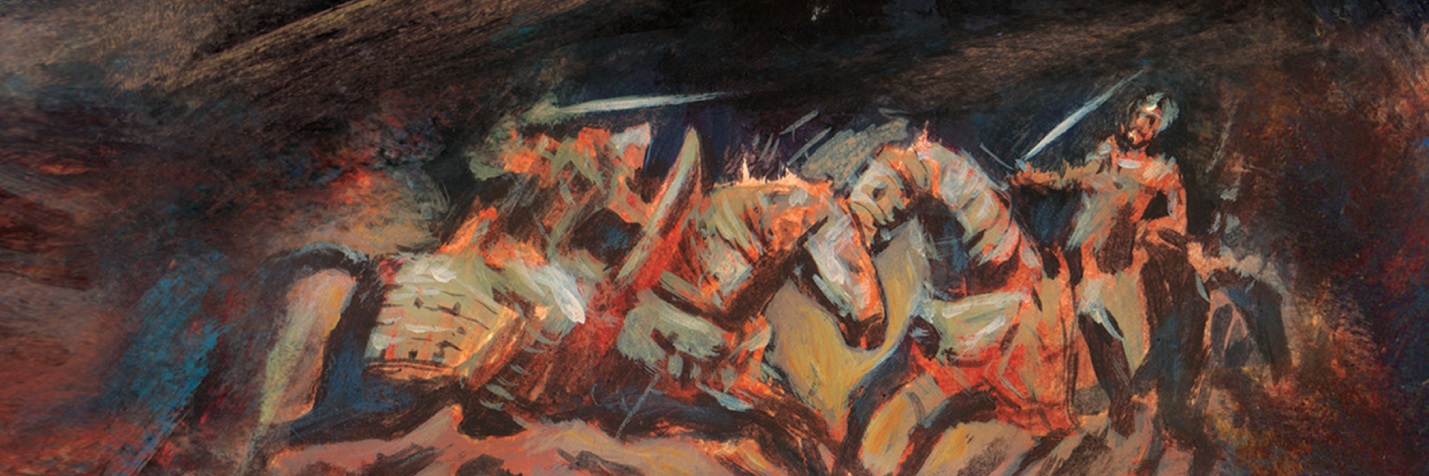
Frontiers by Medha Deshmukh Bhaskaran, is the story of Shivaji’s quest to establish freedom in the Maratha region. Born to a Jagirdar, Shivaji shunned his noble status to fight for Swaraj against the Mughal forces of Aurangzeb. The battle that ensues between the two enemy forces makes for a riveting read.
Here we have Medha Deshmukh Bhaskaran talking about how the book came to be and how she researched about Shivaji. Talking about her journey in the making of this book, she explains the challenges that she overcame in order to know about the man Raja Shivaji.
——————-
After publishing more than three hundred articles on ‘health and disease’ in the Weekend Magazine of the Khaleej Times – a very popular newspaper in the gulf, I realized that people appreciated what I wrote. In that small little and cosy world of United Arab Emirates, I got some recognition and it was followed by big dreams. Soon I wanted to write a book on something not related to medicine. It took me a while to find that ‘something’ which turned out to be an uphill task.
I realized that there are hardly any books written on Chhatrapati Shivaji in English. I am a Maharashtrian born in Ahmednagar. Love for Raja Shivaji is in our DNA, like the right to ancestral property; we are born with extreme loyalty to Raja Shivaji.
The first task was – that loyalty did not turn blind.
It was year 2000 and at that time I had a very demanding schedule. My boys were growing up and soon I would also have a high pressure marketing job in the healthcare industry in Dubai. Nonetheless I announced my desire on impulse and my parents bought about fifty reference as well as fiction books written on Maratha History (mostly in Marathi) and presented to me. The impulse soon became a passion and passion soon turned into madness! Those books became my time-machine to travel into the past. The most valuable reference book (about 1000 pages) was written in English by Mr G Mehendale, ‘Shivaji: His Life and Times’.
Since then every holiday in India meant visiting mountain forts.
Little did I know at that time that writing articles in a magazine is totally different from writing a book, especially a historical fiction.
Agreed that there were already hundreds of ‘fiction, nonfiction’ books in Marathi on the subject. When a Marathi reader starts reading a book on Raja Shivaji she/he is already in love with the protagonist. That love makes them pick up the book from the store in the first place. My book written on the subject would be for people who did not know Raja Shivaji, and they were not necessarily, already in love with him. I had a task to recreate history scene by scene, what would have happen, what could have taken place, what was said in conversations and by whom and what body-language of the people might have been. And I also wanted to remain very truthful to history. First it looked like a foolish waste of time. Many thought who would read a historical fiction written by a microbiologist who had failed in ‘English’ and ‘history’ in school with remarkable consistency? Only my closest family, my parents, brother and husband stood by a person like me who mostly lived in the 17th century!
Battle scenes were the most difficult part when it came to descriptions. Here I took help of non-fiction books written by Col. Palsokar and Sir Jadunath Sarkar written in English. Mr Girish Jadhav, a famous weapon (17th century) collector, too came to my rescue. I met him when he had held an exhibition in Ahmednagar. He demonstrated how sword fights were fought. Dr Ajit Joshi who has written a reference book on Shivaji’s escape from Agra, explained to me with logic and insight how Shivaji must have escaped and how old theories could possibly be not true at all. Late Mr Ravindra Godbole who has written Aurangzeb’s biography in Marathi discussed for hours about how men of power must have ruthlessly played politics.
In one of the books referred, I came across a foreword written by a famous history analyst (late) Mr Narhar Kurundkar. He strongly held that a portrayal of Shivaji could only be completed by showing not just who he was but what he was up against. Thus I took a detour from the Maratha history and started studying the Mughal history, especially about Aurangzeb, who turned out to be a very interesting protagonist. I decided to give him equal space as Raja Shivaji in ‘Frontiers’.
From then I started hitting the keyboard whenever I had the time. When I look at the initial manuscript I realize that I did need years (more than ten to be precise) just to get the story together. A single conversation would take months and then I would scrap it. I became possessed by Raja Shivaji and Emperor Aurangzeb – so much so that when I drove lovely cars at the speed of 120 kilometers per hour on the fantastic roads of the UAE, I missed being a cavalryman riding a horse through forests of western Maharashtra! When I visited the Fort in Shahjahanabad in old Delhi I felt the uncanny presence of Emperor Aurangzeb’s in now-bare-and-orphan-like-Khaas-Mahal.
Having lived in three places on the planet earth, India, Europe and the Middle East, life has taught me that there are good as well as bad people, irrespective of their religion. It helped me as an author to be totally and completely unbiased as far as religions and castes were concerned.
It was 2011, time to come back to India to take care of my aging parents. My boys were grown up and were independent. I had quit my job and was back in Mumbai with bag, baggage and my manuscript. But the real problem was getting a publisher or an agent. A hundred emails containing query letter, sample chapters, synopsis and blurb were sent. Since the story was vast (1656 to16 80), I thought it would best be told in a trilogy – with each book ending into a shocking event. One thing was clear – I would not self or vanity-publish my work. After many rejections and heartbreaks, one publisher in Kolkata offered to publish part 1 (1656 to 1659) of the trilogy. And as any new author I jumped. They did a fairly good job in editing and it was published – under the name ‘Frontiers of Karma – The Counterstroke’ There was a problem though; the distribution was extremely weak. It was then I had taken a copy to Crossword Bookstores head office requesting them if they could distribute ‘The Counterstroke’. They agreed and more. Anup Jerajani asked me to write a 300 page biography of Chhatrapati Shivaji –thus ‘Challenging Destiny’ was born in 2016. The biography turned out to be Crossword Bookstores bestseller and was nominated in two categories for Raymond Crossword book awards 2017. It is translated in Marathi (Zunz Niyatishi) and in Hindi (Niyati ko Chunauti). Its audible edition is available on Amazon’s audible.com.
My heart was still pining for my historical fiction.
Meanwhile the Kolkata publisher was closing down. Part 2 (1659 to 1666) was written and ready, languishing in the files of my desktop. It was early 2017 I got the most important call from Vaishali Mathur, Editor in Chief of Language Publishing at Penguin India saying that she had found my manuscript in her old mails and she wants to take up the project. She said Penguin will publish both the parts in one book – that would end showing Raja Shivaji’s escape from Agra. Then stared the editing on warpath. First Vaishali Mathur trimmed to story making it fast paced and racy, Mriga Maithel Negi did the English editing, scrutinizing each word of the monster manuscript. At the end, Penguin’s senior editor, Paloma Datta looked at it through fisheye lens. The name was decided – FRONTIERS’. A very attractive cover was designed by Ahlawat Gunjan and illustration showing protagonists in their warrior avatar with a backdrop of battle chaos was created by Sankha Banerjee.
I would say the last words while telling you the story of ‘Frontier’s birth in a verse penned by me
Footprints get buried
Even the tracks erode
But the past still pulsates
Like lava
With unbearable load
——————
Frontiers, a historical saga, bring to life the complex and ever-shifting dynamics between these two arch nemeses.
AVAILABLE NOW
Exploring Waves of Migration in the Islamic Community
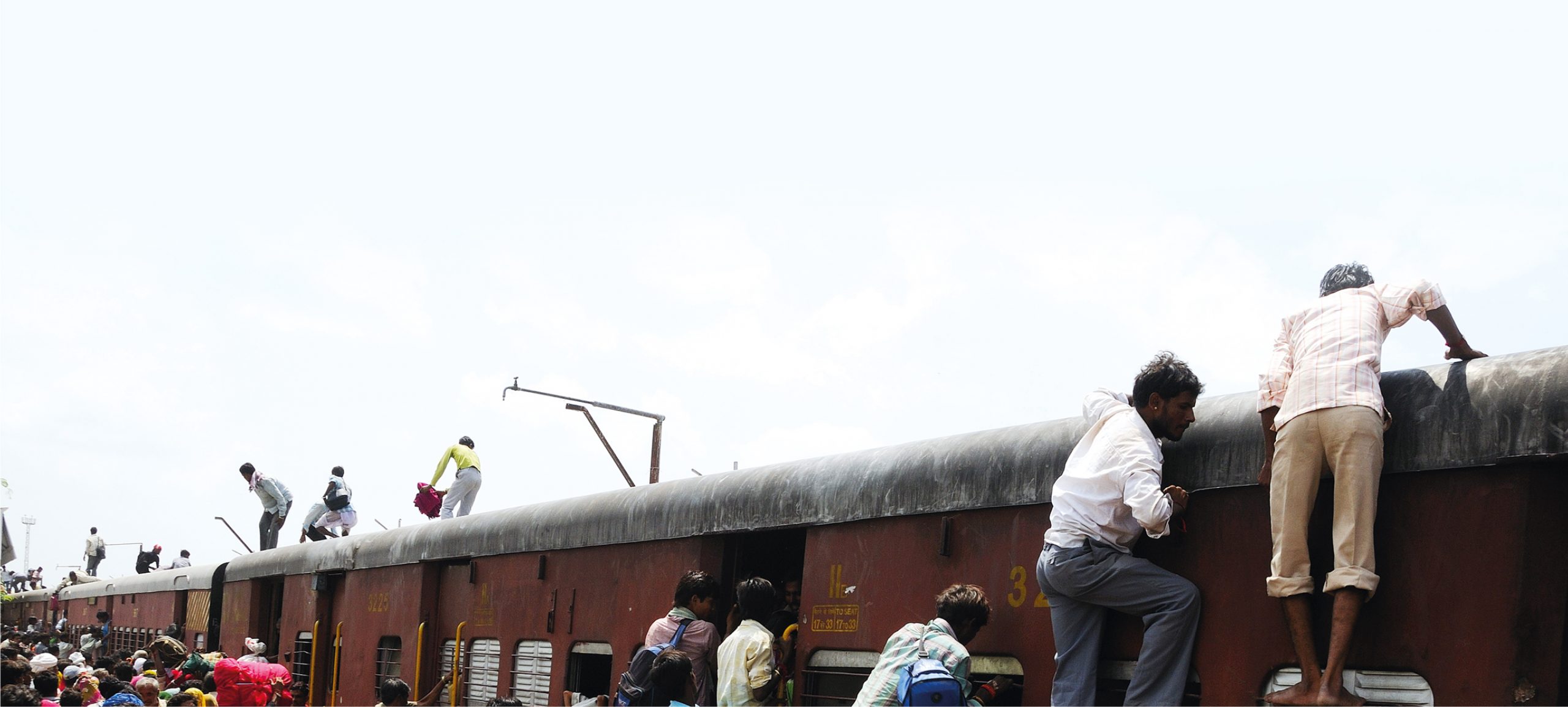
India Moving takes a close look at India’s (and the world’s largest) episodes of voluntary and involuntary migration. It delves into how India is unique in currently sustaining considerable immigration, internal migration and emigration – all three at the same time.
It provides a wealth of information and interesting perspective on the migration of different business communities within and outside India.
Here’s an insightful look at the origin and impact of successive waves of migration within the Muslim Merchant community, over the years:


Technology on a Leash

Venkat Iyer is the author of Moong Over Microchips and a certified project management professional. In this piece Iyer discusses how technology could be “a useful servant but a dangerous master”. Vivek Wadhwa and Alex Salkever talk about technology on similar lines in their book Your Happiness was Hacked.
The book Your Happiness was Hacked encounters various problems that are caused by engaging with technology to an extreme and how it could be kept under check. This book exposes how tech companies entice us to overdose on their products, thereby hindering our daily lives.
—————-
I worked in the Information Technology (IT) industry for 17 years and that is enough to be immersed in the addictive tech world. Starting from the humble desktop to mighty servers with the latest software and technology, there was not a moment I did not think of IT.
Steven Spielberg once said, “Technology can be our best friend, and technology can also be the biggest party pooper of our lives. It interrupts our own story, interrupts our ability to have a thought or a daydream, to imagine something wonderful, because we are too busy bridging the walk from the cafeteria back to the office on the cell phone.”
I was to understand what he meant only in 2003 when I quit my job in IBM and decided to start my own organic farm near Mumbai. Moving to the village, only over 100 km from Mumbai, I found that there was no telephone connectivity, let alone internet. I soon realised what an impact technology had on our lives. Right from the initial dotcom boom to the introduction of smartphones and social media, technology had touched almost everyone’s lives and changed it. While it brought the world closer and made access to information easier, it also transformed our social and cultural fabric.
Way back in the nineties, one could rattle off a long list of telephone numbers, while now even for their own number, people tend to search in their mobile phones. Simple addition and multiplication need a calculator. Many would say technology makes our lives easy, but what about using our brains to perform simple tasks which will keep it alive and ticking. To counter this, Sudoku or a crossword puzzle are recommended daily to keep the grey cells from disuse.
With the growing popularity of Facebook, I was tempted to open an account. I could access the internet only on the weekends when I went to Mumbai from the farm, and I could not relate to many posts. Most of them were of little interest to me. Once, when I checked my timeline I found a post by a niece in USA, describing a terrible stomach pain. I stared at the post for a while: it seemed strange that you would get up and log on to a social networking site to inform people across the world of an ailment while in so much pain. I also could not figure out why 21 people had liked the post. What exactly did they like? Her pain and trauma or the fact that they had read the post. It did not take me much time to delete my profile and I vowed never to be on Facebook again.
While the insane desire to share the humdrum realities of one’s life in public was growing thanks to Facebook, another application was gaining ground, Whatsapp. This free new app with calling facility made it possible to chat with others all over the world. Suddenly, I was added to groups of old school friends, ex-colleagues, cousins, farmers’ groups and other of like- minded people coming together to share information. The popular activity was to forward and share as many posts as possible. It was left to the imagination if the posts were true and verified. Lately, these indiscriminate posts, sometimes circulating falsehoods or old videos have been fuelling lynch mobs and claiming the lives of people in our country. But who cares. To forward and share is our motto.
It is reported that almost 200 million people use Whatsapp in India and sadly most people believe the often scurrilous posts, sometimes proved to be patently false. It is a common sight to see people staring at the phone all day either reading or forwarding what they have received. Besides, the addiction to online games, music and videos cuts across ages. It has become difficult to have a sane conversation with anyone.
Sometime back, I had a visitor from Mumbai who wanted to learn about organic farming and discuss the complex marketing of organic produce. In between a serious discussion, her phone beeped and soon she was lost staring at it for the next ten minutes, while I was holding forth on the topic. A while later, she returned to the physical world and said, “I am sorry, Where were we?” I just looked at her and said, “Maybe you should send me your questions on Whatsapp and I can reply to them at leisure.” The comment did the trick and she switched off the phone for the rest of the meeting. But, sadly everyone does not react the same way and some continue to smile and stare at their phones.
Technology is not bad; it is a useful servant but a dangerous master. It is the indiscriminate use and over dependence on it that is not good for us. It is faster to email than post a physical letter and there are many other advantages. But, is there a need to stare at the phone and jump at every sound notifying you of something, tweet every moment or Facebook your aches and pains to complete strangers? So that I am not addicted to my phone, I have fixed timings daily to read my mail and reply. Anyway if it is something urgent, I presume one would have got a call and not an email. Even when it comes to taking calls, I don’t take them all the time, especially during mealtimes or while driving.
I probably find it easier to have these restrictions since I live on the farm and not in a city with a fast- paced job. In the corporate world, there is no question of being delinked from technology. There could be a time when you need to step back and look at your life: is this incessant use of the phones, social media and technology having an impact on your health, life, peace and your mental state? Can we strike a balance between life and technology, so we enjoy the best of technology and reclaim a life that we can truly enjoy? It is not impossible.
Your Happiness was Hacked turns personal observation into a handy guide to adapting to our new reality of omnipresent technology.
AVAILABLE NOW!