



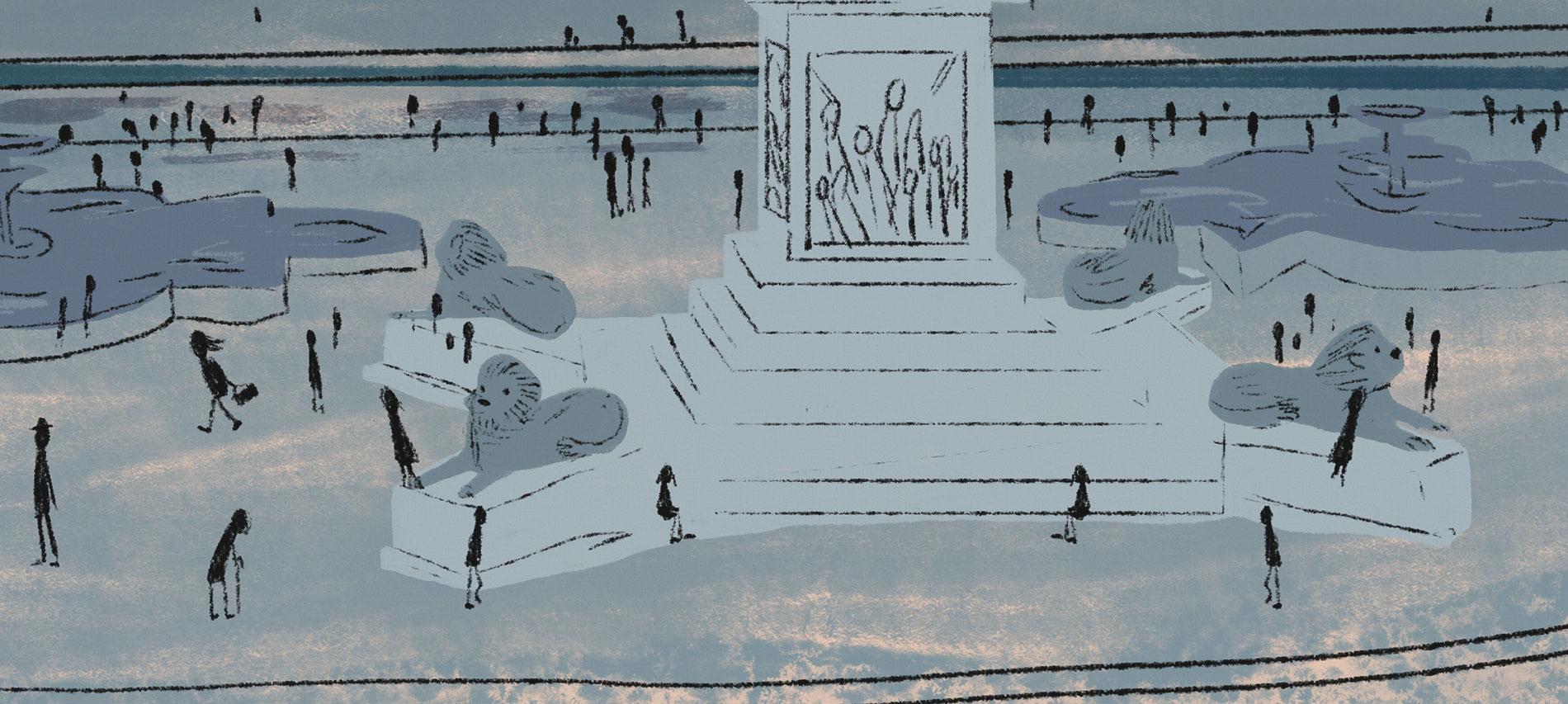
Viswanadha Satyanarayana (1895–1976) is regarded as one of the most important writers and poets of the Telugu canon. He was the first Telugu writer to win the Jnanpith Award in 1971 and was also awarded the Padma Bhushan.
Ha Ha Hu Hu; A Horse-Headed God in Trafalgar Square contains two novellas by him, Ha Ha Hu Hu: A Horse-Headed God in Trafalgar Square and Vishnu Sharma Learns English and is translated by Velcheru Narayana Rao.
Ha Ha Hu Hu tells the delightful tale of an extraordinary creature that mysteriously appears in London one fine morning, causing considerable excitement and consternation among the city’s denizens.
In the hilarious satire Vishnu Sharma Learns English, a Telugu lecturer is visited in a dream by the medieval poet Tikanna and the ancient scholar Vishnu Sharma with an unusual request: they want him to teach them English!
Here are a few reasons to make this your next read.


Category: Features
articles features main category
5 Things you didn't know about the Laughter Yoga Club movement

It was 4 a.m. on 13 March 1995 when the idea of laughter yoga came to Dr. Madan Kataria. He was excited and, three hours later, hurried to the public park where he went for a morning walk everyday. He tried to convince a few regular walkers about the importance of laughter and the idea to start a laughter club. Four out of four hundred people agreed.
Laughter yoga is a revolutionary idea: simple and profound. A practice involving prolonged voluntary laughter, it is based on scientific studies that have concluded that such laughter offers the same physiological and psychological benefits as spontaneous laughter.
Here are 5 things you didn’t know about the Laughter Yoga Club Movement.


Still Me by Jojo Moyes – An Excerpt

Jojo Moyes, the author of bestsellers Me Before You and After You brings the third Lou Clark novel, Still Me. The third book sees Lou arrive in New York to start a new life. What Lou doesn’t know is she’s about to meet someone who’s going to turn her whole life upside down. Because Josh will remind her so much of a man she used to know that it’ll hurt. Lou won’t know what to do next, but she knows that whatever she chooses is going to change everything.
Let’s read an excerpt from the book, Still Me.
———–
‘Reasons for travel, ma’am?’ The moustache twitched with irritation. He added, slowly: ‘What are you doing here in the United States?’
‘I have a new job.’
‘Which is?’
‘I’m going to work for a family in New York. Central Park.’
Just briefly, the man’s eyebrows might have raised a millimetre. He checked the address on my form, confirming it.
‘What kind of job?’
‘It’s a bit complicated. But I’m sort of a paid companion.’
‘A paid companion.’
‘It’s like this. I used to work for this man. I was his companion, but I would also give him his meds and take him out and feed him. That’s not as weird as it sounds, by the way – he had no use of his hands. It wasn’t like something pervy. Actually in my last job it ended up as more than that, because it’s hard not to get close to people you look after and Will – the man – was amazing and we . . . Well, we fell in love.’ Too late, I felt the familiar welling of tears. I wiped my eyes briskly. ‘So I think it’ll be sort of like that. Except for the love bit. And the feeding.’
The immigration officer was staring at me. I tried to smile. ‘Actually, I don’t normally cry talking about jobs. I’m not like an actual lunatic, despite my name. Hah! But I loved him. And he loved me. And then he . . . Well, he chose to end his life. So this is sort of my attempt to start over.’ The tears were now leaking relentlessly, embarrassingly, from the corners of my eyes. I couldn’t seem to stop them. I couldn’t seem to stop anything. ‘Sorry. Must be the jetlag. It’s something like two o’clock in the morning in normal time, right? Plus I don’t really talk about him anymore. I mean, I have a new boyfriend. And he’s great! He’s a paramedic! And hot! That’s like winning the boyfriend lottery, right? A hot paramedic?’
I scrabbled around in my handbag for a tissue. When I looked up the man was holding out a box. I took one. ‘Thank you. So, anyway, my friend Nathan – he’s from New Zealand – works here and he helped me get this job and I don’t really know what it involves yet, apart from looking after this rich man’s wife who gets depressed. But I’ve decided this time I’m going to live up to what Will wanted for me, because I didn’t get it right, before. I just ended up working in an airport.’
I froze. ‘Not – uh – that there’s anything wrong with working at an airport! I’m sure immigration is a very important job. Really important. But I have a plan. I’m going to do something new every week that I’m here and I’m going to say yes.’
‘Say yes?’
‘To new things. Will always said I shut myself off from new experiences. So this is my plan.’
The officer studied my paperwork. ‘You didn’t fill the address section out properly. I need a zip code.’
He pushed the form towards me. I checked the number on the sheet that I had printed out and filled it in with trembling fingers. I glanced to my left, where the queue at my section was growing restive. At the front of the next queue a Chinese family was being questioned by two officials. As the woman protested, they were led into a side room. I felt suddenly very alone.
The immigration officer peered at the people waiting. And then, abruptly, he stamped my passport. ‘Good luck, Louisa Clark,’ he said.
I stared at him. ‘That’s it?’
‘That’s it.’
I smiled. ‘Oh, thank you! That’s really kind. I mean, it’s quite weird being on the other side of the world by yourself for the first time, and now I feel a bit like I just met my first nice new person and –’
‘You need to move along now, ma’am.’
‘Of course. Sorry.’
I gathered up my belongings and pushed a sweaty frond of hair from my face.
‘And, ma’am . . .’
‘Yes?’ I wondered what I had got wrong now.
He didn’t look up from his screen. ‘Be careful what you say yes to.’
————-

Guru Trouble: 5 Controversial Godmen India Has Witnessed
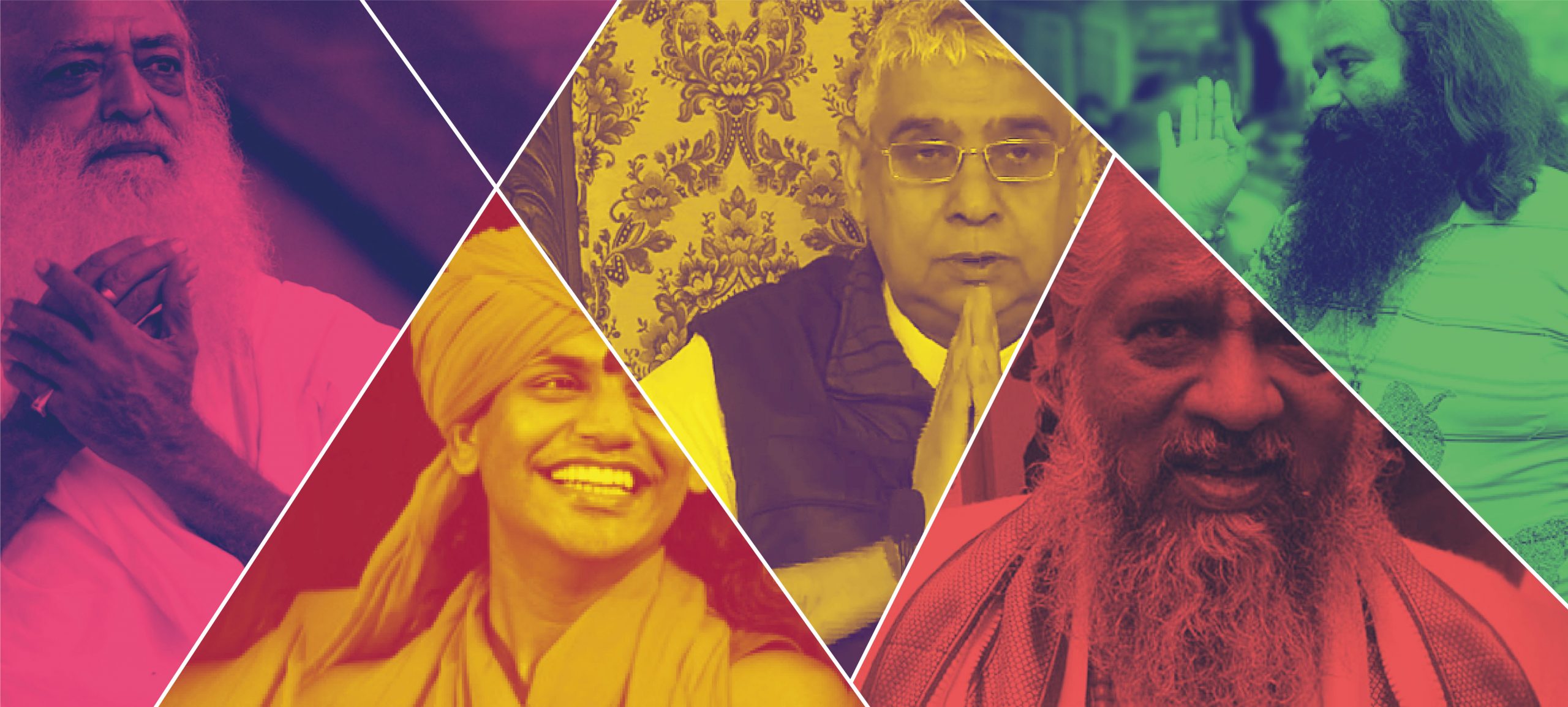
In August 2017, Gurmeet Ram Rahim the leader of Dera Sacha Sauda, was convicted to life imprisonment for raping two of his disciples. Just as Ram Rahim took over our timelines and imaginations- the pertinent question was: how did this man get millions of seemingly normal people to believe that spreading peace and equality involves rape, castration and violence?
Just like Ram Rahim, there are several self-styled godmen who are wrapped in controversies and have allegedly committed heinous crimes. These are a few infamous godmen who thought they were invincible until the law caught up with them.
Asaram Bapu
Asaram Bapu preached the existence of ‘One supreme conscious’ and had rape allegations levelled against him.

Swami Nithyananda
Swami Nithyananda is regarded as a spiritual leader and believed by his disciples to be a reincarnated deity.

He claimed that the video was morphed and denied being the man in the video. In 2012, he was accused of rape by an Indian born American citizen.
Sant Rampal
This so-called godman claims to be a successor of Sant Kabir. He came into the spotlight after being charged with sedition, murder, attempt to murder and forgery.

Chandraswami
Chandraswami is best known for being the spiritual adviser of a former Prime Minister. He claimed to be able to read minds and cast spells on any individual.

Gurmeet Ram Rahim
This self-proclaimed godman headed the Dera Sacha Sauda sect since September 23, 1990. He fancies himself as the ‘rockstar guru’ as he is also a singer and actor. Anurag Tripathi’s book, Dera Sacha Sauda and Gurmeet Ram Rahim: A Decade-long Investigation, reveals the atrocities perpetrated by him.


Supreme Whispers by Abhinav Chandrachud – An Excerpt

In Abhinav Chandrachud’s latest book, Supreme Whispers: Conversations with Judges of the Supreme Court of India 1980-1989, Chandrachud relying on the typewritten interviews of a brilliant young American scholar, George H. Gadbois, Jr. who conducted over 116 interviews with more than sixty-six judges of the Supreme Court of India provides a fascinating glimpse into the secluded world of the judges of the Supreme Court in the 1980s and earlier.
Let’s read an excerpt from this book.
———–
The broad sense one gets is that dissent is generally frowned upon at the Supreme Court, and dissents get written only in the rarest of cases involving irreconcilable conflict. Chief Justice M. Hidayatullah admitted to ‘ragging’ two of his colleagues who dissented from his view in the very first case they heard together, because he was responsible for bringing them to the court. However, he did feel reassured by their independence. Justice P.B. Gajendragadkar, known for his pro-labour leanings, once wrote a draft judgment with which his colleague, Justice N.H. Bhagwati, disagreed. Bhagwati suggested that Gajendragadkar make some changes to the judgment in order to secure Bhagwati’s agreement to sign off on it. Gajendragadkar refused to change a word of his draft. Bhagwati signed the judgment anyway, since another judge on the bench, Justice S.K. Das, had also agreed to sign it, and Bhagwati did not want to dissent. In February 1983, a bench of two judges had said that in a death penalty case if the person convicted is not executed within two years, then the sentence automatically stands commuted to life imprisonment. Shortly after this judgment was delivered, it was overruled by a bench of three judges of the court. Justice A. Varadarajan believed that if the two judges who had delivered the judgment in the earlier case had sat with the three judges who decided the later case, even they would have been convinced to be a part of the majority in the later case.
Justice H.R. Khanna, arguably one of the greatest dissenters of all time at the Supreme Court, who disagreed with the majority view in the Habeas Corpus case, admitted that he did not dissent in one of the early cases he heard in the court even though he disagreed with the view of the majority. The Supreme Court’s judgment in that case had the effect of raising car prices. Although he ‘did not feel happy with the view they took’, Khanna agreed with the judgment of the majority because he ‘did not think it proper to strike a discordant note at the very beginning’ of his judgeship at the Supreme Court. ‘The atmosphere in court’ at the time, noted Khanna, ‘was of general cordiality.’ This, of course, did not stop Justice Khanna from dissenting in the Habeas Corpus case, where a majority of the judges of the bench held that the right to seek the writ of habeas corpus and to challenge arbitrary arrest and detention could be suspended during an Emergency. Dissent at the Supreme Court, then, seems to be reserved for the most egregious and exceptional circumstances.
‘I did not believe in writing separate or dissenting judgments for nothing,’ wrote Justice P.N. Shinghal in a letter to Gadbois. ‘So if I have written dissents,’ he continued, ‘they were necessary to place my irreconcilable views on record.’ Justice A.C. Gupta was critical of his colleagues who were eager, in big cases, to write separate judgments. He pointed out that Justice E.S. Venkataramiah wrote a judgment of over 300 pages in the Judges case. Justice Krishna Iyer felt that writing a dissent gained little, and did not serve much purpose. He stressed that the whole court was very congenial, ‘delightfully united’, and there was a ‘happy sense of cooperation’ prevalent at the time. He believed that divided decisions were not as good as unanimous ones. In fact, who is writing the majority judgment for the court also matters. Justice P. Jaganmohan Reddy believed that the majority judgment of the Supreme Court in the Bank Nationalization case should not have been written by Justice J.C. Shah because Shah had delivered the judgment in an earlier case in which the court had taken a seemingly contrary view. He felt that somebody else should have written the majority judgment or even a concurring judgment. The majority judgment of Shah was extensively discussed by the judges prior to being delivered, and several passages were removed and added by other judges. The court wrote one judgment in order to achieve clarity and avoid contradictions.
______________________________________________________________________________

5 Quotes every Friend-Zoned lover will relate to

Sudeep Nagarkar is the author of nine bestselling novels. She Friend-Zoned My Love, his latest and tenth book is about Apurv, an ordinary boy who charms everyone in his company and Amyra- a beautiful and popular girl who leads a flawless life. A chance encounter with Amyra in the college canteen makes Apurv fall head over heels for her but it isn’t long before he realizes that she is not interested in him, at least not in the way he wants her to be. Can Apurv get Amyra to change her mind before it’s too late, or will he be friend-zoned forever?
Have you ever fallen in love with someone who never loved you back and just wanted to stay friends? If you just said yes to this question then here are 5 quotes from the book, She Friend-Zoned My Love, that are a must read for you!


Life for the Under-privileged During Pre-partition India; Quotes from Mulk Raj Anand
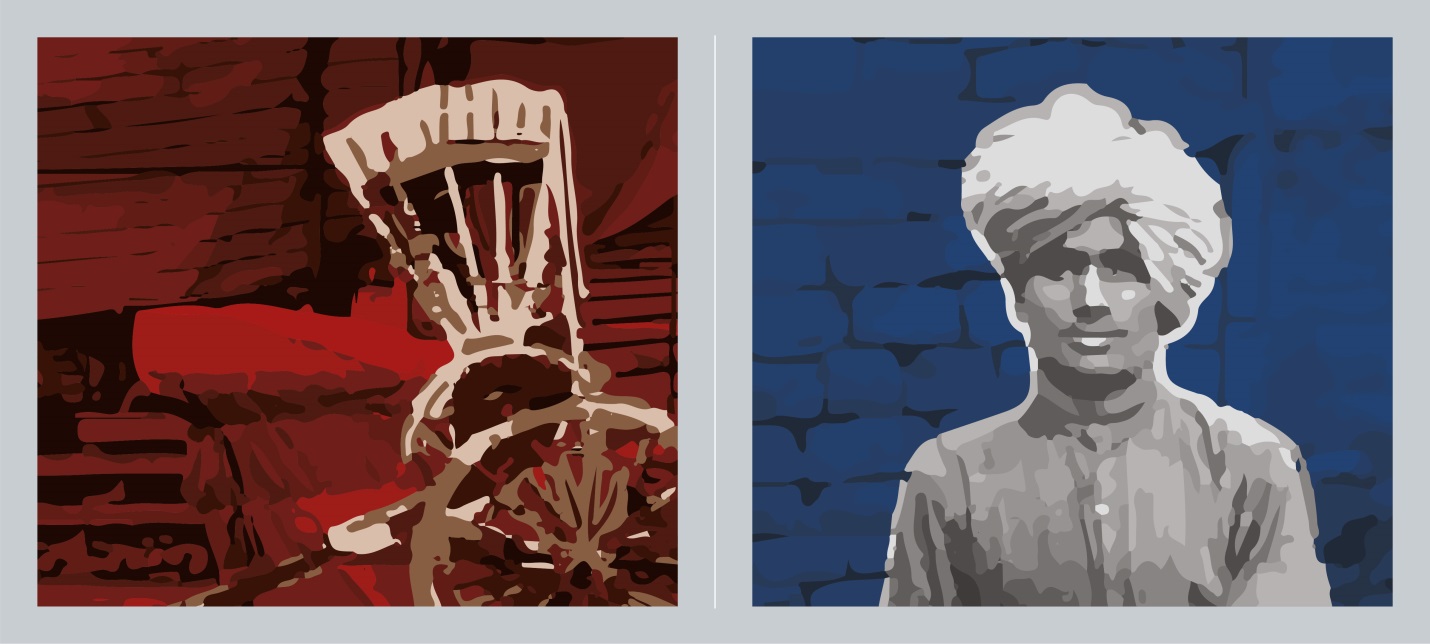
Mulk Raj Anand, one of the most highly regarded Indian novelists writing in English is best known for the impassioned social critique contained in his writings. His main concern has always been for “the creatures in the lower depths of Indian society who once were men and women: the rejected, who had no way to articulate their anguish against the oppressors.” His novels of humanism have been translated into several world languages.
Here we find 7 quotes from two of his popular works, Coolie and Untouchable that show the life for the underprivileged during pre-partition India.


Meet Private Detective; Arjun Arora

Ankush Saikia’s new read, More Bodies Will Fall is a tense and gripping thriller with an unforgettable detective –Arjun Arora – at its heart.
In the book, a girl from north-east India is murdered in Delhi. The main suspect is her ‘Indian’ boyfriend, but there isn’t enough evidence to prove his guilt. Amid a growing outcry about police neglect and racial injustice, detective Arjun Arora reluctantly takes on the case.
The search for answers embroils him in the dangerous new realities of the North-east – riven with strife and suffering – and also brings him face-to-face with an old enemy, culminating in an unexpected climax.
Let’s meet the detective, Arjun Arora:


6 Things we learned about Career Growth from Chandramouli Venkatesan's Catalyst

One of the most celebrated corporate leaders, Chandramouli Venkatesan has a commendable track record of over 25 years in the corporate business. A XLRI Jamshedpur alumnus, he began his career with Asian Paints in 1991 and worked in sales and marketing sectors , completing a successful decade. Following a brief stint in GE Capital, he joined Cadbury in 2005 where he worked until 2016, ensuring that the company becomes a household name in India. Currently, Venkatesan is the CEO for Pidilite Industries, responsible for creating and developing new business ventures for the company.
The corporate veteran penned down the book, Catalyst that identifies various kinds of stimuli that will enable you to win at your work place and everyday life.
Here are 6 things we learned about Career Growth from the Catalyst:
Your career will grow only as much as you are able to grow as an individual and professional.
 Time spent at work does not equate to experience
 Maximise learning cycles
 Improve personal productivity

The impact of your bosses
 A single poor decision on when to quit can have a very high impact on your long term success


Ha Ha Hu Hu: A Horse-headed God in Trafalgar Square – Excerpt

Ha Ha Hu Hu tells the delightful tale of an extraordinary horse-headed creature that mysteriously appears in London one fine morning, causing considerable excitement and consternation among the city’s denizens. Dressed in silks and jewels, it has the head of a horse but the body of a human and speaks in an unknown tongue. What is it? And more importantly, why is it here?
Let’s us read an excerpt from the book.
The animal gestured that the floor was all muddy and there was nowhere to sit down. People understood the gesture. They brought a big stool and handed it to the animal. The animal sat on the stool in the lotus position, closed its nostrils and began to meditate. Nobody understood what it was doing. After about an hour, it opened its eyes and stood up, tied the now dry cloth around its body and put the cloth it was wearing out to dry. It pointed towards the fruits, gesturing for more. The Lord Mayor sent his men and had a large basket of fruits brought in. The animal then gestured asking for a chƟmbu. Where could you find chƟmbus in England! So they gave it a glass instead. The animal took the glass, sprinkled a few drops of water on the fruits, muttered something, waved its hand around the fruits and then ate all the fruits. It gestured for more water. They gave it more water from the hose. The animal drank the water.
Sitting on the stool, the animal looked quietly around at everybody. It laughed again. Now the people understood that that was how the animal laughed. The animal pointed towards the cage and gestured asking why it was there. Everyone was amazed.
Someone in the crowd said, ‘No, this isn’t an animal. This is a human being. The head is a horse’s head but this surely is a human being. We have discovered new continents, but we haven’t yet discovered the continent where people like this live. Let’s find out what his language is and which country he comes from. Looks like he comes from a very civilized culture. Why put him in a cage? Get him out.’
The police officers didn’t agree. ‘We can’t free him from the cage,’ they said. ‘How can we be sure that it’s not an animal? What if it pounces on the crowd and eats people alive?’
So the cage stayed.
The officers talked about many things to the animal in English. It was clear the animal did not understand. Then they spoke in French, German, Italian and Russian, one after the other. Still the animal did not understand. They brought a black man and had him speak his language to the animal. Listening to all these languages, the animal began to laugh as if it were ridiculing them. The police didn’t know what else to do. After a little while the animal neighed, which sounded to people at a distance like ‘Kim ma e sudam? Kim edam?’ By now everyone knew that the animal was talking. But it did not know any of their languages, so they did not know how to communicate with it.
However, they noticed something interesting: The animal was totally calm and looked uninterested in the people around it.
All this time, the soldiers stood with loaded guns. Coming close to the bars, the animal looked at one of their guns. A soldier standing behind the animal was frightened and walked four paces back and held the gun close to him. The animal turned around and saw his frightened face. It realized that the man’s hands held some kind of an instrument for killing. It looked at the gun with some interest and asked the policeman to see the gun. The policeman refused.
Everyone looked on in amazement.
The sun was setting. People were leaving for their homes. For fun, the eight-year-old son of a police inspector poked at the animal from behind with his badminton racket. The animal turned around as the boy ran away and stretched its hands through the bars to catch him. The boy escaped but the animal did get hold of a soldier, pulling the gun from his hands into the cage. People were frightened and ran away. Even the police and the soldiers were fleeing when the Lord Mayor commanded them to stop.
The animal began to look closely at the gun.
