Publish with Us

Follow Penguin

Follow Penguinsters

Follow Penguin Swadesh

Choices by Shivshankar Menon – An Excerpt

Shivshankar Menon served as national security adviser to the prime minister of India from 2010–14 and as India’s foreign secretary from 2006–09. A career diplomat, he has served as India’s envoy to Israel (1995–97), Sri Lanka (1997–2000), China (2000–03) and Pakistan (2003 06). In 2010, Menon was chosen by Foreign Policy magazine as one of the world’s top 100 global thinkers. Menon in his book, Choices, gives an insider’s account of the negotiations, discussions and assessments that went into the making of India’s foreign policy.
Let’s read an excerpt from the book- Choices.
———–
I am often asked why India committed itself to not using its nuclear weapons first. The center-right National Democratic Alliance (NDA) government adopted the no-first-use doctrine when India first publicly tested nuclear weapons at Pokhran in 1998, and all subsequent governments of India have reiterated this pledge.1 The doctrine states that:
 

The fundamental purpose of Indian nuclear weapons is to

deter the use and threat of use of nuclear weapons by any

State or entity against India and its forces. India will not be

the first to initiate a nuclear strike, but will respond with

punitive retaliation should deterrence fail.


India will not resort to the use or threat of use of nuclear

weapons against States which do not possess nuclear

weapons, or are not aligned with nuclear weapon powers.

There is still some residual anxiety in India about the wisdom of this commitment, particularly in military minds. Why have a weapon and forswear its use? India could have followed the United States and Pakistan in retaining the option of using its most powerful weapon first should the nation’s defense require it.
The answer to that question lies in India’s nuclear doctrine, which is itself a product of the unique circumstances in which India finds itself. Those circumstances also explain why India chose to test nuclear weapons and become a declared nuclear weapon state (NWS) in 1998.
By the late 1990s, India was in a situation where two of its neighbors with whom India had fought wars after independence, Pakistan and China, were already armed with nuclear weapons and were working together to build their capabilities and proliferate them in Asia. The international nonproliferation regime was not in any position to address this problem. India therefore chose to become a declared NWS in 1998. The Indian government made that decision in the face of opposition by all the major powers, despite misgivings within Indian society, and after twenty-four years of international nuclear sanctions resulting from India’s first nuclear test, Pokhran-I, in 1974. (India described the 1974 test as a “peaceful nuclear explosion,” adopting a term from the Nuclear Non-Proliferation Treaty, whereas the 1988 test was described by the government of India as a nuclear weapon test.) Those sanctions had been designed to “cap, cease and roll back” India’s civil nuclear program and potential to make atomic weapons. They had failed to do so. Since 1974, India had also been threatened with nuclear weapons at least three times: twice by Pakistan and once, implicitly, by the entry of the nuclear-armed U.S. aircraft carrier USS Enterprise into the Bay of Bengal during the 1971 war with Pakistan. (The Enterprise had also entered the Indian Ocean in 1962 when India and China fought their brief border war, but that move was intended to support, not threaten, India.)
When India decided to test nuclear weapons publicly, in 1998, it was evident that nuclear weapons, because of the scale and duration of the destruction they cause, are primarily political weapons, the currency of power in the nuclear age, rather than effective warfighting weapons. The government of India therefore declared after the 1998 tests that these weapons were to prevent nuclear threat and blackmail, and that India would not be the first to use nuclear weapons against other states. If, however, anyone dared use nuclear weapons against us, we would assuredly retaliate and inflict unacceptable damage on the adversary.
————

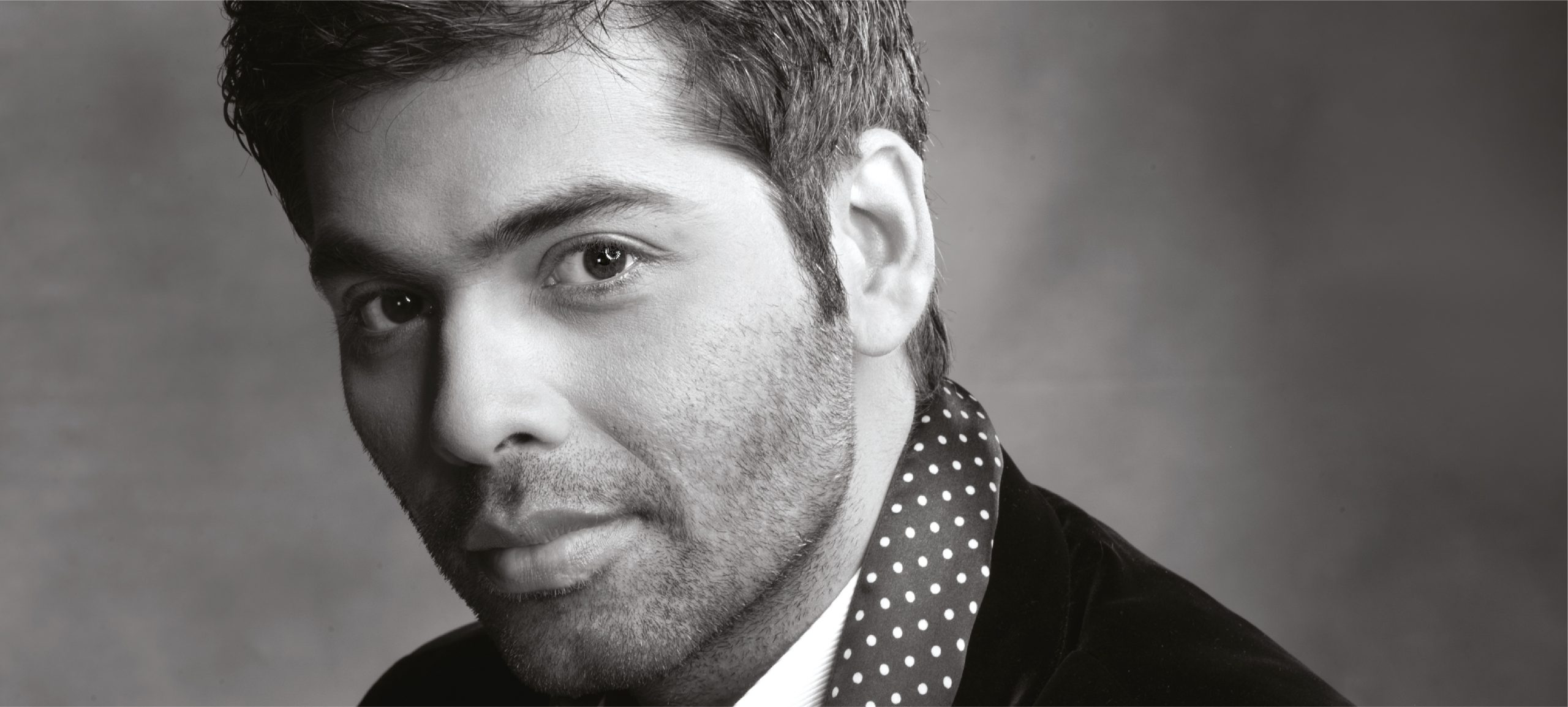
 

An Unsuitable Boy by Karan Johar – An Excerpt

Karan Johar is synonymous with success, panache, quick wit, and outspokenness, which sometimes inadvertently creates controversy and makes headlines. KJo, as he is popularly called, has been a much-loved Bollywood film director, producer, actor, and discoverer of new talent. Baring all for the first time in his autobiography, An Unsuitable Boy, is both the story of the life of an exceptional film-maker at the peak of his powers and of an equally extraordinary human being who shows you how to survive and succeed in life.
Let’s read an excerpt from his best selling book, An Unsuitable Boy
—————————————————————————————————————————————————–
My first proper meeting with Shah Rukh Khan was on the sets of Karan Arjun with my dad. Then I met him on the sets of Dilwale Dulhania Le Jayenge where I told him that many years ago, I had sat across him in Anand Mahendroo’s office. He said he remembered being there but didn’t remember seeing me. Now when I look back, it was a really weird first meeting. Who knew what life had in store for both of us?
My father had taken me along to the sets of Karan Arjun. I knew Kajol was going to be there; she was somebody I had known as a child (she was one of the few people who lived in South Bombay, on Carmichael Road). I was a bit nervous because my father had started taking me around a little (he said I should go out there and meet people). He wanted to sign Shah Rukh for Duplicate. This was before I started to assist Adi (Aditya Chopra) in Dilwale Dulhania Le Jayenge. So I called Kajol and said, ‘I’m coming for the shooting of your film. Will you be there?’ She said, ‘Yeah, I’m doing a song sequence, “Jaati Hoon Main” [which went on to become quite popular].’

Karan Johar has detailed his long friendship with Shah Rukh Khan in his autobiography, ‘An Unsuitable Boy’. Karan writes that after the duo went through a slightly distant patch, they reconciled at a party for Deepika Padukone’s ‘Piku’ success.

I had this preconceived notion about Shah Rukh. I thought he was this young brat, borderline arrogant. But within five minutes of that meeting in Film City, my opinion of him changed. He was warm and chatty.
I remember my father got out of the red car we had and Shah Rukh came up to the car and opened the door for him. It was meant to be a ten-minute meeting, but they had broken for lunch or something and Shah Rukh spoke non-stop for two hours! He was so accessible, friendly and respectful of my father that he won me over in those two hours. I was very sensitive about how people treated my father because I knew what he had gone through. He said, ‘I’ve heard so much about you, sir, and such wonderful things about you as a human being.’
… That was my first meeting with him. I remember coming back and telling my father what a nice guy Shah Rukh was. He was so different from what I thought movie people were like. I had seen my father dejected and disappointed with so many of his fraternity people. I was not cynical but I was apprehensive about them. But Shah Rukh was an outsider and he was new. His syntax as a human being was very different from others in the film zone. I remember being completely enamoured by how he connected as a human being. He was so charming. He was not my favourite actor; I was a big Aamir Khan fan. But somehow in that two-hour meeting, my entire perception of him changed. I felt he was magnetic, charming, funny and sensitive. All these qualities came jumping out at me.

There’s so much that’s been said about Shah Rukh and me. Yes, there was definitely a distance between us in recent years but that was because we were not working with each other. There’s no other reason. And there were a lot of people who broadened this gap. There were people who said things to him, and who said things to me.

I sent him a message to come on Koffee with Karan in the last season, for the New Year episode, to which he didn’t reply. But he replied to every other message I sent him, about everything else. Maybe, he didn’t want to come for the show. I understood he didn’t want to come, and he expected me to understand. I didn’t ask him after that. It’s not that I called him and said, ‘Why are you not replying?’ But I called him when there was a problem or a situation I needed his advice on. Or I would go and have a drink with him in his house.

 When two people are so close, when they’ve done six feature films together and then haven’t worked together on the set for a while, there’s bound to be a gap. That’s the way the industry is. The fault is mine because I went on record to say I would never make a film without Shah Rukh Khan. I should not have said that because I put that seed in his and everybody else’s head. I don’t blame people for saying things because I went on record and then didn’t live up to my promise. So it’s my fault. I don’t blame him. Also, you get attached to somebody, and Shah Rukh is a very possessive person. He’s a possessive friend. I think I may have hurt him when I made a film without him. And I think I got hurt because when I did, I felt he didn’t give me that paternal or fraternal feeling that I had from him otherwise. I think we were two hurt friends for no reason.

Shah Rukh and I have the most awesome chemistry at work. When we work together, it’s magic. And when the right film is to be made, it’ll be made. But it has to be something that we both love. Even when there was this minor or mild distance between us, on many levels, he was still my first go-to person in a situation of distress, or to seek help or advice. When I had a falling out with Kajol, the first call I made was to Shah Rukh. He came to meet me, spoke about it to me. Then I called Adi, and we discussed it. But my instinct was to call Shah Rukh first.
He had nothing to do with the problem. But I still called him because somewhere Shah Rukh, Kajol and I have been so close. We’ve built a very solid part of each other’s careers together. I called him to discuss the situation, to know whether what I was saying was valid and right. And he was very helpful. He called me right through every day that week to check whether I was okay.
When Gori Tere Pyaar Mein bombed — and I was not used to having that kind of a big failure — he called me to ask, ‘Are you okay?’ I said, ‘Yeah, things happen, shit happens. Once in a while you have to deal with a film that doesn’t work.’ So while admittedly there was a distance between us, it did not take away from the largeness of our relationship.
I think Shah Rukh and I are aware of the fact that people are envious of our relationship, which is why we’ve never had a blowout with each other. There was a simmering, silent, respectable distance between us. But there’s also an equal amount of love and affection we have for each other. That’s never going to go. I have a huge amount of respect for him. He can ask anything of me and I will do it. And I know that if I were in dire straits, and if he could do something to change that situation, if it was in his power, he would do everything to help me. There’s a big layer of love and respect still, and no one can come in the way of that.
—————————————————————————————————————————————————–

Eleven Different Ways to Love

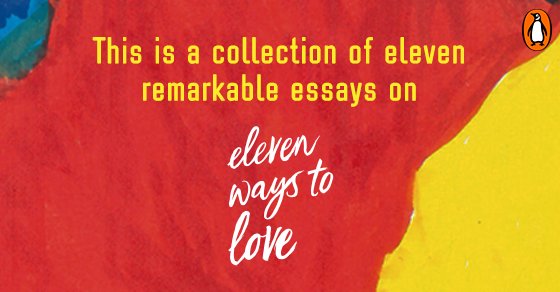
People have been telling their love stories for thousands of years. It is the greatest common human experience. And yet, love stories coach us to believe that love is selective, somehow, that it can be boxed in and easily defined. Eleven Ways to Love, is a collection of eleven remarkable essays that widen the frame of reference: transgender romance; body image issues; race relations; disability; polyamory; class differences; queer love; long distance; caste; loneliness; the single life; the bad boy syndrome . . . and so much more.
Let’s have a look at 11 different ways to love from this book.
A Letter to My Lover(s) by Dhrubo JyotiThe Shade of You by Anushree MajumdarSize Matters by SangeetaA Cross-Section of My Bad Boyfriends by Meenakshi Reddy MadhavanWhen New York Was Cold and I Was Lonely by Maroosha MuzaffarThe One but Not the Only by DThe Aristoprats by Shrayana BhattacharyaWhere Are My Lesbians? by SreshthaThe Other Side of Loneliness by Preeti VanganiI Am Blind, so Is Love! by Nidhi GoyalThe Smartphone Freed Me: Dating as a Trans Woman by Nadika Nadja

5 quotes from Unforgettable Poems in Gitanjali

Rabindranath Tagore received the Nobel Prize for Literature in 1913. He produced some sixty collections of verse, nearly a hundred short stories, several novels, plays, dance dramas, essays on religious, social and literary topics, and over 2500 songs, including the national anthems of India and Bangladesh.
Translated into English by William Radice , Gitanjali a collection of poems by Rabindranath Tagore known for their unmatched style of presentation, fresh poetic structure and spiritual musings.
Here are some of our favorite quotes from Gitanjali.


————————————————————————————————————————————————–


The Tremendous Transformation of Indian Media- from 1947 to 2017

In seventy years of Independence, India’s people have experienced varying and uneven benefits, but what is unquestionable is that their media world- their ability to communicate- has been transformed.  
Check out how this tremendous transformation took place during the seven decades of Independence.

5 Things Every Bengali Intellectual Can Be Heard Saying

Sanjeev Sanyal, bestselling author of Land of the Seven Rivers, is currently the principal economic adviser to the Indian government. A Rhodes Scholar and an Eisenhower fellow, Sanjeev was named Young Global Leader for 2010 by the World Economic Forum.
Sanjeev’s latest book, Life Over Two Beers and other stories, promises to take readers on an entertaining and surprising ride through an India you thought you knew, with a collection of unusual stories.
We discovered 5 things every Bengali intellectual can be heard saying from the short story titled, “The Intellectuals”.
The spot everyone knows in the city:

Intellectuals in Calcutta are:

The Cultural and Intellectual Capital of India:

Intellectually always one step ahead: 

Cricket is just a spectacle: 

Why the Liberal Arts Will Rule the Digital World

The terms ‘fuzzy’ and ‘techie’ are used to respectively describe those students of the humanities and social sciences, and those students of the engineering or hard sciences at Stanford University.
Having met with thousands of companies, Scott Hartley through his book, The Fuzzy and the Techie wants to share with India that no matter what you’ve studied, there is a very real, and a very relevant, role for you to play in tomorrow’s tech economy. Our technology ought to provide us with great hope rather than fear, and we require policymakers, educators, parents and students to recognize this false divide between becoming technically literate, and building on our most important skills as humans.
Here are some points he shares, to stress on the importance of the fuzzies.


Techies are evolving into becoming Fuzzies’ vital partners, and they too can and must drive the process of bridge-building between the fuzzy and the techie. Not only are techies crucial to this process, they will also surely continue to push forward with exciting technological innovations that haven’t yet been conceived.


Writing Memories of Fire – Author Speaks!

Memories of Fire by Ashok Chopra is the story of five school friends who meet after 54 years and look back at their very different lives. The book chronicles post Partition Punjab and the all-pervasive sense of neighbourliness that seems to have vanished—or has it?
 
Let’s read a few words from the author as he reminisces about the ways of the past.
 
______________________________________________________________________
A few days back, I got an unexpected phone call in the middle of a relaxed Sunday afternoon. “Hi, Ashok. Are you home? We were just around the corner from your house. Wanted to drop off our son’s wedding card. See you in 20 minutes!”
Oh gosh. Nooo!
Firstly, it is Sunday—God’s day. Even He rests today. Secondly, who gives only a 20-minute warning these days? I need, at least, a day’s notice to prepare myself for company. Thirdly, didn’t their son already get married some years ago? Oh yes, I did hear something through the grapevine. The wife had turned out to be… opinionated. How dare she, right?
Anyway, who am I to pry? (But if you ask me, good for her.)
I reluctantly put my book down and got up from my comfortable chair. One swift look around the house and I determined that not much could be achieved in 20 minutes, so, meh. I then made my way to the kitchen to check if I had the basic afternoon tea paraphernalia.
Biscuits – check
Tea – check
Ginger – check
Cardamom – check
Milk – check
Sugar – oops
 
Uh-oh. I did remember to write it down in my to-buy list. But I didn’t remember to actually buy some. Oh, well. But what can be done now? I live in Gurgaon, where there are no kirana shops close by that one can walk to. There are only high-end grocery stores in malls where one must drive to. Even if one needs to buy a ten-rupee Maggi packet. And although I had heard of websites that do 60-minute grocery deliveries, I hadn’t yet heard of technology that made things appear out of thin air at will. How unfortunate.
 
Maybe they won’t even drink anything. Usually, these card-giving drop-ins are too short a visit anyway. But damn it, now I felt like having tea. Why don’t I just borrow a cup from my neighbour? I remember, as a child, my mother would send us countless times to our neighbour’s to borrow sometimes this and
on other days that. And the neighbour too would be doing the same regularly.
 
Uff, ghee khatam hai. Chal fatafat saath wali aunty se katori le aa.
Yeh saare biscuit kaun kha gaya? Aunty se ek packet pakad la.
Achha sun, woh aunty ka na gas cylinder khatam ho gaya hai. Humara extra wala de aa.’
 
If I was being paid a million dollars, I still wouldn’t be able to recount the million times this give-and-take took place. In fact, not just in terms of giving and taking, the entire neighbourhood lived as one big close-knit happy family! We knew exactly who lived where; how many people lived in each house;
all their names; their hobbies; their secrets. Sometimes, we even knew how many times Khan Uncle had burped during the day (only because he loved telling this thrilling piece of information to anyone who would listen). Aunties and neighbourhood uncles would leave their children in our homes for a few nights if they had to go out of town in an emergency.
 
But today, I don’t even know my neighbour’s name. Now, you know as well as me that it isn’t just my ignorant self; this is true for most people. Everyone is so busy trying to be self-sufficient, they’ve forgotten how to build relationships. They are so curious to know what’s happening in the life of a friend living 10,000 miles away that they simply ignore the people sitting right beside them. There are
many instances that youngsters don’t even know their own cousins. They have more ‘friends’ on Facebook than the ones they could actually have a real conversation with.
 
Wait a minute, didn’t this neighbour in question also send me a friendly request last month? I remember being somewhere else at the time I received it. There was loud music, too many people … ah, yes, of course. My school reunion! Oh, how I’d been looking forward to that evening. I had spent the entire train journey to Shimla in hopeful anticipation. Though I knew what my friends were up to through their pictures on social media, I wanted to hear the real stories of their lives and everything in them. But it sure turned out to be disappointing. A BIG waste of my time. It was obvious phones had replaced actual dialogue: ‘So, my grandkids got a sweet puppy recently. Let me show you a video of him.’
 
‘Ashok, I know you’re into organic farming and I thought of calling you just last month to know your tips and tricks. But, guess what, I simply googled it and voila. Now, I have a garden full of basil, cherry tomatoes, green chillies…’
 
I am not against progress. But people are simply losing the art of making a connect. Not the WiFikind, but a personal one. WhatsApp may be ‘instant conversation in a few words’  but the art of letter-writing has disappeared. Maybe they will find a way to reinvent it. Or maybe they will…
 
DING DONG.
And before I could finish my thoughts on the ever-changing world, or find the courage to ask my neighbour for some sugar, I was inviting my friends in and asking them if they’d like some tea.
 
‘Yes, of course. But please no sugar for us. We’ve been off it since a while. It is so bad for your health, you see. There have been reports all over …’
 
It all always does work out in the end–in the past as well as now.
 
 
Ashok Chopra
______________________________________________________________________

The Fuzzy and the Techie: Why the Liberal Arts Will Rule the Digital World, An Excerpt

Scott Hartley is a venture capitalist and startup advisor who has served as a Presidential Innovation Fellow at the White House, a partner at Mohr Davidow Ventures, and a venture partner at Metamorphic Ventures. In his book, The Fuzzy and the Techie reveals the counterintuitive reality of business today: it’s actually the fuzzies – not the techies – who are playing the key roles in developing the most creative and successful new business ideas. They are often the ones who understand the life issues that need solving and offer the best approaches for doing so. It is they who are bringing context to code, and ethics to algorithms. They also bring the management and communication skills, the soft skills that are so vital to spurring growth.
Here’s the introduction by the author.


The terms ‘fuzzy’ and ‘techie’ are used to respectively describe those students of the humanities and social sciences, and those students of the engineering or hard sciences at Stanford University. Stanford is what’s known as a ‘liberal arts’ university not because it focuses on subjects that are necessarily liberal, or artistic, but because each student is required to study a broad set of subjects prior to specialization. The term liberal arts comes from the Latin, artes liberales, and denotes disciplines such as music, geometry, and philosophy that can together stretch the mind in different directions and, in that process, make it free. Each of these subjects is meant to broaden the student, force them to think critically, to debate, and to grapple with ambiguities inherent in subjects like philosophy. They are also meant to help the student cultivate empathy for others in subjects such as literature, which forces one to view the world through the eyes of another human being. In short, they are less focused on specific job preparation than they are about the cultivation of a well-rounded human being. But at Stanford, beneath these light-hearted appellations of ‘fuzzies’ and ‘techies’ also rest some charged opinions on degree equality, vocational application, and the role of education. Not surprisingly, these are opinions that have bubbled well beyond the vast acreage of Stanford’s palm-fringed quads and golden hillsides, into Silicon Valley. In fact, these questions of degree equality, automation and relevant skill sets in tomorrow’s technologyled economy are ones we face in India and across the world.
This decades-old debate to separate liberal arts majors from the students who write code and develop software has come to represent a modern incarnation of physicist and novelist Charles Perry Snow’s Two Culturesa false dichotomy between those who are versed in the classical liberal arts, and those with the requisite vocational skills to succeed in tomorrow’s technology-led economy. In India, from the earliest entrance exam standards that determine whether or not students move toward or away from engineering, we have created policy and education pathways that separate rather than foster an understanding between these ‘two cultures.’ Whether a student sits for the Joint Entrance Exam (JEE) for admission to an Indian Institute of Technology (IIT), for the Birla Institute of Technology and Science Admission Test (BITSAT), the VIT Engineering Entrance Exam for a coveted engineering seat at Vellore Institute of Technology or for a regional common entrance exam in Maharashtra, Karnataka, or West Bengal, students are quickly funneled down very specific predetermined paths, and are perhaps less able to explore their own passions or values. And this is not specific or unique to India, but endemic across many cultures and societies.
This book not only seeks to reframe this ongoing debate, by taking into account the very real need for science, technology, engineering and math, so-called ‘STEM’ majors, but also acknowledges their faux opposition to the liberal arts. Indeed, as we evolve our technology to make it ever more accessible and democratic, and as it becomes ever more ubiquitous, the timeless questions of the liberal arts have become essential requirements of our new technological instruments. While those fabled graduates of the Indian Institutes of Technology, or of the great engineering academies such as Manipal, develop critical skills and retain steadfast importance in laying the technological infrastructure, most successful start-ups require great industry context, psychology in understanding user needs and wants, intuitive design, and adept communication and collaboration skills. These are the very skill sets our graduates in literature, philosophy, and the social sciences provide. These are not separate or add-on skills, but the imperative components alongside any technological literacy.
As a fuzzy having grown up in a techie world, this false dichotomy has been something I observed in Palo Alto, California, where Steve Jobs donated the Apple computers we used in high school. This was something I observed furthermore as a Stanford student; as an employee of Google, where I spent over a year launching two teams in Hyderabad and Gurugram, India, as an employee of Facebook, and then as a venture capitalist at a $2-billion fund on Sand Hill Road, California. Peering behind the veil of our greatest technology, it is often our greatest humanity that makes it whole. Having met with thousands of companies, the story I want to share with India is that no matter what you’ve studied, there is a very real, and a very relevant, role for you to play in tomorrow’s tech economy. Our technology ought to provide us with great hope rather than fear, and we require policymakers, educators, parents and students to recognize this false divide between becoming technically literate, and building on our most important skills as humans.
Our greatest human problems require that we blend an appreciation for technology with a continued respect for those who study the human conditions, for they are the ones who teach us how to apply our technology, and to what ends it must actually be purposed. We ought to consider the true value of the liberal arts as we continue to embrace and pioneer our new technological tools. As we move forward, we require the timeless and the timely, the great poets and literature of Bengal and the glass-towers of Bengaluru.

Scott Hartley
Spring, 201

The Lord and Master of Gujarat – An Excerpt

The Lord and Master of Gujarat is set four years after The Glory of Patan, and unfolds at dizzying speed, abounding in conspiracies, heroism and romance. In the book, the kingdom of Patan is under attack from the army of Avanti. People have fled their villages to seek refuge in the city. Amidst the mounting panic, the arrival of Kaak, a young warrior from Laat, sets in motion a frantic chain of events.
Arguably K.M. Munshi’s best-known work, The Lord and Master of Gujarat deftly weaves state politics and battles with personal trials and tribulations into one glorious tapestry.
Here is an excerpt from the book:
_______________________________________________________________________
It was a freezing night in the winter of Samvat, 1154. The solemnly flowing waters of the Saraswati resounded fearfully in the stillness of the night. The moist breeze rising from the river made the atmosphere closer to the monsoon than to winter. It was a night when one would prefer to curl up at home next to one’s beloved. Yet, the bank across the city of Patan was occupied by about 400 to 500 people. Some tried to ward off the cold with bonfires; others slept or tried to sleep around the scattered fires. A few, not planning to sleep, sat curled up anxiously. In the darkness, the flickering of the flames cast eerie shadows and filled the night with dread. The whole scene appeared to evoke a gathering of ghouls.
Beside one of the bonfires, a young man sat half-reclined. His head rested on his shield, which lay on the ground. The style of his turban indicated that he belonged to Sorath. His sword lay near his face, covered with his sash. There was no sleep in his eyes. He sat staring at the fire, aiming an occasional woodchip and feeding the fire. He was alone. At a distance sat two men huddled against the tree. They were not talking to each other.
The young man appeared to be about twenty-five years old. His face was dark yet attractive. His eyes were large and forbidding. They sparkled with mischief every now and then.
His physique was strong and shapely. His attire, the ornaments on his wrists and arms, his earrings and the gold chain around his neck suggested that he was a man of means. He had the nonchalant air of an aristocratic warrior.
In a little while, the sound of a fast-approaching camel was heard, followed by the thud of a camel sitting down. Silence fell once again. The young man by the fire sat unperturbed. It appeared that there was nothing more important to him than throwing woodchips into the fire.
A man appeared from the direction of the sound. He was in a hurry and, seeing the young man, turned to him.
The new arrival appeared to be in his early twenties. He was well-armed—sword and dagger at his waist, a shield on his back and a large staff in his hand. He turned towards the young man and for a moment both looked at each other. With the exception of their turbans, their attires were similar, although the newcomer had hardly any ornaments. Both were tall, wellbuilt and attractive. Their eyes shone with a similar sparkle; their broad foreheads were adorned with similar sandalwood marks. Both appeared to be Gujarati warriors who had fought under the glorious Solankis in their conquest of Gujarat. Yet there was a lot that distinguished the two. Their personalities were clearly different. The newcomer was slightly taller, his eyes smaller and sharper, his body firm and lithe. On the other hand, the man who sat there had a rounder face. The flare of his nostrils and large eyes gave him a leonine appearance. He exuded courage and power. The newcomer’s sharp eyes, chiselled jawline and aquiline nose lent him the countenance of a bird of prey. He exuded concentration and caution. If the former looked fearless and calm, the latter looked farsighted and composed. Both were exemplars of characteristics associated only with men of character—one leonine, the other aquiline—one the king of the jungle, and the other the king of the sky.
______________________________________________________________________
 

error: Content is protected !!