




An alumna of Lady Shri Ram College, New Delhi, and an MBA from IIM Calcutta, Swati Kaushal is the bestselling author of five highly acclaimed novels. Her book, Piece of Cake, is a romantic comedy set in the corridors of corporate intrigue with a heroine and a plot sparkling with mischief and a ton of attitude
Here’s an excerpt from this ‘desi Bridget Jones’ novel.
———-
TGIwasF.
I’m not really your manicure-pedicure-facial kind of girl, but the past few days of sun and sand had been rather hard on the epidermis, and my face was ready to give up on me.
God bless the folks at Femina and their compulsive sampling; the ‘Mud spa treatment five-minute masque’ (with natural papaya, grapefruit and cucumber) that came with last month’s issue seemed just the thing. I smothered the pistachio green paste all over my face and neck and waited for ‘new and improved’ ancient science to work its wonders. An encouraging coolness spread across my features, followed by a promising firmness. No wonder women swore by the stuff; it sure beat sticking your head in the fridge and pulling at your cheeks, besides being a lot cheaper than a visit to a spa too! (I remember going to one of those beauty boutiques a couple of months ago with Radha; she’d paid five hundred rupees for one hour with the ‘special thermal pack’; a lava-like substance that had solidified in many crusty layers on her face and had come off whole, like a hollow Egyptian mummy.)
I studied my face in the mirror as I waited for the masque to do its stuff. A guy in Class 11 had once told me I was beautiful. I’m assuming it was hormones, or my Chemistry notes.
It’s not that I’m ugly; in fact I like most of the way I look. It’s just that I wish I didn’t have a big forehead, long nose and extra wide lips in that slightly non-Julia Roberts kind of way. And also my sideburns. I could definitely do without them. I turned my head sideways to check their current length, winced, and turned my head back around again.
At least I had good eyes. On the bigger side like everything else, but intelligent; and they looked especially arresting popping out from the green icing around them. And my eyebrows, and the way they never need threading; I especially like that. In fact not bad, all told, if only there were something I could do with the ears. I squeezed out the last of the green paste from the sample sachet and quickly covered them with it.
My ears are a social embarrassment and cause for deep personal anguish. I have no lobes.
I remember a visit to an ear-piercing salon, many years ago, when the entire staff had buzzed excitedly about my ears, in the manner of scientists around a rare specimen measuring and marking with special finely calibrated rulers to find a spot to pierce. In the end they’d recommended I forget the whole idea.
I’m assuming God used up so much material super-sizing the rest of me that he ran out of stuff to throw on the ears, so he just sort of wrapped up the job with comical miniatures, tucked them behind manly sideburns and hoped no one would notice. Of course, it didn’t work. People notice all the time; my ears are bigger draws than cleavage.
It wouldn’t be so bad if it were just a case of size and appearance. What really distresses me is that I am also tone-deaf. I love music, but my ears just don’t get it. Ever noticed how musicians tend to have nice, big ears with extra-large ear lobes that hang and quiver delicately at the ends, like they were specially designed to pick up variations on even a hundredth of a note? Well, mine have yet to acknowledge the differences between a do, re and mi and I have watched The Sound of Music a thousand times. And I’m sure things would have worked out with Rajiv, back in Class 12, if it hadn’t been for the time I got carried away and tried to sing ‘With a little help from my friends’ in his ear..

Category: Features
articles features main category
Meet the characters from Fear is the Key

In Juggi Bhasin’s new title, Fear is the Key, Simone, fiancée-to-be to Rahul, founder of a digital infotainment site, goes missing. As all investigations come to naught, Rahul takes matters into his own hands and soon uncovers the twisted, bizarre and utterly unbelievable truth.
Let’s meet the three main characters of Juggi Bhasin’s gripping new thriller, Fear is the Key.
Rahul Abhyankar

Suhel Bagga

Simone

Atypical characters and a fast-paced, mind numbing plot; Fear is the Key has to be your must read thriller this month!

Listicle: 6 exercises to get you warmed up for functional fitness

Shivoham is the trainer behind Aamir Khan’s muscular look in Dhoom 3, Sonakshi Sinha’s bodacious curves in Dabangg, Jacqueline Fernandez’s lean physique and Abhishek Bachchan’s fitness. His book, The Shivfit Way will ensure that you won’t just get back in shape, you’ll also look forward to working out. The book is co authored by Shrenik Avlani, who is a newsroom veteran with nearly two decades of work experience as a leading writer in the field of endurance sport and fitness.
Here are 6 warming up exercises from the book that get you warmed up for functional fitness.


Do these seem helpful?
Get your copy of The Shivfit Way: A Comprehensive Functional Fitness Programme and start working on your fitness goals.

5 Facts about the Landmark Cases of Modern India that will Blow Your Mind

The Dramatic Decade: Landmark Cases of Modern India, is a collection of some of the landmark cases of Modern India that have impacted the collective conscious of the entire nation.The book gives the reader a ringside view of what happened both inside and outside the courts.
Let’s take a look at these facts.
1. The Parliament Attack – 13 December 2001
2. Nirbhaya – 16 December 2012

3. The 26/11 Mumbai Attacks – 26 November 2008

4. The Babri Masjid Demolition – 6 December 1992

5. The Uphaar Tragedy – 13 June 1997
 ————
————

The Skull of Alum Bheg, An Excerpt
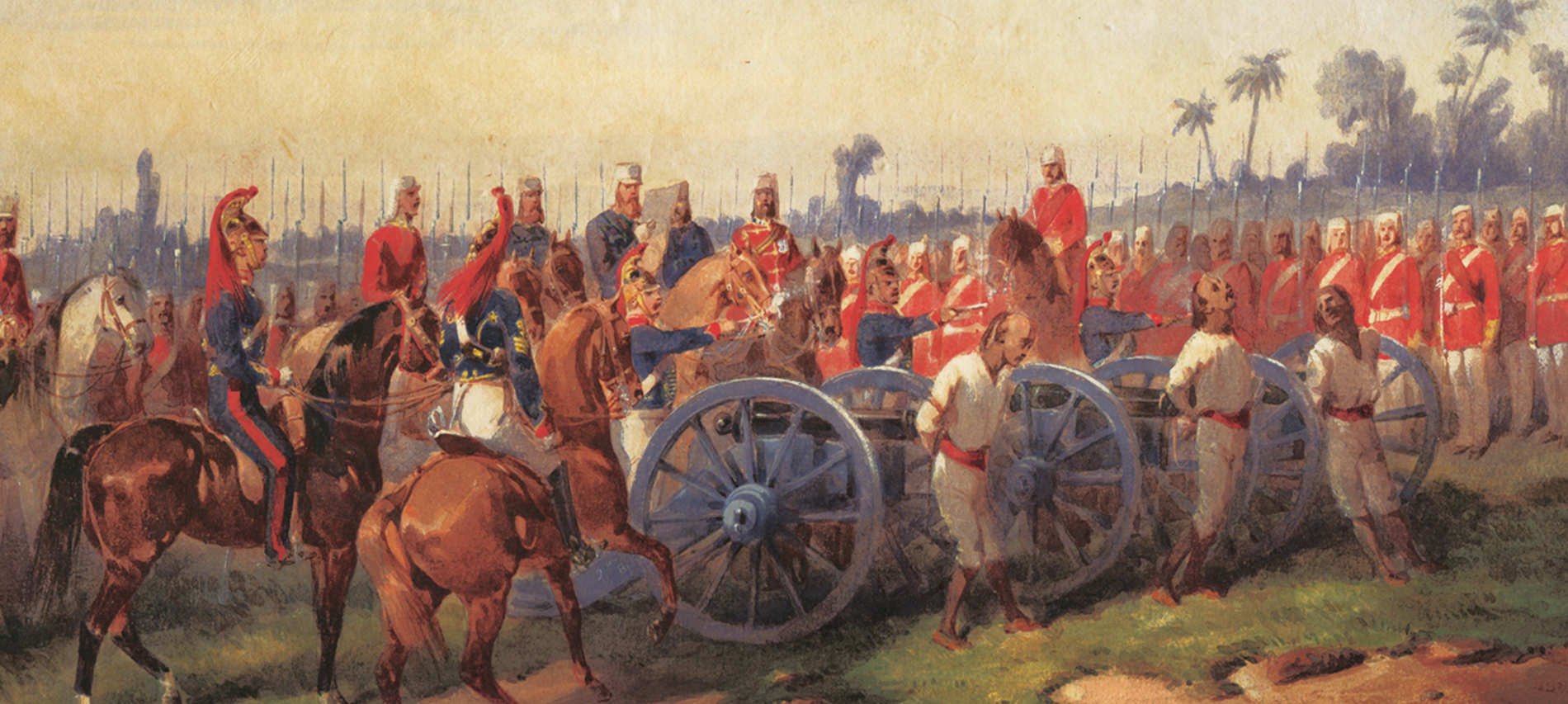
In 1963, a human skull was discovered in a pub in Kent in south-east England. The skull is a troublesome relic of both anti-colonial violence and the brutality and spectacle of British retribution.The Skull of Alum Bheg: The Life and Death of a Rebel of 1857 offers a critical assessment of British imperialism that speaks to contemporary debates about the legacies of Empire and the myth of the ‘Mutiny’.
Here’s an excerpt.
——————
As a havildar, Alum Bheg received a pay of 14 rupees per month, double that of ordinary sepoys, and this had been the rate for more than half a century, even as the prices of commodities increased over time.After 16 and 20 years’ service, sepoys would receive an extra bonus of one or two rupees per month, which according to one Indian officer, made a big difference: ‘A prudent sepoy lives upon two, or at utmost three rupees a month in seasons of moderate plenty; and sends all the rest to his family. A great number of the sipahees of our regiment live upon the increase of two rupees, and send all their former seven to their families.’ A substantial part of their salaries were indeed sent back to the sepoys’ villages, as Sleeman explained: ‘They never take their wives or children with them to their regiments, or to the places where their regiments are stationed. They leave them with their fathers or elder brothers, and enjoy their society only when they return on furlough. Three-fourths of their incomes are sent home to provide for their comfort and subsistence, and to embellish that home in which they hope to spend the winter of their days.’
The close link to a particular region and the ties between the sepoys and the villages, was an outcome of the unique recruitment practices of the Bengal Army as they had developed over the past century. As the East India Company became increasingly involved in politics during the second half of the eighteenth century, the nature of British rule in India gradually assumed all the trappings of a sovereign power. The Company was thus transformed from primarily a trading venture to a colonial state in its own right, which by 1818 derived most of its income from land revenue rather than trade. In order to maintain and expand its territorial possessions, the Company depended on local Indian soldiers led and trained by British officers along European military principles. At the time, however, the British were still an emerging power and had to compete with both Indian and European rivals, who were also offering similar service to local soldiers. Before the advent of the ‘civilising’ impulse, much of the Company’s legitimacy as a state power was, in fact, derived through the continuation of pre-colonial practices, which included the establishment of an army of high-caste Hindu sepoys. Out of sheer necessity, the Company in Bengal thus tapped into the military labour market of northern India and relied on existing networks of patronage and caste-ties to recruit peasant regiments directly from the zamindars or landholders of Awadh and Bihar. Accommodating high-caste usages and practices within its regiments was an effective means by which the East India Company could become an attractive and legitimate military employer in India during this period. The Company thus managed to establish a loyal base of recruitment by employing the rhetoric of high-caste status as well as the promise of regular pay and pension. The British recruited directly from the villages of Awadh and Bihar, and when sepoys returned from furlough, they would bring younger family members back to their regiment as prospective recruits. This dynamic reinforced the links between the regiment and the village and meant that parts of the Bengal Army functioned as a sort of extended kinship network. The end-result was a uniquely homogeneous body of sepoys in the Bengal Army, composed mainly of high-caste Brahmins, Bhumihars, and Rajputs.
The religious identity and social status of Alum Bheg and his fellow sepoys, however, did not simply pre-date colonial rule or reflect Indian traditions that were then merely adopted within the Bengal Army—the social status of the sepoy was itself a product of service within that army. A number of the religious and social identities linked to military service, the status of which was taken more or less for granted by 1857, had actually only emerged during the preceding century and were thus ‘invented’ traditions rather than timeless castes. The decline of the Mughal Empire had caused significant political and social turmoil, but it had also enabled groups such as the Rajputs and Bhumihars, or so-called agricultural Brahmins, of eastern Uttar Pradesh and Bihar, to establish a high-caste status through military service. This entailed a combination of the warrior ideal with the ritual purity and social privilege of Brahmins, and the observance of strict dietary rules associated with priestly Hinduism. At the same time, the indigenous military labour market was becoming increasingly constricted as the British, with the help of the sepoys expanded their sphere of influence. By 1818, the Company had established an effective monopoly of power on the subcontinent, having defeated or pacified most rival Indian states that would otherwise have provided employment for thousands of Indian troops. The Bengal Army, which constituted the military force throughout the newly ceded and conquered territories in north India, provided the perfect frame within which the reinvented high-caste military traditions of the Bhumihars and Rajputs could be formally institutionalised. It presented the sepoys with the opportunity to improve and secure their new-found status and by endorsing and encouraging the high-caste status of the sepoys, the British were better able to control their troops and ensure continued support from the local landowners in the regions that supplied recruits.
————

5 Star-crossed Couples From Literature Who Make Us Believe in Love

Literature has given us some iconic couples who have enthralled us with their story and made us believe that in the end love conquers all. They also show us how love can be found in the unlikeliest of places.
In this blog post, we cherish five of them.
———————-
1. Jay and Daisy – The Great Gatsby
 2. Sarah and Charles – The French Lieutenant’s Woman
 3. Florentino and Fermina – Love in the Time of Cholera
  4. Anna Karenina and Count Vronsky from Anna Karenina
 5. Lady Chatterley and Oliver from Lady Chatterley’s Lover
 —————-

Memories of Fire by Ashok Chopra – An Excerpt

Author of the bestselling Of Love and Other Sorrows and A Scrapbook of Memories: My Life with the Rich, the Famous and the Scandalous, Ashok Chopra is the chief executive of Hay House Publishers India. His latest book, Memories of Fire, is the compelling story of five childhood friends who meet after a gap of fifty-four years. They embark on a journey into the past, laden with nostalgia and humour, and encompassing all the ugly and wonderful things life has to offer.
Here’s an excerpt from this gripping tale.
——————————————
God’s gift to Deepak was a phenomenal memory. Anything he ever read he could easily recall and quote. Every student and every teacher admired and envied him. They all predicted he would grow up to be a writer and achieve sure fame internationally. ‘He is a rare student . . . Mark my words, Deepak is going to be more than just a professor of literature . . . He will be much more,’ Brother Walsh would tell his colleagues in the staffroom. ‘He will lecture at Oxford!’ This was then the ultimate ambition of every teacher.
‘No, he will grow up to be a very famous and celebrated writer of global acclaim!’ some of the others predicted. How wrong they all were!
Deepak remained a brilliant mind—a genius some would say—but became just a simple professor of literature at the university. Besides an article or two, he only ever wrote letters—to poets, novelists and playwrights; he also wrote regularly to editors of newspapers; only a few of these were published in the ‘letters to the editor’ columns, and that too in truncated versions; most were ignored and junked. Deepak would get most upset if an author quoted incorrectly or translated poorly. He would immediately write to the publication with his copious corrections listed in detail. Over the years, he was in regular correspondence with the eminent writer-historian and the country’s most-read and much-respected columnist Khushwant Singh, whose column ‘With Malice Towards One and All’ was published in over two dozen newspapers and magazines across India and Pakistan. Deepak would point out to the writer his errors, check his translations and cite his misquotations. Normally, Singh would agree with everything sent in and offer his thanks for the same. But once, perhaps in a foul mood, he wrote back to Deepak one line on a postcard: ‘I disagree with you.’ Deepak, who hardly ever got angry, lost his cool and responded equally angrily: ‘Of course you have the right to disagree. Just as Evelyn Beatrice Hall stated in her work The Friends of Voltaire: “I disapprove of what you say, but I will defend to the death your right to say it”—a statement often misattributed to Voltaire himself. But at least propound your reasons for the said disagreement. To say simply: I disagree with you is, to my understanding and knowledge, not enough. What’s the logic? What’s the ratiocination? What’s the sound judgement and chain of thought or coherence, connection or authority behind your disagreement? I fail to understand.’
Finally, Khushwant agreed that Deepak was right and he wrong. Later he wrote about Deepak in his columns and paid him a rich, and well-deserved, compliment: ‘Deepak is a rare being . . . He must be the most erudite man in the country . . . a human encyclopedia. There is just about nothing he doesn’t know . . .’ Most unassuming and totally unambitious, Deepak became a professor in the English department of the university. The position entitled him to a spacious bungalow on its sprawling campus and the headship of the department in rotation. He rejected both. In his private life, he did have a few affairs but they all ended in disaster simply because the women couldn’t discuss poetry, fiction, drama or even history with him. Thereafter, he came to the conclusion that women were a sheer waste of time and would provide various examples from world history and literature to prove his point. Each one was valid. He remained a bachelor. How he met his biological needs no one knew!
—————-

Dreamers by Snigdha Poonam – An Excerpt
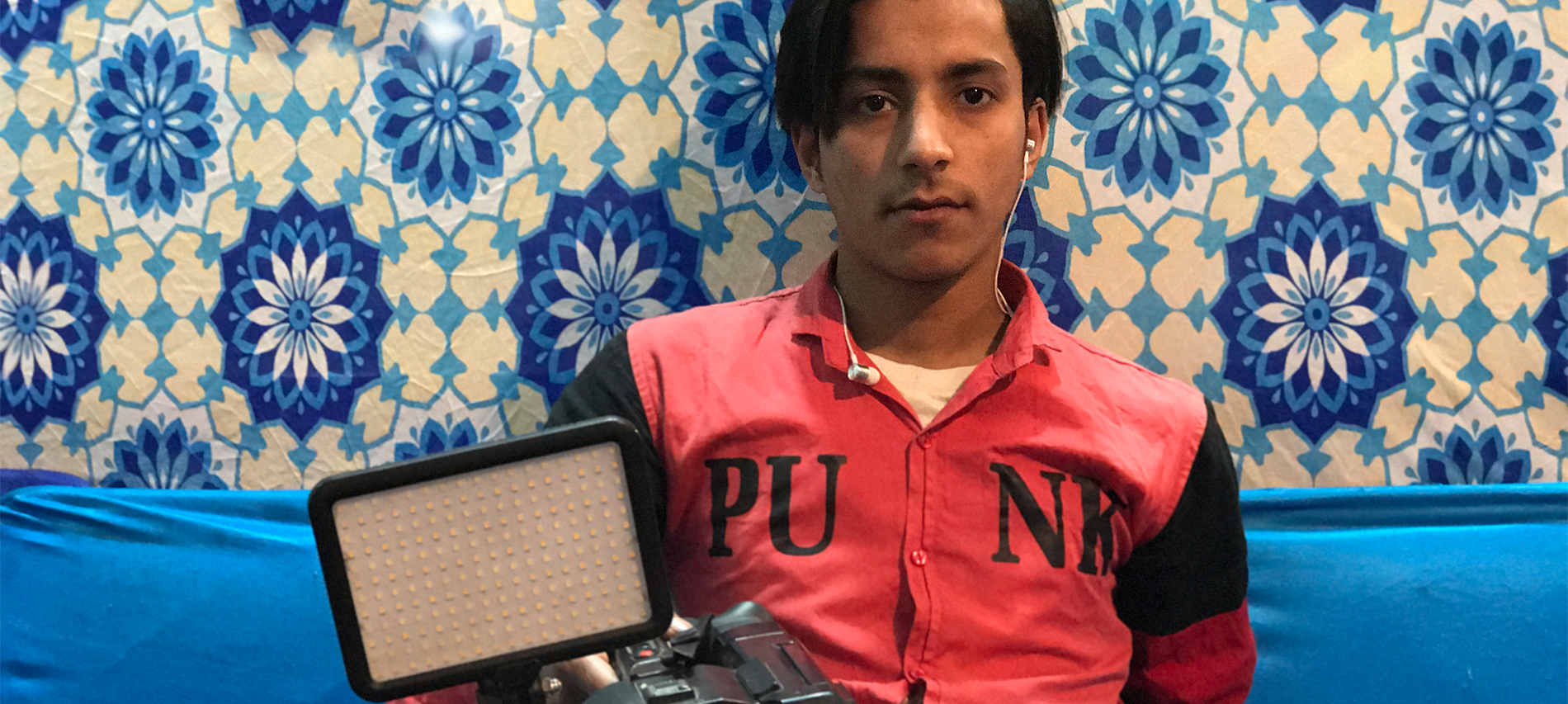
Snigdha Poonam is a journalist based in New Delhi. She currently reports on national affairs at the Hindustan Times. She won the 2017, ‘Journalist of Change’ award of Bournemouth University for a work of reportage that appeared on Huffington Post. Her first book, Dreamers: How Young Indians Are Changing Their World, talks about a generation that cannot – will not – be defined on anything but their own terms. They are wealth-chasers, attention-seekers, power-trappers, fame-hunters. They are the dreamers.
Here’s an excerpt from this powerful book.
——————————————-
It might be any other editorial meeting, in any of a million new clickbait start-ups: a set of editors huddled around a table to discuss what news and gossip to feed their audience next. The process is quick and brutal. Ideas are thrown around like bids on a trading floor.
Why your best friend is your true love, just like Mila Kunis and Ashton Kutcher.
This is what you need to know about Amanda—Justin Bieber’s new girlfriend.
How your face would look if you survived a car crash.
Fifteen times Donald Trump was trolled hilariously.
Fifteen minutes is all it takes the team to go over the whole range of American obsessions, from Kardashians to belly fat, from sex confessions to life hacks; and fifteen seconds is the average time they spend making a decision. Poor Amanda is peremptorily ditched for Victoria Beckham, who has just kicked up a parenting scandal by posting a photo on Instagram in which she is kissing one of her children. The editors opt for a bold stand, and argue the former Spice Girl did nothing wrong. Or, as the published article will later put it, ‘This is why kissing your kids on the lips is not a bad idea.’ They have a reason for choosing the story: ‘Child kissing is trending in the US,’ a young woman wearing black eyeshadow informs the room. The car crash idea is tweaked to imagine the impact of two car crashes on someone’s face at once. Everyone agrees it should only be a visual story. Americans, apparently, simply adore accident horror. Kim Kardashian loses out to Kylie Jenner. Another enterprising young woman volunteers a DIY experiment as research for the story ‘How to get lips like Kylie Jenner without going under the knife’. (‘Kylie Jenner lip challenge’ is also, apparently, trending.) No changes to the last item—Donald Trump is, of course, always hot. Ideas are approved not because of their news value but on account of how they appeal to base emotions. And in this quarter of an hour, these ten youngsters have tapped into the whole range of American emotional triggers: what excites Americans, what terrifies them, what makes them sad, and what makes them curious.
This isn’t an editorial meeting somewhere in the US. Everyone here is less than twenty-three years old, and they’re perched in an all-glass office in a shopping mall in Indore, a medium-sized city in central India. They’re deciding, a few hours before America wakes up, what it will read when it does.
They are hardly ever wrong—or so say the numbers. Millions of people visit their website, WittyFeed, every day. Of them, 80 per cent are foreigners and half these people are from the US. WittyFeed is one of the world’s fastest-growing content farms; over a billion people follow it on Facebook alone. The only website of its kind visited by more people is BuzzFeed, the world leader in viral content. Currently valued at only 30 million dollars, WittyFeed is giving itself a couple of years to beat BuzzFeed. That’s not its ultimate goal, though. What the plucky youngsters who run it want to do is to build the world’s largest media company (‘bigger than BBC, CNN’). How do they hope to do it? By following their maxim: ‘It’s emotion that goes viral.’
Few people have heard of WittyFeed, even in India. The only reason I’m here is because I noticed its crazy numbers: 82 million monthly visits, 1.5 billion page views, 170 million users, 4.2 million likes on Facebook. WittyFeed is news by the same parameter that it uses to define news: the WTF factor. How can a bunch of kids in a small Indian town who have never seen the world dream of ruling it by simply getting the internet better than anyone else?

The Clay Toy-Cart: Mrchchakatikam by Shudraka – An Excerpt
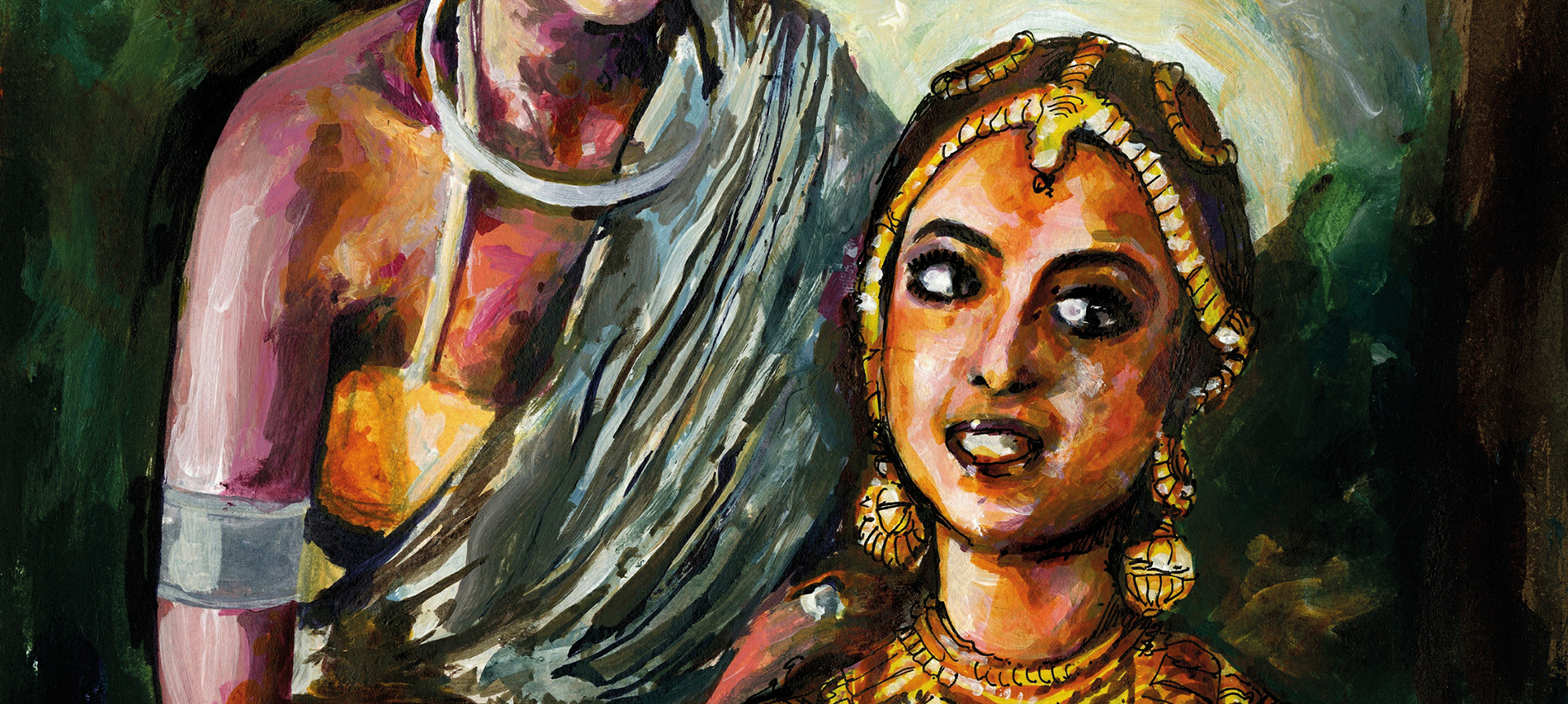
Shudraka is regarded as one of the foremost Sanskrit dramatists. Although his work has been lauded for centuries, his real identity remains a mystery. The Clay Toy-Cart remains one of the foundational works of Sanskrit drama, having been performed numerous times around the world and even serving as the inspiration for Girish Karnad’s highly acclaimed film Utsav.
Here is an excerpt from this iconic play.
—————————————————-
Radanika: (Moving about in fear) Oh my God! A thief has made a hole in the wall of our house and is now getting away! Let me try and rouse Arya Maitreya. Arya Maitreya! Please wake up! A thief had breached the wall and has now got away!
Vidushaka: (Awakens) You daughter of a whore! What are you saying? The thief has been breached and the hole is getting away?
Radanika: No joking for heaven’s sake, you wretch! Can’t you see this? (Points to the hole)
Vidushaka: You daughter of a whore! What do you mean by saying it again as if a second door has been opened? (To Charudatta) Oh! My friend Charudatta! Get up! Get up! A thief has bored a hole in our wall and has disappeared!
Charudatta: (Having risen) All right, that is enough joking!
Vidushaka: I am not joking. You see for yourself.
Charudatta: Where is the hole?
Vidushaka: Over here.
Charudatta: (Looks at the hole and exclaims) But what a beautiful hole! The bricks have been removed from top down! This hole is small at the top and large in the middle. As though this is the heart of this great mansion. Split due to fear of contact with one unworthy. There is expertise even in this kind of work!
Vidushaka: My friend, undoubtedly this breach has been made by one of two kinds of people. Someone new to the city or one merely practising his art! For who in this Ujjayini does not know the state of our finances?
Charudatta: Perhaps a man from foreign parts did it, By way of practising his skill, no doubt. Or he knew not that we were men unburdened with wealth, Who could sleep on soundly with a light heart! His hopes were raised by the first sight of our huge mansion Only to be dashed to the ground. After the long and arduous task of boring the hole. But what will he tell his friends now, that he broke into the house of the scion of a great merchant but found nothing at all to carry away?
Vidushaka: Why do you waste your pity on that thieving rascal? He must have thought that this was such a great big house that surely he could make away with a treasure in gems and gold ornaments! . . . Where is that bundle of ornaments? (Recollecting suddenly) My friend, you always say Maitreya is a fool, Maitreya is ignorant; have I not done well in putting that parcel of ornaments into your hands? Otherwise that son of a whore would have made off with it!
Charudatta: Please, no more jokes.
Vidushaka: I may be a fool but I do know the time and the place for jokes.
Charudatta: When did all this happen?
Vidushaka: When I told you your hands were cold!
Charudatta: Ah! That could have been it! (Looks pleased) Thank God I can tell you something agreeable!
Vidushaka: What? Has it not been stolen?
Charudatta: No, it has been stolen.
Vidushaka: Then why are you pleased?
Charudatta: That he did not go away empty-handed.
Vidushaka: But it had been left in our safe custody!
Charudatta: Oh! It was in our safe custody! (He swoons)
Vidushaka: Please compose yourself. If what was left in our care has been stolen, why do you fall in a faint?
Charudatta: (Recovers) Who will believe the truth of the matter? The world will deride me, for poverty lacks dignity; It is suspect in the eyes of all. Alas! Fate had already eloped with my riches, Why does the cruel one seek to sully my good name as well now?
Vidushaka: I can deny everything, who gave and who received. And who indeed was the witness?
Charudatta: Would I now utter a falsehood? I would not flinch from begging to earn the means to redeem the loss Of what was left in my care; But a falsehood that would destroy my reputation I shall never utter.
Radanika: I had better go and report all this to my mistress Dhuta.
———————————-

An Indian Sense Of Salad by Tara Deshpande Tennebaum – An Excerpt

Tara Deshpande Tennebaum is a trained chef and author. She has studied at the French Culinary Institute in New York and at Le Cordon Bleu in Paris and London. In An Indian Sense of Salad: Eat Raw, Eat More, Tara Deshpande Tennebaum shows how to use fresh, local, easily available Indian vegetables, fruits, nuts and seeds, natural sweeteners and cold-pressed oils to prepare a range of raw and partially cooked salads from around the world.
Let’s read an excerpt from this book.
———————
Placing a salad in the Indian context is difficult because, historically, it occupies a very small part of our diet. Indian cuisine is one of the most multifarious I have ever encountered, and I say this after eighteen years of eating my way through Europe, Japan, China and the United States. The more I learn about Indian cuisine, the more I realize how little I know, despite having spent a majority of my life in the subcontinent.
That the sum of the parts doesn’t make the whole applies aptly to Indian cooking. We are masters of processing and enhancing food and magicians at creating flavours that didn’t exist before. That’s our métier. Take garam masala, for instance. If one were to change the ratio of even one spice, you’d have a new flavour.
Having said that, in India, we don’t favour the consumption of fresh produce or food in its raw form where every individual flavour is perceptible to the palate. Munching on roasted corn or swigging a glass of sugarcane juice outside the office block before heading home are probably the closest we come to consuming raw, unadorned foods. This is surprising because India has a limitless variety of fresh produce. We are the original harvesters of hundreds of varieties of vegetables, lentils, fruits and spices. Eggplant, bitter gourd, ginger, turmeric, pigeon pea, lime, bottle gourd, turnip, mango, jackfruit, cucumber and cumin are just some of the different kinds of produce that are native to India and South Asia. So if we simply go back to what we are good at—which is inventing flavours—and put that into creating unusual dressings and vinaigrettes to serve with raw ingredients that we usually ignore or cook into a pulp in Indian kitchens, we can create something extraordinary.
It’s at home that we should make salads a regular feature on the menu. I’m not promising you six-pack abs or the fountain of youth, nor is it my intention to push for a completely raw diet. But making raw fruits and veggies a component of your daily intake is an excellent idea. Organic food is still limited and expensive but where possibly do try and eat foods grown with less chemicals. Raw food has hardly any preservatives and additives, there are fewer toxins for the body to expel, and the benefits of good fibre, natural vitamins and minerals cannot be emphasized enough.
In the fifteenth century mud-covered root vegetables were considered less desirable and consumed by the poor while fruits and vegetables that grew above the ground were the purview of the rich. Produce such as potatoes and bananas were rumoured to cause sickness—poisoning even—in the early medieval period.
It was only in the sixteenth century that salads in their raw form reappeared in the homes of the wealthy. By the nineteenth century, salads began to develop into entire meals in America.
Many of India’s ancient culinary texts such as the Soopa Shastra (1508), Bhojana Kuthoohala (1670) and the Shiva Tatva Rathnakara (1700) contain elaborate descriptions of cooking vegetables and greens, including multiple ways to process eggplant and gooseberries and dozens of recipes for vadas and pongal. But when it comes to raw food, recipes are limited. In Manosolassa, the twelfth-century text, while the author Somesvara lists dozens of leafy vegetables and fruits that can be cured with lime juice, salt, ground spices and yogurt, there are barely a handful of recipes on raw green salads. It’s only when one gleans through the Ayurveda texts that one finds recipes using raw produce for medicinal concoctions. It makes you wonder if ‘raw’ in India came to be associated with sickness rather than luxury.
Salads are now being prepared by restaurants everywhere in urban India. There are more salads on a menu than soups. A salad, if well planned and constructed is possibly the best, healthiest course you can eat. So do try and make one at home every week. You can choose the recipe, buy the freshest ingredients and control the salt, sugar and oil. If you have to binge, find a salad you love with all your favourite flavours—sweet, spicy, sour. You’ll get lots of satisfaction and have a lot less guilt.
—————–
