




Palagummi Sainath has been a journalist and reporter for thirty-seven years and has covered rural India full time for twenty-five of those. His book, Everybody Loves a Good Drought, is the established classic on rural poverty in India. Twenty years after publication, it remains unsurpassed in the scope and depth of reportage, providing an intimate view of the daily struggles of the poor and the efforts, often ludicrous, made to uplift them.
Here’s an excerpt from the new introduction to this critically acclaimed work.
———————————-
One of the first things people who have read Everybody Loves a Good Drought ask me is: ‘How did you come to give this book its name?’ I didn’t. I just grabbed the idea from Ramji Lakhan. He was a peasant activist who organized agricultural labourers to fight for their rights in Palamu (then in Bihar, now in Jharkhand).
‘We have a great drought going here,’ he told me. ‘The big people are making much money out of it. And the Block Development Officer (BDO) has gone to harvest the Third Crop.’
I was mystified. ‘I know of the kharif crop, harvested in autumn after the rainy season. And I know of the rabi, sown in winter and harvested in spring. But what is this Third Crop?’
‘Drought relief,’ said Ramji. He’d been hoping I would ask. ‘The money that comes in as relief makes the powerful richer than they were. It’s quite a good business. We like a good drought here.’
He called the BDO the BTDO, or Block The Development Officer. ‘No work takes place unless he gets his cut.’ But he did not use the term Third Crop in English. He said teesri fasl. And that remains the title of the Hindi edition of this book.
Another common question: ‘Have things changed in these districts since you wrote this book?’ Yes. Not always for the better, though. The women stone-quarry workers of Pudukkottai, who drew inspiration from their strength as a collective, changed their world for the better. For many others living in the regions the book’s stories come from, things got a lot worse. For a reason Ramji Lakhan understood very well even back then: growing inequality.
An India was emerging where new inequalities were feeding into old ones. Not by accident, but driven by human agency. Even in the year 2000, according to Credit Suisse’s Global Wealth Databook, the top 1 percent of the Indian population held 36.8 percent of the total household wealth. By 2016, their share had risen to 58.4 percent, far ahead of their counterparts in the United States, whose share of wealth in their nation was 42.1 percent.
That also means the top 1 percent of Indians held a greater share of wealth that year within our nation than the top 1 percent of Americans ever did within their own. The same year, the Databook shows, the bottom 10 percent of Indians saw their share fall from 0.1 to -0.7 percent––suggesting that many millions whose assets were far lower than their liabilities were sinking further into debt.
The next two deciles, just above the -0.7 group, recorded shares of 0.2 and 0.5 per cent, respectively. Club those three together and it means the bottom 30 percent of the Indian population own next to nothing.
In the year 2000, Forbes listed nine Indians who were dollar billionaires. In 2011–12, when our Socio Economic and Caste Census found that the main breadwinner in 75 percent of rural households take home less than Rs 5000 a month, Forbes said we had fifty-five dollar billionaires. This year, India logged 101 dollar billionaires in the Forbes 2017 list. We now rank number four in the world in that distinguished line-up. But we also rank 131 in the United Nations Human Development Index.
This is where we needed the media to ‘signal the weakness in society’. Instead, they celebrated this inequality. Unique success stories, and those on super celebrities, took centre stage. And we focused on how wonderful we were. A small part of the population surely did very well. Clinging to our delusions meant trashing the integrity of the data we gathered on ourselves. We did this with poverty numbers. We do it with farm suicide data.

Category: Features
articles features main category
The Beauty of the Valmiki Ramayana by Bibek Debroy

By Bibek Debroy:
There are many versions of the Ramayana and not all are in Sanskrit. However, the Valmiki Ramayana, composed by the sage Valmiki in Sanskrit, is clearly the oldest. It is the oldest surviving version. Perhaps the story was already known and Valmiki simply retold it in the form of a beautiful composition. Therefore, he may not have been the first person to tell the story. We shall never know. Nor is it important to know that to appreciate the Valmiki Ramayana.
Indeed, we are not quite sure about what Valmiki composed. In those days, there was no writing. In the process of oral transmission, subsequent composers added their own embellishments. Today, the text of the Sanskrit Valmiki Ramayana has around 24,000 shlokas, a shloka being a verse. These 25,000 shlokas are distributed across seven kandas – Bala Kanda (Book about Youth), Ayodhya Kanda (Book about Ayodhya), Aranya Kanda (Book of the Forest), Sundara Kanda (Book of Beauty), Yuddha Kanda (Book about the War) and Uttara Kanda (Book about the Sequel). Kanda refers to a major section or segment and is sometimes translated into English as Canto. “Canto” sounds archaic, “Book” is so much better. This does not mean the kanda-wise classification always existed. For all one knows, initially, there were simply chapters. Most scholars agree Uttara Kanda was written much later. It doesn’t quite belong. This isn’t only because of the content. It is also because of the texture of the text, the quality of the poetry. It is vastly inferior. To a lesser extent, one can also advance similar arguments for the Bala Kanda. Therefore, the earlier portions of the Valmiki Ramayana were probably composed around 500 BCE. The later sections, like the Uttara Kanda, and parts of the Bala Kanda, were probably composed around 500 ACE. It isn’t the case that all later sections are in Uttara Kanda.
The translation published by Penguin in three volumes is of the Valmiki Ramayana. It is necessary to stress this point. The Ramayana story is so popular that one is familiar with people, stories and incidents. That doesn’t necessarily mean those people, stories and incidents occur in the Valmiki Ramayana in the way we are familiar with them, our familiarity based on other versions of the Ramayana story. Even within the Sanskrit Valmiki Ramayana, there are many different manuscripts. Between 1951 and 1975, the Oriental Institute, Baroda, produced a Critical Edition of the Valmiki Ramayana. This translation is based on that Critical Edition, published sequentially between 1958 and 1975. Producing a Critical Edition meant sifting through a large number of manuscripts of the Valmiki Ramayana. The editors had around 2000 manuscripts to work with. It is not that there were significant differences across the manuscripts and broadly, there was a Southern Recension (version) and a Northern one, the latter sub-divided into a North Western and a North Eastern one. The earliest of these written manuscripts dates to the 11th century CE. In passing, the language may have been Sanskrit, but the script wasn’t always devanagari. There were scripts like Sharada, Mewari, Maithili, Bengali, Telugu, Kannadi, Nandinagari, Grantha and Malayalam. The translation published by Penguin is based on the Baroda Critical Edition. To repeat what I have already said, some Ramayana stories and incidents we are familiar with, many not exist in this version.
The Valmiki Ramayana consists of beautiful poetry. Valmiki is the first poet, ad kavi. The story of how it came about is known to most people who are familiar with the Ramayana. The sage Valmiki had gone, with his disciple Bharadvaja, to bathe in the waters of the River Tamasa. There was a couple of curlew birds there, in the act of making love. Along came a hunter and killed the male bird. As the female bird grieved, Valmiki was driven by compassion and the first shloka emerged from his lips. Since it was composed in an act of sorrow (shoka), this kind of composition came to be known as shloka. So the Ramayana tell us. It is impossible to capture the beauty of this poetry in an English translation. As composers, there is quite a contrast between Valmiki and Vedavyasa, the author of the Mahabharata. Both texts are in the form of poetry and both composers were poets, but there the similarity ends. Vedavyasa focuses on people and incidents. Rarely does the Mahabharata attempt to describe nature, even if those sections are on geography. In contrast, Valmiki’s descriptions of nature are lyrical and superlative, similar to Kalidasa. A translation can never hope to transmit that flavor. There is no substitute to reading the original Sanskrit, more so for the Valmiki Ramayana than for the Mahabharata.
As with the Mahabharata, the Valmiki Ramayana is a text about dharma. Dharma means several different things – the dharma of the four varnas and the four ashramas; the governance template of raja dharma, the duty of kings; principles of good conduct (sadachara); and the pursuit of objectives of human existence (purushartha) – dharma, artha and kama. As with the Mahabharata, the Valmiki Ramayana is a smriti text. It has a human origin and composer, it is not a shruti text. Smriti texts are society and context specific. We should not try to judge and evaluate individuals and actions on the basis of today’s value judgements. In addition, if the span of composition was one thousand years, from 500 BCE to 500 ACE, those value judgements also change. Transcending all those collective templates of dharma, there is one that is individual in nature. Regardless of those collective templates, an individual has to decide what the right course of action is and there is no universal answer as to what is right and what is wrong. There are always contrary pulls of dharma, with two notions of dharma pulling in different directions. It is not immediately obvious which is superior. Given the trade-offs, an individual makes a choice and suffers the consequences. Why is there an impression that these individual conflicts of dharma are more manifest in the Mahabharata than in the Ramayana?
The answer probably lies in the nature of these two texts. What is the difference between a novel and a long story, even when both have multiple protagonists? The difference between a novel and a long story is probably not one of length. A novel seeks to present the views of all protagonists. Thus, the Mahabharata is a bit like a novel, in so far as that trait is concerned. A long story does not seek to look at incidents and action from the point of view of every protagonist. It is concerned with the perspective of one primary character, to the exclusion of others.
If this distinction is accepted, the Valmiki Ramayana has the characteristics of a long story. It is Ramayana. Therefore, it is primarily from Rama’s point of view. We aren’t told what Bharata or Lakshmana thought, or for that matter, Urmila, Mandavi or Shrutakirti. There is little that is from Sita’s point of view too. That leads to the impression that the Mahabharata has more about individual conflicts of dharma. For the Valmiki Ramayana, from Rama’s point of view, the conflicts of dharma aren’t innumerable. On that exile to the forest, why did he take Sita and Lakshmana along with him? Was Shurpanakha’s disfigurement warranted? Why did he unfairly kill Vali? Why did he make Sita go through tests of purity, not once, but twice? Why did he unfairly kill Shambuka? Why did he banish Lakshmana? At one level, one can argue these are decisions by a personified divinity and therefore, mere humans cannot comprehend and judge the motives. At another level, the unhappiness with Rama’s decisions led to the composition of alternative versions of the Ramayana. Note that Sita’s questions about dharma remained unanswered. If you are going to the forest as an ascetic, why have you got weapons with you? If the rakshasas are causing injuries to hermits, punishing the rakshasas is Bharata’s job, now that he is the king. Why are you dabbling in this? Note also Rama’s justification at the time of Sita’s first test. It wasn’t about what others would think, that justification came later. The initial harsh words reflected his own questions about Sita’s purity. Thus, Rama’s conflicts over dharma also exist. It is just that in the Valmiki Ramayana, it is about one individual alone.
In conclusion, this translation is an attempt to get readers interested in reading the unabridged Valmiki Ramayana. Having read abridged versions, and there is no competition with those, to appreciate the nuances better, one should read the unabridged. And, to appreciate the beauty of the poetry, one should then be motivated to read the text in the Sanskrit. A translation is only a bridge and an unsatisfactory one at that.
——————————
Bibek Debroy (Tr.) is a renowned economist, scholar and translator. He is also a Research Professor (Centre for Policy Research) and a columnist with Economic Times. His majestic new translation The Valmiki Ramayana, can now be relished by a new generation of readers.

Breach: Remarkable Stories of Espionage and Data Theft and the Fight to Keep Secrets Safe – An Excerpt

Breach brings to light several incidents of phishing, piracy and data theft whose trails find their roots in underground international networks. Full of riveting stories of hackers, police and corporates, Breach reads like a thriller.
Here is a captivating excerpt from this unputdownable book.
——————
The evening before the journalist found himself plunged in this nightmare, the businessman stood at the window in his office in Mumbai, gazing at the evening sun and its last few minutes of orange shimmer before it set in the Arabian Sea. He was contemplating, among other things, the last few years of his business. It had been a particularly tough period for his company. What accentuated the pain was that the lean phase had come right on the heels of a few years of huge success. Like many other businesses in Mumbai, and around the world, his company too had entered a difficult phase with the 2008 collapse of Lehmann Brothers and the meltdown it had triggered in the global markets.
He walked back towards his seat. It was time to wrap up and leave for the day. Just as he was about to close his laptop, the mail icon lit up. The name of the journalist flashed in the notification box on the lower right corner of his screen as the sender of the new email in his inbox.
That was not unusual. He often got emails from a few journalists with whom he maintained open communication channels. He glanced at the subject—it said something about a new draft of a story. He presumed the journalist probably wanted him to answer some questions for his story. He was a tad irritated by journalists emailing him directly rather than going through his company’s corporate communications team. He was about to close it, but then those pesky email notifications were designed to pique curiosity, and he couldn’t resist clicking on it. He opened it.
The text of the email followed from the subject line. The journalist was writing some story and had attached a draft for his review. There was the attachment and precious little else in the email. That was a little odd, considering journalists like this one usually wrote long emails, building the context to their story. But then, he knew this journalist often worked on tight deadlines. In his hurry, he may have forgotten to type in the introductory details, he rationalized. He double-clicked on the attachment.
Nothing happened. He clicked again. Nothing this time either. He minimized the email window to see if any file had opened up and was hidden behind the email window. There was nothing. His desktop wallpaper with the smiling faces of his family from their last vacation stared back at him.
What he obviously didn’t realize when he opened the attachment was that he had not clicked on a word document, as he had assumed, but on an executable file used typically to instal programmes in computers. The malware that was being executed had been disguised as a word document, and the moment he opened it he unwittingly triggered a domino chain of code that chugged along quietly in the background, installing programmes that would ultimately transmit information—in this case valuable business secrets—from his computer. These secrets would start getting transferred to a remote server. It was that simple.
The malware now installed on his system was powerful for the times. It could worm its way into his input devices and record key strokes, turn on the microphone and record conversations, collect saved passwords, search for files by keyword, take screenshots and upload and download all these to remote servers—dumpsites, as they are often referred to by computer nerds. The malware was so sophisticated that it could do pretty much everything a person sitting in front of the computer could, without giving itself away. There was nothing stopping it, except if the system itself was turned off.
But it took some time for the businessman to realize he had made a mistake by clicking on the link. It took time for him to realize that the con was in the code.
To read more of such crazy stories of cyber crime, grab your copy of Breach now!

The man who gave us a magical childhood – Happy Birthday, Lewis Carroll!
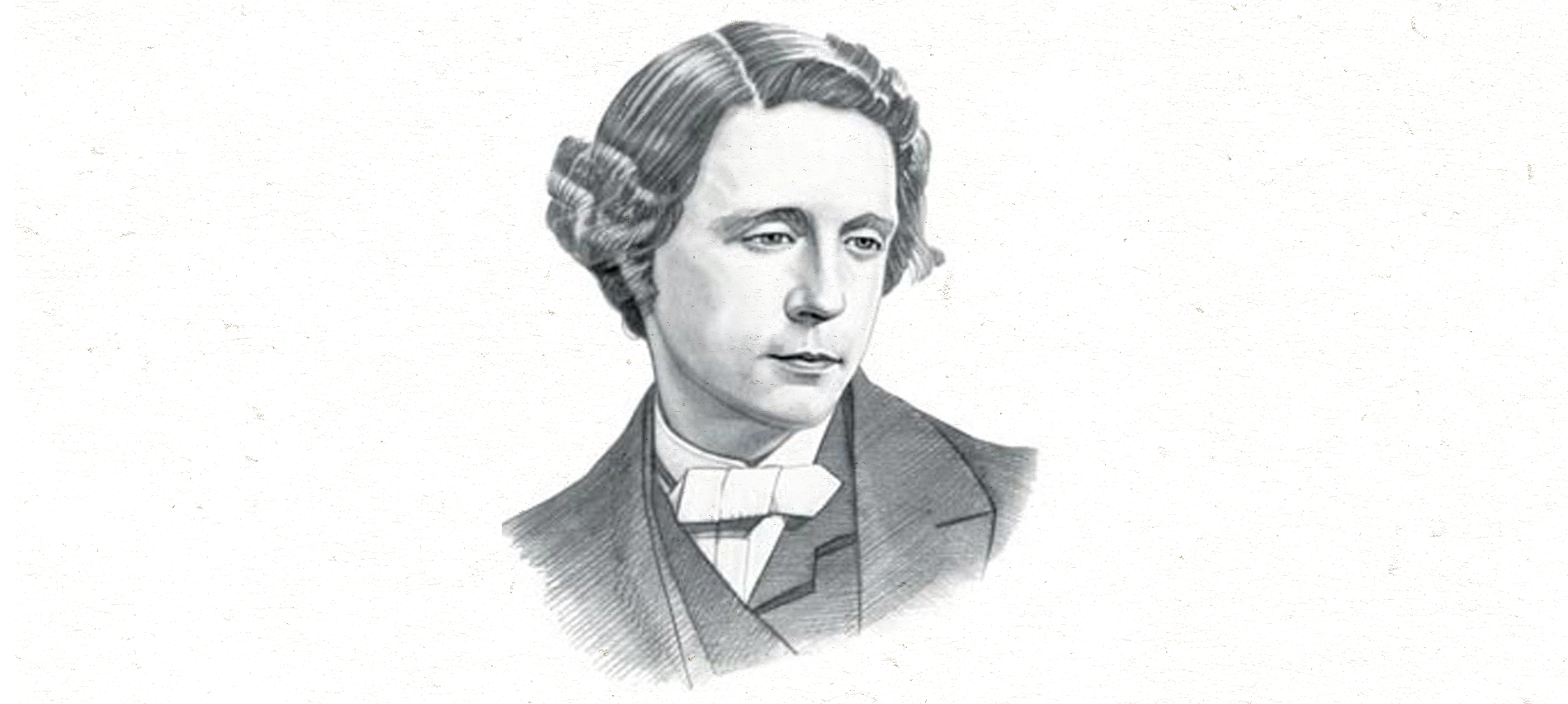
Extremely versatile, gifted and having the rare ability of creating a world of fantasy, Lewis Carroll (Charles Lutwidge Dodgson) has been one of the most cherished writers who with his literary talents has left an indelible mark in the pages of history. His best-known works are, Alice’s Adventures in Wonderland (1865) and Through the Looking-Glass, And What Alice Found There (1872). Today, as we celebrate his birthday, let’s read one of his most beautiful and sublime poems, My Fancy.
I painted her a gushing thing
With years about a score;
I little thought to find they were
A least a dozen more;
My fancy gave her eyes of blue,
A curly auburn head:
I came to find the blue a green,
The auburn turned to red.
She boxed my ears this morning,
They tingled very much;
I own that I could wish her
A somewhat lighter touch;
And if you ask me how
Her charms might be improved,
I would not have them added to,
But just a few removed!
She has the bear’s ethereal grace,
The bland hyaena’s laugh,
The footstep of the elephant,
The neck of a giraffe;
I love her still, believe me,
Though my heart its passion hides;
“She’s all my fancy painted her,”
But oh! how much besides!
With numerous fantastical and adored stories, Lewis Carroll’s quirky and larger-than-life characters continue to intrigue, through generations, both children and adults alike.
Things You Should Know About Namita Gokhale

Namita Gokhale is a writer, publisher, founder and co- director of the Jaipur Literature Festival. In her illustrious literary career, she has written sixteen titles in both fiction and non-fiction genres. Her recent novel, Double Bill: Priya and Paro is the combination of two novels coming together in one classic volume, taking the liberated, brazen and all-too human Paro and her natural counterpart, the more timorous Priya, to new readers and old.
Here are five things you should know about the author.


How many of these did you know about the author?

The Law of Sedition

Exploring the legal and socio-political history of India, from the British period to the present, ‘Republic of Rhetoric’ by Abhinav Chandrachud examines the right to free speech and the freedom of expression in this country. Authoritative and compelling, this book offers arguments that have not been substantially advanced before. Here’s an excerpt from the book.
——
The law of sedition in British India was rather different from its counterpart in England. There, since 1832, sedition was narrowly defined to mean inciting violence or insurrection against the government. It was a ‘misdemeanour’, or lesser offence, which attracted a sentence of imprisonment of a few years.
Misdemeanours in England were ‘bailable’ offences, meaning that a person accused of sedition could get bail as a matter of right. Prosecutions for sedition were rarely launched there. It was also difficult to obtain a conviction for sedition in England because those who were accused of that offence were tried before juries which tended to be sympathetic to their own countrymen.21
By contrast, sedition in British India, enacted in the form of Section 124-A of the Indian Penal Code in 1870, was defined very broadly to include merely evoking hatred, disloyalty or bad feelings against the government. It was punishable with ‘transportation’ to an overseas prison for life. It was a non-bailable offence. Prosecutions for sedition were relentlessly launched against the leaders of India’s freedom struggle. ‘Special’ juries, consisting of a majority of white jurors, were deployed in the trials of those who were accused of sedition. For example, in 1908, the prominent nationalist leader, Bal Gangadhar Tilak, was tried and convicted for sedition at the Bombay High Court by a jury consisting of seven white and two Parsi jurors, which unsurprisingly found him guilty by a majority of 7-2. If Tilak had been given the right, like Englishmen, to be tried before a jury of his own countrymen, there is no doubt that he would have been acquitted.
On the right to free speech, sedition therefore generated a great deal of debate in the Constituent Assembly. Members of the Assembly were keen to get rid of sedition, which had long been used against Indian patriots. However, by virtue of its first amendment, introduced in 1951, the Constitution did very little to limit sedition. Sedition continues, to this day, to stand as part of the Indian Penal Code. It is still repeatedly invoked against those who speak in an allegedly anti-national way. Two instances come to mind in 2016 alone. Jawaharlal Nehru University Students Union president, Kanhaiya Kumar, was accused of sedition for allegedly raising anti-India slogans on the university campus in Delhi. Amnesty International was similarly accused when it organized an event at Bengaluru on human rights atrocities in Kashmir, at which anti-India slogans were allegedly raised. Court rulings which declared sedition unconstitutional in the early years of the republic were undone by the First Amendment to the Constitution, spearheaded in 1950 by Prime Minister Nehru, who was afraid that people would use the right to free speech to preach violent crimes, like murder and communal rioting, with impunity. Sedition continues to be a non-bailable offence, and it attracts a whopping maximum sentence of life imprisonment. Though sedition now means what it did after 1832 in England, i.e., incitement to violence and insurrection, it can’t be said that this was necessarily an outcome brought about by the Constitution. Even prior to India’s independence, Chief Justice Maurice Gwyer of the federal court had applied the English test of sedition in a case, before he was overruled by the Privy Council.
Remarkably, sedition became a ‘cognizable’ offence for the first time in the 1970s, several decades after India became independent. A ‘cognizable’ offence is one in which a police officer may arrest the accused and investigate the case without a warrant or direction from a magistrate. In other words, during the British colonial era in India, a person accused of sedition could not be arrested by a police officer without the officer first obtaining a warrant from a magistrate. By contrast, today, a police officer may, even without a warrant from a magistrate, arrest a person accused of sedition. This change was brought about by the Indira Gandhi government in the 1970s, only a few years before the Emergency was declared in India.
—–

Yes, You Do Need Friends at Work.

Dr. Annie McKee is an advisor to leaders of Fortune 500 companies, governments and NGOs around the globe. Her book, How To Be Happy At Work will deepen our understanding of what it means to be truly fulfilled and effective at work and provides clear, practical advice and instruction for how to get there—no matter what job you have.
Here’s an excerpt.
In this chapter, I will show that having friends at work is critical. When we feel cared for—even loved, as one does in a friendship—and when we belong to a group that matters to us, we are generous with our time and talents because we’re committed to people, not just the job or the company. You will also read about how to build the foundations for friendships in the workplace and how you can improve your relationships at work.
If you like the people you work with, you probably also like your job and your company. If you don’t like them, or if relationships are tense or disrespectful, chances are you don’t look forward to getting up every day to go to work. And it isn’t just that it makes us happy to belong and to have friends. Good relationships lead to good outcomes. This is just as true at work as it is in our families, neighborhoods, and tribes.Unfortunately, that’s not what we’ve learned along the way.
When I ask people, “Do you need to be friends with people at work?” they usually hesitate. Then they rattle off reasons why it’s a bad idea: “I’ve got to keep a distance or I won’t be able to have the tough conversations,” “I might get in trouble,” or “You’ve got to have clear boundaries.” A few come right out and say that it’s dangerous to have friends at work.
Something funny happens, though, when I ask people to describe what they do want in their relationships at work:
“I have to like the people I work with.”
“I want to be myself at work without being afraid that people will shut me out or shut me down.”
“I can’t take risks with people I don’t trust, or when I know they don’t care about me.”
“I want to have fun at work. Sharing a laugh helps me deal with stress.”
Clearly, there’s a disconnect. We think we should have relationships that are distant, polite, and guarded. But we want much more than that. We want to feel safe to be ourselves, we want to enjoy one another, and we want to like people at work. We also want them to like us.
This seems like common sense to me—why wouldn’t we want warm and friendly relationships with people we spend so much time with? Moreover, if we don’t like people (or they don’t like us), it’s going to be hard to find common ground, making it even harder to work through disagreements and conflict. If we suspect that someone’s out for themselves or trying to take advantage of us, we’re not likely to share our ideas or resources. Instead, we will be on guard and hesitant to collaborate. This is not a recipe for success—a lesson David McWilliams learned early in his career.

A Dream Within a Dream

Edgar Allan Poe, the great American writer, editor, and literary critic is best known for his poetry and short stories, particularly his tales of mystery and the macabre. His poem, A Dream Within A Dream conveys an important message about human life slipping away, trickling like sand.
Here’s the poem.
Take this kiss upon the brow!
And, in parting from you now,
Thus much let me avow —
You are not wrong, who deem
That my days have been a dream;
Yet if hope has flown away
In a night, or in a day,
In a vision, or in none,
Is it therefore the less gone?
All that we see or seem
Is but a dream within a dream.
I stand amid the roar
Of a surf-tormented shore,
And I hold within my hand
Grains of the golden sand —
How few! yet how they creep
Through my fingers to the deep,
While I weep — while I weep!
O God! Can I not grasp
Them with a tighter clasp?
O God! can I not save
One from the pitiless wave?
Is all that we see or seem
But a dream within a dream?
—-
Beautiful isn’t it?

Monetize Your Expertise

Dorie Clark is a marketing strategy consultant and professional speaker who teaches at Duke University’s Fuqua School of Business. In her book, Entrepreneurial You she shares the stories of entrepreneurs of all kinds—from consultants and coaches to podcasters, bloggers and online marketers—who have generated six- and seven-figure incomes. It shows you how you can liberate yourself financially and shape your own career destiny.
Some professionals may hesitate to monetize because they fear the audience reaction. Indeed, people who are used to getting something for free may well rebel once you ask them to start paying. That’s what happened to Andrew Warner. A successful entrepreneur, Warner and his brother built a multimillion-dollar online greeting card business. “I felt like I was invincible,” he recalls, and assumed his next venture, a foray into online invitations, would be an even bigger hit. But it didn’t work out that way. “I ended up spending hundreds of thousands of dollars on this idea that really didn’t turn into gold. It turned into mud,” he says.
Looking for answers, he decided to reach out to other business owners: “I said, ‘I want to learn from as many entrepreneurs as I can how to build a business and never make this mistake again.’” He recorded the interviews on Skype and, in 2008, launched Mixergy, a website and video podcast where he compiled them. For a couple of years, he offered them all for free. But eventually, Warner was devoting so much time to the enterprise—including hiring a staff to help him with editing and doing pre-interviews of his guests—that he decided to start charging $25 per month for access.
As soon as he did, he heard about it. “People were posting publicly that I shouldn’t be charging, and people were emailing me and saying ‘What are you doing?’” he recalls. The feedback stung. “I felt hurt that my audience didn’t like me as much.” But charging an access fee enabled him to keep investing the time in creating the site, which now contains more than twelve hundred interviews. “If you do something that matters, some people are going to dislike you,” he says. “Some people are going to disagree with you. It’s not an indication that you’re on the wrong track.”
Try This:
As you start psyching yourself up to monetize, it’s worth considering the following:
- Get clear on what it costs you to share your work with others. Are there recording or editing expenses? Website hosting fees? The cost of your time? The first step is to understand what you’re already putting in, so you can determine what break even (and beyond) would look like.
- Think about various pricing models. Can you continue to offer some material for free, for those who genuinely can’t pay, while offering exclusive paid content to your super-fans?
- Brace for criticism. You’ll inevitably face some blowback, but don’t take the outliers too seriously. If 90 percent of your audience is upset, you may want to reconsider. But if three people send you churlish emails, try to put it out of your head.


ICE with Very Unusual Spirits, An Excerpt

A devotee of Sai Baba of Shirdi, Ruzbeh N. Bharucha is one of the most influential spiritual writers of our times. His new book, ‘ICE with Very Unusual Spirits’ is about Irashaw Cawas Engineer (Ice), a world-renowned painter of Divinity, who turns his back on his Master and spirituality after the death of his young children. The book is derived from the sages and is about the wisdom of life and living, and understanding, accepting and seeking a higher purpose.
Here’s an excerpt from the book.
Why is he called Ice?’ his wife asked.
‘Apparently, at the boarding school where he studied, children had to write their initials on all their possessions—bags, clothes, etc.—to avoid misplacing them. His real name is Irashaw Cawas Engineer, thus I.C.E. Since then, he’s known by his initials. He signs off on his paintings as ICE too.’
‘What is he doing here? Wasn’t he in New York or somewhere abroad? I have a bad feeling, Ashish. It’s not going to be good with him living next door, you mark my words. This man brings doom with him.’
‘Don’t say this, Maya. It was this man’s painting of Lords Ganesh, Krishna, Jesus, and Hanumanji and Sai Baba playing together as kids with a small baby girl that helped you get through your pregnancy. You yourself told me that if it weren’t for that painting, you would never have wanted to be a mother and undergone eight months of bed rest . . .’
‘Bed imprisonment, Ashish! All you men are dogs . . . ’
‘Breathe, sweetheart. Yes, bed imprisonment . . . and you used to bless Ice every day. Remember, when you went into depression after hearing about the accident and the death of his kids?’
‘I know, but he was a different man back then. This man here is a ghost of him. Trust me, Ashish, he walks with death itself. Why the hell did you help him get this flat adjacent to ours?’
‘What did you want me to do? Imran called me up saying Ice wanted to shift here. I couldn’t refuse him. He has stood by me through thick and thin.’
‘Imran I understand, but why do you feel so much for Ice?’
Ashish looked at his wife. By God, she was beautiful. He could never understand why she had agreed to marry him; she had every affluent man waiting in line to marry her. During those days he had no money, not much of a career, in fact nothing going for him. It had taken them years to get settled. But Maya had never complained. The only thing missing in their marriage was physical intimacy. Fortunately, he wasn’t too keen on getting into the sack himself and often thought that his disinterest in sex was probably the reason why she had married him. But she loved him and took care of him and their child, and yes, she had her issues and she could drive him up the wall, but he loved her in spite of everything.
‘Okay, I am going to tell you something I haven’t shared with you. Remember, how much I wanted to be a father? For whatever reason, you weren’t keen on getting pregnant. I know you love me, but there are certain areas in your life that you don’t share with me. Anyway, nine years ago, I had met Imran at his house for dinner and we had drunk a bit too much and during our conversation, I had mentioned that it would be a miracle if you ever agreed to become a mother. Ten days later, he came home and gifted you that painting. You fell in love with it and then slowly, over time, decided to be a mother.’
‘So?’
‘It seems Imran told Ice about our conversation and a week later, Ice presented him the painting to be given to “that neurotic woman and her daft husband who want a kid”. Do you know how expensive this painting is now? All our savings, investments and gold put together won’t be worth as much. If we were to sell it today, we would be able to buy this or any other house like this in the city. Ice gave it to us because he wanted his friend’s friend to be at peace. Come on, Maya, who would do such a thing for strangers? People don’t even help their families nowadays and here is a man who gifted us a painting that could have fetched him enough to live lavishly for a long time. Ice used to be a workaholic back then but he still took time to paint the portrait for us. Even now, whenever Ice has an exhibition, his paintings are sold out even before they are displayed. I am indebted to Ice for life. He had as much a role in Ayesha’s birth as you and I. And haven’t you noticed one thing? Look at the girl in the painting. Doesn’t Ayesha look like her?’
Maya looked at the painting. There was no doubt that the girl in the painting was a spitting image of Ayesha. Nobody could deny the similarity. It was as though Ayesha had posed for the painting herself. Damn that Ice! She looked down from the drawing room window. Ice was standing with a cigarette between his lips. He had lost a lot of weight. A huge black dog with tan stripes lay next to him. Both needed a haircut. Ice was wearing a pair of jeans and a light-blue T-shirt, both of which were soiled with paint. People stared at him. Passers-by turned around to get a better look. They recognized him but didn’t dare approach him for an autograph. He was temperamental, to put it politely. On good days, Ice would chat and laugh for a long time; on the not-so-good days, it was rumoured that he had broken many a journalist’s camera and phone. Even now, he didn’t pay attention to anybody. He just stood there and smoked. After a while, he looked up, straight at her, and Maya felt her blood turn cold. This man was trouble. She just knew it.
What happens next? Find out in ‘ICE With Very Unusual Spirits.’
