It’s that time of the year again but this time it’s under the autumn sky. Six days of literature extravaganza is going to start from October 26, with numerous literary icons as panelists.
Here are the dates you should mark on your calendar.
October 26, 7PM: The Ministry of Utmost Happiness – Arundhati Roy in conversation with Shohini Ghosh
October 27, 7PM: Zara sa jhoom loo main – Shobhaa De on turning seventy – and having a blast! In conversation with Vidya Balan. Sonia Singh to moderate
October 28, 5PM: Inconvenient Truths: Are we heading for an environmental disaster – Sunita Narain, Prerna Bindra, and Pradip Krishen
October 28, 7PM: The Heart of the Matter – Ravinder Singh, Durjoy Datta, and Sudeep Nagarkar in conversation with RJ Ginnie
October 29, 5PM: The Man from the Hills – Ruskin Bond on life, writing, and his love for lemon cheesecake!
October 29, 7PM: Criminal Minds – Brijesh Singh, Ravi Subramanian, Novoneel Chakraborty. Poonam Saxena will moderate the session
October 30, 7PM: The Line of Beauty – Perumal Murugan, Kannan Sundaram, Bibek Debroy, Rana Safvi, Namita Gokhale as moderator
October 31, 7PM: The Rise of the Elephant – Shashi Tharoor, Gurcharan Das, Sonu Bhasin, Shireen Bhan as moderator
Open Air Library: October 26–31, 11AM onwards
If you haven’t already, register for the Penguin Fever here: http://bit.ly/penguinfever
See you there!
Category: Features
articles features main category
Why the Judiciary is Important and How the Legislative Can Take Advantage

Lawyer and activist Prashant Bhushan’s The Case that Shook India is a blow-by-blow account of the watershed case that led to India’s Emergency in 1975.
The book also depicts how the judiciary can be misused by powerful members of the legislative body to their advantage, thereby emphasising on the increasing need of a stronger, robust judiciary.
Here are 5 instances from the book that the author highlights.


Grab your copy of India’s most thrilling courtroom drama today!

5 Books That Will Brighten Up Your Diwali

Diwali is a celebration of lights, homecoming, and the victory of good over evil. This Diwali, come home to stories of hope and triumph of humanity over darkness, fear and hopelessness.
Here are 5 books you should read this Diwali
Yaarana
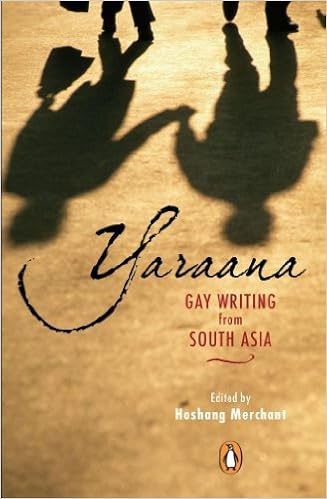

Hoshang Merchant in this collection captures the true meaning of yaraana or male friendship and bonding, an often ignored facet of South Asian life and sexuality. The collection features some enigmatic stories like Ashok Row Kavi’s autobiographical piece on growing up gay in Bombay and Vikram Seth’s brilliantly etched account of a homosexual relationship in The Golden Gate. The book shows how love and companionship can brighten up any dark day.
Kanshiram
![Kanshiram: Leader of the Dalits by [Narayan, Badri]](https://images-eu.ssl-images-amazon.com/images/I/51Un-Nm2YWL.jpg)
Fetching from various oral and written sources, Badri Narayan shows how Kanshiram mobilized dalits with his homespun idiom, cycle rallies and, uniquely, the use of local folk heroes and myths, rousing their self-respect, and how he struck opportunistic alliances with higher-caste parties to seize power for dalits. Authoritative and insightful, this is a rare portrait of the man who changed the face of dalit society and, indeed, of Indian politics. The book inspires one to fight for their rights, and combat the force of darkness.
Bombay Stories
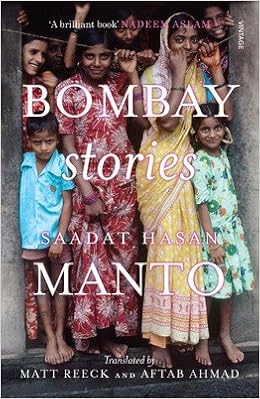
Bombay Stories is a collection of short stories about actors, prostitutes, intellectuals, conmen and more. Originally written in Urdu by Saadat Hasan Manto, it is set in the 1930s and 1940s, when the author had just arrived in the city. Anyone who is interested in the history and culture of Bombay or is a fan of translated Urdu literature, can enjoy reading this book. It will guide one to seek what is good, and annihilate the evil in this world.
Unheard Voices
In this book, civil servant and social activist Harsh Mander draws on his own and his colleagues’ experiences to explore the lives of twenty people who have survived and coped despite being pushed to the hopeless margins of society. The stories act like beacons of hope that will make Diwali seem a little brighter. The book will enlighten one to seek light in this weary world.
Children, Women, Men
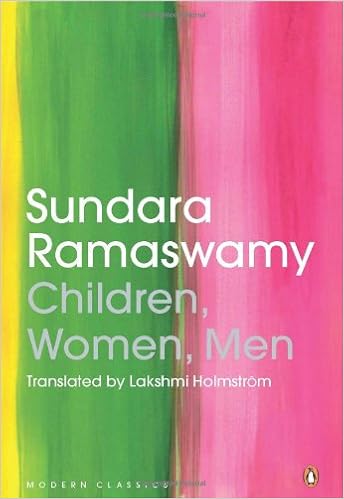
Set in the late 1930s and reflecting the political and social turmoil of the pre-war years, it chronicles the psychological conflict between Srinivasa Aiyar and his nine-year-old son, Balu. The ambitious novel also tells the story of Anandam, a young widow, as she considers remarriage, and Sridaran, who chooses to break off his studies in England in order to join nationalist activities at home. The book in its true essence display how happiness is found in the darkest days.
So, which book are you reading this Diwali?
5 Ways in Which You Can Mickeymize Yourself to a Healthier Life
Life is all about the hustle and bustle. Between polarities, we are constantly being pushed and pulled, against our own will, which leads us to being exhausted and emotionally fraught people.
Global leading wellness coach and corporate life coach Mickey Mehta in The Shoonyam Quotient will help you discover your mind and body in a different way as he makes you introspect about the different facets of your life, to become your source of infinite potential. He will also show you how to be neither pessimistic nor optimistic, but optimized-primed to become the best version of yourself.
Here are 5 ways in which you can simplify your life and mickeymize it.
Shoonya lies within you

Set your priorities right!

Dwell on your personal experiences to look for the Shoonyam Quotient

Let your thoughts and intentions be clear

When you are watching, that’s the time, that’s the moment: transformational vortex

So, how are you going to mickeymize yourself?

Did You Know These Facts About Writer Michael Morpurgo?

Author Michael Morpurgo is best known for his children’s work War Horse that was released in the year 1982.
With a series of books that explore well-known stories from myths and epics, but with a magical twist, Morpurgo’s writings have been termed as “magical storytelling”.
With multiple literary awards to his name, Michael Morpurgo has written a wide range of fascinating books for children in a literary career spanning over decades.
Here are a few facts you may not have known about this amazing writer!


We bet you can’t wait to grab your copies of Michael Morpurgo’s amazing books after reading this. Don’t forget to tell us which ones you liked best!
(Author image credit: https://ichef.bbci.co.uk/images/ic/1920×1080/p01gzy0x.jpg)
9 Ways You Can Become a Better Manager

Most students pursue MBA in hopes of getting hired from a major corporation. Although MBA gets them into the company, but it does not teach how to succeed as an employee and a manager. Every year many employees join management ranks, owing to their top performance. However, as they assume their new roles, they face a fresh set of challenges.
Rajeev Agarwal in his latest book What I Did Not Learn in B-school offers insights on how should new managers tackle these challenges
Here are 9 ways in which you can overcome challenges and become a better manager.
Create a positive and motivating microculture in your organization!

Delegate better!

Creation of the right environment for your team, that helps manifest their potential to the fullest.

Be responsible and accountable for your own goals

Managers must identify their management style and then mould it according to the team members

Your employees’ performance contributes to the success/downfall of the company

As a manager, recognize that training is part of the job.

A motivated team is the key to success

Understand the reason for feedback and give it effectively

Have some more tips to be an effective manager? Share with us.

Journey to Sommelier

By Magandeep Singh
I recall when Alanis Morisette released the song, Ironic. She spoke of a black fly in your Chardonnay and I didn’t know what was Chardonnay nor what colour it was. Upon being told it was a white wine, I wondered how that would be ironic. Irony, for me, would have been if there was a black fly in my glass of black wine. Clearly I didn’t get irony. Or Chardonnay. Or any wine at all, for that matter. The year was, I suspect, 1997.
Three years later I graduated from a hotel school having topped their beverage program nationally and fast forward a few more years, I was in France, sitting at sommellerie school for my first blind tasting class.
But it had been a long journey even till that point. I scored high in my board exams which, in India, automatically means that you are destined to be an engineer followed by the MBA rat-race and then to become a consultant with a big multinational and hope they send you somewhere on an expat package. Alas, money meant little to me and I instead chose hospitality, the industry that, till then, was considered the place for NDA-rejects and back-benchers to end up at. Who in their right mind did well in their 12th standard exams and then opted to be a cook or, worse still, a waiter!?
Well, I did and the next three years were diametrically different to my science days in school just before. I learnt a lot about the finer aspects of life, about how to see things not just in measures of logic and science but as forms of art. By the time I graduated, I was once again, confused about what career path to take next. Going to the US to pursue higher studies in hospitality seemed like a safe bet. But clearly, by now it had been established, that safe bets wasn’t my thing. Instead, I decided to pursue a long-unticked box off on my bucket list: to speak French like a native. And so, instead of going to the US, I went to work and study in a country where I didn’t know the language and possessing a culture which was completely unknown to me, a people that fought vehemently over what wine to drink besides their meals and employed more than 365 different words just to describe all the cheese they make!
I learnt French faster than most people normally would (the trick is to throw away your English-French dictionary and just learn the language instead of focusing on translating every word) which helped me at work and in my studies. But to truly capture the essence of being French, I realised, I would have to capture the essence of their relationship with food and wine. This is what led me to my next place to stay and study, L’Université du Vin, a small wine school housed in a 16th century Chateau in the region of the Rhone valley. This is where I learnt to be a sommelier, tasting wines and spirits and brews, day in and out, making extensive notes, compiling lists of French words to describe wine, visiting wineries and wine regions, working in wine shops and vineyards, all these stints kept accumulating, increasing my awareness of the subject without even my realising it. By the time I came back to India, I was tasting wines fairly well even though at the beginning I had been simply lousy at it. Here’s an example. It was the first week at my wine university and I had just burned my palate the day before trying to hold down a hot potato — now that’s a good pun and also ironic — so my tactile receptors were rather numb. Add to this that I was still sniffling from a cold and it was no surprise that I flunked my first blind tasting miserably. For those wondering, no a blind tasting isn’t an exercise for those with some form of a physical impediment; instead you just taste wines without being told first what they are. One is supposed to taste and guess what they could be from their appearance, aromas, and taste.
By the time I finished school there, I was among the top few tasters in my batch. I could announce the wine region, style and gauge closely its origin, vintage and even the residual sugar, if any. I could comment on the age-worthiness of a wine and also how to pair it with food of all kinds. And I could do all this in English and French!
Same guy who didn’t know his Chardonnays from his black currant juice, a chap who never had his first drink till he was well past his teens, and one who had grown up in families where one half was strictly teetotallers while the other half only understood whisky-soda; clearly I had come a long way. And it was at this point I decided to come back; to try and inspire more Indians to accomplish what I had managed. There would never be a dearth of sommeliers in Europe, even lesser a need for someone with a staunch opinion on wines. But back here in India I faced an entirely new problem. So unknown was even the term sommelier that people kept wondering that if I was saying that I am a Somalian then why didn’t I sound foreign!?
Today, more than a decade has gone by and people talk about their last vineyard vacay or who’s their favourite sommelier and at which precise wine bar with almost a practised yet nonchalant ease. I almost feel that somewhere, no matter how little, I managed to play a teensy-teensy part in precipitating this change. For a civilisation with a history of food going back centuries, it would only be natural that tasting and appreciating fine beverages comes as an innate quality. I am glad that India, and its peoples, are gradually showing the world how it is possible to stay rooted and yet embrace the world when you fly!
About The Author
A certified sommelier, Magandeep Singh found his calling in wines while working in France. In India he spends his time as a consultant with hotels and restaurants, conducts wine appreciation sessions and writes columns on wine.

Are you Connected? An Excerpt

Venugopal Acharya is a monk at the ISKCON and has spent eighteen years living with over 100 people in a small monastery. Prior to becoming a monk, he worked with an investment bank, and has an honours degree in economics, a Masters degree in international finance and an MBA in finance.
In his book, Are You Connected, Acharya emphasizes on sharing mutual success and growing with care and compassion. He shares the different skills and experiences that help one feel loved and in touch with one’s self, the people who matter and God. Here is an excerpt from the book:
In one of Shakespeare’s most powerful soliloquies, Hamlet, struggling with his private thoughts, asks himself:
What is a man, if his chief good and market of his time be
but to sleep and feed? A beast, no more. Sure, he that made
us with such large discourse, looking before and after, gave
us not that capability and God-like reason to fust in us
unused.
Prince Hamlet regrets that a man who simply eats, sleeps and carries on his life as an animal does no good to anyone. He reflects that God created us for a reason, and it’s up to each one of us to fulfil it.
We live, love and leave. We seek to live peacefully, in harmony, with who we truly are. We also desire to love and be appreciated by others. And for more evolved humans, to leave a legacy—to serve, add value—and to contribute to others’ happiness is as sacred a need. In other words we have three aspects to our existence—our relationship with ourselves, others, and with divinity, also referred to as God in most cultures, that transcends our matter-centred routine life.
There are many people who work hard for their family and have good friends, yet they feel a vacuum in their hearts. They wonder if they have chosen a wrong career or a partner. Thinking they are not doing things that truly represent their innermost values and purpose in life, they feel disconnected
from their own self.
There are, of course, some who do what they want, but realize over time that their relationships have suffered. After all, we need to love and feel loved. Despite measurable success and money, it’s love that we seek.
Marilyn Monroe, one of the most popular sex symbols of the 1950s, rose from a miserable childhood to Hollywood stardom. She always wanted to be an actor and she did become a legend. Yet, weeks before her death, suspected as suicide due to an overdose of drugs, she confessed in an interview, ‘I never quite understood this sex symbol. I always thought symbols were those things you clash together. That’s the trouble; a sex symbol becomes a thing. I just hate to be a thing . . .’ She got
what she wanted, but her heart remained starved of love. She felt disconnected.
A few people do manage to live on their own terms, and they also get love from others. Yet, an incompleteness stares at them until they seek a deeper relationship with their spiritual existence. A divine being, also known in various traditions as Bhagavan, Supreme Lord or the Almighty, is at the core of our existence. Our spiritual reality is as inseparable to us as sunshine is to the sun. Yet, we chose to be covered by the clouds of ignorance. Spiritual practices—meditation, prayer, chanting—help us dispel these clouds; they unravel the mysteries of our own identity; we connect to our eternal spiritual self and to God, our loving friend and parent. And as a by-product, we also bond with our fellow brothers and sisters on this planet. Spiritual practices flood our hearts with love and help us leave behind a legacy of love.
The articles compiled in this book have been categorized into two broad categories: One, connecting and succeeding with self, and two, living and growing with others.
The first section, ‘Connecting and Succeeding with Self’, contains twenty-seven articles that focus on transcending internal barriers to go deeper into the spiritual aspects of our lives. Likewise, under the second category, ‘Living and Growing with Others’, you’ll find twenty-nine articles on principles that could help us succeed in our relationships with others; so we can care, serve and love better. Altogether, these fifty-six articles are elaborations of the twenty-five keys, which form the base of a truly connected life.

How To Foster And Resolve Productive Conflict

Productive conflict resolution
Conflict is an unavoidable, even necessary, part of collaboration, and all teams experience it, not just cross-cultural or virtual ones. “There will, even should be, conflict in a group with a task that has even a minimum of complexity,” according to Jeanne Brett, a professor at Northwestern’s Kellogg Graduate School of Management and director of its Dispute Resolution Research Center. Teams that don’t disagree also don’t challenge assumptions, investigate ideas, point out mistakes, and motivate each other to their highest performance. Indeed, the whole point of fostering diversity on your team is to bring different viewpoints to the table. To some extent, you want these viewpoints to come into conflict; that’s how creativity and learning happen.
But, of course, not all conflict is useful. Personality clashes and task-related disagreements can bring a destructive toxicity.
Many managers believe that their role is to minimize all conflict on the team. Not so. The trick is to encourage healthy conflict. That means facilitating constructive conflicts and resolving harmful ones. Here’s the difference: healthy disagreements result in a better work product and/or stronger intrateam relationships. Unhealthy disagreements undermine your shared accomplishments and damage the team’s working relationships.
It can be a tough call to make in the moment—“Should I let my employees pursue this disagreement, or is it time to intervene with a conflict resolution?” You’ll have to go with your instinct a lot of the time, but when you’re really torn, ask yourself: Is this productive? Is this moving us closer to or further from a positive outcome?
If your answer to the first questions is yes, your best bet is probably to encourage debate and discussion so that each side can confront the other’s point of view. This isn’t a free-for-all: you still need to be actively involved as a moderator, so that the conversation stays respectful and on track. But if your answer is no, your people may need the structure of a conflict- resolution process to reach closure. Here’s how to handle both situations:
How to facilitate constructive conflict
It’s not easy to fight well, but shared processes help. Clarify your expectations with the team before a major conflict arises, either by posting your own rules somewhere (in a meeting room, on the team site) or by leading the group in a shared discussion of norms. Address these key topics:
Set ground rules.
Naming the behaviors that are and aren’t OK during a conflict will keep disagreements from spiraling out of control. Every team is different, and the specific personalities and organizational culture at play will dictate what makes sense in your particular environment. One rule, though, applies universally: conflict should be handled openly. Disagreeing with someone isn’t inherently disrespectful, and if team members choose not to voice their opinion, they should be prepared to let it go. For other potential guidelines, see the earlier box “Rules inventory.”
Establish a shared process for resolving conflict.
If team members know what to do when friction arises, they won’t shy away from necessary disagreements, and more often than not, they’ll be able to solve their own problems. Clear, step-by-step protocols for handling con- fl ict should be a central part of your team’s normal processes. One such protocol should deal with formal conflict resolution, addressed later. But spell out the lower-stakes alternatives, too. For example, team members should:
- Respectfully confront the colleague they disagree with before they bring in anyone else, including you.
- Talk about complicated issues face-to-face or over video chat, not over email.
- Prepare on their own before they open a discussion with each other, so they come ready to explain their concerns and discuss alternatives.
- Take turns summarizing each other’s ideas or concerns—in good faith. By forcing themselves to articulate each other’s point of view, they might find new ground for compromise.
- Put the discussion on pause when they feel themselves losing track of the argument or their own self-control.
- Escalate the argument without becoming vindictive or angry. When disagreements prove intractable, frame it as “We need help sorting this out,” not “The team leader will decide who’s right and who’s wrong.”
Provide criteria for contentious trade-offs.
When zero-sum decisions arise for a team, it’s helpful to have some well-defined criteria for making trade-offs. Fortunately, your team has these at hand, in the form of your organization’s overall strategy and the purpose and objectives this strategy has already defined for your group’s work. Clarify these points with your people and be specific about your goals and highest priorities. For example, “Meeting the deadline for this assignment is more important than fulfilling its scope” or vice versa.
How to resolve destructive conflict
With practice, your team members may learn to manage constructive conflict mostly on their own, with little intervention from you. By contrast, a formal conflict-resolution process always involves you. Sometimes your employees will bring an issue to your attention and ask for your help. But if they’re not self-aware enough to do this, you may need to take the initiative and ask them to participate. However, you start off, the process should have three phases:
Step 1: Find the root cause.
This step may require some research on your part. If the conflict is complicated or long-standing, you’ll want to know what’s going on before you invite two tense people to a meeting to hash it out. If you do decide to involve other people in your inquiry, try to talk to all parties involved in the conflict separately. And follow up with anyone else on the team whose perspective could clarify the problem, if you can do it sensitively. The questions you want to clarify for yourself through these interviews are:
- Why are team members arguing with each other?
- Is there a deeper personality conflict here?
- Are there organizational causes of this conflict?
- Is this a recurring pattern?
- Why does one member always insist on getting his or her way?
- Is the cause of this conflict a behavior? A clash of opinions? An external situation?
When you have some answers to these questions, you’ll be able to start generating ideas for negotiating a resolution. For example, if the conflict is caused by a personality clash, you’ll probably need to help the team members learn to communicate better with one another and be more respectful when they disagree. If the conflict is caused by project circumstances, you and your team can brainstorm fixes like hiring additional resources, redefining roles, or modifying the scope of the work.
Step 2: Facilitate a resolution.
You may have a few ideas for how this situation should evolve, but it’s best to avoid dictating a solution. Solutions don’t work simply because they make sense or because you said so; they work when they have buy-in from the people who have to execute them. For this reason, compromises that are imposed from above tend not to be as thorough or as resilient as the ones a team arrives at by itself.
Frustrating as it may be, play no more than a facilitating role. Your listening-to-telling ratio should be 4:1, and the “telling” part should mostly be active listening tactics to help team members understand underlying assumptions. That means asking open-ended questions, restating and reframing team members’ perspectives, and encouraging the other people in the room to do the same. Set the tone for this discussion by reminding people to stick to the facts, to talk about behaviors instead of traits, and to follow the team’s ground rules for conflict.
If the team members resist coming to a resolution despite your best efforts, you may need to steer the conversation a little more decisively. Leadership coach Lisa Lai recommends using these five questions to facilitate the conversation:
- What does each person really want?
- What matters to them, personally and professionally?
- What motivates them? What fears do they have?
- Where is there common ground?
- What’s the difference between their stories?
If the conversation really seems stuck, try these tactics:
- Ask each team member to share their BATNA. In negotiation parlance, a BATNA is your “best alternative to a negotiated agreement”—basically, what your team members think will happen if they can’t resolve their dispute. Then ask them how their BATNAs will affect the rest of the team. Articulating consequence to the group may help them recommit to finding a solution.
- Refocus the discussion on the team’s strategic objectives. Sometimes, the team members’ shared interests are strong enough to compel a resolution on their own (see the box “Case study: Focusing team members on a shared goal”). Other times, you may need to push a little harder. Ask the team members to identify together the key priorities that their agreement should address and then limit the scope of the discussion to these issues alone: “This is a very complicated situation, and I can see it’s wearing on everyone involved. But if we can’t resolve all of it right now, that doesn’t mean we can’t resolve any of it. For now, let’s focus on coming up with a solution for X issue.”
This is an excerpt from Harvard Business Review’s Manager’s Handbook – the 17 Skills Leaders Need to Stand Out. Get your copy here.
Credit: Abhishek Singh
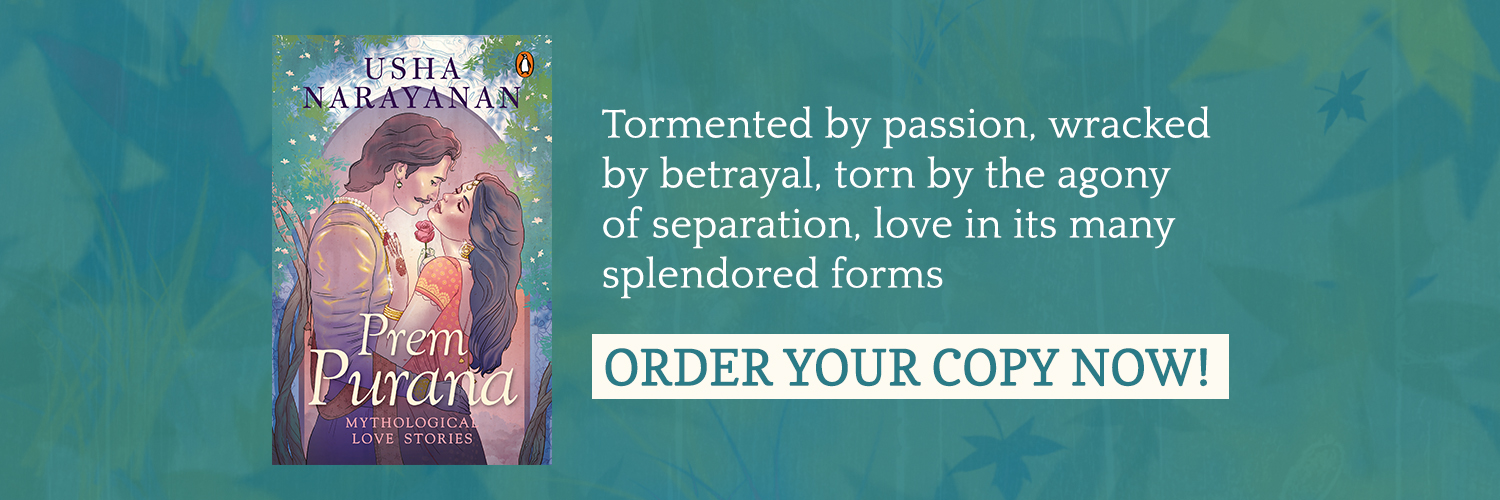
What attracted Usha Narayanan to Mythological Stories?


Usha Narayanan, author of Prem Purana, has donned many hats, before becoming a successful full-time author. In her glorious career, she has dabbled with genres like thriller and romance, before turning to mythology. Her works Pradyumna: Son of Krishna and The Secret of God’s Son have been praised as ‘Indian mythology at its fiercest and finest’.
Her latest book, Prem Purana is about stories of love and extraordinary devotion found in Hindu mythology. On the launch of the book we asked her what about the mythological stories attracted her to write about them.
Here’s what she had to say.
The idea of writing mythological love stories was born during a conversation with my editor Vaishali Mathur at the Jaipur Literature Festival when she suggested that I should combine my strengths in writing mythology and romance. At that point, I was busy with The Secret of God’s Son and it was only after it was completed that I could think seriously think about this. I knew that our epics and Puranas focused more on the battle between good and evil, with heroic gods and fearsome demons confronting one another. Only a few love stories were widely known, such as the one of Kama shooting his arrow of love at ascetic Shiva, or of Arjuna winning Draupadi’s hand at her swayamvara.
I began my quest by re-reading all the ancient lore with an eye to discovering tales of the heart. As always, when writing mythological fiction, I wished to focus on untold stories, using my imagination to bring alive minor characters or lesser-known aspects of major ones. The first character who caught my eye was Ganesha. We think of him as the lovable elephant-headed god with a fondness for modakas. But who did he marry? People in the south of India swear that he is single, but others state vociferously that he is married. The images in temples show him either alone or with a wife or two. What are their names? Some say Siddhi and Riddhi, while others think their names are Siddhi and Buddhi. That was enough intrigue to stimulate my mind!
Another interesting layer to the story is the idea that Buddhi, Siddhi and Riddhi represent intellect, spiritual power and prosperity. As their names are merely mentioned in passing in most Puranas, I could give full rein to my imagination in portraying them. I endowed the three with distinct characteristics and showed Ganesha wooing them in different ways, according to their particular likes and dislikes. My Riddhi is sprightly, Buddhi is silent and deep, and Siddhi is fierce and opposed to the very idea of marriage! Their stories span three realms and four yugas, shedding light on many engaging aspects of Ganesha, the first among the gods. To add to the appeal, I discovered that in Bengal, during Durga Puja, Ganesha even has a banana bride!
I think readers will enjoy seeing Gajamukha in a refreshing new light in Ganesha’s Brides, the first of the three stories in Prem Purana.
“Siddhi watched as more and more arrows struck Ganesha, causing blood to flow like a flood. Was he ready to meet death rather than forsake his promise to her? Would he sacrifice everything for the sake of his love?”
**
For the second story, Mandodari, my inspiration came from the Ramayana. Ravana was Brahma’s great grandson on his father’s side and an asura prince on his mother’s. Choosing to follow the asura path, he pillaged heaven and earth, ravished women and abducted Rama’s wife Sita. What I found of interest was not his war with Rama, but his relationship with his wife Mandodari. How did she react to all this? Did she protest or did she submit silently to his actions? What was her background? Did the rakshasa love her? And the most exciting question of all―did Mandodari come face to face with Sita, the woman she regarded as the instrument of doom that would bring down Lanka?
I found no answers in the commonly available texts where Mandodari features in a mere two or three scenes. Fortunately, however, there are many Ramayana versions available. I followed the uncommon trails, used my imagination and fleshed out the queen’s character, placing her emotions at the centre of the narrative. The story also reveals startling new facets of Ravana’s character and motivations. I think Mandodari, with all its twists and turns, will be riveting and revelatory to readers.
“‘Snatching a woman by force or stealth is not an act of valour, Ravana. She is not an object of lust or a means to settle scores with your enemy,’ said Mandodari, her voice loud and clear. She would speak the truth regardless of consequences. It was a risk she had to take for Ravana and her people.”
**
After delving into the lives of a merry god and a dire rakshasa, it was time to move to the human plane, with the story of King Nala and Princess Damayanti. She turned down the gods who courted her at her swayamvara and chose Nala as her husband. Though she chose love over immortality, Nala was driven by his own demons and abandoned her in a dangerous forest. Damayanti struggled to survive the perils that confronted her at every turn, but forged forward regardless. She did not give up hope and devised various stratagems to reclaim her happiness.
I was fascinated by her strength and also by the magical swan that plays a key role as the messenger of love. I named the swan Gagana, meaning sky or heaven, and created a charming and audacious companion to Damayanti. The Kali demon, who plays a major role in my previous books, Pradyumna: Son of Krishna and The Secret of God’s Son, is the enemy that Nala and his queen must confront. How can a mortal pair combat the power of the demon who reigns over a dark yuga that signals the end of the world? Love, loss, hope and despair form the chequered background of this poetic tale.
“‘Majestic Ashoka, whose name signifies one who destroys grief . . . Free me from pain and unite me once more with my Nala!’ cried Damayanti, sinking to her knees under a soaring Ashoka tree. Alas, the tree made no answer and all she could hear was the wind rustling among the leaves.”
**
A major part of my excitement in writing these stories came from the opportunity to focus attention on the women in our epics who are often sidelined. We often find that a woman is regarded as a prize to be won, someone who is forced to watch quietly while her husband makes disastrous decisions. However, the heroines in Prem Purana are central to the action. They are strong, independent thinkers who inspire the males in their lives―god, asura or king―to do the right thing and live up to their responsibilities.
I hope readers enjoy reading these tales which provide a good mix of fervour and fury, heroism and heartbreak, set against a spectacular backdrop spanning heaven and earth.