




Diverse discourses born from diverse cultures, histories and geographies of India come together in senior journalist, Nidhi Razdan’s book ‘Left, Right and Centre: The Idea of India’.
Author and Indian academic, Pratap Bhanu Mehta, discusses the inherent dichotomy in the celebration of this ‘diversity’ in India in his essay ‘India: From Identity to Freedom’.
Here’s an excerpt from Mehta’s essay.
India is a diverse country, a bewildering mosaic of communities of all kinds; its peculiar genius is to fashion a form of coexistence where this diversity can flourish and find its place. It has created cultures of political negotiation that have shown a remarkable ability to incorporate diversity.
This description of India is often exhilarating; and it is our dominant mode of self-presentation. But it’s very attractiveness hides its deep problems. The problem lies with the normative valorization of diversity itself. Diversity is something to be celebrated and cherished for often it is an indication of other values like freedom and creativity. But diversity has become a source of several intellectual confusions. Very schematically these are: Diversity is not itself a freestanding moral value. It makes very little sense to discuss diversity as carrying independent moral weight, even though under some circumstances, loss of diversity can be an indication of other underlying injustices. The invocation of diversity immediately invites the question: Diversity of what? This question cannot be answered without invoking some normative criteria about the permissible range of social practices. The limits to diversity cannot themselves be settled by an invocation of diversity.
The appeal to diversity is usually an aestheticized appeal. It is as if one were surveying the world from nowhere and contemplating this extraordinary mosaic of human cultural forms and practices. Such a contemplation of the world can give enormous enrichment and satisfaction and we feel that something would be lost; perhaps something of humanity would be diminished if this diversity were lost. But the trouble is that this view from nowhere, or if you prefer an alternative formulation, the ‘God’s Eye’ view of the world is a standpoint of theoretical, not practical, reason.
Most of us can conceptually grasp the fact of diversity; we may even try to recognize each other in an intense and important way, but it is very difficult to live that diversity with any degree of seriousness. From this theoretical point of view, cultures and practices form this extraordinary mosaic; from the practical point of view of those living within any of these cultures, these cultures and practices are horizons within which they operate. Even when not oppressive, these horizons might appear to them as constraints. It would be morally obtuse to say to these individuals that they should go on living their cultures, just because they’re not doing so might diminish the forms of diversity in the world. The imperatives of diversity cannot, at least prima facie, trump the free choices of individuals.
There is often a real tension between the demands of integration into wider society—the imperatives of forming thicker relationships with those outside the ambit of your own society on the one hand, and the measures necessary to preserve a vibrant cultural diversity on the other. What the exact trade-off is depends from case to case. But simply invoking diversity by itself will not help morally illuminate the nature of the decision to be made when faced with such a trade-off.
From this perspective, talk of identity and diversity is profoundly misleading because it places value on the diversity of cultures, not the freedoms of individuals within them. If the range of freedom expands, all kinds of diversity will flourish anyway. But this will not necessarily be the diversity of well defined cultures. It will be something that both draws upon culture and subverts it at the same time.
Diversity Talk is compatible with only one specific conception of toleration: segmented and hierarchical toleration. To be fair, India has been remarkably successful at providing a home for all kinds of groups and cultures. But each group could find a place because each group had its fixed place. To put it very schematically, it was a form of toleration compatible with walls between communities. Indeed, one of the major challenges for Indian society is that we have internalized forms of toleration that are suited to segmented societies. It is compatible with the idea that boundaries should not be crossed, populations should not mix, and that to view the world as a competition between groups is fine.
There is no country in the world that talks so much of diversity. Yet no other country produces such a suffocating discourse of identity; where who you are seems to matter at every turn: what job you can get, what government scheme you are eligible for, how much institutional autonomy you can get, what house you can rent. Conceptually, there is no incompatibility between celebrating diversity of the nation and refusing to rent housing to a Muslim just because they are Muslim. Such a conception of toleration does not work where the need is for boundaries to be crossed: people will inhabit the same spaces, compete for the same jobs, intermarry and so forth. Our moral discourse is so centred on diversity and pluralism that it forgets the more basic ideas of freedom and dignity.
Explore diverse opinions from some of the best minds in India with ‘Left, Right and Centre: The Idea of India’.

Category: Features
articles features main category
8 Things that Scaachi Koul Said that Will Always Matter (Even When We are All Dead)

As children growing up, we tend to question everything and everyone. More often than not, we rebel against age-old customs imposed on us at every step, only to be told by our elders that we are too young to understand the ways of the world. Amidst this hormonal and social chaos that we are suddenly pushed into, it can be difficult to know that you’re not the only one who feels this way. Sometimes you just need someone to tell you that at the end, everything will turn out to be just fine.
Here are 8 times Indian-origin Canadian writer Scaachi Koul said things that would have made growing up so much easier.
When she told us that it’s okay to be any size, but not okay to be shamed for it.

When she showed us how a piece of clothing might define our waistlines, but not how we are as human beings.

When she taught us how it’s important to rationally question everything, including our parents.

When she held a mirror to our society’s face and magnified the ugly truth.

When she reminded us of our first childhood heroes.

When she showed us why it’s alright to do everything ‘forbidden’ and not feel guilty.

When her humour was self-deprecating, yet, damn honest.

And finally, when she told us exactly what we all need to know…

So, what is your advice to your teenage self?

Managing ADT (Attention Deficiency Trait)

D Overloaded Circuits by Edward M. Hallowell DAVID DRUMS HIS FINGERS on his desk as he scans the e-mail on his computer screen. At the same time, he’s talking on the phone to an executive halfway around the world. His knee bounces up and down like a jackhammer. He intermittently bites his lip and reaches for his constant companion, the coffee cup. He’s so deeply involved in multitasking that he has forgotten the appointment his Outlook calendar reminded him of 15 minutes ago.
Jane, a senior vice president, and Mike, her CEO, have adjoining offices so they can communicate quickly, yet communication never seems to happen. “Whenever I go into Mike’s office, his phone lights up, my cell phone goes off, someone knocks on the door, he suddenly turns to his screen and writes an e-mail, or he tells me about a new issue he wants me to address,” Jane complains. “We’re working flat out just to stay afloat, and we’re not getting anything important accomplished. It’s driving me crazy.”
David, Jane, and Mike aren’t crazy, but they’re certainly crazed. Their experience is becoming the norm for overworked managers who suffer—like many of your colleagues, and possibly like you— from a very real but unrecognized neurological phenomenon that I call attention deficit trait, or ADT.
Caused by brain overload, ADT is now epidemic in organizations. The core symptoms are distractibility, inner frenzy, and impatience. People with ADT have difficulty staying organized, setting priorities, and managing time. These symptoms can undermine the work of an otherwise gifted executive. If David, Jane, Mike, and the millions like them understood themselves in neurological terms, they could actively manage their lives instead of reacting to problems as they happen.
As a psychiatrist who has diagnosed and treated thousands of people over the past 25 years for a medical condition called attention deficit disorder, or ADD (now known clinically as attention-deficit/ hyperactivity disorder), I have observed firsthand how a rapidly growing segment of the adult population is developing this new, related condition. The number of people with ADT coming into my clinical practice has mushroomed by a factor of ten in the past decade. Unfortunately, most of the remedies for chronic overload proposed by time-management consultants and executive coaches do not address the underlying causes of ADT.
Unlike ADD, a neurological disorder that has a genetic component and can be aggravated by environmental and physical factors, ADT springs entirely from the environment. Like the traffic jam, ADT is an artifact of modern life. It is brought on by the demands on our time and attention that have exploded over the past two decades. As our minds fill with noise—feckless synaptic events signifying nothing—the brain gradually loses its capacity to attend fully and thoroughly to anything.
The symptoms of ADT come upon a person gradually. The sufferer doesn’t experience a single crisis but rather a series of minor emergencies while he or she tries harder and harder to keep up. Shouldering a responsibility to “suck it up” and not complain as the workload increases, executives with ADT do whatever they can to handle a load they simply cannot manage as well as they’d like. The ADT sufferer therefore feels a constant low level of panic and guilt. Facing a tidal wave of tasks, the executive becomes increasingly hurried, curt, peremptory, and unfocused, while pretending that everything is fine.
To control ADT, we first have to recognize it. And control it we must, if we as individuals and organizational leaders are to be effective. In the following pages, I’ll offer an analysis of the origins of ADT and provide some suggestions that may help you manage it.
This is an excerpt from HBR’s 10 Must Reads (On Managing Yourself). Get your copy here.
Credit: Abhishek Singh
Everything You Need to Know About Level 5 Leadership

IN 1971, A SEEMINGLY ordinary man named Darwin E. Smith was named chief executive of Kimberly-Clark, a stodgy old paper company whose stock had fallen 36% behind the general market during the previous 20 years. Smith, the company’s mild-mannered in-house lawyer, wasn’t so sure the board had made the right choice—a feeling that was reinforced when a Kimberly-Clark director pulled him aside and reminded him that he lacked some of the qualifications for the position. But CEO he was, and CEO he remained for 20 years.
What a 20 years it was. In that period, Smith created a stunning transformation at Kimberly-Clark, turning it into the leading consumer paper products company in the world. Under his stewardship, the company beat its rivals Scott Paper and Procter & Gamble. And in doing so, Kimberly-Clark generated cumulative stock returns that were 4.1 times greater than those of the general market, outperforming venerable companies such as Hewlett-Packard, 3M, CocaCola, and General Electric.
Smith’s turnaround of Kimberly-Clark is one the best examples in the twentieth century of a leader taking a company from merely good to truly great. And yet few people—even ardent students of business history—have heard of Darwin Smith. He probably would have liked it that way. Smith is a classic example of a Level 5 leader—an individual who blends extreme personal humility with intense professional will. According to our five-year research study, executives who possess this paradoxical combination of traits are catalysts for the statistically rare event of transforming a good company into a great one. (The research is described in the sidebar “One Question, Five Years, 11 Companies.”)
“Level 5” refers to the highest level in a hierarchy of executive capabilities that we identified during our research. Leaders at the other four levels in the hierarchy can produce high degrees of success but not enough to elevate companies from mediocrity to sustained excellence. (For more details about this concept, see the exhibit “The Level 5 Hierarchy.”) And while Level 5 leadership is not the only requirement for transforming a good company into a great one— other factors include getting the right people on the bus (and the wrong people off the bus) and creating a culture of discipline—our research shows it to be essential. Good-to-great transformations don’t happen without Level 5 leaders at the helm. They just don’t.
Not What You Would Expect
Our discovery of Level 5 leadership is counterintuitive. Indeed, it is countercultural. People generally assume that transforming companies from good to great requires larger-than-life leaders—big personalities like Lee Iacocca, Al Dunlap, Jack Welch, and Stanley Gault, who make headlines and become celebrities.
Compared with those CEOs, Darwin Smith seems to have come from Mars. Shy, unpretentious, even awkward, Smith shunned attention. When a journalist asked him to describe his management style, Smith just stared back at the scribe from the other side of his thick black-rimmed glasses. He was dressed unfashionably, like a farm boy wearing his first J.C. Penney suit. Finally, after a long and uncomfortable silence, he said, “Eccentric.” Needless to say, the Wall Street Journal did not publish a splashy feature on Darwin Smith.
But if you were to consider Smith soft or meek, you would be terribly mistaken. His lack of pretense was coupled with a fierce, even stoic, resolve toward life. Smith grew up on an Indiana farm and put himself through night school at Indiana University by working the day shift at International Harvester. One day, he lost a finger on the job. The story goes that he went to class that evening and returned to work the very next day. Eventually, this poor but determined Indiana farm boy earned admission to Harvard Law School.
He showed the same iron will when he was at the helm of Kimberly-Clark. Indeed, two months after Smith became CEO, doctors diagnosed him with nose and throat cancer and told him he had less than a year to live. He duly informed the board of his illness but said he had no plans to die anytime soon. Smith held to his demanding work schedule while commuting weekly from Wisconsin to Houston for radiation therapy. He lived 25 more years, 20 of them as CEO. Smith’s ferocious resolve was crucial to the rebuilding of Kimberly-Clark, especially when he made the most dramatic decision in the company’s history: selling the mills.
This is an excerpt from HBR’s 10 Must Reads (On Leadership). Get your copy here.
Credit: Abhishek Singh
7 Quotes by Novoneel That Will Leave a Chill Down Your Spine

Novoneel Chakraborty is a master when it comes to romance thrillers. His books A Thing beyond Forever and That Kiss in the Rain have been appreciated by thousands all over the country. They have also appeared in numerous bestsellers’ lists at different points in time since their releases.
Novoneel is back with another beguiling tale of dark romance and thrill, Forever is a Lie.
Here are seven quotes from the book that will send a chill down your spine.


Intrigued? Get your copy of Novoneel Chakraborty’s Forever is a Lie right now!

Ten Priorities India Should Focus On
Bimal Jalan had a close view of financial governance while he served as Union Finance Secretary and Governor of the Reserve Bank of India. Drawing on his vast experience he compares two distinct periods: 1980–2000 and 2000–15, and examines the transition India has made in the last four decades from a strictly regulated, slow-growth state enterprise to one of the fastest-growing economies in the world.
In his latest book, India: Priorities for the future he lists out few areas India needs to pay attention to.
Here is a list of ten of those priorities:
One of the foremost priorities regarding financial governance

Priority for the banking sector

Another reform in the financial sector that the India has to bring about

The RBI has to keep working with financial experts to develop procedure for the debt markets to grow

The outcomes of the present schemes in terms of actual benefits is pretty low

Performance reviews of a ministry will lead to better execution of policies

Red tapism needs to be done away with

Outsourcing to different agencies reduces petty corruption and delays

An urgent political reform is to speed up investigations of persons who are in political parties

An utmost priority lies in making the states accountable for policy execution than the Centre

Which priority according to you should be the India’s topmost priority? Tell us.

In Conversation with Osama Siddique
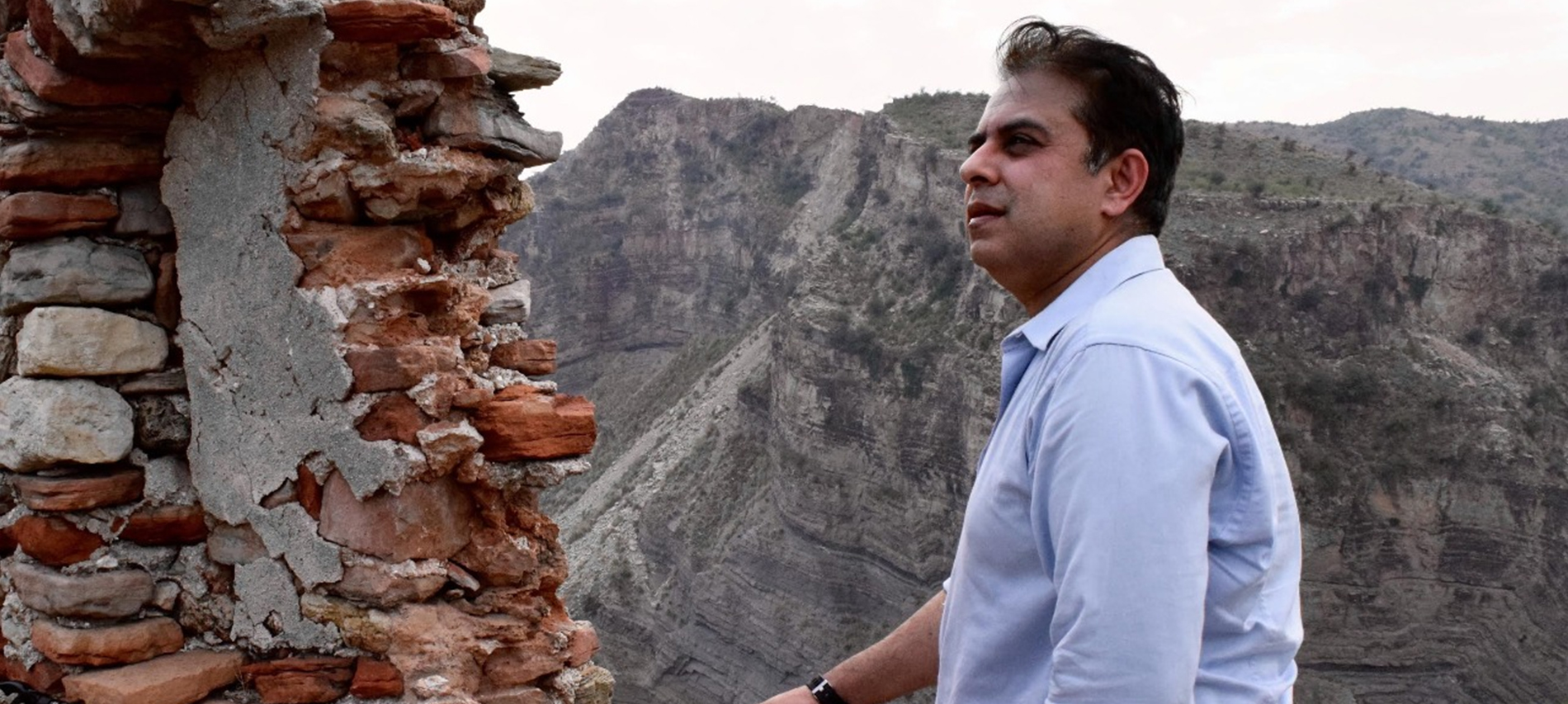
Osama Siddique has been a Rhodes scholar at Oxford, a lawyer in New York and Lahore, a policy instructor in various countries. He is also a legal scholar, university teacher and reform consultant in Pakistan, and a successful doctoral candidate and visiting professor at Harvard Law School. His most recent book is an acclaimed and multiple award-winning critical legal history of postcolonial justice systems. We spoke to him about his debut novel Snuffing Out the Moon.
Below are the questions we asked him.
You are and have been a very successful lawyer and legal scholar. Why did you decide to write a novel?
There are many kinds of legal discourses of course that allow much room for critical expression. Quite apart from more conventional work, as a lawyer and an academic I have always been particularly intrigued by how law can be and is manipulated by the powerful against the disempowered. Regardless of which era we speak about what goes by the name of law has always been a strong weapon for those who can use it – for better or for worse. Indeed I have explored this theme in my legal scholarship. There are, however, certain limits on expression imposed by extant conventions of style, structure and methodology. Fiction on the other hand is a very vast, rich and multifarious terrain that provides tremendous flexibility and license to explore this and various additional themes that I dwell on in my novel – themes that I had always wanted to write about. Themes ranging, for instance, from ancient political landscapes to omens of impending evil to lives of petty criminality to literature as a weapon of protest to social media as a medium for hate mongering to environmental apartheids of the near future. Only fiction allows engagement with all this in one book. Such is its largesse. Hence the novel.
Why did you situate the book in these particular six epochs of time?
In large part because having blessed access to their archaeological sites and cultural artifacts I have been greatly fascinated by them since childhood. I continue to fondly visit them, read about them, live amidst them. Mohenjodaro also because it continues to be such an enticing enigma and unsolved mystery. The Gandharan civilization because it has left such an exquisite artistic and architectural imprint on the Pakistani landscape. Lahore – my beloved city – appears in three contiguous eras, which are all reflected in its hybrid culture and built heritage. And the near future is of course the source of tremendous curiosity and indeed concern to all of us – given the highly troubling times and the various political, environmental and civilizational crises that we currently face as humankind.
Somewhere in the book you say something like: “all eras are driven by the same hopes and fears and passions and we continue to make the same mistakes.” — Could you elaborate on this and also your concept of “time.”?
While one can surely detect evolution in various spheres of human endeavor – political structures, organized religion, modes of technology – it does occur to me that across the ages our fundamental aspirations and imperatives remain very closely aligned, if not identical. It is fascinating to think, for instance, how hope, fear, love, hate, dissent and the resulting conflicts drive people to act in such similar ways, regardless of whether we speak of today’s milieu or one of four thousand years ago, from whatever we know of that distant era. Naturally, it causes one to wonder whether we are caught up in a constant cycle of repetition. Civilizations come, flourish, decline and ultimately vanish. Whether time is linear or cyclical. Whether we are headed somewhere or will the wheel of time continue to turn and turn till one day our kind will simply be no more. That we will simply vanish. Without even a whimper, let alone a bang. Without any explanation, let alone an apology.
What are your thoughts on the concept of “evil”?
Evil is such a vital and fascinating concept in every religious and cultural tradition as well as manifest, however you define it, in so many human catastrophes through the ages. One of the most compelling questions remains whether evil is just another name for our baser instincts, distinct external influences that corrupt and corrode us and compel us to do abhorrable things, or an actual physical embodiment – a virtual devil. What causes us to indulge in devilry and why has humankind failed in putting a stop to murders, pogroms, genocides, travesties and wars. These questions provide a vital undercurrent to my overall narrative and evil manifests itself mysteriously and multifariously in the lives of the different characters. Quite apart from the more analytical dimensions there is also something very emotive, something very sinister and forbidding about the concept that impacts our senses in a remarkable manner. The fear and foreboding evoked by the concept of evil has been depicted so powerfully in many great pieces of literature and it has always been something that I also wanted to write about.
Your protagonists are non-conformists who dissent and then pay a price for it. Can you tell us more about choosing protagonists who are dissenters and the importance of dissent in human history?
Arguably, as critically as ever before in out history we face the challenges of curtailment and censorship of free thought and speech. What is also obvious is a globe-wide shift to harder governments, to despots, officially sanctioned histories, blind dogma and also now, alternative facts. The present epoch is as Orwellian as it can get. Meaningful dissent, therefore, is a precious but also much maligned virtue and hence all the more worthy of preservation. Mine is just one modest endeavor to underline how vital dissent is for societal sustenance and integrity. Even otherwise, dissenters make much more compelling and effective protagonists than conformists. Dissent has contributed tremendously to history and brought about significant turning points and breakthroughs in human thought and achievement. And yet the dissenters have often paid a tremendous personal price, which makes their entire endeavor all the more heroic. There is thus no way that I would have been tempted to choose protagonists who are not dissenters. Having said that those who habitually conform and capitulate are also curious in their own way. Perhaps in my next book if there is one.

Managing Your Boss, The New Angle to Boss-Subordinate Relationship

TO MANY PEOPLE, THE PHRASE “managing your boss” may sound unusual or suspicious. Because of the traditional top-down emphasis in most organizations, it is not obvious why you need to manage relationships upward—unless, of course, you would do so for personal or political reasons. But we are not referring to political maneuvering or to apple polishing. We are using the term to mean the process of consciously working with your superior to obtain the best possible results for you, your boss, and the company.
Recent studies suggest that effective managers take time and effort to manage not only relationships with their subordinates but also those with their bosses. These studies also show that this essential aspect of management is sometimes ignored by otherwise talented and aggressive managers. Indeed, some managers who actively and effectively supervise subordinates, products, markets, and technologies assume an almost passively reactive stance vis-à- vis their bosses. Such a stance almost always hurts them and their companies.
If you doubt the importance of managing your relationship with your boss or how difficult it is to do so effectively, consider for a moment the following sad but telling story:
Frank Gibbons was an acknowledged manufacturing genius in his industry and, by any profitability standard, a very effective executive. In 1973, his strengths propelled him into the position of vice president of manufacturing for the second largest and most profitable company in its industry. Gibbons was not, however, a good manager of people. He knew this, as did others in his company and his industry. Recognizing this weakness, the president made sure that those who reported to Gibbons were good at working with people and could compensate for his limitations. The arrangement worked well.
In 1975, Philip Bonnevie was promoted into a position reporting to Gibbons. In keeping with the previous pattern, the president selected Bonnevie because he had an excellent track record and a reputation for being good with people. In making that selection, however, the president neglected to notice that, in his rapid rise through the organization, Bonnevie had always had good-to excellent bosses. He had never been forced to manage a relationship with a difficult boss. In retrospect, Bonnevie admits he had never thought that managing his boss was a part of his job.
Fourteen months after he started working for Gibbons, Bonnevie was fired. During that same quarter, the company reported a net loss for the first time in seven years. Many of those who were close to these events say that they don’t really understand what happened. This much is known, however: While the company was bringing out a major new product—a process that required sales, engineering, and manufacturing groups to coordinate decisions very carefully—a whole series of misunderstandings and bad feelings developed between Gibbons and Bonnevie.
For example, Bonnevie claims Gibbons was aware of and had accepted Bonnevie’s decision to use a new type of machinery to make the new product; Gibbons swears he did not. Furthermore, Gibbons claims he made it clear to Bonnevie that the introduction of the product was too important to the company in the short run to take any major risks.
As a result of such misunderstandings, planning went awry: A new manufacturing plant was built that could not produce the new product designed by engineering, in the volume desired by sales, at a cost agreed on by the executive committee. Gibbons blamed Bonnevie for the mistake. Bonnevie blamed Gibbons.
Of course, one could argue that the problem here was caused by Gibbons’s inability to manage his subordinates. But one can make just as strong a case that the problem was related to Bonnevie’s inability to manage his boss. Remember, Gibbons was not having difficulty with any other subordinates. Moreover, given the personal price paid by Bonnevie (being fired and having his reputation within the industry severely tarnished), there was little consolation in saying the problem was that Gibbons was poor at managing subordinates. Everyone already knew that.
We believe that the situation could have turned out differently had Bonnevie been more adept at understanding Gibbons and at managing his relationship with him. In this case, an inability to manage upward was unusually costly. The company lost $2 million to $5 million, and Bonnevie’s career was, at least temporarily, disrupted. Many less costly cases similar to this probably occur regularly in all major corporations, and the cumulative effect can be very destructive.
This is an excerpt from HBR’s 10 Must Reads (On Managing People). Get your copy here.
Credit: Abhishek Singh
5 Things You may not have Known about the Landmark Case that Led to the 1975 Emergency in India
The history of independent India changed forever on the night of June 25, 1975, as then Prime Minister, Indira Gandhi, declared a state of Emergency to be imposed on the nation for a period of 21 months.
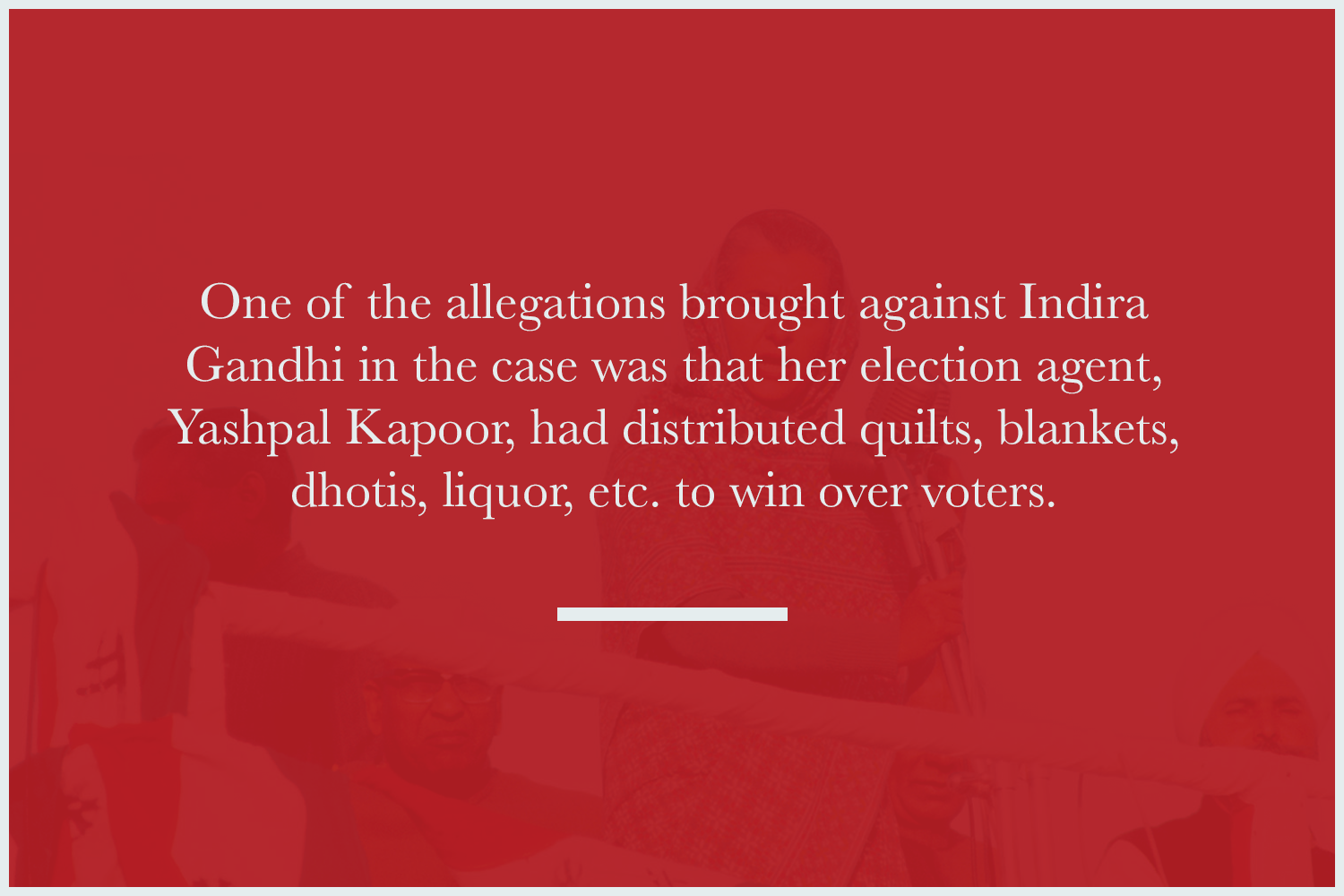
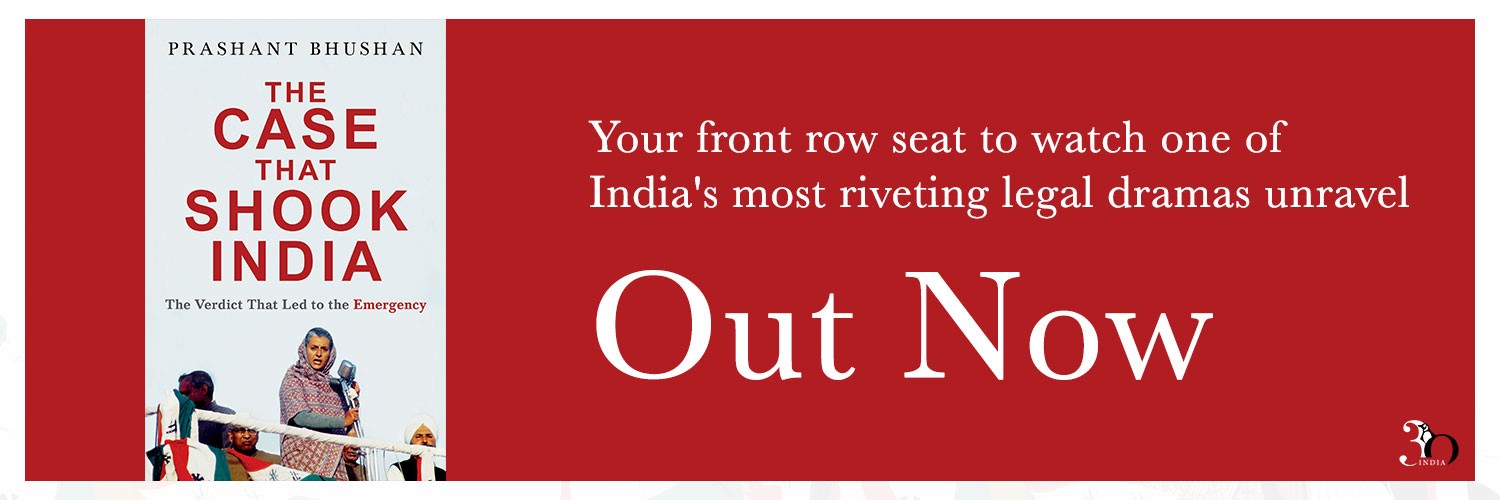
What acted as the catalyst to this infamous moment in Indian history was the watershed case of Indira Gandhi vs Raj Narain, which has been documented in detail by advocate Prashant Bhushan in his book The Case that Shook India.
Taking a peek into the book, here are five facts from The Case that Shook India that take us back in time to witness the most riveting courtroom drama in Indian history from front row seats.
The Emergency finally concluded on March 21, 1977, thereby ending a period of not just political controversies, but heavy censorship, suspension of civil liberties and personal freedoms. Read more about it in Prashant Bhushan’s The Case that Shook India.
Forever Is A Lie: An Excerpt

Novoneel Chakraborty is the bestselling author of nine romance thrillers and he is back with another beguiling dark romance thriller. The first of a two-part series, Forever Is a Lie is about an eighteen year old girl who falls in love with a man, almost double her age. But what she doesn’t know is that whoever the man loves, dies.
Here is an excerpt from the book.
This was her profile information on Facebook. Ditto on Tinder, a dating app. With moist eyes, she checked the about me section on the app, which she had just filled up:
I’m here to hook up for a night. Anyone who wants anything that goes beyond a night, please swipe left.
Prisha forced herself not to think as she started browsing through men’s profiles on the app. Tinder was recommended to her by Zinnia, her roommate. Two years her senior in college, Zinnia was from the same neighbourhood as Prisha in Faridabad. She had shifted to Bengaluru to pursue media management from Cross University.
Prisha had followed in her footsteps and shifted to Bengaluru a month ago and had taken admission at the same university. She had enrolled herself as a BA student, with a major in mass communication. Zinnia and Prisha stayed together in a rented apartment on BTM Layout.
It was Zinnia who had first described Tinder as a saviour of singles in the city. But Prisha hadn’t made an account on the dating site because she was single, but because she had been feeling emotionally violated for a few months now.
Anyone remotely good-looking and Prisha would swipe right. In fact, looks didn’t matter at all for what she had in mind. She had heard about Tinder earlier from a number of friends but had never imagined using it one day. Why would she? She had been in a committed relationship since she had turned thirteen—until two months ago when she had stepped into her penultimate teenage year. In all these years there had been only one boy she was doggedly, single-mindedly and with utmost sincerity committed to.
Utkarsh Arora had wooed her for an entire summer vacation before she had finally said yes. She was in Class VII and he was in Class X. (Love, then, was an alien feeling. It slowly turned real as they gave it time). And just when Prisha had started believing that there could be no one better than Utkarsh, he let her down.
She had invited him to a family function. It was a dream to see her boyfriend enjoy with her family and cousins; everyone had approved of him. Three weeks later, she had noticed that Utkarsh’s Facebook relationship status had changed from: in a relationship with Prisha Srivastav to in a relationship with Shelly Srivastav. Shelly was her cousin and two years older than her. Prisha demanded an explanation but all Utkarsh said was that he was now in love with Shelly. Now? Is love a prisoner of time? Not only did Utkarsh not give her any plausible explanation, but he repeatedly dodged her calls and then blocked her on social media and on his phone. When she turned to Shelly for an answer, she simply said, ‘He loves me, not you.’
At eighteen, when one’s world collapses, it also brings down with it the beliefs one has grown up on. You stop trusting in truths altogether. You start believing that a truth is nothing but an illusion. Some call it the loss of innocence. It is then that people start giving in to the collective lies that makes everyone sorted adults. Prisha’s attempt at creating a Tinder profile was proof enough that she had given in to it as well.
Love, Prisha concluded within a month of her break-up, was a fallacy. Lust was real; the body was real. And henceforth, she would get real too. Even if it meant living a life she didn’t believe in.
Seven hours after she had made her Tinder profile, there were thirteen matches. When Zinnia came back from college, Prisha gave the phone to her.
‘I think this dude looks cute. What do you think?’ Zinnia said, looking at the fifth match. Prisha couldn’t care less. Zinnia chatted with the guy on Prisha’s behalf and in no time fixed a date later in the night at Harry’s in Koramangala. Zinnia knew Prisha’s story, but she wasn’t the one who had given her the idea of a one-night stand. It was something Prisha had inquired herself when Zinnia kept ranting about some guy who went by the name the ‘Mean Monster’ in the Bangalore party circuit. Mean because he was infamous for his edging technique—a method by which orgasm could be delayed, pushing the body to feel pleasure like never before. And monster because what he carried between his legs was two inches more than that of an average Indian’s. Zinnia was more than excited when she was finally able to trace the elusive guy and pin him down for a date, coincidentally on the same night that Prisha was supposed to meet her Tinder date.
‘You’ll have to come with me, Zin,’ Prisha said as soon as Zinnia had fixed the place for her to meet the Tinder guy.
‘Of course! But I too have a date, sweets,’ she said. Prisha noticed that Zinnia was blushing slightly, which was very unlike her.
‘What?’ Prisha asked, surprised.
‘Finally I’m going to meet him tonight.’
‘Who?’
‘The Mean Monster.’