




When you look at a puja thali, it has many colours. There’s haldi, kumkum (sindoor), abeer which is black, but ‘abeer’ also means red. There’s a white powder and gulal (pink).
Colours are important. It’s almost as if we are playing Holi with the gods. The colours in a puja thali are to excite various sense organs (indriyaan). Fragrant things for smell (like, chandan), different colours for the eyes, a bell for sound, prasad for taste, a lamp and its glowing light (deep) for touch.
If you ever wondered the significance of all the things that go into a puja thali, here are the reasons – from India’s bestselling mythologist, Devdutt Pattanaik.
Haldi
In earlier times, women used to bathe with turmeric to give their skin a golden glow. In Puri temple, Krishna’s sister Subhadra has a yellow face and is called Haldi-mukhi (haldi-faced).

Kumkum
Red kumkum is associated with female gods and you’ll find it mostly in temples of the Devi.

Chandan
After you apply Chandan paste, you have to patiently wait for a while before its colour starts showing. Its fragrance is released immediately. This is a symbol of karma. Once you work, you will get the fruit of your labour.

Bhasm
Anything you burn is reduced to bhasm (ashes). You don’t have to work for it. Finally, you’ll be turned to ash. Shiva, who is a bairagi (an ascetic), smears it all over his body.

Rice
Haldi-kumkum-rice together probably conveys that to grow anything you need two things.

What are the other important things that go in your puja thali? What is their significance? We’d love to know!

Category: Features
articles features main category
The Third Way to Innovate

There is a big flaw in innovation thinking today – a false dichotomy. Conventional wisdom says that to survive, companies must move beyond incremental, sustaining innovation and invest in some form of radical innovation. “Disrupt yourself or be disrupted!” is the relentless message company leaders hear. Don’t be fooled. David Robertson in his book, The Power of Little Ideas shows there is a Third Way that is neither sustaining nor disruptive, but is, in its essence, complementary. This low-risk, high-reward strategy is one that all managers and executives must understand and practice in order to achieve competitive advantage in today’s dynamic economy.
The Third Way, isn’t a new concept altogether. Some companies have used the concept in their own way to maneuver their businesses into profit. However, no one has explicitly defined and described this form of innovation as a replicable process. To understand the concept in a concrete way, one should know its three distinctive traits.
First, and most obvious, the Third Way consists of multiple, diverse innovations around a central product or service that make the product more appealing and competitive. We refer to the product at the center of every Third Way project as the key or core product. It is always a key or important product; making a marginal product the focus of so much effort would make no sense. But the product does not always have to be a company’s core product, as its sports drink was for Gatorade and used cars were for CarMax. For Novo Nordisk, its HGH drug was certainly important, but its insulin product was, at least for the period covered in our story, the company’s core product. “Always key and often core” is the way to understand any product that is the focus of the Third Way.
By diverse complementary innovations, we mean that they should fall into a wide range of business categories, such as pricing, marketing, operations, sourcing, and partnerships. Likewise, the innovations should appear in a host of different forms, such as auxiliary products, support services, and social media activities.
Second, what makes this approach work is that all the complementary innovations operate together as a system or family to satisfy a compelling promise to the customer. Gatorade promised peak performance for serious athletes through a complete nutrition and hydration solution. Norditropin promised to make HGH therapy as trouble- and pain-free as possible for all involved. And CarMax promised buyers a hassle- and worry-free experience when they were locating and buying the car they needed.
Third, and perhaps the least obvious in the stories, the family of complementary innovations must be closely and centrally managed. It’s not an ecosystem of interrelated but autonomous companies and products that compete, collaborate, or otherwise co-evolve according to their own needs and priorities. Instead, each complementary innovation is created or selected and then closely managed, usually by the owner of the key product. Indeed, the careful selection and proactive management of this system is crucial to the success of the Third Way.
This is an excerpt from David C. Robertson and Kent Lineback’s The Power of Little Ideas. Get Your Copy here.
Credit: Abhishek Singh
6 Myths Around India that Bollywood Has Debunked or Upheld

From Raj Kapoor to Amitabh Bachchan to Shah Rukh Khan, Bollywood has been India’s best cultural ambassador all over the world. In her remarkable new book – Bollywood Boom – Roopa Swaminathan shows how Bollywood has the power to mould India’s fortunes by winning the hearts of people across continents.
Amidst its rising power to influence the world, Bollywood has both debunked and upheld few myths that surround India and Indians. Here’s a look at six of those popular myths!
Myth 1

When lead characters in mainstream Bollywood films were supposed to have sex onscreen, the scenes showed the rubbing together of two flowers or cutaway shots of birds chirping. But Bollywood has come a long way since! It’s a case of building up an already popular myth – that Indians don’t do sex, or they do it mysteriously – and then busting it some decades down the line.
Myth 2

That’s one of the myths that Bollywood has busted in recent times. Indian girls do choose how their lives play out and that is well-represented by a plethora of modern characters in Hindi cinema. The female protagonist in Love Aaj Kal makes a mistake, gets married to the wrong guy but has the guts to break it off and walk into the sunset with the right guy at the end.
Myth 3

When it comes to sex, Indians have increasingly started to explore and choose. The sentiment is reflected in this new era of Bollywood. In Ek Main aur Ek Tu, the female protagonist openly claimed to have slept with more than a few guys.
Myth 4

Either your parents’ house or your home after marriage – apparently, those are the only options that two consenting adults in a romantic relationship can manage. That myth has been debunked! Salaam Namaste deals with the pros and cons of ‘living together’ before getting married
Myth 5

Gone are the days when the international community viewed India only as this mystical land, full of old-world charms. New Bollywood movies show India in its full range now. Much of the diaspora who travel to India do so after being fascinated by an India that they’ve seen in Bollywood films.
Myth 6

Not every Bollywood film is laden with songs and dances. And certainly, not every aspect of Indian life is a high-volume drama. Increasingly, the new wave of Bollywood has brought to the fore other sensibilities of the Indian culture.
Do you, too, have a myth in mind that you think Bollywood has busted or upheld? We would love to know!

3 Times Perumal Murugan Showed Us How Different Yet Similar Cities and Villages are
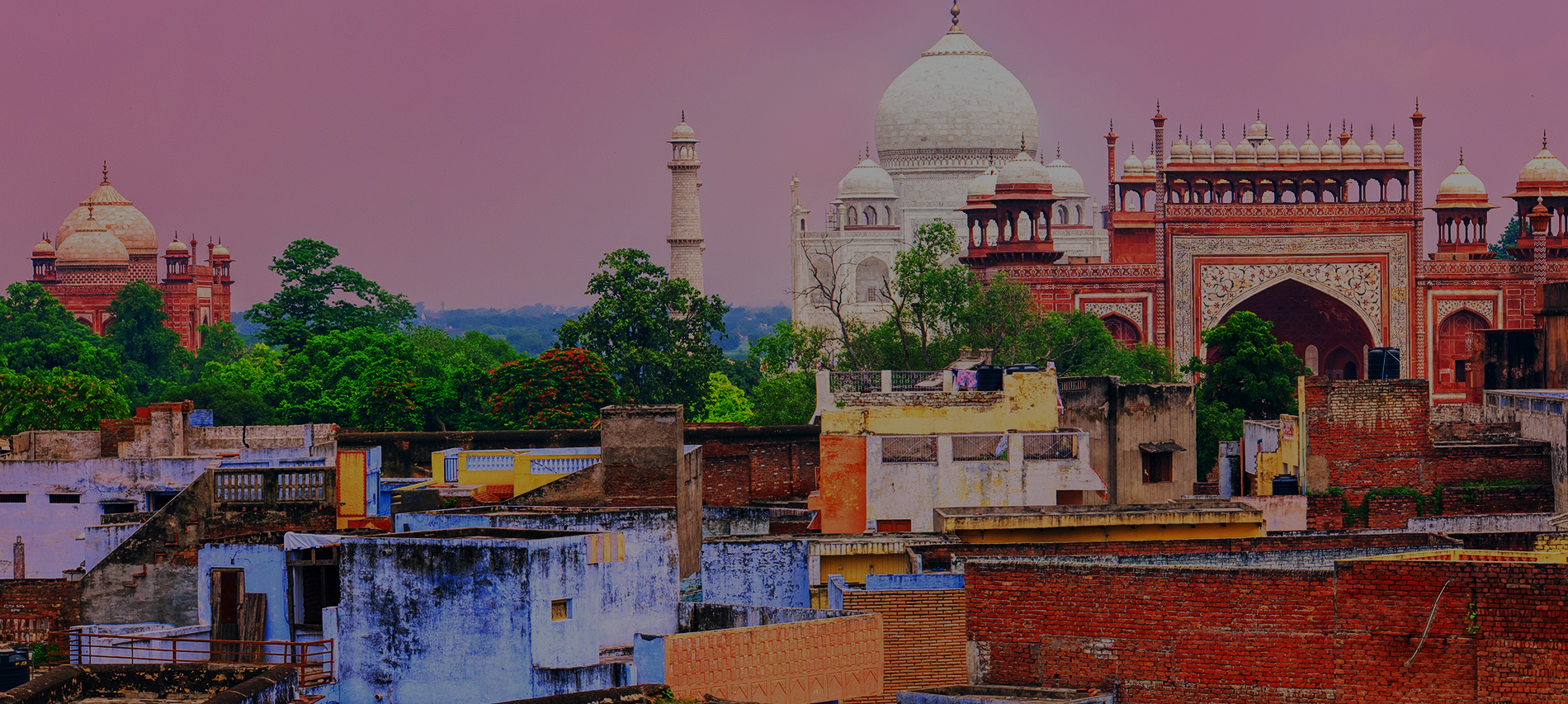
Celebrated Tamil scholar and writer, Perumal Murugan, was born in a family of farmers.. Murugan’s Current Show and Seasons of the Palm, translated to English from the Tamil originals, are set against the backdrops of a city and a village respectively. Drawing from his personal experiences, the writer draws striking contrasts between life in a city and life in the countryside.
Here are 3 times Perumal Murugan showed us how cities and villages are nothing but the two sides of the same coin.
When he showed us how different the experience of going to the theatre is in a city and a village.


When he showed us how shops in a city were not the same as shops in a village.


When his stories showed us the contrast in how the divine is evoked in the inhabitants of a city and a village.


As Murugan takes us through the concrete jungles of the city and the dusty lanes of the village, tell us how you’ve experience the rural and urban differently.
The Beginnings of the Syrian Christian Kitchen in Kerala
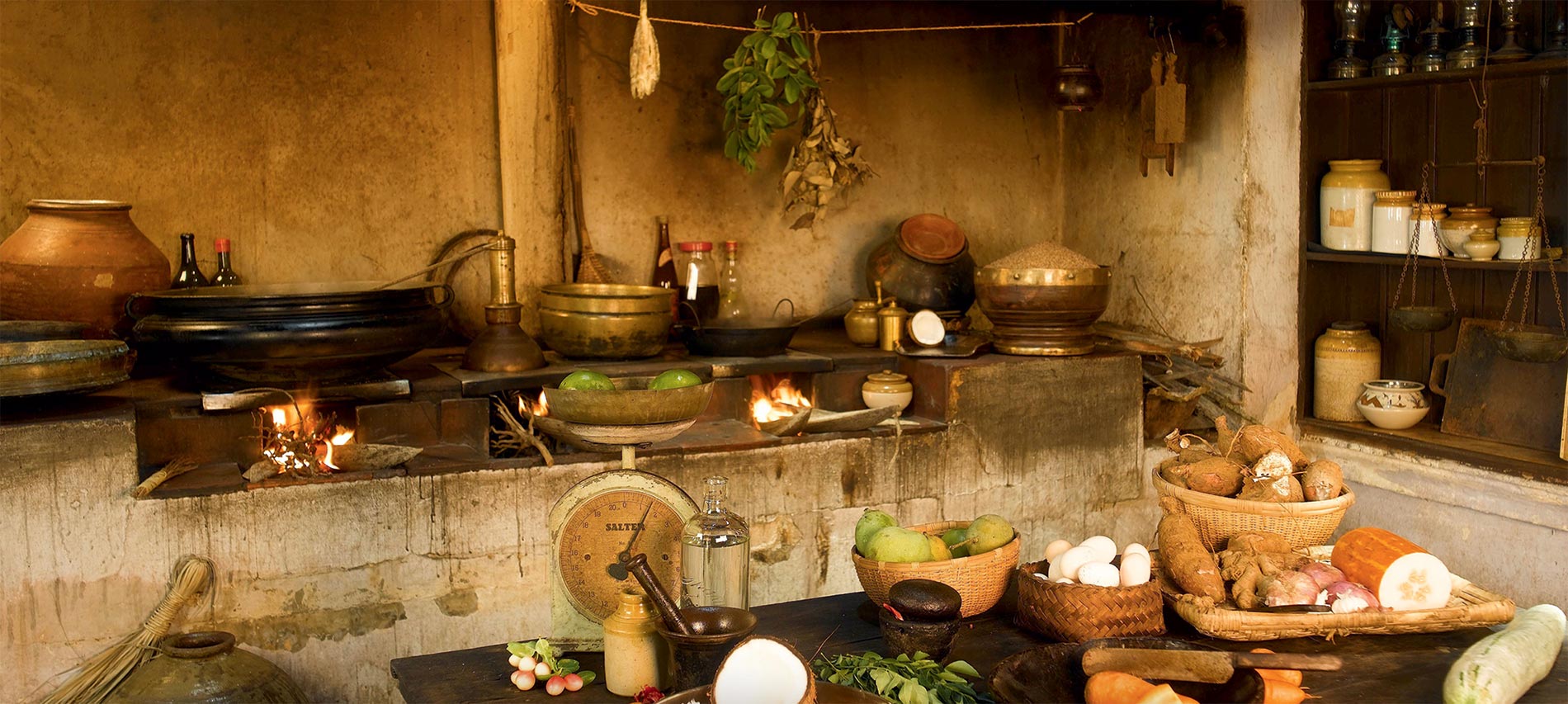
Long before the time of Christ, spice merchants and travelers from around the world would visit Kerala. The important seaport of Muziris or Cranganore was populated with Greeks, Syrians, Jews, and Chinese traders who lived in harmony with the people of the region. It was on one of these trading vessels, plying between Alexandria and the Malabar Coast, that Saint Thomas the Apostle is believed to have arrived in Cranganore in AD 52. He began preaching the Gospel to the people of these areas, and eventually established churches in Cranganore, Paravoor, Palur, Kokkamangalam, Niranam, Malayatoor, and Nillackel. Among those early conversions were several Namboodiri Brahmin families, from whom many of the present-day Syrian Christians trace their roots.
As legend has it, the upper caste Brahmins of Palur were converted after a miracle, whereby Mar Thoma (Saint Thomas) suspended water in midair as a testimony of his faith. Most of these early Christians followed the ancient Eastern Nestorian faith and were known as Malabar Christians until the advent of a Syrian merchant—Thomas of Canaan—who arrived in Muziris with four hundred Syrians, including several priests and a bishop. The Syrians were welcomed by the local Malabar Christians as the countrymen of Jesus and Saint Thomas. The two communities eventually intermarried and merged to become Syrian Christians, now recognized as one of the oldest Christian communities in the world.
The present-day Syrian Christians of Kerala are also known as Nazaranis, the followers of Jesus of Nazareth, and though they are now divided broadly into four sects—the Knanaya Christians, Jacobites, Marthomites, and Syrian Catholics—they share many common religious and social practices, and intermarriage is not uncommon. Collectively they retain a distinct identity and remain independent from other Christians in India because of their unique lineage. Life is centered around their liturgy and the observance of days of fasting and abstinence. They follow old Syrian church rites, chanting their singsong Syriac liturgy. The saga of the St. Thomas Christians is narrated in their song and dance forms—Margam Kali (the way of St. Thomas) and the Rabban Pattu (the songs of Rabban).
Syrian Christians are identified by their family names which reflect the profession of a family elder, place of origin, or sometimes nothing but pure whimsy. My own family, a large Syrian Catholic clan from Kanjirapally, is called Pallivathukkal, meaning “at the church gate,” as many centuries earlier my ancestors had settled near a church in Nillackel. My husband’s family name, Thekkekunnel, means “south hill.” Thadikaren, another family name, means “bearded man,” and the poetic Myladi means “peacock dance.” First names are biblical, and customarily the firstborn is named after a paternal grandparent and the secondborn after a maternal grandparent. Thereafter, aunts, uncles, and saints lend their names to the newborns. The second name is taken from the child’s father, but a Joseph George, say, may be anonymous until, when paired with his family name, he can be immediately placed as Joseph, the son of George of the Pottenkulam family. Syrian Christian names are distinctive and a George may also be known as Varkey or Varghese; a Paul can be Peeli or Paulose; and an Abraham can be called Avira or Ittira. Similarly, the female Syrian Christian name Rachel may be Raahel; Elizabeth can be Aley or Elamma; and Bridget, the melodious Uschita.
Most prominent Syrian Christian families are close-knit and connected by an intricate web of marriages. I have vivid memories of my mother and sisters spending hours disentangling family connections, the links being the women who married into each family. With many of these large clans expanding into several hundred members, some families now hold periodic kudumbayogams, family get-togethers which allow members of the family to reconnect.
Christianity in India has long been synonymous with education and the Syrian Christians have made a significant contribution to this field, partly by means of their large number of clergy. Today they have evolved into a distinct, indigenous community of agriculturists, scholars, industrialists, and professionals. A large number have moved to other cities in India as well as to distant lands, and though erudite and cosmopolitan, they are still attached to the traditions and customs of their ancestors.
Described as “Hindu in culture, Christian in religion, and Syro-Oriental in worship,” Syrian Christians enjoy the status of a prosperous and socially prominent community.
Sautéed Squid
Koonthal Varathathu
Squid turns rubbery if overcooked, so once marinated they must be quickly stir-fried and served hot, with a fresh sprinkling of lime juice. Serve with rice and accompaniments or as a snack.
Grind the garlic, chilli powder, turmeric, and pepper- corns to a coarse paste in a mortar and pestle.
Mix the garlic paste with the rice flour, salt, and lemon juice and rub into the squid. Let the squid marinate in the spices for at least 2 hours at room temperature.
Heat the oil in a skillet and add the squid. Stir-fry over high heat for 3 to 5 minutes, removing from the heat when the spices brown.

This is an excerpt from Lathika George’s ‘The Suriani Kitchen’.

5 Most Memorable Faiz Ahmed Faiz Shayaris to make your day poetic

Faiz Ahmed Faiz is widely regarded as one of the great Urdu poets of the twentieth century, and the iconic voice of a generation. Although he is best remembered for his revolutionary verses that decried tyranny and called for justice, his oeuvre also extended to scintillating, soulful poems of love.
In The Colours of My Heart – a translation of Faiz’s selected, most memorable poems and ghazals by Baran Farooqi – readers will be able to experience a new dimension of the great poet’s genius. Here are five gems that display Faiz’s extraordinary flair for tender hope and quiet longing.
Beloved, Don’t Ask Me For the Love that Was – “Mujhse Pehli Si Muhabbat Mehboob Na Maang”

Don’t ask me to love you the way I did before, my love
I’d imagined life to be bright and glowing because you were in it
What cared I for sorrows other than the joys of pining in your love?
It’s your beauty that keeps springtime intact upon the world
What else remains to be sought in the universe but your eyes?
Speak – “Bol”

Speak, for your lips are free
Speak, for your tongue is still yours
Your upright body belongs to you
Speak, for your soul still is yours
Highway – “Shahraah”

A long, desolate highway
Its gaze fixed on the far horizon
Spreading out its grey beauty
On the breast of the cold earth—
Like a grief-stricken woman
In her desolate home
Dreaming of her absent lover
Lost in thought, each part of her body immersed
in the idea of union.
The Day of Death – “Jis Roz Qaza Aayegi”

Kis tarah aayegi jis roz qaza aayegi
Shaayad iss tarah ki jis taur kabhi awwal-e shab
Be-talab pehle pahal marhamat-e bosa-e lab
Tyranny Giving Lessons in the Fidelity of Love – “Sitam Sikhlaayega Rasm-e Wafa Aise Nahin Hota”

Sitam sikhlaayega rasm-e wafa aise nahin hota
Sanam dikhlaaenge raah-e khuda aise nahin hota
Enthralled by the verses of one of the greatest Urdu poets? Get The Colours of My Heart here!

5 Things Which Give you a Glimpse of Ecological Reality of India

Prerna Singh Bindra is one of India’s leading wildlife conservationist and writer. In her latest book, The Vanishing, she ponders on the crisis that the flora and fauna of India are facing today. She also asks some pertinent questions such as “Is development inimical to ecological security?” Furthermore, she talks about the steps India has taken towards safeguarding its forests and wildlife.
Here are 5 realities which give an insight into the current status of ecology in India.
Many times, environment sacrifices its elements to make way for development.

India despite a 1.3 billion population, harbours over 60 per cent of the world’s remaining wild tigers.

All contained in just over two per cent of the global land mass.

India’s increasingly battered forests still harbour secrets—and species we thought had vanished, or did not even know existed.

India’s people are remarkably accepting of predators in their midst.

Did the facts leave you appalled? Tell us what are you doing to save the environment.

Kafka on Screen: 5 Must-Watch Films Inspired by the Stories of Franz Kafka

Literary legend, Franz Kafka, has left generations of readers astounded with his fantastical stories, a style that has received its own special name – ‘Kafkaesque’. Alienation, existentialism, absurdity, all of it comes together in Kafka’s works to form a heady, surreal cocktail of words and imageries.
Several filmmakers have been inspired by Kafka’s stories, thereby creating some of the most visually stunning and eccentric works of cinema known to the world. Here are five outstanding adaptations of Kafka’s works one must watch:
The Trial (1962)

Based on Franz Kafka’s novel of the same name, this 1962 film by director Orson Welles follows the story of a bureaucrat who is arrested and persecuted for a crime that is neither mentioned to the protagonist nor to the viewer. Not only is the film the filmmaker’s personal favourite, but over the years has also been touted as a cinematic masterpiece by critics.
Franz Kafka’s It’s a Wonderful Life (1993)

Peter Capaldi’s Academy award winning short-film, Franz Kafka’s It’s a Wonderful Life, begins where writer Kafka started his deliciously dark tale of a man’s metamorphosis into an insect — on a piece of paper. The film explores the frustration of a writer confronting a creative block, as interruptions from the world around keep pouring in, only to make him wonder what it is that his protagonist transforms into when he wakes up. A banana? A kangaroo?
Franz Kafka’s A Country Doctor (2007)

Multiple award-winning anime short-film, Koji Yamamura’s Franz Kafka’s A Country Doctor, is an interpretation of Kafka’s short story by the same name. A bizarre chain of events unfolds when a country doctor visits a young patient in the middle of the night. Strange, unearthly horses, distorted houses and people, a young boy who oscillates between death and the will to die, Yamamura’s beautifully dark visuals married to Kafka’s haunting story leaves the audience questioning and wanting more.
The Metamorphosis of Mr. Samsa (1978)

What can be better than to watch your favourite story come alive in animation? The Metamorphosis of Mr. Samsa by Caroline Leaf is an animated short-film, using beach sand on a piece of glass. Fluid, shadowy images capturing the nightmarish nature of the original story, Leaf’s film is a stunning visual rendition of the most renowned work of Franz Kafka.
Watermelon Man (1970)

Melvin Van-Peeble’s classic, Watermelon Man, is based on the premise of Franz Kafka’s Metamorphosis. When ‘white insurance salesman’, Jeff Berger, wakes up to find himself in a black man’s body, (much like Kafka’s Gregor Samsa finds himself in a beetle’s body when he wakes up) all hell breaks loose as he initially tries to scrub off his dark skin in many creative ways. After finally accepting his reality of having transformed into a black man, Berger ironically finds himself in situations which he looked down upon as a man of white descent.
Tell us which ‘Kafkaeqsue’ film is your favourite.
Narrating Stories with Data

As director of analytics and A/B testing at Visa, Ravichandran supports executives, leaders, and decision makers in product, marketing, sales, and relationships. He explained to me that “we are the custodians of the data, so our responsibility is to enable our users to have confidence in the decisions they make using that data.”
One of the biggest changes the analytical era of marketing has brought about is that things need to happen much faster than before. “We used to have a very linear approach,” Ravichandran told me. “Now when something is going live, there’s already an immediate need to respond. We need to be able to take action on the fly.” Because of those changes, marketers can no longer think about analytics as something that supports them or a function that just one person, like a chief digital officer, would perform. Rather, analytics is now an integral part of marketing’s value chain.
Ravichandran said that numbers by themselves are historical. That’s why, while data is needed to inform campaigns, at the end of the day, it still comes down to marketers using their gut feelings to make the best decision possible. “And we can use data and analysis to inform and guide us in the right direction,” he added.
Because data and analytics are now so intertwined with marketing strategy, expectations for leadership on the marketing side have changed. “It’s no longer acceptable to say you’re a marketer, but you’re not a numbers person,” Ravichandran said. “Executives are demanding more data literacy as a precursor for being a good marketer.” And it’s not just in the marketing space. He added, “All of our chief executives are comfortable with numbers and data-driven approaches.”
Ravichandran was quick to clarify, however, that a focus on data, numbers, and quantified measures should not replace the value of vision: “I have an enormous respect for data, but I also believe all of it has to be driven by strategy, the business case, benchmarking against the industry, all those things that provide a broader perspective. You have to understand what specific metrics you’re trying to impact with your actions.” He advocates the importance of understanding your company’s business model, applying and measuring the right metrics, and truly understanding your competitive position and your customers’ needs.
The big mind-set shift we need to make, therefore, is recognizing how our intuition is now informed by data and analytics. When someone comes to a marketing manager or leader with a proposal to spend, say, $250,000 on a campaign, she had better come armed with data, analysis, testing plans, and expected outcomes, as well as what her gut is telling her.
This is an excerpt from Adele Sweetwood’s The Analytical Marketer. Get your copy here.
Credit: Abhishek Singh
6 Confessions by Ruskin Bond that Every Book Lover Can Relate With

“I just hate having so many books to read and yet never having enough time to read them.”
“I used to pack a book for sleep overs!”
A love of books (to the point of addiction) might lead to misadventures, but it’ll surely lead to anecdotes and confessions!
In Confessions of a Book Lover, Ruskin Bond opens a window to his earliest encounters with incredible writers and their wonderful writings to introduce readers to the stories that played a significant role in molding his imagination as a full-time writer.
Every book lover has a confession. These are Ruskin Bond’s.
Literature is not bound to a type, is it?

Books > Common Sort of Entertainment

There can never be enough books

You never know which precious gem you might discover in a new genre

The ideal way to spend vacations

Reading can accelerate healing
Do you have similar confessions to make?
Get Ruskin Bond’s Confessions of a Book Lover here!
