




Professor, author, screenwriter, Erich Segal’s words were known for winning hearts. While he taught us about the beauty and magic of true love, he also articulated the pain of heartbreak and loss like no one else could. His books are time travelling machines, taking you on journeys into strangers’ lives, helping you figuring out your own.
On his birthday, here are six times he taught us about love, life and everything in between:
When he reminded us that true love cannot be lost.

When he defined the complications of life so easily.

The time we learnt that no one is perfect.

When he taught us the simple trick of true love.

When he perfectly captured the world around us in one simple sentence.

When he dared to show us the sad reality.

His words never fail to make us feel alive and fall in love, over and over again. If you haven’t yet read any of his books, just pick your favourite quote and start with that book! So, which magical world are you going to travel to today?
Category: Features
articles features main category
5 Things to be Hopeful for as an Indian

Anirudh Krishna in The Broken Ladder reveals the untapped talent, which if honed, can propel India in the league of developed nations. Additionally, Krishna also highlights instances where India has shown significant improvement.
Here are five examples that make one hopeful that the day isn’t far when India will become a global superpower:
Share of women entrants in business schools is substantially larger than what it used to be a generation earlier.

Glimmers of hope among the marginalized communities

An attempt to bridge the gap in terms of educational institutions

A commendable achievement for the nation since achieving independence

An improvement in the participation of people in decision-making process

Tell us the improvements you have seen in your part of the country in the last decade.
6 Times Everything Everything Warmed Our Hearts

Do you remember your first teenage love? Nicola Yoon’s debut novel Everything Everything is here to remind you of your first love, when anything seems possible and no problem is insurmountable. A gripping tale of love, relationships and world as we know it, Everything Everything has everything to make you laugh, cry and feel everything in between.
Here are six times the book warmed our hearts.
Oh! The feeling when your crush calls!

When Maddy’s clay astronaut is at a dining centre but can’t eat!

When mom cooks something you hate!

The disease at least one teenage girl has every 30 seconds.

The “Out of the World” feeling!

The sickness we don’t mind!

Taking you to the world of young innocent love that knows no bounds, Everything Everything will leave you with a warm, fuzzy feeling in your heart, wanting for more!

Raj, an Extravagant Saga about the Maharani of Balmer, Jaya Singh

The land of Jaya’s birth lay beyond the desert known as the Abode of Death.
Even that year, three years before the start of a new century, the small tribe of bards making its way to the kingdom of Balmer saw many auguries of death. Water holes and village wells were dry. The artificial lakes which watered the great desert kingdoms of Jodhpur, Bikaner, Jaisalmer were covered with green slime, their levels sunk so low the foundations of water palaces stood revealed, ringed by brown-scaled crocodiles dozing in shallow water.
There was little food to spare for the storytellers as they converged on village squares at nightfall to tell their tales for a place to rest, and yet they became a caravan. Throughout Rajputana it was known the Maharajah of Balmer awaited the birth of his first child. Families in search of a season’s work, other storytellers and tinkers and acrobats, called to the bards, ‘Do you go to Balmer for the birth?’ Learning it was so, they grabbed sleepy bullocks by their vermilion-painted horns and shouted ‘Hut! Hut!’ urging the animals onto the road.
Once a group of ash-covered sadhus lying naked in a broken pavilion built by a forgotten king waved their iron tridents and clambered into a crowded camel cart.
Sometimes the carts were pushed aside by the crested carriages of rajas who lived in the stone fortifications that outlined the treeless black hills. When the sun was at its height, the fortifications seemed to breathe, expanding and contracting in the haze as though the hills were massive, brooding lizards from the time of mythology and the motion of the stone battlements the sluggish shifting of their spines.
Sometimes the caravan attached itself to the procession of court ministers journeying to Balmer with secret messages from their maharajah to the ruler of Balmer, in defiance of the laws of Imperial Britain. Then an elephant led the way, flanked by cavalry units holding banners. When the processions moved on, a silver coin, embossed with a maharajah’s symbol on one side and the profile of the English Empress on the other, was gifted to each member of the caravan, even the children.
Scrub jungle gave way to sand dunes. At sunset, the sudden darkness brought a feverish chill to the empty landscape. The travellers willed their emaciated animals to reach the shelter of villages spaced farther and farther apart before the demon women who had died in childbirth came howling through the night in search of children to replace the stillborn infants they had never suckled.
Now the caravan was so large no village could contain it, and the travellers pitched their own camps.
While their children slept in the cloth cradles tied between the brass spokes of camel carts, the bards, the gypsy genealogists of royal India, talked through the night, exchanging news of the Rajput kingdoms.
‘Our rulers are preparing to travel to London for the Diamond Jubilee of the White Widow, the Empress Victoria.’
‘The retinues and gifts they must take to impress the British Empire will dangerously impoverish their treasuries.’
‘At least in London they can speak together. Here, Britain still fears conspiracy and will not allow the kings to meet except in the presence of Englishmen.’
‘But court astrologers are reminding their maharajahs that famine has come every twenty years since the rise of British power.’
‘And twenty years have passed since the last famine.’
The bards shook their heads, dismissing astrology for the reality they had witnessed on the road. They had seen the villagers praying for rain. The farmers knew already. Another famine had begun.
This is an excerpt from Gita Mehta’s Raj.

Learning from Mistakes

Jeff Bezos, the owner of mighty Amazon constantly features in one of the most successful entrepreneurs of modern time. The way he has steered Amazon through all these years, shows his dedication and skill to make things work against all odds. However, even he failed. A lot of articles have come up post this and many different perspectives have tried to solve this problem from a different angle. Jeff Gothelf and Josh Seiden’s book, Sense and Respond tries to look at such cases from a newer perspective:
‘Amazon’s 2014 Fire Phone disaster is a classic example and, oddly, one that comes from the very same company that developed and frequently uses many of the sense and respond techniques we’re discussing—a company we laud in chapter 1 for that reason.
Motivated by consumers’ increasing use of mobile devices, Amazon began the Fire Phone effort in 2010, just as the iPhone 4 was hitting the market. Mobile users were becoming a more important source of traffic to Amazon, and the company wanted more control of the mobile store than Apple would allow. Apple’s rules about what companies can and can’t do in iOS apps include strict rules about commerce, including one that stipulates that Apple gets a 30 percent share of each in- app sale. 2 (The reason you can’t buy a book on the iOS Kindle app is that Amazon doesn’t want to pay Apple 30 percent of each sale.) So Amazon created the Fire Phone initiative to solve a business problem: it wanted complete control over the store that its customers visited on their mobile devices.
But what would be the value to customers? They struggled to find it, in part because of a strict culture of secrecy around this product. Jeff Bezos, CEO of Amazon, had lots of ideas for cool features. But cool and valuable are not the same thing. Over time, Bezos exerted an increasingly heavier hand in the design and development of the Fire Phone and, according to published reports, ignored feedback from his team that questioned his approach. 3 There was no conversation with the market here, only Bezos talking. He insisted that the phone have a series of fl ashy features like Dynamic Perspective, a 3-D display that didn’t require special glasses and could be seen from all angles; but it delivered little consumer value. Bezos assumed that fl ashy hardware features would make the phone more desirable to consumers than an iPhone. Without a continuous two way conversation with his target audience to guide the development of these features, though, Bezos was making a huge guess.
He guessed wrong. Four years later, in July 2014, the Fire Phone went on sale in the United States. Within days it was clear that consumers were unimpressed— with the design, with the ecosystem, and with the gimmicky features Bezos had pushed for so hard. Priced at $199, the Fire Phone was intended to compete directly with Apple’s iPhone, but consumers didn’t see the value. Instead, they saw it for what it was—a way to easily get to Amazon’s store in a way that was better for Amazon but not significantly better for customers.
After a $170 million write- down of unsold inventory, the Fire Phone was available for 99 cents before finally being sunset in late 2015. The behind- the- scenes stories reveal the arrogance in the top down decision- making process that Bezos led. Although people on the team pushed back, they ended up deferring to the boss. After all, he’d been right many times before. Why wouldn’t he be right again this time?
It might have helped if Bezos had listened to the market. Had he approached some of these decisions as assumptions to be tested and questions to be answered, rather than hunches to be followed blindly, things might have been different.’
You can get your hands at the book here.
This is an excerpt from Jeff Gothelf and Josh Seiden’s Sense and Respond.
Credit: Abhishek Singh
5 Times Anne Frank Showed Us How to Not Take Life for Granted
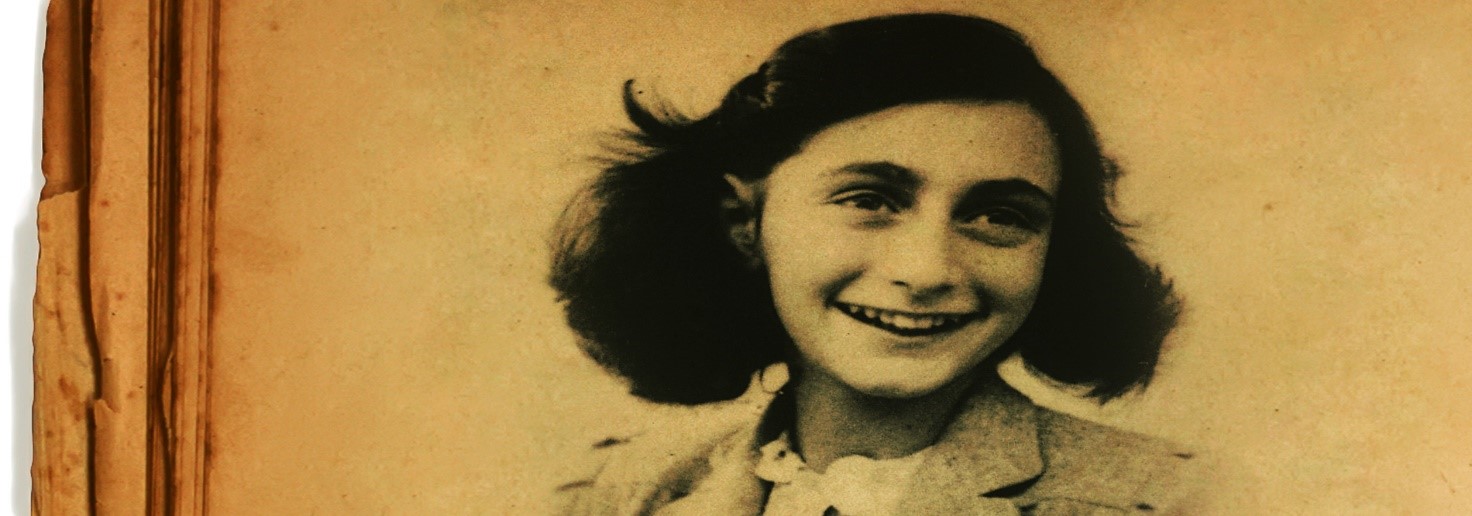
The Diary of a Young Girl by Anne Frank is one of the most translated and read books across the world, and with good reason. 13-year-old Anne Frank witnessed holocaust first hand cooped up behind a book-shelf hiding a bunker, and still found hopeful words and the spirit to tell the tale.
Here are five times Anne Frank exemplified why we should strive to see the silver lining in the dark clouds.
“I’ve come to the shocking conclusion that I have only one long-sleeved dress and three cardigans to wear in the winter. Father’s given me permission to knit a white wool sweater; the yarn isn’t very pretty, but it’ll be warm, and that’s what counts. Some of our clothing was left with friends, but unfortunately we won’t be able to get to it until after the war. Provided it’s still there, of course.”

“I long to ride a bike, dance, whistle, look at the world, feel young and know that I’m free, and yet I can’t let it show. Just imagine what would happen if all eight of us were to feel sorry for ourselves or walk around with the discontent clearly visible on our faces. Where would that get us?”

“Have you ever heard the term “hostages”? That’s the latest punishment for saboteurs. It’s the most horrible thing you can imagine. Leading citizens—innocent people—are taken prisoner to await their execution. If the Gestapo can’t find the saboteur, they simply grab five hostages and line them up against the wall. You read the announcements of their death in the paper, where they’re referred to as “fatal accidents.””

“Father, Mother and Margot still can’t get used to the chiming of the Westertoren clock, which tells us the time every quarter of an hour. Not me, I liked it from the start; it sounds so reassuring, especially at night. You no doubt want to hear what I think of being in hiding. Well, all I can say is that I don’t really know yet. I don’t think I’ll ever feel at home in this house, but that doesn’t mean I hate it. It’s more like being on vacation in some strange pension. Kind of an odd way to look at life in hiding, but that’s how things are.”

“After May 1940 the good times were few and far between: first there was the war, then the capitulation and then the arrival of the Germans, which is when the trouble started for the Jews. Our freedom was severely restricted by a series of anti-Jewish decrees: Jews were required to wear a yellow star; Jews were required to turn in their bicycles; Jews were forbidden to use street-cars; Jews were forbidden to ride in cars, even their own; Jews were required to do their shopping between 3 and 5 P.M.; Jews were required to frequent only Jewish-owned barbershops and beauty parlors; Jews were forbidden to be out on the streets between 8 P.M. and 6 A.M.; Jews were forbidden to attend theaters, movies or any other forms of entertainment; Jews were forbidden to use swimming pools, tennis courts, hockey fields or any other athletic fields; Jews were forbidden to go rowing; Jews were forbidden to take part in any athletic activity in public; Jews were forbidden to sit in their gardens or those of their friends after 8 P.M.; Jews were forbidden to visit Christians in their homes; Jews were required to attend Jewish schools, etc. “You couldn’t do this and you couldn’t do that, but life went on. Jacque always said to me, “I don’t dare do anything anymore, ‘cause I’m afraid it’s not allowed.””

These heartrending words taken from the diary of 13-year-old Anne Frank was first published in the year 1947 as The Diary of a Young Girl. The first entry made by Anne Frank was on 12 June 1942 and the last words were written on 1 August 1944, a period of two-years when the Franks were in hiding in Amsterdam.
Anne was determined to tell her story after a member of the Dutch government in exile announced in a radio broadcast from London that once the war ended, he would look for eye-witness accounts of the Dutch people’s horrifying plight in the Nazi regime. He specifically mentioned diary entries and letters as examples. Anne not only wrote her diary but also edited it simultaneously, tuning it to perfection for her readers.
So, here’s wishing the world’s most fearless 13-year-old a very happy birthday. May your words never rest in peace, Anne.

5 Reasons You Should Be Reading Jo Nesbo
Reading crime novels comes with the suspense of not knowing what comes next. If you’re one of those who love the feeling of suspense and still haven’t got your hands on the books by Jo Nesbo, you are missing out big time. Jo Nesbo, a Norwegian crime novelist with more than 15 thriller novels to his name is a must read for every book lover.
So here are five reasons on why should you be reading Jo Nesbo:
His Harry Hole Series

The series revolves around Detective Harry Hole, a classic anti-hero who has alcoholic tendencies and opposes any kind of authority. The novels in this series, like all Nesbo novels, are complex and ambitious constructions combined with high-voltage suspense.. With twelve books in the series, Harry Hole has risen to become a cult figure among the lovers of the thriller genre.
His Novels have been Adapted to films

His stand-alone novel Headhunters was adapted into a film in 2011. The film stars Nikolaj Coster-Waldau and was nominated for many awards, including the BAFTA Award for Best Foreign Language Film category. His other novels, The Son and The Snowman are also slated to be adapted into motion pictures.
He is an Award-Winning Author

Nesbo has many accolades to his name. His debut novel The Bat won the Riverton Prize for Best Norwegian Crime Novel of the Year and the Glass Key Award for Best Nordic Crime Novel of the Year. His other works such as The Redbreast, Nemesis, The Snowman and The Devil’s Star have also been awarded by many prestigious platforms.
He is Multi-talented

Nesbo is not just a crime novelist but also writes books for children. His Doctor Proctor series revolves around a eccentric professor who is waiting for the opportunity to make it big in the world. The series evokes the legacy of Roald Dahl’s books as it encourages the readers to believe in themselves. He also conceptualized the Norwegian political thriller TV series, Occupied.
His Latest Novel, Knife

In his new book , Knife, Harry Hole is about to face his darkest case yet. The first killer he put behind bars is out to get him. Harry is responsible for the many years Finne spent in prison but now he’s free and ready to pick up where he left off.
When Harry wakes up with blood on his hands, and no memory of what he did the night before, he knows everything is only going to get worse . . .
Ready to get your hands on Nesbo novels? Tell us which one you liked the most.
Taking the Hating Out of Dating

Some take to fishing. Some don’t. It’s as simple as that.
Likewise, with arranged-dating (modern dating expressly for the purpose of finding a spouse). Some thrive on the anticipation of a good catch, while for some (my personal guess is for many) the uncertainty, the awkwardness of a ‘catch and release’ and of course returning empty-handed (again), can be nothing short of a mild coronary.
While my friends and acquaintances invariably fell in the latter anxiety-stricken category they often spoke with wistful resentment of a creature I dubbed as the Overly Enthusiastic Dater [OED].
An effervescent giant ball of sunshine and an energy drink, OEDs apparently don’t exhibit the slightest tremor. In fact they are enthused at the prospect of sharing their hobbies, family composition, occupation, job history and of course the much contentious dietary habits (Veg? Non-veg? Egg? Fish? Wine? Whisky? Smoke?!?) with strangers… again and again and again.
Nerves of steel? Adrenalin junkies? Extreme Extroverts? How do OEDs survive this minefield, not only unscathed but also brimming with enthusiasm?
A few leisurely cuppas and they were spilling the beans. I’m not sure if these ‘skills’ were innate or evolved to protect their tickers, but they do explain the OED’s joie de vivre.
- Date Martyr
Competition is fierce when it comes to far-out dating stories and every girl wants her slice of sympathy as she narrates the cuckoo-capades to a bunch of wide-eyed happily-married couples. Which is why this OED no longer cringes and prays for Potter’s invisibility cloak but rubs her hands in glee (mentally of course) when she encounters a delusional dude.
Delusional Dude 1: “Hi there, Prepare to be amazed and astounded by me”
OED: Beams like a cat that got the cream
Delusional Dude 2: “I’m into crystal gazing which is why I know there are limited fate portals in the next few years. Yes, yes, we just met but we must marry before the portal shuts”
OED: Beams like a cat that got more cream
- Truffle Hunter
This OED won’t waste time researching her date. Instead she scours through a dozen food guides and reviews before she selects the date venue. Tried the Burmese café last time, what next? Isn’t there a new Caramelised Melon Cappuccino in town? How about an experiment in non-judgement at the new ‘dine-in–the-dark’ cafe? Don’t see chappie, don’t judge chappie. He’s not roasted and her taste buds are singing. It’s a win-win.
Dating in the dark doesn’t scare this OED, running out of new eateries does.
- Errand-dater
This OED is an efficiency machine. She lives by the phrase ‘Location, location, location’. She first browses through her pantry, then through her closet, then her medicine cabinet and finally through the now yellowed piece of paper that was once her to-do list. Flour will run out by Monday? Lycra tops have inexplicably shrunk? Great. Now she plans a weekend date at a café in the mall where she can shop for these.
Some say bumping into your date in the hosiery check-out line right before the date is embarrassing, but she says it’s a chance to practise your poker face and strengthen your peripheral vision (as you surreptitiously glance into his shopping basket).
- Date Mate:
The last and final OED (that I know of) is nothing but a social butterfly and a chatterbox at heart. Despite the obvious incompatibility she can’t resist buddying up with her fellow date.
“Maybe the problem is you are address women as ‘yo! hot mamma’. If you don’t mind my asking what’s your relationship with your mum like?”
“I must fix you up with Vina. She too adoooores Justin Bieber.”
“….and that’s why I decided to walk away. What’s your perspective as a guy?”
“Where did you buy this black lace shirt? Stitched? Really? What was the cost per metre?”
Having met OEDs in person was quite revealing. They weren’t super women or the other extreme – oddballs. They were simply women who saw beyond ‘Mission Groom’.
Every coffee date wasn’t a do or die situation, a sword hanging over their heads; in fact there was always an upside – be it a good meal, scratching errands off a list or finding a new buddy.


Worried About the Environment? Five Reads to Enlighten and Educate!

“What is the use of a house if you haven’t got a tolerable planet to put it on?” Henry David Thoreau remarked once.
This World Environment Day, here are five of the best reads on environment.
The Great Derangement by Amitav Ghosh

One of India’s greatest writers, Amitav Ghosh, argues that future generations may well think that we are deranged. How else can we explain our imaginative failure in the face of global warming? In this groundbreaking return to non-fiction, Ghosh examines our inability at the level of literature, history and politics to grasp the scale and impact of climate change.
Environmentalism: A Global History by Ramachandra Guha

An acclaimed historian of the environment, Ramachandra Guha in this book draws on many years of research in three continents. He details the major trends, ideas, campaigns and thinkers within the environmental movement worldwide. Among the thinkers he profiles are John Muir, Mahatma Gandhi, Rachel Carson and Octavia Hill; among the movements, the Chipko Andolan and the German Greens.
The Vanishing: India’s Wildlife Crisis by Prerna Singh Bindra

With the high-decibel development versus environment debate dominating headlines, this book reveals how the ‘development at all costs’ model threatens our ecological and economic security. The author travels to far-flung forests to give an eyewitness account, and an insider’s view of India’s vanishing natural heritage. The Vanishing is a sharp and stirring read about today’s desperate scenarios, and the quest for hope for a wild India.
Rage of the River by Hridayesh Joshi

Rage of the River is a riveting commentary on the socio-environmental landscape of Uttarakhand and is filled with vivid imagery of the calamity. Woven into this haunting narrative is also the remarkable history of the ordinary people’s struggle to save the state’s ecology.
Green Poems by Gulzar

One of the country’s best-loved poets and lyricists, Gulzar is renowned for his inimitable way of seeing things, his witty expressions, his quirky turns of phrase. All these creative talents come into play in delightful, unexpected ways in his bilingual collection Green Poems, which celebrates his innate connection with nature.
Fascinated by the list? What is your observation of nature around you? Do you have environmental issues to bring to the fore? Tell us, we are all ears!
*
Winning with Superconsumers

Daniel Zein (disguised), the CFO of Great Snacks, thought that Nacho Cheese could be one of the company’s most valuable brands, so he encouraged the team to dig further into the product. The team did some robust analysis, and to their surprise, they discovered that Nacho Cheese’s consumers spanned the entire income spectrum.
From the data, it was obvious that Nacho Cheese could be a much bigger brand. Of all the full meals that consumers eat at home, about 37 percent are consumed hot and include cheese. But Nacho Cheese was used in only a fraction of those meals. To grow its product, the Great Snacks team decided to focus on the twenty-four million or so other consumers who share the same three loves that Laura had—people, cooking, and cheese—but who may not understand the magic of Nacho Cheese and the dozens of life solutions that it could deliver.
Simply put, the team gathered data from their superconsumers, ensured that the resultant insights and inspiration also appealed to the other twenty-four million consumers, and then geared its marketing, innovation, and retail execution to their tastes and behaviors. The immediate challenge was to convince the company leadership that Nacho Cheese could grow through better marketing and innovation—from packaging to product.
Line extensions into other forms of cheese were also a logical action step. Great Snacks drove growth by megabranding Nacho Cheese into other categories. The core business grew steadily faster than inflation, but the extensions in cheese (e.g., slices, shredded cheese) grew by double digits. All told, the brand extensions drove more than $50 million in growth, and the megabrand grew $100 million in three years.
For years, innovation for Nacho Cheese was a challenge. Since the brand was not well understood, innovation concepts yielded mixed results, which made the team hesitant to pursue breakthrough innovation. But with new data, the team revamped its innovation testing process to include both superconsumers (like Laura) and potential superconsumers (folks who could become like Laura).
The group was pleasantly surprised to find that among all the new product concepts it tested, some were off-the-charts positive for superconsumers. The team made a few tweaks, the new concepts tested positive for potential superconsumers as well, and the team finally had the results it needed to proceed.
The team saw that retail activation was inconsistent across retailers. In some stores, Nacho Cheese was placed in the center of the store. In others, it was refrigerated in the cheese and dairy section. So the team did some analysis and found that Nacho Cheese sold faster in the refrigerated section, which consequently produced better results for Great Snacks and the retailer. The team learned that superconsumers strongly preferred the product when it was sold in the refrigerated section. What’s more, potential superconsumers had a much easier time finding it in the refrigerated section.
Finally, the Great Snacks team used big data to uncover meaningful ways of improving marketing ROI. It used big data from Nielsen Catalina Solutions—a joint venture that creates a single-source panel of consumers from the sixty million loyalty-card holders from grocery stores and the Nielsen TV panel of two to three million households. The single-source data gave the team interesting insights on the actual TV shows that Nacho Cheese aficionados were watching. In one test using this data, the team found that superconsumers were fifteen times more responsive to Nacho Cheese advertising than other consumers! The vice president of marketing noted that the brand’s marketing objective was to have a conversation with superconsumers about their love for Nacho Cheese, but to do so in a way that potential superconsumers could listen in.
The beauty of all this was that the data the team used to improve innovation, retail activation, and marketing was already there. Superconsumers gave the marketers a way to synthesize the data into a coherent and coordinated set of actions and metrics. Looking at superconsumers like Laura, the team gained confidence that the strategy had even more upside. And the team saw the potential and ran with it.
Want to know a simple, speedy, and sustainable path to superior growth? Order Eddie Yoon’s Superconsumers here!
This is an excerpt from Eddie Yoon’s Superconsumers.
Credit: Abhishek Singh