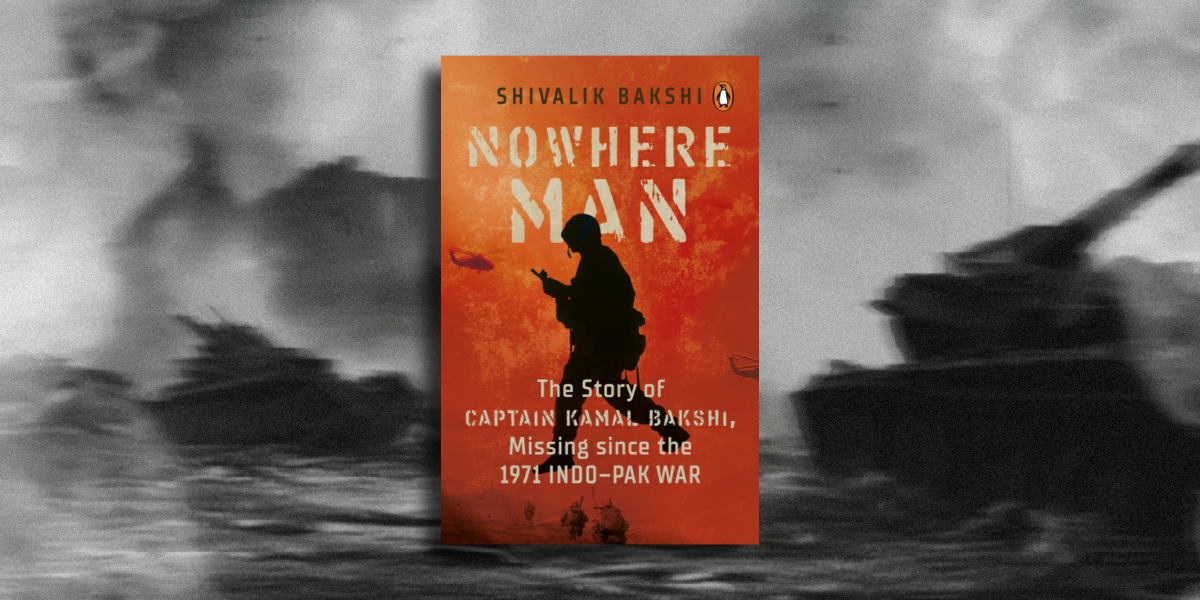
In the pages of Nowhere Man by Shivalik Bakshi, a profound and urgent story awaits. This is not just a book, it is a call to action, a heartfelt plea to uncover the truth and shed light on the story of Captain Kamal Bakshi who fought in the 1971 Indo-Pak War and went missing at the mere age of 25, after 4 days of intense fighting. His family received clues & evidence in the form of letters from Pakistan over the years indicating that he was alive. However, he was never retrieved.
Captain Kamal Bakshi’s story reminds us of the trials and tribulations he suffered, his courage, and his ultimate sacrifice in service of the nation and we must come together on a yielding quest for justice and give the Nowhere Man the respect he deserves.
Read this exclusive account unveiling the intricate timeline and clues gathered throughout the years that hinted at Captain Kamal Bakshi’s presence in Pakistan.
Nowhere Man || Shivalik Bakshi
***
A Timeline of POW Negotiations and Sightings
16 December 1971 – Cease Fire Declared
26 December 1971 India Weighs Bengali Pleas to Try Pak Officials – New York Times Author’s Comments: India found itself between a rock and a hard place immediately after the war ended: on one hand, Bangladesh was demanding that it hand over Pakistani soldiers accused of war crimes. On the other hand, it did not want to anger Pakistan as there was a long list of items that needed to be negotiated with the Pakistanis, including the fate of Indian POWs in Pakistani custody.
9 January 1972
India and Pakistan Submit List of POWs- International Review of the Red Cross, February 1972 Author’s Comments:We now know that Pakistani authorities submitted an incomplete list of Indian POWs to the Red Cross. As for why they did it, the obvious answer was to use the Indian POWs as bargaining chips in case India handed over some Pakistani POWs to the Bangladeshis for war crimes trials.
18 March 1972 India Opens Way for Dacca Trials- New York Times Author’s Comments:Pakistani officials could have used this news as further justification for withholding names of Indian POWs from the list they handed to the Red Cross two months earlier.
30 March 1972
Bangladesh Will Try 1,100 Pakistanis- New York Times Author’s Comments: Now that we know for certain that Pakistani officials withheld names of some Indian POWs, A statement from Prime Minister Zulfikar Bhutto raises a troubling question: What exactly did he mean by ‘point of no return’? Was he referring to the return of Indian POWs whose names were withheld from the Red Cross?
14 June 1972 India to Deliver 150 POWs to Bangladesh to Face Trial- New York Times Author’s Comments:India made a statement a couple of weeks before Pakistani President Bhutto was to arrive in Simla to begin negotiation talks. It probably did so to increase pressure on Bhutto to come to a settlement. However, once again, Pakistani officials probably saw this as justification for holding back names of some Indian POWs.
29 July 1972 India Ratifies Pakistan Pact- New York Times Author’s Comments:Also called the Simla Agreement, this pact was a peace treaty between India and Pakistan, and set the framework around which further negotiations were to take place to resolve all open issues, including POW repatriation. In hindsight, this was another missed opportunity for India to ensure all its POWs were accounted for before signing this agreement.
29 November 1972 POWs to Be Freed Friday- New York Times Author’s Comments: This exchange was only for prisoners of the western front. Captain Kamal Bakshi should have been a part of this exchange.
31 January 1973
90,000 Prisoners- New York Times Author’s Comments: This is referring to the Pakistani prisoners of war captured in East Pakistan (now called Bangladesh)
7 April 1974 India Talks Hinge on POW Issue- New York Times Author’s Comments:This news, once again, shows that the fate of Pakistani POWs accused of war crimes was the central issue of postwar negotiations. And once again, Pakistani officials would have used this as justification for their decision to withhold names of some Indian POWs from the list they handed over to the Red Cross after the war.
10 April 1974 India, Bangladesh and Pakistan End Prisoner Dispute- – New York Times Author’s Comments:This is the moment the fate of the missing Indian POWs was sealed. Indian officials did not have any leverage for negotiating their release after this point.
1 May 1974 India Completes Return of Pakistani Prisoners- New York Times Author’s Comments:This was Pakistan’s opportunity to come clean. With all their POWs freed, they could have easily released the Indians they had held back. Unfortunately, they chose not to, as the following events make clear.
7 December 1974
First letter from Major Ashok Suri to his father, R.S. Suri Text on slip: ‘I am okay here’ Text on note: ‘Sahib, valaikumsalam. I cannot meet you in person. Your son is alive and he is in Pakistan. I could only bring this slip, which I am sending you. Now going back to Pak.
-M Abdul Hamid.’
Author’s Comments:At least one honourable Pakistani citizen named M. Abdul Hamid (likely an alias) believed that it was wrong for Pakistan to keep holding Indian POWs after India had returned all remaining Pakistani POWs earlier that year.
13 June 1975
Second letter from Major Ashok Suri to his father, R.S. Suri ‘Dear Daddy. Ashok touches thy feet to get a benediction. I am quite OK here. Please try to contact Indian Army or Govt of India about us. We are 20 officers here. Don’t worry about me. Pay my regards to everybody at home, especially mummy, grandfather. Indian Govt can contact Pakistan Govt for our freedom. Your loving son.
-A.Kumar Suri
Author’s Comments:Clear proof that at least twenty Indian military officers were being detained in Pakistan after India had released all Pakistani POWs. It is also interesting to note that the letter originated in Karachi, and not some city in the hinterland of Pakistan, where it would have been easier to keep the POWs hidden. Sometime between 1972 and 1974, Inspector General of the Border Security Force Ashwini Kumar had learnt from his contacts in Pakistan that some Indian POWs were being detained secretly, outside the purview of Red Cross officials, in prisons on the Pakistan-Afghanistan border. Why would Pakistani officials shift them from a remote location on the Afghan border to Karachi which lies on the Arabian Sea coast? Were they trying to ship the men out of the country by sea?
1976-77- At least three Indian POWs transferred by sea from Pakistan to Oman
12 April 1979– The Government of India releases a list of names of Indian military personnel still believed to be in Pakistani custody. Included in the list is Captain Kamal Bakshi.
1980 onwards- Several civilian prisoners repatriated to India mention meeting or seeing or hearing about Indian Army POWs in prisons across Pakistan.
5 July 1988- Mukhtiar Singh, a civilian prisoner repatriated to India on 5 July 1988, claims to have seen Captain Kamal Bakshi in prison in Pakistan.
23 September 2012- Television news report about the existence of an Indian POW in a prison in Oman. Sepoy Jaspal Singh told the carpenter that he and four other soldiers were imprisoned in Pakistan for five or six years before being transferred to Oman by sea. That means Jaspal and his companions were shipped to Oman in 1976 or 1977.
***
Get your copy of Nowhere Man by Shivalik Bakshi wherever books are sold.
Half the year has gone by and feeling like you need a dash of inspiration to power through the remaining months of 2023? Don’t worry, we’ve got you covered. Tune in to these inspiring audiobooks as you spring clean your house, finish up mundane tasks or even take a refreshing walk. We promise you’ll leave feeling motivated and ready to conquer the rest of the year. What’re you waiting for? Let’s dive into this extraordinary audiobook adventure and make the most of what’s to come!
Ask the Monk || Nityanand Charan Das
In Ask the Monk, celebrated monk Nityanand Charan Das lucidly answers over seventy frequently asked questions-by young and the old alike-on topics such as karma, religion versus spirituality, mind, God, destiny, purpose of life, suffering, rituals, religion, wars and so on. These answers that are extremely crucial to help you, the reader, embark on the journey of self-discovery and self-realization.
Don’t Lose Your Mind Lose Your Weight || Rujuta Diwekar
Don’t Lose Your Mind, Lose Your Weight has revolutionized the way Indians think about food and their eating habits. Funny, easy to read and full of great advice, it argues that we should return to our traditional eating roots (yes, ghee is good for you), nutrients are more important than calories (cheese over biscuits) and, most importantly, the only way to lose weight is to keep eating. In the ten-year anniversary edition of this classic, read about the simple steps you can take towards maintaining a healthy and proper diet and understanding your body and its nutritional requirements.
Energize Your Mind || Gaur Gopal Das
In Energize Your Mind, bestselling author and life coach Gaur Gopal Das decodes how the mind works. He combines his anecdotal style with analytical research to teach us how to discipline our mind for our greater well-being. Throughout this book, he provides interactive exercises, meditation techniques and worksheets to help us take charge of our mind.
Let Me Hijack Your Mind || Alyque Padamsee, Vandana Saxena Poria
Let Me Hijack Your Mind is Alyque’s parting gift to Indians, exhorting them to throw out the old and embrace new ways of approaching everything, which will lead them towards a more exciting and contented life-and a better society and country. It is a way to open windows in their mind to think about life aside from greed, power and money. This is a book designed to throw everyone off-balance in a good way, because it is crammed with fresh ideas on how to live, how to dream and how to completely reset our mindset and attitudes. As Alyque says in his inimitable style: ‘Get people out of stuffy thinking.’
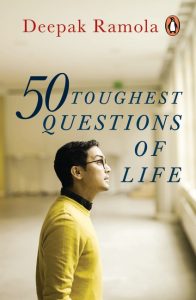
50 Toughest Questions Of Life || Deepak Ramola
50 Toughest Questions of Life invites people to have a conversation about themselves with themselves. Deepak Ramola’s quest began after he was inspired by the life lesson of a young girl who said, ‘Life is not about giving easy answers, but answering tough questions.’ Over the years, Ramola has amassed life lessons from inspirational sources across the world: from the women of the Maasai tribe to young girls in Afghanistan and sex workers in Kamathipura; from the lessons of earthquake survivors in Nepal to Syrian refugees in Europe, among many more.
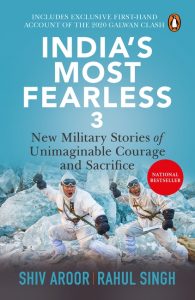
India’s Most Fearless 3 || Shiv Aroor, Rahul Singh
An army medic who went beyond the call of duty amid a frenzy of treacherous bloodletting in Ladakh’s Galwan while his fellow soldiers fought the Chinese to death; the crew of an Indian Navy destroyer that put everything on the line to rescue hundreds from Cyclone Tauktae in the Arabian Sea; an Indian Air Force pilot who ejected from his doomed fighter less than two seconds before it hit the ground, only to find he was missing a leg.
India’s Most Fearless 3 presents their accounts, or of those who were with them in their final moments. The book also features ten true stories of extraordinary courage and fearlessness, providing glimpses of the heroism Indian soldiers have displayed in unthinkably hostile conditions and under grave provocation.
Life can be chaotic right? But how often does it transform into something truly ‘Filmi’? Author Kunal Basu in his book Filmi Stories has vowed to do just that. Get ready to explore this story-telling masterpiece, where we encounter unforeseen terrors and adventures, surreal comedies, and apocalypses that will shake you to the core. And amidst it all, you will discover the sublime poetry of everyday life.
So get into a comfortable spot, grab some popcorn, and read this excerpt from Filmi Stories that rival the excitement of watching a thrilling movie.
Filmi Stories || Kunal Basu
***
As he sat on the bus travelling from the city’s western suburb to the airport, the morning’s events flashed through Rishi’s mind like the madly spinning reel of a film. Like all days that spelt chaos, the morning had been deceptively calm. He had risen to the sing-song of his neighbour’s bird, jumped the queue to the communal toilet complaining of an upset stomach and then secured a seat, miraculously, on the congested local train on his way to work. Haste was a common refrain in the life of Bombay residents, and his morning was no different from that of millions who found peace in the daily hassle of the city. On that day though he was doubly keen to reach his office before the padlock had been opened by the talkative security guard, ever ready to offer a rundown of noteworthy events—from bank heist to waterlogging. It was Rosy’s, Rosalind Yasmin de Rosario’s, birthday, and Rishi wished to reach her cubicle next to their boss’s plush office before the employees arrived. He had spent a whole week scouting for a proper birthday card and struck gold with one shaped like a pink rose that allowed the petals to be opened to pen one’s greetings inside. May you always feel happy and never sad, he wrote, signing off with your loyal friend Rishi.
Most of the day was spent waiting, Rishi recalled, while travelling on the airport bus. From his own cubicle, a good 50 yards away from Rosy’s, her face was visible only in profile. True to Monday morning rush, she could be seen stacking up files for the boss to sign, taking calls, reaching inside her purse for a breath freshener after her tea. Had she dropped the card, left by Rishi on her table, into the wastepaper bin, mistaking it for junk mail? He sat through the whole morning, forfeiting a cigarette break, just to keep an eye on her. By noon, waiting had turned to despair. His thoughts strayed over to several birthday cards he’d left for female colleagues in the past, hoping for a favourable outcome. For an out-of-state person like him, who hailed from a city far from Bombay, without family or friends who might assume the task of matchmaking, he saw the birthday card as his only hope. A card followed by an invitation to tea, a stroll in the nearby park, trips to the mall in the guise of shopping, ending with the final arrangement.
By 3 in the afternoon, he had given up on his prospect and returned to the thorny business of balancing the firm’s monthly ledger when Rosy walked down those fifty yards to his cubicle. Taking just a moment to recover, Rishi was about to wish her on her special day, when she cut him short.
‘Mr Manjrekar is waiting to speak with you. He has asked you to come at once.’
Me?’ Rishi stuttered.
‘Yes, you,’ Rosy answered in a matter-of-fact way and walked a step ahead of him to the boss’s office.
Like all employees, past and present, Rishi feared his boss. He had the habit of asking awkward questions, giving his employees no time to think before providing the answer himself with an air of disdain. As an MBA, he assumed a rightful superiority over his graduate employees and fell into lecturing them on topics that had nothing to do with their daily business. Normally, he allotted no more than 3 minutes to Rishi whenever he was summoned to his office, but on that day, he asked him to take a seat and came around to lay a hand on his shoulder.
He will fire me, Rishi thought, offer some kind of business logic that was beyond his comprehension.Maybe he’s found out about the birthday card and the several before this one and concluded that he was a threat to his female staff.
‘Word has come from our Patna office about your mother,’ Mr Manjrekar paused, rubbing his hand on Rishi’s shoulder blade by way of a massage. ‘Your uncle has been trying to contact you by phone from your hometown, but something appears to be wrong with your number. He is trying to pass on an urgent message to you.’
‘What message, Sir?’ Rishi managed to ask.
‘Your mother is sick,’ Mr Manjrekar’s voice turned a touch gentler. ‘She has been taken to the hospital. Maybe it’s nothing very serious. Could be the pathogenesis of a condition beyond the patient’s bandwidth.’
Rishi’s eyes widened, unable to follow what Mr Manjrekar meant. Standing beside him, he could sense Rosy nodding her head in agreement.
Returning to his seat, Mr Manjrekar adjusted his tie and spoke calmly. ‘No matter her condition, you must go to Patna and assess the situation first-hand. Rosy has already bought your ticket, and you can leave now to collect your things from home and head off to the airport.’
The flight leaves at 7.45 p.m. It’s the only one to Patna from Bombay this evening.’ On cue, Rosy handed Rishi his ticket and turned on her heels to return to her cubicle.
‘I’m sure things will be fine back home,’ MrManjrekar concluded his 5-minute meeting with Rishi, adding, ‘We’ll consider your absence as a casual leave.’
Dazed by the event, Rishi took the wrong turn as he left MrManjrekar’s office, reaching the staff toilet at the end of the corridor, which was shut for cleaning. Then he retraced his steps back to his seat, passing by Rosy’s desk. The birthday card,he found to be still sitting at the exact spot he’dleft it, yet unopened.
***
Get your copy of Filmi Stories by Kunal Basu wherever books are sold.
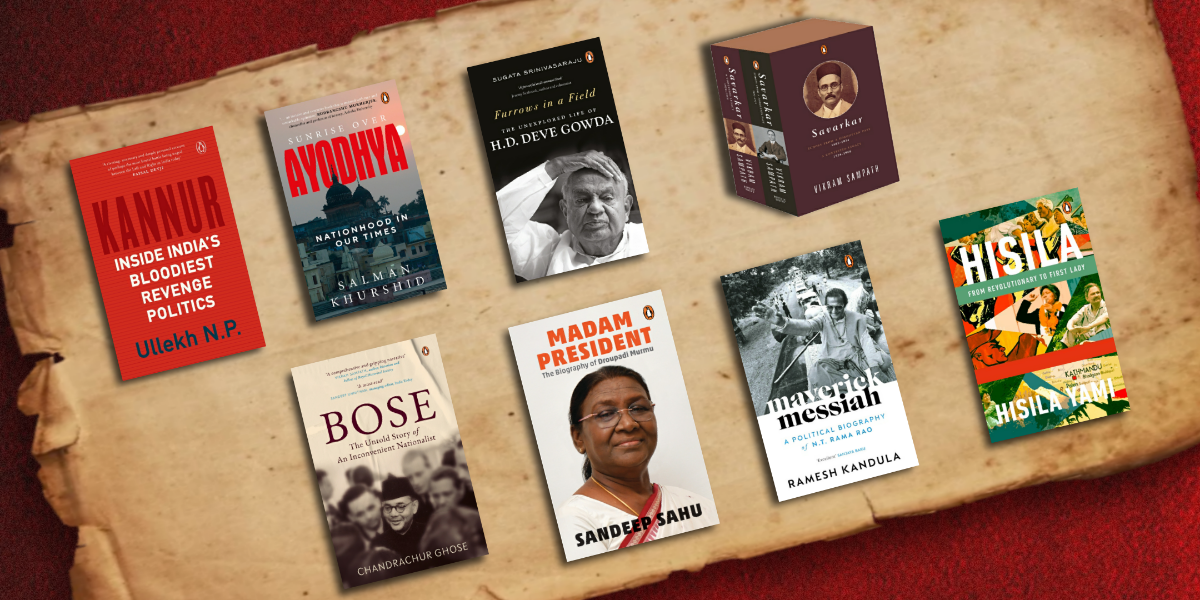
Step into the revolutionary world of political biographies, where we uncover the personal stories and untold struggles behind the influential figures who shaped our history. From the halls of power to the battlegrounds of rebellion and change, journey alongside these 8 trailblazers in Indian Politics whose stories continue to inspire and provoke thoughtful reflection.
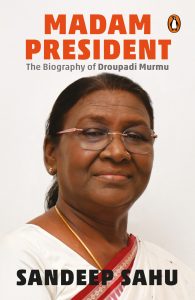
Madam President || Sandeep Sahu
Madam President is the first-ever comprehensive and authentic biography of Droupadi Murmu, the fifteenth President of India, by senior journalist Sandeep Sahu. Murmu’s long and eventful political journey is a story of true perseverance and inspiration. Having battled early years of struggle in securing quality education, being struck by a series of personal tragedies such as the loss of her husband and two sons in quick succession,
and suffering electoral victories and losses, Murmu has risen through her circumstances with grace, fortitude and resilience that make her the well-revered leader she is today.
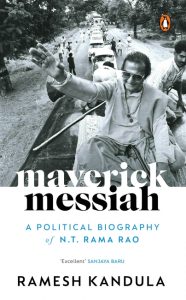
Maverick Messiah || Ramesh Kandula
Nandamuri Taraka Rama Rao, widely known as NTR, was not merely a film star who strayed into politics and captured power in Andhra Pradesh. The actor-politician redefined the political culture in the state and scripted a new political idiom.
His rather dramatic entry into politics, the profound impact he left on the people of Andhra Pradesh and the vital role he played in national politics during his relatively short political life, however, have not received deserving recognition. Maverick Messiah captures the different facets of NTR’s life in all their varied hues and puts in perspective the significant contribution of the actor-politician to the Indian political tapestry.
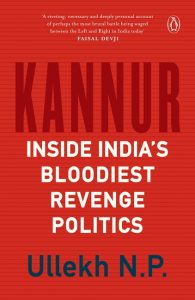
Kannur || Ullekh N.P.
Born in Kannur and brought up amidst some of the tallest political leaders of the state, author Ullekh N.P. delves into his personal experiences while drawing a modern-day graph that charts out the reasons, motivations and the local lore behind the turmoil. He analyses the numbers that lay bare the truth behind the hype, studies the area’s political and cultural heritage, and speaks to the main protagonists and victims. With his journalistic skills and years of on-the-field reporting, he paints a gripping narrative of the ongoing bloodbath and the perceptions around it.
Ullekh’s investigations and interviews reveal a bigger game at work involving players who will stop at nothing to win.
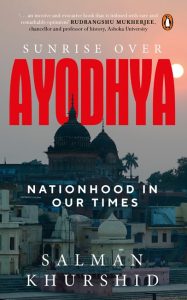
Sunrise Over Ayodhya || Salman Khurshid
On 9 November 2019, the Supreme Court, in a unanimous verdict, cleared the way for the construction of a Ram temple at the disputed site in Ayodhya.
As we look back, we will be able to see how much we have lost over Ayodhya through the years of conflict. If the loss of a mosque is preservation of faith, if the establishment of a temple is emancipation of faith, we can all join together in celebrating faith in the Constitution. Sometimes, a step back to accommodate is several steps forward towards our common destiny.
Through Sunrise Over Ayodhya, Salman Khurshid explores how the greatest opportunity that the judgment offers is a reaffirmation of India as a secular society.
Bose || Chandrachur Ghose
Was Bose really a Nazi sympathiser? Knowing very well about the strong public opinion that existed among the political leadership and the intelligentsia in India against Nazi Germany, Fascist Italy, and imperial Japan, why did he risk his own political image by allying with the Axis powers?
Pacey, thought-provoking and absolutely unputdownable, Bose: The Untold Story of an Inconvenient Nationalist will open a window to many hitherto untold and unknown stories of Netaji Subhas Chandra Bose.
Probably the first critical biography of Netaji Subhas Chandra Bose till date.
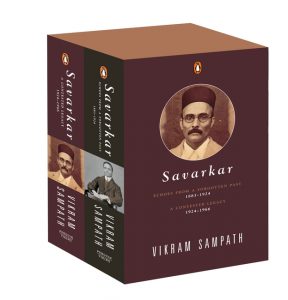
Savarkar A Contested Legacy from A Forgotten Past || Vikram Sampath
This two-volume biography series, exploring a vast range of original archival documents from across India and outside it, in English and several Indian languages, historian Vikram Sampath brings to light the life and works of Vinayak Damodar Savarkar, one of the most contentious political thinkers and leaders of the twentieth century.
Comprehensive, definitive and absolutely unputdownable, this two-volume biography opens a window to previously unknown untold life of Vinayak Damodar Savarkar.
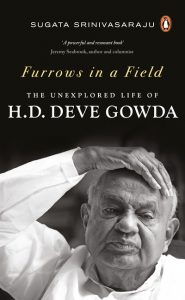
Furrows in a field || Sugata Srinivasaraju
Furrows in a field narrative is instructed by Gowda’s rich parliamentary record, archival material and interviews conducted with people associated with him at various stages of his life. The layered narrative is further nuanced by Gowda’s own voice, gargantuan memory, a close reading of the time when he made history and the currents of destiny that preceded it. Although Gowda has spent most of his years in Karnataka and has become a symbol of the federal idea, this book argues that the diverse national imagination and sincerity that he deployed as prime minister had magically lit up different corners of India.
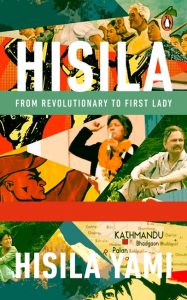
Hisila || Hisila Yami
In this fascinating book, Hisila Yami traces her journey from being a young Nepali student of architecture in Delhi in the early eighties to becoming a Maoist revolutionary engaging in guerrilla warfare in Nepal. Yami was one of the two women leaders who were a part of the politburo of the Communist Party of Nepal (Maoist), which led the People’s War in the country that changed the course of its history forever.
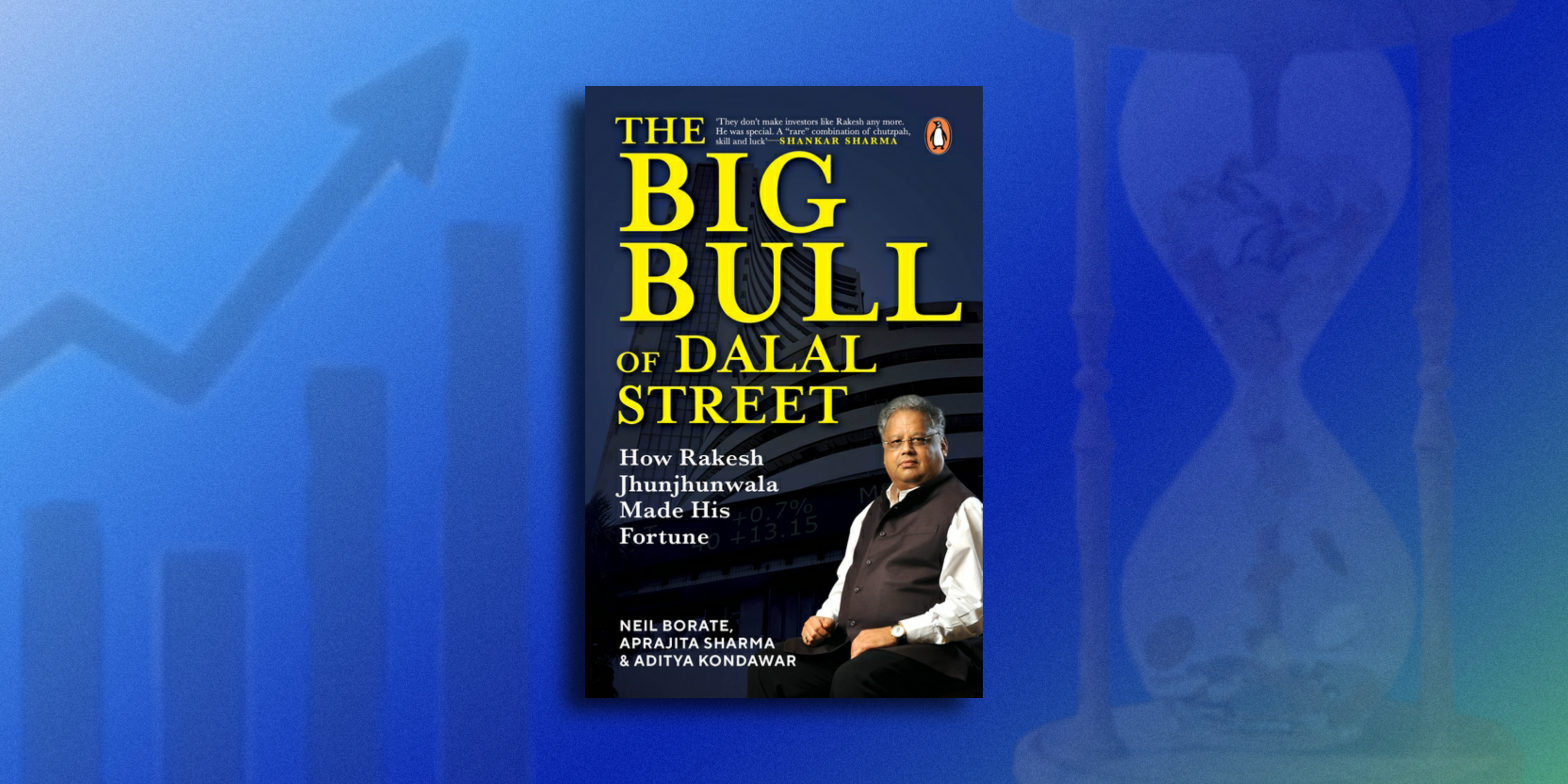
From its humble beginnings to its meteoric rise, Titan has captured the hearts and wrists of millions of people worldwide. With exclusive insights and extensive research, The Big Bull of Dalal Street offers a riveting narrative of Titan’s evolution, revealing the challenges and triumphs of this consumer brand powerhouse.
Here’s an excerpt from the book!
The Big Bull of Dalal Street || Neil Borate, Aprajita Sharma, Aditya Kondawar
*
The journey of a thousand miles begins with a single step, and the journey of Titan began with one watch! Today, every three seconds, someone somewhere around the world buys a Titan watch. Titan started in 1984 with just one product category—watches. Xerxes Desai, a senior executive with the company, was looking for new business opportunities for the firm when he chanced upon the idea of watch manufacturing in 1977. The Titan story is documented in detail in the book Titan: Inside India’s Most Successful Consumer Brand by Vinay Kamath, published in 2018, parts of which we will rely upon, along with Titan annual reports, in this chapter.
After almost a decade of tenaciously navigating through the public sector Hindustan Machine Tools’ (HMT) hegemony, the reluctance of the Swiss to part with watchmaking technology, the licence raj and RBI’s stringent forex norms, Titan was formed as a joint venture between Tamil Nadu Industrial Development Corporation (TIDCO) and the Tatas in 1984. TIDCO had been looking at a few projects and its talks with other watchmakers hadn’t borne fruit. To provide much needed foreign exchange to finance the purchase of the required capital equipment, assistance was sought from the International Finance Corporation (IFC), based in Washington DC. The IFC is the private sector-focused sister entity of the World Bank.
The IFC was so enamoured by the project, it even sought to make an equity investment in Titan. Titan chose to locate its first plant in Hosur and its headquarters in Bangalore. The fact that HMT’s watch plant was located in that city was a major incentive. Xerxes said as much in an interview published in Businessworld magazine in December 1989. The main reason for choosing Hosur was its proximity to Bangalore. They thought it would be easier for them to pull people out of HMT especially the ones with technical and managerial experience. They wanted to raid HMT and they were successful with the same. It was a blessing in disguise for them as HMT was overflowing with staff and the growth avenues at the top-level management weren’t many, which made the raiding even easier.
Titan launched with five watch collections: Exacta (steel), Fastrack (sporty models for the youth), Classique (gold-plated dials with leather straps), Spectra (two-tone—steel and gold) and Royale (gold-plated dials with goldplated metal bracelets). The lowest priced was Fastrack, at Rs 350, and the highest was Royale at Rs 700. From day one, Titan was projected as a premium brand. That first day at the Safina Plaza showroom, Titan sold seventeen watches; the first month’s sale was 313 watches. The Classique range was the bestseller, accounting for 65 per cent of sales.
However, the journey was not without its hiccups. From the initial batch of Titan watches manufactured in December 1986, J.R.D. Tata was gifted a watch. To the embarrassment of the Titan team, the quartz watch given to Mr Tata was not working. In the 1990s, Titan took the disastrous decision of entering the European market. Used to working in a monopolistic environment in India, Titan was unable to match up to the exacting standards of delivery and quality that watch retailing in Europe involved. It was a struggle, recalls Ajoy Chawla, a young manager in the early 1990s who would later head new business incubation and strategy for Titan Company Ltd, even to pay salaries and the rent for the premises. The effect was very clear on the financials—despite growing revenue from Rs 700 crore in 2000–01 to Rs 800 crore in 2002–03, net profit decreased from Rs 23.5 crore in 2000–01 to just Rs 6.2 crore in 2002–03. Titan was going through a tough phase. It was a trying time for Bhaskar Bhat, who took over as managing
director in 2002.
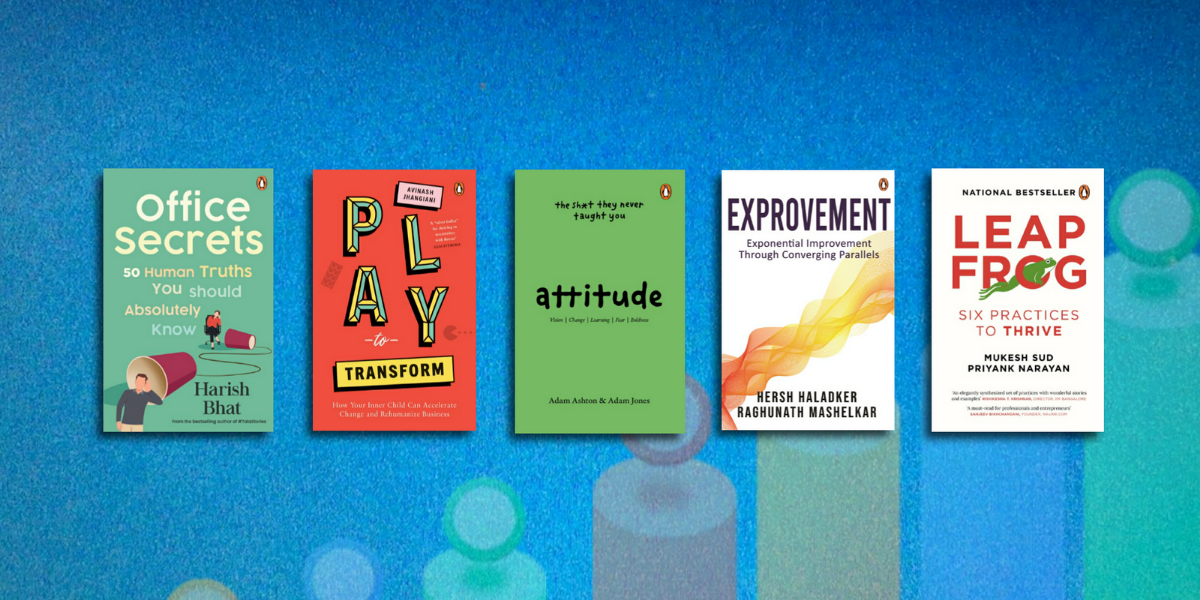
Starting a new job with a mix of excitement and nerves? You’re stepping into the unknown, eager to prove yourself but also uncertain about what lies ahead? Leave your worries at the desk because we’ve got your back. There is a treasure trove of wisdom waiting for you within the pages of these 5 books that will help you get into that CEO Mindset and navigate the world of work like a boss. Whether you’re looking to master essential skills, build professional relationships, or simply want to stay on top of the latest industry trends, these books are your secret weapons of success.
So jump right into it and foolproof your career with these insightful reads!
Office Secrets || Harish Bhat
Office Secrets book offers a selection of fascinating and useful secrets that can help you be far more successful at your workplace. As a bonus, they can make you happier as well. You will find within a range of subjects-whether the best methods of fighting exhaustion, organizing your work desk, the power of listening, why kindness is so important, workplace lessons from Hercule Poirot and what you can learn from the cookies that your colleagues eat.
Harish Bhat wields his pen with his signature insight to delight, inspire, provoke and change the way you see offices forever.
Attitude | Adam Ashton and Adam Jones
Have you ever stumbled upon a piece of life-changing knowledge that made you think: Why the hell didn’t someone tell me this sooner?!
Millions of people have listened to Adam Ashton and Adam Jones on the What You Will Learn podcast, where they have spent tens of thousands of hours studying the best ideas from the greatest minds on the planet. Their most frequently asked question: What is the best lesson you’ve come across? While you’d think a simple question would have a simple answer, it hasn’t-until now! Attitude:The Sh*t They Never Taught You will take you on a journey through takeaways from over a hundred of the world’s greatest thinkers, capturing lessons in personal development, career, business, personal finance, human nature, history and philosophy. Every lesson will be useful, and one might change your life. Remember, it is your attitude, not aptitude, that determines your altitude in life.
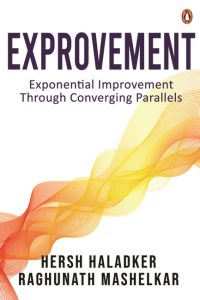
Exprovement || Hersh Haladker, RA Mashelkar
Can an outdated or failed solution in one industry bring disruption to another?
Can a racing team improve industrial manufacturing productivity?
Can science fiction offer entrepreneurs valuable lessons in innovative thinking?
Such examples lie at the core of exprovement, which is exponential improvement borne out of drawing parallels between the seemingly unrelated, much in the same way Henry Ford revolutionized the automotive industry by comparing and correlating his business with the meat-packing industry.
Through the various examples highlighted in this book, Hersh Haladker and Raghunath Mashelkar emphasize that searching for growth opportunities within an offering’s existing industry usually results in incremental improvement, whereas exponential improvement can be achieved by drawing parallels from outside of the current context.
This book will inspire leaders to look outward and find parallels, keeping in mind that ‘obvious’ comparisons can, at best, lead to improvement, whereas ‘unexpected’ ones can lead to exponential improvement and perpetuate a legacy of innovation.
Leap Frog || Mukesh Sud, Priyank Narayan
Leapfrog-in the context of thriving at work-is a scenario when a new entrant outperforms others. How do they achieve this? Are high performers born or made? Is there a way to nudge yourself into being more successful at work and also in life? With its six evidence-based insights, this book is poised to help you to advance your career at an incredible pace.
Play to Transform || Avinash Jhangiani
COMING SOON
Play to Transform is a book that challenges the traditional mindset of business leaders and encourages them to tap into their inner child to accelerate transformation with purpose. The book argues that we are all born creative geniuses with an innate ability to empathize deeply with others, but somewhere along the way, we have lost touch with these qualities. In the post-pandemic world, leaders need to be more empathetic and agile than ever before, and a conscious shift in mindset is required to achieve this.
Get ready to be inspired by the exciting journeys of Hersh Haladkar and Raghunath Mashelkar as we uncover the birth of the groundbreaking philosophy of ‘Exprovement’ and its extraordinary potential for personal growth and success. From a childhood fascination with dismantling toys and making surprising connections to profound classroom experiences, unveil the immense potential of drawing parallels that transform into extraordinary results.
Read these captivating stories that offer a glimpse into the author’s mind and gain valuable insights.
Exprovement || Hersh Haladker, RA Mashelkar
***
When I was a child, I was in the habit of taking apart everything I could lay my hands on to examine what was inside.
More often than not, the object of my investigations was a new toy I had been given. So in general, I never really had a lot of toys to play with; just plenty of parts of toys. I distinctly remember a particular incident when I was about ten years old, and my parents—after much pestering and convincing—had finally bought me the expensive remote control toy car I had been eyeing for a while.
Much to their exasperation, this toy became the next victim of my investigations, and try as hard as I could, I simply could not put the toy back together again, once I realized how annoyed they were. Needless to say, the atmosphere at home was tense, and I couldn’t wait to escape to school the next day where (probably as a subconscious attempt to appease my parents) I paid extra attention in each and every class.
When I returned from school, I was excited to see a carpenter at home working on a remodelling project in the kitchen—a carpenter at home meant more tools for me to play with! It was my first introduction to a drill (the manual, not the motorized version) and of course, I had to experiment. While I was drilling a hole through every centimetre mark of my wooden ruler, wondering what to do with it once I had finished, I suddenly remembered the new gadget we had been taught about earlier that day in geometry class at school.
Like the teeth of gears suddenly falling into place perfectly, I was able, in a lightbulb moment, to see a connection between my broken toy car and the compass I had learnt about at school. I rushed to find the motor from my broken car, inserted the shaft of the motor into the ‘0 cm’ hole I had drilled and put it through a piece of paper. I switched on the motor, and my invention was able to automatically draw a circle. Next, I moved it to the ‘1 cm’ hole and drew another automated circle.
I was over the moon! I had just invented the next big thing—I had just automated the compass. That was my first-ever invention, and it drove me to continue the breaking, and in some cases, the making of things. It was only much later in life, on introspection, that I was able to identify my thought process as one of drawing parallels. I had been able to draw a parallel between something from my geometry class and something from my remote-controlled car to create, what was for a grade five student, a new and exponentially improved way of drawing a circle. I had created the electric compass, one of my first personal exprovements.
As I began my professional life, one of the questions born out of this thought process was:
What if parallels could be drawn between the seemingly unrelated to create unparalleled breakthroughs?’
—Hersh Haladkar
There are some ‘wow’ moments that change the course of one’s life. I had one such moment as a young boy in a school. Here is the story.
I was born in a poor family. I did my primary schooling in a municipal school until the seventh standard.
I then had to take admission in a secondary school. My mother could not gather the admission fee for a secondary school in time. I missed the admissions for the top schools in the area. I went to the school where most of the resource-poor children from our area went. But that poor school had rich teachers. One of them was my physics teacher, Mr Narahari Bhave. He did not believe in ‘chalk and talk’ but in seeing, experiencing and learning.
One day he wanted to show us how to find the focal length of a convex lens. He took us out into the sun. He held the lens in one hand and a piece of paper in the other. He moved the lens up and down, and when the brightest spot appeared on the piece of paper, he said the distance between the lens and the paper was the focal length. Then he waited for a few seconds and the paper burnt. When that happened, for some reason, he turned to me and said, ‘If you can focus your energies like this, you can burn anything, you can achieve anything’. This magical moment did two things for me. First, I said to myself, ‘Science is so powerful—I have to become a scientist.’
Second, it gave me the philosophy of my life—focus, and you can achieve great things.
But as I grew older, I saw a much greater meaning in that experiment. The sun’s rays are parallel and the property of parallel lines is that they never meet. The convex lens makes them converge and meet. That gave me the idea for what I termed as ‘convex lens leadership’, which makes people with divergent views and beliefs meet. Take national leadership, for instance. The nation gets divided on the basis of race, religion, language. A good national leader brings these diverse groups together. I used this analogy while leading research institutions.
The National Chemical Laboratory (NCL) had different divisions, unconnected to each other, like parallel lines. As director of NCL, I provided convex lens leadership to create ‘One NCL’, ‘Team NCL’. I was director general of the Council of Scientific and Industrial Research (CSIR), a chain of forty laboratories, again unconnected to each other, like parallel lines. I provided convex lens leadership to create ‘One CSIR’, ‘Team CSIR’. In fact, the result of this convex lens leadership was so powerful that the CSIR transformation in the 1990s was ranked as being among the top ten achievements of Indian science and technology in the twentieth century.
While engaged in convex lens leadership, my own scientific research led me to explore trans-disciplinary frontiers and has continued to do so for almost four decades. In fact, I brought together several diverse disciplines in my research on stimuli-responsive polymers. When I was invited to give the Danckwerts Memorial oration in London in 1995, I spoke on the emerging paradigm of seamless or borderless engineering science, emphasizing the need to create engineers with borderless minds.
Later, I extended this parallel lines analogy to ideas from diverse domains, which appear completely unrelated, and therefore are like parallel lines. But a ‘convex lens mindset’ makes them converge. And sometimes the result is an astonishing 1+1=11, not just 1+1=2!
In this book, we have focused on the challenge of building a convex lens mindset, which is capable of bringing together the parallel, connecting the seemingly unconnectable. We show how such a convex lens mindset creates the magic of exprovement, going well beyond incremental improvement.
—Raghunath Mashelkar
***
Want to know more? Get your copy of Exprovement today!
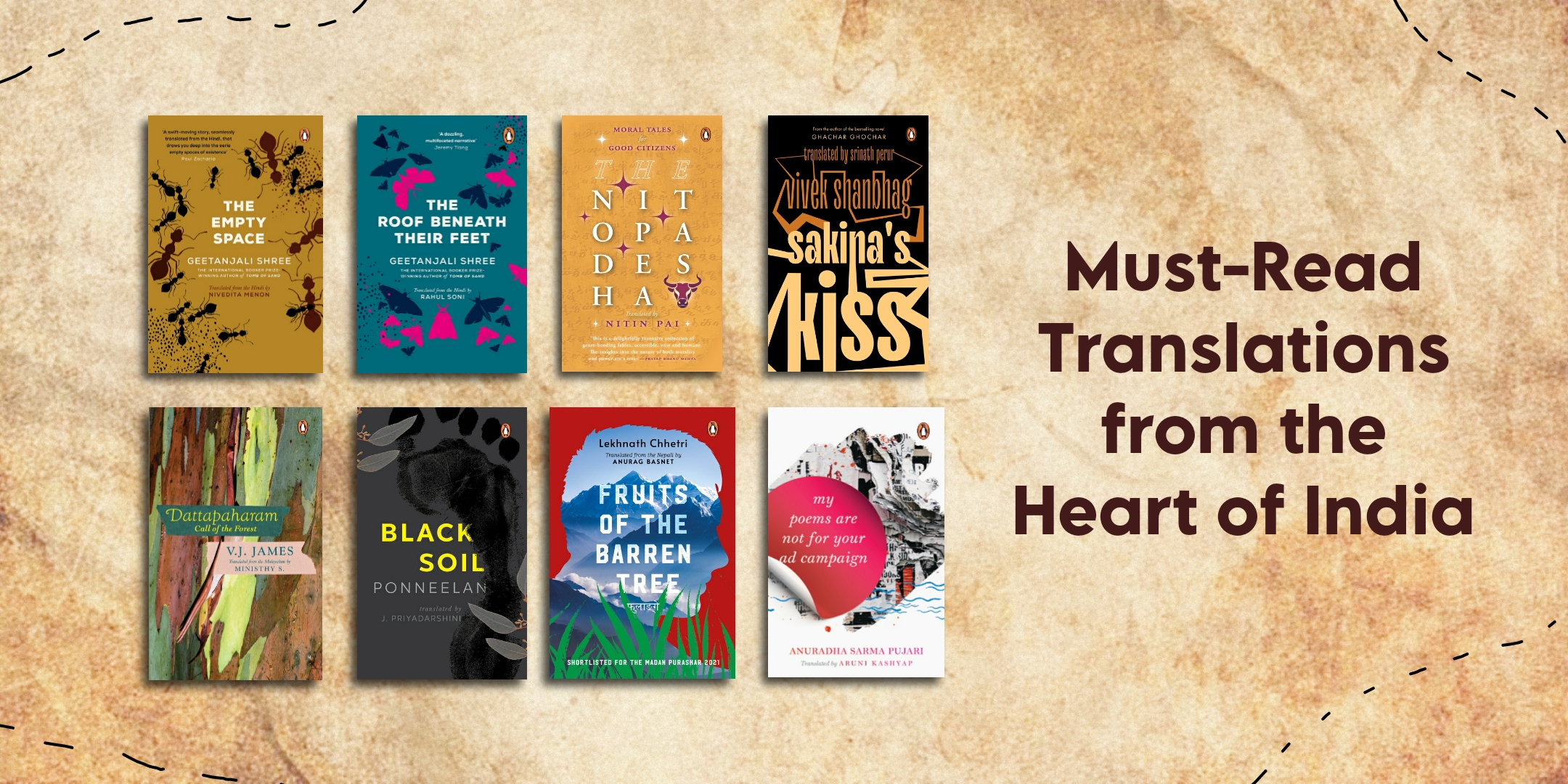
On this International Translation Day, explore the rich tapestry of Indian literature as we take you on an adventure through these must-read translations that cover the length and breadth of the country.
Immerse yourself in the vivid hues of regional literature as these translated works offer a glimpse into the soul of India, serving as gateway to diverse cultures, unexplored landscapes and untold stories. Together let’s embark on a literary odyssey as we unravel the power of Indian Languages brought to the centre stage in the universal language of English.
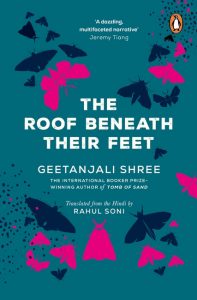
The Roof Beneath Their Feet || Geetanjali Shree, Rahul Soni
In The Roof Beneath their Feet, Chachcho and Lalna use their roofs to build a friendship that transcends time and memory. Suddenly one day, Lalna has to leave, to return only after Chachcho’s passing. Amidst rumors and gossip in the neighborhood, Chachcho’s nephew tries to piece together his memories of the two women, one of whom is his mother. The truth he is searching for could destroy him forever, but to not find out is no longer an option. A story of twists and turns, The Roof Beneath Their Feet, translated from the original Hindi by Rahul Soni, is easily one of the best contemporary novels you have read in a long time.
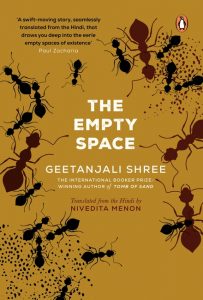
The Empty Space || Geetanjali Shree, Nivedita Menon
A bomb explodes in a university cafe, claiming the lives of nineteen students. The Empty Space begins with the identification of those nineteen dead. The mother who enters the cafe last to identify the nineteenth body brings home her dead eighteen-year-old son packed in a box, as well as the of the sole survivor e blast, a three-year-old boy who, by a strange quirk of fate, is found lying in a small empty space, alive and breathing. The Empty Space chronicles the memories of the boy gone, the story of the boy brought home, and the
cataclysmic crossing of life and death.
Black Soil || Ponneelan, Translated by J. Priyadarshini
Kannappan is posted to Perumalpuram as the new schoolteacher. The village lies in the black soil region of Tamil Nadu where the river Tamirabarani flows. He’s an outsider in this village with Veerayyan, a local farmer, as his only guide and friend.
Once settled in his role, Kannappan observes the everyday brutality faced by the farmers at the hands of the sadistic, all-powerful landlord-the Master. Child marriage is common in the village and so is the appalling practice of marrying young lads to older women who then serve as their father-in-law’s consort. Through his gentle yet probing conversations with the villagers, Kannappan tries his best to show the villagers a better way of life. The farmers who had begun protesting the excesses meted out to them by the upper-caste landlord soon find an ally in Kannappan. The schoolteacher’s sympathies for their cause bolster their waning spirits and replenishes their resolve to fight back.
Ponneelan’s first novel is a tour de force. Now translated for the first time, Black Soil lays bare the atrocities faced by the farmers and the human cost of building a better tomorrow.
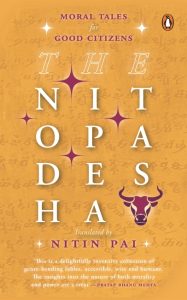
The Nitopadesha || Nitin Pai
The Nitopadesha is a labyrinth of stories in the style of the Panchatantra and the Jataka tales, this is a book about good citizenship and citizen-craft that will speak to the modern reader. Covering aspects such as what citizenship means, the ethical dilemmas one faces as a citizen and how one can deal with social issues, Nitin Pai’s absorbing translation is an essential read for conscientious citizens of all ages.
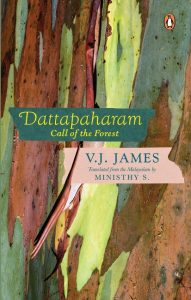
Dattapaharam || V.J. James, Translated by Ministhy S.
Dattapaharam is a powerhouse of a novel by the critically acclaimed and bestselling Malayalam author V.J. James. A rumination on solitude, man’s connection with nature and the strings that attach us to this world, this is a surreal novel where the author’s imagination soars like an eagle and words flow like the untouched springs in a rainforest. At times a fable on the modern world, at times a search for identity amid a quest of discovery, and on the whole a moving tale that takes the reader deep into the forests to understand what really makes us human, Dattapaharam is a powerful novel for our anthropocentric age, written by one of the most exciting voices to emerge from the Indian subcontinent.
Fruits of the Barren Tree || Lekhnath Chhetri, Translated by Anurag Basnet
Darjeeling, late 1980s. The demand for a separate state of Gorkhaland has taken a violent turn. The Green Party is at war with the Red Party-and with the state’s security forces. Murder, loot, terror and arson beset the Himalayan foothills. Fruits of the Barren Tree is a story of that time, and of Relling, a small village near Darjeeling. In Relling there’s Basnet, the village shaman, and his wife; there’s Jhuppay, their son-incorrigible thief, truant and amateur drunk; and also Nimma, Jhuppay’s great love, whose only desire in life is that he take the path of virtue. There’s Chyaatar too, former army man, now a militia commander in the Green Party, who rules the village with an iron hand. Ever the miscreant, nothing Jhuppay does can win Nimma’s heart. But when the Red Party hires his loudspeaker for a meeting-the first innocent, honest job of his life-it sets Jhuppay, Nimma and Chyaatar on a murderous course that fate itself cannot derail.
My Poems Are Not for your Ad Campaign || Aruni Kashyap, Translated by Anuradha Sarma Pujari
In a recently liberated economy characterized by speed, the commodification of women’s bodies and consumerist culture, Bhashwati is an increasingly disillusioned misfit who has, ironically, just started working in an advertising firm. But her life changes one day when she finds out about the mysterious Mohua Roy, a former copywriter with the company, whose desk Bhashwati now uses. The company employees remain tight-lipped about Mohua, who had left abruptly for reasons unknown. On finding a poem written by Mohua, Bhashwati decides to search for her. This takes Bhashwati to Calcutta’s lanes, where she meets people who sacrificed immensely for the same values that she finds eroded in a developing India. Who is Mohua Roy? Why is there a net of silence around her very existence? Will Bhashwati find Mohua? Will she leave her job, just like Mohua?
Hriday Ek Bigyapan, first published in Assamese in 1997, was an instant bestseller, going into tens of reprints in the next two decades. By taking a close look at the newly globalized India of the 1990s from a feminist lens, it poses questions about modern urban life that few Indian novels have been able to-questions that are still relevant today. Aruni Kashyap’s seamless translation from the Assamese makes this book a must-read.
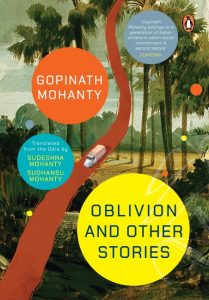
Oblivion and Other Stories || Gopinath Mohanty
Oblivion and Other Stories is an anthology of twenty short stories by Gopinath Mohanty, the doyen of Oriya (now Odia) literature. The stories, written across a half-century (1935-1988), sample his oeuvre of writings and the variety of his themes-from ‘Dã’ (mid-1930s) to ‘Oblivion’ (1951) to ‘The Upper Crust’ (1967) to ‘Lustre’ (1971) and ‘Festival Day’ (1985).
Originally written in Oriya by the Padma Bhushan awardee, these have now been translated for the first time into English and recreate the social life of mid-twentieth century India.
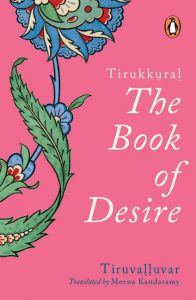
Tirukkural || Meena Kandasamy, Tiruvalluvar
Written by the poet Thiruvalluvar, the Kamattu-p-pal is the third part of the Tirukkural – one of the most important texts in Tamil literature. The most intimate section of this great work – it is also, historically, the part that has been most heavily censored. Although hundreds of male translations of the text have been published, it has also only ever been translated by a woman once before. Tirukkural is award-winning writer Meena Kandasamy’s luminous translation of the Kamattu-p-pal.
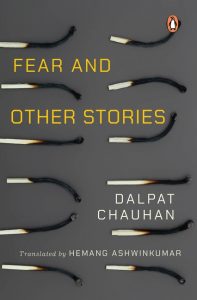
Fear and Other Stories || Dalpat Chauhan, Hemang Ashwinkumar
Fear and Other Stories is a reminder of the inherent dangers of the Dalit life, a life subjected to unimaginable violence and terror even in its most mundane moments. In this collection of short stories, veteran Gujarati writer Dalpat Chauhan narrates these lived experiences of exasperation and anger with startling vividity. His characters chronicle a deep history of resistance, interrogating historical, mythological and literary legends, foregrounding the perspectives of the disenfranchised.
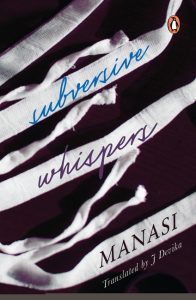
Subversive Whispers || Devika J., Manasi
Manasi is a stalwart of Malayalam literature. With her unparalleled feminist writing and powerful voice, she has mastered the art of telling radical short stories. Through Subversive Whispers, a collection of some of her best
work, she continues to defy patriarchy, question Brahminical hegemony and push narratives that subtly yet fervently challenge the status quo. The book introduces readers to the irreverent ‘Sheelavathi’, which explores the Madonna-Whore complex in a uniquely local context, ‘Devi Mahathmyam’, which sheds light on the price that women pay for being goddesses in mere name and stories such as ‘Spelling Mistakes’, ‘Square Shapes’ and ‘The Walls’, all of which explore romantic love with a piercing realism.
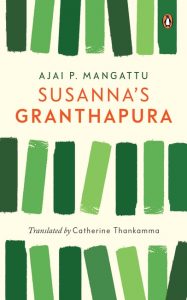
Susanna’s Granthapura || Ajai P. Mangattu, Catherine Thankamma
First published in Malayalam in 2019, Susanna’s Granthapura is Ajai Mangattu’s uniquely crafted novel that celebrates the strong bonds that form between people who share a love of reading and of books.
Burning Roses in My Garden || Taslima Nasrin, Jesse Waters
‘Have I not, having kept a man for years, learnt that it’s/ like raising a snake?/ So many animals on this earth, why keep a man of all things?’ writes one of the world’s most celebrated writers, Taslima Nasrin, in her first-ever comprehensive collection of poetry translated from the original Bangla into English. The poems get to the heart of being the other in exile, justifying one’s place in a terrifying world. They praise the comfort and critique the cruelty of a loved one. In these are loneliness, sorrow, and at times, exaltation. Relying almost entirely upon the free verse form, these poems carry a diction which is at once both gentle and fierce, revealing the experiences of one woman while defining the existence of so many generations of women throughout time, and around the world.
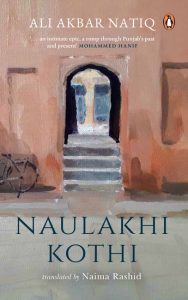
Naulakhi Kothi || Ali Akbar Natiq, Naima Rashid
Ali Akbar Natiq’s epic saga, Naulakhi Kothi, is an insightful portrayal of the zeitgeist of the times. The sweeping narrative begins in the years leading up to Partition and goes on till the eighties.
Translated by Naima Rashid, it is one of the most important novels of the twenty-first century.
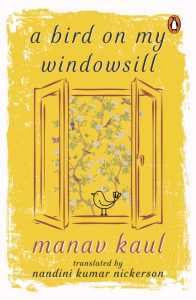
A Bird on My Windowsill || Manav Kaul
Known for writing silences and articulating dreams, in this book Manav sifts through the past, delves into the present and talks about all the creative impulses, writing, directing theatre and acting that have made him who he is. Through his poetry and prose, he creates vignettes of his life, a long-lost love, his interactions with people as he travels, his favourite authors and their writings, almost as if he’s trying to weave a world for the reader as well.
Beautifully symbolic, this book is a rich tapestry of thoughts and feelings, of todays and tomorrows, of being alone and seeking loneliness.
Sakina’s Kiss || Vivek Shanbhag/translated by Srinath Perur
Exquisitely translated from the Kannada by Srinath Perur, Sakina’s Kiss is a delicate, precise meditation on the persistence of old biases—and a rattled masculinity—in India’s changing social and political landscape. Ingeniously crafted, Vivek Shanbhag interrogates the space between truth and perception in this unforgettable foray into the minefield of family life.
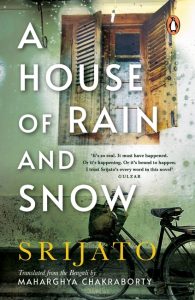
A House of Rain and Snow || Srijato (Maharghya Chakraborty tr)
In this entirely strange, magical and leisurely course of life swirling all around Pushkar, there is but one entity with whom he shares all his secrets. A milkwood tree, a chatim is privy to everything in his life. And so time moves on, leading him to eventually confront a truly secret equation of life—the change made possible by the transformative power of love.
A House of Rain and Snow is a testament to an era, a witness to an astounding journey of a young poet.
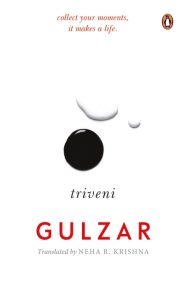
Triveni || Gulzar; Neha R. Krishna
A form Gulzar began experimenting with in the 1960s, Triveni comes close to several classical Japanese forms of poetry such as the Haiku, Senryu and Tanka. The closest Indian forms to Triveni are the doha and shayari. In this stunning translation by Neha R. Krishna, Triveni have been transcreated as tanka and are ladled with musicality, breaking away from the charm of rhyme and metre. This collection, too, is a confluence or sangam of forms and nothing short of a gift from one of India’s most beloved poets.
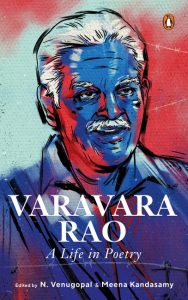
Varavara Rao || Ed. N. Venugopal and Meena Kandasamy
Varavara Rao: A Life in Poetry is the first-ever collection in English of poems by the Telugu poet, selected and translated from sixteen books that he has published. Having begun to write poetry in his early teens, Varavara Rao, now in his early eighties, continues to be a doyen of Telugu modern poets.
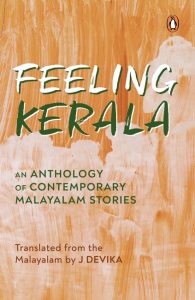
Feeling Kerala || J Devika
Feeling Kerala, a selection of some of the best and sharpest narratives from the region is now translated and curated for English readers to love and cherish.
While staying true to its literary form, these stories provide a tour into the heart and soul of contemporary Kerala and aim at getting past the twentieth-century characterizations of the state, say, as defined by communist egalitarian spirit or matrilineal families. After all, Kerala is unique in more ways than one, thanks to the heightened experience of migration and transnationalism, among other things.
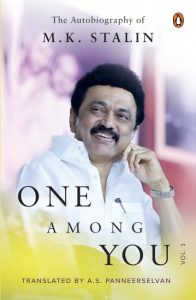
One Among You || M.K. Stalin (Translator: A.S. Panneerselvan)
One Among You, a translation of Volume 1 of Stalin’s Tamil autobiography, Ungalil Oruvan, is the story of the first twenty-three years of his life, from 1953 to 1976. These formative years were witness to Stalin’s school and college days, his early involvement with the DMK and his integral role in the party publication, Murasoli. But Stalin’s journey extends beyond politics. He also had a profound connection to the world of theatre and cinema, where his passion for art intersected with his pursuit of social change.
On The Edge || Ruth Vanita
On the Edge is a first-of-its-kind collection of short stories and extracts from novels centred on theme of same-sex desire, translated from the original Hindi. The sixteen beautiful and provocative stories featured here (published between 1927 and 2022) include classic works by Asha Sahay, Premchand, Ugra, Rajkamal Chaudhuri, Geetanjali Shree, Sara Rai and Rajendra Yadav, among others. An important anthology, On the Edge shifts the focus on stories and characters who have, for far too long, remained in the shadows and brings them (and us) into the light.
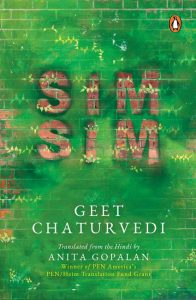
Simsim || Geet Chaturvedi
Poignantly written by Geet Chaturvedi, a major Hindi writer, and beautifully translated by Anita Gopalan, Simsim is a struggle between memory, imagination, and reality- an exquisitely crafted book that fuses the voices of remarkable yet relatable characters to weave a tale of seeking happiness, fulfilling passion, and reconciling with loss. Simsim is charming, and wonderfully original.
Anthill || Vinoy Thomas
Anthill, a robust translation of the award-winning novel Puttu and with a cast of over 200 characters, tells the story of a people who have tried to shed the shackles of family, religion and other restraining institutions, but eventually also struggle to conform to the needs of a cultured society.
Written with disarming honesty and biting humour, Anthill is ultimately a story that questions the veneer of respectability people try to put up in their lives.
Lata Mangeshkar A Life in Music || Yatindra Mishra, translated by Ira Pandey
An ode to the majestic life of the late Lata Mangeshkar, Lata: A Life in Music celebrates art in its totality and tells the life story of India’s most loved vocal artists. The result of Yatindra Mishra’s decade-long dialogue with the great singer, it also explores the lesser-known aspects of the great artist, introducing the readers to Lata Mangeshkar as an intellectual and cultural exponent and providing a rare glimpse into the person behind the revered enigma.
Welcome to the world of Osho, a spiritual teacher whose wisdom and unconventional approach to life have inspired countless individuals on their spiritual journeys. Whether you are an avid follower or a curious seeker, these five must-read books by Osho offer practical guidance, and transformative perspectives that will deepen your understanding of spirituality and enrich your path to self-discovery.
So grab a comfortable spot, open your heart, and set off on a spiritual voyage guided by Osho and his profound teachings.
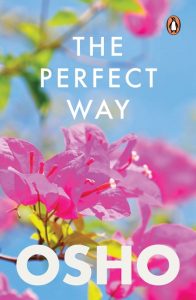
The Perfect Way | Osho
‘When there are no thoughts, it is then that we come to know the one hidden by our thoughts. When there are no clouds, the blue sky is revealed. My friends, there is a sky within you as well’ – Osho
In The Perfect Way, Osho answers fundamental questions about what meditation is and how we can begin and sustain it in our lives. He does this with precision, thoroughness, humour and compassion. Here is someone who knows, but who also knows how to convey what he knows. His genius in full flight, he points us as far as one can with words towards the inner world of the self, towards the zone of silence.
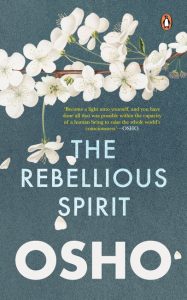
The Rebellious Spirit || Osho
The rebel is one who lives according to his own light, moves according to his own intelligence. He creates his path by walking on it’ Osho
We have all heard of rebels, those freelancers that don’t care about anyone else but themselves . . . But what if we were all to spend a little more time doing exactly that? It might just be that we can begin to respond to what is happening in the world with a heartfelt need to change ourselves.
In The Rebellious Spirit, Osho speaks to the spirit that lies hidden beneath our social conditioning, fanning a flame strong enough to burn through layers of rubbish, so that we can see with the crystal-clear gaze of an enlightened being. This is a book that will entice you, tickle your being with laughter, and give you the courage to be yourself in today’s world.
Yoga The Path To Liberation || Osho
According to Osho, life is nothing but an expression of silence. We come out of silence, but then lose our way. In order to experience this silence again and attain liberation, we need to rediscover the path back to our pure being. The key is simple: we must not identify with our bodies and minds, as all identification is outwards, and we are going on an inner journey. Osho emphasizes, as always, the importance of combining intelligence, awareness and humour on this journey.
Yoga The Science of Living || Osho
A compilation of Osho’s talks, Yoga: The Science of Living is not merely a commentary on Patanjali’s ancient treatise. It is enriched with insights from Osho’s own awakened consciousness and defies the traditional norms of spirituality. Osho punctuates the voyage of self-discovery with an irreverent sense of humour as he answers the questions from various people, keen to discover themselves with refreshing candour. Insightful and profound, this book is an invaluable guide for those looking for inner balance and peace.
And Now And Here || Osho
Most of us look for security in our relationships and in our choice of living and working conditions. Underlying this search for security is a deep, instinctive fear of death, which continually colours our lives and drives our focus outward, toward survival.
But we also have a longing to turn inward, to relax deeply within ourselves, and experience the sense of freedom and expansion this brings. With And Now And Here the reader can start an exploration of his or her inner world.
Osho debunks the myths and misunderstandings around death and invites us to experience our eternal inner space that is now and here.
As we’ve crossed the halfway mark of the year, it is the perfect time to reflect on our goals and prioritize self-care for a healthy lifestyle. And we’ve come to your rescue! This handpicked selection of health and wellness books will equip you with the knowledge and tools to optimize your well-being, allowing you to navigate the challenges and embrace the opportunities that lie ahead.
Check out these books to unlock a healthier, more fulfilling future for the remainder of 2023!
Small Wins Everyday|| Luke Coutinho
In Small Wins Every Day, Luke Coutinho presents a simple premise with powerful results, teaching you to rewire your brain for success. The hack? Break down your goals into small wins that you can achieve every day. Stacked over time, these contribute to significant lifestyle changes, good health and happiness.
Simple and bite-sized but packed with a punch, here are 100 wins to change your life.
Hacking Health || Mukesh Bansal
In Hacking Health, Mukesh Bansal takes on the mammoth task of demystifying the science, simplifying the research and tracing the story of our relationship with our body. Through a combination of personal experience and cutting-edge science, this is a book that draws from ancient wisdom and also debunks unscientific myths to help you make smart choices in pursuit of good health. From nutrition and fitness to sleep and immunity, weight management and mental health to ageing and longevity, this book delves into the breadth and depth of holistic health and helps you navigate the lines between science and pseudoscience.
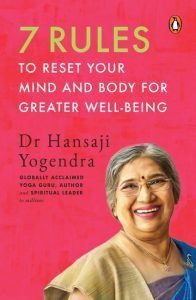
7 Rules to Reset Your Mind and Body for Greater Well-Being
7 Rules to Reset Your Mind and Body for Greater Well-Being is the simple but practical guide you need to read to get that control back. Written by the most admired and respected Dr Hansaji Yogendra of The Yoga Institute, this step-by-step guide explains the importance of creating and maintaining balance in all aspects of your life.
In an anecdotal and friendly way, Dr Hansaji delineates the practices and the thought processes you need to develop and the changes you need to make to put life in perspective for you. Whether it is getting a
good night’s sleep or eating healthy or dealing with the office stress, she helps you sort out each aspect with her great insight.
Dr Mathai’s ABC to Health || Issac Mathai
Dr Mathai’s ABC to Good Health tells you why you must not postpone all those good habits of staying healthy and what could happen to you if you ignore your fitness quotient. It tells you why you must not press the panic button only when you fall sick but practise wellness every single day to build a solid immunity and stay away from the common cold, fever and many everyday ailments.
The book gives you simple tips to practise daily wellness by way of eating right, sleeping enough and staying positive at all times. It gives you the health benefits of practising wellness from A to Z, ranging from fruits and nuts to vegetables and even activities that can make you feel like a rock star every single morning when you wake up. It is wellness today and every single day.
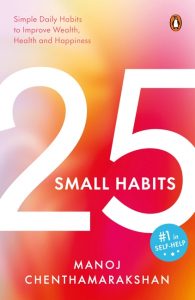
25 Small Habits || Manoj Chenthamarakshan
We all know that our habits shape our lives, but when we try to incorporate a new habit into our lifestyle, we understand how difficult it can get. Most people fail to retain a new habit past the first week. This book doesn’t teach you how to develop habits; instead, it offers you a set of twenty-five small habits that take very little time and can be held on to without much effort.
25 Small Habits is designed to give you holistic growth in terms of self-development, community, career, relationship, and physical and mental health. You can choose the habits that you are able to fit into your daily schedule.
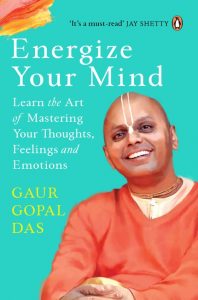
Energize Your Mind || Gaur Gopal Das
In Energize Your Mind, bestselling author and life coach Gaur Gopal Das decodes how the mind works. He combines his anecdotal style with analytical research to teach us how to discipline our mind for our greater well-being. Throughout this book, he provides interactive exercises, meditation techniques and worksheets to help us take charge of our mind.
This book is an essential read for anyone who wants to work towards a better, more fulfilling future for themselves.