Read an exclusive excerpt from Why The Constitution Matters.
Feminist Lawyering and Feminist Judging
Q1: What, if anything, does feminism add to the task of judging?
What feminism adds to the task of judging is an acknowledgement of the value of the female experience, which facilitates inquiry and reflection. It is an intervention into the legal space that seeks to challenge the ongoing exclusion of women from legal subjectivity, ‘whether as the authors of legal decisions and doctrine, or as the subjects upon whose knowledge, experience, activities and concerns law is founded’.
It has been argued by feminist scholars that ‘law does not simply operate on pre-existing gendered realities, but contributes to the construction of those realities, often in a constraining or damaging way’. A feminist perspective on the laws essentially aims to disrupt this process of gender construction and to introduce different accounts of gender that might be less limiting for women.
Feminist judgments provide additional ‘social framework’ material that places the particular facts of the case and/or the legal issues involved in a broader context. In The Gender of Judgments, Reg Graycar has questioned the sources of judges’ knowledge of the world and suggested that such knowledge is ‘(masculine) gendered’.
Feminist judgments are an endeavour to correct this imbalance. It represents an attempt to tackle the power and authority of the law and its impact on the lives of women, not from the distance of academic critique but on its own ground through an alternative judgment method.
One of the most important contributions of feminist thought to the process of judging is the form of addition of fresh perspectives. The Importance of Diversity: Erika Rackley, a legal scholar, whose research focuses on judicial diversity, explains that diversity ‘acts as a catalyst for disruption; impacting upon the legal monotony, destabilising its taken-for-granted assumptions and uncovering alternative ways of seeing, understanding, and judging’. In this way, sex is only one point of difference, as women judicial officers often bring a diverse set of backgrounds, experiences and perspectives to the role as compared to their ‘benchmark’ male counterparts. In addition to the laws, judicial decisions are inevitably influenced by the judges’ personal values and perspectives. A rich body of feminist scholarship, including feminist theories and methods, has helped shape the feminist approach to judging.
Feminist literature does not dictate specific results but rather provides valuable procedural suggestions on how feminist judging can take place in practice. Though the substantive decision reached depends largely on the meaning of the term ‘feminism’ to the particular judge, there are various methods adopted by judges to promote the substantive goal of feminism—the achievement of equality in society. These include:
a) Challenging the gender bias in legal doctrine, which includes taking efforts to identify and overcome gender bias in legal principles. It also involves recognizing that the law is an inherently gendered framework. Correcting this imbalance involves questioning the current legal construction of the term ‘woman’, and intervening to challenge and confront sexism, racism and gender bias.
b) Asking the woman question(s), which involves identifying the gender implications of rules which appear to be neutral. Asking this question also leads to discussion about other forms of exclusion (based on religion, race, etc.) that may be operating in a particular case. (Such intersectionality in India, for example, would mean a Dalit woman or a Muslim woman.)
c) Contextualization, which involves an exercise in feminist practical reasoning, which entails a reasoning from context that focuses on a woman’s lived experience. This aids a judge in making an individualized rather than an abstract decision.
***
Get your copy of Why The Constitution Matters on Amazon or wherever books are sold.
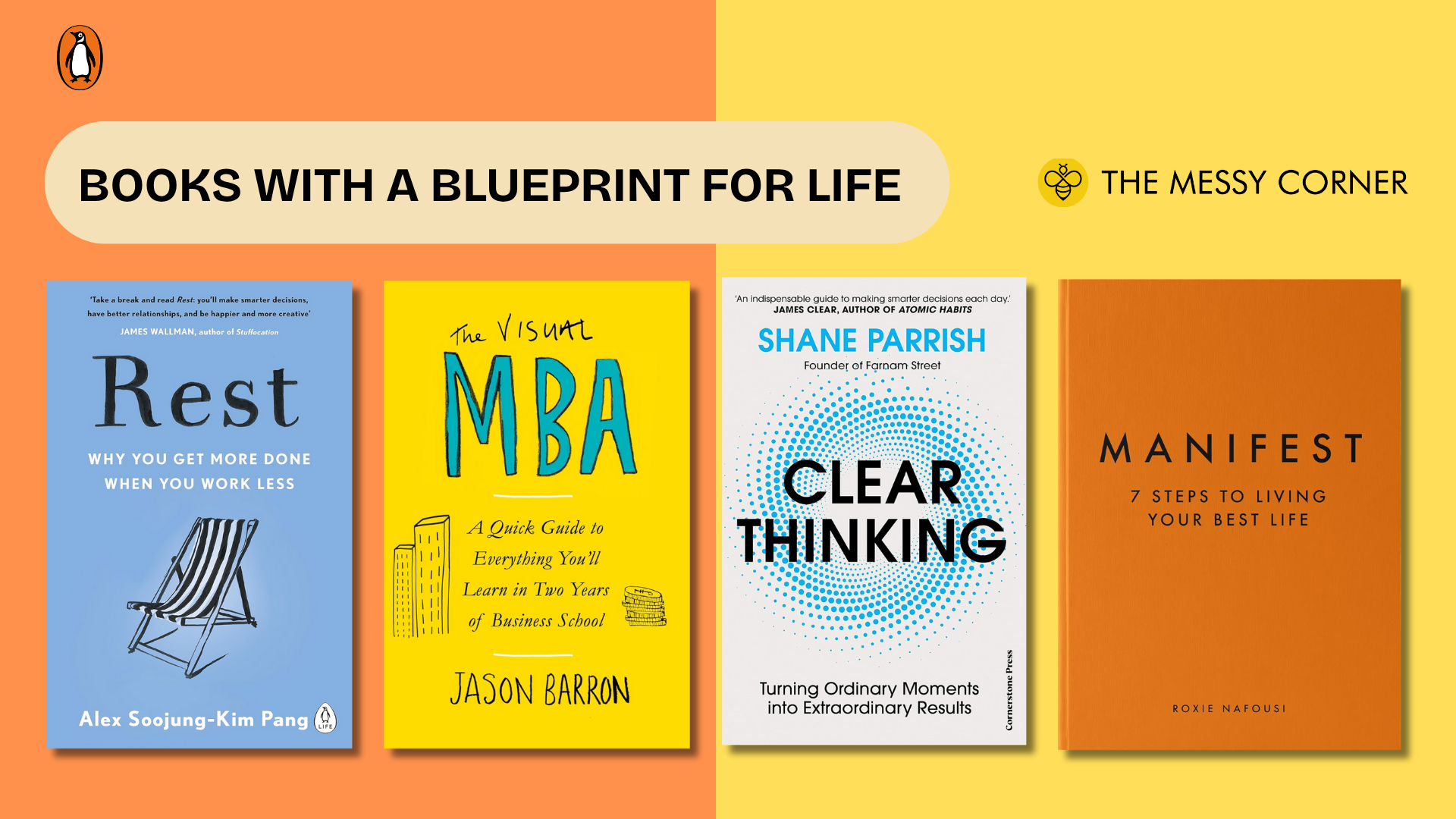
We’ve curated a collection of high-potential titles that already possess what matters most: strong content and deeply relevant themes. These aren’t just books—they’re blueprints for navigating modern life’s most pressing challenges. From cultivating self-love to mastering the art of rest, from finding courage to rewriting your reality through manifestation, each title offers readers a genuine pathway to transformation.
Our mission is simple yet ambitious: to position these books as modern essentials—the kind of reads people press into friends’ hands, quote on social media, and return to again and again.
In a world saturated with content, certain books stand apart—not because they shout the loudest, but because they speak directly to what we need most.
Why Richard Osman Is Everyone’s Favourite Detective Writer (Who’s Not Actually a Detective)
What do you get when you mix laugh-out-loud humour, deeply human characters, and fiendishly clever mysteries? You get Richard Osman—bestselling author, TV presenter, and the man who turned cozy crime into a global phenomenon.
He first captured the world with The Thursday Murder Club—a retirement village crime-solving squad so lovable they’ve sold millions of copies and landed their own Netflix movie. Now, Osman’s back with a brand-new series, We Solve Murders—a globe-trotting adventure with a sharp new detective team and plenty of danger.
Whether you’re new to Osman or looking to dive deeper into his worlds, here’s your essential reading guide.
The Thursday Murder Club Series
It all began in Cooper’s Chase, a quiet English retirement village with four very un-quiet residents. Every Thursday, Elizabeth, Joyce, Ibrahim, and Ron meet to pore over cold cases—until a real murder lands on their doorstep.
Over four books, the Thursday Murder Club take on spies, stolen diamonds, TV scandals, and some of the most emotional cases of their lives. Osman balances humor, warmth, and sharp detective work in a way that makes the series utterly addictive.
The books in order:
The Thursday Murder Club
The Man Who Died Twice
The Bullet That Missed
The Last Devil to Die
We Solve Murders
After conquering retirement villages, Osman turns up the dial with a brand-new detective duo.
Meet Steve Wheeler: a retired investigator who would rather stick to pub quizzes and his cat, Trouble.
Meet Amy Wheeler: his daughter-in-law, whose day job protecting billionaires comes with a serious adrenaline rush.
When Amy’s latest assignment—guarding a world-famous author—spirals into a murder, a bag of money, and a deadly chase, Steve is reluctantly pulled back into the game. What follows is a race around the world, where family ties prove just as important as detective skills.
Osman calls it crime fiction with a wink: thrilling, funny, and heartfelt.
Upcoming Events
Big things are on the horizon! We have tied up with book clubs to bring to you a 7-city events tour.
Collaborations & Goodies
We have teamed up with Frankly Wearing, a brand that blends fashion with literary wit. At our upcoming sessions, readers can take part in fun games and activities—winners will walk away with exclusive Osman-themed merchandise. Explore the collection here.
So, Where Will You Begin?
Will it be the cozy charm and razor-sharp wit of The Thursday Murder Club, where retirees solve crimes between cups of tea? Or the adrenaline-fueled, globe-trotting adventure of We Solve Murders, where family ties are tested against ruthless killers?
Whichever series you choose, Richard Osman promises clever mysteries, unforgettable characters, and plenty of laughter along the way.
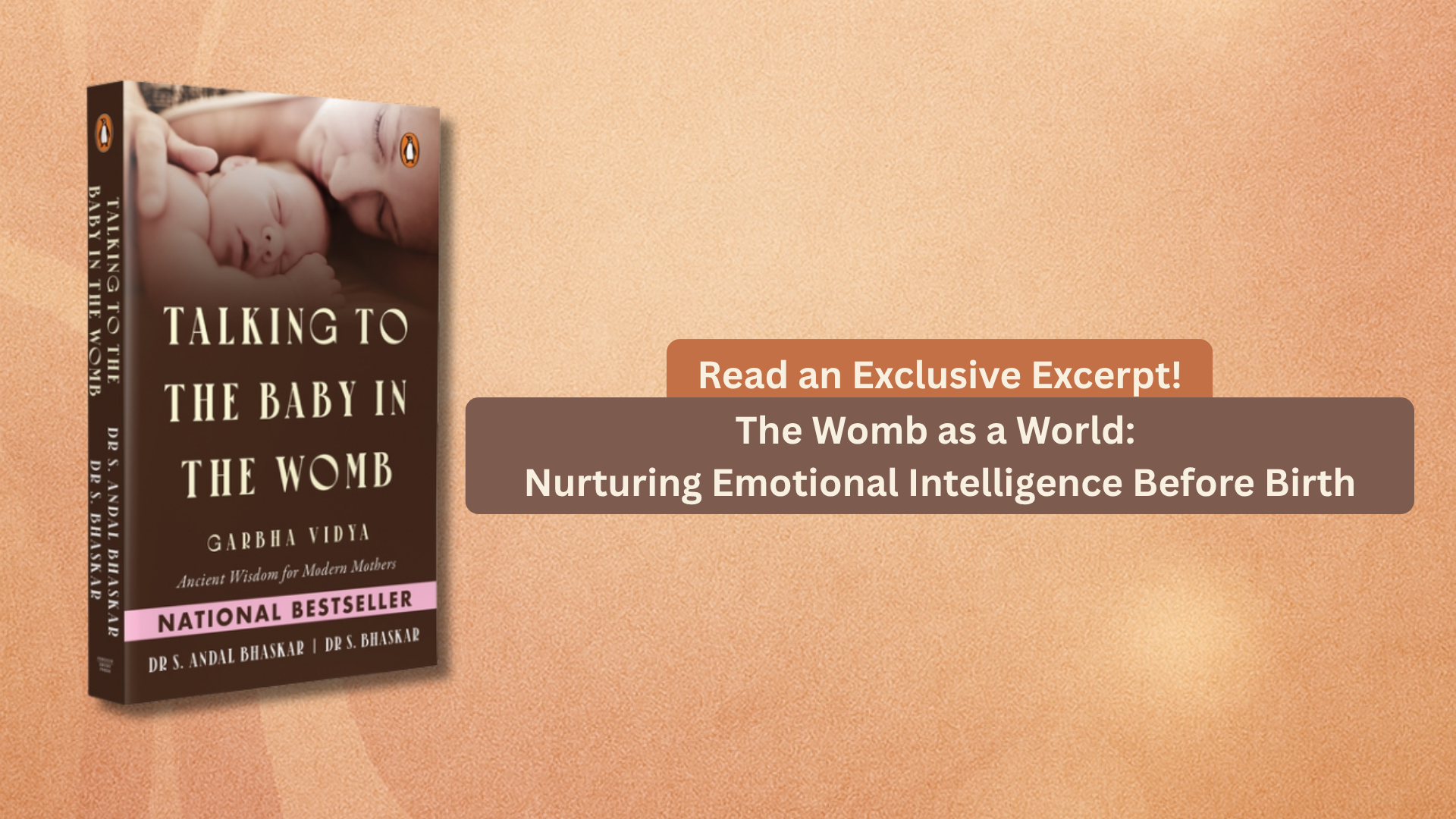
Read an exclusive excerpt from Talking to the Baby in the Womb.
Technique and Concept of Talking to the Baby in the Womb
The more people have studied different methods of bringing up children, the more they have come to the conclusion that what good mothers and fathers instinctively feel like doing to their babies is the best after all.
—Dr Benjamin Spok
Sahana is Dr Andal’s friend’s daughter. She meets the doctor to have her doubts about pregnancy cleared. The narration is divided into four parts. Every part begins and ends with their conversation.
The first part deals with the emotional aspect: the concept and technique of Talking to the Baby in the Womb; hope, courage and confidence; how Talking to the baby in the womb helps the expectant mother face delivery confidently; and how to come out successfully with a healthy baby, even in the case of those who had a history of miscarriages; and the role of the husband in supporting his wife during pregnancy.
The second part deals with: mental aspects; intelligence and behavioural aspects of the baby; and the influence of music on the baby during pregnancy. The third part deals with: physical aspects including physical dynamism and sporting aspects of the baby; vomiting in pregnancy; and meditation and yoga. The fourth part deals with: sensory aspects; taste; and Healthy eating habits.
Doctor: Hello, Sahana dear, it’s been long since we met. Your Mom said that I should spend some time with you; just give you a pep talk. You know, your mother and I have been friends since childhood. So I am glad you came for lunch. And congratulations to you, wonderful Mom!
Sahana: Thank you, aunty. I have lots of doubts— some silly ones, some serious—but ever since my pregnancy was confirmed, I have been confused. I suddenly feel so relaxed after meeting you. I’m sure all my anxiety will melt away now.
Doctor: My dear! Don’t worry. For a prepared mother, pregnancy is a smooth journey and delivery is easy. Though pregnancy is a much-awaited event in one’s life, the charm and joy of pregnancy is slowly getting clouded by anxiety and insecurity. The happiness can be restored by using a powerful technique. I’ll narrate to you the story of a pregnant mother who was my guru in initiating this effective technique.
Sahana: Okay, aunty!
Doctor: Let’s see Seema’s story. It will help you understand better.
‘You are already awake, Tara? Good morning! I am happy that you are an early riser.’
‘See how beautiful the Sunrise is! The sky wears the most beautiful shadesof crimson, pink, yellow and blue! Mother Nature is my favourite artist ever!’ ‘Look at those beautiful birds chirping, Tara.’
‘Every form of life is so active as if it is their natural instinct.’ ‘Let’s enjoy our cup of milk. You must be hungry.’
‘Lukewarm milk is my way. Hey! Let’s add nuts and dry fruits to it and make it tastier and nutritious.’ ‘I didn’t know that you like it this much, Tara! Hereafter, we will have milk in more delicious ways’
After some time
‘Now it’s time for some meditation and relaxation. Let’s chant. AUM . . . AUM . . .
’ ‘After lunch we’ll have a nap and go to the hospital in the evening. We have our appointment with the doctor.’
Evening
‘Come, let’s go, Tara. Here everyone speaks Telugu— we will learn it soon!
Chalo.
On the street
‘Madam, going out?’
‘Yes, bhaiya’
‘Ah, it’s good that he has come!’
‘I told you he is gentle in the way he drives his auto. I feel safe in it.’
‘Madam, where shall we go now?’
‘Bhaiya, we must go to hospital!’
The auto driver in his mind thinks to himself,
Madam is always on the phone . . . speaking to a friend . . . but I don’t see any mobile phone in her hand . . . maybe this is what they call some tooth . . .
Aah! It’s Bluetooth!
‘We have arrived at the hospital, madam. Shall I wait?’
‘No, bhaiya! It will take time . . . mere paas apka mobile number hai [I have your mobile number].
I will call you, then you come and pick us up.’
‘Okay, madam’
‘Here is the auto fare, bhaiya. Thank you for the safe ride.’
‘Thank you, madam!
Bhaiya boltihain mujhe [You call me brother], I have the responsibility of a brother, right? You call my number, madam. I will come and take you back home.’
‘Thank you, bhaiya! That’s very nice of you!’
‘Chalo Tara, let us go and meet our doctor now!’
‘Tara you are jumping at the very mention of the doctor’s name! You feel so happy about meeting her every time. We must let her know how much happiness we get by meeting her.’
‘Good evening, Doctor!’.
‘Seema Sharma! Good evening, dear! It is always a pleasure to see your cheerful face.’
After checking Seema, the doctor says, ‘Seema, everything is great with you. Every report shows good improvement and normalcy.’
‘Thank you very much, Doctor! All this has been possible only with your guidance!’
‘My pleasure, Seema. I’ve been wanting to ask you something peculiar I find about you.’
‘Please go ahead, Doctor, you are a mother figure to me. You can ask me anything!’
‘Seema, you are well into your sixth month of pregnancy. This is your first pregnancy. Normally, during Pregnancy, women have issues such as vomiting and back pain. They feel insecure and get someone to accompany them to the doctor’s clinic. But your attitude has pleasantly surprised me! I know your husband is a very busy executive, unable to be at your side always. Travelling alone in a town that speaks a different tongue is tough. Normally, all these stresses show up as physical symptoms. You don’t have any complaints. How can you always be smiling and pleasant? How do you manage it all? Do you mind sharing with me the secret of your positivity and confidence, dear?’
‘Oh, Doctor, I am happy because I am never alone! My baby is always with me! We do almost everything together. We cook, we shop and we are together always! We even meditate together. My baby falls asleep when I sing a lullaby. And I must tell you this, although my husband doesn’t spend much time with me, my baby gets along with my husband as well! They have their own time together, you know?’
‘Oh! I didn’t know that! Where’s your baby now?’
‘Right here, Doctor. In my tummy! I call the baby “Tara” to feel more connected.’
‘Oh! That’s amazing!’
‘Doctor, whenever I talk silently or loudly, my baby responds with movements. We talk and we understand each other perfectly well! I enjoy my baby’s company thoroughly. My baby keeps me happy and confident! My baby is my best friend and my caretaker these days! We take care of each other! Sometimes I talk to my baby loudly, unmindful of others’ presence; many times others think I’m talking to some friend over the phone.’
‘Eureka! The movement! So the movement is the language of the unborn baby. This is the master key of keeping the expecting mother happy and confident. I am so grateful to you, Seema!’
‘Doctor, we are grateful to you! My baby loves visiting you along with me. It feels so happy and excited every time I mention your name. Today, I wanted to share this information with you, and you asked me just when I was about to tell you this myself.’
My mission has always been to make pregnancy an amazing experience for every woman. I want every pregnancy to result in successful delivery of a good child (healthy, happy, intelligent with all good qualities = good child, for me). As I was struggling to find an effective method to make pregnant mothers happy and confident, I could see that Talking to the Baby in the Womb was the reason for Seema’s happiness and confidence. Thus, the inspirational real-life experience of Seema laid the foundation of Talking to the Baby in the Womb. Mother talking to her baby in the womb is a natural and an age-old practice. I don’t think there’s any mother who has not spoken a word to her baby during her pregnancy. But mothers think it’s only a monologue, as the baby cannot talk back. They don’t expect any reply from the baby. They are totally unaware of baby’s feelings. When they are able to see the baby even before it is born, express their love, share their feelings and understand that their baby is there for them, its presence and companionship makes them feel secure. Confidence and happiness will illuminate the way of expecting mothers—think, bond, relate, live, learn and grow along with the baby they carry.
How I Started Practising Talking to the baby in the Womb
It was the case study of Seema that inspired me to follow the ‘Talking to the Baby in the Womb’ technique to instil confidence and happiness in expecting mothers. When I explained the benefit of bonding with the baby during pregnancy and asked the mothers to talk to their babies, they used to give a quizzical look, smile and keep quiet; but I kept on telling them, because I’d seen Seema’s experience. A year went by after I started recommending Talking to the Baby in the Womb; but the results were not encouraging. When I was about to lose hope, feedback from Sirisha emerged to strengthen my conviction. Sirisha talked to her unborn child and the baby responded, giving her a secure feeling and confidence during pregnancy. After birth, the baby responded to her words through his eyes. He was not a ‘cry baby’, and the kid grew up to be a happy boy, exactly as Sirisha wanted him to be.
***
Get your copy of Talking to the Baby in the Womb on Amazon or wherever books are sold.
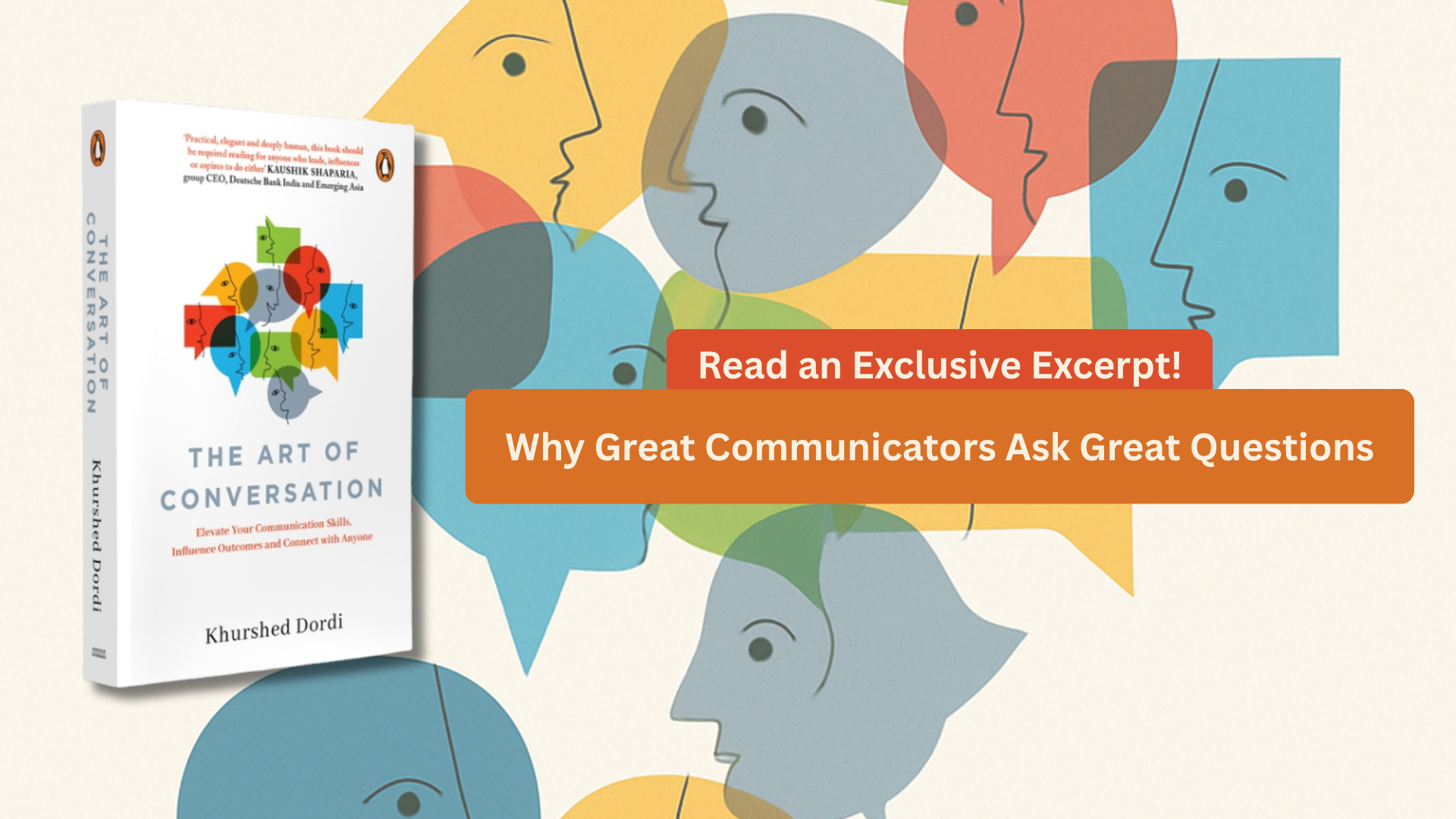
Read an exclusive excerpt from The Art of Conversation: “The Power of the Question”
INTRODUCTION TO QUESTIONING
Asking questions is an essential skill in any conversation. It helps gather information, gain clarity and show interest in the other person. However, asking the right questions requires practice and understanding of different types of questions.
This section will cover the basics of questioning and how it can enhance your communication skills. We will also explore the power of open-ended and closed-ended questions and when to use them effectively.
The Art of Conversation || Khurshed Dordi
In the complex dance of human interaction, a powerful tool exists that can unlock doors, forge connections and illuminate the path to understanding: the art of questioning. As Voltaire eloquently said, ‘Judge a man by his questions rather than his answers.’ Questions are not mere inquiries; they are catalysts for thought, sparks that ignite curiosity and pathways to deeper knowledge.
Some of human communication is non-verbal, a silent symphony of expressions, gestures and subtle cues. Yet, within the spoken word lies an extraordinary power to shape perception, influence outcomes and build rapport. And at the heart of this power lies the question.
Questions are not simply tools for gathering information; they are instruments of connection. When we ask a question, we extend an invitation—to share, engage and collaborate. We signal our interest, curiosity and willingness to learn. And in that exchange, we open a window into the minds and hearts of others.
But not all questions are created equal. Some questions are closed, seeking a simple yes or no answer. Others are open-ended, inviting exploration and elaboration. And still others are leading, subtly guiding the conversation towards a desired outcome. The most effective questions are those that are carefully crafted, thoughtfully delivered and genuinely curious. They are questions that challenge assumptions, spark new ideas and encourage deeper reflection.
In the realm of professional success, the art of questioning is an indispensable skill. Whether you’re interviewing for a job, negotiating a deal or leading a team, the ability to ask the right questions can make all the difference. It can help you uncover hidden opportunities, build trust and rapport and create a culture of collaboration and innovation.
Take the example of a job interview. A well-prepared candidate will not only answer the interviewer’s questions thoughtfully but will also ask insightful questions of their own. This demonstrates initiative, curiosity and a genuine interest in the role and company. It can also help the candidate assess whether the job is a good fit for their skills and aspirations.
In the world of sales, questions are the lifeblood of the relationship between the salesperson and the customer. By asking the right questions, a salesperson can uncover the customer’s needs, pain points and motivations. This information is essential for tailoring the sales pitch and closing the deal.
However, the power of questioning extends far beyond the realms of interviews and sales. In any professional setting, the ability to ask the right questions can help you build relationships, influence outcomes and achieve your goals. It can help you gain a deeper understanding of your colleagues, customers and your industry. It can help you identify problems, develop solutions and drive innovation.
Questions are not just for the workplace, of course. They are essential tools for personal growth and development. When we ask ourselves questions, we challenge our assumptions, expand our perspectives and deepen our understanding of ourselves and the world around us.
But perhaps the most important questions we can ask are those that challenge us to think critically, question the status quo and envision a better future. These are the questions that drive innovation, inspire creativity and lead to positive change.
In the words of Albert Einstein, ‘The important thing is not to stop questioning. Curiosity has its own reason for existing.’ When we embrace the power of questioning, we open ourselves up to a world of possibilities. We expand our knowledge, deepen our understanding and forge stronger connections with others. And, in so doing, we unlock the full potential of human interaction.
The art of questioning is not simply a skill to be mastered; it is a way of life. It is a commitment to curiosity, a thirst for knowledge and a willingness to engage with the world around us. When we embrace the power of questioning, we embark on a journey of lifelong learning and discovery. And, in that journey, we find not only answers but also the inspiration to ask even more questions.
So, the next time you find yourself in a conversation, whether it’s with a colleague, a customer or a loved one, remember the power of the question. Ask with curiosity, listen with intention and be open to the unexpected. For in the art of questioning lies the key to unlocking the full potential of human connection and achieving professional success.
The Importance of Questions ‘Judge a man by his questions rather than his answers.’ —Voltaire
Renowned French philosopher Voltaire, with this simple yet profound statement, encapsulates the essence of questions—the power they hold in shaping thoughts, driving discovery and fostering understanding. In the grand scheme of communication, questions often take a backseat to answers.
We are conditioned to believe that answers signify knowledge, authority and perhaps even power. However, a paradigm shift is underway. The spotlight is now on the art of asking questions, the skill that fuels intellectual curiosity, ignites creativity and builds meaningful connections.
The Question as a Catalyst for Change
In an era overflowing with information, the ability to ask the right questions is a potent tool. Questions act as catalysts, propelling us beyond the surface level of knowledge to uncover deeper insights. They challenge assumptions, spark debate and invite a plurality of perspectives. In the realms of science, philosophy, business and personal development, questions are not merely tools for gathering information; they are instruments of transformation.
Consider the groundbreaking discoveries that have shaped our world—from Albert Einstein’s theory of relativity to the development of the Internet. Each of these monumental achievements was born out of a simple question, a spark of curiosity that ignited a quest for knowledge. In a similar vein, businesses that foster a culture of inquiry are more likely to innovate and adapt to a rapidly changing landscape. By encouraging employees to question the status quo, companies create an environment where ideas flourish and solutions emerge.
The Question as a Bridge to Understanding
Questions are the threads that weave connections between individuals. They invite dialogue, foster empathy and build trust. When we ask questions, we demonstrate a genuine interest in others, their experiences and their perspectives. This act of curiosity creates a space for shared understanding and mutual respect.
Questions have the power to bridge the gaps between us. By seeking to understand rather than to judge, we open the door to dialogue and collaboration. Questions invite us to step outside our echo chambers and engage with those who hold different beliefs and values. In this way, questions become a force for unity and reconciliation.
***
Get your copy of The Art of Conversation on Amazon or wherever books are sold.
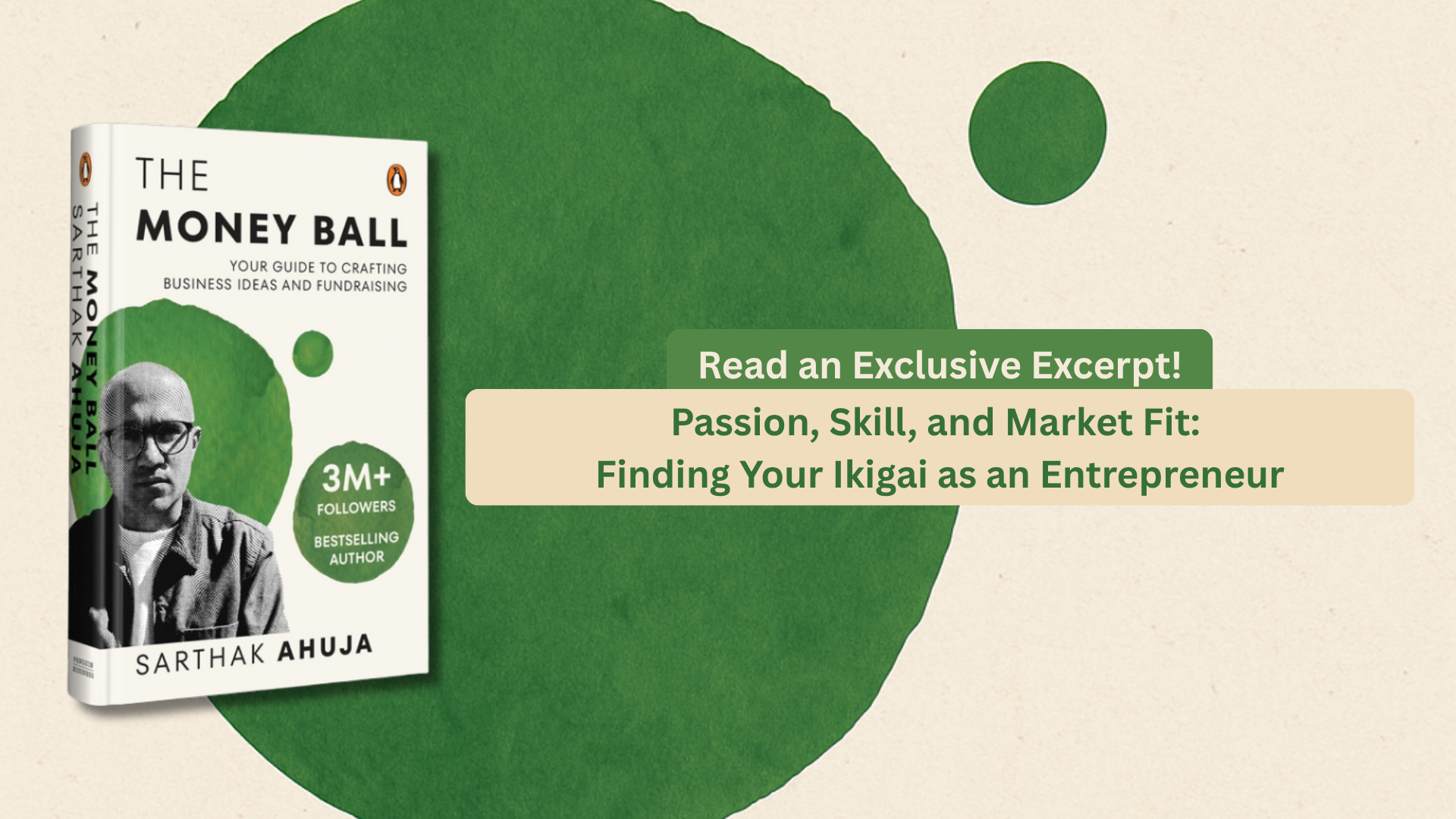
Read an exclusive excerpt from The Money Ball: “Before You Leap—Are You Truly Ready to Be an Entrepreneur?”
The Money Ball || Sarthak Ahuja
Are You Ready to Be an Entrepreneur—Before You Get Started
‘Entrepreneurship is living a few years of your life like most people won’t, so you can spend the rest of your life like most people can’t,’ goes a famous quote.
While all of us aspire towards the life that the latter half of the quote hints at, the journey needs to begin by assessing if we are indeed ready for the first half. That is exactly where we need to begin—by looking at some of the prerequisites to take this tough yet life-changing road.
The Entrepreneurial Mindset
We have all heard about how entrepreneurship offers solutions to a wide range of challenges besides sparking innovation and fuelling economies. To do this, there needs to be an important catalyst in place—an entrepreneurial mindset. That resilient, resourceful and solutions-oriented approach that is unshaken even in the most adverse circumstances. While all of this sounds extremely heroic, even magical, it needs deep reflection for you to ascertain if you indeed have the mindset required to succeed. My suggestion would be to get down to the brass tacks and think of the following four aspects in particular to ascertain your entrepreneurial readiness quotient.
1. Deferred Gratification
You may have heard of the famous marshmallow experiment conducted at Stanford University in the 1960s that explored the benefits of delayed gratification. Essentially, children were seated in a room with a single marshmallow on a plate and were told they could eat it now, or wait fifteen minutes, which would allow them to receive two marshmallows in place of one. The study found that the children who opted to wait tended to have better life outcomes, including but not limited to higher SAT scores, lower BMI, fewer instances of substance abuse and more. The Marshmallow Test provides powerful lessons that are directly applicable to entrepreneurship. After all, it could take several months or years of hard work before you can start seeing profitability in your business and achieve healthy cash flows. All this while, however, you have to be able to make decisions that set your business up to win in the long-term. In the context of entrepreneurship then, embracing delayed gratification means investing time, effort and resources into building a solid foundation for the business, rather than seeking quick profits. The question to ask yourself is: Are you willing to grind day after day, laying the groundwork for the future. Can you dedicate yourself to business fundamentals even as you delay immediate gratification?
If your answer to the above questions is a well-thoughtout yes, odds are that you will be able to create value, foster innovation and achieve lasting success in your venture.
2. Risk
In December 2008, Tesla (that produced high-end electric cars) and SpaceX (that built rockets) were on the verge of financial collapse. The year had been tough for the founder, Elon Musk, since both companies were in trouble and cash was down to nothing. Musk needed $40 million to keep Tesla afloat. He pieced together $20 million of his own money and leaned on investors to match the amount. The nail-biting story of a last-minute rescue that prevented Tesla from bankruptcy and preserved the electric car dream at a time when major US car companies had abandoned electric vehicle production is told in a biography by the acclaimed journalist and writer Walter Isaacson. Entrepreneurial folklore is replete with other such examples of entrepreneurs who took massive risks. In fact, if there is one quality that is common to all entrepreneurs—whether they spearhead an early-stage start-up or are leading a company that clocks hundreds of millions of dollars in revenue—it has to be their ability to take game-changing risks. Simply put, risk-taking is the willingness to take chances in the pursuit of gain, even when the outcome is uncertain. Some of the many risks that entrepreneurs face include leaving a steady pay cheque, using personal savings with no guarantee of a return on investment misjudging customer interest in a product or service . . . the list goes on. So much so that risk is said to be what’s left over after you think you’ve thought of everything.
When you talk to people about what it means to be a ‘risk-taker,’ however, most people will begin describing daredevils and gamblers. Yet, that is not what risk-taking in terms of entrepreneurship means. Above anything, successful entrepreneurs need to be calculated risk-takers.
Ask yourself where you score on the ‘calculated risktaking’ scale. Do you have a preference for working with certainty and are you paralysed by fear when it comes to decision-making? Or do you thrive on taking measured risks? That said, taking calculated risks is like building a muscle. It’s not easy and it takes practice, but done well, you can actually start to enjoy it. Importantly, it is this ability to take calculated risks that, in turn, allows the founders to enjoy a huge upside on account of their high ownership stakes, when the start-up begins to grow.
3. No Fixed Salary
‘Dear Customer, Acct XXXX is credited with Rs XXXX on 1 January. Info: Salary’
This is one familiar ping that many of us take delight in on the first of every month. If you are making a transition to entrepreneurship from a corporate role, you particularly need to think this aspect through very carefully, for it is a pleasure that you will have to forgo at least in the early stages. It goes without saying that this comes with several lifestyle and mindset adjustments that you need to be prepared for.
That said, it is also important to state that your ability to negotiate your salary grows as the start-up transitions through various stages. Below are a few benchmarks that are prevalent in the industry and can be used to decide your own salaries at various stages of fundraising, a concept that we will delve into in detail in some of the later chapters:
• Seed: Most founder salaries at the seed stage are just enough to manage their basic personal expenses. Salaries at this stage can range between Rs 1 lakh and Rs 1.5 lakh per month, depending on the city you’re living in and the amount of funding the start-up has raised. As a thumb rule, no more than 10 per cent of the total funding amount goes into the hands of the founders if the funding is less than Rs 2 crore.
• Series A: At this point, you should negotiate with investors to double the salary payout to a monthly in-hand amount, which is at par with the talent the start-up has to hire on closing Series A.
• Series B: It is best to negotiate a secondary sale of some shareholding to incoming investors so as to generate some cash in hand, which can be used for building assets and savings. This is the first opportunity for the founder to cash out on their work and effort.
These are, of course, just indicative estimates. Actual salaries and founder payouts may vary with industry, size of the fundraise and need of the business.
4. Social Concerns
My wife comes from a family of people employed in top corporates. She herself was happily employed with Meta before taking the leap of faith to join me in my entrepreneurial venture. Needless to say, in the early stages she was hesitant to take the road less travelled. Understandably so, for it is not easy to let go of a job with defined responsibilities, fixed salary and defined reporting structures, in order to venture into uncharted terrain.
To add to your predicament, you are also faced with a host of social concerns. Friends and family could be calling you out on your decision to leave a cushy job, terming it untenable. Besides, you could also be witnessing the seemingly perfect lives of your peers on social media, replete with fancy vacations. It is the willingness to forgo social validation and deal with tons of ambiguity that is a big perquisite to the entrepreneurial path.
On the other extreme, if you are headed to the world of entrepreneurship driven by the glitz and glamour of newspaper headlines—of large funding rounds and the making of unicorns—you need to remember that behind every such headline are many more stories of pain and struggle that entrepreneurs need to be mentally prepared for. Think of any entrepreneur you look up to and odds are they have had more than their share of struggles and failure. Before Amazon became the huge success that it is today, Jeff Bezos had an array of failed ideas. Before starting PayPal and investing in companies like Facebook, Peter Thiel’s early hedge fund, Clarium Capital, reportedly lost 90 per cent of its $7 billion assets on the stock market, currencies and oil prices. Closer home, similar stories abound where entrepreneurs who are now seen as being extremely successful had to overcome the failure of several start-ups. Let these examples serve as encouragement to learn from your mistakes and remain steadfast on your path.
Ikigai Framework: Passion, Opportunity, Skill, Willingness to Pay
Having undertaken a brief assessment of your mindset and whether or not it is conducive to the rocky yet hugely fulfilling road to entrepreneurship, it is time now to move to the next important aspect—namely, how do you zero down on an effective idea?
There are several frameworks that help evaluate the feasibility of a business idea that are largely based on whether or not the idea solves a large enough problem, creates an impact and makes you some wealth in the bargain. While we will speak of spotting business opportunities in detail in a later section, I would like to introduce a framework that I find particularly helpful. The POS framework has three important constituents:
• Passion
• Opportunity
• Skill Set
In choosing an idea, you need to carefully evaluate three factors: whether you are passionate about the idea, if there is a market opportunity for it and whether or not you have complementary skills to see the idea to fruition. It stands to reason that if you have the passion for something and there’s a huge market opportunity for it but you do not have complementary skills to execute it, you are likely to fail. On the other hand, if there is an opportunity in the market for which you have the necessary skill set but no passion, you might make some money but with drudgery. After all, how long can you keep working on something you are not passionate about? Eventually, you will be exhausted. Conversely, if you have the passion and the requisite skills but there isn’t a large enough market opportunity, you may enjoy the experience but receive limited returns on your investment and eventually give up. All three: Passion, Opportunity and Skill Set, therefore need to be aligned for the business to work.
***
Get your copy of The Money Ball on Amazon or wherever books are sold.
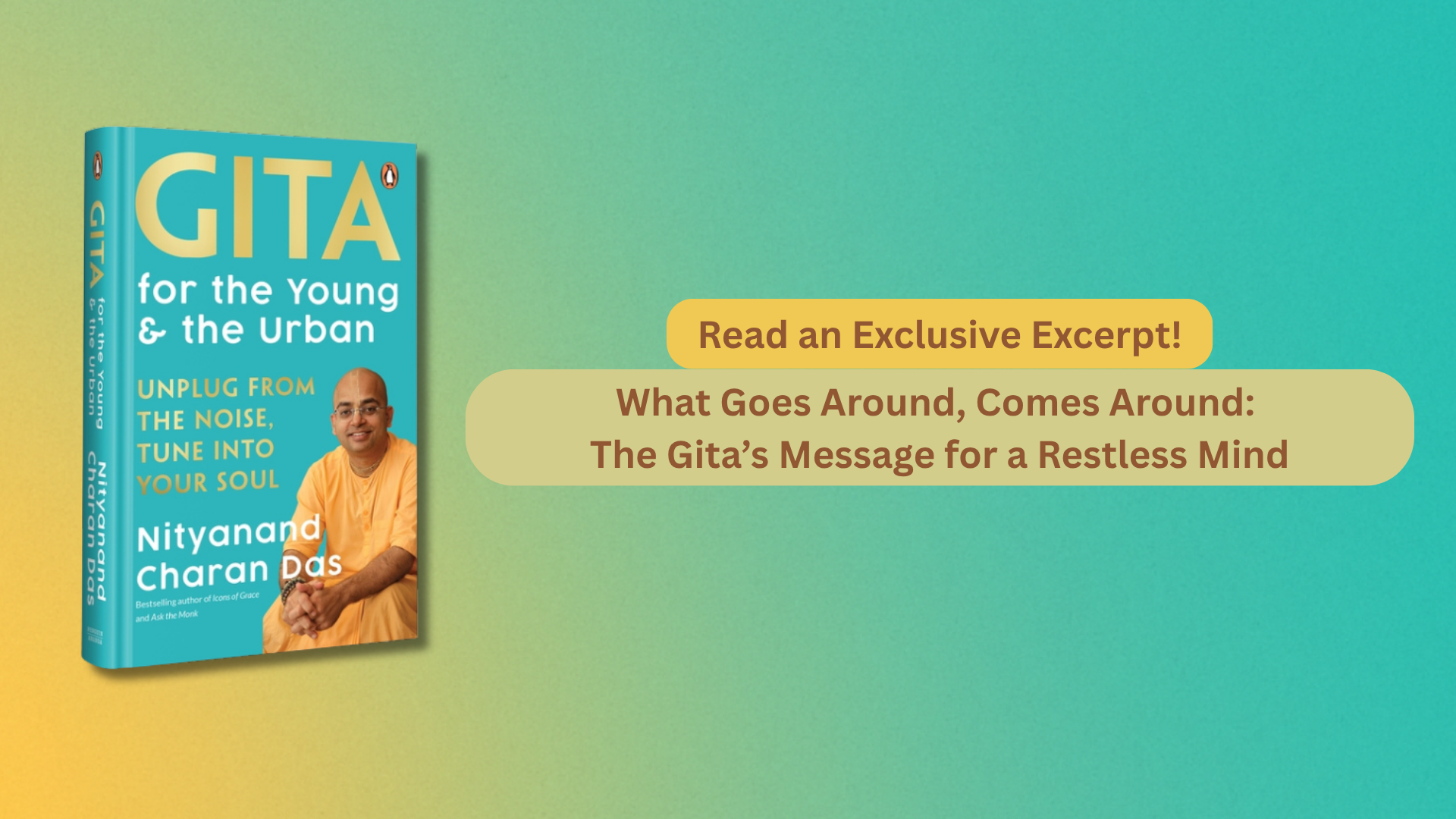
Karma never forgets. No matter how powerful we are, no matter how much we possess—our past actions never leave us. They are like shadows, inseparably tied to us, silently shaping our destiny. The law of karma spares no one. The pain we inflict on others finds its way back to us, shattering our peace. This is why even the wealthiest, most successful people can be haunted by anxiety despite having everything that anyone in this world could aspire for. True power is not in possession, but in purity. True peace is not in luxury, but in righteousness.
The Bhagavad Gita opens with a single question from Dhritarashtra, a question that reveals the deepseated fear lurking in his heart.
‘O Sanjaya, after my sons and the sons of Pandu assembled in the place of pilgrimage at Kurukshetra, desiring to fight, what did they do?’
This question, on the surface, seems ordinary but in reality reveals the deep-seated fear consuming his heart. He is not an ordinary man—he is a king, the ruler of an empire. He commands a vast army, boasts of the support of invincible warriors like Bhishma and Drona and sits upon the throne of Hastinapura. Yet, despite all of this, he is restless. His mind is clouded with anxiety, his heart heavy with dread.
When Silence Becomes Sin
The law of karma is merciless—it does not discriminate between a king and a beggar, between the mighty and the weak. It is an eternal force, ensuring that the consequences of our actions return to us, whether we are prepared for them or not. Dhritarashtra, though blind in sight, was never blind to the injustice that his sons, led by Duryodhana, inflicted upon the Pandavas. He knew of their deceit, their cruelty, their numerous attempts to destroy their noble cousins. Yet, he chose silence. He chose inaction. And by doing so, he became as guilty as the wrongdoers themselves.
Now, Dhritarashtra is extremely fearful about the aftermath of the war, and he anticipates the worst possible outcome for his sons, who stand on the battlefield facing the mighty Pandavas. He is well aware of the strength of the Pandavas, but his fears are magnified by the knowledge that the place chosen for the war is the holy land of the Kurukshetra.
Why a Holy Place Feels Like a Curse
A holy place adds to the powers of holy people and takes away from the powers of unholy people. He knows that his sons, headed by Duryodhana, are unholy at heart and hence, fears for their lives.
In addition, Krishna is on the Pandavas’ side as Arjuna’s charioteer, always willing to guide them. Thus, the powers of the already mighty Pandavas have received a major boost. The king is also worried that due to the positive influence of the Kurukshetra, Duryodhana might have a change of heart and return the kingdom to the Pandavas without a fight. Dhritarashtra does not want any such compromise. He would like to hold on to the throne till his last breath. His concerns multiplying with the minute, he asks his secretary about the events on the battlefield.
However, if we analyse carefully, we realize that he hardly has any reasons to worry. His sons’ army is
much bigger than that of the Pandavas. Duryodhana enjoys the support of invincible warriors like Bhishma and Drona and the finances and other logistics are on his side since he rules the kingdom.
What Goes Around, Comes Around
Then why is Dhritarashtra still fearful? It is because he is sinful. As per the law of karma, three people must share the fruits of karma equally: the doer, the director and the supporter. Dhritarashtra has been a constant supporter of his sons’ conspiracies to harm and even kill the Pandavas. Thus, he shares the sin equally with his sons.
Sin is always accompanied by fear.
When we wrong or hurt someone, that person may not retaliate, either as a voluntary choice or due to them not being strong enough to do anything. It may prompt us to think: ‘What can he or she do to me?’ But the pain that we have caused to a person, will certainly return to us from a different source in some way or the other, such that despite having everything, we will not be able to live in peace.
Creating mental distress, fear or anxiety in the mind is one of the ways in which the law of karma punishes wrongdoers. Thus, Dhritarashtra, despite apparently having everything in his support, is not peaceful. This is why even the wealthiest, most successful individuals— those who seemingly have everything—often battle inner demons of anxiety, guilt and restlessness.
Outwardly, they may bask in luxury, but within, they are prisoners of their own conscience. They have comforts but no real happiness and peace because in the pursuit of success, or due to the ego brought on by this success, they have wronged others.
On the other hand, when we do good to others, they may not be in a position to, or choose to not, do good to us, but the rewards of the good work that we have done will certainly return to us in some way or other from a different source. Thus, we must keep up the good work and take extra care to not cause any deliberate inconvenience to anyone.
A life built on deception and wrongdoing may rise high, but it will never stand firm. But a life rooted in truth, in goodness, in selfless action—that is a life unshaken, a life of real strength and above all, a life of peace.
***
Get your copy of Gita for the Young on Amazon or wherever books are sold.
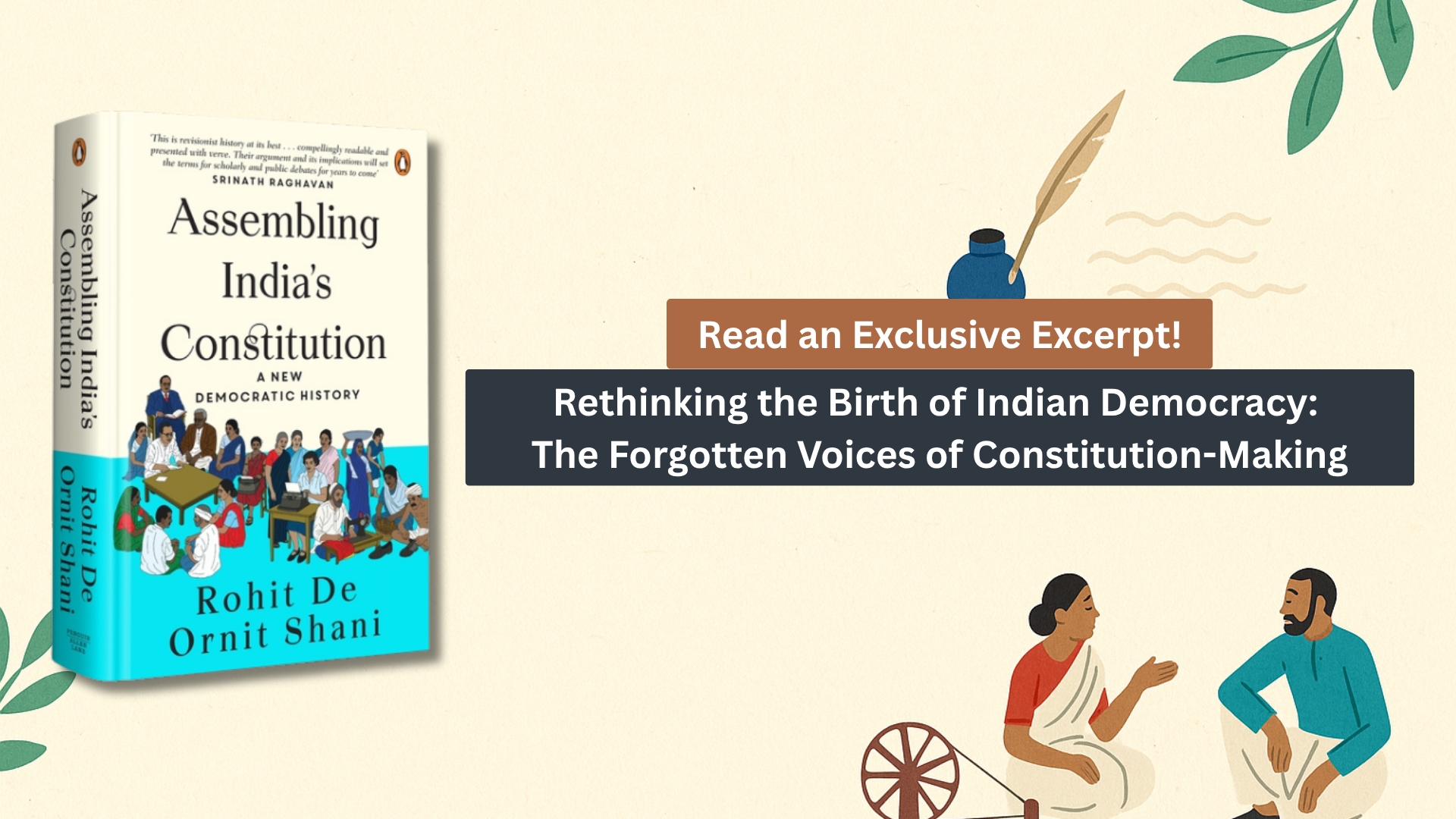
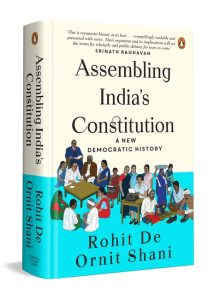
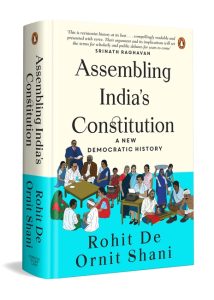
Read an exclusive excerpt from Assembling India’s Constitution: A New Democratic History by Ornit Shani and Rohit De — a groundbreaking book that reimagines how India’s Constitution came to be.
Introduction A New History of India’s Constitution Making ‘Everything was in a fluid state’, wrote the leaders of the Moshalchi community from Char Balasia village in an anxious letter that reached the Constituent Assembly of India in Delhi in May 1947. Life in their village, located at a tip of a char land at a fork of the Padma River in Bengal was precarious at all times. The char land was constantly subjected to the river’s mighty flow, and large pieces of land were cut off from one bank of the river to the other. Yet, in the early days of May 1947, the ‘fluid state’ at issue concerned imminent changes to their land brought about by political-administrative action rather than the force of nature. The eighty Moshalchi, who wrote on behalf of over 2,000 families, shared their concerns with the president of the Constituent Assembly of India:
The country is now on the threshold of momentous constitutional change. We did not press for justice so long as everything was in a fluid state. But now it is high time that the authorities should take stock of the situation and mete out even-handed justice. In the future constitution we should be treated as a separate Community, and there must be provisions for separate representation for us in the legislatures . . . so that our own culture and tradition may be maintained.
Assembling India’s Constitution || Ornit Shani, Rohit De
On the date that they drafted their letter, just two weeks before the announcement of the partition of India and Pakistan, the Moshalchi literally stood on shifting sand. Historically, as the river changed currents, it moved the char land across district boundaries and jurisdictions. They were, therefore, fully aware of the possibility that an international border could be drawn over their community. The Moshalchi professed Islam, but their letter reminded the Constituent Assembly that they were not fully recognised by the Muslim community and that they were ‘treated as out-caste, belonging neither to the Muslim nor to any other community’. Therefore, they explained, they were ‘crippled both politically as well as economically’.
At this critical moment, at the edges of freedom and political imagination, the Moshalchi saw an opportunity to achieve stability: to have their identity recognised, and their rights formalised in the new nation’s constitution. The Moshalchi were just one of countless groups and individuals across India who took such action and turned to the constitution as a resource for their future.
The story of India’s constitution making, as usually told, begins in the great metropolises of either London or Delhi. As the clock struck eleven on 9 December 1946, the story goes, the Constituent Assembly convened for the first time in Constitution Hall, New Delhi, to begin the prodigious task of framing a constitution for the soon-to-be-independent India, basing its work on a plan set by the British Cabinet Mission. The library hall of the Central Imperial Assembly was converted into the hall for the Constituent Assembly. The 205 assembly members who met on that morning, among them ten women, gathered in what was described as ‘an atmosphere charged on the one hand, with enthusiasm, and on the other with uncertainty’.5 In this classic account, a few key members of this group would become the founders of India’s constitution. In this telling, India’s good fortune was in having a handful of great men and women who, with foresight and benevolence, gifted a constitution to a people.
The Constituent Assembly’s members were not directly elected. They were, in the main, representatives of the elite, chosen by the legislative assemblies of the provinces of British India, which were themselves elected in the 1946 elections on the basis of a very limited franchise, and an electorate that was structured along religious, community, and professional lines, according to the colonial 1935 Government of India Act. The Assembly completed its work and adopted the constitution in November 1949. The constitution came into force on 26 January 1950.
In the canonical account, the workings of the Constituent Assembly in Delhi, its debates and the texts it produced between December 1946 and November 1949, form the cornerstone of India’s constitutional thought. The long and rich debates and their resulting constitutional text also became the main source for how scholars have understood the founding of India’s constitution. Scholars, thus, explained the production of the constitutional text as a result of elite consensual decision making, or conflicts, which drove its framing and lent legitimacy to the text. They have also emphasised the transformative power of the ideas that informed the new constitutional structure or, to the contrary, stressed the text’s continuity rather than break from the colonial constitutional framework.8 In both cases, the voluminous debates, spread over 5,546 pages in a set of five books, and the constitutional text have formed the principal source for understanding the constitution-making process and its implications for India’s democracy.
This book offers an alternative story. It explores the making of the Indian constitution as it emerged outside the Constituent Assembly, driven by diverse publics across the breadth and length of India’s territory and even beyond it.
By turning our gaze away from the Constituent Assembly, Assembling India’s Constitution, offers a new history and a new paradigm for understanding the making of the constitution. The book reveals the existence of multiple, parallel constitution-making processes underway across the subcontinent, showing that the Indian constitution was not solely an elite exercise anchored in the Constituent Assembly in Delhi. From the sparsely populated Spiti and Lahaul region in the northern Himalayas to the small village of Kattunedungulam in the deep south, from the remote Chittagong Hill Tracts in the east to the numerous princely states of Saurashtra in the west, and even as far away as Stockton, California, diverse Indian publics debated the future constitution and made constitutional demands. Informed by their lived social realities and experiences, the Indian public deeply engaged with the future constitution. This was an organic process that emerged from below. The 5,546 pages of the Constituent Assembly debates represent, we show, just a tiny portion of the thousands of pages documenting the wide-ranging deliberations on the making of the constitution that took place outside the Assembly.
Diwali is a time to pause — to take a breath between the noise and the light, and to remember the stories that have shaped us. Stories of courage, grace, and faith that continue to speak across centuries. This year, experience them differently.
Here’s a curated list of audiobooks that bring the spirit of Diwali alive — stories of Lakshmi’s abundance, Rama’s dharma, Hanuman’s devotion, and Sita’s strength. Each one a reminder that light doesn’t just come from lamps — it comes from listening, reflecting, and rediscovering where we come from.
Treasures of Lakshmi: The Goddess Who Gives
Edited by Namita Gokhale and Malashri Lal The goddess of fortune and grace takes center stage in the concluding volume of Gokhale and Lal’s celebrated goddess trilogy. Treasures of Lakshmi explores the sacred feminine through myth, devotion, and philosophy — from Lakshmi’s 108 names to her thousand blessings. A luminous listen for a festival that celebrates prosperity in all its forms.
Treasures of Lakshmi: The Goddess Who Gives || Namita Gokhale, Malashri Lal
Sita: An Illustrated Retelling of the Ramayana
By Devdutt Pattanaik Through Sita’s eyes, Devdutt Pattanaik reimagines one of India’s oldest epics — tracing her journey from Janak’s daughter to the heart of the Ramayana. With poetic insight, Pattanaik reflects on love, exile, and divinity, turning Sita into more than a symbol — a woman of quiet strength and agency. A moving listen for those who seek new meaning in familiar myths.
Sita: An Illustrated Retelling of the Ramayana || Devdutt Pattnaik
The Book of Hanuman
By Parvez Dewan Hanuman — scholar, warrior, and eternal devotee — comes alive in Parvez Dewan’s engrossing narrative. Divided into two parts, the audiobook first traces Hanuman’s legendary journey alongside Ram, then delves into his divine attributes, iconography, and worship. A powerful story of faith and humility, perfect for when you need courage and calm this festive season.
The Book of Hanuman || Parvez Dewan
The Book of Ram
By Devdutt Pattanaik Who is Ram — man, king, or god? Pattanaik’s intimate portrait explores all three. From his vow to uphold dharma to his contradictions and doubts, The Book of Ram presents a deeply human look at one of the most worshipped figures in Hindu mythology. A profound listen that captures Ram’s serenity amid chaos — the perfect companion for moments of reflection this Diwali.
The Book of Ram || Devdutt Pattanaik
The Mahabharata (10 Volumes)
Translated by Bibek Debroy For those who want to dive deep, Bibek Debroy’s complete translation of The Mahabharata — now available in ten volumes — is an unmatched listening experience. Epic in scale and rich in insight, it offers every conflict, question, and revelation that defines this monumental text. Start with Volume 1 and let the voices of the Pandavas and Kauravas fill your evenings.
The Mahabharata (10 Volumes) || Translated by Bibek Debroy
Jaya: A Retelling of the Mahabharata
By Devdutt Pattanaik In Jaya, Pattanaik brings together Sanskrit verses, folk versions, and regional retellings of the Mahabharata into one seamless narrative. With over 250 illustrations and 108 concise chapters, this audiobook captures the moral complexity and enduring human truths of India’s greatest epic — from Draupadi’s fire to Krishna’s calm.
Jaya: A Retelling of the Mahabharata || Devdutt Pattanaik
The Book of Lakshmi
By R. Mahalakshmi Lakshmi — goddess of wealth, fertility, and beauty — is explored here not as a symbol, but as a living idea that has evolved through centuries of faith and art. R. Mahalakshmi’s account draws from scriptures, rituals, and iconography to reveal how Lakshmi came to embody both abundance and balance. An insightful listen for those seeking wisdom beyond worship.
The Book of Lakshmi || R. Mahalakshmi
The Essentials of Hinduism
By Trilochan Sastry Curious about the roots of Hindu philosophy? Trilochan Sastry offers a clear, contemporary introduction to the vast universe of Hindu texts — from the Vedas and Upanishads to the Ramayana and Mahabharata. Accessible and insightful, this audiobook helps decode the ideas and principles that have guided Indian thought for millennia.
The Essentials of Hinduism || Trilochan Sastry
Rama
By Priya Arora A lucid, heartfelt retelling of Valmiki’s Ramayana, Rama blends storytelling with moral insight. Priya Arora explores not just the story of the prince of Ayodhya, but the world around him — Vedic life, his descendants, and the poet Valmiki’s own journey. It’s a modern yet faithful narration that captures the essence of dharma and leadership — timeless Diwali lessons in every sense.
Rama || Priya Arora
Sita’s Ascent
By Vayu Naidu Vayu Naidu’s powerful reimagining gives Sita her own voice. Through multiple perspectives — Sita, Lakshmana, Soorpanakka, and Rama — the novel explores exile, love, and redemption. It’s a deeply moving listen about resilience and transformation, perfect for those who seek new meanings in old myths.
Sita’s Ascent || Vayu Naidu
The diyas will fade, the sweets will be gone, but the stories stay. They travel through time — from the sage’s voice to the storyteller’s mic, from the page to your ears. So when you listen this Diwali, you’re not just hearing mythology — you’re part of its echo.
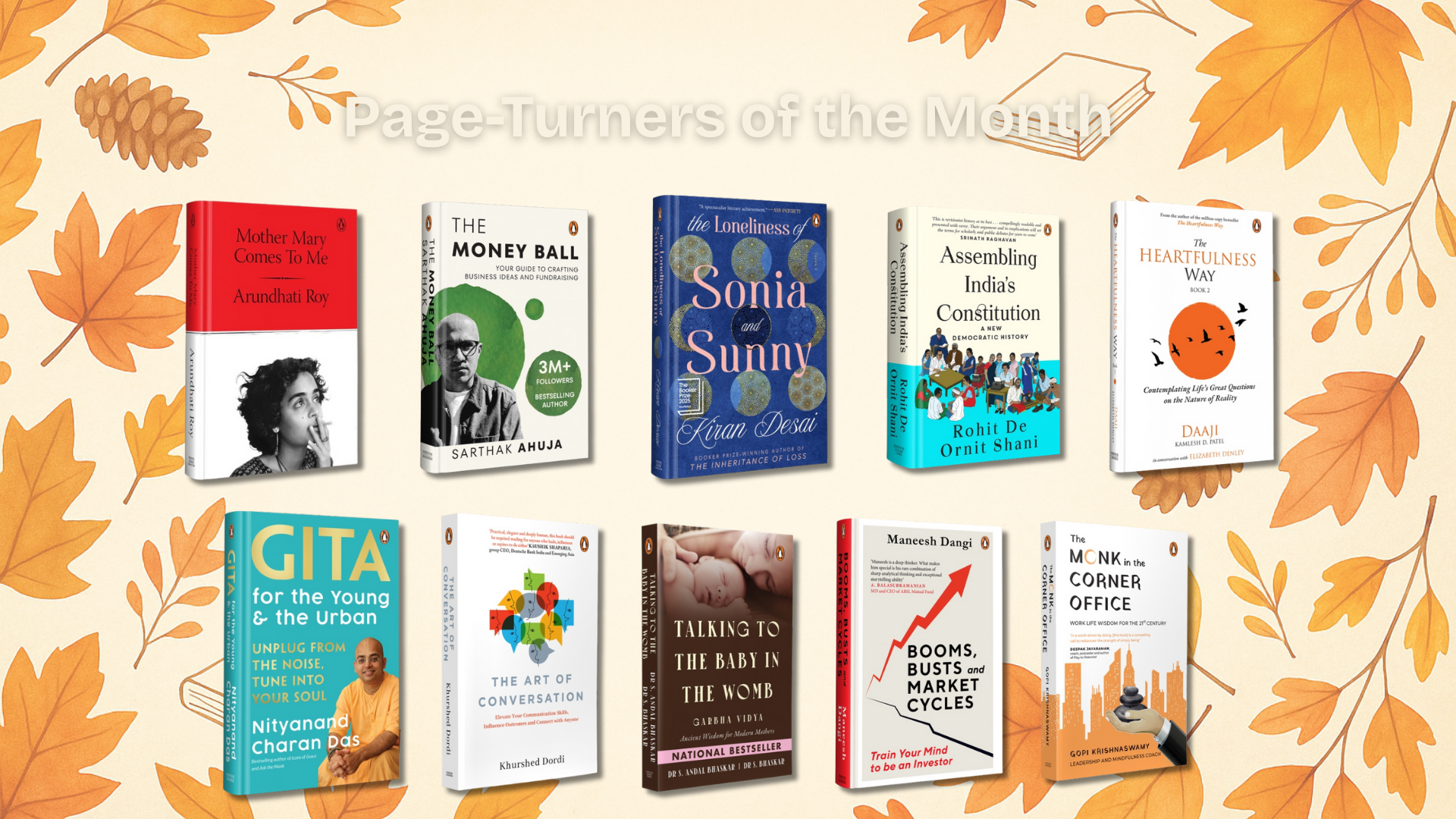
October brings an eclectic mix of powerful memoirs, sharp non-fiction, sweeping novels, and unforgettable voices. From Arundhati Roy’s first memoir to Kiran Desai’s Booker-shortlisted novel, this month’s releases are as bold as they are diverse.
Here’s the complete list of books to read this October!
Hundred Greatest Love Songs – Biswamit Dwibedy A genre-bending memoir told in a playlist of 100 short chapters. From small-town Iowa diners to the arts scene of New York, it’s a story of art, poetry, friendship, and belonging. A powerful ode to how literature and music can heal and transform lives.
Hundred Greatest Love Songs || Biswamit Dwibedy
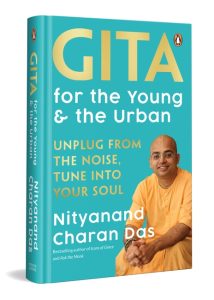
Gita for the Young and the Urban – Nityanand Charan Das A modern guide to balance and purpose for today’s overworked, overstimulated lives. Through reflections on karma, the mind, and surrender, this book bridges ancient wisdom and modern city living.
Gita for the Young and the Urban || Nityanand Charan Das
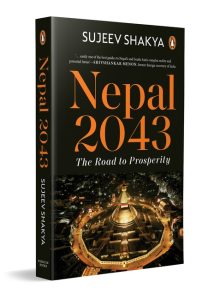
Nepal 2043 – Sujeev Shakya A visionary take on Nepal’s future and its path to becoming a high-income nation. Covering hydropower, migration, tourism, and digital transformation, this book also doubles as a playbook for other emerging economies.
Nepal 2043 || Sujeev Shakya
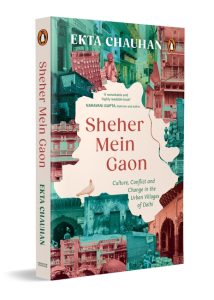
Sheher Mein Gaon – Ekta Chauhan An exploration of Delhi’s urban villages—spaces caught between tradition and modernity. This book reveals how these neighbourhoods tell the story of culture, conflict, and change in India’s capital.
Sheher Mein Gaon || Ekta Chauhan
The Forgotten Indian Prisoners of World War II – Gautam Hazarika The untold history of INA soldiers, Subhas Chandra Bose, and Indian POWs. With stories of resilience, daring escapes, and wartime sacrifice, this book sheds light on a neglected chapter of India’s independence struggle.
The Forgotten Indian Prisoners of World War II || Gautam Hazarika
Assembling India’s Constitution – Ornit Shani & Rohit De A paradigm-shifting history of India’s constitution, told not just from the Assembly halls but from the perspectives of citizens and communities. A people-powered account of how democracy took root in India.
Assembling India’s Constitution || Ornit Shani & Rohit De
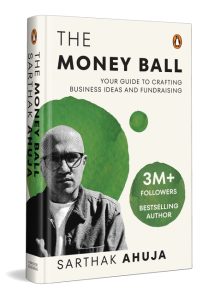
The Money Ball – Sarthak Ahuja A practical playbook for entrepreneurs and startups—covering leadership, finance, marketing, and growth. Written by an experienced business consultant, this book is packed with actionable insights for building sustainable ventures.
The Money Ball || Sarthak Ahuja
The Loneliness of Sonia and Sunny – Kiran Desai Booker Prize 2025 shortlisted. A sweeping diaspora novel of love, family, and belonging. Sonia and Sunny’s journey spans India, New York, and generations, exploring the bonds that connect—and complicate—our lives.
The Loneliness of Sonia and Sunny || Kiran Desai
Mother Mary Comes to Me – Arundhati Roy Arundhati Roy’s first memoir—an intimate portrait shaped by her relationship with her extraordinary mother. Fierce, tender, and deeply personal, it is a story of love, loss, and becoming.
Mother Mary Comes to Me || Arundhati Roy
The Sirens of September – Zeenath Khan A historical novel set in Hyderabad, 1948. A tale of aristocracy, espionage, and shifting loyalties during a time of political upheaval, where love and betrayal entwine with history.
The Sirens of September || Zeenath Khan
Booms, Busts and Market Cycles – Maneesh Dangi A unique, character-driven book on investing that draws from Indian ethos and real-world market cycles. Not a formula manual but a guide to thinking like an investor and navigating uncertainty.
Booms, Busts and Market Cycles || Maneesh Dangi
The Sky Husband – Easterine Kire A lyrical collection of stories rooted in Nagaland. Gentle, profound, and deeply human, these narratives capture the richness of the region’s culture and the universality of love and memory.
The Sky Husband || Easterine Kire
The Lost Author – Chris Barkley A literary mystery on a remote island in 1949. A missing manuscript, a mentor’s death, and secrets waiting to be uncovered—this is a haunting story of ambition, grief, and legacy.
The Lost Author || Chris Barkley
The Forever Green Lore and Legends of Kerala – Sreekumari Ramachandran An immersive dive into Kerala’s folklore and spiritual traditions—from snake boat races to temple legends. A celebration of devotion, history, and culture.
The Forever Green Lore and Legends of Kerala || Sreekumari Ramachandran
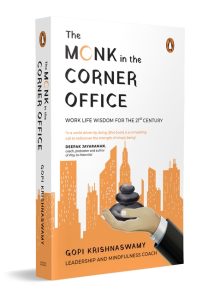
The Monk in the Corner Office – Gopi Krishnaswamy Through the story of Sid, a burnt-out young professional, this book delivers timeless lessons in emotional intelligence and mindfulness. Perfect for anyone navigating modern work and life.
The Monk in the Corner Office || Gopi Krishnaswamy
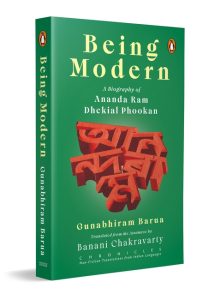
Being Modern: A Biography of Ananda Ram Dhekial Phookan – Gunabhiram Barua, trans. Banani Chakravarty The biography of a visionary Assamese thinker who championed Assamese language and identity in 19th-century Assam. A fascinating blend of personal story and regional history.
Being Modern || Gunabhiram Barua, trans. Banani Chakravarty
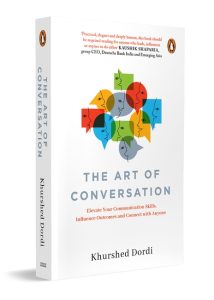
The Art of Conversation – Khurshed Dordi A guide to mastering communication in every setting—from interviews to pitches to everyday interactions. Practical, insightful, and empowering.
The Art of Conversation || Khurshed Dordi
Press 9 for a Crime – Shailendra Jha A cybercrime thriller set across Delhi and Cambodia. A missing brother, a desperate search, and a family pushed to the edge—this is a high-stakes story of deception and redemption.
Press 9 for a Crime || Shailendra Jha
Talking to the Baby in the Womb – S. Andal Bhaskar & S. Bhaskar A holistic guide to Garbha Vidya—bonding with your unborn child through mindfulness, music, and positive communication. Rooted in Indian tradition, this book offers wisdom for modern mothers.
Talking to the Baby in the Womb || S. Andal Bhaskar & S. Bhaskar
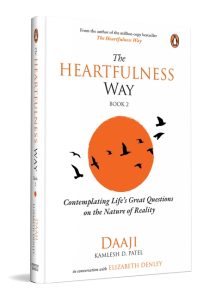
The Heartfulness Way, Vol. 2 – Kamlesh D. Patel & Elizabeth Denley A continuation of Daaji’s much-loved Heartfulness Way. This volume guides readers through expanding consciousness and finding balance, happiness, and purpose in daily life.
The Heartfulness Way, Vol. 2 || Kamlesh D. Patel & Elizabeth Denley
In the Silence You Left Behind – Sumitra Manda Some heartbreaks don’t come with loud goodbyes—they slip away quietly, leaving you to carry the weight alone. This moving book is for anyone who has loved deeply, lost silently, and is still learning to let go. Honest, gentle, and comforting, it’s a companion for those navigating the ache of memory and the slow journey of healing.
In the Silence You Left Behind || Sumitra Manda
Which one’s going on your TBR?
This October’s list spans memoirs, history, business, fiction, poetry, and more. Whether you want to be swept away by a love story, challenged by new ideas, or hooked by a thriller, these books are waiting for you.