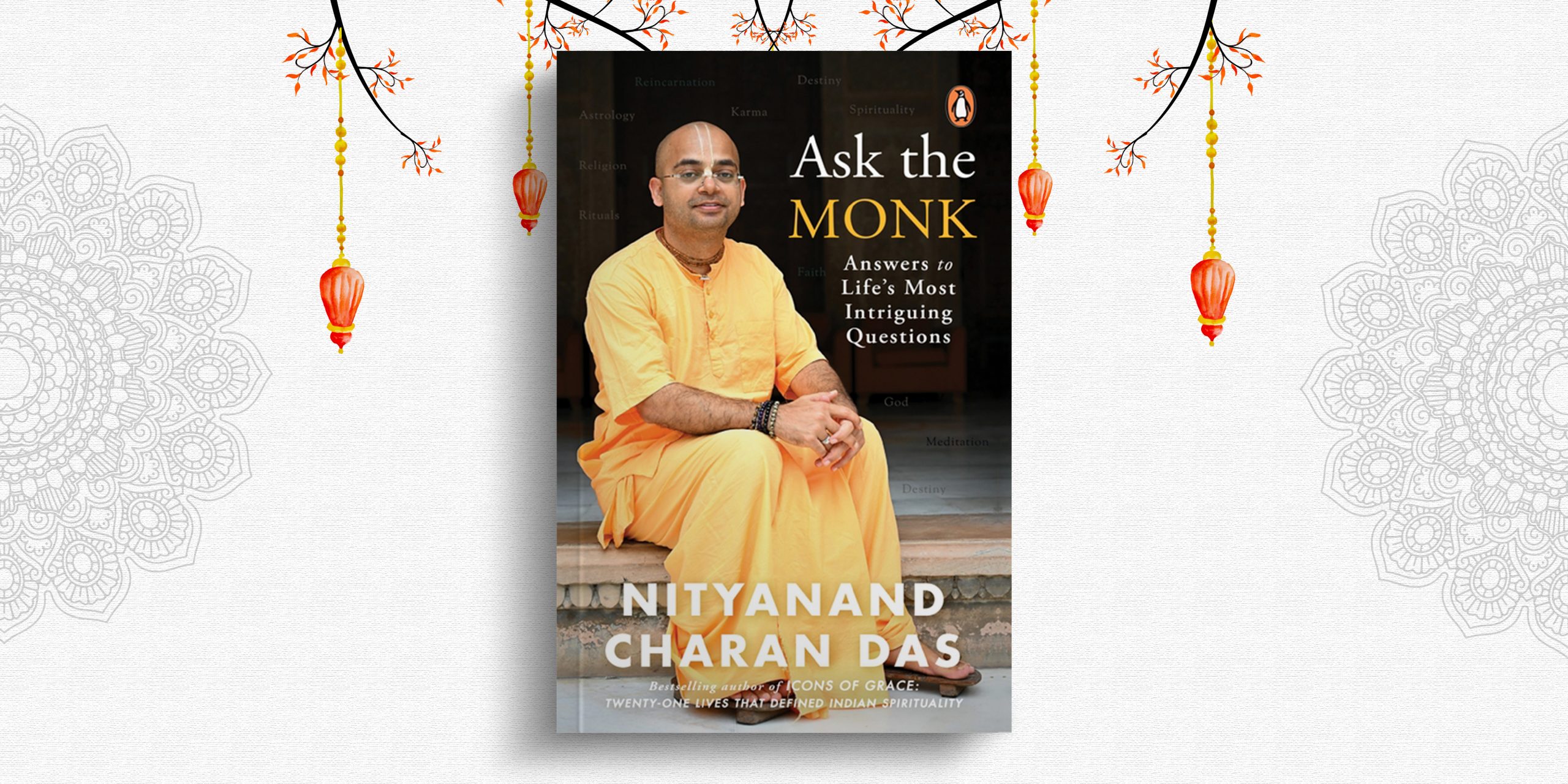
In Ask the Monk, celebrated monk Nityanand Charan Das lucidly answers over seventy frequently asked questions—by young and old alike—on topics such as karma, religion versus spirituality, mind, God, destiny, the purpose of life, suffering, rituals, religion, wars and so on.
Have questions? Intrigued to know more?
Read this excerpt from Ask the Monk and find out the answer to a very critical question—doesn’t spirituality demand blind faith?
*
Ask the Monk || Nityanand Charan Das
No. Spirituality does not ask for blind faith, but ‘reasonable faith.’
Reasonable faith means, ‘I hear something. So let me try it. If it does not work, I can always give it up’.
Blind faith means, I hear something and straightway reject it without verifying.
Blind acceptance is bad, but blind rejection is equally bad. In fact, it is worse because we might miss out on a rare diamond, considering it to be a broken piece of glass.
And this reasonable faith is not something new. If we carefully examine, we will find that we have been applying it in every aspect of life. In fact, our life starts with reasonable faith. When we are born, we do not know who our father is. We hear from our mother and we trust her. Now if we talk about blind faith, then isn’t this also blind faith because we were not there earlier? Not at all. This is called reasonable faith. Now if we want, we can do DNA testing to verify it.
When we get into a cab, we never check whether the driver has a license and knows how to drive. We have faith that he will take us to our destination.
We go to hotels and restaurants after hearing the food at a particular place is good. We go and try and then conclude based on our findings. We believe that the food is not infected, although chances are that it could be. But we have faith.
So the point is that we cannot move even an inch forward without this faith, else we will live in constant fear and go insane.
The best way to move forward is to have a certain degree of faith in everything despite it all. It’s reasonable, since we cannot keep checking everything.
The same logic applies to spiritual life as well. We can hear from the right authority and move forward thinking, ‘If someone is teaching something, let me try and apply it in my life and test the authenticity.’
Sometimes some people reject the spiritual truths as bogus or illogical, saying they are students of science. However, they are not scientific at all because science also says that before we accept or reject a theory, it must go through six steps; aim, apparatus, theory, observation, calculation and conclusion. Only when we have tested do we have the right to decide whether it’s real or not.
Thus, just like we apply reasonable faith to everything in life without immediately rejecting it, spiritual life must not be an exception. We can apply the principles mentioned in the scriptures and see if they work. If they do not, give them up. But giving up without trying is totally unscientific and illogical.
The proof of pudding is in eating.
When we experiment based on what we hear, we get realizations and those realizations increase our faith. Spiritual life requires the same logic of faith that we apply everywhere else in our life.
**
Get your copy of Ask the Monk from your nearest bookstore or via Amazon.
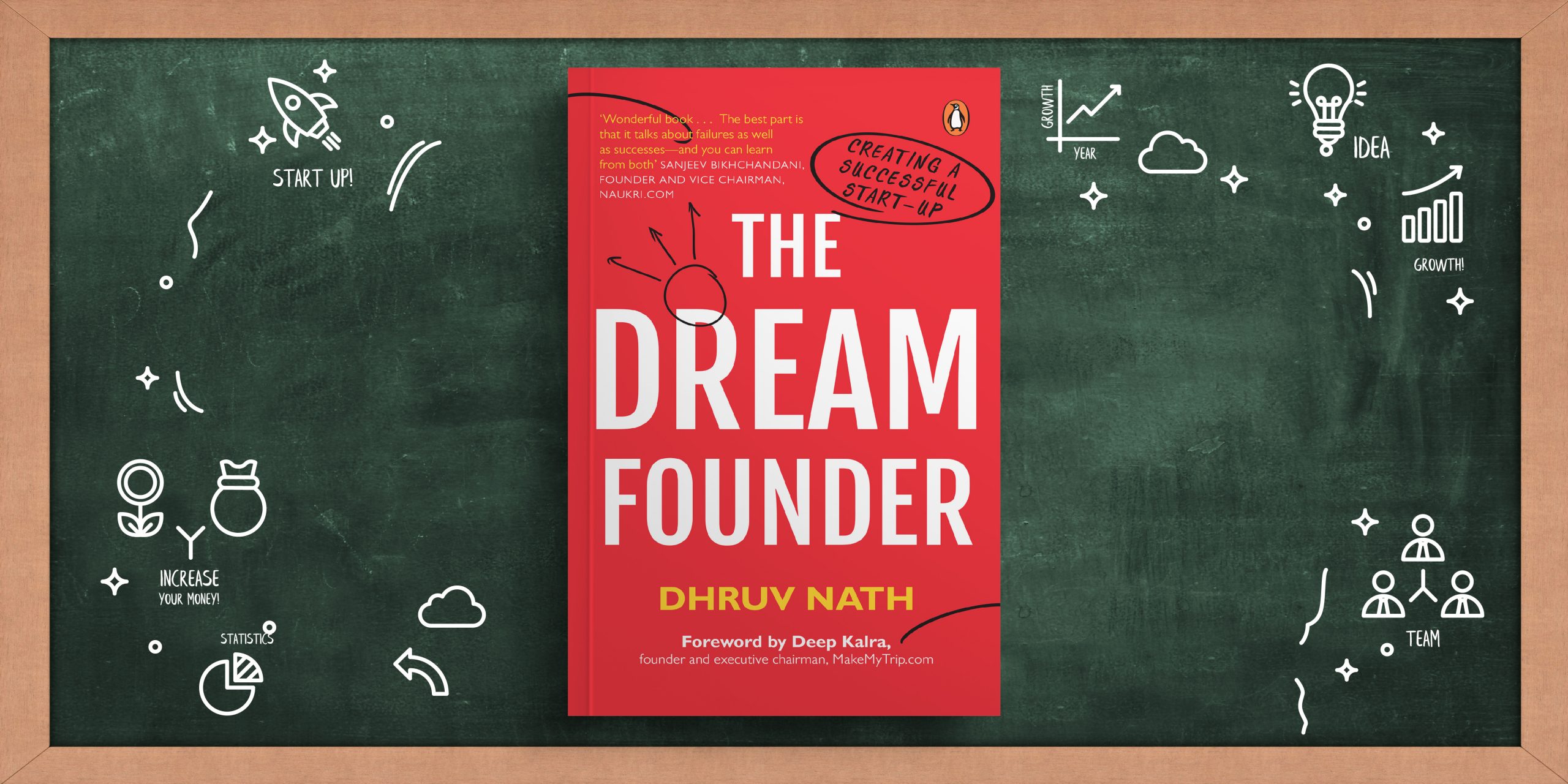
In a world of several success stories, many starry-eyed, entrepreneur aspirationals buy books and watch numerous videos on what formula will make their own start-up stick. It takes a real expert like author Dhruv Nath, to know that the real lessons come from a comparative study of what worked and what didn’t. Compiling the journeys of the ideas that saw the light and went beyond, as well as those which ended before they even began, The Dream Founder is a must-read on what happens after the lightbulb switches on.
You can get your copy now from the nearest bookstore or visit Amazon to order.
*
One More Book on Start-Ups? Why?
Good question. There are several books on start-ups out there. Just get on to Amazon or Flipkart and you’ll see lots of them. So, why did I write one more?
Well, for a start, most of the books in the market talk about American start-ups—the Facebooks, the WhatsApps, the Ubers and the Airbnbs of the world. But hang on—aren’t you planning to create a start-up in India? In which case, you would want to learn from Indian start-ups, wouldn’t you? Sure, you can learn from Airbnb and Uber and all the rest of them—and you should. But isn’t it far more important to learn from companies in the Indian context? All of us are aware that the Indian environment is very different from what exists in the western world. Most western countries, such as the US, are developed. We are a developing country, which clearly means that both the opportunities and constraints will be different. Small-town and rural India—often called Bharat—offers a huge, untapped market, with no parallels in the west. Language is a major issue, with the future perhaps belonging to start-ups that cater to vernacular languages. I can go on and on, but I’m sure you get the idea. While you should learn from start-ups in the US, it’s much more critical to learn from start-ups in India. And that’s why this book is all about Indian start-ups. One of the few in this category.
Next, even if you were to look at the Indian books out there, all of them talk about huge success stories, such as Byju’s, Flipkart, Paytm and Ola Cabs. Whose founders are spoken about in hushed whispers, even at paan shops. And, of course, in bars, with alcohol warming the insides. I’m sure you would want to learn from these phenomenally successful guys. But let me ask you a frank question. Can you really identify with such start-ups? These aren’t start-ups any more. They are giants—in many cases, multinational giants. Who do you really identify with? The smaller guys, isn’t it? Those fledgeling start-ups which are just a few years old and are perhaps facing the same problems that you are. Wouldn’t you also want to listen to the founders of these young start-ups? Of course you would!
So, which ones do we discuss in this book?
Aha, that’s the best part. We discuss both. On the one hand, the book has stories about young start-ups which you can identify with. But it also has advice from the real giants in the business—the likes of Sanjeev Bikhchandani of Naukri.com, Deepinder Goyal of Zomato, Dr Annurag Batra of BW Businessworld and Meena Ganesh of Portea Medical. And then, we also have a highly successful investor—Sushanto Mitra of Lead Angels. They have all been happy to share their gyan, which I’ve promptly included in this book. So, you are in the happy position of learning from both the big guns and the smaller guys. And that makes this book truly unique.
But it gets even more unique, so do read on. You see, you can get lots of write-ups about start-ups that succeeded. Stories about their founders are plastered all over the Internet, the TV, the papers and, in fact, on virtually all kinds of media except possibly posters on public toilets (thank god!). But what about those that failed? Shouldn’t you be learning from them as well? To take an analogy from the film industry, if you want to be an actor, it is good to learn from Amitabh Bachchan. But isn’t it even more important to learn from those who came from their villages to try their luck and are still pottering around as extras in Bollywood? Or worse, those who got fed up and went back to their villages?
Agreed? So, how often have you read about failures? How often have you heard founders bragging, ‘You know, I’m really proud of the fact that my start-up was a failure, and I’d be delighted to have this come out in print’? Never happens, does it? Obviously, no one talks about failures. These things are never written about, which means you don’t learn from them.
And that, ladies and gentlemen, is where this book gets really exciting. As I mentioned earlier, I have spent several years with young founders, investing in their start-ups as well as mentoring many of them. There have been some really successful founders, but there has also been a fair share of failures. And I decided, in all my wisdom, to write about both the successful guys as well as the failures. Founders who were simply not able to build and grow their start-ups. And whose stories have remained under wraps and, therefore, unavailable to mankind. Of course, in some cases, liberal doses of alcohol—duly funded by me—had to be supplied to get these founders to open up.
And that, ladies and gentlemen, is what makes this book really, really unique!
Will you gift the mundane box of soan papdi or dry fruits again this festive season? These sugar treats will expire in a few days or will probably be passed on to another relative or friend.
How about giving a gift that lasts for a lifetime? A gift that could light up your loved one’s world and will never leave them alone?
Yes, books! Books are the sweetest sugar alternatives and will stay with your friends and family…even after the last page. Hence, we have a book for all–be it the Gen Z cousin or the teen-patti-obsessed chachu, your fashionista neighbour or that sweet-tooth bua–there’s a book for everyone!
This festive season, #GiftForLife #GiftAPenguin!
The coolest gifts for every Gen Z in your life
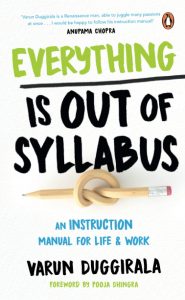
Everything Is Out of Syllabus
Varun Duggirala
Everything Is Out of Syllabus || Varun Duggirala
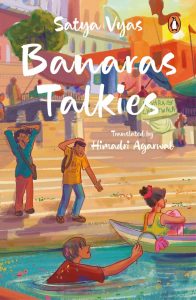
Banaras Talkies
Satya Vyas
Banaras Talkies || Satya Vyas
Beauty Unbottled
Kavita Khosa
Beauty Unbottled || Kavita Khosa
Yuktahaar
Munmun Ganeriwal
Yuktahaar || Munmun Ganeriwal
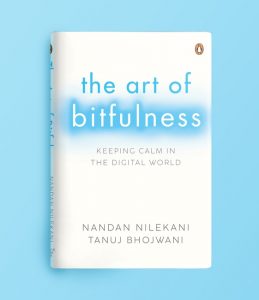
The Art of Bitfulness
Nandan Nilekani & Tanuj Bhojwani
The Art of Bitfulness || Nandan Nilekani Tanuj Bhojwani
Do you have a cousin for whom fantasy >>>> reality?
Samsara
Saksham Garg
Samsara || Saksham Garg
Where The Cobbled Paths Lead
Avinuo Kire
Where the Cobbled Path Leads || Avinuo Kire
Sinbad and the Trumpet of Israfil
Kevin Missal
Sinbad and the Trumpet of Israfil || Kevin Missal
Sinbad and the Tomb of Alexander
Kevin Missal
Sinbad and the Tomb of Alexander || Kevin Missal
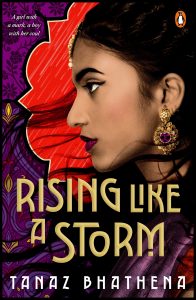
Rising Like a Storm
Tanaz Bhathena
Rising Like A Storm || Tanaz Bhathena
For the health-conscious buddy
On The Pickle Trail
Monish Gujral
On The Pickle Trail || Monish Gujral
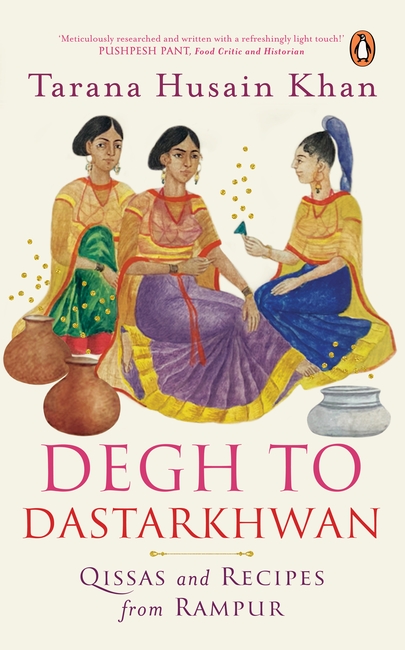
Degh To Dastarkhwan
Tarana Husain Khan
Degh To Dastarkhwan || Tarana Husain Khan
Whose Samosa Is It Anyway
Sonal Ved
Whose Samosa Is It Anyway || Sonal Ved
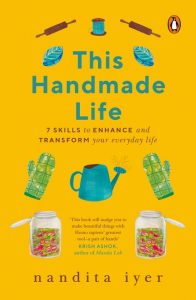
This Handmade Life
Nandita Iyer
This Handmade Life || Nandita Iyer
For the matchmaker in your circle
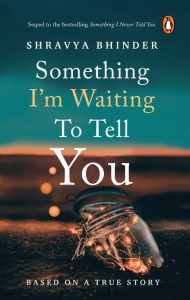
Something I’m Waiting To Tell You
Shravya Bhinder
Something I’m Waiting To Tell You || Shravya Bhinder
The book was first published in India in 2020 as Chats With The Dead
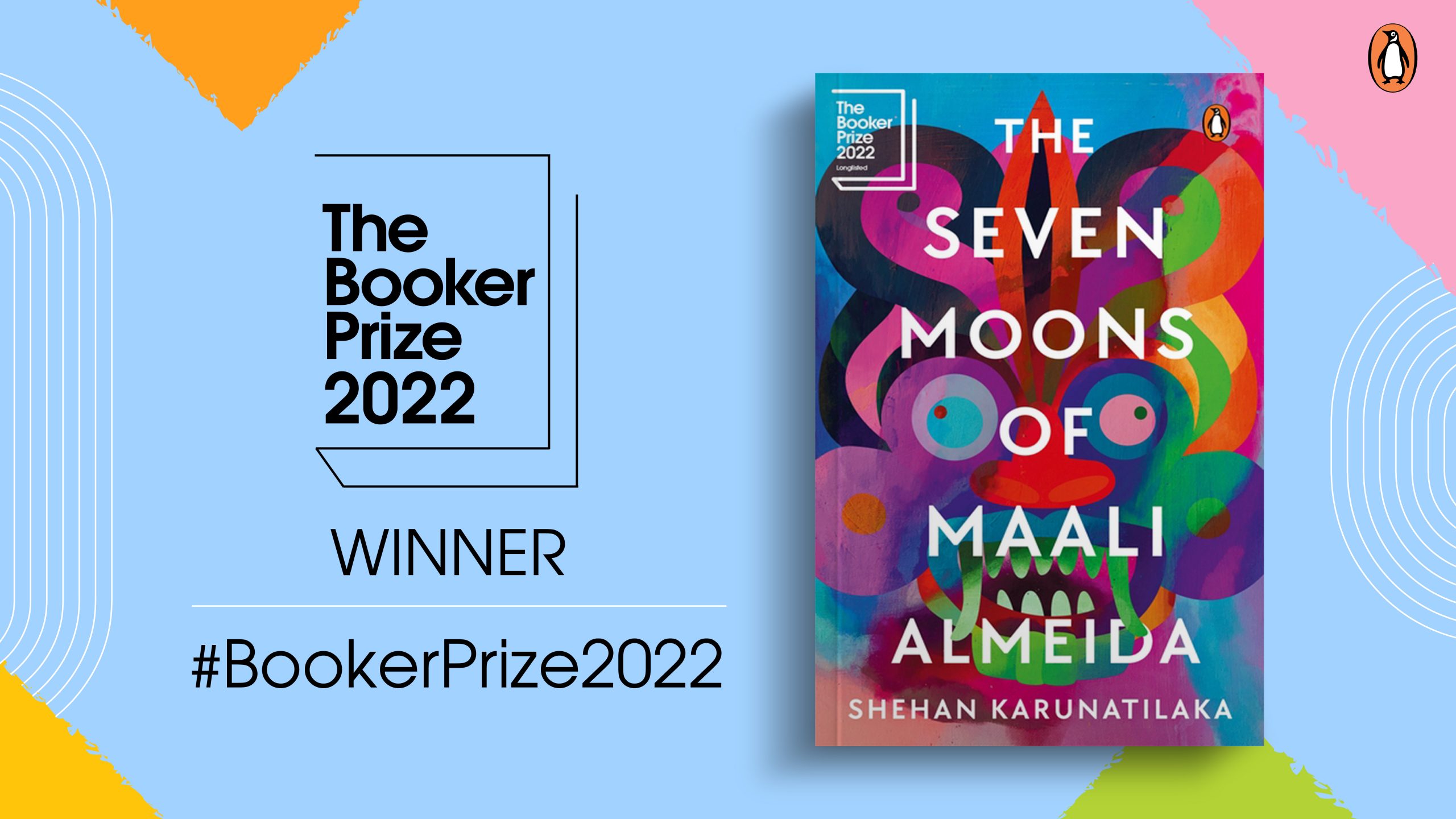
Penguin Random House India is proud to announce that critically acclaimed Sri Lankan writer Shehan Karunatilaka’s The Seven Moons of Maali Almeida, which was first published by Penguin India as Chats With The Dead, has won this year’s Booker Prize for Fiction.This is the first Booker Prize for Shehan.This was also the first time that books originating from an Indian publisher had been nominated for the Booker Prize two years in a row. In 2021, Anuk Arudpragasam’s A Passage Northwas in the running forthe Booker Prize. Tomb of Sand, written by Geetanjali Shree, translated by Daisy Rockwell, and published by Penguin in India, was also the winner of the International Booker Prize 2022.
A classic whodunit with a brilliant twist, The Seven Moons of Maali Almeidasearingly exposes the plight of a country caught in the aftermath of civil war.Embroiled in red tape, memories of war, and ethical dilemmas, this unforgettable story captures readers right from the very first page up to its startling denouement, constantly upending its premise with its staggering humanity.
Manasi Subramaniam, Associate Publisher andHead of Rights at Penguin Random House India and the editor of the book, said, ‘The Seven Moons of Maali Almedia by Shehan Karunatilaka is a masterful work of modern philosophy that insists on being uproariously funny through all its deft acrobatics through the living and the dead. I am delighted that this brilliant book has won the Booker Prize 2022.’
Meru Gokhale,Publisher, Penguin Press, Penguin Random House India, says, ‘I am absolutely delighted at the honour and recognition being given to Shehan Karunatilaka’s work. It’s wonderful to see writers from South Asia receive long-overdue international recognition in this extraordinary year for Penguin Press, through both the Booker International Prize for Tomb of Sand and the Booker Prize for The Seven Moons of Maali Almeida.’
The Booker Prize 2022’s jury is chaired by Neil MacGregor, cultural historian, writer and broadcaster along with a five-person panel- Critics Shahidha Bari and M. John Harrison, historian Helen Castor and novelist and poet Alain Mabanckou.
About the author:
Shehan Karunatilaka is a Sri Lankan writer whose first book Chinaman won the Commonwealth Book Prize, the DSC Prize for South Asian Literature, and the Gratiaen Prize, and was shortlisted for the Shakti Bhatt First Book Prize.
Penguin turns 35 years in India! Over the years, Penguin Random House has fortified the future of books and reading in India and continues to strive on our mission to publish diverse voices. And today on our milestone anniversary, we celebrate our authors, readers and customers who have helped us establish our publishing legacy.
It is particularly gratifying to be celebrating this milestone when so many of our books are being recognised on a national and international scale. Tomb of Sand, written by Geetanjali Shree, translated by Daisy Rockwell, and first published in India by Penguin, won the International Booker Prize this year, making it the first Indian language translation to receive this honour since its launch 17 years ago. The Booker Prize for Fiction 2022 shortlisted Shehan Karunatilaka’s The Seven Moons of Maali Almeida, which was published originally in India by Penguin as Chats With The Dead in 2020. In 2021, Anuk Arudpragasam’s A Passage North was in the running to win the Booker Prize. This is the first time that books originating from an Indian publisher have been nominated for the Booker Prize twice in a row.
As the region’s most successful publisher, it is our mission to bring quality and affordable books to readers across India and South Asia and take local voices to global markets. We keep strong on this commitment by discovering and publishing authors from the region. We ensure our readers have access to our global catalogue of over 50,000 titles. And we make sure that our readers can choose to read some of the finest writings from the world in print books, e-books or audiobooks, any format convenient for them to integrate reading into their lives seamlessly.
Creativity, entrepreneurship, and innovation have been the pillars through which we navigate the unpredictability of our publishing business. We believe in investing in our authors and fortifying our infrastructure to keep up with the growing demand for books. We have also been innovative with data to transform our sales and marketing efforts and gain distinctive competitive advantages. In these dynamic times, we have strengthened our printing and distribution capabilities too. Our growth in publishing has allowed us to give back to the community and help build a generation of readers from all strata of society. We sponsor and support reading fluency programmes that help disadvantaged young readers adopt reading into their lives. We donate books to community libraries and government schools and form partnerships in the process to further spread the message of reading books.
Looking back on our long and illustrious publishing history in India, I would like to thank all our authors for choosing to publish with us and for allowing us to present their brilliant works to the world. I acknowledge the trust our readers extend to us each time they choose a Penguin book to fire up their imaginations and to stay informed and entertained. We are fortunate to have customers and partners who work tirelessly to ensure the availability and access of our titles. And finally, I express my gratitude to my brilliant teams without which none of the above would be possible. Our biggest strength lies with the talented, dedicated, and passionate people in our company.
As we enter a new phase when the world is looking a little bit different, we know that books are going to continue to be an important part of our country’s cultural fabric and our lives. Setting our sights on the future, we are looking forward to bringing more iconic books by gifted writers to our beloved readers with the support of our talented team.
– Gaurav Shrinagesh
CEO of Penguin Random House India and South East Asia
October is when there’s no denying the chill in the air. It’s no surprise then that it is one of the best months to cozy up with a new book! Get ready to bookmark this page with this list of our latest releases!
Full of intriguing stories from across different lands. to finding the best beauty rituals, fascinating biographies and so much more, scroll through this list to fill up your October reading calendar.
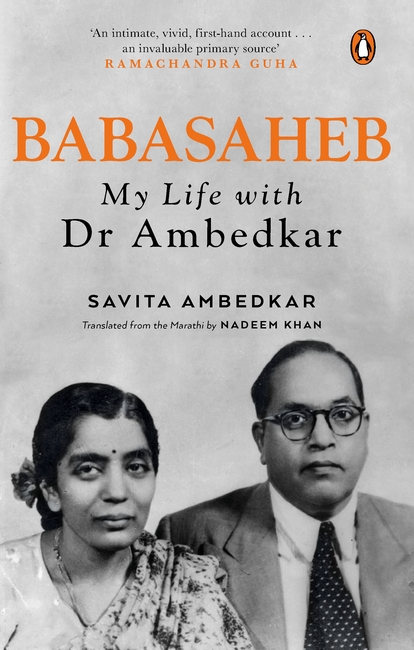
Babasaheb
My Life With Dr Ambedkar
Savita Ambedkar, Nadeem Khan
Babasaheb by Savita Ambedkar
Born into a middle-class, Sarasvat Brahmin family, Dr Sharada Kabir met and got to know Dr Bhimrao Ambedkar as a patient riddled with life-threatening diseases, and eventually married him on 15 April 1948, getting rechristened as Savita Ambedkar. From the day of their wedding to the death of Dr Ambedkar on 6 December 1956, she aided him in some of his greatest achievements-drafting the Constitution of India, framing the Hindu Code Bill, writing some of his most celebrated books, including The Buddha and His Dhamma, and leading millions of Dalits into Buddhism.
The Wisdom Bridge
Kamlesh D. Patel
The Wisdom Bridge || Kamlesh D. Patel
The intentions, thoughts and actions of the elders are caught by the hearts of the children. The children observe, learn and imbibe the teachings quickly and faithfully, and the elders have the responsibility to not only raise the children well, but nurture and guide them in a way that they can lead fulfilling lives.
Daaji in The Wisdom Bridge offers nine principles to guide you, the reader, to live a life that inspires your children and your loved ones.
Ritual
Vasudha Rai
Ritual || Vasudha Rai
RITUAL is a collection of practices aimed at optimizing, harmonizing and maximizing the natural energies of the day and night
Renew your mind, body and spirit with activities such as sunbaths, sound healing, cleansing kriyas, beautifying masks, massages, breathwork and navel therapy. From sunrise to sunset, nightfall to dawn, these exercises will help you find moments of clarity, relaxation and bliss.
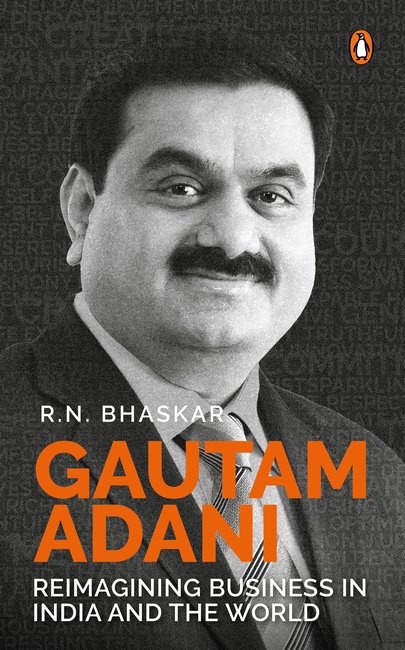
Gautam Adani
R.N. Bhaskar
Gautam Adani || R.N. Bhaskar
Gautam Adani needs no introduction. One of the richest men in the world, he also helms a business empire that is now India’s largest player in ports and renewable energy. He is also the country’s largest private sector player in sectors like airports, city gas distribution, power transmission, thermal power, edible oil, and railway lines. Yet, look beyond these facts, and startlingly little is known about Gautam Adani, the maverick businessman; about his motivations and vision; about his life, and the episodes, minor and major, that propelled him to make the choices he did.
Winning Middle India
T.N. Hari, Bala Srinivasa
Winning Middle India || T.N. Hari, Bala Srinivasa
Is there a fundamental new catalyst that can significantly enhance access, affordability and quality of products and services to hundreds of millions of Indians? This catalyst is in the form of a new generation of start-up founders who are leveraging technology platforms, smartphone access, and rapid digitization of the Indian consumer. These young founders don’t carry the baggage of the past and are attracted to the opportunity of breaking open the massive market of Middle India-the next 400-500M Indians just below the top of the pyramid. This book is about this new and powerful force of change blowing across India-what it takes to harness this and reshape the destiny of this country.
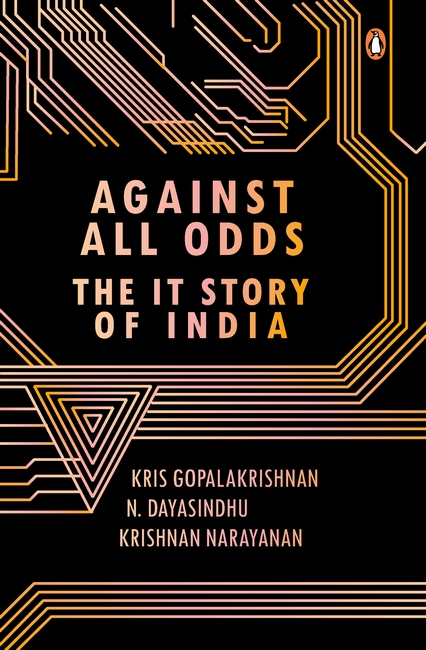
Against All Odds
The IT Story of India
S. ‘Kris’ Gopalakrishnan, N. Dayasindhu, Krishnan Narayanan
Against All Odds || S. ‘Kris’ Gopalakrishnan, N. Dayasindhu, Krishnan Narayanan
The story of Indian IT is the story of trials and triumphs, persistence and resilience, and luck, foresight and planning. This book chronicles the history of Indian IT over the past six decades. It includes interviews with over fifty pioneers who built and shaped the Indian IT sector. Conceived as a book on business history, this book analyses the evolution of India’s IT sector and helps readers understand the importance of collective efforts in building world-class sustainable institutions.
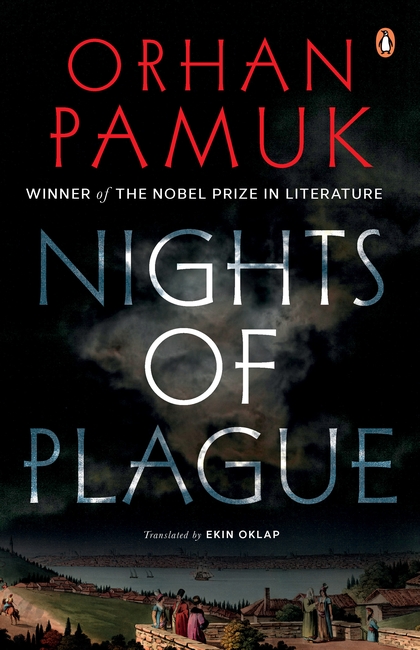
Nights of Plague
Orhan Pamuk
Nights of Plague || Orhan Pamuk
It is April 1900, in the Levant, on the imaginary island of Mingheria-the twenty-ninth state of the Ottoman Empire-located in the eastern Mediterranean between Crete and Cyprus. Half the population is Muslim, the other half are Orthodox Greeks, and tension is high between the two. When a plague arrives-brought either by Muslim pilgrims returning from the Mecca or by merchant vessels coming from Alexandria-the island revolts.
To stop the epidemic, the Ottoman sultan Abdul Hamid II sends his most accomplished quarantine expert to the island-an Orthodox Christian. Some of the Muslims, including followers of a popular religious sect and its leader Sheikh Hamdullah, refuse to take precautions or respect the quarantine. And then a murder occurs…
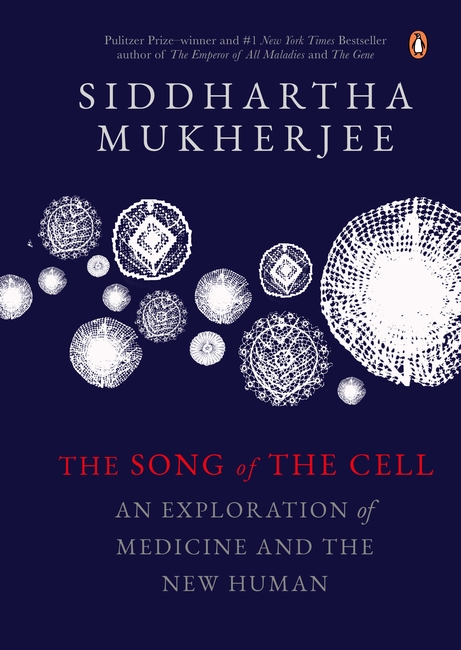
The Song of the Cell
An Exploration of Medicine and the New Human
Siddhartha Mukherjee
The Song of the Cell || Siddhartha Mukherjee
From Pulitzer Prize-winning and #1 New York Times bestselling author of The Emperor of All Maladies and The Gene, The Song of The Cell is the third book in this extraordinary writer’s exploration of what it means to be human-rich with Siddhartha Mukherjee’s revelatory and exhilarating stories of scientists, doctors, and all the patients whose lives may be saved by their work.
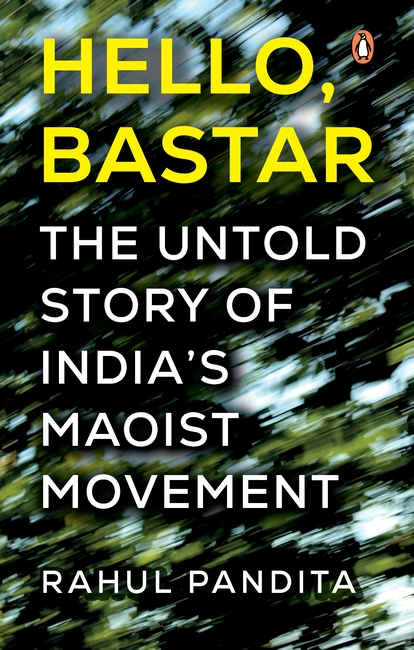
Hello Bastar
Rahul Pandita
Hello Bastar || Rahul Pandita
With direct access to the top Maoist leadership, Rahul Pandita provides an authoritative account of how a handful of men and women, who believed in the idea of revolution, entered Bastar in Central India in 1980 and created a powerful movement that New Delhi now terms as India’s biggest internal security threat. It traces the circumstances due to which the Maoist movement entrenched itself in about 10 states of India, carrying out deadly attacks against the Indian establishment in the name of the poor and the marginalised. It offers rare insight into the lives of Maoist guerillas and also of the Adivasi tribals living in the Red zone. Based on extensive on-ground reportage and exhaustive interviews with Maoist leaders including their supreme commander Ganapathi, Kobad Ghandy and others who are jailed or have been killed in police encounters, this book is a combination of firsthand storytelling and intrepid analysis.
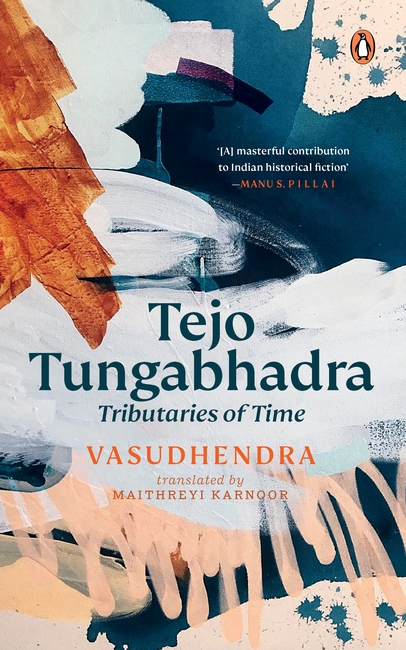
Tejo Tungabhadra tells the story of two rivers on different continents whose souls are bound together by history. On the banks of the river Tejo in Lisbon, Bella, a young Jewish refugee, and her family face daily threats to their lives and dignity from the deeply antisemitic society around them. Gabriel, her lover, sails to India with General Albuquerque’s fleet seeking wealth and a secure future for themselves. Meanwhile, on the banks of the Tungabhadra in the Vijayanagara Empire, the young couple Hampamma and Keshava find themselves caught in the storm of religious violence and the cruel rigmarole of tradition. The two stories converge in Goa with all the thunder and gush of meeting rivers. Set in the late 15th and early 16th century, Tejo Tungabhadra is a grand saga of love, ambition, greed, and a deep zest for life through the tossing waves of history.
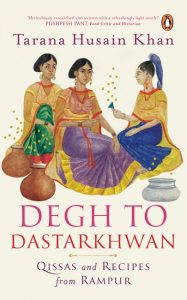
Degh to Dastarkhwan
Qissas and Recipes from Rampur Cuisine
Tarana Husain Khan
Degh to Dastarkhwan || Tarana Husain Khan
Tarana was an indifferent eater and an unenthusiastic cook until a chance encounter with a nineteenth-century Persian cookbook in Rampur’s fabled Raza Library started her off on a journey into the history of Rampur cuisine and the stories around it.
Part food memoir and part celebration of a cuisine, Degh to Dastarkhwan answers the question-‘what constitutes and distinguishes Rampur cuisine?’
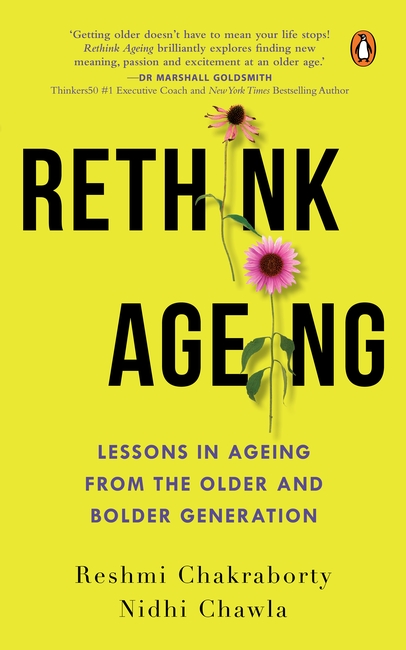
Veena Iyer, aged sixty-six, got a degree in dance movement therapy. She is training to upgrade her skill and now runs various workshops.
B.R. Janardan, aged eighty-seven, started running after sixty and has sixteen full marathons under his belt.
These important stories illustrate the shifting narrative for ageing in India. They battle the ageism that is deep-rooted in Indian culture with fixed notions of ‘approved’ behaviour. Grandchildren? Yes. Pilgrimage? Yes. But companionship? Gasp! A second career? Why the need?
Leopard Diaries
Sanjay Gubbi
Leopard Diaries || Sanjay Gubbi
In India, the leopard is a poster boy of the fight to preserve wildlife, but in many countries, it faces either ecological or local extinction. A worrying phenomenon, given that these cats carry out important ecosystem services that have not been fully understood yet.
In Leopard Diaries: The Rosette in India, Sanjay Gubbi, who has studied and documented the leopard for nearly a decade, gives us a close look at this fascinating creature. From detailing its food habits to throwing new light on how the young are reared, from offering suggestions on tackling leopard-human conflict to imagining the future of this arresting animal, this book is a 360-degree view of the leopard, its ecological context, its fraught relationship with the human world, and how wildlife and human beings can find a way to co-exist.
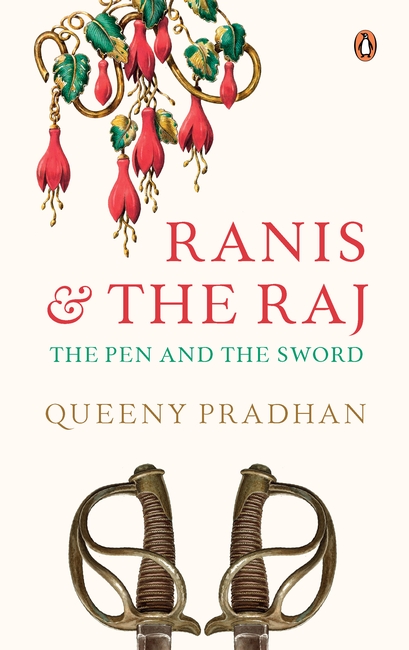
Ranis and the Raj
Queeny Pradhan
Ranis and the Raj || Queeny Pradhan
Traditionally, history has been telling us the stories of kings. In the long tradition of history writing, his-story has always dominated over her-story. Though queens evoke a sense of romance and their stories are told like fairy tales, it is common enough to find that these stories end in tragedy. In India’s history, not all queens are remembered today. Some are celebrated; while others have been almost ignored by historians.
In Ranis and the Raj, Queeny Pradhan has selected six queens. All the six queens are from the nineteenth century and have faced the British Raj, the East India Company and the Crown. Unlike the biographical convention in traditional history writing, the research in this book can be placed in the realm of ‘microhistory’. The life stories of these queens are fragmented due to the ‘silences’ and ‘invisibilization’ in political history of the time, and this book aims to fill these gaps.
The Essentials of Hinduism
Trilochan Sastry
Hinduism is an ancient religion, philosophy and way of life. Unlike other great religions that are based on a small set of books, there are hundreds of texts in Hinduism, most of which are very voluminous. They span not merely centuries, but millennia. And most importantly, these ancient scriptures are all in Sanskrit which many do not know. Therefore for a beginner with an interest in Hinduism it is a daunting task as you don’t know where to start such a study. In The Essentials of Hinduism, Trilochan Sastry unpacks all the ancient texts from the Vedas to the epics covering the entire range of scriptures and everything you need to know about them in an easy-to-read and accessible way making it of special interest to Hindus and those from other religions and nations, and even those who are agnostic or atheistic.
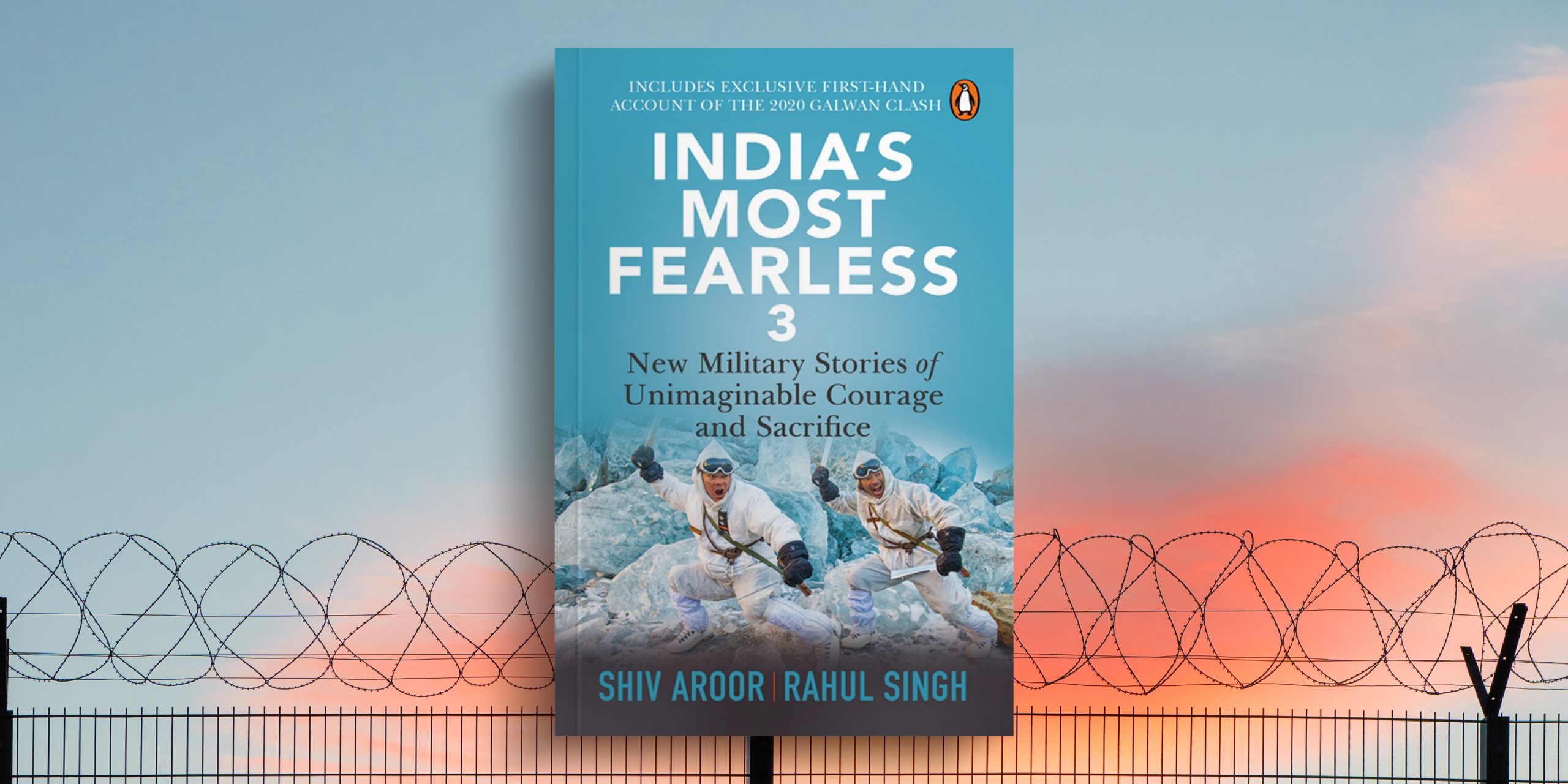
When the Galwan Valley clash happened in June 2020, the Indo-China conflict became the centre of the world’s attention. As shown in this excerpt from India’s Most Fearlesss 3, journalists Shiv Aroor and Rahul Singh have succeeded in recalibrating the narrative from speculative headlines to the real axis of the stories: the Indian Army soldiers. Read the full story of these bravehearts as well as many others in this thought-provoking book on real-life military bravery.
India’s Most Fearless 3||Shiv Aroor & Rahul Singh
*
‘I Had Never Seen Such Fierce Fighting’
The Galwan Clash of June 2020
Even above the loud, steady roar of the Galwan River, he heard the thundering footfalls. The sound of over a thousand men reverberating through the darkness, amplified by the tunnel effect of a narrow valley flanked by steep rising mountains on both sides. Peering into the black void beyond Patrol Point 14, lit only a few metres forward by hand-held torches, the reality of those sounds dawned on Havildar Dharamvir Kumar Singh of the Indian Army’s 16 Bihar infantry battalion. He clenched his eyes briefly shut to soak in every vibration. When he opened them again, he knew that the huge horde of men advancing towards his position was not marching.
They weren’t even jogging.
They were sprinting.
‘There were less than 400 of us,’ says Havildar Dharamvir. ‘We would soon discover that the number of Chinese Army soldiers running towards us was maybe three times that. We had been fighting smaller numbers of Chinese for two hours before that. But this was their main force. The all-out assault that the Chinese side was launching against us.’
An all-out assault.
Unarmed, as stipulated by decades-old protocol between the two armies, Havildar Dharamvir quickly glanced around at the soldiers with him. Even in the darkness he could tell their expressions. A curious mix of determination and fearlessness, but tinged with an edge of foreboding.
As the soldiers steeled themselves, rallied by their commanding officer and a group of younger officers, Havildar Dharamvir knew what lay ahead would need every ounce of strength the smaller force could muster. But it also made one particular man in the team even more crucial.
A non-combatant with a white suitcase.
Wading through the group of soldiers with him, Havildar Dharamvir emerged on the banks of the gushing Galwan, right where he had last seen the man he was looking for now.
With a big, unmistakable red ‘plus’ sign painted on to his parka, Naik Deepak Singh wasn’t standing. On his knees, his suitcase open with bandages and bottles of tincture, he was crouched over what appeared to be a small group of injured men, all groaning in the darkness. Three were Indian soldiers being administered first aid.
The six other soldiers receiving emergency ministrations from the young Indian Army medic weren’t Indian soldiers. They were Chinese Army personnel. Two People’s Liberation Army (PLA) officers and four jawans.
‘They are badly injured. They need to rest,’ Naik Deepak said before Havildar Dharamvir could ask. An hour earlier, the injured Chinese soldiers had been left behind by their retreating force. Naik Deepak, the young nursing assistant, had been summoned to Patrol Point 14 by his commanding officer two hours earlier. Not he, not Havildar Dharamvir and not his commanding officer knew then how crucial his crouched figure would be in the events of that night.
‘Is that your blood?’ Havildar Dharamvir bent down over Naik Deepak, inspecting a gash just above the nursing assistant’s right eyebrow.
‘It’s nothing. A piece of rock hit me. It’s superficial. Main theek hoon [I am fine],’ said Naik Deepak as he finished bandaging one of the Chinese soldiers, a young man whose face was covered with streams of blood from a head injury.
A short distance behind, at a point where the north-flowing Galwan River abruptly bent westward, Colonel Bikkumalla Santosh Babu, commanding officer of the battalion, had been alerted to the sounds of the Chinese advance. As he began to summon reinforcements and rally his much smaller force to face the arrival of the much larger Chinese advance, one thing was certain to him. No matter what transpired next in that desolate, ravine-like valley at 13,000 feet in Ladakh’s Himalayan heights, history had already been made with blood and bone that day.
As word of the lethal Galwan Valley incident shocked the world at 12.21 p.m. the following day, most would see it as a spontaneous flare-up that had ended a healthy forty-five-year run of zero fatal casualties on the India–China frontier. But waiting in the darkness on the banks of the Galwan River the previous night, Naik Deepak and Havildar Dharamvir knew that nothing, including that advancing horde of Chinese soldiers, was unplanned.
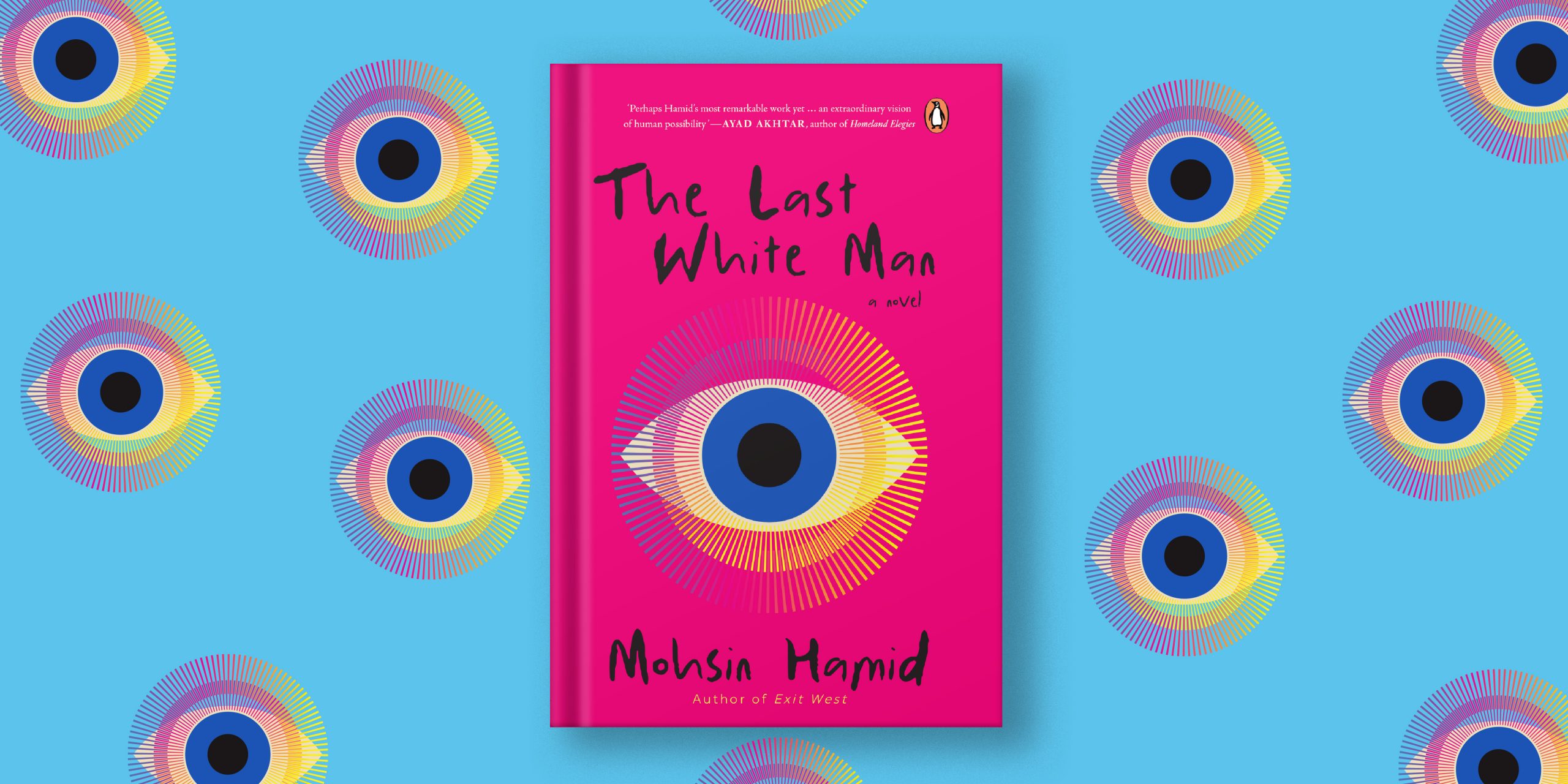
In the early twentieth century, a Bohemian writer called Franz Kafka released a strange story. The absurd but existentialist tale of a man who transforms into a huge insect is the reason we now have the term ‘Kafkaesque’. More than a century later, Pakistani author Mohsin Hamid, who last published Exit West has adapted the trope to suit contemporary anxieties about race and identity. His protagonist, a white man named Anders, wakes up in a darker skin colour. Soon, the world around him descends into chaos as more such transformations take place.
The following excerpt is the first chapter of The Last White Man. Get your copy from bookstores or Amazon.
The Last White Man||Mohsin Hamid
*
One morning Anders, a white man, woke up to find he had turned a deep and undeniable brown. This dawned upon him gradually, and then suddenly, first as a sense as he reached for his phone that the early light was doing something strange to the color of his forearm, subsequently, and with a start, as a momentary conviction that there was somebody else in bed with him, male, darker, but this, terrifying though it was, was surely impossible, and he was reassured that the other moved as he moved, was in fact not a person, not a separate person, but was just him, Anders, causing a wave of relief, for if the idea that someone else was there was only imagined, then of course the notion that he had changed color was a trick too, an optical illusion, or a mental artifact, born in the slippery halfway place between dreams and wakefulness, except that by now he had his phone in his hands and he had reversed the camera, and he saw that the face looking back at him was not his at all.
Anders scrambled out of his bed and began to rush to his bathroom, but, calming himself, he forced his gait to slow, to become more deliberate, measured, and whether he did this to assert his control over the situation, to compel reality to return through sheer strength of mind, or because running would have frightened him more, made him forever into prey being pursued, he did not know.
The bathroom was shabbily but comfortingly familiar, the cracks in the tiles, the dirt in the grouting, the streak of dried toothpaste drip on the outside of the sink. The interior of the medicine cabinet was visible, the mirror door askew, and Anders raised his hand and swung his reflection into place before his eyes. It was not that of an Anders he recognized.
He was overtaken by emotion, not so much shock, or sorrow, though those things were there too, but above all the face replacing his filled him with anger, or rather, more than anger, an unexpected, murderous rage.
He wanted to kill the coloured man who confronted him here in his home, to extinguish the life animating this other’s body, to leave nothing standing but himself, as he was before, and he slammed the side of his fist into the face, cracking it slightly, and causing the whole fitting, cabinet, mirror, and all, to skew, like a painting after an earthquake has passed.
Anders stood, the pain in his hand muted by the intensity that had seized him, and he felt himself trembling, a vibration so faint as barely to be perceptible, but then stronger, like a dangerous winter chill, like freezing outdoors, unsheltered, and it drove him back to his bed, and under his sheets, and he lay there for a long while, hiding, willing this day, just begun, please, please, not to begin.
Anders waited for an undoing, an undoing that did not come, and the hours passed, and he realized that he had been robbed, that he was the victim of a crime, the horror of which only grew, a crime that had taken everything from him, that had taken him from him, for how could he say he was Anders now, be Anders now, with this other man staring him down, on his phone, in the mirror, and he tried not to keep checking, but every so often he would check again, and see the theft again, and when he was not checking there was no escaping the sight of his arms and his hands, dark, moreover frightening, for while they were under his control, there was no guarantee they would remain so, and he did not know if the idea of being throttled, which kept popping into his head like a bad memory, was something he feared or what he most wanted to do.
He attempted, with no appetite, to eat a sandwich, to be calmer, steadier, and he told himself that it would be all right, although he was unconvinced.
He wanted to believe that somehow he would change back, or be fixed, but already he doubted, and did not believe, and when he questioned whether it was entirely in his imagination, and tested this by taking a picture and placing it in a digital album, the algorithm that had, in the past, unfailingly suggested his name, so sure, so reliable, could not identify him.
Anders did not normally mind being alone, but as he was just then, it was as if he was not alone, was, rather, in tense and hostile company, trapped indoors because he did not dare to step outside, and he went from his computer to his refrigerator to his bed to his sofa, moving on in his small space when he could not stand to remain a minute longer where he was, but there was no escaping Anders, for Anders, that day.
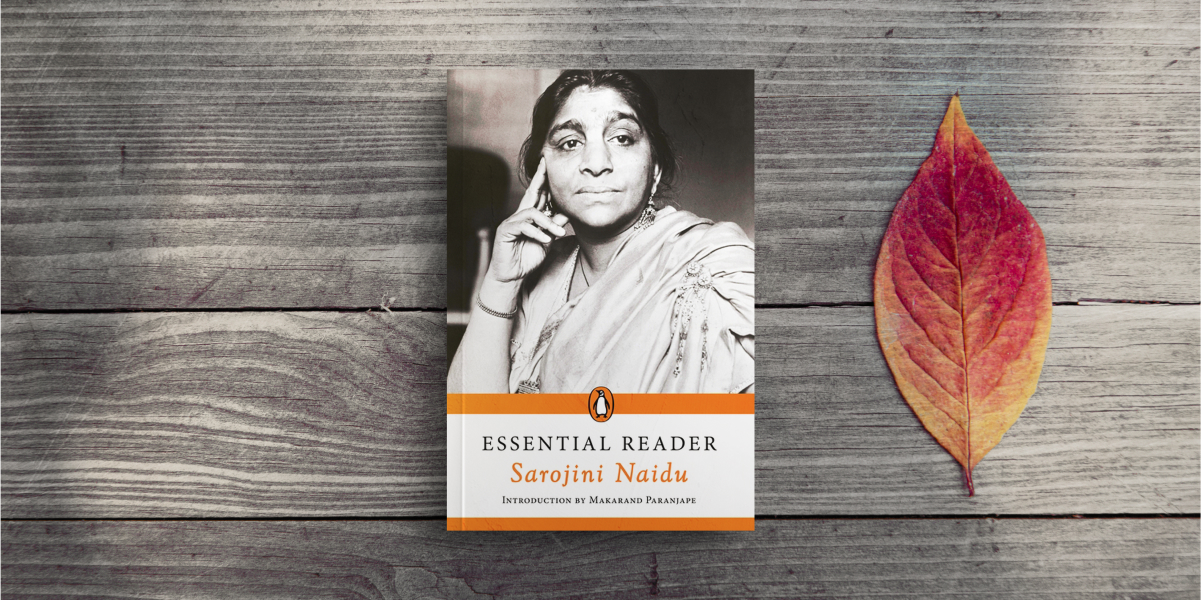
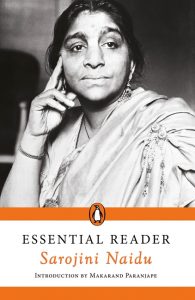
Sarojini Naidu kept the beacon fire of national life aflame. Naidu played an important role in the independence movement by showcasing her oratory skills. With her revolutionary ideas and constant efforts to speak for the rights of women, she made her place in everyone’s hearts. To date, Sarojini Naidu remains to be an inspiration for men and women all around the world.
Find out why is reading about Sarojini Naidu essential with this extract from her speech given in Essential Reader: Sarojini Naidu.
We often hear, not without a taunt, that the education of girls during the last three generations has been a failure. It could not but be so, it would have been strange if it had not been so. It could not be fruitful because it went away from our traditions and ideals. Our educationists are now awake to the fact that education should and can only be on national lines. We have produced exceptional women and brilliant women, too, not because of the present system of education but in spite of it.
If we want to reconstruct our educational system, it must be along a course which would continue to preserve the best traditions of the East and West. Our standard of education of Indian women should be a normal average. Not that one of our women should be pointed out with admiration as a wonderful and brilliant woman for her culture and attainments, but rather people should point out with horror at an illiterate woman in India.
Only this morning I was reading in one of your daily papers of what Lord Haldane recently said in connection with the granting of voting rights to the women of England. He said that the day is not very distant when people in England would wonder at their refusal to grant the parliamentary rights to women just as they now wonder as to how people kept slaves in the past. I think that time would also soon come to India when we too would wonder how we could keep out women in ignorance.
Remember that woman does not merely keep the hearth-fire of your homes burning, but she keeps also the beacon fire of national life aflame. It is she who keeps the soldier-heart in time of battle and the priest-heart at the time of peace (cheers). The power of self-surrender and self-realization had been the typical characteristics of Indian womanhood. This dual capacity of the personal and impersonal in her relation to man had always marked the Indian women. In this institution, too, I find manifest that spirit of self-surrender, joyous self-surrender, and self-realization. These are the qualities that make Indian women great and these are the qualities that l am glad to find in this Vidyalaya.
Today, we who dream dreams of the coming women of India have our hopes centered round institutions like this (cheers), institutions like that of Professor Karve at Poona, nor the institutions that only slavishly imitate men’s college but the institutions that would send forth to the world women not merely brought up and fed in the dry pages of lifeless books but rather women trained in the beauties and necessities of life. These women would go forth not bearing the burden of dead knowledge but culture transmuted in the services of humanity.
The historic significance of this crowd gathered here today lies not in its number for I have addressed crowds five times larger than this; but its significance lies in the presence of the very large number of women that are gathered here. Their presence here is the indication of the coming comradeship between men and women in India. The old partition between Mardana and Zenana is broken down forever. It is in the comradeship of sexes that future India shall come out man and woman working hand in hand and supplementing each other.
Friends, tomorrow again, I shall fare forth as a singing wanderer with my two bundles of hopes and dreams but never, never shall I forget this institution of yours which is destined to take its legitimate place in the history of the regeneration of India with the promise, the guarantee, almost the realization of the high ideal that it stands for.
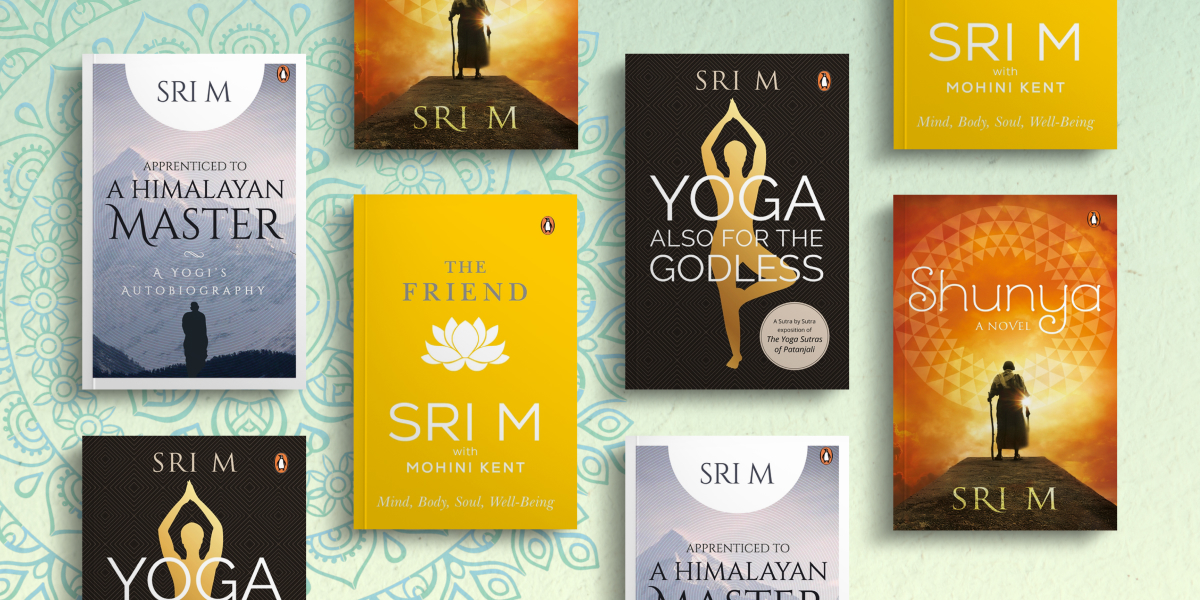
The spiritual awakening of Sri M and his journey into a yogi’s life has inspired people worldwide. Rather than focusing on a singular concept, Sri M and his foundation, Satsang Foundation, believe in generosity, faith and helping spiritual seekers no matter where they have come from.
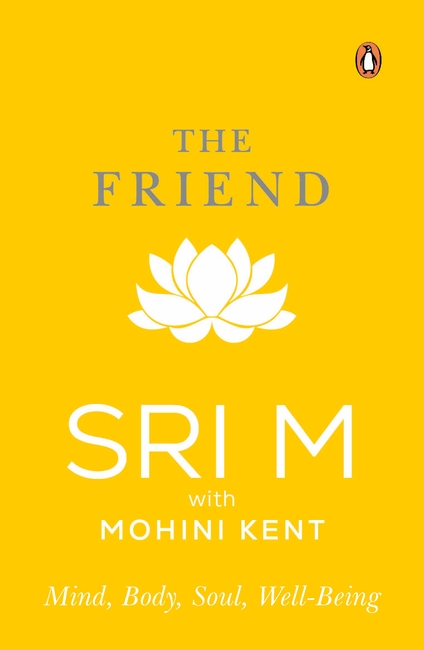
The following are glimpses of his extensive bibliography, starting from Apprenticed To A Himalayan Master to Yoga Also For The Godless. His latest book The Friend is written in the guru-disciple style of conversation with Mohini Kent.
The Friend||Mohini Kent
*
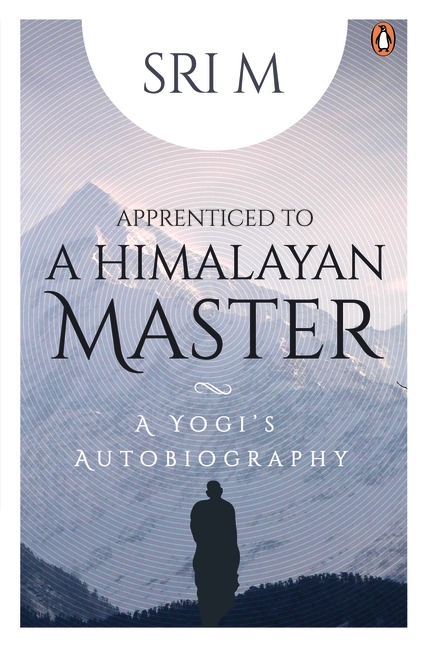
Apprenticed To A Himalayan Master
Apprenticed To A Himalayan Master||Sri M
Both my sister and I went to the Holy Angels’ Convent, which was walking distance from home. As soon as we came back from school, it was our usual practice to wash up, eat something light, and play in the backyard till sunset. At sunset, we were supposed to wash our faces, hands and feet and sit for a short Arabic and Urdu prayer with our grandmother. After that, we would finish our school homework and have dinner. Sometimes my grandmother would tell a ew stories from the Arabian Nights, or her own experiences, and then off to bed.
That particular day, my sister who was more studious than me (no wonder that she became a senior Indian Administrative Services Officer), cut short her playtime and went back into the house earlier than usual. I was wandering around the courtyard doing nothing in particular. Dusk was not far from setting in. The light had mellowed to a soft golden yellow. I thought I would go home too and perhaps find some snacks in the kitchen. So I turned towards the house. However, for reasons I cannot explain to this day, I turned instead and walked towards the jackfruit tree at the far end of the courtyard. There was someone standing under the tree and was gesturing for me to come forward.
The normal instinct would have been to bolt, but instead I was surprised to find I felt no fear whatsoever. A strange eagerness to go closer to the stranger filled my heart. I quickened my steps and was soon standing in front of him. Now I could see clearly. The stranger was tall, extremely fair and his well-built muscular body was bare except for a piece of white cloth that was wrapped around his waist and reached just above his knees. He was also barefoot.
I was intrigued by this strange man who had slightly brown and thickly matted long hair gathered over his head in a big knot that looked like a tall hat. He wore large, brown, probably copper earrings and carried a black, polished water pot in his right hand. By far, the most striking of his features were his eyes: large, brownish black, glittering and overflowing with love and affection. He put his right hand on my head without any hesitation and his kind voice said in Hindi, ‘Kuch yaad aaya,’ which means, ‘Do you remember anything?’
I understood the stranger’s words perfectly, for although our family had settled in Kerala for generations, we spoke a peculiar dialect of Urdu known as Dakkhini, very similar to Hindi. ‘Nai,’ no, I said.
He then removed his hand from my head and stroked the middle of my chest with it, saying, ‘Baad mein maalum ho jaayega. Ab vapas ghar jao.’ (You will understand later. Go home now.) I still did not understand what he was trying to convey, but instantly obeyed the command to go back home. As I hurried back, I felt as if his touch had made my heart lighter. Reaching the last step to the rear entrance of the house, I turned around to have a last glimpse of the stranger under the jackfruit tree, but he was gone. There was no one there.
*
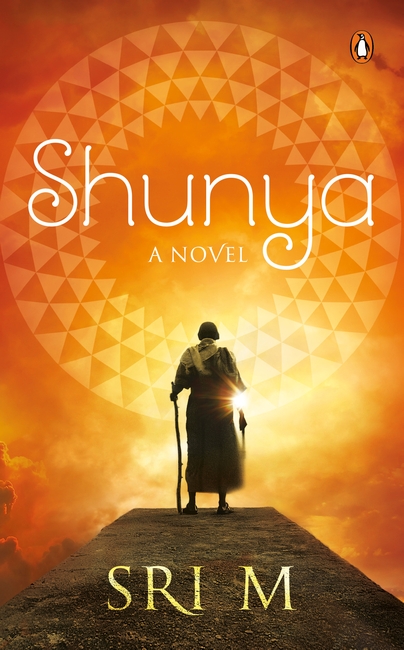
Shunya
Shunya||Sri M
For well over sixteen years, Sadasivan had to pass the old, abandoned cremation ground at midnight on his way back home from his toddy shop.
He prided himself on the fact that he didn’t believe in ghosts and ghouls and other superstitions and yet, every time he passed the gate of the crematorium, an unknown fear gripped him and his hair stood on end.
That night, too, as he whizzed past the gate on his Royal Enfield motorbike—an upgrade from his old bicycle which he had felt took ages to clear the distance—Sadasivan followed the simple rule he had devised to make things easier: ‘Don’t look in the direction of the crematorium. Go as fast as you can.’
He had almost passed its gate when he distinctly heard a voice calling him out by name. Try as he might, he couldn’t resist the temptation to turn and look. A shiver went up his spine.
A figure clad in white leapt out of the gate and, in the bright light of the solitary street lamp, Sadasivan could see him coming in his direction.
He lost control of his motorbike which hit a protruding flagstone, skid sideways, and sent him flying across the road.
As he picked himself up, he was scared stiff to see the white-robed figure right by his side.
‘Umph! Not bad. No major damage, Sadasiva. Get up and go home. Don’t be frightened. I am not a ghost, ha ha!’
Sadasivan got up, dusted his clothes and picked up the motorbike which had fallen a few metres away. The bike seemed fine except for a dent or two and one broken rearview mirror. Then he noticed that the skin on both his elbows and his left knee had peeled off. No other damage.
The stranger followed him to the bike.
‘Who the hell are you,’ shouted Sadasivan, angrily, ‘popping up from the cremation ground at midnight like a ghost? Haven’t seen you in these parts and how do you know my name?’
‘Sadasiva, I’ll see you tomorrow at your toddy shop, okay? We’ll talk then. Now go home and take care of yourself. There are no ghosts—go home.’
Sadasivan started his bike and rode home wondering who this crazy man was. He had seen him at close quarters: a single piece of unwashed white mundu was wrapped around his waist with an equally unwashed, loose cotton shirt; he was barefooted and fair-complexioned, with a pointed Ho Chi Minh beard. Who was he? Didn’t Sadasivan notice a bamboo flute in his hand? Where did he spring from? He was certainly not a local and yet he spoke Malayalam. By the time he reached his house his anger had vanished and, for some strange reason, he was looking forward to seeing the stranger the next day.
*
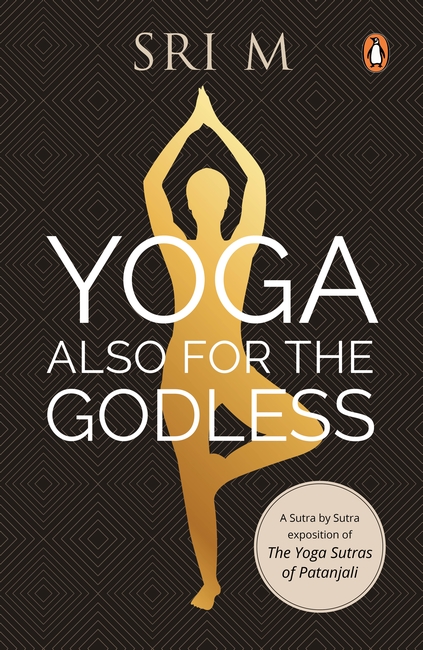
Yoga Also For The Godless
Yoga Also For The Godless||Sri M
Some years ago, I met a smart young lady who said to me, ‘M, I believe you are a yogi. I think you might be able to shed light on a question on yoga. I was very keen on practising yoga after I heard about its health benefits. The fact that many celebrities practise yoga to keep in shape also influenced me.
‘I approached a yoga teacher. He started teaching me Sanskrit shlokas in praise of God and insisted that I chant them. I tried convincing him that I was an atheist. I was born a Hindu but do not think it necessary to believe in God. He strongly felt that without invoking Lord Ganesha, I could not begin my yoga practice and insisted that the aim of yoga was God-realisation.
‘I told him that there is no God and, therefore, learning yoga for me was not to reach something that, according to me, did not exist. He was adamant and asked me to find another instructor’.
‘What do you think?’
This yoga teacher, the girl referred to, is not an exception. Thousands of people labour under the mistaken notion that yoga is a theistic philosophy and is not for atheists and agnostics. Some yoga teachers admit that mere postures can provide health benefits, but the higher aspects such as the expansion of consciousness and the attainment of Kaivalya, freeing the consciousness from the limitations of conditioned thinking and awakening to its infinite potential, is not realisable by the godless.
This book is meant precisely to change such misunderstood notions about yoga, while serving as a practical guide to practise yoga to perfection, without the ‘God crutch’. You will understand that ancient yoga philosophy has almost no interest in the concept of a creator or an all-powerful God, who controls you and throws you into heaven or hell according to his whims and fancies.
Even the great Patanjali, considered the foremost and earliest exponent of systematic yoga, in his masterpiece, The Yoga Sutras, uses Ishwara (God) only twice in the entire text and only as a useful adjunct to the main practices. Whether Patanjali’s Ishwara denotes an omnipotent ‘thundering God’ or the tranquil Purusha of Sankhya philosophy is an age-old question that needs a healthy debate. We will look into these and other points of view because to practise yoga well, an understanding of its philosophical roots is important.
Lastly, this book is an attempt to save the purity of yoga from being adulterated by religious cults and politico-religious outfits keen to exploit the masses and use them to their advantage.
*
Get your own Sri M collection from the nearest bookstore or visit Amazon.