The long weekend for the 75th Independence Day is here and there’s nothing better than plugging your earphones in and tuning in to the audiobooks that take you on a memorable and remarkable journey of India’s freedom. Check out our exclusive audiobooks curated for the occasion of India@75 and get immersed in the stories that will leave you with a sea of emotions.
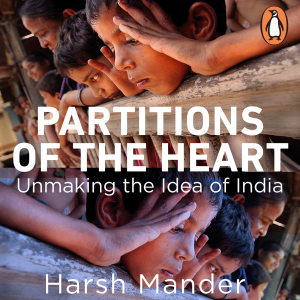
Partitions of the Heart
Partitions of the Heart | Harsh Mander
There was one partition of the land in 1947. Harsh Mander believes that another partition is underway in our hearts and minds.
How much of this culpability lies with ordinary people? What are the responsibilities of a secular government, of a civil society, and of a progressive majority? In Partitions of the Heart: Unmaking the Idea of India, human rights and peace worker Harsh Mander takes stock of whether the republic has upheld the values it set out to achieve and offers painful, unsparing insight into the contours of hate violence. Through vivid stories from his own work, Mander shows that hate speech, communal propaganda and vigilante violence are mounting a fearsome climate of dread, that targeted crime is systematically fracturing our community, and that the damage to the country’s social fabric may be irreparable. At the same time, he argues that hate can indeed be fought, but only with solidarity, reconciliation and love, and when all of these are founded on fairness.
Ultimately, this meticulously researched social critique is a rallying cry for public compassion, conscience and justice, and a paean to the resilience of humanity.
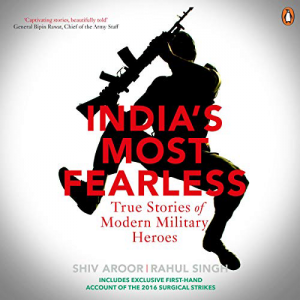
India’s Most Fearless
India’s Most Fearless | Shiv Aroor and Rahul Singh
The Army major who led the legendary September 2016 surgical strikes on terror launch pads across the LoC; a soldier who killed 11 terrorists in 10 days; a Navy officer who sailed into a treacherous port to rescue hundreds from an exploding war; a bleeding Air Force pilot who found himself flying a jet that had become a screaming fireball . . .
Their own accounts, or of those who were with them in their final moments. India’s Most Fearless covers fourteen true stories of extraordinary courage and fearlessness, providing a glimpse into the kind of heroism our soldiers display in unthinkably hostile conditions and under grave provocation.
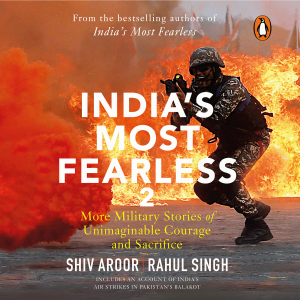
India’s Most Fearless 2
India’s Most Fearless 2 | Shiv Aroor and Rahul Singh
Untold accounts of the biggest recent anti-terror operations
First-hand reports of the most riveting anti-terror encounters in the wake of the 2016 surgical strikes, the men who hunted terrorists in a magical Kashmir forest where day turns to night, a pair of young Navy men who gave their all to save their entire submarine crew, the Air Force commando who wouldn’t sleep until he had avenged his buddies, the tax babu who found his soul in a terrifying Special Forces assault on Pakistani terrorists, and many more.
Their own stories, in their own words. Or of those who were with them in their final moments.
The highly anticipated sequel to India’s Most Fearless brings you fourteen more stories of astonishing fearlessness and gets you closer than ever before to the personal bravery that Indian military men display in the line of duty.
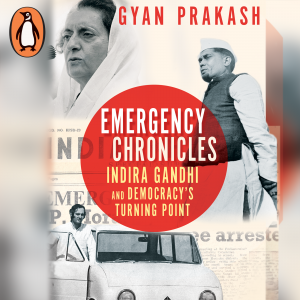
Emergency Chronicles
Emergency Chronicles | Gyan Prakash
As the world once again confronts an eruption of authoritarianism, Gyan Prakash’s Emergency Chronicles takes us back to the moment of India’s independence to offer a comprehensive historical account of Indira Gandhi’s Emergency of 1975-77. Stripping away the myth that this was a sudden event brought on solely by the Prime Minister’s desire to cling to power, it argues that the Emergency was as much Indira’s doing as it was the product of Indian democracy’s troubled relationship with popular politics, and a turning point in its history.
Prakash delves into the chronicles of the preceding years to reveal how the fine balance between state power and civil rights was upset by the unfulfilled promise of democratic transformation. He explains how growing popular unrest disturbed Indira’s regime, prompting her to take recourse to the law to suspend lawful rights, wounding the political system further and opening the door for caste politics and Hindu nationalism.
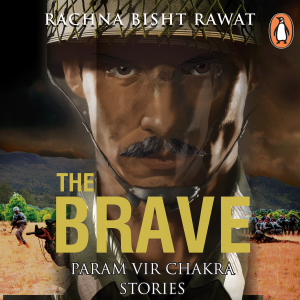
The Brave
The Brave | Rachna Bisht Rawat
21 riveting stories from the battlefield about how India’s highest military honour was won
The Brave takes you to the hearts and minds of India’s bravest soldiers, all of whom won the Param Vir Chakra, India’s greatest military honour. With access to the Army, families and comrades-in-arms of the soldiers, Rachna Bisht Rawat paints the most vivid portrait of these men and their extraordinary deeds.
How hard is it to fight at 20,000 feet in sub-zero temperatures? Why did Captain Vikram Batra say ‘Yeh dil maange more’? How do wives and girlfriends of soldiers who don’t return cope? What happens when the enemy is someone that you have trained? How did the Charlie Company push back the marauding Chinese? How did a villager from Uttar Pradesh become a specialist in destroying tanks?
Both gripping and inspiring, The Brave is the ultimate book on the Param Vir Chakra.
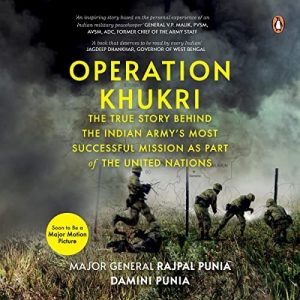
Operation Khukri
Operation Khukri | Major General Rajpal Punia, Damini Punia
The year was 2000. Sierra Leone, in West Africa, had been ravaged by years of civil strife. With the intervention of the United Nations, two companies of the Indian Army were deployed in Kailahun as part of a United Nations peacekeeping mission.
Soon, the peaceful mission turned into a war-like standoff between Major Punia’s company and the Revolutionary United Front (RUF) rebels in Kailahun, with the Indian peacekeepers cordoned off for seventy-five days without supplies. The only way home was by laying down their weapons.
Operation Khukri was one of Indian Army’s most successful international missions, and this book is a first-hand account by Major Rajpal Punia, who, after three months of impasse and failed diplomacy, orchestrated the operation, surviving the ambush of the RUF in prolonged jungle warfare twice, and returning with all 233 soldiers standing tall.
With a slight drop in temperatures peeking around the corner, take it easy with the seasonal change by going through our new releases for August. From a ghost hotel to a quirky love story, there’s something for every kind of mood wave you’re riding.
*
The Bellboy by Anees Salim
The Bellboy||Anees Salim
Latif’s life changes when he is appointed bellboy at the Paradise Lodge – a hotel where people come to die.
After his father’s death, drowned in the waters surrounding their small Island, it is 17-year-old Latif’s turn to become the man of the house and provide for his ailing mother and sisters. Despite discovering a dead body on his first day of duty, Latif finds entertainment spying on guests and regaling the hotel’s janitor, Stella, with made-up stories. However, when Latif finds the corpse of a small-time actor in Room 555 and becomes a mute witness to a crime that happens there, the course of Latif’s life is irretrievably altered. The Bellboy is as much a commentary on how society treats and victimizes the intellectually vulnerable as it is about the quiet resentment against religious minorities in India today.
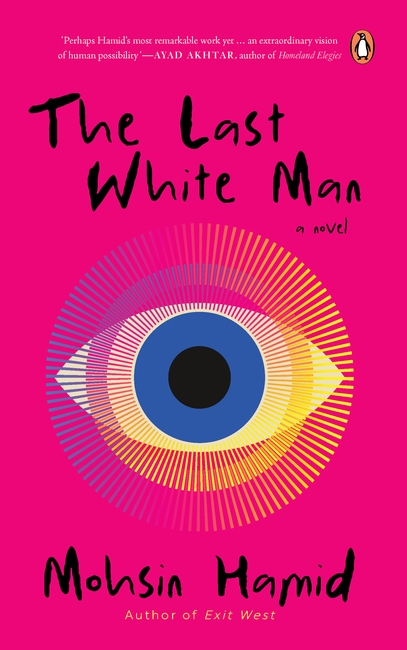
The Last White Man by Mohsin Hamid
The Last White Man||Mohsin Hamid
One morning, Anders wakes to find that his skin has turned dark, his reflection a stranger to him. At first, he tells only Oona, an old friend, newly a lover. Soon, reports of similar occurrences surface across the land. Some see in the transformations the long-dreaded overturning of the established order, to be resisted to a bitter end. In many, like Anders’s father and Oona’s mother, a sense of profound loss wars with profound love. As the bond between Anders and Oona deepens, change takes on a different shading: a chance to see one another, face to face, anew.
Challenges To A Liberal Polity by M Hamid Ansari
Challenges To A Liberal Polity||M Hamid Ansari
From Nehru’s vision for India as a major world power to the issues of citizenship, religion, democracy, the idea of plurality and Muslim identity in Indian society, inclusion/exclusion of Indian Muslims, the ‘mainstream’ decision-making process in India, the role of women in order to build a compassionate society, the implication for dissent, Muslims’ role and contribution to Indian culture, civilization and nation-building in the post-Independent India, among others, the book thrashes some of the burning issues of Indian polity and society.
Comprehensive, argumentative and evocative, this title will interest not only a broad spectrum of readers but also politicians, policymakers and students and scholars of Indian politics, history and sociology.
Chorashastra by V.J. James
Chorashastra trans. Morley J. Nair ||V.J. James
Hoping to break out of his coconut-robbing father’s petty legacy and strike it big, a small-time thief breaks into the house of an eccentric professor. A strong believer in the theory that early Indian civilisations were scientifically advanced, the professor spends his days salvaging ancient texts, long forgotten or overlooked by scholars of present times. On the night of the break-in, he is immersed in Chorashastra, a manuscript rendered brittle and yellow by centuries, that holds within its pages mindboggling tips and tricks for thieves- most incredibly, the ability to open a lock by just looking at it. He hails the arrival of the thief as a sign and decides to test its theories on him.
Known for his subversive plots and narrative devices that mark a clear departure from contemporary Malayalam storytelling, V.J. James’s Chorashastra tells a gripping story of untethered ambition and the inevitable chase between crime and justice.
When I Am With You by Durjoy Datta
When I Am With You||Durjoy Datta
You can plan everything, but you can’t plan with whom and when you’ll fall in love, isn’t it?
Aishwarya, at twenty-eight years, would rather be a single mother than trust the ‘normal’ family structure. On her mind is the ambitious and good-looking Akshay, perfect genetic material, but he’s not ready to be part of her plans. Yet.
In comes Dhiren, who has made and lost his money in cryptocurrency. He takes up the first floor of Aishwarya’s nursery building and, by a queer coincidence, begins to work for her. Her friends Smriti and Vinny, as protective as mother hens, warn her against Dhiren. There is something that he’s hiding along with his friend Neeraj—they just don’t know what.
Crazy, quirky and so utterly romantic, this book is the ultimate relationship roller coaster!
India’s Most Fearless 3 by Shiv Aroor & Rahul Singh
India’s Most Fearless 3||Shiv Aroor & Rahul Singh
An army medic who went beyond the call of duty amid a frenzy of treacherous bloodletting in Ladakh’s Galwan while his fellow soldiers fought the Chinese to death; the crew of an Indian Navy destroyer that put everything on the line to rescue hundreds from Cyclone Tauktae in the Arabian Sea; an Indian Air Force pilot who ejected from his doomed fighter less than two seconds before it hit the ground, only to find he was missing a leg. This book presents their accounts, or of those who were with them in their final moments. India’s Most Fearless 3 features ten true stories of extraordinary courage and fearlessness, providing glimpses of the heroism Indian soldiers have displayed in unthinkably hostile conditions and under grave provocation.
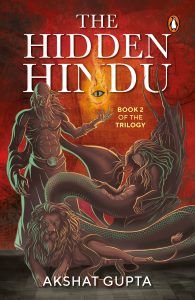
The Hidden Hindu Book 2 by Akshat Gupta
The Hidden Hindu 2||Akshat Gupta
The first battle is lost. The book of Mritsanjeevani is in the wrong hands but Nagendra’s plans are not limited only to immortality. What seemed to be the end of all wars was just the beginning of an incredible journey in search of a hidden verse. Om is still incomplete without the knowledge of his past, but he is not alone anymore. Two of the mightiest warriors of all time stand by his side. Two mysterious warriors stand unconditionally with Nagendra too or is there a hidden agendas behind all the allies? Who are LSD and Parimal in real and who is Om? Tighten your seat belts for an adventure in search of words that hold a bigger purpose than even immortality for Divinities and Demons.
Reading Sri Aurobindo by Gautam Chikermane & Devdip Ganguli
Reading Sri Aurobindo||Gautam Chikermane & Devdip Ganguli
Sri Aurobindo dedicated his life to the transformation of humanity. His journey saw him traverse many paths, including that of poet, journalist, jailed revolutionary, philosopher, and radical mystic. Essays, translations, literary criticism, political articles, philosophical treatises, poetry, epics, plays and short stories-his writings encompass the depth and range of his extraordinary life. The modern sage commented on spiritual texts such as the Vedas, the Upanishads and the Bhagwad Gita, authored an epic poem, Savitri, presented his integral vision in The Life Divine, wrote on contemporary issues, all the while writing thousands of letters to guide his disciples, and even documenting his inner life in meticulous detail.
Stories and Sutras by Virat Chirania
Stories & Sutras||Virat Chirania
India is the birthplace of legends, the mother of culture and tradition, and as Indians, we love our stories. This book contains ten powerful stories of the original superheroes-stories that will leave a permanent impression on your consciousness and spill over in your conversations, stories of passion and patriotism, of valour and wit, of devotion and sacrifice, and of intelligence and faith.
When decoded, the accounts in this book are not merely stories-they are a treasure trove of wisdom, life hacks, leadership and management sutras. Did you know that Lord Hanuman can teach us communication skills, that Chhatrapati Shivaji Maharaj can teach us how to run a startup and that Chanakya shows us how to use emotional intelligence in business strategy? Have you ever imagined Arjuna, Narada Muni, Kabir and Adi Shankaracharya as leaders and influencers and do you know about Rani Abbakka, one of the unsung battle queens of India? Stories and Sutras is a journey of these incredible tales and priceless sutras-an edutainment experience that is uniquely Indian and utterly global.
Heavens And Earth by Garima Garg
Heavens and Earth||Garima Garg
The ancient astrologer turned the impulse to answer this question into something meaningful by mapping the night skies and attempting to see in the movement of planets and stars an impact on human lives. But did all astrologers see the same night sky? Did the observations of the Hindu astrologer match those of the Greek? How did the Egyptians and the Chinese understand the influence of the Sun and the Moon on our lives?
Heavens and Earth examines the history of astrology, its many different systems and its development as a modern cultural phenomenon. Deeply researched and expertly narrated, the book contextualises the role of astrology in the ever-evolving human perspective of the cosmos and in understanding our place in it.
Temple Lamp by Mirza Ghalib
Temple Lamp trans. Maaz Bin Bilal||Mirza Ghalib
The poem ‘Chirag-e-Dair’ or Temple Lamp is an eloquent and vibrant Persian masnavi by Mirza Ghalib. While we quote liberally from his Urdu poetry, we know little of his writings in Persian, and while we read of his love for the city of Delhi, we discover in temple Lamp, his rapture over the spiritual and sensual city of Banaras.
Chiragh-e-dair is being translated directly from Persian into English in its entirety for the first time, with a critical Introduction by Maaz Bin Bilal. It is Mirza Ghalib’s pean to Kashi, which he calls Kaaba-e-Hindostan or the Mecca of India.
The Many Lives Of Mangalampalli Balamuralikrishna: An Authorized Biography by Veejay Sai
The Many Lives of Mangalampalli Balamuralikrishna||Veejay Sai
This is a story of the many lives of Dr Mangalampalli Balamuralikrishna.
Veejay Sai’s in-depth research into his life and work led him deep into unseen archival material and across the Carnatic musical landscape of erstwhile Andhra Pradesh, Karnataka and Tamil Nadu. Fortified by interviews with his family members, disciples and peers, The Many Lives of Mangalampalli Balamuralikrishna, a definitive biography of the musical genius, is not only a revealing account of the personal traits and facets of an unparallelled genius, but is also a portrait of India’s classical music world, a place as much of beauty as of untrammelled egos.
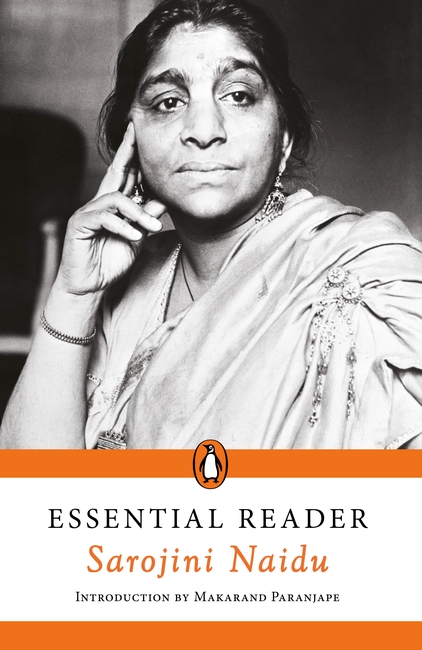
Essential Reader: Sarojini Naidu
Essential Reader: Sarojini Naidu
Sarojini Naidu was a prolific writer and speaker, publishing three collections of poetry during her life and delivered many rousing speeches throughout the freedom struggle and after India gained Independence. This book compiles her best-known work, as well as letters she wrote throughout her life to Mahatma Gandhi, Jawaharlal Nehru, Rabindranath Tagore and others, to provide a glimpse into the kind of person she was and the ideas she believed in.
Through these pages, we can witness her innermost thoughts and feelings, and the important role she played in shaping the country’s freedom struggle and its ideas as a young nation, particularly through rousing speeches on the Education of Indian Women and the Battle of Freedom is Over, which were broadcast over the All India Radio on 15 August 1947.
How To Raise A Plant Baby by Vinayak Garg
How to Raise a Plant Baby||Vinayak Garg
Written for all plant parents trying to raise their plant babies in an urban setting, this book is built on basic principles that keep plants healthy and covers all topics that any plant parent need to know-how to prepare their space, how to choose the right plants for their home, how to care for the plants and keep them happy and how to get family and friends started with plants of their own.
With stories from the Lazy Gardener community, supplemented with chapter-end summaries, explanatory illustrations and plant lists, the book will equip the reader to ask the right questions as they continue to garden and cultivate their knowledge of gardening. Useful for both new and experienced plant parents, Vinayak Garg’s How to Raise a Plant Baby guides them and explains everything they need to know.
Sojourn by Amit Chaudhuri
Sojourn||Amit Chaudhuri
An unnamed man arrives in Berlin as a visiting professor. It is a place fused with Western history and cultural fracture lines. He moves along its streets and pavements; through its department stores, museums and restaurants. He befriends Faqrul, an enigmatic exiled poet, and Birgit, a woman with whom he shares the vagaries of attraction. He tries to understand his white-haired cleaner. Berlin is a riddle-he becomes lost not only in the city but in its legacy. Sealed off in his own solitude, and as his visiting professorship passes, the narrator awaits transformation and meaning. Ultimately, he starts to understand that the less sure he becomes of his place in the moment, the more he knows his way.
The Dolphin And The Shark by Namita Thapar
The Dolphin and the Shark||Namita Thapar
The Dolphin and the Shark is born out of Namita Thapar’s experiences of being a judge on Shark Tank India and running the India business of the pharma company Emcure as well as her own entrepreneurship academy. The book emphasizes how leaders of today need to strike a balance between being a shark (aggressive leader) and a dolphin (empathetic leader).
Divided into fifteen chapters, the book focuses on various business mantras. The author shares personal stories, anecdotes about Emcure’s evolution over the years as well as learnings from entrepreneurs who have inspired her. The Dolphin and the Shark also include references to pitches from Shark Tank India‘s Season 1. Straight from the heart, candid and authentic, this book will inspire and motivate every reader to push their limits.
Leaders In The Making by Arvind N Agrawal & T V Rao
Leaders In The Making||Arvind Agrawal & T.V. Rao
Leaders in the Making provides in-depth interviews of thirty HR leaders (drawn from public as well as private sectors), including stalwarts like Santrupt Misra, Rajeev Dubey, Aquil Busrai, Anil Sachdev, N.S. Rajan and Anil Khandelwal. These life stories provide highlights of early childhood, education and career over the years. They include the points of inflexion, major influencers and lessons learnt to become who they became. The authors provide an analysis of these thirty stories to establish a pattern of the life journeys, competencies and values these leaders displayed.
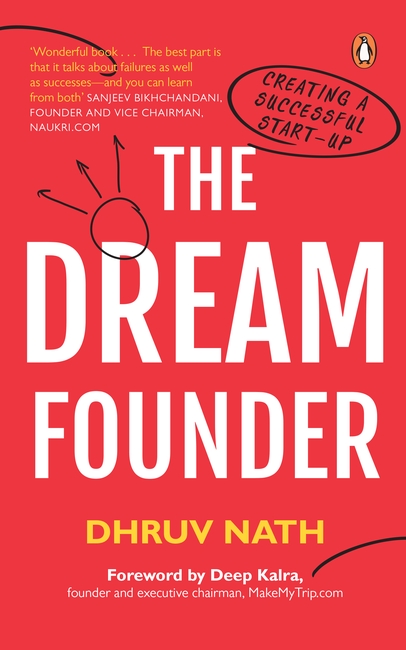
The DREAM Founder by Dhruv Nath
The DREAM Founder||Dhruv Nath
The DREAM Founder is an essential entrepreneurship guide for early-stage Indian start-ups. It also has interviews with some of the most successful entrepreneurs in the world of start-ups, such as Sanjeev Bikhchandani of Naukri.com, Deepinder Goyal of Zomato, Meena Ganesh of Portea Medical and Dr Annurag Batra of Businessworld.
Including start-ups that have succeeded and also those who have failed, Dhruv Nath shares how you can become a DREAM Founder with these simple steps:
· Dream big
· Right team
· Execution
· Attitude
· Make opportunities out of crises
The IT Story Of India by S. ‘Kris’ Gopalakrishnan, N. Dayasindhu & Krishnan Narayanan
The IT Story Of India||S. ‘Kris’ Gopalakrishnan, N. Dayasindhu & Krishnan Narayanan
The story of Indian IT is the story of trials and triumphs, persistence and resilience, and luck, foresight and planning. This book chronicles the history of Indian IT over the past six decades. It includes interviews with over fifty pioneers who built and shaped the Indian IT sector. Conceived as a book on business history, this book analyses the evolution of India’s IT sector and helps readers understand the importance of collective efforts in building world-class sustainable institutions.
The Cave: An Internet Entrepreneur’s Spiritual Journey by Alok Kejriwal
The Cave||Alok Kejriwal
By the time he was thirteen, Alok Kejriwal had begun to have profound spiritual experiences. Separated from his parents at birth, he was raised under the loving care of his Nana and Nani. During the course of these life-altering events, Alok realized that his life was not going to be a usual one. Over the next few years, Alok met unusual and blessed holy men who uplifted him. He visited temples and sacred places where he had transformative experiences. In November 2011, Alok visited a remote cave near Ranikhet in Uttarakhand that changed him forever. The Cave is an insightful, honest and deeply personal account of Alok’s spiritual journey. With characteristic candour, he shares intimate aspects of his life that bring meaning and balance to his journey as a successful digital entrepreneur.
Your Complete Guide To Wellness Box Set
Your Complete Guide to Wellness Boxset
In the ten-year anniversary edition of the classic that revolutionized the way Indians think about food and their eating habits, Don’t Lose Your Mind, Lose Your Weight teaches you simple steps you can take towards maintaining a healthy and proper diet and understanding your body and its nutritional requirements.
In FROM XL TO XS, Bollywood’s celebrated yoga instructor Payal Gidwani Tewari teaches you simple and easy to follow principles and exercise routines to lose (or gain) weight, stay fit, and transform your body structure. With photographs, celeb workouts, and useful tips by stars, From XL to XS is the best gift you can give yourself.
In Skin Rules, Dr Jaishree Sharad, one of India’s top cosmetic dermatologists, gives you a revolutionary six-week plan to healthy, blemish-free skin. From the basics-identifying your skin type, acquainting yourself with the fine print on labels-to home remedies, choosing the right make-up and the latest advancements in skincare treatments, this book has the answers to all your skin woes.
Wealth Creation Made Easy Boxset by Saurabh Mukherjea
Wealth Creation Made Easy Boxset||Saurabh Mukherjea
Written by India’s most loved fund manager, this box set is the ultimate toolkit for being financially free. Diamonds in the Dust offers Indian savers a simple, yet highly effective, investment technique to identify clean, well-managed Indian companies that have consistently generated outsized returns for investors. Based on in-depth research conducted by the award-winning team at Marcellus Investment Managers, it uses case studies and charts to help readers learn the art and science of investing in the US$3 trillion Indian stock market. The book also debunks many notions of investing that have emerged from the misguided application of Western investment theories in the Indian context. Vital and indispensable, this book will serve as the ultimate manual on investing and provide practical counsel to readers to achieve their financial goals. Coffee Can Investing offers a simple strategy to make not 10 not 15 but 20 per cent compound annual growth rate (CAGR) on your investments. Using this strategy one can easily grow their money four to five times whilst taking half the risk compared to the overall market. The book decodes the secret to identifying low-risk investments that generate great returns.
What if we tell you that it’s one of the keys to help you achieve any goal you set your mind to?
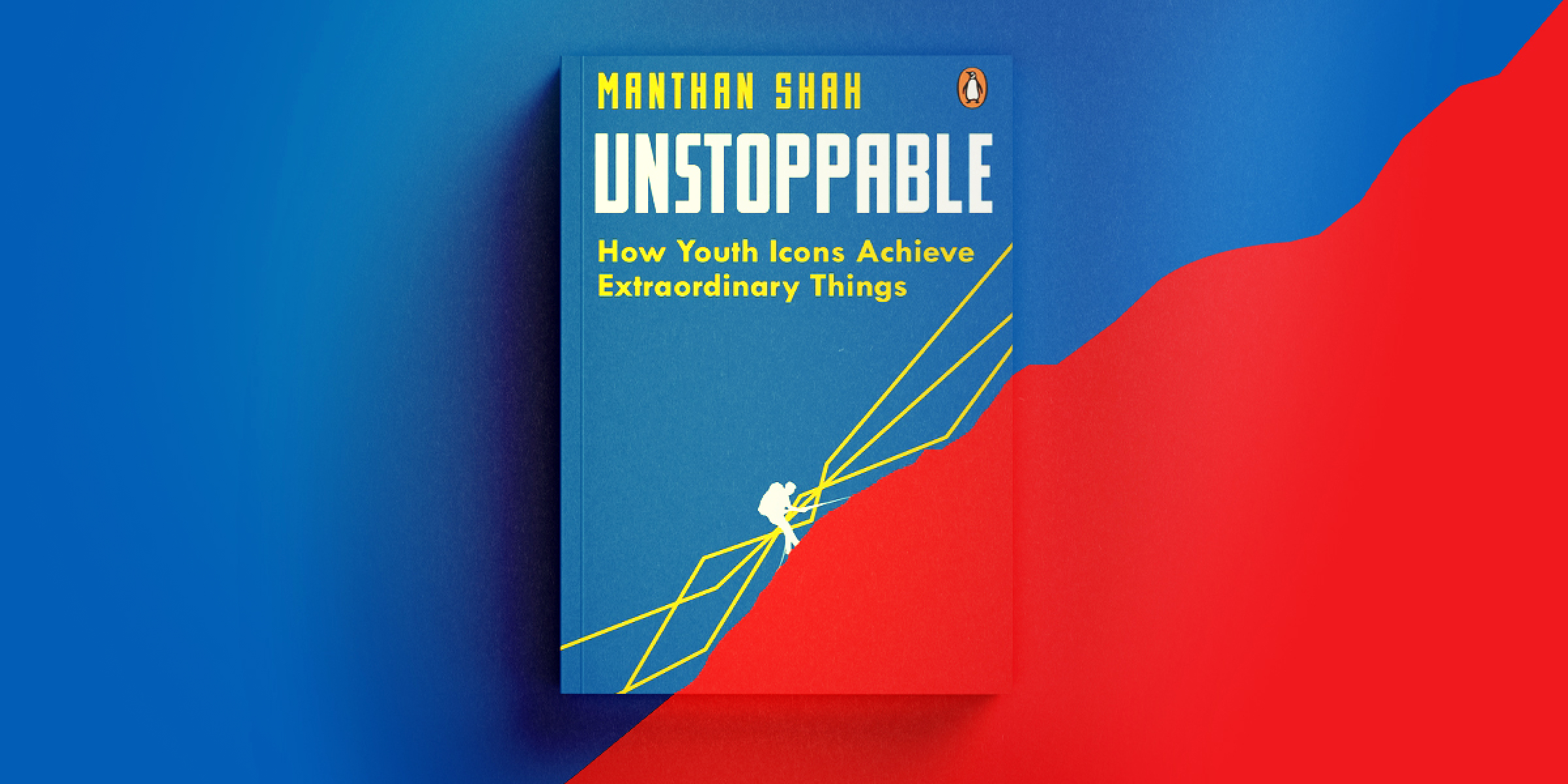
Manthan Shah’s Unstoppable, a book full of interviews and analysis of young achievers of India, explores the growth mindset and also tells us how we can help build one too! Here is an excerpt from the book showcasing some of the incredible information on the same:
A growth mindset is basically about believing that your abilities can be developed.
It is not simply about being open-minded and flexible in accepting your mistakes. It is about being dedicated to growing your talents. It is not just about efforts but also about trying new strategies (and discarding the ones that are not working).
You can build a growth mindset by following these self-directed exercises as adapted from the interview with Stefanie Faye, an award-winning neuroscience specialist and educator. This exercise entails four steps – goal setting, learning about neuroplasticity, celebrating mistakes, and exposing yourself to micro experiences, while highlighting micro progress. This will lower your fear of failure and increase your willingness to go out of your comfort zone and grow as a person.
1. Have an other-ish goal. In his landmark book Give and Take, Adam Grant uses the term otherish as a person who is a giver, you will also see this in our Giving Back chapter.
In terms of goals, these are the opposite of selfish goals, and a bit different than the selfless goals, other-ish goals are the ones where you have your own interests in mind, while having a high concern for others too. As defined in the chapter on grit, you must have a higher-order goal. This goal should be motivated by your personal benefits and by a desire to help the world around you.
For example, at the time of writing this book, my personal long-term goal is to become an expert in the field of sustainable finance and help India achieve its net-zero carbon emission targets by 2070. This goal is at the intersection of my interests and qualifications in finance, and my desire to do something for my country.
2. Talk about neuroplasticity. Learn it, understand it and
reflect on how it plays a role in your life.
3. Celebrate mistakes.
4. Expose yourself to micro experiences and highlight micro progress.
Unstoppable || Manthan Shah
To learn more about these last three steps of efficiently building a ‘growth mindset’, get your copy of Manthan Shah’s Unstoppable. Out now!
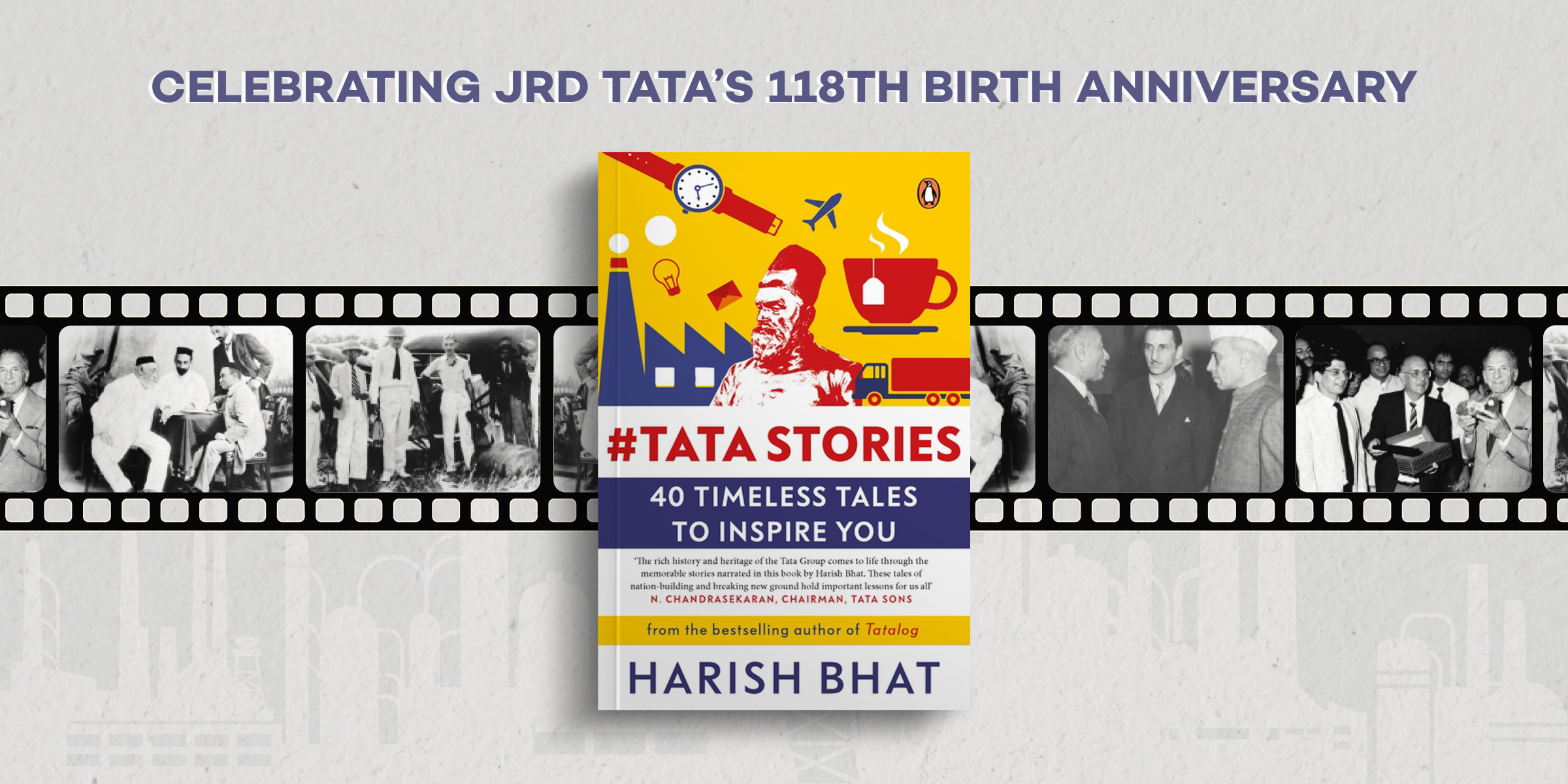
On the 118th birth anniversary of the Father of Aviation in India, J.R.D Tata, read this excerpt from Harish Bhat’s #Tatastories about how the man who championed the art of giving taught lessons to the world to strive for excellence.
*
#Tatastories || Harish Bhat
J.R.D. Tata was the founder of Tata Airlines, which went on to become Air India. Way back in the 1940s and 1950s, this airline was the first Indian global entity, proudly taking the Indian flag to international skies. In 1948, Air India inaugurated its first international service, from Mumbai to London, a proud moment for the country.
J.R.D. was determined to make Air India the best airline in the world, notwithstanding the fierce competition from a host of other global airlines. For him, this was essential, because Air India was not just an airline, but a proud carrier of India’s image across the world. During the inaugural international flight, on which he also flew, he watched carefully for the reactions of passengers, and was greatly relieved when everything went very well, including landing in London right on time. He said, ‘It was for me a great and stirring event . . . seeing the Indian flag displayed on both sides of the Malabar Princess [the name of that particular aircraft] as she stood proudly on the apron at the airports of Cairo, Geneva and London filled me with joy and emotion.’
Thereafter, he was obsessed with making the airline special, and he knew that this required the highest standards of customer service and excellence. He told the airline’s employees, ‘I want that the passengers who travel with us do not have occasion to complain. I want to establish that there is no airline which is better liked by passengers, that is safer and more punctual, where the food and service is better, and which sets a better image than Air India.’
As early as 1949, with constant attention to every small detail, these aspirations were coming true. In fact, the prime minister of India, Pandit Jawaharlal Nehru, wrote to J.R.D. Tata on 7 May 1949, specifically complimenting him on the high quality offered by the airline. Nehru wrote: ‘This is just a brief letter to express my great appreciation of the quality of the Air India International Service. I have now travelled on four occasions between India and England in it, and the more experience I have had of it, the better I like it. I think that Air India International has played not an unimportant part in raising the prestige of India abroad . . . So, congratulations.’
Air India soon became legendary for its punctuality. Legend has it that people in Geneva, in those years, could set their watches to the time at which the Air India flight flew over their city. In those initial days, J.R.D. would fly one of the aircraft himself once every fifteen days. During these flights, he would insist on such high standards of accuracy that other pilots tried to dodge flying with him. The historian R.M. Lala tells us that on one such flight, J.R.D. asked his co-pilot, Capt. Visvanath, for the ground speed. ‘145 miles per hour,’ replied Visvanath. J.R.D. was not satisfied. He took out his slide rule, worked out his own calculations, and responded, ‘It’s 145.5.’ Those were the standards of accuracy he expected if the airline was to keep perfect time.
J.R.D. Tata’s blue notes were extraordinary in their attention to detail and relentless push for excellence in all matters big and small. After every Air India flight that he took, he would send these ‘blue notes’ to the management, summarizing his observations, including encouraging comments and scathing criticism. Here are some extracts from his notes in the year 1951, after he had flown Air India to Europe and back home: ‘Chairs: I found on VT-DAR that some of the seats recline much more than the others. As a result, those seats are more comfortable. I suggest that all our seats be adjusted for a maximum reclining angle, except, of course, the rearmost seats which are limited by bulkheads.’
And even more interesting is this note: ‘The tea served on board from Geneva is, without exaggeration, indistinguishable in colour from coffee . . . I do not know whether the black colour of the tea is due to the quality (of tea leaves) used or due to excessive brewing. I suggest that the Station Manager at Geneva be asked to look into the matter.’
Because of such meticulous attention to detail and excellence, Air India topped the list of airlines in the world in 1968 as per a survey done by the Daily Mail, London. In fact, in that same year, 75 per cent of Air India’s passengers were foreigners who came from countries with their own airlines. I have also heard that when Singapore wanted to launch an airline (now it is famous as Singapore Airlines), Prime Minister Lee Kuan Yew advised his team to study the high standards that had been set by Air India.
…
In my office, for the past three decades, stands a quote from J.R.D. Tata, which guided his own actions, and which inspires me every single day. He said: ‘One must forever strive for excellence, or even perfection, in any task however small, and never be satisfied with the second best.’ Remember, for instance, his note on tea and coffee.
*
Get a copy of #Tatastories from your nearest bookstore or online.
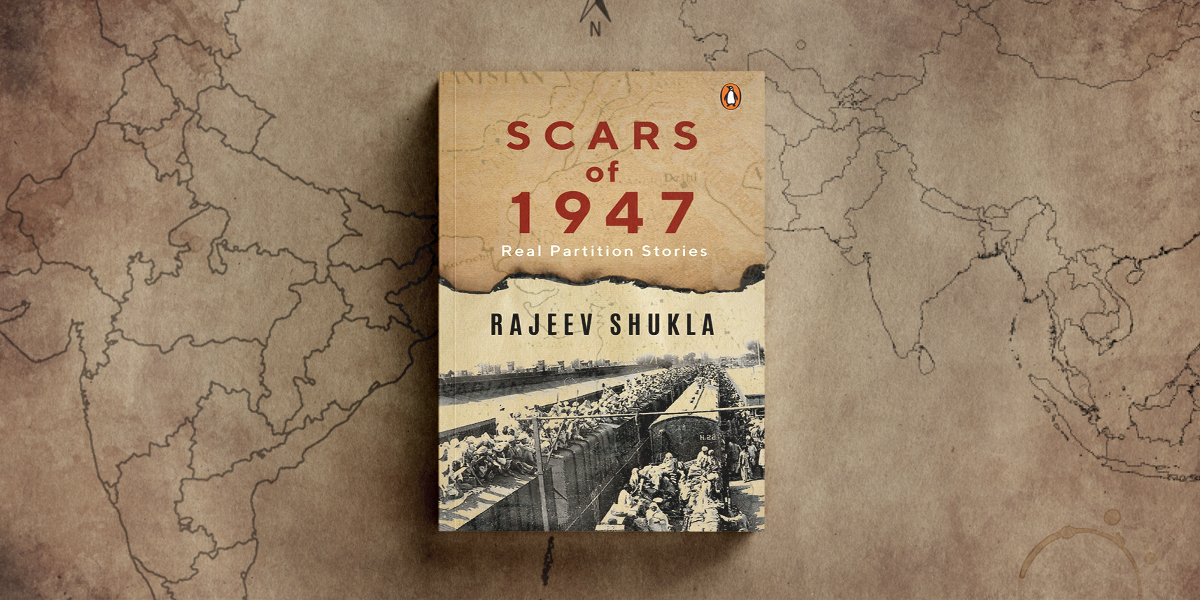
The India-Pakistan partition resulted in a sea of emotions in those who witnessed it. The pangs of separation of family members echo to date. Rajeev Shukla, in Scars of 1947, pens down the stories of people and families who faced the consequences of the partition firsthand. One such story is of the Prime Minister of India, Dr. Manmohan Singh, who hailed from the Jhelum district (part of present-day Pakistan). Let’s read an excerpt from the book to find out how partition hit Manmohan Singh and his family.
*
Scars of 1947 || Rajeev Shukla
The year 1947 was Manmohan’s final year in school. The matriculation exam took place in the month of March. The communal tension during this time was getting worse every day because of the impending partition of the country. He sat for his exams in an environment filled with harrowing sights of violence; the results were never announced for the exams as Peshawar went on to become a part of Pakistan.
In 1947, the Hindu–Muslim clashes had begun, and they became more and more violent with each passing day. At [Manmohan Singh’s] village, Muslims outnumbered all others and as a result, the village had two masjids and one gurudwara. One day, when the tension between the communities was at its peak, it was decided by the elders of the village that they would sit with each other and try to diffuse the tension with discussions. The elders of the village, who were Hindu, Sikhs and Muslims, were called. However, the youngsters of the dominant Muslim community planned a massacre and killed all the Hindu and Sikh elders, among whom was Manmohan Singh’s grandfather who had brought up young Manmohan and of whom Manmohan was very fond. When his grandfather was killed, Manmohan was living with his father in Peshawar. One of his uncles who lived in Chakwal sent an unfortunate four-word telegram to his brother (Manmohan’s father) in Peshawar that read, ‘Mother Safe, Father Killed’. Manmohan was about fifteen years old at the time and says that he still remembers that dreadful telegram message. He says that on the one hand, this group of young Muslim men tricked and killed his grandfather and on the other hand, in that very neighbourhood, there was a Muslim family who hid his grandmother and protected her from the bloodthirsty mob.
These incidents from his childhood were so deeply etched in his memory that while working for the United Nations Conference on Trade and Development in the United States of America, when he was invited by his friend to Pakistan, he could not resist visiting. His friend Mahbub-ul-Haq had studied with him at Cambridge University in the United Kingdom. He later served as the finance minister of Pakistan. Mahbub used to stay in Rawalpindi, Pakistan, in those days. It was in 1968 that Manmohan Singh visited Pakistan. After the Indo-Pak War of 1965, the relations between the two countries were at its lowest, but Manmohan could not say no to the invitation extended by his very dear friend and visited Rawalpindi, a place he used to visit often in his schooldays. There, he used to visit a particular bookshop and during this trip, it was in the same shop that he found himself gripped by all the nostalgia from his childhood.
After that, he visited Gurudwara Panja Sahib situated in Hassan Abdal (Attock in Punjab, Pakistan) where his naming ceremony had taken place. When he was asked why he did not visit his birthplace, Gah village, which was nearby, his answer expressed the sadness that he had been carrying in his heart for years. He said that he did not visit his village because he did not want to inflict on himself the same emotional trauma by going to the place where his grandfather had been massacred brutally.
During the peak of the violence that had erupted there a the time of Partition, all the houses were burned to the ground; so Manmohan was unsure if there even was anything left to see. His uncle who used to live in Chakwal till 1947 had visited Gah village with a police contingent and had taken the remaining Sikh and Hindu women safely to Chakwal, where they were accommodated in a refugee camp. Manmohan said that not all the women could be saved from the horrendous riots, his own aunt and her mother chose self-immolation to save themselves from being violated by the mobs.
**
To read in-depth about the incidents that followed, get a copy of Scars of 1947 from your nearest bookstore or order online.
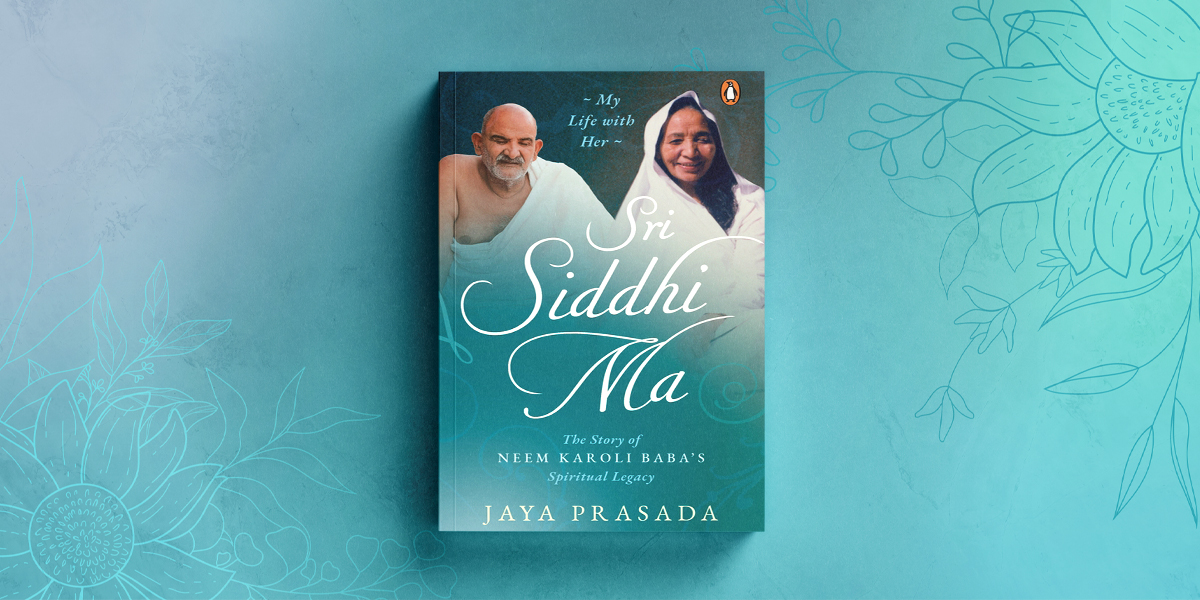
Whether or not one believes in miracles, some legacies are nothing short of magic on earth. One such life is that of Neem Karoli Baba and his teachings which were carried on by Sri Siddhi Ma.
The following excerpt from Sri Siddhi Ma entails the stories and anecdotes which make up the folkloric profile of Neem Karoli Baba.
Sri Siddhi Ma||Jaya Prasada
*
Dressed in a simple white dhoti, with a blanket or a cotton sheet for a wrap-around, Maharaj ji shunned any insignia which would set him apart as a saint or a sadhu. Many a time, as he reclined on his takhat, visitors would walk up to him and ask where they could meet Neem Karoli Baba. His simple reply used to be, “Main koi Baba ko nahi janta. Hanuman ji ke mandir me unse prarthna karo.” I do not know any Baba! Go to the Hanuman temple and pray to him. On other occasions, he would loudly proclaim, “Main kuch nahi janta. Main toh prasad vala Baba hoon.” I do not know anything. I am the Baba who gives prasad!
Baba Neem Karoli, also known as Baba Neeb Karauri, was perhaps the most elusive embodiment of divinity in human form. Accepted and revered as the incarnation of Sri Hanuman, the son of “Pawan” – the god of wind – Maharaj ji too had the attributes of the wind. Sometimes he could be a gentle soothing whiff; at other moments, a hurricane, a whirlwind. But always the bestower of life-giving breath. Nothing could bind him, no one could define him. As we devotees believe, he had no beginning, he has no end. “There can be no biography of him,” wrote his renowned disciple Dr Richard Alpert, later known as the devotee Ram Dass, in his book Miracle of Love. “Facts are few, stories many. He seems to have been known by different names in many parts of India, appearing and disappearing through the years.”
Named Lakshmi Narayan at birth, in the early 1900s, Maharaj ji left his native village of Akbarpur in Uttar Pradesh as a wandering sadhu, when he was only eleven years old. As he travelled to various parts of India, he came to be known by different names. For instance, he was known as Tallaia-wale Baba in Gujarat. This was because in Babania he was seen performing spiritual sadhana under the waters of a small lake, where his temple now stands. The women of the village, with brass pitchers on their heads and veils drawn over their faces, would go to the lake to draw water and would often spot a young mendicant on the shore. On seeing them, Baba would dive into the water and remain submerged for prolonged periods.
Also known as Tikonia-wale Baba and Handi-wale Baba over the years, Maharaj ji then returned home to lead a householder’s life for a few years, after which he left home again. Later, he was known as Baba Lachman Dass in the remote areas of western Uttar Pradesh. Eventually, after his stay in the village of Neem Karoli, he came to be known as Neem Karoli Baba. No one can tell which way the wind blew – but it appears that in the 1940s, from the plains of Uttar Pradesh, Maharaj ji proceeded to the mountains of Kumaon. And with his arrival, the hills began to soon be dotted with Hanuman temples.
An oft-asked question is: who was Neem Karoli Baba? Was he a mystic, an ascetic who aspired for and achieved the highest powers, the siddhis? Was he one of those miracle-sadhus so abundant in India? Or just a grandfather-figure in the homes he visited, fondly called “Hanuman buju” by the children? These varied questions perhaps have varied answers, for Maharaj ji excelled in the art of deluding aspirants the moment they got a glimpse of even a tiny ray of his infinite spiritual depth.
If put to me, this question would have a simple answer: Maharaj ji was divine love incarnate.
*
Get your copy of Sri Siddhi Ma from the nearest bookstore or head to Amazon to order.
Many things in life come unexpected, as did the COVID-19 pandemic. The highs of life suddenly turn into lows and everyday events seem to become hard to deal with. During such phases, the present time slows down and one goes back to thinking about their past. As clichéd as it may sound, one eventually finds the light at the end of the tunnel.
During a similar time, Stuti Changle’s protagonist in Where the Sun Never Sets, comes to terms with her past that she has been running away from. Read an excerpt from the book to get a glimpse of Changle’s protagonist’s thoughts penned down in her diary.
*
Where the Sun Never Sets || Stuti Changle
Today felt just like every day is going to feel in my lockdown life.
Once upon a time, it rained for hours, just like it rained today, heavily, unendingly, unstoppably. Rain might wash the physical world, but with it, washed-out memories resurface. Rains deepen the colours of your surroundings as if you’ve unknowingly switched to 4K HD mode. It also deepens the colours in your mind, unlocking the deepest of desires.
Rain is powerful indeed. And what does rain remind you of? The rain reminded me of the onion fritters Mom would deep fry until they were golden and crisp. The mere thought lit up my face, filling my mouth with water. I closed my eyes for a moment, imagining the crisp fritters between my teeth, chewing them with a crunch. Nishit, my ex-boyfriend, would often give me company. He would also tell me that peacocks teach you to dance your sorrows away in the rain.
The rain also reminded me of masala chai, the kind my landlady prepares in Gurgaon, with ginger, lemongrass and basil leaves added in generous amounts. She is the kind of bitch who calls you up to catch up and when you do so, she gives you a list of things you need to get repaired at your own expense.
She keeps reminding me that I am an orphan and it’s her responsibility to bully me to make me stronger. She believes that my parents would have done the same. She also feels that my elder sister is a bitch to have abandoned me. When I am engaged in bitter conversations with her, masala tea is my guru who preaches finding goodness in everything.
I requested Shyamala Aunty to prepare masala tea and fritters in the morning. I gave her very specific instructions. These days of lockdown have to be the perfect time for me to finish the movie script.
But where to start? Why can’t you talk, my diary?
I entered my attic-style bedroom to start writing the script. I had asked Shyamala Aunty to set up my desk in front of the huge window that overlooks the beautiful Mussoorie hills. It’s going to be a long lockdown after all.
I watched some YouTube videos by Tibetan Zen masters. They say that one must prepare well before a new project. Some changes are necessary while some are not as important. But the room where you engage in creative work has to be organized.
Considering the lockdown situation, all I can say is that it is one of the most unpredictable times. Of course, things will change sooner or later. They must. That’s the hope, and we hang on to it.
But I don’t know how much peace organizing my room will bring me when the world is in chaos.
‘Relax. Focus. Concentrate. Yes. Harder,’ I told myself. ‘Write a few words at a time. Bricks build
castles. And castles stand for ages and inspire people for many years to come,’ I murmured.
…
I sat at my desk wondering if all the days were going to be the same here. You watch the sunrise. The sunset. Sunrise. Sunset. Yet you feel you’re stationary. ‘The sunrise. The sunset,’ I murmured as I had still not written a single word. I put my pen aside.
‘Time never really moves here. That’s the beauty of time in small towns,’ Shyamala Aunty said, breaking my reverie. I hadn’t realized she had entered the room. She sneaks in whenever she likes, and I have hated it since my teenage years.
She continued to mop the floor with a magic mop, even as its engineering was beyond her comprehension. It reminded me of my arguments with Dad, who often said, ‘It is important for everyone to understand mathematics to be able to lead a good life.’
I would always tell him, ‘It is not important to understand an airplane’s engineering to be able to travel in it. You could be a layman and still live a happy life.’
**
To know what happens next, get a copy of Where the Sun Never Sets from your nearest bookstores or online.
As the rainy season engulfs everything around you, we bring you some delightful monsoon reads to motivate, inspire, and entertain you. With inspiring stories that will stir your emotions, and enticing reads that will cheer you up as you watch the rain fall, take a look at our July releases!
Writer Rebel Soldier Lover by Akshaya Mukul
Writer, Rebel, Soldier, Lover||Akshaya Mukul
Sachchidanand Hirananda Vatsyayan ‘Agyeya’ is unarguably one of the most remarkable figures of Indian literature. From his revolutionary youth to acquiring the mantle of a (highly controversial) patron saint of Hindi literature, Agyeya’s turbulent life also tells a history of the Hindi literary world and of a new nation-spanning as it does two world wars, Independence and Partition, and the building and fraying of the Nehruvian state.
Akshaya Mukul’s comprehensive and unflinching biography is a journey into Agyeya’s public, private and secret lives. Based on never-seen-before archival material-including a mammoth trove of private papers, documents of the CIA-funded Congress for Cultural Freedom and colonial records of his years in jail-the book delves deep into the life of the nonconformist poet-novelist. Mukul reveals Agyeya’s revolutionary life and bomb-making skills, his CIA connection, a secret lover, his intense relationship with a first cousin, the trajectory of his political positions, from following M.N. Roy to exploring issues dear to the Hindu right, and much more. Along the way, we get a rare peek into the factionalism and pettiness of the Hindi literary world of the twentieth century, and the wondrous and grand debates which characterized that milieu.
Writer, Rebel, Soldier, Lover features a formidable cast of characters: from writers like Premchand, Phanishwarnath Renu, Raja Rao, Mulk Raj Anand and Josephine Miles to Prime Minister Jawaharlal Nehru, revolutionary Chandra Shekhar Azad and actor Balraj Sahni. And its landscapes stretch from British jails, an intellectually robust Allahabad and modern-day Delhi to monasteries in Europe, the homes of Agyeya’s friends in the Himalayas and universities in the US. This book is a magnificent examination of Agyeya’s civilizational enterprise.
Vishnu Purana by Bibek Debroy
Vishnu Purana||Bibek Debroy
The Vishnu Purana is part of a series of eighteen sacred Hindu texts known collectively as the Puranas. It occupies a prominent position among the ancient Vaishnava Puranas which recount tales of creation and the many incarnations of Lord Vishnu. It describes the four classes of society, the four stages of life, and key astronomical concepts related to Hinduism.
Brimming with insight and told with clarity, this translation of the Vishnu Purana by Bibek Debroy presents readers with an opportunity to truly understand the classical Indian mythic texts. Debroy has previously translated the Bhagavata Purana, the Markandeya Purana, and the Brahma Purana.
Banaras Talkies by Satya Vas
Banaras Talkies||Satya Vyas
Bhagwandas Hostel at Banaras Hindu University can be mistaken as being like any other college hostel, but that would be a gross error. For, among the corridors of BD Hostel roam never-before-seen characters: Suraj the narrator, whose goal is to woo a girl, any girl; Anurag De, for whom cricket is life, literally, and Jaivardhan, whose melancholia gets him to answer every query with ‘ghanta’.
Follow the adventures of the three friends and others as they navigate undergraduate life in one of India’s most vibrant colleges, plan to steal exam papers, struggle to speak to women, find friends in corridors lined with dirty linen, and forge lifelong bonds amid bad mess food.
First published in Hindi in 2015, Banaras Talkies has remained on the bestseller list since then. A slice-of-life novel, it captures college life with all its twists and turns. Written with the idiomatic flourish that is the hallmark of Banarasi colloquialism, this comic novel is one of India’s great coming-of-age novels.
Shunya by Sri M
Shunya||Sri M
He appears out of nowhere in a sleepy little neighbourhood in suburban Kerala. He calls himself Shunya, the zero. Who is he? A lunatic? A dark magician? A fraud? Or an avadhuta, an enlightened soul? Saami-as they call him-settles into a small cottage in the backyard of the local toddy shop. Here he spins parables, blesses, curses, drinks endless glasses of black tea and lives in total freedom. On rare occasions, he plays soul-stirring melodies on his old, bamboo-reed flute. Then, just as mysteriously as he arrived, Shunya vanishes, setting the path for a new avadhuta, a new era. This first novel by Sri M is a meditation on the void which collapses the wall between reality and make-believe, the limited and the infinite. With its spare storytelling and profound wisdom, it leads us into the realm of ‘shunya’, the nothingness of profound and lasting peace, the beginning and end of all things.
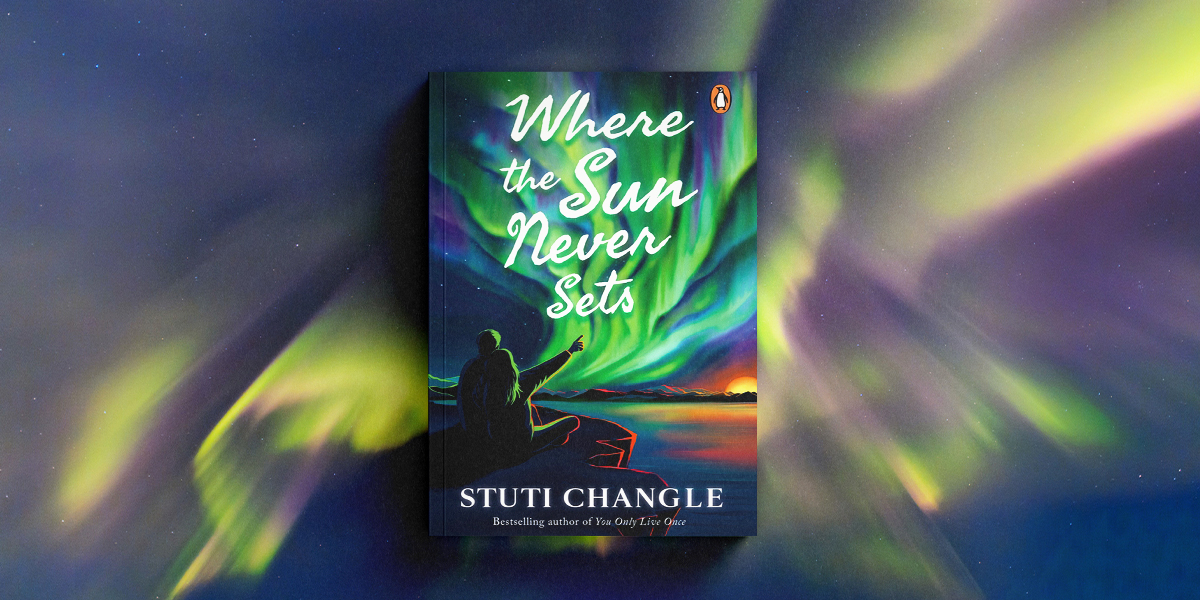
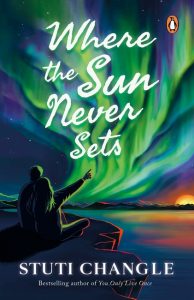
Where the Sun Never Sets by Stuti Changle
Where the Sun Never Sets||Stuti Changle
‘A story about finding hope in the darkest of times that will brighten your day!’
If you find someone’s diary, would you dare open it?
Well, if you chance upon your old diary, would you dare read through your past?
Iti is forced to move back to her hometown of Mussoorie amid worldwide lockdown to work on her first movie script. Iti’s chance encounter with her first love, Nishit, reunion with her estranged best friend, Shelly, and nights spent reading her well-kept diary, make her best memories and worst nightmares come to life. She has always run away from her past, but now has no choice.
Will reading her diary prove to be an adventure worth taking for completing the script? Will life be the same? Ever?
Set in the COVID-19 lockdown, from the national bestselling author of On the Open Road and You Only Live Once, Where the Sun Never Sets is a riveting personal account of unforgettable childhood dreams, turbulent teenage years, complicated close relationships, human resilience, and the never-ending journey of growing up.
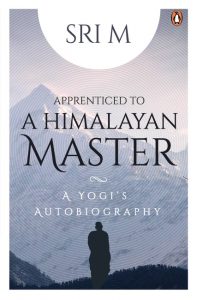
Apprenticed to the Himalayan Master by Sri M
Apprenticed to a Himalayan Master||Sri M
In this tell-all autobiography, Sri M writes about his fascinating journey as a young man from the southern coast of India to the mystical Himalayan Mountains. At the age of nineteen and a half, he felt an irresistible urge to go to the Himalayas in quest for his great Master. He finally met his Master at the Vyasa Cave, beyond the Badrinath shrine. After spending three and half years with his Master, wandering freely across the length and breadth of the Himalayan ranges, he was instructed to go back to live in the plains and lead a normal life. He started working for a living, fulfilled his social commitments and prepared himself to teach others all that he had learned and experienced. This book reveals the spiritual journey of a young lad from Kerala, who by his sincerity and dedication evolved into a living yogi. Sri M shares his knowledge of the Upanishads and spiritual insights born out of first hand experiences in his autobiography. Apprenticed to a Himalayan Master will make for an engaging and riveting read for those interested in the life and teachings of Sri M.
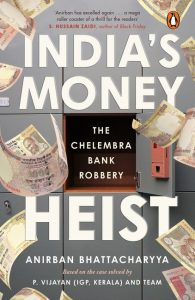
India’s Money Heist by Anirban Bhattacharya
India’s Money Heist||Anirban Bhattacharyya
From the creator-producer of Savdhaan India, the producer of Crime Patrol, and the bestselling author of The Deadly Dozen: India’s Most Notorious Serial Killers, comes the true story behind one of India’s biggest and most sensational bank heists.
31st December 2007. New Year’s Eve. A sleepy town in Kerala called Chelembra finds itself in the national headlines for India’s biggest bank heist to the tune of a whopping Rs 8 crore which included 80 kg of gold.
A crime that was supposedly inspired by a Bollywood blockbuster, this is the sensational story of that heist seen from both sides of the coin-the planning and execution by the mastermind criminals, and the difficult, yet thrilling, investigation by the Kerala police team led by P. Vijayan.
Constructed from extensive first-person interviews of the police team that solved the crime and the confession details of the criminals, this is the true story of how India’s biggest bank heist was executed and the cat-and-mouse game that ensued.
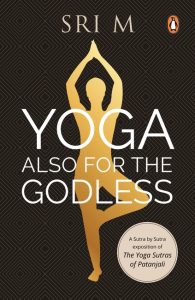
Yoga Also for the Godless by Sri M
Yoga Also for the Godless||Sri M
Practitioners of the ancient science of yoga have long contended that you don’t have to be a Hindu, in the conventional sense, to practise yoga, even though its origins lie in India. Renowned spiritual teacher, author, social reformer, educationist and global speaker Sri M goes a step further in this new and path-breaking book-he proves that, let alone belonging to a particular religion, one doesn’t even need to believe in God to be a true yogi. One of the best-known Vedantic scholars of our times, he draws on his deep knowledge of ancient Indian scriptures to prove that the godless are as capable as the God-inspired of reaching the pinnacle of self-realisation and bliss through yoga.
Based on a profound understanding of Patanjali’s Yoga Sutras, this is a step-by-step guide to the theory and practice of yoga for those who seek to know it better, and also for the young and the millennial, who may be stepping out for the first time. In lucid prose, with photographs for visual aid, Sri M takes us through the most complex notions of breath, body and posture with admirable brevity and clarity.
Live Your Best Life by Dr. Amrinder Bajaj
Live Your Best Life||Dr.Amrinder Bajaj
Understanding Menopause for a Wiser, Happier and Healthier You.
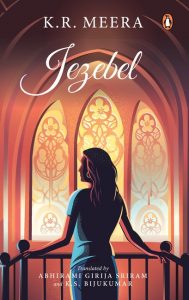
Jezebel by KR Meera
Jezebel||K.R.Meera
Jezebel, a young doctor in Kerala, struggles against the cruel realities of a patriarchal world-realities that not even her education, resolve or professional brilliance can shield her from. Her already contentious divorce proceedings go suddenly awry, and her unhappy marriage holds complex secrets. In K.R. Meera’s blistering new novel, which takes the form of a courtroom drama to show us the rich inner worlds of its characters, we see Jezebel reflect on her life and its pivotal points as she takes the stand. Through her memories, we see her grow from a reticent, serious young woman to a rebel who refuses to bend to the conventions of society.
Like the Biblical story of Queen Jezebel, who was much maligned as a scheming harlot and infamously thrown to her death from her palace window, Jezebel is a novel that asks if independent women can ever live lives that are free of judgement K.R. Meera’s hypnotic prose, in this elegant translation from the Malayalam by Abhirami Girija Sriram and K.S. Bijukumar, makes resonant allusions to the Bible in powerful ways that elucidate the correlations between legend and the protagonist’s life while also exploring how sexuality and gender roles are manipulated by the dictates of society.
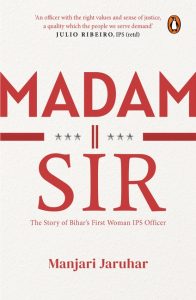
Madam Sir by Manjari Jaruhar
Madam Sir|| Manjari Jaruhar
After an unexpected turn of events upended the homemaker role her parents had planned for her, Manjari Jaruhar overcame extraordinary odds to become the first woman from Bihar to join the country’s elite police cadre.
A masterclass in courage, resilience and leadership by a woman who broke new ground and thrived despite being viewed with disbelief and derision by her colleagues, Madam Sir is a stirring account of a sheltered girl’s rise to the top echelons of the Indian Police Service.
Set against the backdrop of significant events such as the Bhagalpur blindings, the 1984 anti-Sikh riots and Lalu Prasad’s reign in Bihar, Madam Sir looks at the IPS from the inside, through a woman’s eyes.
This is a story that will inspire you to pursue your dreams and infuse you with the spirit to reach impossible heights.
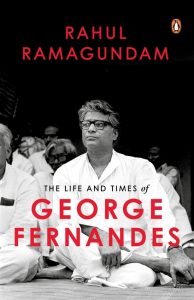
The Life and Times of George Fernandes by Rahul Ramagundam
The Life and Times of George Fernandes||Rahul Ramagundam
The Life and Times of George Fernandes chronicles the story of George, who rose from the streets of Bombay to stride the corridors of power. In this extraordinary biography, Rahul Ramagundam opens a window to George’s political evolution and traces the course of the Socialist Party in India from its inception in 1930s to its dissolution into the Janata Party in the late 1970s. In the process, this book explores the trail of India’s opposition parties that worked to displace the long-ruling Congress Party from its preeminent position.
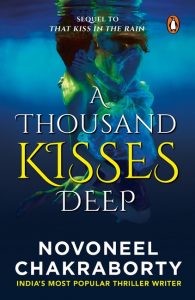
A Thousand Kisses Deep by Novoneel Chakraborty
A Thousand Kisses Deep||Novoneel Chakraborty
Humiliatingly rejected by Haasil, even after she thought she had him, Pallavi sets forth on a self-destructive path, seeking one life-thrill after the other. All she desires is to heal the wounds that haunt her every move, not allowing her to be herself. Neither can she forget Haasil nor can she reach him any more. That is, until she meets . . . Palki, Haasil’s ex-wife who is presumed dead by the world.
Talking to Palki, Pallavi realizes she has found the ultimate weapon to destroy Haasil: the one man who changed her life and persona forever. She plans a deadly set of events that catch Haasil, Palki and his current love, Swadha, unaware. As the dice of destiny is rolled, the question looms: will Pallavi destroy Haasil irreversibly using his once true love, Palki, or will she, for once, come to terms with her deep love for him? A Thousand Kisses Deep is an emotional whirlwind depicting modern layered relationships, lost love and how, sometimes, destiny’s plans are quite contrary to what we have been coveting all our life. As Haasil, Pallavi, Palki and Swadha go about life seeking their personal answers and solace, they realize love, after all, is still not done with any of them . . .
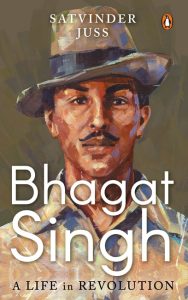
Bhagat Singh by Satvinder Juss
Bhagat Singh||Satvinder Juss
A timely antidote, this meticulously researched biography is an expansive foray into the life of Bhagat Singh. The volume deliberates upon his family from before when he was born, examining along the way the role that various episodes, policies and people played in shaping the identity of a legendary revolutionary, while also delving into his opinions on important questions of the time. It shines a bright light on the oft-ignored personal influences that made Singh who he was, along with the issue of his contested identity in today’s politics. This is the definitive Bhagat Singh biography of our times.
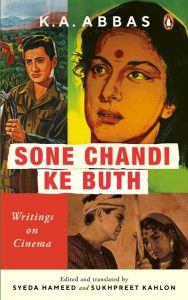
Sone Chandi ke Buth by KA Abbas, edited by Syeda
Sone Chandi Ke Buth||K.A.Abbas
Sone Chandi ke Buth is a collection of writings on cinema that includes the observations, thoughts and
reflections of Khwaja Ahmad Abbas. Originally written in Urdu by the well-known journalist, screenwriter and film-maker, it has now been translated for the first time into English.
Where the Cobbled Footpath Leads by Avinuo Kire
Where the Cobbled Path Leads||Avinuo Kire
Where the Cobbled Path Leadsis a folk fantasy novel, interweaving fantasy fiction with Naga spirit stories and folklore.
Eleven-year-old Vime is struggling to come to terms with the demise of her beloved mother. She has a special place she frequents-a cobbled footpath near her house which leads to a forest. On the day of her mother’s death anniversary, not wanting to return home, Vime follows the cobbled footpath all the way to the deep end of the woods and discovers that the trail leads to a magnificent tree. She falls asleep under it only to wake up and find that the footpath has disappeared. Tei, a forest spirit, helps her relocate the missing pathway.
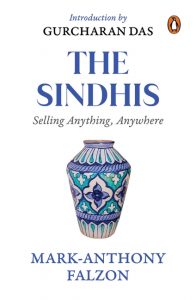
This book examines the social and cultural infrastructure that sustains Sindhi business and its trade networks. It provides a rich historical context to the narrative by tracing the origin of Sindhi Trade to the annexation of Sindh in 1843, when it was incorporated into an expanding global economy. The book also locates Sindhi business within the dynamics of the contemporary Indian diaspora and features several success stories both from India and outside. The book emphasizes the commercial inventiveness, spatial mobility, and adaptability of Sindhis—-the qualities crucial to building successful cosmopolitan businesses.
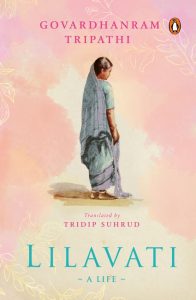
Lilavati by Govardhanram Tripathi
Lilavati||Govardhanram Tripathi
An exemplar of Indian literature-the only and heart-rending biography of a daughter by her father
In a moment of rare passion Govardhanram Madhavram Tripathi, author of Sarasvatichandra, exclaimed ‘I only want their souls’. He was referring to the souls of his countrymen and women, which he sought to cultivate through his literary writings. Lilavati was his and Lalitagauri’s eldest daughter. Her education and the writing of Sarasvaticandra were intertwined. She was raised to be the perfect embodiment of virtue, and died at the age of twenty-one, consumed by tuberculosis. In moments of ‘lucidity’ , she spoke of her suffering and that challenged the very foundations of Govardhanram’s life. In 1905 he wrote her biography, Lilavati Jivankala. This is a rare work in biographical literature, a father writing about the life of a deceased daughter. Despite Govardhanram’s attempts to contain Lilavati as a unidimensional figure of his imagination, she goes beyond that, sometimes by questioning the fundamental tenets of Brahminical beliefs, and at others by being so utterly selfless as to be unreal even to him.
Lilavati: A Life is a cross between literature in translation, social and political history, and women’s studies. Tridip Suhrud’s introduction dwells on the themes of the cultivation of selfhood, of nation and the ideal of sacrifice, which is sure to resonate with contemporary readership, especially women.
The 10 New Life-Changing Skills||Rajesh Srivastava
The earlier 3 Industrial Revolutions (3IRs) created blue collar and white-collar jobs, which required people to carry out instructions, not question authority and follow time tested systems and processes.
Now, we are in the midst of the 4th Industrial revolution (4IR), also called Industry 4.0. It is creating ‘green collar’ jobs, which need people to ‘think, reflect and act’. To develop these abilities and perform the green collar jobs efficiently, it is critical that professionals develop certain skills -the 10 new life-changing skills:
1. Creativity
2. Innovation
3. Critical Thinking
4. Framing the Right Question
5. Smart Problem-Solving
6. Lifelong Learning
7. Storytelling
8. Influence Without Authority
9. Humanness
10. Entrepreneurial Spirit.
This book will introduce readers to these skills, which they can apply in their businesses and professions to come up trumps.
A meditation on grief, These Errors are Correct is Jeet Thayil’s most intimate work to date. In poems of tenderness and rage, time blurs into a continuous present visited by Billy the Kid, the Buddha, Lata Mangeshkar, Jesus and Beethoven, by unnamed protagonists for whom faith and addiction are interchangeable, and by a remote god-like figure who will ‘lick / your wound with his infected tongue’. A range of fixed and invented forms–rhymed syllabics, terza rima, ghazals, sonnets, the sestina, the canzone, stealth rhymes–make for a virtuosic, haunting collection. Originally published in 2008, the book has been out of print since 2010. With illustrations by the author, this new edition returns to the reader an essential and timeless book of poems. These Errors are Correct won the 2013 Sahitya Akademi Award.
A collaboration between Jeet Thayil and The Burning Deck, the track on the back flap appears as ‘Aquatic’ in These Errors are Correct, and as ‘The River Under the River’ on The Burning Deck album Where My Leaves Come to Rest. You can find the music of The Burning Deck on Bandcamp/Soundcloud & Spotify.
India is witnessing a major change in the way we look at money. Having reached the middle income status as a country, a vast section of the youth is now aspiring for higher financial goals. This large population is breaking away from its parents in almost every way, including financially. But the new generation of Indians entering the workforce demand more knowledge on their investments. They constantly grapple with complicated questions surrounding money: What do they do with their money? How do they plan for their future? Most of the time, they get bad advice. Mutual funds have not really delivered meaningful returns, stock selection is extremely complicated and sophisticated investments like PMSs, AIFs, etc., are only for the wealthy.
This book tries to help these young investors by offering them a framework they can use to create wealth in the long run. Using the wisdom and experience of Indian’s top personal finance professionals, the book answers critical questions, such as: Should I rent a house or buy a house? Passive investing versus active investing? Stocks versus mutual funds? Debt funds or FDs? And finally – crypto or no crypto?
Out of the box thinking, ruthless pragmatism and an innate ability to understand, define and then redefine the game of cricket are probably the hallmarks of Mahendra Singh Dhoni’s cricket. From hitting countless sixes in his school ground in the sleepy town of Ranchi to finishing a run chase with another towering six in a World Cup final against Sri Lanka, Dhoni’s journey is undoubtedly one of the most iconic of our times. Many have tried to decode his mystique, and yet, every account seems to have fallen frustratingly short of capturing the essence of the man.
Instead, in Do Different, we offer diverse perspectives on the man: from a fellow wicketkeeper and competitor reminiscing on Dhoni’s early years; to MSD’s first agent with his perspective on the journey of brand Dhoni; to an international fast bowler who played with MSD since his first-class days and then starred for him in the Indian Premier League.
From the matches and moments that defined Dhoni in the IPL, in international cricket and even off the field, to his life beyond the game of cricket, this is your ultimate MSD book.
Nehru and the Spirit of India|| Manash Firaq Bhattacharjee
Jawaharlal Nehru was Plato’s philosopher king, who ‘discovered’ an India that remains an undiscovered possibility. Nehru and the Spirit of India is a critical and nuanced perusal of his intellectual and political legacy.
From the ‘politics of friendship’ between Nehru and Sheikh Abdullah, Nehru’s defense of secularism in the Constituent Assembly Debates, to what propelled Nehru to curb free speech in the First Amendment, Manash Firaq Bhattacharjee draws from political history to illuminate fierce debates in India today: Kashmir, the CAA, and hate speech. Be it contemporary events like the miracle of Ganesha drinking milk and the use of Vedic astrology in Chandrayaan-2, or the agonising suicide of a doctor, the author examines the fractured nature of Indian modernity, which Nehru had suggestively called a ‘garb’. Bhattacharjee bolsters Nehru’s view that India is enriched by the encounter of cultures and that we must not discard the past, but engage with it.
As a second-generation refugee, Bhattacharjee argues for a ‘minoritarian’ approach to national politics. Breaking ideological and disciplinary protocols, he compels us to learn from the insights of poets and thinkers. Lucidly written, this provocative book offers an original perspective on Nehru and Indian history.
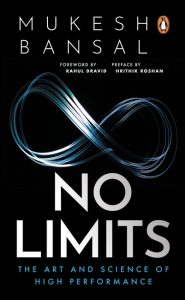
Tech entrepreneur Mukesh Bansal has been a lifelong student of human performance optimisation. He has studied the science behind it, and worked closely with high performers across business, sports and entertainment, to understand what it takes to transcend apparent limitations and achieve true potential.
Through his entrepreneurial experience and studying the field of health and fitness, Bansal came to understand the enormous power of plasticity: the ability of the human brain to rewire itself at will as we develop new skills. He also realised that high performers across domains rely on common tools that were embraced by ancient wisdom and are validated by modern science. Knowing that high performance is not a matter of genetics or luck is highly empowering.
No Limits distils Bansal’s findings on talent, deliberate practice, mindset, habit, willpower and learning. It is a guide to maximising one’s potential with well-defined strategies. So, no matter what you do, you can be a superior version of yourself, performing at increasingly better levels, constantly reaching higher.
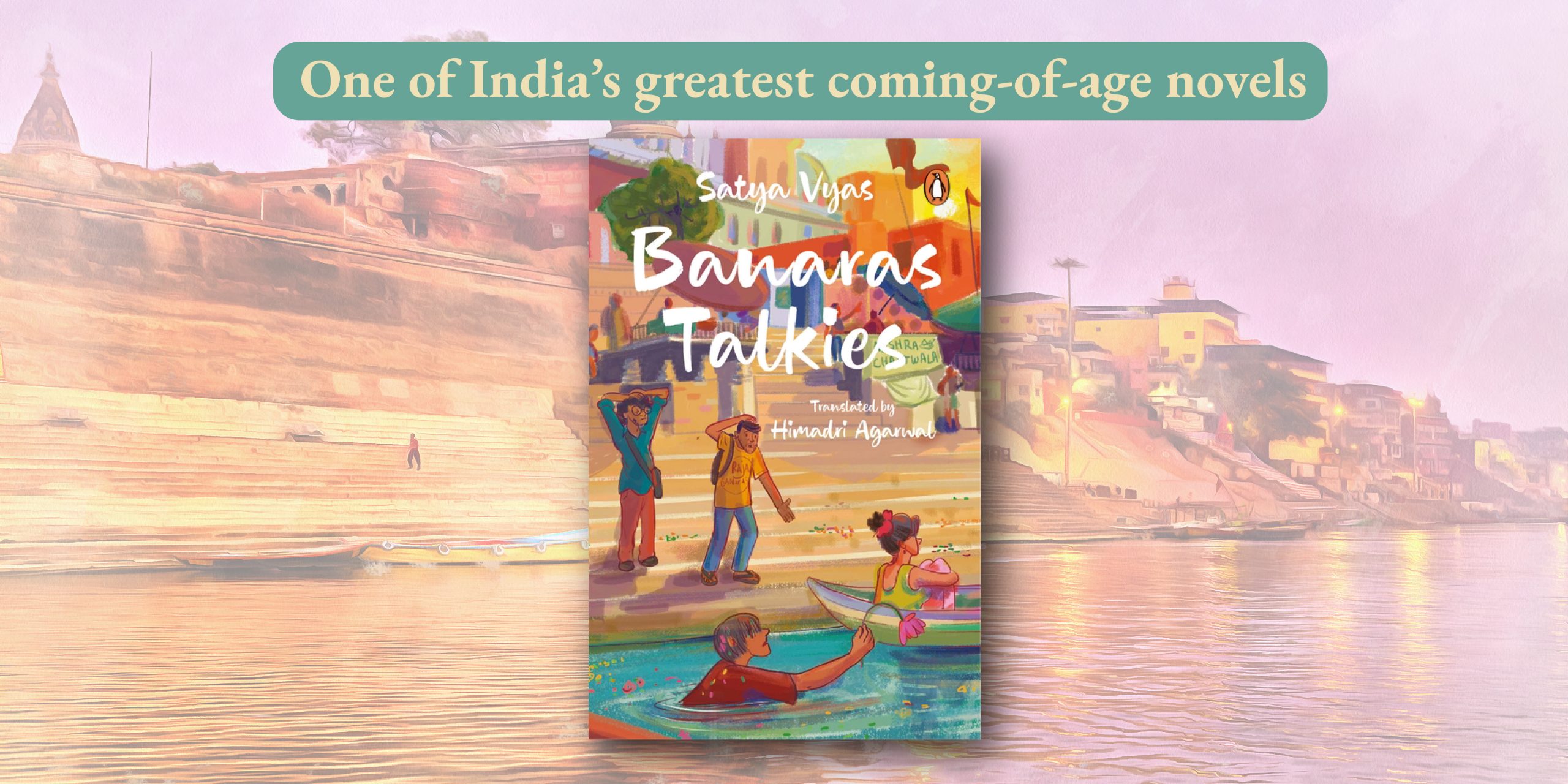
Penguin Random House India has acquired the English translation of award-winning writer Satya Vyas’s best-selling Hindi novel Banaras Talkies. First published in Hindi in 2015, its English translation with the same title will release in July 2022. Translated by editor and translator Himadri Agarwal, Banaras Talkies will be released under the Ebury Press imprint. It is currently available for pre-order on all major e-commerce websites.
Pegged as one of India’s best campus novels, Banaras Talkies follows three friends as they navigate undergraduate college life, plan to steal exam papers, struggle to speak to women and forge friendships that will last a lifetime over bad mess food. Readers can soak in the nostalgia of their own campus experience through this book.
The slice-of-life novel captures the struggles, aspirations, and lives of young Indians. Set in one of India’s most vibrant colleges, the Banaras Hindu University, it has been written with the idiomatic flourish that is the hallmark of Banarasi colloquialism.
Talking about the upcoming translation in English, author Satya Vyas says, ‘Banaras Talkies is an award-winning Hindi bestseller. This ‘hostelgic’ fiction has entertained readers in Hindi for years. It’s of immense pride to me that we can now reach out to new readers in English through Penguin Random House.’
Himadri Agarwal, the translator of the book, adds, ‘Translating Banaras Talkies has been a journey of love, laughter, and adventure. I was honoured to translate it, and I can’t wait to see what English readers think of the book.’
Elizabeth Kuruvilla, Executive Editor, Ebury Publishing & Vintage, Penguin Random House India, says, ‘Banaras Talkies is a witty novel that takes readers on a laughter-filled ride back to their college corridors, bantering with friends, conspiring to skip classes, the heartbreaks and lucky successes in love, and the ever-looming pressure of having to one day leave college and “get serious about life”.’
Milee Ashwarya, Publisher, Ebury Publishing & Vintage, Penguin Random House India, says, ‘Banaras Talkies by Satya Vyas in Hindi has entertained readers for several years, and I hope that the English translation by Himadri Agarwal receives the same love and adulation. Congratulations to Satya and Himadri. I am proud to publish the book.’
Author Bio:
Satya Vyas is an award-winning author of five bestselling books, including Banaras Talkies, Dilli Durbar and Chaurasi. Born and brought up in Bokaro in Jharkhand, he has H established his identity in audio and screen writing, as well as opened a new path in Hindi writing. The web series Grahan is based on his book Chaurasi. Along with writing, he also takes creative writing classes in various learning apps.
Translator Bio:
Himadri Agarwal is an editor, translator and a reader. She currently works at Yoda Press and will soon be starting an English PhD at the University of Maryland, College Park. When not buried in a book or busy with work, she enjoys playing Dungeons & Dragons, eating junk food, or doing both things at the same time.
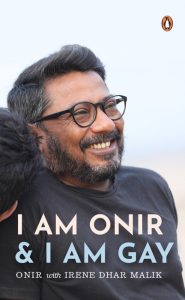
Many people would understand the nostalgia of a first crush. For filmmaker Onir, this rush of pure emotions happened twice. Throughout I Am Onir and I Am Gay, the author seamlessly entwines his sexual identity with his life, especially his childhood days of moving around and being boundless.
The following excerpt is the first chapter in its entirety.
I Am Onir & I Am Gay||Onir with Irene Dhar Malik
*
First Crush
I met him in 1984, when I came to Calcutta (now Kolkata) for my higher secondary studies. There’s a lot about those two years that I try to forget—the disillusionment of the young boy coming from a Himalayan small town to a big city, whose excitement had quickly transformed to disappointment and anxiety—but I will always remember him. In this city that I used to visit every year during the winter vacation and that had seemed full of welcoming relatives, I now desperately searched for accommodation and ended up in many scary or awkward living arrangements.
We didn’t even have television in Bhutan at the time a fifteen-year-old me moved to Calcutta. The protectionist policies of the Bhutanese government ensured that it was the last country in the world to allow television, which was as late as 1999. Calcutta was overwhelming and, in many ways, I was the proverbial smalltown boy experiencing big-city blues. I quickly realized that I wasn’t going to get admission in any of the well-known schools as my ICSE marks were abysmally low by Calcutta standards. Anything above 60 per cent was considered first division and therefore something to celebrate back home in Thimphu, but my marks were woefully inadequate here. Those were not yet the days when students scored 99.9 per cent, but a 90 per cent didn’t hurt anybody, as we found out the following year when my brother easily secured admission into La Martinière for Boys. As for me, I finally got admitted to St Augustine’s in the rather dingy Ripon Street neighbourhood of Calcutta. It was a tiny and somewhat cramped school at the time. The stairs were grimy, the classrooms small and windowless.
I think we were about ten or twelve students. Though they must have, like me, not been academically brilliant, my classmates were all very kind and generous, and that made all the difference. Of the teachers I don’t have many memories, except that I was so enamoured by my biology teacher Miss Mukherjee that biology quickly became my favourite subject. I still haven’t forgotten her gentle voice and kind smile.
I also remember my Bangla teacher, even though his name escapes me. I remember him because I was terrified of him. My Bangla was atrocious, having started learning the alphabet only when I was in Class 9, and it was by some miracle that I passed my ICSE Bangla paper. At St. Augustine’s, I used to hate my Bangla teacher and his classes. After I cleared my Class 12 Bangla paper, the man I had been so terrified of wore a broad grin as he patted me on the shoulder and said, ‘I never thought a gadha (donkey) like you would pass, I’m so relieved.’ I realized that he was perhaps actually fond of me and had been so severe with me only because he hadn’t wanted me to fail.
It was during those years that I had what I can call my first crush. He was tall and dusky, with thoughtful eyes and sensuous lips, and he had somehow decided to take me under his protective wing. He not only made sure no one bullied me, but also helped me cross roads and board buses. I couldn’t manage to cross the busy Calcutta streets on my own, nor board the crowded buses or trams before and after school. Very often, I used to walk long distances just to avoid getting into a crowded bus.
So yes, he was the one who would hold my hand or navigate me through the streets of Calcutta, his arm around my shoulder. I had no idea then what being gay meant. But unlike my Bhutan schooldays, I did not fall in love with any girl in my Calcutta school. There was an element of physical attraction with one of my classmates, but there was no emotional involvement at all with that boy. Stolen moments of touching and kissing in cinema halls, classrooms, deserted parks. There was no shame or sense of wrong in me, just the acknowledgement that sex was supposed to be something hush-hush; and we were discreet, like most boys and girls were those days.
I was aware that what I felt for my tall and dusky friend was different, but I didn’t give much thought to that difference. Life went on, and we sat for our ISC exams. We knew that we would soon go our diverse ways, our paths dictated by education and career choices.
One afternoon, it was just the two of us in his flat. We sat on the floor in his room, next to each other, our backs resting against the bed, talking about many, many things, as teenagers tend to do during languid Calcutta afternoons. I don’t really recall the exact flow of events, but I remember his white vest and the lungi he wore, and I can still remember his smell. At some point he put his arms around me, drawing me close to him, and asked me if I would like to touch him. This was not my first sexual experience, but I was nervous that afternoon, maybe because I had felt that unspoken and as yet unexplored feeling of love. This wasn’t the first time I had kissed someone, but whenever the reference to the ‘first kiss’ happens, it’s him that I think of. Of that sweaty afternoon and my limbs intertwined with his long limbs. When I walked back home that evening, everything had seemed pleasantly hazy. Yes, I know it sounds like a clich., but maybe that one time in my life, I did experience that cliché of being blissfully in love.
Much like in the falling-in-love sequences of the Hindi films that I’d grown up watching, his image was omnipresent for the rest of the day, superimposed over all details of my mundane existence.
At 7 a.m. the next morning, there was a knock on my door. When I opened the door, I was surprised to see him standing there. He didn’t want to come in but asked me to step out so that we could talk for five minutes.
Standing in the narrow lane outside the tiny Calcutta flat I then shared with my siblings, surrounded by the din of morning chores being executed in the surrounding middle-class households, I heard what he had to say. ‘Look, I thought about it, and whatever happened yesterday shouldn’t have happened. It was wrong, and what we did is a sin. I want you to erase that memory and so will I. And since that alone is not enough, I think it’s best that we don’t meet for the next ten years.’
He walked away. I was so numb that I didn’t utter a word as I watched him turn around and leave. No parting hug, not even a wave . . . he just walked away.
It was not then, but a couple of days later, when I was walking near Dhakuria Lake, that the truth suddenly hit me, and I could not stop the tears. The year was 1986, and I was seventeen. I realized for the first time that my love was not acceptable to the world I lived in and that something that was priceless to me was considered sinful by others. I didn’t understand why, but I was filled with a sense of emptiness, a great sadness, because I knew that this was not fair.
A couple of years later, I happened to pass by the building where he lived. Perhaps it was by design, but I don’t think so. After a lot of hesitation, I went up to the building watchman and asked about him. The entire family had emigrated to the US.
We never met again.
*
I Am Onir and I Am Gay is available for pre-order.