A Gentle Guide to Self-Worth, Healing and Emotional Growth

articles features main category

Some months arrive with a book or two worth talking about. April arrived with fourteen. This month’s new releases span centuries and continents, moving between Maratha battlefields and Mumbai’s marathon roads, between Everest base camps and the boardrooms of Hindustan Unilever — and somehow, every single one of them has something urgent to say.
Akshaya Kumar & Navdeep Singh Rot beneath the surface makes for the most arresting literature. This anthology excavates Punjabi Dalit life with unflinching honesty — stories where caste wounds fester quietly and explode loudly. Searing, essential, and long overdue, Gangrene is the anthology that refuses to let comfortable readers stay comfortable.

Sanjiv Mehta Twenty-one years, five continents, sixty billion dollars — and Sanjiv Mehta still believes humility is a superpower. Part memoir, part masterclass, this is the story of how a man with ‘Humbition’ turned Hindustan Unilever into a global gold standard. Served strong, no sugar-coating required.

Bombay, 1922: a movie censor is murdered, a leading lady vanishes, and India’s first female lawyer Perveen Mistry has front-row seats to early Bollywood’s darkest drama. Glamour, intrigue, and a courtroom mind — Massey’s fifth Perveen Mistry mystery is a blockbuster in every sense.

Siddharth Kak Everest doesn’t care about your ambitions. It chooses who climbs it. Documentary filmmaker Siddharth Kak embedded with an expedition and returned with a story no camera could fully capture — of triumph, obsession, rivalry, and a mountain that humbles even the best-prepared humans.

Trees have long memories. This richly researched volume recasts India’s forests not merely as ecology but as history — arenas of colonial ambition, peasant resistance, and ecological reckoning. A book for anyone who thought the jungle was just scenery.

Before he became the most controversial mystic of the 20th century, Osho was a magnificently rebellious small boy in Madhya Pradesh. This memoir of his early years is funny, irreverent, and surprisingly tender — the origin story of a man who never once obeyed an instruction he hadn’t interrogated first.

42.195 kilometres. One impossibly chaotic city. Millions of stories pounding the pavement. Filmmaker-turned-author Aarambhh M Singh captures the Mumbai Marathon as only a storyteller can — not just as a race, but as a mirror of the city’s relentless, breathless, magnificent spirit.

No VC money. No safety net. Just grit, jugaad, and a refusal to quit. Drawing on India’s most resourceful founders, this playbook is for entrepreneurs who’d rather build something real than pitch decks endlessly. Practical, honest, and proudly bootstrapped in spirit.

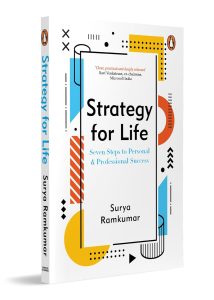
Twenty-eight years in banking taught Nasir Zaidi that the extraordinary is hiding inside the ordinary — you just need the right lens. Part self-help, part memoir, this book coaches professionals to stop sleepwalking through their careers and start crafting lives worth actually living.

Medha Deshmukh Bhaskaran From the ashes of defeat, a warrior is forged. Medha Deshmukh Bhaskaran brings us another blazing chapter of Maratha history through a woman who chose to fight when surrender would have been easier. Vivid, immersive, and resolutely feminist — Queen Tara earns its throne.

A serving IPS officer writes about the treacherous terrain of being almost — but not quite — sixteen. Part coming-of-age, part dark comedy, Arsh Verma turns the universal awkwardness of adolescence into something unexpectedly luminous. A page-turner that remembers exactly how strange youth feels.

From armed insurgency to the Chief Minister’s chair — Zoramthanga’s life is one of India’s most remarkable political transformations. This memoir charts Mizoram’s journey from conflict to peace with rare candour, and reminds us that conviction, not compromise, is what endures.

NCERT award-winning author Deepa Agarwal takes young readers on an adventure as swift and sharp-eyed as a hawk in flight. A quest story that soars across landscape and legend, reminding readers of all ages that courage is simply curiosity that refused to turn back.

What happens when ancient Vedic wisdom meets the most rebellious philosopher of the 20th century? Sri M — yogi, Padma Bhushan laureate, and personal acquaintance of Krishnamurti — finds surprising harmony between tradition and transcendence. Quietly radical, deeply thought-provoking.

At Penguin India, we believe reading is never just an escape. It’s a way of paying attention. And this April, we’ve given you fourteen new ways to do exactly that.
Happy Reading!
In Manifest Anything in 100 Days, Dr Amiett Kumar breaks down the Law of Attraction into simple, actionable steps, showing how consistent mindset shifts and daily practices can help you turn your biggest dreams into reality.

***
Before we begin this journey of the Law of Attraction, let’s first get ready. Think of this like packing your bag before a trip.
The first step to using the Law of Attraction is to first understand it. So, before you move ahead, I want you to sit in a comfortable, upright position. Are you seated?
Great. Now, here is the Law of Attraction in the simplest way possible:
Whatever you think about the most, you will attract into your life.
Sounds too simple? That’s because it is that simple. Whatever you focus on the most—whether it’s your dreams, worries or fears—you bring it closer to yourself.
Remember that famous dialogue from the movie Om Shanti Om, where Shah Rukh Khan says:
‘Agar kisi cheez ko puri shiddat se chaho to puri kaynaat use tumse milane ki koshish mai lag jaati hai.’
This is exactly how the Law of Attraction works. But there is one thing that I want to bring attention to here.
You’ll find the same idea in The Alchemist by Paulo Coelho. The book talks about a ‘personal legend’— your biggest dream in life. When you truly believe in your dream and work for it, the Universe helps you in unexpected ways. This isn’t luck—it’s the Law of Attraction at work.
This is what the Law of Attraction is all about. And this is where our journey begins.
But wait—did you already take the first step?
Not yet! You missed the Ready, Set, Go! moment.
It’s simple to learn about the Law of Attraction, but why do so many people struggle to use it? Why do so many fail to achieve what they truly want?
Here’s the answer:
Knowing about the Law of Attraction and actually using it are two very different things.
Learning about the Law of Attraction is like packing your bag before a trip. It’s just preparation.
But actually walking to your door, stepping outside and starting the journey—that’s action. That’s what makes the difference.
And that’s exactly what we’re going to do now. Now that you are starting to attract your dream life, why don’t you tell me what it is that you are attracting?
***
Get a copy from Amazon or wherever books are sold!
In Winning People Without Losing Yourself, Ankur Warikoo breaks down the subtle art of dealing with people and shows you how to navigate people with clarity, confidence, and self-respect.

***
Influence ≠ people pleasing
If you’re bending over backwards just to convince people, you are not influencing. You are auditioning.
Because being sweet is easy.
Being taken seriously requires a lot of work.
You won’t be remembered for always nodding along.
You’ll be remembered for speaking up when it mattered.
For asking the question no one else had the guts to.
For saying what others were only thinking.
Yes, people tend to like those who agree with them on everything.
But people follow those who are clear.
So be thoughtful. Be respectful. But don’t disappear trying to keep everyone happy.
Because influence isn’t about being everyone’s favorite. Influence is about being someone they listen to.
Influence ≠ control
Your relative posted fake news again.
Your temper flares.
You start typing furiously: fact-checks, ten links and a graph.
Take a deep breath.
Are you really trying to help or just win an argument?
Be honest.
Sometimes ‘I want them to know this is wrong’ is just another way of saying,
‘They should think like me.’ If the goal is to feel smart, be right, or control the outcome, you’re not helping.
You are just trying to win.
If you care more about proving you’re right than actually helping, then that’s not influencing.
That’s just arguing.
Ever feel like you keep saying the right things, but no one’s really listening?
We’re told influence comes from saying smart things.
Speaking with confidence.
Sounding sure of yourself.
Even when you’re not.
But you’ve done all that.
You prepared. Spoke clearly. Didn’t interrupt anyone. Made an important point.
And still! Blank stares.
People checking their phones.
Nobody is listening.
Five minutes later, someone else says the same thing.
And suddenly, it’s a genius idea.
Hello! What just happened?
Are you just background noise in everyone else’s day?
Here is the truth:
You are not ignored because you’re wrong.
You are not ignored because you aren’t smart enough.
You are not ignored because you aren’t loud enough.
They are listening for something that matches their moment.
Their priorities. Their mood. Their vibe.
People don’t listen when it matters to you.
They listen when it matters to them.
***
Get a copy from Amazon or wherever books are sold!
In The Alphabets of Africa, Abhay K. turns poetry into a map of the continent, tracing its civilizations, cities and cultural icons. Read an excerpt below.

***
Shaka Zulu
A military tactician, a songwriter,
a music composer, all combined in one
I often inspired my people
with music and songs
I had a premonition that the ‘white man’
would seize the Zulu kingdom
As a child, I was often mocked
for being born out of wedlock
my mother and I
were banished by my father
I trained as a fighter in the army
and soon became its commander
after my father’s death, I returned to my village
and became the King, deposing my half-brother
I named my people—Zulu, after my clan
and united them into a nation
I extended my rule to KwaZulu-Natal
Europeans called me a wild warrior
‘an insatiable and exterminating savage’
but Zulus counted me as a great king
for laying the foundations of a state
and building a great army
my wars against the rival communities
birthed new kingdoms of Zimbabwe and Lesotho
I remained celibate to govern my vast land
created an all-women’s regiment to gather intelligence
I invented assegai—the short spear for close combats
and devised the cow horn formation to encircle the enemy
death of my mother, Nandi, shook me to the core
and I decreed that for a year, no crops would be sown
and whoever would not cry enough
would meet one’s end
alienated people conspired to cease my tyranny
and two of my half-brothers stabbed me to death.
[Shaka Zulu (c.1787–1828) was a prominent Zulu leader who transformed the Zulu Kingdom into a powerful empire in Southern Africa. He is renowned for his military reforms, strategic innovations and brutal conquests, which led to the expansion of the Zulu Kingdom and reshaped the political landscape of the region.]
***
Get a copy from Amazon or wherever books are sold!
True balance in life lies not just in mastering a profession, but in developing the life skills that nurture the mind, body and spirit. In The Four Life Skills, Amit Agarwal examines the everyday skills that help us navigate life beyond degrees, jobs and professional success.

***
Typically, the word ‘education’ is used to mean learning. Sometimes, you may also come across the word ‘skill’ being used instead. However, the phrase ‘life skill’ is used sparingly. So, when I talk about the four ‘life skills’ that are essential for striking a balance between material success and spiritual growth, what exactly am I referring to? Moreover, how are these life skills any different from other skills that we can learn? Let us begin by outlining the differences between a ‘life skill’ and a ‘skill’.
Simply explained, life skills are essential competencies required for efficiently dealing with challenges in various situations and environments in our everyday lives. In contrast, a skill simply refers to expertise in a particular domain. The former is a broader concept; cultivating life skills will contribute to spiritual, mental, emotional and physical well-being and result in an improvement in the quality of life. The latter refers to specializing in a niche. So while computer programming, financial analysis, culinary arts, creative writing and graphic designing are examples of skills, life skills include critical thinking, decisionmaking abilities, building and sustaining meaningful interpersonal relationships, practising empathy and gratitude, time management and the ability to manage difficult emotions.
If you observe, the education system is geared more towards building skills rather than life skills. Schools create the foundation for college by offering streams such as humanities, science and commerce. Numerous college and university courses teach law, business administration, engineering, finance, medicine, marketing, hospitality and literature. Why is this so? This is because schools and colleges primarily cater to the job market, which will give you money and the ability to lead a good life. Now, think back to your own schooling—were life skills like empathy, public speaking, nutrition, personal finance or meditation ever part of the curriculum?
While specializing in skills is essential for employment, honing life skills is a much more critical aspect of personal development.
So, now the question arises: Which life skills will help us the most when it comes to marrying spirit and matter? There are four:
• Sales
• Mindfulness
• Personal Finance
• Nutrition
At the confluence of spiritual growth and material success is mastery of these four life skills. By harnessing their power, we can create a wonderful balance in every aspect of our lives. As you will see, they are deeply interconnected; without one, the others cannot reach their fullest potential. Now, let’s understand why each life skill is directly connected to your ability to enjoy a holistic life.
Sales
There are nearly 8.1 billion people in this world and if you think about it, each person is in the process of trying to sell an idea, a product or a service. Consider the following examples:
A sales director is giving a software demonstration to her prospective clients.
A financial planner advises his clients on which asset classes to choose from based on their risk profile.
Concerned parents are telling their teenager why constantly being on the phone can negatively impact his studies.
A twenty-four-year-old boy is about to propose to his girlfriend.
A forty-five-year-old is thinking about quitting his job and becoming a freelancer.
Can you identify the common thread in the aforementioned situations? They all involve connecting with people and influencing them to make a decision, a process I call the CID framework. Look around and you will begin to notice how thoughts contain the seed of an idea and, at every moment, we are selling that idea to a person, group or organization that will best serve its interests. So many times, like in the case of the forty-fiveyear-old weighing his options, we become both the buyer and seller of the product, convincing ourselves of the pros and cons of a decision.
In our various roles, we are selling either a product, a service or an idea. Thus, we all are in sales and hence sales is a life skill. As you begin to harness it, you will begin to communicate effectively both personally and professionally.
***
Get a copy from Amazon or wherever books are sold!
Are women free to fly, or are they still tethered by family, marriage and expectations? In Busy Women, Shinjini Kumar explores ambition, work, migration and the quiet constraints shaping women’s lives today.

***
Why Bother About Women?
Neena Gupta is an actress in art and mainstream cinema and a television producer and director. She gained a cult following in the nineties as a talented artist and a single mother; more recently, she made a stunning comeback in mainstream cinema and broke Instagram, saying it as it is. Neena told me once that a woman is like a cow tethered with a rope that keeps her within the perimeter of the family. The man, on the other hand, is like a bird, who can freely go anywhere.
It is not the kind of parable that I like to hear. Women younger than me like to hear it even less. You look at her and think: ‘What is she talking about? She has lived on her terms and is still doing it. She has got it all. Why would others not be able to do it?’ So, I want to prove her wrong. I want to prove that gender is not a barrier to a determined woman, and that she can do everything that a man can, including flying like a bird.
I am looking for the women who are indeed flying. And if ind them. But I also find the truth of Neena’s parable. Women’s lives are indeed circumscribed differently from those of men. For one thing, they rarely choose the space they get to live in. A small percentage of women, like me or Neena, leave their parental homes for education or work, and set up their own homes. For the large majority, leaving home is a given. But where they will end up for the rest of their lives is dependent on who they marry. Even if she finds education, work and money, decisions relating to her body, childbearing, career and asset ownership are often not her own. She may still be able to make a meaningful life for herself and her family, but the tether is firmly in place.
In more elite families, the frequent hypocrisy of raising daughters like a ‘papa ki pari’ (Dad’s fairy) and then giving them away with a dowry, while the business or property is inherited by the son(s) is a tiny bit less common than before, but certainly not gone away. The simple fact of marital dislocation has tremendous implications for the woman and the community. For the community, these implications are mostly positive. In a crude sense, it matches the free labour supply for household work, childbirth and eldercare with the demand. In more refined ways, there are extremely positive externalities to women becoming vectors of care and culture by being mobile. For the woman, they can be positive, disruptive or debilitating, depending on the combination of circumstances. T he question for me was whether the contribution of women within and outside home is being recognized and understood, or undermined and broad-brushed under age-old stereotypes?
This is an interesting but often overlooked fact. Men migrate for work. With rare exceptions, they follow professional opportunities and networks that are expected to help them in their quest of work, job, career, money. On the other hand, almost all women who move places, do so for marriage. Which means that they leave their networks and do not seize the professional opportunities best suited to them. Of course, they can get lucky. But more often than not, despite all the love and affection, they encounter a phase of darkness and confusion, before they begin to assess opportunities available to them in their new habitat.
This geographical constraint is accompanied by another unfortunate constraint, that of physical safety. The fact that women are not safe, for the most part, in most places and at most times, affects their lives in general and work life in particular. In addition, their life stages are very different from those experienced by their brothers and husbands. Even coming from the same backgrounds and families, women go through more disruption in work at early stages. Do all these constraints stop the women? Has greater access to education and skills allowed women to take advantage of opportunities in a growing economy? And what is this opportunity here and now after three decades of economic liberalization? Is the physical infrastructure generating advantage for Middle India and its residents, men and women? If so, what does it mean for migration and creation of many more urban centres with thriving urban culture across the country?
I started my travels with these questions and an open mind. Making my way through thirty cities over three years, I made friends, drank nimbu paani, ate dosas, wore sarees, took selfies, laughed, sweated, walked on pavements and promenades and collected personal histories of the soaring women, the tethered women and the women in between!
***
Get a copy from Amazon or wherever books are sold!
Forget dusty dates and yawning over dynasties. This witty guide unpacks Ancient India—from the Stone Age to the Golden Age—through hilarious stories, quirky maps, and baffling connections. History finally makes sense (and stays fun) for curious minds aged ten-plus.

From the football field to the laboratory, these fifty illustrated biographies celebrate seven decades of India’s highest civilian honors. A stirring collection of grit and greatness, it proves that perseverance turns ordinary dreams into extraordinary legacies for readers aged eight-plus.

Unravel the enigma of the Indus through this meticulously researched graphic narrative. From 3200 BCE to its mysterious decline, experience a visually stunning journey that replaces dull dates with the vibrant, everyday lives of a civilization that reshaped human history.

From ostriches roaming the plains to being related to a blond Lithuanian, this trivia-packed journey explores the “unbelievable” in India’s geography. Full of quirky illustrations, it turns complex history into a fantastic, fact-filled adventure for curious minds aged twelve-plus.

From prehistoric hand axes to the iconic HMT watch, discover the vibrant pulse of India through 100 extraordinary objects. This colorfully illustrated journey captures the voices of both rulers and commoners, weaving a rich tapestry of history, identity, and culture for young readers.

From the colorful Republic Day parade to the seventeen-day countdown of its creation, this essential handbook brings India’s foundational document to life. Packed with cheerful illustrations and surprising facts, it transforms legal complexity into an engaging, witty guide for every young citizen.

Whether you’re tracing the Indus or discovering why your ancestors might be Lithuanian, these stories prove that the past is anything but boring. Dive into these essential reads to see India’s legacy in a whole new light—because understanding where we came from is the ultimate adventure.
Happy Reading!
In Call It Coincidence, bestselling author Nona Uppal crafts a swoony yet emotional romance about an unforgettable first date, a devastating falling-out and the possibility that some loves are destined to find their way back.

***
Three years ago
‘What’s the verdict?’
‘Late, obviously.’
Here’s what my profound yet wholly regrettable experience re: first dates has brought to me—a rock-solid sixth sense that can scope out, within seconds, if a date is going to suck or end up in me taking them back home. (You can stop reading here, Mom.) This is the third one this week; so, I’m either too desperate and the likelihood of the universe sending an eligible bachelor in place of my date is indirectly proportional to the extent of my desperation . . . or, every single man within a five-kilometre radius of where I live comes to dates with a non-negotiable fatal flaw in tow.
Not this one though.
He’s just . . . late. Which, before the pitchforks take for my scrawny throat, does not mean he’s late by five—or even ten—minutes, but a whole forty-five! A little south of an hour! And he hasn’t once apologized for it, unless you count a ‘Hey, running twenty minutes late’ by-the-way text sent—mind you, after I had already been waiting for the last twenty minutes—as an apology.
So, it’s not about being late, really. It’s the callousness. It’s the not caring about it. It’s the whiplash of an excellently written bio countered by a man who can’t be bothered to do the single most important thing on first dates: show up on time.
‘I wouldn’t normally be this pissed, you know?’ I squeal into my receiver, finally padding towards the bar counter my date is standing up against, waiting for me, after I’ve spent close to an hour loitering outside the restaurant, biding time—god forbid strangers snicker behind my back, exchanging gossip and dissecting, as filler conversation, the story behind that girl sitting at the bar who has most certainly been stood up. (Fine, I know this because I’ve done this to people.)
All at once, our eyes meet, the glimmer of familiarity softening his sharp gaze around the room. I look at him, feign a smile, bobbing my head to tell him to give me a moment, and add: ‘But like, be decent? Apologize?’
Sarina, my childhood best friend, the platonic love of my life and the only person who not only tolerates but, secretly, enjoys my persistent bickering before first dates, sighs from across the line, ‘I get it, Naina, but it’s not really their fault, na? When are boys ever taught to apologize growing up? Remember Nitin from school? The one who put gum in your hair and laughed while I had to cut it out with safety scissors during lunch period?’
‘Yes, and I had a crush on him, Sarina. Maybe I’m attracting these men,’ I say, shifting my phone from one ear to the other. ‘Anyway, he’s here. I’ll call you when I’m done.’
I watch my date gawk at his phone from all the way across the room while I stand still, considering my choices of intoxication. A margarita would get me just tipsy enough to want to stay a little longer, maybe even flirt a little, and I’ve already had enough sugar in my coffee today for a cosmopolitan, so a tequila soda it is—classic, tough to mess up no matter the bartender’s relative inexperience, and easy to knock back through an hour of tired small talk.
When did this become my life—willing myself to survive dates I never thought I’d have to go on? No, I was done. At twenty-five, I almost had it all. A great—although slightly soul-sucking—job straight out of college, a wonderful— Fine! Decent!—boyfriend and a normal family life, as normal as it can be. I was happy. I had enough. I was content.
Until my ex, he-who-shall-not-be-named, decided that this ‘stability’ thing was too much for him, that his twenties with me by his side were a little less roaring than he’d expected, and that he wanted to have more fun before the clutches of adulthood took him hostage forever. He could’ve just said what he really meant—I want to have sex with other girls, Naina, which is an activity he promptly took to a week after our break-up—but I spared him the horror, read between the lines, and said goodbye like it wasn’t breaking my heart, and my plans, and my bank.
Like today, my date for the night is scheduled at South Delhi’s poshest new restro-club Django. I’d suggested the place: I knew a friend who knew a friend who could get us a pretty decent discount. And this way, I got to put down my card for the dinner in advance so the guy doesn’t pick up the bill; I don’t want to feel pressured to agree to a second date just because he paid for this one.
But life, as they say—rather tritely but hey, if the shoe fits—is full of surprises. As I curve along the U, my date and I finally close enough to properly register each other, knowing now for certain it’s us we’re looking for, I suddenly feel the built-up dread wash away. The anger and anxiety give way to something softer, calmer, something . . . wait, these can’t be butterflies? I inch up closer to the man I am formally bound to spend the rest of the evening with. With a gait that can only accompany a stature and built like that, he saunters over towards me and, with his arm outstretched, opens the conversation with, ‘You must be Naina. I’m so sorry I’m late.’
Turns out, six foot two is awfully tall on a man—and while height has never been a criterion of mine, oh my god. Maybe my luck isn’t rotten after all.
***
Get a copy from Amazon or wherever books are sold!