Publish with Us

Follow Penguin

Follow Penguinsters

Follow Penguin Swadesh

Terrific twelve: The ultimate guide to Namita Gokhale’s wonderfully witty world

Few authors capture the oddities of a zeitgeist, not just the soaring spirit but the awkwardness, the tiny contradictions that make life both messy and loveable as charmingly as Namita Gokhale— social commentator extraordinaire. Her books are as diverse as her host of unforgettable characters—from incisively witty dissections of individuals against a range of social backdrops to retellings and examinations of Indian mythology.

The Blind Matriarch||Namita Gokhale


Adding to this behemoth of a bibliography is her latest novel, The Blind Matriarch, which sketches a vivid portrait of an Indian joint family against the backdrop of the first and second waves of the pandemic, of the world in flux that we have inhabited for the last two years.

Before you read The Blind Matriarch here’s a quick list to help you acquaint yourself with some of Namita Gokhale’s oeuvre. Go ahead and fill up your to-read list for the month!


Paro|| Namita Gokhale


Paro: Dreams of Passion

First published in 1984, to both notoriety and critical acclaim, Paro remains a social comedy without parallel in contemporary Indian writing. Paro, heroic temptress, glides like an exotic

bird of prey through the world of privilege and Scotch that the rich of Bombay and Delhi inhabit, amidst her motley court of admirers including Lenin, the Marxist son of a cabinet minister; the fat and sinister Shambhu Nath Mishra, Congress Party eminence grise; Bucky Bhandpur, test cricketer and scion of a princely family to name but a few!


Priya||Namita Gokhale


Priya

India is shining, and Suresh Kaushal, the stout lawyer -of sober habits’, has propelled himself up the political ladder to become Minister of State for Food Processing, Animal Husbandry, Fisheries and Canneries. His wife Priya can’t believe their luck and, determined to ensure it doesn’t run out,  struggles valiantly with -social vertigo, infidelity and menopause. In this wickedly funny, occasionally tender, book, Namita Gokhale resurrects some unforgettable characters from her 1984 cult bestseller Paro, and plunges them neck-deep into Delhi’s toxic waste of power, money and greed.


Shakuntala: The Play of Memory|| Namita Gokhale


 Shakuntala: The Play of Memory

On the ghats of Kashi, the most ancient of cities, a woman confronts memories that have pursued her through birth and rebirth. In the life she recalls, she is Shakuntala of the northern mountains-spirited, imaginative, but destined like her legendary namesake to suffer ‘the samskaras of abandonment’. Stifled by social custom, hungry for experience, she deserts home and family to travel far and wide with a Greek horse merchant she meets by the Ganga.  But an old restlessness compels her to forsake this life as well-and court tragedy.


God, Graves and Grandmother|| Namita Gokhale


Gods, Graves and Grandmother

‘Before mother left, in a long-ago time, we had been very rich. My grandmother had been a great singer, a kothewali whose voice was more liquid and beautiful than Lata Mangeshkar’s. Eleven nawabs and two Englishmen were besotted with the love of her.’ From these great heights, Gudiya’s world plunges into the depths of almost complete penury when she arrives in Delhi with her ancient grandmother, Ammi, fleeing small-town scandal and disgrace. Just when all seems lost, Ammi works a miracle: a slab of green marble stolen from a building site, and five rounded pebbles from a sahib’s garden, are transformed by the power of her singing voice into an inviolable place of worship. As we follow the twists and turns of Gudiya’s story, we see unfold before us the peculiar dance of chance and will that is human existence.


A Himalayan Love Story|| Part 1 of the Himalayan Trilogy

A Himalayan Love Story- Book I of the Himalayan Trilogy

A study in unrequited love, with its terrible irony and tragic urgency, told through the tale of two exiles. Parvati is young, beautiful and seemingly doomed; blooming early yet unable to find lasting love. Orphaned in adolescence and adopted by her headmaster uncle, Parvati escapes the constraints of this temporary home but, like many young women before her, finds a new prison in marriage. So when Mukul Nainwal, the local boy who has always loved her, returns to Nainital, he finds Parvati changed—she is a new challenge to his ideals, despite all his worldly success


The Book of Shadows: Book 2 of The Himalayan Trilogy

The Book of Shadows— Book II of the Himalayan Trilogy

Part ghost story, part erotic romance, The Book of Shadows is an ambitious book that investigates the nature of reality, love and faith. Scarred by her lover’s suicide and an acid attack that has left her permanently disfigured, Rachita Tiwari has sought refuge in a remote house in the Himalayan foothills. In this rambling house, built by a foolhardy missionary over a hundred years ago, she lives alone with an ancient and mysterious manservant, Lohaniju. As she retreats into herself, battling for her sanity and fearful of a world she no longer trusts, a different dimension claims her and the tremendous history of the house is played out before her.


Things To Leave Behind|| Part 3 of the Himalayan trilogy

Things to Leave Behind— Book III of the Himalayan Trilogy

Kumaon, 1856. History has already begun its steady march. Six native women clad in black and scarlet pichauras huddle around Naineetal Lake, attempting to cleanse it of ominous influences. Amidst a theatre of British impunity, feisty young Tilottama Dutt, whose uncle is hung when he protests the reigning order, and her daughter, Deoki, confront change as Indians and as women. Here is a fascinating historical epic illuminating with painstaking detail the mixed legacy of the British-Indian past.


Lost in Time: Ghatotkacha and the Game of Illusions

Lost In Time: Ghatotkacha And The Game Of Illusions

Young Chintamani Dev Gupta, on holiday in a bird camp near Lake Sattal, is transported via a wormhole to the days of the Mahabharata. Trapped in time, he meets Ghatotkacha and his mother, the demoness Hidimba. But the gentle giant, a master of illusion and mind-boggling rakshasa technology, wields his strength just as well as he knows the age-old secrets of the forest and the elemental forces. And in his enlightening company, Chintamani finds himself in the thick of the events of the most enduring Indian epic. This unusual take on YA literature offers an intense yet tender look at a rare friendship as well as the abiding puzzles of the past.


The Puffin Mahabharata|| Namita Gokhale

The Puffin Mahabharata

‘Told and retold a million times, the story of the Mahabharata is about defeat as much as victory, about humility as much as courage. It is the greatest story ever told.’

Like a modern-day suta or storyteller, Namita Gokhale brings alive India’s richest literary treasure with disarming ease and simplicity. She retells this timeless tale of mortals and immortals and stories within stories, of valour, deceit, glory, and despair, for today’s young reader in a clear, contemporary style.


The Book of Shiva|| Namita Gokhale


The Book Of Shiva

Shiva: Destroyer and Protector, Supreme Ascetic and Lord of the Universe. He is Ardhanarishwara, half-man and half-woman; he is Neelakantha, who drank poison to save the three worlds-and yet, when crazed with grief at the death of Sati, set about destroying them. Shiva holds within him the answers to some of the greatest dilemmas that have perplexed mankind. Who is Shiva? Why does he roam the world as a naked ascetic covered with ash? What was the tandava? What is the story behind the worship of the linga and what vision of the world does it signify? Namita Gokhale examines these questions and many others that lie within the myriad of stories about Shiva. Even as she unravels his complexities, she finds a philosophy and worldview that is terrifying and yet life-affirming—an outlook that is to many the essence of Indian thought.


In Search of Sita: Revisiting Mythology|| Edited by Malashri Lal and Namita Gokhale

In Search Of Sita: Revisiting Mythology (Edited by Malashri Lal and Namita Gokhale)

Sita is one of the defining figures of Indian womanhood, yet there is no single version of her story. Different accounts coexist in myth, literature and folktale. Canonical texts deify Sita while regional variations humanize her. However, she is remembered, revered or written about, Sita continues to exert a powerful influence on the collective Indian psyche. In Search of Sita presents essays, conversations and commentaries that explore different aspects of her life-offering fresh interpretations of this enigmatic figure and her indelible impact on our everyday lives.


Jaipur Journals: A Love Letter to the Greatest Literary Show on Earth..|| Namita Gokhale

Jaipur Journals

Partly a love letter to the greatest literary show on earth, partly a satire about the glittery set that throngs this literary venue year on year, and partly an ode to the millions of aspiring writers who wander the earth with unsubmitted manuscripts in their bags, Jaipur Journals is a light-footed romp that showcases Gokhale’s unsparing eye for the pretensions and the pathos of that loneliest tribe of them all: the writers. Told from multiple perspectives, set against the backdrop of the vibrant multilingual Jaipur Literature Festival, Jaipur Journals features diverse stories of lost love and regret.


Meet the characters from the historical epic Asoca

Asoca-often spelled Ashoka-was hailed as Ashoka the Great, the emperor who ruled most of the Indian Subcontinent and was pivotal in the spread of Buddhism from India to other parts of Asia in the third century BC. But his life as emperor was not always led by non-violence. History has it that he masterminded one of the biggest and deadliest wars ever fought, and it was the insurmountable grief he experienced at the sight of the people dying and dead on the battleground that made him turn to Buddhism and take a vow of ahimsa.


Who was the man, and who was the king? What were his demons, and what gave him strength? Asoca: A Sutra,  drawn from research and portrayed with energy and complexity, transports the reader to the era of the Mauryan dynasty with atmospheric vividness and insight.


Here are 5 memorable characters from Irwin Allen Sealy’s historical novel


**


Asoca FC
Asoca||Irwin Allen Sealy

Asoca – The nonconformist, mighty emperor of the Mauryan empire. A contrarian by nature, he is stubborn but thoughtful. He may not the most good-looking man, but for his mother he is her ‘little rhizome.’


‘From early childhood words were a game, and the pleasures of this game were those of reshaping the world… Rule your speech and you rule the world. My voice owed a little to every person and place I had known and admired, but the mix was mine alone.’


‘The hardest part, I found, was sitting there at all once all your factotums had left: alone with empire, imagining the extent of it off to one side and then the other way and then forward and backward on every side till you felt yourself positively abandoned.’

‘Every kingdom needs an honest, fearless man…to show up both the charlatan who seizes power and the incumbent who has lost his way.’


Uncle K –  The shrewd strategist of Mauryan legacy, the creator of the immense Arthashastra, Asoca’s Uncle K is always by the King’s side. The King’s chief advisor, Uncle K talks like a book and his eyes, ears and mind are everywhere.


“Crooked as his name portends, bent in every part, twisted from hairpiece to toenails, this aged crow makes blackness look grey. Guile is younger—the hills are younger—than Kautilya, maker and keeper of kings.”


“The arch-monarchist for whom the kingdom was more important than his tenure as prime minister, than his own position as kingmaker, than life itself.”


Bindusara, the Dotted – He is the handsome Mauryan King, the man of virtues who prefers reconciliation to war. He grew up to rule—and to rue the day he was born.

‘My father Bindusara was a handsome man. Good looks were important to him, and they reappeared in his firstborn like vindication. Susima was a mirror in which he saw his chief virtue displayed, and father and son took it less as a gift of nature than as a divine right: it was a mark of approval, even, you would think, accomplishment.’

‘Father, whose sword leapt from its scabbard in the course of every rousing speech, whose lusty verses were applauded in the gardens at the annual festival, and whose concubines lived in terror of a visit on any given night, this man was crying.’


Madhumitta – Her name implies nectar of the gods. She is Asoca’s Queen Bee, his anchor, the woman he loved and desired.

‘The look in her eye said she would serve the truth. Such assurance burns in the elect; it is what creates disciples. Her determination awed me. Service was to me an abstract concept, a secular, almost departmental thing. For Madhumitta it was an article of faith.’

‘Madhumitta, dear wife, I cannot believe you have forgotten me in your nunnery. I have forgotten nothing, not the tender abstraction on your forehead, not the soft broom in your gentle hand of a morning, not the silent reproof to an erring child or errant husband, not the loving kindness you spread through that house you ruled.’


Susima – The eldest son of Bindusara, heir apparent of the empire. The apple of everyone’s eyes, he become Asoca’s arch-rival in his quest for the throne.

‘He [Susima] was, truth be told, the noblest of us all. He didnt lie or cheat or push and shove and scramble. But then, he didnt have to. He carried himself as if the crown were a settled thing.’

‘Susima, ultimate theoretician, wrapped in birchbark scroll for armour. He was still the master of the cool shot, born of meditation and intellect; I was the poor guerilla. A Susiman universe was the opposite of mine.’

**

Asoca: A Sutra leaves the reader breathless with the full-bodied richness of Sealys prose, his trademark whimsy and his imaginative modern reconstruction of that enigmatic and brilliant ruler of the Indian subcontinent.


Perveen Mistry can’t rest until she sees justice done

November 1921. Edward VIII, Prince of Wales and future ruler of India, is arriving in Bombay to begin a fourmonth tour. The Indian subcontinent is chafing under British rule, and Bombay solicitor Perveen Mistry isn’t surprised when local unrest over the royal arrival spirals into riots. But she’s horrified by the death of Freny Cuttingmaster, an eighteen-year-old female Parsi student, who falls from a second-floor gallery just as the prince’s grand procession is passing by her college.

When Freny’s death appears suspicious, Perveen knows she can’t rest until she sees justice done. But Bombay is erupting: as armed British secret service march the streets, rioters attack anyone with perceived British connections and desperate shopkeepers destroy their own wares so they will not be targets of racial violence. Can Perveen help a suffering family when her own is in danger?

Here is an excerpt from Sujata Massey’s new book, The Bombay Prince that talks about Freny’s death.

*

The Bombay Prince: Perveen Mistry Investigates || Sujata Massey

“Miss Mistry, come down here,” Miss Daboo beseeched. Perveen knelt down and, feeling queasy, reached out to touch Freny’s wrist. It was still warm, yet the veins on the inside of her wrist seemed deflated. She could not detect a pulse. Perveen’s mother, Camellia, and sister-in-law, Gulnaz, were the kind of women brave enough to volunteer in hospitals. They might know another spot to look for a pulse. All Perveen could think of was the heartbeat.
Freny had fallen on her right side, so it was possible for Perveen to slide her hand under the khadi cloth and over the left side of Freny’s white cotton blouse.

“Don’t be obscene!” Miss Daboo muttered in Gujarati, and Perveen belatedly realized there were men watching her. Having felt no sign of life, she pulled back her hand.

“We must pray. God can work miracles.” Another Englishman had appeared. He looked to be in his fifties, with a long face made even paler by its contrast with his black robe. Right behind him was a breathless Principal Atherton.

The principal and the college chaplain had taken long enough to arrive at a scene of crucial emergency. But perhaps the police had occupied Principal Atherton’s time getting details about Dinesh Apte. And why weren’t they with him now?

The answer came: The college’s leadership didn’t know Freny was dead. Only she and Miss Daboo knew the truth. Or maybe— Lalita also did. Surely she would have tried to help her friend sit up. Surely

Mr. Atherton spoke between gasps. “I’ve just heard—about the accident—from the reverend.” Two more breaths. “Who is she?”

“Her name is Freny Cuttingmaster,” Alice said. “She’s a second-year student.”

“And what about you? Are you a nurse?” Mr. Atherton’s face was reddened, no doubt from agitation and heat.

“Sorry, I am not.” Perveen looked away from him and back at Freny. She thought of saying she was a lawyer, but it didn’t seem the right place.

“Miss Perveen Mistry, my old friend from Oxford, is here at my invitation,” Alice said quickly. “Miss Mistry, this is Mr. Ath- erton, our principal, and our chaplain, Reverend Sullivan.”

Principal Atherton pressed his lips together disapprovingly. “I am not—entertaining interviews for women faculty. This is an emergency—”

“I’m not a teacher; I’m a solicitor with a practice nearby.” Having honestly admitted her field, Perveen didn’t know how long the college administrator would allow her to linger.

“Miss Acharya, is it correct that you were first on the scene?” Atherton had turned his attention to the student, who was clutching Alice.

“Yes. I was a few yards ahead of the others,” Lalita said in a choked voice. “Miss Daboo was with me as well.”

Atherton’s eyebrows drew together. “And where was Miss Cuttingmaster during the procession?”

“Actually, we realized midway through the proceedings she wasn’t in the stands with us.” Lalita’s voice was hesitant, as if she didn’t want to admit she’d known all along the girl hadn’t showed up.

“Yes. She must have had her accident while we were turned watching the prince!” Miss Daboo said.

The excitement of the parade could have masked any cries, even though the college and its garden were just a few dozen yards behind the viewing stand.

“Maybe she fell down. I only hope . . .” Lalita’s voice trailed off.

“What is it you are hoping, my dear?” Reverend Sullivan prompted.

“I hope she’s going to wake up.” Lalita was clenching and unclenching her hands. “Why can’t the nurse come from the infirmary? Didn’t anyone call for her?”

“Leave the response to faculty,” said the reverend.

“I think someone should fetch the police.” As Perveen said it, she couldn’t believe the words had even come from her mouth. The police! The men who’d so recently challenged her were needed to secure the scene and take note of details.

“The police?” Mr. Atherton’s voice faltered. “But Miss Daboo says this is an accident.” He shook his head as he looked at the smooth path and neat green lawn. “I wonder what caused her to fall?”

“It could be that she jumped. This was going to be a day of protest for some.” Reverend Sullivan turned to grimace at the mass of students standing a respectful distance behind. “I know some of you are in the resistance club. If you were aware that she was planning self-destruction, you must tell us now.”

Did the chaplain understand Freny’s life was gone? Perveen looked at his stern, unmoving face until he glared at her.

One of the boys in a Gandhi cap raised a hand and spoke when the chaplain acknowledged him. “Reverend, nobody heard any such talk in the Student Union meetings.”

A blond man in his twenties, who had a shaken expression, put a hand on the shoulder of the student who’d spoken. “That is my impression as well. Arjun, thank you for coming forward.”

“I’ll go for the police,” a student voice said from within the crowd, and three boys took off through the gate.

*

What really happened? And what is going to happen next?

Get a copy of Sujata Massey’s The Bombay Prince to find out!

A lesson to become a great leader

Your education teaches a lot, but it doesn’t quite prepare you for the larger game of life. Does it? Prakash Iyer’s How Come No One Told Me That? is a cornucopia of stories that can help you lead a life of purpose and significance. The small and seemingly unimportant experiences of your life can teach you many valuable lessons and Iyer’s book is a collection of such anecdotes and everyday events.

Here’s an excerpt from the book about the white handkerchief of the chairman of Hindustan Unilever. It’s a story that’s been retold to successive generations of young managers at the company. It’s a reminder for all to fix a problem when they see it.

*

How Come No One Told Me That?
How Come No One Told Me That? || Prakash Iyer

The chairman of Hindustan Unilever was on a market visit in a small town in Kerala. At one store, he noticed a tin of Dalda (a popular brand of vanaspati at that time) on a corner shelf. As he reached out to take a closer look at the tin, he was horrified to see a thick layer of dust on the lid. There were sheepish looks on the faces of the folks accompanying the chairman. It wasn’t something they wanted the chairman to see. The sales team’s routine included cleaning stocks on the shelf—with particular attention to food products. This was a bad miss.

And what did the chairman do? Scream and shout? Threaten to sack someone? Talk about the need for better execution? Nope.

He put his hand into his trouser pocket, pulled out a clean, white handkerchief and proceeded to wipe the Dalda tin clean. That was it. He did what any foot soldier of the company might have done. It was about getting a job done, rather than worrying about whose job it was.

The sales team got the message, of course. Far better than they might have had the chairman shown anger and disappointment. The retailer’s respect for the company went up a few notches in that instant too. All those present that day got a masterclass in leadership. And as the story got retold over the years, young managers began to understand what a leader’s work ethic ought to be. And what great leadership looks like.

I was reminded of the Dalda and the handkerchief story once again several decades later. I was in a meeting with the managing director of a large auto ancillary company. With him was his head of Learning and Development. We sat around a little roundtable at their guesthouse. As the L&D head began the discussion, I saw the managing director get up and go into the kitchen. And he was back in a jiffy, with a cleaning cloth in his hand. He then went on to wipe the table clean. And as he saw the look of surprise on our faces, he said that when he put his diary on the table, he figured the table was dusty, and so he decided to clean it.

Now this is such a rare sight, I thought to myself. When was the last time you saw the managing director of a company actually take a mop out and clean a table—in front of a group of other people?

Think about it. He could have so easily done something else. He could have called out to the attendant, who at that stage was busy making some tea and coffee for us, and said, ‘Come, I want you to clean the table right now!’ Or he could have shouted at him for not having maintained a clean table. Or he could have complained about the world we live in and said, ‘Look, there’s so much dust around us!’ He didn’t do any of those, for he was a man who had seen a problem (which none of us had actually noticed) and then decided, ‘Hey, let me do something about it!’ He went out, got a cloth and cleaned the table.

Great leaders are like that.

It is the kind of leadership that’s becoming so rare to find in our world today. And it’s also the kind of leadership that we all need to see more of. And show more of.

The chairman did it. The managing director did it. What’s stopping you? What’s your excuse? The next time you see a problem—when you see dust on the table or on your company’s products—which nobody else has noticed, don’t leave it there. Don’t shout. Don’t ask someone to set it right. Take a cloth and clean it!

Not only will you have a clean table—and clean products—but you’ll also become a role model for others, exemplifying what great leadership looks like.

And, many years later, they will still be telling your story.

**

Read How Come No One Told Me That? to think clearly, take better decisions, learn lessons, become a better leader and a better person in life.


A hundred beautiful forms

Sarasvati is the feminine force worshipped as the goddess of learning, yet we barely know much about this goddess. In Sarasvati’s Gift, Kavita Kané brings to light Sarasvati’s story. The goddess of art, music and knowledge – told in the voices of nameless celestials, powerful gods and lesser mortals. Through the passage below, you can get a glimpse of an extraordinary woman and her remarkable life.

~

Sarasvati’s Gift || Kavita Kane

Brahmalok looked warmer in the daylight. The mist had thinned, and from her palace window, Sarasvati could glimpse the five peaks of the golden Mount Meru on whose summit lay the vast city of Brahmalok, encircled by a river, the Akash Ganga.

Her palace stood halfway down a steep hill and from her window, she could glimpse a narrow strip of the sea below and, opposite, the city of Brahmalok.

Sarasvati had not ventured outside the palace yet, but she intended to scour the capital city as well as the other eight cities that surrounded it. One was supposed to be of Indra, and the other seven of the other devas like Surya, Chandra and Agni.

Perhaps they were more populated than Brahmalok: this city was unusually isolated, she frowned as she absently strung at the veena, thoughtfully placed in her chamber. In a vague way, she realized that this was all for her benefit. Even the lake outside her window turned obligingly to a deep wine colour in the evenings, with the ivory swans loitering delightfully at her windowsill. It was a privileged paradise, this white little palace on the water, surrounded by woods in which she was free to do what she liked because . . . she was Sarasvati.

She was surrounded by beautiful things that breathed of taste and refinement. If you live in an atmosphere of luxury, luxury is yours whether it is yours or another’s, Sarasvati decided. She would rather treat it like an educational institution.

Likewise, since the past week, the palace had kept her busy: it was well-stocked with enough books for her to stay put. She had barely browsed through half of the enormous library downstairs, and she was yet to explore the music room. Brahma was as generous as he was thoughtful; she pursed her lips, pondering.

Brahma. He was a strange person; a person of few words, and almost no presence. She had met him a few times since that first day and from what she could gather, he seemed to be a loner, or rather an intellectual hermit, always deep in work and thought. Everyone revered him, with less fear and more awe. He mixed very rarely, very little with people. In the mornings, she occasionally spotted him in the distance, strolling by the seashore, lost in his thoughts and then retiring to his palace for the day, often disappearing for weeks. He was seldom invited anywhere, as people found him daunting. Besides, he seldom accepted the invitation.

Just as she did; she preferred her own company. She vaguely strung the instrument again. She had to do something, she sighed.

‘Look up,’ she heard a voice command her. She turned around with a start to see Brahma standing at the doorway.

He walked in slowly, his gait guarded and careful. ‘When you play music, always look up,’ he said to her, pointing to the sky with his long, muscled arm. ‘Look up at the sky! Even the tiniest stars are all worlds! And you are creating an entire new world yourself with the music you make—how significant you are compared to the universe!’

She was surprised to hear the vehemence in his voice, so dissimilar to his otherwise stony demeanour.

‘A modest speck!’ She beamed her brilliant smile, gesturing with a wide wave of her hands. ‘This palace is a trove, a museum of sorts, and I haven’t gone through even half of it.’

‘As is Brahmalok,’ he remarked, his lips pursed thin. ‘You will take some time to get used to it. It’s not very . . . lively, more on the quieter side. Because it is a planet composed entirely of Brahman—the highest thought.’

Sarasvati gave a knowing nod. ‘The land of the abstract Supreme Soul, greater even than Svarga, or Heaven: sated with eternity, knowledge and bliss.’

As always, her words pleased him more than he thought could affect him. Brahma watched her as she gracefully stood up to greet him, her hair delectably tousled, flowing free down her shoulders, below her waist, her sari creased as she attempted to smoothen the wrinkles at the waist. Yet she looked heavenly.

And as he looked at her, he felt a thickness in his throat.

‘There is no hurry, you can take all your time to study, to explore,’ he said unevenly, his tone slipping to slight hesitancy.

He cleared his throat, his face an expressionless mask again.

‘Er, I would not have interrupted you from your pursuits but for a reason. A certain urgency . . .’ he faltered. ‘I come here today, asking for a favour . . .’

‘Favour?’ she frowned, tilting her head sideways, appraising him with her steady stare. He flushed, feeling the heat climbing up his neck.

‘Am I supposed to run some errand?’ she asked bluntly.

Some could term her forthrightness rude, but he found it strangely exhilarating. He looked at her, hoping he was not staring. He saw her face turned at an angle and at the same time he was again struck by that strange thing about her which excited him. He swallowed convulsively, the thickness tight in his throat. She was oddly disconcerting.

He struggled. ‘I created you as a woman so as to aid me in my work of creation. Shatarupa, a female deity in many forms . . .’ he said, not moving a muscle except to speak.

She widened her eyes. ‘Am I supposed to be her?’

She had this charming way of framing her views as a question, as opinionated as herself. Brahma found himself relaxing in such talks, enthralling his mind and his heart.

He raised his brows again and nodded.

His brows seem more vocal than his words, she thought irreverently.

His baritone had gone husky. ‘Like your presence, your origin holds great importance in the balance and creation of the world. After creating the universe, I checked what was made and realized it was utterly lacking in concept. To help me with this monumental task of creating a form, I created you to help me out . . .’

Savarkar’s scepticism about Nehru’s China policy

After the success of the first part, Vikram Sampath now unveils the concluding volume of the Savarkar series, the exploration of the life and works of one of the most contentious political thinkers and leaders of the twentieth century, Vinayak Damodar Savarkar.

Here is an exclusive and intriguing excerpt from the book where the author talks about Savarkar’s scepticism towards Nehru’s policy towards China and other matters of international relations:


Savarkar (Part 2) A Contested Legacy, 1924-1966 || Vikram Sampath

With the restrictions on his political activities ceasing, Savarkar began to be more vocal on various aspects of national and foreign policy and governance. He was particularly sceptical and critical of Nehru’s policy towards China. On 29 April 1954, India signed the Panchsheel or the Five Principles of Peaceful Coexistence with China. Four years earlier, China had invaded and occupied Tibet and India had remained silent. Writing about these in the Kesari on 26 January 1954, Savarkar said:

When China, without even consulting India, invaded the buffer state of Tibet, India should at once have protested and demanded the fulfilment of rights and privileges as per her agreements and pacts entered into with Tibet. But our Indian Government was not able to do any such thing. We closed our eyes in the name of world peace and co-existence and did not even raise a finger against this invasion of Tibet. Neither did we help this buffer state of Tibet when her very existence was at stake. Why? The only reason that I visualize is our unpreparedness for such an eventuality and/or war . . . That is the reason why after swallowing the whole of Tibet the strong armies of China and Russia are now standing right on our borders in a state of complete preparedness and on the strength of the above, China is today openly playing the game of liquidating the remaining buffer states of Nepal and Bhutan . . . We have not been able to put before her an army which can match the strength of her armies on these borders of ours even today. This is precisely the reason why China dares come forward with such an unabashed claim on our territories . . . China completely overran Tibet and destroyed the only buffer state so as to strengthen her vast borders. By this act of hers, China had with one stroke come right on our borders by force and prepared the way for an open aggression against India whenever she felt like it. Britain, when she was ruling over India, had by careful planning, pacts, treaties and agreements created a chain of buffer states like Tibet, Nepal and Bhutan in order to strengthen the borders of India and to safeguard it from China and Russia. Afghanistan also acted like a buffer state on the other side. Britain had on behalf of the Government of India, directly or indirectly taken upon herself by various pacts, charters and agreements even the guarantee of continued existence of these buffer states. Immediately on attainment of independence all these rights were transferred to the independent sovereign Republic of India. But in the very six years that we criminally wasted, China has equipped her whole nation with most modern and up-to-date arms, and without in the least caring for the feelings and sentiments of India had completely overrun Tibet and destroyed the only buffer state so as to strengthen her vast borders. 15


Savarkar asked India to emulate the example of Israel that came into existence in May 1948 after almost a two-thousand-year struggle by the Jews for a homeland of their own. Israel, he said, ‘is besieged by their staunch enemies Arab nations. But this tiny nation has given military education to its men and women, procured weapons from Britain and U.S.A., established arm [sic] factories in their own nation, intelligently signed treaties and with foreign nations and raised its own strategic power to that extent that their enemy Arab nations would never dare to invade them.’ 16

He claimed that it was still not too late for India to wake up from its slumber and similarly increase her military and strategic strength as the world recognizes only that. The Chinese prime minister Zhou Enlai was accorded a warm welcome in New Delhi on 26 June 1954 and Nehru coined his favourite phrase ‘Hindi Chini Bhai Bhai’. In an interview on this India–China diplomacy in the Kesari on 4 July 1954, Savarkar welcomed this bonhomie with a sense of cautious optimism. He said:

‘In politics the enemy of our enemy is our best friend. Enlightened self-interest is the only touchstone on which friendship in political dealings could be tested, since there is no such thing as real and selfless friendship in the political arena. If the meeting between Chou En-Lai and Nehru angered the U.S.A., Indians should not pay attention to it because the U.S.A. too did not care to pause and think about India’s sensitivities if America entered into a military pact with Pakistan. All the policies of

India must be dependent on what was good or bad for India herself. If it was advantageous to India she should not in the least worry or care whether anyone felt enraged, insulted or irritated . . . The general principles that are being propagated as fundamental in this visit are very good and sound, so far as their language is concerned. Nothing is lost in proclaiming wishes for world peace, prosperity and brotherhood. But so long as India does not have any effective practical remedy or measures to check the transgressions, such visits have no more than a formal status. While crying from the roof tops about these principles it was worth noting that China, by swallowing Tibet, had ruthlessly trampled those very principles of world peace, brotherhood and peaceful co-existence. That was the funniest part of the whole deal, and it at once raised doubts in Indian minds about the bona fides of China and Chou En-Lai. There was at that time a political party in Tibet aiming at independence.


It was curious and in a way most astonishing that after preying on and swallowing the mouse of Tibet the Chinese cat was talking of going on a pilgrimage. That was exactly the role that the Chinese Premier Chou En-Lai and President Mao Tse-tung were playing. 17

In the same piece Savarkar also emphasized on the fundamental theory of foreign policy, which was permanent national interests and not merely high-sounding, one-sided moral principles. He hoped that the Panchsheel did not run this risk.


He said:

China, Russia, Britain and even the recently established Pakistan all are talking of high-sounding principles, but they do so as a step towards diplomatic measures to achieve their own ends, and for the success of their own political objectives. In the present state of human relationship it should be just so; but of all the countries India alone has for long been in the habit of preaching sermons of high principles to others and unilaterally bringing them into practice, which ultimately proves disastrous to the interests of India. I only hope that this does not happen in this case of the Panchsheel. What I feel is that if at all China uses India as a springboard to push forward her own territorial aims and interests, India should also primarily safeguard her own interests and if these moves do not go against her interests then alone take part in it. So long as China is looking to further her interests alone, India should also follow the same and use the good wishes of China only in so far as they help to push the interests of India forward. We should believe in their good faith and good intentions as much as and as long as they believe in ours. One fact must be made clear here and it is that [the] U.K., U.S.A., U.S.S.R. and China can force India to bring into practice all these principles because they hold the upper hand, being in possession of atomic and nuclear weapons of warfare. But can India do the same? Can India force these nations to see that they follow the principles that they profess to preach? This is the most important question. It is no use having political or diplomatic friendship alone with either China or Russia. We must immediately undertake to see that military potential and preparedness of the Indian armed forces with modern and most upto-date weapons of warfare is not being neglected and that we too can produce atomic and nuclear weapons just as these nations can. If China can erect plants and factories for the manufacture of atomic weapons of warfare in Sinkiang and other places we should also be able to do so. There is nothing difficult in it. Our scientists and laboratories might be able to invent and manufacture such weapons in a year or two or they might invent even more destructive ones . . . But so long a weak and impotent Government at the Centre does not take even one step to achieve these objectives it is no use talking of high principles and running after the mirage of world peace, peaceful co-existence, world brotherhood and prosperity, and nothing good can come out of such so-called good-will visits. High principles must have a robust armed strength behind them to see that they are brought into practice by those who wax eloquent about it. Taking all these things into consideration I feel that the time has come now when the Central Government must immediately take steps to increase the armed might and the military potential of India. 18

A lot of what Savarkar wrote about and cautioned was to turn prophetically true in the decades to come as far as India’s strategic, military and foreign relations were concerned.

*

Read Vikram Sampath’s Savarkar (Part 2) A Contested Legacy, 1924-1966 to know more about the opinions and works of Savarkar.

Immerse yourself in the prismatic wonders of a 19th century royal festival

The Incomparable Festival (Musaddas Tahniyat-e-Jashn-e-Benazir) by Mir Yar Ali (whose pen name was Jan Sahib) is a little-known but sumptuous masterpiece of Indo-Islamic literary culture, presented here for the first time in English translation. This extended poem celebrates the royal festival popularly called jashn-e-benazir(the incomparable festival), inaugurated in 1866 by the Nawab Kalb-e-Ali Khan (r. 1865-87) with the aim of promoting art, culture and trade in his kingdom at Rampur in northern India. The task of commemorating the sights and wonders of the festival was given to the hugely popular writer of rekhti verse, that tart and playful sub-genre of the ghazal, reflecting popular women’s speech, of which Jan Sahib was one of the last practitioners.

The poem is a world album depicting various classes on the cusp of social upheaval ranging across legendary khayal singers, percussionists, and instrumentalists, courtesans, boy-dancers, poets, storytellers (dastango) and reciters of elegies (marsiyago). It brings to light their culinary tastes, artisanal products, religious rituals and beliefs, and savoury idioms, delineating identities of caste and gender in early modern society.

Read on to step into another, more colourful world from the past and immerse yourself in the chaotic, prismatic brilliance of the jashn-e-benazir.


A wine-girl from Aminabad, to Rampur have I come.

I am the only one whom his presence considers

welcome.

As for the others, on my appearance their allure has

become—

The difference between hellfire and light, O sweet

kingdom!

May he shower me with bounty every year and always!

The nameworthy Nawab may he survive always!


[31]


The train of us wine-girls will always be the rarest.

To the seat in the royal crimson pavilion we are nearest.

With hookahs made of gold and silver are we blest.

Sending blessings upon the rich, puff away the humblest.

We charge two gold coins for one fill of the hookah.

They come here to smoke, from the rajah to the fellah.


[32]


How well their stalls the moneychangers have decorated!

Gold and silver ornaments on sheets lie uncounted.

Without a fear of thieves, they are happily exhibited.

Heaps of rupee and gold coins lie everywhere deposited.

They are eager to raise loans of pice and cowries.

‘Come!’ they holler if you want to change your monies.


[33]


There the jewellers’ shops are, about which here’s the

statement:

Weighing precious stones, Mr Ruby-Pearls makes an

assessment.

Two brokers he has but their partnership causes some

bafflement:

Emerald says to diamond, about our value how can

there be agreement?

Madams Nose-Ring and Ruby some jewels have they

bought.

With the munificence of His Highness, gratis have they

got.


[34]


The drapers have their shops so well-carpeted,

That the satin sky observing them is impressed.

Such pieces of brocades and damask are on display

spread!

And bundles of golden lace lie about unwrapped.

All the fairgoers, whether from near or far, declare:

Pieces of muslin embroidery spread around a glare.


[35]


The status of each retailer is told by his ware.

All his ware from home is brought here to the fair.

At throwaway rates, a fixed price is tagged nowhere.

He doesn’t have to ask: how many would you care?

Well, when the nameworthy Nawab is recompensing,

What shopkeeper would not make a killing!


[36]


Abundance at no price is the fair’s condition.

A player beg for alms? That is out of the question.

With a smile on their face, each player shows perfection.

The prince is a connoisseur and they’re sure of his

appreciation.

The wheel of heaven stops with their magical tricks,

Turning a hide into a cat, and other feather-into-a-

pigeon tricks.

This fall’s book haul

Yes, we have made it to September, said goodbye to ‘hot girl summer’ and prepared ourselves for the lazy season. But before you go asking people to wake you up when September ends, you have to see all the amazing book releases you’d miss if you chose the Sleeping Beauty life. Our latest literary haul has the potential to keep you occupied until next fall. If you take our advice into consideration, we’d suggest you settle down with a strong cup of your favourite caffeinated beverage instead, because you’re going to want to stay awake for this months reading recommendations.


The Elephant in the Womb||Kalki Koechlin

The Elephant in the Womb

Motherhood is the greatest job in the world…right?

In this unique graphic narrative, we finally have that candid, funny and relatable book on pregnancy and parenting that mothers, expectant mothers, and anyone even thinking about motherhood have been waiting for. Actor and writer Kalki Koechlin opens up about so much that we don’t talk about-the social stigma of abortions and unmarried pregnancies, the toll that pregnancy takes on a body, the unacknowledged domestic labour of women, the emotional rollercoaster of giving birth, bouts of postpartum melancholy, the unsolicited parenting advice from every corner, and of course the innumerable moments of joy and delight in bringing a real little person into this very weird world.

With whimsy and compassion, with uproariously funny art and spellbinding honesty, The Elephant in the Womb blends the deeply private with the blazingly political. It’s an eye-opener for anyone who has ever thought that pregnancy was all about the glow and that motherhood was all about fulfilment. From fixing broken parts to enduring untimely farts, Koechlin’s nuanced prose-gorgeously illustrated by Valeriya Polyanychko-tells us the bare-faced truth about the physiological discomfort and manic expectations that make it a bittersweet experience.

With a combination of personal essays and think-pieces, journal entries captured in real time, reflections and anecdotes, this is the motherload!


The Blind Matriarch||Gokhale Namita

The Blind Matriarch

The blind matriarch, Matangi-Ma, lives on the topmost floor of an old house with many stories. From her eyrie, she hovers unseeingly over the lives of her family. Her long-time companion Lali is her emissary to the world. Her three children are by turn overprotective and dismissive of her. Her grandchildren are coming to terms with old secrets and growing pains. Life goes on this way until one day the world comes to a standstill-and they all begin to look inward.

This assured novel records the different registers in the complex inner life of an extended family. Like
the nation itself, the strict hierarchy of the joint-family home can be dysfunctional, and yet it is this home that often provides unexpected relief and succour to the vulnerable within its walls.

As certainties dissolve, endings lead to new beginnings. Structured with the warp of memory and the weft of conjoined lives, the narrative follows middle India, even as it records the struggles for individual growth, with successive generations trying to break out of the stranglehold of the all-encompassing Indian family.

Ebbing and flowing like the waves of a pandemic, the novel is a clear-eyed chronicle of the tragedies of India’s encounter with the Coronavirus, the cynicism and despair that accompanied it, and the resilience and strength of the human spirit.


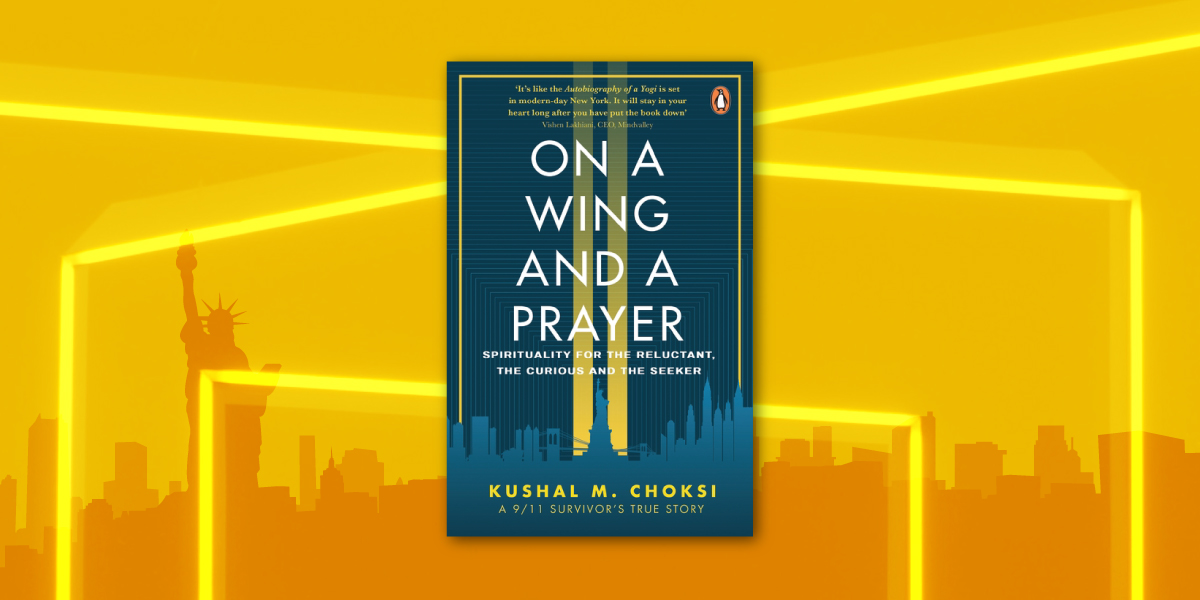
On a Wing and a Prayer||Kushal M Choksi

On A Wing and a Prayer

What would you do if your life turned upside down overnight?

Witnessing the devastation of 9/11 before his eyes and narrowly escaping death, Kushal’s life was never going to be the same again. Suddenly, all his pursuits felt meaningless and he felt a void within him like he had never felt before-until one day, when he reluctantly decided to spend an afternoon with a spiritual master in New York City.

From being a Wall Street trader immersed in the material world to embarking on a quest to find answers to life’s biggest questions, Kushal Choksi writes about his doubts, struggles and revelations on a spiritual path as a left-brained sceptic.

On a Wing and a Prayer is one such (true) account of one man finding himself on a fifteen-year long journey shadowing the spiritual leader Gurudev Sri Sri Ravi Shankar


The Lovers of Rampore||Ashok Chopra

The Lovers of Rampore

In The Lovers of Rampore, Ashok Chopra delves into the many mysterious forms of love thus introducing a mystic quality to the everyday lives of his characters. From the thrills of lust to the joys and fears of genuine commitment, to the exploration of desire and dispassion that exist in all relationships, this is the story of love in all its different manifestations.

Raja Rajvendra Veer Bahadur Singh married Rani Padmakshi Devi Singh, a woman thirty-three years younger to him, after losing his first wife. Theirs is a love built on respect, trust and the desire to support each other against all odds. In Rampore, their son, the dashing Yuvraj, is curiously averse to the very ideals his parents’ marriage embodies, choosing instead the path of instant gratification. In Mumbai, we’re introduced to Vikram Desai-an enigmatic architect whose principles, charm and persona change the course of all those whom he interacts with.

Ashok Chopra weaves a contemporary Bayeux tapestry of richly detailed stories which are mature, slow-burning and strum with a quiet passion that cuts across class, gender, and age, fundamentally altering the way we perceive love. In doing so, he also challenges society’s archaic understanding of the bonding between people.


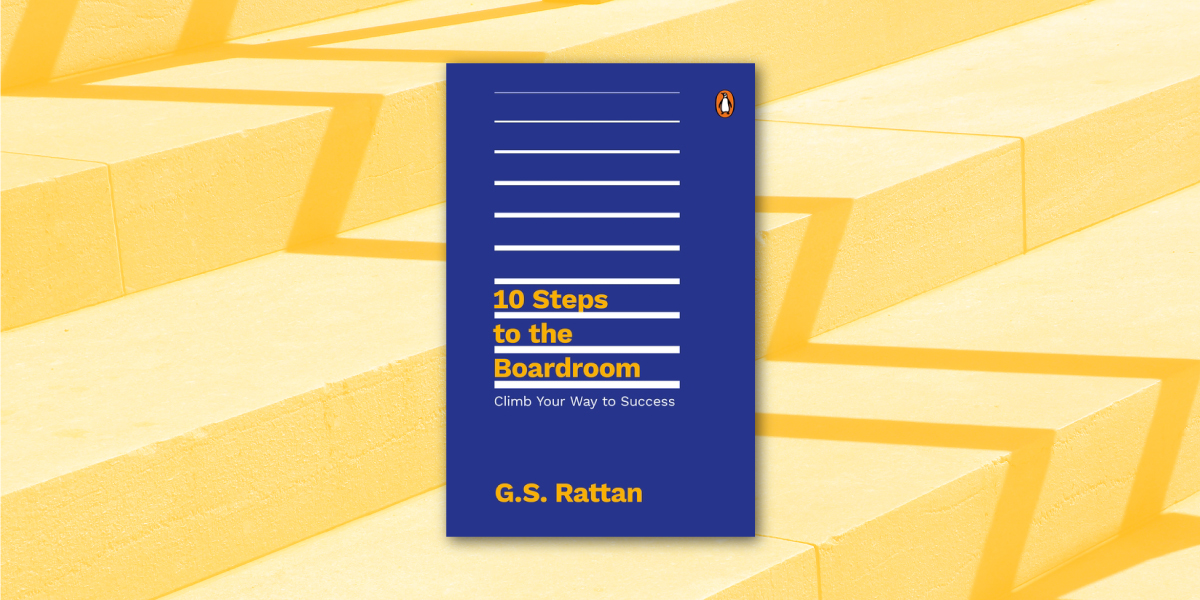
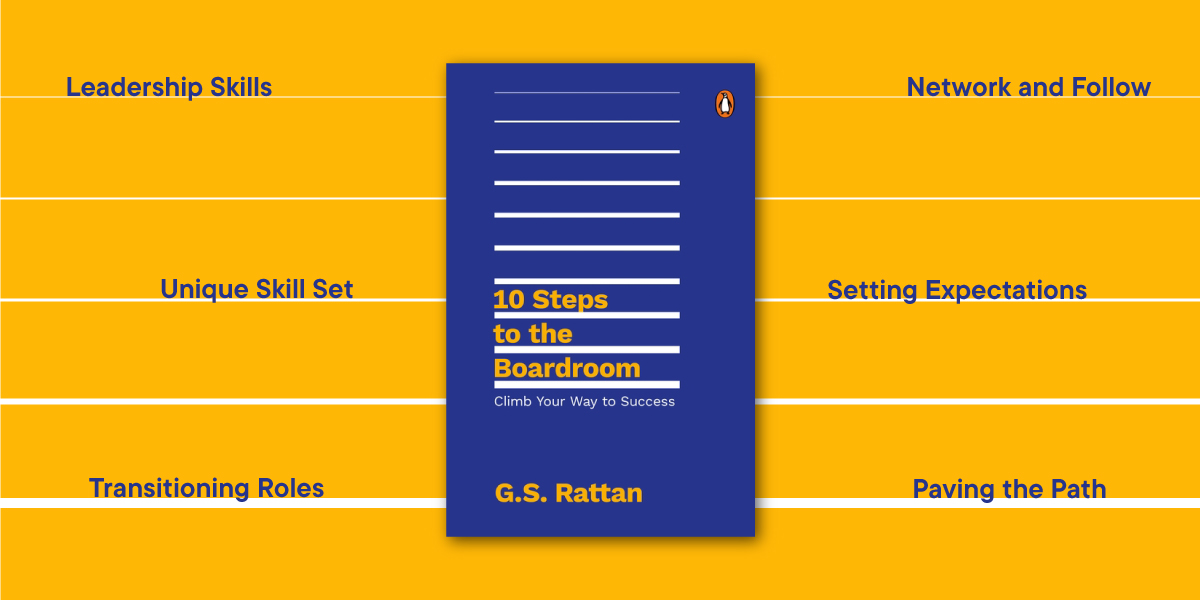
10 Steps to the Boardroom||G.S. Rattan

10 Steps to the Boardroom

There is no linear path to reach the top. In today’s day and age, when there is so much competition and nepotism that is being spoken about, one has to wonder: Does talent and merit have a chance? In my opinion, they do. So how does one knock on the door of success and reach the boardroom?

This book takes you through the crucial ten steps you need to climb as you progress in your career to reach the top via the author’s own personal journey. Each chapter deals with one specific quality that a CEO is required to have and is accompanied with a worksheet next to it that will help you chart your growth. Peppered with wisdom and experience, each story will help you understand the implications of your decisions and the right career stage that one should look at making a move. An absolute must-have for anyone looking to make a mark in their corporate career.


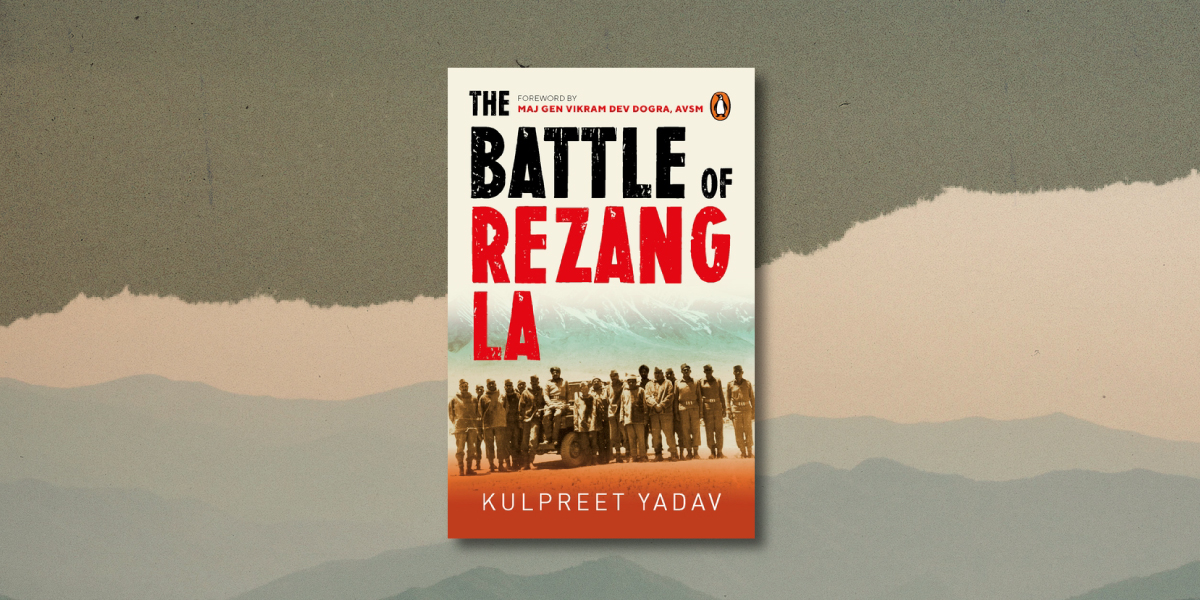
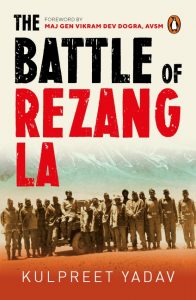
The Battle of Rezang La||Kulpreet Yadav

The Battle of Rezang La

On 18 November 1962, the Charlie Company of the 13 Kumaon Battalion, Kumaon Regiment, fought a Chinese attack at Rezang La Pass in Ladakh, India. The company comprised 120 soldiers and was led by Maj. Shaitan Singh. Of these soldiers, 110 were martyred in the attack.

The Indian search party, which visited the battlefield on 10 February 1963, made a startling discovery-the frozen bodies of the men who had died were still holding guns in their hands, having taken bullets on their chests. One PVC (Param Vir Chakra), eight VCs (Vir Chakras), four SMs (Sena Medals) and one M-in-D (Mentioned-in-Dispatches) were awarded to the soldiers of the Charlie Company, making it one of the highest decorated companies of the Indian Army to this day. The valour of the Charlie Company not only successfully stopped China’s advance, but it also resulted in the Chushul airport being saved, thereby preventing a possible Chinese occupation of the entire Ladakh region in 1962. According to reports, a total of 1300 Chinese soldiers were killed trying to capture Rezang La. The Charlie Company was an all-Ahir company, and most of the soldiers who fought the battle at 18,000 feet came from the plains of Haryana. The Battle of Rezang La is their story.


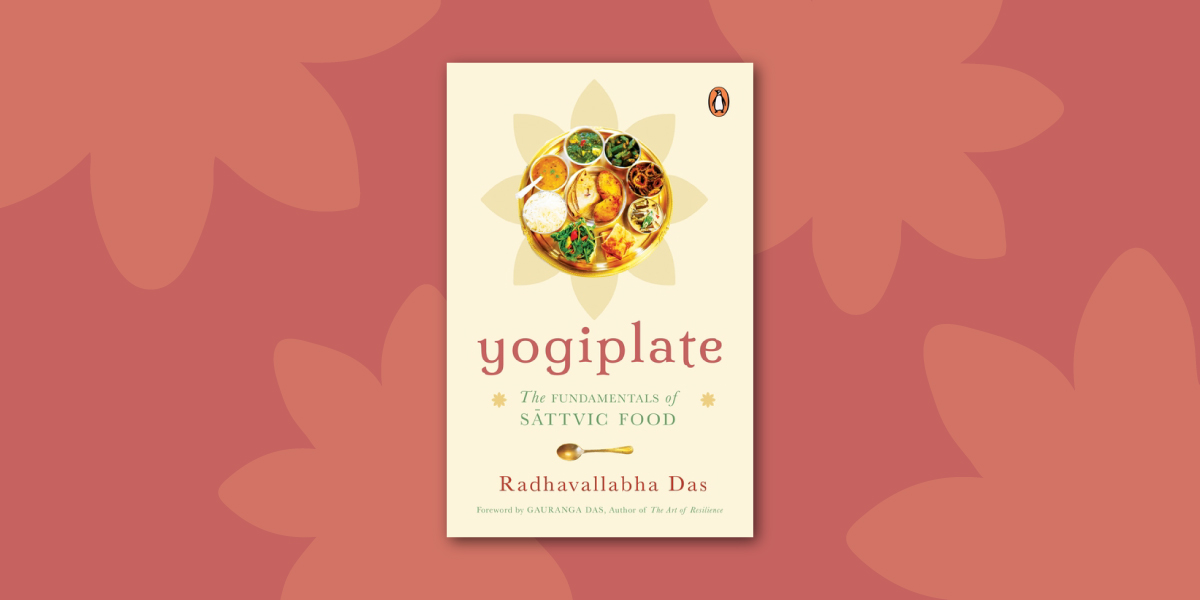
Yogiplate||Radhavallabha Das

Yogiplate: The Basics of Sattvik

Ayurvedic diet varies by body type, a person’s nature, their lifestyle and the food they grew up eating. Nobody knows that better than Radhavallabha Das, who cooked for thousands of devotees and monks at the ISKCON ashram in Mumbai and the adjoining Govinda’s restaurant.

In Yogiplate, he teaches us how to identify our unique body type, lists the vegetables, fruits, grains and spices that will suit us, and e xplains how sāttvic food nourishes the body, mind and inner soul. Written in a conversational style, Radhavallabha shows us how to pair the correct ingredients, avoid the ones that are harmful to us, and focus on the oil, salt and water that we use for cooking.

This book will teach you how to tailor a unique diet that will form the foundation of a happy and healthy life.


The Unforgiving City and Other Stories||Vasudhendra

The Unforgiving City and Other Stories

From the Karnataka Sahitya Akademi winner Vasudhendra comes a powerful collection of stories that shock, move and amuse by turns. As the characters struggle to find their feet in a fast-changing India, they mirror our unspoken dilemmas, torn loyalties and the loss of innocence.

In the extremely popular ‘Red Parrot’, an innocuous image from childhood returns to haunt a man when he visits his idyllic hometown. In ‘Recession’, the desire for a child leads a couple down unexpected paths. In other stories, a young woman in love rethinks her future when buried family secrets are suddenly revealed; a boy learns that insomnia may be the symptom of something more ominous; lonely apartment residents discover the thrills and perils of social media.

Deftly crafted with gentle wit and a lightness of touch, each gripping story exposes the deepest contradictions of modern life. The fluid translation retains the flavour and nuances of the original Kannada, creating a rich reading experience.


Sita||Bhanumathi Narasimhan

Sita

Sita, the beloved princess of Mithila, is one of the most revered women in Indian history; so well known, yet probably the least understood. At every crossroad of her life, she chose acceptance and grace over self-pity. Her life was filled with sacrifice yet wherever she was, there was abundance. It was as if she was carved out of an intense longing for Rama, yet she had infinite patience. In every situation she reflected his light and he reflected her love.

In her, we find someone who is so divine yet so human.

In this poignant narration, Bhanumathi shows us the world through the eyes of Sita. We think what Sita thinks, we feel what she feels, and for these few special moments, we become a part of her. And perhaps, through this perspective, and Sita’s immortal story, we will discover the true strength of a woman.


Passionate About Baking||Deeba Rajpal

Passionate about Baking: Everything Chocolate

A home baker for over 20 years, food stylist and photographer Deeba Rajpal put her passion to the test when she decided to blog about her adventures in the kitchen. Soon, her simple yet delectable dessert recipes accompanied by beautiful, evocative imagery struck a chord with people across the globe, turning her blog, Passionate about Baking, into one of the most popular blogs in the country.

Inspired by her blog, this book is a collection of some of her most loved chocolate dessert recipes for every kind of indulgence. With healthy, tasty yet easy-to-make chocolate delights — from tarts, tea cakes and cupcakes to cookies, traybakes and cakes for special occasions — and simple tips and tricks, Deeba shows you how working with chocolate can be oh so fun!


Good Genes Gone Bad||Narendra Chirmule

Good Genes Gone Bad

The field of biotechnology has evolved over the past four decades, developing medicines which are curing diseases. But this journey of success has been tough and arduous, built upon the shoulders of major failures.
Good Genes Gone Bad highlights seven such colossal failures in drug development-all of which culminated in the development of novel drugs-weaving together various analogies through the stories and thus allowing the reader to understand complex biological phenomena. These stories include treatment of medical conditions such as genetic clotting disorder (haemophilia), childhood-diarrhoea (rotavirus vaccine), preventing HIV infection, activation of the immune systems to treat cancer, gene therapy for treatment of diseases caused by gene-defects/mutations, cell therapy for treatment of leukaemias, and finally the success of Biocon’s approval of the first biologic drug for breast cancer.
Written by the former R&D head of Biocon, India’s largest pharmaceutical company, Good Genes Gone Bad is a fascinating look at the complex world of medicine and drug development, providing the readers with a sense of magnitude of challenges and the extent of difficulty that it takes to make novel medicines.


Economist Gandhi||Jaithirth Rao

Economist Gandhi

The Political Economy of the Mahatma, Its Roots and Relevance.

This book is a refreshing take on Gandhi’s economic philosophy. It provides insights into the hidden facet of Gandhi’s personality, and his thoughts on economics and capitalism. The book captures aspects of Gandhi’s thinking usually missed by those who are sure they know Gandhi.

This is probably the first book on Gandhi that claims that Gandhi was not against business and capitalists. In fact, the author maintains that Gandhi was a Baniya by caste, and this is what explains Gandhi’s positive approach towards business, trade and wealth.


Kathmandu Dilemma||Ranjit Rae

Kathmandu Dilemma

The first two decades of the new millennium have witnessed a dramatic socio-political transformation of Nepal. A violent Maoist insurgency ended peacefully, a new constitution abolished the monarchy and established a secular federal democratic republic. Nevertheless, political stability and a peace dividend have both remained
elusive. Nepal is also buffeted by changing geopolitics, including the US-China contestation for influence
and the uneasy relationship between India and China.

As a close neighbour, India has been deeply associated with the seminal changes in Nepal, and the bilateral relationship has seen many twists and turns. Partly a memoir, this book examines India’s perspective on these developments, in the context of the civilizational and economic underpinnings of the India-Nepal
relationship, as well as issues that continue to prevent this relationship from exploiting its full potential. Though there are several Nepalese accounts that deal with this subject, there are few from an Indian point of view. Kathmandu Dilemma fills this gap.


A Thousand Cuts||T.J. Joseph

A Thousand Cuts: An Innocent

In 2010, T.J. Joseph, a professor of Malayalam at Newman College, Kerala, framed an innocuous question for an internal examination that changed his life forever. Following a trumped-up charge of blasphemy, members of a radical Islamist organization set upon him in public, viciously maiming him and chopping off his right hand. His memoir, told with amazing restraint and wry humour, is the moving tale of his life and family as they went through hell and beyond. Here’s the extraordinary story of a man who survived dismembering only to be betrayed by his
own Church. Let alone stand by him, it robbed him of his livelihood and isolated him from his community, driving Joseph’s long-suffering wife to melancholia and eventual suicide. Joseph’s story is one of fortitude, will power, forgiveness and compassion, told with rare wit that will make readers chuckle through their tears.
This is a tale that will leave the reader seething, weeping and smiling by turns.


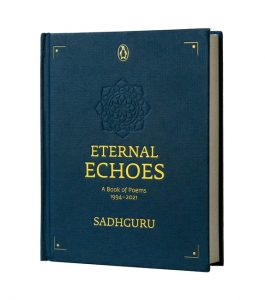
Eternal Echoes||Sadhguru

Eternal Echoes

Beautifully designed, Eternal Echoes is a compilation of poems by Sadhguru between the time period of 1994 and 2021. These poems cover every aspect of his life and travels. There are poems on nature, environment, human nature, the experiences, and resonances he has felt during these three decades and many more. These poems seem simple at first. However, as one reads, one begins to understand the hidden layers within. The words and meanings linger on…

This book is a very special collector’s item for all the followers of Sadhguru that they can savour for years to come. It is also perfect as a gift to loved ones

Khwabnama—Kulsum recalling the past

Akhtaruzzaman Elias’s literary piece titled Khwabnama is translated by Arunava Sinha from Bengali to English. In this magnum opus, Elias documents the Tebhaga movement, wherein peasants demanded two-thirds of the harvest they produced on the land owned by zamindars. Let us read this excerpt from Khwabnama in which Kulsum walks down the memory lane recalling her relationship with her husband and step son. She also reminisces the time before the famine when their lives were different.

*

Khwabnama
Khwabnama || Akhtaruzzaman Elias || Arunava Sinha (Translator)

All these memories from long ago, the exuberance from the past, the happiness before the famine—all of them surged through the troubled times that had passed since then to bubble up in Kulsum’s heart. She had not given birth to a child from her own womb. So whether you talked of a son or of a daughter, Tamiz was both of these for her. When this surge of emotion spilled out of her heart, her entire body thrilled to it, and to escape this infestation she suddenly grew desperate to find fault with Tamiz. But then she was an illiterate woman, the daughter of a fakir; how was she to find a flaw in the strapping young man that Tamiz was? Instead, she took advantage of Tamiz’s father sleeping like the dead to steal some of his anger with his son and taste it—do you have to go to Khiyar in search of work? But there was less and less of work to be had with every passing day, this was true too. Not too long ago, even eleven or twelve years ago, old-timers used to say, sowing, weeding, reaping—all sorts of jobs were available right here in Girirdanga and Nijgirirdanga, on both sides of the lake. Apparently there weren’t enough people looking for work then. And in case something needed to be done at short notice, Pocha’s son Kasimuddi, who lived across the lake, had to be sent for. He was as stupid as his father, didn’t own even a sliver of land, and lived in other farmers’ huts or cowsheds or verandas. People would beg and plead with him when they needed a tree trimmed or a house repaired. And look, since then a thousand Kasimuddis had sprung up in every direction. All the bastards were in search of work. So many people died in the famine, so many more sold their house and land and went away, but still the number of people never decreased. All those who had sold their land and house but not left the village were desperate to work as hired hands. But where was the work? Earlier the sharecroppers hired daily labourers, but now they even set their own babies in arms to work in the fields. All right, all understandable. What choice did Tamiz have but to go to Khiyar for work? But consider what his father was saying, consider it well. Why all this flirtation with women when you go to Khiyar? Tamiz’s father knew everything, Kulsum could imagine too, they weren’t good people over at Khiyar. Whenever they spotted young men, working men, they set their daughters to trap them. They got their daughters to marry these men and then kept them in their own homes, forcing the grooms to work on the land that they had taken on lease, to look after the cattle, to build their houses for them. Kneading clay and making walls with it was hard work. The young men became permanent members of their families. The witches cast their spells and the men passed their entire lives as their slaves, not even remembering their own parents any more. A man settling down in his wife’s home—the whole thing suddenly appeared intolerable to Kulsum. Not for nothing had Tamiz’s father become despondent. Let me tell you, he was no ordinary man. No one knew whose call he answered in his sleep when he walked out at night, or where he went, or how far. People said so many things about Tamiz’s father, but no matter what he did in his sleep, there was no match for him when it came to hard work. It was the people of Majhipara who used to enjoy the fish that Tamiz’s father caught in Katlahar Lake before it passed into Sharafat Mondol’s control. Back then Tamiz’s father could snare carp weighing 6 or 7 seers each even with his ripped fishing net. Those little nets would often sink to the bottom of the lake under the weight of the fish, forcing him to wade neck-deep into the water to reel the net back in. The veteran fishermen would say, ‘You’d better be careful going in there. All the fish come running when you cast your net. Not a good sign.

**

Read Khwabnama to understand the many layers of the Tebhaga movement and to appreciate Elias’ writing style and thematic structure of the novel.

India and China’s conflict over Sikkim

Both India and China began their attempts to claim vassalage over Sikkim in the nineteenth century and after some pockets of dormancy, the issue returned to haunt India–China relations in the twenty-first century. The graph of Sikkim’s history saw many curves due to the conflict between India and China over its territory. Therefore, China’s recognition of Sikkim in 2005 represents an important milestone in India’s China diplomacy.

Here’s an excerpt from The Long Game that will give you a glimpse of the chequered history of tutelage and vassalage of Tibet and Sikkim due to their shared Himalayan Buddhist heritage.

*

The Long Game
The Long Game || Vijay Gokhale

In 1904, weary of Tibetan intransigence in accepting the boundary and trading arrangements negotiated between the British and the Chinese, the Government of India sent Sir Francis Younghusband with a military force into Lhasa. The resultant convention between Great Britain and Tibet (known as the Lhasa Convention of 7 September 1904), compelled the Dalai Lama’s government to recognize the frontier between Sikkim and Tibet as defined by the 1890 Anglo–Chinese Convention. With the Chinese and Tibetans on the same page, so to speak, the British government could have resumed the process of demarcation of the Sikkim–Tibet boundary that was interrupted in 1895. They chose not to do so.

The crumbling Chinese Empire, in a last gasp, launched a military campaign in Tibet under Chao Erh-feng, the Imperial Viceroy, and occupied Lhasa, thereby distracting the Tibetans from creating further problems on the Sikkim–Tibet frontier. Soon thereafter in 1911, the Chinese Empire itself collapsed, and the British were left as the sole dominant power in the Himalayas. Hence the British might not, any longer, have considered the Sikkim–Tibet border to be an immediate problem for the British Indian Empire’s Himalayan frontier. They never resumed the process of demarcation. This British decision would return to haunt India–China relations in the twenty-first century.

Following the independence of India in 1947, the new Government of India entered into a new treaty with Sikkim in 1950 under which it became a protectorate. Sikkim’s defence, foreign affairs and communications were to be handled by the Government of India. Hence, when boundary negotiations began with China in the late 1950s, the Sikkim-Tibet frontier was deemed by the Indian side to be a part of the agenda for the India–China boundary talks. In 1956, Chinese Premier Zhou Enlai acknowledged the special relations that India had with Sikkim, but subsequently avoided any discussion with India on the Tibet–Sikkim boundary during the border talks in the late 1950s and in the official level talks in 1960. In fact, Premier Zhou wrote to Nehru on 8 September 1959 making it clear that the boundary between China and Sikkim ‘does not fall within the scope of our present discussion . . .’

This was no coincidence; it is now known that the Chinese were already aware of correspondence between the Government of India and the Dalai Lama’s government in 1948 (before the founding of the People’s Republic of China), wherein the Tibetan government had demanded that independent India should first return all the lands occupied by the British Empire. Sikkim was one of the territories claimed by them. A cable from the Chinese Foreign Ministry to their ambassadors in July 1955, which contained several suggestions to strengthen ties with Afro-Asian nations, contained instructions to the effect that ‘we should formulate a secret stipulation on the status of Sikkim, Bhutan, Kanjuti, etc.’ In 1954, the Chinese published a map showing Sikkim as a part of China. These instances suggest that the new Communist government in Beijing wanted to keep all options open, including the Tibetan claims over Sikkim.

Although they were in no position at that point of time to challenge India over Sikkim, Zhou Enlai shrewdly declined to engage in any activity that might suggest China’s de jure recognition of Sikkim as a protectorate of India. For this reason, when India proposed that the boundary discussions should include the Sikkim–Tibet (China) sector, the Chinese Ministry of Foreign Affairs wrote to the Indian Embassy in Beijing on 26 December 1959, saying that ‘the boundary between China and Sikkim has long been formally delimited and there is neither any discrepancy between the maps nor any disputes in practice.’ When Indian Ambassador Parathasarathi paid his farewell call on Vice Foreign Minister Geng Biao in Beijing on 19 July 1961, the Head of the Asian Department, Zhang Wenjin, who was also present, even alleged that India was wilfully trying to involve China in order to pressurize Sikkim (and Bhutan) into accepting India’s version of where their boundaries with China lay. In reality, the Chinese were buying time, and possibly studying records, while they made up their minds about Tibetan claims on Sikkim as well as the Anglo-Chinese discussions in earlier periods that had led to the 1890 and 1906 Conventions between Britain and China.

**

error: Content is protected !!