The term ‘widow’ is said to have its roots in the Sanskrit word vidhuh meaning lonely, bereft and solitary. Widowhood marks a drastic shift, characterised by an air of despondency and melancholia. The weight this word carries pulls down the spirits and hopes of a living body until it burns down into ashes, literally and figuratively. The ripples of widowhood reverberate through the rest of the women’s life.
However, many women find their way back to life. They don’t give up, even when they’re shattered.
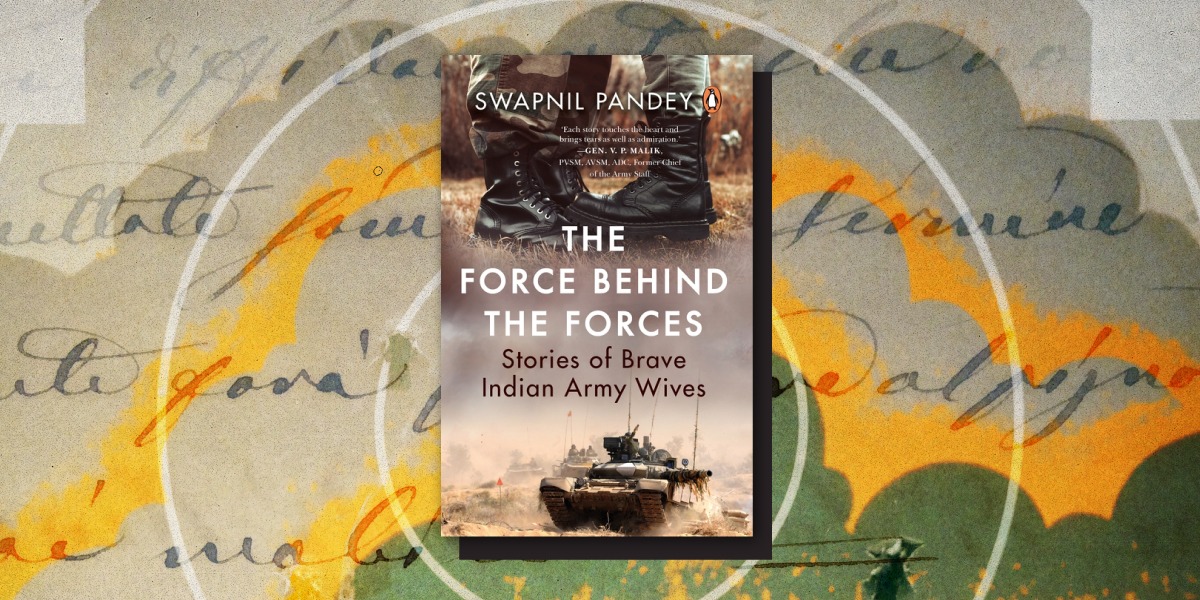
Here’s an excerpt from Swapnil Pandey’s The Force Behind the Forces about Priya, whose world, as she had known, had collapsed.
*
The Force Behind the Forces || Swapnil Pandey
A crushed and grieving Priya sat at an awkward angle, jammed into a small corner of the room. She was forcing herself to face the people around. There was an ocean of them. It was the funeral of a soldier killed in action after all. And many of his companions regarded him with feeling, almost religious devotion. Naik Amit Sharma, the lad who had been killed in action, was the pride of the family. A few children ran around, but Priya could not see her five-year-old daughter—Khwaish. She did not bother to locate her either. Her world, as she had known it, had just collapsed. The atmosphere was mournful. Female relatives were howling and tearing their hair. There was also deep silence during mealtime in the house of mourning. Nothing mattered now, not even her existence. It was confusing.
She wanted to lie down and mourn in silence, away from all the people, but it was not possible. She had to sit there and be tagged as a ‘bechari’. Her mother reached out to embrace her. She didn’t know whether to console her or to cry on her shoulder herself. Priya looked at her wrinkled face. Her mother had begun to look several years older within a span of a few days.
The voices grew in intensity; the incessant whispers swung between viciousness and apathy:
‘Ma-beti dono widhwa hai. Kya naseeb leke aayi hai bechari. [Mother and daughter both are widows. What horrible destiny.]’
‘Paise kisko milne hain? Biwi ko ya ladke ki ma ko? [Who will get the money? The wife or the boy’s mother?]’
‘Widhwa ho gayi bechari, ab kya karegi paison ka?
[The poor woman is a widow now. What will she do with the money?]’
‘Bhari jawani me widhwa, baap bhi nahi hai. Beti bhi hai. Bhagwan na dikhaye aise din kisi jo. Bechari. [She’s been widowed so young. She has no father to turn to either. An she has a little daughter besides. Nobody should have such a fate. Poor woman.]’
‘Iski ma ko dekh, kya karegi aab? Natini bhi itni choti hai. [Look at her mother. What will she do now? Her granddaughter too is so young.]’
She swallowed every remark and rubbed her hands in her lap—desperately. Her eyes were bloodshot; she looked as tired as she felt—dishevelled hair and dark circles beneath her blazing black eyes. She had not just lost her husband—the one she loved with all her heart—but her existence as well. It was a brutal realization that left her devastated, and pushed her from hope to despair within thirteen days.
The ‘Terahvin’ marks the end of the mourning period which lasts thirteen days from the day of the cremation of the deceased. Those thirteen days are meant for the rituals performed for the sake of salvation of the departed soul. These thirteen days provided a lot of time to Priya to mourn. She felt alone and depressed, and even howled at nights remembering Amit—who had promised to walk beside her for the next seven lives.
Priya knew this was not salvation. Shattered, she would lie down on the bed and stare at the flame in the lantern. Sometimes she looked in the mirror, scrubbed her face vigorously, panicked, and wondered in utter dismay—why her? Sometimes she would wake up panting in her damp sari, from the nightmares of her dead husband. But what troubled her the most was the consistent taunts from the people that shrunk her dignity. People forgot she was not just a widow, but a flesh-and-blood person. Suddenly, not only her own identity but the identities of her mother and her daughter were also forgotten. They were not persons any more, but rather a bunch of weak, meaningless women, not eligible for a respectable social status.
The women did not see a grieving young woman, rather a widow, a ‘bechari’ who had almost lost the right to live as a free citizen. Priya lived in a society surrounded by endless myths and stigmas. She certainly did not belong to the progressive class, but came from a conservative background where women lived in shackles and under limitations. Her resources were also limited, and so was her financial condition.
Cruel remarks thrown casually at her made her life miserable, and the mourning almost intolerable. There was also a point when she felt she was losing the will to live, but her beautiful five-year-old daughter, Khwaish, whom the couple had named with hope and happiness when she was born three years after their marriage, on 16 July 2007, helped her cope. It was as if all their wishes had been fulfilled with her arrival, and their life was complete.
**
Read The Force Behind the Forces to find out if Priya succumbed to her destiny and grief or she decided not to give up.
Sita, the beloved princess of Mithila, is one of the most revered women in Indian history; so well known, yet probably the least understood. At every crossroad of her life, she chose acceptance and grace over self-pity. Her life was filled with sacrifice yet wherever she was, there was abundance. It was as if she was carved out of an intense longing for Rama, yet she had infinite patience.
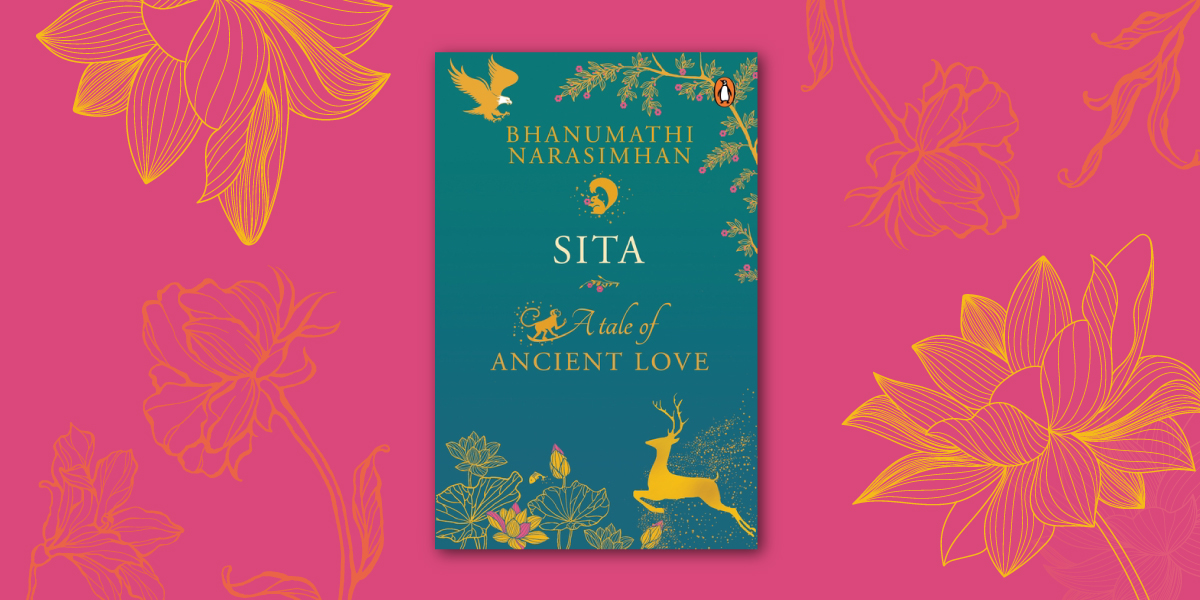
Sita||Bhanumathi Narasimhan
Sita’s story has something to offer to everyone. In her, we find someone who is so divine yet so human. Today, we are looking at some of the lessons from her life that can help us become better individuals.
Devotion
Sita’s devotion for Lord Rama was unparalleled. She stood by him like a pillar when he was banished from the kingdom of Ayodhya and followed him like his shadow to the forest, happily abandoning all comforts and luxuries of the palace.
‘Sita’s eyes closed and she dived deep within as the gentle touch of the petals enveloped her being in waves of beauty. And in that inner silence, the soundless vibration of the sacred word ‘Ram’ rose in soft ripples of bliss. A single tear flowed from Sita’s eyes, sweetened by her devotion and longing for her beloved.’
‘Sita’s eyes captured every detail but nothing left an impression on her mind, just as the lotus leaves, though they were in the water, remained untouched by it. There was only one impression in her consciousness, her beloved Rama, and he filled her completely.’
‘She wondered if Rama was looking at the night sky too. The very thought that they might both be gazing together at the same stars sent a rush of joy into her heart. There were many barriers that separated them physically, but these little twinkling relatives of hers connected her instantly to her beloved. She closed her eyes with a smile on her face. She mentally dwelt upon every detail of her beloved and found deep solace in the image.’
Courage
Sita was the beloved princess of Mithila who had been brought up with all the luxuries that a kingdom can afford. Yet, when Lord Rama was banished to the forest she followed suit, with no qualms or complains. It was not merely her love for Rama, but a sense of indomitable courage that allowed her to take such a valiant step.
‘She patiently waited for Rama to complete what he had to say. As soon as he was done, she fell at Kaushalya’s feet. ‘Mother, what use is the lotus without the sun, a flower without nectar, a river without banks or a body without the soul? I have heard in detail the descriptions of all the hardships that you foresee but I assure you that even a moment of separation from my lord is far worse than any of these difficulties. The birds and animals will be my family. The flowers of the wild will add colour and fragrance wherever we are. Sleeping on the earth, I will feel that I am resting on my mother’s lap. A hut of leaves in the company of my lord will be far more comfortable than the heavenly abode of gods. The majestic mountains all around will be akin to the palaces of Ayodhya.’
Grace
Be it the way Sita perceived Ravana after he abducted her or the way she treated Kaikeyi when the Queen visited her in Chitrakuta, Sita’s graciousness remained untarnished no matter what the circumstance.
‘For Sita, everything beautiful in creation was Rama. She felt the presence of her lord even in the music of the enemy. Ravana was not an opponent or adversary to Rama anymore. He had loomed large in Trijata’s mind when she placed him opposite Rama. But now Ravana seemed very small because she saw him from Sita’s point of view. Rama was bigger than any individual. There was nothing that could come between Sita and Rama because they were not two.’
‘Kaikeyi burst out when Rama came to her, ‘I thought I would never be able to speak to you again! Even if you forgave me, I would never be able to forgive myself. I was wondering what I would even say to you. But that darling wife of yours—she is just like you! She has patiently consoled me ever since our arrival and made me feel so honoured. She has no spite, not even a trace of doubt in her mind. She still treats me like her very own mother! I am sure Kaushalya and Sumitra must be wondering why Sita is spending all her time with me after all that I have done to you and to her!’’
Loyalty
The songs of Sita’s loyalty to Lord Rama are sung till date. When the mighty Ravana tried to win her over, her refusal of him remained as stern and unyielding as ever. Even in captivity, her heart and mind were solely devoted to the thought of Rama.
‘Though Sita was being held captive in Ravana’s garden now, they would bring her food in a golden plate every day. And every day, the plate would remain untouched. Sita never took even a sip of water from the palace kitchens. The Rakshasis who guarded her did not care. They would enjoy the food themselves and return the plates as if Sita had eaten everything.’
‘At first, Sita had thought of her new-found love as a beautiful feeling, a powerful emotion. But years later, as she sat watching the flowing waters of the stream in Ashoka Vatika, she was very clear that this love was her very existence.’
‘Trijata, wait!’ said Ravana. Trijata was his niece. He could speak to her a little more freely than he could to anyone else at the moment. He knew that Sita had softened towards Trijata. ‘Yes, my lord,’ said Trijata and retraced her steps into her uncle’s chamber. ‘Trijata, does she still yearn for that mortal husband of hers? Does she believe that he is actually going to find her?’ ‘Yes, my lord. Though separated physically, her heart knows no other. Whoever Rama may be, he is fortunate to have such a wife. I cannot imagine an ordinary man inspiring this kind of resilience and love.’
Living in harmony with nature
Sita’s love for all of nature’s beings was boundless. The various birds and animals in Ashoka Vatika became her companions in solitude. In turn, these creatures would bring her food and try to uplift her mood, considering themselves lucky to be in the presence of divinity.
‘When the Rakshasis were asleep, little squirrels would run down the trunk of the simsupa tree and drop nuts into her lap. They would wait to see if Sita accepted their offering or not. The sparrows and sunbirds would carry tiny berries in their beaks and place them on the ground near Sita, just as if they were bringing food for their young ones. Sita could not refuse their offerings. She would wash those berries and nuts in the water from the nearby stream and eat them. This was all the food that she consumed throughout her confinement in Ashoka Vatika.’
*
Rediscover the immortal story of Sita from her perspective in Bhanumathi Narasimhan’s Sita: A Tale of Ancient Love.
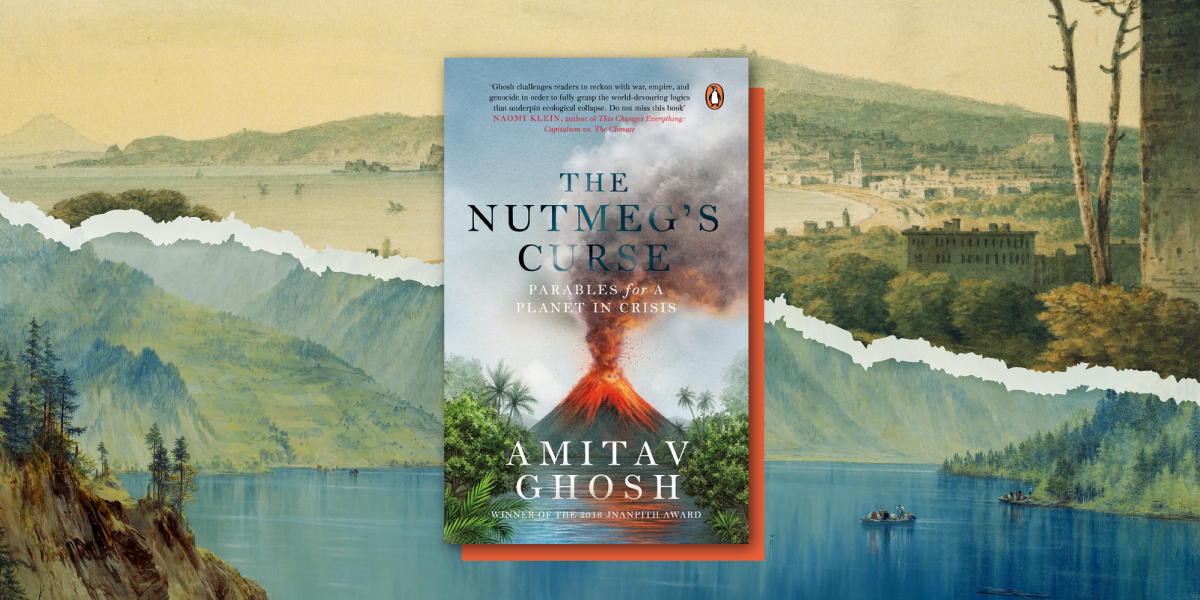
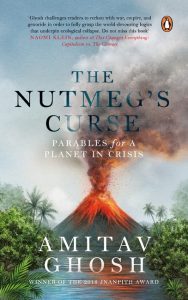
The Nutmeg’s Curse is a compelling read that talks about the now ubiquitous spice, and how it was once so rare that wars were fought over its possession. In his latest masterpiece, Amitav Ghosh explores and explains the connection between nutmeg and climate change, and how its tragic history can be traced back to the Middle Ages. As we follow the tumultuous tale of nutmeg, we are introduced to colonial genocide, eco-fascism, philosophy of science, and military emissions.
The Nutmeg’s Curse||Amitav Ghosh
This intriguing novel kicks off with a bewildering story set in Selamon, a village in Banda islands in present-day Indonesia. The Dutch invasion, led by Martijn Sonck, a ruthless tyrant, is in full swing, while the natives of the island are still comprehending what is happening to their homeland and why. Nutmeg’s history is a tainted one, and its association brings up tragedies and horrible crimes committed during different colonizations across the globe, especially in Asia. Let’s dive into the gruesome legacy of Nutmeg: how it once was one of the most valued spices in Eurasia and how it’s connected to climate change, an irreversible problem we face today.
In the Middle Age, the spice race was the space race of its time, and so the involvement of Dutchmen such as Sonck was hardly surprising. The Europeans, however, were not the first ones to discover nutmeg. Known as the gift of Gunung Api, a part of the volcano mountains in Maluku, nutmeg had traveled the world long before the first Dutch colonizers set their ravenous eyes on it. Unlike the tree it originates from, nutmeg has been described as a tireless traveler. Interestingly, since every single nutmeg originated in and around the Bandas before the 1700s, any mention of the former in texts around the world automatically forms a link with the latter.
In India, a carbonized nutmeg was found in an archaeological site that dates back to 400-200 BCE. In Chinese texts, mentions of this infamous spice date back to the first century before the Common Era, and in Latin texts, nutmeg appears a century later. Hence, it is obvious that nutmeg has traveled thousands of miles before Europeans reached Maluku. However, one of the most peculiar aspects of these spice voyages across Asia and Europe was the astounding consistency through which nutmeg rose steadily in both volume and value.
But why nutmeg in particular? Why did this simple, yet difficult to procure spice rise above the others in the spice race? One of the reasons could be its medicinal properties, especially in the 16th century. The value of this spice rose when doctors in Elizabeth England declared that nutmeg could be used to cure the infamous plague that was sweeping rapidly through Eurasia. In fact, in the late Middle Ages, it became so expensive and exclusive in Europe that a handful of this household spice could buy a house or even a ship! The frenzy for spices like nutmeg in this era surpassed their terms of value in utility alone. Nutmegs manifested into something much bigger: fetishes and envy-inducing symbols of luxury and wealth. As Ghosh rightly states, they conformed impeccably to Adam Smith’s insight that wealth is something that is “desired, not for the material satisfactions that it brings but because it is desired by others.”
Be it to establish a monopoly by European voyagers such as Christopher Columbus himself, or to harness this chic spice’s actual potential, nutmeg was in the center of the storm of crusades and colonizations that became a norm for the centuries that followed. The Nutmeg’s Curse is a riveting account of how some of our modern problems, mainly climate change, are a consequence of these events, and how nutmeg’s story draws parallels with our current reality.
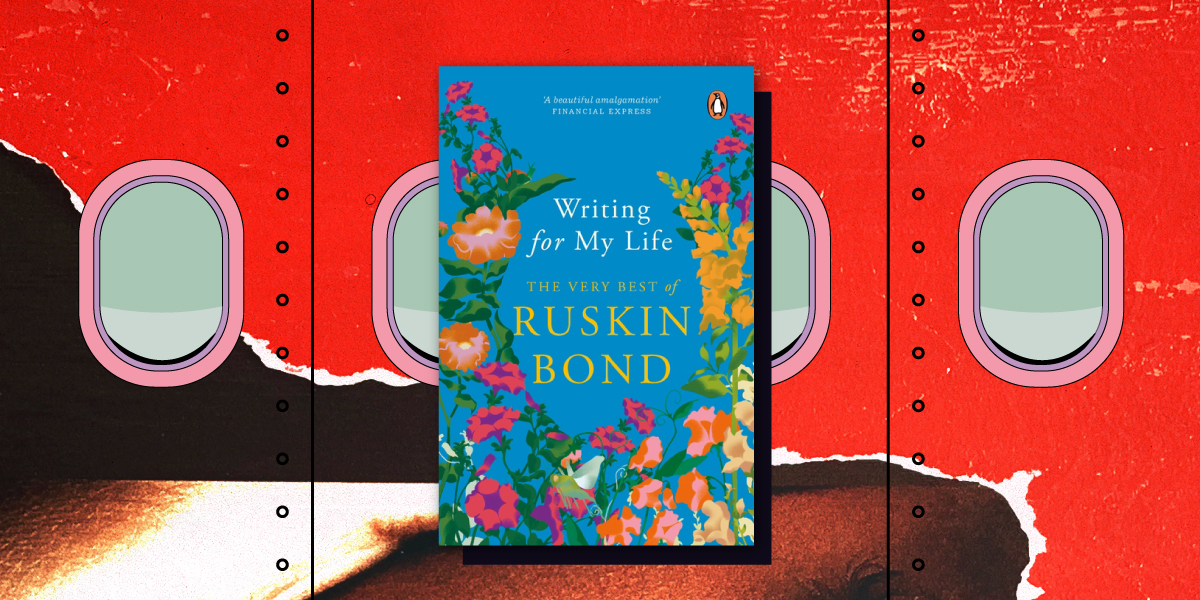
If only the world had no boundaries and we could move about without having to produce passports and documents everywhere, it really would be a great wide beautiful, wonderful world’, says Ruskin Bond.
From his most loved stories to poems, memoirs, and essays, Writing for My Life opens a window to the myriad worlds of Ruskin Bond, India’s most loved author. This book is full of beauty and joy – two things Ruskin’s writing is mostly known for.
Writing for My Life||Ruskin Bond
Ruskin’s writing is greatly inspired by the places he lived at. His first book The Room on the Roof was published when he went away to London but was inspired by Dehradun. Here are some excerpts from stories based out of Dehradun, Jersey, and London
Dehradun: The Window
I came in the spring and took the room on the roof. It was a long, low building that housed several families; the roof was flat, except for my room and a chimney. I don’t know whose room owned the chimney, but my room owned the roof. And from the window of my room, I owned the world.
But only from the window.
The banyan tree, just opposite, was mine, and its inhabitants my subjects. They were two squirrels, a few mina, a crow, and at night, a pair of flying foxes. The squirrels were busy in the afternoons, the birds in the mornings and evenings, the foxes at night. I wasn’t very busy that year; not as busy as the inhabitants of the banyan tree.
There was also a mango tree but that came later, in the summer, when I met Koki and the mangoes were ripe.
At first, I was lonely in my room. But then I discovered the power of my window. I looked out on the banyan tree, on the garden, on the broad path that ran beside the building, and out over the roofs of other houses, over roads and fields, as far as the horizon. The path was not a very busy one but it held variety: an ayah, with a baby in a pram; the postman, an event in himself; the fruit seller, the toy seller, calling their wares in high-pitched familiar cries; the rent collector; a posse of cyclists; a long chain of schoolgirls; a lame beggar…all passed my way, the way of my window…
*
Jersey – A Far Cry from India
It was while I was living in Jersey, in the Channel Islands, that I really missed India.
Jersey was a very pretty island, with wide sandy bays and rocky inlets, but it was worlds away from the land in which I had grown up. You did not see an Indian or eastern face
anywhere. It was not really an English place, either, except in parts of the capital, St Helier, where some of the business houses, hotels, and law firms were British-owned. The majority of the population – farmers, fishermen, councillors – spoke a French patois which even a Frenchman would have disowned. The island, originally French, and then for a century British, had been briefly occupied by the Germans. Now it was British again, although it had its own legislative council and made its own laws. It exported tomatoes, shrimp, and Jersey cows, and imported people looking for a tax haven.
During the summer months, the island was flooded with English holidaymakers. During the long, cold winter, gale-force winds swept across the Channel and the island’s waterfront had a forlorn look. I knew I did not belong there and I disliked the place intensely. Within days of my arrival, I was longing for the languid, easy-going, mango-scented air of small-town India: the gul mohur trees in their fiery summer splendor; barefoot boys riding buffaloes and chewing on sticks of sugarcane; a hoopoe on the grass, bluejays performing aerial acrobatics; a girl’s pink dupatta flying in the breeze; the scent of wet earth after the first rain; and most of all my Dehra friends.
So what on earth was I doing on an island, twelve by five miles in size, in the cold seas off Europe? Islands always sound as though they are romantic places, but take my advice, don’t live on one – you’ll feel deeply frustrated after a week.
I was in Jersey because my Aunt E (my mother’s eldest sister) had, along with her husband and three sons, settled there a couple of years previously. So had a few other financially stable Anglo-Indian families, former residents of Poona or Bangalore, but it not a place where young people could make a career, excerpt perhaps in local government.
I had finished school at the end of 1950, and then for almost a year I had been loafing around Dehra Dun, convinced that I was a writer on the strength of a couple of stories sold to The Hindu’s Sport and Pastime (now there was a sports’ magazine with a difference – it published my fiction!) and The Tribune of Ambala (Chandigarh did not exist then). My mother and stepfather finally decided to pack me off to the U.K., where, it was hoped, I would make my fortune or become Lord Mayor of London like Dick Whittington. There really wasn’t much else I could have done at the time, except take a teacher’s training and spend the rest of my life teaching As You Like It or Far from the Madding Crowd to schoolboys (in private schools) who would always have more money than I could earn.
Anyway, my aunt had written to say that I could stay with her in Jersey until I found my bearings, and so off I went, in my trunk a new tweet coat and two pairs of grey flannel trousers; also a packet of haldi powder, which my aunt had particularly requested. During the voyage, the packet burst, and most of my clothes were stained with haldi.
*
London – And Another in London
Although for my first six months in London I did live in a garret and an unhealthy one at that, I did not really see myself in the role of the starving poet. The first thing I did was to
look for a job, and I took the first that was offered – the office job at Photax, a small firm selling photographic components and accessories. A little way down the road was the Scala Theatre, and as soon as I had save enough for a theatre ticket (theatre-going wasn’t expensive in those days), I went to see the annual Christmas production of Peter Pan, which I’d read as a play when I was going through the works of Barrie in my school library. This production had Margaret Lockwood as Peter. She had been Britain’s most popular film star in the forties and she was still pretty and vivacious. I think Captain Hook was played by Donald Wolfit, better known for his portrayal of Svengali.
My colleagues in Photax, though not in the least literary, were a friendly lot. There was my fellow clerk, Ken, shared his marmite sandwiches with me. There was Maisie of the auburn hair, who was constantly being rung up by her boyfriends. And there was Clarence, who was slightly effeminate and known to frequent the gay bars in Soho. (Except that the term ‘gay’ hadn’t been invented yet.) And there was our head clerk, Mr. Smedly, who’d been in the Navy during the War, and was a musical-theatre buff. We would often discuss the latest musicals – Guys and Dolls, South Pacific, Paint Your Wagon, Pal Joey – big musicals which used to run for months, even years.
The window opposite my desk looked out on a huge cinema hoarding, and it was always an event when a new poster went up on it. Weeks before the film was released, there was a poster of Judy Garland in her comeback film, A Star is Born, and I can still remember the publicity headline: ‘Judy, the world is waiting for your sunshine!’ And, of course, there was Marilyn Monroe in Niagara, with Marilyn looking much bigger than the waterfall, and that fine actor, Joseph Cotton, nowhere in sight.
My heart, though, was not in the Photax office. I had no ambitions to become a head clerk or even to learn the intricacies of the business. It was a nine-to-five job, giving me just enough money to live on (six pounds a week, in fact), while I scribbled away of an evening, working on my second (or was it third?) draft of my novel. The title was the only thing about it that did not change. It was The Room on the Roof from the beginning.
How I worked at that book! I was always being asked to put things in or take things out. At first, the publishers suggested that it needed ‘filling out’. When I filled it out, I was told that it was now a little too descriptive and would I prune it a bit? And what started out as a journal and then became a first-person narrative finally ended up in the third person. But editors only made suggestions; they did not tamper with your language or style. And the ‘feel’ of the story – my love for India and my friends in particular – was ever-present, running through it like a vein of gold.
Much of the publishers’ uncertain and contradictory suggestions stemmed from the fact that they relied heavily on their readers’ recommendations. A ‘reader’ was a well-known writer or critic who was asked (and paid) to give his opinion on a book. The Room on the Roof was sent to the celebrated literary critic, Walter Allen, who said I was a ‘born writer’ and likened me to Sterne, but also said I should wait a little longer before attempting a novel. Another reader, Laurie Lee (the author of Cider with Rosie), said he had enjoyed the story but that it would be a gamble to publish it.
Fortunately, Andre Deutsch was the sort of publisher who was ready to take a risk with a new, young author; so instead of rejecting the book, he bought an option on it, which meant that he could sit on it for a couple of years until he had made up his mind!
Experience the very best of Ruskin Bond’s writing in one book, Writing for my Life!
One of the recent discoveries readers have made is an author who is a biochemist working in the field of public health, the rather extraordinary, Pranay Lal.
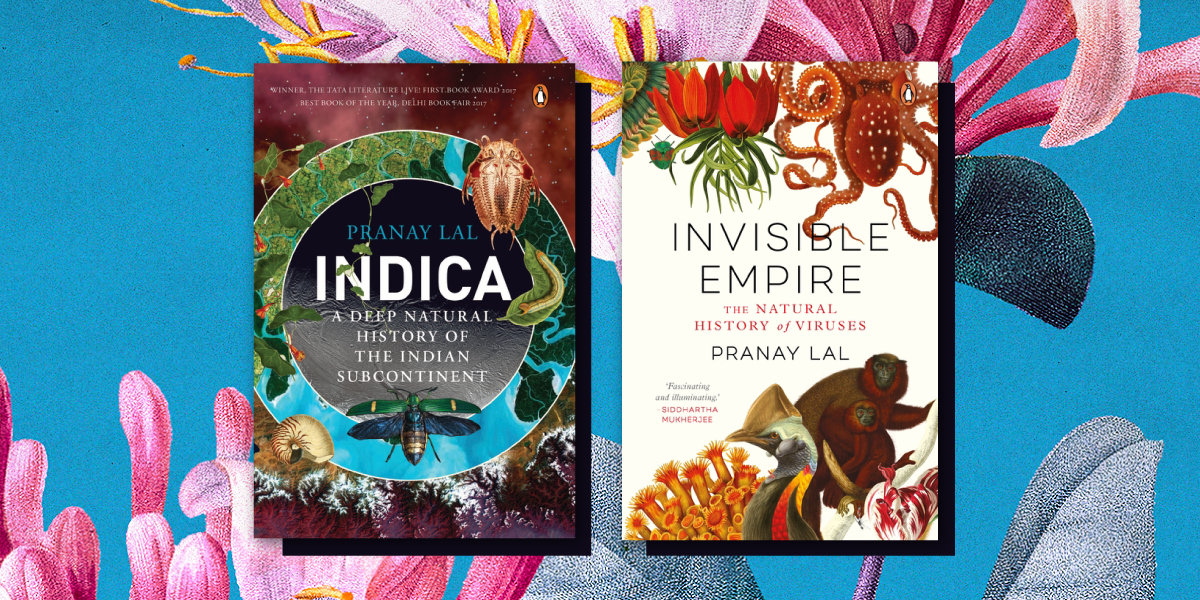
His first book, Indica: A Deep Natural History of the Indian Subcontinent won the hearts of so many people along with bagging the 2017 Tata Lit Prize and the World Book Fair Award. Indica managed to document facts and history from the world of nature in the geographical boundaries of the Indian Subcontinent that the world wasn’t aware of. This exclusive document turned out to be a huge success because it managed to do something never done before with such extent and elegance.
Indica || Pranay Lal
It speaks about an Indian dinosaur more ferocious than T rex called Rajasaurus, about the Ganga and Brahmaputra sequestering nearly 20 per cent of global carbon, and their sediments over millions of years have etched submarine canyons in the Bay of Bengal that are larger than the Grand Canyon! From caves to crocodiles and gargantuan mammals, this book holds secrets to the tributaries of the natural world inside it!
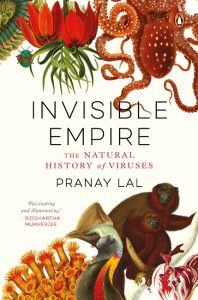
And after years of waiting, Pranay Lal has returned with more facts and stories and secrets to be revealed in his latest release, Invisible Empire: The Natural History of Viruses.
Invisible Empire || Pranay Lal
Virus, the word our ears have been hearing without a pause for the past few years. A virus dominated our lives in a big way and now Pranay Lal takes a dive deep into the history of viruses and gives us the much-needed context, information and detailed accounts of the plethora of viruses that have occupied earth through the years.
The author shows us how everything about viruses is extreme, including the reactions they evoke and how for every truism about viruses, the opposite is also often true. The book takes us into the complex world of viruses, so diverse that it deserves to be called an empire.
Whether we see them as alive or dead, as life-threatening or life-affirming, Pranay Lal makes sure we see the ineluctable beauty, even a certain elegance about the way viruses go about their lives.
Lately the news cycle has been a whirlpool of trauma, scandal, and sensationalism. Far from facts, a new genre of tabloid truths has now changed the face of journalism. What most people do not know is that journalism originally started off with human stories. The world’s oldest newspaper started in the 17th century in Strausbourg and was a chronicle of daily lives. Harking back to the roots is The Book of Hope: Extraordinary Stories of Ordinary Indians, a special project between The Better India and Penguin India. Whenever we hear inspirational and motivational stories, we often treat them as the exception. Instead of creating empathy and seeing how one can spread awareness. It is time for the focus to shift towards stories that show humanity without a filter. Here are a few people at the centre of stories that fit that very description.
The Book of Hope||
Stories about resilience
Stories of injustice are directly tied to assumed pillars of society. Take the rampant problem of female infanticide and acid attacks. One is a clear symptom of gender discrimination, while the other is an example of misogyny and male entitlement. We are often so discouraged by the statistics that we rarely consider the true stories of survivors. Like Jasbeer Kaur (He Tried to Kill Me), who was forced to choose between being a wife and a mother. Kavita (Left Blind, She Now Helps Others), who is not just another victim of an acid attack, but a beacon of light for the marginalized. Stanzin Saldon (An Agent of Change in Kargil) is a young woman who stood up for herself and her chosen family against hearsay and is now changing the face of education in a forgotten part of Ladakh.
Stories about self-discovery
There are some decisions we make in our daily routine, like when to set the alarm, what clothes to wear, which traffic route to follow, etc. Then there are the decisions that unwittingly put us on the path of our life purpose. Like Kaushik (Middle-Class and Gay), who always knew he was gay but was never confident about his sexuality. It was only when he decided to pursue his PhD that a turning point put him on the path of self-love. Jasmine (This Kerala Trainer is an Inspiration), who hails from the small village of Mukkam in Kerala burns her bridges and takes up a simple job, only to find herself going viral. COVID-19 recalibrated Sameer’s (His Biryani Took Off!) original plans and had him return to his true passion. Now he has clients like actors Swara Bhasker and Mrunal Thakur.
Stories that offer perspective
We grow up hearing oversimplified tales of black-and-white, good-and-bad, but a lot of society’s moralizing is being called out today through the power of storytelling. In For Love for Their Children, Farida and Roopmati tell their story from the margins of society, despite being in the oldest profession in the world. In Did I Not See the Signs? Raashi Thakran shines a light on the reality of mental health awareness as the one who is left behind. In Tongawala to Masala King, Mahashay Chunni Lal Gulati steps out of the MDH packets on our kitchen shelves, telling us how there is no such thing as an overnight success.
November is a month full of traditions and festivals, and we want to add to the celebrations with our carefully curated list of exciting new recommendations. This month, we are enthralled to share a mesmerising list of books that engulf experiences, warmth, and the essence of belonging. Focusing on people and real stories, the recommendations for this month have been chosen to remind you what it means to be human. Get ready to go on a journey as you scroll, and grab a piping hot cup of coffee for the ride!
Women of Influence||Rajni Sekhri Sibal
Women of Influence is a compilation of the untold stories of ten women IAS officers who have walked the extra mile and made a difference despite facing major pressures in governance. Having worked in the civil services for thirty-seven years, Rajni Sekhri Sibal has been in a unique position to see things at close quarters, which is why she presents narratives that provide an insight into the challenges of being a woman IAS officer, and also highlight episodes where the protagonist displays immense courage and commitment during the most difficult of times. The narratives are inspiring tales of ten strong and efficient women of substance, and their extraordinary careers wherein they made a difference.
A Place in My Heart||Anupama Chopra
A Place in My Heart is a many-splendored thing. It is a celebration of the power of storytelling. It is also an account of a life lived in the Bollywood trenches. National Award-winning author, journalist and film critic Anupama Chopra writes about fifty films, artists and events that have left an indelible impression on her and shaped her twenty-five-year-long career. A Place in My Heart is a blend of recommendations and remembrances, nostalgia and narratives. Above all, it is a testament to Chopra’s enduring love for all things cinema.
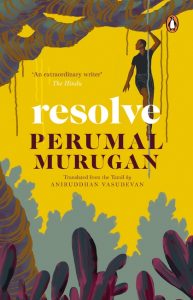
Resolve||Perumal Murugan
Perumal Murugan’s Resolve is both a cultural critique and a personal journey: in his hands, the question of marriage turns into a social contract, deeply impacted by the ripple effects of patriarchy, inequality and changing relationships to land and community. In this deceptively comic tale that savagely pierces the very heart of the matter, translated with deft moments of lightness and pathos by Aniruddhan Vasudevan, Perumal Murugan has given us a novel for the ages.
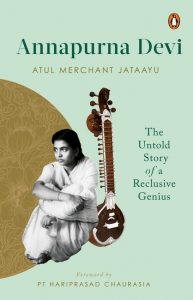
Annapurna Devi||Atul Merchant
Legendary musician Annapurna Devi’s life has been shrouded in mystery. The only people whom she met and communicated with were her disciples who used to visit her for music lessons, which included some of the greatest musicians our era has seen, including Pandit Nikhil Banerjee, Pandit Hariprasad Chaurasia, Ustad Bahadur Khan, Aashish Khan, Dhyanesh Khan, Nityanand Haldipur and Basant Kabra, to name a few. Full of anecdotes and untold stories, this is her life story as told by her to her disciples over a while, giving valuable insights into their Guru Ma’s personality, music and teachings.
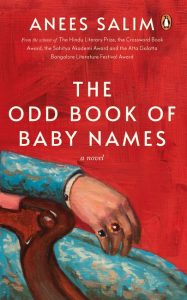
The Odd Book of Baby Names||Anees Salim
Written with the lightness of comedy and the seriousness of tragedy, the playfulness of an inventive riddle and the intellectual heft of a philosophical undertaking, The Odd Book of Baby Names is Salim’s most ambitious novel yet. Layered with multiple perspectives and cadences, each tale recounted in sharp, tantalizing vignettes, this is a rich tapestry of narratives and a kaleidoscopic journey into the dysfunctional heart of the Indian family.
When Charulata Srinivasan returns from the US to Mumbai following the unexpected death of her brother, Ravi, in an accident, she stumbles on something that suggests a more sinister game is in play. With her suspicions that Ravi may have been murdered dismissed by the police, Charu has no choice but to turn to Ravi’s best friend, David, and retired-policeman-turned-detective Anand to help her piece together the truth.
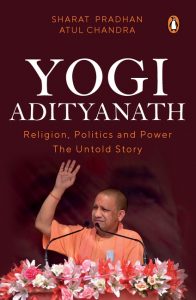
Yogi Adityanath||Sharat Pradhan, Atul Chandra
Is Yogi Adityanath India’s next Prime Minister in the making? His unprecedented rise in the Bharatiya Janata Party and his over-the-top campaigns and displays of his photograph along with Prime Minister Narendra Modi’s on billboards, among many other moves, seem to suggest his political ambition.
Tracing his early life, entry into electoral politics and elevation to the position of the Chief Minister of Uttar Pradesh, India’s most populous state, this book evaluates many untold stories of Yogi Adityanath.
Vipassana||
Bestselling author Shonali Sabherwal’s latest book is for anyone looking to start meditating. With a detailed guide and a focus on Vipassana, it shows you how to control the highs and lows in life and take charge of your happiness. It teaches you how to occupy a state of equanimity and be present in the moment through an ancient technique used by the Buddha for enlightenment. Lift yourself on this journey from misery to happiness, from defilement to purity, from bondage to liberation and from ignorance to enlightenment. Turn your life around through Vipassana.
Sleeping Like a Baby||Himani Dalmia, Neha Bhatt
Sleeping Like a Baby serves as the ultimate bedside companion for parents, packed with all the modern tools you need to build a stronger connection with your children and enable age-appropriate sleep for their optimum growth. The book does the seemingly impossible: blending traditional wisdom and the latest research, it gives us a revolutionary approach to achieve longer naps, better night sleep with fewer wakings, a happier baby and more joy and rest as a family, without resorting to fraught practices like ‘sleep training’. Endorsed by some of the most eminent child sleep experts and written in a style that is deceptively simple and accessible, Sleeping Like a Baby is the final word on responsive and restful sleep for caregiver and baby. All night long.
Chamor||Sheba Jose
This nerve-wracking novel is set in a verdant village of Central Travancore in Kerala, which, though unique in many ways, is no exception to the daily truths of life in India. The characters in this story are at the mercy of their universe, which, unfortunately, does not discriminate between the good, the bad and the ugly. In the end, they have nobody but themselves, and their relationships with each other, to fall back on. Poignant and perceptive, the story of Chamor will haunt you for a long time.
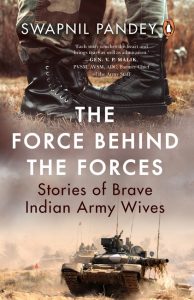
The Force Behind the Forces||Swapnil Pandey
The Force Behind the Forces is a collection of seven true stories of eternal love, courage and sacrifice. Written by an army wife, Swapnil Pandey, this book brings to light moving stories of unimaginable valour in the face of broken dreams, lost hopes and shattered families. It proves that bullets and bombs can only pierce the bodies of our soldiers, for their stories will live on in the hearts of these brave women forever, women who have dedicated their lives to the nation, without even a uniform to call their own.
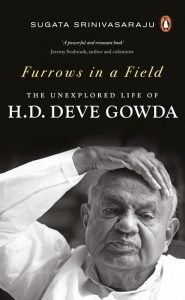
Furrows in a Field||Sugata Srinivasaraju
H.D. Deve Gowda has been in public life for nearly seven decades. Despite his long, arduous yet fascinating journey that began in a poor peasant household in the plains of Hassan, there has been no comprehensive assessment of his life and work. This biography endeavours to professionally fill the gap.The book’s narrative is instructed by Gowda’s rich parliamentary record, archival material and interviews conducted with people associated with him at various stages of his life. The layered narrative is further nuanced by Gowda’s voice, gargantuan memory, a close reading of the time when he made history and the currents of destiny that preceded it. When Gowda became prime minister, many people intuitively registered that our democracy had not been rigged or captured by elites and dynasts, and there was indeed space in our system to rise for a self-made person with no godfathers. It generated hope and continues to do so.
Midnight Freeway||Vivaan Shah
Yogesh Moolchandani, a disreputable builder, is dead. All the signs say suicide but there was nothing wrong with his life. He had just cracked a deal and things were looking hale and hearty for him. CCTV footage from the night of his death shows him crashing into a toll booth at a speed of 180 km per hour on the Bandra-Worli Sea Link. The dealer he had purchased his car from had received five missed calls from him just five minutes before the time of the alleged crash. As the authorities try to find out why Yogesh was calling his car dealer frantically, the plot begins to thicken. Who, or rather what killed Yogesh Moolchandani?
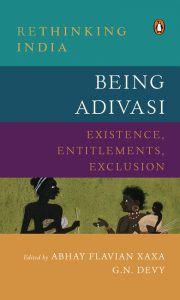
Being Adivasi||
The seventh volume in the ambitious Rethinking India series, Being Adivasi: Existence, Entitlements, Exclusion looks at the process of development and how it clashes with the rights of the Adivasis. Persistent problems faced by the Adivasis-land alienation, indebtedness, vanishing minor forest products from government forests and displacement from their ancestral lands-led to their impoverishment. The Panchayats (Extension to the Scheduled Areas) Act and the Forest Land Rights Act (FRA) enacted by the previous governments were decisive steps towards the empowerment of the Adivasis. However, at present, the implementation of these provisions has taken a back seat. This volume of the Rethinking India series presents the views of the Adivasis and the Denotified Communities on the process of development and its clash with their rights.
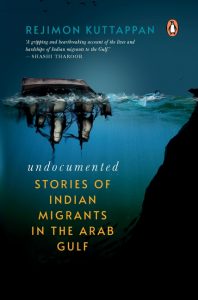
Undocumented||Rejimon Kuttappan
Our complicated and fragile global economy relies on the unacknowledged labour of a subterranean network of undocumented migrant workers. Despite them providing vital support to host economies, governments continue to turn a blind eye to these migrants’ woes without any consequences. In the absence of documents to speak for them, their human rights are systematically abused, their voices are ignored, and their existence is refuted.
In Undocumented, journalist and migrant-rights researcher Rejimon Kuttappan brings to light the lives of these oft-ignored migrants through stories of six Indians in the Arab Gulf, and through them, voices the plight of millions more. Delving into both personal and national histories to establish where we are and how we got here, the author lays bare the lives of people betrayed by their own into human trafficking, into poverty, and into exile in a land that only glimmers with promise.
The Lone Wolf||Neha Dwivedi
The Bangladesh Liberation War was nearing its bloody end when Colonel Ashok Tara, then a twenty-nine-year-old major, was assigned the task of rescuing Bangabandhu Sheikh Mujibur Rahman’s family which was being held hostage by the Pakistani Army. Ashok Tara, unarmed, entered the lion’s den and negotiated with the hostile soldiers for the release of Bangladesh’s Father of the Nation and his family that included a young Sheikh Hasina.
The Lone Wolf is Ashok Tara’s story, charting the course of his celebrated yet quiet life as a member of the armed forces. Neha Dwivedi’s writing expertly captures our hero’s humble beginnings, his life-altering experiences, and offers a blow-by-blow account of a seminal event in Southeast Asian history. As much as it is the story of Colonel Ashok Tara’s bravery, it is also the story of a bleak-yet-victorious period of Bangladesh’s quest for freedom.
Brandvantage||Trupti Bhandari, Arvind Bhandari
Brands are everywhere. We may love them, or despise them, or even disparage them, but we can’t be indifferent to their invasive presence in our lives. Today, brand managers, fresh out of campus, are either clueless about what they are supposed to do; or are besieged with baggage from the past that handicaps them from expressing their point of view. This book aims to take all kinds of brand custodians on an enriching journey, so they can delight consumers, generate revenue for their company and positively impact their careers.
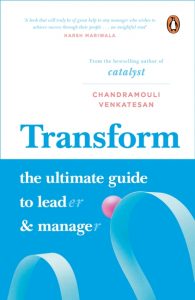
Transform||Chandramouli Venkatesan
Transform focuses on people management, which the author demonstrates is a very important pillar of success. That is because leadership and managing are the means, while the end impact is what they do to people. Insightful and practical, Transform is a comprehensive book on leadership and management that covers all important concepts while giving practical implementation techniques for each.
Searching for a job is always stressful. The majority of job seekers experience stress, nervousness, anxiety and tension during their search for a job, regardless of their work experience, their current compensation level or the industry of their choice. There will be many factors at play that are not in their control, such as a bad economy, hiring freezes, unexpected corporate mergers, buyouts, etc. However, it is in your control to learn to navigate through these factors and find your dream job.
Job Search Secrets by Sagarika Verma and Subir Verma is a practical manual for finding jobs. Here are some key takeaways from their book.
*
Job Search Secrets || Sagarika Verma, Subir Verma
Take the first step and decide what you really want to do. Knowing yourself is an important factor in choosing your career. There are many career options available and knowing yourself will certainly help you choose the right career for the long run.
Here’s what the authors suggest you do.
Do not follow others, but choose a career in which you will be happy.
Do not get influenced by career choice of others. You must choose your career based on your education qualification, personal attributes, SWOT (template given below) and interest.
After you have finalised your career options, you must remember these points while selecting a job or a company.
Know about career options available to you and choose from them after careful consideration.
There are many career options available that you are not even aware of. Get to know what they are.
Most of the vacancies in companies are not publicly advertised.
There are influencers outside the company and key people within who can help you get your desired job.
Identifying influencers and building relations with them hold the key to your getting your dream job.
Now that you have narrowed down your choices, these tips on how companies recruit candidates will come in handy.
Know the hiring channels through which a company recruits people.
Focus on three of the ten channels of hiring to maximize your results.
Identify external references who can help you in finding your job.
Identify the internal people at the company where you are looking for a job.
Keep in mind the points mentioned in the chapter while shortlisting your external and internal references list.
After you’ve researched about the vacancies and recruitment processes, you must know how to best use job portals and job aggregators.
Focus more on job search aggregators than on job sites.
Edit and use the ‘Settings’ feature if you are actively searching for a job.
Treat your profile as your CV and keep it updated.
Use advanced search features.
Create job alerts.
These key takeaways from Sagarika Verma and Subir Verma’s Job Search Secrets will help you in building a strong candidature and find your dream job.
Alok Ranjan’s Making a Difference provides an insider’s unique perspective on the IAS and the role it plays in public administration and development. Here’s an excerpt from the book about how this service evolved over a period of time.
*
Making a Difference || Alok Ranjan
I often hear people talk about the Indian Civil Service (ICS) and compare the IAS unfavourably with it. It is important to understand in this context that the nature of the job, responsibility, working environment and expectations of the people from the IAS differed hugely from that of the ICS in the colonial days. It is, undoubtedly, the successor service to the ICS but it is not the same and cannot be the same.
For those who are unstinted in their praise for the ICS, it is a sobering thought to be told that this hallowed service was considered neither Indian nor Civil nor a service by the great leaders of the nationalist movement. Yet it would be interesting to trace the journey of the ICS, its origins and contribution, and then try to understand how it evolved into the IAS. It would be relevant to examine how the IAS itself is evolving and undergoing change in its character, nature, diversity and reputation.
In the eighteenth century, the East India Company gradually spread its tentacles through most of India and from a professed trading company, it became an agency of governance on behalf of Britain. Naturally, administering such a huge country needed the Army and the Civil Service. Teenaged men were recruited into the East India Company Civil Service and they spent their time in India collecting revenue for the company and maintaining law and order. In 1800, Governor-General Lord Wellesley decided that teenaged recruits would have to undergo special training in India. For this, he decided to set up the college of Fort William in Calcutta, but this proposal had not been approved by the company’s Directors in London.
The Directors did however establish a college in Hertford Castle in England in 1806 and then moved to Haileybury three years later. The selection of candidates to Haileybury was by a process of nomination by the Directors. They had to be seventeen years old and come from distinguished families. There was no question of selection based on merit; family pedigree was considered the most important attribute. People joined the civil service for adventure and with a spirit of altruism. The salaries and the pensions offered were very attractive. After nomination and before joining Haileybury, the candidates had to take some kind of a written and oral exam where they were tested in history and mathematics as well as language. The foundational course at Haileybury was for two years and the candidate studied mathematics, philosophy, literature, law, history, general economics as well as Indian languages. Sanskrit, Persian and Arabic were also taught. It is a different matter that these languages were not of much use when the civil servant landed in India. They had to administer in the vernacular languages and learn them as soon as they were posted to the field. The educational atmosphere at Haileybury was not very demanding and most candidates focused on just clearing the exams. There were lectures for about two hours everyday and a lot of free time was available to socialize and indulge themselves in drink. There was, however, the minority who studied hard and were known as ‘Steadies’, much like the ‘Keen Type Probationers (KTP)’ of our time who took the training at the Mussoorie academy very seriously. Though discipline was lax at Haileybury, a feeling of esprit de corps was very visible and close friendships were formed which lasted for a long time. Haileybury continued till 1857 when the British Government took over the governance of India from the East India Company, and introduced a system of selection into the ICS on merit, through a competitive examination.
The British Government made this change as they felt that selection by patronage would no longer meet the needs of governance and that meritorious candidates were required. Initially, the ICS drew a majority of its entrants from the Universities of Oxford and Cambridge but this soon changed. The Macaulay Committee laid out the guidelines of the selection which prescribed the maximum age limit initially as twenty-three but subsequently brought it down to twenty one. The committee designed an exam that demanded strong factual memory and a concentrated study of academic texts. The graduates had to study beyond their university syllabi to prepare for the exam and much like today, establishments like Crammer came up to prepare candidates for the exam.
There was a lot of criticism of this ‘Crammer’ system and many felt that unsuitable candidates were being selected just by preparing some questions that happened to appear in the examination paper. Still, many were of the view that the selection system provided better candidates than the earlier system that was based on patronage. This was followed by the Lord Salisbury Reforms which decided that candidates would take the exam at the school leaving age (seventeen to nineteen years) and then they would be on probation, studying in a university for two years. This system lasted from 1879–1892 but some leaders were of the opinion that candidates were being selected at too raw an age and they did not take their probation period in the university seriously. Another criticism was that it deterred Indian candidates from taking the exam.
Since the 1830s, Indians had joined the Government of India (GOI) in the capacity of Deputy Collectors, Deputy Magistrates and bore the burden of governance supervised by a handful of British ICS men. Lord Cornwallis in the eighteenth century had excluded Indians from high positions in the government. The 1853 Act opened up the service to all natural-born subjects of the crown. However, it was near impossible for Indians to compete as it was expensive and there were religious considerations which did not allow Indians to go to London to attempt the exam. Satyendra Nath Tagore was the first Indian to have been selected. In 1869, four Indians qualified, including Surendra Nath Banerjee and Romesh Chandra Dutt. The Indian National Congress in 1885 appealed for a simultaneous exam at a centre in India. In 1886, the government appointed a Public Service Commission which raised the age limit for the ICS to twenty-three years, enabling more Indians to write the exam. Even then, till 1910, only 6 percent of the ICS were Indians.
Parenthood is a challenging process, no matter who you are. Ask actress Kalki Koechlin! In her graphic narrative The Elephant in the Womb, Kalki records the physical, mental, and emotional reckonings that she and her partner had to face, before and after childbirth. While archiving these raw feelings, she manages to bust a lot of myths surrounding pregnancy. Below are some of the many myths that the author dismantles while experiencing childbirth for the first time.
The Elephant in the Womb||Kalki Koechlin
Myth 1: Miscarriages should not be talked about
Kalki starts her memoir right off the bat with a crucial point: miscarriage is not a matter of shame. It can feel tragic, can trigger grief and depression, but the guilt and shame are aggravated by treating miscarriage itself like a myth. 1 in 4 pregnancies experience a miscarriage, and most women experience this in the first trimester itself. Because most people hush it up and bring up other superstitions like the evil eye, the psychological effects of miscarriage are often felt by the mother, all by herself.
Myth 2: Pregnant women should restrict their movements
It doesn’t take long for people to change their behaviour around pregnant women, and The Elephant in the Womb describes this in fun, illustrative anecdotes. Once Kalki got pregnant, people around her began treating her like a porcelain doll, ready to break. When in fact, she wanted nothing more than to still hang out with friends and socialize! This myth is harmful especially because pregnant women need exercise in preparation for childbirth.
Myth 3: ‘Standard Procedure’ should be followed
The medical routines and processes which most expecting mothers are told are ‘standard procedure’, are sometimes myth. With the help of other mothers’ anecdotes, Kalki quickly realizes that she gets to decide how her body should be treated during her pregnancy. From discovering that anomaly scans are not mandatory to choosing both a doula as well as a gynaecologist for advice, Kalki establishes boundaries early on in her pregnancy. Most pregnant women let go of the authority of this process, often falling victim to unnecessary invasive procedures, not knowing that they are most likely to know what is best for their body.
Myth 4: Maternal instinct
Haven’t we all grown up hearing ‘mommy knows best’? Every mother has experienced being a mother for the first time, which means that making mistakes, looking out for support, having more people involved with the care of the baby is not an option but crucial for the mother’s physical and mental wellness. With postpartum depression being a real issue, it is unfair that women are expected to magically know and take care of all the affairs of the home after such a life-changing event.
The Elephant in the Womb is a unique graphic memoir that creatively expresses the hopes and anxieties of a modern mother in an ever-changing world.