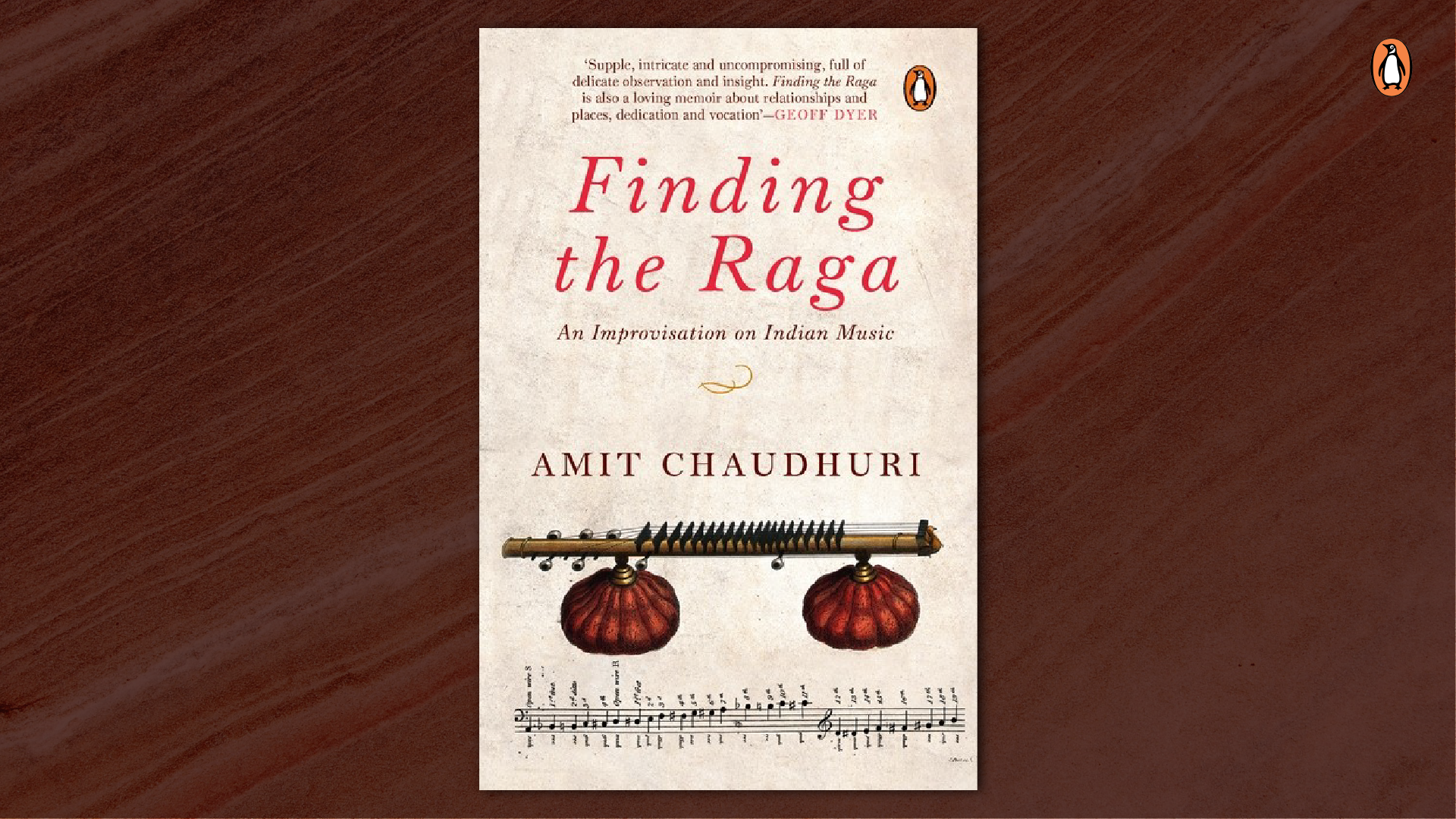
Finding the Raga is Amit Chaudhuri’s singular account of his discovery of, and enduring passion for, North Indian music. A work that simultaneously serves as an essay, memoir and cultural study on an ancient, evolving tradition. It aims at altering the reader’s notion of what music might – and can – be. Tracing music’s development, Finding the Raga dwells on its most distinctive and mysterious characteristics: its extraordinary approach to time, language and silence; its embrace of confoundment, and its ethos of evocation over representation. The result is a strange gift of a book, for musicians and music lovers, and for any creative mind in search of diverse and transforming inspiration.
Here is a glimpse into this profound work of art.
~
Finding the Raga||Amit Chaudhuri
Not long ago, I found myself discussing narrative with a group of academics over dinner. Someone said that narrative doesn’t have to have a beginning, middle, and end in that order. I pointed out that there were narratives in which the beginning took up so much time that you didn’t know when you were going to arrive at the actual story. Personally, that was the sort of narrative I liked. I told the academics what the filmmaker Gurvinder Singh had said in a talk in Delhi about the screening of his first film Anhe Ghore da Daan (‘Alms for a Blind Horse’) at a film festival in Canada. Singh said that the ten-tofifteen-
minute prologue – which he showed us before his talk – had presented the director of the film festival with a problem. She wanted him to cut it and move straight to the main narrative. He said he’d rather not show the film at all than dispense with the opening. The film’s prologue was significant. Nothing happened in it except the establishment of a certain meandering lifelikeness. Since this lifelikeness, this quality of constantly revisiting the present moment, is more important to me than the story, I actually wanted Gurvinder’s entire film to have been a prologue.
While writing these pages, I wondered if I could call the first chapter ‘alaap’, thereby playing on the meaning of the main segment of khayal. ‘Alaap’ means – presumably in all North Indian languages – ‘introduction’. It’s also a major component of khayal. The initial delineation of the raga, before the vilambit or slow composition starts to the tabla’s accompaniment, is called ‘alaap’. So is the broaching and exploration of the raga in the vilambit composition, where the singer ascends reluctantly from the lower to the upper tonic, subjecting the notes and the identifying phrases to repeated reinterpretation. This is the alaap too; through a progression of glissandos, it contributes to a full emotional and intellectual engagement with a raga, and can take up to half an hour or more, depending on the singer’s inventiveness or obduracy. The alaap is all; its detail justifies the genre’s name – ‘khayal’, Arabic for ‘imagination’. From alaap we move to drut, fast-tempo segments, which are more virtuosic, less lyrical and tardy in character. No other music tradition allows the prologue to be definitive in this way; not even the Carnatic or South Indian tradition, or the dhrupad, precursor to the khayal, has a counterpart to the alaap’s divagation. Carnatic performance has alapana, a long opening without percussion in which the raga is established. But alapana, like the nom tom alaap in dhrupad, soon takes on a quasi-rhythmic form: that is, the syllables are sung in and out of metre, although percussive accompaniment is still to come in. The rhythmic element in alapana and in the dhrupad’s long introductory passages creates a sort of excitement to do with the climactic; in the khayal, though, all expectation of the climactic is set aside. In fact, the rhythmless alaap in khayal is relatively short; the percussion instrument, the tabla, soon joins the singer, playing a tala (a cyclical measure with a fixed number and allocation of beats) at an incredibly retarded tempo. The singer proceeds in free time, heedless of the tala and the tabla player except when they must return, after an interval, with the composition to the one, the first beat, of the time cycle: the sama. Otherwise, unlike Carnatic music or the dhrupad, free time reigns over the exposition, notwithstanding the tabla, which, in a feat of dual awareness, the singer nods to and largely ignores. The alaap is a formal and conceptual innovation of the same family as the circadian novel, in which everything happens, in an amplification of time, before anything’s begun to happen. At what point North Indian classical singing allowed itself the liberty of making the introduction – that is, the circumventory exploration that defers, then replaces, the ‘main story’ – become its definitive movement, I don’t know; it could go back to the early twentieth century, when Ustad Abdul Wahid Khan’s romantic-modernist proclivities left a deep impress on North Indian performance.
The alaap corresponds with my need for narrative not to be a story, but a series of opening paragraphs, where life hasn’t already ‘happened’, ready for recounting, but is about to happen, or is happening, and, as a result, can’t be domesticated into a perfect retelling. Should I call this chapter ‘alaap’, then? Or should I give the book that name?
Ruskin Bond started his writing career with the publication of The Room on the Roof at age seventeen. Since then, he is well-known (and definitely well-loved!) for his hundreds of short stories for both children and adults.
If you grew up loving him and his work, we’re sure you’d love to get your hands on some titles written for grown-ups. Here is a list of books written by Ruskin Bond, for adults.
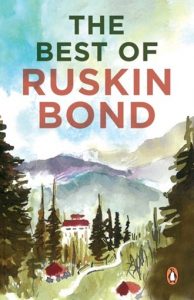
The Best of Ruskin Bond
Are you a fan of Ruskin Bond? Have you been trying to compile his best works and read them along? If yes, then this book, ‘The Best of Ruskin Bond’ is the perfect solution for you. These exemplary stories from the legendary author are here for the taking, all compiled in a single book and provided with some of the best excerpts ever written. This consolidated volume brings together selected prose and poetries that have been written by the award winning author, Ruskin Bond. During his entire career, he has captivated readers across the world with his writing talent.
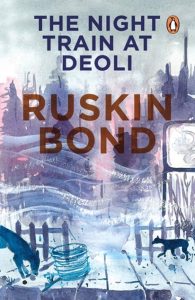
The Night Train at Deoli
Adorned with 30 beautiful stories from Ruskin Bond, The Night Train at Deoli and other stories effortlessly makes in to the must-have, must-read list of every reader. Simple, heart-warming and thought-provoking stories will take you to heavenly grounds of Dehradun and Mussoorie, where the author himself has spent his childhood and teenage years. The stories in the book speak of simple folk, who live in the technology untouched valleys and hills, the lush greenery and little crowded markets.
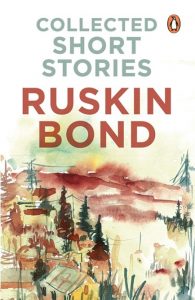
Collected short stories
Ruskin Bond wrote his first short story, Untouchable, at the age of sixteen, and has written memorable fiction ever since. He is famous not only for his love of the hills, but for imbuing the countryside with life and vibrancy through moving descriptions. The simple people who inhabit his stories evoke sympathy and laughter in equal measure. This wonderful collection of seventy stories, including classics like A Face in Dark, The Kitemaker, The Tunnel, The Room of Many Colours, Dust on the Mountain and Times Stops at Shamli, is a must-have for any bookshelf.
The Little Book of Comfort
”So I went out into the night, walked up the hill, discovered new things about the night and myself, and came home refreshed. For just as the night has the moon and the stars, so the darkness of the soul can be lit up by small fireflies – such as these calm and comforting thoughts that I have jotted down for you…” Ruskin Bond
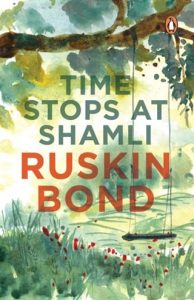
Time Stops at Shamli
Ruskin Bond’s simple characters, living amidst the lush forests of the Himalayan foothills, are remarkable for their quiet heroism, courage and grace, and age-old values of honesty and fidelity. Residents of nondescript villages and towns, they lead lives that are touched by natural beauty as well as suffering—the loss of a loved parent, unfulfilled dreams, natural calamities, ghostly visitations, a respected teacher turned crooked, strangers who make a nuisance of themselves—which only reinforces their abiding faith in God, family and neighbour. Told in Bond’s distinctive style, these stories are a magnificent evocation of an India that may be fast disappearing.
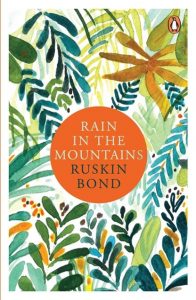
Rain in the Mountains
It is a collection of stories, snippets, essays and poems penned by the writer after having lived in many hamlets across the mountains in the Himalayas. Through his subtle, simple and lucid writing, the author beautifully brings alive many natural sights and sounds that evoke the essence of natural mountain life.
Both prose and poetry in the book are centred around nature with all the purity that it holds. Rain in the Mountains: Notes from the Himalayas touches a raw nerve for an urban dweller when it describes the beauty of mountain wilderness, surrounded by chirping birds, squirrels, a blue sky with moving clouds casting light and shade shadows.
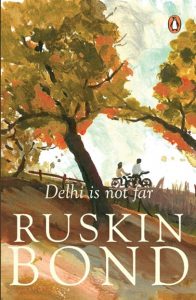
Delhi is not Far
The residents of Pipalnagar, a dull and dusty small town, hope to one day leave behind their humdrum lives for the thrills of Delhi. Deep Chand, the barber, dreams of giving the prime minister a haircut; Pitamber wishes to ride an autorickshaw instead of pulling a cycle-rickshaw; and Aziz will be happy with a junk-shop in Chandni Chowk. Sharing their dreams of escape is the narrator Arun, a struggling detective fiction writer. As he waits for inspiration to write a blockbuster, he seeks and discovers love in unusual places-with the young prostitute Kamla, wise beyond her years and the orphan and epileptic Suraj, surprisingly optimistic despite his difficult circumstances.
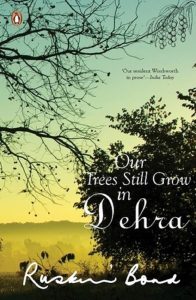
Our Trees Still Grow in Dehra
Fourteen engaging stories from one of India’s master story-tellers Semi-autobiographical in nature, these stories span the period from the author’s childhood to the present. We are introduced, in a series of beautifully imagined and crafted cameos, to the author’s family, friends, and various other people who left a lasting impression on him. In other stories we revisit Bond’s beloved Garhwal hills and the small towns and villages that he has returned to time and again in his fiction. Together with his well-known novella, A Flight of Pigeons (which was made into the film Junoon), which also appears in this collection, these stories once again bring Ruskin Bond’s India vividly to life.
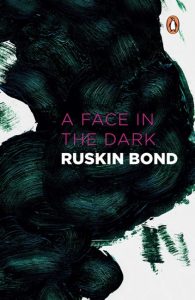
A Face in the Dark and Other Hauntings
In Ruskin Bond’s stories, ghosts, jinns, witches—and the occasional monster—are as real as the people he writes about. This collection brings together all of his tales of the paranormal, opening with the unforgettable, ‘A Face in the Dark’ and ending with the shockingly macabre, ‘Night of the Millennium’. Featuring thrilling situations and strange beings, a Face in the Dark and Other Hauntings is the perfect collection to have by your bedside when the moon is up.
Death Under the Deodars
It was death at first sight . . .
Miss Ripley-Bean was sitting on a bench beneath the deodars, having a quiet moment to herself, when suddenly two shadows, larger than life, appeared on the outside wall; they were struggling with each other. Only afterwards, when a dead body was discovered, did Miss Ripley-Bean realize she had witnessed a murder – and that the murderer had seen her.
In this marvellous collection of brand-new stories set in the Mussoorie of a bygone era, Ruskin Bond recounts the deliciously sinister cases of a murdered priest, an adulterous couple, a man who is born evil and the body in the box bed; not to forget the strange happenings involving the arsenic in the post, the strychnine in the cognac, a mysterious black dog and the Daryaganj strangler.
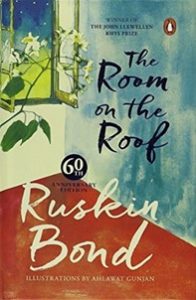
The Room on the Roof
Rusty, a sixteen-year-old Anglo-Indian boy, is orphaned and has to live with his English guardian in the claustrophobic European part in Dehra Dun. Unhappy with the strict ways of his guardian, Rusty runs away from home to live with his Indian friends. Plunging for the first time into the dream-bright world of the bazaar, Hindu festivals and other aspects of Indian life, Rusty is enchanted … and is lost forever to the prim proprieties of the European community.
Written when the author was himself seventeen, this moving story of love and friendship, with a new introduction and illustrations will be enjoyed by a whole new generation of readers.
What’s your favourite story for Ruskin Bond? Tell us in the comments!
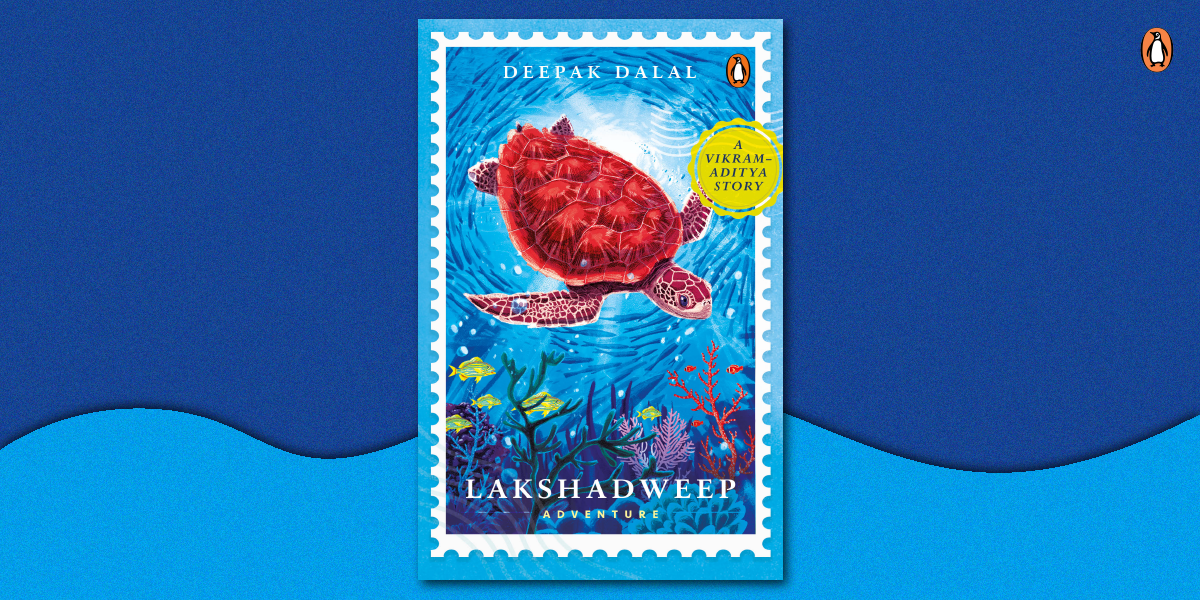
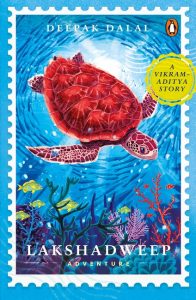
Far out in the Arabian Sea, where the waters plunge many thousands of metres to the ocean floor, lies a chain of bewitching coral atolls – the Lakshadweep Islands. Vikram and Aditya dive into lagoons with crystal-clear water and reefs that are deep and shrouded in mystery. But when they stumble upon a devious kidnapping plot, their idyllic holiday turns into a desperate struggle for survival.
Here is an excerpt from Deepak Dalal’s new book, Lakshadweep Adventure where Faisal – the boy who’s care Vikram and Aditya are left in – makes a disturbing discovery.
A Vikram–Aditya Story: Lakshadweep Adventure
Faisal was in a bad mood. His uncle’s impending arrival hovered like a dark cloud above him. And his friends’ decision to abandon him for the day only made things worse.
Faisal had noticed the wind the moment he had strolled out on to the beach, and his mood had soured even further when he saw his friends enjoying themselves. He wished he had accepted Aditya’s offer as he watched them speed their boards across the lagoon. But it was too late now. His uncle would be arriving shortly.
Faisal sat under a palm tree. He passed time drawing figures in the sand. Above him, palm fronds shook and fluttered as the wind whistled through them. The sun shone brightly. The sand intensified its glare, forcing Faisal to shut his eyes. It was pleasant under the tree and the wind was crisp and enjoyable. The rustling of the palms overhead soothed him and he soon fell asleep.
The tide slowly crept up the beach and finally washed over Faisal’s feet, waking him with a start. He looked at his watch, muttering softly to himself. It was past midday.
Basheer uncle would have arrived by now. He dusted sand from his clothes and rose hurriedly to his feet.
Faisal heard raised voices from the living room window when he entered the yard. He crept forward till he was below the window and peeped in.
His uncle was standing in the centre of the room, facing a group of men.
Basheer Koya was a copy of Faisal’s father, except that he was fatter and there was hardly any hair on his head. But unlike his brother, whose manner was calm and collected, Basheer Koya’s face was contorted with rage. His cheeks were dark and red and he was shouting like a man possessed.
‘Fools!’ thundered Basheer Koya in Malayalam. ‘Monkeys have more brains than you lot. Idiots. I thought you had ears. But obviously you don’t. You weren’t to set foot in Kalpeni. How many times did I tell you not to come here? Yet, not only do you come to the island, but even more brainlessly, you visit my home.’
A bearded man with big, wide shoulders spoke. ‘Sir,’ he began. ‘Sir—’
Basheer Koya ranted on, cutting off the man. ‘I travelled all the way to Kochi to make certain that no suspicion fell on me and I returned only after the operation was over. And you? I come home and see you fools sitting in my house. I take all these precautions and now everyone on this island can link me to you and from there to the operation.’
‘But, sir—’
‘You were under orders to head to Tinakara Island. What are you doing here?’
‘Sir. I was trying to explain just that, sir. We were headed for Tinakara. But we had engine trouble, sir. A terrible rattling noise came from the engine and we were forced to head for the nearest island. You can speak to the mechanic, sir. He looked at our boat and said we were lucky to make it here to Kalpeni.’
The explanation diminished Basheer Koya’s rage, yet he continued to glare at the bearded man. ‘Kumar. Where is Kumar?’ he barked.
‘Kumar is safely on board, sir. There’s no need to worry about him. He is in the lower cabin and one of our men is with him all the time. He can’t make a sound or do anything. He won’t be able to alert the mechanics.’
Faisal froze. This was not for his ears. It was wrong of him to eavesdrop. He wondered if he should leave, but who was Kumar and what was his uncle up to?
‘No one is to know that we have a prisoner on board,’ growled Basheer Koya. ‘Even Allah will not be able to help you if he is discovered. I make no allowances for mistakes.’ Basheer Koya stared at his men, shifting his gaze from one to the other. ‘Do you understand?’
There was silence in the room.
Faisal understood full well what his uncle meant. He shuddered.
***
Journey through these breath-taking islands with a tale of scuba diving and sabotage, set in one of India’s most splendid destinations.
We essentially need a ‘third vision’ of the world that transcends national interests and takes into account global issues, from trade to environmental impacts. We need a vision that values human capital more than financial capital. A vision that works for everyone to attain a multipolar world, where people at the bottom of the economic pyramid benefit the most. We need to ask the world’s people: Do they want to live forever with poverty and hunger, with inequality and unemployment, under the shadow of discrimination and fear, with the police at every corner and the military at all borders? Or do they want to live in peace with friendly neighbours, in a clean environment, and with respect, dignity, equality, opportunities and hope for all? The present reality is scary. Don’t we want to change it?
Redesign the World: A Global Call to Action || Sam Pitroda
We do not want just the ‘open’ vision of America or the ‘closed’ vision of China. We want a third vision of the world where America is open to engagement, and China is engaged in openness. We want a reset of the world so that we can redesign it. We want to reset international interests over national interests, human diversity over human differences, globalism over nationalism, inclusion over exclusion, non-violence over violence, rationality over religion, and respect over race. We want international cooperation on climate change, global health, poverty, hunger, violence, security, amity with neighbours and much more.
I firmly believe that it is possible to redesign the world with this third vision because multiple, intricate and timely technologies with incredible innovations in information, genetics, bio, nano and material sciences are now all coming together. They are taking deep roots across the social, political and economic landscape, which will profoundly impact our livelihood and longevity. This will give new meaning to life, work, values, wisdom and progress. It will lead to a new development model based on cooperation, collaboration and communication, which can finally deliver peace, justice and prosperity to all by the middle of this century.
We are so used to thinking and behaving traditionally with our narrow compartmentalization of people and their ideas, values and experiences. We always tend to look at past experiences and our history to find solutions. We find pleasure in the past, comfort in the present, and fear for the future. The future is prosperous with new bold ideas and different toolkits, such as hyperconnectivity, which did not exist earlier. The future demands a new mindset with creativity, innovation and courage. I firmly believe that we are at a crossroads because of hyperconnectivity. We must think very differently to redesign the global organizational architecture. Only with this can we achieve new goals and growth for humanity’s sake. Connectivity is the key to break our past, transcend our present, and build bridges to network for the future.
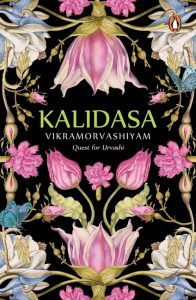
A magnificent drama based on an episode from the Rig Veda, Vikramorvashiyam is filled with dramatic turns of event, music and dance. The scenes, characters and dialogues are at once lively and theatrical as well as sensitive and speculative. Believed to be the second of Kalidasa’s three plays, Vikramorvashiyam is an undisputed classic from ancient Indian literature. A.N.D. Haksar’s brilliant new translation gives contemporary readers an opportunity to savour this delightful tale about star crossed lovers, King Pururavas and the celestial nymph Urvashi.
To enable you to feel the full extent of the intensity of the drama and emotions in this play, we find ourselves compelled to give you a glimpse into this magnificent story.
~
Vikramorvashiyam||Kalidasa
Chitraratha: Great Indra heard from Narada that Urvashi
had been kidnapped by the demon Keshin. He then ordered
the army of celestial singers to get her back. On the way, we
heard from the bards about your victory, and have come here
to you. She must salute Indra, together with you and me. For
you have indeed done what he wanted, sir. Look,
Long ago did the sage Narayana
present her to the king of heaven,
and now she has been rescued
by you from the demon’s hands. (14)
King: No! It is not so!
It is indeed by the power of
the wielder of the thunderbolt,
that his allies defeat the foe:
from his mountain cave, even the echo
of a lion’s roar can terrify elephants. (15)
Chitraratha: This is quite well said. Modesty does indeed
ornament valour.
King: This is no time for me to visit Indra, the lord of a hundred
sacrifices. You should yourself take this lady to meet him.
Chitraratha: As you wish, sir. Ladies, this way.
(The nymphs mime to leave.)
Urvashi: Friend Chitralekha, though this saintly king did save
me, I cannot say good-bye to him. So, please be my mouthpiece.
Chitralekha (approaching the king): Great king, Urvashi says
she wants to express her gratitude to you and, as for a dear
friend, to carry your fame to great Indra’s realm.
King: Do go, till we meet each other again.
(The nymphs mime mounting to the sky, together with the
celestial singers.)
Uravashi (miming great reluctance): Alas! My string of pearls
has been caught in the vine of a creeper plant. Chitralekha,
please set it free.
Chitralekha (with a smile): It is stuck hard, and is difficult to
disentangle. But I will try to do it.
Urvashi: Remember your words!
King (to himself ):
Creeper, to me your deed is dear,
it delays for a while her going,
and her side-long glance at me
as she turns away her face, I see. (16)
Charioteer: Noble lord,
Having hurled into the sea
the demon who had great Indra wronged,
your wind-like arrow has again
come back to its quiver now,
like a serpent to its burrow. (17)
King: Then, bring back the chariot so that I may mount it.
(The charioteer does so and the king mounts the chariot. Urvashi
gazes at him and sighs as she exits with her friend Chitralekha.)
King (looking towards where Urvashi has gone): Alas! My
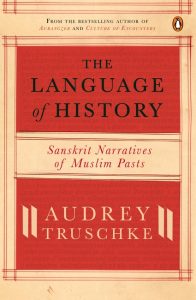
The Language of History by Audrey Trushchke analyses a hitherto overlooked group of histories on Indo-Muslim or Indo-Persian political events, namely a few dozen Sanskrit texts that date from the 1190s until 1721. This book seeks, for the first time, to collect, examine and theorize Sanskrit histories on Muslim-led and, later, as Muslims became an integral part of Indian cultural and political worlds, Indo-Muslim rule as a body of historical materials. This archive lends insight and perspectives into formulations and expressions of premodern political, social, cultural and religious identities.
Here is an excerpt from the chapter titled Local Stories in Fourteenth-Century Gujarat andFifteenth-Century Kashmir.
*
Different perspectives, different storytellers, always complicate the narrative; that’s good because what we are trying to make sense of is complex.
—Githa Hariharan, 2016 interview
As Indo-Muslim rulers made further inroads into parts of the Indian subcontinent from the fourteenth century onwards, authors developed locally based traditions of Sanskrit historical writing that detailed this political trend. In this chapter, I investigate and compare two regional traditions that took off in the fourteenth century and fifteenth century, respectively: Gujarati prabandhas and Kashmiri rajataranginis. Gujarat and Kashmir had both witnessed Muslim-led military activities and, at least in parts, Muslim- led rule for centuries prior to the inauguration of these respective bodies of Sanskrit texts. Both sets of materials narrate some of that history as relevant to their region. Additionally, because they are plural rather than single texts, these materials allow me to compare authorial choices and see trends and exceptions within a deepening interest in Indo-Muslim history among premodern Sanskrit intellectuals.
The Language of History || Audrey Trushke
The Gujarati and Kashmiri materials that I discuss here differ from each other in numerous ways. Four Gujarati texts were composed within a tight time-frame, dating between 1301 and 1349. A trio of Kashmiri works stretch across more than three centuries, with Kalhana penning his Rājataraṅgiṇī (River of Kings) in 1149 and two successors writing in 1459 and 1486, respectively. The two series of texts were authored by men belonging to different religious communities: Shvetambara Jains (prabandhas) and Kashmiri Brahmins (rajataranginis). They exhibit distinct styles and foci. Nonetheless, both constitute regionally based Sanskrit traditions of history writing in areas shaped, relatively early on, by Muslim-led political activities. I consider Gujarati prabandhas and Kashmiri rajataranginis together here, not as two sides of the same coin but rather as two distinct local traditions. When read against each other, these series of texts enable us to sketch out the increasingly complex contours of Sanskrit historical writing on Muslim-led incursions and rule in the fourteenth and fifteenth centuries.
Pairing Difference in Gujarati and Kashmiri Materials
The Gujarati and Kashmiri works both addressed local audiences, although delineated in rather different ways. Jain monks envisioned the four prabandhas I discuss below as being inspirational to the Jain faithful. Two authors, Merutunga and Rajashekhara, penned collections of stories about Jain ascetics and laymen. The other authors—Kakka, Jinaprabha and Vidyatilaka (Jinaprabha’s continuer)—structured their narratives around Jain pilgrimage destinations. Extant manuscript evidence indicates that the four prabandhas were often read in and around Gujarat. In contrast, Kashmiri Brahmins penned the first three rajataranginis for a more politically defined audience. Kalhana, who completed the inaugural Rājataraṅgiṇī in 1149, claimed to write for others who lived through the vicissitudes of sovereignty. For Kalhana, this was a personal subject since his father had been ousted from the court of King Harsha (r. 1089–1101), leaving Kalhana unemployed. Kalhana’s chronicle found a reception, a bit ironically, among those who enjoyed royal patronage, and Jonaraja and Shrivara, the authors of the next two rajataranginis—who imitated Kalhana in style and focus—were court poets of the Shah Miri dynasty. The Rājataraṅgiṇīs of Jonaraja and Shrivara doubled as extensions of Kalhana’s text and as official court chronicles for an Indo-Persian polity.
Despite the distinct origins of these two bodies of historical materials, the founding authors of both local traditions envisioned the same key antecedent: the Sanskrit epic Mahabharata. Kalhana alludes to the Mahabharata throughout his work and also assigns his chronicle the same unusual aesthetic goal attributed to the epic in the Kashmiri thought of his time, namely, inducing quiescence (śāntarasa) in the reader who would shun the world after perusing the monstrous cycle of politics. Merutunga, who penned the earliest prabandha work I discuss here, was more direct. In an opening verse, he billed his Prabandhacintāmaṇi (Wishing-Stone of Narratives, 1305) as ‘pleasing like the Mahabharata’. Neither Kalhana nor Merutunga refer to any of the historical materials that I have dealt with earlier in this book, which accords with the generally fractious nature of Sanskrit historical writing on Indo-Muslim political events. But neither did these authors posit their works as clean breaks with the Sanskrit literary tradition. Rather, the authors imagined themselves as updating established ways of writing about past events in Sanskrit, modernizing (or early modernizing?) them for new times and in response to new occurrences. Analysing the prabandhas and rajataranginis together here underscores the self-proclaimed continuity of both sets of authors as well as their differences in interpreting what it meant to write political history in Sanskrit.
Kalhana and Merutunga headline focusing on the present as a crux of their innovation. Again, Merutunga is more forthcoming. In an opening verse, he claims that his work narrates recent history (vṛttaistadāsannasatāṃ), which sets it apart from old stories (kathāḥ purāṇāḥ). Kalhana indicates his emphasis on recent history by becoming more precise and verbose as he comes closer to his present day, such that his later chapters, on events increasingly close to his own time, are far longer and denser than his earlier ones.9 More than half of Kalhana’s Rājataraṅgiṇī concerns the sixty years prior to the text’s composition. In this emphasis on recent history, Kalhana’s Rājataraṅgiṇī is a far cry from the Mahabharata epic that was always, even in its own internal frameworks, about times and people that were long gone. More generally, the prabandhas and rajataranginis I discuss here concentrate on the lives of real, historical people and sometimes include specific dates and citations of sources. Their authors coupled these historiographical innovations with an incorporation of stories about how Indo-Muslim political actors were shaping the contemporary political and social realities of Gujarat and Kashmir, respectively. By reading these two bodies of works side by side, we can see both their shared similarities and substantial divergences that added texture and depth to the growing tradition of Sanskrit historical writing.
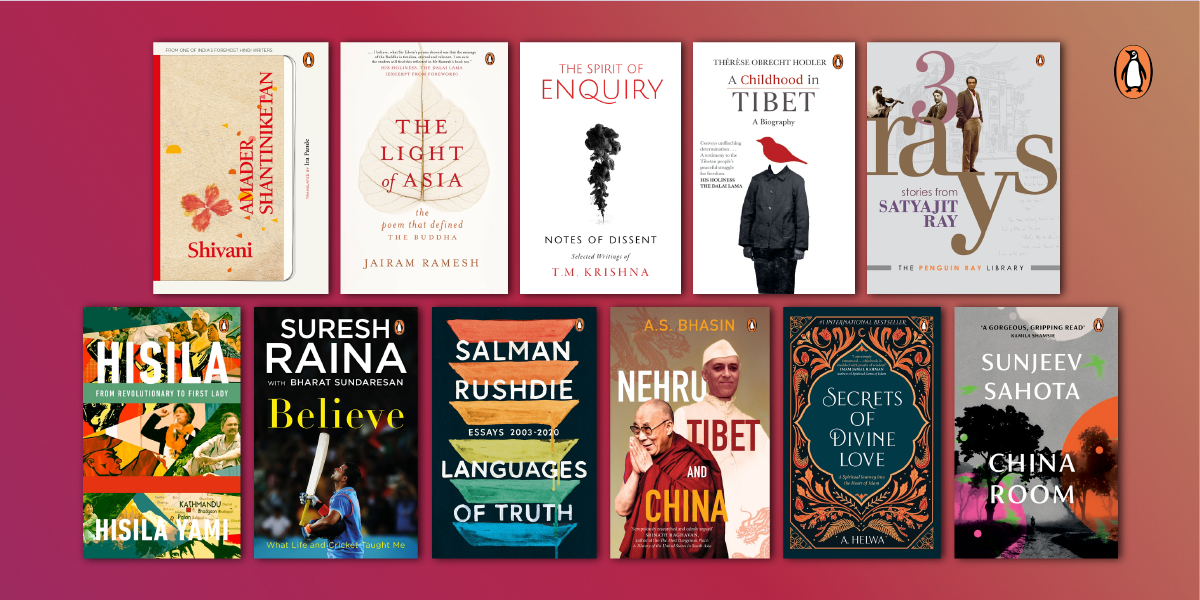
‘May’ is a word filled with promises and possibilities. It is also a word that conveys blessings and best wishes. These are emotions the entire human race has been expressing and feeling toward one another constantly through this difficult period that has spanned over a year. A homograph to this word that is so laden with potential and compassion, is the month we have now stepped into. May ‘may’ have a lot to offer you in terms of comfort and relief, but what we certainly have to offer you this month is an array of our latest releases. May they bring a little light, love, laughter, knowledge and hope into your lives.
Hisila||Hisila Yami
Hisila
In this fascinating book, Hisila Yami traces her journey from being a young Nepali student of architecture in Delhi in the early eighties to becoming a Maoist revolutionary engaging in guerrilla warfare in Nepal. Yami was one of two women leaders who were a part of the politburo of the Communist Party of Nepal, which led the revolutionary People’s War.
This lucidly written political memoir may talk about gaining political awareness, joining protests, being imprisoned, participating in the People’s War, and later her experiences as the first lady and a minister. But, at the same time, it’s also a narrative that offers glimpses of her personal life. She candidly writes about falling in love and marrying a fellow politician, Baburam Bhattarai, who went on to become the prime minister of Nepal. From how she balanced her political life with motherhood to what it meant to be a woman in the communist party that launched a civil war, Yami narrates an unforgettable account of a remarkable life.
Three Rays||Satyajit Ray
Three Rays
Satyajit Ray (1921-1992), through his life, philosophy and works offered a unique aesthetic sensibility, which took our cinema, art and literature to a new height. Ray, an ace designer, music composer, illustrator and a gifted writer, gave us the iconic Feluda and Professor Shonku, loved and revered by millions of readers.
Celebrating his centenary birth anniversary, Three Rays: Stories from Satyajit Ray, the first book in ‘The Penguin Ray Library’ series, opens a window to his brilliance. With more than forty previously unpublished stories, autobiographical writings and illustrations by Ray, this volume opens a window to the Master’s creative genius.
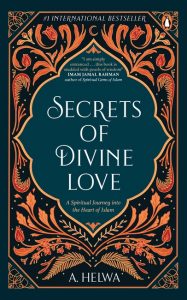
Secrets of Devine Love||A.Helwa
Secrets of Divine Love
Secrets of Divine Love draws upon the spiritual secrets of the Qu’ran, mystical poetry and stories from the world’s greatest prophets and spiritual masters to help you reignite your faith, overcome your doubts and deepen your connection with God. Practical exercises and guided meditations will help you develop the tools and awareness to overcome the inner critic that prevents you from experiencing God’s all-encompassing love.
Through the principles and practices of Islam, you will learn how to unlock your spiritual potential and your divine purpose. This insightful book uses a rational yet heart-based approach towards the Qu’ran that enlightens and inspires towards a deeper intimacy with God.
Believe||Suresh Raina, Bharat Sundaresan
Believe
Believe, Sachin Tendulkar told him – and he took it to heart, getting the word etched on his arm as a tattoo.
In this book, Suresh Raina takes us through the challenges he faced as a young cricketer. He was bullied as a child, but he overcame every adversity life threw at him and never gave up. This is the story of the lessons he learnt and the friendships he built.
Peppered with invaluable insights – about the game and about life – that Raina acquired from senior colleagues, this book will make you believe in the power of hard work, love, luck, hope and camaraderie. It is a journey through the highs and lows in the career of a man who saw his world fall apart and yet became one of the most influential white-ball cricketers India has ever seen.
Languages of Truth||Salman Rushdie
Languages of Truth
Salman Rushdie is celebrated as a storyteller of the highest order, illuminating truths about our society and culture through his gorgeous prose. In his latest collection of nonfiction, he brings together insightful essays and speeches that focus on his relationship with the written word and reinforce him as one of the most original thinkers of our time.
Gathering pieces written from 2003 to 2020, Languages of Truth chronicles Rushdie’s intellectual engagement with a period of momentous cultural shifts. He delves into the nature of storytelling as a human need in what emerges as a love letter to literature. Rushdie explores what the work of authors from Shakespeare and Cervantes to Samuel Beckett, Eudora Welty, and Toni Morrison mean to him. He delves deep into the nature of ‘truth’, revels in the vibrant malleability of language, the creative lines that join art and life, and looks anew at migration, multiculturalism and censorship.
Enlivened by Rushdie’s signature wit,Languages of Truth offers his piercingly analytical views on the evolution of literature and culture as he takes us on a tour of his own exuberant imagination.
Nehru, Tibet and China||Avtar Singh Bhasin
Nehru, Tibet and China
On 1 October 1949, the People’s Republic of China came into being. Power moved from the hands of the nationalist Kuomintang government to the Communist Party of China headed by Mao Tse Tung. All of a sudden, it was not only a new China that India had to deal with but also a Tibet which was under increasing pressure.
Clearly, newly independent India, with Prime Minister Jawaharlal Nehru at its helm, was navigating choppy waters. Its relations with China deteriorated, eventually leading to the Indo-China war in 1962. Today, more than six decades after the war, we are still face border disputes with China that seem to routinely grab headlines. It leads one to question what exactly went on during the emergence of a new China and why have we repeatedly failed to arrive at a solution?
Based on meticulous archival research, this book analyses the events from 1949 to the Indo-China war in 1962 and its aftermath to uncover answers to these burning questions.
A Childhood in Tibet||Thérèse Obrecht Hodler
A Childhood in Tibet
Tendöl Namling turned 60 in 2019. She was born at the time the Dalai Lama fled from Lhasa and the uprising of his people by the Chinese People’s Army was brutally suppressed. She lived 22 years under Chinese rule. As daughter of a high government official, she underwent the ordeal of ‘re-education’ with full force. All she had from these years are painful memories and crumpled photographs of her with friends and cousins in Lhasa, smiling as if nothing happened. When Tendöl turned 10 her brother was arrested and her mother sentenced to ten years in prison. Tendöl was sent to work in road construction for several years, following which she was allowed to start an apprenticeship as motor mechanic. Thanks to the efforts of her family in exile, Tendöl was able to leave Tibet in 1982. After twenty years of hardship she landed in prosperous Switzerland. She struggled to start her life all over again, but never gave up.
In Tendöl’s words, ‘this little book is dedicated to all the Tibetans who continue to rebel against the Chinese occupation’.
The Light of Asia||Jairam Ramesh
The Light of Asia
‘The Light of Asia’is an epic poem by Sir Edwin Arnold that was first published in 1879. It quickly became a huge sensation and has continued to resonate powerfully across the world over the last century and a half. Weaving together literary, cultural, political and social history, Jairam Ramesh uncovers and narrates the fascinating story of this deeply consequential and compelling poem that has shaped our thinking of an ancient sage and his teachings. He brings into this unusual narrative the life of the multi-faceted poet himself who, among other things, was steeped in Sanskrit literature.
Sir Edwin Arnold’s English rendering of the Bhagavad Gita was one of Mahatma Gandhi’s favourites. He was also in many ways the man who may have shaped Bodh Gaya as we know it today.
China Room||Sunjeev Sahota
China Room
A multigenerational novel of love, oppression, trauma and the pursuit of freedom, inspired in part by the author’s own family history, China Room twines together the stories of a woman and a man separated by more than half a century but united by blood.
Mehar, a young bride in the rural Punjab of 1929, is trying to discover the identity of her new husband. She and her sisters-in-law, married to three brothers in a single ceremony, spend their days working in the family’s ‘china room’, separated from the men. When Mehar develops a theory as to which of them is hers, a passion is ignited that puts more than one life at risk.
Spiralling around Mehar’s story is that of a young man who, in 1999, travels from England to a deserted farm, its ‘china room’ locked and barred. In enforced flight from the traumas of his adolescence-his experiences of addiction, racism and estrangement from the culture of his birth-he spends a summer in painful contemplation and recovery, before finally finding the strength to return home.
Amader Shantiniketan||Shivani, Ira Pande
Amader Shantiniketan
Padma Shri and late Hindi author Shivani’s memoirs of studying at the experimental school set up by Rabindranath Tagore, the Ashram, this charming memoir is a loving homage to a grand institution and its legendary gurus. Written from the perspective of a child, it retains the freshness and innocence of an age when experimental education was not merely a trendy movement. Shivani’s vivid pictures of the Ashram and portraits of her teachers and fellow students remain as alive as they seemed when she first wrote this memoir nearly fifty years ago.
Along with the moving tributes she wrote when some of her beloved contemporaries passed away, this slim memoir is a sort of diptych that captures the spirit of the Ashram and the liveliness of its inmates, many of whom went on to become iconic. Shivani’s recall of her time there takes the reader into an enchanted garden that remains as inspirational to her as it was when she went there a lifetime ago.
The Spirit of Enquiry||T.M. Krishna
The Spirit of Enquiry
As a vocalist in the Karnatik tradition, T.M. Krishna eludes standard analyses. Uncommon in his rendition of music and his interpretation of it, Krishna is at once strong and subtle, manifestly traditional and stunningly innovative. His work is spread across the whole spectrum of music and culture, politics and the social sphere; he is at once philosophical, aesthetic and sociopolitical. He asks important questions about how art is made, performed and disseminated. Unabashedly given to rethinking classical paradigms, he addresses crucial issues of caste, class and gender with nuance and openness.
T.M. Krishna’s key writings have been put together for the first time in this extraordinary collection. The Spirit of Enquiry: Dissent as an Art Form draws from his rich body of work, thematically divided into five key sections: art and artistes; the nation state; the theatre of secularism; savage inequalities; and in memoriam. This collection reflects the critical and cultural engagement of one of our finest thinkers, public intellectuals and practitioners of art.
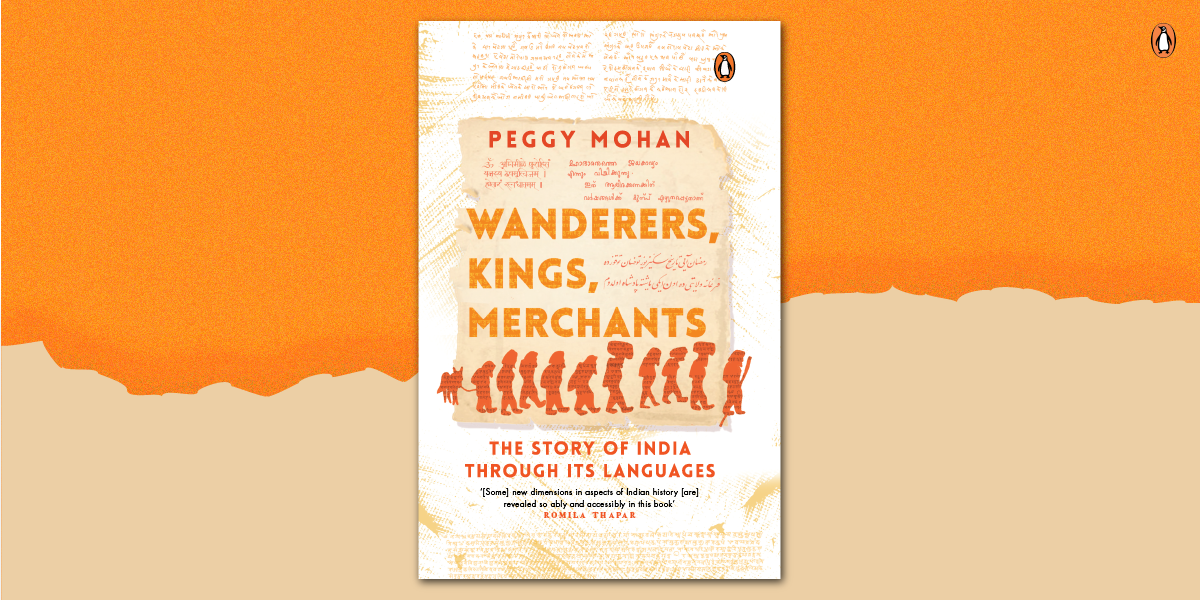
One of India’s most incredible and enviable cultural aspects is that every Indian is bilingual, if not multilingual. Delving into the fascinating early history of South Asia, Wanderers, Kings, Merchants reveals how migration, both external and internal, has shaped all Indians from ancient times. Through a first-of-its-kind and incisive study of languages, such as the story of early Sanskrit, the rise of Urdu, language formation in the North-east, it presents the astounding argument that all Indians are of mixed origins. It explores the surprising rise of English after Independence and how it may be endangering India’s native languages.
Here’s an excerpt from the book in which the author introduces us to the concept of gestational learning through a personal anecdote, about the process of learning a new language.
*
Indian English comes to most of us not in measured steps, visible day by day, as would happen with a foreign language we learnt in class at school, but mysteriously, gestating inside our heads invisibly for years before it is ready to be ‘born’.
My first glimpse of gestational learning came from observing my daughter. Her first language was Hindi, but English was a language she heard every day at home being used by adults. There is a common belief that children can learn any language they are exposed to before the age of five. Yet while she was hearing English all the time, when she spoke it was only in Hindi.
When she was two and a half, we went abroad for a few months. If she thought that English was something only adults spoke, maybe in a playschool she would meet children her age who spoke English and pick it up from them. But it didn’t happen: she stuck to Hindi, and I had to be her translator.
Wanderers, Kings, Merchants || Peggy Mohan
And then one evening back in Delhi, when she was four, she overheard her father and me wondering in English who to leave her with so that we could go out. She started to cry.
She understood! And then about a week later, she suddenly started speaking to us in English, a bit hesitantly at first, but in full sentences, with the accent of a fluent Indian speaker of English. When I remarked on her speaking English, she looked nonplussed.22 She did not even notice that she was doing anything different from before, she was simply . . . talking!
It is interesting to speculate on what all must have been going on inside the black box that is her mind. The first thing to note is that while Hindi was spoken to her emphatically in sing-song ‘motherese’ and with full eye contact, English was something she encountered in profile, as it were. Adults talking among ourselves, but not directly to her.
When we make films for young children, we use point-of-view shots, with close-up frontal images of people talking directly into camera. If the shots on the screen are profile shots, of people speaking to each other but not directly to children who are watching, their eyes stray away from the screen. They do absorb what is happening, but they do not give it their full attention. They have a clear idea of when they are being spoken to, and what speech can be treated as background noise.
…
It is not clear how the background noise from conversations in another language gets absorbed and eventually comprehended. In linguistics, we believe that children are born with innate clues as to what to expect when they encounter languages, allowing them to construct complete representations in their minds. But the English adults speak between ourselves is not the stripped-down code that we would use to a child, because it is not meant for a child. Adults’ sentences are longer and more complex—our speed of speech is faster, and we use much, much more vocabulary to refer to things that are not a part of a child’s world, including abstract things.
Out of this rich diet, children do eventually sort out basic sentence structure, leaving up in the air a large number of things that cannot make sense to them right away. There is a strong relationship between how difficult incoming data is to sort out and how long a child will delay before beginning to speak. In multilingual homes where two or more languages are used from the start for exactly the same things—with the two parents speaking the two different languages—children do grow up bilingual or multilingual, but they tend to start speaking later. And when they do, they are set to become ideal translators, as they can say exactly the same things in their different languages.
**
For a fascinating insight into learning a new language and the import of languages for a culturally diverse country like India, read Peggy Mohan’s Wanderers, Kings, Merchants.
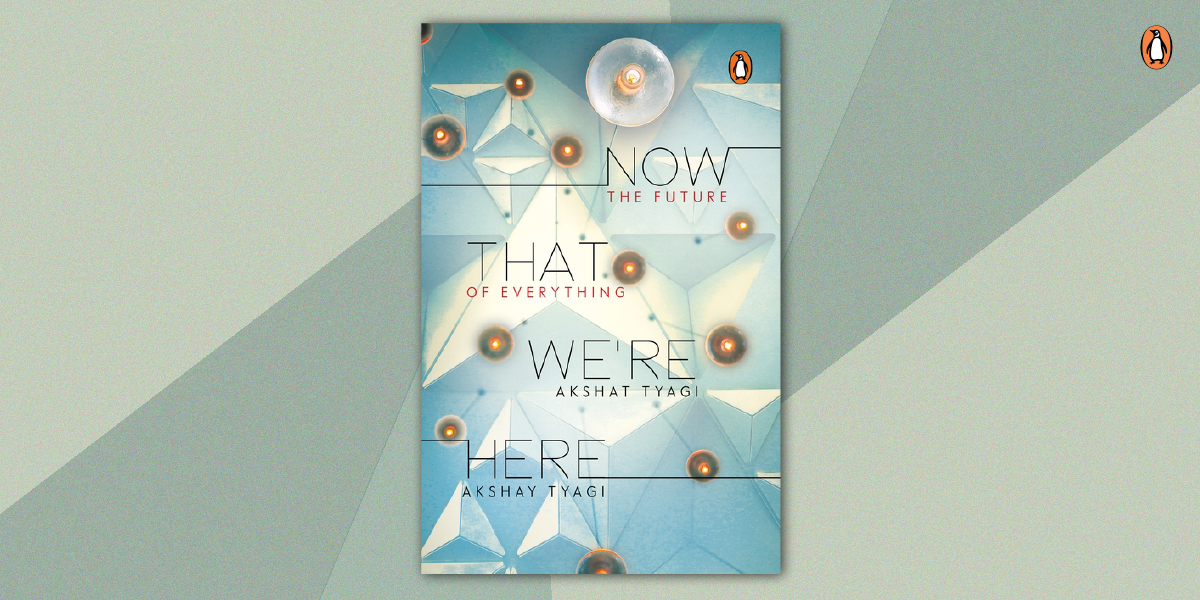
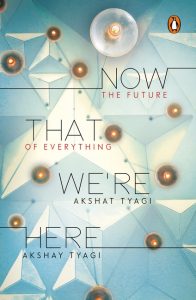
Author’s Note: We didn’t write a generalist guide for the future imagining a once in a lifetime pandemic. This is not the moment of celebration we would have chosen for the book. There’s so much else that needs your love and attention right now. Now that we’re here, we hope the book can offer some comfort and optimism about humanity making it through difficult times, and things getting better.
Now That We’re Here by Akshat Tyagi and Akshay Tyagi is a generalist guide about navigating the future in times of a pandemic. A playful mix of social science and technology, the essays on Data, Design, AI, Behavioural Economics and other important themes provide a peep into what’s coming. The following excerpt is from the chapter Viral Economics, written as the pandemic was unfolding.
—
Even though the collapse of economic prosperity is terrifying, the mourning of its fall should not turn into an endorsement for its previous design. Our economic growth has been highly inequitable, especially so over the last few decades. When your income drops from INR 70,000 a month to INR 40,000, it pinches hard. But even before the crisis, the average monthly income in India was below INR 12,000. We are still an extremely poor country, and we keep forgetting that fact until the next flood, drought or recession arrives.
Our public education hasn’t prepared us to understand the urgency of a pandemic. What you read in this book on data, complexity, economy and technology should be considered basic education. We were so busy bickering over Tipu Sultan’s mention in our history textbooks that we forgot to learn about the history of the Spanish flu and why there wasn’t anything particularly Spanish about the 1918 influenza pandemic.
It is important to maintain civil order by converting a difficult fight against the virus into a temporary celebration of essential workers. But in a different world, our government would be able to explain to us a virus’s non-linear growth graph, and we would pay our workers far better than we do. Making people bang pots and pans is okay only if we understand what we’re dealing with and how long it’s going to last. Otherwise, we are all at the mercy of our beloved leader and his wisdom.
With his utterances about injecting disinfectants and recommending unproven medical cures, Donald Trump may have made daily briefings look like a bad exercise in democracy. But they at least showed us how competent he was as a leader in handling emergencies, helping Americans divert him to other interesting things in the next election. To not show oneself at all during a moment of national crisis or conflict is a signature feature of tyrants. Stalin and Hitler were absent from public appearances for much of the war.
A country of 1.3 billion people with very high linguistic diversity, no universal access to devices for listening to a live broadcast, an unstable electricity supply and a two-hour difference in mean solar times between its easternmost and westernmost points shouldn’t be reliant on a charismatic head of state’s address to the nation. No leader can appeal to the sensibilities and convenience of such a diverse population in an hour’s time.
Now That We’re Here || Akshat Tyagi, Akshay Tyagi
Our Internet penetration is at the highest-ever point in our history, our data rates are the cheapest in the world and journalism is bleeding to death because of its open access—so why then were we still busy rioting as late as February 2020! Arundhati Roy called the madness of communal sickness our version of the coronavirus before we officially got sick with Covid-19.
A pandemic lays bare our structural injustices. Just like with any other disease, the poor are at a disadvantage here too. Pre-existing medical conditions and weak immune systems both increase vulnerability and are, not so surprisingly, correlated in part to one’s economic standing. Little access to nutrition, poor hygiene, few resources shared by more members in the family and safety hazards at repugnant jobs are all risks that Dalits and Muslims have faced for all of our developmental history.
When Ebola spread in a slum in Liberia, the area was sealed off with the help of armed forces. At the rioting of residents, indiscriminate fire helped restore the desired calm. You never heard about this because it didn’t happen in a gated community of rich citizens in a politically significant country.
…
There is no bright side to a pandemic. In fact, ignorant optimism hurts more when the threat is a respiratory virus. Leaders who tell false stories to trick people into staying calm destroy public trust in leadership and create greater chaos. A pandemic is also the time when more and more of us grow comfortable with the idea of compromising our liberty to let the government act. Naomi Klein, a strong advocate against neoliberalism’s worst, has been warning for a decade that emergencies should not be allowed to worsen inequalities and decrease political transparency.
We cannot buy our way out of this virus, but as we wait for medical solutions to arrive we should remain vigilant about the ad hoc measures offered by our governments.
A pandemic is the worst time to stop holding your government responsible.
**
The book explores how our friendships, jobs, health and democracies are changing, and why we must prepare for this new unpredictable world. There aren’t any easy answers, but Now That We’re Here let’s be vigilant and kind.
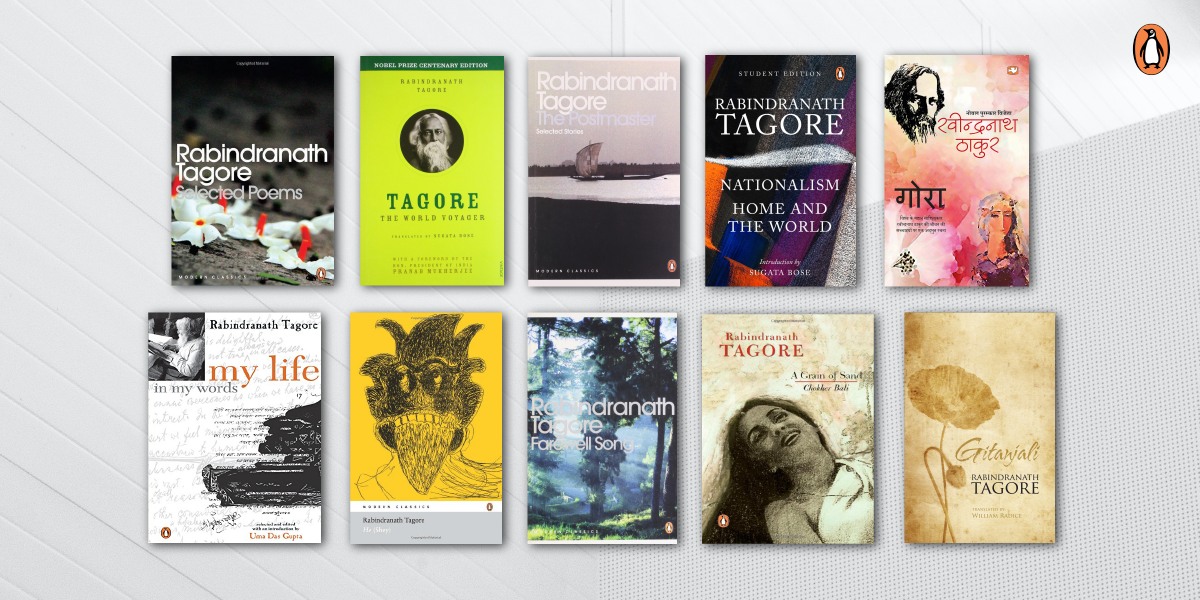
7th May commemorates the birth anniversary of Rabindranath Tagore. His eminence as India’s greatest modern poet remains unchallenged to this day. Tagore was a pioneering literary figure, renowned for his ceaseless innovations in poetry, prose, drama, music and painting, which he took up late in life. His works include novels; plays; essays on religious, social and literary topics; some sixty collections of verse; over a hundred short stories; and more than 2500 songs, including the national anthems of India and Bangladesh.
Born in 1861, Rabindranath Tagore was a key figure of the Bengal Renaissance. He started writing at an early age and by the turn of the century had become a household name in Bengal as a poet, a songwriter, a playwright, an essayist, a short story writer and a novelist.
In 1913 he was awarded the Nobel Prize for Literature and his verse collection Gitanjali came to be known internationally. At about the same time he founded Visva-Bharati, a university located in Santiniketan, near Kolkata. Called the ‘Great Sentinel’ of modern India by Mahatma Gandhi, Tagore steered clear of active politics but is famous for returning his knighthood as a gesture of protest against the Jallianwala Bagh massacre in 1919.
Here is a compilation of some of his work, to celebrate the man.
*
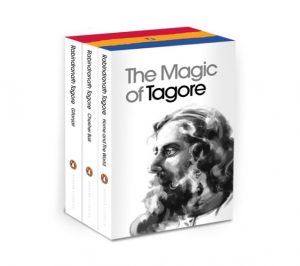
The Magic of Tagore
The Magic of Tagore ||.
A special limited-edition collection of the most beloved works of Nobel laureate Rabindranath Tagore, one of the greatest writers of the Indian subcontinent, featuring two classic novels of profound depth and beauty, and Tagore’s ground-breaking work of poetry. These classic works have been reissued by Penguin Random House India on the occasion of Tagore’s birth month.
*
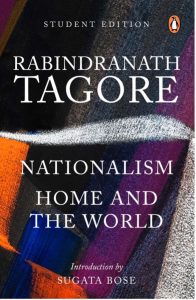
Nationalism and Home and the World
Nationalism Home and the World || .
Combining two classic texts by Rabindranath Tagore, this special edition features a new Introduction by eminent scholar Sugata Bose. Nationalism is based on Tagore’s lectures, warning the world of the disasters of narrow sectarianism and xenophobia. Home and the World is a classic novel, exploring the ever-relevant themes of nationalism, violent revolution and women’s emancipation.
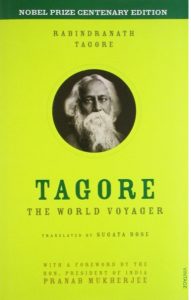
Tagore: The World Voyager
Tagore: The World Voyager || Sugata Bose (Translator)
For long considered untranslatable, Tagore’s songs express most profoundly his romantic and religious perceptions. Prof. Bose aims to convey the artistic value of Tagore’s songs beyond the limits of his province. The first part, ‘Oceanic Songs’, introduces the lyrics and tunes of the songs to a foreign audience through a narrative of Tagore’s travels during which he communicated with the wider world. Since Tagore wrote only forty of his nearly 2500 songs on his journeys abroad, the second part presents a selection of ‘songs in five genres’. This book endeavours to reach Tagore’s songs to people beyond the borders of India, transcending the barriers of language on the wings of music.
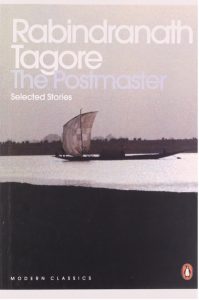
The Postmaster: Selected Stories
The Postmaster || .
Poet, novelist, painter and musician Rabindranath Tagore created the modern short story in India. Written in the 1890s, during a period of relative isolation, his best stories—included in this selection—recreate vivid images of life and landscapes. They depict the human condition in its many forms: innocence and childhood; love and loss; the city and the village; the natural and the supernatural. Tagore is India’s great Romantic. These stories reflect his profoundly modern, original vision. Translated and introduced by William Radice, this edition includes selected letters, bibliographical notes and a glossary.
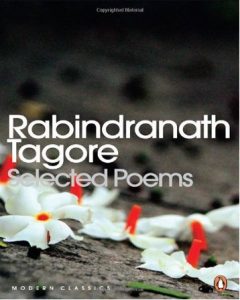
Rabindranath Tagore: Selected Poems
Rabindranath Tagore: Selected Poems || .
The poems of Rabindranath Tagore are among the most haunting and tender in Indian and world literature, expressing a profound and passionate human yearning. His ceaselessly inventive works deal with such subjects as the interplay between God and mortals, the eternal and the transient, and the paradox of an endlessly changing universe that is in tune with unchanging harmonies. Poems such as “Earth” and “In the Eyes of a Peacock” present a picture of natural processes unaffected by human concerns, while others, as in “Recovery14,” convey the poet’s bewilderment about his place in the world. And exuberant works such as “New Rain” and “Grandfather’s Holiday” describe Tagore’s sheer joy at the glories of nature or simply in watching a grandchild play.
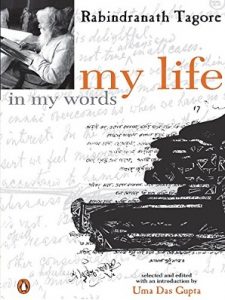
My Life in My Words
My Life in My Words || Uma Das Gupta (Editor)
A unique autobiography that provides an incomparable insight into the mind of a genius. The Renaissance man of modern India, Rabindranath Tagore put his country on the literary map of the world when he won the Nobel Prize for Literature in 1913. My Life in My Words is, quite literally, Tagore on Tagore. The result is a rare glimpse into the world of Tagore: his family of pioneering entrepreneurs who shaped his worldview; the personal tragedies that influenced some of his most eloquent verse; his ground-breaking work in education and social reform; his constant endeavour to bring about a synthesis of the East and the West and his humanitarian approach to politics; and his rise to the status of an international poet. Meticulously researched and sensitively edited, this unique autobiography provides an incomparable insight into the mind of a genius.
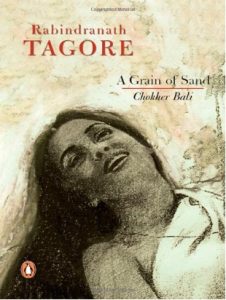
A Grain of Sand: Chokher Bali
A Grain of Sand || .
Chokher Bali is Nobel Prize-winning author Rabindranath Tagore’s classic exposition of an extramarital affair that takes place within the confines of a joint family. A compelling portrayal of the complexity of relationships and of human character, this landmark novel is just as powerful and thought-provoking today as it was a hundred years ago, when it was written.
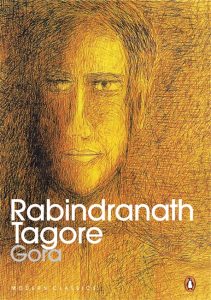
Gora
Gora || .
When Gora had no name, caste, and religion, the circumstances gave him the name – goramohan, caste – Brahmin, and religion – Hindu. While he turned out to be a true advocate of Hinduism, the religion rejected him calling him an outcaste and an untouchable. In this classic masterpiece, Tagore represents the tragedy of Gora in the form of problems faced by all Indian religions.
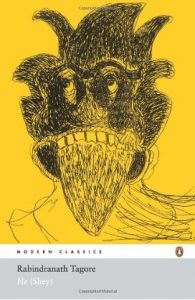
He: (Shey)
He (Shey) || .
Tagore wrote Shey to satisfy his nine year old granddaughter’s demands for stories. Even as Tagore began to create his fantasy, he planned a story that had no end, and to keep the tales spinning he employed the help of ‘Shey’, a “man constituted entirely of words” and rather talented at concocting tall tales. So we enter the world of Shey’s extraordinary adventures, encountering a bizarre cast of characters, grotesque creatures and caricatures of contemporary figures and events as well as mythological heroes and deities – all brought to life through a sparkling play of words and illustrations in Tagore’s unique style.
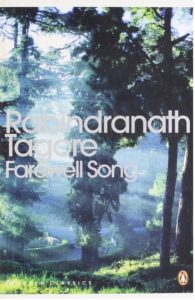
Farewell Song
Farewell Song || .
Rabindranath Tagore reinvented the Bengali novel with Farewell Song, blurring the lines between prose and poetry and creating an effervescent blend of romance and satire. Through Amit and Labanya and a brilliantly etched social milieu, the novel addresses contemporary debates about ‘good’ and ‘bad’ writing, the nature of love and conjugality, and the influence of Western culture on Bengali society. Set against the idyllic backdrop of Shillong and the mannered world of elite Calcutta society, this sparkling novel expresses the complex vision and the mastery of style that characterized Tagore’s later works.
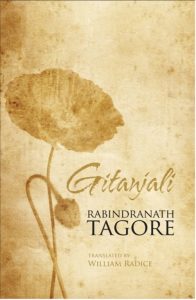
Gitanjali
Gitanjali || William Radice (Translator)
Gitanjali (Penguin Hardback Classics) is a collection of poems by Rabindranath Tagore. This is the English translation of the original Bengali poems. Gitanjali became immensely popular across the globe and was eventually translated into several languages. The book is known for its unmatched style of presentation, fresh poetic structure and spiritual musings.
**
Share this with someone who is fond of – or needs an introduction to – Rabindranath Tagore’s work!